
 Ask ChatGPT


 The Business of Fashion Podcast
15 Nov 2024 · 28m
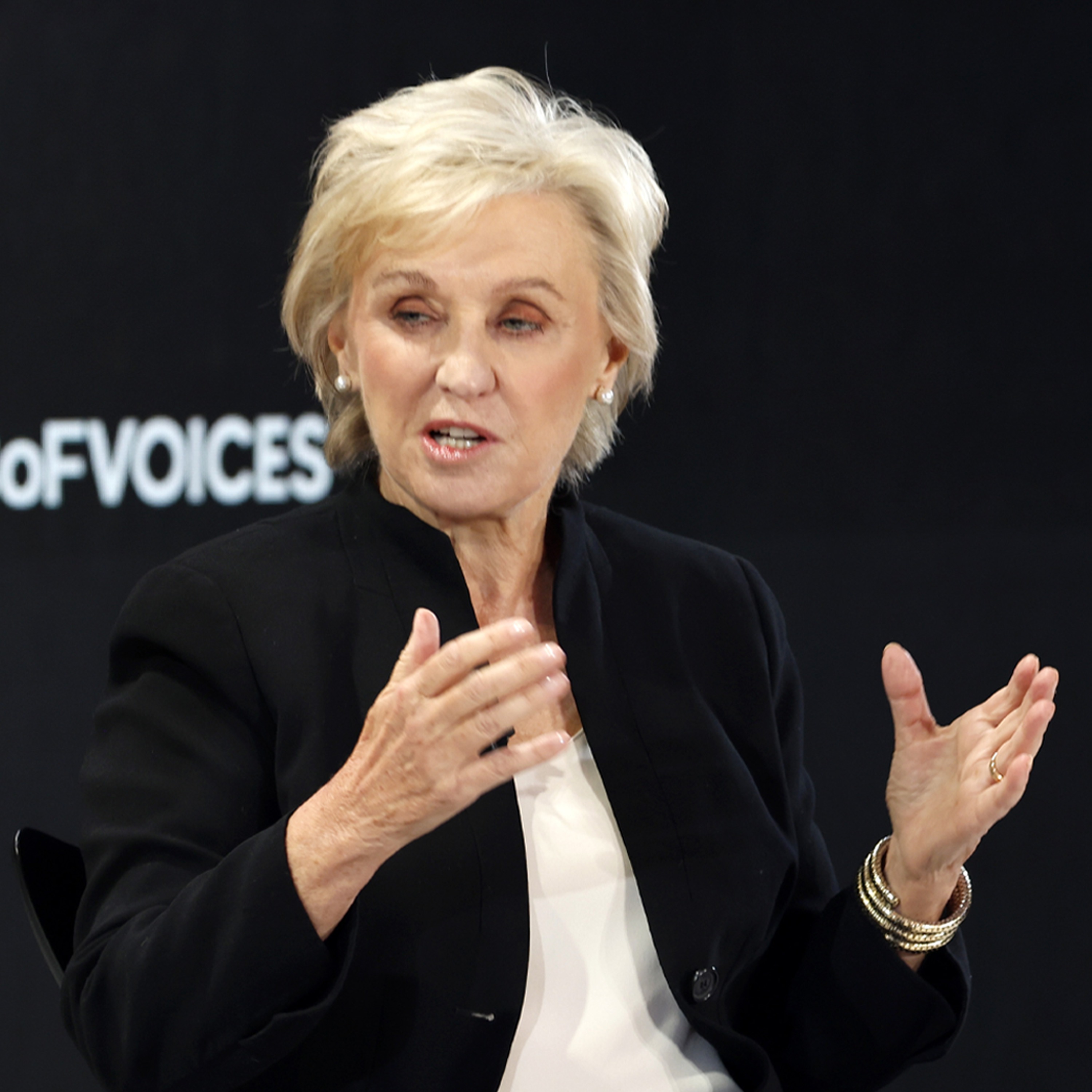
Tina Brown on the Role of Journalism in the Age of Donald Trump
In this episode, Tina Brown, a prominent figure in journalism, discusses the current state of media, politics, and culture, with a particular focus on the implications of Donald Trump's influence on these areas. Known for her transformative leadership in print media, Brown reflects on the future of journalism amidst significant societal changes.
Written by AI. May contain mistakes.

Get the gist, explore an idea or ask about something said.
 Claude
On The Business of Fashion Podcast, what are the key points of this episode?
Searching your listeningAutomatic transcript. May contain errors.
0:04Hi, this is Imran Ahmed, founder and CEO of the Business of Fashion. a welcome to the BOF podcast. It's Friday, November 15th. The BOF team has just returned exhausted but exhilarated from BOF Voices 2024, our ninth annual gathering for big thinkers. In the coming weeks, I'll be sharing some of the most exciting conversations from the last few days, starting today with the respected editor Tina Brown, who joined us to reflect on the current state of media, politics, and culture. Tina is a force of nature in the world of journalism, offering unflinching and sometimes provocative glimpses into the lives of the world's most famous figures.
0:46Born in England and educated at Oxford, she stormed the traditionally male bastions of print media, becoming editor-in-chief of Tatler at just 25. A few years later, she ushered in a new era as editor-in-chief of Vanity Fair, which was tens of millions of dollars in debt when she took over. Her unique formula of seductive storytelling combined with hard-hitting journalism increased the magazine's monthly circulation from just 200 ,000 to more than 1.2 million. As an editor, Tina has never been afraid to push boundaries or challenge the orthodoxy, and she has not lost her magic touch. Last month, she launched a weekly substack newsletter called Fresh Hell, Tina Brown's Diary, where she has already opined on trending topics from the Menendez brothers to the re-election of Donald Trump.
1:39Right now, one of her main preoccupations is around the future of journalism. It's almost as if people have gone beyond caring, literally whether what they read is true or not. And it's a very, I think, the most alarming thing, frankly, about society, because I think it's much the most serious problem. It's more serious than anything is the death of truth, essentially, and what that can do to a society. So the resistance is going to have to come from the media. This week on the BOF podcast, I'm pleased to share my conversation with Tina from BOF Voices 2024. We reflect on the seismic shifts in media and what this means for truth, democracy, and the role of journalism in the age of Donald Trump.
2:23Here's Tina Brown on the BOF podcast. Good to see you, everyone. Good to see you. You too. This is really an amazing occasion, I must say. A combination of high style and brain sex, I decided. Oh, I love that. The new slogan for voices. Yes, yes. High style and brain sex. Thanks. Okay, Tina, let's get into it. U.S. election. As I was doing my reading and research over the weekend, I came to learn that you actually knew Donald Trump very well during his rise in New York. There's a famous story of you sitting next to him at a dinner in the 1980s or 90s. Before covering what's happening now, what were your impressions of him back then?
3:14What was he like and how did that change over time? Well, in those days, he was a sort of rough diamond, you know, outrageous carnival barker, New York character that actually was very refreshing, I thought. I mean, I published in Vanity Fair the extract of his famous book, The Art of the Deal. And it was exactly as he is now. But without the darkness, what has changed, I think, because in those days, he was almost, I wouldn't say sunny. but there was something very up about him. And he'd become very dark as the years have gone by. I mean, the man that we see now the last time, you know, at the Madison Square Garden rally, which was a sort of 30s kind of foaming at the mouth, you know, dark, you know, anti-everything about, sort of that was about life, it seemed.
4:06That's very different. So he's changed an enormous amount, I think, from those early days. But you kind of knew, because in your book, the Vanity Fair Diaries, you wrote, it feels when you have finished it as if you've been nose to nose for four hours with an entertaining con man. I suspect the American public will like nothing better. Indeed. Yes. Well, I could, you know, he has great appeal. He did and does now. I mean, whatever one says and one can a lot about Trump, you know, he is the world's great showman. I mean, he ran a campaign that was just endlessly watchable and was so extraordinarily sort of resourceful and improvising all the time, you know, as he went along.
4:47I mean, you know, his stump with the McDonald's, for instance, when he was... Which went viral. Which totally went viral, puts on an apron, starts serving up, you know, the French fries through the windows. I mean, it's incredible. You know, he gets into a dumpster truck and, you know, drives the garbage truck because of the comment of garbage. He is so quick to sense that zeitgeist, that pivot, and he knows exactly how to do it. It's really a sixth sense that you have to frankly admire in terms of his technique. It was like he was made for the social media world that we live in, so that he knows how to, you know, captivate people.
5:23And I think that what's happened really is that in a sense, you know, we've become so debased by entertainment values that we now require our politicians to be entertainment. And I actually question whether the old style politician, you know, will ever be in favor again. Some years back when I was at the Daily Beast, I commissioned Brett Easton Ellis to write an essay about the crazy antics at the time of Charlie Sheen. And he wrote a brilliant essay about how Charlie Sheen was, as he put it, post-empire, that there was empire and there was post-empire. And empire was about being buttoned up, presenting yourself in a way for the public versus to the private.
6:01And all that in Charlie Sheen had gone. And he was just like letting it all hang out, totally foul mouth, crazy, an addict, all of this. And he identified it, Brett, as this post-Empire style. And what we've really seen is that post-Empire is one. And I don't know that we're going to ever going to go back to the kind of politician that a Joe Biden was, that a Kamala Harris was. I think Americans now value the entertainment values more than anything else. And Trump has done that, essentially. We heard Ravi Agarwal's pretty analytical assessment of the impact of Trump's return to the White House on the world.
6:39I'm curious about your take. You've now lived in the US for 40 years. Is that right? We understood what kind of the impact is for the world. What's your take on what this means for American democracy? As I said in my introduction, there's been so much hand-wringing about what this means for the future of the U.S., which is, you know, like it or not, we all are impacted what's happening there. Well, I sort of kind of flip from being a historical optimist to a sort of hysterical pessimist. I wake up one or the other. What we haven't seen before, of course, is a completely unfettered Trump. You know, the first time in his 216 victory, he was held down by the fact that, you know, he didn't have every branch of government.
7:21But he has every branch of government now. You You know, he's going to have the House, not quite finished the elections there, but he will, Republicans are winning. They've won the Senate. He's totally politicized the Supreme Court and now has his toadies there. And he has the White House. So now he's completely unfettered. And he's also realized last time around, because he didn't know anybody, didn't expect to win and was in a state of constant chaos, he sort of appointed people that other people told him to appoint who hadn't taken the sort of the oath of allegiance, as it were, to Trump. That's gone.
7:53The last four years, you only get to join him now if you're a true believer. So he's now surrounded by the true believers. And there's no one to sort of say him nay. Now, we're all thinking, if you're the hysterical pessimist, you think this is, you know, everything he wants is going to happen. No one is going to stop him. But the thing about Trump is he's so unpredictable. He could also turn on his true believers. You know, if things go wrong, if like, for instance, if he does his tariff thing, which he seems to be obsessed with and has been one of the very few consistent sort of themes of his entire sort of life, his tariff obsession for some reason.
8:26But if inflation suddenly, you know, goes crazy, he will turn on everybody and blame them and they'll be gone, you know. So there is that caprice which you can almost kind of rely on. And of course, in the midterms, the Republicans could lose the House and the Senate, in which case you're going to have some of those restraints kind of back on him again. But this is going to be a time for courage and and and we haven't seen very much of it you know the entire republican party just turned into moral amoeba incredibly so i mean people who had stood up against him and had denounced him and so on when he lost and went on every talk show now just flipped and they're back groveling in a way that's it's really i have never seen it before how they can actually look in the mirror and see the sound bites of themselves saying the man has got absolutely no integrity.
9:16January the 6th was a disgraceful blah, blah. Then they turn around and say, I'm voting for Trump and they're trying to get a job, you know, and it's really remarkable. And I'm not quite sure why they've become so desperately cowardly. You know, there's one other entity that could theoretically also hold Trump to account. I mean, we talked about the Senate and we talked about Congress and the House and we talked about Supreme Court. There's also the media. Absolutely. Well, that's exactly. And so, like, what is happening in American media at the moment? You have such an interesting vantage point.
9:49The media has been kind of whipped into this polarization. I'm just curious about your take of, like, how how you see that. Well, I mean, I think that we are now, as you say, I mean, the resistance is going to have to come from the media. And there's this narrative that has now got going, of course, pushed really by Trump, which is that the media is untrustworthy, that everybody is partisan. But I mean, that is actually really not true. The majority of, you know, hardworking American journalists, I mean, they are trying to get it right. What I think is more scary now is the fact that the media owners are what is the problem, because they are now terrified of their businesses being impacted by Trump.
10:32And we saw what happened at The Washington Post. I mean, Jeff Bezos from Amazon, who bought the Washington Post some years back. He was a very stalwart owner in the first term, actually. He backed his editor in a way that was quite admirable, in fact. But now, just before the election, he killed the endorsement of Harris by the opinion section, which was unheard of. You know, ever since Watergate, they've always endorsed a candidate. And once Bezos heard it was Kamala, bam, he killed it. He was like the first, I think, at least one of the first of the sort of digital oligarchs to tweet, you know, his congratulations of Trump, you see that he's pivoted.
11:11And just yesterday, the owner of the LA Times just has swept out the entire editorial board and has said he's going to have a new editorial board. And you're seeing really what's happened in Modi's India, essentially, which is, you know, you don't have to tell the journalist what to write. You simply have to create a culture where you don't get hired if you write anything that's going to antagonize Trump. And we've seen in India how the free press has been decimated because what the way Modi operates is he goes for those corporate owners. If he can't, you know, get those corporate owners to sort of play ball, then eventually, you know, a friend of Modi will buy the media outlet.
11:50He has constant lawfare against journalists where they're sued for crimes that have nothing to do with journalism or their taxes are audited and they're called tax felons. You You know, so he goes after journalists for other reasons than the journalism. And of course, he goes after advertisers so that the advertisers don't want to be advertising in something that's anti-Modi. And that is, I think, that the route you're going to see happens in the US if Trump does what he's promising. And he tends to do it. I mean, he calls the media the enemy of the people. I mean, he is hostile to the point of lunacy, really, about media that tell the truth.
12:25And I think you're going to see a lot of fear in the owners. The journalists, I think, are doing, a lot of them are doing really great work. And my heroes right now are journalists because I think they are giving their lives. They are one of the last kind of portions of society anywhere that are not doing it for the money. I mean, nobody makes any money, you know, as a journalist. That is one global fact we can all say. They do it for passion. They do it for conviction. And they do it for principles, actually. So I started a conference two years ago. Truth tellers. Yes, called Truth Tellers, which is in honor of my late great husband, who was a fantastic journalist, Sir Harold Evans, who was a big, brilliant crusading editor of the Sunday Times, who campaigned for 10 years to get compensation for the thalidomide victims and really was a great leader in terms of courageous investigations.
13:17And at Truth Tellers, we bring together these journalists to really strengthen the bonds of journalism, to make people, I mean, journalism is such a demoralized profession that we have to support journalists because without them, there's going to be no resistance. We'll be right back with more on the BOF podcast.
13:42One of the reasons we've ended up here with, you know, billionaire owners of important media outlets like the LA Times, like the Washington Post, is because of the state of the business of media. And you've had a front row seat to the shift, you know, starting in the print world, moving to the Daily Beast, a digital publication. I mean, what's your assessment around the business model of media and how much just the lack of a sustainable business model has compromised the ability for media to be independent because they have to be reliant on. Precisely. You cannot be brave if there's nobody supporting you.
14:25And in my husband's day at the Sunday Times, you know, the Thompson family were very supportive of strong media. And indeed, Thompson still is with Reuters. But I think it's an enraging tragedy what has happened to media. I think in the early 2000s, traditional media was far too passive in the face of digital disruption. And they essentially were so excited at the idea of, you know, they were going to get lots of traffic from digital sites that they sort of allowed content to be stolen, essentially. I mean, content was taken free, not paid for. And of course, they did not benefit from it. It was the tech companies that monetized that stolen intellectual property, which is what it was.
15:02They're doing it again with AI, by the way. Now, 20 years later, 25 years later, we see it happening all over again. Those self-same people who robbed this profession and killed it nearly, or certainly brought it to its knees, are coming back, those very same companies, and are now saying, now we want to scrape all your content for AI. And companies are fighting back, and they might get like a$250 million or something, But that's nothing when you consider the fortunes that are being made by the tech companies off the back of other people's brains. And I do not know why writing sentences is not valued more than writing code because it lasts longer.
15:41That's for sure. I mean, one Shakespeare sonnet. I'm sorry, but beat that algorithm. You know, I love that. You know what you're saying makes a lot of sense, because even I'd say the most independent news, paper in America, the New York Times that has, you know, as a publicly traded company has, I think, 11 million subscribers. If you think of 11 million subscribers, I think most of them are in the United States, out of a total of 350 million people, like undeniably, the influence of traditional media has waned with the rise of social media. Indeed. Right. I'm curious about what you make of the prospects of your old stomping grounds at Condé Nast or Hearst, where you were once offered a job.
16:30What do you think is the future of these print magazines, still highly reliant on advertising models, haven't managed to transition to the digital space in a way that's sustainable from a business standpoint? Unfortunately, I think that they are going to go into the dank graveyard of empire. You know, magazines, which I love. I love the art of magazines. I love the craft of magazines. I love the feel of magazines, but I don't read magazines anymore. Even you? No, I don't read any. I read on my phone like most people or, you know, I follow journalists' feeds and I get my news from this kind of huge sort of smorgasbord of various sources.
17:12I do not buy magazines anymore. So I don't think that the magazines have a future, unfortunately, which grieves me. But I'm being frank. I mean, I don't think they have. Somehow I've gone beyond caring about that. I did care about that, but I don't care about it anymore. All I care about, I don't care what form it comes in. We have to be able to sustain, nourish, nurture and find an audience for serious investigative news, because without it, we are completely screwed, quite honestly, because there's just nothing else that's going to be able to fight back against, you know, autocratic dictators, against this sort of debasement of the culture in general, against lies and misinformation.
17:53I mean, it's just stunning what garbage just kind of percolates through people's minds all the time with this. And they don't know or care whether it's true or not. It's almost as if people have gone beyond caring, literally, whether what they read is true or not. And it's a very, I think, the most alarming thing, frankly, about society, because I think it's much the most serious problem. It's more serious than anything is the death of truth, essentially, and what that can do to a society. So I spend a lot of my time thinking about this. Well, I happen to agree with you, which is why I do the work that I do.
18:29I am also aligned with you that the medium doesn't matter. What matters is that we have really thoughtful, curious, truth-telling people in the roles of editors and journalists of the media. So I'm curious maybe to get a little bit of your advice as a newbie editor or a newer editor. What do you think makes a good editor today? Well, I think it's the same things that have always made a good editor. First of all, you have to be absolutely curious. Secondly, you have to do what Daniel was talking about, colliding with the different, being willing to be alive and open to all of these different perspectives, points of view and information.
19:15And understanding, you know, how to get that work out of people, because very often you have to sort of pull this work from people in a way that, you know, is a very sort of intimate process, as it is within a director and an actor. And I think one of the sad things now about editing is that there's very little nourishing of writers and journalists by editors, simply because they don't have them. I've actually launched, as part of this foundation I've launched for my husband's journalism fund, we now give an annual fellowship to a young investigative journalist who is rewarded by going to work for nine months at Reuters in their investigative department.
19:54And I'm stunned by the entries, quite honestly, because we, you know, last time we got like about 800 entries from these brilliant young investigative journalists. For one spot. For one spot. And the refrain in all of their submissions was they are alone. They have no one to mentor them or talk to them about their stories. They're sitting in their apartments, somehow supported by a few nonprofit dollars here and there, trying to do their investigative work in the face of, you know, intimidation and no backing. and they go to foreign parts of the world that are wildly dangerous without any kind of institutional backing.
20:29So you're seeing all of these journalists, I mean, I think it was 178 have been killed in the Middle Eastern, you know, in the Israeli Hamas wars. They're dying. They're not protected. They're locked up. They're being imprisoned, as Evan Gorevich was. I mean, they're risking the most extraordinary amount to try to get the stories out, to try to get the truth out. And they're doing it without the institutional backing that they used to have. You know, in the days, for instance, when my husband was editor at the Sunday Times. So when I read these entries, it sort of breaks my heart because, I mean, you could staff an entire brilliant newsroom with these kids.
21:01And then they're coming, entries are coming from Eastern Europe and India and Nigeria and all of these terrific reporters. And, you know, I just think like, where are they going to go, these people? How will they apply their trade? Where do they apply to? And I talk at the journalism schools and people go like, well, if you were me, you know, who would you, where would you apply to be a journalist? And I I mean, it's hard to know how they can honestly, they can make a living, really. Yeah. But they do. And that's what I love about them. They find ways to do it. So I think we're really going to be dependent more and more on nonprofits.
21:36We have to. I mean, I would actually talk about tariffs. I would actually, if I was queen, if I was president, I would force the tech companies to sort of bloody well tithe, you know, the huge amounts of what they have. They did that for a while to support all sorts of initiatives and that they removed the tithe and then all those companies shut down. That was just pure PR and it was all just greenwashing and baloney. You know, their natural instincts is to be predators. And it's only going to get worse. Before we run out of time. It's so nice to have so many tech people in the room. Before we run out of time, I did want to talk a little bit about your experiences in leadership.
22:21We heard the most inspiring talk from Namonte and Nankimo right now who talked about the roles of women in leadership. And I read some pretty outrageous stories of some of the things that you experienced in moving up the ranks at Condé Nasten in your career. I mean, looking back now, one, what advice do you have for women who are looking to have an impact in the world like you have? and two how much has really changed do you think for women leaders you know we've just seen like the second democratic candidate as a woman who's lost you know in the context of that as well like what's your reflection on female leadership it's actually disheartening in fact I mean on my way up you know I was so focused on on the actual job at hand that I can only say that you know How do you get through it?
23:16You get through it by winning, right? You get through it by succeeding and focusing like a Japanese bullet train on where you want to go. But I mean, as I look back, I just see how demeaned I so often was, even at Conde Nast, which frankly, the chairman signed Newhouse. You could not have a better boss. I mean, for 17 years, he supported me. He gave me Vanity Fair. He gave me The New Yorker. He kept promoting me. But he would always exclude me from any of the serious, what I call business discussions about my enterprise. I mean, I was literally treated as a sort of fluffy haired rockette or something where I was sort of not asked to the big boys table.
23:57And yet it was my magazine. And I had, you know, I created all of this success, but somehow I was never consulted. I mean, he would appoint, for instance, the publisher who was my opposite number selling advertising. I mean, he would just call me on a Tuesday and say, you've got a new publisher you know it's like well don't you want to at least ask me you know is this the right guy for the job yeah uh which it wasn't mostly and that was a guy usually right oh yes it was always a guy i'm in the new yorker the new yorker was the worst but anyhow but it was very sort of vexing and it was why i left actually it was why i left connie now but wait even before you left i read somewhere or watched a video or something that you went 14 years without a raise?
24:41Yeah. And you only got a raise when you were offered a job. Yes. I was offered a job at Hearst and it's partly my fault because women tend to have this terrible, you know, self-deprecating because we've been stomped on so many times in this way that we don't go in with the same kind of confidence that men do to demand a raise. And so every sort of, Cy would give me, you know, 10 ,000 and say, you know, happy Christmas. And I would say, oh, thank you so much you know I'm so grateful I think wait a minute I just took this magazine from like the bottom of the pit to like number one on the hot list you know and eventually you know I was offered this other job and so I had real leverage and that was a point where I went to this very big sort of super agent as he was known and I I decided I could not have the conversation and he went in and in 10 minutes I was suddenly owning a million dollars that's it wow absolutely I got like a$500 ,000 raise, you know, in 10 minutes.
25:38I mean, because he went to take Cy Newhouse for breakfast and I was sitting there thinking, you know, it was 8 o 'clock. I got the call at 8.15. So, I mean, I realised I had all of this leverage, but I had never sort of actually used it. And one of the things that kind of energised me to do that was when I discovered that the editor of GQ, who frankly was this kind of B-list bro, you know, with a beard, was earning more than I was. And why? There was absolutely no reason whatever, but it was just this gendered thing. And it is true. And even my daughter is a wonderfully sort of dynamic documentary producer, but during COVID, I would listen to her the Zooms, right?
26:18And it's the same old story. The guys are all just like talking over her, sort of constantly, even though she was in fact, you know, sort of in a higher position than many of them. You know, you'll be like, Izzy, will you get that done? Like, Izzy, will you... Like, talking to her, they were always, like, passing the grunt work to her, you know? I mean, and I suddenly thought, this is just what happens all the time, is this kind of constant making women just sort of be the sort of the also rap. And you have to be quite aggressive, which I've now become. Now I'm old and I don't care and I can mouth off and I can say what I like and who cares because media's collapsed anyway, so...
26:57LAUGHTER I'm probably talking to 10 people, but, you know, the same size as my Christmas list, you know. But that's also quite liberating. So do you think if it was your opportunity again, would you use that bullet train approach? And would you advise, you know, you talked about bullet train, you talked about getting leverage, you talked about getting an agent. Is that your advice for? Well, next time I think I'd get a howitzer, actually. I'd like to feel that I could stomp in and like, you know, just do it. I don't know. I mean, I see the younger generation having the same issue, which actually does worry me.
27:37And I am, it has bummed me out that like, I mean, the trouble is that very often because of the system and so on, then the wrong person will be chosen. I mean, I was really rooting for Kamala, obviously, like everyone who didn't want Trump to win. but she wasn't the best candidate, you know. She was the better candidate, you think? Was she the better candidate? I mean, that's quite a long conversation. Okay. We'll do it over another time. Tina Brown. So much fun to talk to you. Thank you very much. And congratulations on what you have created.
28:15The BOF podcast is edited and produced by Olivia Davies and Eric Bria. You
Tina Brown is a force of nature in the world of journalism, offering unflinching and sometimes provocative glimpses into the lives of the world's most famous figures.
Born in England and educated at Oxford, she stormed the traditionally male bastions of print media, becoming editor-in-chief of Tatler at just 25. A few years later, she ushered in a new era as editor-in-chief of Vanity Fair, which was tens of millions of dollars in debt when she took over. Her unique formula of seductive storytelling, combined with hard-hitting journalism, increased the magazine’s monthly circulation from 200,000 to 1.2 million.
As an editor, Tina has never been afraid to push boundaries or challenge the orthodoxy, and she has not lost her magic touch. Last month she launched a weekly Substack newsletter, “Fresh Hell: Tina Brown’s Diary.” where she has already opined on trending topics from the Menendez Brothers to the re-election of Donald Trump. Right now, one of her main pre-occupations is around the future of journalism.
“More serious than anything is the death of truth and what that can do to a society,” she warns. “The resistance is going to have to come from the media.’
At VOICES 2024, Brown reflects on the seismic shifts in media, what this means for truth and democracy, and the role of journalism in the age of Donald Trump.
Key Insights:
Additional Resources:
Hosted on Acast. See acast.com/privacy for more information.


