Ask ChatGPT
 The Business of Fashion Podcast
17 Apr 2026 · 36m · 18 chapters
Luxury winners in a contracting market; what luxury customers pay for now—substance, inclusion, clear value, and in-person experiences—plus strategies like vertical integration, brand focus, and experiential retail.
Written by AI. May contain mistakes.
Discussion of recent performance in the luxury fashion market and what it indicates.
“This week, LVMH reported that revenues in its fashion and leather goods division contracted by 2 % in the first quarter of 2026.”
Gildo Zegna explains his transition from CEO to a mentoring role for his sons.
“One that has little to do with logos, scarcity, or hype, and everything to do with substance, inclusion, and a clear sense of what customers are willing to pay for.”
Zegna shares strategies for navigating current economic uncertainties.
“while the rest of the market is softening.”
Discussion on the evolving definition of luxury and the importance of experiences.
“Well, we have gone from AI to genomics to energy, but now we've arrived to the industry that Mr.”
Analysis of what sets successful luxury brands apart in a challenging market.
“Why was it okay for you to make such a big change when it seems like everything in the world is changing?”
Zegna discusses innovations and positioning in the luxury market, including sustainability.
“Just this morning, LVMH announced that its fashion and leather goods business has contracted for yet another quarter, minus 2 percent.”
Examination of pricing strategies and the perception of value in the luxury sector.
“whether it be a product at Xenia or elsewhere.”
Discussion on pricing structures and the impact of economic factors.
“By what percentage did your prices go up, roughly?”
Exploration of generational shifts in the company and brand values.
“You know, if he were still around, what do you think he would make of the company that you've handed over to your son?”
Insights into the luxury consumer behavior and market trends.
“Now we turn to the question of who is the luxury customer in 2026?”
Discussion on Art Basel's growth and the evolving art market landscape.
“illustrations of what we're experiencing.”
In-depth look at how value is defined and perceived in luxury and art.
“So I definitely want to get into the experiential elements in a minute but I do want to double click on this kind of shift we've seen in consumer behavior from the pandemic.”
The importance of experiences in driving consumer engagement and sales.
“So the combination of the storytelling, our ability to make you dream, obviously then translating that into great product and a unique experience.”
Discuss the dynamics of the art market, emphasizing confidence and value.
“And I think we'll see it again to some degree now.”
Explore how luxury brands are integrating experiences into their customer journey.
“But you were talking, both of you were talking about the extraordinary importance of experiences.”
Discuss the concept of retail spaces as welcoming environments rather than exclusive spots.
“the concept is not welcome to our store, although of course you're welcome to our store.”
Examines the definition of luxury and how it should include a broader range of products.
“So how many people have gone to a luxury store and been asked to wait outside in a line?”
Delve into the importance of community and cultural context for luxury consumers.
“It's interesting what we see with some of the players in the industry because often there's a big line outside and the store is empty.”

Get the gist, explore an idea or ask about something said.
 Claude
On The Business of Fashion Podcast, what are the key points of this episode?
Searching your listeningAutomatic transcript. May contain errors.
0:03Hi, this is Imran Ahmed, founder and CEO of the Business of Fashion. Welcome to the BOFace. podcast. It's Friday, April 17th. The global fashion industry is a$2.5 trillion economic engine. And yet, in the corridors of Washington and high finance, it's often treated as a sideshow. This week, I was in DC at Semaphore World Economy, listening to conversations about AI and genomics and energy, while also arguing that fashion is actually one of the best barometers we have for where the global consumer is heading because the luxury landscape is being reshaped in real time. This week, LVMH reported that revenues in its fashion and leather goods division contracted by 2 % in the first quarter of 2026.
0:56Karrings Group revenues were also flat, but Gucci was down 8%. Meanwhile, Ralph Lauren has raised its guidance three times in the past year with revenue up 12 % in the most recent quarter. And Xenia's flagship brand grew more than 7 % in the fourth quarter of 2025. So what are these winners doing differently? In this episode, I sit down with three leaders who, from very different starting points, offer a remarkably consistent answer. One that has little to do with logos, scarcity, or hype, and everything to do with substance, inclusion, and a clear sense of what customers are willing to pay for.
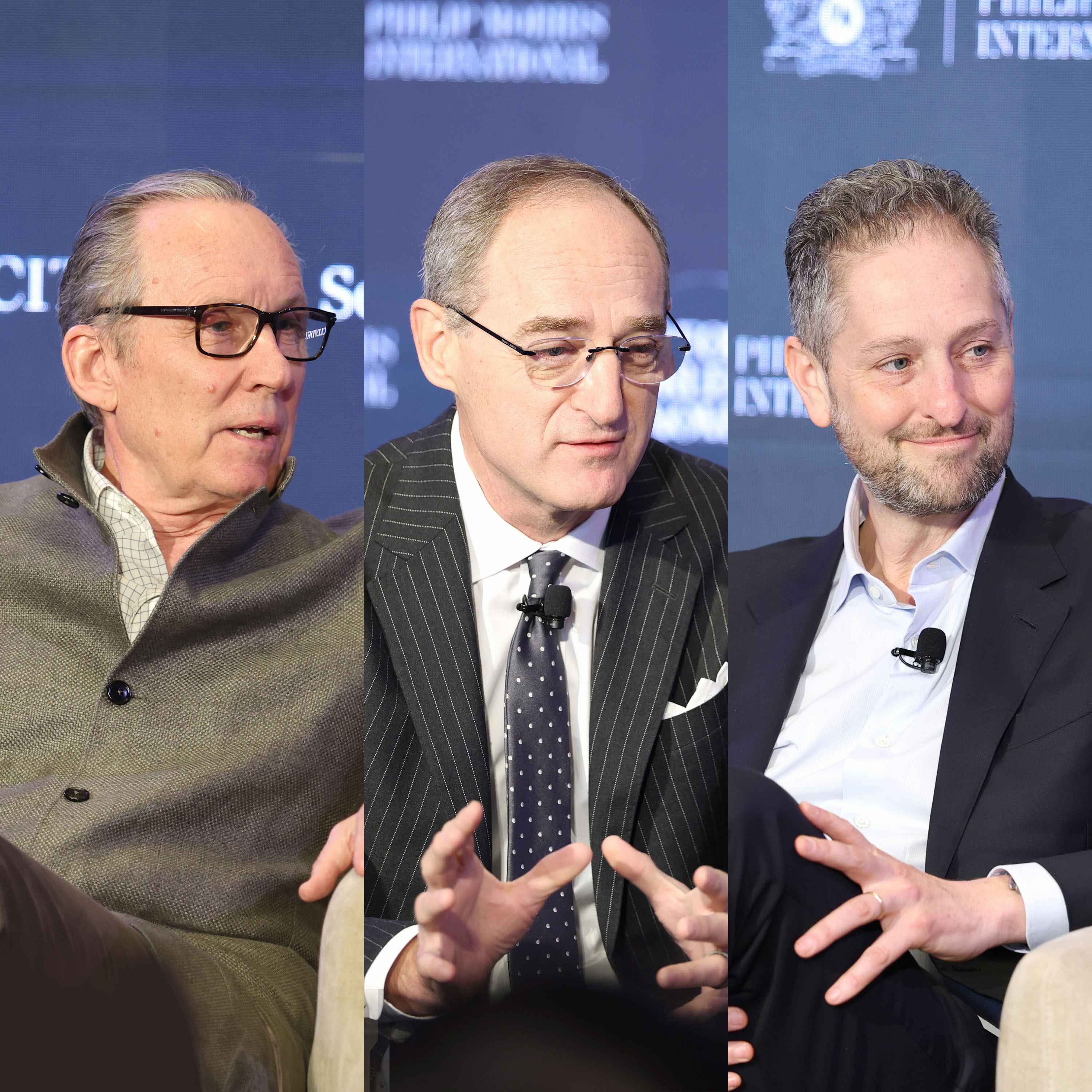
1:41First, Ermeni Gildo-Zenia, Group Executive Chairman of the Zenia Group, shares why he chose this moment to step back from his CEO role and hand over the reins to his sons. We talk about vertical integration as a hedge against inflation and the formula he's giving the next generation to run by. Think slow, but act fast. These to me are the most important criteria. Then I'm joined by Patrice Louvet, president and CEO of Ralph Lauren, and Noah Horowitz, CEO of Art Basel, two leaders whose businesses are growing while the rest of the market is softening. We unpack why Patrice thinks the industry is working from a lazy definition of luxury and ask why in a world of frictionless AI-powered shopping, the most valuable thing a brand can offer is a reason to show up in person.
2:35I'm often asked what business is Ralph Lauren in, and we're not in the apparel business. We're in the dreams business. Three leaders, three businesses, one consistent answer about what luxury looks like now. Here are Hermione Gildozena, Patrice Louvet, and Noah Horowitz, live from Semaphore World Economy in Washington, D.C., here on the BOF podcast.
3:02Good afternoon. Well, we have gone from AI to genomics to energy, but now we've arrived to the industry that Mr. Zenia and I immerse ourselves in every single day, which is the global fashion business. A business that's not often taken seriously in quarters like these, but hopefully with this conversation, we will demonstrate to you just how important this two and a half trillion dollar industry is. Mr. Zenya, thank you for joining me here today. We've been hearing, as I said, about the, you know, all of the change happening in the global economy. We've got a tumultuous situation at the moment with the war in the Middle East and everything that's done to oil prices.
3:47We have the rise of artificial intelligence. We have a very uncertain economic outlook. And at a time like this, leaders like you often want to hold on tighter to the reins. But you did the opposite. Last year, you stepped back from your day-to-day role as CEO, and you handed over the reins to the next generation, to your sons, Angelo and Eduardo, and to a new CEO of the group. Why was it okay for you to make such a big change when it seems like everything in the world is changing? Good question. Thank you, Imran. Nice to be here, ladies and gentlemen. I think it was an obvious decision. I turned 70 a few months ago, and I felt responsible that I had to move forward, not backward.
4:40And I was privileged that I had two brilliant sons that are there for meritocracy, not because they are children. And I had a very good CFO that I appointed a group chairman. And I think it came at the right time because I'm still healthy and I'm still very energetic. And I think it can contribute for the future of my brand, family, and shareholder. I mean, we are a public company. We went IPO in New York in December 21. And I think that we made this step thinking forward to the family and to their brands, because we have three brands today. We have Zenia, Tom Ford and Tom Brown. So we feel we are half American because actually about 40 % of our portfolio are two luxury top brands that we enjoy very much.
5:35So I think that is right timing. It took me two years to figure it out. And finally, I picked the internal decision, which makes a lot of sense. And I must say, I'm at the fourth month of this experience, and we are doing jolly good. So it's only four months in. Four months, yeah. We started January 1st. It was a D-day, and I must say, so far, so good. I know you, Gildo, and I know you are very, very hands-on with your business. So when you're sitting back and you're observing everything that's happening, given everything that's going on in the world, we're talking about rethinking global business.
6:12How are you advising Angelo, Eduardo, the new CEO, how are you advising them to navigate a period like this? First of all, be true to your value. Second, stay the course. I think we have a very clear trajectory for our group and for our brand. And, you know, just keep the vision going. Be patient. Listen. But once you decide to go, execute fast. I think that speed today, with the help of technology, with the right team of people, is crucial to make it happen. So think slow, but act fast. These, to me, are the most important criteria to be successful. In 21, right around the time that you IPO'd the business in New York, as you mentioned, the luxury industry was riding a wave of growth, unlike anything we've seen in a very long time.
7:18Plus 20, plus 30 percent growth, right? Just this morning, LVMH announced that its fashion and leather goods business has contracted for yet another quarter, minus 2 percent. Meanwhile, one of your close competitors, Mr. Cuccinelli, Brunello Cuccinelli, reported sales plus 14%. What is separating, do you think, the companies that are continuing to perform in a luxury market that's contracting from those who are struggling to grow? First of all, I can only speak highly of the LVMH group, because if there is luxury, it's mainly thanks to them. I know, but you're being diplomatic, though, Mr. Zenni.
7:59No, no, I just want to be fair because they're very strong and very capable. But they're shrinking. So what does that mean? They have like 72 brands. So I think it's pretty challenging to manage that portfolio. I isolated that number just to the fashion and leather goods division, which contracted by 2%. There's a big difference between shrinking by 2 % and growing by 14%. What's the difference? Anyhow, I think that they're going to come back. But let's not do not focus on that. Let's focus on the differences. I think that in order to be resilient, you have to be very focused and you have to have a clear brand strategy and you don't have to be as logo driven as used to be.
8:48And you have to be more attentive on your perception of the pricing. And I think all this, it brings a new formula together. and so you have to be able to manage. I must say that for Xenia's sake, we are fortunate because we are in the luxury. And I think that we are developing a couple of iconic products, one I'm wearing today, that is jolly good, not only for the loyal customer, but also for the young customer. And so, I mean, getting to a new customer and satisfied and being able to provide experiences, I think that the good game changer for Xenia is that we went from product to experiencing.
9:31And to me, this is very, very important. And I think that coming out with a product that are highly innovative, they are different from most of the other brands, and they are produced at home. I mean, one peculiarity of our company, our group, is that we are a supply chain fully integrated. I like to go from ship to shop. We are the only luxury company that fully integrated. As a matter of fact, more than 60 % of the goods that we produce is produced at home, most of them in Italy. Okay, well, back to the results. This is a very important point. I want to go back to the results. So this morning when LVMH reported the results, one of the things they pointed to that was a headwind that they faced was the war in the Middle East.
10:13You told me once that the store in Dubai Mall, the Zegna store in Dubai Mall, was your number one store in the world. How is your business performing in light of what's happening in that part of the world? Surely, with most of you, I think that we are for peace and we hope that the conflict will end quickly. After having said that, Middle East has been one of the most growing areas for the group. Before COVID, Middle East was 3%. Today, for Zainia brand, it's close to 9%. So it's a big chunk. You mean of total sales? Of total sales. So I think that it's important. And I think that it will come back.
10:55In the meantime, you have to figure out what to do. So what are you doing? Well, I think that we have other important countries. Surely the United States is one, and we are doing a good job, and we are spending there. We have China. I think China has slowed down in the past couple of years, but I think that it reached the plateau, and I think it's the new normal. So I think that we can do better in China. And then there are areas that we still have to improve. Japan, Korea, Southeast Asia, and Latin America. Xenia has been a pioneer, not only in China, but also in Latin America in the 70s. And so it's a small area, but I think that we are doing well.
11:34So the other thing that we are doing is being innovative with the product you create. And so we created this personalization effect. We have been really quite pioneering in made-to-order product, and now we created this concept of Villa Zegna that we offer an experience to our world customer, what we call the Zegna friend, with product that they cannot find in their stores, all personalized. We go from bespoke, I mean, to more affordable product, and I think this is like a club. So I think that all that, you know, helps. What do you consider affordable? I would say affordable is product that are around$1 ,000.
12:20Yeah. But, you know, I just want to remind you, Zainia is costly, but it's not expensive. Because, and no, let me just add one. Yeah, okay. Because you come and visit our industries. Zainia is a luxury brand, but in the industry of fashion. You come and visit our factory in the mountain, our wool mill. 116 years old, you understand why we are costly. I'm leaving you with this. And the other thing, sustainability. Once a competitor said, listen, what are you talking about? You are the most sustainable brand in the world because you last forever. No, but not ship the shop. You last forever. I still have codes of my grandpa, 600 grams that are modern and fresh as ever.
13:07So I think this is the world we're in. So all of these things are elements that customers, maybe some of your customers in the room, take into account when they purchase a product, whether it be a product at Xenia or elsewhere. But there is a lot of conversation about pricing in the luxury industry and how in some places the inflation in prices in our industry is up 60%, 70%, 80%, 90%. What do you think about the value that is really being offered to customers now with prices that have gone up so much? I think I can talk for our own brand. I think that since we've been a public company, we had three brands.
13:49We united three brands. We consolidated, and we came out with only one brand, Xenia. And we decided to go up by investing more in quality. By what percentage did your prices go up, roughly? It's hard to compare because we don't have a similar product. And I just say that the perception of Zeynaya in terms of pricing is fair. We are prudent, but in moments in which you have tariff, you have forex, you have inflation, I mean, you have to convert part of that. However, I think that, you know, you have to look at the productivity side. I think artificial intelligence could help in improving long-term the productivity.
14:32And so you have to be open-minded and don't think that artificial intelligence will cut jobs. I think we'll add new jobs and we'll improve productivity. So I think that you have to be smart in finding new ways to go about, knowing that price is an important part of the equation. So be responsible in how you can increase pricing on your product. All right. We only have about 45 seconds left. Your grandfather founded this company in 1910. You know, if he were still around, what do you think he would make of the company that you've handed over to your son? You would be very proud that we are now the fourth generation.
15:15Four generations. Fourth, fourth generation. And we have about 20 kids. Thank you. We have about 20 kids that hopefully they're going to make the fifth generation. So keep going. And be true to your values. This is what it would be very fond of. Thank you very much. Thank you, Imran.
15:39That was Gildav Zegna on what it takes to win in global luxury. Now we turn to the question of who is the luxury customer in 2026? And what are they actually paying for? To find out, I sat down with Patrice Louvet, CEO of Ralph Lauren, and Noah Horowitz, CEO of Art Basel. Patrice Louvet runs Ralph Lauren, which has been one of the great outperformance stories in our industry, the global fashion industry. Revenue up 12 % last quarter, earnings up 29%, growth in every region, including China. At a time when most luxury and fashion companies are struggling to grow, some of them are even going backwards.
16:23But Ralph Lauren has raised its guidance three times this year. For his part, Noah Horowitz runs Art Basel, which has gone from three to five art fairs, adding Art Basel Paris and debuting Art Basel Qatar just a couple of months ago. In a market where over 400 art fairs exist and are fighting for the same collectors and fair fatigue is a real phenomenon, Art Basel keeps expanding. So the main question for all of us this morning is quite simple. What did these two business leaders see in the global consumer that others are missing? And Patrice, I wanted to start with you. Your consumer, as I just said, is spending more, they're trading up.
17:08What are you seeing and taking away from the kind of state of the global consumer right now? And what are perhaps others missing? Good morning. Nice to see all of you here. Well I had the opportunity to just come back from China and the West Coast in a span of a couple weeks and I think those were good illustrations of what we're experiencing. Now our consumer base has proven to be pretty resilient and has been for some time now. We tend to have a more elevated consumer base right, average income is above$100 ,000 and what we are hearing from them is one, they're really leaning into quality and trusted quality.
17:48Two, Two, they're looking for brands that are clear on who they are. And you know this industry even better than I do. And there are many brands who are searching for their identity or going back to their original identity. And then three is the notion of value, which, you know, I come from the FMCG world where we talk a lot about value. We don't talk as much about value in the luxury space, but it's as important. So I think the value equation that our teams have developed around the world on the range of products that we have, whether that's Ralph's coffee or a tuxedo, is compelling. And I think the combination of these three elements, quality, clear on what we stand for, with values that resonate, and value perception that is strong, is what's fueling our growth.
18:33Okay. Noah, let's turn to your customer, which probably has some interesting overlap with Patrice's customer. We were just talking backstage. You've been expanding in the art fair world while, as I just said, there's a preponderance of art fairs. Why is Art Basel standing out in the market at the moment? And what are you seeing in your customer base today? Well, I think much the same, right? There's a focus on unequivocal quality and top of the funnel experience. And Art Basel delivers that. We've been doing this for over 50 years. We've grown quickly recently, but steadily, assiduously, and actually quite slowly if you track back.
19:19And it very much follows the arc of our industry, which has gone from being very insider industry with a very small group, mainly of European and American consumers, to a more global, increasingly diversified, much more female forward audience base. And Art Basel with the addition of Paris four years ago, we launched, as you referred to, in Qatar, just beginning of February this year, just ahead of, you know, it's become a really challenging geopolitical crisis for all of us. And our global audience is very, very focused on extraordinary experiences, extraordinary art. So our selection processes and the things we put in place to get the best and most ambitious work from the great artists of the world out is rung true time and time again.
20:12But what's changed in our industry is the overall experience, experientialization of the fair going experience, the role of community, the importance of what people are wearing, where they're going, where they're dining, where they're staying. It's all come together in a much different way than it used to be. And we're seeing a huge attraction to that around the Art Basel platform globally, wrapped a few weeks ago in Hong Kong, where we had record attendance. We had over 91 ,000 visitors at our Hong Kong show. It's become the most important cultural event of its kind in the Asian hemisphere. And it's extraordinary.
20:52And, you know, you toggle back to Miami Beach, which many in this audience and the American context are familiar with. which is you know fills very much the same role in the U.S. market at the end of December. So I definitely want to get into the experiential elements in a minute but I do want to double click on this kind of shift we've seen in consumer behavior from the pandemic. You know both the art industry and the luxury and fashion industry went through kind of an unprecedented growth spurt. almost gluttony of consumption of art and fashion but when the lockdowns lifted and people had the opportunity to go and experience real things that you know the shift or the the stated ideas that there's been a shift towards experiences which we'll get to but when you talked about value Patrice like can we can we go deeper into that now people are being much more discerning about what value is.
21:55So when you're thinking about how you offer value, how the customer defines value, how do you do that? And then Noah, we'll get to you as well. So we have a simple formula. Bear with me. Value, the way we talk about it is quality of the storytelling, quality of the product, that's both craftsmanship and style, and quality of the shopping experience, whether that's online or in store, divided by price. Often people just simplify this whole value equation to what's the price for the item. And in this industry, it's so much more than that because we sell the dream first and foremost. We're storytellers.
22:35I'm often asked what business is Ralph Lauren in, and we're not in the apparel business. We're in the dreams business. Like Disney? Exactly like Disney. I like to think that when I spend a lot of time with Ralph and I see how he operates with his teams, he is closer to a movie director like Martin Scorsese or Steven Spielberg than he is a traditional designer like Christian Dior or Yves Saint Laurent. So the combination of the storytelling, our ability to make you dream, obviously then translating that into great product and a unique experience. And I agree with your point and Noah's point on the fact that expectations from the experience standpoint would have gone up dramatically for consumers, whether that's online or in-store, is really how to build the numerator and then the denominator is what price that consumers will accept.
23:24And is that a global thing, Patrice, or do you see variations on that or more of a weight on one of those three factors in different parts of the world? So Imran, it's fascinating because I guess we were in Hong Kong at the same time, though, why we didn't bump into each other. You're being punished now. Apparently you were there very quickly and may or may not have made it to the world. Yes, next time I'll make sure I stop at Basil. It's consistent everywhere we go, right? I mean, I saw that in Chengdu where we just opened a beautiful store in Chengdu IFS. I saw that in San Diego last week. The consumer sees it consistently, I would say, across cultures and across generations.
24:02And certainly we're having some really nice momentum with the younger generation for which the fickle things don't really resonate much with them anymore, right? They want things that are much more grounded, that are much more values driven. So we talk a lot about value and values. And I think as long as we provide a unique value perception that is superior relative to our peer set and stand for clear values with authenticity and consistency, then this company will be in good shape. Okay. Noah, obviously art collectors come in all shapes and sizes, all levels of taste and familiarity with the market.
24:40I mean, how do you see the definition of value in the art world shifting post-COVID? And how does it differ by region, if at all? Yeah, well, first thing on value. I mean, let's be pretty clear. Art is fundamentally valueless, right? It is all a mythology. And that's something that's as true today as it has been in history, right? Selling a Cezanne landscape, selling a great Picasso, So you're selling a mythology of what that artist stood for in that moment in time. So it's a relationship to a relationship to a relationship. But there's also something material and real to that. Now, that's an abstract way of framing it, but it's very tangible in a way.
25:23In terms of what's driving value in our industry today, we're seeing a lot of shifts. There was a moment, you know, the last great boom bust in our industry was the late 80s when it was a lot of Japanese speculation on impressionist paintings. the 90s sort of leveled out. The contemporary art world as we know it today really manifest at that stage. And in the early 2000s, artists of the post-war era overtook Impressionist and early modern masters as the name driving the market dialogue. We're seeing an increasing sort of diversification of that today where we opened our flagship fair now in Qatar where artists from the Manasa region are increasingly in vogue.
26:08Hong Kong has been a story of mainland China, but increasingly Southeast Asia and a more diversified set of artists there. In the U.S. context, we've seen over the last years artists of color, female artists, an extraordinary array of different names come into the mix. And I think for a new generation of younger, more self-made entrepreneurs, more female Ford consumers, there is a huge attraction to discovery and to names outside of the Western canon, as there also is from within the Western canon, a huge sort of flight to safety, I'd say in the last 18 months or so, after a huge post-COVID frenzy of speculation, a really hot contemporary trending artist, which has eased off somewhat.
26:55But as prices have reset, there's a big flight right now to extraordinary, well-priced, masterworks, as well as discovery increasingly of artists of a global nature. And that for a global platform like Art Basel is fascinating. And it's something that we've leaned into wholly as we've also tried to resuscitate and reposition galleries working with and artists working across a whole different array of media. Does that go beyond the mythology though then? Because if there is this flight to safety, are people increasingly considering art as an investment class? Well, absolutely. And if you go back in time, it's quite relevant to the moment we're living through now with the oil crises of the 70s and the stagflationary moment of that time.
27:41The beginning of art investing as a practice, as an institutionalized practice, actually, took whole then. And there have been various efforts really since the early 20th century in which various consortiums and professionals have invested in art on a one-to-one basis. But that practice really solidified that. And I think we'll see it again to some degree now. There's a lot of value buying in the market right now as prices have eased. And there's a lot of extraordinary material with the great wealth transfer that's going to come into the market. And we saw this in New York in the fall at the extraordinary louder sale at Sotheby's and others that value is going to be driven through that.
28:19The last point on this is that the art market is a human market, and it's extremely confidence-driven. So when people of means feel confident what's happening, they lean in and others follow. Okay. Let's talk about experiences. We don't have that much time left. The time goes by very quickly here. But you were talking, both of you were talking about the extraordinary importance of experiences. I'm interested in understanding how experiences actually convert into, you know, dollars and pounds and one. So, you know, for Ralph Lauren, you mentioned Ralph's Coffee. How does that fit into the overall kind of customer journey from like experiencing a coffee, which has kind of become a thing, the Ralph's Coffee thing?
29:09How does that translate into your core business? Because the margins on coffee, sadly aren't the same as the margins on clothes. You mean it doesn't make a lot of sense for a designer who started with a tie to be in the coffee business? I'm curious to understand, like, how, what's the link there? It's a very legitimate question. Yeah. So if you zoom out a little bit and you look at what's happened in the lives of consumers, shopping has gotten a lot easier online, right? So for us, digital shopping now, e-commerce is about 25 % of the business. AI will accelerate that because AI, through our respective agents, will make that kind of frictionless shopping even more accessible.
29:52Humans are going to be looking for even more experiences, and even deeper experiences, and even richer experiences. And so what's interesting with the concepts that Ralph and the teams have developed over time is when you come into our stores, the concept is not welcome to our store, although of course you're welcome to our store. The concept is welcome to our home. All right. And actually, if you come in and you visit it like an art gallery and you leave with nothing that first time, that's fine. Because we want you to experience the interaction with a sales associate. We want you to admire. We don't have the same type of art as the one Noah deals with, but we do have some art.
30:30We want you to experience the art. You could, though. You could have more. You're right. We should talk about that. Give me a deal. Maybe we'll think about it. we want you to experience these different rooms that have been set up like Ralph's homes right Ralph's homes in Bedford and he's got homes in Telluride and in Jamaica and and our store concepts replicate that coffee fits really nicely into that it was started as part of a retail concept to energize our stores but what's very interesting in mind is Ralph's coffee has become a brand yeah people want to walk around with the hat and the apron and and anything related to it And I think because consumers are yearning for these immersive, authentic, distinctive experiences that they've lost in many different areas of their lives.
31:17And they're also seeing this whole digital world kind of taking that over as well. And so I'm actually quite hopeful that companies that lean into experiences, you know, we have five restaurants opening one in London very soon. Take note of that. Same thing. They're doing particularly well. who would have thought a designer could have a successful restaurant? What's the parallel? Well, the parallel is, back to what I said earlier, we're in the storytelling business, we're in the dreams business, we're in the experience business, I think as Noah is as well. And we happen to sell apparel, but that's not really the business that we're in.
31:52So how many people have gone to a luxury store and been asked to wait outside in a line? there's you know that you know just the other day a new store opened in london they invited me over to have a look and there was like this big burly security guard who basically barked at me saying you stand there you know and i was kind of shocked you know i was in la over over you know holidays and there's this big barrier in front of the store and like you know again like this like burly security person kind of telling me you can't come in. The idea of thinking about a store as a home seems to be in direct contrast with a lot of your peers who tell me, you know, Imran, the reason that happens is because we want to allocate one store associate to every customer, and we want to make sure they have the best experience.
32:44Meanwhile, they're making people wait outside on the street. How do you reconcile this like more welcoming home approach with the coffee and everything to the more like we want to keep you outside experience? Yes, so it is clear differentiator and our philosophy is welcome in. I think one of the things that differentiates Ralph Lauren from many of the other luxury players and is contributing to our performances, we believe in inclusive luxury. If you look at the types of categories that we offer, we just sold a$320 ,000 watch. You can also buy a$12 pack of tennis socks. And we cover the whole range of products.
33:30We cover all generations. We sell items for newborns and we sell items for 80-year-olds. Ralph's philosophy has always been, we want to be accessible to all of you. And luxury has often been defined as a$4 ,000 handbag. That's not luxury. That's a very, I think, lazy definition of luxury. If I'm a consumer and I'm buying a$120 polo shirt, for me, that may actually be a luxury based on my income level. And so we approach luxury through that lens, which is put ourselves in the shoes of the consumers that we want to engage with. and we want to recruit very broadly and then make sure that whatever we offer feels like a luxurious experience.
34:16You will not see us blocking access to our stores. It's interesting what we see with some of the players in the industry because often there's a big line outside and the store is empty. It's empty. And it's cold and it's not engaging. And back to your point on experience, I don't know that that's what the majority, there may be some consumers who appreciate that, but I don't think the majority of consumers are looking. Yeah, queuing is not a luxury experience, let me tell you. Noah, I mean, we're almost out of time, but I'm keen to kind of close off the conversation by talking a bit about, like, culture as it pertains to this notion of the luxury customer, the luxury art collector.
34:54You know, Ralph Lauren also sits in this kind of cultural context with everything that you do in the world of sports, et cetera. Like, how, you know, makes sense to us of the link to cultural context in terms of the way your customers are choosing the artists they want to collect, et cetera? Well, I think the broad grip around all of this is community and place in the world. And again, whether it's a polo or a coffee or wearing a hat to signify inclusion in a club or some validation, I think we're all looking, especially as we spend more time on our phones and detached from one another for community and for connectiveness.
35:38And Ralph Lauren provides that. Art Basel provides that. Going to galleries, I went to the Hirschhorn yesterday, it provides that. There's a sense of place, community, and connectivity, and I think that that's more and more and more important as more technological things will speed up the way we consume and understand process information. All right. Well, we are out of time, and I promise we would stay on time. Thank you, Patrice. Thank you, Imran. Thank you.
36:34Less manual work, clearer visibility, faster deals. Zero chaos. Call it compliance or call it compliance. Get it? Join the 15 ,000 companies using Vanta to prove trust. Go to Vanta.com slash com. Business is booming, but you know what really helped? Zero, the accounting platform for small businesses. I used to think spreadsheets were just part of it. ugh, but real-time cashflow, wow. Invoices that chase themselves, even better. Books that automate, that's a big one. And I can keep track from my phone while I get the job done. No spreadsheet in sight, what a life. Do right by yourself and your business and search XERO for your free trial.
37:21Conditions apply.
The global fashion industry is a $2.5 trillion economic engine, and yet in the corridors of Washington and high finance, it's often treated as a sideshow. This week I was in DC at Semafor World Economy, listening to conversations about AI and genomics and energy — and arguing that fashion is actually one of the best barometers we have for where the global consumer is heading.
Because the luxury landscape is being reshaped in real time. This week LVMH reported that its fashion and leather goods division contracted by 2 percent in the first quarter. Kering's group revenues were also flat, with Gucci down 8 percent. Meanwhile Ralph Lauren has raised its guidance three times in the past year, with revenue up 12 percent in the most recent quarter. And Zegna's flagship brand grew more than 7 percent in the fourth quarter.
So what are these winners doing differently? In this episode I sit down with three leaders who, from very different starting points, offer a remarkably consistent answer — one that has little to do with logos, scarcity or hype, and everything to do with substance, inclusion and a clear sense of what customers are willing to pay for.
First, Ermenegildo Zegna, group executive chairman of the Zegna Group, on why he chose this moment to step back as chief executive and hand the reins to his sons. We talk about vertical integration as a hedge against inflation and the formula he’s giving the next generation to run by.
Ermenegildo Zegna: "Think slow but act fast. These to me are the most important criteria for being successful." [00:04:23]
Then, I’m joined by Patrice Louvet, president and chief executive of Ralph Lauren, and Noah Horowitz, chief executive of Art Basel — two leaders whose businesses keep growing while the rest of the market softens. We unpack why Patrice thinks the industry is working from a “lazy definition” of luxury, and ask why — in a world of frictionless, AI-powered shopping — the most valuable thing a brand can offer is a reason to show up in person.
Patrice Louvet: "We're not in the apparel business. We're in the dreams business." [00:06:53]
Three leaders. Three businesses. One consistent answer about what luxury looks like now.
Key Insights:
Hosted on Acast. See acast.com/privacy for more information.