
 Ask ChatGPT


 The Business of Fashion Podcast
15 May 2026 · 1h 16m · 25 chapters
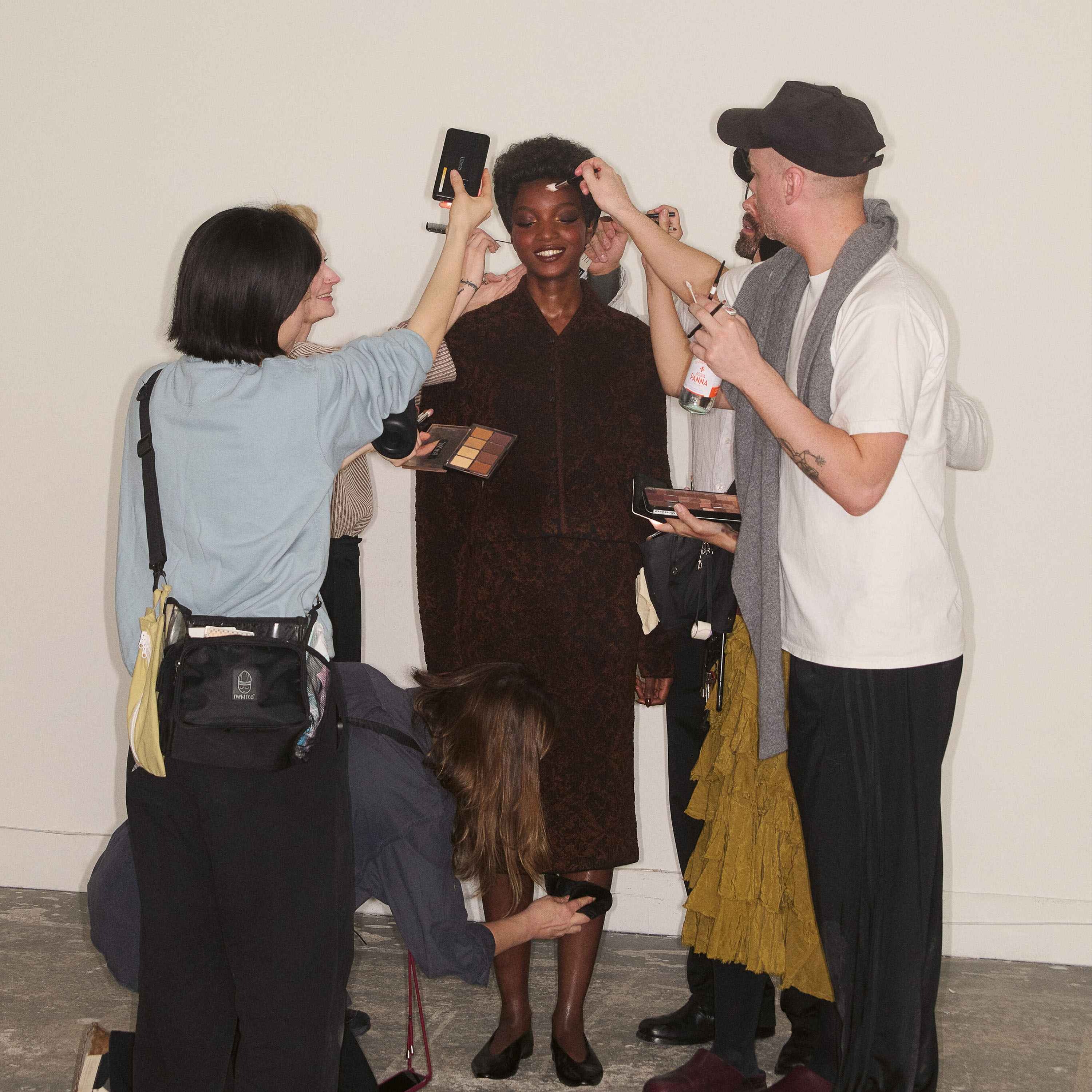
State of the global luxury industry in 2026—uncertainty from geopolitics and tech disruption; how brands are regaining demand; and where attention, AI, and product categories are shifting.
Luca Solka is Managing Director and Global Head of Luxury Goods at Bernstein (equity “sell-side” perspective using market/traffic data). Jonathan Wingfield is Editor-in-Chief of System Magazine (culture/creative pulse lens).
Written by AI. May contain mistakes.
Discussion on the current state of the luxury industry with expert guests.
“We analyze this new industry paradigm through two distinct lenses, the clinical data-driven reality of the equity markets and the visceral creative pulse of culture.”
Overview of how the luxury fashion market is currently performing.
“Imran Ahmed, Luca Sorka, welcome and thank you as always for your precious time.”
Analysis of how recent geopolitical events are affecting the luxury market.
“by you is your ability to really get into and describe the narratives behind these market figures.”
Discussion on how luxury brands are adapting to recent challenges in the market.
“Would you say that where we're at right now, in terms of the market, is the one thing that is certain is just the sheer scale of uncertainty?”
Exploration of how luxury brands are leveraging AI for cost savings.
“So you've both alluded to the idea that the past 18-24 months have been defined by an industry-wide contraction of the market.”
Learn how AI is transforming the fashion industry and its operations.
“a variety of different angles, on a model, not on a model, in moving image, from the back, from the front to the side.”
Explore the current consumption trends in luxury markets, particularly in the US and China.
“The accounting platform for small businesses.”
Understand the shift towards jewelry and mid-priced luxury goods in consumer preferences.
“or is it still everything as has been sort of over the last sort of 5-10 years?”
Explore the potential growth in the mid-price segment of fashion.
“And maybe you find a good one from a content viewpoint at Zara 300 or 400.”
Discuss the early indicators of designer performance and consumer responses.
“Fashion Week, of this sort of quote-unquote buying frenzy from the industry.”
Investigate how media hype affects consumer behavior and brand desirability.
“For Chanel, we won't know for a very long time because they only report their results on an annual basis with a significant delay.”
Examine how shifts in consumer behavior affect brand strategies in luxury.
“And at some point, Does just seeing it all the time just make it less desirable?”
Discuss the potential pitfalls of chasing visibility without meaningful engagement.
“the day, attracting consumer attention, driving traffic to your stores.”
Analyze the challenges facing Gucci and strategies for revitalization.
“problematically addicted to these metrics like media impact value, which for me is just the equivalent is of, is your brand making noise?”
Exploration of Gucci's identity crisis and the pressures on Kering's performance.
“Well I think for sure if caring has to revive Gucci has to revive.”
Discussion on Gucci's future and the challenges in defining its fashion agenda.
“Perhaps beyond Demna himself, but what can Gucci, the management team, the executives, and indeed across Kering Group, what can they be doing right now to reverse their kind of poorly performing fortunes?”
Analysis of using archetypes in fashion to connect brands with a diverse customer base.
“and that is so challenged and that has so many problems, tends to resonate with people in a way.”
Insights into Prada's acquisition of Versace and the potential for brand transformation.
“Let's stay in Italy, shift our attention to Milan.”
Discussion on Versace's brand strength and the potential for revitalization.
“Well, I guess I would say Versace is neither a sleeping beauty, nor is it a corpse.”
Exploring the implications of John Galliano's contract with Zara and its effects on luxury fashion.
“What is all this blurring of luxury and mass market fashion doing to the wider market?”
A look into the impact of industry consolidation on young fashion designers and their career paths.
“And I don't think all customers are just going to let Zara and Galliano off for those issues that still need to be addressed.”
Discussion on the consolidation in the luxury market and the emerging opportunities for multi-brand environments.
“We recently published a long report, the Fifth Avenue Phoenix, looking at how this could potentially be achieved and who are the various actors that are trying their best to get there.”
Guidance on the path for young designers, emphasizing the importance of experience before launching their own brands.
“This is the eternal question that I used to talk to young designers about when I was teaching at Central St.”
An overview of the challenges young designers face in the current fashion system and the need for resilience.
“I don't want to see the young designer economy in our industry diminished as it is now.”
Exploring new ways for designers to connect with consumers beyond traditional methods.
“Like we're at a moment of, as you know, we were talking about earlier, we're at a moment of like great change in the way everything works in the world.”

Get the gist, explore an idea or ask about something said.
 Claude
On The Business of Fashion Podcast, what are the key points of this episode?
Searching your listeningAutomatic transcript. May contain errors.
0:05Hi, this is Imran Amed, founder and CEO of the Business of Fashion. Welcome to the BOF podcast. It's Friday, May 15th. For the global luxury industry, the last two years have been defined by a prolonged period of meager growth, macro uncertainty, and a slow recovery in the critical Chinese market. But as we move further into 2026, the strategic imperative has shifted. It is no longer enough to simply wait for the cycle to turn. Leadership now requires navigating a rapidly changing environment where geopolitical volatility and technological disruption have become the baseline. This week on the BOF podcast, Jonathan Wingfield, Editor-in-Chief of System Magazine, joins me and Luca Solka, Managing Director and Global Head of Luxury Goods at Bernstein, for our regular seasonal conversation on the state of the industry.
1:02We analyze this new industry paradigm through two distinct lenses, the clinical data-driven reality of the equity markets and the visceral creative pulse of culture. We discuss the collapse of the old narrative within luxury, why brand heat has become a lazy currency, and why the real threat of AI isn't the technology itself, but the professionals who master it first. Here's my conversation with Luca Solka and Jonathan Wingfield on the BOF podcast. Imran Ahmed, Luca Sorka, welcome and thank you as always for your precious time. We're here once again this season to decipher what's going on in the business of fashion, how the market is faring and we are forever grateful for your insight and your expertise.
1:54So let's go straight in. Luca, I'd like to start with you with almost an absurdly broad question which is can you just give us an overview of how the luxury fashion market is currently performing?
2:07Luca Solca: My impression is that looking at it from a distance, the global luxury market has been improving in the first few months of 26. We had quite a significant amount of atonement and normalization in the past few years after the major growth we experienced post-COVID. 24 and 25 were meager years to a large extent. And what we saw starting mid-25 was an incremental, albeit U-shaped, recovery of Chinese demand, as well as a number of measures that luxury goods companies have implemented to try and amend previous successes, more compelling entry price points, more compelling newness. And this has been starting to work for a while, for a handful of quarters.
3:01Luca Solca: And this has been working in the first quarter. Then, clearly, the third Gulf War has brought a dark cloud of uncertainty on the economy, I would say, on the broader economy, not necessarily on the sector. We're not going to see that in the first quarter numbers to a large extent. But what I think the stock market is currently discounting is quite a negative impact on global demand going forward, as many of the stocks we cover are close to the lower end of their trading range. And that will depend very much on how long this Gulf War lasts. Okay, Imran, from your side, obviously, one of the things I've always been so impressed by you is your ability to really get into and describe the narratives behind these market figures.
3:53And so I just wanted to know, do you sense that things are as uncertain as the headlines suggest? You're someone who's very much on the ground and you're constantly interfacing with brands and with executives within the brands. What are you getting in terms of sort of testing the temperature? Yeah, it's a good question, because I think this idea of narratives around industry recovery or industry downturn, these are kind of narratives from a different time in the world when you could plan for three or five years into the future. And as Luca just pointed out, we started to see a recovery of the luxury sector, new creative directors bringing newness to the houses, some restructuring of the pricing pyramid and focus on entry level price points.
4:43And then you have yet another black swan moment appear and, you know, create another cloud of uncertainty. And so these ideas that there's these thick grand arcs around the way our industry is progressing is kind of shattered by the fact that if you just consider over the past six years, what we in the global community have been forced to reckon with. It's almost six years to the day that we were in our first lockdown during COVID. We recovered from that. There was a huge spike of interest in the industry. Everyone was out in the world. The economy looked like it was going to recover. Then the specter of inflation came.
5:21Then the war in Ukraine came. And now we're contending with really impossible to understand situation in the Middle East when it comes to geopolitics. Every day, every minute, things are shifting. And you can see that in the way the markets are responding. I guess the only good thing that comes out of it is that the industry has become more adept and more nimble at responding to these situations. Would you say, Luca, does that shine with you? Would you say that where we're at right now, in terms of the market, is the one thing that is certain is just the sheer scale of uncertainty?
5:56Luca Solca: Well, we definitely had a huge amount of events in the most recent years that were a major and of an unprecedented scale. I think that the geopolitical balance is no longer in a more of the same kind of environment. You know, discussing President Trump's decisions, we didn't even mention so far Liberation Day and the import duties, which was another major disruption that we had to go through last year. So indeed, we are in a paradigm shift, and this is demanding from all of us. And the industry, the luxury and fashion industry is no exception, to be a lot more flexible. Never mind the disruption that artificial intelligence is providing to a lot of industries.
6:50Luca Solca: and so you know welcome to the changing world. I mean we used to have these kinds of moments once every 10 years right if you think of like 9-11 and then the that was 2001 and then the global financial crisis was 2008 there was space and time between these moments and now we're living in a world where these kinds of earthquake, earth shattering, unexpected, hard to imagine, impossible things happening in the world around us. They're just happening more and more frequently. And as an entrepreneur myself, I just find it really, really challenging to just figure out how to make sense of everything.
7:35So I guess what we do is we try to focus on the things that are under our control, right? And I guess I think that's what I'm seeing a lot of people in the industry are realizing is there's only so much you can do, which is to focus on the things that you can manage. So that's why there is cost cutting, there is a reevaluation of longstanding operations and processes to try to figure out ways to just manage the things that you can manage. And that's, I think that's the reality of what it's like to run a big business of any kind nowadays. And you've both understandably touched on the events that are escalating as we speak.
8:15I mean, we're recording this conversation on Tuesday, April the 7th. Oil prices are seesawing amid President Trump's increasingly volatile and unpredictable declarations towards Iran. Given that the Middle East accounts for roughly 5-6 % of global luxury sales, how vulnerable are luxury fashion brands to the Middle East conflict right now? I mean, obviously, the wider repercussions, consumer confidence will be something that can only really be played out over time, but one presumes it will certainly affect. But given that over the past decades, we have, as a luxury fashion industry, really looked to the Gulf region as an incredible hotspot for sales and for, you know, where brands have been focusing.
9:03What do you think this will do? Luca, what do you think about this in terms of the actual region itself?
9:09Luca Solca: Direct exposure to the Middle East is not really the issue here. When we look at the Middle East, as you say, the global luxury industry is exposed to the tune of 6 % or so. It's a bit smaller than Japan. Clearly, it has been growing quite fast. But say that during the month of March, sales took a dive of 50%, which I think exaggerates the impact of the war. so far, you would have 100 basis points headwind to global growth in the first quarter. So that's not a big deal. Companies are telling us that first, their business in the Middle East is not at all at zero, but it's dented, but not materially dented.
9:57Luca Solca: There's lower traffic, but there's more outreach. Companies that perfected outreach processes during COVID-19, they dusted the off and implemented them again. There's lower tourism in the Middle East, but most of the companies we look at have global retail networks, and they're saying they're recapturing demand elsewhere. I think the big risk with the conflict in the Middle East is the indirect impact on the global economy that could potentially come from prices of oil and gas staying high and denting the sort of discretionary spent capacity of people around the world and producing a global recession.
10:43This would be something that we would have to worry if the war continued and if, more importantly,
10:51Luca Solca: gas and oil could not get out of the Persian Gulf. That is why I think President Trump is putting so much emphasis on the Strait of Hormuz, navigation has to resume very quickly if major damage to the global economy is to be avoided. And that, I think, is why markets have been so reactive to the potential agreement that the United States and Iran could possibly reach in the end of the blockade of the Strait of Olmos. So you've both alluded to the idea that the past 18-24 months have been defined by an industry-wide contraction of the market. As you said before, Luca yourself, things are somewhat changing as well.
11:37But I'd like to get a little bit further into this idea of how brands have been responding to this. You mentioned a few things that because brands have had to be more nimble. They've had to be more agile in shifting the way that they are communicating and the way that they're responding to these things. But I'd like to ask, can you get a little bit more into this for me? Are they cutting costs? If so, where? Is it about doubling down on specific elements, whether that's marketing, sales, distribution, the activity, the strategy, and so forth? And how are these shifts affecting the wider industry?
12:11There's so many things that I could mention, but the one I will mention now is probably the most controversial one, which is the use of artificial intelligence. I think it would surprise a lot of people just how much companies are beginning to focus on where AI presents opportunities to cut costs, particularly in the creation of once very expensive fashion imagery. Now, anytime we write about this in any place on BOF, it elicits a very, very polarizing reaction. Polarizing might not even be the right word. I might say it's almost universally negative. You know, and understandably so because a lot of people's livelihoods are connected to the creation of the imagery that helps to weave the myths of the luxury sector and create desire and excitement and interest in the products that this industry creates.
13:18But the truth is, the amount of money that's spent on marketing and image creation in our industry, it's a very significant cost line. So if you're a manager of a big luxury company and the industry is facing headwinds and you need to think about how you're going to optimize what you are doing, one of the places you're looking at is the spend on image creation. You know, I've been talking to some people behind the scenes and I'm not necessarily talking about images that are in campaigns. I'm talking about the images that populate websites, you know, all that e-commerce imagery, you know, every product that's on a website now has 10 or 15 images and videos that help to show a potential customer that product from a variety of different angles, on a model, not on a model, in moving image, from the back, from the front to the side.
14:18And so all of the effort that has gone historically into creating that kind of imagery, a lot of that can now be created in AI at a fraction of the cost. And so this is one area that I'm watching quite closely. People who are operating in the AI space are telling me they're helping companies to save. I don't yet have companies telling me themselves what they're actually saving because I think people are being quite under the radar about it. precisely because it creates this kind of online backlash. I mean, we saw the backlash that happened when Gucci released very transparently, I think, some AI imagery before Demna's show in Milan.
15:02Recently, we saw Prada do what I thought was like a really interesting campaign where AI wasn't used to just replicate what the industry can already do. AI was used in a way as a creative tool to augment what creative people can do. And by sheer virtue of the fact that companies spend a lot of money on some of these image creation activities, they're going to be looking to find ways to optimize it. Just to be clear, that doesn't mean I think it replaces creativity or that humans aren't necessary or required in our industry because they absolutely are. But there's some parts of the industry where there's low levels of differentiation and a lot of replication and duplication of steps, which is ideal for the kind of work that AI can do.
15:51Luca, from your perspective, what is the discussion about AI and obviously how it will increasingly become such a fundamental role to the fashion industry from your perspective and from the market side? Where do you see that going? Or what do you see the effects it'll be having or it is currently having right now?
16:09Luca Solca: I think artificial intelligence applications are likely going to have a major impact on our societies. We've seen in the past 30 or 40 years the impact on the blue-collar working class from globalization and delocalization and immigration. What we are about to see is the impact on the white-collar working class as artificial intelligence applications completely change the way we work. And that is going to be both good news and bad news because on the one hand, you could do a lot more things more efficiently. And that is the good news. The bad news is that there's a lot of people today that are doing stuff which is relatively menial, and yet they get a salary and they earn a living and they spend and they sustain our industry and other industries.
17:03Luca Solca: So I think the issue is going to be the speed of this revolution and how society is going to be able to repurpose people and invent new jobs and train people for new jobs. There's a huge amount of sectors that are going to be impacted. I work on the sell side. We see now applications that can create models almost automatically or entirely automatically in some cases, And that causes some of our clients to reconsider how many juniors they need to build models, for example. That's just one example. Let's look at translations. Let's look at customer service applications, autonomous driving down the road, the destiny of taxi drivers, interpreters, and so on.
17:59Luca Solca: These are all people that have good jobs today and make a living. And so that, I think, is the most important effect we need to monitor. The risk is that we get even more wealth and income polarization in our societies. When it comes to the industry itself, I think, as Imran was saying, this would be a great way to address the issue of producing content for social media, for example, for online catalogs. we have a significantly bigger amount of content that luxury and fashion companies have to produce. This has required a huge increase in the number of staff dedicated to this area. Artificial intelligence can normalize that.
18:51Luca Solca: And then I think another major application is CRM, creating an intelligent dialogue with your clients through artificial intelligence can be done very effectively and very appropriately. Well, today, I think with the exception of the very top clients, most of us are getting mass emails that are not necessarily relevant for us. So I think in these two areas, there's quite a lot that can be done, but there's a lot more that is happening. We started with operations, but we're getting more and more in client-facing processes and functions. and I think we are going to continue to see a lot of that going forward.
19:34Luca Solca: And it's happening very quickly. We'll be right back with more on the BOF podcast.
19:45Picture this. It's late at night and you're scrolling through your feeds. When all of a sudden you see it, that one product that you've been looking for. You click on the link, add to cart, maybe even shop around a little more before finally hitting checkout. As you're filling in your address, you realize you don't have your card anywhere near you. That's when you see it. That purple pay button that has all your information saved. Making checking out as simple as a simple tap of your screen. Shopify is the commerce platform behind millions of businesses around the world and 10 % of all e-commerce in the U.S.
20:18From household names like Allbirds and Chubbies to brands just getting started. Best yet, Shopify is your commerce expert with world-class expertise in everything from managing inventory to international shipping to processing returns and beyond. See less carts going abandoned and more sales go with Shopify and their ShopPay button. Sign up for your$1 per month trial today at shopify.com slash bofpodcast. Go to shopify.com slash bofpodcast. That's shopify.com slash bofpodcast.
20:54Business is booming. But you know what really helped? Zero. The accounting platform for small businesses. I used to think spreadsheets were just part of it. Ugh. But real-time cash flow? Wow. Invoices that chase themselves? Even better. Books that automate? That's a big one. And I can keep track from my phone while I get the job done. No spreadsheet in sight. What a life. Do right by yourself and your business and search XERO for your free trial. Conditions apply.
21:29Before we paint a picture of complete doom and gloom, let's just talk a bit about where we do see significant spending happening right now or certainly where it's heading towards. Where is the market particularly buoyant right now in terms of consumption? Imran, tell me about that, what you understand about that. Well, buoyancy, I guess, is all relative. But if I was a big brand CEO right now, I would just go to where the numbers tell me to go. And that is to the two biggest consumer markets in the world, which are the US and China. In a market where you're not seeing a ton of growth, you really just have to focus on scale.
22:12And I just came back from Shanghai a couple of days ago. And that market has completely transformed since I was last there, which was seven years ago. The one thing hasn't changed is just how big it is. And you just get this sense of just the scale of the market there. So even though it's flat or shrinking or slightly growing, depending on who you talk to, that market is a really, really dynamic and very, very interesting market. The customer is now much more discerning, much more demanding, much more focused on authentic storytelling as opposed to marketing mumbo jumbo. And so they see through all of the smoke and mirrors of the industry.
22:57But if you know how to talk to them, if what you're creating is really special, if you're offering value and you find ways to connect with them on a more emotional, on a deeper level, then that's a really interesting market for the taking. Because not everybody's able to do that. And it's very interesting to me because walking the streets of Shanghai, and Johnny, I know you said you were recently there, the industry that used to happen in shiny shopping malls is now moving to the streets. in Shanghai. There's so much street culture. It was so interesting for me just to see just how much it has changed.
23:32But, you know, I attended the Margiela show and had a quick chat with their CEO and with Renzo Rosso at a dinner that they hosted later that evening. And, you know, they were both happy with the performance of Margiela in China, which is still continuing to do well, because I think the kind of, if you know, you know quality about that brand and the discretion and anonymity that's associated with that brand. All of those things are very appealing to Chinese customers. But then if you see the stores that Margiela has in Shanghai, they have this huge facades with all this branding on them, you know, which seems really out of step with what that brand is all about, but also out of step, I think, with what customers are looking for.
24:12Like the most interesting retail experiences that I had weren't in shopping malls, they were in these beautiful old heritage buildings. The designer Uma Wang has this incredible building that, you know, She had this tiny little store when I went to meet her for the first time back in 2014. Now she's taken over the entire building. It's this heritage building. It's filled with beautiful things. She's curated a bunch of different brands, some of which are European, some of which are Chinese. She just created this very interesting, very cozy, intimate space. How do the big luxury brands adjust this big box strategy for what they're doing?
24:51And then the other market, of course, is the US. And in spite of all the challenges that are going on there domestically and immigration and all the questions that that country and its people are grappling with, by all reports, that market is still performing reasonably well and the customers are still really engaged. And you could see all of the high-end customers really going gaga over Mathieu Blasie's first collection when it dropped there recently. So, like, there is still interest in both of those markets. It's just about really connecting with the customers on a deeper level. Those are the markets I would really focus on, even though they aren't growing anywhere near what they were during COVID.
25:34And Luca, in terms of, I mean, markets aside or sectors aside, what about actual products that are performing? Are there any surprises? Is there any sense of evolution? or is it still everything as has been sort of over the last sort of 5-10 years? Do you see anything emerging? Do you see any trends emerging in terms of just, you know, people looking to buy or to invest in different types of products?
25:56Luca Solca: Well, for sure, I think we're going through quite a significantly strong cycle for jewelry. Jewelry has become cheaper relative to leather goods as consumers have now the option to spend$5 ,000 or even$10 ,000 for a reputed brand handbag, but they can spend the same amount of money or even less than that for a piece of jewelry or a watch from Cartier. So we're seeing jewelry as a category outperform soft luxury, and this has been the case for at least a couple of years at the moment. If we look at the organic growth of the fashion and leather goods division of LVMH and compare it to the jury mesons of Richemont, we see that in the second quarter of 25, Richemont was ahead by 20 percentage points, then 19 percentage points in the third quarter and 17 in the fourth quarter.
26:55Luca Solca: So this cycle, I don't think is going to end abruptly and I think it's going to sustain. Another thing we've seen is that with the high-end European brands all focused on trading up and serving the rich and coming up with limited editions and editions of one and so on, there's been quite a significant price umbrella that has been created for brands to serve the aspirational consumers and the lower end of the luxury goods consumer audience. We've seen some American brands make the most of it. take Coach or Ralph Lauren for an example. But I think beyond that, if we look at most fashion retailers like Zara, I think their ability to come up with more refined versions of their products and more expensive versions of their products is very material indeed.
27:56Luca Solca: You don't want maybe to spend 100 euros for a jacket, but you don't want to spend 3 ,000 euros for a jacket either. And maybe you find a good one from a content viewpoint at Zara 300 or 400. And I think that this business, this sort of mid price segment, is definitely one of the areas that could potentially grow the most and has been growing the most in the past few quarters. Imran, you alluded to, you spoke just before about Chanel and North America's appetite for Mathieu Blaise's sort of era as it now hits the retail environment and people are responding to it. There was a lot of talk in the past couple of months, certainly during Paris Fashion Week, of this sort of quote-unquote buying frenzy from the industry.
28:46And there have been reports of the fashion industry and fashion industries and so forth kind of queuing outside the Rue Conbonne, waiting to, you know, to get their hands on sort of, I suppose, what could be seen as a historical sort of debut collection for Mathieu Blazy. But I guess my question is, do you think it's too early really for us to make any kind of prediction as to how well sort of any of the new designers will be faring at their houses? Certainly the big ones, you know, when you think about Mathieu Blazy at Chanel and Jonathan Anderson at Dior. And I suppose that opens up the other question, which is, do you think that media coverage today, this hype and something that's kind of quite industry-centric.
29:23Could that still today in the environment where we're in, could that still translate quickly and powerfully into a wider consumer upturn? Well, let me take both of those questions one by one. The first question was, is it too early for us to know how those designers' resets are performing? It's too early for us to know, Johnny, but the people running those businesses, checking the figures in from when they drop products in the store and how things are moving and how that compares to the week before and how that compares to the year before. They definitely are starting to get some signals around how things are working.
30:01They'll also know which stores have the new product and which stores don't have the new product. When I was in Shanghai, I went to the Chanel store. The Chanel store there didn't really have as much of the new product as the stores in Europe or North America seem to have. So those people know, and they have some early signals of whether these resets are registering. And the wider question around Chanel is, is it alienating the old Chanel customer? You know, there's all of these things that we won't know and will eventually know. For Chanel, we won't know for a very long time because they only report their results on an annual basis with a significant delay.
30:41But for LVMH brands, for Caring brands, as we start to see their quarterly results come through for Q1 2026, we should have a pretty good sign. Jonathan Anderson's first Dior drop happened, I think, on January 2nd. His collections have been theoretically in the store and available online in some part since the beginning of the year. on the second question when it comes to hype and industry hype and whether that matters you know it's such an such an interesting thing to think about because when I saw that absolute frenzy and it was a frenzy because I saw it for myself I didn't just watch it on Instagram I went to the Chanel store not on Rue Cambon but on Avenue Montaigne to just see for myself what was going on in the stores.
31:31Like you could feel a different energy inside that Chanel store. And Chanel stores, by the way, especially the ones in Paris are always busy. So it wasn't just that they were busy. It was the way I saw people engaging with that new product that made me think, wow, this could actually be something real. There was also the Instagram hype, which was all the fashion editors you were referring to, because I didn't go to the moment when all the fashion editors were there. I was just watching regular customers engage with the new product. In a way, I thought that was really smart, that they dropped the first product in Paris just when Fashion Week was happening.
32:16They knew all of those editors would be in town, that they would get excited, that they would talk about it on Instagram. And then I thought, was it very strategic that exactly the week after, the products also dropped in London and in New York, and you saw the same phenomenon happen there. And then the products have appeared in other stores around the world. And I thought, wow, leave aside ad campaigns, which is what I think so many of us still focus on. Like, what a great and interesting and powerful organic viral marketing strategy to get people, A, to be aware that Mathieu Blasi's products are in the store and B, to show the kind of emotional response that people were having to those products.
33:01And then I started thinking about it a bit more. And I was like, wow, could this be a bit dangerous? Could this be a bit making it too ubiquitous so that there is this kind of sense of hype and potential overexposure, which dilutes as opposed to amplifies desirability? It's just a question. I don't know, but it did make me wonder, you know, we are operating a luxury industry in an age when there's just this preponderance of this like saturation of this overwhelming supply of fashion imagery, content, videos, reels, TikToks, hot takes, whatever you want to call it, we see it everywhere. And at some point, Does just seeing it all the time just make it less desirable?
33:54I don't know. Maybe. Very interesting. Luca, from your perspective, I'm thinking specifically about Chanel and also Dior in parallel to the arrival of new creative directors and all the kind of, as Imran was saying, the kind of the media hype and the significance on that as well, you know, around sort of strategy. Beyond and aside from all of that, what would you be thinking about from Chanel's perspective and Dior's perspective? What evidence do you see of kind of broader shift in strategy beyond simply the appointment of a new creative director? And what other parts of the business do you think would be looking to sort of themselves to kind of renew themselves, to reinvent themselves in conjunction with this, with the hype and with the kind of the creative side, the dream as it were of these brands?
34:44Luca Solca: Maybe I will be using a sailing analogy. If the wind is very strong, then you need to manage the boat in a relatively different way than if the wind is weak. We are in a weak wind condition. If the wind is consumer demand, there's not a lot of it at the moment. And so I think your tactic and how you manage to get this wind is very important indeed. And I think that in this circumstance, as Imran was saying, it's not just a matter of having newness in the stores, but becoming hot, becoming the talk of the day, attracting consumer attention, driving traffic to your stores. We saw, for example, assessing traffic in China, that traffic has developed in the first quarter.
35:41Luca Solca: We measured the weekend before Chinese New Year, and we compared it to the same measure that we carried out in 25, traffic was up 47 % overall. But traffic was incredibly concentrated. And those who were at the top of this newness and re-energizing effort, like Chanel and Yor, were miles ahead. Those who had been doing more of the same or had been perceived to be doing more of the same, were actually seeing a decline in traffic. And among those, there was Hermès. So I think to some extent, competition is changing. There's a lot more focus and a lot more attention in trying to create hype, in trying to create tension, in trying to grab the limelight.
36:32Luca Solca: And in this same vein, I think you see not just fashion shows or creativity, but also events, temporary stores. Think about, for example, the Louis in Shanghai, the temporary store that Vuitton has opened in the shape of a ship that has attracted a huge amount of social media commentary, has attracted a huge amount of people coming to the store. and has revived the fortunes of Vuitton at a time which was difficult for the brand because China is not producing the same amount of new consumers as in the past. So I think that this effort to grab attention is really the core of what luxury goods companies are trying to do today in many different ways, trying to astonish and surprise consumers so that people turn their heads and look at them.
37:32And I think I would add to that just this notion of attention for attention's sake is also, I think, slightly problematic because I think that we need to differentiate between the kind of attention that converts or gets someone interested, engage with you as a brand, either by going to your website or walking into a store, and the kind of attention, which is just visibility and doesn't really translate into something measurable and meaningful for you as a company. And as an industry, I think we've become unnecessarily and maybe problematically addicted to these metrics like media impact value, which for me is just the equivalent is of, is your brand making noise?
38:26Noise alone is not enough to get people to convert, to get people to engage. What we really need is the kind of attention that gets people excited and interested to come into your store. And I think the things that Luca was talking about, like that Louis store in Shanghai, I have to say, I was very skeptical of that store when I read about it and heard about it. Only when I went there and I literally saw thousands of people outside that store, you know, just hanging out, being there in a line trying to get in, and then people in the store at the end of the exhibition buying things, did I realize, okay, this is the kind of attention and kind of marketing activation in quotation marks that actually works.
39:16There's so much of the industry that's still doing stuff that gets online attention, but doesn't really have any meaningful value for the business itself. And I think that's what executives really need to differentiate between is what kind of attention really matters.
39:33Luca Solca: There's sometimes a very negative ricochet from attracting attention because the temptation could be to be over the top when it comes to your communication. But we've seen a number of communication scandals because, you know, by sailing very close to the wind at one point, you capsize. And we had a few examples of that, including Balenciaga a few years ago with the advertisement that was lambasted because of the pedophile innuendo. So attracting attention has to be close to the brand DNA. it has to be exciting for consumers and it has to be within what is acceptable for your global audience. And what is acceptable for your global audience can be very different from one country to the other.
40:21Yeah. And if we don't think about things in that way, we end up doing things that get us attention that may be, you know, very risky as Luca points out. And so, you know, things need to be safe for a brand. The problem is internet algorithms incentivize people to do extreme things because extreme things get you attention. And so I think we're in a really dangerous, potentially dangerous situation where people, you know, like I see some of these fashion shows where, you know, I see these reports after fashion week saying, oh, such and such brand won Fashion Week because they got$85 million of media impact value from their front row.
41:05And I'm like, does it really matter? Like, is it that easy that you just invite 10 huge TikTok or Instagram celebrities or stars to your front row and they post about you and their fans post about them being at the show and then their fans' fans post about them being at the show and then it's just like this. Does that really do anything? No, it doesn't. And I think we're spending a lot of time and energy on things that don't really translate to the bottom line. I mean, arguably the brand and the designer who is more under the spotlight than ever before when it comes to attention grabbing and hotness, to your word, Luca, is Gucci and Demner.
41:47And Demner, obviously, for fall, winter 26, he presented his first runway collection, which I think we can all say was, you know, delivered quite a divisive reaction across the industry, obviously social media more than ever before. and so I guess my question is do you think that this reaction will increase pressure on caring do you think it's something that's superficial that is about attention and is not actually about the fundamentals and the foundations of how Gucci can instigate a kind of what needs to be some pretty significant regrowth in order to sort of to shift the the broader fortunes of the caring group and so I guess that's one of my questions the other one is what can Gucci and what can the caring group be doing to reverse its performing fortunes you know that there seems to be increasingly now this sort of the entire group is almost expecting Demner to sort of perform wonders and for everything to be readjusted and I think that I think it's an important question to address but Luca what are your thoughts on that?
42:52Luca Solca: Well I think for sure if caring has to revive Gucci has to revive. And my view is that Gucci can only revive if it finds its soul again. The attempt in the past three years under Savato De Sano to make Gucci a quiet luxury and sort of subdued kind of brand, Bon Chic, Bon Genre, was not really working because it wasn't going to what people have in their minds as the Gucci identity. It was like if Gucci was camouflaging, it didn't sound compelling, it didn't look compelling. What I think is good with Demna is that Demna, to a large extent, is trying to go back to what Gucci is, which is a bit over the top, leaning on the sexy side.
43:48Luca Solca: I've been doing a bit of homework on how this new collection has been received. And one positive element I could pick up is that fashion with the skimpy dresses and all of that is more Gucci than what we had seen for a few years. Then, when it comes to handbags and footwear, we received a much more mixed reaction. And I would say, overall negative reaction as this failed so far to excite, which is causing us to be sort of prudent on the Gucci revival. We don't see, as we had seen at other times, the prospects of a V-shaped quick recovery. We don't see, just to be clear, the same effect that we've seen around around Mathieu Blais' Chanel or Alessandro Michele's Gucci 10 years ago, we see a step in the right direction with a lot more steps that still need to be taken.
44:53Imran, what are your thoughts on this? Perhaps beyond Demna himself, but what can Gucci, the management team, the executives, and indeed across Kering Group, what can they be doing right now to reverse their kind of poorly performing fortunes? I mean, there's a whole separate interview on that, Jonathan. I mean, it's a very broad question. Probably one of the most important questions for the industry, actually. You know, as I recently wrote, and which I think Luca was getting to, we all need Demna to succeed at Gucci. And for Gucci to succeed, for Caring to succeed. And for Caring to succeed in order for the wider luxury industry to succeed.
45:33I mean, there is a lot resting on this. You know, I guess what I'm waiting to see, because, you know, in my view, the show we saw in Milan did not resolve some of the questions I had around Gucci's future. I left that show feeling more confused than I did clear about where the brand is going. What I'm told is that during the upcoming show that they'll be doing in New York, which is called Gucci Core, focused more on the bottom half of the pyramid, it will flesh out more clearly once we see that show what the overall strategy is. So that's what I'm waiting for. You know, the thing that really resonated with me when I once spoke to Mr.
46:31Pino about Gucci is he told me Gucci has always been about setting the fashion agenda. Gucci should always be about setting the fashion agenda. And when Gucci was at its heights under Tom Ford and under Alessandro Michele, it's two periods of great success. That's when Gucci was setting the fashion agenda. I think that's why the Sabato di Sarno moment didn't work, because Gucci went from being ahead of the industry, like, you know, pushing the industry forward to following the industry in this kind of quieter luxury approach, which was, you know, as Luca points out, not consistent with the DNA of that brand.
47:18What I'm not sure about is whether the fashion agenda that's being set and what Luca called skimpy dresses, I'm not sure that's the fashion agenda that's going to push the whole industry ahead. I could be wrong. I'm older than a lot of the people I think that show was targeted at. I come from a different approach. What I'm looking for from Demna is more of a sense of the joy and happiness that I see in him personally, and which I think in a world that is so dystopic and that is so challenged and that has so many problems, tends to resonate with people in a way. So I think about that show he did that was themed on The Simpsons.
48:08Or I think about the very first moment that he had for Gucci, La Familia, in that theater that they created in Milan. I think what made those moments good is there was a levity about them. And going back to Mathieu Blasie and Chanel, part of the reason why I think that is resonating is because there is this connection that people have right now with brands that spark a sense of joy. One of Demner's kind of design components, shall we say, or his strategic components, both at Balenciaga and at VetBOM and now at Gucci, has been this idea of the archetypes. And it's also a word that I see increasingly across many brands.
48:50And I guess my question is, do you think that this idea of showcasing kind of quote-unquote real customer archetypes is actually a very smart strategy in today's market to pinpoint a variety, a broad variety of different types of style of clothing and therefore product ranges and so forth. And so rather than alienating anyone, it's actually an idea of kind of embracing a broader structure. And I think, as you said, Imran, in La Familia collection, there was a pretty clear display of that, maybe less so on the runway in February. But do you think this is something that can actually bring brands closer to their actual customers?
49:26Or do you think it is, to be honest, It's just a sort of marketing and it's a bit of artifice that nonetheless is something that seems to be very much of the moment right now. Well, what I like about the archetypes approach in theory is that it means a brand as big as Gucci has something for everybody. You know, and I think when Alessandro Michele was there, you know, it was a very specific vision for Gucci. But somehow anyone could walk into a store and find a way of buying something that made them feel part of that vision. He didn't take an archetypal approach necessarily, but he had an approach where everyone could see themselves somehow in it.
50:19And it was merchandised in a way that everyone could find something and buy it and be a part of it. In theory, you should be able to do that with archetypes too, right? If you have a variety and a range of archetypes, then more people can see themselves reflected in one of those archetypes. I guess what I didn't necessarily see in that Gucci show was the range of archetypes that a broad group of people for a brand that wants to regain its position as a 10 billion euro brand. I didn't see enough variety there. I just didn't, I didn't, I couldn't see how many, like how would a 65 year old, very discerning luxury customer in China buy into that vision?
51:14How would, you know, a more understated fashion neutral investment banker in New York buy into that vision? You know, in the Alessandro Michele days, the woman could have bought like one beautifully embellished sweater. And the investment banker could have bought a pair of those ubiquitous Gucci sneakers that we saw everyone wearing. Or the furry slippers that, you know, Michele introduced. What I didn't see on that runway was that range. And like I said, what I'm told is that we'll see more of that sense of range in this upcoming show in New York. Let's stay in Italy, shift our attention to Milan.
52:00And obviously the expectation now of Prada having acquired Versace, having now appointed Peter Muglier. Luca, tell me a little bit about your understanding of this pretty, you know, kind of significant move that obviously has yet to really been played out. but there's obviously there will be increasing expectation over the coming year. What's your understanding and expectation of it? Do you think a transformation of a brand like Versace, which one would imagine under the tutelage and the ownership of Prada, there will be subject to some pretty significant change. Do you think that's something that could translate into a period of explosive growth?
52:40Luca Solca: I will be quite transparent about it. And to use the understatement of the day, the market didn't like that Prada bought Versace. This seems like a digression, a potential destruction. Prada has a poor track record of M &A, if we think about Helmut Lund, Jill Sander, Church. These were not good acquisitions in the past. And so I think the whole market investors have been sitting on the sidelines, waiting and seeing. And I think that the very significant downward trajectory of the prior share price is revealing. The big question mark on Versace is whether Versace is a sleeping beauty or is a corpse.
53:36Luca Solca: Clearly, there's a huge notoriety around the brand, and provided you inject the relevant newness that is both relevant versus what the market wants to see now, and also relevant relative to what people have in their minds, Versace's DNA is, then I think you could potentially come back. Dario Vitale's collection as far as I could understand talking to buyers and boutique owners was well received there was an interest in the brand so Peter Moulier is definitely a very talented designer he has done incredibly well at Alaya and we would be leaning on the positive on what he could potentially achieve.
54:35Luca Solca: We're starting from scratch again, but still, the brand is big in terms of how people know it. It has a very distinct character. I think it's positive that it's at the polar opposite of the Prada's minimalism stands for. I understand that they will want to maintain this distinct character. and the question is how do you interpret the Versace character in a way that is up-to-date and compelling which is I think the same question that you had to address when you were reinterpreting Chanel's character in a way that was compelling and up-to-date. Mathieu Blaisier has done that masterfully. Let's see what Peter will be able to achieve.
55:29emran do you said do you sense there is an appetite for versace and what versace stands for and obviously you know it's reinterpretation by peter millier is yet to be played out but do you sense that you know to to lucas point is this a sleeping beauty is it a corpse do you think that we could enter a period you know when you kind of see what's happening with gucci and the path that demner has taken towards a kind of a sexier you know archetypes and so forth and then And obviously with Versace's track record and what its kind of core values are, do you think there is an appetite or that could we be entering a period where that type of fashion could really become sort of front and center?
56:08Well, I guess I would say Versace is neither a sleeping beauty, nor is it a corpse. Versace is a strong, powerful woman in the need of a wonderful makeover. And I think she's a woman with a lot of potential, but the amount of work that's necessary to do that makeover is significant and we shouldn't underestimate it. But, you know, the brand undoubtedly has, you know, you could say it's one of the most under leveraged brands in the entire industry. If you compare the DNA of the brand, the visibility of the brand, the awareness of the brand, the history of the brand, the iconicity of the brand. I mean, Versace has all of the ingredients, but they just haven't been deployed recently in a way that's in keeping with a high-end luxury brand.
57:06Prada has successfully shown that it knows how to build and cultivate luxury brands. As we've discussed previously, their internal structures, processes, supply chains, management, governance are a lot more professionalized now. And as Luca pointed out, the Versace brand is really differentiated from what Prada does or what Miu Miu does. So in theory, I do think there's a really big opportunity here. And I would also say that if you look at the landscape of fashion brands at the moment, including some of the recent resets at Dior and Chanel, I don't see like a really beautifully sexy brand. You know, there was a time when you had Roberto Cavalli and you had Dolce Gabbana and you had Versace and you had all of these Italian brands that had that kind of vava voom factor of Italian fashion that only that Italian fashion does best.
58:12and maybe it's just not dawning upon me as I'm speaking right now, but I think there's an opening in the market for something really sexy. Maybe that's the space Gucci's also trying to play in, but I guess I'm looking for something a bit more polished and a bit more desirable. Maybe it's a bit even cliche. It's just that really, really easy to understand, sexy fashion. That, I think, is an opportunity. we'll be right back with more on the bof podcast
58:52so fashion month the show season this this season concluded ironically with the news that john galliano was entering into a two-year contract with zara and one presumes that over the coming months and few years, other luxury house designers will follow suit. What is all this blurring of luxury and mass market fashion doing to the wider market? And are we entering a post-luxury era? Or certainly will market share be taken post-luxury towards now to the mass because of this blurring? What are your thoughts on that, Luca?
59:30Luca Solca: Well, I think that there are huge structural changes that the industry needs to adjust to. And one of the most important structural changes we haven't discussed yet is the continuing shrinking of multi-brand distribution. It's difficult for you to stand out and to be in business if you're a small brand, either in the high-end or in the mid-price space with a dwindling base of multi-brand retailers. We've seen the durations of Saks and U.S. department stores. We've seen how European Mouinpah boutiques have been under pressure as the grey market has continued to dry up. and so to some extent I think the opportunity here for a company like Inditex is that they have a massive retail platform on which you can plug in a higher end offer and this can be in the shape of your own collections within the brands you already have This can be in the shape of add-on designers that you could potentially leverage with one-off collaborations or continuing collaborations.
1:01:00Luca Solca: And I think this is indeed distribution and having a viable retail platform is indeed what stands in the way of smaller brands standing up on their own legs. they all find it very difficult to operate monobrand stores and to do that sustainably and to have enough retail space productivity to be profitable with those stores. And so to some extent I think that the writing is on the wall that mass fashion retailers could potentially get quite a significant stake in this premium segment which has been, on the one hand, relinquished by high-end brands upgrading their offer and moving up their entry price products, and which is very hard to address by brands that could potentially be at that price but struggle to operate retail networks profitably.
1:02:05from your perspective Imran do you think the kind of the prospect of of John Galliano returning now obviously the fact that he's returning at Zara is nonetheless very significant but do you think you know given that there was a a universal love of John Swan Song at Margiela that there's been there is clear there's an there's an absolute undeniable appetite for his return what do you think about just the sort of the dimension of these two things John Galliano and Zara coming together beyond, obviously, the retail environment and the ownership and all this thing. And so the distribution is huge.
1:02:40But how enticing do you think the idea of Galliano and Zara, the two parts coming together, will play out? Well, first of all, it's so rare that something in fashion remains a secret. And so what I found pretty amazing about this is that they managed to keep it a secret. I mean, we were briefed about the news very, very shortly before the news broke. So we had a little head start there. But when I heard the news, I was genuinely surprised and very intrigued by this combination. From John Galliano's perspective, I wouldn't necessarily call it a return. I think it's a whole new incarnation for him.
1:03:29What an interesting new challenge for him. And what a bold statement about the state of fashion and creativity. And what an interesting way to connect with all of those customers that might have loved John Galliano's work at Dior or Margiela, but could never afford it. I mean, how democratic and modern is that? And how amazing to be a designer that can genuinely connect with the mass public beyond just the imagery of what you create by actually seeing more people wear your clothes. I thought that was amazing. And then from the Inditex and Zara perspective, as Luca mentions, they have been making a structural play at going a bit higher in the food chain in terms of pricing and positioning in the fashion industry.
1:04:23And historically, they'd done that with their very impressive stores that didn't look like mass fashion stores. They'd done that with the imagery and some of the people they collaborate with, some of the top creatives in the industry. But this was a really, really bold play because, you know, Galliano is undoubtedly one of the greatest creators our industry has ever seen. And to be able to partner up with him, I think they were like laying down the gauntlet of a new era for what fashion can be. And in a way, it earns them the right to play in this higher segment. Lots of brands are trying to do that, but when you get a creative with as much respect, resonance, and talent as Galliano has on board with what was once seen in a slightly disparaging way as a fast fashion brand, that's quite interesting.
1:05:30The challenges, of course, for both are that the amount of product that Zara produces on an annual basis, the model which it has traditionally used, which results in huge amounts of waste, the treatment of people in supply chains, the workers in those supply chains, all of those questions that we at BOF have been grappling with for more than a decade now when it comes to that part of our industry. all of those still hold true. And I don't think all customers are just going to let Zara and Galliano off for those issues that still need to be addressed. So we saw quite a mixed response when we broke that news.
1:06:15A lot of people were quite disappointed with the idea that such a respected designer would work with a fast fashion company. And so I don't think it's a simple thing to execute. And it definitely doesn't kind of mitigate or change some of the core issues of that operating model that need to be addressed, which, by the way, many companies in our industry need to address. But I was quite intrigued by it. And I think it's quite interesting to watch what happens there. now just as we finish off now this afternoon i have two last questions the first one is really about the future of fashion design fashion designers on one hand the lvmh prize for emerging designers the walmart prize these kind of things they offer a lot of fanfare around young and emerging design talent and they do provide sponsorship and a platform and they have you know They serve a great purpose.
1:07:16On the other hand, from my own experiences speaking to young designers and design students, more than ever, they're opting out of the idea of developing their own brand in favor of hoping to enter a design studio of a much bigger and more established house. So my question is, how might this kind of be shaping the mid to long term face of the global fashion industry? Are we going to see the big houses increasing to consolidate and less younger designers, younger emerging designers being able to have any degree of market share or any visibility? And what would your advice be to a young, talented designer wishing to launch and grow their own brand today?
1:08:00It's a big question, but I think it's important because ultimately it will have some impact on what we will see, as I said, to the mid to the long term. Luca, let's start with you. The continuing shrinking of multi-brand distribution and the rising stakes in competition,
1:08:20Luca Solca: when we look at the size of monobrand stores continuing to escalate, the budgets for events continuing to escalate and so on, is making this environment very, very difficult for anyone wanting to enter and establish a new business and start a new brand. That is a very different environment from when the industry or the new modern fashion and luxury industry started in the 70s and in the 80s of the last century. You need big bucks. You need to be able to hit the ground running. And that is almost never the case. And when you look at new designers trying to stand their ground, you find very, very, very few.
1:09:13Luca Solca: And maybe you find that some of them, the best of them, stand their ground for a limited amount of time. So my view is that the LVMH prize for young designers is a great tool for LVMH to get competitive advantage against competitors trying to secure the best talent. And I understand that these designers have an incentive in building a career in a group like that, because if they make it, then one day they become the chief designer of one of the major LVMH brands, and they become kings of the world to some extent, both in terms of reputation and in terms of financial rewards. So I struggle to blame them.
1:10:01Luca Solca: it's going to be a very high competition to get there and what I think we see from the other side of the fence is the risk that the overall offer could be poorer and that the choice consumers will have could be poorer because of this consolidation and because of this difficulty of finding a channel to reach consumers. So in my view, this represents a huge opportunity that from different directions, a number of players we mentioned in the text, but I think that there's lots of others from a different background trying to get to the same result. That is of creating a viable multi-brand environment where new propositions could thrive and where consumers could find more choice and also where consumers could find more price depths relative to what we've seen recently.
1:11:12Luca Solca: We recently published a long report, the Fifth Avenue Phoenix, looking at how this could potentially be achieved and who are the various actors that are trying their best to get there. It's still working progress. We haven't seen a winner emerge at this stage.
1:11:34Imran, to you now, what would your advice be to a young designer who was, you know, really committed to try to launch and grow their own brand today as opposed to be absorbed by a design studio at one of the bigger houses in Paris or in Milan or in New York? This is the eternal question that I used to talk to young designers about when I was teaching at Central St. Martins. And the big question that designers would be grappling with is exactly that. Should I go and try to launch my own business? Or should I go and try to get some experience for somewhere else? I mean, even back then, I always advised designers not to jump in to setting up their own brand right out of fashion school.
1:12:25It's the rational choice for a designer to learn first. You know, we're in a paradox at the moment, right? Our industry celebrates young talent more visibly than ever, but it's become harder than ever to build an independent business. You know, the economics are brutal. The production costs have increased. The wholesale market has collapsed. To compete with the big brands, you need a lot of capital and marketing. And so more so than ever, my advice would be, you know, go join a house, develop the skills, build a professional network, learn how the business works. That's not a failure of ambition.
1:13:07It's the market reality. And, you know, if you still want to build your own brand, then don't rush. You know, spend a few years, five years, seven years working inside different companies to learn how things work internally, learn how product development works, learn how merchandising works, learn how a commercial strategy works, build those factory and supplier relationships. And once you've got an understanding about the whole business of fashion and how it works, then think about, can I create and offer something new to the market that doesn't already exist? So when you're launching a business, you need to think like an entrepreneur, not just a designer.
1:13:50You know, this old romantic idea of the lone genius launching a brand from a studio on their own, like that doesn't really happen anymore. The designers who succeed independently today, they understand that the fashion industry is an industry, it's a business, and it requires all of those things I mentioned previously in order to make it work. And even then, with all of that experience, with all of those learnings, with that network, with those relationships, with that idea, going out and building your own business is one of the riskiest things you can do. And I encourage people to take those risks if they want to take them.
1:14:32But most fashion companies fail 90%, 95%, 99 % of startups don't work out. And you just have to be aware of that in advance and accept that might happen. And by the way, if you still have those five to seven years of experience and you went out and launched your own business and it didn't work, you still have that experience to rely on later if you need to find another way of earning a living. I don't want to see the young designer economy in our industry diminished as it is now. The system that we operate in now is so unfair to young designers. So in order to succeed in that system, you need to be so strong and so experienced and so clear about what you're doing and what you have to offer to work against what is a lot of forces that are working against independent design businesses now.
1:15:30And by the way, I would also just add as a footnote. After I wrote that piece, The Industry Eats It's Young, I got an avalanche of emails and messages from people all around the industry saying, I don't work in the traditional fashion system. I've built my own business my own way. I don't do the runway shows and the PR to try to get my collection into vogue. I don't do all of that anymore. I found my own way. So too that don't rely on this antiquated system that is so challenging for smaller businesses to navigate given all the power that big brands have. So think of new ways of doing business.
1:16:17Like we're at a moment of, as you know, we were talking about earlier, we're at a moment of like great change in the way everything works in the world. And this is one of those opportunities to go out and find new ways of connecting with customers. You know, if a video of customers in Chanel stores of customers, you know, in a frenzy, if that's one of the main things that drives people to a Chanel store, like people could you can create that kind of interest and attention that converts into commercial traction as a small business. I've seen it happen before. So I do think it's good to get experience first before you do that.
1:16:57well on that sobering but hopefully hopefully an optimistic point thank you luke solka thank you emran ahmed as always much appreciated let's wrap it up for this season and hopefully we'll
1:17:09Luca Solca: reconvene in six months time thank you very much indeed thank you thanks jonathan
1:17:53We'll see you next time. What a life. Do right by yourself and your business and search Xero for your free trial. Conditions apply.
For the global luxury industry, the last two years have been defined by a prolonged period of meagre growth, macro-uncertainty, and a slow recovery in the critical Chinese market. But as we move further into 2026, the strategic imperative has shifted. It is no longer enough to simply wait for the cycle to turn; leadership now requires navigating a rapidly-changing environment where geopolitical volatility and technological disruption have become the baseline.
In this episode of The BoF Podcast, Jonathan Wingfield, editor-in-chief of System Magazine joins Imran Amed and Luca Solca, managing director and global head of luxury goods at Bernstein, for their regular seasonal conversation on the state of the industry. They analyse this new industry paradigm through two distinct lenses: the clinical, data-driven reality of the equity markets, and the visceral, creative pulse of culture. They examining the collapse of the old narrative within luxury, why brand heat has become a lazy currency, and why the real threat of AI isn't the technology itself, but the professionals who master it first.
Key Insights:
Additional Resources:
Hosted on Acast. See acast.com/privacy for more information.


