 Ask ChatGPT
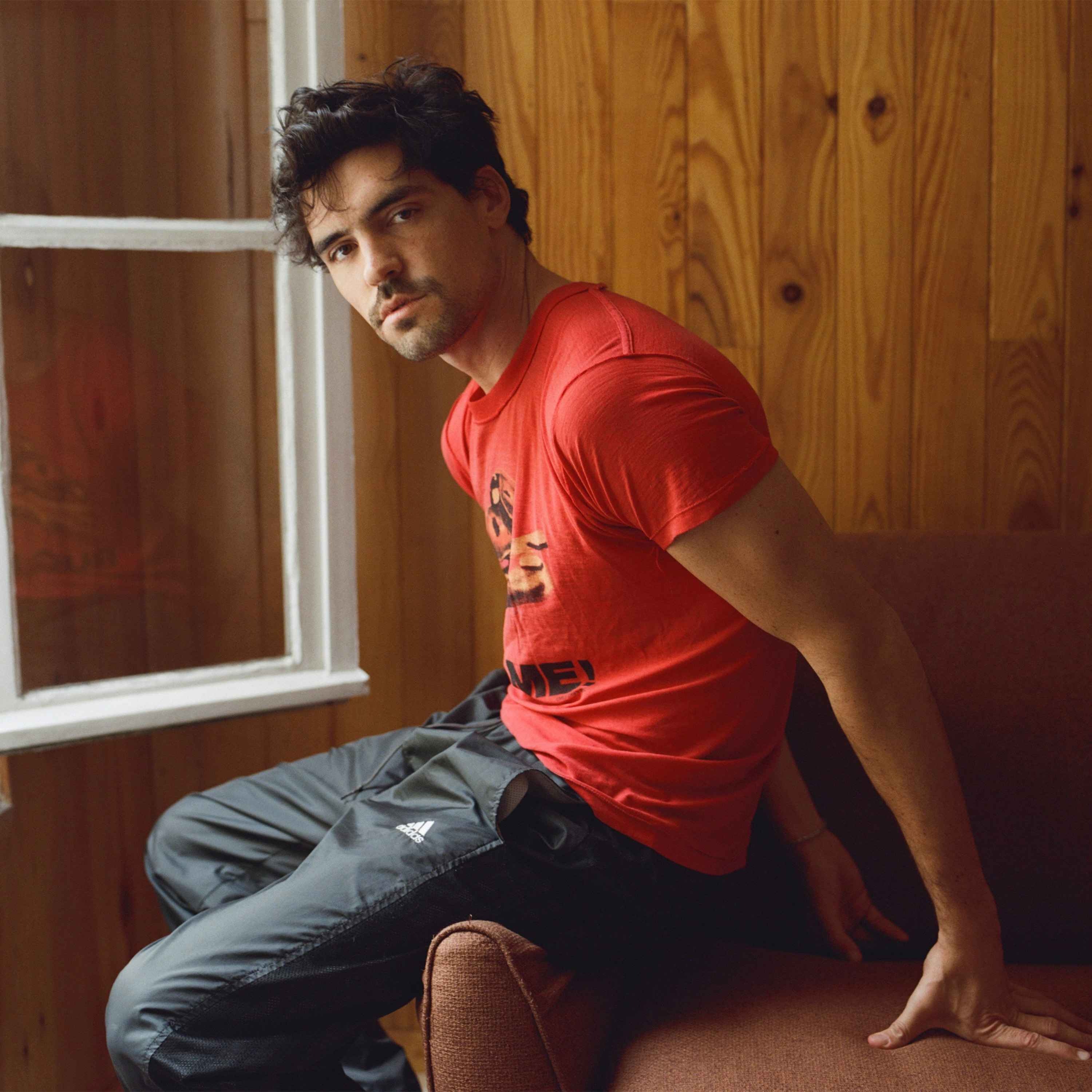

In this episode of The Business of Fashion Podcast, hosts Brian Baskin and Sheena Butler-Young delve into Hailey Bieber's beauty brand, Rhode, which was recently sold to E.l.f. Beauty for a remarkable $1 billion. The conversation features insights from Priya Rao, Executive Editor at The Business of Beauty at BoF, who discusses the significance of this acquisition and what it indicates about the current landscape of the beauty industry, particularly in the context of celebrity brands.
Written by AI. May contain mistakes.

Get the gist, explore an idea or ask about something said.
 Claude
On The Business of Fashion Podcast, what are the key points of this episode?
Searching your listeningAutomatic transcript. May contain errors.
0:07Hello and welcome to The Debrief from the Business of Fashion, where each week we delve into our most popular BOF professional stories with the correspondents who created them. I'm Executive Editor Brian Baskin. And I'm Senior Correspondent Sheena Butler-Young. Last week, the beauty world was sent into a frenzy by news that Elf Beauty will acquire Haley Bieber's Rode for a staggering$1 billion. It's the biggest beauty deal of the year, and it comes at a critical moment for both brands. Today, we're joined by our in-house Rode scholar, Executive Editor of the Business of Beauty, Priya Rao, sorry I had to, to understand why Elf chose Rode, how Hailey Bieber's brand managed to defy the recent downturn in celebrity beauty, and why there have been so many big acquisitions lately.
0:52Priya, welcome to The Debrief. Hi guys, it's great to be back. Priya, just to get us started here, tell us about Rode and tell us a bit about Hailey Bieber too. I think most people in our audience know who she is, but they're either going to know everything or they're going know, they're going to know nothing. So why don't you tell us a little? Sure. So to start with Haley, you know, she's of the Baldwin clan. She's one of Alex's nieces, and I believe Stephen's daughters. So she is, you know, considered part of the celebrity world. She's been a model. She's been a host on certain reality shows.
1:26And she really kind of blew up in the last like eight to 10 years. I would say probably her biggest achieving moment, I think, in popular culture has been marrying Justin Bieber. But she had been around for quite a while, you know, friends with Kendall, Kim and Kylie, the face of YSL, you know, she was kind of growing her own star simultaneously with being Mrs. Justin Bieber. And about three or four years ago, she really started building out this idea for Rode, which was like a minimalist, Gen Z forward beauty line that was really all about her. So, you know, I love that you said minimalist, because one of the big headlines on this is that there's only about 10 products.
2:03A lot of people are asking, what makes this assortment of 10 products by Haley Bieber worth$1 billion? Can you talk us through that valuation? Yeah, it's kind of incredible. I mean, she only started this line three years ago. It's all sold direct to consumer. And the product pacing has been quite paced. It's not like she's launching things every month. I mean, it's really been every six months, every four months, and it's been very intentional. I think a lot of the things that she started with first was skincare. So it really tied into her glaze, dewy aesthetic. And it was very much like dripping in that kind of glow.
2:40And then more recently, she's branched into cosmetics and she did so with, you know, blush, which has become her signature. Most recently, she moved into cosmetics with products that were so her with the pocket blush, which was a first of its kind product for them. And it really kind of showed off her idea of blush byness and how she wears blush all over her face. More recently, she's gotten really into lip gloss and lip liner. And so these are all products that really tie back to the Haley aesthetics, things that she herself would wear. You don't see her yet launching like mascara or SPF. These are not products that she's talking about, but she's definitely talked about blush.
3:17She's definitely talked about lip and skincare. It's so interesting that you phrase all of her business decisions in terms of what she likes, what she does. that that's very different from other celebrity beauty brands, right? I think so. I mean, I think what's different about this is just that she seems to be attaching products to virality after the fact. You know, it's not like she's launching a product, getting everybody on TikTok talking about it, and then it becomes part of her routine. It's kind of like she's doing the reverse. She really started these trends like latte makeup and donut glazed skin and then attached products that people could achieve the look with.
3:53So it feels very authentic. And I think what's really interesting about the products is like, I mean, one could argue there are better lip liners or better cleansers out there in the market, but she's an excellent marketer. And I think what's interesting here is that she has been able to talk about products authentically, whether it's her own products or other people's products. And it appears as though to the public that she really is a beauty lover and knows what she's talking about. I was going to say, are you taking notes that there's like blind blush? There's Latte Makeup. There's Donut Glaze.
4:25I'm just writing these all down. I remember the Glaze Donut era of beauty. I remember that very well. That seemed to be everywhere for a time. That was only two years ago, right? That was only two years ago. And she did a Krispy Kreme donut collection alongside with it. Oh, how far she's come. So is what Elf is buying here for a billion dollars? Is a lot of that her or is it the brand? I think it's both, actually. I mean, I think there's a lot of runway for the brand. It's only sold direct to consumer now. It is going into Sephora in the fall in the U.S. and the U.K. and Canada. But there's a lot of upside.
4:58There's a lot more products they can launch. There's a lot more retailers they can expand to. And Elf is excellent at doing that because they have distribution all over the place and worldwide. They also are buying into the prestige part of beauty as well because Elf is known as a mass brand. They previously were known as a dupe brand. And all the brands in their portfolio are sold at a much lower price point, whether it's Noturium or Key Soul Care or Well People. They're all sold in like Ulta and Target doors. So this kind of brings Elf into the prestige market. I was curious if they'd ever duped a road product.
5:32I don't think so. Not yet. If they do it, it won't count. That's true. Well, no, it won't count. She is going to be a strategic advisor for Elf. So I'm sure she's going to be able to bring a lot of her pull into the audience, into their broader audience. But Elf has always kind of been a brand for young people. They've always had a really good sense of what young people want, whether it's cheaper products, whether it's value driven products, and also been really smart with their marketing. So it seems like they are synergistically the right pairing. Something the CEO kept saying, well, he said it in our story and he said it elsewhere, is that they saw and wrote a like minded disruptor.
6:09What's been so disruptive about what Haley Bieber is doing? We're also at a point of fatigue on celebrity beauty brands, but she's managed to buck that trend, it seems. What is the disruption common denominator between both brands on that point? Well, I think it's for certainly the digitally native roots. Elf started as a digital brand. They were sold for years just online, and their products were$1,$3, and$5 when they launched about 25 years ago. So that like-mindedness, the ability to cut through the noise only online with no retailers and doing it on your own seems totally in line with one another.
6:43As for her herself, she's an out-of-the-box thinker. She started this brand on her own. She's kind of worked with people on her and Justin's team, like Lauren and Michael Ratner, people in their circle. She's obviously brought on really smart operators like Nick Vallejos from The Honest Company, which was Jessica Alba's line. So she seems to be doing things her own way and not really following the traditional beauty playbook, which is what Elf did. I'm also curious about market reaction. Something I've been thinking about is a week prior, Elf announcing a price hike because of tariffs and that kind of pressure.
7:17And then a week later, buying something for a billion dollars. What has been the consumer reaction to this deal? Have you seen anything about that from the consumer side? From the consumer side, I mean, I think there's a constant conversation of like, is she selling out? Are the products going to change? Are the formulas going to change? That happens anytime a brand gets sold. I mean, it happened with Monique and Mayel. It happened with Summer Fridays. And I think that like that will continue to happen. I think people have been pretty positive, at least in the comments that I've seen. People aren't like, oh, don't change the formulas.
7:47Don't go to Estee Lauder. Don't go to Shicheda. You're going to kill the brand. That happens a lot. But people have been seemingly pleasantly surprised, at least from the online conversations that I've seen. And investors have also loved this deal. I was looking at the stock chart for Elf, and it's up 40 % since this deal was announced. And often it's the acquirer that sees their stock go down after a deal like this. So it's pretty remarkable. Yeah, and it's so expensive. I mean, yes, it's only a 4x multiple. I mean, she achieved 212 net sales last year. But it's a big number, a billion dollar brand.
8:22We haven't seen that in years. And we also haven't seen any activity in the M &A market. So it is a good sign for Elf that their stock price continues to rise. Yeah. On that note, have you gotten comment from Selena Gomez on this? She must be quite jealous that Hailey Bieber managed to beat her to that billion dollar payout. Well, I think Selena is probably going to IPO. That's just my gut feeling or get bought by L 'Oreal. But like you didn't hear it from me first. We should say Selena Gomez, Rare Beauty. And that was kind of the original celebrity beauty success story. I guess the original would be Rihanna and Fenty.
8:52And then Rare Beauty was that next generation, right? Well, certainly rare of this class of brands was the brand that people were talking about. They had great success with Blush. They were in Sephora early. They went global. And I think it's still a very hot brand that people are interested in buying. But if we want to go back, it was Rihanna who started this and Rihanna and Fenty and her collaboration with LVMH. But what I think is going to happen now is that even though there is so much consumer fatigue from every celebrity brand, Blake Lively, you know, even Ariana's line, REM. People aren't really questioning whether or not people will buy these brands and buy these products.
9:30But now seeing like the dollar signs on Rode and Elf, I think we're going to see a whole new class of celebrities try to do this again. The acquisition is clearly strategic for Elf, but where does Rode fit into their strategy? Can we talk a little bit about what the plan is that we know so far in terms of Rode's roadmap? into the future. I didn't even mean to do that pun. There's so many puns you can do with road. Well, I mean, I think right now they're integrating the entire team. The plan is for them to stay in Los Angeles, but they're all becoming elf employees. This kind of follows a very similar playbook as what they did with Susan Yara's line, Noturium, which was developed by Susan Yara, the influencer and the center, a beauty brand accelerator.
10:11So they're coming into the elf fold. They let their brands really run independently. The Notorium team is pretty, yes, I mean, I get a lot of feedback from the Elf executive team. I think that they are integrated into marketing plans. And I think Tereng said this in our interview. He said, like, we're not trying to overly manage these brands, and we really want to let the founders do what they do best. And I think that's what, actually, when Tereng came on and the founders of Elf were still on board, that's what they did, too. They let the founders be founders. He absorbed what was so great about the company, and then he just kind of supercharged it.
10:47So Elf, at this point, they've got three pretty big, well-known, thriving brands. I mean, are they approaching that point where we can talk about them as a conglomerate alongside Estee Lauder or Cody or L 'Oreal even? I mean, I thought we could start talking about them like that two years ago when they acquired Noturium, because that was like a$400 million deal, also in a pretty slow time when people weren't buying beauty brands. I think that we have been desperate in beauty to find that second class of acquirers, especially with Estee Lauder, Shishado, Cody, like strapped for cash. I mean, the only, and I said this to you, Brian, the only sure bet in town is L 'Oreal.
11:24And from the, after that, then we have to think like who else is out there? I think Elf is there. I think Pooja is there. They have a lot of room to grow in their portfolio. They have money to spend. Pooj owns Charlotte Tilbury. It owns, who else? Byredo. They just bought Barbara Sturm about a year and a half ago. So I think both of these conglomerates in very different ways, because Pooj is on the much more prestige end of the spectrum right now. And Elf, which is kind of towing the line between mass and prestige, have a lot of money to play with and I think would be a desirable home for a lot of people.
11:57By the way, Rode is also Elf's entry point into some pretty premium retailers like Sephora stores in the U.S., Canada and the U.K. It was I think the price point was$6.50. The average price point,$6.50. It's going up a dollar. Maybe that's$7.50. But how important is this new retail presence for Elf? Well, I think for Elf, actually, the$6.50 is the new average of their products. So there's still so even with the dollar increase, it's still going to be on average$6.50, which is so, so cheap in the grand scheme of things and also value-driven. So they're much lower, even though with the tariff conversation and the inflation conversation, they're priced really competitively.
12:36For Rode, I mean, their products range from$10 to$38. So this is going to be like a boost to their margins, a boost to Elf's margins and their overall portfolio. And I think it's also going to allow them to maybe play with a little bit of a higher price port in other brands' portfolios. It was like, can we go a little bit more expensive here or, you know, play with pricing in different ways? They have been saying for a long time, analysts have been saying for a long time that Elf has room to grow distribution in the U.S. And so, yes, Elf is in Target. They are in Ulta. They're in Walmart. But they're not in Sephora.
13:09So I imagine if this partnership with Road goes well, like, there is no reason why Elf, the proper band, could be in Sephora, too. Does Sephora sell products at that price point, though,$650? per item? Well, I mean, if you look at the bottom basement prices of the ordinary or the inky list, I mean, those are$10 too. It's not$6.50. Not$6.50. It should be noted though that Elspin has runaway train for years at this point, but on the same day they announced this acquisition, they also said that their growth last year slowed pretty dramatically. And in the fourth quarter, their sales only grew by 4%, which is in line with some of these slower moving, struggling conglomerates that we've been talking about.
13:52I mean, is there a case to be made that this acquisition is Elf trying to find a second act? I don't think it's a second act, but I do think it's like giving it a little bit of a buttress, if you will. I think that like Elf, yes, its sales growth slowed this quarter. It wasn't a 77 % increase like it was last year. But these other conglomerates have been slow for many years. Like Estee Lauder has seen quarter after quarter of sales decline. So is like Shishado. It's been slowing growth. So this is the first time that Elf has kind of slowed down. And it makes sense. I mean, you know, tariffs, inflation, consumer spend is down.
14:29I mean, people are not buying beauty. And I know you guys talked about this last week on the debrief. People aren't buying beauty the way that they used to. I think they're being much more careful about how they spend. So I don't think it's necessarily a second act, but it's certainly giving the portfolio energy and in the right places. You know, maybe some celebrities themselves being excited when they hear evaluation like what Hailey Bieber's line just got. But on the other side of that, do you think that other potential acquirers would be more interested in celebrity brands because of Hailey's success?
14:58Like, does it feel like that has momentum or is she a one-off? I think Haley is a one-off story. I think she, aside from Selena Gomez, I think is one of the few celebrities right now with a new brand that people are excited about. Of course, if Rihanna ever leaves LVMH, that's another story. But I think the celebrity brand space is very, very tricky. I think the M &A beauty space is very tricky. And if you look at just what happened with KKW and Kim Kardashian's line and Cody, Cody just had a huge write-off because they had to sell that brand back at a loss. And so I think a lot of brands are being very, very careful about who they partner with, what brands they're looking at, and if this brand has longevity.
15:37Of course, Kim Kardashian has longevity, but you also need to have a brand name that doesn't have the brand's founder's name in the title, right? We've seen that happen over and over and over again. And I think that you need to have the brand founder be super, super involved for at least three to five years after an acquisition. I think what you're describing here is Sydney Sweeney's soap with the bathwater, right? I mean, how can you get more involved in that? Well, Sydney Sweeney is an interesting one. I mean, she's the face of everything, which we know. And Dr. Squatch has seen a lot. I mean, Dr.
16:08Squatch is in market. And, you know, she's the main marketing face for that brand. So we'll see. Maybe she has equity. Haley also has a lot of titles at Rhodes. She's founder, but she's also chief brand officer and head of innovation. Is she taking all of that into the new acquisition or she's just coming on as an advisor? No, those are all her new roles. So she's acted as, you know, a brand officer, as co-founder of the brand up until this point. And so I think, again, like going back to formulas, I remember Haley Bieber as the brand ambassador for Bare Minerals about 10 years ago. And it was because her mom was a fan of Bare Minerals and she really loved clean beauty and she was an ambassador for this brand.
16:46This is like when she wasn't even like that famous, you know. And so I think she's actually had a very active role in like figuring out what product she likes, what she doesn't like. And if you think about it, models and celebrities should know what they love and like when it comes to makeup because they know what's going on their face. They know how they react to it. It's just that not a lot of people are able to translate what they like or even care what they like into product for other people. One thing that's interesting about both these brands is they've managed to have a hold on Gen Z for years at this point.
17:15And that's very rare, right? So how are they doing that? I mean, for Elf, it's been decades at this point. They've always been a youth culture brand. And I think they've gotten better at it, you know, with some of their collaborations. Back when Gen Z was called millennial, right? Right, when we were millennials and when we were young, when we were not geriatric millennials. But I love calling us geriatric millennials. But yeah, exactly. When we were young, I mean, Elf was still cool. It's still cool now. And so I think they've had a real foothold with young consumers from the get-go. I think with Haley, I mean, she's growing into herself.
17:50She's only, I believe, like 28 years old. The line is three years old. But I think she can speak to younger and older customers. And you think about, like, what a young girl may want to look like. And it's being natural, being herself. For someone first discovering beauty, it's like this could be the CeraVe or the Neutrogena or the like, clinique of this generation, because that's what we started with. Like, this was like what we looked at simple products, a simple routine, and then just giving you that natural, really glowy feel like this is kind of like, if you think about it, what Glossier wanted, right?
18:25Glossier wanted to be this minimalistic, amazing brand for millennials and sell for bazillions of dollars. And yet Haley's managed to do it in three years and get out. And, and, and to be fair, they're both direct consumer brands. It's funny because they kept saying how young this brand was. And then Elf CEO points out, we're only like 20 years old ourselves. So you have like a young adult and a toddler, basically. These are young brands together. I mean, beauty, it's like dog years, right? I mean, Elf might as well be like the grandparent. So Elf is a geriatric millennial and Rode is a older Gen Zer.
19:01So Priya, looking ahead, is there anything that this deal indicates about the future of beauty right now? We know beauty was the recession-proof category, if you're thinking about fashion more broadly, and accessories. Some of that is starting to show cracks in the armor. But does this say anything about beauty's future? Is this a reinvigorating moment? Is it something entirely different? I think it's definitely reinvigorated people. I think people are excited again about, like, oh, what other things could happen. But there are a lot of brands sitting in market. There are a lot of brands that have not found homes.
19:32And I think that there is because there's not a lot of differentiation. and I think valuations are out of whack. I think from the consumer side, I think it just shows that the right brand can find the right price at any time as long as you're able to point and show that you offer something different. And I bet whoever those bankers are and whoever that was looking at that deck, if you were able to see it, look at a hot map and where people were looking and where they were buying and how her connectivity was to her customer, I bet that would show a lot because, you know, not all brands have that.
20:06And she's talking, I always hear from other brands, like if she talks about like their mascara or their foundation, they see a boost in sales. So if she has that kind of ability to do that for other brands, imagine what she could do for a portfolio of brands. Priya, thank you so much for joining us today. This was lovely. Thanks guys. Thanks for having me. Please be sure to check out our coverage of this landmark deal at businessoffashion.com. These and other stories are available to BOF professional subscribers only and you can find the links in the episode notes. You've been listening to The Debrief, produced and edited by Olivia Davies and Eric Bria.
20:40I'm Sheena Butler-Young. And I'm Brian Baskin. We'll be back next week with a new episode. Thanks so much for joining us and be sure to follow us wherever you get your podcasts.
Bieber, a celebrity and influential beauty figure with a strong Gen-Z following, launched Rhode just three years ago, quickly distinguishing the brand with minimalist product offerings closely tied to Bieber's personal aesthetic. She just sold to E.l.f. Beauty for $1 billion, even as rival celebrity beauty brands struggle to grow sales or attract buyers.
Priya Rao, executive editor at The Business of Beauty at BoF, joins the Business of Fashion's Brian Baskin and Sheena Butler-Young to discuss how Rhode distinguished itself in a crowded celebrity beauty landscape, why E.l.f. Beauty saw strategic value in the acquisition, and what this landmark deal signals about the evolving beauty industry.
Key Insights:
Additional Resources:
Hosted on Acast. See acast.com/privacy for more information.