Ask ChatGPT
 The CMO Podcast
14 Oct 2026 · 39m · 18 chapters
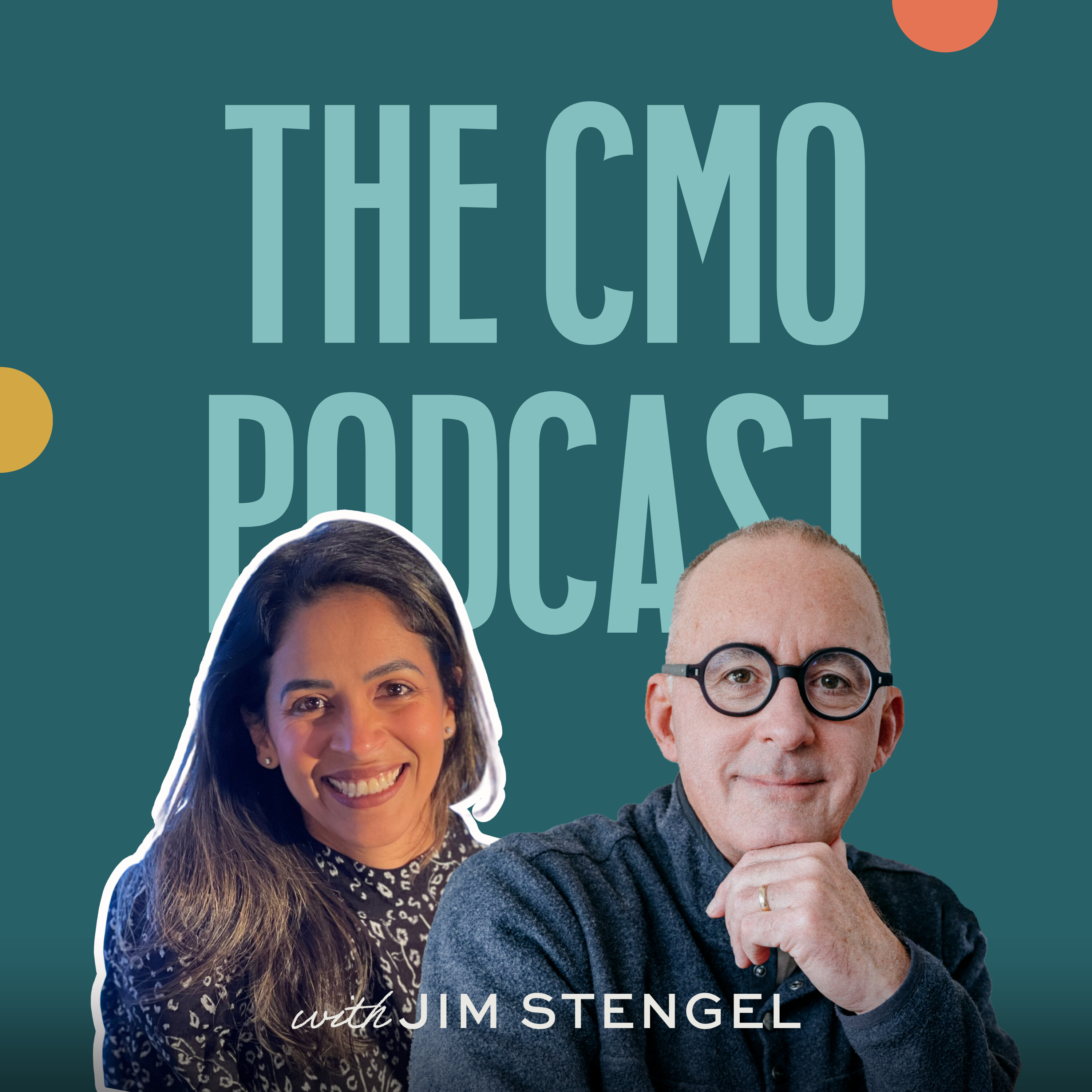
Live recording from the TransUnion True Audience Marketing Summit on AI readiness for marketers. Liz Bacelar argues AI success depends less on model hype and more on organizational culture, leadership, data/measurement, governance, and people/process enablement.
Liz Bacelar, former journalist (10 years; Emmy-nominated coverage of Barack Obama’s first presidential campaign; worked at NBC/CBS/Time Inc.). Later led AI adoption and technology/innovation roles at Estee Lauder Companies (created an AI practice; ~4 years) and Under Armour (~2 years), responsible for corporate-wide AI implementation.
CEOs must learn enough tech to guide AI; AI shouldn’t sit only under the CTO. “Pilots are bullshit” unless they’re intent-to-purchase with full production path planning. Replace “AI strategy” with business-outcome strategy and cross-functional action teams. Avoid dehumanizing customer service and AI-driven hiring decisions.
Dove “sketch artist” campaign; Anthropic’s brand/purpose approach; Canva usage by under-25 hires; airline customer service bot example; Claude mis-ranking job candidates.
Written by AI. May contain mistakes.
Understanding the necessity for collaboration between CEOs, lawyers, and marketers in tech and law.
“I feel that today the CEOs need to understand that with their spend, there has to be a value exchange across the organization.”
Overview of the TransUnion Summit experience and introduction of guest Liz Bacelar.
“A few weeks ago, we joined the team at TransUnion in Chicago for their annual True Audience Marketing Summit.”
Jim engages with the audience and discusses the current state of AI in marketing.
“So here's my live conversation with the leader who sees a positive path forward in this new tech landscape.”
Liz reflects on impactful brands from her childhood, focusing on Dove and its campaign.
“I'm going to ask Liz a few questions, then we'll go to the audience.”
Discussion on the evolution of AI brands and the importance of ethical considerations.
“And there's also the Pepsi ad with Coke.”
Liz explains the significance of people and culture in AI implementation over technology itself.
“So there's ethics built in it, which relates back to the brand and purpose that they stated since the start, which I don't usually see in tech.”
Liz shares her career transition from journalism to AI, highlighting key moments and challenges.
“There was a report that it was just shared and it kind of called out process and process is the reason why we have such high failure rate in AI right now.”
Liz discusses the impact of meeting her career heroes, particularly Tim Russert.
“Or if you're really blindly, like really ignoring all of this, like the CEOs of media companies did, especially CBS News and, yeah, and NBC, they tried.”
Learn about the importance of personal growth alongside business development.
“Cool, kind, never snapping anybody with no excuses.”
Explore the insights from the Trend Union white paper on AI in marketing.
“We heard about the Trend Union white paper, which was produced before this conference started.”
Understand the key priorities for successful AI implementation in big companies.
“in large organizations and AI implementation.”
Learn effective strategies for leading AI integration from the perspective of an outsider.
“Well, you've been in two large organizations, two companies I know, Estee Lauder, you were there for four-ish years, responsible for adoption of AI corporate-wide.”
Discover the differences in AI adoption culture between two major brands.
“So it's a different, it sounds like a different degree here.”
Examine the cultural factors affecting AI innovation adoption in retail.
“how they see innovation, how they see R &D.”
Explore how the evolving landscape demands new skills from CEOs and CMOs.
“there was also a willingness to change because being a sport apparel brand, it was different than the other apparel brands I worked before.”
Understand the necessity for cross-functional knowledge in tech and marketing.
“And it's just, once again, open mindset, growth mindset versus fixed.”
Discuss how AI tools affect hiring and decision-making in marketing.
“I thought that was super cool training to be super disciplined with your span and measurement of the span and proving the promises that you made to prepare you for this moment.”
Learn about the need to adapt marketing approaches in the age of AI.
“I don't know if you guys use Canva in your organization, but anyone that you hire that's under 25 years old today and you give them Adobe and you say you cannot have Canva, guess what?”

Get the gist, explore an idea or ask about something said.
 Claude
On The CMO Podcast, what are the key points of this episode?
Searching your listeningAutomatic transcript. May contain errors.
0:00I feel that today the CEOs need to understand that with their spend, there has to be a value exchange across the organization. Lawyers need to learn technology. Tech people need to learn the law, right? So they can be better in the implementations that they want to do, better advisors for other functions. Marketing needs to learn tech and law. Sorry, marketing once again. And CEOs need to learn a little bit of tech.
0:26Jim Stengel: Hi, I'm Jim Stengel. I've helped hundreds of major brands discover and activate their purpose. Because when a brand's purpose is clear, compelling, and authentic, profit naturally follows. Each week, I welcome the CMOs, the chief marketing officers of your favorite brands, to speak to how their job is so much more than marketing. These leaders share their inspiration and challenges, along with how they try to build a full, healthy, and happy life in and out of the office. And it's that energy that reaches everyone they touch. And we're glad you're here to feel that energy and to learn from these remarkable leaders.
1:02Jim Stengel: So here we go. A few weeks ago, we joined the team at TransUnion in Chicago for their annual True Audience Marketing Summit. It was our first time at the event and what a terrific experience. TransUnion is a global information and insights company with revenue north of$5 billion and and growing at a double-digit pace. I kicked off the day with a keynote and then returned to the stage that afternoon for a live recording of the CMO podcast with someone who has been at the forefront of one of the biggest transformations happening in business today, artificial intelligence. My guest was Liz Basilar, whose career has taken her from M &E-nominated journalism to entrepreneurship and into senior technology and innovation roles at some of the world's most recognizable consumer brand companies, including the Estee Lauder companies, and Under Armour.
1:49Jim Stengel: Our conversation was inspired in part by fascinating new research from TransUnion on what they call the AI confidence readiness paradox. Marketers are investing heavily in AI and confidence is high, but are organizations really prepared to turn that investment into meaningful business results? We will talk about that. Liz has spent years working through that very challenge and she has some strong opinions about what's working, what's not, and why the real opportunity with AI has much more to do with people, leadership, and organizational culture than the technology itself. A big thank you to our friends at TransUnion for welcoming us to Chicago and making this conversation possible.
2:28Jim Stengel: So here's my live conversation with the leader who sees a positive path forward in this new tech landscape. Here's Liz. Welcome to the same old podcast, live audience here at the TransUnion Summit. Happy Monday, everyone. How's the conference been for you? Any new friends? I'm very impressed with some of what I've heard here today. It gives me hope because I heard a lot of good things. Am I going to touch upon some of these things? And it's refreshing. I came from a very large retail conference from California last weekend. I was feeling the opposite of hope this morning. Why is that? The gap between expectations from the leadership in this age of AI and reality.
3:12And that's causing snap decisions. They are erroneous that then will have to be addressed later. And it's actions that are not measured and a lot of hype.
3:23Jim Stengel: Well, we're going to get into all of that. By the way, we're going to bring the audience in, as we did this morning. So get your questions ready. We'll come back to you in a bit. I'm going to ask Liz a few questions, then we'll go to the audience. And, you know, I want to keep it light first before we jump into some of the issues you're raising. If you are a listener of my show, and I know you are, I always ask guests the first brand that made an impact on them when they were very young as a child. Is this a good time to say how starstruck I am that I'm doing this with you? I'm so happy. Oh, come on.
3:50Jim Stengel: Come on. You're a sweetheart. So tell me the brand, the brand that you remember when you were growing up as a young girl. When you were saying that, we were talking about that. The first one that came to mind was Dove. There was this campaign that was with a sketch artist from the FBI. And he made this artist, did two pictures for each woman in the commercial. The first one was her describing herself without looking at her. And the second one was someone who really knows her describing her. And obviously the images that were a byproduct of our own descriptions, we looked horrible. We did not look like ourselves.
4:26And people describing us, we looked really pretty the way we are. And it just really highlights that sometimes we can be our harshest critic and we just need to be kind to ourselves.
4:36Jim Stengel: I love that. That's a very famous ad. A nerd at Fairview Payment. Oh, it stuck with me. Yeah. And there's also the Pepsi ad with Coke. Yeah. The cans of Coke to step on it to get the Pepsi. Now, what's the first AI brand you remember making an impact on you? That is also very easy. I've been on the AI for a long time. Some people in the audience had discovered AI a couple of years ago. I've been in it for a long time since IBM Watson. And when Gen AI had launched, it was really exciting to me because I had just gotten my first tech degree. I went back to school while I was SLO there to do a master's in blockchain and AI.
5:15And I didn't even know, I couldn't even picture what was the next AI going to be because this is not the only one. There's other AIs out there. This is just an evolution of the stack. And by the way, don't get too excited about this one. There's others coming and you're going to see by the end of the year. I'm much more excited about the next ones. What's happening is we saw OpenAI, and when OpenAI switched from, in the interest of the public companies or private company, then a group of ex-OpenAI people created Anthropic. And what they did, which OpenAI did not, they created a brand right away.
5:49So all the tech companies, they were not creating brands. Brands were almost like an afterthought. The first thing Anthropic did was brand and purpose. And it hit me, if you're in the world of consumer brands, you get it. And if you're a techie, you could see it in the product. Oh, Anthropic is a terrible AI to use to try to ideate a crime. It keeps coming up with ethical reasons why you should not be doing it. You also should tell your kids it's not the one to use to cheat on your homework because it tells you shouldn't be doing this right now. Actually, why do I help you do your homework and you not copy this from me?
6:23So there's ethics built in it, which relates back to the brand and purpose that they stated since the start, which I don't usually see in tech.
6:31Jim Stengel: So why are you looking forward to the next generation of models? Nothing. It's not about models anymore. I think everybody needs to calm down. This model race that's happening out there has nothing to do with us. I think we have enough models in our menus right now to do a lot of good, to do a lot of transformation in our companies. Even if you go back to the most basic model of Anthropic, which could power basic automations and it's super cheap, still not being used to its potential in organizations. I think it's cool. It's fun. It's almost like watching a reality show to follow the headlines of day to day, to hear people talking about super intelligence.
7:11But it does not really, it should not affect the strategy of our businesses. Super intelligence, it will only come when four things are in play. The hardware that allows you to have that, the data centers, the interface, which is like your Google, your Microsoft's connected to the models. There's at least two of these pieces missing. And one of those four pieces, there's no possibility of it happening in the next five years. So this is not me. This is some of the major economists and analysts out there. So that's when you know, that's my old me, that my journalist me, because I'm a career switcher.
7:46I was a journalist for 10 years, breaking news. And that's when you know you're dealing with hype. So that's when you calm down. For the first time in my career, Jim, I don't really care about what my competitors are doing. I was in fashion most of my life, luxury. And when we went through the tech innovation years of 2012 to 2022, those 10 years, what is Gucci doing? It mattered. Right now, I don't care what Gucci is doing. It doesn't really matter because how you apply in Gen.AI pertains to your own company's purpose, business strategy, your ethos. And the starting points can vary so much that nothing is plug and play, instant repeat.
8:27There is approaches to it that you can use. Like I've done this twice already, right, from SLO to Under Armour from scratch. and next time I'll do it, there are approaches to it, but the minutiae of it is very different. It has to do with something I think everybody's forgetting right now. There is a lot of companies that we hear about, small businesses, very clever, doing lots of processes and people making money with not that many people. But when we talk about corporations and large companies, it's businesses of leaders leading people, either with services or products sold to people. This is all about people.
9:03And that's being lost in that. There was a report that it was just shared and it kind of called out process and process is the reason why we have such high failure rate in AI right now. We are so enamored with the tech and we are forgetting that the starting point for its people. And I can prove it with more details. Yeah, yeah.
9:25Jim Stengel: I want to stick with your career path, because I think you were you studied journalism at Columbia. Yeah. You worked for 10 or 12 years. Yes. NBC, CBS. So you were a hardcore journalist. You somehow went. I'm the only person in the world with an Emmy nomination. Oh, really? Yes. Bravo. What was the Emmy for? Documentary? No, I am my coverage of Barack Obama for the presidency the first time. Yes. I was a seven months prior. You're like 17. I know you're so sweet. So I want to know, I want to understand, though, how you went from journalism to becoming an expert in AI, because your job titles and the work you did at Estee Lauder and Under Armour were big.
10:04Jim Stengel: You know, you were responsible for implementation of AI corporate wide. So how did you go from journalism to that? What was the catalyst? What was the inspiration? What was the springboard? I definitely didn't dream of it at all. and answering this question, I'd like to talk to anyone who's listening to this, who has ever looked at your resume and that resume looks a little disjointed, looks like a patchwork of different experiences. And you kind of resent or wonder if there's something wrong with you because you don't have this linear career that shows to this perfect path that your destiny is just like calling for you.
10:38My dream was to be the head of a media company. Media was all I thought about since I was a little girl. and it was my dream and I wrote down that the biggest job I could, the hardest job I could get was working as a producer at Nightly News with Brian Williams. It was like my dream and I got that job out of school. So I got there really fast and I met all my heroes including Andy Rooney from 60 Minutes, had many pizzas with him. So I feel like I was very lucky because all the heroes I read about, I met them, I worked with them but then the part that was not lucky is that when I got to know the industry was when digital came up.
11:16I remember so vividly, I don't even have to look at notes. 2008 was when the iPhone launched and digital exploded. You had Huffington Post. You had all these guys that we never heard about taking market share from media. And then you had people looking at their phones and not reading the newspaper. Then you had people taking video of very low quality video and we're like, eh, whatever. We, the young people in the newsroom, we were fascinated by that. We knew something was shifting And each social media launch was shifting something. I used Foursquare to triangulate earthquake victims. I would try to explain that to my executive directors.
11:51Like, yeah, whatever, right? Everything's shifting. So nobody was listening. The leadership was not listening. And as our revenues were shrinking, they just reverted to contraction. Just layoffs, layoffs, layoffs. And then the feeling is I'm in the Titanic and we're going to be eaten alive. I remember crying going back from maternity leave that the world of tech was exploding, the world of media was imploding and nothing was stopping it. And I realized that my dream was done. And that was the call to action that retail had in 2012 with e-commerce and the rise of Instagram and Pinterest and all of that.
12:33They had to make a decision. Is the CMO role now new? If you're a CMO who does not embrace social media, are you allowed to stay or do you have to go? And many brands upskill themselves, the CMOs, others, the CMOs would just let go. And then the brands had the leadership to be able to evolve. I predict that this is going to happen with CEOs very quickly. Do you understand this AI conversation, understanding the market around AI, the models, with the decisions you need to make that impacts the business. Or if you don't understand this, are you open to understanding or hiring someone right next to you to guide you?
13:14Or if you're really blindly, like really ignoring all of this, like the CEOs of media companies did, especially CBS News and, yeah, and NBC, they tried. ABC and CBS, it was pretty bad. Then you've got to go, or the company will face the consequences really quickly.
13:33Jim Stengel: When you were young and met your heroes and you're entering your career, which one stood out as living up to the myth? Tim Russert. Say more. Tim Russert. He was the person that you see because he had this aura when he interviewed people. He was very kind. He had this beautiful angelic smile, very patient. And someone that was just like, looked like a cool cucumber. And I seen him in tricky situations. There was one time his button fell off and he had two minutes to go and I was the one who buttoned his button back like amazing. Cool, kind, never snapping anybody with no excuses. And you see what people are made of when the lights are off and nobody's looking.
14:17And every time I looked at him, I saw something to be proud of.
14:27Jim Stengel: hi everybody i'm andrea sullivan the ceo of vive and we have produced the cmo podcast with jim stengel for many years and i'm sitting in his seat right now it's so exciting i wanted to tell you a little bit about one of our programs that's called vive by vayner it's a 12-month program that's designed for C-suiters and founders. And we want to help people to grow their businesses, but also to grow themselves. And so we bring in people from Shark Tank to talk to our founders, but we also focus on wellness. We want to make sure that people are leaning into becoming their best selves, their best and happiest selves.
15:08Jim Stengel: So if you are someone that wants to learn how to grow your business and grow yourself, check us out at vive.co. That's V-Y-V-E dot co. We'd love to talk to you.
15:26Jim Stengel: Let's get back to AI. We were just two presentations ago. We heard about the Trend Union white paper, which was produced before this conference started. And it's called the full name of it's the AI confidence readiness paradox. Why marketers are all in on AI and still coming up short. and they talk in the white paper about most of the issues are organizational and they point to four things that we need to address to fix that. I want to read them and get you to react to it. First one is strengthen data and identity foundations. Second, treat measurement as a core capability, not a downstream activity.
16:02Jim Stengel: Third, build durable governance and guardrails. And the fourth, invest in people, processes, and enablement. You have a lot of experience in large organizations and AI implementation. So what's your reaction to those four priorities? Are they right on based on your experience? Is there one that stands out? Yeah, and I'm going to do that by doing a better job answering your previous question. Very quickly, the bridge to answering these questions is when the industry collapsed, one of the CEOs I interviewed told me, flip it. You've always been a technologist in media. Why don't you become an executive in tech that knows how to communicate and tell stories.
16:41So I flipped. So I saw how to be a bridge between change, how to be the same person that was assigned a financial meltdown and told me to figure it out in two hours, and I never covered finance before, is this person that now figures out a metaverse, blockchain, now AI, and how can you look at leadership at a board, at a C-suite of a multibillion-dollar company and stand by what you're saying and show facts and show the consequences and stand by, be okay with the consequences that if the things that you're saying are wrong, but fire me, like, you know, have strong stance on that. And that's how I built my career.
17:21Estelada was one of the clients that I had, and we did some work together to impress them. And then I got invited to create the AI practice there. I think this foundation is perfect of this rapport. I was very impressed with the four areas that are exactly my playbook. The first area is data, right? So you have to the extent that you can organize your data. Some companies believe I'm not prescribing one versus the other. You can organize your data all in one data lake, which I was able to work with. It makes things really easy. Integrations become cheaper. But we are facing a new era of risk that causes more risk in certain areas.
18:02So some companies have two or three data lakes, but you have to organize your data. That's it. So the measurement is important, too, because of the pilot. When we talk about pilots, there's a line that I see a lot. I say pilots are bullshit. The reason why I say pilots are bullshit, in AI, there's no POCs. You're usually dealing with real data, with real integration with companies. And when you call it a pilot, usually people mean test and learn. I don't think there's tests and learn anymore in the age of AI to the way they used to be. If you are going to do a pilot, you have to be intent to purchase.
18:36You have to take the extra time, plot it if this thing works, how much does it cost? How long does it take? Does betting and legal going to agree with me? Can I actually talk to her right now and check? You have to map the entire path of production. And if you cannot do that, go pilot something else because you're just wasting time. Right now in the age of AI, there's so much to do that you can only pilot the viable. I'm very strict on that. Durable governance, very important because you have a company. You tell people to be eager. You don't want to be replaced by AI. The person that's going to replace you is the person that's you that knows AI.
19:08So everybody wants to do AI now. So it's chaos, right? Anarchy. You don't want that either. You want to be able to have some level of governance. You have to have very clear, understandable playbook that people know how to collaborate across different departments. And many companies don't have them. Some guardrails, right? Because when we are global companies, we don't have a lot of regulation in the U.S., but we have it in Europe. We don't have regulation at the federal level, but we have it in New York and California. So regulations to exist, we need to still abide by risk mitigation. Lastly, processes.
19:40That's my favorite topic. That's a topic that I did a talk recently on. When I talked about leaders of people and us selling to people, it all starts with people. The journey for AI for me starts with where the organizational knowledge resides. Where is the institutional knowledge? You go to those people and you say, how can I make the work better or your job better? And they say, yeah, sure. So how does this thing work? And usually when I do that with teams, they usually say it's five steps. It's not. If you sit on that conversation and have that meeting two or three times, those five steps are 50 steps, right?
20:14And then you map that process with them. And with them, you decide when they put human in the loop, which means the decisions, the process is slower. It waits for your cue or human on the loop. The process goes fast and you just jump in in case that it's needed in case of error. That means that if you do things this way intentionally, thoughtfully, the people they just automated, you did not do an IT top down. It wasn't demeaning. It was exciting. and my job gets, I feel that my job should disappear, head of AI. Those people that I worked with become heads of AI of the department and I become less needed what comes down to coming up with the automation and more like as evangelist of what's next.
21:01And yeah, I definitely want to get rid of this title, head of AI. Yes.
21:06Jim Stengel: Well, you've been in two large organizations, two companies I know, Estee Lauder, you were there for four-ish years, responsible for adoption of AI corporate-wide. then you went to Under Armour for a couple of years with basically the same brief. So and you came in from the outside. Yes. Which is not easy. So I want you to talk to our audience about what you how were you effective? How did you come in from the outside into two sort of powerful cultures and take a topic which there are skeptics come out. There were early adopters. There's excitement. There's fear. But where did you start? How did you approach it?
21:42Jim Stengel: How did you align people? How did you pick priorities? What could we learn from you? And another story that's underneath there is it's leaders in these companies seeing that the leadership around this area has shifted to what we used to think about. Right now, it's still hard for someone like me to be given the opportunity to lead AI integration in a company, in a large company, one billion plus, because you're looking for an Indian engineer. I'm not it. Right? I'm the person who always listens to people, distilled complex stories, explain the complex and made it understandable to everyone. And to create elements of trust that investigated, that promises that you can keep to your shareholders.
22:29So it's a different, it sounds like a different degree here. What kind of major do you think I have? Communications, comms. So if you have kids in comms right now, it's a really good skill to have. Because the tech side, you can learn that. It's really easy, more than before. Anthropic is very aligned with that. They talk about that all the time. So when I show up in the politics of a large organization, I show up like I've always have, curious, super eager to learn. My opinion doesn't matter. I'm here for you, right? I'm here to hear your story. I'm here to build upon your story. And I'm going to give you facts.
23:07and together we're going to figure this out. I'm just the ambassador of facts, right? And research. And sometimes the facts are not reliable. I'm going to let you know this. I heard this, but I'm not 100 % sure. And we're going to make a calculator bet together. And I think that is the culture of journalism. It's not a great industry if you want to make money, but it's the most beautiful skill set for you to go out there and unleash change. I did not know that back then. When I left journalism, I thought that I failed. And now later in life, I look back and I'm so grateful for that education because it allows me to bring value to organizations today in a way that I couldn't.
23:48Jim Stengel: I started in journalism too. If I went to MIT. By the way, I started in journalism. Stop it. No, I did. Yay. I worked for Time, Inc. back when it was a big profit. So, you know. Influential. Yeah. Skills were great. Very special. My starting salary was$7 ,600 a year. It was a while ago, but not that long ago. Mine was$35 ,000. It wasn't me. Oh, you're wealthy. I rode my bike a lot. No car. No car in$7 ,600 a year. So I want you to compare and contrast Under Armour and Estee Lauder in terms of the adoption of AI. How were they different? Yeah, very different. How were the challenges different? Very different.
24:25I think there's also the nature. Brands are not all the same, right? There's the culture underneath. how they see innovation, how they see R &D. I was in apparel fashion for a long time. And what brought me to Estel Law is that I wanted to try something new. And I noticed that food and beauty, they see innovation R &D as a necessity. And they put a lot of importance to it. And it's not something that you have to convince and pull teeth over. It's just a must. when I walked into SLO, that was up in the air. That was in the air, like how to do new things, new products, new processes. So it wasn't about convincing people at all.
25:10It was about bringing people along, organizing how we are going to organize together. How can you create this group of people? How do you empower? Like the first thing that I did that brought me a lot of joy, it was training 500 women that are not techie at all on how to become AI executives. in their own right. And then suddenly they were training their teams. And how do you train 500 people? So you have to like auto create these ways in a way that felt personalized. So the culture of innovation was there. And this legacy, but legacy doesn't hold the conversation back. In a pair of retail, that is this feeling that you stuck in the past.
25:51And you have this very long list of excuses about how things are the way they are. and you keep saying things are going to change and they take a long time or they just don't change because the person that was changing got pushed out and now there's another leader and changes get stuck all the time. So that's the deal with apparel and a lot of legacy systems, a lot. A lot of fax machines, so strange. Yeah, last year there was one system that I mapped and we rolled out this year an automation and there were a couple of faxes involved. I'm like, I did not know those guys were in business and they still work.
26:31In retail, yeah, supply chain manufacturers, they still have some of these machines out there. And so that is, if you look, I think it is, I think it's McKinsey that did a really cool presentation and they showed the verticals and the adoption of AI. And you see finance up there and then you see right on the finance, you see what? Which vertical? Right on the finance. Health. You see health over there. And then you see a lot of cool stuff, CPG. And then at the very, very, very, very, very bottom is retail. So that's really culture. That is culture of the leadership, this culture, as I said, of the legacy systems that holds them back.
27:22and this notion that innovation is an option. It's not a necessity. And also reverting back to what media did. When times get tough, let me contract instead of grow, right? So you've seen a lot of those that are opening up to AI still super focused on cost cutting. We're still seeing layoffs when things get hard. And with AI, you can create new revenue, new growth, much easier than before. It's not easy, but it's easier. So it should be part of the conversation for sure. So with Under Armour, there was also a willingness to change because being a sport apparel brand, it was different than the other apparel brands I worked before.
28:09Because when we deal with sport, there is a culture of team, right? And it wasn't bullshit. It is something that it is in the ethos. So when you approach people to work together, at least that was that was the starting point of of people working as teams. And it made things a little easier.
28:38Jim Stengel: So a few minutes ago, there's going to be a shake out of CEOs. At some point. What are the CEOs that you think will survive in terms of their skill set and their attitude? Yeah, and I think it's going to be different than the CMOs, although the poor CMOs. I'm so sorry if you're CMO today because there's another shakeup coming. You just hang out. They're used to it. I know. They just figured out the digital social media landscape, and now there's the AI landscape. A lot of headlines saying the ROs are going to flip, right? And the comms person with tech will be the new CMO instead of the CMO that knows all the tools from before.
29:12So it's, listen, that doesn't mean you're going to lose your job. just means that this AI part is an easy part. It is learnable. It's doable. It sounds complicated. And if it sounds too complicated, the person talking to you is hiding behind jargon. It should not be that hard. I taught my mom this thing. Like, come on, you can do this. And it's just, once again, open mindset, growth mindset versus fixed. The CEOs, I'm seeing a lot of great companies with curiosity from the CEOs, a desire to win. CEOs that say, you know what? But anything's on the table. You know, I'm open to anyone here who has an idea to do things like we have never done before.
29:50That is this thing that we usually pay$3 million for. You know what? Should we stop paying for it? Does anyone have a better idea? Because now there are things, they're plugged in the stack that for the first time in my career, I can actually grab the plug and yank it off. And I couldn't think that this was possible like a year ago. and at least one of the very big ones. It can, it can because I did it. I just did it. So it can be done. And I feel that today the CEOs need to understand that with their spend, there has to be a value exchange across the organization. Lawyers need to learn technology.
30:31Tech people need to learn the law, right? So they can be better in the implementations that they want to do better advisors for other functions. Marketing needs to learn tech and law. Sorry, marketing once again. And CEOs need to learn a little bit of tech because this whole AI thing being under the remit of the CTO is a big mistake. The CTO is a great partner to drive this. But this is about changing the organization. Where are we going to go? Even when we're going to sell? And there shouldn't be an AI strategy. An AI strategy should be a stack strategy for the tech department, for sure. But the AI strategy that people are saying, AI strategy should be, how do we use AI for the business strategy?
31:13Right. So someone like me should be in the strategy department close to the CEO. I've seen in the CMO office, people adding more like AI native people and even the CFO. Like I asked a lot of the chain that I was under was the CFO. I thought that was super cool training to be super disciplined with your span and measurement of the span and proving the promises that you made to prepare you for this moment.
31:41Jim Stengel: I'd like to go to the audience now, maybe bring the lights up a little bit. And we have a mic runner, so they're going to come to get you. But if you can put your hand up if you had a question for Liz or myself, and maybe say who you are and where you work, which would be interesting. Hi, I'm Tamika Key. I'm an advertising futurist, actually. Wow. But the question I have to you, I'm glad you brought in the CFO because you talked about you talked about kind of the shift in roles for the CEO and the shift in roles for the CMO. And I feel like CMOs have been under pressure for years from the CFO to do more with less.
32:16But now you're saying, no, actually, the CEO is going to have that same pressure to go do kind of cool, crazy things. And I think I wonder if that's the piece that's missing is where's the CFO doesn't have a seat at this particular conversation at the table. And so the pressure is coming from somewhere. The pressure to use AI to be faster, to do all of that is coming from somewhere. Can the C-suite executives just kind of throw their hands up in the air and be like, oh, screw that pressure. It doesn't seem like there's space for companies to experiment freely because there is the threat of X number of people are going to lose their jobs.
32:55And a CEO or a CMO makes that mistake, then then they're hung out to dry. So I'm just wondering, it sounds like there's a ton of optimism and you're like, move fast and break some things. But the market does not seem like it's supporting that. I don't think you need to break anything anymore. That's not what I'm saying. I'm actually became very conservative by being bullish on AI. I'm actually very conservative. These headlines that you're seeing, actually, there's something I saved in case someone asked me this to share with you. It's poor implementation. So if you are a C-suite and you want to just ignore this and let's just pretend it's not happening, let's get under the desk and pretend and this is going to blow over.
33:36First of all, it's not going to blow over, right? Even if we have an AI bubble, it has to do with a couple of these companies going away because they lie too much about their value, but there'll be enough that will remain and this will keep going. So it's not going to go away. This is not the metaverse, guys. This is serious and it's permanent, okay? Then if you ignore the users, they are using AI today, they're not going to stop using. One of the signals, it's very interesting signal that I learned firsthand. I don't know if you guys use Canva in your organization, but anyone that you hire that's under 25 years old today and you give them Adobe and you say you cannot have Canva, guess what?
34:14They're still using Canva. Canva was given free to all schools across the United States. And that's what those kids learned to do. Sorry if I'm calling you a kid and you're 25. I feel old right now. And they're amazing with that tool. And you'll be silly not to give that tool to that employee because they will extract every ounce of value out of that tool more than you would if you get in for the first time today. So there's a native, AI native aspect of it that we cannot ignore. But then that is the trigger happy. When it comes from top down, there's also the trigger happiness. The CFO going to the CTO saying, I need to cut software spend.
34:51What if I increase my software spend and I'm able to unlock$3 million in savings from translations from the HR department? So there are organizations that don't allow the CTO to do the extra little bit of spend to unlock savings over there because everything's so siloed. So one thing that I really believe is for us to do this right is for us to work around outcomes. If you look at marketing departments, there is the SEO department, the department, the this and that. No, no, no, no. This is not going to be like this anymore, guys. I don't know how long it would take for it to change. But if you look at the outcome and you create action teams around the outcome that cuts across because the tools that we implement the tools, the tools are cutting across it all.
35:33the decisions need to be made with everyone's participation and input it's not siloed anymore so i want to read to you something that was linked in today this is from a ceo that did ai wrong okay two ways ai is doing wrong if you guys are doing customer service and you're cutting the emotion out like when you get to a level three when something more complicated and you're still putting a bot to save money shame on you there is an airline that did that i'll never fly the airline again there's a line of how much a bot can do and you need to recognize that another is when you look at your people and say you can replace people and your decisions about people.
36:07I tried to let Claude pick out who I should interview for the new role that just opened up. Here's what happened. I gave the list to Claude and asked to pick the top 10 candidates based on the job description. I identified, before I saw the answer, I identified nine people that really popped up to me with relevant experience, exactly the kind of people I would hire. Then I went back to Claude to see who would pick it. It didn't select one of the single nine that I have selected that were fit for the company. And the people that I selected, it looked pretty clear that their resumes were all AI, no creativity, no value to me.
36:41So AI cannot be made to make decisions about people. And if you have any jurisdiction in New York City, that's a crime. It's against the law. So go back to people. This is about tools in the hands of people to make people better.
36:55Jim Stengel: Last question. What's the biggest change you think has to happen in marketing departments? The biggest change is for us to rethink all of our processes and then come up with opinions of our own. Like right now in this age, we have micro influence of opinions. We don't need to get our opinions from news all the time the way we used to. So when you hear that everyone's going to be shopping through bots, calm down. Let's use our own minds here. We know that the first thing that AI does is automate things we don't want to do. Do you like to shop? Maybe you don't. I love it. So am I going to ask Jachipetit to do all my shopping this holiday?
37:32Hell no. I will use Gemini, which is a great tool to give me some research in the market and stuff, but I'll still be there. So there is a hyperbole around the shopping, but there is a preparedness that you need to be searched. So work on your PDPs, work on how much information you have out there in your companies. So there are things that are must and others are uncertain, divide the certain from the uncertain and then create your action, create your action around that. And watch your spend. Don't spend too much on this because that's your reputation.
38:07Jim Stengel: So let's give it up for Liz. Thank you for joining us today. Good luck in your next adventure. Thank you. That was my conversation with Liz. Three takeaways from this one for your business brand in life. The first one, AI transformation starts with people. One thing that really struck me from this conversation is that the biggest challenge with AI isn't the technology itself. It's how we bring people along. You can have the most sophisticated tools in the world, but without the right culture, leadership, and willingness to change, you're not going to unlock their full potential. That's a powerful reminder for all of us leading teams today.
38:43Jim Stengel: Second takeaway, the AI reality check. I found TransUnion's research on the AI confidence readiness paradox super fascinating. There's tremendous enthusiasm for AI across marketing, but enthusiasm alone doesn't translate into results. We need to be asking ourselves some tougher questions. Are our teams equipped? Are we changing the way we work? Are we actually creating value for our customers? That's where the real work begins. Third takeaway, the best leaders never stop learning. That's a consistent theme on the show. I love Liz's perspective on curiosity and the importance of maintaining a beginner's mindset.
39:21Jim Stengel: We're living through a period of extraordinary change. The leaders who will thrive are the ones willing to experiment, challenge their own assumptions, and keep learning. And I think that's especially important for CMOs whose roles are becoming more complex and more influential every day. That's it for this week's episode of the CMO podcast. As always, I would be grateful if you shared our show with your friends, along with subscribing and leaving a review on Apple Podcasts, Spotify, or wherever you listen. The CMO Podcast is a Vive original production.
Marketers are investing heavily in artificial intelligence, and confidence in its potential is soaring. But are organizations truly ready to turn that investment into meaningful business results?
Recorded live at TransUnion’s annual Marketing Summit in Chicago, Jim sits down with Liz Bacelar, a technology and innovation leader whose career has taken her from Emmy-nominated journalism and entrepreneurship to senior roles at global brands including The Estée Lauder Companies and Under Armour.
Inspired by new research from TransUnion on the AI Confidence-Readiness Paradox, Jim and Liz explore the growing gap between marketers' enthusiasm for AI and their organizations' ability to put it to work. Liz shares her perspective on what's working, what's holding companies back, and why successful AI transformation depends less on the technology itself and more on people, leadership, and organizational culture.
It's a timely conversation about navigating change, challenging conventional thinking, and building organizations that are ready for what's next.
A special thank you to TransUnion for welcoming The CMO Podcast to Chicago and making this live conversation possible.
—
Meet The CMO Podcast On the Road
The CMO Podcast will be on the road throughout early 2027, capturing conversations with the leaders shaping the future of marketing, leadership, and business. If you'll be attending one of these events, we'd love to connect. Let us know!
—
Interested in partnering with The CMO Podcast?!
Looking ahead to the rest of 2026 and into 2027, we're partnering with brands to create executive content platforms that extend far beyond a single event. From pop-up podcast studios and live recordings to executive roundtables, keynote conversations, and bespoke thought leadership programs, we work with partners to build meaningful experiences that connect with senior marketing leaders.
Whether you'd like to partner with us at one of the industry's biggest marketing events or create a custom experience designed specifically for your brand, we'd love to explore what's possible. Reach out to learn how we can build something together.
Email us at [email protected]
—
Produced by vYve
The CMO Podcast is proudly produced by vYve Production, a full-service production and content studio specializing in podcasts, executive storytelling, branded content, and live experiences.
vYve is a community of ambitious leaders dedicated to unlocking what's next in business and in life. Through executive coaching, transformative experiences, strategic content, and communities like The CMO Podcast, vYve helps entrepreneurs, corporate leaders, and teams grow their businesses, strengthen their leadership, and build meaningful connections that last.
Learn more about vYve and The CMO Podcast community at www.vyve.co.
See Privacy Policy at https://art19.com/privacy and California Privacy Notice at https://art19.com/privacy#do-not-sell-my-info.