Ask ChatGPT
 The CMO Podcast
30 Oct 2026 · 57m · 25 chapters
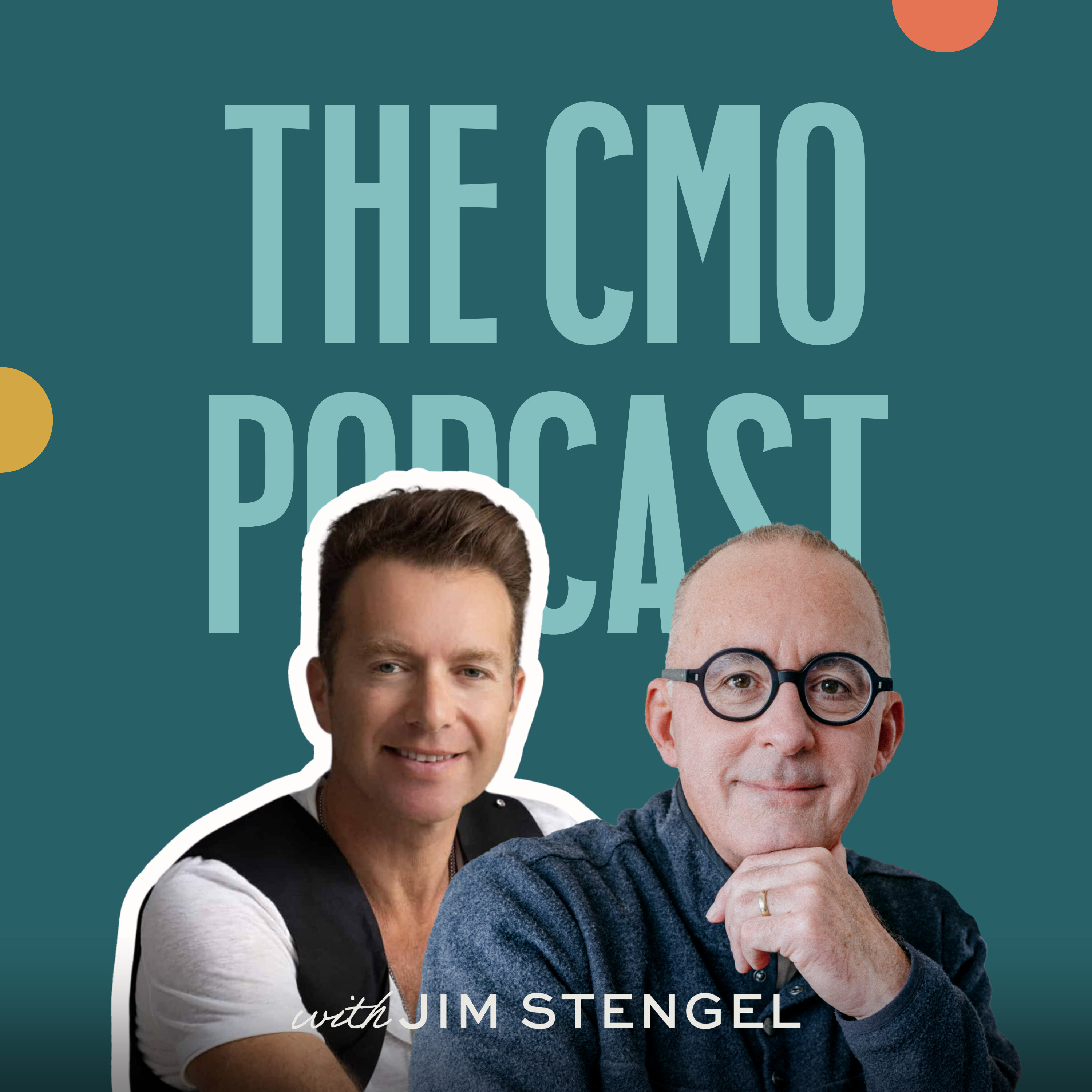
Roman Sundar discusses his philosophy of “Never Been Done Before” (NBDB) and “Plan to Take on the World,” built around rejection as redirection, collaboration over competition, and “obsession, healthy hours, and blackout focus.” He connects these ideas to how brand leaders—especially CMOs—can use brands as platforms for outsized, positive impact, not just profit.
Roman Sundar is an entrepreneur and community builder, co-founder of Patal (founded 2009), an invite-only community for influential CEOs, CMOs, and cultural shapers. He also wrote the book Plan to Take on the World. Host is Jim Stengel (CMO Podcast).
Purpose and focus drive performance; rejection repeatedly opens new doors. Successful leaders attach ideas to action and P&L. CMOs can reach billions and should steward culture and society.
Danny Way’s Great Wall of China jump (sponsored by DC Shoes; required China permission; he crashed then succeeded amid high winds and locusts). Janine Shepard’s shift from injured Olympic skier to becoming a pilot. Patel initiatives like Gun Safety Alliance and collaborations (e.g., MasterCard x Live Nation; Liquid Death).
Written by AI. May contain mistakes.
Learn about Roman's childhood influences and his aspirations related to Quicksilver.
“What's the first brand you remember consciously making an impact on you?”
Discussion about Roman's journey, the founding of Patal, and the importance of collaboration.
“Well, we're going after this to a really nice hotel and having a live podcast session with really good drinks and dinner.”
Roman shares the motivations for writing his book and its intended impact.
“And then what happens when you miss your numbers?”
Roman discusses overcoming rejection and how it redirects towards new opportunities.
“And I'm just grateful that it's that it's here now.”
Exploring Roman's strategies for maintaining focus and discipline in his endeavors.
“that's what the most successful people do.”
Hear powerful stories of resilience and transformation, including Danny Way's jump over the Great Wall of China.
“There are a couple of stories that are unexpected to me from people that I think most might not know.”
Hear powerful stories of resilience and transformation, including Danny Way's jump over the Great Wall of China.
“And you also had to get the permission from China, which is super uncommon.”
Discover Janine Shepard's incredible recovery journey from a tragic accident to becoming a pilot.
“There's this woman, Janine Shepard, and she was an Australian Olympian training for the ski team.”
Learn how the founder recognized a gap in the industry and established Patel to connect leaders and innovators.
“Has that been part of who you have been?”
Explore the unique aspects of Patel that differentiate it from typical industry meetings and foster collaboration.
“I mean, you started this in an industry that has lots and lots of invitation-only groups and lots and lots of meetings, right?”
Understand the importance of following your heart and the lessons learned from rejection in building success.
“I had good role models, but I talked to the experts and they told me it was a terrible idea.”
Discuss the pivotal moments that indicated the growth and success of Patel and its impact in the community.
“I think it's one of those stories that we touched on in the beginning, which is rejection is redirection.”
Learn how to turn event challenges into opportunities for innovation.
“and we knew nothing about putting on events.”
Discover how small groups can spark significant social movements.
“One of the reasons for the book also is because although Patel is a private membership, what we do is public.”
Explore how CMOs can balance profit goals with social impact.
“There's a few movements that we're a part of.”
Understand the importance of aligning business goals with a greater purpose.
“That's why talent, creators, celebrities, brand leaders, they're the ones that touch audiences.”
Learn the importance of team contributions and personal growth in leadership.
“into the flow of making my customers' lives better?”
Hear about the importance of following your passions and embracing redirection.
“I think with Patel, our mission is to touch as many leaders, to allow them to step into their purpose, into a growth mindset versus command, control, zero sum game.”
Learn how personal experiences and redirection shape one's purpose and career.
“you have doors closed for you, I think it's kind of the universe setting you in a different direction.”
Explore the impact of early brand memories and cultural adaptation experiences.
“And the first question I have when I ask this of every guest, what's the first brand you remember consciously making an impact on you?”
Understand how parental experiences and aspirations influence children's ambitions.
“imagine my mom, 27 years old, we moved to different cities here and there, but we have a language, we have a couple bucks, we have, you know, all these things moving to another country, not having any of that.”
Identify key traits that distinguish successful Chief Marketing Officers.
“The ones that actually go a little bit beyond their comfort zone are the ones that do things that are remarkable, that have never been done before.”
Discover the importance of self-care in fostering creativity and productivity.
“You mentioned this a minute ago, filling your own self before serving others.”
Learn how surrounding yourself with supportive individuals can fuel your journey.
“And again, it doesn't mean I do it all the time.”
Explore the core lessons from Roman Tsunder's approach to ambition and storytelling.
“Great communities aren't built on transactions.”

Get the gist, explore an idea or ask about something said.
 Claude
On The CMO Podcast, what are the key points of this episode?
Searching your listeningAutomatic transcript. May contain errors.
0:00Jim Stengel: What's the first brand you remember consciously making an impact on you? Easy one, Quicksilver board shorts. Because growing up, I loved the ocean, so I grew up bodyboarding. And bodyboarders weren't as cool as surfers. But all the surfers, they had board shorts from Quicksilver and we just couldn't afford it. We're just, you know, immigrant family. And so aspirationally, I was like, oh man, one day if I could afford Quicksilver board shorts with a little strip on their shorts, like that would be just a dream. And I'd say a full circle moment for me was when I got one of our founding members is Bob McKnight, who's the CEO of Quicksilver to come to one of our first events.
0:34And then of Kelly Slater, he was their face surfer. And so all of it was just like, oh my gosh, that's just too crazy.
0:41Jim Stengel: Hi, I'm Jim Stengel. I've helped hundreds of major brands discover and activate their purpose. Because when a brand's purpose is clear, compelling, and authentic, profit naturally follows. Each week, I welcome the CMOs, the chief marketing officers of your favorite brands to speak to how their job is so much more than marketing. These leaders share their inspiration and challenges, along with how they try to build a full, healthy, and happy life in and out of the office. And it's that energy that reaches everyone they touch. And we're glad you're here to feel that energy and to learn from these remarkable leaders.
1:16Jim Stengel: So here we go. Today, we have a special bonus episode recorded in person in Cincinnati during a very exciting week for the Queen City. We were in town for Blink, one of the largest light, art, and projection mapping festivals in the world, and I had the pleasure of welcoming Roman Sunder, entrepreneur, community builder, and co-founder of Patal. Patal was founded in 2009 and is an invite-only community where influential CEOs, CMOs, and cultural shapers come together to build meaningful partnerships and collaborations. Roman actually traveled from Miami to join me in Cincinnati, and it was his first time visiting our city.
1:53Jim Stengel: And given his passion for creativity, culture, and finding inspiration in unexpected places, the timing couldn't have been more perfect. Roman founded Patel with a vision to bring together some of the world's most influential people to collaborate, challenge conventional thinking, and create meaningful change. What started as an ambitious idea has grown into an extraordinary community built around the belief that collaboration can lead to things that have never been done before. And now Roman is bringing that philosophy to a new book, Plan to Take on the World, which launches later this month.
2:26Jim Stengel: It's filled with remarkable stories and lessons from people like the Dalai Lama, Kelly Slater, and other leaders who have pushed beyond what seems possible. We explore Roman's unconventional career journey, the power of turning rejection into redirection, and why he believes the best leaders combine ambition with purpose, curiosity, and a willingness to take risks. What I especially enjoyed was Roman's perspective on the responsibilities CMOs have, not just to grow their businesses, but to use their brands as platforms for positive change. It's an inspiring conversation about dreaming bigger, surrounding yourself with the right people, and having the courage to do what's never been done before.
3:05Jim Stengel: Here's my conversation with Roman Sundar. Roman, welcome to the CMO Podcast. Thank you for traveling to Cincinnati from Miami. We're in person. This is your first time in Cincinnati. You came in last night. You stayed in a hotel. You went to a restaurant. I would not have recommended it, but that's okay. So what's your first impression of the Queen City? First of all, it's an honor to be here. We have so many friends that have been on the show, and it's nice spending time with you, and it's a real honor. Thank you. First time in Cincinnati. First time sitting on your show. It's a big deal. I love to be...
3:41The reason I wanted to come in is to see you, but also I just like awe and wonder. I love to be inspired. I love to be surprised. So coming in here, even flying in, it was cool to see the landscape. It's cool to see the bridges. It's cool to see the architecture. So it's been good so far. But I'll know next time to get some insider tips. I'll bother you next time for a place to go.
4:02Jim Stengel: Well, we're going after this to a really nice hotel and having a live podcast session with really good drinks and dinner. So we'll show you another part of town. Now, you moved from Odessa when you were five years old to Los Angeles. Imagine if your parents had come to Cincinnati, how things would have been different. You could be the CEO of P &G now. Do you think you'd like that job? It sounds like it's a job that would have a lot of impact. Yes, it would. Both internally. It's a big platform. Just creating a life for so many people, but also touching so... How many people does P &G touch per day?
4:35Billions? Yeah. Over a billion?
4:36Jim Stengel: That's right. Yeah. That's right. That'd be pretty cool. Yeah, it's pretty cool. But then again, I think I'd probably stick out like a sore thumb even more than I did when we moved to LA. Probably would have. Yeah. Yeah. I was definitely like the FOB, fresh off the boat guy. Yeah. My mom was an interior designer and she dressed me funny. And so my clothes always clashed. Kids made fun of me. Well, Federated was headquartered here for a while. So she would have fit right in. Now you have a new book. Okay. It's just coming out in late October. You just gave me a signed copy. Thank you. I read the preview.
5:08Jim Stengel: I read the PDF. I read all the reviews or the endorsements or testimonials. And it's an ambitious book. It's a promising book. It's an optimistic book. So congratulations. It's a big lift to get a book out. So congratulations. It's called Plan to Take on the World. You have endorsements from Will.i.am, Paris Hilton, Katie Cork, the Dalai Lama, Kelly Slater, Van Jones, and a lot of blue chip corporate execs. Well done. I think it's very exciting. So we're happy to be a part of that. Two questions. The first one is, I wrote two books, and I think this is an important question. Why did you write it?
5:44Jim Stengel: You're busy. You've got an interesting life. Why did you write a book? Thanks. I will say I almost failed English class. I was the least likely person to write a book. It was never on my bucket list. It's not something I ever wanted to do. But I feel like after doing, being part of Patel and all the incredible work that our team has done, it would be just unfair of me to keep those stories to myself or within our four walls? How could I not have the opportunity for us to sit with his holiness? How could I have the opportunity to spend time with a Van Jones or a Kelly Slater or these incredible leaders and just keep that to myself?
6:21So I'd say it was done simply to kind of get those stories out into the world versus something that I wanted to do.
6:29Jim Stengel: Yeah. Yeah. What do you hope the book achieves? I hope that my biggest hope and prayer, I would say, is that it's a book that could be for someone when I was starting off. Like I encountered a lot of rejection when I started off my career. And if I had a book like this, I think it would tell me that rejection is redirection. And I think every successful person that I know just has had more rejection, failure, redirection than anybody else. One of my favorite quotes is Winston Churchill. Success is going from failure to failure without losing any enthusiasm. And I think whether you're starting off in your career, there's something for you in the book there.
7:05If you're mid-level VP somewhere, there's something in the book for you there about how to step into your role. If you're in the C-suite, if you're a CMO, there's so many incredible stories behind the scenes of what CMOs have done to, I'd say, transcend where they wanted to go into roadmap. If you're a CEO, I think, you know, in the C-suite, I think 70 % of people are there because of fear. Fear of what? Missing their numbers. And then what happens when you miss your numbers? You know, that's scary. And so giving people permission that there's a new story and a new formula for success that we're living in right now.
7:36Jim Stengel: You had lots of rejection earlier in your career. What was that about? And how did you learn that it's more redirection than failure? Without a choice. Okay. You know, sometimes you have to look and say, and I'm a man of faith, it's like, you know, if one door closes, another door opens. I mean, it started off with me being an average student and getting in trouble for getting bad grades. But I wanted to go to UC school after taking the third door, not going through the front door. I ended up getting into UCLA. My dream was to work on Wall Street. Everyone I knew had a Wall Street Journal back in, I think, 1997.
8:13It was the most desirable job. and I applied to 72 investment banks and got 73 rejection letters. JP Morgan rejected me twice. I've reminded Kristen Lemka of that. I wanted to work at MTV. They rejected me several times. I've mentioned that to Bob Pittman before. And so what blessings, all these redirections. But I think that's a big through line in my life is that failure and rejection has led to what other doors opening.
8:41Jim Stengel: Yeah, I was rejected by P &G for an internship and I really wanted to work there. I came back and it was hard to get a full-time job if you had not had an internship, but I did. A perfect example. Yeah, exactly, exactly. Now, a book is a large creative project. You don't know if it's going to succeed or fail, right? What did you learn? And we just talked before we started the show that it took you three years on this book. I think mine took two, two and a half, my first one. Second one, about the same. What did you learn as you embarked on this large creative project? I think I've learned and which what I've learned from a lot of people is that things are a lot more challenging than they look.
9:21And I just have so much respect and admiration for anyone that puts a book out there. When I submitted the book to our publisher, I'm like, you know, can we get this out in nine months? And they laughed. And then three years later, you know, here we are. So it really is like people who have written books kind of tell you it takes on its own energy, its own direction. And you just have to like go with the punches and flow with it. And I'm just grateful that it's that it's here now.
9:42Jim Stengel: I found one of the most challenging things about writing a book, the title's a tough one, but you had your title's perfect and it has a lot of meaning. We'll talk about that in a minute. The title is a challenge and I think the architecture of the book, how you lay out the outline and staying true to that and making everything coherent in the book to that, that it all ties together. And your book is, your architecture is quite simple, right? It's three parts. First one, taking on the world by owning your story. Second part, take on the world by going OHF and working your plan. And we'll get the OHF and share your plan with the world.
10:18Jim Stengel: So how did you arrive at that architecture? Is it your personal journey that had those three chapters or was it something else? Yeah. For me, I'm always working on myself. And so what does that mean? I'm looking to unlock a new way of seeing the world, a new way to level up. And I think that goes for our business as well. And so when we laid out the three parts, that's exactly what it was. You know, part personal story, mostly stories of iconic leaders, and then stories of how do you get it out there? How is collaboration more important than competition? You know, what can you do that's uncommon to be able to tell your story and touch other people's hearts and other people's minds?
11:00Jim Stengel: Yeah, it's a beautiful architecture. So talk about OHF. You have a lot of acronyms in this book, and they're good. Really good, good. Good. I'm glad they landed with someone like you. N-B-R, what was it? N-B-D-B. N-B-D-B. Never been done before. Yeah, and O-H-F. Yes. So when it comes to O-H-F, obsession, and I'd say healthy obsession, hours, and then focus, and I'd say even blackout focus, what does that mean? When you do something, I think a lot of founders have this, is that you're obsessed with what you do. Not only that, but when I work with a lot of talent, like when I think of Kelly Slater, one of our founders and who came up with the name.
11:36When you see him, he's a lightning bolt for what he does. There's actually no work-life balance. Of course, there might be a harmony, but he's a lightning bolt. There's an obsessiveness when you see it and you feel it. So to be able to be the best in the world, that's what it takes. It's a Mamba mentality. It's a Michael Jordan mentality, but that's the world that we're playing in. That also doesn't mean that you have to be Michael Jordan or Kelly Slater. It just means, what does that mean to you? In terms of hours, you wake up thinking about it. You go to sleep thinking about it because you're passionate, not because you have to, because you want to and you get to.
12:07And then focus, that means you're not distracted. You're not going, taking half days. You're not spending too much time at the beach. You're not, you're prioritizing the thing that's kind of your oak tree of your life to have blackout focus. And whether you like it or not, that's what the most successful people do. And it's an easy acronym. It's an easy formula. You can be anything you want in your life. It's hard to do.
12:29Jim Stengel: How do you do the focus part? I get this question a lot from CMOs because most of them feel like they're not focused enough. And you have a lot going on in your life, right? Patel and many other things. How do you do, what's your ritual or what's your habit or what's your practice to be sure that you're doing what you need to be doing and what you want to be doing? Yes, focus is an interesting one. That's why I like to say blackout focus. I like to raise the stakes a little bit. And so what does that mean? You know, signal through the noise. So when I think of focus, I think of how are you managing your day?
12:59Okay. How are you starting off your day? Like I have morning rituals. My ritual ends with a breath work or it will be with a meditation. I'll think of what are the one to three things that I need to do, but it's not only mental focus, but it's actually the focus of your time and your, of your energy. So how can you put your time into an energy into the three, two most important things that you need to get done? Do I do that all the time? No. Do I fail at that all the time? Yes. Generally speaking, is there an arc where I go in the direction of focus and sacrifice, even though I don't like that word, but it's something that you choose to do that will move your vision forward.
13:35You chose the vision. You chose the path. You got to stay on it.
13:46Jim Stengel: Hi, everybody. I'm Andrea Sullivan, the CEO of Vive, and we have produced the CMO podcast with Jim Stengel for many years and I'm sitting in his seat right now. It's so exciting. I wanted to tell you a little bit about one of our programs that's called Vive by Vayner. It's a 12 month program that's designed for C-suiters and founders. And we want to help people to grow their businesses, but also to grow themselves. And so we bring in people from Shark Tank to talk to our founders, but we also focus on wellness. We want to make sure that people are leaning into becoming their best selves, their best and happiest selves.
14:27Jim Stengel: So if you are someone that wants to learn how to grow your business and grow yourself, check us out at vive.co. That's V-Y-V-E.co. We'd love to talk to you.
14:44Jim Stengel: now the book is full and full of personal stories from remarkable people and they illustrate your framework right the three parts we just talked about so i'm sure all of those stories were touching for you personal meaningful but could you talk about one or two of them that for you personally was something especially significant and meaningful yes i'd love to thanks for asking that question. There are a couple of stories that are unexpected to me from people that I think most might not know. One of them, unless you're like a subculture guy like me growing up, is from this skateboarder named Danny Way.
15:20I'd say he's more of a daredevil than even a skateboarder. We do these awards at Patel called the Icon Awards. And we mentioned Lee Klaus got an Icon Award. We've had His Holiness get an Icon Award. We just recently had Kiki Palmer get an Icon Award. So people that have transcended their craft, whatever industry that it was. So Danny Wei is kind of like the Tony Hawk, but maybe not as well known. His dream was to jump over the Great Wall of China, which at the time, nobody had ever done on number one. Two, at that time, no one's invested over a million dollars in a stunt like that as a brand. He was sponsored by DC Shoes.
15:59And you also had to get the permission from China, which is super uncommon. So he does all these things. He got the idea when he was flying over the Great Wall of China. He goes, what's something that's never been done before? NBDV, jump over the Great Wall of China. Long story short, he got them all to do it. And then the only rule was he's not allowed to jump until the cameras were rolling or they'd cancel it. So guess what he does? He sneaks in before the jump and climbs the stairs. And it's over 70 feet that he has to jump. Imagine like a two foot ply board that you have to jump. So he jumps and guess what?
16:34He crashes. He crashes and he fractures his ankle. And so now after getting China to approve it, getting a sponsor to pay over a million and a half dollars, everyone that's been working on this, everything at stake, there's pictures of him in the hospital. We were with him. We say, Danny, people would understand that you wouldn't be able to make the jump. He goes, but if I didn't do it, then we wouldn't be here talking. The next day, he's going to go for the jump. The craziest part is that there's 30 mile per hour winds and there's locusts in the air, like two inch locusts. So when he climbs to the top of the ramp to be able to do the jump, he drops in, he jumps, he lands, and he makes it.
17:16Not only that, he ended up doing the jump three more times just for the people that were there. So talk about a story. He made it each time. And that's a big part that I mentioned in the book and this is something all these things we really live at patel which is fear is not moving back fear how do you turn fear into fuel a lot of people would get fight or flight whether it's a board meeting whatever it is they go backwards other people use it as fuel and i think that's a great story anytime you're in a moment of fear how do you do what danny way did and and just drop in and land it and just put everything you have into it so good so good another story or two from the book?
17:57Yeah. Gosh. There's this woman, Janine Shepard, and she was an Australian Olympian training for the ski team. And as part of the training, she was biking on hills. And they're kind of hills like in Los Angeles. They're not mountains, they're hills. And God forbid, as she was biking, a utility truck hit her. And it was such a severe accident they had to airlift her and they took her to the hospital. And there they basically told her that she had a severed and broken back. This woman just obviously thought that, you know, her life could be over. She ended up in the ICU with some other patients. And while she was in the ICU and at the hospital, even though her passion was skiing, she would look up and she would see, she would see airplanes.
18:44And in the ICU, the nurse would, there's about seven other patients and she gave them straws. They put them on their chest and then they connected all the straws and they felt this sense of unity. Long story short, she had this inner fortitude that her dream changed from being a skier to being a pilot.
19:04Jim Stengel: Redirecting, right? Redirecting. Talk about extreme raising the stakes to be a pilot. She told her doctor, I want to be a pilot. She goes, but you can't walk and we don't have a prognosis to walk. And she goes, but I can still use my hands. So she ends up recovering, is able to walk by her family help with her holding onto the walls. And little by little, she can walk. And she ends up getting her pilot's license and ends up becoming a pilot. She came to us on our stage and gave this talk. Everyone was just floored. We love giving talks that are just kind of blow people away, just remind us of our humanity and remind us of our potential.
19:41And the thing I will remember most is that she ended up doing cartwheels on our stage. She's doing cartwheels. She was showing off in just a vision for inspiration of if I can do it, anybody can do it. And even though it was a long time ago now, I carry that story. Those are the type of stories that we want to touch people with and remind them of what's possible.
20:04Jim Stengel: Those two stories began with sport. Are you a sport person? Are you an athlete? Has that been part of who you have been? I'm probably a fair weather athlete. I grew up playing a little bit of tennis, but I love stories of athletics or just heroism. It doesn't even matter if it's athletics, like anyone that does something that touches your heart. Yeah. Now we talked about Patel in the introduction of the show. You've raised it a few times. This is something you began back in 2009. By the way, the year I left P &G and started my own thing. So it's an interesting coincidence. Could you describe what it is for any of our listeners who aren't familiar with it?
20:44Jim Stengel: Let's start with that. Well, first of all, the reason I started it along with Terry Hardy and Jim Sullis is because I just found a problem. You know, my prior company was a media company. We're just talking about different events. I go to an event. There'd be a long line. There'd be somebody on stage. There'd be a few hundred people there getting in line, trying to sell them something. They're on a one foot high riser. The AV wouldn't work. Honestly, I felt it was insulting. Like, how can you do that for some people, for these people that are creating the Super Bowl, they're creating the World Cup, they're creating these things that are shaping the world.
21:16How can not how could it not look like, you know, the huge music festival or a concert or something that's inspiring? And so that's a big pain that I saw. And then I also saw people would go to it, but they didn't feel like they're part of something like I want to be part of a movement. And so that was the first thing that I saw. The second thing was that I always wanted to go to like Allen & Company retreat or to Davos, but I didn't know how to get an invite. And I also noticed that 60 % of the world was under 30. And today that's even more prominent, that next generation consumer is more important than ever.
21:50And how could there not be like an Allen & Company or a Davos for the next generation of audiences, the companies that are reaching these audiences? And so that's what it really sparked as. And so now it's a private membership for CEOs, for CMOs, and for cultural icons to come together in an intimate environment, to be able to talk to each other, to solve their biggest P &L challenges, to find their most inspiring partnerships. As I mentioned, collaboration is the new competition. And basically, kind of what you say, achieve the impossible, or in their own world, whatever that means. Yeah, sure, sure.
22:25Jim Stengel: Now, I think you've already answered this question, but I still want to go there. I mean, you started this in an industry that has lots and lots of invitation-only groups and lots and lots of meetings, right? There's a marketing slash sales slash general management meeting in our industry every week, right? And we were just talking about that before we started recording. But you, I have not been to one of your sessions. I have friends who have been and are part of your community and they love it. But why in your mind is it so darn successful and so differentiated in a sea of, I would say, sort of commoditized meetings?
23:07I think first and foremost, I think like anything worthwhile, it has to start with your heart. And I think people feel that instead of starting it with your mind, especially when it's a community organization. And so they understand the movement that you're on. Our movement is to bring together these leaders to create the beautiful world of tomorrow. That's our higher calling. That's our North Star. Our North Star is that companies, look at these$5 trillion companies, a quarter of the US GDP have more influence than most of the even G8 countries, G20 countries in the world. So we wanted to showcase our members that they're the ones that are creating what the world looks like.
23:46Let's use that as a place of stewardship. How do we steward where marketing and culture is going instead of a zero-sum game. I think other places can be, what can I get out of this? How can I get the most out of this? With us, it's like, how do we unite together to create a movement, almost throw up a bat signal when there's something happening in the world and we can unite around it and rally around it? So I think it's that movement aspect to it. And then below that, of course, there's a business aspect of it that's important.
24:14Jim Stengel: Sure, sure. But a lot of these conferences, I think, start with someone who has a business model, find a lot of sponsors you know blah blah blah you didn't start with that you start with your heart and a passion a commitment and a problem you were seeing so i think that's a it's a it's a fundamental lesson for anyone yeah and i hear these stories often from founders but in our case i was running another company i did this on the side because i've always been an activist for young people because uh i am when we immigrated here at five years old no language no money no job. I had good role models, but I talked to the experts and they told me it was a terrible idea.
24:50I'd never done an event before. It was before I even knew what a community was. And they're like, don't do it. Like people won't show up. There's no money in it. You know, don't do it. And so I believe them. And so I decided not to do it. And then I had a lunch and there was a monk at the lunch. It turned out that the monk, Lama Tenzin, was the Dalai Lama's personal emissary for peace in Western terms, his chief of staff. And so even though Patel wasn't happening, I kind of went into this vision idea that I had. I go, well, you know, his holiness loves speaking to students at universities. They're wearing jeans, they have iPhones, they're on different platforms.
25:27Wouldn't it be cool if his holiness talked to the companies that were impacting and influencing these young people? He said, I'll meditate on it. A month later, I asked him, did you meditate on He goes, yes, I think what you're doing is a good thing. I was kind of at a low point in my life. So it's very touching for me. He says, I'll talk to his holiness, to the Dalai Lama. He goes to Dharma Sala one time, doesn't talk to him. He goes, he was busy, of course, especially since Patel wasn't happening. Went to Dharma Sala a second time. Did you talk to him? No, he was busy. I'm like, forget it. I'm like bugging this guy now.
25:59I'm not going to ask him again. Four months later, we're catching up. And after a 45 minute conversation, I go, by the way, did you have a chance to talk to his holiness? He goes, yes. I go, what did he say? He says, he said that he thought what you were doing is a good thing. And I go, great. Not only great, but I literally fell to the ground. I was so blown away by it, especially at that point in my life. And then I'm like, well, what does that mean? Is that like an attaboy? And I go, should I reserve the penthouse suite at the Ritz Carlton for when he arrives? And he said, that would be a good idea.
26:29And so it was the first time that the Dalai Lama came to a business event. And that kind of really ignited it for us.
26:35Jim Stengel: And that kind of started. So is there something in there that you were not at the highest point in your life and this idea still came out of that time? I think it's one of those stories that we touched on in the beginning, which is rejection is redirection. That's one. I think number two is don't listen to the experts. You know, listen to your heart. I think for someone like me that always need a TAM, total adjustable market, somebody that needs a business model, I started off on Wall Street. I needed these things made sense to me. It had none of that, but I decided to follow my heart. And 15 years later, it's been a journey of my lifetime.
27:12And the best part is just, again, having these incredible stories and learnings and people I've been.
27:18Jim Stengel: When did you know you had something special? I mean, I'm sure that first meeting in the suite with the Dalai Lama talking to business people, you probably knew something there. But when did you know you had something that had legs, that had, scale is a weird word, but I mean, you have now taken this to lots of different places. It's gotten bigger. It's highly admired. People feel like they get a lot out of it on many levels. So when did you know you had that? I want to say year five, which is our third year after doing it full time. And we started really punching above our weight. And we got that year, I think we got like Lee Clow.
27:53We got Will.i.am. We got Danny Way to join us. We got Joe Tripodi back in the day. And we got Jeff Jones from Target. And we had all these incredible leaders. and we knew nothing about putting on events. And so first of all, like we f***ed up a few things, which are some of the biggest lessons ever. And then from there, one of my lessons is always, how do you make your breakdown like your superpower? And so that's why the performance aspect of what we do, we put on a show. We don't like to call them conferences or something. They're a show. We create shows for business leaders to make them dream bigger.
28:29And I'd say another moment is when we, Terry Lundgren joined us, who is the CEO of Macy's, who at the time was the most important person in retail. And I remember him asking me once, like, what's a dream? What's something that's important for you guys? And we're like, you know, we'd love to get someone like Mike Bloomberg to join us. And he called his friend and he got him to fly over to join us. And there are some moments like that, that people showed irrational generosity, moments that were like, okay, Like we're excited and flattered.
29:02Jim Stengel: One thing I've heard about the meeting that's special, everything you're saying, but they feel like there is a spirit of action of coming together with people to do something important and meaningful. And you've kind of already referred to that, but people feel like they leave with plan, a new possible collaborator, an idea that actually comes to fruition. How do you make that happen? Because that's unusual. Yes. Thank you for saying that. We're pretty intentional about it. We think an idea is not good enough unless you can attach it to your P &L. So we're not about ideas. We're about action. I think that's the most important thing that we think about.
29:43I think the second thing is, how can we create things that are uncommon and unexpected? We're not transactional. There's actually a no solicitation type of policy. And our model is that friendships turn into relationships that turn into projects and partnerships. We celebrate those projects and partnerships. We show it through our community. One of the reasons for the book also is because although Patel is a private membership, what we do is public. We want the world to know of what happens in our rooms. And I think since we tell our members that this is what we're gonna celebrate, we tell them, we repeat this all the time, do the NBDB, do what's never been done before.
30:21It reminds me of when Corey from Alf and Craig from American Eagle did the gene partnership, the beauty and the genes. That had never been done before. There's so many projects and partnerships like that that inspire us and we celebrate that. I think that gets planted for people. How can I best the other person?
30:50Jim Stengel: you have a lot of really interesting people who come to your conferences but is there one that kind of stands out for you as i don't know symbolic because it happened at the right time or is the right people coming together or was a it was some collaboration that was particularly resonant with you? There's a few movements that we're a part of. One of them was back in the day with Katie Couric and Kristen Lemkow around the Gun Safety Alliance. And so that got birthed in Patel. And I think that got the really community activated and that spread throughout culture also. We also had a social justice task force.
31:24And what that means for us is number one, it's a very intimate group in a small room. In our case, we do them town halls. There's not more than like 70 members in that room that create a working group that works together throughout the year. And so that's where a lot of those initiatives get birthed. I think what we like to do is create the spark, create the ember, and then members can take it with them and then share it with the world. A lot of places that you go, you see projects and partnerships that get celebrated on, I'd say, a weekly basis. You know, we had someone like MasterCard partner with Live Nation to do the largest music festival payments partnership ever done.
32:00Liquid Death, one of the companies that's kind of a lightning in a bottle type startup. We have a lot of founders, CEOs in our community. We had so many of our members not only invest, but also invest their brands and their platforms to create unexpected collaborations. Recently, we had International Dance League. They're creating a movement about the future of dance. There's more people that watch dance than almost any industry. So we like to be in the pulse of subculture. And that kind of goes back to our youth culture roots. How could there be something that's kind of an ember that not everyone's seeing?
32:30And we want to showcase that. We actually do that a lot at our kind of one-day events also, like Patel Sports and Patel Entertainment, things that people haven't seen before.
32:40Jim Stengel: You see a lot of people in your life, right? Different kinds of leadership styles and companies and business models, et cetera, et cetera. And you see a lot of CMOs, and this is called the CMO Podcast. And we have a lot of CMOs that listen, but a lot of people who'd like to be a CMO. What's your view on the CMO role these days and the people in it? What do you think they're doing well? What would you like to see more of? How do you think they're living the obsession and the focus and the hours kind of principle? We didn't start Patel for it to be a community that has a lot of CMOs. We're not a CMO club.
33:17What we are is a place for cultural leaders that's made up of a huge amount of CMOs. Why not CHROs? Why not CPG? There's a lot of things that we can be, but there's one thing that we are. And that is because brand leaders have the touch points with audiences. They impact the audience. And so that's how you shape culture. That's why talent, creators, celebrities, brand leaders, they're the ones that touch audiences. So for me, it's the imperative of what these brand leaders get to do and not get to do to only drive their bottom line, but also get to do to have a social impact. I think of companies like we mentioned Procter & Gamble or Coca-Cola.
33:59They, I think, alone reach 2 billion people a day. Think of what one message can deliver on that. So I think what I love seeing about CMOs and those that I feel are going in the right direction, that it's almost their brand is second to the platform. So now given what their brand is, how can they use the DNA? How can they use the brand's why to be able to make people's lives better? Every brand was started to make somebody's life better. If you think about it, that's the origin of it. That's purpose. That's a founder story. So how do you lean into that to be able to reach those audiences? So the CMOs that I feel have really nailed it, see their brands as a platform for outsized impact in shaping the world.
34:43What does that mean? That means one, they can make more money. They can be more profitable. They can grow their revenues. They can try to get double digit comp growth, whatever it is. But number two, they can also be stewards of society. They can be stewards of where the world is going. And I think when you do those two things, that's what success looks like. It's not when you're just taking, making a lot of money, but not have a positive impact on your customers. You have to have both.
35:07Jim Stengel: You came to life with that answer. I mean, this has been great, but you have extra animation with that answer. And I love that because that's where the impact is, right? That's where the impact is. These people do touch an awful lot of people. and to think of themselves as a platform for so much is very inspiring. The other thing I'll quickly mention about some of the signs that I see of outsized success with CMOs is that they step into what purpose, but for me, it's just not semantics. Purpose is kind of to step into a flow state. It's to make it feel like time stops. And so it's basically stepping into the brand and be able to see what the abundance of impact it could have instead of just the other side of that is how much money can I make?
35:50On one side is the material aspect of how much money I can make. The other side of that duality of that is how can I step into the flow of making my customers' lives better? And guess what? Everybody wins.
36:01Jim Stengel: I love that. Flow versus purpose. I love it. It's good. It's good. I recorded a show recently with a woman who had worked at Adidas, at Allbirds, and at Stanley, 1913. So Stanley is a hot, hot brand, like seven, tenfold growth in seven years. Adidas, I think two and a half times growth in her time there. And Auburn's fell apart. And I said, what's your lesson? And she said, know thyself, know thyself and act on it. What do you think she meant by that? Know who you are in the world and don't stray from that. Be proud of it and bring it to life. And everything will be just fine if you do that. And Auburn's did not.
36:42Jim Stengel: And Adidas, I think, Like every company, you know, it's not linear. Every company wavers a bit sometimes, but coming back to who you are and not being ashamed of it and amplifying it, making it come to life and use it as a platform for growth for your company, a platform for change. That's right. So what are you most proud of on this thing you've created, Patel? In your what, this is now 17, 18 years? Yes, I think our 17th year, gosh, you know, none of this happens without your team. I mean, I'm proud of the people that have gone on the journey with me. You know, to be honest, for sure, my co-founders, like everyone on our team that's kind of had their fingerprint on what we've created.
37:24I think that's what I'm most proud of. I think secondarily, I'm just touched and humbled that our members choose to spend time with us, that they trust us to be able to inspire them, that they choose us. And that's my dedication to the book is all the members that have created what Patau is. This isn't about me. This really is about our team coming together, being active listeners to what our members want, and then doing the NVDV and hopefully inspiring them.
37:50Jim Stengel: Now, I have to ask you, the book is titled, Plan to Take on the World. You've done that through Patel. And what is your Plan to Take on the World Part 2 with Patel or something else? I think with Patel, our mission is to touch as many leaders, to allow them to step into their purpose, into a growth mindset versus command, control, zero sum game. So how do we reach more members to be able to inspire them to be part of this movement and to number one, have their companies be more successful and have more impact, like you mentioned. That's the journey that I'm on. And that's probably what I'm giving 100 % to right now.
38:33my personal purpose is to experience on wonder i say experience because i think you have to fill yourself up before you can serve others a lot of people might think their purpose is to serve others but unless you're filling your own cup first putting your oxygen mask on first you can't really help others because you you'll be depleted and so what are the things that are creating on wonder in our world i'm always traveling around the world going to different experiences going to different activations looking at a lot of subculture and what are the things that are right are around the corner. So I'm always just kind of like in my own little creative bank, like what are the embers that are surfacing?
39:09And there's so much happening in the world that we all see that I'm always kind of curious about what those are and see where that leads us.
39:17Jim Stengel: Well, you live that principle. We were going to record this virtually, the show. You said, no, I want to come visit you in Cincinnati, see what it's all about there. And we're doing this on the weekend of the Blink Festival, which is the largest digital and light art festival in the world. And you're here and you'll experience that and you'll get something from that, some thought, inspiration, idea, or wonder at all. Because every block in this city will be full of all tonight. Yeah, incredible. I would just use that as a sign that if you're in your flow, in your purpose, then the universe has got your back and synchronous things will happen to you that'll put you in places that are unexpected.
40:00I didn't know that that was happening this week. So that was icing on the cake. So that's a perfect example. If like you step into the thing where it makes your heart expand, then a line I actually have in the book, which is cool. You'll get everything you didn't know you wanted. And I think that's, I'm always curious about that. You know, in our head, we know what we want, but in our soul, in our intuition, what's happening under the surface, sometimes we don't, but how do we surface the part that we don't to be able to help drive us, connect the head and the heart. And I think then you're aligned.
40:32Yeah.
40:32Jim Stengel: I love that. The graduation speaker at my daughter-in-law's graduation from college had a very simple message. Just say yes. As a 22 year old going out, if someone invites you somewhere, say yes. If someone wants to have a coffee with you, say yes. If someone's organizing something, you're interested, say yes. And things happen. Yeah. Yeah. That's good advice. The focus part has to come in there too. That's right. Yeah. And also be careful who say yes too. That's a good principle in life too. Yeah. Cause I've had plenty of times where I've said yes and no's. And I think a big part of my story back to where we started is I don't have all the answers.
41:08I'm not some sage. I'm not some outsized voice. You know, what I am is just like any human that's full of failure, that's full of redirection, that's full of moments that are humbling and using all that to be able to move forward. I mean, that's all. I think the, the thing about life that we're, the journey that we're on.
41:28Jim Stengel: You referenced your earlier life a few minutes ago about going to UCLA and coming out and going to, I think you started as an analyst at Credit Suisse First Boston. So a very traditional career path up till then, right? You got your degree at UCLA, great school. My wife went there, my daughter went there. But then you went untraditional. You became an entrepreneur, you founded some companies, you went on to found Patel. So what happened in there? What was the moment that you thought, I'm going to go in a different direction? Yeah, thanks for asking that. I cover this a little bit in the book as a more of a mirror for other people that when you have doors closed for you, I think it's kind of the universe setting you in a different direction.
42:11I know when I worked on Wall Street, which was such a dream for me, I ended up getting a job. It's the second time in my life that I fell to the ground because I couldn't believe it. But then I realized within a year that I'm not going to be a quant shock competing with like Wharton MBAs about financial modeling. I joined a group called Global Power because I thought it was, I didn't think, I thought it was Global Power, not like oil and gas, co-generation facilities. I think from there, like I journeyed to the things that little by little got me to a place that really lit up, I kind of followed an ember and that ember was driven by redirection and nose that finally got me to my first company and my second company.
42:47And I just, you know, fanned the flames of those passion projects. That's a big part of actually the book is like, what's the difference between passion and purpose? I'm passionate about music. I'm not going to be a musician. But my purpose is certainly to create on wonder, help others feel on wonder. And that's a more lasting, that's a decades long thing. That's a decade long thing. So I would say on that journey with simply redirection, that finally pointed me a direction that made sense for me.
43:15Jim Stengel: But you have to have some level of courage and chutzpah to start a firm. Because you had a salary, I'm sure, at First Boston. So what gave you the confidence that you could make a living by doing that? I feel like I didn't have a choice. I couldn't go - It was an ember. It was an ember. It was an ember. I couldn't go into an office and slowly die doing something I wasn't interested in. So I could pull it off for a little while for a paycheck. but I, me as the personality that I am, like I couldn't do it. You know, I can't just dial it in. Like I need to be all in. I need to wake up like feeling it.
43:51By the way, even when you're in your purpose at Patel, there are days that are hard and I'm like, Hey, this is just too hard. But that doesn't mean that over the arc, like you have to honor, like what this journey that you're on, but it's real, you know, being an entrepreneur and we're in a world where I think there's more entrepreneurs than ever. And I think there's a lot of good entrepreneurial stories that you can hear that help give you permission and anchor you.
44:22Jim Stengel: I want to flip into our creative brief. And the first question I have when I ask this of every guest, what's the first brand you remember consciously making an impact on you? Easy one, Quicksilver Board Shorts. Oh, okay. Because growing up, I was living in Lake Forest in El Toro. I love the ocean. So I would, I grew up bodyboarding. Yeah. Yeah. And bodyboarders weren't as cool as surfers. Yeah. Right. But all the surfers, they had board shorts from Quicksilver and we just couldn't afford it. We're just, you know, uh, immigrant family. And so aspirationally, I was like, Oh man, one day if I could afford Quicksilver board shorts with a little strip on their shorts, like that would be just a dream.
45:03And I'd say a full circle moment for me was when I got one of our founding members is Bob McKnight, who's the CEO of Quicksilver to come to one of our first events. And then of Kelly Slater, he was their face surfer. And so all of it was just like, oh my gosh, that's just too crazy.
45:18Jim Stengel: What was your first conscious impression of America? You came over when you were young, right? Five. So you're starting to form conscious memories then, right? You have language, you can code it. So what were some of the early impressions of that? Honestly, my first impression was I just didn't fit in, you know, because you don't speak English. We grew up like in the Fairfax district in Los Angeles. your go-to, like we went to a place called Lunch Park because it was free lunches. You're around other Russian kids and some American speaking kids, English speaking kids. And so little by little, we kind of got out of there, but I just felt like I never really fit in, which is kind of the hero's journey in a way.
45:59I feel by not fitting in, I think that put a chip on my shoulder of wanting to fit in.
46:05Jim Stengel: Yeah. How were your parents feeling at the time? Same? Gosh, I can't even imagine my mom, 27 years old, we moved to different cities here and there, but we have a language, we have a couple bucks, we have, you know, all these things moving to another country, not having any of that. I think because they started at the bottom, they were so appreciative of all the small things. You know, I tell a short story in the book where we used to walk on the street and they'd see a restaurant that had this kind of brass railing that we couldn't get into. And our family's like, one day when we can make enough money working, we're going to go there for dinner.
46:40And so our parents took us there for dinner and it was Carl's Jr. So we just didn't know any better. We weren't jaded and there's so much blessings in that. Things were a lot simpler and there's only one way to go. So I think there's something really beautiful about just starting at the bottom and just being delighted by anything. Whereas in our world, we see so much, it's easy to get jaded and be like, oh, I have to go to this. Where a lot of people. It's their dream. Yeah.
47:11Jim Stengel: I think it's key in life not to get jaded. And if you are getting jaded, figure that out and redirect it. So I want to come back to CMOs and talk a little bit more about them. We've already done that. But what do you feel seeing so many of them is a characteristic or two that distinguishes the best ones? From what I've seen, there's been some clear markers with some of the best CMOs who we both know. I think one of them is this creative energy and this open-mindedness to take risks, to do things that really push them to be a little bit uncomfortable. I think those jobs can be so high stakes. There's so much financial and political capital on the line when you make choices.
47:56The ones that actually go a little bit beyond their comfort zone are the ones that do things that are remarkable, that have never been done before. And so we want to push people to do that. Not even push people to do that. How can we, and I think there's a challenge for both of us or for all of us, is how do we give people permission that success happens out of your comfort zone instead of doing the day by day? I think the second part is that there's a lot of followership. People are following them. They're not just leaders, but they're being followed by their teams and by their organization. So it's kind of like creating a movement of energy.
48:32And finally, there's rigor around performance. It's measurable growth. And I think when you're able to have those three things, then that's a pretty kind of unicorn quality. And there's a lot of CMOs that I've met over the years that have that. And you're really like, they're kind of like the Michael Jordan of the crowd.
48:50Jim Stengel: And you want to be with them. You want to be with them. You're honored to be with them. You want to learn from them. And you want to make them proud. What is your ritual to be sure that you are? You mentioned this a minute ago, filling your own self before serving others. How do you do that yourself? What are your habits or rituals? Yeah. Well, first of all, the most important thing is giving yourself permission to say, okay, what do I need today? How do I put myself first so that I can show up in my relationship so I can show up for my team, show up for my company? I think some of those rituals is kind of like stacking habits, like almost like atomic habits.
49:29so whether it's you know waking up and doing a water cleanse or waking up and getting your workout in or waking up and doing a meditation or doing a breath work or a cold plunge i think once you're set then what that means is you're putting yourself first you know and when you do that then you're able to give more and then it kind of becomes a current and then when you're able and that also means creatively so if you love beauty right and you're with a beauty brand how do you find the things that are inspiring you from like a place of beauty it could be nature it could be other countries but once you're experiencing that think of like the impact you can have when you take it to your beauty brand you know or you take it to your music brand that means you want to do something out of your music space you want to go to other cultures like one of the things i really love is performances and circus and so i'm always curious like what's the next cirque de soleil like it'd be really cool to go to different countries whether it's india or china or or spain and see like what's the underground performances that are happening in just the little corners.
50:27Like, where can I get the inspiration from that of what the future of performance art is? So you have to go, I think, outside of your world. That's the only way to be inspired. I mean, inspired, if you break it down, is to be in spirit, which means to be in flow. And so when you go to other places to see that, you can't find it in your day-to-day.
50:45Jim Stengel: Yeah, it's well said. In my personal life, when you go somewhere unusual, unexpected, strange, you come back with a different level of energy and renewal. cool. Yes. And it allows you, I'm sure you experienced this too, is like the first couple days of vacation, you're still a little bit of work mode, but like day three, you're like, okay, like, wow, I'm a different person. You literally unlock a different way of thinking. And I think that's where we all need to go. If you want to change in your life, if you want to be inspired, if you want to do something that's remarkable, you can't do it by just taking the same drive in and out every day.
51:18And that's putting yourself first. And if you don't put yourself first, And what I mean by that is from a place of honor, not selfishness. Right. Then you're able to really channel that towards all other things in your life. And again, it doesn't mean I do it all the time. I need to continue doing that more. Yeah.
51:36Jim Stengel: All of us throughout life. So this question is, how do you ensure you continue to live your wildest and most impossible dreams, which is a phrase out of the book, and to dare to do the NBDB never been done before? You've done remarkable things. You continue to. You have so much else you can do with Patel. But how do you be sure that you're constantly renewing? I'd say the first two things are what we just talked about, is finding the thing that makes you come alive. I think the second thing is a really easy one, which is who are your top five? Who are your top five people you're surrounding with?
52:13Who's your fan club? Who are the people that support your ideas? They're not the haters. They don't tell you why you can't do it. But no matter how crazy your idea is, they support it. they let you end up at the decision, but they're always supporting your ideas and pushing you to not maybe take your own path, like pushing you towards the ember that you had in the beginning to turn it into a bit of a small flame. So when you do that, I think it takes you on a journey. And then that journey leads you to the things that inspire you. You know, for me, as I mentioned, I love to see performance art.
52:45I love to see new technologies, but where can I see it outside of just the United States? Where can I go to see different cultures, different languages, new sites, new smells, new experiences to be able to help guide me in a new direction? And our purpose often lasts for around seven to 10 years. And so we kind of shed our biology and we shed our skin and we start anew and like, you know, where does that take us? And I think that's probably where curiosity lives. And I can say that that just kind of goes for, these are all the lessons that we see within the Patel community also as we're all on that journey.
53:19And because we see so much transition, so many people leave companies and come to companies, start companies, they get fired, they get quit, they need, so it's a very personal journey underneath the surface of what happens at Patel also. And I'd say, what I start off with, your top five here, it's kind of your top, these become your best business friends and they become your biggest champions and supporters. And in today's world, you probably need that more than anything.
53:41Jim Stengel: And the top five, it changes, I would think, throughout different phases of your life. Would you agree? Yeah, I was just listening to LL Cool J. And he says like, anyone that's a no man, Will.i.am says the same thing. Like anyone that's a no man's out. You know, you say once or twice, like tell me what's good. Like when I'm in a conversation with somebody, like, hey, tell me what's good. What's happening that you're excited about? So I think finding the like, there's no such thing as no problem. I worked at a resort when I was a kid. And the biggest thing my boss told me was that you can never say no.
54:14and we teach that at Patel also. The answer is always no problem. So even it's like, hey, listen, it's 100 degrees out. I can't find ice anywhere. Where can I find ice? You say, no problem. Let me find out for you.
54:27Jim Stengel: Yeah. Roman, who's been the most inspiring person in your life? I mean, I'd say for me, the first person that comes to mind is probably my mom. She was that woman that I mentioned earlier. And when you talk about the Thai Five, oh my gosh, like she just is like a megaphone fan, club for me, which is great. I'd say that there's members in our community, someone like even a Terry Lundgren, just irrational generosity. Like when I see that, I'm like, I'm inspired by that. One of my friend's fathers, Hadi, he was kind of a second father to me. I'm inspired by that. I'm inspired by my girlfriend, Teresa.
55:04Those are the people that are the ones that I think, my sister that I think are my... Top five. Top five.
55:13Jim Stengel: Yeah, super. Well, this has been so good. Thank you for your generosity. Thank you for who you are. Again, I met you through friends who were really high on you and introduced us and I'm really happy that I've had that opportunity. So thank you for being on the show. Thank you for coming for Cincinnati. I'm looking forward to tonight. I think Blink is going to open all of our minds tonight. You're going to see a lot of art, performance art. It's going to be fun. Let's do it. Thank you. Thank you and your entire team. Everyone's fantastic. I'm so grateful. That was my conversation with Roman. Three takeaways from this one for your business brand and life.
55:45Jim Stengel: First one, build a community, not just a network. What Roman has created with Patel is really remarkable. He's brought together an extraordinary community of innovators, creators, and business leaders who genuinely inspire and challenge one another. What struck me was how much he values the people behind that success. Great communities aren't built on transactions. They're built on trust, generosity, and a shared desire to help one another grow. Second takeaway, dream big and make a plan. That's the essence of Roman's life. His book, Plan to Take on the World, is built around a wonderful idea.
56:18Jim Stengel: Ambition is important, but so is having a plan to bring that ambition to life. I love how Roman encourages people to think beyond what seems possible and then take ownership of making it happen. It's a great reminder that extraordinary things rarely happen by accident. They begin with the courage and intention to imagine something bigger. And third takeaway, own your story. One thing I really enjoyed about Roman's new book, Plan to Take on the World, is the idea that creating an extraordinary future begins with understanding your own story. Roman's journey is anything but conventional, and he's built a career around encouraging people to dream bigger and challenge what's possible.
56:57Jim Stengel: I think there's a powerful lesson here for all of us. Before you can take on the world, you have to understand what drives you, what makes you different, and what you want to contribute. For more information on Roman's new book, please check out our show notes.
57:16Jim Stengel: That's it for this week's episode of the CMO Podcast. As always, I would be grateful if you shared our show with your friends, along with subscribing and leaving a review on Apple Podcasts, Spotify, or wherever you listen. The CMO Podcast is a Vive Original Production.
What does it take to do something that's never been done before? For Roman Tsunder, it starts with dreaming bigger, embracing rejection, and surrounding yourself with people who believe in what's possible.
In this special bonus episode of The CMO Podcast, Jim sits down with Roman Tsunder, entrepreneur, community builder, and co-founder of PTTOW!, an exclusive community bringing together influential CEOs, CMOs, and cultural leaders to inspire collaboration and meaningful change.
Recorded in Cincinnati during BLINK, one of the world's largest light, art, and projection mapping festivals, the conversation explores Roman's unconventional journey from Wall Street to entrepreneurship, the creation of PTTOW!, and the lessons behind his new book, Plan to Take on the World.
Roman shares remarkable stories of resilience and ambition, from the Dalai Lama's role in helping bring PTTOW! to life to individuals who have pushed beyond seemingly impossible limits. He also explains why rejection is often redirection, why collaboration is the new competition, and how the best leaders turn bold ideas into action.
Jim and Roman also explore the evolving role of the CMO, and why today's brand leaders have an extraordinary opportunity to use their platforms not only to drive business growth, but to shape culture and create positive change.
This is an inspiring conversation about curiosity, purpose, taking risks, and finding the courage to do what's never been done before.
—
Pick up your copy of Plan To Take On The World: https://www.romantsunder.com/book
And learn more about PTTOW! here: https://pttow.com/
—
Meet The CMO Podcast On the Road
The CMO Podcast will be on the road in 2027, capturing conversations with the leaders shaping the future of marketing, leadership, and business. If you'll be attending one of these events, we'd love to connect. Let us know!
—
Interested in partnering with The CMO Podcast?!
Looking ahead to the rest of 2026 and into 2027, we're partnering with brands to create executive content platforms that extend far beyond a single event. From pop-up podcast studios and live recordings to executive roundtables, keynote conversations, and bespoke thought leadership programs, we work with partners to build meaningful experiences that connect with senior marketing leaders.
Whether you'd like to partner with us at one of the industry's biggest marketing events or create a custom experience designed specifically for your brand, we'd love to explore what's possible. Reach out to learn how we can build something together.
Email us at [email protected]
—
Produced by vYve
The CMO Podcast is proudly produced by vYve Production, a full-service production and content studio specializing in podcasts, executive storytelling, branded content, and live experiences.
vYve is a community of ambitious leaders dedicated to unlocking what's next in business and in life. Through executive coaching, transformative experiences, strategic content, and communities like The CMO Podcast, vYve helps entrepreneurs, corporate leaders, and teams grow their businesses, strengthen their leadership, and build meaningful connections that last.
Learn more about vYve and The CMO Podcast community at www.vyve.co.
See Privacy Policy at https://art19.com/privacy and California Privacy Notice at https://art19.com/privacy#do-not-sell-my-info.