Ask ChatGPT
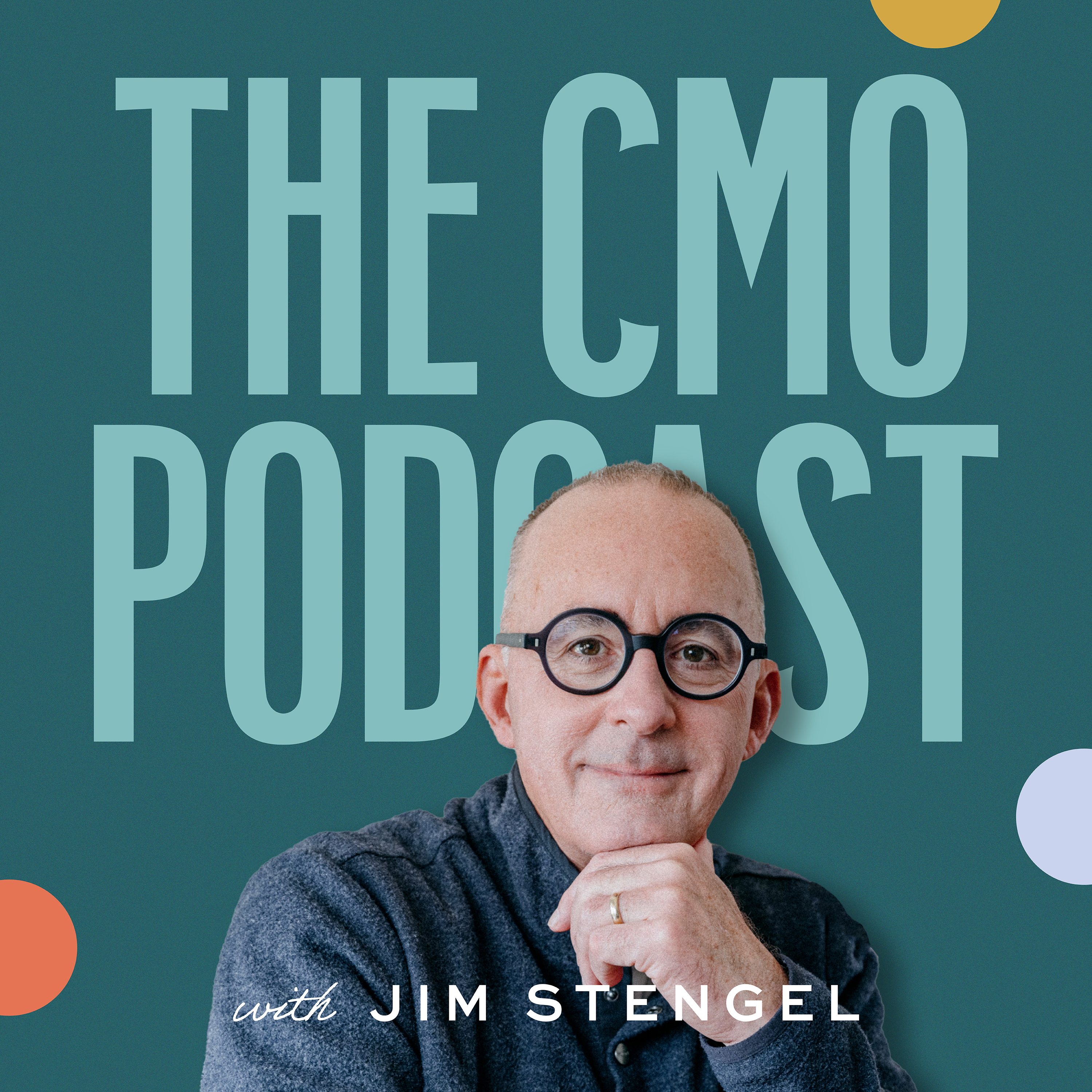
 The CMO Podcast
21 Oct 2026 · 54m · 21 chapters
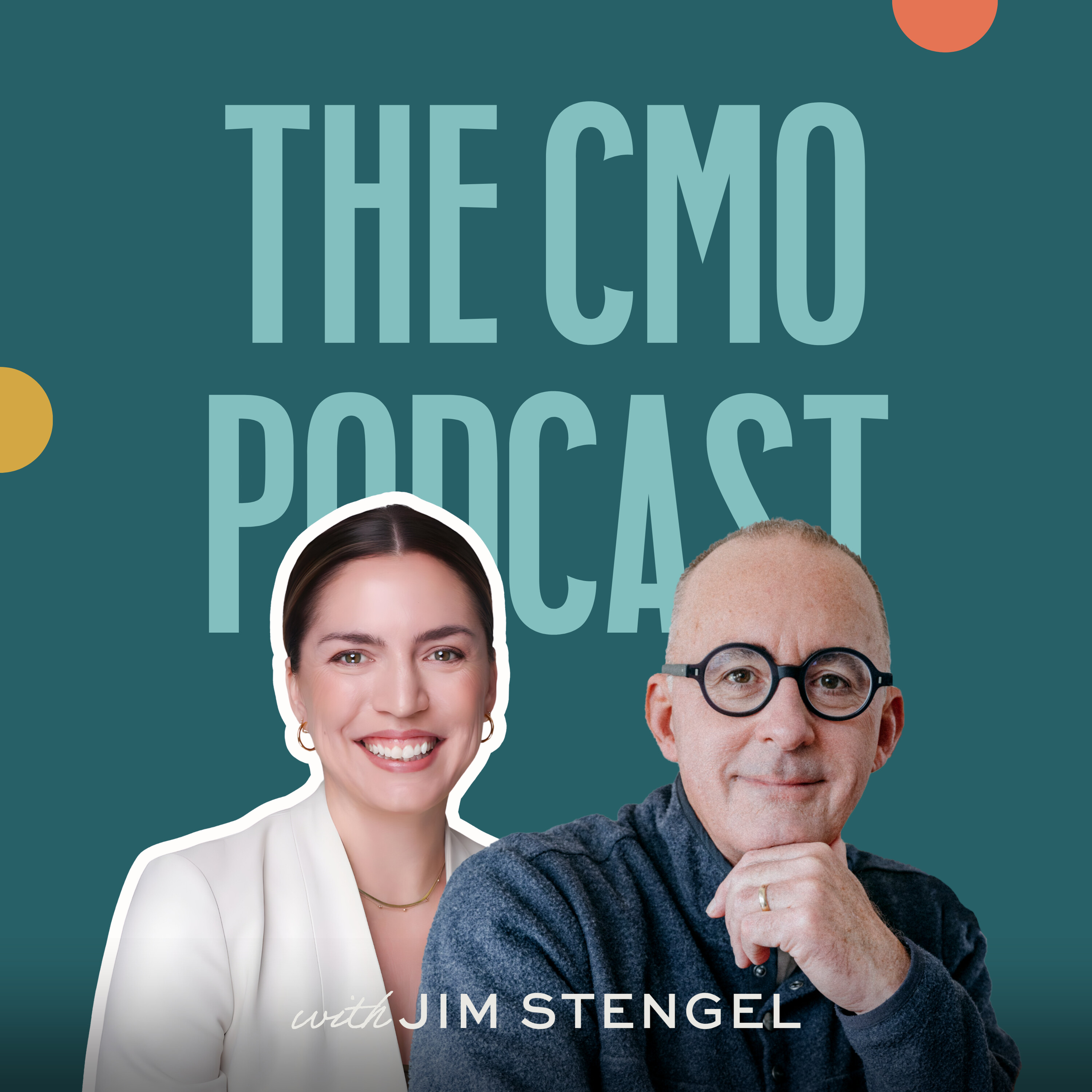
Erin Oles, Salesforce President & Chief Marketing Officer, discusses how AI and changing customer behavior are reshaping marketing: moving from a traditional funnel to “serve customers where they are,” using AI agents inside marketing, and keeping brand differentiation through human creativity, values, and judgment. She also covers lessons from Dreamforce and event strategy.
Erin Oles is a Salesforce “boomerang” CMO. Career includes sales at Salesforce after starting at Hyatt, nearly a decade at Rodan + Fields (scaling the beauty company), and returning to Salesforce to help shape Dreamforce (strategic events portfolio; ~80–90 major events annually). She was recently named President and CMO. Host: Jim Stengel (purpose-focused brand advisor; CMO Podcast host).
70% of consumers start searches in LLMs; 50% of B2B buyers do too. Marketing must shift from funnel nurturing to surrounding customers with relevance. “Customer zero” (use tools internally) enables humility and better customer-fit. AI should empower humans, not replace complex creative work.
Dreamforce (50,000 in San Francisco; millions online); AI agent “Piper” launched on Salesforce web properties in 37 days to book meetings (~2x conversion vs traditional forms); SEO agent fixed ~10,000 broken links in a day; Dreamforce personalization improved session attendance (AI-recommended agendas: +30% show-up; session attendance linked to +70% close rate).
Written by AI. May contain mistakes.
Discussion about the energy at Advertising Week and the role of marketers.
“Every October, 20 ,000 people gather in Midtown Manhattan for a week of talks, workshops, and of course, energetic networking.”
Erin discusses changes in consumer behavior and marketing strategies at Salesforce.
“A big thank you to our friends at Salesforce for hosting us at Advertising Week and helping bring this series of conversations to life.”
Erin reflects on her promotion and her experiences at Dreamforce.
“Now you are promoted a couple months ago.”
Insights from Dreamforce and how AI is impacting marketing strategies.
“And I think it's been a little rallying at Salesforce as well.”
Erin shares common customer queries and insights on designing impactful events.
“what's the most frequently asked question you get?”
Discussion on the necessity of team buy-in for successful events.
“Now you've been with Dreamforce for a long time.”
Erin explains how AI transforms marketing efforts and improves customer interactions.
“What's your counsel to really do a massively successful event in helping your company achieve their goals?”
Explore how AI tools enhance marketing efficiency and decision-making.
“And so one of the changes that we see, I mean, just so many incredible changes.”
Discuss the need for agile organizational structures in marketing.
“surveyed who saved with Progressive between October 2024 and September 2025.”
Understand how data influences marketing strategies and customer interaction.
“And what's the customer problem that you're uniquely solving?”
Learn how AI can enhance human interactions and customer experiences.
“And we don't have the perfect measurement right now for all these new places that we're influencing them.”
Explore how brands can maintain a unique identity amid AI advancements.
“You know, we know that 8 ,000, there's 8 ,000 content polls from agents or more than 8 ,000 for every one customer, real human poll.”
Discuss strategies for nurturing a culture of curiosity and embracing change.
“So really, it's the cultures that are going to stand out.”
Learn how companies can maintain a curious culture during times of change.
“How do you help people get, I mean, you're a great company in embracing change, right?”
Explore the unconventional career path that led Erin Oles to become CMO.
“So you started, you went to school at SDSU, San Diego State for hospitality and events.”
Understand the importance of learning from failure and effective leadership in marketing.
“I was like, I don't know how it's been nine years, but I'm definitely ready to come back.”
Exploring how AI can enhance human connection in marketing.
“That's a beautiful legacy when you think about it.”
How leadership and innovation can improve customer experiences.
“The way that I think that comes to life is by putting the right people in positions to make an impact, removing barriers.”
Discussing strategies for balancing work and family life effectively.
“My first question is you started in hospitality.”
Understanding how seeking feedback shapes effectiveness and relationships.
“In the workplace, I see this as almost more like the agile scrum style leadership where, you know, it's more a stand up style.”
The significance of enjoyment and creativity in the workplace.
“I was my first general manager job at P &G was in Eastern Europe.”

Get the gist, explore an idea or ask about something said.
 Claude
On The CMO Podcast, what are the key points of this episode?
Searching your listeningAutomatic transcript. May contain errors.
0:00Jim Stengel: Ever notice how life's best stories don't happen in your living room? They happen on the open road, out on the water, or parked under the stars. At Progressive, they get that you want to focus on the experience, not worry about the what-ifs. That's why they offer quality insurance designed for your ride, whether that's a boat, RV, or motorcycle. Adventure with confidence. Visit Progressive.com and see how easy it is to protect your favorite way to get away. Progressive Casualty Insurance Company and Affiliates. Not available in D.C. Prices vary based on how you buy. First brand you remember making an impact on you as a young girl?
0:35I mean, it would have to be Disney, I think, if I can think to the youngest. I would say Disney, for sure. You know, just that idea of being able to create really creative, emotional, connected storytelling, I think has always resonated with me.
0:49Jim Stengel: Hi, I'm Jim Stengel. I've helped hundreds of major brands discover and activate their purpose. because when a brand's purpose is clear, compelling, and authentic, profit naturally follows. Each week, I welcome the CMOs, the chief marketing officers of your favorite brands, to speak to how their job is so much more than marketing. These leaders share their inspiration and challenges, along with how they try to build a full, healthy, and happy life in and out of the office. And it's that energy that reaches everyone they touch. And we're glad you're here to feel that energy and to learn from these remarkable leaders So here we go.
1:26Jim Stengel: Advertising Week is an annual event in New York City. Every October, 20 ,000 people gather in Midtown Manhattan for a week of talks, workshops, and of course, energetic networking. This year, we had the chance to bring the podcast right into the middle of it. This week's conversation was recorded live from the Salesforce Podcast Studio. And it's appropriate that my first guest is their chief marketing officer, Aaron Olds. Salesforce is, of course, one of the world's leading enterprise technology companies, best known for pioneering cloud-based customer relationship management, or CRM. Founded in 1999, the company has grown into a global business generating more than$41 billion in annual revenue, with a portfolio spanning sales, service, marketing, data, and artificial intelligence.
2:10Jim Stengel: And leading Salesforce's marketing organization through this moment is Erin Ohls, who is recently named President and Chief Marketing Officer. Erin has a fascinating and somewhat unconventional career journey. She started in hospitality with the Hyatt company, had a three-year stint in sales at Salesforce, spent nearly a decade helping scale the beauty company Rodan and Fields, and eventually returned to Salesforce where she helped shape Dreamforce, Salesforce's massive annual thought leadership event for clients. Our conversation comes just weeks after Dreamforce and we explore what Erin is learning as she takes on this new marketing leadership role, how Salesforce is putting AI agents to work within its own marketing organization, and why the traditional marketing funnel has forever changed.
2:56Jim Stengel: A big thank you to our friends at Salesforce for hosting us at Advertising Week and helping bring this series of conversations to life. Here's my conversation with Erin Olds. Aaron, welcome to the CMO Podcast here at the Salesforce Podcast Studio. Thanks for hosting us. It's been a great week. So it's Advertising Week. You're on stage a few times this week, correct? So could you tell me you were on yesterday and you're on later today? So how did it go yesterday? I mean, it's fabulous. I think you can feel that the energy is buzzing if you just step outside these doors. You can feel the energy of it all.
3:30I think it's a really exciting time. It's an exciting time for marketers. It's an exciting time for advertisers. I think the world's changing a lot. It sure is. Everyone is here coming together trying to figure out what does the future look like? What do we do next? What's the next move? So lots of good energy, lots of great questions. So excited for the day.
3:44Jim Stengel: Yeah, super. And later today, what's your message going to be on stage? Yeah, I mean, I think we're just talking about, from my perspective and what we're seeing at Salesforce as well, is that our customers have changed so significantly. And consumer behavior is really driving that, right? We know that something like 70 % of most consumers start all their searches in LLMs. 50 % of B2B buyers do the same thing. And so it's interesting to focus and easy to focus on just AI and what does AI mean for me? What does AI mean for productivity? But I think that the bigger shift is just customers overall are on an amazing revolution where now us as brand marketers have to go and figure out how to serve them where they are versus kind of that maybe older notion of bringing them into our funnel where we can now nurture you and get permission to talk to you.
4:24So it's just a really exciting time to be a part of marketing and to be looking at what our future is going to look like.
4:28Jim Stengel: It absolutely is. Now you are promoted a couple months ago. Yeah. Yeah. Congratulations. What? How's that change for you? How's it changed life? Yeah. I mean, honestly, you've been there a while, but this is a new role. Yeah. And I was a boomerang. I was here before. Yeah, I know that. We went straight in when I moved in this new transition, we went straight into our largest event called Dreamforce. It's 50 ,000 people. And so people asked me this question and I'm like, I was kind of the same because that's really a rallying cry for our entire organization. and we're all hands on deck. So I've been a close part of the leadership team for many years.
5:02And, you know, the change is just a little bit of empowerment and excitement to lead this team into the future. And I think it's been a little rallying at Salesforce as well. So we're excited about it. Yeah.
5:12Jim Stengel: So Dreamforce was a couple of weeks ago, right? And this is your 10th one, if I'm counting right. My 10th one? Yes. Isn't that right? You might be right. I think I went to some in between. You're probably right. Yeah, 10. 10 sounds about right. So for the people who don't know what it is, I mean, it is the signature event you do. It is, I think, I went to call it on this. It is about the largest corporate event in the world. Yeah, it's 50 ,000 people in San Francisco. And then we have a few million that join us online. And take over the city. Yep, take over the entire city. So what was this one like versus the other 10 now that you're in this role?
5:45Jim Stengel: Anything different about it? Did you have a different role? It's interesting because I think, you know, I've always, since I've come back, I've always owned this program and this event. So it didn't feel dramatically different. But I did get a little bit of a different lens and just I had an opportunity to step back a little bit more and observe a little bit more about how our message was being received. And I think it's a really exciting time. Two years ago, we were really talking about AI in the business world kind of philosophically, theoretically, and what it could look like, what it might mean.
6:15Even a year ago, we were talking a lot about productivity. I think all of those things are still real, but we launched our AI meet the number one CRM, which is like the crux of how do you unlock the most value from your AI of choice with the world's number one CRM? And I think I was able to witness our customers light bulb going off, right? And it really shifting on a lot of people have tried and had some mixed success with AI. Some are doing really great. They're running far ahead. Some are really challenged with it. And the reality is it is all based on the context that you feed it. and there's nothing richer than your customer context, right?
6:50And so it was a really cool moment to witness that at Dreamforce where the aha of how I'm going to use this in my everyday life really snapped into place for our customers and how they could start to unlock the trapped value of AI with CRM.
7:02Jim Stengel: When you're with customers at, you know, breaks, cocktails, that sort of thing, what's the most frequently asked question you get? It's actually very interesting to me because I was just chatting about this with a colleague of mine. Such a wide range. People are in very different parts of the journey And some of it is industry dependent. You often see that the technology companies are a little bit further ahead. And so their questions are a little bit more geared towards what's next. What are you seeing? What tools are available to you? And some are still grappling with the change of how business is being done and how to reach your customers overall.
7:32Some know about it and they're starting to implement tools that allow you to take a look at your, you know, AEO results and try to measure those things, but they don't yet have a system for it. So I would say it's a pretty wide ranging question and it really just depends on where that business is.
7:45Jim Stengel: Yeah. Awesome. Now you've been with Dreamforce for a long time. Could you, and you were very involved in the designing of it and making, I mean, it was your kind of a full-time job for a while for you, right? Yeah. And as you think about those 10 years, what experience really stands out for you when you think? Yeah. I mean, one thing we talk a lot about is we talk about beginner's mindset and this is something that our CEO has always guided and coached around. He's a big believer in this. And I think earlier on, sometimes we would get a lofty challenge or a crazy idea, and it would always come to you first of like, you know, man, that's just not going to be possible.
8:21Like, how are we going to do that? There's just no way. And our team would sometimes spend more time thinking about all the reasons why it might not be possible. And they would come back to leadership and say, okay, like we heard that idea. Here's all the reasons why we can't do it. And there was a pivotal moment where a former leader just said to me, if you spend as much time thinking about how you could make this possible versus how you how you can't. Like, where would we be right now? And so we took that message and we wove it through the whole team. And about two years ago, about a week and a half before the event, we changed the entire event theme and almost every single piece of signage.
8:53And at an event for 50 ,000 people with, I mean, tens and tens of thousands of assets, it seems completely impossible. And I think that the organization, the marketing organization at Salesforce just generally loves that. Like we love that. If you're going to tell me it's not possible, like, let me show you. And I think that was a fun cultural shift. And we see a lot of things. I think events for many organizations are a forcing function because you've communicated a date. You have to show up with something, a message. And, you know, some people miss the mark and they don't quite get there. But I think what it really does is it puts a stake in the ground and it allows you to run at that, right?
9:30And to do the best work that you can in that time. And I think that challenge is exciting. Yeah.
9:34Jim Stengel: Now, for those listeners out there in our audience who everyone does events of some sort, no matter what your company is, how big it is, I mean, you do the epic one and it's obviously effective for you and you make it better and better every year. What's your counsel to really do a massively successful event in helping your company achieve their goals? Sometimes we hear people say anecdotally, oh, my gosh, that event was like so much work. Or like, I don't know why we, you know, not our organization, other companies, organizations. And they're like, why would we do that? It took our entire team.
10:05And whenever I hear that, it's almost abundantly clear to me that the surrounding team is not invested enough in the program and that it's maybe being seen as a small marketing effort. But the reality is it's one of the strongest vehicles, especially today in the AI world, of that ability to connect in person and to have human to human conversation. You know, our entire company plans and executes our events, right? Our sales teams are engaged in it. Our finance teams are engaged in it. Every single piece of what we do, the marketing before, the follow-up, the marketing after, it is a huge vehicle and it drives tremendous impact.
10:42And I'll also sometimes share with them, like, how are you measuring? Talk to me about your measurement systems. Let me help you. But the reality is I often find that if you're struggling to justify the impact of it, you don't maybe have buy-in at a leadership level to where they understand how impactful it can be.
10:55Jim Stengel: Yeah. And you do like 90 a year, right? Way more than 90. Way more. Okay. 90 big ones. I saw a number somewhere. Probably, yeah. I would say we're probably between 80 and 90 big ones. And then we do third-party events. We do executive events. I mean, the team does a tremendous job at just kind of keeping that message live and fresh. Yeah. Now, I know you talked a lot at Dreamforce this year about experimenting. We moved from experimenting with agents to deploying them at scale, right? And you've always had a philosophy, which I followed for many years, that your marketing department is customer zero.
11:25Jim Stengel: So you have to really be, you know, implementing all the tools, you know, within your own organization. So could you talk to me about that, what you're learning in deploying agents in marketing and how that could help others? Interesting. Completely agree. You know, being customer zero is, I think it's critical because it's really hard to market something if we don't believe in it ourselves, if we're not using it ourselves. And I think in this world right now, one of the things that it's done that's been incredible is it allows us to come to market with a little bit more humility. Like, it's not all easy.
11:54You know, it's not all out of the box. There are some incredible agents that are out of the box, and I can share a little bit about that. But there are also more complex things. And I think by going through it as a team and learning, I think it allows us to address our customers exactly where they're at and have more authentic connection with them on what does this journey look like. We did just launch a tool called Piper, and we put it across our web properties. I think we launched it in 37 days. So this is an example of an out-of-the-box agent that does a discrete job. This agent's job is to get pipe.
12:23I don't know what marketer you've ever asked. They're like, do you have too much pipe? Do you not want that much? And you're like, no, never mind. And that's what the role of this agent is. And they have the ability to book meetings across our site, right? So it was live in 37 days, which is pretty quick and pretty exciting. And we found immediately that it does about two times the conversion of traditional. So it's, and I don't, you know, I'm sure there's a lot of data scientists that'll tell you exactly what it's based on. But if you just like even remove yourself from it and you think about it from a human intellectual standpoint, in the moment that I'm curious, you booked me a meeting.
12:56Exactly. I didn't fill out a web form. I didn't go into an inbox. I didn't wait till Monday morning to get followed up with. You know, you gave me context that was rich and embedded in that site in real time that made sense to me and you served me up an opportunity to make it work for me. And I think that's the biggest shift that we're seeing right now that is really exciting for marketers is because of the old funnel and like the way things were, we were almost incentivized for tracking, right? And now we have to move the other direction and say, like, how do we be the most relevant when our customer is ready for us?
13:26And that's like a great example of how we're using it.
13:28Jim Stengel: Yeah. How is your marketing department changing as you're deploying these agents? I mean, what's your insight into what work is becoming more valuable, where people should spend more time as agents take on more of the work? What are you learning about that? It's interesting, and maybe it's counterintuitive, but I think they're getting smarter. Our marketing teams are getting smarter with the use of agents and AI, because the thing that AI is incredible at is looking at vast amounts of data and insights, whether it's structured or unstructured, and then pulling signals from it, right? And what happens when you give an incredible marketer a ton more signals in a synthesized way that they can actually consume?
14:05They do better marketing. And so one of the changes that we see, I mean, just so many incredible changes. We have an example, an SEO agent that we built on AgentForce and we launched. It identified 10 ,000. This is a little bit like maybe we don't say this out loud, but I'll tell you anyway. We identified 10 ,000 broken links or dead web pages that needed to be fixed. And it fixed them in like a day. That would have been 5 ,000 human hours to go through and find all of those and fix it. And so the reality is that that is not a uniquely human skill to go find broken links and fix them. And that human can now be thinking about how do we make this tool available for our customers?
14:42That's a part of customer zero, right? And so just the ability to allow humans to be more intelligent, empowered by the AI and the insights and be able to make smarter choices and decisions. And we see that all over the place. There's lots of little examples all across marketing where that's happening. Thank you.
15:25Jim Stengel: surveyed who saved with Progressive between October 2024 and September 2025. Potential savings will vary.
15:36Jim Stengel: How's your organization design shifting with these changes? Where are you moving people? What work are you moving? What are you stopping? I mean, I'm new into the role. So transparently, I still subscribe to the philosophy of putting like people with like people so they can move fast, learn from each other and carry over context, peace over piece. But I like cross-functionally aligning them to a KPI or an output or a work project. So you take experts from these different homes and you give them a goal that they're held accountable to. So I worry a little bit less about the structure. I want them to be in a structure where they're coachable and they can learn and they can grow.
16:10But then I want them to be in an agile marketing position to impact change, to go after and get a thing. So I think a lot of this probably comes from some of the work that we do around Dreamforce. It's a behemoth of an event. every single part of the organization touches it. But you have comms, you have your full PR plan, you have our giving back strategy, which is so paramount to what Salesforce does. And all of those people have to collaborate in on, we jokingly say three days, but the reality is it's an event that lives on before and after. And so when you think about that, the lines don't matter in the org, right?
16:40And it's the same for what we're seeing right now with AI. A lot of the AEO search returns that look bad for organizations are often your own owned FAQ pages. that may have like a 1 % time that someone said one little thing could possibly go wrong and the LLM happens to just be pulling that and its returns. And so it doesn't matter that the marketing team might not own that FAQ. It's our job to work cross-organizationally and help that team update that to be more relevant for our audience. And I think about that same internally with my own org structures. I care less about where you sit, what work are you assigned to and aligned to, and what work are you moving forward, whether it's a special project or a larger goal on modernization a system.
17:20And then I think, you know, you sit with people who can coach you through that.
17:23Jim Stengel: Yeah. You must get the question a lot, though, because you are customer zero. You know, where should I start? What should I focus on as a CMO? So what do you tell people? Yeah. I mean, I think you got to start where the customer is at, right? And what's the customer problem that you're uniquely solving? How do you work backwards from that? I think at a bigger picture, you start with data, right? We know that if you don't have data in context in order to power some of these systems, like you can get silly answers from AI that mean nothing to your business. But we also see such stronger results when you do have your data in a centralized system.
17:53So we use Data360 and we, you know, in the old world, you could launch a campaign and you would set up an audience and you would say, this is the goal of my campaign. You would design a whole program around it. You would program it. It would go for 30, 60, 90 days. You would stop it. You'd wait. You'd see how the leads came in. And then you'd say, OK, this worked. This didn't work. Let's implement these changes in the next one. Meanwhile, like two or three other campaigns, four or 10 have already launched. And so you're kind of like taking six month old news to adapt it. And now what we see is that these campaign agents are live and constantly taking in insights from results and evolving in real time.
18:24We just give it a goal. Right. So I think that it's pretty exciting time to be in marketing.
18:29Jim Stengel: You've been in the CMO job a few months. So what are your priorities? What are you telling your people? What are you communicating? How have you spent the first three months? Yeah, I've been diving deep in the data. Right. What's actually influencing outcomes that are meaningful. You know, we have to think about marketing serves the business, right? And so we've been spending a lot of time diving into what is best serving sales, how are things coming across. And I think with the change that we've talked about already and how marketing is happening right now and how we're reaching our customers, you know, we have to really look at our measurement systems and think like, is that still how we're influencing deals?
19:06If people are discovering so much more on LLMs, you know, how do we think about where do they go next. And it's funny because I think a lot of people are really focused on things becoming less human, but I actually think they're becoming more human. And the way that I think about this is let's just assume you search up, you're a small business and you search Salesforce and an LLM, you want to learn a little bit more about it. You can get pretty deep in your search and understanding specifically what problems it can solve for you, what templates it has, and how far you could go. And the next thing that you do, maybe you decide you want to talk to someone at the company.
19:38And so you go and you experience Piper and you get an appointment set up. Or maybe you call a friend, which I think is a really natural thing, a colleague in your industry and ask them, what are the CRMs that you're hearing about? And then maybe you go a step further and they connect you with their salesperson. And then that would have been a lead that was nurtured through our website into a funnel because they had to come to our website to get any information is now actually passed into the sales organization and then comes back in another way. And so I'm shifting the way that we think about how we are influencing our customers and driving buyer a little bit less from that nurture and more into this surround.
20:15And we don't have the perfect measurement right now for all these new places that we're influencing them. We have a lot of tools like Palmada where you can see it and you can learn about it. But I would say we're still developing that. And instead of being hung up on what is the perfect numerical science from A plus B gets me through my funnel to this lead of where all the places and how do we make sure we are where our customers are with relevance, with influence, and that we are surrounding them so that when they think of CRM and they think about the future of how to have an AI-ready enterprise, they're thinking of Salesforce.
20:44Jim Stengel: So that's a challenging, that's a complex problem in the world of AI. Discoverability, et cetera, et cetera. Now, how is this affecting how you're thinking about your brand? You know, the brand equity you want to build, what you want to be seen for? Yeah, I mean, the beauty of Salesforce is that we've always had our core values, right? So as long as we stay anchored on those, whether that's customer success, trust, equality, innovation, and sustainability. Yeah, I mean, generosity is a huge piece of that. I think from a brand perspective, we always have a North Star. And so I'm less concerned about that component.
21:17But I do think like we have to really be thinking about just the way in which we're going to market and where we are spending our time and energy. I think that there's a lot more opportunity for us to serve our customers in an incredible way. You saw a little bit of that at our recent launch with AI Force. This idea that we want to put CRM in the place that you work that's intuitive to you and our ability to couple that up with Claude, right? So that if you're in Claude and you want to pull in your CRM and the 37 sales skills that exist, you can ask it, like, what are the most important times and places for me to focus my energy this next week?
21:50and it's actually pulling from real data, not snippets and not outdated things. So I think just continuing to anchor on what does a customer need from us in this time has been a guiding light for us and making sure that we maintain, you know, the most complex things. I think I hear a lot from people of what should humans do and what should agents do? And I think maybe it gives us comfort to think like, okay, here, I'm going to give you a box and you're going to put these things are for agents and these things are for humans. But if you kind of like step away from all of that, and we've all been through industry changes and innovation, at the end of the day, like, The most complex projects, the most strategic projects, the most complicated or, you know, creative things, those are all just human things.
22:27You're not going to give that to an agent tomorrow. It's not just going to flip overnight, right? I think the idea is that you are empowering humans to be that much more productive and creative and capable because they have more insights is the shift. And so, well, you know, we have to market to both. You know, we know that 8 ,000, there's 8 ,000 content polls from agents or more than 8 ,000 for every one customer, real human poll. Like we have to market to both. But I don't think it says, I don't think it says like black and white of what do agents do and what do humans do? It's like, let's be real.
22:59These are complicated things. An agent is not going to deliver a 50 ,000 person event.
23:04Jim Stengel: It's not going to happen. It'll help. It'll help in lots of ways. And it does, right? It does, right. I mean, it created our personalization engine, right? We learned that people who come to conferences, you know, we used to always create 1 ,600 sessions at this event, right? We used to always create personalized recommendations for you. And it would be kind of a collection of, this is a trail for marketers. All these marketers should go through this journey while they're there. What we did is we actually empowered Agent Force to start to take some signals from you, the industry that you're in, your role, and then to tee things up for you.
23:32So we learned that when you took an AI recommended agenda, you were 30 percent more likely to actually show up to your sessions than when you built your agenda yourself. And if you like back away from that even further, we also know when you attend a session that is of a product or a service that you're interested in and you go to that session, your 70 percent, your close rate increases by 70 percent. Right. So the value for all businesses to be able to connect and make it easier on you as a human, like, should you ever have had to filter through 1 ,600 sessions in order to figure out what's relevant for you?
24:05Absolutely not. That's insane. And you probably made an OK agenda because you got tired of scrolling and you just moved on at some point. And I think, you know, that's just like the beauty of AI actually making the experience so much more human and personal and valuable to you. And that's what starts to create that brand loyalty that shows up year over year.
24:21Jim Stengel: Yeah. We're talking about this, but in a world where agents are more deployed and that's just increasing like exponentially, you know, part of our job is, you know, to build brands that are differentiated, distinctive, make people feel something. You know, great brands in the world are loved. There's emotion in them. So how do you, it's a bit of a philosophical question. No one really knows. But in a world where agents are doing more work and helping people do better work and helping people help customers better, you know, how is it going to be harder or easier to build a differentiated brand?
24:52Yeah, I think that we almost are freeing ourselves up from the mundane work of looking at lists and allowing AI to pull insights from that. Then then and then spend that time focusing on that creativity and the things that only we can uniquely do and the brand voice that matters so much to us. I think all of that, I mean, that's where your value, you know, stands as a brand. Like everybody will have access to intelligence. Intelligence will become something that's readily available in a really broad way. And I think it'll get more affordable over time. There'll be different models, purpose-built models that are built for the right thing so that you're not burning so many tokens for every single thing that you do.
25:31But I think at the end of the day, what is your differentiator will be your brand voice. It'll be your values. It'll be how you come across. It'll be your customer context, right? So, you know, the way in which you know your customer and what they want and what they need and how you can look at predictive models to say, what will they need next? I think that'll be the pieces that are differentiators for us and that we'll have to continue to hold close. And I look at AI as removing the work that kept us from that.
25:55Jim Stengel: So really, it's the cultures that are going to stand out. It's the values of companies. And the easier it is to discover that, the great companies will do better. And the ones that are not consistent or coherent or customer focused are going to suffer more. Right. And I think that, you know, you can't undervalue the importance of judgment and taste, right? And so we have to be very mindful that while we are starting to look at, you know, opportunities for the future, like I think people like content writers are going to become even more valuable. Like nobody wants the world in which everybody starts sounding the same.
26:28It's all written by AI. It's the same laundry list of things. I think having that uniqueness will be a differentiator as well.
26:35Jim Stengel: How do you make sure we keep that? Yeah, I mean, I look a lot for intellectual curiosity. I look for people who, I think the phrase is disrupt the apple cart. Like you kind of want one of those people in the mix who's like, I don't really get it. I don't think it makes sense. And I like collecting those type of voices together so that we can always be questioning ourselves and driving to a new path that maybe we haven't explored before. Maybe we decide it's not right and we're not going to go that direction, but just to be constantly questioning and curious. Yeah. Your scope has changed a lot in your time in Salesforce.
27:05Jim Stengel: I know you've been there twice. We'll talk about that. How have you evolved, do you think, most as a leader with these expanded responsibilities and larger organizations? I find that, you know, it all ebbs and flows, right? And you have to kind of keep yourself connected to what is the top level mission or vision that you're trying to achieve. And maybe I worry less about all the little pieces that get there. There's many ways that we will get to success. And I think when I look at a company like Salesforce that has such an incredible and powerful team that is so strong, it's really about just enabling people to be in positions that they're excited about, that they want to be in and they're empowered to, but then kind of letting them go and giving them the safety to do that.
27:44I think actually the more my role has changed, the less it becomes about me and the more it becomes about the team overall. And I had the opportunity to work with some of the most intelligent people I've ever worked with in my career who know far more than me. And so far be it for me to be in the way of that. I think my job is to just continually encourage them to drive and to run faster and think bigger and figure out what I can do to help them with beginner's mindset when we get stuck or blocked.
28:06Jim Stengel: How do you help people get, I mean, you're a great company in embracing change, right? It's part of your culture. But, you know, now we're going through just a change on so many levels, right? Geopolitical, AI, everything. How do you keep your culture curious, not afraid to fail, moving forward, embracing change, seeing the excitement in it and the fulfillment for themselves? I mean, I think there's still a lot of fear out there. And you seem to be dealing with that pretty, at least from the outside. So what's your counsel on that? Yeah, I mean, I feel pretty optimistic. I think that for a team, you know, it's like a tale as old as time.
28:47I feel like everybody says it's like if you make them feel safe, if you try to like pull that back a little bit, what does that mean? And where are you focusing your energy? Are you encouraging innovation? Are you shedding a light on it? Are you laughing wholeheartedly when something doesn't quite go right? Are you taking like the fall as a leader? Are you saying that was my call, my choice, when an idea didn't quite pan out? And does your team know that you're going to have their back? I think those are all really kind of simple leadership philosophies that I'm sure many of us, you know, try to make sure that we do.
29:19But I also just think, you know, part of what is so incredible about Salesforce is that we have this really unique community of our trailblazers who are such strong voices and so invested in what we do. And whenever we're starting to feel like maybe we're off course, go sit down with them. Like, go let them tell you about either how their lives have changed because of this incredible ecosystem or, you know, just their passion and love for what Salesforce can do. And it just can't help but inspire you to just think about, like, what's next for us, for them, for all of us. Like, what could we be doing next?
29:52And there's no shortage of ideas.
29:53Jim Stengel: So I've been a guest on your Treble Leasures podcast. Oh, good. Yeah. What do you think? It was great. Fantastic. Yeah. One, I got lots of great sweatshirts. Yeah. I know. Normally we have stuffies with us. It's a great experience. And your office is amazing. It shows off your culture. I visited your Tokyo office too, a few years ago. Also incredible. Just amazing. I haven't been yet, but it's on my list. Just amazing. Yeah.
30:20Jim Stengel: Hi, everybody. I'm Andrea Sullivan, the CEO of Vive, and we have produced the CMO podcast with Jim Stengel for many years, and I'm sitting in his seat right now. It's so exciting. I wanted to tell you a little bit about one of our programs that's called Vive by Vayner. It's a 12-month program that's designed for C-suiters and founders. And we want to help people to grow their businesses, but also to grow themselves. And so we bring in people from Shark Tank to talk to our founders, but we also focus on wellness. We want to make sure that people are leaning into becoming their best selves, their best and happiest selves.
31:00Jim Stengel: So if you are someone that wants to learn how to grow your business and grow yourself, check us out at vive.co. That's V-Y-V-E.co. We'd love to talk to you.
31:18Jim Stengel: You've had a really interesting career path, right? I would say unconventional to CMO. So you started, you went to school at SDSU, San Diego State for hospitality and events. So why did you choose that back then as a major? What was your hope? What was your dream? What did you think you would do? I don't want to date myself here, but it was at an interesting time, I think just before one of our economic crashes. And what really drove me was I wanted to make sure I had a job. Like I wanted to know what my exit path was from college. I didn't want to have too broad of an expertise. I wanted to be grounded in business.
31:57And I liked hard stuff and it felt like it was hard. And I, you know, I wasn't sure exactly what it meant, but that's what drove me, drove me there.
32:03Jim Stengel: And you started at Hyatt, right? Yeah, I started in sales at Hyatt. First job out of college. Yeah. And that was when the housing market bubble bust. And so it was a crazy, a crazy period of time. And I very quickly thought, if I'm going to be successful at this, I should go learn from the best sales organization that I have access to at this time in San Francisco. And so that brought me into Salesforce. And so my first role before I moved into marketing at Salesforce was actually in sales. And I think that has stayed with me for a really long time because there's nothing quite like picking up a customer and using a script that marketing gave you that doesn't make any sense and doesn't land.
32:44And then having to explain to the customer, what did you mean by that when they try to understand what you're saying? And I think that has always kind of kept me connected to the humanity in marketing. And what I mean by that is that, you know, we're not writing copy for the sake of prose. Like you need to be able to understand what it means. It has to mean something to a real human that addresses a problem that they're either worried about or something that's on their mind. And I think just having that opportunity to talk to tons and tons and tons of customers, you know, and go through failure and rejection and resilience, I think was all really strong foundation.
33:18Jim Stengel: How is sales at Salesforce different from Hyatt? I mean, Salesforce, you know, I feel they're the masters in the process in the system, right? I think the training programs and the way in which they help guide you with just fundamentals of sales was really strong. Hyatt's an incredible company and I was fresh out of college. They did a great job with the newbie that they had. But, you know, I think Salesforce just really taught me about resilience. It taught you about at-bats. And if you have enough at-bats saying the right thing or the wrong thing, eventually you'll figure out what the right thing is.
33:49You learn how many no's you have to get in order to get a yes. And you stop worrying so much about every little piece, right? You start to really just go after what are the behaviors that I need to do? What is it within my control? How do I drive forward to hit my targets and goals?
34:02Jim Stengel: How do you stay close to sales now? Yeah, I'm lucky that we have a pretty strong, a really strong team. But I think I'm hopefully the first one that they call, right? Whenever they need something, I want to be the phone number they pick up. And I talk oftentimes with our organization that we are like, what are we all doing here as a marketing organization? Our job as a marketing organization isn't just to put beautiful things out into the world. Like that would be lovely and really fun. But our job is to drive impactful change for this business and to move us forward and to create opportunities and to nurture opportunities and to drive interest to sales.
34:35And so they're my stakeholder, right? Like I need to hear from them. They need to tell me how customers are reacting. I need to join their customer meetings and actually understand the problems that customers are asking for and then figure out how do we connect that, whether it's from a top level brand message or if it's a little bit lower into the funnel and like some product discovery stuff. Like, it's just keeping close and keeping that open line of communication, I think, is invaluable.
34:56Jim Stengel: For a CMO who does not grow up in sales, what's your advice? Get close with sales. Get on the phone. I mean, if you have— There's a lot of talk about being close to the CFO, but you've got to be close to sales. Yeah, being close to the CFO as well as your head of human resources or people. Like, those are just, you know, for any executive, that's just a smart move. I think that getting close to sales is important, but I think maybe—I don't know, it's more important or bidirectionally, like, kind of the same. It's because they're the closest to the customer, right? And so being close to customers has to be an imperative for all marketers.
35:25And many, I think, do that very well with looking at customer insights and feedback and things like that. But, you know, I just will never forget when you take the call where someone's just pissed you called them because you have the wrong message, like it just stays with you and you need to figure out how you're better supporting sales. So I would start on the relationship. I would ask to join calls. I would ask to get on those outbound calls. I think if you can go sit with an entry-level sales member and listen to them make calls, you will very quickly say, oh, my gosh, I'm not providing them with exactly the tools that they need in order to be able to warm this customer up to be ready for this call.
35:56Jim Stengel: Yeah. We had a ritual at P &G when I joined that came in at the entry-level position in marketing. And you spent, I don't know, 12 to 18 months in that position. And if you were promoted to the next level, which was one step behind brand manager, you were sent on sales training. And you were assigned to a region for three months. And you did the work. And back then it was like calling on stores and doing shelf sets and selling your brands and selling the portfolio and bringing forth synergistic ideas across the brands. And you really, I mean, it was physically hard. It was mentally hard. You developed empathy to that experience.
36:30It was lonely at times. Yes, absolutely.
36:32Jim Stengel: Yeah. Yeah. It's fantastic. Did some of that stay with you? You go, oh, of course it does. Yeah. It stayed with me for my whole career. You know, and I was a brand manager that was, that the sales organization loved because I listened and I visited and I tried things out with them before, before taking it to the next step. So, and that wasn't really the culture back then. Marketing was sort of seen as the center and the people who had the power and the money and sort of in a way around the company. But at the end of the day, they represent the customer. We both do. Yeah. And you have a common goal.
37:06Like there's no one's on a team. We're all on one team. We all have a common goal. We're on one team. And the closer you can get to your teammates, why wouldn't you know what their moves are? Why wouldn't you know how to help them? And I, you know, also like, it's nice to work with people that you want to work with and that you enjoy and have a good relationship with and are building incredible. If you're going to do the hardest thing that you can imagine pulling off in two weeks, don't you want to be like in that with your partners, with people who want to do it too? And so I just think it's always a good investment of time.
37:32Jim Stengel: Yeah. So you left Salesforce to go to a beauty company for a long time. Yeah, I didn't mean to. It was an accident. What happened? What happened? I mean, we were just growing. We were in a rapid growth environment. And, you know, I tend to be the kind of type that loves to run towards a problem and a challenge. And so whenever there was one, I just found myself signing up for the next challenge. And I looked up and I think it was like nine years. And I never thought I had left. I had been gone, would be gone for that long. So why did you leave Salesforce? Were you looking for something else or did it come to you?
38:01Jim Stengel: It was too interesting not to take? It came to me. It was very interesting. The idea of working. I mean, it's kind of funny when you think about it now. I think Salesforce at the time was 10 ,000 people. I think we're about 80 ,000 now. And in my mind, at the 10 ,000 mark, I was like, wouldn't it be interesting to go to a startup? Which a 10 ,000-person company is probably not quite a startup, but we very much still operated in a startup mentality at that time. And so it was a really small company. It was 40 people, and it was just an exciting opportunity to try something new and see if I could be successful in a different type of environment.
38:28And, you know, I think the greatest learning there was failure. Like every single time that something didn't work, I think that was, we just got so many It was right down in fields, right? It was, right. And you just got so many opportunities to test something out and see if it landed or not. And it was just a great opportunity for that.
38:45Jim Stengel: Did you have an affinity for beauty or the company or the purpose? I have always loved founder-led companies. I think there's a lot of passion in a founder-led company. And I can find myself getting really energized behind a vision and a vision that I can align to. So I was inspired by the people and the leadership that was there. And then they were innovated in an industry that was, you know, had largely it was I mean, this is like the start of when before social selling had started. I don't know if you remember this period of time, but before you had TikTok with the ability to buy now or Instagram with the ability to buy now, you just had these, you know, kind of influencers before influencers led businesses that were distributing these products.
39:21And so it was a wild rocket ship before algorithmic change really changed that business model altogether. But we did a lot of cool, innovative stuff around live streaming, around commerce. And I just think I wouldn't have had those opportunities. I had the opportunity to own our Salesforce product when I worked there as well. So then I got to have that customer experience as well. I think they may have thought, well, since she was from Salesforce, she might know this best. And I had the sales background that I think helped them in that field marketing capacity. And, you know, what ultimately brought me back to Salesforce was I kept strong relationships.
39:53And I always loved the brand and what the brand stood for. and our values. And so I got a phone call about an opportunity and, you know, was excited. I was like, I don't know how it's been nine years, but I'm definitely ready to come back.
40:04Jim Stengel: Yeah. So you came back and you worked on Dreamforce, right? You worked in events. I ran the strategic events portfolio. So that's about probably 300 or so events annually. Wow. Yeah. So of all these experiences in your career, which one do you think was the most developmental for you? The most stretching? That's a great question. I would say probably those startup days where the stretches felt really big just because, you know, you had. And rode down in fields. Yeah, they had a leader that believed in you and would throw you in a situation that you without question weren't prepared for. You had to kind of do the sink or swim.
40:39And it taught you, taught me the depths of, you know, if you really believe in yourself and you throw yourself in there, like what you're going to be able to navigate through. I think that was very formidable. But then I think in my return to Salesforce, I've had a lot of mindset shift change and growth, just in the way that we look at things, the way that we do things, the thought about beginner's mindset. I've always thought Salesforce is, you know, we have the best talent in the world and we have incredible, incredible employees. I used to try to explain to my husband that I felt that managing the team was like having this big herd of like wild stallions.
41:12And I'm, I'm holding this like rain from afar, like trying to kind of like guide them in the right direction, but they're all type A, high achieving. And so it's like, you want to let them run. You don't You don't want to slow them down. You don't want to block them. They can't go in a pen. Like they got really cool, amazing stuff to do. But you kind of just want to keep them semi moving in the same direction so that it all makes sense. And I just think the way the way I thought about, you know, in the guidance and coaching from Mark Benioff and the way in which he talks about having a clear V2 mom, which is your vision, your values, your methods, your obstacles, like a really clear purpose.
41:44Like, what are we doing here? And what are we trying to achieve? What's going to stand in our way? How are we going to know if we're successful? All of those were, I think, just such foundational leadership skills that if I hadn't had that experience, I wouldn't be where I am now.
41:56Jim Stengel: Yeah, it's amazing.
42:07Jim Stengel: Now, your career, it's you've really the red thread is you bring people together and you create an amazing experience. That's a beautiful legacy when you think about it. And how can we ensure that AI helps us all do that better? What are you learning about that? Yeah, I think maybe it calls back to what I was chatting about a little bit earlier is we can never forget that it's about the people, that it's about the customer. And even if we have to do and we get to do marketing towards agents as well, like that's simple. That's kind of table stakes, right? They look for structure. They look for completeness.
42:42They look for authority. When we're marketing to humans, you know, it's going to be different. There's creativity. There's emotion. there's relevance, there's context. And I think, you know, as long as we don't forget what we're doing and why we're doing it and who we're doing it for, the rest of it is all just like a means to get to that. And so that's really what I'm excited about right now is I almost feel that the transition that we're in right now has released us from some level of burden to subscribe to a certain way of marketing. And now we can really start to say, like, how is influence driving impact?
43:14How are all these other elements? And it's exciting. There's a lot of tools that are coming available right now that allow us to see how AEO, you know, search engines are returning results about us. And like, I just think it's an opportunity for us to reimagine where we focus.
43:27Jim Stengel: A lot of leaders at P &G always said to me, be sure when you go into a new assignment that when you leave it, it's better for some reason, and that you make an imprint on it to make things better and leave it better than you found it. I mean, that's nothing new, but it is an interesting to think about. Yeah. Yeah. So when you think about your role, and you'll be the CMO for who knows how many years, what do you hope is better because you've been there? Yeah, I hope that we are continuing to create incredible, you know, opportunities for our customers to be successful. The way that I think that comes to life is by putting the right people in positions to make an impact, removing barriers.
44:07I think one of the beauty of being within the marketing organization for so many years before taking this role is that there are lots of things that I don't have to learn, right? Like that I've worked on day in and day out for five years. And so we can move really fast. And I think the beauty of moving fast is that we don't have to spend as much time explaining and we can spend more time innovating and getting creative. And I'm just always so impressed by the incredible product innovation that Salesforce has at its fingertips. That opportunity is so wild. And so whatever I can do to support the team, to have more freedom to run about, run at what's next and the tools that are coming available to us is something I'll focus on.
44:44Jim Stengel: What do you love most about your job? The challenge. Yeah, I'm like a big board game, card game fan. I love the idea that like it's really tricky and you look at all the pieces on the table and, you know, one of my favorite games is Rummy Cube. Have you played? Yeah. I love when all the pieces are mixed up. I think I can figure out a way to go out. And I will infuriate my family. But I'm like, I have it in my mind. I know the pieces. So I love to look at, you know, if all of these are the pieces that we have across the marketing organization or in the broader world, when we looked at Salesforce, I'm sorry, at Dreamforce, we had some incredible heavy hitters join us, right?
45:17We had Jensen. We had Sam Altman. We had Diario. They all made time to come to Dreamforce that week and speak to our CEO. And when you think, when you like step out of that and you're not just executing an event and you're like, what does that mean as the shift for where Salesforce, our relevance and our products are in the world right now and just how needed we are to unlock that trapped value in AI? It starts to be like a big, like a chessboard of like, there is so much that we need to do together in order to serve our customers where they're at. And that's the part that always connects me back to the job that I love.
45:51Jim Stengel: We're going to shift into the creative brief. My first question is you started in hospitality. So what's one thing that's taught you in hospitality that helps you every day as a leader? Yeah, I imagine you know what my answer is going to be, right? It's the customer. Yeah. I think even today. I started at Hyatt. Yeah. And today when I walk through any type of space and, you know, everyone's eyes are down and I'm like, why aren't you looking at them? Like, why aren't we connecting? They're simple little things. But, you know, the efficiency, the being at the service of making sure that we are, we know why we're there, I think will always stay with me.
46:23Jim Stengel: You have three kids. That's right. And a dog, Rosie. Yeah. Right? Did good research. You've described your life with three kids as managing chaos at scale. I like that. So what's your wisdom of managing that chaos? Yeah. I mean, I joke about that, but I absolutely love it. I think that, yeah, well, I actually, I feel like I'm the lucky one. They love mom and they're very sweet on me. But, you know, I also use the joke that my aura ring actually prefers it when I'm at work. When I'm at home, it finds it to be more stressful. And it's not a joke. There's data that backs us up. But, you know, I just think you've got to let life like ebb and flow and you have to make sure that where you are, you're deeply committed to where you are in that moment.
47:02And I try to give my whole 100 percent context and focus and like energy there. And the same is true for work and for home. But, you know, I also I look I'm a big I'm a big system finder. Right. Like if I see chaos happening over and over again, whether that's at home or that's at work, I try to identify a little system that could help. So my recent one with how I manage my life is that I actually took my personal claw and connected it to my email. I didn't even tell it what school my children went to, but I asked it to go search all of my emails and identify all of the commitments across sports, spirit days, anything that we had.
47:33I asked it to find conflicts for me, make a list of if I needed to get a babysitter, to do a reminder a week out on my calendar, if I needed to order something. And in less than 15 minutes, it had my next 90 days all within my calendar with reminders mapped out. And you might think, like, that's an interesting choice for how to spend your time. I would like to spend my time with people connecting in person and not necessarily reading emails, right? And so you always have to check these things and make sure that you're getting all the information that you need. But I think there are ways that you can set up your life with systems, whether that's regular meetings, whether that's expectations from your team, but just to allow you to keep moving at a really high functioning way.
48:13In the workplace, I see this as almost more like the agile scrum style leadership where, you know, it's more a stand up style. Let's move fast. Like what's important, what matters and giving everybody, you know, clarity on when they can get me and how they can get me.
48:26Jim Stengel: So what advice would you give young, your young self when you were walking into Salesforce 17 years ago? Yeah. Oh, my goodness. You know, I think it'd be the same advice I'd give anyone of like, just give it your best and keep going. And it's all, you know, you're not going to know the path that you're supposed to be on at any point. And I probably would never have predicted this. When I look backwards, I can see exactly how I got to this role. But I think in the forward looking, you know, like you said about leave a team better than you found it. I also believe that to be true of a relationship, no matter if it's an easy relationship or a tricky relationship, to always leave it one step, if not 10 steps better than when it first started, because there's nothing that'll serve you more in your career than just having those around you speak highly of you and know the caliber of your work.
49:11So.
49:12Jim Stengel: Who's been the most influential business mentor of yours in your career? I mean, without a doubt, Mark Benioff, for sure. I think he's an incredible visionary. And he just, I mean, this is I talk about loving board games and things like that, the way in which he thinks about where we're at is at such a level that it just I've had so much growth and I've been so lucky to be mentored by him. And it's incredible. It's an incredible journey to be on. I mean, what I admire about he is so it seems so accessible, so passionate about his work and he creates time to be reflective. Yeah. Yeah. Which is so hard.
49:46It's really hard to do. And he'll encourage us to create time to be reflective. And you're in your mind, you're like, well, I don't have a time for that. And you're like, well, if he found a time for this, I certainly can find a time for it. I think one of the things that's the most profound that he's done that I've witnessed that maybe not everyone might be aware of is the way that he seeks feedback so continually, so openly, you know, across our entire organization. We are a huge feedback-seeking culture. We'll share, you know, our keynote presentation the night before with an internal channels and get dozens and dozens of feedback and make those changes by the morning.
50:22Right. And so, you know, it kind of allows you to remove your own personal worth from the outcome of the work that you've done to actually be a little bit more agnostic to it. And to say, you know, if it's not resonating, if it's not resonating for you, that's insight. Like that's one that's a specific person and it might be other people doesn't resonate for as well. And so I think some of the great mentorship that I've received from him is around accepting that feedback, taking it at face value, not viewing feedback through the lens that I would like to receive it through or trying to give different meaning to feedback, but really just being objective.
50:53And are we hitting the mark or are we not?
50:55Jim Stengel: That's so important. I was my first general manager job at P &G was in Eastern Europe. And my boss, I remember my first meeting with him and I had, you know, sort of my plan. And his first question was, who have you shared this with? Yeah, I remember that. I have one of those. Yeah. Yeah. Yeah. It's such a powerful thought. Yeah. Yeah. I remember I always say to the team, too, like, it's super fun to win. It's like it's great to win alone, but like it's good to win. It's it's really cool to win as a team. Like that feels really good. But you know what's the worst? To lose alone. Yeah, absolutely.
51:26You got to get everybody to tell you, give you feedback, feel like a shared sense of ownership. I mean, that is in definition, like anything that we take to market, any of our big launches, any of our big events. Like, you know, if if sales isn't bought in, guess what? Not going to sell it. Yeah. Like you've got to figure out what the holdup is and how you can help them and what you can provide so that you have the right message going out.
51:46Jim Stengel: First brand, you remember making an impact on you as a young girl? I mean, it would have to be Disney. I think if I can think to the youngest, I would say Disney. For sure. You know, just that idea of being able to create really creative, emotional, connected storytelling, I think has always resonated with me. Most inspiring person in your life? I think my parents. I mean, they worked so hard. And, you know, their careers. They were both. My mother was a hemodialysis technician and my father worked for UPS. And they both picked the careers that gave their children the biggest opportunities. And so, you know, for me, I mean, that was just an incredible gift to see.
52:22And it's a couple of things that I think are the gift. One is that they did that. That was a gift in itself. But two, they always spoke about work. They used to always say, I get to go to work today. Never, I have to. And I hope I impart this to my children. And I shared this with my team recently. And I just said, you know, this is a choice. Where you spend your time is a choice. It is a choice. And every day that you choose to show up here, don't you want to enjoy it? And don't you want to work with people that you want to work with and have good relationships? And I think that I can be optimistic at a lot of times.
52:50But part of it is based on that. You know, I'm so, we're so lucky. And I'm so lucky. And I feel really grateful to have this role and all the roles that I've had before. And so I try to keep that mentality with me.
52:59Jim Stengel: I interviewed just before this Patrick O 'Keefe at Elf. He said the same thing. Creating a culture that people want to come to work. They're interested. They do their best work. They have fun with each other. They're bringing joy to people. I mean, yeah, I mean, that's what, and you can't have great marketing. I used to talk to my team at P &G. If we're not enjoying our work, doing something meaningful to us, the customer won't. Right. And you can see it. Won't feel it. We had a fun little push before this last Dreamforce, which was from our former CMO, Patrick Stokes. He shared, I think he lovingly, jokingly said, let's get a little weird.
53:31Let's have a little fun. And, you know, the team was looking. We'd come out of a period of time where we were really focused on efficiency. And they felt released with that message. And so we had the silliest, you know, we did this incredible celebration for our Trailblazer community. They celebrated the 20th years of being active. And we decided to have a yacht rock party for them right in the middle of the entire event. And we got them captain hats. Like you can't look at that in a database way and say, it'll be the captain hats that do it for them. But at the end of the day, like we're just people and we just want to have a little fun.
53:58And so, and they loved it. It was a huge hit and we had some incredible memories with them. But I think those are the things where you, especially at large organizations or organizations that are moving fast or kind of cutting edge really quickly and always on the next thing, you have to always empower your team to bring their full selves so that they can also bring the parts of them that are silly and fun. And that is infectious.
54:16Jim Stengel: We'll end on that. That's a beautiful one. Thank you for this. Yeah, thank you. Congratulations on everything. Thank you so much. And your promotion and just how you think about life and work and your family. It's all very inspiring. Thank you so much. That was my conversation with Aaron. Three takeaways from this conversation for your business brand and life. The first one is, and it's an important one, meet customers always where they are. One thing Aaron made very clear is that AI isn't just changing how marketers work. It's fundamentally changing how customers behave. The traditional marketing funnel is being disrupted, and brands need to rethink how they show up, connect, and create value.
54:54Jim Stengel: I've always believed great marketing starts with understanding people, and that principle has never been more important. Second takeaway, make AI work for people. I loved Aaron's examples of how Salesforce is putting AI agents to work inside its own marketing organization. One agent completed work in a day that would have taken thousands of human hours. But what struck me wasn't the efficiency, it's what that frees people to do. Better thinking, more creativity, and a greater focus on customers. That's the real opportunity. Third takeaway, never ever lose the human connection. Erin's career began in hospitality, and I found it fascinating how much that experience continues to shape her leadership.
55:37Jim Stengel: She's built a career around bringing people together, including creating extraordinary experiences like Dreamforce. It's a wonderful reminder that even as technology transforms our industry and our lives, the fundamentals of great marketing remain deeply human.
What does the future of marketing look like when AI is transforming how customers discover brands, make decisions, and connect with businesses? And how can marketers embrace this shift while keeping human connection at the heart of everything they do?
This week, Jim is joined by Erin Oles, President and Chief Marketing Officer of Salesforce, for a special conversation recorded at the Salesforce Podcast Studio during Advertising Week New York.
Fresh off Salesforce's annual Dreamforce event and stepping into her expanded leadership role, Erin shares her perspective on one of the most exciting transformations happening in marketing today. From deploying AI agents across Salesforce's own marketing organization to rethinking the traditional marketing funnel, Erin explains why the future isn't about replacing human creativity, but empowering marketers to do more meaningful work.
Erin also reflects on her unconventional journey to the CMO role, from studying hospitality and beginning her career in sales to leading some of the world's largest corporate experiences. She shares lessons on building high-performing teams, embracing failure, staying close to customers, and the leadership philosophy she's learned from Salesforce CEO Marc Benioff.
Jim and Erin explore why brand values, creativity, judgment, and human connection may become even more important as AI continues to reshape the industry.
A thoughtful conversation about embracing change, leading with curiosity, and remembering that great marketing has always been about people.
—
Meet The CMO Podcast On the Road
The CMO Podcast will be on the road throughout early 2027, capturing conversations with the leaders shaping the future of marketing, leadership, and business. If you'll be attending one of these events, we'd love to connect. Let us know!
—
Interested in partnering with The CMO Podcast?!
Looking ahead to the rest of 2026 and into 2027, we're partnering with brands to create executive content platforms that extend far beyond a single event. From pop-up podcast studios and live recordings to executive roundtables, keynote conversations, and bespoke thought leadership programs, we work with partners to build meaningful experiences that connect with senior marketing leaders.
Whether you'd like to partner with us at one of the industry's biggest marketing events or create a custom experience designed specifically for your brand, we'd love to explore what's possible. Reach out to learn how we can build something together.
Email us at [email protected]
—
Produced by vYve
The CMO Podcast is proudly produced by vYve Production, a full-service production and content studio specializing in podcasts, executive storytelling, branded content, and live experiences.
vYve is a community of ambitious leaders dedicated to unlocking what's next in business and in life. Through executive coaching, transformative experiences, strategic content, and communities like The CMO Podcast, vYve helps entrepreneurs, corporate leaders, and teams grow their businesses, strengthen their leadership, and build meaningful connections that last.
Learn more about vYve and The CMO Podcast community at www.vyve.co.
See Privacy Policy at https://art19.com/privacy and California Privacy Notice at https://art19.com/privacy#do-not-sell-my-info.