In short
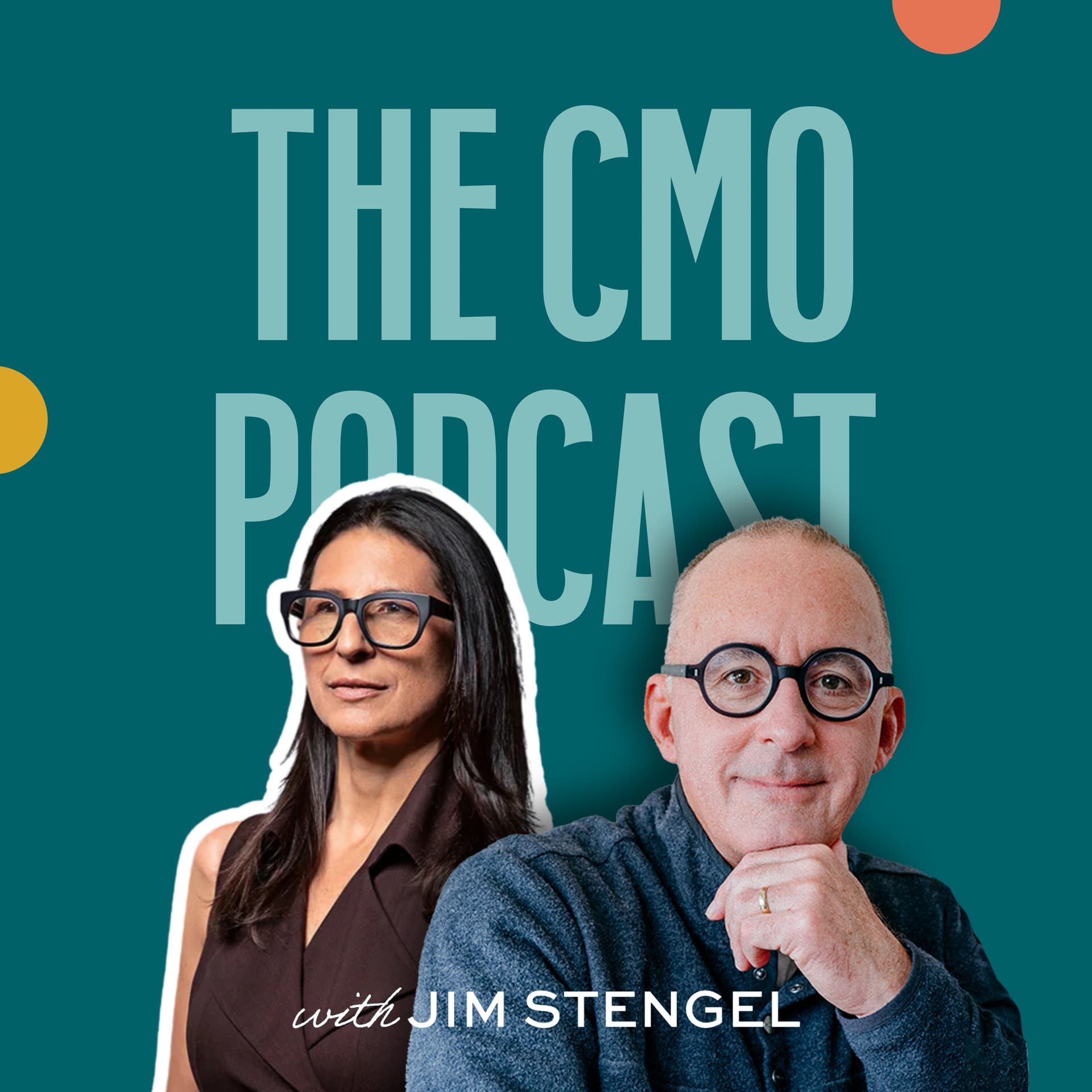
The CMO Podcast - Episode Summary: Andrew Robertson (BBDO) | How to Power Up Your Organization
Podcast Overview Host: Jim Stengel Guest: Andrew Robertson (Chairman of BBDO Worldwide) Duration: [Insert Duration] Air Date: [Insert Air Date]
Podcast Description The CMO Podcast features conversations with leading Chief Marketing Officers (CMOs) about their motivations, challenges, and strategies. Jim Stengel, former CMO of Procter & Gamble, explores the pivotal role of the CMO in shaping consumer experiences. This episode highlights Andrew Robertson's insights on harnessing creativity within organizations for growth and effectiveness.
---
Episode Highlights
Introduction to Andrew Robertson
- Background: Long-time leader of BBDO Worldwide, served as President and CEO from 2004 to 2024, now Chairman.
- Achievements:
- BBDO was named Network of the Year at Cannes Lions seven times.
- Authored "The Creative Shift: How to Power Up Your Organization by Making Space for New Ideas."
- Focused on mentoring and supporting the next generation of creative leaders.
Key Concepts Discussed
- Creativity as a Core Operation
- Andrew emphasizes that creativity should not be viewed as sporadic inspiration but as a fundamental operational approach within any organization.
- Discusses the importance of creating an environment that fosters innovative thinking amongst employees.
- Building Relationships and Trust
- Andrew shares his philosophy of building trust leading to respect, which in turn leads to affection.
- Highlights the importance of understanding the needs and desires of clients and stakeholders to cultivate effective relationships.
- Importance of Defining the Right Problems
- Outlines the common pitfall of poorly defined problems in organizations.
- Suggests the process of refining problem statements to stimulate better solutions, using specific examples (e.g., redefining “reduce waiting time” to “reduce perceived waiting time”).
- The Concept of Multipliers and Diminishers
- Draws from Liz Wiseman's work on leadership to describe effective leaders who amplify others’ talents versus those who undermine them.
- Advocates for remaining aware of diminishers and how to navigate them effectively.
Lessons from BBDO
- Andrew shares the significance of defining organizational culture through the lens of high-performing team members.
- A successful initiative involved gathering team insights to create principles that define BBDO’s culture, subsequently enhancing internal communication and performance.
The Role of Environment in Creativity
- Discusses how the physical and cultural environment of BBDO India, under Josie Paul’s leadership, fosters creativity and collaboration.
Running Toward the Fire
- Andrew’s personal mantra involves confronting challenges head-on rather than avoiding them, framing difficult issues as opportunities for growth and improvement.
Audience Engagement
- Jim Stengel encourages listeners to reflect on their challenges related to creativity and organizational strategy.
- Promotes Andrew's book as a resource for leaders looking to enhance creativity within their organizations.
---
Key Takeaways
- Trust, Respect, Affection: Building strong relationships in business requires establishing trust before respect, which leads to deeper affection, fostering collaboration.
- Define the Problem Clearly: A well-defined problem is crucial for generating innovative ideas; refining problem statements can lead to breakthrough solutions.
- Embrace Challenges: Leaders should tackle difficult situations directly, as this leads to personal and organizational growth.
- Cultural Language: Creating a shared language around organizational values can reinforce culture and enhance performance.
---
Conclusion This episode of The CMO Podcast provides insightful perspectives on the integral role creativity plays in organizational success. Andrew Robertson’s experiences and philosophies offer actionable strategies for CMOs and marketing leaders aiming to elevate their teams and drive meaningful growth through creativity.
Final Thoughts Listeners are encouraged to subscribe, leave a review, and share the episode with peers. The CMO Podcast continues to explore the intricacies of marketing leadership with industry experts.
---
Additional Resources:
- Book: *The Creative Shift: How to Power Up Your Organization by Making Space for New Ideas* by Andrew Robertson
- Deloitte CMO Program: Learn more about gaining fresh perspectives in marketing leadership.
Credits
- Production: Vive Original Production
- Sponsorship: Sponsored by Deloitte, TransUnion, and the IAB.
Privacy Policy: For more information, visit [Privacy Policy](https://art19.com/privacy).
---
This markdown summary encapsulates the essence of the podcast episode with key discussions, takeaways, and insights into Andrew Robertson's views on creativity and leadership.
Written by AI. May contain mistakes. Listen to the episode to check what was said.
Chapters
Tap a time to open that second in VOIntroduction of the Episode
0:39 to 1:09
Jim introduces the episode and the guest, Matt Spiegel.
“to bring a holistic view of customers to marketers.”
Discussion on Customer Understanding
1:30 to 3:15
Jim and Matt discuss the importance of understanding customers in marketing.
“Joining me is Matt Spiegel, EVP of True Audience Growth Strategy at TransUnion.”
Introduction to Andrew Robertson
3:33 to 4:55
Jim introduces Andrew Robertson and his achievements in advertising.
“These leaders share their inspiration and challenges, along with how they try to build a full, healthy, and happy life in and out of the office.”
Andrew's Journey into Advertising
4:55 to 8:06
Andrew shares his early experiences and career path in advertising.
“Congratulations on your book, The Creative Shift.”
Influence of Family and Education
8:06 to 12:00
Andrew discusses the impact of his family and education on his career.
“Yeah, I think I was just extraordinarily, well, I was ridiculously sure of myself.”
The Book Tour Experience
12:00 to 13:14
Andrew reflects on his experiences during the book tour for 'The Creative Shift'.
“So listen, let's talk about your book, of course.”
Building Relationships with AT&T
13:14 to 14:00
Andrew explains how he built a meaningful relationship with AT&T.
“So you obviously mean the world to them.”
Building Trust in Client Relationships
14:00 to 18:00
Learn how to foster trust and respect in business relationships.
“And many of the people that I worked with then are still there.”
The Importance of Well-Defined Problems
18:10 to 24:40
Understand why defining problems clearly is crucial for creativity.
“Andrew, you made a lot of stops in this book tour.”
Creativity as a Process
24:40 to 28:00
Explore how to integrate creativity into organizational processes.
“As you know, one of the problems with the publishing world is the publishers have the right to choose the title.”
Show all 22 chapters
Unlocking Creativity in Organizations
28:00 to 30:05
Learn about the intentional shift from suppressing to unlocking creativity in organizations.
“And I kind of put what's worked in one and what I see has worked and what more importantly, what hasn't worked in the other to come up with what you just said, something that is, I hope, practical.”
Lessons from Jeff Imelt's Leadership
30:05 to 30:36
Discover how Jeff Imelt managed a creative shift at GE despite significant challenges.
“His book, which I think, I mean, I think it's really good.”
The Impact of Multipliers vs. Diminishers
31:43 to 34:15
Understand the difference between multipliers and diminishers in leadership and organizations.
“You talk a lot in the book about multipliers and diminishers, a concept borrowed from Liz Wiseman's book, Multipliers, and it's a good one.”
Defining Leadership Qualities at BBDO
34:15 to 38:38
Explore how BBDO defined the qualities of their best people and the impact on culture.
“And I don't think in general, we think about it strategically enough.”
Learning from BBDO India
38:38 to 42:00
Examine the unique culture and leadership at BBDO India and its successes.
“And language culture is so much about language.”
The Impact of Curiosity and Generosity
42:00 to 42:34
Explore how a leader's humility and generosity foster collaboration.
“And he had all these wonderful symbols, the loom and stuff.”
The Challenges of Writing a Book
43:22 to 46:12
Understand the difficulties and insights gained from the book writing process.
“Andrew, let's flip into the creative brief.”
Mantras for Leadership Success
46:12 to 49:14
Discover the importance of choosing great bosses and running toward challenges.
“And it was about the spaces people work in.”
The Power of Meaningful Campaigns
49:14 to 52:44
Learn about impactful marketing campaigns and their cultural significance.
“Is it clients that you chose to spend personal time with or teams that were struggling?”
Inspiration from Remarkable Leaders
52:44 to 54:50
Reflect on the influence of inspiring leaders on personal and professional growth.
“Who's been the most inspiring person in your life?”
Building Trust as a Foundation for Leadership
56:01 to 57:09
Learn how building trust leads to respect and affection in leadership.
“Build trust, which earns respect, which then earns affection.”
Running Toward the Fire: A Leadership Mantra
57:10 to 57:32
Discover the importance of facing challenges directly as a leader.
Transcript
Automatic transcript. May contain errors.0:00Before we dive into today's episode, we would very much appreciate a moment from you to make sure you're subscribed to the show on Apple Podcasts, Spotify, Spotify, Spotify, or wherever you listen. along with optioning to auto-download the episodes. It really is the best way to never miss an episode along with supporting the show and the amazing team that helps me bring it to you. And while you're there, leave us a rating or review. It only takes a minute and helps more people find the show and helps us learn. And of course, share this episode with a friend or colleague who might enjoy it. We wouldn't be here six years later and still going so strong without you all, our community.
0:36So thank you for being part of it Now, onto the show.
1:08to bring a holistic view of customers to marketers. So when CMOs work with you, what light bulbs go off for them? So Jim, we help brands bring clarity from chaos. We help them understand a picture of their customers with a 360 degree view in order for marketers to make bigger, more strategic bets. Well said, Matt. Learn more at transunion.com slash clarity. That's transunion.com slash clarity. Hi, it's Jim. Joining me is Matt Spiegel, EVP of True Audience Growth Strategy at TransUnion. Matt, we talk a lot on this show about building brands that people love, but that starts with understanding them, right?
1:43Jim, absolutely. Every customer ultimately has a story, but most brands are only going to see part of it. At TransUnion, we really focus on helping marketers connect those dots across devices, across channels, across platforms, with the goal of helping marketers see a full person behind the data. That clarity is gold. That is special. So how do you do it? Ultimately, we put together the pieces of information that help you predict behavior, help you personalize messages, prove the impact of every marketing decision at the end of the day. And our marketing solution suite gives brands the visibility and confidence to invest smarter and ultimately grow faster.
2:16So if you want to turn data into understanding and understanding into growth, visit transunion.com slash clarity. What if the smartest marketing play is not to move forward, but to zoom out? Deloitte believes the most powerful move a CMO can make is to look beyond the next step and see the broader perspective. That's what the Deloitte CMO program is for, a place to gain fresh perspective and connect with leaders who've stood where you stand. Together, Deloitte will help you see the bigger picture so your next move isn't just fast, but right. Learn more about the CMO program at cmo.deloitte.com.
2:52Growing up in Zimbabwe or South Africa, what do you remember as the first brand that made an impact on you? It's the light one, the bright one. That's Martini. I went to Martini television commercials when I was five years old. Yeah, that one's stuck. Here we are. Six years later and I can still play it. You were destined. Hi, I'm Jim Stengel. I've helped hundreds of major brands discover and activate their purpose. because when a brand's purpose is clear, compelling, and authentic, profit naturally follows. Each week, I welcome the CMOs, the chief marketing officers of your favorite brands, to speak to how their job is so much more than marketing.
3:33These leaders share their inspiration and challenges, along with how they try to build a full, healthy, and happy life in and out of the office. And it's that energy that reaches everyone they touch. And we're glad you're here to feel that energy and to learn from these remarkable leaders So here we go. Some leaders talk about the power of creativity. Andrew Robertson built a career proving it. I saw that firsthand as I worked with Andrew during my years as P &G's global marketing officer. Andrew is, of course, the longtime leader of BBDO Worldwide, one of the largest, most awarded, and most effective creative advertising networks in the world.
4:10He served as president and CEO from 2004 to 2024 before stepping into his current role as chairman. During his tenure, BBDO was named Network of the Year at Cannes Lions, a record seven times, and was crowned Network of the Decade in 2020. In 2025, he added a new chapter to his legacy as a best-selling author with his book, The Creative Shift, How to Power Up Your Organization by Making Space for New Ideas. The book, which we will be diving into today, distills decades of experience running one of the world's top creative organizations into a practical playbook for leaders. So here's my conversation with a leader who believes that creativity is not an occasional flash of inspiration, but a way of operating inside any organization.
4:54Here we go with my friend, Andrew Robertson. Andrew, welcome to the CMO Podcast. Congratulations on your book, The Creative Shift. I thought I knew you pretty damn well, right? We go back 25 years-ish, okay? And I've heard a lot of stories, but I learned a few things about you in this book. And the first one is I didn't realize your purpose in life was to own an Alfa Romeo. Let's start there. Well, it was very clear. I'm not saying it was deep, but it was clear. That was what I wanted. I wanted an Alfa Romeo. I had what seemed like an idyllic life as a student. I was selling life insurance. On a Monday night, I would make 100 cold calls on a rotary phone.
5:39So, you know, your finger, wore your finger down. But I knew the way the funnel works. If I made 100 calls, I would get 10 appointments. If I got 10 appointments, I would make three sales. If I made three sales, I'd earn about$500 in commission, which was a lot of money when you're 18 or 19 in 1979, 18. So Monday night, I'd do the calls. Tuesday, Wednesday, Thursday, Friday night, I would do the appointments, which were always in the evening because you need both parents to be there to sell insurance. And I'd finish that at about 10 o 'clock at night. And then I would go from there to a nightclub, a Valbon nightclub on the river in Maidenhead in the UK.
6:21And I would stay there until about two o 'clock in the morning. And then every now and again, I would leave there and go to the Royal Berkshire Hotel in Ascot and play backgamum until five or six in the morning and then go back home, sleep for four hours, get on the train, go into London, make a perfunctory visit to college, do my three hours there, train back and repeat, rinse and repeat. And it was a truly magnificent life. Up until my last semester, when my dad said to me one morning, he said, you know, this can't go on, right? And I said, what are you talking about? And he said, well, we're happy supporting you while you're a student.
6:58But the day you graduate, you need to get your own car or pay your mother properly for using hers and get your own place to live or pay us a proper rent. And all of a sudden, this fabulous light, I could see it disappearing, collapsing. But it was great training for advertising. It was perfect training for advertising. And at the time, I didn't know I was going to do advertising that night. I know that. It was in the nightclub. I was a bit depressed about all of this. And they were kind of switching on the lights, putting the chairs on the table. There was one guy standing there, one guy standing there, who I knew because he was there as often as I was, and he had an Alfa Romeo.
7:33And I said to him, what do you do for a living? And he said, I'm an account director in an advertising agency. And I said, I think I'm going to do that. And it was as carefully thought through and planned as that, Tim. Well, did you ever get the Alfa Romeo? I skipped it, went straight to a Ferrari. Oh, okay. Well, you had a higher purpose is what we call that. But listen, it worked out. And I didn't know you were a CEO of an agency before you were the age of 30. Now, how did you handle that? That must have been a bit of a shit show. I mean, to be CEO of anything before your 30s hard. Yeah, I think I was just extraordinarily, well, I was ridiculously sure of myself.
8:13I mean, it didn't make any sense, Jim. And if I look back on it, nobody should have taken that chance on me. But it was actually an interesting setup because the principal of the agency was a guy called Robin White, who'd started it, left it and come back to it. And there was a chief creative officer, a guy called Alan Tilby. And they were both in their 50s, I guess, and didn't agree on much. And I think because I was 29, I was completely different from either of them. And as a trio, it kind of worked as a result of that. I think there was just a, I was not a threat to anybody, either of the two of them.
8:50And I think they could both agree on me because they didn't see me as a threat to either of them. So it worked out really, really wonderfully. I had five really exciting years with them. It was really good. So listen, your childhood is in the book. And I've heard stories about your childhood, but I've never had this comprehensive view of it. And I mean, I kind of shorthand it. First nine years in Zimbabwe, second nine years in South Africa, University in London, which you talked a bit about. Your dad was a soft serve ice cream entrepreneur and then went on to be a production matter at Nestle. and you dedicated the book to him.
9:29So there's got to be a story in all of that, Andrew. So let's go there for a bit. I mean, I think that the reason I dedicated the book to him is he always asked the question to put me straight in the moments where I was facing big choices. So, you know, I mean, from something as simple as I went to California when I was 21 and I had a fantastic time. And I was, it looked like I wasn't going to come back. And he called me and he said, so how's it going? And I said, it's good. And I'm having a whale of a time and I maxed out my credit cards. And he said, I think you should probably come back because if you don't, I'm not sure you'll finish your degree.
10:14And it's those moments, a bit like the moment over breakfast, where he said, you know, this can't go on, where he just had this way of stopping me and making me think and coming out with the right thing to do in those moments. And it was never, he was never telling me what to do. He was never, you know, judging any of my decisions, but he made me think about things at the right moments. And I think that's why I felt I should dedicate the book to him. What were you doing in California at 21? on. I will tell you, I flew over intending to hitchhike from LA back to New York and then go back to England.
10:55And I had a friend who I'd met at a party in England. And he had said, as people do in those days, he said, if you're ever in LA, give me a call. And I landed in LA, I gave him a call. His name was Dave. And I said, you probably don't remember me. He said, no, of course I did. And I said, if I could, I'd love to just stay with you for a couple of days. I said, yeah, of course, that'd be great. And Dave was a firefighter. He was in the LA Fire Department. But he was also, again, shows you how long ago, he was a Winston man. But he was a model. And he had a little house on Venice Beach. And we went and stayed in this house.
11:33And it was just so much fun. He worked these ridiculous ships. He would work 24 hours on, 24 hours off, 24 hours on, 24 hours off, 24 hours on, three days off. which worked great for me. And 12 weeks later, I was still on Venice Beach, having a wonderful time when my dad said, I think you should probably think about coming back now. You had a good early adulthood, Andrew. That's my takeaway from this. I did. So listen, let's talk about your book, of course. That's the reason we're together, but this is good fun. I read every word of it. I bought the hardback copy. And I have to say, I felt like I was chatting with you.
12:12It feels like your book and I just loved it. And I've been following you in social media. You've been out and about a lot visiting, talking about the book. So I have to ask you, was your favorite stop of all on this book tour at AT &T? That was fantastic because they really went all in on it. I did a presentation to several hundred people in person and another 600 on screens they had 1500 books that they were giving out to people and then we had a really amazing dinner with kellen and john and lauren the other senior management there so it was a really special day really special day yeah i mean they made a menu named after your book right the courses were named after content a menu menu and every every dish was inspired by a different chapter it was that's a creative shift if i've ever seen one Yeah.
13:08Well, from the chef, he was a really wonderful guy. But yes, it was really special, really special. So you obviously mean the world to them. And I read some of Kellen's comments on social media about you and the book. Obviously, I saw the menu. I saw that you talked to lots and lots of people. Why are you so meaningful to them? I mean, how did you build that relationship? I know it's a big client. You're at a big agency, but this is something different. So could you talk a bit about that? I mean, I think what was then Singular when I first arrived in the US was the first US client that I really got engaged with.
13:45I moved from the UK where I was running BVDO to the US. So I had some fairly good connections into international clients like PepsiCo and others. But Singular then was a new and big US client. And it was the first client I really got engaged with. And many of the people that I worked with then are still there. And that's one of those things that doesn't happen that often. I think it's a very special thing about what became AT &T. I think that they will say, I've been through the good times and the bad times with them, and I've always been there to help. As a culture, there's something that I really admire about them, which is they really expect their agency partner, and I'm talking about the individuals as well as the corporate, they expect you to have a point of view, and they want to hear it, and they will listen to it.
14:41They'll ask questions, and then they make a decision, and then you're expected to execute against that decision and execute fast and brilliantly. And as a way of working, I've just always found that incredibly, incredibly productive. You know, it's not a question of we don't want to know what you think or we'll tell you what to think or we'll listen to it, but we're not really listening. They want to know what I think. They listen to what I've said. Then they make a decision. Then we move. And those four steps just always work really brilliantly. And I think because of that, they've got the occasional decent idea out of me that has been helpful.
15:21But it comes down to that. Expect you to have a point of view. They listen to it. They just decide and then we act. Your influence, Andrew, yours and your agencies goes beyond the marketing groups and the advertising. A lot of the stories in your book are about CEOs. So could you speak a bit about that? And indeed, when you visited AT &T, the CEO was there. You have a relationship that is a company relationship versus a marketing or advertising relationship. So talk about how you do that and why you do that. I think that this comes back to people believing that you are acting, thinking, and creating in their interests and never doubting that, really.
16:06I think right at the heart of it, there is a trust that first, and it goes, earn the trust, get the respect, then comes the affection. Those are the three steps, trust, respect, affection. And when you get all three, you can have a really powerful relationship. And part of that, frankly, is being able to put your hand out when you've screwed up and apologize for it. And I did that very early on with John Stanky. Before he was CEO, there was something I didn't do that I should have done. And I remember meeting him in a green room in Vegas at CES and saying, that was on me. I screwed up. I shouldn't have done that.
16:51And it won't happen again. And I think things like that, just again, it just makes it clear that you are thinking, acting, creating with their interests first and foremost. And that builds the trust, that builds the respect, that allows the affection. And I think also a lot of CEOs that I've talked to will talk about this, bringing an external perspective into an organization that is as big and sophisticated as AT &T or P &G was. That external perspective is something they really value and don't often get from people who aren't trying to sell something. Right. I think that's at the heart of it.
17:36Everyone seems to be chasing the next big thing, the fastest answer, the quickest win. But great CMOs believe the real power isn't in the speed, it's in stepping back to see the bigger picture. That's why everything Deloitte does in their CMO program, from their industry-leading capabilities to their connected network of CMOs, is designed to help you zoom out and gain fresh perspective. Deloitte will help you see the bigger picture together. Learn more about the CMO program at cmo.deloitte.com.
18:10Andrew, you made a lot of stops in this book tour. Two questions. What are you tired of talking about? And the second question, what haven't you talked about enough? Because I remember, by the way, I did a book years ago and I did 70 speeches the year I published my book. Oh, well, I haven't talked to that yet. Well, you're getting there. And I just, you know, I got very tired of talking about certain things and some things I thought I want to spend more time on this. So what's your feeling on that right now? Oh, great question. So I'm not yet tired of talking about anything, but I have, you know, I've probably done 10, not 70.
18:46That may come. I do think that the thing I wish to talk more about is not just the importance of having a really good question or a really well-defined problem to solve, but talking a bit more about some of the things that you can do to help you get there. because there's no question in my mind that the absence of a really brilliant question or problem is usually the biggest problem in idea generation it's usually the step that nobody goes through and i i know that because i've talked to people you've worked with that your your thing of just why why why why why is a great is one of the techniques that can help you get to a really good question.
19:33And I feel like, you know, in a way that could be the subject of an entire talk, to be honest. This is why they matter so much. And here are five ways that you can try to help you get to better questions. It's such a big unlock. And it's a step that nine times out of 10 is completely overlooked when people are trying to generate ideas. It's a great part of your book, and it is on my list of things I wanted to talk to you about, this idea of poorly defined problems being the biggest barrier to creativity, right? So I want you to go there a little bit with us on how do you coach that in your people, and how do you coach that with your clients?
20:18I mean, as you said, I keep asking why. No brilliance there, but it does lead to good things often. But how do you, in your experience, because you've dealt with this a lot, and if clients come to you with a very poorly defined problem, that's not going to have a good end result, right? Until you define the problem extremely clearly. So how do you coach that, Andrew? Usually what you find you're dealing with is one of two things. Either a declaration of intent. We want to increase sales by$2 billion. It's true, but it's not a well-defined problem. Or a description of the situation. we're losing market share amongst Gen X.
20:57Often you will get one of those two things as the definition of the problem. And it's true, but it's never a good enough problem for you to come up with great ideas for. And so I think that if I give an example problem, we want to reduce waiting time in our call centers. It's a declaration of intent. You can change it into a really brilliant question by adding one word, which is we want to decrease perceived waiting time in all centers. Because when you dig into it, what matters is not actually how long people are waiting, it's how long they think they're waiting. And the minute you do that, you can come up with so many ideas of what to do and what not to do in order to solve that problem.
21:46If I say to you, your call is important to me, thank you for waiting. once that may be okay if i say it to you twice that's going to increase the perceived amount of time that you're waiting even if the actual time isn't that significant so what else could i do i could listen i could play bob newhart old bob newhart records you know just listen to something really funny your perceived waiting time would be really really low playing music seems like a good idea. It is a good idea, but not if you have it on a loop, not if it starts again after. So just that little bit of extra focus, one extra word, one extra word that really takes it from a declaration of intent into a really great problem to solve.
22:33Once people realize how that unlocks ideas, then they understand the virtue of drilling deeper, of pushing harder until you have something that is so, I feel like it should be so tantalizing, like a quiz or a crossword, that you just want to start solving it. That's the test, I think, of a really quick question or problem. And I think part of it is, part of the reason it doesn't happen is people are understandably, and for all the right reasons, desperate to get solutions. We want to solve this, Let's get on and solve it. And putting the brakes on can seem like, you know, it seems like it can feel like you're getting in the way.
23:18It's not. And it is going to be worth it if, as a result of that, you end up with a better question. Einstein said that if you only had an hour to solve a problem, you would spend 55 minutes defining the problem and five minutes on the answer. And I don't think we need to do that, but we should spend, we should definitely be poking around for a little longer than we usually do. Now, you worked at Ogilvy early in your career, and Ogilvy's founder, David Ogilvy, wrote an amazing book, Ogilvy in Advertising. It was a Bible at P &G. It was in almost every office. And I actually was reading your book, and I was thinking about a lot of things.
23:55But I think an alternate title for your book, Andrew, I know it's too late right now, but I think it could be Robertson on creativity. And the reason I say that, and I love the creative shift idea, but I found your book took this giant concept of creativity and broke it down. It made it approachable. It made it practical. It made it inspiring. It made it compelling. I got lots of ideas on what I could do with my organization. In a sense, it's sort of a playbook for someone who wants to elevate creativity in the organization, which is a very powerful thing. And you have enormous credibility coming from your years of doing this.
24:32So what's your reaction to that? Well, I wish you'd told me that before it went quick. There's the paperback edition. As you know, one of the problems with the publishing world is the publishers have the right to choose the title. Yeah, that's right. Well, I tell you why I put the emphasis on the shift. Well, first of all, I believe that people have the ability to be truly creative, to come up with genuinely new solutions to existing problems. And, you know, the data point for that is the work that George Land did with NASA in the 60s, where he was given the assignment of measuring the creativity of their engineers because they wanted to give the biggest problems to the most creative engineers.
25:20and he developed a methodology that was particularly effective at that but he then decided to answer the question for once and for all are you born creative or is it something that you learn and so he did the test with a cohort of five-year-olds and amazingly at the age of five 98 percent of these kids tested at the genius level for creativity 98 percent he took the same kids and gave them the test again when they were 10 and it had dropped to 30 percent he took the same test and gave it to them again at 15 and it was 12 and by the time they were 20 which is when they start working for your company or mine company was two went from 98 to two percent and some of that is neurological but the vast majority of it is just the pressure to conform that is understandable and essential for society to function well, which is also something you see in companies, in big organizations and small organizations, where the very things that make them great, good companies, operational excellence, process complies, executional efficiency, discipline, all of those things that are so important to a really successful company, also suppress the creativity of the individuals without anybody knowing about it.
26:45And the shift I really wanted to put the focus on was not to say you need to turn from a company like this into a company like this, because it doesn't make sense. I don't want JP Morgan Chase. JP Morgan Chase ships$3 trillion around the world every day. I don't want somebody saying, you know what, I've got an idea we should. Except when you're trying to develop a new credit card or when you're trying to develop a new type of account. And the shift that I wanted was to say, treat creativity as another one of your processes. Treat it. John Cleese said, creativity isn't a talent, it's a way of operating.
27:25Recognize that it's a way of operating and engineer it into your way of operating with the same discipline and focus that you do all the other things, because that's the way you can unlock the creative potential of your people. And it's creativity. I'm glad that you saw it the way you did, because I didn't want it to be an advertising creativity book. I've had a lot of experience leading a creative organization where we live or die based on our ability to come up with ideas. And at the same time, I've watched clients in all different verticals and all the markets around the world grapple with getting ideas out of their people.
Read the full transcript
28:03And I kind of put what's worked in one and what I see has worked and what more importantly, what hasn't worked in the other to come up with what you just said, something that is, I hope, practical. I can take this away and build this into the way I operate my company. And with that, I should get some good ideas. So Robertson on creativity would have been great. But this idea of the ship, an intentional shift from unconsciously suppressing to consciously unlocking the creativity of the people is kind of what I want to do. Yeah, no, and that is the core of the book. And so, no, it is a good name.
28:41You tell a lot of great stories in the book about leaders managing this creative shift, what you've learned from them, things that you've been in the middle of. As you step back from all of the leaders, Andrew, that you have known in your long career, who would you highlight as one who has managed the creative shift exceptionally well? I think Jeff Imelt. I thought you'd say that. And he took a company that literally wrote the book on compliance, Six Sigma, zero non-compliance. That was a thing. And a company that was really good at buying other companies and selling them and doing all of this.
29:21And he reinvented it as a company that generated billion-dollar ideas for new products and new services behind that whole idea of imagination at work. And particularly, actually, when you realise what he was going through at time, you know, the level of pressure that he was under and the issues he was dealing with and the governments and the, you know, he had so many good reasons not to get around to that, and yet he made it a central part of the way GE developed. So I think when you look at the complexity and scale and ease with which it could have been anything but that, and then the way he actually really did make the shift, I think that's a pretty remarkable story.
30:05It is. And look at GE today, right? It's worked. Yeah. His book, which I think, I mean, I think it's really good. It's called The Hot Seat. He has this great line in it, which is truth equals facts plus context. And the facts are the facts. Everybody can see those, but you can't always see the context. And if you understand the context, then the truth becomes pretty remarkable.
30:36We all want to stay ahead of the digital curve. And IAB, the Interactive Advertising Bureau, invites you to do just that at the 2026 IAB Annual Leadership Meeting in Palm Springs on February 1st through 3rd. If you're a qualified consumer brand or agency leader, you can access free passes and travel vouchers. And for everyone else, you can take$500 off your ticket with code, all caps, ALMCMOPOD26. This is your chance to join a three-day gathering of the industry's brightest minds and boldest voices shaping the year ahead. You'll hear agenda-setting conversations, candid fireside chats, and dynamic breakouts on the topics that matter most.
31:17from AI and commerce media to measurement and addressability. This year's lineup concludes everyone from Kevin Bacon and Bozema St. John to creator Remy Bader, along with leaders from Forbes, Major League Soccer, General Motors, and Meta. Visit iab.com slash ALM to learn more and check out the link in the show notes to register and receive$500 off your ticket.
31:43You talk a lot in the book about multipliers and diminishers, a concept borrowed from Liz Wiseman's book, Multipliers, and it's a good one. Could you talk again, a similar question, who in your career has been an exceptional multiplier? The good news is there are more great multipliers. We'll get to the diminishers in a minute, but let's stay with this one. I mean, I will say you, Jim. I mean, we worked together a long, long time ago, but I think you're a great example of a multiplier. I think you did it within P &G and you did it with your external parts, which is, I guess, multipliers are multipliers, whoever they're working with.
32:21But I think you did. I really do. I think Antonio Lucio is a multiplier as an individual. There's a good list of multipliers. And I'm not going to tell you who the diminishes. No, thank you for that, Andrew. But the question I have in diminishers is not who has been a diminisher, but we all know them. You have them internally at your company and you've had them at clients. How do you handle that and still, especially with a client, and still get to the outcome that you can be proud of and that makes a difference? I think that awareness is nine-tenths of the solution. If you are conscious of the fact that that's what you're dealing with, you can do two things.
33:02One is you can make sure you don't get diminished by it and your ideas and thoughts don't get that you don't play to it if you're aware that that's what you're dealing with just don't let yourself play to it whereas if you're not aware of it you'll find yourself conforming and and falling into it and then the second thing is i think you know you have to learn how to frame things how to frame things and set things up in such a way that the diminisher is going to feel like he or she is winning. And it doesn't exist in, I guess it's the equivalent of a QB sneak where you just have a ball and you somehow find your way through and nobody knows that you even had the ball under your jersey.
33:51Again, if you're conscious of it, you can think that through as opposed to just running at it the same way that you would run at everything else. I think that not enough time, if you break the three bits, defining the problem, we don't spend enough time on. Coming up with a solution, we probably do spend it. We don't spend enough time on working out how to make the solution come to life. What are the things you have to do to get it through an organization, an individual? Everybody deals with this. And I don't think in general, we think about it strategically enough. We tend to just run at it and treat it as the way life is.
34:31And it doesn't have to be like that. I love the story about your early time at BBDO, where you pulled together a bunch of your people who were doing great work to list the behavioral qualities that describe BBDO as best people. And that led to principles for your leadership behavior network-wide. It's just such a simple and such a powerful idea. So could you talk a bit about that, why it was so extraordinarily effective, and how did you keep those principles alive over your 20-year tenure as head of that network? So I got tired of sitting in meetings where people would say, you know, people are the most important asset we have, and we need to make sure we have the right people.
35:16And then when I said, what are the right people? I'd either get no answer or worse than that, I would get, you know, the description that you get from the unsolicited emails from somebody who's off to adopt. We're looking for self-starting team players who are focused on results. And I thought, there has to be a better way than this. And I was also at that stage, you know, dealing with a network BBO around the world. We had a lot of agencies that were still being run by the founders of those agencies, but And yet they're part of this network. So I thought we need to come up with something that is definitely ours.
35:52It has to be ours. And I'm borrowing one of your phrases, the fruits and the roots. I got the 20 people who I thought did best for BBDO around the world. I brought them together and I allocated half a day for this because I figured it was one of those things which if I allowed it to be three days, it would take three days. So I allocated half a day. And the question, what are the 10 characteristics that describe the people who do best in and do best for BBDO? That was a question I wanted to solve. And what was remarkable was it took 40 minutes. The list was they helped make the work better. Their clients love them.
36:36They don't just respect them. They love them. They are hand raisers, not finger pointers. They are we, not me. They present well. They pick themselves up fast. This is a business where it's easy to get. You can't avoid the knocks. What matters is how quickly you pick yourself up. They're closers. It's a business where there's an awful lot of people who have good meetings. The best people get to it, yes or no. They're radiators, not drains. Some of the most brilliant people that you meet, and Alan Rosenstein's wonderful words, suck the heat out of the Sahara. We want radiators, not drains. They do the right thing.
37:11they have a healthy paranoia in a business where people sell for a living. It's very easy to keep convincing each other that everything's fantastic. And the best people, this group identified the best people had a healthy paranoia. They were always worried about what they didn't know, what they couldn't see. And then we added one in the end, which is, you know, they actively seek out different, but it only took 40 minutes. We wrote them down on a post-it note and they were us. They were us. They were ours. They were written in our words. And it was really just a question of digging into the reality of what was best about the best people and codifying it.
37:53Because it was true and because it was true to us, it was actually really easy to have it infiltrate the organization. It got adopted because it made sense and it was useful. or we didn't have t-shirts, we didn't have posters on the walls with them, we didn't have any of that stuff. But people started using these phrases. They would say, oh, he's a bit of heat, not me, or he's a bit of a drain of a radiator, or whatever it was. It just moved into the vernacular. And it was because of that that it stayed there. In answer to your question for 20 years, it stayed there because everybody was using it.
38:28Everybody was using it all the time to talk about people and their behavior, talk about people we were trying to hire or talk about how people were performing. This just became the language. And language culture is so much about language. This language that we developed in 40 minutes. The culture was already there. What it helped to do was articulate what it was, and then people could work with it. You know, I get so frustrated when I see descriptions of the culture that people claim they're trying to make. And it's just a load of generic words that everybody uses all the time. And you're better off with something that may not even be as good as long as it's yours, as long as it's yours.
39:11And people know it's yours. And the language that came out of that was just so simple, so human. It wasn't corporate speak. It's like things that would come up in a coffee among your people. And I think that's also what made it stick. As you said, it was yours. Yeah. And it was yours in terms of tone and spirit, and that's why it stuck. But anyway, I think for our listeners, it's just such a good idea. And that's what I love about the book. There are so many things like that in the book, just stuff you can pick up, the principles behind it, and do it. And I think the key to that is, again, it's what's the right question?
39:48So many people have run sessions with groups where they said, what is the culture we want to create? What do we want to be? And flipping that and just saying, if we just look at the people who do best in and do best for, what are they like? What do they do? How do we describe them? That's the truth. That's the truth of the organization. Different question. Different question. You talk in the book quite a bit about BBDO India. And if you go to the index, you see it appear, I don't know, six, seven, eight times. It seems like such a remarkable organization within a larger remarkable organization.
40:27So could you talk a bit about what has gone on, what goes on in that place that results in such remarkable work? Many P &G brands have benefited from that incredible group of people. So what could we learn from what's going on in that subculture? So DVDO India is one of the most remarkable little gems in our organization. It's not a big agency, pretty small agency, but it's led, I use the word carefully, it's led by a wonderful guy called Josie Paul. And we found Josie working, he was working at the time for an agency called David, which was part of it was the challenger part of ogilvy and ogilvy in india was an enormous agency he was working the challenger but and we persuaded him to come and start bbdo india for the first three months he was running the he was the agency but he was running it from a car with a cell phone he did at an office i've got a photograph somewhere of him bleeding out of the car but josey has extraordinary humility, extraordinary curiosity, and extraordinary generosity.
41:39And he kind of brings all three of those things to his people and to his clients. And when they eventually did get an office in Mumbai, he recreated Gandhi's ashram, basically. And he said, we're not even going to call it an agency and office. We're going to call it an ashram. It's a place of learning. A place of learning. And he had all these wonderful symbols, the loom and stuff. And I think he just got no ego, all as I say, curiosity and generosity and just a remarkable human being. And what that means is that people want to do good things with him. They want to do good things for him. And that's true, as I said, of his people and of his clients.
42:33Hi, everybody. I'm Andrea Sullivan, the CEO of Vive, and we have produced the CMO podcast with Jim Stengel for many years, and I'm sitting in his seat right now. It's so exciting. I wanted to tell you a little bit about one of our programs. It's called Vive by Vayner. It's a 12-month program that's designed for C-suiters and founders, and we want to help people to grow their businesses, but also to grow themselves. And so we bring in people from Shark Tank to talk to our founders, but we also focus on wellness. We want to make sure that people are leaning into becoming their best selves, their best and happiest selves.
43:14So if you are someone that wants to learn how to grow your business and grow yourself, check us out at vive.co. That's V-Y-V-E dot co. We'd love to talk to you.
43:31Andrew, let's flip into the creative brief. And the first question I have for you is, do you have another book in you? I don't think I do. I don't think I do. I mean, I may have one. I'm just not sure I can be bothered with getting it up. It's hard. It is hard. Did you enjoy the process? It's a different rhythm, right? When I wrote my book, you had to go into a place of solitude at some point, deciding the brand architecture of the book or the book architecture? What can you write that no one else can that will be a value to this world? I mean, these are all difficult questions. And if you want to write a great book, you have to say yes to all of that.
44:11Yeah. I actually enjoyed the process up until reading the first draft. And when I read the first draft, I hated it. And I literally called the agent and said, I'm pulling the plug. We've got to cancel it and pay the advance back. And she was great. She said, that's okay. Let's take a breath. This happens. When you write it, and I'm sure you went through this, you do it kind of chapter by chapter. You start with the architecture and you have the outline and then you do it chapter by chapter by chapter. And you don't do the beginning to end until it's finished. And then you do the beginning to end and you realize, but then that's what you have an editor for.
44:50And I will say that having a good editor was the most valuable. The two things that were really helpful. One was a great editor. And the second one was somebody helping you think about the proposal in the first place. Because so many of the things that we take as law in our business life are not true in that world. For example, how would you position this book competitively? competitively and we're trained to talk about how distinctive and different it is and this guy said yep that's good but how about how similar it is because if you're a publisher what you'd like is something that's similar to a book that's done really well but with a bit of a difference yes yeah and by the way it's not a zero-sum game you know you don't have to sell your book at the expense of another book people who buy books will buy whatever books they find interesting Things like that I found really helpful dealing with an expert.
45:45And then the editor was just so good at saying, nobody's going to understand what you mean by this. And his whole thing was just, with everything he read, was how is this going to look to somebody who knows nothing about the business of what you're doing? And it was really helpful, really helpful. So no, I don't think I'm going to do another one. You know, years ago, I don't know if you'll even remember this, you and I talked about doing a book together. We did. We did. And it was about the spaces people work in. Yes. And by the way, there's a bit of that in this current book, The Creative Shift.
46:20You talk about the importance of environment and so on. But we talked about doing sort of a coffee table book. I don't know, 25, 30 people we'd profile. It was a great idea. It was called The Corner Table Coffee. Yes. The Corner Office Coffee Table. And it was going to be photographs of CEOs' offices. and the game was going to be, you had to work out, there would be an index at the back. You had to work out whose office it was because all of them are a function of both the individual and the company. That was a great idea. It was probably a lot easier than writing a book about It would be. It would be.
46:56We may get a call about this after this podcast, Andrew. So brace yourself. You might have another book in you. Yeah. So you have at least two mantras, personal mantras. One is run toward fire and the other and just pick great bosses. So talk about each of those mantras, how they came to be a part of you. So the picking great bosses thing, which I really do think is fantastically important, but I only sort of realized that I'd done it retrospectively. I didn't at the time know that that was what I was doing, but it became really clear to me afterwards. And my definition of a great boss is somebody who is basically going to give you the benefit of the doubt and let you have the ball when you're probably not quite ready for it and will cover you if you drop it.
47:47But that's what's going to give you the chance to leap, to leap ahead. And I've had bosses who have definitely done that for me, including Robin and Alan when I was at WCRS, it didn't make sense to give a 29-year-old the job of CEO, but that was a moment where I was able to lead the head. And so that who's going to give you the 50-50 ball? Who's going to, as opposed to saying, you're not quite ready for this, I think is huge. And then cover you. I've talked about this about John Brennan a lot, which is he, as always - John's your current boss, for those who don't know. Yeah. Yeah, current and boss for the last 20-something years.
48:31He put you in the spotlight when things are going well and protected you from the searchlight when they don't. And that's a great boss. The running towards the fire thing, again, is I think that's how you make the leaps forward, which is to go for the things that nobody else wants to do and which are going to create a lot of help for your bosses, basically, or whoever, or your clients. Anybody can do the easy stuff. Anybody can do these stuff. But if you run towards the stuff that's hard and you solve it, you've taken a big problem off somebody's desk, big problem. And that, again, is how you're going to leap forward the level of responsibility that you've gotten and progress a lot faster than you might otherwise.
49:13How did you operationalize Run Toward the Fire as a CEO? Is it clients that you chose to spend personal time with or teams that were struggling? Yeah, clients, teams, and people, and agencies, you know, sometimes. sometimes there will be a problem with an agency or something. But you've got to learn to love problems. You'll learn to love problems because the further up in any organization you go, the more you're going to see them. And in fact, you end up with a rather sad situation was whenever somebody comes running into your office with really good news, you know that the next three people are going to bring you problems.
49:50You've got to learn to love them. You've got to learn to treat them as an opportunity to come up with a great solution, not as something that's one more problem for you to deal with. And I think that's the job of any, frankly, the job of any leader. That's what you spend your day doing. And if you don't learn to love them, it's a horrible job. If you do learn to love them, it can be fantastic. They're a reward. Growing up in Zimbabwe or South Africa, what do you remember as the first brand that made an impact on you? it's the light one the bright one that's martini i went to martini television commercials when i was five years old yeah that one's stuck here we are six years later and i can you were destined but that's funny i i remember the beer commercials as a kid but they were on a lot they had great music they were fun to watch yeah and they didn't have uh didn't have watershed hours in those days I can't speak to everybody.
50:50Staying on this for a minute, we're talking about your book today. What's a book that had an early impact on you? Well, Ogilvy on Advertising. You mentioned it earlier. Once I made that critical decision late at night in that nightclub, I quickly went and thought, I need to figure out something about this. And I read it. And I will say it's a book that I've reread on multiple occasions over the years because it's worth it. it's a great book. You've been a leader who's been very good at building relationships. We talked about that earlier in the show. What would you give to others on that front, especially the young people listening?
51:28I think it is this thing about put yourself in the position of the person you're trying to work. Really put yourself into their position. Start thinking about what you're trying to get out of this. Start really work to understand what matters to them. What matters to them on every level, what matters to them in their business, what's mattering to them in their lives. Because if you do that, if you do that, you're going to be able to help them. And if you can help them, you're going to be able to build trust. And if you can build trust, you can build respect. And if you do that, you can build affection.
52:02But right at the heart of it is, is make sure you really, really understand what that person wants, needs, is doing, with. And that's the key to helping. What's the campaign in your life that you've worked on or been part of that's been the most meaningful to you? I know we're not supposed to answer this question. I'm supposed to say, oh, they're all like your children. You love them all equally and all that stuff. I think the Snickers campaign, You're Not You When You're Hungry, is the most significant contribution that BBO has made to the world of advertising in the last 20 years. That's a big statement, by the way, you just made yeah and i and i'm talking you know there are lots of great campaigns in individual markets and there have been some other global but this was a camp this is a campaign that has been running for over a decade it's been running in more than 80 countries it took a brand from number seven in the market to number one without any change to the product and it doesn't matter who you talk to it doesn't matter who you talk to wherever you are all you've got to do is say you're not you and and people will finish the sentence and they'll start talking about ideas that they've seen that they like but also they start making them their own up so i i think that that for just breadth and depth and clarity is i think that's the biggest and best campaign we've done and it you know we say this a lot these days but this really did it became part of popular culture.
53:35It really did. And part of popular language. It is. And it did it for more than a moment. It wasn't a stunt. It wasn't something that happened once. It's over a decade. Andrew, last question. Who's been the most inspiring person in your life? And again, you're probably not supposed to answer this question, but I think David Abbott, who was the chairman of AMV, when AMV BBDO, when I joined, was the most remarkable person I've worked with. I mean, he just, he had so much talent. He was so sure of himself, or he actually wasn't, but he gave the impression that he was so sure of himself. And you just wanted to do your best.
54:24You just wanted to do your best. without him ever seeming to put any pressure on you you just felt that was what you had to do he was a remarkable i used to do this wonderful thing and it was all deliberate but whenever you had a big meeting or a big presentation you'd walk into the presentation room and david would be sitting he was always there before anybody else and he'd be sitting there reading a novel and when you walked in he would close the novel and look out and it was so brilliant because no matter how big the meeting was, how big the pitch was, everybody went in and they thought, oh, it's okay.
55:03He's got it. He's got it. Everything's going to be all right. He's sitting there reading a book. He's reading a piece of fiction before this major meeting. That's good. The image of that's beautiful. It really is. It really was remarkable. And it was all by design. All by design. It was like a swan underneath. The legs were going crazy. But all you could see on top was swan. It was incredible. Well, Andrew, thank you for this. I knew it would be a fun conversation. It would be enlightening. And it was all of that. And you're a special human being. I've known you for a long time. And I have a lot of respect, affection, admiration for you and trust.
55:41So thank you for the gift of the book. Thank you for the gift of this conversation. And I can't wait to see you in person, which we will soon. Yes, indeed. All the facts. Thank you, Jim. I've really enjoyed it as always. That was my conversation with Andrew Robertson. Three takeaways from this one for your business brand and life. The first one, when Andrew was talking about how his agency had an impact beyond the marketing function and to companies at large, he talked about building trust first, which leads to respect, which leads to affection. That's such a wonderful concept. Build trust, which earns respect, which then earns affection.
56:22That's how he has been effective at BBDO, and that's how that company has been so effective with so many companies well beyond the marketing and advertising world. Second takeaway, run toward the fire as a mantra for a leader and especially for a senior leader. Andrew talked about there's a lot of stuff that's easy that would be easy for a leader to do, but that truly distinguished leaders, and he says this is one of his goals, is go where the problems are. Run toward the fire. Run toward the difficult stuff, whether it's a difficult client, a tough business challenge, a difficult people issue, or a difficult team.
56:55Run toward the fire is a mantra. I love it. And last one, and we told the stories in the book, and Andrew told the story in the show, and that's how he let his people early in his days at BBDO describe the kind of culture where they could thrive and where they can make an impact. He let them do it, and he pulled together some people, let them do it in their words, And because of that, because they were describing the culture they want to be a part of that does excellent work, that stuck and that became a pivotal part of Andrew's contribution in his 20 years and a pivotal part of how BBDO had an exceptional run as a top creative organization on the planet.
57:37That's it for this week's episode of the CMO Podcast. As always, I would be grateful if you shared our show with your friends, along with subscribing and leaving a review on Apple Podcasts, Spotify, or wherever you listen. The CMO Podcast is a Vive original production. The views and opinions expressed by podcast speakers and guests are solely their own and do not reflect the opinions of our sponsors or its personnel, nor do our sponsors advocate or endorse any individuals or entities featured on the episodes.
From the publisher
Some leaders talk about the power of creativity, and a select few leaders build a career proving it. Jim's guest this week is one of those. Andrew Robertson is the long-time leader of BBDO Worldwide, one of the most awarded and effective creative advertising networks in the world. He served as President and CEO from 2004 to 2024 before stepping into his current role as Chairman. During his tenure, BBDO was named Network of the Year at Cannes Lions a record seven times and was crowned Network of the Decade in 2020.
Today, as Chairman of BBDO Worldwide and Chairman Emeritus of the Ad Council, Andrew is focused on mentoring the next generation of creative leaders and helping brands harness creativity for real business growth. In 2022, Andrew was inducted into the American Advertising Federation Hall of Fame. In 2025, he added a new chapter to his legacy as a bestselling author with his book “The Creative Shift: How to Power Up Your Organization by Making Space for New Ideas.”
So tune in for a conversation with a leader who believes that creativity is not an occasional flash of inspiration but a way of operating inside any organization.
And from the entire team at the show, we wish you all a very Happy New Year!
---
Learn more, request a free pass, and register at iab.com/alm
Promo Code for $500 of ticket prices: ALMCMOPOD26
---
This week's episode is brought to you by Deloitte, TransUnion and the IAB.
See Privacy Policy at https://art19.com/privacy and California Privacy Notice at https://art19.com/privacy#do-not-sell-my-info.