In short
The CMO Podcast: Episode Summary
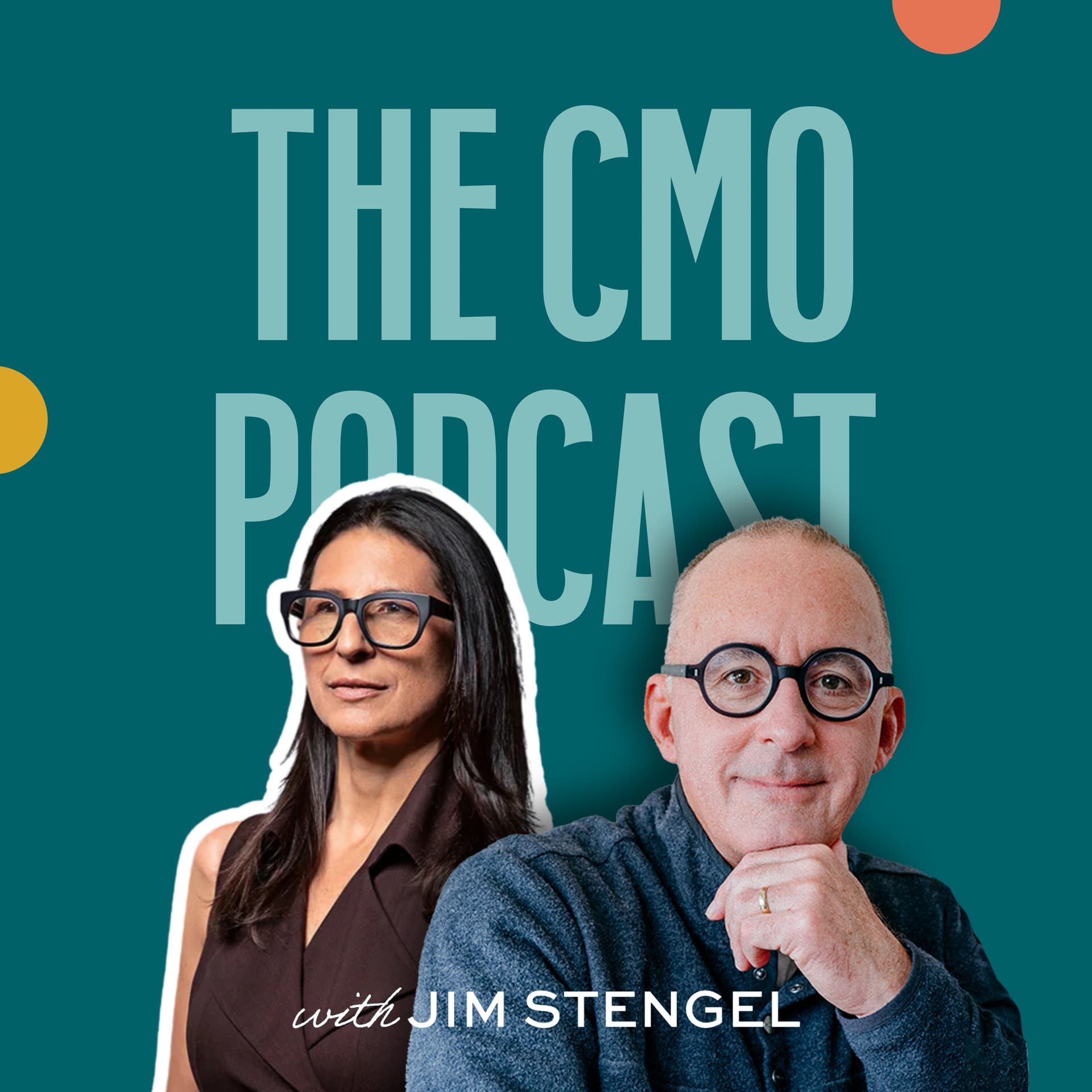
Episode Title Ariel Kelman (Salesforce) | Leading the Charge in AI Innovation
Episode Description In this episode of The CMO Podcast, Jim Stengel interviews Ariel Kelman, President and Chief Marketing Officer of Salesforce. They discuss the significance of Dreamforce, insights from working under visionary leaders like Marc Benioff and Jeff Bezos, and the evolving role of AI in organizational design.
Key Discussion Points
Introduction to Dreamforce
- Event Overview: Dreamforce 2025 is set to take place from October 14-16 in San Francisco, featuring prominent speakers from Google and Starbucks, as well as musical performances by Metallica and Benson Boone.
- Salesforce’s Role: Salesforce has been a leader in CRM and is now at the forefront of AI innovation.
Ariel Kelman’s Journey
- Career Background: Ariel's experience spans various roles, including stints at Amazon Web Services and Oracle, before returning to Salesforce.
- Growth in AI: He highlights the rapid advancements in AI, particularly with Salesforce's AgentForce product, and its implementation across diverse industries like the U.S. Army and Pfizer.
The Power of AI in Marketing
- AI Adoption: Success stories from companies utilizing AgentForce demonstrate AI’s capability in enhancing customer service efficiency.
- Example: Reddit reduced human case resolution time from 8.9 minutes to 1.4 minutes by leveraging AI agents.
- Practical Applications: Companies that embrace AI by starting with relevant use cases tend to achieve quicker results and operational improvements.
The Dreamforce Experience
- Objectives: Ariel discusses his goals for Dreamforce, focusing on learning from peers, making new connections, and giving back through philanthropic activities.
- Keynote Focus: This year’s keynote may emphasize customer success stories rather than just product announcements, aiming to inspire attendees with practical AI applications.
Organizational Design and AI
- Current Structure: While AI tools have not fundamentally altered Salesforce's organizational structure, they are being used to increase productivity and enhance marketing outputs.
- Future Visions: Ariel anticipates that as AI tools evolve, they will play a significant role in shaping the design and functionality of marketing teams.
Insights from Industry Experience
- Management Philosophy: Ariel stresses the importance of transparency in budget allocation and decision-making to avoid miscommunication among stakeholders.
- Scaling Culture: He learned from Jeff Bezos the necessity of formalizing company culture through written values and operational processes.
Challenges in B2B Marketing
- Full Funnel Marketing: Ariel shares skepticism about full funnel marketing in B2B contexts, advocating for a tailored approach that balances brand consistency with the flexibility of marketing campaigns.
Future of Marketing Organizations
- Creativity and AI: The ability to creatively leverage AI tools will become a crucial organizational capability. Leaders should inspire their teams to embrace change and experimentation with new technologies.
Key Takeaways
- Cultural Scalability: To effectively scale a desired culture, document values and integrate them into operational processes.
- Centralization vs. Decentralization: There is no one-size-fits-all solution; transparency and collaboration among stakeholders are key.
- Multi-Touch Attribution: Investing in data scientists and ensuring high-quality data are essential for effective attribution in marketing spend.
Conclusion Ariel Kelman’s insights underline the transformative potential of AI in marketing, the importance of culture and transparency, and the need for creative adaptability as organizations navigate future challenges.
Additional Note This episode is sponsored by Deloitte, which provides valuable resources to help CMOs see the bigger picture in their marketing strategies.
---
For more insights and to subscribe to The CMO Podcast, visit [here](https://cmopodcast.com).
Written by AI. May contain mistakes. Listen to the episode to check what was said.
Transcript
Automatic transcript. May contain errors.0:00Hey, it's Jim. I'm here with Matt Spiegel, EVP of True Audience Growth Strategy at TransUnion. That's quite a job title, Matt. Yes. Welcome. Thank you. So tell me about your company and why it matters for our audience CMOs. Well, listen, Jim, the challenge of the day is that there's so much information about consumers out there and the challenge is most companies don't have all that information. You have some purchase history, you maybe have some web history, but you don't have a full picture of customers. We're working really hard across on a suite of identity products, of audience products and measurement products to bring a holistic view of customers to marketers.
0:31So when CMOs work with you, what light bulbs go off for them? So Jim, we help brands bring clarity from chaos. We help them understand a picture of their customers with a 360-degree view in order for marketers to make bigger, more strategic bets. Well said, Matt. Learn more at transunion.com slash clarity. That's transunion.com slash clarity. Hi, it's Jim. Joining me is Matt Spiegel, EVP of True Audience Growth Strategy at TransUnion. Matt, we talk a lot on this show about building brands that people love, but that starts with understanding them, right? Jim, absolutely. Every customer ultimately has a story, but most brands are only going to see part of it.
1:07At TransUnion, we really focus on helping marketers connect those dots across devices, across channels, across platforms, with the goal of helping marketers see a full person behind the data. That clarity is gold. That is special. So how do you do it? Ultimately, we put together the pieces of information that help you predict behavior, help you personalize messages, prove the impact of every marketing decision at the end of the day. And our marketing solution suite gives brands the visibility and confidence to invest smarter and ultimately grow faster. So if you want to turn data into understanding and understanding into growth, visit transunion.com slash clarity.
1:42What if the smartest marketing play is not to move forward, but to zoom out? Deloitte believes the most powerful move a CMO can make is to look beyond the next step and see the broader perspective. That's what the Deloitte CMO program is for, a place to gain fresh perspective and connect with leaders who've stood where you stand. Together, Deloitte will help you see the bigger picture so your next move isn't just fast, but right. Learn more about the CMO program at cmo.deloitte.com. What's the first brand you remember making an impact on you as a young boy? Maybe Ford. As a kid, I always liked Ford Mustang.
2:17And I always kind of looked when I was a teenager at the current versions of the Mustang in like, let's say 1992, 93, 94, and just thinking about, whoa, what happened here? Like, this doesn't get me excited and want to jump in a car and drive. As you look back at some of the ones from like the 60s and 70s and kind of same with Corvette on the Chevy side. But, you know, as a teenage boy, like, you know, you look into cars a lot. Hi, I'm Jim Stengel. I've helped hundreds of major brands discover and activate their purpose. Because when a brand's purpose is clear, compelling, and authentic, profit naturally follows.
2:54Each week, I welcome the CMOs, the chief marketing officers of your favorite brands, to speak to how their job is so much more than marketing. These leaders share their inspiration and challenges, along with how they try to build a full, healthy, and happy life in and out of the office. And it's that energy that reaches everyone they touch. And we're glad you're here to feel that energy and to learn from these remarkable leaders. So here we go. It's early fall, and that means back to school football, crisp apples, and of course, the world's largest tech conference meets music festival in the world, Dreamforce.
3:29Salesforce created this unique, iconic event 22 years ago. Dreamforce 2025 happens October 16th to 18th in San Francisco with guest speakers, including the CEOs of Google and Starbucks and musical guests Metallica and Benson Boone. Well, today our guest on the CMO Podcast is Salesforce's President and Chief Marketing Officer, Ariel Kelman. Salesforce was founded in 1999 by Mark Benioff, who is the company's CEO and one of the most charismatic CEOs ever. Revenue for Salesforce is north of$40 billion with a customer base of 150 ,000 enterprises, including 90 % of the Fortune 500. Salesforce has been for years the market-leading cloud-based customer relations management software and is now a key leader in agentic AI innovation and application.
4:16Ario has been the CMO of Salesforce for a little more than two years. Interestingly, Ario worked at Salesforce from 2005 to 2011 before leaving to join Amazon Web Services for nearly nine years, followed by a stint as Oracle CMO. This is my conversation about Dreamforce, working under two iconic founders in Jeff Bezos and Mark Benioff, and how to rethink your organization design with agentic AI at its core. Here's Ariel Kelman. Welcome to the CMO Podcast. Hey, we're recording in early September. You announced another incredible quarter. Congrats to you and your team. Top line up 11%. Agent Force and data cloud up 120%.
4:54Cash flow, great, on and on. So of that incredible quarter, what are you personally most proud of? I mean, I think it's the growth in AgentForce. I mean, this was a word that we really didn't even use a year ago. And so we launched the product at Dreamforce last September. And, you know, it's just been amazing to both watch the customers implement and, you know, really iterate on what should we be doing with AI agents? Because it's very new, right? And then also the second time to work with our MarTech team to figure out how we can use AI agents with AgentForce to make our company a lot more effective and also to be a better marketing team.
5:36Well, we'll talk about all that through the course of this next 40 minutes or so. But I was reading your earnings release and you cited customers like the U.S. Army, Marriott and Pfizer seeing great success in working with you. And actually, and I think I saw this in another venue, but Reddit and Williams-Sonoma have called you out as key to their growth. So I'd like you to go there with us for a minute. What's the red thread that's kind of uniting all these customers who are citing you as important in their achievements? I mean, I think a lot of it is that use of AI is evolving. And I think we've, in many cases, or at least for these companies that are really seeing practical results, they're moving past the hype and endless POCs to just getting real on what are the projects and actually help us deliver meaningful results.
6:22And a lot of them, I think Reddit and Williamstown in particular, are looking at how can we have agents and humans working together deliver better results. And both of those companies use AgentForce on the customer service side. And I mean, Reddit, for example, by having a lot of their cases resolved by AI agents, they're able to reduce their human case resolution time from 8.9 minutes to 1.4 minutes. So, you know, big, big reductions. And I think we're also finding that it's a lot, you know, if you get the simple questions done by the AI agent, your human agents can unfortunately have the same word agent, but the humans can spend more time and, you know, have more, you know, human interactive conversations with their customers.
7:06So what could others learn from Reddit and Williams-Sonoma? I mean, we'll talk about more of this later, but just as we start, they're obviously open-minded, they're curious, they're willing to try new things, but what have they done in their organization that has enabled such adoption? I think, you know, our customers that have seen the quickest results with AgentForce, it's really a couple things. I think number one is just getting started quickly and, you know, finding the right use cases. I think that's the trick, right? And, you know, when you're going to go pilot or try out a new technology, there's a failure mode on one side, which is I'm going to try something so simple and low risk that if it succeeds, like no one cares.
7:45And then, you know, I'm going to reinvent the whole company and put all our results at risk by banging everything on it. See, so I think a lot of these companies are picking the right use case where they're taking on a meaty, you know, in those two cases, customer support area or for us, which I'm happy to talk about later on the marketing side, on our website, and with how we follow up on leads. You know, doing measured rollouts where you iterate your way through to more and more adoption, but that the results of your initial pilots are big enough that they're meaningful, and you can really see that the results are real.
8:18Now, at this recording, we're about four to five weeks from Dreamforce 2025, the largest conference in the world for CRM, AI, and enterprise cloud innovation. You have a lot to do that week yourself, and it's an intense week. So my question for you now, four to five weeks out, are you personally ready for it? Yeah. I mean, look, you can never be ready enough. Yeah. We're getting a lot of things ready. You know, if I just take you under the covers a little bit, working on our big keynote presentations, really finalizing all the last sessions, you know, we kind of go through and look at people's registrations, what they want to go to.
8:53We say, okay, this session we need multiple repeats of, And then I've been working on them. I'm running the CMO experience that we're doing and we're tuning the content and some of the attendee list and that kind of stuff. But yeah, I'm looking forward to it. It's going to be a lot of fun. Well, you have a great speakers as always, but you have one of my friends, Brian Nickel from Starbucks on. What a great time to have him come to talk about the story at Starbucks. Yeah, that's going to be great. I mean, Mark talked about this a little bit on the earnings call, but one of the things that we're going to do that's a little unique this year is we're going to make Mark's keynote very customer success focused.
9:27So the typical like big tech keynote, very product focused, product, product, product, product, product. And I think, you know, while we have tons of new product innovation that we're going to be announcing and releasing that week, I think the big thing most people are asking with AI agents is like, what's real? What's not real? Like everyone shows these cool demos, but then, you know, so many of these pilots don't make it out to production. So we figured we would just put obnoxious number of customers up there so that our customers that are in the audience can be inspired by all of the customer success and the learnings from these early innovators and in using AI agents in their businesses.
10:07That's so smart. And also Mark will love doing it. That's like plays to his strength. I mean, I love him on the earnings call with Kramer. You know, he just talked about customer success and he just kept coming back to that. Yeah. And, you know, focusing on your competitive advantages, the long-term, and he loves talking about it. He loves doing it. And I think that's wonderful to watch. He's a tremendous inspiration. Yeah, I think it's a good leadership trait, you know, just in terms of evaluating leaders, like do they get energized when they talk to customers or do they get aggravated? And I've, you know, you see all spectrums of them, but the people that get energized by customers tend to focus on the right things more often than not.
10:46I always said to my teams when I was at P &G, if we were having a rough month or a rough time or having some morale issues, just get out and talk to customers and consumers. We talked about customers as retailers. Just get out and spend a couple of days with them. You'll come back pumped up. It clarifies, right? Because some of the things that you think are the end of the world, they may not care about. And some of the things that you're not sure about, you can go validate. Yeah. So we do that all the time. I mean, I try to do at least one or two customer sales calls a week. We spend a lot of time as marketers debating with each other in a room, like message A, B, or C, which one's better?
11:21Especially when you're dealing with B2B where you can't just easily test on a massive scale with digital channels. And so I just tell my team, like, go pitch it, go down. We have, you know, about a dozen executive briefing sales calls happening in our office every day. And so just go jump into one and do the pitch, see what happens. It's great leadership learning too, how people present themselves, present ideas, so on and so forth. And Dreamforce is a beautiful three-day laboratory for that. Listen, this is your 22nd year doing this, and you were at Salesforce when you were more junior, which we'll talk about in a minute.
11:54But your objectives are really the same every year, right? To learn, to connect, to have fun, and to give back. So I'd like to talk a bit about each of those objectives vis-a-vis you, Ariel, and how you're going to spend the week. So the first one is, what are you hoping to learn the most about this year? I mean, personally, I'd say, you know, there's the stuff every year is, you know, we want to see how the announcements go over, what people are most excited about. But I think, you know, I feel especially fortunate that we do, you know, I do a small meeting with CMOs as part of the event. And so we can really, you know, in a closed door session, get really direct feedback from people on what are some of the biggest issues facing marketers, how technology can help.
12:43And, you know, what are some of the areas of our product that are working great? What's not working great? Where do they need more help? What, you know, which partner should we integrate more with? All these kind of things. It's really both a great focus group. And also, I think, you know, if you take it, set aside the technology, you know, whenever you can talk to your peers, you're always learning new things about the things marketers tend to obsess about of what's the best way to manage budgets, attribution models, you know, managing stakeholders, all those kind of things that, you know, step outside of just automating marketing with technology.
13:15I think of all the functions in business, at least this is my impression, marketing values peer to peer more than any. Yeah. I think it's just because of it's a very dynamic field. It's a very far reaching field. It's always changing. It always has been, always will. And I just think there's an endless appetite for peer to peer. And the people who understand that, you know, I think succeed with CMOs. Yeah, absolutely. I agree. So second objective, connections. I think you've just answered this, but who are you most looking forward to connecting with this year? Oh, I think, you know, just meeting some CMOs I have not met before or anytime I meet new customers.
13:49I think it's always good because I sort of can add another person I can use for feedback on something later. So the new customers, that's what gets me excited. So you have an objective to have fun. What are your plans to have fun this year, Ariel? My plans to have fun is... After it's over? No, no, no. It's to be successful in getting all the things done that I need to while remaining upright. Yeah. And the giving back is your last objective. And what does that mean to you in the context of Dreamforce? Yeah. So we usually put, you know, we have, you know, have 40 ,000 people in one place for a week.
14:20So we usually plan a ton of philanthropy activities where people can donate their time and help a bunch of worthy causes. I personally won't have time to do too much, although we do have, you know, I think this is kind of unique. I don't know of any other, there may be some other technology companies to do this, but I'm not sure that we take our party. It's like most, you know, big tech conferences, they'll have a party with a band and we make that a fundraiser for UCSF. you know, everything from letting people donate to like, we're doing it at the Chase Center in San Francisco and our sponsorship team is selling the suites, but that money now go, you know, to corporations and individuals and that money now goes to UCSF.
14:58And, you know, they're just a phenomenal institution that's just helped just countless people with health problems. Yeah, absolutely.
15:33Absolutely. Deloitte will help you see the bigger picture together. Learn more about the CMO program at cmo.deloitte.com.
15:45Now, you've been CMO of Salesforce for about two years. And about 20 years ago, you came to work for Salesforce in product marketing and stayed for about six and a half years. So take us back two years ago. So what was that like coming back to a company where really, in many ways, you cut your teeth in leadership, in product marketing, and working for a leading tech company? So what was it like coming back? Well, it was fascinating for me because there were so many things that were the same and so many things that were just different, bigger, and much more highly scaled. I think there's some level of consistency that exists at founder-led tech companies.
16:28You know, it's not just Salesforce, but when you have a, you know, the person who started the company remains in charge as the CEO, long past the company going public, they just operate differently. Where, you know, in almost every case, they're pretty strong personalities and they're in a way of working, a rhythm. And so that part felt natural, you know, coming to work with Mark again and, you know, his perspective on things, his ability to get into the details, his prioritization of messaging and also keeping people motivated, you know, across a number of dimensions of the employees, the customer base, that part felt the same, but the scale was just what was so much different.
17:11I mean, you know, when I was here in 2005 to 2011, it was CRM. We were doing sales marketing and support. And now to have such a broader amount of products with Slack and Tableau and MuleSoft and Informatica coming in soon, it's a little bit of a different ballgame, but it's something that, you know, I had in the time that I left that I'd gotten some experience on. I mean, I think in some ways, if you talk to large company CMOs in B2B, a lot of what they're struggling with is this matrix of multiple product lines and then multiple geographies where you have sales leaders. And if you look at any of those, any one of the product leaders, any one of the sales leaders, they believe that they should have dictatorial control over their go-to-market strategy.
18:04And unless you violate the laws of physics, you can't do both at the same time because you take like the leader of EMEA, if you have a sales leader in EMEA, they think they should determine the product strategy for which products get prioritized in each of their countries by their salespeople. And then you have product leader 14 in California who's saying, oh, no, no, I'm gonna decide, my product needs to be sold everywhere. It's the most important thing in the world. So when you talk about CMOs liking to get together, the B2B tech CMOs tend to commiserate over that issue. And the way to solve it is really you got to come up with some kind of scalable mechanism that provides a transparent strategy and just argue stuff out with all the stakeholders.
18:46What's your key to do that? How do you do that personally in your leadership style? A couple of things. Number one is transparency is a big thing of having a system that allows you to provide transparency looking forward and backwards. on budget allocations by product and by geography. And the more that you can get a view into the sales and product leaders around what is my spend, this forecast type program and by geography, and then give them an ability to weigh in. And especially early in the process, you avoid a lot of these problems are really when marketers get themselves in trouble with sales leaders or their sales stakeholders or their product stakeholders.
19:28it's usually because of surprises. You know, you'll have a, you know, sales leader in the media, let's just say, for example, has a bad quarter. And they go and look back and they go, oh, wow, well, we did less events or we cut our paid media budgets. And then they go, why did we do that? Right? And, you know, oh, yeah, well, it was on some, you know, document on page 45 that you didn't look at. You know, that doesn't work as an answer. But if you can involve sales and product leaders early in the process and making the trade-offs as transparent as possible. Because at the end of the day, there's no sort of secret extra pools of money that CMOs have.
20:10We're picking and we're making trade-offs. Because every CMO I talk to, you have at least 5x the amount of stuff that people want to do that you have, like the people or time. So what I try and do is go and get at various levels of executives of the stakeholders to bring them into the tent, show them all the trade-offs. So like here would be an example of a failure mode I think won't work. Like if you have 10 product lines, 10 geographies, when you meet with each product leader or sales leader, you only show them their budget, see all the budget. You know what? I don't have a monopoly on good ideas.
20:44So if the Europe sales leader thinks that basically we're overspending on paid search in Latin America because of some belief they have that it's less efficient, great, bring that up. You think we should give that more of that money to you? Great. Give me those ideas. At the end of the day, what that kind of goes down to, which I've done in a couple other companies too, is in the planning cycle, the right time, having that big trade-off meeting with the sales and the product leader in the room at the same time, where you kind of have all the budgets by product and geography go, okay, where should we make adjustments?
21:17You know, there's a pie here and let's make some choices and then let's move on. They understand then the reason why, right? I think people, when they get the reason why, they buy into it and they get behind it and they bring it to life the best they can. I think when they can't answer why you're making a decision, that's just bad. It's bad leadership. Yeah. And then also is, you know, for these large organizations to typically will map, have marketers that have stakeholders. So you have like your, you know, your France marketing leader has the sales leader that they have to support. And if you're not empowering that person with all the data, then it can end up being a big pity party.
21:56The sales leader says, well, I don't have enough paid media. Then the marketing person says, yeah, I asked for it. I don't know what happened, which I see happen all the time in companies. Now, two years into the job, how's the role changed the most in these two years? Where are you spending more time? Where are you spending less time? Well, I think part of it was we did a lot of restructuring on the team, brought in some new leaders. I think at first, I really spent a lot of time focusing on getting all of the analytics and attribution models right. Because when Mark hired me, the biggest thing he wanted to focus on is let's make sure that we have the right machine going.
22:30So we get at least 3x pipeline coverage for our salespeople. And, you know, when I dug into that, one of the first things when I asked the salespeople, hey, do you think there was enough pipeline coverage? Well, they say, well, I don't even know because the metrics that you guys show are bullshit. I don't believe in the attribution model. I'm like, oh, okay, that's interesting. You know, it doesn't take a genius to say you got to solve that problem first. And so I really spent a lot of time with the data science team. And, you know, for this is one of these B2B, B2C things, I think, where the B2B marketers feel like they're in a much tougher place than the B2C marketers, where it's just so hard to do attribution.
23:08You have long sales cycles, dozens of touches from different people, hundreds of touches from different marketing programs. and how do you determine causation? And I think we've sort of found an answer on this, which is to use deep learning models to do multi-touch attribution. But there's a million ways to do that wrong and there's a million ways to do it right. And so I spent a lot of time up front really digging in and making sure we got it right. And like, what does right mean? What right meant for me was a model that had data science integrity that we kind of believed in if you took your sales and marketing hat off.
23:43And then number two, that the sales team bought into. We just pulled a bunch of people out of the sales ops team and said, you're in the room with us. We're all building it together. All the 50 decisions on assumptions and weightings, we're all going to make them together. And the investment in that has been paid off really well. This is the only place I work where we haven't really had fights over, do you believe in the numbers? It's just like, oh, well, this number isn't where we want it. Let's dig into the contributing factors and let's figure out how we should adjust. I've heard you say in another venue that you believe that you at Salesforce are setting the standard for multi-touch attribution and B2B.
24:20And this is what exactly you're talking about and the process you followed to get there. I'd like you to just spend a moment about what could others learn by what you did and to get to the place that you've gotten to. What we're doing is very, very similar to what data science team did when I was at Oracle or when I was at Amazon. Well, first of all, is to have real data science resources. And have people that really understand how to operate with a scientific mindset of experimentation, having hypotheses, challenging them, you know, arguing both sides until you figure out what the truth is. And then also, I think one of my big points of advice is like to be honest with yourself about the quality of the data.
Read the full transcript
25:02This is one of the biggest problems when you're doing these attribution exercises is that especially when you have direct salespeople, because it's pretty easy to get to a point where you're like, okay, for all the data we're getting off our website or all digital programs, you know, I know what the accuracy is. But of course, it's the humans that always mess everything up. And when you're trying to do attribution, you need to basically capture all the touch points so the machine learning model can sort of figure out the correlation. And, you know, you're dealing with, let's just say you feel 90 % confident in all your marketing touch data, but you feel maybe 50 % or 40 % confident in the sales data because you have very diverse usage of Salesforce automation tools by different sales teams.
25:46And you got to decide how you kind of account for that because otherwise you're under, you know, if you assume that salespeople aren't entering all their activities, for example, which is probably fair, you can't just ignore that because then you'll be overweighting the marketing impact on some of the pipeline. So I think a lot of this goes down to kind of being humble and not really taking things for granted. And when you're just going through making these decisions, just take the other side and say like, what are the, all the ways that people could say this is not valid and answering your, you know, potential critics before you finish.
26:19It's kind of like a, you know, how you do an academic research paper. That's why I kind of go back to like, you need a good data science leader. I think investing in finding the right person for that is super important because marketing is this dance between, you know, creativity and science and you got to use the right hats for the right jobs if I mix metaphors there. No, I get it. If you feel like you're sort of setting the standard now, what's the next milestone? I mean, you talked about data scientists, you talked about quality of the data. What do you think is the next breakthrough ahead for multi-touch attribution?
26:52We're kind of in a steady state on multi-touch attribution. We're not really investing a lot and trying to figure out what's the next new way to do it. And that's one of the things I'm eager as I talk to other CMOs to kind of learn about this. I would say that all the excitement around generative AI and agents has, you know, somewhat diminished a lot of the attention on predictive AI. And I think we're talking about some problems as being solved, but I don't think we've fully solved multi-touch attribution. I think we'll find some people, well, actually, maybe as I'm thinking about this out loud, it's about the data.
27:25It's investments and things you can do to increase the data. Like we have this product, Einstein Activity Capture. And so what it does, and there's other solutions that do this too, of it basically goes through the sales people's emails and calendars to auto log activities and using a little bit of machine learning to be like, oh, okay, well, he went and met at Wells Fargo with these three other people and the subject name matches one of the open opportunities. So that's probably a meeting about that opportunity. And then even to doing AI on calls, which we have a product for that. There's other solutions for that as well, but that's augmenting all the data and better data you have, the better all these answers are going to be.
28:12We all want to stay ahead of the digital curve and IAB, the Interactive Advertising Bureau invites you to do just that at the 2026 IAB annual leadership meeting in Palm Springs on February 1st through 3rd. If you're a qualified consumer brand or agency leader, you can access free passes and travel vouchers. And for everyone else, you can take$500 off your ticket with code, all caps, ALMCMOPOD26. This is your chance to join a three-day gathering of the industry's brightest minds and boldest voices shaping the year ahead. You'll hear agenda-setting conversations, candid fireside chats, and dynamic breakouts on the topics that matter most, from AI and commerce media to measurement and addressability.
28:57This year's lineup concludes everyone from Kevin Bacon and Bozema St. John to creator Remy Bader, along with leaders from Forbes, Major League Soccer, General Motors, and Meta. Visit iab.com slash ALM to learn more, and check out the link in the show notes to register and receive$500 off your ticket.
29:19I want to talk in some depth. I mean, we're dancing around it already, but I want to talk in some depth about marketing organization design, because obviously, Agentec AI is changing a lot of organization designs. And some of the customers you talked about in your earnings call are doing that. And you're doing it yourself within your own organization. I tell you, Ariel, it's one of the top questions I get asked when I make my rounds with CMOs. What are others doing in org design with everything that's going on right now with AI. So I'd like you to talk about your journey on that in your last two years and what you have learned.
29:53And then we can talk about what you're learning from colleagues as well. Yeah. Well, I first, I would say that the work we're doing with agents has not influenced our org design. And maybe just quickly, just a couple of things that we're doing. So we, as a marketing team, we had, so we put our, an agent on our website that has done, I think, about 700 ,000 in the past six months. So people can ask any product question they want and also, of course, get their support inquiries dealt with. That has improved our ability to generate pipeline from our website by pre-warming some of these leads before they get to the SDRs.
30:30And then we also have an SDR agent that we route leads to in addition to the human SDRs. So we've been running the numbers and in the past 10 years, we haven't followed up on 20 million leads. Wow. Which is pretty normal. It's like we didn't call them back. Well, because what do most companies do? You score the leads. Let's say we do it one to five. We route the fours and fives to the human SDRs, and then you throw the other ones nurture campaign. But instead we have AI agents now following up on every lead and engaging in multiple conversations over email and eventually, you know, constantly rescoring them and eventually sending them over to the human salespeople.
31:09Then of course we have an agent for our events. You know, you're at our event and you say, oh, is there a, an analytics session tomorrow? Oh, add it to my calendar. So you can do some of those things. And it's, it's really about making us more productive, increasing our conversion rates, but it hasn't really changed our org structure. And maybe it will in the future. I mean, even in our creative organization, you know, we don't produce creative software. And, you know, like a lot of companies, we're using all these tools. We haven't reduced staff on creative people. We're doing more iterations.
31:42You know, what I kind of think about with a lot of these AI tools for employees is if you can give someone twice the productivity, you can cash in that productivity gain in a couple ways. You could, let's say, I'm going to do the same stuff, but in half the time, I'm going to go do twice as much in the same time, or I'm going to do the same stuff with half the people. And at least my experience has been in this context of most marketing teams, their stakeholders are asking for three, four, five times as much stuff for them to do they have time for. They're basically, they're cashing in those AI productivity savings in the form of some combination of doing more work, iterating more to get a better outcome, and then capturing back a little bit for better work-life balance.
32:29Because we're all, you know, marketing, we're dealing with all these date-driven deadlines. And so that helps too when all the creative people don't, you know, have to spend half an hour to do something instead of three hours to do something when some crazy exec like me says, change it at the last minute. What are you hearing from your colleagues about organization design? Because as I said, it is a frequently asked question. I was at a conference about two weeks ago. Don McGuire, Qualcomm, went through how he is thinking about his organization with AI at the center. Very powerful presentation, very pragmatic, very results-oriented.
33:02And he went in basically zero basing his organization based on the new capabilities that are available to us. As you talk to CMOs, and you sound like you do about as much as anyone, what are you hearing about their thoughts? I think a lot of what, when I'm talking to CMOs about work structures, a lot of what we're talking about is what's the right centralization versus decentralization model. And I personally find there is no right answer that it's kind of a first principles thing and that it changes as you scale up. Say you're a small company, you have a 30-person marketing team in the US, and maybe you have one marketer each in eight other countries.
33:40Well, you're not going to go decentralize email marketing and put like a Salesforce marketing cloud or Marketo person in each of those eight countries because you can't afford to do it. But if you have a hundred person marketing team in 10 countries, yeah, you want to have some of that decentralized expertise. I personally believe that the more decentralized you can be, the faster you can move, but you have to have the right systems to make sure that you are not sacrificing quality for moving fast. I want to talk about in my homework on you, you have a couple of beliefs that are very, very strong.
34:17And I want you to riff on those for a minute and you can disagree with me if it's not a belief, but I think it is. And the first one is I've heard you say that you are not a full funnel marketer. So could you talk about that a bit? Here's what I would say is that, and again, conversations should be grounded in that I'm a B2B marketer. So a lot of the full funnel conversations that people approach me with involves doing a integration of both messaging and allocations of budgets from top of the funnel awareness all the way down to performance, getting people to sign up and spend money. And I found that when you have multiple products and multiple geographies all intersecting, that setting up automated systems and move the spend around is too complicated for most companies to do.
35:04It sort of gets to like, I think it's operating with a false sense of precision that you think you have the quality of data and the nuance to automate when often you don't. And then also, if you think about having a top-level brand message and then having campaigns below where it ladders down all the way, I think in a B2B company where you have lots of products, that coordination ends up being stifling to the product line campaigns, which often have different messaging goals than the top level company brand. And so you're sacrificing both time and flexibility. Look, I've always been someone who is okay sacrificing a little bit of brand consistency if I'm going to get more speed and better alignment with the specific output objectives of individual campaign owners.
35:59Yeah, I get it. Well, how do you decide then? because I see a fair amount of your top of funnel work and it's very good, by the way. I think it's very creative and it's very relevant and it's very interesting. How do you decide how enough is enough or how do you make that decision? Yeah. Maybe to get into a little bit of measurement here that as a CMO, you're responsible for doing a bunch of things. And some of those things are very measurable scientifically. Some of them are not measurable scientifically. And the ones that are not measured perfectly scientifically, there's a wide range of how CMOs will characterize them.
36:34They think about brand advertising, TV advertising, TV advertising for a B2B tech company that is largely direct sales oriented. You can go make up a real crazy complicated formula, but I haven't found one that I could go stand behind that says this is the dollars of ROI. So what I've looked dipper in advertising and said, you got to be practical here. Number one, what you want to measure is, is it impactful first? Like, is it good? And by good, meaning, well, you had some goals, some sort of awareness and consideration goal. If it's to take like IT execs and change their perspective to have them think that you're a leader in this space that they should go and look at, well, you can go and do surveys around that and ask people if they've seen the ad, did it make an impact or looking at, you know, time-based changes on brand trackers and understanding was the ad campaign effective at changing people's minds on the things that you want to do.
37:31That's what I tend to focus on along with the cost efficiency of like, you know, TV versus digital versus let's say brand integrations. And then when you get to budget allocation, my personal approach has been to have some percentage of your marketing budget that you're comfortable spending on the non-ROI measurable stuff like brand advertising while keeping enough of the budget on the things you can measure. So all the performance and demand generation that we do, we feel very comfortable about being able to measure that down to ROI by looking at the pipeline that comes out of it that's attributed back to the campaigns and the close rates of the different sales teams and product areas of those opportunities, then combining with the margins of the different businesses.
38:21And you get an ROI. You can't do that with brand advertising. And also TV too, it's very difficult to AB test as well. You do seem to have a good creative muscle and a good creative team there. I can't say that for every B2B company that is really, really strong in direct marketing, performance marketing. So how have you cultivated that? First of all, thank you. And I mean, it's very subjective, right? Seems to be working though. I mean, honestly, the way I do is to, Fred who sings that song, keep them separated. But again, this kind of gets back to my skepticism on full funnel marketing. I've always liked to have the creative people that are working on the brand campaigns, not to be burdened by all of the operational performance needs of all of our product teams and what they're trying to accomplish with their businesses.
39:07You know, I like to start with, have them start with the truth of what's the brand problem we're trying to solve, which is usually in the form of like, this set of people have these beliefs that we want to change and go work on that. And to keep them separated from all of the machinery of how do you do effective performance marketing? I just find it to be very, you know, very different. Second belief, you believe a really big change a year from now will be how AI changes what a website looks like. Say more about that. Yeah. So, you think about, you go to a website today, it's mostly oriented around like search and browsing, you know, search for people to find something that they want and browsing really for you to put the message in front of them that, you know, they didn't know they needed.
39:53And if you think about having an agentic experience on the website, where when you go there, you can talk to an AI agent that, you know, has the right combination of a pushy salesperson and a utilitarian helper to give you what you need, that as you have a conversation with them, well, they should be able to generate the website in real time. And really, if you step away from the technology, what happens when you're talking to a good, let's say you're in a room with someone and you're asking them to tell you about a product, they'll often pull out their laptop. And as you're asked questions, go, oh, well, that's an interesting question.
40:29You want to know about how we're different than these guys. Okay, here's a little chart. See the difference? And they go, well, where are you guys available? Okay, you pull up a little map. And so salespeople have been doing this for, you know, as long as we've had PowerPoint. And a lot of good agentic results come from replicating what are the best humans do. And so to make a website more conversational, I think is a really, really exciting thing that we're going to be seeing in the future. It's something we're working on with our products. I'm working on with our marketing technology team. But, you know, I have some of our engineers say, well, the future of websites will just have an agent search thing of what can I help you with today?
41:09Maybe for some will. But I definitely think we're going to see a lot more of the traffic come into that aspect because you're usually going to the website with a purpose. And if you can prove to the visitors that the agent can be helpful and, you know, getting done what they want done, I think it will drive a lot of the share of traffic. Last belief we're going to talk about today is you believe that a really critical new organizational capability will be creativity in exploring and using the best AI tools for your business challenges and opportunities. I agree with you on that, but how do you bring that to life within Salesforce?
41:43Yeah, I think this is something not just marketers, but a lot of executives struggle with is how do you effectively motivate your employees to use these new AI tools? And what I've kind of found is that use of AI tools kind of exposes a new dimension of performance of your employees, which is eagerness for change and eagerness to embrace new ways of doing things. I keep going back to that short video, Who Moved My Cheese? I guess it was a book too. It's like some of these mice are really, really scared and angry when the cheese gets moved. And then there's other people out there or mice, people in our case, who kind of get energized and they see something new and they're like, oh, wow.
42:27But there's a lot of people out there, not just the marketing teams who they approach their days like, I want to get through this week with as least problems as possible. And when I'm asked to think strategically, it's like, how do I do things the same way, but maybe get like five or 10 % more efficiency? You know, if you tell people start to use all these tools in a new way, I'll kind of give you one example. This guy, Patrick, that runs product marketing for us, he was going to go prepare for a press interview talking about when we, after we announced our Informatica acquisition. And he went to Google Gemini and went in and basically loaded, gave it the messaging document and said, I want you to pretend to be a reporter.
43:07Here's the reporter. I want you to test my ability to answer questions about this acquisition, ask me five questions, score each answer according to what it says in our messaging document and give me an aggregate score. And then he, so he created that as a, you know, Gemini has these gems, just package prompt templates. And he said, well, I went and basically did five mock interviews in between meetings the day before. And it would ask questions just like the reporter, because it went and looked up like, who's this reporter? How do they ask questions? That wasn't a big IT project. That was him going and spending literally like 15 minutes writing up a prompt.
43:46And, but there's a lot of people who are like, no, no, no, I need the briefing document from the PR team. And this is just one example. It's like, I had chief creative officer. He's now making a lot of videos just using his own AI tools without going through the 30 or 40 people. And he's using that to inspire his whole team. How can we like double, triple the throughput of what we do and save us some time, you know, having to stay up all night before we have to finish something. And so I think a lot of it's top down. It's having the leaders in the company actually use the tools, you know, and inspiring people to follow that lead versus assigning a program manager to say like, well, we're going to come up with 15 AI projects to do.
44:31Okay. You've got to pick the right projects. You got to have the leaders bought into this kind of behavior and experimentation and eagerness to do new things and then have them push that down. And also figuring out like which employees are more AI ready than others. I'm a firm believer in this idea of you're not going to be replaced by AI, you're going to be replaced by the employees who are more adept at using the AI tools. Don talked about that at Qualcomm, the super users. Go there first. They'll take you to the right place.
45:08Hey, everybody. This is Andrea Sullivan, the CEO of Five, and we produce the CMO podcast and are so excited to have partnered with Jim Stengel for so many years. Wanted to tell you a little bit about something that could be right for you. Vive is a program for entrepreneurs and business leaders who want to get more out of their life and become their best and happiest selves, both personally and professionally. We have a 12-month program that allows people to meet up with some of the best business leaders out there and additionally experts in the wellness sector so that you can learn how to nurture yourself.
45:42So we teach things around sleep optimization, meditation, all those good things as well. Please reach out to us at podcasts at vibe.co to get more information. That's P O D C A S T S at V Y V E.co. Thanks for listening to the CMO podcast and hope to talk to you more about vibe.
46:07Okay. Let's shift into the creative brief. And my first question is, you already referred to this one in talking about Mark, but you have worked under two of the most famous and iconic and successful founders, CEOs of all time, Bezos and Mark. What have you learned from each one of them that has influenced your leadership style? I think maybe starting with Jeff, and I didn't actually work too closely with Jeff. I mean, Andy Jassy ran that business for most of the time I was there, but, you know, we did spend a little bit of time with him. But I think Jeff's personality is just, it's embedded in the whole operational process of Amazon.
46:41And I think like the biggest lesson I learned was that you can institutionalize culture, that if culture matters to you, if the human behaviors that you want to value matter, you need to write them down and then you need to build them into the operational processes of your companies. So they actually get followed. So at Amazon, these leadership principles, like a lot of people have looked at those, which are just a written down, you know, what are the human behaviors that we think are successful at this company? And then to have that built into the hiring, have it built into performance management, to promotions, that you're writing promotion documents in the language of these behaviors.
47:20And when you're interviewing people, everyone's assigned the behaviors and you have a bar raiser, they can veto hires if they don't meet the bar for these leadership principles. So that aspect of really, it's scalability. It's like, you know, if I've talked to a lot of startup CEOs who they're like, oh, really depressed because like we've gone from 30 to 100 people and like we're losing our culture. Ask them, well, did you write it down? Oh, no, no, we didn't. Do you create some process where when you interview people, you test them on some of these things? You know, like if you care about humility, like ask every person, hey, what's the biggest mistake you've made?
47:59and what have you learned from it? And, you know, as you've probably experienced, a lot of people actually can't answer that question. Like, theoretically, they're not able to because there's a lot of, like, pathological narcissists out there. Never think they made a mistake. Anyway, so that, so I'd say that's the biggest thing from Jeff, and I think a lot of companies copy that. And with Mark, really, like, I think a lot of what I learned about product marketing came from Mark. I think he's one of the best product marketers of really first valuing the messaging. and you know you take some companies some ceos that are very engineering led they really have i think an excessive belief that the product will win for them which look at the end of the day like product having a better product i think is a prerequisite for a lot of the success that you have in marketing or is a big change in that but understanding that you really need to get the differentiation nailed in a way that is both, you know, inspiring to customers, credible, and then repeatable by your salespeople.
48:59And so like I had someone sort of define product, good product marketing is taking complex products and turning them into simple messages that your B minus salespeople can be effective delivering to customers. And that's really, really, really hard. and it takes a lot of energy. And from, you know, when I started at Salesforce in 2005 and, you know, working on trying to explain to IT people why SaaS was actually good for them versus bad, which now sounds boring, but at the time was like pretty controversial. You know, Mark's clarity and had a sort of transition from product truth to messages that were inspiring and exciting to customers was, you know, very educational for me.
49:42You were an undergraduate student in economics at Cal Berkeley. After that, you really spent your entire career in software. What were you thinking back in your undergraduate? Did you have this yearning to be in software or was it more serendipity? What was your dream back then? I think it just sort of ended up that way. Like, I mean, for some reason, I think it's crazy at the time when I was in college and graduating in 1995, I thought the only job that is worth doing, do one of those two year analyst programs at an investment banking firm, probably read too many books on, you know, all the crazy Wall Street stuff.
50:15So I didn't get one of those jobs. And I started to look for other things. And I ended up getting a management consulting job at a small boutique strategy firm in Palo Alto that worked with all these tech companies. And that's where I think I got excited about working in the technology industry. There's just so much innovation. I'm the kind of person that's just excited by new ways to do things that are disruptive and that you know are the future, but that a lot of people haven't really figured out yet or haven't agreed yet. You seem to be really jazzed about your role these days. Is this the best time you've ever had in your career?
50:53Look, it's fun for me, especially because anytime you have something that's very disruptive where people are trying to figure it out, you have hard marketing problems to solve. And you have customers that are excited about using the new technology and you got to figure out a way to use that customer success to push your business forward. And so with Agent Forest, with AI agents, I mean, it's something that is top of mind for so many companies and it's something that we're, you know, leaders in developing. And I think, you know, as a marketer, you want to be working somewhere where you have hard marketing challenges and where you can have impact, where the products they make are actually kind of, you know, relevant.
51:35What's the first brand you remember making an impact on you as a young boy? Oh, that's a good question. Maybe Ford. As a kid, I always liked Ford Mustang. And I always kind of looked when I was a teenager at the current, you know, versions of the Mustang and like, let's say 1992, 93, 94, and just thinking about, whoa, what happened here? Like, this doesn't get me, you know, excited and want to jump in a car and drive as you look back at some of the ones from like the 60s and 70s and kind of same with Corvette on the Chevy side. But, you know, as a teenage boy, like, you know, you're looking at cars a lot.
52:11So what's the first software brand you remember making an impact on you? I think really Microsoft Access. For some reason, I kind of was into database at the time. My first job out of college, I was doing a lot of surveys in this management consultant firm. And we'd hire like 30 temps to make, you know, a thousand calls and have to collate all the data. You know, we'd use Microsoft Access. I don't know if you've heard of that before. It's an old database product. And then, you know, it would be slicing and dicing the data and the thing would get corrupted all the time. And then I looked up, I called them tech support and I saw, oh, there's these things on the file menu called compact and repair.
52:46And that's when I'm like, wow, that's a pretty shitty database. If they have to put like repair in the file menu, like, isn't that their job to go figure this out? So that kind of like, you know, started my skepticism on a lot of products. And, you know, I don't know if anyone has a database product with that anymore on the file menu. So who has been the most inspiring person in your life? I mean, I think I've been inspired by a lot of people. I don't have a singular moment. I work with a lot of really interesting people and I try and take the best from them and kind of not copy the worst. And, you know, working at Amazon, I was very inspired by Jeff and Andy and his ability to run, you know, very large, complex companies.
53:27companies and, you know, Mark with, as I said, the product marketing, but even back to like when I first started management consulting, you know, basically the guy, this guy, Dan Thomas that ran a small strategy firm, what he taught me was this, you know, idea, everyone's opinion is valid and that you should challenge everything. And that we would just go in and analyze companies. Should they buy something? Should they not buy something? and basically tell truth to power and just tell them this is wrong, this is stupid. Oh, this is the smart thing you should be doing, but you guys aren't spending any attention on that.
54:02And I've kind of taken that approach of, you know, try and encourage people to not filter out the truth for the sake of social cohesion. And it's easier said than done in a lot of big companies. Well, we'll end on that note, Ariel. Thank you for this wonderful conversation. Congratulations on everything in your team are doing. Looking forward to Dreamforce. And I think the leadership you've taken with Agentforce is changing the world. And I congratulate you and your team on that. Great. Thank you. I appreciate the time. That was my conversation with Ariel. Three lessons from this one for your business brand and life.
54:41And the first one is, and I love this, how do you scale the culture you want? Ariel talked about a key lesson from working in many years at Amazon under Jeff Bezos. was how to scale culture. And you can't scale culture if you don't write it down, write down the values, write down the desired behaviors, and then integrate it into your operations, how you recruit, how you evaluate performance, really in everything you do. So how to scale culture was a great leadership lesson on that one. Second takeaway, how do you find the right balance between centralization and decentralization? It's the top issue many CMOs face.
55:19Ariel talked about it as the top issue he hears as he talks to his colleagues. And the right way to do it, there isn't one right way. Ariel talked about it. There isn't a silver bullet. There's not one answer. The answer really is in getting everyone together to figure it out with transparency and teamwork and common goals. And the third takeaway, we all want to spend our money in the best possible way. Salesforce feels it is best in class in attribution, multi-touch attribution, which means you're spending the money in the best places. I asked Ariel for his advice on that. Two simple things. Make sure you have great data scientists and make sure the quality of your data is outstanding.
56:04That's it for this week's episode of the CMO Podcast. As always, I would be grateful if you shared our show with your friends, along with subscribing and leaving a review on Apple Podcasts, Spotify, or wherever you listen. The CMO Podcast is a Vive original production. The views and opinions expressed by podcast speakers and guests are solely their own and do not reflect the opinions of our sponsors or its personnel, nor do our sponsors advocate or endorse any individuals or entities featured on the episodes.
From the publisher
Fall is here, which means back to school, football season, crisp apples, and the world’s biggest blend of tech conference and music festival: Dreamforce. Now in its 22nd year, Dreamforce 2025 returns to San Francisco on October 14th to the 16th, featuring headline speakers like the CEOs of Google and Starbucks, plus musical guests Metallica and Benson Boone.
In this week's episode, Jim welcomes Ariel Kelman, President and Chief Marketing Officer of Salesforce, to talk about the power of Dreamforce, what it’s like working under visionary founders like Marc Benioff and Jeff Bezos, and why rethinking organizational design with agentic AI at the core is critical for the future.
With Salesforce leading the charge in cloud-based CRM and now AI innovation, Ariel shares his unique journey—from his early days at Salesforce, to Amazon Web Services, to Oracle, and back again—offering lessons in marketing leadership at scale.
---
This week's episode is brought to you by Deloitte.
See Privacy Policy at https://art19.com/privacy and California Privacy Notice at https://art19.com/privacy#do-not-sell-my-info.