In short
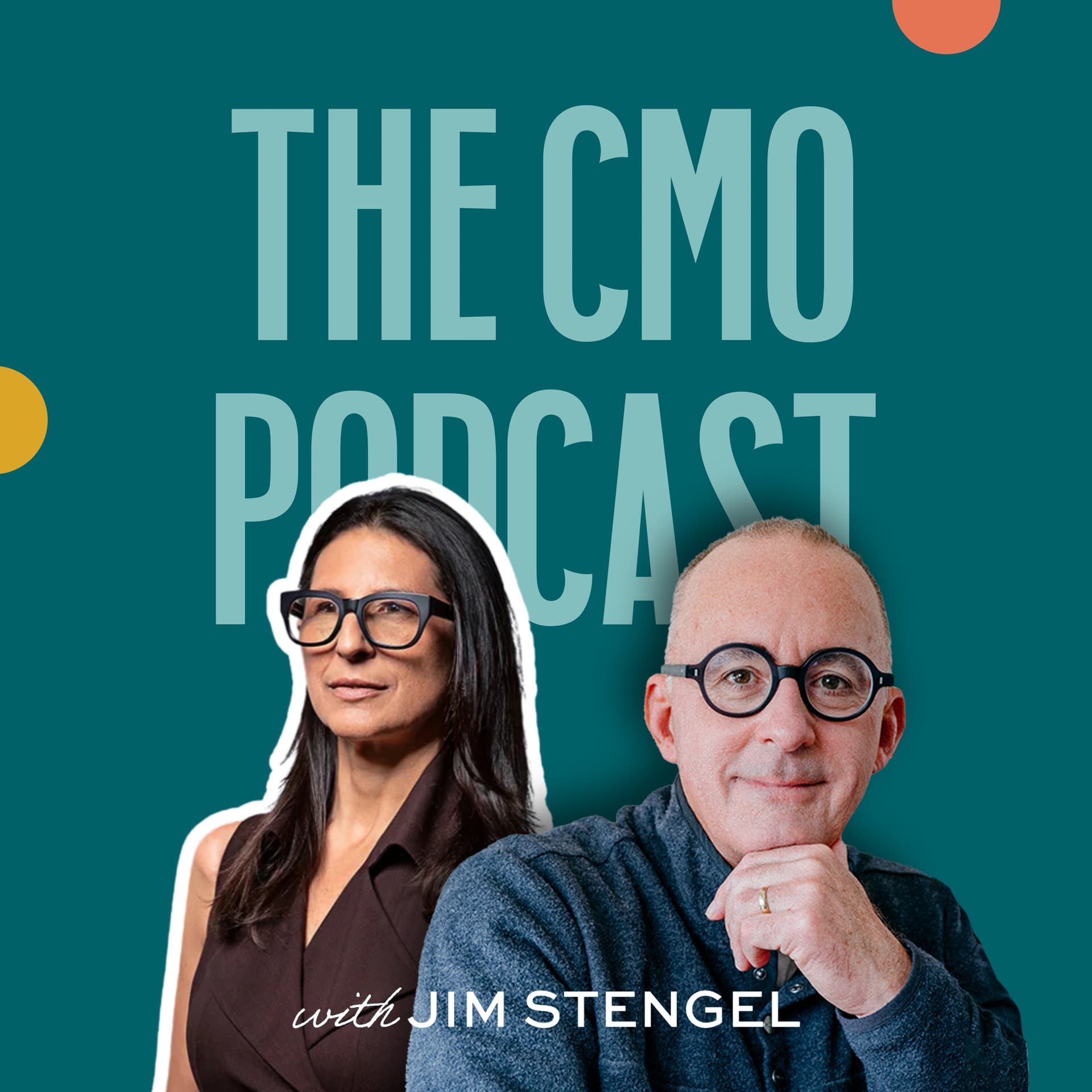
Jill Kramer, MasterCard’s Chief Marketing and Communications Officer (CMCO), discusses onboarding and leadership at MasterCard, how to build a culture of creativity, and why brands must close the “attention-to-action” gap with real purchase data. She also connects these ideas to Cannes Lions, AI/creators, and MasterCard’s “priceless” legacy.
Guest backgrounds
Jill Kramer is CMCO at MasterCard (about six months in at recording). Previously she spent nearly a decade at Accenture as CMCO, leading integrated marketing and the “Let There Be Change” brand platform. Earlier roles include senior leadership at BBDO and DDB, working with AT&T and ExxonMobil.
Key claims
Trust must be earned before transformation; creativity should be “early, ugly, often” with early gut-checks; AI should strengthen insights/personalization but not replace human craft (writing/empathy). Advertising’s mix changes, but storytelling and reach still matter.
Notable examples
MasterCard’s “Priceless” campaign; Infillion + Catalina acquisition enabling live optimization from ad attention to verified in-store purchases (90% of consumable purchases). Her “town hall with Raja” onboarding approach; her “first reaction hypotheses” habit. Partnership spotlight: McLaren.
Written by AI. May contain mistakes. Listen to the episode to check what was said.
Chapters
Tap a time to open that second in VOUnderstanding Media Value
0:00 to 0:53
Explore the challenges in linking media engagement to business results.
“I spent years at Procter & Gamble trying to answer that question.”
The Impact of Brands in Childhood
0:54 to 2:26
Jill Kramer reflects on impactful childhood brands, specifically in toys.
“What's the first brand you remember making an impact on you as a young girl in a creative way?”
Onboarding and Learning at Mastercard
3:06 to 6:02
Jill shares her approach to onboarding and learning at Mastercard.
“Jill, welcome to the CMO podcast, finally.”
Building Connections and Trust
6:03 to 9:07
Jill discusses building relationships and trust within the team.
“And I come back with all the different parts of my brain fired up, which is with a flight home and the notes that I write is probably already overwhelming to many, but it's been a good formula.”
Learning from Experience
9:08 to 13:32
Jill reflects on the importance of understanding company history and culture.
“And the biggest thing I have found is the organization's reading you and they're looking for small signals.”
Comparing Roles at Accenture and Mastercard
13:33 to 14:01
Jill compares her experiences at Accenture and Mastercard in brand management.
“So those kind of things which you did are so powerful.”
Transitioning from Accenture to Mastercard
14:01 to 15:49
Jill discusses her transition from Accenture to Mastercard and the impact of brand loyalty.
“The same in that I've had the privilege of working for CEOs both times who had direct contact, like they valued the conversation.”
Optimizing Advertisements with Infilion
15:50 to 17:40
Exploration of Infilion's acquisition of Catalina and its implications for advertising optimization.
“Over 90 % of consumable purchases still happen in-store.”
Overcoming Job Transition Anxiety
17:41 to 18:50
Jill shares her personal reflections on job transitions and the anxiety that accompanies them.
“You work really hard, but you learn a lot.”
Leadership Evolution and Empowerment
18:51 to 23:19
Jill reflects on her growth as a leader and the importance of enabling her team.
“I was just talking to someone about this and having a talent conversation.”
Show all 22 chapters
Early, Ugly, Often: A Creative Approach
23:20 to 24:28
Jill explains her mantra for creativity and collaboration in the workplace.
“Now, I was explaining this actually to the leadership team at MasterCard.”
Experiences at Cannes Lions
24:29 to 26:39
Jill shares her excitement and goals for her first Cannes Lions as CMO of Mastercard.
“So I suspect your agenda is full this week.”
AI's Role in MasterCard's Future
28:00 to 30:42
Explore how AI can enhance MasterCard's brand and personalize experiences.
“There's a lot happening with creators in Cannes, and that started two or three years ago.”
The Impact of Creators on Brand Relevance
30:42 to 33:12
Learn how creators can drive community engagement and brand trust.
“So creators, this is what's so interesting, and I didn't really think about it until I heard you say those two things next to each other.”
Building a Culture of Creativity at MasterCard
33:12 to 35:54
Understand strategies for fostering creativity within organizations.
“So I love the ability to bring those qualities that are very inherent to our brand to different communities and different ways people want to connect with each other.”
The Evolving Role of Advertising
35:54 to 39:42
Discuss the changing landscape of advertising and its significance to brands.
“participants in it, and then celebrate the work.”
Discovering a Passion for Advertising
40:48 to 42:01
Hear about the speaker's journey into the advertising industry and key insights.
“When did you discover that advertising and marketing were for you?”
The Journey into Marketing
42:01 to 43:35
Discover the importance of understanding client needs and the joys of marketing.
“You had done your homework and I was the absolute most junior, least qualified person on that pitch.”
Exciting Partnerships
43:35 to 44:46
Explore Jill's thoughts on the potential of the McLaren partnership.
“So we talked about partnerships and you have a lot of them as this brand.”
Childhood Brand Impact
44:46 to 45:49
Hear about the brands that shaped Jill's childhood and creative inspiration.
“I was saying Mattel, Barbie, like those are the biggest things because I have a sister and we would ask for gifts like that connected to each other.”
Inspiration from Family
45:49 to 47:16
Jill shares the impact her parents have had on her life and career.
“But how do you want to be remembered someday when you leave this role for something else?”
Family Vacation Excitement
47:16 to 48:03
Jill discusses her upcoming family vacation and the joy it brings.
“And when you're the nicest man in the world and he literally is, that's an odd place to be.”
Transcript
Automatic transcript. May contain errors.0:00Jim Stengel:I spent years at Procter & Gamble trying to answer that question. We had the creative. We had the reach. We had campaigns that genuinely stopped people. And then we watched that value quietly disappear somewhere between the moment of engagement and the proof of a business result. That gap between attention and action is where most media budgets go to die. And most digital media platforms have been content to live inside it just a little upstream from accountability. Infilion is the company that decided to close it. They started as the original attention company built on the idea that a consumer choosing to engage with an ad is worth more than one who ignores it.
0:35Jim Stengel:But they did not stop there. They have built the infrastructure to connect the moment of attention to the proof of action across every screen, every format, every vertical. That is not a feature. That is a fundamentally different idea of what an ad platform should be. And it is the one brands have been waiting for. Learn more in the show notes. What's the first brand you remember making an impact on you as a young girl in a creative way? It was definitely in the toy space. I was saying Mattel, Barbie. Like, those are the biggest things because I have a sister. And we would ask for gifts, like, that connected to each other.
1:09So, like, we'd be making the whole home and pool and car. Yeah.
1:13Jim Stengel:We hear Barbie a lot on this show. Yeah. Hi, I'm Jim Stengel. I've helped hundreds of major brands discover and activate their purpose. because when a brand's purpose is clear, compelling, and authentic, profit naturally follows. Each week, I welcome the CMOs, the chief marketing officers of your favorite brands, to speak to how their job is so much more than marketing. These leaders share their inspiration and challenges, along with how they try to build a full, healthy, and happy life in and out of the office. And it's that energy that reaches everyone they touch. And we're glad you're here to feel that energy and to learn from these remarkable leaders So here we go.
1:53Jim Stengel:Some marketing ideas capture attention for a moment. The very best ones help shape culture. And that, you could say, is priceless. For more than 25 years, MasterCard's iconic priceless campaign has been one of the most enduring and celebrated brand platforms in marketing history. Today, MasterCard connects consumers, financial institutions, merchants, governments, and businesses in more than 200 countries and territories. The company processes billions of transactions each year and generates more than$28 billion in annual revenue. My guest today is the newest leader helping shape the next chapter of that remarkable brand.
2:27Jim Stengel:Jill Kramer is Chief Marketing and Communications Officer at MasterCard, where she leads the company's global brand and communications strategy and serves on the executive leadership team and management committee. Jill has only been in her role for about six months. Before joining MasterCard, Jill spent nearly a decade as Chief Marketing and Communications Officer at Accenture, leading one of the world's largest integrated marketing organizations and spearheading the company's Let There Be Change brand platform. Earlier in her career, she had senior leadership roles at BBDO and DDB, working with companies like AT &T and ExxonMobil.
3:01Jim Stengel:Recorded live at the Cannes Lion International Festival of Creativity, here's my conversation with the CMO who knows great brands are built with careful intention. Here's Jill. Jill, welcome to the CMO podcast, finally. Now, you just arrived. Yes. But I have to ask you, you've been in Cannes before. Yep. Is the food better in Cannes or in the MasterCard cafeteria? Okay, I am going to talk about the MasterCard cafeteria all day long. I somehow knew you would. It is just, it is no joke. And I love it there. And I go there every single day I'm at work. I go up there. And it's funny because I have this woman who works with me.
3:38Her name is Susan. And I'll say, Susan, let's go up and grab a salad. And she refuses to go with me because I talk to too many people. It's the socialization.
3:46Jim Stengel:Well, you go for the social or the food? Both. Both, yeah. And really good cookies. Oh, that can be dangerous. Yeah, true. My first assignment at P &G was on a new cookie brand that we were bringing to market. It failed, but the cookies were really good. I was only 28. I gained 20 pounds in my first year at P &G. Well, you know, my first week - Because they were there all day. My first week, I did partake of the cookies, and I realized right then and there, I can't do it. You needed some discipline. So I have yet to actually purchase a cookie for myself in the MasterCard cafeteria since week one.
4:18Jim Stengel:My advice is cut them into quarters. Yeah, except it doesn't work for me. Good advice if I could abide by that. Now, I understand you also have gotten lost in the headquarters. I still cannot figure out one. Like, I have one path. Now I've done variations on that path. But our head of communications, Jen Erickson, getting to her office is still a bit of a mystery. So I get a lot of steps in. Maybe I could have the cookie, considering the number of steps I get in. By the way, I know Jen. Yeah, she's awesome. I will. Yeah. Now, I've been following your travel since you started a MasterCard about six months ago, right?
4:53Jim Stengel:And you have been on the go. Yes. I mean, you've been everywhere. It's fun to follow you. So for our audience, follow Jill. The pictures are great and actually the stories are great. Now, I know that's intentional. So my question for you is, how did you decide how you wanted to onboard? Well, that's a really good question. When I first came in, you know, MasterCard sponsors a lot of things. They sure do. And everyone was like, here's your travel schedule. And I was like, that can't be my travel schedule. I have so much to learn. So actually, for the first 30 days, I was very purchase headquartered.
5:29And it was it was December. It was the end of the year. I did a lot of learning. And then I started to hit the road. So I was I would my criteria was I would love to see a MasterCard sponsorship property in action, but also to spend time with MasterCard's customers. because MasterCard's brand is really built through those partnerships with fintechs and issuers, et cetera. So I really wanted to be able that I could see and appreciate the team's work because they are best in class. But I also wanted to make sure that I could meet with other business partners and see customers. So that formula has worked so far.
6:06And I come back with all the different parts of my brain fired up, which is with a flight home and the notes that I write is probably already overwhelming to many, but it's been a good formula.
6:19Jim Stengel:Now, how do you process that all? So I've been in your shoes. Do you have a hack or a habit? I do think that you learn things when you come up through the agency system, that if you're switching accounts, if you're working on a new business pitch, you have to accelerate very quickly. Then when you add Accenture on top of that, You have to know a variety of different industries. At any point in time, I could be talking with a client or a CMO from any one of our many, many customers, and you have to be able to learn very quickly. But my habit is that I actually write down my first instinct, first reaction hypotheses.
6:58I used to do it in a notebook, and now I do it in an iPad, and I still have it. It's my first reaction page. and I write down everything and I just let my brain know that those are recorded somewhere. And I give myself about six weeks and I go back and I say, which of those things were spot on and which were just a result of a lack of information. And that starts to kind of form my plan for where I go from there.
7:22Jim Stengel:Well, I saw you also did a town hall with Raja. Yeah. The two of you together. It's, by the way, a good idea. I'm surprised more people don't do that. But I just want to ask you, I mean, he was in the job, what, 13 years? Yeah, 12 years, I think. Yeah. So what kind of things did you talk about? What was the vibe in the room? What was that experience like? You know, I think that when Raja and I first met, we had like this connection as humans first, things we appreciated, things that brought us joy. As I onboarded, we also realized where we would be different. And he said something to me because I started onboarding with him in the time between Accenture and MasterCard.
8:09And he said to me, I think you and I couldn't be more different. And that's exactly right. It's right for the company and it's right for the team. So don't worry. Embrace that. And so that was a very kind and generous thing to do. And so we really did talk about that with the team when we did that town hall. We celebrated, of course, everything Raja had accomplished. And we gave people permission to celebrate where they'd come together, but also permission to think differently. And I think you find different types of people. Some were ready to come forward right away with ideas and others, you know, there was the grieving process a little bit.
8:49But we always did it this way when you talk about doing it a different way. So we just gave people permission to feel all those feelings and celebrate and then move forward.
9:00Jim Stengel:Yeah. Wow. It's a very interesting and challenging thing to follow someone who's had such a deep imprint on the company. And the biggest thing I have found is the organization's reading you and they're looking for small signals. You know, what does she like? What's going to be different? What's going to be her imprint? So how do you handle that? Well, it's funny. And one of the funny things about interviewing for this job, as I met people in MasterCard, I had a really busy role prior to this. So I didn't have time to, you know, prepare other than to really speak about my beliefs, my philosophies, the way I handle situations.
9:41So I had a high level of confidence that I was getting the job for the right reasons. But then you do have that worry that like, couldn't I have gone someplace where the bar was a little lower? That would have been a smarter move maybe. And then you have the piece of Raja acknowledging that we are very different human beings and that was the right thing. But what we did do as a leadership team was we actually went away together. And when you work in a multi-matrix company, different marketing divisions, there's all the different ways people report and are funded. And you could organize one way, you can organize another way.
10:17But we just came together saying we're going to forget all of that. We're all here to help MasterCard grow and to help the world really know who MasterCard is. So we did exercises to get to know each other better. But part of what we worked on was what were we going to give ourselves permission to leave behind?
10:35Jim Stengel:That's a good question. But the biggest thing was that I left the room for 90 minutes and the team talked about me without me there. What did they know about me already? What did they still need to know? What did they really appreciate that I was doing for them? And what did they need me to do that I might not have been doing yet? And I remember when I left the room, I called my husband and he's like, well, that's got to feel so weird. I'm like, yeah, I'm not sure what I was thinking when I agreed to this. But it was the best thing that ever happened because then they come out and they synthesize for you.
11:06What did you learn? And the best thing you could do for yourself as a leader, a new leader, but I think as a leader, is check yourself. Am I actually conveying the messages I intend to? Am I giving the signals that I intend to give? A lot of us want to create that emotional safety for creativity and ideation and, you know, just growth from your team. And you may think you are and you're not. And the only way to find it out is to actually look at it. So it was the first time in my career I'd ever done that. And I loved it.
11:39Jim Stengel:What'd you learn about yourself? I learned about myself. I think people knew that I was very accessible, deeply caring. They knew that I learned a lot and quickly. So don't not to be freaked out by the by the questions I ask. I have learned that about myself. I tell people that I'm not asking questions to challenge. I'm asking questions to understand. And then what I also what I did learn about myself is that even though I know or I thought that I was clear that when I was saying, what if we did something differently than the past that I was trying to always start that out with? This work is amazing.
12:19I'm not questioning the validity of what has been done. I do have some questions. What if we were starting from scratch today? What would we do? And I realized I needed to say that maybe 10 times more than I thought I needed to say it so that people could really hear that and trust it. And then the last part is that trust is earned. Right. We all know that. But when you're actually living it and you're at a big brand and you want to do things and you want to move quickly, but you don't have that trust yet. And you can't possibly have that trust yet that you have to over index in certain things until you have it.
12:52Jim Stengel:Yeah. I went to an acquisition when I was at P &G. He was one of the first P &G people to go to the acquired company. There was a lack of trust, of course. And one thing I did, which was very profound, I didn't realize it at the time, I just said, listen, I don't know your category. I don't know your history. I don't know what's worked. I don't know the story of your company over the last several decades. Can we just reserve a day and you all tell me and show me the story of the company? When were we at our best? What campaigns or initiatives really rocked? And so that was so fun and so interesting and to see where they were not on the same page.
13:29Jim Stengel:But it was a data-based look at the company. So it gave us a bit of a common language. I love that. So, yeah. So those kind of things which you did are so powerful. Yeah. Spending time letting people teach you. Yeah. But to your point, and you and I were just talking before we began here, like, I'm now six and a half months in and I'm going to start planning for the next year or so. So giving yourself permission to do that again. And I love that example you just gave. Like, let's have a little bit of a shared look back together and learn again before we start planning the next year. Now, how is the job?
14:02Jim Stengel:You're at Accenture, 10 years? I didn't quite hit 10 years. I came close. Almost 10 years. How is this role the same or similar? And how is it most different? The same in that I've had the privilege of working for CEOs both times who had direct contact, like they valued the conversation. They did not, you know, push that off to the side. I think what's different, and it was the reason I went to MasterCard, is that for MasterCard, the brand is beloved by everyone and everyone protects it. And therefore, I've never experienced a company where they so truly listen to what would be good for the brand.
14:49They know what might be good for their area of the business, but they also listen to our expertise and craft skills around the how, the what, and the when. So I really loved that brand was never something you had to ask to talk about at MasterCard, that it was always front and center. And that's just because they're two different business models.
15:08Jim Stengel:Right.
15:15Jim Stengel:If you were a chief marketing officer in consumer products, I want you to think about something for a moment. You have creative that works. You have campaigns that capture attention. But somewhere between that moment and the register, the signal gets lost. You cannot see what actually drove the sale. You are making optimization decisions on inference, not truth. Well, that changed in February. Infilion acquired Catalina, four decades of deterministic purchase intelligence, 130 million U.S. households, 70 retail banners,$600 billion in verified annual consumer spending. And here is what really matters.
15:50Jim Stengel:Over 90 % of consumable purchases still happen in-store. Infillion and Catalina together can close the loop from digital advertising to in-lane purchase and incentivize the next one. This is not a measurement tool you consult after the campaign. This is a live signal that runs through your media while the campaign is in flight. You can now optimize from attention to action in real time against people whose actual purchase behavior you know. A consumer products brand needs return on ad spending. It needs foot traffic. Infillion now delivers all of it. Not as separate vendors you reconcile later as one connected platform.
16:27Jim Stengel:That is what closing the gap looks like.
16:33Jim Stengel:Did you imagine when you went to Accenture, you'd be there almost 10 years? No. In fact, I left BBDO to go to Accenture. I had a moment. That's a change, actually. Yep. That's a big change. And I was walking from the BBDO offices to the Metro North to Grand Central. I had a panic moment. And at the time, Troy Rohannon, who used to be my boss at BBDO, was working at TBWA. And I texted him and asked if we could chat. And I went up to his office and I said, I'm kind of panicking. Like, I don't know if I should have done this. I was a week away from starting the new job. And he said, you'll never regret it.
17:11I said, what's a year from now? You can do whatever you want, but you will learn a lot by going there. And you'll become better at everything you do by sitting on the other side of the table. So I was saying, could I make it a year? And I ended up being there for nine years. And also a testament to Roxanne Taylor and then Amy Fuller, the people that I worked with there. Roxanne moved my job around more in my first year and a half than I'd ever had that type of acceleration. So I owe a lot to her. And I learned a ton. And then when Julie did give me the privilege of being the CMCO there, I mean, there's no better learning environment because you go across every industry and every technology and you just learn a lot.
17:51You work really hard, but you learn a lot.
17:53Jim Stengel:So it's a lesson for our audience. I mean, everyone gets a panic before they start a new job. You always had those second thoughts. It's because you have to ask yourself, and I panicked before this job too. You have to ask yourself, is it fear of the unknown? Is it fear of failure? And nine times out of 10, it is. And everybody does. That's the only way to growth. Unfortunately, it's uncomfortable, but it's the only way to growth. And I talk to the team about it all the time when we're doing things differently and their every instinct is, but we're already good. Let's just do it this way. It's like we're in the messy middle.
18:29This is going to be uncomfortable. Let's see what works and let's see what doesn't. But, you know, change is taking place if you feel that. And there's nothing better than the feeling that happens on the other side where I now know people I didn't know before. I know topics I didn't know before. I know acronyms I didn't know before. And and you just you realize that you stretched yourself.
18:49Jim Stengel:How do you think you evolved as a leader the most in those nine years, nine plus years? I was just talking to someone about this and having a talent conversation. I think we all try as we move forward in our career to be a better teacher. You and I were just talking about this, a better enabler, someone who lifts other people up. I am also very much a doer. That is how I learn, always dialing in that balance. and because of where I started at Accenture, I was a doer all the way through and I did get much better at it when I was in the CMO position, but I did make a concerted effort when I went to MasterCard to not, I'm not starting at the same place I did.
19:32I have an incredibly great team. They deserve to be able to be lifting things up. So I think I've become better and then I ask permission to, I call it like you're like a dolphin. I'm up here. I got to go all the way here. I got to come back up. And I'll say, these are the projects I'm going to deep dive on. Can I do this with you? Can I be a part of the team? And that helps me learn. And people know I'm doing that, not to monitor, but to be with them and learn by being with them. So I will always be teaching myself how to be an even better developer and delegator than I am a doer. It's always a work in progress.
Read the full transcript
20:11Jim Stengel:Well, I think you're a pretty amazing leader. Thank you. Oh, really? Thank you very much. I'm so happy we're doing this interview. Me too. It's the best. Now, you have this mantra, early, dirty, often. It's early, ugly, often. Oh, okay. Early, ugly, often. It's even better. Isn't that hysterical? So what's the origin story of that? I read it somewhere, and I had worked on an account for a very long time at BBDO, and I would watch what would happen to ideas and work because we were taking the work in the wrong direction. And what would happen is everybody has a fingerprint that they leave on the concept, And then it would get to whomever was the actual decision maker who would say, oh, no, I wanted this.
20:50And you'd be like, that's what we did in step one. So it's a very simple question of why don't we just invert the process? And I noticed it at Accenture. I mentioned Roxanne. Everyone would be perfecting things before it got to Rox. And I was two doors down for her. So I'd be like, immediate reaction, love or hate? We're going this way. And you calibrate at the beginning. You have no expectation of perfection. You don't even have expectation of being a quarter of the way there. You're just gut checking. You're just getting a human and emotional reaction to the direction you're going in. And for me, it does two things.
21:24Number one, it really stops wasting people's time. And once you have that permission and that validation of reaction, then you let people do work and know they're not wasting their time. And the second thing that I think it really does is it keeps leaders involved. in a way where people actually, they're actually making what the company is making instead of just seeing it finished, having no idea of where it came from. It's dangerous if you get too far from the actual craft of what we do. And so I think it works for both the people who are doing the work, they're empowered, but also the leaders, they're involved.
22:01Jim Stengel:How do you actually do that? I mean, we used to do when I was at P &G, show the brief for a new initiative or a new piece of work to the highest boss in the chain who will have, and just say, are you aligned with the brief? Yep. And then what happens? You probably go away for weeks, if not months. Yeah. And I have a brand new agency team that I'm working with now. They don't know me at all. Right. And that was my thing with them is like, so what we do is we gut check really, like these are the territories. At different stages. Yeah. And again, it's involvement, it's deep caring. They know I care about where they're going.
22:36And by the time as I'm seeing the work, I'm seeing it evolve. I'm seeing it get better. I'm like, oh, I liked these three territories and you went here. Freaking brilliant. I love that. Like there's so much more passion in working that way. But my the team is still fully empowered. They're doing everything. I'm not going to worry about anything that gets made from the new work I've been seeing because we all hurt each other. We know what we love and why. And there's incredible talent and capability and trust that it will actually get made in that way. But if they made it all and they were so invested in it, and then I saw it and said, oh, gosh, I really wished you had turned left instead of right.
23:15That just demoralizes everybody. And it takes the energy and the heart out of the creative process. Now, I was explaining this actually to the leadership team at MasterCard. If you don't get that early check-in by the time they do the work, and they've fallen in love with something and you have to go a different direction, you've lost all the energy. You've lost the battle.
23:37Jim Stengel:Yeah. I remember when I started working with Widening Kennedy years ago, Dan Widen said to me, we have to make things. And if you let us, if we sit on something too long, it gets stale. It does. So he said, just this is the way we work. I hope you can adjust, but we see something, we make it. Yeah. And it can be made rough, but we do it for reactions. and he's right. If you sit on ideas and then nothing happens with them, they get stale. So it's a different, a bit of a different concept. The point is the same. Agree in a direction, make something, get a reaction, make it better. What we do is to create, to make something sit on a shelf for so long.
24:19It's just, it's completely in opposition to what we believe in. Yeah.
24:23Jim Stengel:Now we're here at Cannes Lions. You just flew in this morning. It's your first one as CMO of MasterCard. You've been in the job six months. So I suspect your agenda is full this week. I know you have a family holiday at the end of the week, but you probably have a very busy schedule. What in that busy schedule are you most looking forward to? I am so excited. The first time I was at Cannes, I was on a jury, the inaugural B2B creative jury. And I am forever changed by the process of watching other people advocate for other people's work. Like it was the best. Ironically, a MasterCard project was in that, was assessed in that jury.
25:05Little did I know. But what I'm really looking forward to this year is seeing people learning a lot, but also refilling that creative bucket, seeing some of the best work in the world. I have time reserved to do nothing but walk, walk around and learn and do that with the team from MasterCard who's here, the team from our agency partners who are here. And I think it's a good time. We will go into planning and I want to be challenged. I want to see the best work in the world and I want to make sure our brand can go there.
25:35Jim Stengel:Wow. So how will you do that? Will you walk in the Palais? Will you go to certain presentations together? Yep. All of the above. So we have different people doing different tracks. Also, we have a portion of the business that is here because MasterCard also has marketing services and MasterCard Commerce Media. So I'm spending time with them. As I mentioned with you, I will learn. I want to hear what our customers and other CMOs and marketing and advertising leaders say back to them. So it'll be that side of my brain. It'll be what we're looking at doing and what's the feedback and the reaction and learning I get.
26:13And then the last part will be the pure creative immersion and just the enjoyment of that process.
26:18Jim Stengel:Do you go to the awards at night? Yeah, I'm going to go to a couple. Last time I didn't get to. And this time I'm going to go to some because it's just such a happy place. It's fun. Yeah, it is. It is. And you see work, right? Yeah, you see work. You see work.
26:38Jim Stengel:One of the things I have learned from years of talking to the best CMOs in the world is this. The question is never just whether your creative is working. The question is whether your infrastructure can keep up with it. Because a brilliant campaign still has to travel through an ad stack, through data, through decisioning, through supply, through measurement. And every hop in that journey is a place where value leaks out. Most platforms solve one piece of that, a data company, a DSP, a measurement vendor. You stitch them together and pay a fragmentation tax in performance, in speed, and in accountability.
27:10Jim Stengel:Infillion built something very different. demand, supply, data, measurement, and creative connected in a single composable platform. The highest performing opt-in attention formats via Infiliens proprietary tech in the industry, agnostic identity resolution solutions, and now Catalina, 130 million U.S. households of verified purchase truth running as live signal through every campaign they execute. No black boxes, no hops, no fragmented vendor relationships to manage. The only company I know of that can take you from the first moment of attention to the final proof of action for any vertical on any screen without leaving the platform.
27:49Jim Stengel:Open, composable, agentic. That is Infilion.
27:57Jim Stengel:Now, two themes, of course, this year will be AI and creators, right? There's a lot happening with creators in Cannes, and that started two or three years ago. So when you think about this new brand you're responsible for, MasterCard, and I know you do a lot of partnerships. We'll talk about that in a minute. But as you think about AI and what you've learned and you think about the creator space, what is your feeling about what both of those mean for MasterCard? I mean, these are mega areas, and you're already all over AI, I'm sure. But what do you think its potential is to help your brand? And then we can talk about creators after that.
28:35Okay. So starting with AI, obviously I learned a lot about this at Accenture. The beauty of AI is the sheer, I'm a big data geek. I love to really immerse myself. I love when an agency presents like the insight part of the brief. And what I'm already seeing is there's more depth to that than we could have ever, ever achieved before. So I love AI for the mining, the synthesizing, the hypothesizing that happens in the insight phase. I think it could be some of the best things that ever happened to us. And then I think you've got it on the other side when it comes to the personalization. I think it was Julia White who was at an event that I was at where she said, this is what we always dreamed of and could never get to.
29:20So those are the places that I love, love, love to see AI. I like to see less of it in the actual creative process because I do think that's a very human craft. I was just talking to your team about like writing and how important writing is. Writing is like therapy. Writing is sharpening thoughts. I think that everyone coming up in this business needs to really be an excellent writer and an excellent communicator. Don't, you know, freelance that out to a tool. So I think there's that part when it comes to the craft. When it comes to the business, I mean, if you think about MasterCard, the number of transactions we process, the number, the fraud, you know, risk prevention, fraud prevention risk we have.
30:04I mean, that's all AI enabled. It always has been. Obviously, agentic commerce and what that means, agent pay, agent pay for machines, all the things we've been announcing. It's just a whole new era, but it's still that agent is acting on behalf of a human. It's always going to be human desire. It's always going to be human brand loyalty. It's always going to be human satisfaction and relevance that we solve for at the end. So lucky for us, new challenges, but the actual craft of what we do remains unchanged, and that's making a connection with the human being. So that, for me, is the AI space.
30:42Jim Stengel:Yeah. What about creators? So creators, this is what's so interesting, and I didn't really think about it until I heard you say those two things next to each other. You wouldn't have a lot of those creators if it wasn't for AI. Yeah, that's right. So AI isn't the death of creativity. It's an enabler of creativity. Those creators are a way to find, I mean, the relevance equation and the ability to go to someone through something they authentically love, that you had to squish people into groups and even if they didn't quite fit. But those creators allow you to participate in communities. And one of the things I love about the MasterCard brand is it's a big brand.
31:22A lot of people talk about our sponsorships. Absolutely. But we actually activate at a very community level. We're very local. And that takes a lot more effort, but it is so worth it. And that's what I feel about creators. If you as a brand work with them in the right way, if you learn from them, if you understand their community and what they stand for, you can, you can, it's a two-way street with creators. And I think that's an amazing place to be, but it does require you figuring out budgets, sponsorships, media, all of those things in a completely different way. And as you and I were talking before, it is one of the places where you have to start with a clean sheet of paper.
31:59If you try to incrementally work your way into the space, it won't work. You'll feel like you're, like you're just dipping a toe into the, into the ocean. So I think there's an amazing, if you are a brand, and not every brand is and not every brand has to be, where relevance is absolutely required and where that community participation is core, then a creator universe is a beautiful thing.
32:25Jim Stengel:Do you think it's a big opportunity for MasterCard? I sense passion in how you're saying. I do think it because at the end of the day, you know, MasterCard comes down to trust. Do you trust, you know, being in an exchange situation of your value and your values with someone else, with an entity? Do you feel totally like connected to the ability to participate in that community? And then finally, what agency are you going to be promised? Like, that's the scary part about smaller communities. It's, is there anything risky about this? And so I think MasterCard's participation breeds trust. It breeds confidence in a way where you know that your control or your agency is not being taken away.
33:12So I love the ability to bring those qualities that are very inherent to our brand to different communities and different ways people want to connect with each other.
33:21Jim Stengel:Now, your career, I mean, many years in the ad agency, almost nine plus years in Accenture, now MasterCard. You know a lot about building cultures of creativity. Yeah. You've seen a lot in clients. You've built them yourself. We're at this festival of creativity. One theme in my program here, the Simo Accelerator, is always how do you build a culture of creativity? And we had Tor from Apple come in last year and talk about building a culture of creativity. He's done it in the agency side and now with a very big client. How do you lead to build a culture of creativity? What sorts of things do you do?
33:59Jim Stengel:What sorts of things do you value? You know, how do you measure it? How do you know your organization's creative and working to their potential? It's actually one of the hardest things, not actually to have one, but because talking about it almost puts you in a box before you even begin. So one thing, and it just comes from being at a new place, I've actually started asking the question, oh, well, we want to be really creative in the space. And I'm like, okay, help me. It's like, you know how people use the word brand and they actually don't. It's like, tell me your different definition of creative in the space.
34:34And then on the flip side, I've been making a point of saying that's the most creative thinking I have seen. I was on a call last Thursday. It was a data call and it was, I won't bore you with it all, but we looked at every project MasterCard has done in the last six months? Where's our centers of gravity? Where's our investment going? And the team was talking about it and what they saw and what they learned and the views they took. And they like, then we looked at it this way. Then we tilted it on its head. And I'm like, that is absolute, like that was the most creative walkthrough. And because of that, they had four things they knew they wanted to do.
35:13Like that to me is strategic creativity. Then you're going to have someone who's going to come up with the how they want to do it. Maybe they'll have an investment or a partnership or an executional idea. But creativity takes so many different forms. And in my very early years, sometimes I knew as an account person, I was being ridiculously creative, like the way I would get the creatives to feel motivated when I knew the client was actually saying things that were highly demotivating. So how do you as an account person translate that? Like incredible creativity on your toes in the moment. But that wasn't called creative then.
35:49It was the work product of the creative teams. So you were inherently not creative. So I think the opportunity is to name the creativity, celebrate the participants in it, and then celebrate the work. Now, when it comes to whether it works or not, that's when you do go more empirical data. And sometimes the work may not have driven the KPIs you thought you were looking for. But I hope people give themselves permission to look at But what happened around this because we did this idea that actually opens up the next door?
36:21Jim Stengel:Who have been some role models for you in building cultures of creativity? You've worked with and around a lot of people. Well, I did work a lot of years at BBDO and I was just talking about David Lubar's. I think that the way he empowered teams, the way he synthesized ideas. And he was a robot creative leader. Yes, just fantastic to have worked with him. And I speak to other people who he he has forever changed their view. So I know it's not just me. And then, of course, I've had the privilege of working with David Droga and so many other people at Droga 5. What I love about David is he is more humble than I ever.
37:01He always surprises me with his humility. And I think it's because he's always in pursuit of the next idea and he builds teams who do that. And somebody once said to me about David that he would be shocked if you didn't buy his idea because he believed in it that deeply. And that I think I learned a lot from him around that incredibly deep belief. If you don't believe in an idea to the absolute depths of your soul, why are you bringing it forward? And so I think both of them were great role models for me.
37:32Jim Stengel:Yeah, yeah. Now, advertising has played a big role in MasterCard's business model and history. Obviously, the role of advertising shifting. This festival is a lot about that. What do you think the role of advertising is for the brand going forward? I mean, it's a hypothetical question. I do still think it plays an important role. And let me explain that. It's not because you have to be traditional in your approach to advertising. But I think anytime you assume one part of the equation is irrelevant, you limit your thinking. And I think that the real job, we are inherently, we observe humanity in many ways.
38:16And I'm not a big fan of big, you know, like declarations that something is in and something is out. Because the minute you think something's out, it's coming right back. I do think you do have to look at as you play with investment levels or or executional levers, what is happening to your ability to tell your story and reach different people and what you're talking about and who you're trying to reach is going to drive very different types of things. So, I mean, like it's all advertising at the end of the day because you're you're trying to reach someone and have them create, prefer you, prefer your brand, your product over others.
38:59The way you do it may change, but I just think that the mix will change. We're playing around right now with a little bit of what those mixes might look like going forward.
39:10Jim Stengel:Yeah. And it's really interesting. I had a CEO at P &G years ago who said every brand, even though they may not have any ad budget, should make an ad. Yeah. It clarifies who you are. It really does. Trying to tell a complex story that simply. Yeah. And really, where is what we create not at the end of the day an ad? Yeah, that's right. I think too many people assume advertising means a 30-second TV commercial. Right.
39:49Jim Stengel:Hi, everybody. I'm Andrea Sullivan, the CEO of Vive. And we have produced the CMO podcast with Jim Stengel for many years. And I'm sitting in his seat right now. It's so exciting. I wanted to tell you a little bit about one of our programs. It's called Vive by Vayner. It's a 12-month program that's designed for C-suiters and founders. and we want to help people to grow their businesses, but also to grow themselves. And so we bring in people from Shark Tank to talk to our founders, but we also focus on wellness. We want to make sure that people are leaning into becoming their best selves, their best and happiest selves.
40:29So if you are someone that wants to learn
40:32Jim Stengel:how to grow your business and grow yourself, check us out at vive.co. That's V-Y-V-E dot co. We'd love to talk to you.
40:47Jim Stengel:Let's flip into the creative brief. Okay. So I want to go back. When did you discover that advertising and marketing were for you? You want to know the truth? Yeah. My first job out of college, I was a receptionist at an ad agency. It was the only job I could get. And it was a small... Nope. Spokane, Washington. Oh, my. Right. Small, independently owned. I moved there in order to be with my husband who had just gotten a job out there and not my husband yet, which I don't recommend that you move across the country and change your entire career path. But I'm still married to him today. But you I watched the people and because I was the receptionist and people actually came into the office, then I learned how people wanted to be recognized.
41:30some people, it was very important that they were known, whether you answered the phone or greeted them at the door and other people were quiet. It was the beginning of understanding that all of your audiences are not the same and all the people within even a given group are not the same. So I ended up participating in a new business pitch because they were shorthanded. Well, actually, first I filled in for someone on maternity leave as a production manager and I realized how hard that was. Then I participated in a new business pitch and I just loved the it because to me, it was the culmination of I loved it when you knew your stuff like you knew it.
42:08You had done your homework and I was the absolute most junior, least qualified person on that pitch. But I had done the media study piece and that was all they answered questions about. And I ended up asking all the questions. And after we won the business, I was given the account. And it really formed my belief that you don't need to know everything, but you need to know what the client needs you to know. And there's no shortcuts on that. You have to do your homework. You have to do your work. And I never left. I never left. I had actually gone to school for broadcast journalism. And that was what I thought I was going to do.
42:45But I never left marketing and advertising once I started.
42:49Jim Stengel:Wow. Why has it been so right for you? Because it's people oriented. And it is a very generous profession. Like I talk about that all the time. I mean, you give your ideas, your personal beliefs to others. You literally, if you do your job well, what began as your idea becomes someone else's. And it's not the pride of ownership. It's actually when they take it away from you that you know you've succeeded. So that's just what makes me happy. And I've always liked giving the gift more than getting the gift. And I think that's what you do all day long. So it's very human. You work with really emotional, smart people, and you get to give great ideas away and hopefully watch them work.
43:34Jim Stengel:Yeah, that's a beautiful thought. So we talked about partnerships and you have a lot of them as this brand. Which one of all the partnerships you have are you looking forward to sort of taking to the next level? I'm sure you want all of them that are right to thrive. But is there one in particular you think, oh, that's going to be fun to do the dive and come back up again? We're a mid-dive right now is with McLaren, our partnership with McLaren. It's newer. It's big. It's got incredible brands associated with it. And the audience it reaches. And again, McLaren and MasterCard. Yeah. What a partnership.
44:11Like women, Gen Z, like it's got all of the right ingredients, but also Zach and that team has a really nice personality about it that's very fit for purpose. So part of that's personal learning. But part of that, I think, is when you combine the two brands and their personalities and their cultures and then the other brands that are around it and the constantly growing interest in the sport, which I know nothing about right now. that's a really interesting place for me personally. And I think it's got continued upside for MasterCard.
44:45Jim Stengel:What's the first brand you remember making an impact on you as a young girl in a creative way? It was definitely in the toy space. I was saying Mattel, Barbie, like those are the biggest things because I have a sister and we would ask for gifts like that connected to each other. So like we'd be making the whole home and pool and car and universe and then everything else, you know, it's really, it was less a brand, but it would be in the music space. It was always a very musical household that I grew up in. My parents always loved Broadway. And like our first record player, I could remember exactly what that looked like.
45:18And recently, my son found his first iPod. We were cleaning out boxes. And I think that that would be the other piece. Of course, I don't remember the brand, unfortunately, of the record player back then. But those would be...
45:34Jim Stengel:We hear Barbie a lot on this show. Yeah. You know, we hear Barbie, we hear Nike, you know, you hear a lot of McDonald's. Yeah, it's hard not to, but like those earliest memories of playing with my sister and. And Barbie was Barbie. You couldn't get another doll. No. It had to be Barbie. Yep. So you heard a lot about in the last, well, in your onboarding, how Raja is remembered, right? He was there 13 years. Who knows how long you'll be there. But how do you want to be remembered someday when you leave this role for something else? Well, I think MasterCard is on its business strategy has expanded so dramatically.
46:08I hope that I will have been privileged to work with the team into a space where we're able to we help the world see MasterCard in a more expansive way beyond the gut reaction of what you know about the brand. Helping brands expand. It's not easy. And when you're the more iconic it is, the harder it is. Yes, absolutely. I will be very proud of that.
46:32Jim Stengel:Yeah, that's good. Who's been the most inspiring person in your life? My dad. And I feel bad saying that because so is my mom, but my mother, I don't know if you know this, she has multiple cirrhosis. She's the strongest person I know by far and stubborn in the best possible way. My dad finds joy in everything he always has. I was just at his house yesterday and he was, how many ears of corn could he fit in the pot without having to go to a bigger pot? 88 years old and having the time of his life. So he is my inspiration. teacher. Oh, wow. Both of my parents are teachers. What they teach, what subjects?
47:05My mom was an elementary education and my dad was high school, which is hard. And then eventually went into administration. So you become like the vice principal or the principal, which all the kids love to hate. And when you're the nicest man in the world and he literally is, that's an odd place to be. But he does everything with kindness. He always assumes positive intent. And I watch that every day. I'm privileged to be able to have watched it this long. And I'm thrilled he's still with us. But he is my inspiration.
47:33Jim Stengel:Now you're leaving Cannes and going on a family vacation. Family vacation. Right. What are you most looking forward to in your family vacation? You know, my kids are both married now and the six of us, we call it Kramer XL. Two more coming too, right? Yes. Are we allowed to talk about that? Yes. Baby's on the way. We're just like the puzzle with the right pieces. All so different, but it just works. And we laugh a lot. And I look forward to just laughing all week long and a lot of ice cream. Okay. Ice cream and laughter. It's good. It's good. You can't go wrong. This has been so fun. I loved every minute of it.
48:05Thank you so much for having me.
48:06Jim Stengel:And have a great week. Have a great summer. All the best in the role. You're going to be great. Thank you. I hope so. I hope so. I will give it my absolute all because it deserves nothing less. That's great. That's a wrap. Thanks. So good, Jill. Wow. That was my conversation with Jill Kramer. Three takeaways from this one for your business brand in life. The first one, earn trust first. When you're stepping into a new role or leading a team you've worked with for years, trust comes before transformation. Jill talked about the importance of listening before leading, taking questions before making changes, and giving people permission to embrace the past while helping build the future.
48:44Jim Stengel:Leadership isn't about having all the answers on day one. We all know that. It's about earning the right to lead over time. Second takeaway, creativity is definitely a team sport. One of my favorite ideas from this conversation was Jill's catchphrase, early, ugly, often. The best ideas don't appear fully formed. They become great through collaboration, feedback, and continuous refinement. And perhaps most importantly, creativity isn't reserved for creative departments. Great ideas can come from strategy, data operations, or anywhere people are encouraged to think differently. And third takeaway, keep humanity at the center.
49:20Jim Stengel:Jill has spent much of her career helping organizations embrace new technology, and she's excited about AI, but she's equally passionate about protecting the human side of marketing. AI can certainly uncover insights, personalized experiences, and make us more effective, but it can't replace curiosity, empathy, great writing, or the emotional connections that make brands meaningful. Technology will continue to evolve. The human craft of marketing should never change. That's it for this week's episode of the CMO Podcast. As always, I would be grateful if you shared our show with your friends, along with subscribing and leaving a review on Apple Podcasts, Spotify, or wherever you listen.
50:02Jim Stengel:The CMO Podcast is a Vive Original Production.
From the publisher
Some marketing ideas capture attention for a moment. The very best ones become part of culture. And you could say...that's priceless.
Recorded live at the Cannes Lions International Festival of Creativity, Jim sits down with Jill Kramer, Chief Marketing and Communications Officer at Mastercard, to discuss what it's like to lead one of the world's most iconic brands. Mastercard, known globally for its “Priceless” platform and its role at the center of everyday commerce, has spent decades building trust, emotional connection, and cultural relevance across markets.
After nearly a decade as Chief Marketing and Communications Officer at Accenture, where she led the company's "Let There Be Change" brand transformation, and earlier leadership roles at BBDO and DDB, Jill stepped into one of marketing's most influential positions with the responsibility of guiding Mastercard's next chapter.
In this wide-ranging conversation, Jill shares her approach to earning trust as a new leader, building creative cultures where ideas can thrive, and why her philosophy of "early, ugly, often" has helped teams create better work. She also discusses how Mastercard is evolving its brand beyond payments, leaning into experiences, partnerships, and technology, and how the company is approaching AI, creator collaborations, and innovation while staying true to the timeless principles that have made it one of the most respected brands in the world.
Whether you're leading a global organization or a small team, Jill offers thoughtful lessons on curiosity, creativity, change, and why the best leaders never stop learning.
—
This week’s episode is brought to you by Infillion.
See Privacy Policy at https://art19.com/privacy and California Privacy Notice at https://art19.com/privacy#do-not-sell-my-info.