
In short
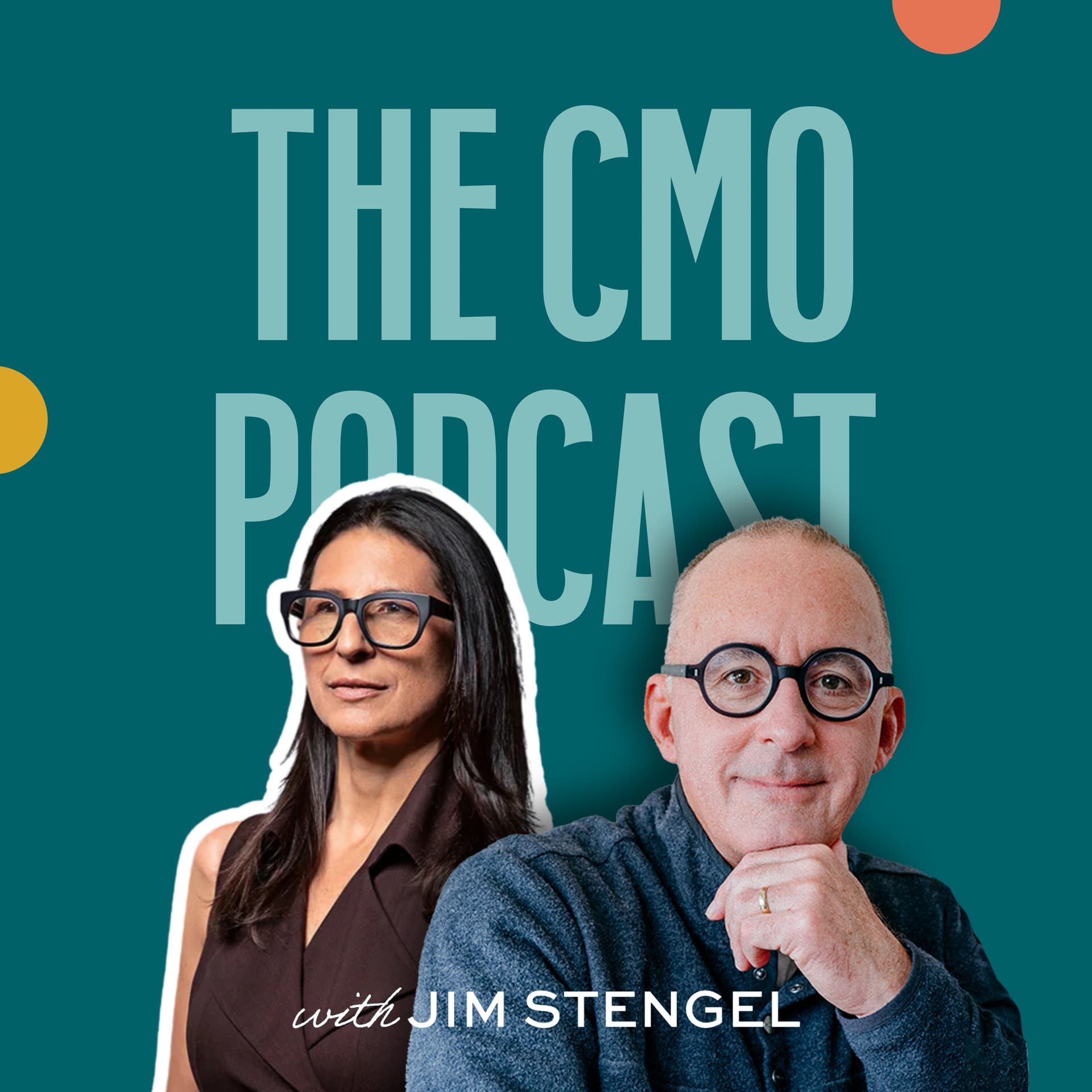
CBRE CMO Benji Baer discusses how the “future of work” is reshaping workplace strategy and how CMOs must lead transformation, not just marketing. She focuses on unifying CBRE’s complex, diversified business into one clear message; shifting go-to-market toward priority audiences; and systematizing “experience services” to create vibrant, people-centered workplaces that improve employee and customer outcomes.
Guest background
Benji Baer is CBRE’s Chief Marketing Officer (since 2019). Previously held senior marketing roles at JPMorgan Chase, Legg Mason, and Alliance Bernstein. Earlier career included international economics work on trade/tariff and microchip-related cases at the U.S. Department of Commerce.
Key claims
CBRE must educate both employees and the market about what it can now offer; marketing should be “to the top” and account-based because real estate buying is multi-stakeholder; workplace success requires top-down intentionality and cross-functional partnership (CMO/CHRO/tech/real estate); customer-centricity requires trade-offs and patience (impact over 2027).
Notable examples
Apple as a touchpoint discipline model; JP Morgan’s building as a “community” workplace example; flex co-working (Industrious) and Anna Levine leading “experience services”; Emerging Leaders Program and global creative communities; World 50, Forbes CMO Council, and ANA for outside learning.
Written by AI. May contain mistakes. Listen to the episode to check what was said.
Chapters
Tap a time to open that second in VOImpactful Brands
0:00 to 0:45
Learn about childhood brand impressions and their lasting effects.
“What's the first brand you remember making an impact on you as a young girl?”
Meet Benji Baer
1:20 to 2:49
Introduction of Benji Baer and her background at CBRE.
“What happens when the very definition of workplace changes almost overnight?”
Seeking Impact in Marketing
2:49 to 4:10
Benji discusses her mission to educate and inspire at CBRE.
“I did a quick interview with you in Cannes for Gary Vaynerchuk's show, Marketing for the Now.”
Career Origins and Economics
4:10 to 6:02
Benji reflects on her early career in economics and its relevance today.
“In my research on your company and prep for this, I was pretty surprised.”
Understanding Company Diversity
6:02 to 7:22
Discussion on CBRE's diverse offerings and the challenge of communication.
“We talked a minute ago about your company and your heat-seeking missile mission.”
Marketing Positioning Lessons
7:22 to 9:35
Insights on previous marketing positioning efforts and their evolution.
“And it's, you know, our client base are very diverse as well.”
Strategic Growth and Leadership
9:35 to 13:08
Exploration of the CMO's role in strategic growth and leadership challenges.
“That always would have been my hope and dream.”
Wellness Program for Business Leaders
14:00 to 15:08
Learn about a 12-month program focused on nurturing wellness among business leaders.
“We have a 12-month program that allows people to meet up with some of the best business leaders out there and additionally experts in the wellness sector so that you can learn how to nurture yourself.”
The Future of Office Experiences
15:08 to 17:03
Discover how to create vibrant and engaging workplace experiences.
“But I'd like you to reflect on what's exciting happening in that area.”
Post-COVID Workplace Adaptations
17:03 to 19:26
Explore successful strategies of organizations adapting to post-COVID work changes.
“When return to work has been most successful, I mean, in organizations, and I don't know if you can mention any or not, what happens?”
Show all 25 chapters
Creating Community in the Workplace
19:26 to 21:49
Understand the importance of community and connection in modern workplaces.
“People are looking for ways to be with other people.”
Shifts in Marketing Leadership
21:49 to 25:00
Learn how the role of a CMO has evolved over the past seven years.
“We help companies manufacture things, whether that's medicines or equipment.”
Embracing Customer-Centric Strategies
25:00 to 27:37
Discover the shift towards customer-centric strategies in marketing.
“And so that is digital infrastructure, that is data connectivity, talent to do that, that's account-based marketing.”
Long-Term Vision for Creative Marketing
27:37 to 28:03
Learn about AB InBev's decade-long journey to creative effectiveness in marketing.
“Speaking about Cannigan, AB InBev was the Creative Market of the Year for the third time, which has never happened before.”
The Vision of a People-Centric Organization
28:03 to 29:10
Learn how a focus on creativity and human connection drives organization success.
“And it began with an ambition to be the most creatively effective, growth-driven organization in the world.”
Investing in Emerging Leaders
29:11 to 31:29
Discover the importance of nurturing talent through structured programs.
“The first one is, the hardest thing about work is not the work itself.”
Creating Community and Recognition
31:30 to 33:56
Explore how community building and recognition foster a collaborative culture.
“The other thing that we built even before that, that I think has panned out really well, has played out well, is people with like skill sets, but might be in different parts of the business.”
The Role of Continuous Learning
33:57 to 35:38
Understand the necessity of continuous learning and personal growth in marketing.
“Linda and I, Linda Buff and I have talked about this, like I'm an Uber connector and I love great talent.”
Leadership Lessons from Experience
35:39 to 38:15
Reflect on leadership evolution and the significance of vision and communication.
“And I've had to like, I'm refining it, refining it all the time and asking myself, is this a good use of my time?”
Acting Metaphor for Leadership
38:16 to 39:48
Learn how finding a core mission can enhance a leader's effectiveness.
“I think we have more communication around it to do.”
Influences from Family and Personal Growth
39:49 to 42:01
Explore how personal relationships can serve as a source of mentorship and growth.
“It becomes the it becomes the persona that I have to represent.”
Leadership Lessons from Mentors and Family
42:01 to 44:10
Learn how personal relationships and family influence leadership skills.
“I mean, for those of you who know University of Michigan, that is not a small place.”
Balancing Ambition with Life's Joys
44:11 to 46:11
Explore ways to balance ambition and personal happiness in life.
“Those working relationships that we that we have.”
The Impact of Branding on Consumer Experience
46:12 to 48:29
Discover how effective branding elevates customer interactions and experiences.
“careful how extreme it but we do in fact it's funny my youngest boyfriend is is working at AI startup and he's drowning and he's not drowning because he can't do his work.”
Inspiration from Parents and Their Careers
48:30 to 50:34
Understand how parental influence and their careers shape personal values.
“I'm going to tell you in both my parents, who are not married, both alive and kicking and fully with us in their 80s.”
Transcript
Automatic transcript. May contain errors.0:00What's the first brand you remember making an impact on you as a young girl? It's an oldie but a goodie. I mean, Apple to me. I just think it's brilliant. And every time I go into, and I've used Apple as an example for us as we think about our building operations. Like, guys, they just elevate a person that you buy your phone from and he hooks it up to this genius who looks cool, looks smart. And I have such an elevated experience. I am excited to buy my phone there. How can that be? It's a stupid phone. But they have created something that has such value and premium to it. You know, and then that comes to life in every touchpoint, in every interaction with the company.
0:40And they've held that discipline true for decades. Hi, I'm Jim Stengel. I've helped hundreds of major brands discover and activate their purpose. Because when a brand's purpose is clear, compelling, and authentic, profit naturally follows. Each week, I welcome the CMOs, the chief marketing officers of your favorite brands, to speak to how their job is so much more than marketing. These leaders share their inspiration and challenges, along with how they try to build a full, healthy, and happy life in and out of the office. And it's that energy that reaches everyone they touch. And we're glad you're here to feel that energy and to learn from these remarkable leaders.
1:20So here we go. What happens when the very definition of workplace changes almost overnight? Well, this week I'm joined by Benji Baer, the Chief Marketing Officer of CBRE, one of the world's largest commercial real estate and investment services companies. CBRE helps companies and investors buy, sell, lease, finance, and manage commercial real estate all over the world, from office towers and logistics centers to data centers, hotels, and major urban developments. Today, it operates in more than 100 countries with annual revenue in the$40 billion range. Benji has had a fascinating career journey.
1:54Before joining CBRE in 2019, she held senior marketing leadership roles at JPMorgan Chase, Legg Mason, and Alliance Bernstein, industries that are built on trust, competency, and relationships. Benji joined CBRE just months before the pandemic reshaped the way we think about offices, cities, flexibility, and human connection at work. So this episode is about much more than commercial real estate. It's about leading through uncertainty, and it's about the changing role of the modern CMO from storyteller to transformation leader. Benji also brings a leadership style I really admire. She talks often about empathy, intuition, grit, and what she calls bringing people with you during times of change.
2:34Tune in for this conversation with a leader who believes marketing should not only drive growth, but also culture, pride, and human connection inside organizations. Here's Benji. Well, Benji, welcome to the CMO Podcast. About two years ago, almost to the day, I did a quick interview with you in Cannes for Gary Vaynerchuk's show, Marketing for the Now. We had a blast, but you described yourself then as a heat-seeking missile. So I want to ask you today, two years later, what heat are you seeking these days, Benji? Oh, I love that. I forgot I even said that. I am seeking to educate our people and the market around everything that our company has now been able to develop, create, offer to our customers.
3:24And it's fortunate on one hand that the strength of the company has been so vast. And through acquisition, there are things that we do today that we couldn't have done a number of years ago. But it's unfortunate that our own people and the marketplace hasn't caught up with that. And so if there's one mission I have and this heat-seeking missile that is me with lots of people around me is to change that. And to change that quickly and change that with impact and have people really celebrate and understand. and as employees stand with pride to be able to talk about that and deliver that to our customers and to our customers to have them really feel that, nurture it, and really embrace all that we can do to help them solve their biggest challenges from a real estate and space perspective.
4:09Well, we're going to talk more about that. In my research on your company and prep for this, I was pretty surprised. So I'm going to talk a bit about that in a few minutes. But before we go there, you also talked briefly about how you started your career when we spoke two years ago. And you said you were an international economist working on microchip dumping cases in Asia. Now, we didn't talk much about that two years ago, but it sounds very James Bond-ish. So was it? Or was that a cover for something else you were doing? Yeah. No, I'm not sure if it was James Bond-ish. I think it is remarkably full circle, though, in terms of the world we live in today.
4:47So the kind of work that I came out of, I mean, I always loved in school, studying economics, studying the international global landscape, understanding the macro factors that were driving the economy in our world and the things that related to our individuals. And so I was fortunate to get this really interesting role, as you just described, in D.C. And the things that I was working on, the topics, trade, tariffs, microchips, you tell me, and I didn't graduate school a few years ago, are still, are today front and center in the world. So, you know, how policy, how economies, how governments think about trade and think about their strains is still really important.
5:32And so it does relate back in many ways. It was not James Bond. No. Trust me. No, it sounded sexier maybe than it actually was. No, you're at a desk in front of a computer most of the time. That and at the Department of Commerce making copies of things with analysts. Honestly, if I can tell you, not sexy. You were not skiing in Gestade with a bow and arrow. No, no. All right. But you can paint that picture. Sounds good. Yeah, I like it. We talked a minute ago about your company and your heat-seeking missile mission. You recently released your quarterly earnings. So I read that and I went deeper into your company.
6:10You had a great quarter, revenue up 16%. So congrats to you and the team. That's always a heavy lift. But as I was reading that report, I was really surprised at how diversified your company is in every possible way. So I want you to go there right up front. I mean, this is what you're trying to explain, right, to your people, to your customers. So how are you doing that now? When you meet someone like myself or Judy, our producer, how do you explain who you are and what you do in a simple way that is accurate and also inspiring? I think what you just indicated, we are a very complex, rich organization, and we are setting out to actually define and describe the company in the way you just described, because I don't think it exists today.
7:00So what's happening is we've, I mean, we're certainly highly successful, as you indicated. So we are with customers day in and day out talking about what they need and what they want and helping them in many respects. But bringing that all together is really the work that we're going to be doing over the next few months. And then putting that in market in the coming year will be the mission. And it's, you know, our client base are very diverse as well. They are large Fortune 500 companies who are looking for support and help with their real estate needs. They're investors, the largest investment management firms looking to buy and sell.
7:38Very different audiences, very different drivers, very different behavior. So coming together, I think, with one message and a way to describe that is actually the work that we're undertaking as we speak. So you also did some work, I think, two and a half, three years ago on market positioning, brand positioning. How's the learning from that? Because I know these things evolve as your company evolves. Yeah. What learning did you get in that process? Because tackling something like that's always a complex thing, right? You're working on the company story. It's something that is going to apply to everyone in the company and all of your clients and other stakeholders.
8:14What did you learn two and a half years ago or three years ago that is helpful today? Yeah, no, Jim, I'm glad you brought that up. That was actually we launched a little over four years ago. And it was this idea of realizing potential in every dimension. And it was this idea that we do sit, as you said, we're a highly diversified business, but it's all pointed to helping our customers realize their potential, whether it's they're running a business or they're investing in real estate. And what we learned through that process, which was it was a very successful launch and it was campaign led and website and content had all the aspects of what a great marketing program should have.
8:54The piece that was missing and what we're going to do very different this time, and that, by the way, we launched that during COVID, is our primary audience, first and foremost, are going to be our sales facing professionals. So our teams that are direct to customers are the first audience for that message that they can deliver it out. And I think that was a bit of a miss and a challenge. Every company, where they are in their maturity and where they are in their readiness to accept that is different. But right now we have our most senior, senior leaders really interested in doing this work with us by our side and making it real first and foremost with our own employees, which I'm most excited about.
9:35That always would have been my hope and dream. So we're going to do it now, and I think it's going to really make the difference that we need it to make. Everyone in their career, if they're a CMO, deals with what you're dealing with now, right? Retelling a story, renewing a story, deciding who your prime prospects are for that. Anything that you're learning, I know you're not finished yet. You're in the middle of it. Anything that you're learning that would be helpful for others who are also embarking on that kind of journey? You know, one of the things that strikes me, and this is going to sound a little, excuse the expression, cocksure, I think marketers tend to be ahead of the business in many of these regards.
10:14and we see the trend, we see where the company's going because we sit in a very, as a CMO, a very, very unique perch. And I say that all the time. Who else at the company sees every customer engagement, every business line? I mean, outside of our CEO, right? From the standpoint of how we're client, you're engaging with our customers. What are the drivers? What's working? What's not working? Well, we do. And so I think my challenge and our challenge and probably other CMOs is how do you make sure that you catch people and you catch the business at the right moment when they're at the same sort of headspace you are, where they're ready to engage in the same way, in the right way.
10:56And I see it. It's so fascinating to watch how I'll say something and then, oh yeah, you know, it'll quickly catch on or they'll say something. And I'm like, oh my God, I've been thinking that for the last six months. Thank God we're connecting. And a lot of that is around go-to-market motion and who the customer segments are that we're focusing on and what that will demand of us as a company. The big shift that I see happening is we're going really marketing, I call it to the top. And it seems sort of intuitive, but as an organization, we weren't always marketing to the largest companies or the largest investment managers.
11:31And the reason we're doing it today, some of it is driven by us and the kind of things we can do for them, but some of it is just driven by market conditions and where real estate decisions are being made. And that is a much more complex buying process. It's not one-to-one, right? It's not a small, call it law firm in Kansas City that's looking for a space. It's a multi-market, huge organization. And there are probably 10 people that we need to engage with and influence. And so as a marketing organization, we need to adapt to that and be prepared. I mean, I love what you said. I mean, I think how you see your role, I mean, I'm reading it between the lines of what you just said.
12:13You see your role as strategy and growth and choices. It's not Marcom. You know, it's not brand positioning. It's all those things, but it's much larger than that. When I became CMO at P &G, my CEO said to me, there are very few people in this company, I can probably count them on one hand, who are thinking about beyond the next quarter or year, and you have to be one of them. Yeah. And it's a very empowering thought. It is. It's empowering. Again, the challenge is getting, making sure our leaders kind of see and value that. And I don't want to discount. Now, I would say there are many that get it, and there are some that don't.
12:55And so even having to kind of shift how you calibrate your engagement. And of course, I have a huge, huge team. I'm not doing this alone by any means. But this is a big conversation we have. We just had an offsite on Tuesday of last week with the senior marketing leaders. And we're continuing to like, who's our friend or who's the person that gets what we're trying to do and will be a really engaged partner. And it's a beautiful thing. And then you have some where it's a little more challenging or some leaders think it belongs in their business, not in marketing. I'd be planning a meeting for me.
13:33That's hard after all of my many years doing this to hear that. But there's more education to be had.
13:45Hey, everybody. This is Andrea Sullivan, the CEO of Vyve. And we produce the CMO podcast and are so excited to have partnered with Jim Stengel for so many years. Wanted to tell you a little bit about something that could be right for you. VIVE is a program for entrepreneurs and business leaders who want to get more out of their life and become their best and happiest selves, both personally and professionally. We have a 12-month program that allows people to meet up with some of the best business leaders out there and additionally experts in the wellness sector so that you can learn how to nurture yourself.
14:20So we teach things around sleep optimization, meditation, all those good things as well. Please reach out to us at podcasts at vibe.co to get more information. That's P-O-D-C-A-S-T-S at V-Y-V-E dot co. Thanks for listening to the CMO Podcast and hope to talk to you more about Vibe.
15:07So I think people are getting clearer on their strategy in this space. But I'd like you to reflect on what's exciting happening in that area. And what would you like our audience to know about? Because you're seeing it through a lens none of us are seeing it. I'm glad you're asking that question. And it's an area that I have passion around. My CEO for what we call our building operations and experience business, Jamie Hadari, has a lot of passion around, which is people, right? and people wanting to be with other people and wanting to make connections and the power of that, both personally and professionally.
15:43And how do you make that, the office being such an important part of our lives and we're obviously office is only one aspect of our business, but an important one. And how do you create experiences, the soft experiences, so to speak, that make the workplace vibrant, engaging in a place where you want to be, you're not obligated to go to, but you want to be there because there's seen to be such value in that experience. So what's exciting is we've taken the leader of our, one of the leaders from our industrious business, which is a flex co-working business that we purchased a couple of years ago.
16:19And her name is Anna Levine and put her in charge is something called experience services. And that is all, I mean, it's more than F &B, but that's an important part of it. It's really systematizing and creating unique experiences, often in home offices and headquarters and in other spaces so that people are surprised, delighted, feel cared for, feel supported, and really creating vibrancy that we can add. Obviously, you still need business leaders to take a piece of us, but what can we do from a real estate places and spaces perspective to make that distinct and unique? And we are at the cutting edge of that right now.
16:56We're starting to implement those in bigger ways as we speak. And I think you'll start to hear more and more about it in the coming year. When return to work has been most successful, I mean, in organizations, and I don't know if you can mention any or not, what happens? What's going on? I mean, you're kind of already going there. The leadership of the company has to believe in it. But those that have managed this change post-COVID really, really well, what are they doing? I think there's an intentionality to it. And when I say investment, it doesn't have to be dollars. It can be time and structure and, you know, some degree of clarity, I think, helps people too.
17:35But people are creating this. I didn't talk about the physicality. I mean, the things that you see, I mean, J.P. Morgan's building is a uber prime example, and that's only a couple of blocks from us. I mean, that is the penultimate experience that says we, yes, we want to stand for something, but we care about our people. We're creating almost a community and a building. is how I'd like to think of it. It's a good metaphor. Yeah, that people want to be there. I mean, I'm trying to get my way in there just to see it all and be part of it. So JP Morgan's a great example. I mean, Amex, I mean, you see a lot of the big financial services companies doing it.
18:11You certainly see the tech companies focused on it for sure. And I think it has to be top down. And I think I also have a very strong belief that this is probably one of the most prime examples of a multidimensional partnership in a company. So what do I mean by that? It's not your real estate leader who can drive this alone by any means. You need senior leaders. You need your head of people, your CHRO, your head of technology. I believe your CMO because it is about the employer brand. It is about the brand and your head of real estate. When they come together and really think about this from every dimension, every angle, it can be incredibly, incredibly powerful.
18:53Yeah, I think it puts a great, I mean, you know, COVID was horrible. But I do think that a lot of the leaders that I've talked to just sort of elevated their expectations on the kind of community experience they want to create. And so much good is coming out of that. And you do. I mean, you read the headlines and we look at this and take it quite seriously. You know, the loneliness epidemic, people feeling disconnected. On the other hand, you see more and more. I mean, I was just at a concert on Friday night and people, Jamie loves to talk about this. people love to stand on line for like a hot, you know, a bagel, like the coolest bagel in town.
19:30People are looking for ways to be with other people. We all know Marianne Benarkin and the longest table, which is something we've talked about. I mean, I love what she's doing because, well, that's, that is synonymous in terms of how we see the world. Okay. And then, you know, it is not about stealing glass. I think of what we do is we provide shelter to businesses, right? But we also hopefully create an environment that enables people to do their best work and employee experience we also know leads to customer experience. So this is not about let me give free snacks because I'm a benevolent person either.
20:09It ultimately will lead, and that has been measured, to a better business outcome for the company, whether that's talent, retention oriented or otherwise. You've been CMO seven years. How's the job changed the most in those seven years from when you walked through the door? A couple of things. I think I finally, and this is no negative to my other leaders, they'd probably agree with this. I think I finally have that leader who's invested in doing this work and Jamie Hadari for certain. He gets it. He wants to be involved in it and contribute to it. So having that as a partner to me has entirely changed the game.
20:46I think the other difference since I joined seven years ago is I now have a remarkable team that I didn't have when I walked in the door. So shaping that has been wonderful and seeing those individuals thrive and really build greater credibility and value with our business partners. And marketplace differentiation has been wonderful. But as I said, I don't want to underplay how different the company itself is. The fact that we are now doing, we're hiring and training thousands of people across the country to learn how to build and lay fiber optics in data centers. So we are workforce creators right now at the company.
21:31That is not even, would not have entered my mind when I walked in the door day one. We have energy capability. So like everything that's sort of adjacent, whether it's asset type or capability, defense contracting, we're working in health care institutions. We help companies manufacture things, whether that's medicines or equipment. So the diversity, as you mentioned in the very beginning, keeps growing. And that makes our job, I mean, more exciting, albeit more complex. And how do you keep that North Star and a vision for the company? quite. So that's a big one. And then AI, I didn't even bring up, but like this to say, it almost goes unspoken.
22:14That's another changing the playing field pretty dramatically. Yeah. How you talked about building your team out and you're very proud of that. We're going to talk a little bit more about that later. You know, there were certain capabilities that your company had when you joined in the marketing and brand space. They're probably very different now, right? Seven years later. So could you speak about that process of, because I think it's one of the most important things we do, but it's hard. What are the capabilities we need to win and succeed in the future? Be explicit and shift your organization to build those and bring in people who can help you do that.
22:53Sometimes it's a radical shift and sometimes it's an evolution. But could you talk a bit about that? What are you building today that will give you a competitive advantage in your space? So Jim, it is probably the hardest part of my job. It is by far the hardest part of my job. When I walked in the door, it was very obvious to me because there were just some fundamentals missing. And I think we solved that with brand creative content. We have a brilliant woman who runs our content and customer growth, building podcasts like yours that have been off the charts. And then I brought in leaders who were assigned kind of each of our four segments now who would go deep into the business.
23:39I think a couple of things that are now in front of us now, digital and AI. And what that means from a customer channel standpoint is those are, you know, it's changing by the moment, right? So you're like scared to put a bet on anyone or anything, but you kind of have to, and you probably need someone who's very adaptable, nimble, and exceedingly curious. So working through that right now, and we're excited about where we're headed and where we're going, and we're nicely supported by our digital and technology organization on that front, that's super important. I think the other thing you said before to me around understanding the customer and customer lens and being really a customer strategist.
24:22We can tend to be a very product-led company. And I'm very much trying to shift that because I'm not sure that's always in our fully best interest. We have lots of different customer types. So how do we get smart about each of the customer segments, how they buy, and then have the mechanisms in place, really account-based sort of approaches in place to be really strategic so that we optimize all of the channels and those interactions. And by the way, we need to measure and show that value into the business. So that little grouping that I described is probably the richest area that we need to pivot to and grow toward.
25:00And so that is digital infrastructure, that is data connectivity, talent to do that, that's account-based marketing. And those are really, I'm going to call them client strategists who understand the business first and foremost, and that can translate that into a marketing strategy. We had Lisa Matarazzo, the global head of marketing for Ford on the show, and she talked about exactly what you just talked about. How do we shift a very product centric industry to be more consumer centric and start there and work backwards and design experiences, transportation experiences for those people who are most important for our future?
25:38You can't go wrong with that philosophy. You just can't. Now I got, I hadn't called you for support on this, but honestly, I'll take your stamp of approval any day. It's not intuitive to the organization. That's the challenge. I feel like I'm talking to myself sometimes. Yeah. But we're getting there for sure. I think we're getting the right receptivity because they're coming to a very similar conclusion at the same time or a little after us. And, you know, imagine your organization picking up on this. If you say you want to be customer or consumer-centric, fine. But what are you doing? How is it showing up in people's work and what we value?
Read the full transcript
26:20And when you do something like you just described and what Lisa and her team have done at Ford, it's obvious. We're walking the talk. We're willing to change work, change focus, change incentives to be an extremely customer, consumer-centric culture. Well, and I think what it also does is it forces you to make some trade-offs. Indeed. And I call them our priority growth audiences. Like we've got to land who they are and be really clear-eyed, not just within marketing, but with the business. Those are going to get probably 80 % of our attention. And those that are in priority growth areas are going to get less attention.
27:00And that's also culturally not an easy shift to make. So some of it is talent and some of it is a lot of internal discussion and being able to explain the value of what that strategy will deliver. And Jim, I think you also said this, this is not, you're not going to see the impact in three months. You need some patience, right? It's year. So we've sort of agreed, I think, at the table that we probably need another six months or so foundationally and then be able to shift further into in 2027 to really start to show what that impact can look and feel like. Speaking about Cannigan, AB InBev was the Creative Market of the Year for the third time, which has never happened before.
27:44And their CMO, Marcel, kicked off the festival this year with a speech. And he basically said this journey to be highly creative, effective, and marketing driving innovation and ideas and inspiration and growth. He said the seeds of that started over 10 years ago. Wow. And it began with an ambition to be the most creatively effective, growth-driven organization in the world. So what would it take to do that? Very powerful story, but, you know, 10 years plus. And by the way, that survived through several leadership changes. I love that. And I love Marcel for saying it. You know, when you hit on things that I didn't touch on but are really important, I think our storytelling ability and taking spaces and making those stories.
28:33is much more human is an underbelly of the work we plan to do for sure because people are people i think jill kramer i think coined this phrase you certainly used it at accenture it's not b2b it's it's b2human yeah and you know we believe that very much i believe it very much and uh i see opportunity to shift some of our talent and some of the ways that we go to market to really bring that bring that to life and make that more impactful
29:10I read two quotes from you in my research. The first one is, the hardest thing about work is not the work itself. It's bringing people with you. And the second quote, kind of in the same space, the most important thing for me, I obsess over talent and my team and creating an environment for their success. So you've talked about being people centric a few times in the show. Those quotes are just dripping with people centricity. I know you value it. I'd like to learn from you about how you activate that. What are the practices, the habits, the rituals so that that shows up with the people you wanted to show up with, you know, your team and the company at large.
29:52Thank you for calling those out. And they definitely still hold true, I would say, for me as a leader. And I'm surrounded by a number of people who I think think similarly. And we have invested time and been intentional around not just hiring great, but how do you nurture and what do you do with that rising talent? So, you know, one example I can give you is we built within marketing something called the Emerging Leaders Program. And they're essentially those hot shot mid-level people who, and again, we're a big, complex organization. We're in over 100 countries. I didn't sort of highlight the globality of everything we do.
30:37People get lost. It's easy to get lost. and we are pretty fanatical at least twice a year and but through this program even more frequently to bring i'll call it 20 individuals into a cohort once a year we're in our third cohort and shine a light on them recognize them for that and this isn't about oh you're wonderful you're in the cohort it is we invest in that we give them mentor business mentors coaching special learning opportunities, access to senior leadership like myself and others. And we, in most cases, have figured out what their next move will be after this program, whether that's a year or two years, but they are going somewhere and being enriched.
31:20And that's probably the most sort of structured, emblematic way I think that we've made a difference in the company and for the marketing organization. The other thing that we built even before that, that I think has panned out really well, has played out well, is people with like skill sets, but might be in different parts of the business. You know, we have creatives in like 12 different places, and they're not necessarily under one leader. We have communities and they share best practices. They might have an outside speaker come. We try and enrich their experience at CB, really by creating some sort of ongoing learning for them and also friends that they can call if they have a problem.
32:02And maybe it's not the person sitting next to them, but there's someone in another country, another division who's tackled, have that same problem in front of them and they have the opportunity to connect there. Because we are uniquely very distributed as a company because of the nature of our business, I had to create some sort of common platforms, common places, making people feel like they were part of something bigger than them. And those are kind of two ways that we've done that. We also do annual awards at the end of the year, which is a blast where people get to compete with their best work.
32:38And we have judges and we have a whole ceremony and awards and all that, which is an awesome way to celebrate the hard work that sometimes goes again, goes under the radar. That's such a great idea. I mean, I read a bunch of the applicants in the Cannes Festival for building an organization that is creatively effective. That was a new category this year. And one constant is everybody does some sort of awards who is investing a lot of their organization. I did it at P &G as well. It works on so many levels. It gives recognition. It also is very transparent about your standards. So if you're sitting in the audience and you didn't win, you look at that and say, I can do better.
33:24Yeah. My team can do better. It's just such a – it's competitive in all the right ways. and it also shares information, right? Leverages your scale. You see someone doing something really interested in another continent. You think, what are the principles behind that? What could I reapply? I mean, it works on so many levels. So well done. And I just thought of one more thought on this and I give kudos to the marketing industry writ large. There are an embarrassment of riches of resources if you're a marketer, if you just spend a little bit of time learning about them. And so I would say that is a bit of a superpower for me.
34:00Linda and I, Linda Buff and I have talked about this, like I'm an Uber connector and I love great talent. I love great opportunities. And I'm constantly just like forwarding, like we should do this or go listen to that or go to this event, that event. You know, the continuous learning thing, because so much is changing for us. And I'd like to instill that very much in the culture. I try and role model that for sure, but I can't do all of it. Everyone has to own that themselves too. And I think that's an important, I think that's actually, as I think about it now, you got to own your own adventure.
34:37You need to own your career. And I hate to say it, there's no excuse because we, where marketers are great at organizing, whether it's A &A blows me away every time. But even on top of that, there's so many places you can show up and learn. online, offline. When I asked you in Cannes two years ago, you know, why you were there, you said, you basically answered this way. You said, I'm here for inspiration. I'm here for learning a little bit of FOMO. So I want to be here. So I don't miss anything. I'm going to meet some new people, which is terrific. How do you do, you just talked about the importance of that.
35:13And our, our industry has so many opportunities for that. What do you do personally? I mean, do you have anything that is a non-miss for you? Do you change things up a lot? So how do you do, as we said, you have to do it for yourself. You have to do something that works for you. So how do you do it personally? Yeah. I mean, I don't know how much you want me to share literally the organizations I've opted into or opted out of. Yeah. I think it's helpful. I get this question a lot from people, by the way. Yeah. And I've had to like, I'm refining it, refining it all the time and asking myself, is this a good use of my time?
35:47and what am I going to get? Is this the right audience? And this and that. So first, I'm exceedingly fortunate that CBR supports World 50. Like no joke, like game on. I've learned so much there and the audience that you end up being with, the other marketers and CMOs, and then even access to other C-suite cohorts and leaders. I think it was customer experience I hopped into. I've hopped into the communications officer realm. We haven't even talked about comms as an important discipline, you know, on and on. It's pretty powerful. Okay. That has a price tag. So, you know, I have to be careful how much I...
36:26Yeah, I know. That's not an easy one. Okay. ANA is very powerful and there are different levels. You know, there's the what everyone can access. There's we're senior level, mid-level. So I'd like to think of myself as an active member and supporter of that organization. and I am a fan of the Forbes CMO Council. Sure, they do a great job. They do an amazing job and I'm super excited to see what this year's event will bring. And those are kind of my mainstays and that can keep me awfully busy. Yeah, no, that's good. It's very helpful, very useful. Now, over the course of these seven years, a lot has happened.
37:01We've talked about that. How about yourself? What has changed most about you as a leader in these seven years as CMO? That's a great question. one that I have, I thought about, I think I started this way with understanding how important creating a vision and a mission for the organization was, and I needed it. Like, it's not for the company. If I don't have that, I can't lead. And I've had the debate sometimes with business leaders, actually at JP Morgan, I did like, don't, I can't fake it. I can't fake it. And so I need to go deep to really understand what I'm doing. Why am I doing it? Do I believe what the process I'm going to go through.
37:43And then I'm happy to vary a little bit, but it's super helpful, I think, for anyone to have a clear North Star. I would say I had that in my first three years, three and four years here. And that was hard during COVID, right? I think between you and I, and you and everyone else is going to listen to this, I think we lost our way a little bit for a few years. And I'm not going to give reasons why, but we just sort of did. I think we are back on with a lot more clarity and vision, both myself and as a team now together around what we're trying to accomplish and how we're going to accomplish it.
38:17I think we have more communication around it to do. So one of the things that I'm very conscious of, and we didn't talk of this, communication up, down, sideways is really, really important. I don't think it's the strength of our company. And I've said this and I don't think anyone would disagree. Because we're so distributed, there's big messages that don't always make their way to where they need to get to. I think the importance of communication and clarity of vision are really where I've come back to. It probably was defining for me when I joined the firm and is going to be defining for me and the team as we move forward.
38:56I just listened to a podcast with Matthew Reese, the actor, Widow's Bay, The Beast in Me. Yeah, it was a great show. It was on the interview podcast. And the interviewer asked him how he approaches a role because he's been in some really weird and challenging roles. He said, I figure out what the mission, the single most important mission of that person is. And then everything I do emanates from that as an actor. I think it's a beautiful metaphor if you're acting, but it's a beautiful metaphor for a CMO. And that's where you just went. That is so spot on. I love that. We should give ourselves the space to recognizing that that is part of the process.
39:41Yeah. You know, it can't just be something you say. It can't be words on a page. You have to believe it, feel it. Feel it and believe it. I'm not like, you know, I'm not pretending I'm like an actor, but you do. It is that you have to embody it. It becomes the it becomes the persona that I have to represent. And repeat, repeat, repeat. Absolutely.
40:09I want to flip into the creative brief. When you were a kid, you wanted to own a bank. I think that's funny. And work in a fashion company. So you thought big back then as a kid. You certainly checked the banking box, right? Yeah. You certainly did that. So what about the fashion industry? I thought, you know, one of the things I got feedback on during my like year end discussion with Jamie goes and there's no one has better sense of taste than you. And I just I'm sorry. I love that. I will embrace that every way till Sunday. And, you know, the fashion thing isn't so much about clothes. It is about taste and what how the details really matter and the experience that that creates and the sort of ability to.
40:55look it's design thinking right i guess it's it's it's how all these components come together and create an emotion i'm someone for better or worse where i don't remember the words to songs but i remember the beat and the sound like verbatim and it's almost the same thing the visuals the the presentation the details like the sense all those other senses to me create can create a really powerful experience that can drive whatever you're trying, whatever delivery mechanism, whatever message you're trying to deliver in some way, all those components. So I think that's what that's more about. And I am having fun doing that in the real estate space.
41:37There's a little more opportunity to do it here than there was when I was in the investments and banking world. Oh, for sure. For sure. It's all about that. You have three daughters, all young adults now, all University of Michigan graduates. Go blue. So that's an interesting choice, right? My kids went to different schools. Yours went to the same school. Was that a good thing for them? I think so. I mean, for those of you who know University of Michigan, that is not a small place. No, it's not. There are lots of things to do, lots of directions to take. Two of them overlapped, but the third didn't.
42:13So there was sufficient independence. and we have a great time going to the big house to watch games together and lots of good memories. So yeah, no, I think it was fine. Well, they have a shared experience, right? Very much so. That's cool. That's very cool. What influence did they have and do they have on you as a leader? Very much. They are constant reverse mentors to me. I cannot explain. It's kind of cool. and they're in non-identical, but somewhat real tangential fields so that there's a lot, we have a lot in common, a lot to discuss. But I think you said this earlier, we also have come to the discussions around, it's not about the work, it's about the people, both the pros and the cons, right?
43:00And the challenges of navigating personalities and feedback and, you know, I want to raise, I want more money. How do I do that? So there's, you know, we definitely riff on that fairly openly and they're welcome to take advice or not, or just I can serve as a sounding board. But then I use them as I'm talking to different people to make sure that I'm not missing something and that I'm attuned to different generations of what matters to them. And they just teach me a lot. I mean, I just, you know, I think through osmosis and just the conversation, it also helps me hopefully stay somewhat culturally relevant.
43:39I've done that the same with my kids all the way when they were preteens, teenagers. When my daughter was, I don't know, 15 or 16, I took her to Cannes with me and got her a ticket, had her look at things, tell me what she thought at night. And to this day, I check in with them a lot about key decisions, about things I should know about. And it's great. It's very helpful. So I love you doing that. I think it's anyone who's a parent should take that opportunity, deepens the relationship and makes you a better leader. Yeah, absolutely. I'm pretty exceedingly fortunate. Those working relationships that we that we have.
44:16We even get I mean, some of them come to your point. I've brought my daughters to various, you know, meeting venues or marketing this or marketing that or something. And they contribute. The other day I brought my middle daughter to an event. And I was so excited as a very senior group, I was going to introduce her to people. She walks in the room. She knows more people than I do. Yeah, that happens. I love it. You have said that a good life is about fun, good health, strong relationships, and ambition. I love that. But my question for you is, how do you ensure ambition does not overwhelm the others?
44:56Honestly, if I knew the answer to that, I would not be. You'd have a show. I don't have more than a show. I don't know how you do that. I guess for me, I feel very, again, fortunate. My job is fun now. So yes, I'm ambitious and yes, I'm continuing to drive things, but it's with such like enjoyment and joy and excitement. And, you know, the feel of total failure has evaporated. Although the fear of failure hasn't fully evaporated by any means. I just think it makes you, the ambition makes you a more interesting person. It exposes you to more. So I, I mean, I have fun with, if I didn't enjoy what I did, and I always promised myself that over the years.
45:40And while there's certainly been moments where I'm like, I can't do this. I'm bringing up three kids. I'm losing my mind. And, you know, you do the lean in, lean out thing for sure. I, you know what it comes down to? And this, I think is a strength of mine. And I would encourage other people to try it, embody this. like it's your life okay like don't give me excuses oh i don't have time to work out or no no no like you do you've got to own it you've got to take control of it if you can't get the right alchemy like that's on you barring any extreme circumstances like i want to you know be careful how extreme it but we do in fact it's funny my youngest boyfriend is is working at AI startup and he's drowning and he's not drowning because he can't do his work.
46:28He's drowning because for some reason, all these other sort of peers of his think he's the guy to do everything. And the bosses said, no. And I'm like, that's on him. Like he's got it. And that's not easy, but you have to own when the computer gets closed, you've got to own some of those, I guess, boundaries to, to use an overused phrase and create the boundaries that'll let you thrive as an individual. I mean, Ariana Huffington's brilliant at talking about this. I get asked this question a lot because people look at my life and say, you know, you seem to have lived a good life and continue to live a good life.
47:03And I said, listen, it is about taking control of it. It's also about planning. Get ahead of things. Plan it out. And when you plan and stick to it, you have a better chance of living the life you want to live. Yeah, I think that's very much control, plan, think about it, think ahead. What do you want? But there's agency, maybe. Again, not always easy, but take control of it. Have more confidence in what you want and how you're going to get there, etc. What's the first brand you remember making an impact on you as a young girl? I mean, it's an oldie, but a goodie. I mean, Apple to me, I just think it's brilliant.
47:47And And every time I go into, and I've used Apple as an example for us as we think about our building operations. Like, guys, they just elevated the person that you buy your phone from, and he hooks it up to this genius who looks cool, looks smart. And I have such an elevated experience. I am excited to buy my phone there. How can that be? It's a stupid phone. But they have created something that has such value and premium to it. And then that comes to life in every touchpoint, in every interaction with the company. And they've held that discipline true for decades. They have indeed. So I think that is one that stands out in a pretty big way.
48:29Who has been the most inspiring person in your life? I'm going to tell you in both my parents, who are not married, both alive and kicking and fully with us in their 80s. What is remarkable to me, and I do go back to think about them or talk to them, is while very rich, albeit tumultuous lives, their optimism and their resilience and ability to persevere through things that I don't even begin to imagine is remarkable. and so when I'm having a bad day and someone pisses me off or whatever happens I'm like really Benji come on like look what your parents made through and they show up with their positivity no matter what it's incredible it's incredible it's incredible and I hope I can do that for for my children um but I think they're remarkable that way so most certainly inspiring in terms of the kind of person I want to be and the kind of energy that I want to bring into the world.
49:33What were their career choices or passion areas? My dad is Israeli and he was born in Poland, lived in, and this is not their career, and maybe you can skip this, but traveled through Siberia, like had a, oh, and I was on a cattle car for six months. And he says it with a smile. And then I was here and, and then my, you know, so it's, it's remarkable. So he did that, came to the United States, while he went to accounting school, threw dirt on people's floor and tried to sell vacuums. So that's where he started. But he went on to become an accomplished accountant, controller, so more in the finance field.
50:14And my mom ended up in health care, running many patient relations programs in large hospitals. Oh, wow. My mom worked until her mid-70s, too. and she's now a writer. Good for her. That job takes tremendous empathy, patience, resilience. Yes. It's important. Exactly. Very people-centric in that way. Okay, now I get you. I'm glad I asked that question. Do you? Does that make sense, Jim? That gives me insight. Indeed. Yeah, indeed. Okay, Benji, we have to cut this off. I'm taking you too long. It's been wonderful in every possible way. I knew it would be. We had fun two years ago for 10 minutes.
50:54This was a real gift. So thank you for sharing this. You're a remarkable leader. Thank you, Jim. That means a lot to me. I mean, and you are too. And thank you for setting a bar for all of us, an aspiration for many CMOs. Appreciate it. While you do for the community. That was my conversation with Benji Bayer. Three takeaways from this one for your business brand and life. The first one is the importance of believing in your ambition and mission as a company. Benji talked about if you don't believe it, then how can you lead and how can you bring people with you? And how can you show up as a leader in an authentic way?
51:35So I think it was a very nice discussion about this isn't just something on a paper, something that gets shared across the company. You have to internalize it, believe in it, have conviction before you can lead a company to realize its ambition and mission. Second takeaway, Benji just loves this industry and loves outside inspiration. She values it. Her people know she values it. She asks her people to also engage in outside inspiration. She has her rituals. She has the organizations that she finds most valuable. So it's a great example of, hey, the answers aren't all inside the company. To be an effective leader and a leader that's curious and agile, you have to learn from the outside.
52:16And the third takeaway, Benji believes that people are everything, and she walks the talk. When we got into that discussion about how she demonstrates her value for people and the people on her team and in the company, she just reeled off communities of practice, the awards, the programs for young leader, and how she spends her personal time. So she really is a leader that believes that talent thrives everything, and she shows that in how she spends her time and where she focuses. that's it for this week's episode of the CMO podcast as always I would be grateful if you shared our show with your friends along with subscribing and leaving a review on apple podcast spotify or wherever you listen the CMO podcast is a vive original production
From the publisher
What happens when the very definition of “workplace” changes almost overnight?
This week, Jim sits down with Benji Baer, Chief Marketing Officer of CBRE, one of the world’s largest commercial real estate and investment services companies. Operating in more than 100 countries, CBRE helps companies and investors buy, sell, lease, finance and manage everything from office towers and logistics centers to data centers, hotels and major urban developments.
Benji joined CBRE in 2019, just months before the pandemic fundamentally reshaped how we think about offices, cities, flexibility and human connection at work. But her career has long been built around navigating complex businesses and industries rooted in trust. Before CBRE, she held senior marketing leadership roles at J.P. Morgan Chase, Legg Mason and AllianceBernstein.
Tune in as Benji and Jim explore how CBRE is rethinking the workplace as a place people actively want to be, why employee experience and customer experience are deeply connected, and how the role of the modern CMO is evolving from storyteller to strategist and transformation leader.
Benji also shares how she’s built and developed her marketing organization, why outside inspiration and continuous learning are essential for leaders, and the importance of “bringing people with you” through periods of change. It’s a conversation about growth, culture, ambition and why, even as technology transforms how we work, human connection matters more than ever.
—
Meet The CMO Podcast On the Road
The CMO Podcast will be on the road throughout early 2027, capturing conversations with the leaders shaping the future of marketing, leadership, and business. If you'll be attending one of these events, we'd love to connect. Let us know!
- Advertising Week New York | October 5-7
- BLINK Cincinnati | October 8
- ANA Masters of Marketing | October 20–22
- CES | January 5-7
—
Interested in partnering with The CMO Podcast?!
Looking ahead to the rest of 2026 and into 2027, we're partnering with brands to create executive content platforms that extend far beyond a single event. From pop-up podcast studios and live recordings to executive roundtables, keynote conversations, and bespoke thought leadership programs, we work with partners to build meaningful experiences that connect with senior marketing leaders.
Whether you'd like to partner with us at one of the industry's biggest marketing events or create a custom experience designed specifically for your brand, we'd love to explore what's possible. Reach out to learn how we can build something together.
Email us at podcasts@vyve.co
—
Produced by vYve
The CMO Podcast is proudly produced by vYve Production, a full-service production and content studio specializing in podcasts, executive storytelling, branded content, and live experiences.
vYve is a community of ambitious leaders dedicated to unlocking what's next in business and in life. Through executive coaching, transformative experiences, strategic content, and communities like The CMO Podcast, vYve helps entrepreneurs, corporate leaders, and teams grow their businesses, strengthen their leadership, and build meaningful connections that last.
Learn more about vYve and The CMO Podcast community at www.vyve.co.
See Privacy Policy at https://art19.com/privacy and California Privacy Notice at https://art19.com/privacy#do-not-sell-my-info.


