In short
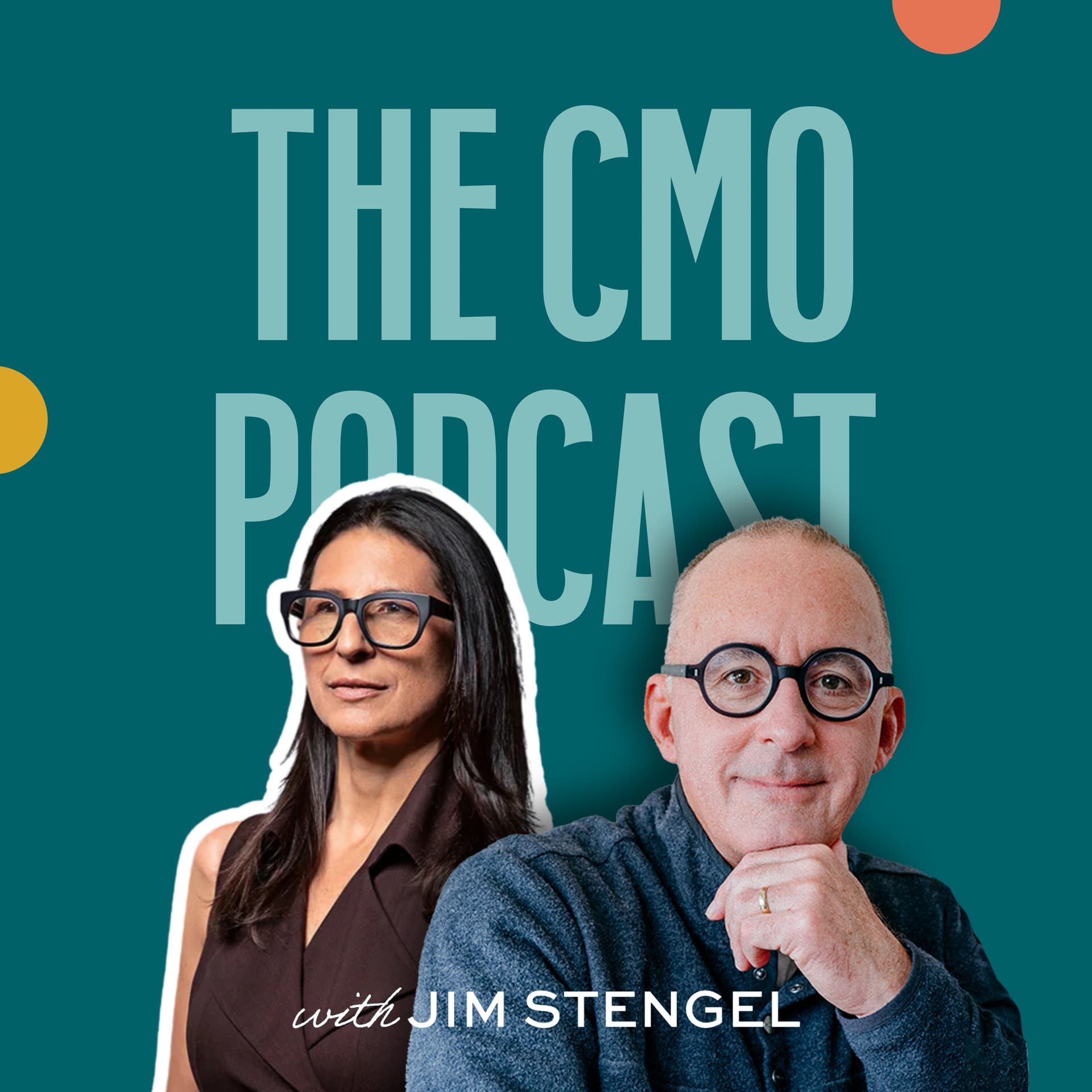
The CMO Podcast: Episode Summary
Episode Title
Building Brand Love with UGG, Tinder, Tubi, and TransUnion
Podcast Description In this roundtable episode, Jim Stengel engages with marketing leaders to explore what it takes to build beloved brands. The discussion centers around brand fundamentals, the importance of empathy in leadership, and the transformative power of kindness.
Guests
- Matt Spiegel - EVP of TruAudience Growth Strategy at TransUnion
- Nicole Parlapiano - CMO of Tubi
- Melissa Hobley - CMO of Tinder
- Carole Diarra - Global VP of Marketing for UGG
Key Themes and Discussions
Building Brand Love
- Understanding Consumers: Matt Spiegel emphasizes the need for brands to understand their customers deeply to build real connections.
- Personalization: The conversation highlights the importance of crafting personalized marketing messages based on a comprehensive understanding of consumer behavior.
Importance of Fundamentals
- Back to Basics: The panel reflects on the necessity of revisiting brand-building fundamentals amidst the noise of modern marketing trends.
- "The Fruit is in the Roots": This phrase encapsulates the idea that true brand love comes from a solid foundation and understanding of the brand's purpose.
Kindness and Care in Leadership
- Empathetic Leadership: Leaders must approach their teams and consumers with kindness and empathy, especially during tumultuous times. Melissa Hobley shares insights on the challenges of dating in the digital era and how empathy plays a crucial role in user engagement.
- Community Building: The panelists stress the significance of building communities around brands that foster connection and belonging.
Notable Insights from Each Guest
Matt Spiegel (TransUnion)
- Clarity from Chaos: TransUnion helps brands gain a 360-degree view of their customers, enabling smarter marketing investments.
- Data-Driven Understanding: Insights from data can transform marketing strategies and enhance customer relationships.
Nicole Parlapiano (Tubi)
- Mission-Driven Storytelling: Tubi aims to provide access to diverse stories, highlighting the importance of representation in entertainment.
- Misconceptions in Streaming: She addresses misconceptions around streaming platforms and the purchasing power of viewers.
Melissa Hobley (Tinder)
- Connection in a Digital World: Tinder is positioned as a platform for meaningful connections, emphasizing the need for users to engage more actively in their search for love.
- Community Engagement: The importance of grassroots efforts, such as collaborating with influencers, to build authentic connections with users.
Carole Diarra (UGG)
- Brand Transformation: UGG is evolving from a footwear brand to a lifestyle brand that embraces community and self-expression.
- Nostalgic Connections: The emotional ties consumers have to UGG products highlight the brand's importance in their personal stories.
Trends Discussed
- Creator Economy: The rise of influencers and creators as brand ambassadors and how brands can engage authentically with these individuals.
- Brand Experience vs. Transaction: The conversation emphasizes that genuine connections are rooted in relationships, not just transactions.
Final Thoughts
- Gratitude and Recognition: The episode closes with a discussion on the importance of expressing gratitude within teams and maintaining a focus on community and purpose.
- Call to Action: The panel suggests that brands aim to operationalize love and humanity in their marketing strategies, moving beyond mere transactions to build deeper connections.
Conclusion This episode of The CMO Podcast provides valuable insights into the current marketing landscape, emphasizing the importance of understanding consumers, maintaining empathy in leadership, and operationalizing brand love. The conversations are both practical and inspirational, offering takeaways for marketers at all levels.
Written by AI. May contain mistakes. Listen to the episode to check what was said.
Transcript
Automatic transcript. May contain errors.0:00Hi, it's Jim. Joining me is Matt Spiegel, EVP of True Audience Growth Strategy at TransUnion. Matt, we talk a lot on this show about building brands that people love, but that starts with understanding them, right? Jim, absolutely. Every customer ultimately has a story, but most brands are only going to see part of it. At TransUnion, we really focus on helping marketers connect those dots across devices, across channels, across platforms, with the goal of helping marketers see a full person behind the data. That clarity is gold. That is special. So how do you do it? Ultimately, we put together the pieces of information that help you predict behavior, help you personalize messages, prove the impact of every marketing decision at the end of the day.
0:37And our marketing solution suite gives brands the visibility and confidence to invest smarter and ultimately grow faster. So if you want to turn data into understanding and understanding into growth, visit transunion.com slash clarity. Hey, it's Jim. I'm here with Matt Spiegel, EVP of True Audience Growth Strategy at TransUnion. That's quite a job title, Matt. Yes. Welcome. Thank you. So tell me about your company and why it matters for our audience CMOs. Well, listen, Jim, the challenge of the day is that there's so much information about consumers out there and the challenge is most companies don't have all that information.
1:08You have some purchase history, you maybe have some web history, but you don't have a full picture of customers. We're working really hard across on a suite of identity products, of audience products and measurement products to bring a holistic view of customers to marketers. So when CMOs work with you, what light bulbs go off for them? So, Jim, we help brands bring clarity from chaos. We help them understand a picture of their customers with a 360-degree view in order for marketers to make bigger, more strategic bets. Well said, Matt. Learn more at transunion.com slash clarity. That's transunion.com slash clarity.
1:42What if the smartest marketing play is not to move forward, but to zoom out? Deloitte believes the most powerful move a CMO can make is to look beyond the next step and see the broader perspective. That's what the Deloitte CMO program is for, a place to gain fresh perspective and connect with leaders who've stood where you stand. Together, Deloitte will help you see the bigger picture so your next move isn't just fast, but right. Learn more about the CMO program at cmo.deloitte.com. I'd like to think I was always the passionate, empathetic leader that I feel like I am today, but I don't think there's any question.
2:17It becomes much more evident on the importance in a world that is a little bit traumatic and full of turmoil. It feels like a really important theme right now is that we've all got different stories. We've all got things going on under the hood that most people don't know about. It's a lot of communities that at the end of the day need other communities to support them. And I think that's certainly something I've been thinking a lot about and trying to emphasize. And that can be very small things to obviously very big things today. Hi, I'm Jim Stengel. I've helped hundreds of major brands discover and activate their purpose.
2:48Because when a brand's purpose is clear, compelling, and authentic, profit naturally follows. Each week, I welcome the CMOs, the chief marketing officers of your favorite brands, to speak to how their job is so much more than marketing. These leaders share their inspiration and challenges, along with how they try to build a full, healthy, and happy life in and out of the office. And it's that energy that reaches everyone they touch. And we're glad you're here to feel that energy and to learn from these remarkable leaders. So here we go. This week, we are returning to the Cannes Lions Festival and to a special one-of-a-kind location.
3:24We capture this conversation live at the Brand Innovators LVMH Villa, presented by Shutterstock. And it is a very special episode. Four remarkable marketing leaders join us for an open, insightful discussion on building brand love, staying rooted in purpose, and leading with kindness. First up, we have Matt Spiegel, EVP of True Audience Growth Strategy at TransUnion, a global information and insights company. Matt's a longtime digital marketing and ad tech innovator. He's focused on helping brands create more relevant, privacy-conscious connections with their audiences in a rapidly evolving data landscape.
4:00Next is Nicole Parlapiano, the Chief Marketing Officer of Tubi. Nicole is leading the charge at one of the most disruptive platforms in streaming, bringing bold, culturally relevant content to millions of viewers and redefining what it means to build a beloved entertainment brand. Then we have Melissa Hobley, Chief Marketing Officer of Tinder. Melissa is shaping the global narrative for one of the most iconic apps in the world, and she's passionate about making Tinder a place where real human connection and even love can thrive. And finally, Carol Diara, Chief Marketing Officer of the Ugg brand.
4:34Carol is helping evolve a heritage lifestyle brand into something even more meaningful by deepening emotional bonds with consumers and championing purpose, comfort, and creativity. This group brings sharp insight, honesty, and loads of heart. Whether you're a marketer, an agency leader, or just someone simply fascinated by the art and science of building a brand, this conversation has something for you. Let's dive in. Hey, everyone. Welcome to this special edition of the CMO Podcast, recorded for the first time at the LVMH Villa. So how do you describe kind of the setting we're in right now? This is great.
5:09Listen, this is a beautiful place to be, to say the least. There is a nice view outside. And it's great. We're talking a lot about serendipity already. It's a wonderful place to have amazing interactions. And we're about 20 feet from a pool with an amazing view, right? Yeah, that view looks better than the closet. Did you bring your bathing suits? I mean, I can probably swim in this. Yeah, okay, good. It's Cannes, right? Yeah. It dries quickly. So this feels a little bit like a reunion. Nicole, you're a former guest. Carol, you were in my class two years ago here in Cannes. Yes, with CMO Accelerator, which was amazing.
5:39We just met. Just met. But we're already kind of bonding. And you've been on the show as well. I've been on the show. So it's really good. So our theme today is brand love and innovation. So it's a perfect theme for this gang. And my first question to you is sort of, are you feeling the brand love in Cannes this year or not? Are we talking about the right stuff this year? We're at midweek and you've been hanging around, having dinners, maybe going to the Palais, in workshops. So is there enough talk about brand love? Nicole, why don't we start with you? You know, this is biased to where I've been.
6:13I haven't been in the Palais that much, which I think is probably where a lot of those conversations are happening. But I would say no. I think the common themes we're hearing, we're hearing sports, we're hearing AI. Of course, there's like more honest conversations where marketers are talking about how they justify brand investment with CFOs. That's not necessarily talking about building brand love. So I think it's light on that this year. And I think it's something that I've been kind of reconciling with. Yep. Anyone else? Carol? I had an interesting take because I think there's this expanded view of brand love in Cannes.
6:47And what I'm hearing a lot of people talk about is people and creators as brands and what that means. And so if you're an athlete or if, you know, creating content of any sort, people are talking about their pillars and what's important to them. And they say, you know, I have three pillars. It's around these five things. I'm like, that's like a brand. And I feel like so many people are adopting the idea of brand love, even if they're not talking about it. Because they're talking about aligning their values, the things that they're passionate about. And when you talk about their name, they're saying, I want to be known for these things.
7:23And that's what a brand is, right? You hear the brand and you're like, I want to be known for these things. So I think there's an expanded view of brands, even though we might not necessarily be talking about it in the traditional sense that we've all grown up around. It's an incredible reimagining of what it means to be a brand. We had YouTube on the show yesterday with a creator, and they said, this is a tipping point. Creator economy is here in force. And you see that in Cannes. You feel that in Cannes. Your Ms. Brand love. I agree with what Nicole and Carol were saying. I think I'll give a different hot take, which I think one of the things that's nice is you get time with other marketing leaders and your advertising partners and you get a chance to say, oh my God, I love what you're doing with Tubi.
8:08What's the next collection you're running out from UGG and like the work that Transmute is doing? And so it's nice because you're in a safe space where people can be like, this was interesting or how did you work with that creator? We've been trying to get to them. So that part of the brand love is really interesting. And I love the brainstorming around collabs or partnerships or wait, there's something there. Or how did you do that? Do you think I should try it? So that's been one of, I think, the bright spots of CAN. So Matt, what happened with you? You know, it's interesting. We're obviously more in the B2B space.
8:37So we experience the CAN a little differently, both in terms of the content we focus on, but also the experience we have with a lot of our partners. And so we find ourselves much more in the data and technology side of this conversation. But there's a huge, or maybe huge is the wrong word, but an ever better link to, I think, the creative storytelling part of it. You can't go five minutes without hearing about Gen.AI at the end of the day. and the potential impact on new creative storytelling. So there's a link there, again, and I think a lot of what we spend time doing is what enables great storytelling, which enables great brand building.
9:08So there's that link, but I suppose, like you said, Nicole, I don't spend time in the traditional sense getting to talk about brand love in the way that we might historically have thought about it. Let's talk about brand love and your brand or your company. And this is a nice way to introduce you as well. Talk about the brand or company you're responsible for. One thing your fans love about you, And one thing you would love them to love about you, and you're not quite there yet. Alyssa, do you want to start? I have to go first. That's love. It's love. Tinder should go first. So I run marketing globally for Tinder, the largest dating app in the world.
9:42One of the things that the brands that our brand does that I think people know is it's hard to make connection. And we're so connected and so disconnected, right? Meaning like we're so digital and we're losing this. Right. And and people aren't going out enough and they're not having conversations and they're not they're not putting themselves out there enough. I think what they appreciate and know about Tinder is is you can be in your pajamas on your couch and find someone who is also crazy about this obscure jazz band. Like you can do that. You don't have to go to happy hours every night to meet someone.
10:25So that's what people love about your brand. They love that about our brand. What I wish they knew about our brand is you have to put a little more work into it for it to work. And I'll help you find your person. And I'll help you explore your queerness. I'll help you meet somebody studying abroad. I'll help you do those things. But I need you to put a little more work into it. You need to put more love into that. A little more love into it. That's right. Carol, how about yourself? What do they love, your fans love today, and what would you like them to love more? I feel really, really lucky because I work for the UGG brand.
10:58It's a$2.5 billion footwear slash apparel global lifestyle brand. And we're really in the midst of transforming the brand from this iconic boot, which people just literally love, to an iconic global brand in which there are these tenets about the brand beyond the product that people really love as well. And so as a part of that, what do people love? They love the feel of the products. And when they step into it, they talk about like it's like a cloud that you're walking into of, you know, nostalgia. So people have so many memories of the brand in which it was gifted to them from their grandmother or their mom.
11:40Or they remember their first pair when they were in high school and everybody coveted them. And now you have new generations which are discovering the brand through a totally different way. And so it's not necessarily the classic boot. It might be any of the other number of products that we've introduced from our new sandals to sneakers to the Tasman slippers that everyone is wearing, especially young kids at all the games. And so now what we're really focused on is UGG as a community and how we're really shifting the narrative to working with creatives and allowing them to use our product as a kind of a blank canvas for creativity.
12:19So we partner with so many designers and creatives who are reimagining the brand. And we really allow fans to also put their self-expression into the brand. And so for us, it's about self-expression and community. and I want more people to know that that's what the Ugg brand is really about. Do you have any debates in your company about losing control of the brand as you open it up for everyone to use it as a platform and a canvas? We don't have fear of it. I think there's always this perception of, okay, we have to remain connected to our brand DNA. And as long as it feels authentic, as long as it feels like, okay, this is coming from a place that's a genuine place for the brand and the people that we work with, we're working with them in a genuine way, then that's when it's okay.
13:06It's not a transaction, it's a relationship. It's a relationship. And I feel like that's how people talk about the brand. You know, they talk about it as if it's a loved one in their family. And it's incredible to have that type of a connection and a love for our products. So we recently did something with our founder, who is, his name is Brian Smith. He's this Australian surfer who came to California in the late 70s. and he says, you know, it's just incredible the way we've like taken the brand and grown the brand. But he says, what I love about it is that, you know, it kind of started with this counterculture, surf culture, and it's grown up.
13:42And so always staying connected with communities that love the brand, that have a functional use for it, but also like it's a part of their lifestyle and who they are. As long as that feels like genuine, then he like really feels like we're on the right track. So Matt, you're B2B. Yeah. You talked about relationships. Yeah. So, I mean, you're still selling to people? For sure. So at TransUnion, we actually deal with the fact that we're known for something different than what we're really in this space for, right? TransUnion is known as the credit bureau, as your credit score. That's not the part of the business I work on.
14:13I actually work on the marketing solutions products, right? And so actually our core friends are this room and this audience, right? And whether you're a media company or a marketer in between, those are our fans. And we try to provide, and we do provide a lot of the enabling technology and data to enable great brand building. That's at the end of the day, what we do, how do we help create more personalized marketing? And so what we're finding is we're loved because people know what we do is really foundational. It's a key piece of the future of great marketing. So that's really the good part.
14:41And I think we're really known for that. And it becomes a part of the love for sure. I think the hard part is in what we would, what we need to make better is it's still really hard to do right now. You think about all the different technologies, all the different data sets, all the different communication channels, it's gotten more complex, not less. And so the challenge we face is how do we make that ever easier? How can we make it clear that it's not always us that is making this complicated. It's the ecosystem, right? Of course, we can always build better technology. We can always make things easier in some ways, but the more that we can tell a story to make clear that great personalized, relevant marketing will, and will be, is a trans unions to keep part of that, the better we're doing.
15:21Nicole, wrap it up. And I love the show we did together. And we talked an awful lot about your fans and insights and how your brand has been exploding based on that. So I would say, you know, Tubi's mission is to give all people access to all the world's stories. And so it's storytelling. And I think that we're kind of considered, it's not my words, the people streamer. So to be that accessible Hollywood streamer that is giving, you know, stories that all people can feel seen in, which means diverse stories. What I wish people knew, because on the B2B side, when I talk to advertisers, there's just still so many misconceptions about streaming and addressable audience there.
16:03I don't know if everyone saw Nielsen Gage yesterday for the first time in a consecutive 30 days in May, streaming overtook all linear. We know that's where it's going. but advertisers still buy on the shows that they watch and the original programming with some of our competitors. And the reality is people are really viewing in a personalized way. They're viewing nostalgia content, subculture content, comfort horror, and they're highly engaged. They're intentional. And just because they're on a free streaming product doesn't mean they don't have incredible influence and purchasing power. So I think that is what I wish people knew is the power of our viewers and that they engage us in interesting ways to connect to them because that is the future.
16:46But I think just really proud on the consumer side of it. The brand is really strong and it's just kind of the place you can find the freaky and geeky stuff you can't find anywhere else or the stuff that you loved when you were younger or the show that you want to introduce your kid to that you're going to watch, co-watch for the first time. So it's just a different take in the entertainment landscape.
17:14Everyone seems to be chasing the next big thing, the fastest answer, the quickest win. But great CMOs believe the real power isn't in the speed, it's in stepping back to see the bigger picture. That's why everything Deloitte does in their CMO program, from their industry-leading capabilities to their connected network of CMOs, is designed to help you zoom out and gain fresh perspective. Deloitte will help you see the bigger picture together. Learn more about the CMO program at cmo.deloitte.com.
17:48So we talked a few minutes on the show about whether or not there's enough brand love in Canon and talk about that. You know, there's obviously a lot on Gen AI, lots of workshops, and we talked about that in the car, Nicole. I just want to, I'm hearing a lot of stuff in my one-on-ones, the panels I'm doing, the meetings I'm having, a lot of talk about kindness and care and humanity. And I can't tell you how many times I've heard people say, can we drop the freaking word consumer and just talk about people and how we're a part of their life versus trying to sell them something? Maybe that's a reaction to a lot of stuff that's going on, but I kind of want to get your take on that as a leader.
18:24You're all senior in your organizations. Do you feel like you've amped up the love, the kindness, the care, the humanity with your teams, and then with obviously your customers, your consumers, I'm using the word again, the people who are part of your brand and who buy your brand and are part of your community. So what do you think? Think about what you're doing as a leader. I think it has to be, we all have to have so much more of an empathetic lens for the people, for our employees. I mean, I'm LA based. It was a crazy couple of weeks. And I said to my team, you know, I flagged it to corporate and I said, there's people in LA that might be afraid to come to work that have family members that are impacted, that have community members that are impacted.
19:07What services are we providing? How do we make people feel safe and supported? Is there some way the companies could support them and their community if there's anything going on? Even from a mental health standpoint, it's just a lot, right? We've had fires. We've had, it's just been an interesting time for us all. And so I think we all have to operate with that lens of like, what can people deal with and be sensitive to the fact on how we're messaging things. You don't want to ignore what's going on. You don't want to capitalize it. You don't want to double down on it, but you have to listen.
19:36And I think you have to be very empathetic on all fronts. Has your behavior changed based on that as a leader? Yeah. I think you just have to know what people need and be, even on the advertising side, our advertisers are going through a lot right now. You know, we just went through up fronts and new fronts, you can't be up there and not acknowledge that there's an extreme amount of turmoil and people don't know where to put budgets and they're thinking about next year. And they're thinking about how all of these things impact their business. So from the way we sell to the way that we are thinking about our viewer base, to the way that we're thinking about our employees, the way you're thinking about the Hollywood community and the types of stories they tell and the risks they're going to take, all these things are things that are decisions we're going to make and, you know, where you want to end up.
20:22So I think it is a very pivotal time. And I love that you heard more conversations on kindness and honestly how people are navigating in this landscape, because I think we're all learning as we go. I love the question. Honestly, I think in the world that I work in of dating, you have to be so mindful of it's one of the hardest things you'll ever do, whether you're 18 or you're 88. I met a woman who's 89 on Tinder. She's like, I'm your oldest Caesar. I'm like, I've actually met older. And so I think we have that lens, but I also think a lot of us have been having conversations. Like how do you keep, how do you keep the killers on your team?
20:59How do you keep those, those folks that are performing? How do you keep that person who does social and they're just so good and they're so funny or they'll get to the influencer creator early and first. Those individuals are often very close to the zeitgeist. They're very close to how people are feeling. They're very close to like what's happening in the room, what's happening with the conversations around LGBTQ rights around the world, what's happening around a lot of the stuff happening in the US right now. And to show up with more empathy with your team, to show up with that in your TikToks and your socials and whatever you're doing is so critical right now.
21:31And the missteps are really big. And so having that extra lens is super important right now. I'd like to think I was always the passionate, empathetic leader that I feel like I am today, but I don't think there's any question. It becomes much more evident on the importance in a world that is a little bit traumatic and full of turmoil. The word of allyship comes up a lot. Yeah. It feels like a really important theme right now is that we've all got different stories. We've all got things going on under the hood that most people don't know about. And, uh, it's a lot of communities that at the end of the day need other communities to support them.
22:10Uh, and I think that's certainly something I've been thinking a lot about and trying to emphasize, and that can be very small things to obviously very big things today. Uh, I do feel like the business world is better at that, but clearly there's a little bit of a pendulum that swings back and forth. So I don't think we're done with that game by any stretch of imagination. I think people want to trust us more because they are not, They're finding things difficult to trust. And I think a good relationship with a business or a brand or a company has always been important, but I think it's really extra important now.
22:42Carol, what do you think? Yeah, I was going to go exactly where you went. I mean, I think on the leadership front, I've tried to be much more available in person to my team. So we've gotten together as a leadership team kind of twice, right in a row. One to talk about how we're leading, the second to make sure we're really clear about our business and objectives. And then in my all hands meetings, we've literally shown the change curve and where we are on and why now it feels so overwhelming because we're constantly in the disruptive phase where it feels difficult every day because there's so much change.
23:19There's so much new information. So making just a sense of community that everybody probably feels that everyone's a little destabilized. As leaders, we're destabilized. As individuals experiencing this, we're all on this change curve in which there's so much change every day. People can't kind of come out of it and feel better. They can't be like, okay, like it's predictable. Like I know what I'm getting. So they're constantly in this state of, and that's hard to be a productive employee when you're constantly in this state of like, well, I don't know what's going on with my family. I don't know what's going on with my own status.
Read the full transcript
23:49I don't know what's going on with, you know, like, am I even going to be welcome in this environment anymore? So that is very real. And our teams do feel it every day. And then when you get to consumers, we definitely talk about that. And as I talked to you about it, Ugg is a brand that really makes people feel good. So really reinforcing that we are this uplifting brand and that we want to bring joy to the world, that we want to be your source of like, of happiness, right? So it's less about like, oh, we want you to buy our product. But it's like, if you do buy our product, then it's going to be a moment of happiness for you that you're going to share in.
24:24So there's almost this moment of like, how do we uplift, which I was talking about? And how do we share more that we are a community and we are a collective of having a sense of belonging and embedding that all the way to our consumers. So we've, you know, communicated that in our emails, on our socials. So it's really just trying to spread this idea of joy in a time when change is really constant and it can make people feel unstable. So kind of injecting more of that humanity into the communication strategy is an important part of where we're going. Yeah, let's stay with that thought and maybe hear from the rest of the panel.
24:56I mean, brand love, obviously people don't love a brand unless the people who are working on the brand love their customers or care about them or are sensitive to them, they're responsive to them. And we've all kinds of ways to do that now. So I'd like you to talk about how you operationalize this concept of brand love and how you scale it, right? Kind of easy to do if you're a corner coffee shop, you know, but when you're big brands like you're all part of, it's a little bit more complicated. So how as a leader do you kind of, I hate to use those mechanical words, but operationalizing and scale brand love as a value.
25:40And it starts with sort of a deeper connection with your customers, I think. Yeah. And honestly, has anybody figured this out completely? I don't know. That's why we're here. I think we're flying the plane while we're building it. I think, listen, what's true? What's true is that the creators that exist now have made this easier and harder. What's true is that the explosion of TikTok and YouTube and Snap and socials over the last five years have made that easier and harder. What's true is you've got so many more opportunities to get directly to your user, your person, the communities, subcultures sub communities you've got so many opportunities to do that I think as soon as you think you've started to figure it out something changes and you've got to do it again and so I think what I feel like we're doing is just being fluid and adaptive and agile and staying really really close to like okay where are people shifting how are they showing up what are they doing like and being close to the folks that resonate like what's also interesting is you'll see a creator and overnight they become huge.
26:43So how are you also reaching audiences earlier and with those voices where, you know, we're also watching our budgets. And so like you can figure out creative, bigger things that are gonna have a big impact. I mean, I think it's scale is the tricky part there, right? So, you know, we're talking a lot about the creator economy. That's a huge part where I sit, cause I sit in entertainment, those things are, there's no more lines anymore. What I think that how we deliver brand love and how you build brand love. It's everything from recognizing, to me, especially on the influencer front, they've got to love my fucking brand.
27:17I don't want to pay someone to plug something that they don't use. So we've been doing more things where like, we're finding people that love Tubi that are doing unique things for Tubi. There's this influencer in New York named Ayana and she does a seafood boil every week with her friends and watch a Tubi movie. And so we called her and we're like, let's rent space in Brooklyn. Let's blow this out. We'll invite press. Like you do you. You're the star of it. And like, just thank you. Thank you for the love. And I think that scaling that is hard, but finding, you know, it doesn't need to be an influencer with a huge following to make an impact.
27:54And then I think we're working with creators of the sense that like they're on the rise and we think they're multi hyphenates and we think they're telling stories that need to be in Hollywood and are deserving of being in Hollywood and are deserving of production investment and deserving of, you know, a platform that is purely entertainment, not mixed with, you know, UGC and everything else. It's something called PVC, professionally generated content. And so I think when you're supporting these emerging creators that aren't the big ones, that I'm talking like three to four million, but really high engagement, and you're helping them bridge into Hollywood, their fans will ride hard for you because you broke them.
28:34You helped them get to where they are. You believed in them. So I think that we've lost a little bit of essence of that in Hollywood of like, how do you get young and emerging talent? and I don't mean just front of the camera, directors, writers, like we did a partnership with Kickstarter where all those indie filmmakers that are raising funds have no distribution. We'll distribute them on Tubi, solves a lot of their problems and they can continue to fund. So I think that we're in this environment where like entertainment can bring comfort and escapism. And it's, that's kind of really important for all of us, our mental health right now, like I'm a TikTok gremlin, but it's actually not good for me at this point to be on as much as I am.
29:15It is like taking a toll. And so I think if we can be this warm blanket and this place that gives inspiration and hope and comfort, it maybe takes you back to a time when things were simpler or elevate some stories. I mean, hopefully we can change culture over time. Right. That was a great talk. I know that was like really beautiful. Wrap you up in a warm blanket and be a source of comfort. Oh, beautiful. But very natural, right? It's like, what do people need from us? Yeah, right. Useful, natural. They need a hug. Yeah. They do need a hug. So Matt, flipping to you. Yeah. What's fascinating is listening to the conversation.
29:51I'm thinking exactly the same thing, except then I go, who are my influencers? This couch, this industry, this room, right? And so we have all the same challenges, but instead who we have to influence and create brand love with and that passion are marketers, our media companies, are people who are struggling with all these issues and topics that we're dealing with. And again, in the same way that your consumers are dealing with all these different influences in the marketing industry, it's the same thing. It's just a different set of topics. But at the end of the day, as you've said, we're all just people.
30:23And so how do we come up in a way that says, hey, our job is to help you? And how do we do that at scale? We deliver great products and we provide a different kind of customer service for you guys in the consumer world. That customer service might be a call line or a chat bot or something for us. It's we have to have a great team that understands our products and delivers that well consistently. It's an interesting challenge, but the problem is literally the same. And that was actually fascinating listening to you guys talk about it. I was like, yeah, that except I need you to do that. Right. And so I would say it's very similar thematically.
30:54Yeah, as we think about question operationalizing kind of humanity and connection, you know, really the sharp point of what I think will differentiate our brand as we talk about what people need in terms of being wrapped up in that warm blanket, not literally, but. I mean, with their Uggs on in that warm blanket. But that is what I feel like people, they talk about a lot, right? So there is this big sense of nostalgia. And so we talk to a lot of people, young people, you know, of all generations. You know, what they talk about is that even with all the rise of AI and, you know, influencer content, this nostalgia feel is because they're hearkening back to a time when something was real.
31:34And so it's like, well, I know back then in the 80s and the 90s, things were real. Like people were doing real things. Like and there was an appreciation for what's real. People were in the club really freaking partying. Really partying. And like DJs really had to mix things. And so like there's this like appreciation for what's real. And so in that sense, like people want to come together and they want to have real experiences and they really want to connect with you. And whether they transport that, you know, through their, you know, digital means, that's OK. But they're hearkening for that connection and feeling to something that is real.
32:06So we tried to bring that into our marketing. So we put more money into creating more experiences and creating more scalable experiences. So I'm kind of over the global network. and then in each of our regional teams, we have amazing teams that run our key city strategies. And within our key city strategies, it's about creating memorable moments that uplift people and uplift communities and brings that sense of connection and humanity. So we've done everything from, you know, takeovers and our favorite burger place in Paris. In London, we did a soundscape with DJs and it was like a new product we were launching, which is called Golden, our Golden Collection, which are new sandals.
32:43So it was like Golden Sounds by Ugg, but it was all these incredible DJs that were mixing out kind of golden sounds and like their favorite songs. And so doing that in a scalable way, you know, in Shanghai, we did something in New York and L.A. So creating these moments all across the globe that bring people together, remind them that it's still important to be real and to be who you are and find that connection to others is really where I think that source of brand love is coming from. And that's one of the ways we can start to operationalize it.
33:43$500 off your ticket with code, all caps, ALMCMOPOD26. This is your chance to join a three-day gathering of the industry's brightest minds and boldest voices shaping the year ahead. You'll hear agenda-setting conversations, candid fireside chats, and dynamic breakouts on the topics that matter most, from AI and commerce media to measurement and addressability. This year's lineup concludes everyone from Kevin Bacon and Bozema St. John to creator Remy Bader, along with leaders from Forbes, Major League Soccer, General Motors, and Meta. Visit iab.com slash ALM to learn more and check out the link in the show notes to register and receive$500 off your ticket.
34:29You guys are all inspiring. This is a really fun conversation. I want to flip it a bit to, we're in Cannes, right? We're here to be inspired, to meet people, to see what other brands are doing, other categories. I know we've been in a lot of meetings and we've been busy this week, but is there a brand out there or a person that's inspiring you when it comes to brand love? And I'll give you a moment to think. We did a podcast recently. It's out there now with Lego and how values are changing with children and adults. So we had a research firm and a Lego person. And wow, what an episode about brand love and the power of brand love.
35:07And when the company got in trouble, it's because it wasn't about brand love and how they're so in touch with how things are shifting and the implications on their products and communication and how they can be useful to people. So that's one that's on my mind from that show because it's a very powerful story. And I've known the story, but to hear it in person with someone who lived, it was very powerful. So Nicole. I'm going to say something that's spicy. Go. Oh, get spicy. I think the brand would be California and Governor Newsom is doing a good job holding it down and his team is cooking. And it's a balance of facts to the point, funny, like leaning into trends.
35:44And he's he's coming. Like, I think that we needed someone to stand up. I think we love our state and like I'm proud. And I think the brand of California couldn't be more strong. the socials no matter how you feel about i mean the governor newsom socials are unhinged proud to be people are what i wake up in the morning and i go to that tiktok the governor newsom what are they going to do today and the speed at which that team is operating again you don't have doesn't matter what your politics are the speed and the spice that that team is operating is next But California as a brand is like, they're, you know.
36:26They're trending. But we've always been, but I mean, I think we get shit talked a lot, but I think, you know, it's a place for people that were the dreamers and that wanted a revolution. And we will fight. And we're not just a bunch of lazy beach people. So I think that I'm really proud of the brand of California. I'm proud of Gnusum and I'll wave that flag freaking proudly. Let's keep it going. Keep it spicy. I mean, I feel like, I mean, I just have to like almost just dovetail that I feel like the next governor in line who's helping do that is actually mine. Governor Pritzker in Illinois. It's interesting.
37:00I would not have gone at all that direction. But I was been thinking as you're talking about what brands have I engaged with recently that have made me go, all right, interesting. And it really is actually these social conscience brands or in this case, people, states is really interesting thing. is like that's is kind of the zeitgeist of the moment is it's got to be some kind of culturally relevant in some way to there's a need for more movements right now and so I guess I'm feeling the same thing it's an interesting thing I'm certainly more conscious of those types of organizations or people that are trying to do that politics is marketing totally 100 percent 100 percent I have a son who wants to be an actor who says he's not gonna be an actor he wants to be a politician I'm like well I think that kind of fits well there you go wow you were like they're together.
37:45Carol, what do you think? Oh, these are hard. I mean, it's gonna be hard. I'm in New York and that's gonna be hard. I think for a brand that I'm really inspired, taking a totally different direction. I think what Elf has been doing is amazing. And I really just love how they are really, truly about the community. They're uplifting everybody. They're constantly surprising us with their big, bold moves. I think what they are, you know, this award that they're up for, so many dicks. How powerful was that? I mean, come on. It made us all just pay attention. They're having conversations. They're having dick jokes, but it's really great to just draw attention to an issue that's so powerful.
38:25And they're putting their money where their mouth is because I was a part of their board accelerator program. And I got to participate as a part of the NACDS directorship program. And so I got a scholarship from Elf to be prepared to be on a board. And I was like, They're not just creating awareness and campaigns. They're putting their money where their mouth is on the ground, right? Like no one knows about that part of what they're doing. So just to plug Alf a little bit and what they're doing over there, I think they're creating awareness, creating brand love and doing it in so many different ways with so many different groups of people that it feels really special and authentic.
39:00One of the great cases of brand purpose, not being dead, being alive and well. To bring it home, I'm going to say women, because I think right now what we are expecting of women, what we're hearing from them, how they're showing up, I think is so interesting, whether it's conversations on reproductive rights or it is this bullshit narrative of women. Can you fix toxic male behavior? Get out of here with that. Like, we have done enough. Thank you. I'm inspired by how I see them showing up for protests, how I see them showing up in conversations. I'm inspired by the conversations around being a working mom and how to navigate all of these expectations and body positivity come a long way, but we're still not there.
39:43And so I think we're at a really interesting time where women are continuing to show up and continuing to fuck things up. And I think it's really hard. And I've been really inspired by new and old friends that I've seen this week that are doing great things. But what inspires a lot of us is grow your business. And I'm glad you grew your revenue. I'm glad you grew share. But that you took a stand on an issue, that is what moves me. And that, I have the ability to do a lot of that at Tinder. And that's why I also really love this job. And I feel lucky to have it. And I think women are, in particular, doing incredible things right now.
40:24This went to good places. So I want to close it with a thought on gratitude. Because obviously, gratitude comes from love. And I think we don't show it enough often as leaders. And again, I went to a P &G reunion this week and a lot of successful people who left P &G. Gratitude is a massive theme. So it was really good to see that. And so was everything we're talking about, by the way. So I'd like you to talk about just a thought about how you show gratitude to the people that are important to you. It can be in the professional context, of course, but if you want to go beyond that. So something you do, something you think about, something, you know, I think it's a nice way to end it.
41:02Such a powerful thing. I'm Italian, so I like to, I'm a toucher and I like to feed people. And I know that sounds creepy, but on my team, it's like, are you okay? Like, are you hungry? What do you like? Just, I think, again, it's comfort. And I think I express gratitude by cooking for people and making them feel warm and welcome in my home or in my space. And I think that's like just an expression of love and maybe it's just food and touches love language you know i sounds kind of simple but just telling them even if it's like a quick text message i really appreciate you i really enjoyed like getting time with you it's really silly but how often do you get those right just taking the minute you don't want anything you don't need anything but it's like i just i really needed that like you really gave me you gave me some joy today and i i really needed that i'm trying to be a little more present and share, express that more.
41:55Yeah, I was thinking similarly, you know, all of us are certainly type A in some dimension, charge hard, push hard, expect a lot. I think as time has gone on, I've thought a lot about celebrating wins more easily and more openly and more vocally. I think it's, that's always been a challenge. There's always another hill to climb. And then, yes, I think saying thank you as much as possible. I do think people just appreciate the, I see the work. I acknowledge the work, right? You've done good, the good work. You've worked hard. So thank you. Sometimes regardless of the outcomes, obviously we all want great outcomes, but sometimes the hard work was done really well and it didn't go perfectly.
42:31And still acknowledging, I think the thanks and the effort in those moments is something I'm trying to spend more and more time thinking about. So two weeks before coming here, I told you we did this leadership offsite with my team for three days with my leadership team. And one of the first things that we did was we did a gratitude circle. So we all stood around together and you had an orange actually, and you had to pass the orange to another person. And when you gave it to them, you had to thank them and say the things that you appreciate most about working with them. And you had to highlight something about them that you really appreciated, that you see them, that you enjoy.
43:10And everybody went around the room and it was very powerful because we were giving something, and then you are also receiving. And I do feel like that's the most important part of staying connected and giving people that sense of humanity, is sharing what you really appreciate about that person, and then doing it publicly so that other people can see it, so that there really is a sense that we're all connected, and we're all giving to each other with the gifts that everyone brings, and people are really seen. So this idea of gratitude, I try to really operationalize, as you said, into my leadership practice and with my team.
43:42This has been so good on so many levels. I love the theme that we talked today, but just went to so many good places. We have a small studio audience here. And a good friend of mine is in that audience, Andrea Zalemensky, who was P &G for 20 years, and then Yum Brands. And now she's at Kimberly Clark at a high level. And she's been listening to this show. And I love her perspective on life and business and people. So I'd love you to kind of comment on what you heard, you know, what inspired you from this discussion? What did you learn? What do you want to share with us about your feelings after this wonderful chat?
44:18Well, what a treat to be able to be here. Thanks for including me. I feel so inspired. I have to tell you, this took so many turns through it, so many laughs. So thank you so much, all of you, for sharing your thoughts. And I think what I'm brought back to in this conversation and fitting it with my can experience this week is it's such an important time to just get back to the fundamentals of what it means to build brands and to build love with brands. Because really what you guys talked about is it's about knowing your consumers better than anyone else. right? Some of the examples that you guys gave was on knowing them in a deep human way, like knowing they need a hug.
45:05I love that. I was so inspired by that. You can only know that if you know your consumers better than anyone else or knowing that they need nostalgia from Uggs. And then knowing your brand better than anyone else. The fruit is in the roots. I like to say, hey, Carol, you talked about talking to your founder and understanding where your brand came from and when you can match those two things together. I think that's where the magic happens and where you can really create that love. And then the last thing that I just, I loved the discussion about care and kindness. And I feel it with everyone I interact with right now.
45:47We all need love. Just take it back to love. We all need just a little more love right now. And what I heard you guys really talk about is allyship, right? Showing up when it matters most, when others aren't showing up. I think that's the example with California. That's the example with women, how we're showing up for each other. And then also, I think it's also very loving and caring to our teams when we get back to giving them purpose and not just, I mean, obviously, we're all showing up every day overwhelmed with the changing environment and needing to grow sales and market share and all of that.
46:26But it was a good reminder to me of like, what a gift you give all the people that work on our teams when we get them grounded in the purpose that we're all trying to do with our brand. So that was another great, just fundamental reminder. I usually do the three takeaways from every show. I don't have to do it because Andrea just did it. So thank you. Thank you. That was a beautiful speech. Wow. Thanks, panel. Thank you so much. Good time, everybody. Thank you. That's it for this week's episode of the CMO Podcast. As always, I would be grateful if you shared our show with your friends, along with subscribing and leaving a review on Apple Podcasts, Spotify, or wherever you listen.
47:07The CMO Podcast is a Vive original production. The views and opinions expressed by podcast speakers and guests are solely their own and do not reflect the opinions of our sponsors or its personnel, nor do our sponsors advocate or endorse any individuals or entities featured on the episodes. Hey, everybody. This is Andrea Sullivan, the CEO of Vive, and we produce the CMO podcast and are so excited to have partnered with Jim Stengel for so many years. I wanted to tell you a little bit about something that could be right for you. Vive is a program for entrepreneurs and business leaders who want to get more out of their life and become their best and happiest selves, both personally and professionally.
47:48We have a 12-month program that allows people to meet up with some of the best business leaders out there and additionally experts in the wellness sector so that you can learn how to nurture yourself. So we teach things around sleep optimization, meditation, all those good things as well. Please reach out to us at podcasts at five.co to get more information. That's P-O-D-C-A-S-T-S at V-Y-V-E dot co. Thanks for listening to the CMO podcast and hope to talk to you more about five.
From the publisher
In this special roundtable episode of The CMO Podcast, recorded live at the Brand Innovators LVMH Villa, presented by Shutterstock. Jim Stengel sits down with four powerhouse marketing leaders to explore the timeless—and timely—question: What does it take to build a brand people truly love?
Joining Jim are...
Matt Spiegel, EVP of TruAudience Growth Strategy at TransUnion
Nicole Parlapiano, Chief Marketing Officer of Tubi
Melissa Hobley, Chief Marketing Officer of Tinder
Carole Diarra, Global Vice President of Marketing for UGG
Together, they reflect on the power of going back to brand-building fundamentals, why “the fruit is in the roots,” and how kindness and care can be transformative forces in leadership. This is a conversation full of wisdom, laughter, and straight talk on how to lead brands, and teams, with heart. Whether you're a marketer, creative, or purpose-driven leader, you’ll walk away inspired to double down on what really matters.
---
This week's episode is brought to you by Deloitte, StrawberryFrog and Transunion.
Learn more: https://strawberryfrog.com/jim
See Privacy Policy at https://art19.com/privacy and California Privacy Notice at https://art19.com/privacy#do-not-sell-my-info.