In short
The CMO Podcast: Episode Summary - Carrie Palin (Cisco) | Powering An Inclusive Future For All
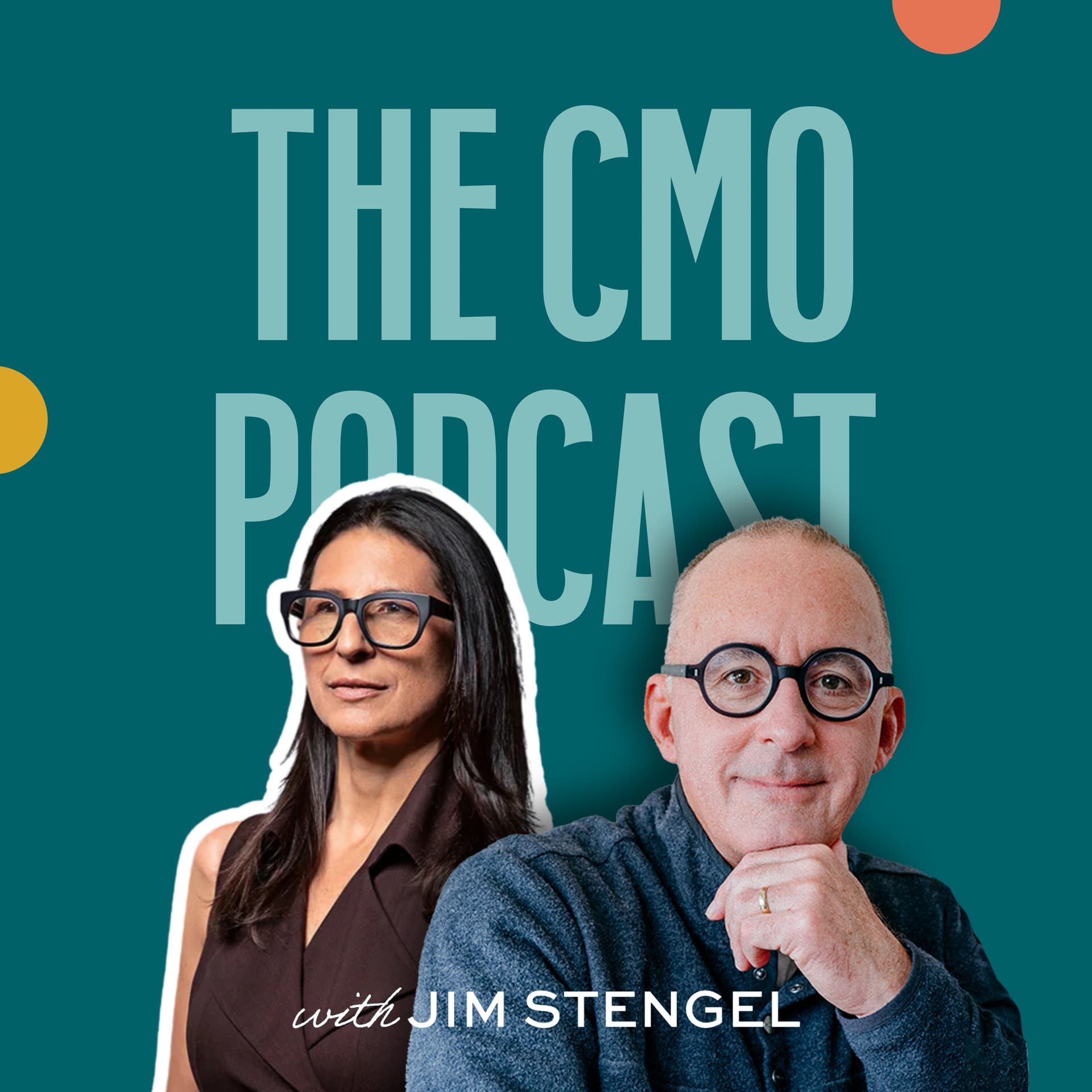
Podcast Overview Host: Jim Stengel Guest: Carrie Palin, SVP & CMO of Cisco Sponsorship: Sponsored by Deloitte and StrawberryFrog Episode Focus: This episode dives into Carrie Palin's unique journey in marketing, her insights as a CMO, and her commitment to inclusivity and innovation at Cisco.
---
Key Themes and Insights
- Carrie's Journey to CMO
- Carrie did not have a formal background in marketing but entered the tech field through IBM after graduating from TCU.
- Her career path includes significant roles at Dell, Box, and Splunk before reaching Cisco.
- She emphasizes the importance of serendipity and the value of saying "yes" to opportunities.
- Cisco's Purpose and Growth
- Cisco's mission is to leverage technology and people to solve global challenges.
- Under Carrie’s leadership, Cisco has experienced notable financial growth, with stock up by 40% in the past year.
- She highlights the importance of delivering value through innovation and customer experience during significant events like Cisco Live.
- Non-Negotiables in Work-Life Balance
- Carrie shares her definition of "non-negotiables," which are commitments she makes to herself regarding work-life balance.
- She emphasizes the importance of being present for significant life events while maintaining professional excellence.
- Setting clear expectations with leadership has been crucial in maintaining this balance, as illustrated by her experiences with Chuck Robbins, Cisco's CEO.
- The Role of a CMO
- Carrie describes the CMO role as more than just marketing; it's about being a brand ambassador and a leader in innovation.
- She discusses the importance of trust and relationships within the organization, as well as with external partners.
- The narrative of building trust through accountability and transparency is a recurring theme in her leadership philosophy.
- Building a Strong Team
- Carrie identifies her superpower as cultivating talent and creating a positive team culture.
- She uses the metaphor of "glue" to describe how she connects people and fosters collaboration within her teams.
- Her commitment to creating a safe and innovative environment for her team contributes significantly to achieving organizational goals.
- Risk in Marketing Strategy
- Carrie discusses Cisco’s partnerships with brands like NVIDIA and McLaren, emphasizing the value of collaboration and innovation.
- She shares a successful campaign with BETC, a creative agency, which marked a shift towards modernizing Cisco's brand image to appeal to younger audiences.
- The importance of taking calculated risks in marketing is highlighted as a key component of her strategy at Cisco.
---
Key Takeaways
- Courage and Confidence: Building the confidence to take risks and be courageous in a professional setting can lead to significant personal and organizational growth.
- Trust-Building: Effective leaders build trust through accountability, communication, and understanding their team's perspectives.
- Team Dynamics: A successful CMO fosters a culture where team members feel valued and empowered to contribute their best work.
- Non-Negotiables: Defining personal and professional non-negotiables can lead to a more fulfilling work-life balance and greater job satisfaction.
---
Conclusion Carrie Palin's conversation with Jim Stengel encapsulates the essence of modern marketing leadership. Her journey from an unexpected career in tech to the helm of one of the largest tech companies in the world illustrates the power of resilience, authenticity, and strategic vision. Through her commitment to inclusivity and innovation, Carrie serves as a role model for aspiring CMOs and business leaders alike.
---
For more insights and lessons from dynamic leaders in marketing, tune into the next episode of The CMO Podcast.
Written by AI. May contain mistakes. Listen to the episode to check what was said.
Transcript
Automatic transcript. May contain errors.0:00Hi, everyone. It's Jim. I'm here with Matt Spiegel, EVP of True Audience Growth Strategy at TransUnion. Matt, you've spent your career helping marketers understand people through data, and that's harder and more important now than ever. It really is, Jim. There's really just so much information out there, and unfortunately, it's often disconnected. Marketers typically see fragments, maybe a purchase here or a click there. But what they really need is clarity, true full picture of who their customers are, and ultimately how to reach them. Well, tell me how your solution strategy comes in and helps CMOs and their teams bring clarity to chaos.
0:33Well, Jim, we ultimately do that with a 360 view of the customer. And so it's about ultimately combining data, truly trusted data, identity resolution, which is a deep analytical problem and measurement that actually helps understand performance. So ultimately we work hard to help marketers move faster, to deepen their insights and to ultimately make every dollar work harder. We believe strongly that when you truly understand your audience, you can build a real brand and real relationships with customers that last. Where were you when I was a CMO? I don't know how to answer that. Learn more at transunion.com slash clarity.
1:06That's transunion.com slash clarity. What if the smartest marketing play is not to move forward, but to zoom out? Deloitte believes the most powerful move a CMO can make is to look beyond the next step and see the broader perspective. That's what the Deloitte CMO program is for, a place to gain fresh perspective and connect with leaders who've stood where you stand. Together, Deloitte will help you see the bigger picture so your next move isn't just fast, but right. Learn more about the CMO program at cmo.deloitte.com. Hi, everyone. It's Jim. I have Matt Spiegel of TransUnion with me. Matt, I want to start with, what do you love about your job?
1:42Yeah, it's a great question, Jim. You know what? I love the fact that I get to be out at events and conferences and working with clients to really think about how marketers solve problems that matter at scale. The job of a marketer is as challenging as ever, and we get to do some interesting things to make their job easier. When you work with a client, where do you get the most satisfaction? You know what? I think seeing ideas come to reality. We ultimately are an enable of great marketing. So we don't do creative. We don't do media planning. We provide the data, the identity insights, the measurement tools that make great marketing possible.
2:11So when we get to see the end product, sometimes later, it's really cool to see. Well, super to have you here. Super to be a partner. Thanks for joining us today. Thank you, Jim. So if you want to turn data into understanding and understanding into growth, visit transunion.com slash clarity. The first brand you remember making an impact on you as a young girl. I remember going to school and seeing this girl walk in with Gloria Vanderbilt jeans. And this is 1980. And then I remember seeing the first Calvin Klein ad with Brooke Shields in Calvin Klein jeans. And I've had a love affair with denim ever since.
2:44And to this day, Jim, if you ask somebody, what is Carrie's authentic uniform? It is literally a blazer, a white t-shirt and a great fitting pair of jeans. Hi, I'm Jim Stengel. I've helped hundreds of major brands discover and activate their purpose. Because when a brand's purpose is clear, compelling, and authentic, profit naturally follows. Each week, I welcome the CMOs, the chief marketing officers of your favorite brands, to speak to how their job is so much more than marketing. These leaders share their inspiration and challenges, along with how they try to build a full, healthy, and happy life in and out of the office.
3:21And it's that energy that reaches everyone they touch. And we're glad you're here to feel that energy and to learn from these remarkable leaders. So here we go. Tonight on June 11th, the Killers will be performing in San Diego at the Cisco Live Event, one of three global live events Cisco runs each year. Well, today we don't have the Killers on the CMO podcast, but we do have the woman who had a role in booking them. My guest today on the CMO podcast is Carrie Palin, the Senior VP and Chief Marketing Officer of Cisco, the$55 billion by revenue tech leader whose purpose is to leverage technology, people, and broader networks to solve society's greatest challenges.
4:00And Cisco has won quite a roll. Its stock is up about 40 % in the past year. My guest, Carrie, never took a marketing class in school and never even imagined she would be a top tech B2B marketer, let alone the CMO of one of the world's great companies. But serendipity happened, and Carrie said yes to IBM coming out of TCU and began a tech marketing career that took her to Dell, Box, Splunk, and now Cisco. Carrie has had a remarkable run in her four years as Cisco's CMO, which we will talk a lot about. Here's my conversation with a CMO and a mom who believes some things in life are simply non-negotiable.
4:36Here's Carrie. Well, Carrie, welcome to the CMO Podcast. It's about time we talk. You were, by the way, I've been following your career all along. You were the CMO at Box when my son worked there, and now his wife, Kat, works at Cisco. So I feel that I have been kind of following your career, getting the inside track. In fact, I heard today from my daughter-in-law that you just were on with, I don't know, some sort of large employee meeting talking about all the things happening next week at Cisco Live. And she said it was terrific. There's so many exciting things happening. Yeah, it's a crazy season at Cisco because our annual customer event in the US, which we usually have around 22 ,000 to 25 ,000 customers at, so non-trivial size, right?
5:17It's happening next week. And we have so much going on announcement wise around innovation. I mean, it's there's the rate and pace of innovation at Cisco has been just magnificent and bonkers under the new leadership of G2 Patel running all of product. And it's been almost a year. So you're going to we're going to have a big payload at Cisco Live, which is always fun for marketers and communications professionals when you've got great things to announce for our customers. And so it's going to be a really fun week. But man, we think about the impact to the P &L that this event drives. My team's constantly looking at that because it's great to engage our customers and we want them to have an incredible experience.
5:56But every dollar we invest, we want to make sure that we are driving growth, right? Like that's the name of the game. And so we look at it from every angle around that. And I frame it up that way going into the week. Are we adding incremental value? Are we bringing the right people to the table? And is that experience so good that our customers can't wait to come back because there are plenty of options? for them, right? So I suspect you can measure the effectiveness pretty easily, right? Yeah. We know pretty clearly, you know, B2C is obviously a little bit easier as a business type to track dollar into consumer spend.
6:29But business to business, it's a little trickier, obviously, but, and especially when you have more than one product category and we're in four. And if you count AI, that's like a fifth. The complexity of that is tougher and we have to have lots of data scientists and systems and MarTech that's knit together with sales tech, but we now can have pretty good visibility on, we know how much active pipeline is coming represented at the show. We know 30 days post, 60 days post, 90 days post, what net new opportunities and pipeline come from that experience and those attendees. And we track that through to see what kind of impact it has, along with all the other tactics and vehicles.
7:04But yeah, we're pretty clear on the, you know, it's a huge investment, but there's real return for us and for our customers too. I've been at so many companies that do customer events and we all do, right? But I've never been at one where we have such loyal recidivists. Like our customers love coming back to Cisco Live. And I am the great beneficiary of inheriting an incredible events team that just understood from years ago how to put on world-class events and not just an event. And so the experiential part of that's pretty special. Oh my, it's almost a five-day event, I think, from what I was looking at.
7:38The killers are playing the night this podcast is released. So I need to talk about how you spend the week. I mean, what is your strategy going into a week like that? Yeah. You know, so for me personally, we've got a bunch of different tracks going. The main track at the event. And obviously the keynotes day one and day two are hugely important that those land. We have a ton of product announcements and solutions announcements and news around partnerships and AI. So those days really matter. Those payloads with, then we have, you know, other tracks that are going on with our analysts, relations community with our executive community that come.
8:12And I spend time in each of those areas where I am hosting panels or speaking at those things. But really I'm a lot behind the scenes during this week because my team's the one that's making sure that everything comes off without a hitch and is flawless. And no matter how much you prepare, there's always something that startles you about a week like this. And by the way, we've been in Vegas for years and years and years, and we're moving to San Diego this year. So it's a completely new venue. You never know what's going to come up at the last second. So we're trying to prepare for all of that.
8:41And I get the great pleasure of kicking off both days keynotes this year. And I haven't done that at Cisco. So I'm excited about that. I mean, you know, it's two minutes on stage each day, but I don't take that lightly because it sets the tone. It's an important two minutes. Yeah. You want to get people excited about what's coming. And we have this year, more than any of the years I've been at Cisco, I'm so thrilled about all of the announcements coming. It's going to be an easy one to host. Let me say that. Well, when I was doing my prep for you, I observed that you're a very external facing CMO, right?
9:09You seem to be with your team and customers a lot, out and about a lot, on stage a lot at other Cisco events. So is that how you see yourself? I mean, I'm sure that's intentional, but you see yourself as a highly external CMO? Yes. In this job, absolutely. I've been a CMO at companies where it's very different. Like I spent only five months at SendGrid years ago where we were acquired by Twilio, but that was a software as a service, direct to developer, kind of almost direct to consumer. And they would just discover, try, swipe their credit card, go, and they love the product. And so very not external facing.
9:43And I love that because I'm a data geek and I love looking at the revenue impact. And so believe it or not, it's not my most comfortable place to be externally facing. But I also recognize that for a fortune 60 company that's been around for now 40 years, that's reinventing itself, that it is really important that everywhere we are, not just me, but everyone who is a Sisconian, including your daughter-in-law, we are ambassadors of the brand. And in a digital age, you don't do anything personally or professionally where people don't judge you on that specifically. And so I think about that when I'm at my kids' volleyball tournament or in representing her, like I edit myself, right?
10:21Not in, not in a way that's not authentic, but I think about if somebody turns around and says, Oh, you work for Cisco. I would never want to do something that would not make my employer proud of my behavior and my actions. Right. It's like years ago when I was at box and my first CMO role, one of our company values was make mom proud. And I love that because the whole intention is when nobody's looking, are you behaving in a way that is representative of the values of this place and of the people that you work with every day? And I take that seriously. And so if Cisco wants me to be out talking about what's going on with the brand or the team or the innovation, it's a privilege, even though sometimes it's not my favorite place to be is out in front.
11:04And I take that very seriously. How did you get yourself comfortable with being out front? I've listened to a lot of your videos and you're a good communicator. You really are. You're confident. You're organized. You're natural. You're authentic. You're interesting. So you obviously built the skill. So how did you do it? That's super kind of you. You know, it's funny. I grew up with a father who's totally introverted, but he was a sales leader in tech, which is crazy. He just was all about his team and he was delivered on results. And my mother's like this massive extrovert. who was like, it didn't matter if we were 15 minutes late to church, she would walk right up the middle aisle and put us in the front row.
11:39And I was like, you know, tail between my legs going, oh, please no, not the front row again. But honestly, I think something about that pushed me to do things that were uncomfortable very early. And my mom also, I'll give her credit for this second and third grade. She put me in poetry reading competitions and extemporaneous speaking competitions. And then I took some speech classes in high school and this professor, Mr. Gullner at Minnetonka high school in Minneapolis literally was such a massive influence on me. And it sort of changed how I felt about, about taking risk and having courage in front of others.
12:11Cause you're at that age in high school, I've moved across the country in high school. And on my first day in Mr. Gullner's class, my first class, it was a speech class. And I walked in and I was the only sophomore and all these juniors and seniors filed in and my heart's beating out of my chest, right? New school, big public school. And they were in an extemporaneous Uranus speaking phase, right? So people, he'd give them a topic and they get three minutes to prepare, stand up and speak. And he said to me before class, my dad had dropped me off. He met my dad and he said, Hey, I'm going to let you get used to this stuff.
12:37We'll have you speak probably in a month or so when you're kind of ready, but like sit in the back and just watch this moment changed my life. The area files in and I'm all nervous. He said, Hey, so I'm sure y 'all have noticed that there, he didn't say y 'all cause it's Minnesota, but he said, you've noticed that there's a new person in the back of the class. Her name's Carrie. She's from Texas y 'all. And everybody just swings their head around and looks. It's like a bad movie from the eighties. Right. And we were in the eighties as the end of the eighties, but he said, and I thought there'd be no better way for you to get to know her than to have her speak today.
13:07So Carrie, your topic is relationships. You have three minutes go. I thought I was going to die, but I was, I literally in that moment was like, in my head, I was like, have courage, have courage, have courage. And then I wrote down like four things on a piece of paper and I like shuffled to the front of the class and he turns all the lights down and throws a spotlight on. So I can't even see them. That may have been the toughest thing I've ever done public speaking in my entire life. And, and when I, I literally was the last person to file out of class that day. And I was still like, I broke a sweat like it.
13:34And I walk out and he looks at me and he kind of taps me on the shoulder. And he said, Hey kid, he's like, smile. He's like, your day can't get any worse. And I was like, but he's a good sense of humor. Oh no, totally. And he ended up being my greatest mentor and advocate. And like, I went to college and did a communications degree because of him. He inspired me. I did a radio TV film class with him, but it wasn't about being perfect. It was about having the courage to try new things with him. And he just got behind kids and our communities voraciously loved him in Minnetonka. And I still keep in touch with them, but he changed the way I looked at how bad can it really be?
14:09Right? Like just have the courage to try. So I think that still sits with me today, even when I screw up, because we all do. I'm not perfect, you know, 30 years into of my career. There are plenty of moments I wish I could have a mulligan on, but you don't get a mulligan. So how do you learn from that? And how do you keep going and do better the next time? Do you remember what you spoke about? Yeah, I do. I firmly remember because I think it was because it was such a trauma moment. Like those things kind of embed in you. I remember saying, look, I'm not in a great place on relationships right now because I just left my best friends in this life in Austin, Texas.
14:42And this is scary. Like no one asked to move across the country when you're a sophomore in high school. But my dad got this opportunity and I wanted to be a good sport about it. But here I am and I'm scared to death was basically what I said. And I said, so I'm going to try to figure out, you know, what I do from here and hold tight to my friends in Texas. And I'm really hopeful. I'm going to find some amazing people here too. And I spent all my summers in Minnesota because my cousins are from here and my grandparents and, you know, like today's a new beginning and it's scary, but here we go. It's basically what I said.
15:10And I remember I was fighting back a few tears when I said I left my best friends behind because, you know, when you're a sophomore, you've just gotten through like the gnarly of middle school and girls in middle school are so hard on each other. And I think I was just starting to figure out what my real value system was and who the people I wanted closest to me. And I'd found a couple of just deep and abiding friendships that are still my friends to this day, by the way, but leaving those right when they're sort of forming and norming is really hard because that's, it's a very vulnerable time in your life.
15:40Well, I mean, the lesson of what you just said was you made it personal, you made it timely, and you were vulnerable about it. I mean, I think those are still lessons today that make for a great engagement, a great talk. I will tell you, I think sometimes I probably get feedback that I'm a little too vulnerable. I would argue that I think leaders in general need to be more vulnerable. And what I mean by this is before I was in the C-suite, it was this ivory tower that I just didn't quite wrap my head around. I was like, that's not for me, right? I'm an average kid that grew up in Austin, Texas and Minnesota.
16:12And I didn't go to Harvard, you know, like I make good grades, but you know, I didn't know I wanted to be a CMO when I was growing up. I thought I wanted to be in sports marketing or a veterinarian and here I am, but I'm a normal human being with all the flaws. And I feel like exposing that on places like your podcast and other things, let's really opens up the aperture. So people, the whole statement about you need to see it to be it so resonates with me because I'm a normal human being. I'm a person who tried to have kids at the same time that my career is taking off, which was, I don't highly recommend that, but it was the path that I was on.
16:46My daughter-in-law is doing that. Yeah. It's hard. I mean, the reality, but it's doable. And that's the thing. Like I want to share. And I oftentimes on social media, like on LinkedIn, we'll talk about being a working mom. Why I anchor on that is because every time I talk about the things that I learned or the hard moments or I missed this thing for my kid and man, I failed this week, but gosh, my kid forgave me. And, and I'm learning from her. Right. The reason I do that is because we're all human and we all have these stretches and seasons in life that are just hard. And we think, gosh, I can't do it.
17:16And then you see someone doing it and you think, okay, well, maybe that, maybe I can. And so if I can just make, maybe I can the answer versus I can't do it a reality for a few other women, a few other working moms, a few other people who have never seen themselves in this kind of role, then to me, I've won.
17:40We all want to stay ahead of the digital curve. And IAB, the Interactive Advertising Bureau, invites you to do just that at the 2026 IAB Annual Leadership Meeting in Palm Springs on February 1st through 3rd. If you're a qualified consumer brand or agency leader, you can access free passes and travel vouchers. And for everyone else, you can take$500 off your ticket with code, all caps, ALMCMOPOD26. This is your chance to join a three-day gathering of the industry's brightest minds and boldest voices shaping the year ahead. You'll hear agenda-setting conversations, candid fireside chats, and dynamic breakouts on the topics that matter most, from AI and commerce media to measurement and addressability.
18:25This year's lineup concludes everyone from Kevin Bacon and Bozema St. John to creator Remy Bader, along with leaders from Forbes, Major League Soccer, General Motors, and Meta. Visit iab.com slash ALM to learn more and check out the link in the show notes to register and receive$500 off your ticket.
18:47I remember when I got the CMO job at P &J, I never imagined it. I never planned on it. It wasn't on my career track. And I moved up to the floor where all the C-suite people sat. And the one that had intimidated me for like 18 years, just to walk up there and I'm there, it was serious imposter syndrome. And I had to get above that and just say, take a step at a time, do your best, try to make the company better, build a great team, all those fundamentals, and turned out to be a great run. But it was a weird feeling. It's weird. It's so disorienting. Even though this is my multiple CMOs things in now, and I'm four years into Cisco, there's a fortune 60 company.
19:24Like I never thought in a million years, I would be sitting at that ELT table, having an opinion on growth strategy and culture. And now I sit on a public board and on the compensation talent compensation committee. And I love being part of that. And I always think to myself, like, what is my role here? Right? Like, how can I add value? And it's not about ego. It's about, this is a team. And we all play a role on the team, right? People ask me that all the time. They're like, what do you say in those things? And I, my answer to them is sometimes I say nothing because my role that day was listening and really hearing people and then helping connect the dots behind the scenes if people aren't really hearing each other.
20:00But I figured out after several years now on ELT at Cisco, that my role is being the glue guy. I am a generalist as far as a business person. Yes. I affect growth through marketing and go to market, but been around ELTs now for a decade. And I've learned a lot. I've seen a lot. I've learned hard lessons around culture and attrition and talent wars and all the things that aren't part of my day job, but they are. And sometimes I have a point of view that's relevant, but most of the time, the most important job I play is being the glue guy in that. And you know, anybody who's ever played, my husband always says this to my kids who are both big time basketball players and these like be the glue guy or glue gal on the court, right?
20:37You don't have to be the one who always takes the shot. Neither one of my kids are the ones who jack up the ball all the time, but they make really smart passes and they really see the court and they see their teammates. And And I think to myself, that's a really proud mom moment for me because they're being the glue guy. And there's always a need for someone who is seeing the others around them and hearing them and connecting the dots and helping that way. It's not like I am the only glue guy in there, but I am one of them. And I take that very seriously. And I love that role. Yeah, that's an important part of leadership, right?
21:10You're not always the boss, but you're always a leader. That's right. And you have to see people. It's really important to see people, especially right now. Yeah. People change, they grow, they evolve, they go through hard seasons. How do you see, see people and help them in whatever season they're in? And how do you love them enough to give them feedback to, and ask for feedback when you know that you're not your best either and doing something with it. That's another thing about, I mean, I know it's not what you asked, but it's something that I think about a lot and it's hard, but the best leaders I've ever had have loved me enough and cared about me enough to tell me the really hard things that I wasn't getting right.
21:45It's an amazing gift. And so few people tempt that, to be honest with you. And very, very few do it well. Hey, before we leave this kind of relationship topic, I also noticed when I was studying you online that you are full of gratitude. I mean, a lot of your posts and a lot of your talks, this gratitude emanating from them. So it's a beautiful thing to see in a leader. So where does that come from, Carrie? Thank you for asking that or saying that. Look, my mom grew up the oldest of 10 kids with not many means at all. First in her family to go to college on a full ride academic scholarship. She grew up in the cornfields in Iowa.
Read the full transcript
22:25And I have grandmothers who never had the privilege of getting to go to college yet. They're brilliant. And I have great grandmothers who one of them was so smart that she had to drop out of school in, I think, fourth grade to help her family in the farm country in Minnesota. but she ended up teaching a college course as an adult. She was just so bright. And something about that just sits with me that I don't know why I got so fortunate to be born now to be born to the mom and dad that I was born into that kind of told me that if I worked hard enough, that the possibilities are endless. And it's not always true, but man, they, they made me believe that if I just worked hard and, you know, went to bed at night being kind and good to others and try to do my best, that sometimes good things would just happen.
23:08And I also recognize that a lot of people that came before me worked really hard, maybe even harder than me and never got those opportunities. And it was only a couple of generations ago. And it took me forever with my husband to have kids. That wasn't a guarantee. So like motherhood, even though it's tough and humbling and this job tough and humbling, I just tend to look at things glass half full and say, man, I'm so grateful. Grateful for the good stuff. We get one shot at this thing. And the tough stuff nearly breaks you sometimes. And it has me too. Don't get me wrong. I'm not Pollyanna or impenetrable, but I'm just grateful for all of it because my daughter's coach said this the other day after a really tough loss in volleyball.
23:48And she said, you're either winning or you're learning. That's great. And that's it. I'm winning or learning. I was just at the Kellogg School for their annual summit a few weeks ago and interviewed Greg Lyons, who was ex-Pepsi and now on his way to Subway. And it was a one-on-one interview and he's been on the show before, so I kind of know who he is. but he has a gratitude journal. And I asked him to talk about that and what he wrote in the journal today. And I mean, he just was right on it. And it's a habit. It's an absolute habit that he does every morning and it gets him started the right way, gives him the right perspective.
24:18And I try to do the same sort of thing, but he's super disciplined about it. It's made a big difference in his life. It's a beautiful practice. And I know people who have done it and I'm really impressed. And I have to say my dad differently, God rest his soul. He passed away six years ago, but he was my best mentor. And he had really stressful jobs and all the things in leadership well before I did. But he said, every night I go to sleep and I try to think of three things that I'm grateful for. Three things. And I meditate on it. I pray on it, whatever. And he said, somehow I sleep better. I wake up with more peace.
24:48But he ended his day every day like that. And I thought, it's not that hard. Okay. Let's talk a little bit more about your career path before we get into your role at Cisco. And you talked about studying communications and journalism many years ago. You wanted to be in sports marketing or PR and advertising, but you ultimately became a CMO. When do you recall even knowing there's a job called CMO? At what point in your career were you sort of aware of that? Yeah. I think when it really hit me was when I was at Dell for almost 17 years and when Dell named their first female CMO, Erin Nelson. I know Erin.
25:25I do too. And she really inspired me because she came up the ranks at Dell and she had two young kids at the time. And Dell was a complex place, right? Like fortune 50, but not really built on market. I mean, yes, great marketing, great digital, but it was built on an incredible business model, which is a little different. And it's not, wasn't built on IP or tech. So it wasn't like you're telling the story of a piece of tech. It was, you're telling the story about the model and how it connected with customers and gave you, we saw customers and all the things, but it was a much different task for her than the average CMO.
26:04And she, she went at it with a lot of courage. I've never actually told her that, but like, and I didn't know her then I was a junior woodchuck at Dell back in the day. She wouldn't know me from Adam, but like, I know her now. Cause we actually run in adjacent circles and have similar friends are Austin days, but she's an inspiration. I was just like, you go girl. And that was at a time when Dell didn't have a ton of female executives. I remember it well. Yeah. I mean, it's one thing for me to be sitting on Cisco's ELT where when I joined it, I think close to half of ELT were women. That's a pretty warm pool to jump into.
26:34It's certainly not ice cold, but she was jumping into some pretty cold waters and she was doing it early in her career. And Michael put a lot of faith in her. And I thought that she really carried that well. It was a hard slog for a first time female CMO and she did it with so much grace. And so that's when I think I first said, oh, wow. Okay. And by the way, she left the legacy of other women CMOs at Dell. Yes, she did. And several of them worked for her. I know. And it's neat to see. And she has reached out to me a few times and just been encouraging. I didn't ask for it, but I think she could just tell that I needed her just new because she'd walked this path before me.
27:10She's a cool lady. Tell us about your first CMO role. We already mentioned it was Box 2016. My son was working there and customer success. What went well and what did you struggle with in your first time as CMO? It was the hardest two years of my career, probably. And I say that with love. It changed me. And the whole year they're winning or learning. I learned a lot. Like we had some wins. Don't get me wrong. But you just don't know what you don't know. Right. And it was everything from we moved to the Valley in under a month from Austin, Texas. I had a two-year-old and a five-year-old. My husband had just sold his company.
27:47I had no idea. It's hard to find housing out there or like hard to get your kid into a school out there. It was not the case in Austin, Texas. And we're trying to get settled and we're living in 1200 square feet with like a patch of grass for a backyard. And I am, I go from fortune 50 to my first CMO job working for a 31 year old founder CEO who had never been married, never had kids. Most of his leadership team were from the West coast. Almost all of them had MBAs from Stanford and Harvard and Northwestern. And like, here I am with my undergrad from TCU and I'm from Texas. It's an election year.
28:20My last name is Palin and I'm from a red state. Can you imagine? It was like everything you can be kind of lined up to not work out was like there. But what I think, I built this relationship with Aaron and I love and adore him. And he gave me a shot, even when I think he wasn't convinced that I was the right person for this. But I think they've been looking for a year, hadn't found the right person. I think they wanted a sitting CMO. That didn't work out. And so they opened the aperture to interview VPs of SaaS companies. And I was running the SaaS division for marketing at IBM. So, and they had a relationship with IBM.
28:54And so they called and we went through rounds and rounds of interviews because I think Aaron wasn't sure, but Dan Levin, their COO is the one who I was reporting to. And I think he's the one who said, let's take a chance on this young lady. And I remember my last interview with Dan before I accepted the job, I said, Dan, what concerns you most about putting me in this job? And he said, you've never done it before. and I just kind of laughed. He said, what concerns you most? And I was like, I've never done this before and I'm scared out of my mind, but I can commit to you that if this works out, I'm going to die trying.
29:26I will be open to all the feedback, but I need that from you and I need lots of it. I need it readily because I don't know what I don't know. And trust me, even with Dan coaching me day in and day out. And by the way, five months into my role there, he was like, hey, I'm going to retire. And I was like, what? Oh, that. So I got a new boss within a year. And that was hard, right? Because I was Dan's hire. Regardless of, you're never going to see eye to eye with every boss, no matter how great a job you do. And the marketing job, as you know, Jim, is all these different things under one umbrella.
29:58There's oftentimes communications and analyst relations and digital and website and e-commerce and product marketing and PR. And it goes on and on and on. And you cannot be an expert in all of them. So you have to be an expert in hiring and creating and curating an amazing leadership team that all have those specialties. And then when your bosses change, their priorities change. Dan wanted certain things from me that I thought I really matched up well with. And my new boss had different ideas for the role. And that's okay. It was her org, right? But I was really struggling to pivot. And I think when you're in your first role, you're so afraid to make a mistake.
30:37And Dan was like, hey, it's okay to make mistakes. I'll help you through it. And then you get a new boss and you didn't make that agreement coming in. Right. And so then I was afraid to make mistakes. And I think the mistake I made was I stayed in the safe lane too much instead of doing what had made my career was having the courage to do things and try things and own them and be accountable and keep moving. And I got kind of scared that I would screw things up for my new boss that I didn't over communicate and I didn't press the envelope enough in some areas. And I learned from that. And I think, I think ultimately the business was pivoting at a time and I needed to pivot faster.
31:18And I didn't because I was staying in the safe lane when I left box and it was an amazing two, almost two and a half years. And I learned so much and we recategorized the company, didn't rebrand because the brand was the brand and Aaron Levy is the brand. So you don't screw with that, but we wanted to change our category. And so we worked a lot on that. And I learned so much about being a CMO and Aaron did me the great favor of when I got to the Valley, he called friends he knew in this lane, including you and said, Hey, would you talk to Carrie? She's new at this. I mean, 20 people said yes, or roughly.
31:48And they were from Salesforce to the sitting CMO at Adobe and Cisco and you name it. They sat down with me and gave me an hour of their time. And it was invaluable. I came in with the same set of questions to each of them and just wanted to gather data and the CMO at LinkedIn. And some of them are still some of my best friends to this day. It is a fraternal group that really looks after each other, which I love. And I didn't know that till I moved to the Valley and got in this thing, but I struggled. I almost gave up on trying to be a CMO at the end of my tenure at box. Cause I was like, am I cut out for this?
32:19Like, can I really do this? Was that my best stab at this? And it was, and it ended up being like, I left there feeling good about my team. I still am really close to most of them feeling good about the progress we made when I got there. It was like$1 of program dollars into about$4 of pipeline at about less than 50 % win rate. So I looked at Aaron and it said, don't invest in marketing until we get this cleaned up and figured out because I'm a revenue marketer. When I left there, it was wildly different. I think it was like 18 to$20 of pipeline. It was closing at over 50%. And so like we made progress, right.
32:53And we replatformed the website and did all these things, but I still was left feeling I could have done more. And had I not stayed in the safe lane because I was afraid to mess up and I had not done this before. So I didn't, I didn't have that to fall back on and say, no, I've seen this. I've done this. I know this is right. I second guessed way too much. And so I learned from that experience that I don't operate well in those conditions. And so I either need to have that conversation with my new leader and say, hey, I'm not sorting yet what you need from me. And I really need for you to be more frank with me.
33:24Or I think I didn't get this right for you, but I really want some more detail on so I can course correct. Instead of doing that, I was afraid to have conversations because I just want to stay safe. and I got small. And I would tell everyone out there to don't do that. Either it's a great fit or it's not. Leaving isn't the end of the world. You're going to learn something else the next place you go. But don't stay small and try to avoid failure. That was the hardest part for me.
33:57Everyone seems to be chasing the next big thing, the fastest answer, the quickest win. But great CMOs believe the real power isn't in the speed, it's in stepping back to see the bigger picture. That's why everything Deloitte does in their CMO program, from their industry-leading capabilities to their connected network of CMOs, is designed to help you zoom out and gain fresh perspective. Deloitte will help you see the bigger picture together. Learn more about the CMO program at cmo.deloitte.com.
34:31now you're not staying small in this role okay you've been here for years and your inner brands top rated pure b2b brand four years in a row you've evolved your brand positioning you renewed your company's website which is complicated when you're cisco you have much more modern youthful communication you've elevated the role of marketing to drive growth you've had smart application of AI and the customer experience. I mean, I've looked at all of it and I could go on and on. So you have had not been in the safe lane here. You've had a remarkable four years. So for all those CMOs out there listening who would like to have that sort of impact on their enterprise, whether it's a big one like yours or a smaller one like Box, what could we learn from you as you look back on those four years?
35:17I want to close out on one thing on that last comment. The reason I struggled at the end of my tenure at Box wasn't because of someone else. It was because of the limitations I put on myself. Yeah, sure. Right. So I want to say that out loud, like I should have had more courage, but that was on me, but I learned from that. Right. And so what I'm going to tell you is I think what I've learned in the role, the CMO roles I've been in, so Box and then SendGrid, and I loved working for Samir Dallakia there, even only five months there is an amazing leader. I love my time at Splunk. Which you then purchased after you left, which I think is super interesting.
35:47Right. Which is crazy. Like the world is so small, which teaches you like build bridges. My mom used to always say this to me. She'd say, Hey, always focus on what unites you, not that which divides you with people, right? Like you always have some, something there that you can anchor on to connect with humans. Right. And it's true for my personal life and my professional life. And what I would say at Cisco is I had been a CMO long enough to have made enough mistakes and known that they weren't fatal to say, okay, I know that I don't want to want to be a CMO at a place where the person that came before me had totally figured it out, right?
36:18There was still not them, but like the business was either changing so that there's a new challenge. I want an opportunity where it's a little messy and hard and gnarly. And Cisco is this amazing company with a very trusted brand, but it hadn't modernized marketing has 17 year old website. When I got here, it was hemorrhaging leads. Like literally, I think we had like an 87 % bounce rate. It was bonkers high. We had an incredible brand and we had incredible events and we had really solid product marketing, but we'd gone into these new categories. we're struggling to tell the story about who we were in this modern era across all these categories we were a top 25 brand but when you'd ask people what is cisco they wouldn't know they'd say oh i know cisco what do they do no idea or was there affinity towards the brand and so i was like oh see okay we have opportunity here right just tell the story art story today to really drive the innovation story out there because there's so much going on here that's really sexy and cool And it is because we'd like to say the company that connected the world, because we're the company that actually invented the physical connection for the internet, right?
37:20So there was no internet pre-Cisco, which is kind of exciting to at least, you know, 20 year old can relate to that. Hey, every text you send, every community, like that actually runs on Cisco hardware. And they're like, oh, and Cisco software and PS, we do the cybersecurity that has protected those connections for decades. And cyber has never been more sexy or more interesting than it is right now. And so I was sitting there thinking in my interview cycles with Cisco, gosh, there's opportunity here, but are they going to let me actually drive change? And so I had those conversations in the interviews.
37:51I now I'm at the point where I force myself to have the courage to have those discussions before I take a job. And I say, look, if you just want me to hold, keep the wheels on the bus, that is totally fine. But I am not your gal. I will not do well. You will, you will regret hiring me. But if you want to go push the envelope, replatform the website, which you need to, and if you want to, you know, and I love building teams. I'm not so talented myself, but I think my superpower is finding talent, retaining talent and cultivating really healthy, happy teams. And it's, it's a full-time job. It's the glue gal, right?
38:21Back to the glue gal. Glue gal. But like, see my people, my team do their best work. And, you know, we woke up last fall and Interbrand had ranked us at number 13 global brand. And this is in a year where we had cut marketing spend and we didn't have our best fiscal year as a company. And we were, we jumped Nike. And I was like, whoa, you know, we don't spend a fraction of what B2C companies like Nike spend. But yet we had impact because of the things we chose to do, where we chose to spend, how we chose to go to take our voice to market. And we've got a lot of work to still do. We have not nailed it.
38:54But it was a really proud moment that I sat back and looked at my team and thought they've been working for this for years. Well, before I got here, man, it feels good to have this happen while I'm here and to be a part of this. and the thing to learn from me back to your original question, I'm sort of blabbering here, but there's so much to talk about. It's a good blabber. Have the courage to ask if you can drive change. If you like to build and change like me, have those conversations in the interview. So you set expectations. And I do that, by the way, if I'm gonna have a hard conversation at ELT or on budget or whatever, you pre-wire.
39:24You go and talk to the key people, the key stakeholders and you say, hey, we're gonna have a hard conversation. I want you to see the data before I walk in there. I don't want you to be surprised. What are your thoughts on this? how can I meet you halfway in this meeting? This is important to the outcome for Cisco, but I know this isn't where you want to be spending the money right now, but let me tell you why I think maybe we should reconsider this, right? You go and you over communicate and then you follow up and you make good on your commitments and you deliver to the business. And when you do that, you get more opportunities and you get sometimes more funding and you get the support of your peers and they're not always going to agree with you, but man, they trust you.
39:58And that, that is priceless. And then when you have trust, you have the courage to then go drive change. And when you screw up and make a decision that doesn't land, you walk in that room and you say, I really thought all the data said this was going to land and it didn't. And that's on me, but here's how we're course correcting. And we're going to get it corrected by X date and move on. And that builds. And you, you then all of a sudden realize that very few things in life are fatal, but then that's the thing that limits you that limited me towards the end of my career at box. because I was so scared to fail.
40:29And now it's like, I'm not afraid of it anymore. And I will say I'm not at Cisco because I have a CEO and I have peers who have been tough customers, but also crazy supportive. And we want to see each other succeed because it helps Cisco. And so that has helped me be brave, helped my team be brave. You've also done an amazing job, Carrie. I mean, I've learned this about you since we started talking. I knew a lot about you, but you have built tremendous trust up, across, down, and you're real, you're authentic, you're in it for the company. So when you build trust the way you have, then you can feel free.
41:07You can fail because people know your intention is right and you'll be honest about the failure. So what you just went through over the last eight to 10 minutes was a lesson in building trust because you build trust by meeting your commitments, by being honest, by doing what you say you're going to do, by owning it. And you've just been a great, it's been a great lesson in that. So I wanted to pause and put a pin in that because it's super, super important. Well, thank you for that. I've learned from some incredible leaders. I will say this. I'll give a shout out to G2 Patel. When we were at Box together, I remember he used to stand up at our quarterly company, All Hands, when he took over product.
41:40He said something that was like, oh my gosh, did he really say that to our entire global audience? He said, I'm going to put up a scorecard every quarter and I'm going to show you what engineering has hard commits on to sales, what we will deliver product-wise and feature-wise, and what are soft commits that we'll try to get to that quarter so that you can tell your customers with absolute assurance, we will deliver these things at this time. Because otherwise it's impossible to sell. And this is not your problem, this is my problem. And then he proceeded to do that every quarter. He'd stand up and do a red, yellow, green scorecard.
42:07And he'd talk about what his team did not deliver, but it wasn't his team, it was always him. And he told us how he was gonna course correct it. And then if it was an achievement, his team was getting the credit. And I just remember being so blown away by that because we had announced a lot of things in the past that didn't come to be sales ready fast enough. And the sales teams had gotten burned and this before my time and then during, but G2 saw that and he said, I can fix the trust if I just stand up and own this and am transparent about this. And he took a real risk doing that. And it was beautiful.
42:37And I thought, okay, that's a life lesson for me. Well, let's move to the creative brief. Cause I have a lot to talk to you about in the creative brief. And the first one is you're very public about being a parent. And you talked about this in the first 10 minutes of this podcast, and you talk about some of the principles you follow. And one of those is this concept of having non-negotiables. So the first thing I'd love you to talk about in the creative brief is what is that? And why does that work so well for you? Okay. So back to me saying that I met some CMOs when I first got to Box and some are still some of my dearest friends.
43:08One is Shannon Brayton, who was the CMO at LinkedIn at the same time I was at box. And she had grown up in their organization to the comms lane and their CEO talked her into taking the role. She did not want it. Right. And so she happened to be a mom of a kid, same age as mine in Burlingame, California. And we met as moms. And then I realized what her job was. She realized what mine was. And we just kept taking walks together and she would coach me. And I was infinitely grateful. We were on a walk one day and she said, she told me the real story about when she finally agreed to take this job with Jeff, the CEO at the time at LinkedIn.
43:39And she said, I just told him I'd be willing to do this. And he'd just have to be patient with me. Cause I don't know the marketing side that well, she said, but I had some non-negotiables and she was just so matter of fact about it. I was like, wait, we don't get non-negotiables. We're in marketing. It's not like I'm the president of the company. She's like, no, no, no, no, no, absolutely not. That is not accurate. And you're selling yourself short. She's like, you've earned the right at this stage in your career. And you've proven that you can deliver. She's like, you can't have 10 non-negotiables, but you can have two.
44:03She's like, my non-negotiables were, I didn't want to have to commute every five days a week down because I want to see my kids. So two days a week, I work in Burlingame or whatever that was. And she said, and the other one was that I was going to miss a lot of things for my kids, but I wasn't going to miss a couple of the really important things. And it didn't matter if Jeff had a speaking engagement in Japan or whatever, I'd prepare him and get him ready, but I was going to fly home. And he honored that. And she said, my life has been so happy taking this job. It's been hard, but she said, it's been so happy because I feel like I stood firm in my non-negotiables and then I delivered what he needed.
44:36And it was just such a life lesson for me to have the courage to say I have non-negotiables. And so I didn't have that when I went into box so much, but when I went into Cisco, I remember I was interviewing with another company at the same time. And I almost took, I almost went the other route and Cisco came in late. I was like 50 % of the way down with this other company. And I remember interviewing with our CEO, Chuck Robbins. And he said, it's like the second time in a week. And he said, what would keep you from coming here versus going there? And I said, well, I never thought I'd go back to fortune 60 and I've never been a CMO at a company of that scale.
45:07but I look across your ELT and I don't see anybody talking publicly about having school aged children. And I said, I need you to know that I had kids late in life. So I am 30 years, you know, or whatever, 20 some odd years into my career. And I've got kids that need me and I'm not going to be an absentee mom. And I said, so I will work my ass off for you, Chuck. But I said, I need to be there for the important things. I'm going to miss a lot of things, but I need to be there for the important things. Just like Shannon had said, I literally used her words verbatim. And I said, is this a place I can do that and sit on a leadership team and do that?
45:36I said, because if it's not, that is totally fine, but I'm not your gal. So I set the expectation right there. And I'll tell you something last fall, we were at the most important meeting for Chuck all year long, celebrating our salespeople in Hawaii and the whole thing. And I said, I looked at him two days into the thing. And I said, Hey, my son just started as a freshman in his new high school. His high school is like a top 30 basketball program in the country. And he's not a varsity Chuck, but as a freshman, he made JV, which is a big deal. He's one of only a handful of freshmen. And, and I just said his first tournaments this week, and I'm going to miss it all.
46:08If I go home on the last day, can I leave a little early and make the last day of the tournament? And he was like, yes. Why didn't you tell me sooner? He's like, go. And so I left a day and a half early out of seven days. I was able to satisfy what Chuck needed, but he was so gracious. And there I was sitting at Jack's tournament. It was a gift. It was a good total gift for me. And he, you know, four years in, he hasn't forgotten that non-negotiable and I don't call on it many times. But when I do, Cisco has really honored that for me. And I can do my best work as a consequence. I have to tell you, my daughter-in-law, Kat, has an almost three-year-old, almost one-year-old daughter, daughters.
46:45And she feels tremendously supported by Cisco. Right on. And her management, I mean, tremendous. I mean, she's, I think, always felt that way. And she has a deep affinity and commitment to the company because of that. And I think she brings her whole self, her best self to work every day. Let me tell you something. every company talks about culture. This company's culture is materially what it says it is because of Chuck leading that way. And Fran Katsutis, who is our people, policy, and purpose officer. She's an amazing lady. I can't begin to describe how awesome she is and how much she's influenced that.
47:17But I love that this is a company where we can have massive success, but we can also honor the individual. And we all know we have to get down to work and have a fire in our belly and delivered to the business. But I haven't missed the most important things eight times out of 10 with my kids the last four years. And that's pretty, that's pretty amazing.
47:41Hey everybody, this is Andrea Sullivan, the CEO of Vive, and we produce the CMO podcast and are so excited to have partnered with Jim Stengel for so many years. Wanted to tell you a little bit about something that could be right for you. Vive is a program for entrepreneurs and business leaders who want to get more out of their life and become their best and happiest selves, both personally and professionally. We have a 12 month program that allows people to meet up with some of the best business leaders out there and additionally experts in the wellness sector so that you can learn how to nurture yourself.
48:15So we teach things around sleep optimization, meditation, all those good things as well. Please reach out to us at podcasts at five.co to get more information. That's P-O-D-C-A-S-T-S at V-Y-V-E dot co. Thanks for listening to the CMO podcast and hope to talk to you more about Vibe.
48:40Shifting gears a bit, you have so many interesting partnerships at Cisco. You know, NVIDIA, BETC, the creative agency out of Paris, F1 McLaren. So could you just tell us of those three anyway, which I think are super interesting, one lesson you've learned from working with each of those organizations? Do you, my mom said to me when I was a kid, choose your really close friends wisely because you're judged by the company you keep. My dad said that to me too. He gave me that advice young and it still sticks with me. Let me tell you something. That would be a reflection of those three partnerships, right?
49:13I think when I was at Splunk, we actually endeavored to partner with McLaren before Cisco did, before I got to Cisco. And at the time, Lewis Hamilton was leading the Formula One drivers and Mercedes was on top of the world. And we got down to Mercedes and McLaren and McLaren was sort of still kind of highest end of middle of the pack. They weren't a thing. They were struggling for partners, but we saw their culture and how they were all about team. And it wasn't about egos. It was about fostering this culture of excellence and innovation and authenticity. Like they had won the biggest fan followings and yet they didn't have winners.
49:49It was the most crazy thing to look at what they had built. And my team said this to me, because I was sort of going, well, yeah, but Mercedes is like, our customers will love seeing Lewis Hamilton. And my team was like, wait, let us talk you through why. And we can be a part of this technology driven sport. We can be a part of their ascension, right? And we believe they're going to ascend. And then I got in with Zach Brown, who runs the team. And I just loved what they're about. And they haven't wavered. They're still exactly who they said they were six years ago when I first met them. They are now at the top of the driver's championship and their two drivers are leading one, two ahead of Max Verstappen midway through the season.
50:25And they've done that through not compromising on excellence and team. And so I'm really proud of that partnership. I'm also the NVIDIA partnership. I mean, look, AI. And it's not like it's not first gen AI. Agentec AI is real. Like we are moving so fast and chief product officer of OpenAI just joined our board. You know, he said something at an event recently with us that we hosted around AI. And he said, you know, we don't even really do roadmaps. I mean, they do. But he said, you know, we build a roadmap and it changes three weeks into it because it is going, the rate of innovation is just bonkers.
50:58And so I love that we are partnering with NVIDIA and like we are best in class at the network and security around the network and AI around that stuff. And NVIDIA is really pioneering in AI around Silicon and the combination of the two. You don't get any better because literally you need all of that for AI to work really well. And the observability that we bring through Splunk, I mean, it isn't just the silicon. It isn't just the hardware. It isn't just a secure. It's all the things that work in tandem together to make AI work for you. And so that's exciting. And the future, it's just, you can't even wrap your head around what's coming next because it's coming so fast, but partnering with the best is we take that seriously.
51:40Our values, our innovation, what we bring to our customers, the trust that our customers have had in us for four decades, that's what we bring to the table. And then if you look at a BETC, I love them. I think they're so interesting. And we took a massive risk going with this French creative agency that had never done tech. They were into luxury brands and the best of the best. And I know them well. When I saw you were working with them, I thought, oh, wow, that's interesting. Okay. So this came from, I'll leave you with this. I went to Chuck a while back and I, you know, a year into being here and I said, Hey, we've got this amazing brand and we are iconic and trusted and all the things, but I don't know if we're sexy to millennials and Gen Z.
52:21Once they get inside of Cisco and work here, they love it. And they never leave. We were like top rated place to work. And I'm sure, you know, that through your daughter-in-law, but people love it here. And they're like, Holy cow. Like the innovation here is incredible, but we don't talk about that enough publicly. And so how do we go tell this story in a way that's engaging and fun and interesting and totally different, but staying true to being trusted, being iconic. And he said, okay, go try it. Bring me along. Catch me up. He's like, but I trust you guys go do it. So we went and did our first ad in cybersecurity with BETC and it was really different.
52:54All music. It was an original score that they did because we thought of music as an actual brand language for millennials and Gen Z because they grew up with, you know, earbuds in their ears and it landed. It was, and when I showed Chuck before we went live, you know, obviously if you were still rough cuts and he looked at it and he was watching it with two of his comms people that are amazing. And he's like, you know, Carrie, I like it. I don't know if I'm your target audience. And he looked at both of the incredibly cool, savvy, successful women next to him that were both millennials and, well, one was a millennial and one's Gen Z.
53:26And he said, what do you think? And they both said, we love it. And he said, well, there you have it. And so he got out of his comfort zone and said, go with it. And I said, look, we're going to track this and see how it lands. But then the placement was like college football playoffs and all the things. And we had C-suite people from big name Fortune 10 companies calling our executives saying, is that Cisco? Because we don't say Cisco till the end, right? And then that ad was actually up for a Lion Award at Cannes. It was risky, but the team was so proud of going this new route and it started.
53:58And so we did more things like that and we're doing more pop culture relevant types of things and we have more to do, but we're starting to turn the tide. And that's part of all the work G2 is doing with wall street and Nvidia and Chuck is doing out with in world economic forum and business round table. Like they're, we're all doing our part. The brand is playing a small part in that, but BETC is the most amazing partner. And we took a risk on them that took a risk on us. And it's been a really great partnership. The first brand you remember making an impact on you as a young girl. Okay. Don't laugh at me, but this is, I went to private school as a little kid, a little private Catholic school in Boston and then Dallas.
54:42And we moved to Austin when I was in third grade and I went to public school, right? Big public school. So all of a sudden I had to wear my own clothes for the first time to school. You think about that. And that's right about the age that kids start like knowing what they wear. And they, you know, this is back in the days of geranimals, right? So like all of a sudden you're like, I don't want to wear granimals. But like my family wasn't buying a bunch of designer clothing either. My dad was working for a living. And, but I remember going to school and seeing this girl walk in with Gloria Vanderbilt jeans.
55:10And this is 1980. And then I remember seeing the first Calvin Klein ad with Brooke Shields in Calvin Klein jeans. And I've had a love affair with denim ever since. So it wasn't just that moment, but I remember thinking, oh, this girl is walking more confidently because she loves how she feels in that. And something about that just hit me. And maybe it was just the generation. And I was, you know, nine years old when the Calvin Klein ad came out. But I was like, whoa. And to this day, Jim, if you ask somebody, what would Carrie wear if she, and like, what is Carrie's authentic uniform? It is literally a blazer, a white t-shirt and a great fitting pair of jeans.
55:47Calvin Klein ad. Right. And by the way, I've gone through my, and I still do this. We'll surf through racks at Goodwill for a great used pair of men's 501 jeans, right? I'm that gal, but I also really appreciate a brand like Frame that makes, you can't identify the brand because there's no name on it, no nothing, but they fit immaculately. They're made for people with long legs because I'm a very tall lady and it almost feels like wearing athleisure, but it's elevated, right? And it is my personal brand, but I love denim and I love watching what Levi's has done. But what happened in the late 70s, early 80s to change the way women felt about being in jeans, Gloria Vanderbilt and Calvin Klein, especially.
56:29I don't know. It just, I'll never forget that. So we talked about gratitude early in the show. Let's close on that. Who or what are you most thankful for right now here in June, 2025? This is gonna sound really cliche, but I really mean it. I lost my dad six years ago and he was my best mentor. But I now, because in his vacuum, my incredible husband is not just my husband. And he's also my best mentor. And he stepped in six years. He was always a great mentor, but he was deferential and let my dad kind of be that guy for me, which I appreciate. And it took a lot of humility for him to do that.
57:04But he has been, I could not do what I do today without his big brain. I mean, he's the one who went to Northwestern Kellogg. You said you were there recently, but he's the one who got the degree there. And, you know, he played college basketball. So he was a D1 athlete and like, he's just, he inspires me every day. He's an entrepreneur. He thinks really big. And when sometimes when I really don't have courage and I still don't sometimes on the big things in life, he's the one who tells me that I can. And then he's the one who picks me up when I don't get it right and is my safe harbor. And I am just, I'm so crazy grateful for him.
57:37And also he is so dialed into our kids as well. And I think our kids are happier, healthier and have a better chance at this thing we call life because his give a shit factor around our family is so high. And I'm just, I realized that that's not always the case in families. And I, I have so much gratitude for him. Where did you meet him, Carrie? I met him. I was introduced to him through a guy I worked with and his wife when I was working at London, in London for Dell. The guy was his roommate at Northwestern Kellogg. And he said, you should meet our friend, Jesse. And I was like, really? The wife looked at me and she looked at her husband and she, I'll never forget this.
58:16She said, no offense, James. She's like, Carrie, he's the nicest guy I've ever met. And I was like, awesome. How quickly can you introduce me to him? I like nice. Like, that's awesome. And then my second question was, is he taller than me? And they're like, well, he's six foot seven. I was like, OK, sign me up. Like and he was better than advertised. So here we are. And we've been married 18 years in a few months. So this has been a marvelous discussion, Carrie, in so many ways. And I knew it would be good. But wow. So one of my favorites already. So thank you for this. And have a wonderful week next week at Cisco Live and have a wonderful summer.
58:49Enjoy every moment of it. And thank you for this gift. Well, Jim, thank you for being someone I've always admired, especially for my first days at Vox. And thank you for making the time to speak with me then when I could barely figure it out. I'm still figuring it out. But thank you for being a light post for many of us and the guidepost and doing what you do. So thanks. That was my conversation with Keri Palin. Three takeaways from this one for your business brand and life. There were a lot of real fundamental ones in this conversation. And I think the first takeaway, maybe the most important, is how to build the confidence to be courageous.
59:23Carrie talked about that amazing story when she transfers in middle school to a new school in Minnesota, and the teacher put her in front of the room to make a speech and basically said to her, nothing worse will happen to you this day. But he gave her confidence to be courageous. And you heard her tell that story with other bosses and other leaders and other mentors throughout her career. It was a great conversation about the possibilities when you are courageous and you don't think small in her words. Second takeaway, this is a case study in building trust. Care is the kind of person and the kind of leader that builds trust in her professional and her personal life.
1:00:00And she talked about that a lot in the show. You build trust by communicating, by getting to someone else's shoes, by being honest, by meeting your commitments, by taking accountability. It was a marvelous, marvelous lesson in building trust. And third takeaway, the superpower of being the glue girl or the glue guy. She talked a lot about how she brings people together. She's a team builder. She builds the right capabilities. She creates the right culture for everyone to bring their best. It's a wonderful way to think about your role in whatever job you are, in whatever company you're in, whatever team you're on.
1:00:33And fourth takeaway, this is a bonus, this concept of non-negotiables, this conversation that Carrie had with a mentor on a walk. I think it's a beautiful concept. It's a simple one. It's one we can all do. And it's a very powerful one. But you have to have the confidence and the courage to have that conversation with your boss or your potential boss at a new company.
1:00:56That's it for this week's episode of the CMO Podcast. As always, I would be grateful if you shared our show with your friends, along with subscribing and leaving a review on Apple Podcasts, Spotify, or wherever you listen. The CMO Podcast is a Vive Original Production. The views and opinions expressed by podcast speakers and guests are solely their own and do not reflect the opinions of our sponsors or its personnel, nor do our sponsors advocate or endorse any individuals or entities featured on the episodes.
From the publisher
This week Jim's guest on The CMO Podcast is Carrie Palin, the SVP and Chief Marketing Officer of Cisco, the $55 billion by revenue tech leader, whose purpose is to leverage technology, people, and broader networks to solve society’s greatest challenges. Cisco is on quite a roll–its stock is up about 40% in the last year.
Carrie never took a marketing class in school, and never even imagined she would be a top tech B2B marketer, let alone the CMO of one of the world’s great companies. But serendipity happened, and Carrie said yes to IBM coming out of TCU, and began a tech marketing career that took her to Dell, Box, Splunk, and now Cisco. Carrie has had a remarkable run in her four years as Cisco’s CMO, which we will talk about.
Tune in for a conversation with a CMO, who believes some things in life are simply non-negotiable.
---
This week's episode is brought to you by Deloitte and StrawberryFrog.
Learn more: https://strawberryfrog.com/jim
See Privacy Policy at https://art19.com/privacy and California Privacy Notice at https://art19.com/privacy#do-not-sell-my-info.