In short
The CMO Podcast Episode Summary
Podcast Title
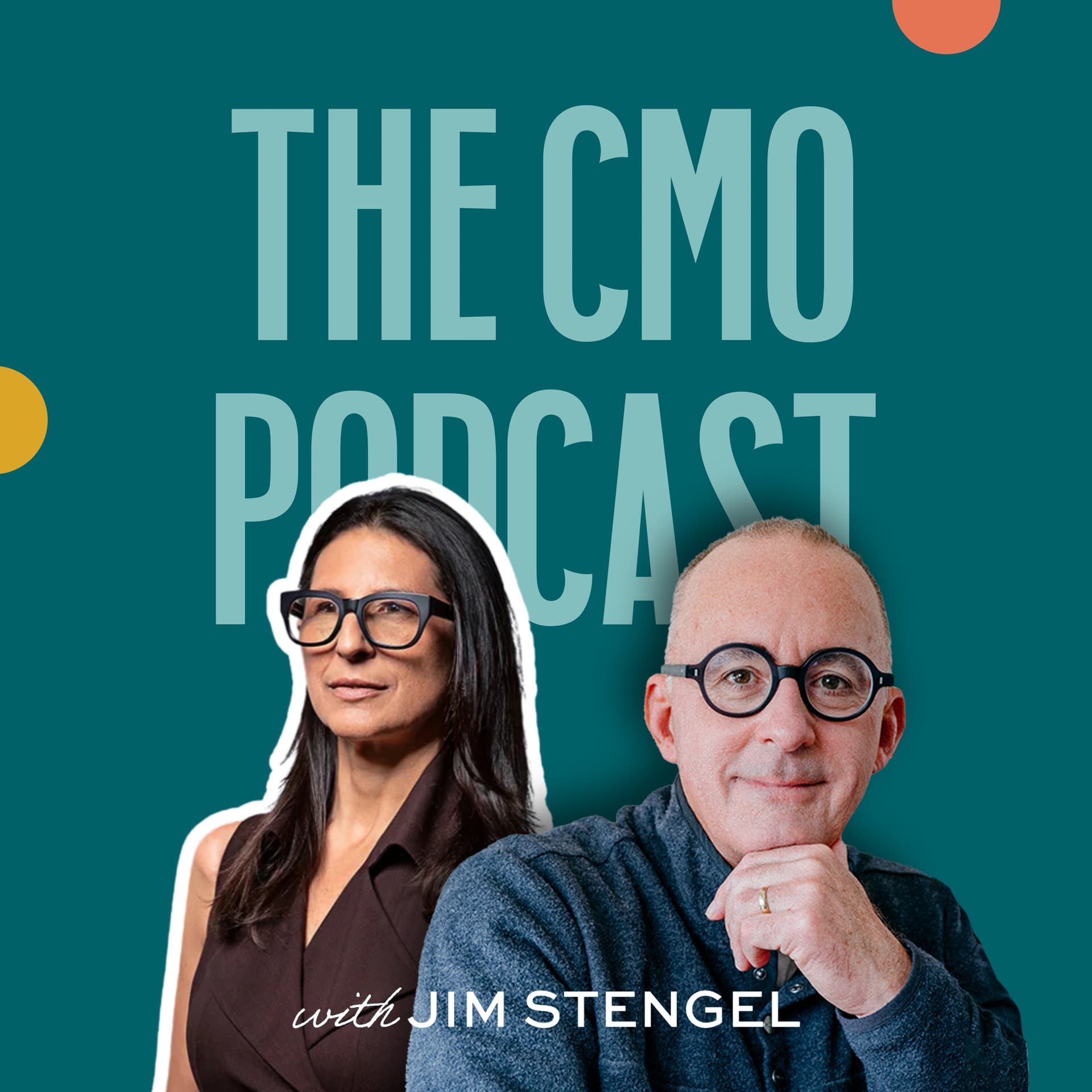
The CMO Podcast
Episode Title
Don McGuire (Qualcomm) | How Qualcomm Turned Snapdragon Into a $180B Innovation Brand
Episode Overview
In this episode, Jim Stengel interviews Don McGuire, the Global Chief Marketing Officer and Chief Communications Officer of Qualcomm. The discussion centers around Qualcomm's transformation from being perceived as "the tech behind the tech" to becoming a respected innovation brand, particularly through the Snapdragon brand, which has grown into a globally recognized consumer name.
Key Themes Discussed
Qualcomm's Journey
- Historical Context:
- Qualcomm has been a driving force in wireless innovation for nearly 40 years, contributing to significant technological advancements like 5G and AI.
- The company generates about $40 billion in annual revenue, with a market cap of approximately $180 billion.
- Don's Background:
- With 25 years of experience in the wireless ecosystem at various tech companies, Don provides a unique perspective on brand transformation.
Snapdragon's Brand Evolution
- Initial Branding Efforts:
- Don explains that Snapdragon was initially launched without a clear marketing strategy, primarily catering to tech enthusiasts in Asia.
- Brand Strategy Shift:
- Since becoming CMO in 2021, Don has emphasized elevating Snapdragon's status to a consumer-facing brand, aiming for recognition across multiple markets.
- Building Brand Value:
- The conversation touches on how brand value translates to business value, and the importance of establishing a narrative that resonates with consumers.
Marketing Insights
- Performance vs. Brand:
- Don advocates for the integration of brand and performance marketing, emphasizing that a brand must deliver on its promises to consumers and drive business results.
- Collaboration and Innovation:
- Don mentions leveraging partnerships, such as with Manchester United, to amplify Snapdragon’s visibility and impact globally. He highlights innovative contractual agreements that allow for creative storytelling.
- Emphasizing Purpose:
- The need for brands to resonate with consumers on a deeper level, especially with younger generations who prioritize brand purpose and ethical considerations in their purchasing decisions.
AI and Future Marketing
- AI Integration:
- Don discusses the shift towards AI in marketing, focusing on how Qualcomm is restructuring its marketing organization to center AI as a foundational tool for enhancing efficiency and creativity.
- Training and Adaptation:
- Emphasizes the importance of training staff on AI tools and fostering an environment where employees feel empowered rather than fearful of technological advancements.
Key Takeaways
- Brand Performance is Non-Negotiable:
- Don emphasizes the elimination of the separation between brand and performance marketing. Brands must perform, driving tangible results linked to consumer resonance.
- Safeguarding Brand Ethos:
- As Qualcomm’s product offerings expand, maintaining a clear brand ethos while adapting to different contexts is crucial. This involves intentional evolution and strong discipline to stay true to the brand.
- Leverage the CMO Network:
- Don actively engages with peers across the industry to exchange insights and tackle shared challenges, highlighting the collaborative nature of the marketing community.
Conclusion
The episode concludes with encouragement for CMOs to embrace innovation, stay connected with their peers, and continuously adapt their strategies in an evolving marketplace. Jim Stengel stresses the importance of sharing knowledge within the industry to overcome challenges collectively.
---
Additional Notes
- The episode was recorded live at the ANA Masters of Marketing conference and was sponsored by Deloitte, TransUnion, and the IAB.
- Listeners are encouraged to subscribe, rate, and share insights from the podcast to further engage with the community.
For more information about the podcast and upcoming events, visit [The CMO Podcast](https://www.cmo.com).
Written by AI. May contain mistakes. Listen to the episode to check what was said.
Chapters
Tap a time to open that second in VOUnderstanding Customer Stories
2:20 to 4:36
Discover how brands can connect with their customers' full stories.
“What if the smartest marketing play is not to move forward, but to zoom out?”
The Evolution of Qualcomm and Snapdragon
5:20 to 9:43
Learn about Qualcomm's journey and the growth of the Snapdragon brand.
“Most of them come to the big presentations.”
Building the Snapdragon Brand
9:43 to 11:49
Understand the strategic decisions behind Snapdragon's branding efforts.
“Hey, let's talk about this meeting before we jump into the interview.”
The Future of Qualcomm and Snapdragon
11:49 to 14:01
Discuss Snapdragon's impact and future direction in technology.
“It's great from a sort of a sounding board perspective.”
The Evolution of Snapdragon's Brand Strategy
14:01 to 17:41
Learn how Qualcomm transformed Snapdragon into a consumer brand and cultural icon.
“went through that process, did a fantastic job and created a really cool looking, iconic piece of clay to mold.”
Building Snapdragon's Brand Character
18:50 to 21:15
Explore the nuances of crafting a brand ethos and visual identity for Snapdragon.
“And talk a bit about the brand character of Snapdragon.”
Adapting Snapdragon to New Generations
21:16 to 23:23
Understand the importance of purpose and alignment with Gen Z and Gen Alpha expectations.
“business metrics, but also in recognition like brand Z for the first time, Snapdragon showed up this year as well at number 38 on brand Z, which is phenomenal.”
Lessons from Intel's Branding Experience
23:24 to 27:06
Learn valuable marketing lessons from Intel's history and how they apply to Snapdragon.
“What did you learn at Intel that's been most useful for you in this process with Snapdragon?”
The Role of Sports in Snapdragon's Marketing
27:07 to 28:00
Discover how sports partnerships enhance Snapdragon's brand awareness and consumer engagement.
“And our partnership with Manchester United was a bold move.”
Snapdragon's Brand Awakening
28:00 to 29:00
Discover how Snapdragon embraced brand partnerships in sports to enhance its visibility.
“And you said Manchester United, but you're Formula One, Drive to Survive, the Live Golf Tour.”
Show all 19 chapters
Measuring Brand Impact
29:00 to 30:40
Learn how Qualcomm measures the effectiveness of its sponsorships, particularly with Manchester United.
“And so we really kind of create these experiences that people sort of are manifesting themselves in their passions.”
Innovative Sponsorship Strategies
30:40 to 33:40
Explore how Qualcomm is innovating its sponsorship agreements to build stronger brand narratives.
“They're arguably the largest global sports brand in the world by so many different metrics.”
Cross-Pollination of Partnerships
33:40 to 35:50
Examine Qualcomm's cross-industry collaborations in music and technology to enhance brand resonance.
“and providing more value to our partners, which has been great.”
AI Integration in Marketing
35:50 to 40:40
Understand Qualcomm's approach to integrating AI into their marketing strategies and organizational structure.
“Is there a second area you think is really rich for you as a brand to be part of?”
Commitment to Employee Training
40:40 to 42:00
Discover Qualcomm's commitment to AI training for employees and how it fosters a culture of innovation.
“And that's been going well is in combination with the other pieces of the puzzle.”
Transforming Brand Governance with AI
42:00 to 44:47
Learn how Qualcomm is leveraging AI to optimize brand governance and scaling.
“The Writer team has been phenomenal on helping us train our people, but also make the most out of their platform.”
Celebrating 40 Years of Qualcomm
45:46 to 47:05
Explore Qualcomm's 40th-anniversary celebrations and the company's rich history.
“So I keep, I love that song, you know, by Bowling for Soup, 1985.”
Brand Loyalty and Personal Rituals
47:06 to 50:24
Hear about personal brand loyalty and experiences with Starbucks from Don McGuire.
“I'm a sneaker guy, so shoes have been always a part of my brand ethos.”
Staying True to Brand Identity
50:25 to 53:28
Understand the importance of brand identity and strategic focus in business.
“And sometimes people want to pull you in a direction and you have to say no.”
Transcript
Automatic transcript. May contain errors.0:00Before we dive into today's episode, we would very much appreciate a moment from you to make sure you're subscribed to the show on Apple Podcast, Spotify, Spotify, Spotify, or wherever you listen. along with optioning to auto-download the episodes. It really is the best way to never miss an episode along with supporting the show and the amazing team that helps me bring it to you. And while you're there, leave us a rating or review. It only takes a minute and helps more people find the show and helps us learn. And of course, share this episode with a friend or colleague who might enjoy it. We wouldn't be here six years later and still going so strong without you all, our community.
0:36So thank you for being part of it Now, onto the show. Hi, it's Jim. Joining me is Matt Spiegel, EVP of True Audience Growth Strategy at TransUnion. Matt, we talk a lot on this show about building brands that people love, but that starts with understanding them, right? Jim, absolutely. Every customer ultimately has a story, but most brands are only gonna see part of it. At TransUnion, we really focus on helping marketers connect those dots across devices, across channels, across platforms, with the goal of helping marketers see a full person behind the data. That clarity is gold. That is special.
1:09So how do you do it? Ultimately, we put together the pieces of information that help you predict behavior, help you personalize messages, prove the impact of every marketing decision at the end of the day. And our marketing solution suite gives brands the visibility and confidence to invest smarter and ultimately grow faster. So if you want to turn data into understanding and understanding into growth, visit transunion.com slash clarity. Hey, it's Jim. I'm here with Matt Spiegel, EVP of True Audience Growth Strategy at TransUnion. That's quite a job title, Matt. Yes. Welcome. Thank you. So tell me about your company and why it matters for our audience CMOs.
1:43Well, listen, Jim, the challenge of the day is that there's so much information about consumers out there and the challenge is most companies don't have all that information. You have some purchase history, you maybe have some web history, but you don't have a full picture of customers. We're working really hard across on a suite of identity products of audience products and measurement products to bring a holistic view of customers to marketers. So when CMOs work with you, what light bulbs go off for them? So Jim, we help brands bring clarity from chaos. We help them understand a picture of their customers with a 360 degree view in order for marketers to make bigger, more strategic bets.
2:16Well said, Matt. Learn more at transunion.com slash clarity. That's transunion.com slash clarity. What if the smartest marketing play is not to move forward, but to zoom out? Deloitte believes the most powerful move a CMO can make is to look beyond the next step and see the broader perspective. That's what the Deloitte CMO program is for, a place to gain fresh perspective and connect with leaders who've stood where you stand. Together, Deloitte will help you see the bigger picture so your next move isn't just fast, but right. Learn more about the CMO program at cmo.deloitte.com. Last time we talked, you said the first brand that made an impact on you as a young boy was fans?
2:56Yes. Do you stand by that? I stand by that. I'm a sneaker guy, so shoes have been always a part of my brand ethos. Is there another one? Maybe not just a young, you know, back in the day because it didn't exist back then, but a brand that is in my daily life that I literally could not exist without is Starbucks. And I don't drink coffee, which is even the weirdest thing, right? I'm an ice cream tea guy. So every day I start out with a massive ice cream tea. There's one over there. And that's my ritual. Hi, I'm Jim Stengel. I've helped hundreds of major brands discover and activate their purpose.
3:29Because when a brand's purpose is clear, compelling, and authentic, profit naturally follows. Each week, I welcome the CMOs, the chief marketing officers of your favorite brands to speak to how their job is so much more than marketing. These leaders share their inspiration and challenges along with how they try to build a full, healthy, and happy life in and out of the office. And it's that energy that reaches everyone they touch. And we're glad you're here to feel that energy and to learn from these remarkable leaders. So here we go. When you think about technology that connects our world, the phones in our hands, the cars we drive, the networks powering everything around us, there's a good chance Qualcomm is behind it.
4:10For nearly 40 years, Qualcomm has been the engine driving wireless innovation from the early days of mobile to 5G, AI, automotive, and beyond. It's one of those rare companies whose breakthroughs quietly power modern life, and they have been rewarded for this innovation. Annual revenue is about$40 billion, and market cap is about$180 billion. My guest today is Don McGuire, the Global Chief Marketing Officer and Chief Communications Officer of Qualcomm. Don has been with the company since 2016, and since becoming CMO in 2021, he's helped turn Snapdragon into a global consumer brand and elevate a Qualcomm story from the tech behind the tech to one of the most respected names in innovation.
4:52Before Qualcomm, Don spent 25 years in and shaping the wireless ecosystem from AT &T Wireless and Intel to Kyocera, Leap Wireless, and Amped Mobile. We recorded this conversation live at the A &A Masters of Marketing in Orlando, powered by TransUnion, where Don had just come off another blockbuster Snapdragon Summit in Hawaii. So here's my conversation with Don. Don, hey, welcome to the CMO Podcast again. Thank you for having me again. Hey, we're here at the A &A Masters. It's a big meeting, 2 ,500 people. Most of them come to the big presentations. You're doing one today in the afternoon and a couple hours.
5:31So I want you to go there first with us. Are you nervous about it? You know, not really. Butterflies? You know, every time you get on stage, there's a little bit of that. But A, when you know what you're talking about and you can tell a story and it's coming from your experiences and you've got passion for it. It all comes pretty naturally. Well, you're good in your feet. I've seen it many times. So it's, yeah, it's just about being comfortable with what you're doing, right? Absolutely. So what's your topic today? I'm actually going to talk about how brand value drives business value. Oh. The age old sort of challenge that we have as marketers and convincing oftentimes are the rest of the C-suite or the organization in general.
6:07And then how, what is the recipe to actually prove that out as you go into sort of different marketing activities and initiatives. And then I'm going to use Snapdragon as the case study. And so it'll be sort of a thread throughout. I'm talking to a room full of marketers, so it's going to be more show, less tell, but it should be pretty cool. Yeah. And the ANA opened up, I went to the ANA Growth Council, CMO Growth Council meeting, and I sat in there and they talked about the challenges, the priorities they're tackling. The first one was proving the value of brand to financial value of the company and the results.
6:40So you're spot on with the growth council is working. And I still think with all the data we have and all the analytics, that's still an issue that so many companies are wrestling with. So the bottom line will be? The bottom line will be if you have the right recipe, which we're not gonna reveal here because I'm gonna reveal it on stage, that ultimately what you're trying to do is drive resonance and resonance drives action. And then that action turns into results. And then those results you can share back, excuse me, share back with the organization. There's lots of tailwinds in our favor. I was just at the Interbrand 100 event last week in New York and the data that they shared with regards to the Interbrand 100, you know, for example, over the last 20 plus years, the Interbrand 100 has outperformed the S &P 500 and the NASDAQ 100 from a business company results perspectives.
7:26So I think that there's lots of tailwind data in our favor. I think we need to help ourselves. I think we need to stop talking performance versus brand. It's, you know, your brand has to perform. So if we can help ourselves, I think that's another thing we can do. Yeah. Yeah. Mark Pritchard said earlier in this meeting, is there any other kind of marketing other than performance marketing? Right. I mean, it's just like it all has to have some sort of objective. Yeah, that's right. So I think we can help ourselves a little bit too. Well, you jumped up to what? The 39th most valuable brand in the inner brand.
7:53First time on the list in our 40-year history. Yeah. So what's that about? What do you think's behind that? Well, when I got the call a couple of days before, I was obviously pleasantly surprised and happy and validated from all the good work we've been doing. So Interbrand tracks the company for three years before they're even eligible to be on the list. Once that sort of process is completed, then it's all about ranking and establishing those rankings. So the first question I asked to Gonzalo, who's the CEO of Interbrand, I said, how did we get here? I mean, I kind of have an idea about basic on what we've been doing, but I'd like to hear your methodology a little bit more.
8:30And it really came down to three things. You know, I'd say 60 to 70 % of it is what we've been doing with Snapdragon, to build Snapdragon beyond a tech enthusiast brand to a household name. And that was a major driver of it. Now, Interbrand, if you make it on the list with Interbrand, it's based on how financial reporting happens in your company. So, Snapdragon as a brand would never show up at Interbrand 100 because we don't report financials on Snapdragon separately because it cuts across product categories and businesses. So, Qualcomm obviously is the name on the list. So about 65 % to 70 % is the work we've been doing there.
9:03And then I think the other two things that he mentioned were our diversification strategy. The Interbrand 100 list this year is about companies who are entering new ecosystems, building new ecosystems, and disrupting and driving transformation. And Qualcomm, we've been on this diversification journey for the past several years, and it's working. And so it's proving out even in places like this. And then the third thing is our tremendous partnerships that we've announced over the last several years with Aramco and Meta and Microsoft, et cetera, and how we're partnering with some of the biggest companies in the world across different business sectors, things like that.
9:38All of that together kind of culminated in us popping on at number 39. Yeah. Congratulations. It's great. Thank you. Hey, let's talk about this meeting before we jump into the interview. Do you come every year to the ANA? It's my first time. Oh, really? Yeah. Oh, wow. My first time. So tell me about that. Why'd you choose to come? You were invited to speak? Invited to speak. So I thought I've never been, you know, as a CMO and as a marketer, there's a lot of things we can go to and participate in. Almost every weekend. You kind of have to just sort of prioritize. And, you know, I sit on the board of the Ad Council.
10:08I'm on the Wall Street Journal CMO Council as well and some other things. So it was just a matter up to this point of just prioritization. And for me, timing is everything, right? So I think we have a great story to tell in this moment and that I think the audience will benefit from. And so I think this was a great year for me to show up as a speaker. As you said, there's lots of challenges and unique opportunities that are facing marketers right now. And so I think participating in that conversation hopefully is helpful. Now, when you think about it, you can go to a meeting every week in our industry.
10:38Yeah. Where do you feel like you learned the most over the last year or two of meetings you go to? Oh, wow. I mean, I learned a lot from my people, from my team. But as far as external sources, there's been great forums. I have had the honor and privilege of being on the Forbes, a top 50 CMO list for the past four years. And that event that Seth Matlons puts on is an amazing event. I learned a lot from my, from my colleagues there. And that is a big sponge moment for me over the course of the year through that network of CMOs that I've built. I don't hesitate to pick up the phone and call Emily Ketchum from Lenovo or call Craig Bromers from American Eagle and say, Hey, like I saw you did this and this is, you know, it's really great work, you know, tell me about it.
11:18And I just sent Lorraine Tuhill from Google and email because I just love the new pixel stuff that they've put out. And so, you know, that's another sort of constant exchange and dialogue and learning, you know, for me. I should pause on that for our audience. That's a very powerful thing you just said. Not everyone thinks to do that. Right. And I think it is, we're not alone. No. So many people are wrestling with the same issues. You can learn so much from these people. They're happy to do it. Our industry is generally pretty generous. Yeah, absolutely. So I just think when you're wrestling with something, think about someone else who may have the same kind of issue or had the issue, give them a call.
11:54It's just so good. It doesn't cost anything. It doesn't cost anything. It's great from a sort of a sounding board perspective. And I value that tremendously. Let's talk about Snapdragon. I think that's what you're going to talk about on the big stage. But it was launched in 2007. So it's an 18-year-old brand or so. It's a huge brand. I know you don't report it separately, but everything I deduce and read about, it's a gigantic brand. It crosses your various businesses. So could you talk a little bit about, take us back to 2007. What was the insight or the catalyst to launch this new-to-the-world brand slash brand name, sub-brand, I guess, of Qualcomm?
12:35And take us a little bit through about how did you build it from nothing to a monster in a good way, a major driver of your growth? Well, it predates me actually. So I've only been at the company nine years total, CMO for four. So the stewardship of the brand has been under my tutelage for four years. Prior to that, there is a lot of folklore about how did the brand just come to exist. And what I can tell you is that a long, long time ago, before my time, the company really transitioned from more of an IP technology licensing company to a product company. And And with the advent of that, introduced its first kind of set of semiconductor chips.
13:12And they needed a name. And the target market, the primary target market at that time was really Asia. And a lot of the customer base was there, whether it be China, Taiwan, Korea. And so they decided to use, I believe it was in our brand, to do a name exploration. And several things came to bear. One, dragons are very revered in folklore, especially in Asia. Snapdragon in translates into Mandarin as Zhao Long. It's like fast, you know, performance, fast dragon. The color red is a very popular color. And our icon, our fireball is sort of the yin and the yang, the power performance thing. So it all kind of came together.
13:50At that time, there was a little bit more focus on a dragon as a symbol of what Snapdragon is. We've kind of moved away from that, except for in gaming. So it kind of, it got launched. And I think whoever went through that process, did a fantastic job and created a really cool looking, iconic piece of clay to mold. Fast forward and at Snapdragon, it sort of just kind of hummed along a little bit. And I think the company really, after creating it, really didn't know what to do with it because the company foundationally and fundamentally is an engineering and technology company and really didn't understand the value of brand or building the brand or what it meant to build the brand.
14:28They named it, they created a logo, and they thought they were done for the most part. So fast forward to I joined the company in 2016. Snapdragon was kind of experiencing very good sort of foundational awareness and affinity in Asia, but that was pretty much it. And that's the only place we'd put any investment behind building it as a more consumer-facing brand. And that was primarily with tech enthusiasts in Asia who tend to be more tech savvy anyway, but it was very unstructured and not purposeful. So it was kind of sitting there and I was really thinking, wow, this is powerful asset. There's more that we can do.
15:03And as we look to diversify and expand and grow where Snapdragon kind of lives, we're going to enter markets where we're not the leader or it's not a greenfield opportunity where we're going to have competition. So the power of building this brand is really going to pay off for us. So before Cristiano became CEO and I became CMO, we had a conversation and I said, I really think that we need to focus on Snapdragon a lot more. as we look towards what's the future of mobile, as we look towards other product categories, because I think it's going to be a really important component to our success. And he said, I agree.
15:35And I can't tell you how refreshing it is to have a CEO who is supportive of what you're trying to do. So sort of started formulating a plan to really bring Snapdragon to the light more. And that's where it all started. And then since then, it's been a tremendous journey of challenging the status quo with regards to investment portfolio and investment strategy, convincing the rest of my peers in the C-suite as well as the company that it was worth spending the money and the time to do this and that there was going to be true results and building that credibility. And we've done that. We made another really, really important pivot about a year and a half, two years ago, when all this momentum and when Snapdragon started to be more well-known around the world, where Cristiano came to me and said, I want Snapdragon to be a consumer brand and I want it to become a cultural icon.
16:27It's a good brief. And I was like, amazing. Do you really know what you just asked? Because that's a big thought. And I said, are you prepared to really do what it takes to get there? And I said, it's exciting. I mean, it's any CMO's dream to have that be asked of you, but it's a lot. and from a company who couldn't spell the word brand seven, eight years ago, it's a lot, a lot. But he's been committed and excited. And that really took us to the next level. And that's what you see today over the past four years, all the work that we've put into. That's why Snapdragon Summit is what it is today.
17:05That's why we have like 50 million views of an event every year by just the general public because they're interested in seeing what we're doing. And of course, the number one challenge is you can't walk into a store and buy a Snapdragon. So how do I take that five and a half years of experience at Intel with the Intel Inside playbook that I learned and knew very, very well, but put it in the context of something much bigger, which is our opportunity with Snapdragon and kind of create a 2.0 version of that. And that's what we've been doing.
17:42We all want to stay ahead of the digital curve. And IAB, the Interactive Advertising Bureau, invites you to do just that at the 2026 IAB Annual Leadership Meeting in Palm Springs on February 1st through 3rd. If you're a qualified consumer brand or agency leader, you can access free passes and travel vouchers. And for everyone else, you can take$500 off your ticket with code ALMCMOPOD26. This is your chance to join a three-day gathering of the industry's brightest minds and boldest voices shaping the year ahead. You'll hear agenda-setting conversations, candid fireside chats, and dynamic breakouts on the topics that matter most, from AI and commerce media to measurement and addressability.
18:26This year's lineup concludes everyone from Kevin Bacon and Bozema St. John to creator Remy Bader, along with leaders from Forbes, Major League Soccer, General Motors, and Meta. Visit IAB.com slash ALM to learn more. And check out the link in the show notes to register and receive$500 off your ticket.
18:49Well, it's a great name, as you said. It really is. And talk a bit about the brand character of Snapdragon. Sure. Every brand obviously has an attitude, a tone, a point of view, a voice. So talk about that because I think you have managed that pretty well. Yeah. One of the things that we needed to bring to, as I mentioned, the brand was sort of unstructured and undisciplined. We had to bring some structure in architecturally speaking to how we were going to build success. So first we had started with the fundamentals, brand ethos. What is Snapdragon? What does it stand for? Who is it in service of?
19:23And then how do we show up in the world? and tell our story. So we start off with some great assets, right? Everyone loves a good icon and we have a tremendous icon. The fireball is a tremendous icon. And our ultimate goal is to have the fireball stand on its own. And whenever you see that fireball, you know, it's Snapdragon because one of the challenges we have is Snapdragon is kind of a long name. So when you put the fireball and Snapdragon together, spatially speaking, it can be challenging at times, but we really love it in general. But we had to build a brand ethos. So we started out with what's our sort of manifesto?
19:52What does it stand for? Who's in service of? And we built from the past with a nod to the future, our signature red color. And we evolved that. We introduced a new color palette for the brand to kind of inject boldness and joyfulness, which is part of the ethos into it and how we visually show up. Everything from our photography style to how we talk about it and copy, all that was formalized for the first time. And I call that Snapdragon 2.0. And we've been on the 2.0 sort of train for now about three and a half years. And we actually are just about to roll out 3.0, which is a refreshed brand ethos based on what we've learned over the past three or four years.
20:33And the good news is that it's evolving in a really, really compelling way. We're seeing all the really thoughtfulness that we worked with, with our agency partners, as well as the internal team to put together kind of the meaning of this whole thing really pay off and where it shows up. And it's really cool because it lives in multiple product categories. So at a macro level, it has to stand for something that people can understand and people can rally behind. But then in its instances, it also has to be the steward of product truth, whether it's in your car or in your phone or in your PC or in your glasses or in your watch.
21:08And so we have to bring that context as well. It's been challenging and fun and we really like where we're headed. And we're seeing the fruits of our labor will pay off not only in business metrics, but also in recognition like brand Z for the first time, Snapdragon showed up this year as well at number 38 on brand Z, which is phenomenal. And then of course we talked about interbrand. So that's been great. And then from a business perspective, my finance team could not be happier that the pull that we've created with Snapdragon in product categories like smartphone has enabled us to increase ASPs, to maintain healthy margins and to grow market share.
21:41That's what a brand does, right? That's what a brand does. You know, as you're speaking, I'm thinking of Rocket and Jonathan Mildenhall's impact there. You know, he went there, I don't know, it's been two years, maybe a year and a half. And I've watched online a lot of the videos of him internally as well as externally kind of restaging, renewing the ethos and the attitude and the tone of voice of Rocket. And it's been very positive, very energetic, good for the business. But actually, I think there's a lot of parallels with what you're doing with Snapdragon and what he and they are doing with Rocket.
22:07And when you continually evolve, like Rocket has as well, you have to look at new pieces of the puzzle that you might be missing. And then you have to understand kind of where generationally people are going with their attitudes and figure out, are you being left behind? Are you tracking? Are you getting too far ahead? And one of the things that, again, is part of our Snapdragon 3.0 or 2.5, 3.0 evolution is we are taking a cue from Gen Z, Gen Alpha when it comes to brands of purpose. when you talk about affinity and loyalty, you know, it's not just good enough to have a great product anymore, especially with these generations.
22:43They want to feel good about their purchases and the brands they associate themselves with. And they want to feel like those brands are also doing good. And Snapdragon, because of who we are and the technology that we, we do a lot of good because we enable people all over the world to have accessibility to technology and what that can do for them in their daily lives. So that in itself is amazing. It's an amazing story, but we also had to lean in. And so we've, you know, we went down this sort of purposefulness path a little bit with the brand and built some associations and some partnerships that kind of put an accentuation of that goodness.
23:19And again, it's just another aspect, another dimension of the brand that we've introduced in the last year and a half. What did you learn at Intel that's been most useful for you in this process with Snapdragon? First and foremost is that, and I think ingredient brand is a dirty word, so I don't like using it. You can bring relevance and resonance to something that is less tangible and you can tell a story around that. And Intel did that masterfully. Intel Inside was a masterful master class in marketing, something that you can't buy. So I took a lot of the pages out of the Intel Inside playbook.
Read the full transcript
23:54And then I also learned a lot from the limitations of that story. That Intel Inside story was limited by product category. Intel as a company sort of missed a couple really key inflection points in the technology sort of revolution. And so over time, that opportunity became smaller and smaller and smaller and more verticalized. And then when you saw, you know, after building it and establishing it, they took their foot off the gas and started focusing more on performance. And you've seen sort of the degradation that that has had. So understanding that, learning from that and making sure that we don't make the same mistakes or heading down the same path.
24:30but what they've done to take the brand and then couple it with every part of whether it's a linear funnel exercise or a non-linear funnel exercise was a masterclass for sure. I had you on the show about four years ago. You were a new CMO. You're in your first year as CMO. We had a great chat. This one's even better by the way. And my three takeaways though, I look back on that. You talk about the need for marketing to be accountable for business results. You talk about how companies need to own their narrative and we're speaking a lot about that right now. And you talk about how leadership and leaders need to evolve to build stronger skills and empathy.
25:04Now we're here four years later, you're a more experienced, more confident CMO because you've been in the world. How do those takeaways sound? Is that done today as CMO or would you add a few things to that? Yeah, I think progress has been made, but there's still a lot to do. You know, we were four years ago, we were just coming out of COVID. I mean, I became CEO in 2021, so we were kind of still in a mess. I think the empathy piece of it is still really important, but the context is a little bit different. Things have shifted so much. And with the advent of AI, there's a whole new complex algorithm that goes into that equation.
25:39And as we transform marketing, and as we're all talking about it here at ANA and just pretty much everywhere over the past year, how AI is going to transform marketing or the use of AI will transform marketing and the discipline, empathy is going to be even more important because people are scared. And there's lots of fear out there about what is it? Is AI going to take my job? Is it going to replace my skills? So empathy is going to be, as we go on this journey together and individually, empathy is going to continue to be really important. And it's not about like getting you out of your locked down house and back into society empathy.
26:10It's, or because you are locked down in your house and you have no contact with anybody to empathy about upskilling, job retraining, and showing the benefits and integrating the benefits of AI into your workflows so that it seems more natural. and less daunting. So I think that empathy still applies, but in different contexts. Accountability is still something really, really important. I think we're still on that journey of convincing the rest of the C-suite about the importance of the discipline as a business driver, but we've made a lot of progress. And I think in some companies, it's a lot easier because especially in packaged goods and things like that, the brand is the business.
26:47right? If Tide loses its brand cachet, the business falls apart, for example. Not that case in technology in some cases. So still on that journey, but a lot of progress has been made. And I don't think we'd be able to do what we've been doing for the past three years if we hadn't built that credibility and if the company hadn't become believers in what we've done. We've made bold moves in the last three years, especially around partnerships. And our partnership with Manchester United was a bold move. And I would have put a 5 % probability on that whole partnership actually coming to fruition when I first engaged with them on the topic.
27:23And the fact that we pushed that boulder up the hill and got over the finish line is a testament to progress that we've made. So a lot of boldness has come into play since I started that I didn't really know how it manifests itself at the beginning, but I knew we had to do something. I do want to talk with you primarily today with the rest of our time about sports, actually. You just took us there. And I also do want to talk about AI because I heard you speak about AI at a meeting at Deloitte with CMOs a couple months ago, and it was a fabulously useful talk. So I want to go there. But first on sports, I mean, I've heard you say that it's become a very powerful platform to scale Snapdragon's awareness.
28:03And you said Manchester United, but you're Formula One, Drive to Survive, the Live Golf Tour. I mean, you're in a lot of places. So we didn't talk about that four years ago. That's true. Right? It didn't really exist. Right, right. So I want you to go there. Why did you have that awakening? I mean, sports is a major part of your platform and your brand now. So how did you come to that? How do you feel about it? Is it working for you? What could others learn? It all starts with how and where do we want to show up with the brand? And how do we attach ourselves to people, our audiences, in a compelling way that's relevant to them?
28:36So instead of just talking about technology for technology's sake or speeds and feeds and specs and things like that, and features and benefits, what Snapdragon really does is it enables people to explore their passions and experience their passions in very compelling ways. If we are inside your phone, we make your pictures look better. We make your music sound better. We make your ability to watch your favorite team in 8K better. And so we really kind of create these experiences that people sort of are manifesting themselves in their passions. And people love art and they love photography and they love music and they have sports.
29:11And that's where they find affinity in their lives. And that's where their passions lie. So we decided to attach ourselves and the brand to people's passions, sports being one of them. I'm a big believer that people feel passionate about players and teams. not so much leagues. So that's where we've gone with our sports partnerships, mostly at the team level. In the case of Bryson, at the player level, although he has a team too with the Crushers. But that's where we started in sports. And then to your point, we wanted to align those sports activities with where we saw business opportunity to build more brand affinity for Snapdragon with different audiences across sport.
29:50And it's working? I mean, it's still in the early days. I mean, how do you measure if it's effective? Is it qualitative, quantitative? I'm going to share some data today on our first year of being in the front of shirt partner with Manchester United. I mean, again, I mentioned earlier, we knew this was a big deal. You know, it's a large investment on an annual basis. And, you know, they presented me with the numbers, you know, and that was part of the business case to getting it there. But then the results that we've seen after the first year have just blown my mind. Wow. I knew this was one of the most valuable pieces of real estate in sport.
30:24I didn't know how valuable until we got the results after our first year. And this is with a team that isn't really doing very well on the pitch, but it almost doesn't matter. Because when you're partnered with a brand like Manchester United, their brand ethos is so big. They're a global sports brand. They're arguably the largest global sports brand in the world by so many different metrics. 1.1 billion fans around the world. It's not just about Manchester. It's not about the UK. It's about their brand affinity around the world and what that can do for Snapdragon globally. So it brings us massive scale and reach for the brand.
31:00It allows us a massive storytelling platform to do amazing things and create amazing content. And I mentioned on stage today that after season one, 9.5 billion impressions for Snapdragon, which is the AVE equivalent of 182 Super Bowl ads in one season. Wow. with a team that ended up 12th in the pre-week. Pretty phenomenal. Upwards of almost a half a billion video views of the content that we've done with the club. Our launch video with Eric Cantona was the most watched piece of Manchester United content for a front of shirt launch in history of the club. So what's driving it? It's how you're doing it too, right?
31:38Well, yeah. I mean, it comes down to execution and it comes down to the recipe I talk about in my conversation today on stage. It's really about knowing your audience, providing context, making it relevant, driving that resonance to action. And so I've shared some stats on stage today as well about 85 % of Manchester United fans are aware of Snapdragon, think it's an amazing technology, provides premium performance, and has genuine love for the brand. That's critical. That's - That's only after a year or two? That's only after a year of being a front-of-shirt partner. You set a tough benchmark.
32:11Yeah. I mean, it's pretty amazing. So those KPIs and those stats and the results that we've seen have been phenomenal. And we're not stopping there. Another thing that we've done is we've tried to drive innovation into our contracts. There's these standardized store sponsorship kind of deals that people do. And you're basically exchanging money for assets, but we wanted to build some innovation into the contract. And with the cooperation and collaboration of the folks at Manchester United, we were able to do things like once every season, we can choose a cause of our choice and replace the Snapdragon logo with that causes.
32:45and drive a whole storytelling platform around that. I talked about brand with purpose before. That's one avenue and asset now that we have to tell that part of the Snapdragon story. So that's phenomenal. And I share the Red case study on stage today and the partnership with Red that we had this season, which was a huge success. We also have pass-through rights. You know, Snapdragon, it lives inside of so many amazing products from amazing brands. And I have amazing brand partners. And as part of the marketing mix, I market with them. and alongside them. And so I want to be able to bring them into our world.
33:18So I have pass-through rights in the product categories that I own. So I can bring a Samsung in. And on the smartphone side, I can bring a Dell in on the PC side. And we can storytell together and I can help them get more value and attach themselves to this brand ethos that we're building between Manchester United and Snapdragon. That's another piece of innovation that most sponsorship agreements do not include that has been super, super productive for us and providing more value to our partners, which has been great. So those are some of the things that we've done. We've done that with our partnership with Mercedes and Formula One, which the advent of that was really about our growth in automotive and other things that we've done.
33:52So it is working. We're trying to drive innovation in it. We're trying to look at things differently and how we exploit these partnerships. And then we also are very committed to making sure our technology is helping our partner as well. So it's helping Manchester United Football Club become a better Manchester United Football Club through the use of technology. It's helping Mercedes, AMG, Formula One become a better team through the use of our technology. And we think that's really important. It's a sort of two-way partnership. That's a fabulous story. I mean, what is normally a transaction and a contract that is transactional into a creative, innovative partnership?
34:29Yeah. And we're always learning from others. I mean, I got to give credit where credit is due. I think what Meta has done with WhatsApp, and they're also a Mercedes partner, what What they've done with their partnership with Mercedes is incredible. And with the storytelling platforms of the Netflix documentary on Kimi Antonelli and how he won the seat on driving the car down Fifth Avenue in New York with Lewis. And that was really, really amazing innovation and how they structured their relationship with Mercedes to be able to do that. I was a little envious of, to be honest with you. And as we're looking at our continuation with the team, we're looking at building some of that into our contractual partnership as well.
35:36out and gain fresh perspective. Deloitte will help you see the bigger picture together. Learn more about the CMO program at cmo.deloitte.com.
35:49You talked about passions to align your brand with. Sports is a big one. You threw out some other ones. Is there a second area you think is really rich for you as a brand to be part of? Yeah. Music is really rich for us. We've done a lot of things we've dabbled in. We had a partnership with Live Nation, done some things there. We have our Snapdragon Sound studio series that we've done. We've done some things with iHeart in the past. We haven't really nailed something that I think is long-term. So we're continuing to learn in that area, but we've brought music into our other partnerships. We just did a collab with Manchester United and the artist Kaleo for the second season launch of The Front of Shirt, where we happened to connect the dots between Kaleo, who's an amazing band from Iceland, who's a huge Manchester United fan, the lead singer, and he's always wanted to perform at Old Trafford.
36:37And so we brought that together with the front of shirt launch. There is a song that United fans love. It is a re-wording of Country Roads. So he did a cover of that, played it on the pitch in Old Trafford. Pretty good. Very, very good. And it was all shot on Snapdragon. And then we released that as part of the second season. So we've kind of intermixed things together. We like to cross-pollinate our partnerships. So that was super compelling. So music, definitely. And then with photography or videography or just the whole art of creation that, again, devices that are powered by Snapdragon can bring a creator's ideation process to another level and the delivery to another level, we are actually launching Snapdragon Studios.
37:21So we're going to be producing original content in partnership with Live Nation, Sony Pictures, and we're going to give a go at a studio. Physical space? Virtual and physical. Virtual and physical. Yeah. Super. Now, I was with you, I think in August it was, late August, outside Dallas at Deloitte's University, the training center. It's an academy they do for next generation CMOs, great program. And I heard you speak about your thought about AI in your organization, in terms of skills, training, putting it at the center of where you're going. And it was a beautifully told story, massively helpful for the audience.
37:56So I'd like you to tell us a little bit about how you have thought about your organization with this unbelievable technology. And you talked about the empathy skills have shifted, and I agree with that. But it was a really wonderful story you told. So if you could just go how you're thinking about your organization, setting it up, the right design, work structure for the future? Sure. Well, I mean, we'd been going down this path that I think a lot of marketing organizations and CMOS have been going down, which is the introduction of AI tools. And so you have your existing organization and how it works and your existing workflows, and then you have these AI tools.
38:31And they were kind of almost sitting side by side. And then you were trying to connect the dots wherever possible. Oh, this tool is great for copy development. We're going to plug it in here. Oh, this tool is great for video editing. We're going to plug it in here. And we decided to like take a pause on that for a second. And again, after consulting with some of my CMO friends, I was at a lunch with Jonathan Adashak from IBM. We were chatting and he was like, this is what I'm doing. I'm blowing up my organization. I'm putting AI at the center. I'm building a systems architecture. And then I'm reorganizing my team around that.
39:03And I was like, wow, that's pretty cool. I think I'm going to do that. So I came back from that conversation and we started down a marketing evolution exercise path where we are working with partners and our internal team. And we are building a systems architecture where AI is not a set of tools that sit over here, but there's this AI systems architecture that is a foundational layer, then building workflows on top of that and process on top of that. And then people around that. And we call it AI powered human led. And so that's the tagline we came up with for the internal team to market it to my marketing team.
39:42Really, it is AI powered and human led. And in the middle of the process right now, we hope to roll out kind of phase one in January. But it's a really new way of looking at this that we, I feel, will yield not only a better incorporation and integration of AI into the marketing discipline, But it will eliminate a lot of the fear because it will come with filling gaps, upskilling, training, and making sure that AI is truly helpful in the process of marketing and not friction driven or friction creator. So that is how we're approaching it. And so far, so good. We are almost complete with the systems architecture piece.
40:27And that's also been a great exercise on its own because we've been trying tools, we've been experimenting with stuff, but we didn't have everything figured out. And we've been working with a company called Proficient and they've been helping us kind of fill in those gaps with maybe the tools that we have can be expanded upon, or maybe there's a new tool that we need or whatever to kind of fill in that architecture. And that's been going well is in combination with the other pieces of the puzzle. But I have a great team who's working on it and I'm excited about what the results are going to be.
40:55I was very impressed when I heard you speak last time about the discipline and intentionality of the training and the inclusion of people and the phases of training. One is general training on AI and then on some of the tools that are an important part of your future. Could you speak a bit about that? It's a real commitment to your people. It's a real commitment. And obviously, being a company that's in the business of AI, as well as trying to integrate AI, we had to get on things pretty quickly. And so we have an AI council at Qualcomm. I'm on that council where any new tool or any new AI kind of thought is kind of brought through the council and vetted for safety and enterprise readiness and all sorts of criteria.
41:32And once it gets through, right, then we go into test and learn or eval and then scale. So it starts there. So every Qualcomm employee has to go through AI training. And that's primarily driven by legal, which is sort of the do's and don'ts. And don't be dropping IP and proprietary code into ChatGBT. That's a no-no. And so everyone has to start there. And then we have our individual tool training. A good example is with Writer. Writer is a tool that I've deployed broadly. It's even now being deployed outside of marketing because people are seeing how valuable it is across the organization. The Writer team has been phenomenal on helping us train our people, but also make the most out of their platform.
42:09we've created like 25 custom apps we've now we are now moving into agents in their agentic platform and rolling that out as sort of a first mover and we're saving about 2400 hours a month wow by just deployment and use of the tool kind of with our super users on top of the ai training we sort of do this super user fomo type of thing where we pick some key people we get them using the tools they see how useful and helpful it is they evangelize and then people like oh i want that too And that's how we build scale adoption throughout the organization in a kind of natural way. And it's worked so far.
42:46And now we're going to, again, enter this bigger transformational phase of this. And that's where we'll increase the upskilling piece of the puzzle as well. Because there'll be things like brand governance, which in the future, based on this architecture, 99 % of it will be done by AI. And so if you've got multiple people doing brand governance, do you really need those people doing brand governance? Or do you need one person who spends a little bit of their time loading the rules into and updating those rules when they need to be updated, but then you can redeploy those other resources into other things.
43:18And so that's really where we're at today. Now for the CMOs listening to this, what's the biggest lesson if they want to do what you're doing and you were inspired by IBM, you're doing it, it seems to be going well. What's the biggest lesson you would share with them? Make sure you know what your objective is. So my objective and Jonathan's objective were different. I happen to be severely under-resourced marketing organization from a human capital perspective. So I'm really using this exercise to scale my capabilities. I like to say the world moves at the speed of TikTok. It's really hard to keep up.
43:50I could add 500 people to my organization and still not be able to keep up. So for me, it's a scaling exercise. I have to keep up with the pace of the business, our diversification, new things, and I'm not going to be able to grow my labor force the same rate as needed. So AI is going to be a scale tool. In some cases, it will be a tool to become more efficient in some marketing organizations where size is a problem or size has created slowness or bureaucracy, your objectives might be different. So my objective and Jonathan's, although we're deploying the same philosophy, are different. And that's okay.
44:23So just understanding your objective, I think, is number one. How is this going to help you and your organization? And in my case, it's really about scale, which is less scary, I'll admit. And so I think the one takeaway is start with a really solid objective, going into it, and then customize your process around that.
44:48Hi, everybody. I'm Andrea Sullivan, the CEO of Vive. And we have produced the CMO podcast with Jim Stengel for many years. And I'm sitting in his seat right now. It's so exciting. I wanted to tell you a little bit about one of our programs. It's called Vive by Vayner. It's a 12-month program that's designed for C-suiters and founders. And we want to help people to grow their businesses, but also to grow themselves. And so we bring in people from Shark Tank to talk to our founders. but we also focus on wellness. We want to make sure that people are leaning into becoming their best selves, their best and happiest selves.
45:28So if you are someone that wants to learn how to grow your business and grow yourself, check us out at vive.co. That's V-Y-V-E.co. We'd love to talk to you.
45:46i want to move to the creative brief in our time remaining your brand is 40 years old your company is 40 years old this year are you having a birthday cake you're doing anything we did an appropriate i think amount of celebration we had in new york in may we had like a 40th anniversary celebration at nasdaq and then we hosted some partners and some media at a cocktail reception in Manhattan where we rolled out 1985 when the company was founded. So I keep, I love that song, you know, by Bowling for Soup, 1985. So we basically showed technology from 85 and then technology today. So it was a fun interactive experience.
46:22We had like video games in 1985 versus video games today. We had computers and things like that. So it was, it was interesting. Then we, for the employee base, we've had regional celebrations all over the world throughout the summer. And then we had a big celebration in San Diego in September. at Snapdragon Stadium, where we invited the entire employee base to come and celebrate the 40 years of history. We rolled out some cool new technology. We had a humanoid robot walking around and we had a bunch of other stuff. And then Cristiano, we had our founder, or when Jacob's come and speak, who's 91 now.
46:56It was just a really fun time, a sense of pride for everybody. And it's good to celebrate these things. We didn't go crazy, but it was the right amount a celebration. Last time we talked, you said the first brand that made an impact on you as a young boy was Vans. Yes. Do you stand by that? I stand by that. I'm a sneaker guy, so shoes have been always a part of my brand ethos. Is there another one? Maybe not just a young, back in the day, because it didn't exist back then, but a brand that is in my daily life that I literally could not exist without is Starbucks. Yeah, Starbucks. Say more. Well, every day, pretty much every day, no matter where I am in the world.
47:34My ritual is I, and I don't drink coffee, which is even the weirdest thing, right? I'm an ice cream tea guy. I love their ice cream tea. So every day I start out with a massive ice cream tea. There's one over there and that's my ritual. And yeah, I could go to a coffee bean or a different place or Pete's, but it's not the same. So you're a real brand fan. They have a CEO who just had his one year anniversary, Brian Nickel, who came from Chipotle. He's a friend, XPNG guy. How do you think he's doing? From what I can tell, I think he's making a lot of really, really good positive decisions to move the brand and the company in the right direction.
48:10He's got different challenges, obviously. He's got a massive retail sales force or people force and all the challenges and opportunities that comes along with that. He's got stores. He needs to continue to modernize and update and keep up with trends and consumer behavior and how people want to buy and consume things. I think pulling back the menu a little bit and kind of creating more purposefulness to it, I think is a good thing. Got a little wild, I think, and really confused the baristas and made it really complex. And I think he's found the right balance there. If you look at the results and you look at some of the recent press I've read and some of the interviews I've listened to of him, it sounds like he's applying a really good recipe for success.
48:56Yeah, a good playbook. Yeah, a good playbook. It was interesting. I think their stories changed quickly, shortly after he became CEO. Absolutely. The content they put out was more about who they are. Yeah. They went back to their roots. They did, yeah. It's almost a rallying cry internally, I think. Yeah, and which I think doing that, like going back to the heart and soul of who you are. By the way, before you even start to deploy audience metrics and context and relevance, you have to know who you are as a brand. And when things start to go awry, when you start to deviate from that, and we've seen that recently in a couple of examples that we all can probably articulate where things just go south really fast, by the way.
49:39It's never been more important to know who you are. Mark Pritchard, my successor, CMO at P &G, has been there a long time. He was chairman of the ANA. There was a switch that was announced yesterday. That was his talk yesterday. He went through several P &G brands, back to its roots, back to its core, showed some of the original ads. Wow. And how obviously times have changed, but they stayed true to the spirit of the founding of the brand. Yeah, for sure. And it's challenging as you, like even with us, as Snapdragon appears in more product categories. Sure. Right. How do you stay true to that brand ethos, but put it in the context of that product category?
50:13And it's a challenge. I mean, it's not necessarily easy all the time, but it's also not unachievable, right? if you're disciplined. And it's easy to be distracted. It really is in this world. It's really easy to get distracted. And sometimes people want to pull you in a direction and you have to say no. Right. And it's not as easy as it sounds. You live in San Diego. What's your favorite hack in San Diego or your favorite place to be? My favorite place to be is El Pueblo. Oh, okay. Taco shop. Okay, good. My favorite Mexican food place in San Diego. Favorite activity outdoors? You know, I love going to the beach.
50:47What's your favorite beach? I usually go to 21st Street in Del Mar. Yeah, that's just since I was a kid because I grew up in Solana Beach. So, you know, I'm a local. That's kind of my favorite. I just love touching down. I mean, I travel a lot for work, but I always love touching down in San Diego and walking out of the terminal and just exhaling. It's a good feeling. It's a good feeling. And Terminal 1's open now. That's right. Finally. The airport's less of a nightmare. Yeah. So we're here at the ANA. Bob Liudis is the CEO. He always ends every on stage. You'll experience this today. When you're finished, he gets on stage, asks you a few questions.
51:21But the last question is, what's your advice to the audience to do when they return to work? So I want to kind of ask that of you here in this small setting. I mean, you're an amazing CMO. Thank you. I'm not just saying that. I think this discussion has been rich. You're more confident than when I talked to you four years ago. You're having fun. I have some battle scars. Yeah. But I mean, I think you're really thriving in this role. Thank you. So I think your answer to that question, I think, is an interesting one for our audience. So as you think about all of your experiences since you've been CMO, what we've talked about today, what's one thing you'd love the audience to think about, ponder, consider adapting from what we've just talked about?
51:58I would say if it's, hey, what are you going to do when you go back to work tomorrow, whatever, don't panic and just take things one step at a time. It's easy to panic, but we're not curing cancer. I wish we were. I mean, our technology can do a lot, but just take things one step at a time. It's going to be okay. I love it. Don, thank you and all the best on the big stage today. Thank you very much. Thanks for having me again. I'll try to be there and cheer you on. I appreciate that. So thanks is a real gift. Thank you. Appreciate it. That was my conversation with Don McGuire. Three takeaways from that one.
52:30First, brand must perform. Kill the brand versus performance debate. Don's stance is blunt. Stop separating brand and performance. Your brand has to perform. Tie every initiative to a clear objective, build resonance that drives action, and show the business results. Brand building is a growth lever, not a side quest. Takeaway number two, scale without losing the core. As Snapdragon shows up in more categories, the job is to protect the brand ethos while adapting to context. It's easy to get distracted or pulled off course. The discipline is knowing who you are, evolving intentionally, and saying no when directions don't fit the brand's character and product truth.
53:11And third takeaway, build and use our generous CMO network. You're not alone. Don actively taps into peers at places like Google and American Eagle, picking up the phone to swap learnings, pressure test ideas, and borrow playbooks. Our industry is generous. When you're wrestling with an issue, call someone who can help you, who's tackled it, is going through a similar experience. That's it for this week's episode of the CMO Podcast. As always, I would be grateful if you shared our show with your friends, along with subscribing and leaving a review on Apple Podcasts, Spotify, or wherever you listen.
53:49The CMO Podcast is a Vive Original Production. The views and opinions expressed by podcast speakers and guests are solely their own and do not reflect the opinions of our sponsors or its personnel, nor do our sponsors advocate or endorse any individuals or entities featured on the episodes.
From the publisher
When you think about the technology that connects our world—the phones in our hands, the cars we drive, the networks powering everything around us—there’s a good chance Qualcomm is behind it.
Jim's guest this week is Don McGuire, Global Chief Marketing Officer and Chief Communications Officer of Qualcomm. Since becoming CMO in 2021, Don has helped transform Qualcomm’s narrative, elevating the company from “the tech behind the tech” into one of the most respected innovation brands in the world, while turning Snapdragon into a globally recognized consumer brand.
Before Qualcomm, Don spent 25 years shaping the wireless ecosystem at companies like AT&T Wireless, Intel, Kyocera, Leap Wireless, and Amp’d Mobile—giving him a rare, end-to-end perspective on how technology, brands, and markets evolve together.
For nearly 40 years, Qualcomm has been the engine driving wireless innovation, from the earliest days of mobile to today’s breakthroughs in 5G, AI, automotive, and beyond. It’s one of those rare companies whose technology quietly powers modern life—and the numbers tell the story: roughly $40 billion in annual revenue and a market cap of about $180 billion.
Recorded live at the ANA Masters of Marketing in Orlando and powered by TransUnion, this conversation explores what it truly means to takes to build a brand that stands for innovation.
---
Learn more, request a free pass, and register at iab.com/alm
Promo Code for $500 of ticket prices: ALMCMOPOD26
---
This week's episode is brought to you by Deloitte, TransUnion and the IAB.
See Privacy Policy at https://art19.com/privacy and California Privacy Notice at https://art19.com/privacy#do-not-sell-my-info.