In short
The CMO Podcast Episode Summary: Elizabeth Rutledge (American Express) | The Customer at the Center of Everything
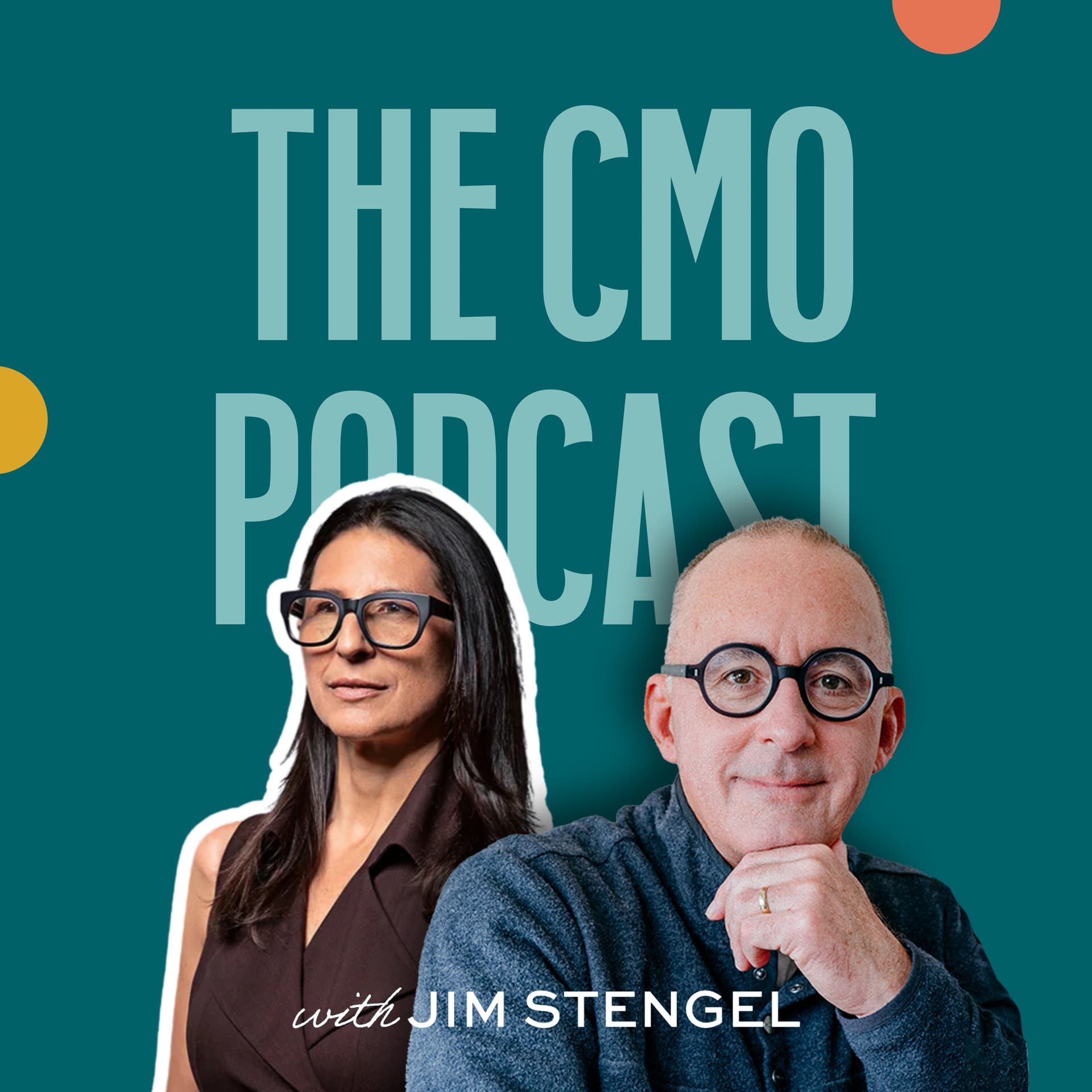
Episode Overview In this episode of *The CMO Podcast*, host Jim Stengel interviews Elizabeth Rutledge, the Chief Marketing Officer (CMO) of American Express. With a remarkable career spanning 35 years at the same company, Rutledge provides insights into her journey, the evolution of marketing, and the core principles that guide American Express. The discussion, recorded at the Cannes Festival of Creativity, emphasizes the importance of customer-centricity and brand stewardship.
Key Themes and Topics
- Career Journey and Experience
- Longevity at American Express:
- Rutledge has been with American Express since 1990 and has served as CMO for seven years.
- She reflects on her unconventional path, starting as a biology teacher before moving into marketing.
- Defining Moments:
- Rutledge mentions critical assignments that pushed her out of her comfort zone, particularly initiatives that expanded the brand’s utility beyond traditional contexts, like grocery shopping.
- Customer-Centric Approach
- Branding and Customer Focus:
- The discussion emphasizes the brand's commitment to placing the customer at the center of all decisions.
- Rutledge discusses the significance of American Express's *Blue Box Values*, which drive employee engagement and customer trust.
- Small Business Saturday:
- A hallmark initiative celebrating small businesses, which has become a powerful movement, showing how brands can make a real impact in communities.
- Innovation and Adaptation
- Evolving Market Dynamics:
- The marketing landscape has dramatically changed, with consumers engaging across multiple platforms. Rutledge emphasizes the need for brands to adapt and innovate continuously.
- Collaborations and Partnerships:
- Rutledge talks about various partnerships, including collaborations with cultural phenomena like the show *White Lotus*, showcasing American Express's innovative marketing strategies.
- Team Building and Leadership
- Colleagues as Brand Ambassadors:
- Rutledge believes in empowering employees as brand advocates, ensuring they understand and embody the brand's values.
- She highlights the importance of nurturing a supportive culture that encourages open dialogue and curiosity.
- Mentorship and Personal Growth:
- Rutledge credits Shelly Lazarus, former CEO of Ogilvy & Mather, as a key mentor who provided guidance and support throughout her career journey.
- The Role of Creativity in Marketing
- Creative Briefs and Innovation:
- The episode discusses the importance of creativity in developing impactful marketing campaigns, referencing American Express's commitment to producing inspiring work.
- Rutledge underscores the need for teams to create briefs that promote innovation and align with cultural conversations.
Key Takeaways
- Customer-Centric Branding: The importance of keeping customers at the heart of every decision and ensuring that employees are aligned with this mission.
- Empowerment of Employees: Viewing colleagues as brand ambassadors can drive a strong company culture and enhance brand loyalty.
- Adaptation to Change: Brands must remain agile and responsive to evolving market dynamics and consumer preferences.
- Mentorship's Role: The significance of mentorship in navigating leadership challenges and fostering personal growth.
Additional Insights
- Rutledge's approach to leadership emphasizes collaboration, community impact, and the significance of innovative thinking in marketing.
- Her passion for supporting small businesses reflects American Express’s broader commitment to community engagement and economic growth.
Conclusion This episode of *The CMO Podcast* with Elizabeth Rutledge provides valuable insights into the evolving nature of marketing, the critical role of customer focus, and the importance of cultivating a strong brand identity. Rutledge’s experiences highlight that enduring success in marketing comes from understanding and connecting with customers while empowering teams to innovate and drive meaningful change.
Written by AI. May contain mistakes. Listen to the episode to check what was said.
Transcript
Automatic transcript. May contain errors.0:00What if the smartest marketing play is not to move forward, but to zoom out? Deloitte believes the most powerful move a CMO can make is to look beyond the next step and see the broader perspective. That's what the Deloitte CMO program is for, a place to gain fresh perspective and connect with leaders who've stood where you stand. Together, Deloitte will help you see the bigger picture so your next move isn't just fast, but right. Learn more about the CMO program at cmo.deloitte.com. Hi, everyone. It's Jim. I have Matt Spiegel of TransUnion with me. Matt, I want to start with, What do you love about your job?
0:34Yeah, it's a great question, Jim. You know what? I love the fact that I get to be out at events and conferences and working with clients to really think about how marketers solve problems that matter at scale. The job of a marketer is as challenging as ever, and we get to do some interesting things to make their job easier. When you work with a client, where do you get the most satisfaction? You know what? I think seeing ideas come to reality. We ultimately are an enable of great marketing, so we don't do creative. We don't do media planning. We provide the data, the identity insights, the measurement tools that make great marketing possible.
1:03So when we get to see the end product, sometimes later, it's really cool to see. Well, super to have you here. Super to be a partner. Thanks for joining us today. Thank you, Jim. So if you want to turn data into understanding and understanding into growth, visit transunion.com slash clarity. Hi, everyone. It's Jim. I'm here with Matt Spiegel, EVP of True Audience Growth Strategy at TransUnion. Matt, you've spent your career helping marketers understand people through data, and that's harder. and more important now than ever. It really is, Jim. There's really just so much information out there.
1:32And unfortunately, it's often disconnected. Marketers typically see fragments, maybe a purchase here or a click there. But what they really need is clarity, true full picture of who their customers are and ultimately how to reach them. Well, tell me how your solution strategy comes in and helps CMOs and their teams bring clarity to chaos. Well, Jim, we ultimately do that with a 360 view of the customer. And so it's about ultimately combining data, truly trusted data, identity resolution, which is a deep analytical problem, and measurement that actually helps understand performance. So ultimately, we work hard to help marketers move faster, to deepen their insights, and to ultimately make every dollar work harder.
2:11We believe strongly that when you truly understand your audience, you can build a real brand and real relationships with customers that last. Where were you when I was a CMO? I don't know how to answer that. Learn more at transunion.com slash clarity. That's transunion.com slash clarity. So the first brand you remember making an impact on you as a young girl? It's the Ringding. The Ringding? Oh my. Mine's Tasty Cake. So why is Ringding meaningful to you? Child of the 70s. There's a special reason why the Ringding. My dad was always responsible for making lunches for myself and my two brothers.
2:47He had a secret life as an artist. And so he would make these elaborate designs on our lunch bags. But we got to pick between the ring ding, the devil dog, and the Drake's coffee cake. And I always went for the ring ding in terms of what, when dad asked me what he was going to put in the lunch bag, it was the ring ding. Hi, I'm Jim Stengel. I've helped hundreds of major brands discover and activate their purpose. Because when a brand's purpose is clear, compelling, and authentic, Profit Naturally Follows. Each week, I welcome the CMOs, the chief marketing officers of your favorite brands, to speak to how their job is so much more than marketing.
3:28These leaders share their inspiration and challenges, along with how they try to build a full, healthy, and happy life in and out of the office. And it's that energy that reaches everyone they touch. And we're glad you're here to feel that energy and to learn from these remarkable leaders. So here we go. Don't leave home without it. Membership has its privileges. My life, my card. Don't live life without it. These are, of course, some of American Express's most famous ad slogans across history. Today, our guest on the CMO podcast, recorded in person at the Cannes Lions Festival of Creativity, is Elizabeth Rutledge, the Chief Marketing Officer of American Express.
4:05Elizabeth is a unique CMO. She has been at Amex for her entire career of 35 years, and she has been CMO for seven of those years. Amex stock was about$4 when Elizabeth joined. It is about$300 currently. More trivia, American Express was founded in 1850, one of the oldest brands in the world. My guest Elizabeth graduated from Princeton and then earned her MBA from the Stern School at NYU. She serves on the boards of the ANA, the Ad Council, and the YMCA of Greater New York. Here is my conversation with the CMO of a 175-year-old brand that is certainly not behaving that way. here's Elizabeth. And special note, earlier in the day, I interviewed Elizabeth on a stage in the Palace or the Palais at the Cannes Lions Festival.
4:51We will refer a bit off and on about that conversation we had. Again, here's Elizabeth. Elizabeth, welcome to the CMO podcast, Cannes Edition. Awesome. Awesome to be here. Now, this is our second time on stage today. Today, yes. So I interviewed Elizabeth on stage in the Palais this morning as part of the CMOs in the spotlight. You were with two colleagues and you were in a different outfit. I was. So you've changed into purple. So what's the thinking here? Purple's my color. Okay. And I got my kicks on as well. All right. I'm feeling good. Happy to be here. How many outfit changes a day in Cannes?
5:28Usually three. Even for guys, right? It's just sometimes you're so sweaty. You're so grubby. It's been hot here this year too. How's your week going so far? I mean, we're the end of day two. How are you feeling about it? I mean, you're meeting people that are inspiring. Is your team having a productive time? And what's been your strategy this year at this big, big festival? So first, I'm going to start with this morning because it was just a really great opportunity. So thank you for being on main stage. And why I mentioned it as the starting point, I made two new friends, you know, this morning.
6:03And I think that's what some of this is all about in terms of, as we talked earlier, in terms of unexpected conversations, trying to meet people that I wouldn't meet somewhere else has been the focus. I also have my team with me, and I think it's just so important that they get out there, see what's going on in the industry, and learn, meet people as well. And then lastly, you know I'm incredibly passionate about the work. And for me, that's the most important part of coming here. And I think I shared this earlier, but I'm just really impressed with what I've seen. In particular, a couple of the Titanium Lions shortlist really captured my attention.
6:46You know, one in particular in terms of Heineken, in terms of their pub succession campaign. Small business. And you know how passionate I am about small business as well. But what I love about that campaign, it's just like rooted in, you know, legacy, connection, innovation, community. It speaks to me and speaks to our brand as well. So it was fun to see that. I mean, the point you made about you meet people unexpected here. I mean, I think that's I mean, there's lots of benefits of coming here to me. That's probably the Uber one. I mean, for our listeners, we had the CMO of Nestle, who you probably don't hang around with every day and the CMO of Infosys.
7:23And so these are people out of your category, probably out of your normal circles. And we had a great discussion this morning. And this is what happens here. You meet people that are, you know, you leverage lateral thinking, right? And we walked away actually from that conversation, actually making more meetings, you know, sort of to connect about some things that we are passionate about from data and insights, you know, and our core customers and even some of the assets that we know and love and share. So it was great. And I appreciate the opportunity. What did you enjoy talking about most this morning?
7:56For me, it's about the team. And I get really, really passionate about just making sure that we're learning, growing together and, you know, focused on innovation, the capabilities, the insights, knowing the customer. And anytime I get a chance to talk about the team and how to grow and develop others, you know, I'm all about that, Jim. You know, we've done, I've done 370 or so of these shows and building a great team is about the most talked about conversation we have in the show. And it's just people, when I often ask them what they're most proud of, they quickly go to their team. And you did today when we were talking.
8:38So, I mean, my counsel for our listeners is if you don't build the right team with the right culture and the right way of working together and the shared goals, you won't make it. I've coached people in this role and saw them slowly adopt, bring on a team and they failed. So as quickly as you can with love and with care, because sometimes it involves changing the team, you know, build that team. And I think you talked about that this morning. It's such a powerful lesson. I just came from a big P &G reunion. What do we talk about a lot? Teams and people. We were talking earlier this morning about something that is really near and dear to me in terms of the creation of Amex Marketing U and why I'm just so proud about it.
9:26Yes, it has the tools, it has the curriculum, it has the foundational learning for a new marketer as well as a tenured marketer. But what I'm most proud about is actually just the community that it's created out of those marketers across, you know, Amos, we're a global company. I think that that ability to be able to talk to someone else about the passion of your craft and to sort of get inspired from each other, you know, that that's been the most important thing for me in terms of the time in the seat. So you have 35 years and I'm an expert. We're going to talk about in a minute. You've been to Cannes Lions seven or eight times.
10:03So do you consider this the best industry event or the most must attend event or not? When you think about events that you really try to get to, I know we can't do it every year. Is this on the top of the list? It is on the top of the list. And I think it's just the reasons that we talked about before, in terms of in one week, having, you know, all of these amazing people. And it's not only it's just agencies. We were talking earlier about creators, artists, musicians, sports legends, you know, it's just the breath and depth. And I think the scope of the kind of conversations that you can have here as well, I always take away sort of one or two things every time I come as well.
10:47And the last thing I would say, given when we're talking about talent, one of the things that we have been focused on is actually inviting kind of our next generation of marketers to can with us. So to take some of our newer Amex colleagues so that they can have that personalized agenda and experience and go back and, you know, spread the love, you know, in terms of the learnings and to try to be action oriented about what we're going to do out of it in terms of one insight, spark a new brief, you know, drive a new idea, drive a new partnership. And I definitely can tell you that those things have come out of coming here.
11:23I'll tell you a few years back, SC Johnson sent seven young people. I mean, that's a commitment. And their charge was go learn as much as you can and come back and you will have an audience with the CEO about what you want to see the company doing differently. What a brief. No, it is right. And so important that it's not just about here, but how can you pass it along so that those that couldn't go can feel like they were here, you know? Yeah, absolutely. Okay. Well, let's talk about your CMO tenure. You're 35 years in one company and seven years as CMO. So that may be unique. Okay. I mean, I guess Mark Pritchard beat you in years on both, but there aren't many, you know, you're - Shout out to Mark Pritchard.
12:05Yeah, shout out to Mark Pritchard. You're in rarefied air and you're the first woman CMO of this 175 year old company. Now, I want you to go back to 1990 when you joined Amex. and tell us about that decision. What compelled you? What was it like to interview there? Was that a job that happened serendipitously or you were very intentional that this is the company and brand you wanted to work on? Okay. So before I answer that question, we're going to go back two steps to get there. I was a biology teacher when I started out. Oh. Taught ninth graders. Wow. Well, that's good training. Absolutely. In terms of your ability to communicate very succinctly, to pivot.
12:55And also, I think, you know, just lead definitely with empathy. A lot of lessons learned in the two years that I was a biology teacher, inspired by my mom and my grandma, who were both teachers as well. And I made a conscious decision to pick my head up and sort of look out there and an opportunity came my way in terms of working for a company called 9x back then, now Verizon. So I spent some time in telecom. And that's where I first learned about advertising and advertising agencies, a brief, all the things that we've been talking about. And through being there, if I was going to stay in this field, I wanted to work for a company that was led by marketing and who had a brand that was, you know, back even back then, iconic and well known.
13:46And I was determined to make sure that that was my next step. So I spent time sort of networking and ultimately got referred into Amex through a friend. And just, I remember the first day, like it was yesterday in terms of those interviews, the sun was shining. There were, you know, downtown in this beautiful building where we're headquartered. And it just, it like felt right from like almost the first moment in terms of the people that I met. And to this day, and this is really the truth, just the customer at the center, you know, of everything that we do as a brand. You know, I just felt like it was meant to be.
14:30First job there was? Was leading products and benefits for the green card and has evolved since then. And I've had a lot of global jobs, a lot of local jobs. And it's not been a straight path at Amex either. It's not been just marketing, Jim. It's been business development. It's been, you know, focus on sort of product, focus on insights. I've been on the B2B and the B2C side of things. And this is what's so great about Amex in terms of the opportunities, just understand different customer segments, have different opportunities in terms of the functional expertise that I gained along the way. And that's why I've stayed in terms of those tremendous opportunities and the people.
15:14Well, when you were teaching, was it sort of a economics of this don't work or it's not, you know, not really my thing or what do you? Oh, it was definitely my jam. Definitely my jam. But I think, you know, at the time I was just trying to, you know, to figure out how to pay the bills, you know, as well. I think so much progress has been made in terms of what teachers are paid now, but it was tough. And it was a really thoughtful decision because one of the things that I liked about teaching And to this day, like in my job, it's just that immediate impact that you can have. And you probably hear it in terms of the things that I love and talk about now in terms of when someone just, you know, they ultimately got that genetics concept, you know, that you like, and you just saw the light bulb go off and you're like, I helped someone else understand, you know, or unlock something.
16:10So it's something to this day I'm passionate about. And hopefully I have left a little bit of a footprint in terms of trying to train the next generation of talent at our company.
16:28Everyone seems to be chasing the next big thing, the fastest answer, the quickest win. But great CMOs believe the real power isn't in the speed. It's in stepping back to see the bigger picture. That's why everything Deloitte does in their CMO program, from their industry-leading capabilities to their connected network of CMOs, is designed to help you zoom out and gain fresh perspective. Deloitte will help you see the bigger picture together. Learn more about the CMO program at cmo.deloitte.com.
17:02now that in that 35 year career as you look back on it what was uh the most or at least one of the most developmental assignments for you where you kind of were stretched out of comfort zone you know i think about my career at png certainly my first eastern european international general manager job like i was dealing with stuff i've never seen before so what was it for you which assignment kind of put you on sort of rapid drive? So there are a couple that come to mind when you ask the question, but if you look back in our 175 year history, one of the bold decisions about our brand, and it was to push beyond it just being known as a travel and entertainment company in terms of the ability to have the utility to use our products and services in everyday sort of situations.
17:53And, you know, that was not what we were thought of as a company. And for me, it was all about the data, trying to sort of demonstrate the power of when someone was going to use it at the grocery store or the gas station in terms of both the growth and impact for the company and the utility for the customer as well. It was a tough challenge, but I think one that gave me confidence in terms of the data lead the story in terms of, you know, where we went next. And as you know, we certainly, you know, grew to be a card that can be used in all different, you know, for all different experiences and types of spend as well.
18:32But it was a defining moment for me in terms of some of those presentations and conversations I had in terms of us branching out. And not just me. I mean, an entire team. But I learned a lot in terms of the data leading the way. It's a reframing the market, right? It's a company repositioning. That's a company-wide idea. Yes. And you've certainly done that. So well done. I want to talk about three things that I find impressive about your company and sort of get you to riff on those a bit. And the first thing is this, I've known your company as a customer for a long time, and I've known a lot of your leadership.
19:04Your CEO at one time was on the P &G board. But your company has a very strong belief in brand. And that's been true for as long as I remember. It's been true through many CEOs and CMOs. It's just kind of baked into the culture. So I'd like you to talk about that. How'd that happen? Why does it continue to happen? So 175 year history. service security trust. And I think it's back to what I said before, like the customers, like at the center of everything that we do. And that brand promise is something that we take so to heart. And since I've been at the company in terms of the 35 years, it is just ingrained in everything we do from our colleague, what we call blue box values.
19:56And I think it's important, actually. I think the reason why it's enduring, it's sustainable, is while it starts with the customer, it also starts, we call our employees colleagues. I think it all starts with the colleague at the end of the day, because if they have a belief in the brand, then they're going to just extend that to our prospects and to our customers. And so for me, when you ask that question, I think really at the end of the day, it sort of comes down to the colleague first and then everything extends from there. And I think that's why it's been enduring and it's in the halls and the water of, you know, American Express.
20:36It's just it's just ever since I was there from from the get go. And I think it's also just our powerful backing platform that we launched a bunch of years ago, I think, is demonstration of that, both for our colleagues, our card members, and our communities. It's just a strong brand. And you always want to put dollars into that brand bank, you know, sort of along the way. And I take that as a responsibility for all of American Express, but particularly myself and the team in terms of just making sure that we sustain it. Is there anything to do with your rituals, with your awards, with your KPIs, whatever it might be to just keep in front of people that, you know, we're about our customer.
21:20We're about this brand and we're stewards of this brand, but it's bigger than us. It's a big promise. It's meaningful to people. It's meaningful in the world. Is there anything you do to just keep that front and center? Talk about it all the time and remind people of their job, both as protectors and defenders and innovators of the brand and role model that, you know, at the end of the day. And then I think, you know, create these types of programs where people can learn. I'm just all about like, be curious, ask the questions and push the boundaries, but also sort of remember that you have a 175 year old brand in your hand, right?
22:01And you have to treat it with care and nurture it. I think that's what it's all about, Jim. Well, the second thing I thought was impressive. You've already gone there and this is how you think about your colleagues as ambassadors of the brand. So I want you to talk a little bit more about that. You're 70 ,000 or so employees. So that's, you know, not a small lift. And so anything you do, because I think it's a very powerful idea for any company, but you know, how do you make sure that happens? I mean, you say you talk about it a lot, but having 70 ,000 ambassadors of the company who talk about it, who have a similar feeling about it, who express it in their own way, you know, just doesn't happen.
22:37It has to be cultivated. So what do you do to - I'm going to give you an example. When you ask that question, I told you about the powerful backing platform that we launched, I think in 2018. And I made a decision with the team to share every piece of advertising collateral and sort of that core customer centricity with our colleagues first. I think lots of times that doesn't happen. You might be, you know, sort of listening to a podcast, you know, watching your favorite show, and then you see American Express, and that's the first time you've seen it in your own home or in your own living room.
23:10I felt really strongly about the fact that there are 70 ,000 brand ambassadors. They need to understand how they are the powerful backers. And if you're going to live that promise. You need to be part of it from the get go. And so I think it's just one example, Jim, in terms of where you have to make those conscious decisions to share, to learn, to give guidelines, give frameworks, but they need to be first. And so just a good example of, I think how that can come to life, even in a large company like ours. Third area that I want to talk with, I think is impressive is you're an old brand, right?
23:47Legacy brand, but you're not complacent. You're growing your business among millennials and Gen Z, you know, probably getting ready for Gen Alpha. That's not easy. I mean, earlier in the day, we talked to a woman who had been at Cadillac in a marketing job, which is now at Mercedes Benz, Melody Lee. She's amazing. But we talked an awful lot about that. How do you respect their tradition but not be restricted to it? Keep your core customers but expand into new segments. And at least from what I've seen, you seem to have done that extremely well. So talk about that, Your strategy, your thinking, your learning, what could others learn from what you've done and continue to do?
24:23You're absolutely right. And the thing about this is it all comes down to the insights and we've been forward leaning and I'll give you, you know, a couple of different examples. And one that I shared, I think on stage earlier this morning, you know, in terms of something like partnership with White Lotus, a global cultural phenomena, right? For sure. Sure. Everybody's watching it and great partnership with Max. But for me, as I said before, it was not just about trading that IP. It was about creating curated travel experiences. It was about another passion point for our customers is dining. And so are there ways that we can take that into our lounges in terms of specialty cocktails?
25:09We've created great custom content as well. And I think that's where you've got to be where your customers are. No surprise with messages that are going to be relevant. And if you think about our sort of expansive experiences that we've created, you know, we just started a partnership with F1 as well on Global Footprint. They are really proud of that partnership because I think we're showing up in unique and different ways, not only in terms of the access, but the fact that you can get an Amex radio, if you're at the event, and just all the things, all the perks that come with being an Amex card member.
25:47You know, we want, at the end of the day, our ambition is for our customers to say, the only place I could have gotten that experience is through American Express. And it's about, you know, just understanding what the customers need, understanding the, as you well know the media landscape is so fragmented. So sort of figuring out where are the best places for our messages to be, having that relevant, you know, content, working with great partners around those passion points of travel, dining, you know, entertainment, sports. I think that's what's, you know, kept us in the cultural conversation, kept us in the moment.
Read the full transcript
26:25And you just got to keep doing, you know, you can't sit still. You absolutely can't sit still. Nice to be in those moments in people's lives. Absolutely. No, because those are memorable. Those are memorable experiences. That's what I want people to walk. AMX helped me with that memorable experience. And you couldn't get that anywhere else. That's our ambition every single day, waking up and thinking about that. Now the F1 partnership, I mean, you do a lot of partnerships, right? So your company that's very good at that. Take us to that. And what did you, how did you start that conversation? I mean, they're, they're, they're hot now, right?
26:55And I think they, they also are a good partner on the other end, but tell us kind of what the early discussions were like, how you started all which I'm sure will probably be a multi-year partnership. We started off actually in a regional partnership and have grown to a global partnership. And you'll see us activate in 15 races now across the globe. And for us, one in the global audience. But you just, you already mentioned this, the growth in their audience has been, you know, primarily sort of younger, under 35. Also particularly proud of what we've done with F1 Academy, which is for those of you that don't know that are listening is the female driver series and really passionate about that partnership, Jim.
27:40That's where a lot of growth have come in terms of viewers and so great to partner there as well. And one of the things that I was really passionate about in terms of executing this partnership, and there'll be other examples that we can talk about as well, but every place an F1 academy races, we want some connection to community. So if you check out the livery or the car with which our driver is in, it's got a small business presented. And for me, it's just sort of the tie-in in terms of the community there as well. And you'll see us do this in other places. We did this with LPGA in terms of our partnership there.
28:22And what I really liked about that is that sort of emotional connection rather than the female golfers wearing our brand on their gear, on their sleeves. They were wearing a small business from the community because they often travel to the same courses. So whether it's one of their favorite businesses or someone we encourage them to go check out while they were there in the community. And so for me, it's just come in full circle in terms of how these partnerships can work in so many different ways as well. So, you know, that's what I'm looking for, both in terms of are these passion points of our customers and how do they tie to have business impact for us, you know, as well in terms of driving growth, driving relevance.
29:05That's what I'm looking for in those.
29:13We all want to stay ahead of the digital curve and IAB, the Interactive Advertising Bureau, invites you to do just that at the 2026 IAB Annual Leadership Meeting in Palm Springs on February 1st through 3rd. If you're a qualified consumer brand or agency leader, you can access free passes and travel vouchers. And for everyone else, you can take$500 off your ticket with code ALLCAPS ALMCMOPOD26. This is your chance to join a three-day gathering of the industry's brightest minds and boldest voices shaping the year ahead. You'll hear agenda-setting conversations, candid fireside chats, and dynamic breakouts on the topics that matter most, from AI and commerce media to measurement and addressability.
29:58This year's lineup concludes everyone from Kevin Bacon and Bozema St. John to creator Remy Bader, along with leaders from Forbes, Major League Soccer, General Motors, and Meta. Visit iab.com slash ALM to learn more and check out the link in the show notes to register and receive$500 off your ticket.
30:20Now, you have so many partnerships, you could probably be every weekend at some event. How do you decide where to show up yourself? That's actually a great question. For me, I'll give you an example. We're just about to do Summer of London. Such great experiences. F1 at Silverstone. We've got Wimbledon, And we've got British summertime festival at Hyde Park. You're just going to go live there for the summer? What I'm so excited about and why, you know, when you ask me sort of where to go, that just to me seems like such a representation of like what we're about, creating those magical moments.
30:58And I want to be there for a couple of reasons. One, to support the team, because it takes a lot. Yeah. Oh, yeah. To make this happen and to recognize them and support them. to just from a partnership perspective, I think it's important to have like that in real life connection. You can make a lot happen when you're together, both from a brainstorming perspective and your next, you know, experience together, you know, activation. And then lastly, I think it's really important that you get to watch the customer experience this, understand sort of what's working, what's not, and how to take it to the next level.
31:36So those are the types of things I'm purposeful in terms of the travel and what I'm trying to do, you know, with the team and with our partners when I'm there. Now, as you said, you've been in the job seven years. So talk a bit about, I'm going to talk about your relation with the CEO in a minute, but talk about how the jobs changed since you came into that role seven years ago. Yeah. A couple of things I'd comment on first, just the external landscape, right? And we could talk about so many different elements, but I'll focus on one in terms of just how consumers are consuming their content, right?
32:13I think on average, you have 12 streaming subscriptions, Jim, and you're probably on seven social media platforms. And so when you think about that, just as the dynamic in terms of the consumer, we need to understand what they're doing, where they're doing it, what gets them excited and motivated. So that landscape has dramatically changed just even through those two stats themselves, if you think about it. So that we've all been talking about just in particular, Gen AI and the capabilities that are here and now, and how I think that will change our work going forward. I'm really focused in terms of how that technology can help in three very sort of distinct ways.
33:05One is around sort of the democratization of insights, because I think that's core, as is the customer, in terms of everything we do. The second would be all around how to make the marketer's job easier over time so they can focus on things that matter, including the reasons why we're here in Cannes from a creativity perspective and that they can focus their time and effort there. And then lastly, just in terms of the ability to create a really personalized experience and how can the customer feel like I know you and I'm delivering you things that you want and need. So I think the capabilities have certainly changed.
33:45And I think also just thinking about the next generation of talent and what kind of expertise that we need. I mean, this is going to be the most technologically savvy generation, you know, sort of ever. And so making sure that we're searching out for that talent, that expertise in all of these different spaces and places, and then nurturing, growing and grooming as we've talked about already. So a lot, I think, has changed in a really short amount of time, as well as the backdrop of just an incredibly complex grow environment. You put that all together, a lot to think about, you know, every day, right?
34:26No, for sure. And I think about everything you went through, you know, check, check, check on the personal side also. So how do you spend your time differently than you did then? Are you out with new potential partners more? Are you with your people more? You're with So how has that shifted? If I looked at your diary in 2018, I looked at it in 2025, what would the big change be? I think you also think about seven years ago, you know, slipping into the seat. A lot for me was new. And for me, it was really, really important to make sure that I developed strong relationships internally and a lot that I had had already.
35:08But also for me, being out much more, you know, kind of externally, building a network, a community, really important learning from others who had been in these types of seats. But when you ask me really what's changed in terms of the amount of time and where I'm spending it, and I don't think this is going to surprise you. It has been with the team and focused on that, as well as within my internal partners, because I need to understand what's driving our growth, what's having impact, how we can understand the customers better. We have to have those sort of strong relationships. We have to have tough conversations about investments and prioritization and focus as well.
35:49So I think that's where you'd see the difference in terms of spending the time, probably a little bit more of a pivot internally than externally. We talked a bit this morning when we were on stage together about the benefits of longevity in the role. And I'd like to go there again for our audience here. So can you talk a bit about that? And certainly confidence comes with longevity. Relationships come with longevity. So could you talk a bit about the power of being in that role? For me, it's been about the ability to kind of learn and evolve over time. And you get to see your actions hopefully endure and evolve.
36:26And I think a lot of that is about reinvention sort of as well. But for me, it's about creating those enduring platforms, Jim. It's about the ability to evolve the strategy as things change and sort of seeing it through, I think to the, to the other side, that's been what's so been so powerful about being in the seat, hands down. That's what, that's what I would say in terms of, of that. You've also, you've had the job about as long as your CEO has had the job, right? So you've been a team together. So can you talk about that? You know, he came into the role, you came into the role. So that's kind of nice.
37:03That happened kind of to me at PNG. I came in about the same time Lafley did and kind of had a chance to co-create. And I was literally going to go there. Like you're in it together from the beginning. And I'm going to tell you something about Steve Squirey, our CEO. He is so passionate about his integrated leadership team, us all sharing the same goals and getting us together in person to make sure that we're building relationships with each other, that we know about each other's work, that we're connecting it and that we're integrating it. And I think that that has made a huge difference, particularly in terms of the shared goal kind of mindset.
37:47We can basically almost complete each other's sentences now, and that's important, and push each other. And you're right, we started at the beginning together. So we've been able to have deep and honest conversations sort of about the customer, what drives impact. We're learning from each other, you know, kind of along the way. That's been really special. I think the most special part, though, is just the way he approaches leadership in terms of just, you know, that integrated team and carrying that message sort of. I've learned so much from him in terms of carrying the message all the way through.
38:20You know, when you're leading a 70 ,000, you know, global colleague team, you have to sort of make sure that those messages are clear and focused. We underestimate that. I think the power of, and you know, you came in right before COVID as well, which complicated things, which we don't need to get into. But I think the power of can't have an integrated team that functions highly if there's not trust in relationships. And that has to be a deliberate thing that you build. And I was also a part of a generation of P &G where we valued that. We proactively got together in person. We did unusual things together.
38:57Before we did any of our quarterly meetings in person, we had an experience together that was related to the business. We either spent half a day with low-income families or African-American families or new mothers or customers, retail customers. Then we got together and did a whiteboard. What did we learn? What do we want to do differently? What did that, you know, did it awaken something in you? And I mean, that just built. You mentioned COVID, and I know we don't necessarily have to talk a lot about it, but I think that also made a difference in terms of the team sort of raising the bar to the next level.
39:36And Steve's leadership through that was very clear in terms of colleagues first, in terms of just ensuring the safety of them and a real focus. And this goes back to what we were talking about earlier. They're your brand ambassadors, so take care of them because they're going to take care of your customers. And I think living through that experience as an executive team together, it brought connections that I know wouldn't have happened otherwise. And we were making tough decisions and calls kind of every day, not only for our colleagues, but for our customers. And you got to do that together.
40:14And this is back to why I think our brand is so iconic in terms of, you know, sort of sticking to the values, sticking to the playbook. Now, obviously, like when, you know, things have to change, they have to change. And I respect and understand that. But the great thing about when COVID hit, we'd already have a playbook like ready to go. Did we anticipate COVID? No. But we had that playbook. So important to have that as the, you know, the foundation for, you know, the unexpected. Is there any skill that you've discovered in all this work that you think is the biggest gap now in building a modern marketing organization?
40:51Not a gap, but I think more, as I said before, that the next generation is going to be the most technically savvy possible. I just want to make sure at the end of the day that we keep the customer at the center and the importance of those insights, those connections, looking around the edges, Jim, as well, where the technology isn't. and how to make sure that we're focused on it. So when you ask about sort of skill set, I just wanna, it's gonna come back to like the insights, putting the customer at the center, leveraging the technology in the right way. So I think there's a balance of that human connection and technology.
41:37I think that's the skill set that's gonna be most important kind of going forward, that balance.
41:49Hi, everybody. I'm Andrea Sullivan, the CEO of Vive, and we have produced the CMO podcast with Jim Stengel for many years. And I'm sitting in his seat right now. It's so exciting. I wanted to tell you a little bit about one of our programs. It's called Vive by Vayner. It's a 12-month program that's designed for C-suiters and founders. And we want to help people to grow their businesses, but also to grow themselves. And so we bring in people from Shark Tank to talk to our founders, but we also focus on wellness. We want to make sure that people are leaning into becoming their best selves, their best and happiest selves.
42:29So if you are someone that wants to learn how to grow your business and grow yourself, check us out at Vive.co. That's V-Y-V-E dot co. We'd love to talk to you.
42:46Let's finish with the creative brief. And we're in Cannes, so we have to sort of put emphasis on that. Who's been a key mentor in your career on the power of creativity in business? First name that just comes right through the heart and through my mind is Shelly Lazarus, who's the former chairman and CEO of Ogilvy & Mather. And she has been a mentor of mine throughout my career. But you know, what's what has been so great about my relationship with Shelly is she's been there through the years and in particular helped me through the transition into a CMO and just helped me understand sort of what to expect, what it would be like and being real with me, you know, about it all.
43:32I think those are the mentors that are most valuable to you. They can tell you like it is, tell you what to expect, give you feedback. And sometimes it's tough, you know, sort of along the way. But at the heart, that mentorship or that relationship is, is just one that we've built over time and we know each other, you know, well. And I think that's what's made such just a, it's just a special one. She's remarkable. She is. She really is. A very wise, wise human being. Yes. So we talked about this a bit on stage this morning. What are the signs to you that your organization is creatively thriving?
44:05Great question. I'm going to start first with that they're putting together smart briefs that are inspiring and that they are feeling comfortable in terms of bringing their point of view into the work that they're on top of or one step ahead of the cultural conversations that are going on and the power of sort of, you know, integrated approach to what we're trying to accomplish. That's when I know they're sort of, you know, spot on in terms of being innovative, being creative. What's the most memorable creative initiative experience campaign you've been a part of? Hands down, really easy for me to answer.
44:51It's a small business Saturday. 16, 17 years? 15th anniversary. I was there, you know, you talk about creativity, That creativity happened in six weeks in a conference room driven by what was happening at the time, the sort of the great recession of the moment and really trying to help small businesses, lifeline of our communities who really need traffic, you know, through their physical doors. If you think about kind of the evolution, it's beyond physical doors and digital doors now, right, you know, as well. And what I'm most proud about is if you sort of see the evolution of that campaign, that campaign became a movement as we were talking about, you know, sort of, you know, sort of lightning in a bottle, I think, in a lot of ways.
45:35And I think why it worked is it just captured sort of the passion and the needs so relevantly and has been enduring. You know, we talk about longevity has been enduring to this day. And the most recent pivot, we were executed on a great campaign for the 15th anniversary. But a couple of weeks before, Small Business Saturday, were the devastating hurricanes in the Southeast. And we knew we had to sort of be there in the moment. So we pivoted in terms of just making sure for every purchase made on Small Business Saturday that a dollar is going to be donated to those efforts. And I think that's just, again, we've been talking about this from the top of the hour in terms of the enduring nature of a brand like ours, but the ability to pivot, modernize, you know, sort of reinvent along the way.
46:24Really proud to be part of that moment at the beginning and to be here to talk about that 15th anniversary. It's pretty special, Jim. I suspect your awareness is very high of that. It is. Oh, definitely. It's very associated with your brand, which is a great space to be in. And we've, as I gave you examples all throughout, we've, it's just, this is part of our DNA. in terms of, you know, just wanting to give back in the communities, drive impact, drive growth. You know, we have a small business card portfolio as well. There's so many, you know, sort of extension points, you know, off of that in the end of the day.
46:58And I think that's why that platform has been powerful and enduring. Now, I know you take long walks and you chew gummy bears. I'm not sure what kind of gummy bears. Maybe we can get into that. So that's what you do as part of your ritual to stay inspired and creative and fresh. So anything else you do, or do you want to talk about those two gummy bears and long walks? Well, there's lots of good gummy bears in Europe, by the way. I haven't tried those yet and I haven't had a chance to take a long walk. No, it's a little hard. Yeah. But the thing about me, if you know me at all, I'm a voracious reader and I have stacks.
47:37I like the hardcover books. I have stacks around my home. As a matter of fact, I just, I remember back like when I was young, we'd take family vacations and I was the only one that like wanted to stay in the room wherever we were. I wanted to like, you know, have my nose in a book and, you know, sort of read. My dream day is in, you know, one of those local independent bookstores, just taking it all in. You know, and for me, it's, I just, that's where I'm learning. Yeah. Just browsing, just getting excited about something, going deep on a topic. It's something my husband and I, we share a lot in terms of just, you know, what we've read today, what we've heard, what we've seen, you know, and so it's a special, it's a special part of both my professional and my personal life.
48:20Is there a book you're reading now or looking forward to reading? Oh, I just finished The Bee Sting. I highly recommend it. Just an awesome book. I got a stack of others, Luminaries, which is a book that's older that I'm reading. I'm a big fiction reader at the end of the day. Not as much in terms of nonfiction, but those are two that are been read or going to be read. So the first brand you remember making an impact on you as a young girl. It's the Ringding. The Ringding? Yes. Oh my. Mine's Tasty Cake. So why is Ringding meaningful to you? Child of the 70s. But there's a special reason why the Ringding.
48:58My dad was always responsible for making lunches for myself and my two brothers. And he packed them in brown paper bags. And he had a secret life as an artist. And so he would make these elaborate designs on our lunch bags. I was sort of the talk of school every day. Someone wanted to see sort of the designs on the outside of the lunch bag. Early content. Yeah, totally. But we got to pick between the ring ding, the devil dog and the Drake's coffee cake. And I always went for the ring ding in terms of what dad asked me what he was going to put in the lunch bag. Um, it was the ring ding. The coffee cake.
49:39Did anyone ever pick that? I can't imagine. I grew up near in the Southeast Pennsylvania. Tasty cake was big and that was what my mom put in my lunch. So I have a strong affinity for that. I still eat them, but just not in the quantity that used to eat them. That would be dangerous. So last one, who has inspired you most in your life? My husband and my daughter. And the reason why you hear a little glitch in my voice is I'm a two-time breast cancer survivor. And we're a unit in everything that we do. We've walked difficult moments together. They're always with me, always in my heart. And in particular, a shout out to my daughter, Sarah, who just has such courage, such poise, such grace.
50:30She's made amazing decisions in her life all on her own. Three years ago, decided to move to Portland, Oregon, you know, to just have new experiences on her own, sort of independent with heart and love and passion. You know, the two of them every single day, but particularly Sarah, it just inspires me to get up and be who I am. You're going to see her soon, right? I am really excited about that. We often don't get to spend time like that as a threesome. So the three musketeers are back in action. I can't wait. Well, that was very sweet. Yeah, really. Such a good conversation. Thank you, Elizabeth.
51:08No problem. Yeah, for everything and for all you're doing for the industry and for that great brand you steward and for our conversation this morning. Thanks for having me. Always, always a great time with you, Jim. That was my conversation with Elizabeth. Three takeaways from this one for your business brand and life. The first takeaway, this concept of colleagues as brand ambassadors. And Elizabeth talked about them as protectors, defenders, and innovators of the brand American Express. I love how the company and she thinks about their 70 ,000 employees as ambassadors. That's the power of having a strong brand.
51:46Second takeaway, owning an enduring platform that is unique to your brand. If you ask Elizabeth what she's most proud of in her tenure, it's Small Business Saturday, which just celebrated its 15th anniversary. It's done great things for small business, which are their clients, and it's done great things for the brand equity and the business of American Express. And it's extra special because they repeat it every year and it gets better and better. It's a very, very powerful concept. And last takeaway, Elizabeth talked quite poignantly about the power of a mentor. Shelly Lazarus has been a mentor of hers for many years.
52:20She was the head of Ogilvy & Mather, a very, very famous woman in advertising. And when Elizabeth was promoted to CMO, she reached out to Shelly, and Shelly was there for her with her wise counsel. It's so, so important to have someone that you can mentor and a person who is a special mentor to you. that's it for this week's episode of the CMO podcast as always I would be grateful if you shared our show with your friends along with subscribing and leaving a review on apple podcast spotify or wherever you listen the CMO podcast is a vive original production the views and opinions expressed by podcast speakers and guests are solely their own and do not reflect the opinions of our sponsors or its personnel nor do our sponsors advocate or endorse any individuals or entities featured on the episodes.
From the publisher
Jim's guest this week on The CMO Podcast is Elizabeth Rutledge, the Chief Marketing Officer of American Express. Elizabeth is a unique CMO–she has been at AmEx for her entire career of 35 years, and she has been CMO for seven of those years. AmEx’s stock was about $4 when Elizabeth joined, and it is about $300 currently. More trivia–American Express was founded in 1850–one of the oldest brands in the world.
Elizabeth graduated from Princeton, and earned her MBA from the Stern school at NYU. Recorded in person at the Deloitte Apartment at the Cannes Festival of Creativity, join the two for Jim's conversation with the CMO of a 175-year-old brand that is certainly not behaving that way.
---
This week's episode is brought to you by Deloitte and StrawberryFrog.
Learn more: https://strawberryfrog.com/jim
See Privacy Policy at https://art19.com/privacy and California Privacy Notice at https://art19.com/privacy#do-not-sell-my-info.