In short
The CMO Podcast: Episode Summary
Podcast Title
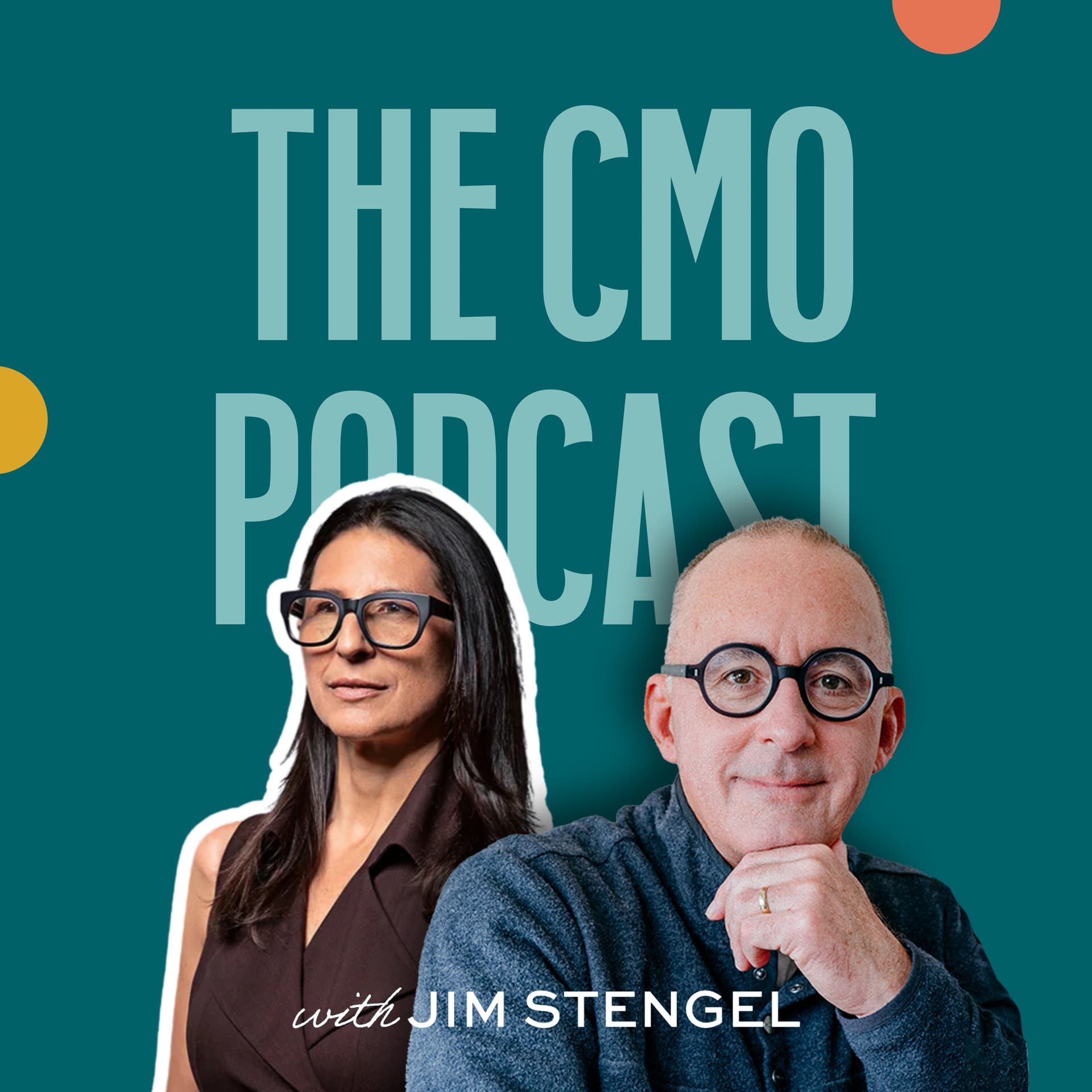
The CMO Podcast
Description
Jim Stengel, a former CMO of Procter & Gamble, hosts conversations with dynamic CMOs across industries, exploring the thought processes and motivations behind their roles. The podcast, sponsored by Deloitte, emphasizes the pivotal role of the CMO in shaping the consumer experience.
Episode Title
Emily Silver (Dick’s Sporting Goods) | Sports, Leadership, and Thriving Through Change | From the Vault
Description
This episode features Emily Silver, SVP and Chief Marketing, eCommerce & Athlete Experience Officer at Dick's Sporting Goods. Recorded live at the Adobe Summit in Las Vegas, it discusses the impact of sports and leadership, especially during significant events like the Olympics.
---
Key Themes and Highlights
Introduction
- Jim's Busy Week: Engaging with family and colleagues while being immersed in the Olympics.
- Olympic Spirit: Discusses the unifying power of sports, illustrated through personal anecdotes.
Guest Introduction
Emily Silver
- Background: Joined Dick’s Sporting Goods after a 16-year career at PepsiCo.
- Role at Dick’s: Leading marketing, e-commerce, and athlete experience at a $13 billion retailer with over 850 stores.
Discussion Points The Influence of Sports
- Personal Impact: Emily shares how sports provided inclusion and community for her family.
- Children's Experience: Emphasizes the confidence and social skills her children gain through sports.
Dick’s Sporting Goods Strategy
- Company Growth: Aims to enhance athlete experiences and engagement through innovative marketing and technology.
- Cultural Values: Focus on community and accessibility for sports, reflected in company initiatives.
Leadership Insights
- Courage and Creativity: Essential traits for CMOs in times of rapid change.
- Importance of Culture: Emily stresses the need for a strong organizational culture that aligns with company values.
Key Takeaways from the Conversation
- Relaxation Advice: Emily's advice to her younger self emphasizes the importance of not stressing over career progression.
- Brand Purpose: Successful brands need authentic belief in their purpose across all levels of the organization.
- Listening and Learning: Effective leadership involves building relationships and understanding the business before making changes.
Audience Interaction
- Questions from Attendees: Engaging dialogues about balancing personal passions with professional responsibilities, and addressing community and inclusion in sports marketing.
Closing Thoughts
- Leadership in Change: A reminder for leaders to remain calm and engaged, listening to their teams amidst the chaos of change.
- Final Reflections: The significance of community in sports and the role of marketing in fostering positive cultural shifts.
---
Conclusion The episode encapsulates the essence of sports as a unifying force, the vital role of effective leadership in marketing, and the importance of authenticity in brand purpose. Both Jim and Emily highlight the need for CMOs to adapt and thrive in a rapidly changing landscape while staying true to their values and communities.
Call to Action
Listeners are encouraged to reflect on their own leadership styles, the cultural impact of their organizations, and to foster inclusive environments that celebrate the spirit of sports.
Note: This episode serves as an insightful reminder of the interconnectedness between sports, leadership, and purposeful marketing in today's world.
Written by AI. May contain mistakes. Listen to the episode to check what was said.
Chapters
Tap a time to open that second in VOEmily Silver's Background and Impact of Sports
1:30 to 4:00
Emily shares how sports shaped her life and career, highlighting personal experiences.
“For seven years, I was the global marketing officer for Procter & Gamble, where I oversaw the marketing of hundreds of brands.”
Discussion on Sports and Personal Leadership
4:25 to 8:00
Emily and the host discuss the role of sports in leadership and the thriving environment at Dick's Sporting Goods.
“I was born and raised in Pennsylvania and high school football in Pennsylvania is a thing.”
Favorite Sports Moments and Inspiration
8:00 to 12:02
A conversation about memorable sports moments and what inspires both Emily and the host.
“And what we're going to do is we have five questions for each other.”
Closing Thoughts on Collaboration and Marketing
12:37 to 14:00
Emily expresses her desire to collaborate with brands that uplift and educate, particularly for children.
“The people there truly believe in the mission.”
Episode Discussion
14:00 to 28:00
“And I think it's incredible for the company to really give everyone an hour to do what they need to do to recharge.”
The Evolution of Dick's Sporting Goods
28:00 to 29:20
Learn about the growth and vision behind Dick's Sporting Goods.
“I mean, we had a few of these where I grew up.”
Leadership in Times of Change
30:18 to 31:49
Understand the current challenges and strategies for CMOs.
“We just talked about Dix as a case of a company thriving in these times.”
Creativity and Commercial Success
31:49 to 34:38
Explore the role of creativity and commercial success in marketing.
“I think they all feel very important and leaning into them at different times and different strengths is going to be critical for any CMO now and in the future.”
Leadership Lessons and Personal Growth
34:38 to 37:18
Reflect on key leadership lessons and the importance of self-awareness.
“Now, when I had Emily on the show six months ago, she shared four lessons with me that are profound for her and that she put together for a presentation she was doing with some women leaders.”
Audience Insights and Team Dynamics
37:18 to 39:45
Gain insights into Emily's leadership style from her team.
“but I think we have to try and not get overwhelmed.”
Show all 16 chapters
Legacy and the Future of Sports
39:45 to 42:05
Discuss the vision for the future of sports and inclusivity.
“If you're talking about the thing that you want as your legacy to be top of mind sports brand, athlete seems to be your road you're going in.”
Lessons from a Tennis Legend
42:05 to 43:49
Learn about the mental attitude and discipline of a great tennis player.
“I never get down on a shot or a point that was awful.”
Balancing Music and Entrepreneurship
43:50 to 45:06
Discover strategies for balancing personal passions with entrepreneurial pursuits.
“such a good analogy, not just for business, but for life.”
Community and Leadership in Sports
45:07 to 47:35
Explore the role of community and leadership in navigating social issues through sports.
“I think that's, you find your balance and you find what works for you and what energizes you.”
Adapting Leadership in a Changing World
47:36 to 48:47
Hear insights on effective leadership amidst rapid changes in the world.
“I want to ask you, Emily, for one final thought to this audience that you want to leave them with from this wonderful discussion we've had today.”
Key Takeaways from the Discussion
48:48 to 50:06
Reflect on important lessons discussed regarding relaxation, brand purpose, and being an additive CMO.
“That was my conversation with Emily in front of a live audience.”
Transcript
Automatic transcript. May contain errors.0:00Hi, everyone. Hey, I'm having one busy week. Yes, I am fully engrossed in the Olympics. More about that in a minute. But I am also hosting this week in Cincinnati a large group of family, colleagues, along with a large group of family, a large group of family, a large group of family, a large group of family, a large group of family, a large, a large, a large, large, a large, large, and large, York when I will be inducted into the Hall of Fame class of 2026. Net, I did not get around to recording my weekly show this week. So in honor of the Olympics, which I am loving this year, we are re-releasing a show from last year with Emily Silver, the SVP and Chief Marketing and Athlete Experience Officer of Dick's Sporting Goods.
0:46Dick's is a major partner of Team USA and the official sporting goods retail provider for the Milano Cortina Winter Olympics. And my chat with Emily is so fitting for this week. We talk personally and deeply about the positive influence of sports. And I have been reminded of that time and again as I watch the Olympics this year. One story that really captured my heart was Delaina Myers-Taylor of the U.S. winning gold in the women's monobob. Check it out if you haven't seen it. It is the Olympic spirit at its best. So here's Emily Silver, recorded last year at the Adobe Summit in Las Vegas, to remind us in this Olympic season why sports has the potential to change lives.
1:29Hi, I'm Jim Stengel, and I help major brands find their purpose and activate it, and the profits follow. For seven years, I was the global marketing officer for Procter & Gamble, where I oversaw the marketing of hundreds of brands. You may not know it, but the CMOs, the chief marketing officers of all of your favorite brands, are trying to connect you with your favorite products and services through purpose. And on this show, I delve into how they do it. Hi, everyone. This week, we're bringing you a special episode recorded live at the Adobe Summit in Las Vegas last month. As we here at the CMO Podcast are happy customers of Adobe, we were excited to be part of the programming at the Summit.
2:10Our topic was how CMOs can thrive in these times of rapid change. And I asked Emily Silver, SVP and Chief Marketing and Athlete Experience Officer of Dick's Sporting Goods to join me on stage. Dick's Sporting Goods was founded by Dick Stack in 1948 and his first product line was bait and tackle. They've come a long way. Today, Pittsburgh-based Dick's Sporting Goods has more than 850 stores and a variety of other experience centers and platforms, all focused on sports. think Golf Galaxy, Public Lands, Moose Jaw, and others. Emily is a returning guest to the show. She joined me last fall to talk about stepping into her first CMO role.
2:50And I must say, it's a great listen if you've not had the chance. Emily spent over 16 years at PepsiCo in about nine roles before she joined the sports brand in 2023. Recorded live in front of an audience, including a collection of Emily's associates from Dick's, Emily and I discuss how sports brings us together and how she and her company are thriving in these uncertain times. This episode is brought to you by Adobe. What if the smartest marketing play is not to move forward, but to zoom out? Deloitte believes the most powerful move a CMO can make is to look beyond the next step and see the broader perspective.
3:27That's what the Deloitte CMO program is for, a place to gain fresh perspective and connect with leaders who've stood where you stand. Together, Deloitte will help you see the bigger picture so your next move isn't just fast, but right. Learn more about the CMO program at cmo.deloitte.com. Global Marketing Officer of Procter & Gamble and the host of the CMO podcast, Jim Stengel.
3:58Hello, everyone. Welcome. Good to see your smiling faces. Now, and I want anyone to stand up if this platform has come to life with you personally. So has sports in any way, shape or form impacted or changed your life or the life of your family? So stand up if it has. Well, pretty good job with the grand positioning over here, Dick's Sporting Goods. So this is my story. I was born and raised in Pennsylvania and high school football in Pennsylvania is a thing. And so I was a sophomore in high school and a coach came down to me and said, we'd like you to play in the varsity. Rare in those days for a sophomore, not so rare anymore to play in the varsity.
4:40So what happened with me in this time, and it was very intense. My whole life was football in those days. And that coach, it's always a coach. It seems to be always a coach. And just instilled in me a confidence that I could oppose anyone and win, no matter who it was. If they were 50 pounds bigger than me, faster than me, just he always had it up here. If you think it and you work on it, you can do it. And that has totally stuck with me. And the memories I have in that time of my life are still profound. And my deepest friends in my life, I shared that experience with to this day, the kids I grew up with.
5:15So I want to introduce Emily, who's going to join me on stage in a moment. And Emily was a guest last fall, September, early October. And I didn't know her very well. I knew her by reputation. We came out of the same industry, consumer packaged goods. And I had her on the show and we just hit it off immediately. The chemistry was great. The discussion was wonderful. I thought she was amazing how she thought about her team, her organization, their purpose, why she made the move to Dix to become the CMO. When Adobe reached out to me and said, hey, you talk with a lot of CMOs. We'd like you to come to this meeting, talk about what's on the mind of CMOs in these times of change.
5:50I said, can I bring Emily? And they immediately said yes. So that's why we're here today. So I want to bring Emily to the stage with her story of how sports has impacted her life. So Emily, welcome Emily. There was instant chemistry and I appreciate you having me on your show and I appreciate being here with you and all of you today. Thank you Adobe for making this happen. Thank you Adobe for making this happen. So I'll talk about the kiddos in a minute, but sports changed my life in hindsight as a kid in a very personal way because my dad was older than most parents. He had me in his mid-50s.
6:26My mom came from another country. And I didn't realize it until after the fact, but I and my brother and our family also almost felt a little bit like outsiders because our dynamic was very different than others in our town. And sports was a commonality that we could all rally around, whether it was the New England Patriots at the time or the Celtics or the Red Sox not being able to win or local sports. It was something that just gave us common ground and made made me and I think the rest of my family feel included. So that's an angle I also think about when I think about sports. On the slide here, and I have a dear friend from home who knows my children, so you can tell I'm doing this, Lena, who works for Accenture.
7:06Thank you for coming. These are my little ones. On the left and in the middle is Izzy. She's 10 now. And sports has given her tremendous confidence and a little bit of sass. And then my older one, 14, Natalie, has really found her social footing through sports as well. So it's just such a pleasure to see them be part of a team and learn all the lessons of sport and grow into a strong, confident and strong willed girls. What country was your mom from? She's from England. Therefore, the accent, right? Yeah, right. She had one, not me. So, gang, here's our plan for today. You just met Emily and myself with our short sports story.
7:43You're going to meet us a little bit more deeply before we jump into the bulk of our content today. We're going to talk about Dick's and how they're thriving as a company in these times of change. And we're going to flip into sort of more personal leadership and how Emily is thriving in these times. And then we'll wrap up and hopefully we'll have time for more dialogue with you. So think about questions you might have. So that's our plan. And what we're going to do is we have five questions for each other. So I'm going to let you start, Emily, with your first question for me. Okay. So I admired your career at P &G very much.
8:12Obviously, with the podcast, you hear a lot of interesting ideas from CMOs all around the country. and sometimes around the world. What's the craziest idea that you ever had that you wish you'd implemented that you did not? Wow. Out of P &G, you didn't have that many crazy ideas. One idea I had, we weren't not able to pull off. And this is an idea maybe for all of you in publicly traded companies. As I went to our CFO when I was CMO at P &G and I said, how many shareholders do we have? It was a lot. Individuals, companies, institutions. I said, why aren't all of them fierce advocates for our brands?
8:48Do they know who are all the brands we have? Do they buy our brands? Are they out there talking? Because they own part of the company. So how can we make advocates out of every single human being that owns our share? So he just looks at me and says, no fucking way. Too many obstacles, blah, blah, blah, blah, blah. But it's a good idea. It's a good idea. I said, can we send them coupons or something like that? And we were not able to pull it off. So I won't get into all the details. So that's, it was a good wild idea that didn't come off. I will tell you, I had two crazy ideas in my career. I mean, what's the best thing to do when you have a superior product?
9:31When you have a superior product, what do you do with it? Because if you build high quality trial, not based on price, you have a much higher chance of building a consumer for life. So I worked on two brands where I said, I want to sample this product to everyone. And I did it with a food brand when I first came to P &G. It cost$60 million in the 1980s. But I wanted every person in the country of the US to sample the product. And we shipped it in the summer and it had chocolate in it.
10:02So anyway, that's it. I'm not too long. Okay, here's an easier one for you. Favorite hobby or pastime when not working at the Sporting Goods? So my dream, it's not happening, but maybe one day, is to be a professional tennis player. Oh. I played growing up. That's how I also bonded with my dad. I love tennis. I love to play. I don't play enough, but I try to play as much as I can when I'm not working or with the kids. All right, your turn. What inspires you? I mean, sports inspires. I'm not just saying you're up here. I love underdogs. I love comeback stories. So this is a good time of year with March Madness, women and men.
10:42So fun. I love the early rounds. So sports inspires me for all the reasons we're talking about. I'm in an interesting phase in my life. My kids are adults and I have three granddaughters, two and under. There is a special feeling when you have granddaughters and just being around them is uplifting. The definition of inspiring is lifts you up. They definitely do that. So anyway, okay. Favorite tennis player of all time. Stay on that theme. Well, consistent being in Vegas, Andre Agassi. Yeah. Andre Agassi. I had his calendar in my room. I had his neon green shorts in my closet. I love Andre Agassi.
11:20Women's tennis, Gabriella Sabatini. Most memorable sports moment you've ever witnessed. You're from Cincinnati. You must have seen a lot. Oh, this is a special one. I was living in Europe at the time, came back to the U.S. and saw Michael Jordan's last game in person in Philadelphia. And I did it with my kids and my younger brother Bob's kids. He had three kids. He was so close to me. He was a doctor, got leukemia at 41, passed away at 50. And I had that shared experience with him while he was sick, while he was still with us. So that for many reasons.
12:02Everyone seems to be chasing the next big thing, the fastest answer, the quickest win. But great CMOs believe the real power isn't in the speed, it's in stepping back to see the bigger picture. That's why everything Deloitte does in their CMO program, from their industry-leading capabilities to their connected network of CMOs, is designed to help you zoom out and gain fresh perspective. Deloitte will help you see the bigger picture together. Learn more about the CMO program at cmo.deloitte.com.
12:36Okay, how long have you been CMO at Dick's Sporting Goods? It'll be two years next week. Two years next week. What do you love most about it? Sounds cliche. Love the people. The people there truly believe in the mission. We'll talk about that a little bit more later. Believe in the company. It's a growth company. So it's a company that takes risks, wants to invest in driving, not just the future of retail, but the future of sports. And it's sports. So it's just a great unifier and something I'm very proud of. So you talked about playing football as a child. What do you do today for sports? Tennis, just like you.
13:12Yeah. I'm crazy about tennis. I'm not terribly good because I took it up as an adult, but I'm OK. and I don't like playing matches as much because I'm competitive, but I don't like, I like, I like what we call cardio tennis, where it's a cardio workout across courts with a group of people and some pros. And I do that in the nice weather when I'm in Cincinnati five times a week. Oh, wow. And I love it. It is like meditation. Nothing is in my mind, but that moment when I'm with those people outdoors playing wonderful tennis on clay. I just love it. It inspires me. You have a policy of no meetings from 12 to 1 every day at Dick's Sporting Goods.
13:53How do you typically spend that hour? Yeah, I think this is brilliant. My previous company talked about doing this for years and we could never nail it. But it is something that I try to abide by, try to abide by. And I think it's incredible for the company to really give everyone an hour to do what they need to do to recharge. In nice weather, I take a walk. In not nice weather, don't repeat this, I sometimes take a little quick power nap, scroll Instagram. watch the news, but it really is a reset and a great practice, I think, for anyone at any company, just to spend that time. So do you take the power net in the office?
14:25I do. How do you do that? Do you get on the floor? You have a sofa? Yeah, the sofa. Okay. I was worried about getting on the floor in my office and taking that. People are thinking I died or something. Anyway. Okay, your turn. That would be good. I don't want to say that. If you could collaborate with any brand, who would it be and why? Oh, I'll relate this. At this point in my life with three granddaughters, I would love to do something with Sesame Street about business and marketing and make it really fun, and make it uplifting and make it real and make it honest. Because one thing about our field, our function, and I worked with these two gentlemen up front here, you can just change the arc of a culture, of people, of a team through marketing.
15:06That's true. And I think there's such positive power in it. And we don't talk about that enough. So Sesame Street. Love that. Yeah. If we could rewind the clock and take you back to being an assistant brand manager at PepsiCo, where you spent 16, 17 years, 17 years, what are some of the things you would prioritize being great at? I would prioritize some of the things I think I happen to fall into prioritizing. And there's some things I would go back and tell myself not to do. So the things I would prioritize then and now, they haven't necessarily changed, is building relationships that is critical, both inside and outside the company, and real relationships, mutually beneficial relationships, understanding other functions deeply.
15:54We're talking about the CFO. I made a joke about the CFO, but truly understanding what other functions do. When I was an assistant brand manager, I got very interested in supply chain and tried to learn not really truly how the products and the innovations we were working on at the time of PepsiCo got to market. And that helped me in spades in my career. One of the reasons I'm happy to be here, not just with the marketing and the e-com team, but with the tech team is understanding that world and their world and trying to understand the overlap and how we can help each other and benefit from each other is incredibly important.
16:25And then continuing always to try to learn externally and apply other lessons from not just for other businesses, but other areas of the world into your own work, I think is really important. What I would go back and tell myself at that time is not to worry so much. Just not to worry so much and not to let work become such a part of your identity that it can drag you down at certain points. That's pretty profound what you just said. I just pause on that one. Well, it's true. We used to count the months who got promoted faster than us at P &G. Someone got an a month ahead of me. Why, why'd that happen?
17:03I mean, relax. So childish and so short term. So short term. Yeah. So short term. Okay. You've been here, what, 24 hours or so? Yeah. A little bit. Anything happen here that impressed you, made you think, made you, that inspired you? The answer can be no. I mean, you probably spent half of that sleeping. I did spend half of that sleeping, but I had a fantastic dinner with some of my colleagues last night. And it was just nice to get out, talk. Was the restaurant good? It was very good. Where'd you go? We went to Del Frisco's. Okay. Steakhouse. Good conversation, good cocktails. Okay. Best sports rivalry and why?
17:45Oh, I mean, I love Penn State. I met my wife there. I went to P &G from there. And they used to have a great rivalry at Pitt, but no more. I'd have to say my son went to Ohio State. Ohio State, Michigan goes deep. It goes deep. Oh, that's Michigan. See? I mean, yes, Duke, North Carolina, Celtics, Lakers, but it's deeper. I have to say, and it's a wonderful rivalry. Love it. Okay. That was fun. Thank you. Yeah, it was good. We're going to show a video now that's really fresh. You just had a big earnings. We did. Meeting last week with your investors. You created this video. I think for that meeting.
18:24So would you like to set this up in any other way than what I just did? Sure. So this is our investor video. Proud of it for a number of reasons. One, it'll show and highlight the year we had, which is kudos to everyone at the company. It also highlights some of my favorite marketing from the year and some of the commercial campaigns that I'm most proud of. And I think it gives a really good sense of the energy, all of our employees, our teammates, particularly on what I'll call the frontline in our stores who really drive the business day in and day out. You get a little sense of what we're about.
18:572024 was another incredible year for Dix. We delivered strong and consistent performance by executing on our four key strategic pillars, enhancing the athlete experience, offering differentiated products, strengthening brand engagement, and enriching the teammate experience.
19:26What a year it's been, and we're just getting started. The convergence of sports and culture has never been stronger. With some of the world's biggest sporting events set to take place in the United States, this presents a huge opportunity as the expected momentum will only grow by 2030 and beyond. As a company deeply rooted in sport, Dix is uniquely poised to seize this opportunity from a position of strength. That's why we're investing to drive further growth by attacking three significant growth areas. First, we're continuing to reposition our real estate and store portfolio. In 2024, we opened seven House of Sports stores, while also opening 15 Fieldhouse stores.
20:08And in 2025, we look to open 16 more House of Sports stores, as well as 18 new Fieldhouse stores. Our second growth area is to accelerate our footwear growth through strategic investments in high-impact marketing. team-made training and expertise, while building a suite of technology tools to make the athlete experience more seamless.
20:36Third, we're accelerating our e-commerce growth through strategic investments in high-impact marketing and technology, so athletes can navigate how they want to shop, where and when they shop, and in a way that is more convenient for them. All this brings us closer to our vision to be the best sports company in the world.
21:03How do you feel when you watch that? Proud, excited, inspired. I don't know if everyone picked up on it, but this idea of going from a sports retailer to the best sports company in the world is something that we're all incredibly passionate about. It's truly enabled by technology, which is very relevant to this conference in general. The other thing I just find so striking, the map of all the sports moments that are coming up in this country in the next few years, whether you're in the sports business or just a fan, how amazing is that going to be? And just the energy and the enthusiasm and hopefully the purity of that excitement will really lift, I think, all of us over the next three, four or five years.
21:46So when investors see that, how do they react? They react well to the growth story, of course. We're getting a lot of accolades for our house of sport concept and our field house concept, but very positively overall. Yeah. Okay. As we said, you released your earnings last week. It was, if you haven't followed Dick's Sporting Goods, it was a record quarter all time. It was a fabulous fiscal year, lots of growth, lots of innovation, lots of spirit. it. And I want to put up here your belief, your core belief of the company, the common purpose, your vision, and your values. I lifted this right off the site.
22:20You can't help but see it when you spend 10 seconds looking at Dick's presence online. So I want to start with this, Emily. This is a framework for your company, not the function of marketing. And I want you to talk a bit about the role of this framework in building the results you have gotten and the culture at Dick's, which is at the end of the day, your special sauce. Yeah. I'll take a step back and say, you know, another, we're going to talk about lessons and reflections on careers. And one of the things I've learned over time is how important culture is. And it doesn't mean culture is right or wrong in a certain company.
22:57It really is what fits your personality and what fits your beliefs and whether the words on the paper or on the website are real. And what I've been so impressed by and grateful to be a part of since joining, as I mentioned almost two years ago, is these words on the page are so real throughout everything we do in the company, through the teammates, through the marketing, through the finance, through the tech, like truly everyone believes in the sports change lives and the words of the common purpose. And you really see it coming through the teammates, the athletes in our communities and delivering the shareholder growth.
23:34And then from a community perspective, it's also really encouraging and inspiring and proud of being part of what we do with our foundation, helping over 2 million kids access sports in this country, donating over$200 million because we do believe that sports have the power to change lives. And there are barriers for many children to play, whether it's equipment costs or registration costs or access to, say, fields, and really pushing that and being part of it in everything we do is something we take very seriously. And as I said, I'm just grateful to be part of it. So the theme today is thriving in an era of rapid change.
24:12So could you talk a bit about, you're in retail, so things change daily, weekly. Obviously, we have a lot of stuff in society now. It's changing very quickly. How does this help you stay focused as a group on what you're trying to do as a company? Yeah, it's a great question because you can, I mean, yes, retail is fast. I'll say CPG is similar and you can get caught up in being incredibly reactive and going from a marketing perspective in particular, where the wind takes you as these new platforms come out and these, you know, it just changes almost by the month. But this does help ground us and stay consistent in how we're thinking about what is our role with our athletes?
Read the full transcript
24:49What are we providing our athletes and how do we truly enable that sports change their lives and that we help become the greatest sports company? So it does give us a North Star that you can turn to in the moments, in the days, in the weeks of chaos, which I think is natural for any company. And to your point, in a macro environment, it's only getting more dynamic, I'll say. One thing I remember from our podcast, which we did six months ago or so, is your two years at the company or so, you came in and your CEO, who's remarkable, said to you, don't hurry to change anything. Take your time. Get to know us.
25:29Build relationships. Understand the business. Get to know your people. So I'd like you to talk about that in the context of how you came in two years ago and created your priorities, your job scope. Of course, this had a major role in it, what we're looking at on the screen. But you talk a bit about your early months and the power of that advice. Yeah, I think it's incredible advice. I think it's also very consistent with a company that knows what its culture is and knows what will work and not work. Again, not right or wrong, very different from my other company where you get a new role and you're inspected within 30 days to make massive changes.
26:02That's sort of how they operated. And it was very refreshing. Lauren Hobart, who is an incredible CEO, did say that to me. She said, don't change anything. Just learn, sit, understand, and then figure out where you want to lean in. And I think I took that to heart. My team could tell me whether that's true. But it is such an incredibly well-run company. And there are some priorities that are so clear that you don't need that person to come in and change. You need that person to understand where the environment's going and how we can be additive as a CMO and as a collective team to that. and to continue to drive growth and find those pockets of growth where you can really lean into.
26:43It was not a marketing department that was broken. It was a fantastic marketing department. My predecessor was incredible. And so it's just taking that now to the next level, leveraging everything that's coming out, marketing from a technology perspective, from a macro environment, from all the tools we have to talk to consumers and the expectations of consumers that are changing. Now, I know one of the big themes for Adobe is personalization at scale. That is an expectation of consumers and what we call athletes right now. And so how we do that is where I'm focused and not on change for change sake, which is something I think a lot of leaders do still make the mistake of.
27:21They change for change sake. We're showing a slide now starting in 1948 up to the present. This is the history of Dick's starting with one store in Binghamton, New York. Great brands are not built in a day. This slide certainly proves that. But Emily, I would first like you to reflect on that. And are there any insights, lessons, learning we should draw from this walk through the history of Dicks? I'll just say I was so impressed with Ed Stack, who started and grew the company after his dad opened that first store in Binghamton. When you go up to the store in Binghamton, which I had the opportunity to do about a year ago, it is so striking to walk into this store and realize it truly could be any mom and pop sports store in any town in America.
28:03I mean, we had a few of these where I grew up. And the fact that it's now this almost$14 billion empire built by one man and his vision, it's just, it's humbling and it's exciting. And I think it's just, you know, not to get cheesy about it, but I think it's just such a great representation of the American dream of how you can build. Not cheesy. It was interesting because I did that a year in and it was just like, wow. You know, you're every day in these beautiful stores that are what Dick's Sporting Goods is today. And you go back to this first one and it's just, it's just striking. That said, we're still a relatively new company.
28:40We're still a relatively new brand. When you think about when we really started marketing the Dick's brand, which was probably around 2010, 2011. So there's so much opportunity and the company's done so well. And it's really got a spot, I think, in the minds of athletes in America. But there's so much more to come. There's a great lesson, many lessons, what you just said. but any of you working in a brand always go back to the beginning. Yes. Where did it start? Why did it start? Who started it? What was their motivation? What was their purpose? What was the idea in their head? It's endlessly interesting, gives you more credibility, and there's always insights in it.
29:20Hi, everybody. I'm Andrea Sullivan, the CEO of Vive, and we have produced the CMO podcast with Jim Stengel for many years. And I'm sitting in his seat right now. It's so exciting. I wanted to tell you a little bit about one of our programs that's called Vive by Vayner. It's a 12-month program that's designed for C-suiters and founders. And we want to help people to grow their businesses, but also to grow themselves. And so we bring in people from Shark Tank to talk to our founders. But we also focus on wellness. We want to make sure that people are leaning into becoming their best selves, their best and happiest selves.
30:01So if you are someone that wants to learn how to grow your business and grow yourself, check us out at Vive.co. That's V-Y-V-E dot co. We'd love to talk to you.
30:18Okay, we're going to flip a little bit. We just talked about Dix as a case of a company thriving in these times. we're going to talk about leadership and thriving in these times. And we have a great leader up here on stage with me. And I want to set an overall context about what's going on with CMOs at large before we narrow in on Emily. And I have the great joy of doing a show every week. So I talk to top CMOs around the world. We've gotten a lot of requests over the last several years for me to be interviewed. So in the five-year anniversary of the show, we flipped the microphone and Jonathan Mildenhall, who's one of my favorite CMOs and they're one of my favorite people in the world, interviewed me.
30:54This is very Jonathan. He studied my career and he studied the shows. And of course, with AI, we can analyze these shows like crazy. I know what the big themes are in the last 12 months, six months, 18 months. He did that. He structured his interview of me, what he called the C print, the success, the C print for successful CMOs. It's seven C's. And I'm flashing them on the screen right now. And Jonathan and I talked about each one of them. And so to me, this represents to give this context a bit about what's going on with all of Emily's colleagues around the world and the kind of analysis or compendium of the things that drive a successful leader, successful CMO in these times of change.
31:38So Emily, I'd like to turn to you and ask you, how do you react to that first? And I'll stop at that. How do you react to that? And then we'll go on to something else? I think it's a great list. I think they all feel very important and leaning into them at different times and different strengths is going to be critical for any CMO now and in the future. I think the one that's really popping for me that probably would not have been on that list 10 years ago is commercial success. And the expectation, I would argue rightly so, of CMOs, not just to create brand campaigns, but to really help drive growth and enable growth and lead the growth, leveraging all the tools in our toolkit.
32:20Is there any one of those of the courage, creativity, curiosity, commitment, confidence, community, commercial success that you think right now for you in March, 2025 is on fire for you or needs to be on fire? I think as a team, and this is credit to the team, not to me, our creativity is on fire in a positive way. We're launching a new campaign tomorrow. I wish it was today because I would show it. That I'm just so proud of building on what I think was an incredible year last year. You saw some of the clips in the video with our holiday campaign with JJ Watt and what we did with Will Arnett and Catherine Hahn on the e-com campaign and our creative around the Olympics.
33:03I think our team is just on fire on creativity. Personally, where I would be focused in the next year is on commercial success and courage to really enable the vision that we talked about going from sports retailer to sports company, because that requires different internal partnerships, external partnerships. It's a transformation. So it takes time. And in a questionable economy, you know, Day to day, you've got to stay committed to the long term and not just the short term, which I think Dix does very well. But that's one I think we're really going to have to and I'm going to have to stay true to.
33:39Is there a beacon for you as you think about moving Dix from a great sporting goods company to a great sports company? The athlete. I mean, it's somewhat an obvious answer, but it truly is the athlete. And what does that mean to them and what do they need from us and from other partner brands to really enable their athletic journey and truly make sports something that can change their lives for the positive. You talked about creativity, being on fire. Say a bit more about why. What was the catalyst? What's driving it? Was there a milestone, a person, an event? I think the team had the courage and the commitment, we'll go into some of the other words, to feel that we can and should be amongst some of the most iconic brands, at least in this country.
34:28And lean into celebrity in a different way and lean into sports moments with big spend on TV with creative in a different way. And so it's just it's a confidence that I think allowed us to get there. Now, when I had Emily on the show six months ago, she shared four lessons with me that are profound for her and that she put together for a presentation she was doing with some women leaders. And I want to share those today with you. Get to know yourself and be comfortable with it. Find your style or personality and make it work for you. Set high expectations with support for people to reach them.
35:07And develop a continuous learning mindset. So Emily, we talked about these six months ago. Now as you look at them, is the list still valid? And is there anything else you would add to this? Or is there something in there that you would like to underscore today? Good list. It's a good list. I didn't think it would change. To your point, when I talked about this originally, it was specific to a female audience. I don't think it needs or should be. I think the first two are the ones I keep coming back to, that in any position, you really have to spend the time to get to know yourself, who you are, what makes you tick, what makes you frustrated, how you react under stress, how you react when you're happy, how you try to balance work and life.
35:56And understand that, and I do mean be comfortable with it. That doesn't mean, and this gets to the second one, that doesn't mean you shouldn't or don't need to flex that when you're in different situations, particularly a corporate situation. But, you know, I'm relatively open that I'm quite an introvert, which is not traditional for a CMO. It's not traditional for a CMO at a conference in Vegas. but you get to know yourself and you get to get comfortable with it and you you make it work for you and i flex quite a bit in in different situations to not be introverted and then i need to retract to who i am and and get my energy being alone and i've learned that over time that high expectations with support for people to reach them this is something that my favorite leaders and bosses over the years have done for me that it's not a test that it's really giving people the confidence and the courage to do more than they think they can do and making sure you're building them up so they can achieve that.
36:56I think that's the greatest gift a leader can give. I certainly have a lot of gratitude for the people that did that for me. And then continuous learning mindset. I think that speaks to the theme of this day and this conference. I mean, the world is changing. The world is changing so fast. I cannot wrap my head around so many of the things that or day-to-day in the news, but I think we have to try and not get overwhelmed. How do you do that? How do you build time for reflection and insights and thinking, especially in the kind of job you're in, which is retail? You have to put it on your calendar.
37:30I live and die by my calendar. I mean, my calendar flexes a lot, as everyone knows, but I do set time to do it, and I enjoy it. So it's not a chore for me, but you have to do it practically, and you have to do it pragmatically. Okay, I'm going off script here for a minute. I want to go to your team over here because we're talking about personal leadership and thriving in times of rapid change. Leaders are really only effective if the people that they're leading are inspired by the vision, by the person, by the culture, by what's going on. So I want to ask you all over there, a volunteer or two, what's Emily like as a leader?
38:05And listen, she's a very honest person, so you don't have to be political here. I know you won't be. But what's she like as a boss? Anyone? Just stand up and go to the mic and say. Kate would know. Anyone else from the Dix contingent can weigh in. But I do think Emily is very, very, she talks about supporting her team and having people support her. I think she is incredibly supportive as a leader in terms of sharing in the success, setting them up, setting high bars for the team, and then making sure they have the resources to go and get the goals. So I think that's the word that came to mind first.
38:43Did you ever find her napping between 12 and 1? I haven't, but now I sit outside her office. I got to get a couch. Anyone else? Thank you, Kate. Sorry to put you on the spot. Have a different thought? I'm actually in a different part of the organization, so I don't report in through Emily. But I think what's impressed me and that I've seen her do is really prioritize and the hard part of that as well, which I think is stopping to do things that may have been done historically. So I know you made a comment, Emily, about Dick being very clear on our priorities, but we have a lot of them. And so really prioritizing and making sure the time and energy is invested on the most important ones is so important.
39:24And I think something I've seen you and your organization do well. Thank you, Josh. I appreciate that. Hey, let's go to the general crowd here, not the Dick's Sporting Goods people, although you can ask questions, too. So we have a few minutes left. We have mics here. I'd love to come to you with anything on your mind for Emily or myself. We're both very open, transparent people. So anything is fair game. So anyone want to ask anything? David Shing. Shingy. Hello, Emily. Hello. How are you? I'm great. Thanks very much. If you're talking about the thing that you want as your legacy to be top of mind sports brand, athlete seems to be your road you're going in.
40:00As somebody who isn't built like Nick Law and isn't an athlete, that's quite masculine and strong. So if 80 % of the U.S. population are in sports in some capacity at early age, what are the things that you would say in a rapidly changing time of how they access sport? What is the things that you would say and the themes that Dick would take on that would allow those who aren't athletic to feel athletic? Good question, Chingy. Thank you. It's a great question, and you're genuinely having me thinking about whether that is an off-putting word to some, to be honest. How would I encourage anyone to be athletic or be involved in sports and focus on the things that may not be, to your point, just about the physical?
40:48I talk to my kids a lot because one of them is not the best athlete, but being part of a team and the lessons they can learn from coaches and friends and being there to cheer for each other and the community aspect of that, I would focus on messaging that piece of it and not just the strong athletic piece of it. That's where my head is going, but you've got me thinking about that.
41:22so going back to tennis is there any lessons from your matches that you bring back to your personal life to the workplace you know you're about to go into the board meeting and you're like if only i won that point maybe you can speak through um how those two worlds collide and how you know sports you try to bring back that culture a little bit so who are you i love that where are you rob jensen avid tennis fan okay at steel all right that's super super i have a thought on that you want to start you start i have a thought too but you go first it's such a mental game it just is 80 mental and i when i was at png we brought on roger federer as an ambassador for the company and it was in my tenure where we did that and I got to know him and his family and his agent and I was having dinner with him once and he just said this was at the time the greatest you can argue he's not anymore but he's still great a great human being one of the greatest tennis players of all time he said to me I never think about the last shot I have the discipline to put it out of my mind.
42:30I never get down on a shot or a point that was awful. And he also said, I always keep in mind that in any given day, someone I play may just have their day and it's not my day. And even when I'm losing, I keep thinking this might turn. So his mental attitude of look forward, keep going forward. Don't let anything drag you down. I'm down 6-1 or 1-6, 2-5. It might turn. So, and you could tell that in how he played. And I think it's great lessons for life, great lessons for tennis. And the guy, I think the other lesson, he loved the sport. He loved it and respected it. And I saw him moved by many things of people who've gone before him.
43:19So he was in a career that he was extremely well-suited to and passionate about. I'll build on that. I agree with everything you said. What I find interesting with tennis is when I'm practicing or I'm in a clinic or I'm hitting for fun, I can hit the ball pretty well. And I can hit the ball pretty hard. When I get into a match where people are watching me, I can't hit. Mental. It tense up. Mental. Tense up. I don't like people. I get very, it's just, so that, trying to remind yourself to relax and have fun. and just think through what you're doing is just, I think, such a good analogy, not just for business, but for life.
43:57Great question. Thank you. Yeah. Hello. Really nice conversation I'm having. My name is Amit. I'm a founder of a company, Imagine. You have to spend a lot of money to get customers in D1 ROAS or D30 ROAS. Return on ad spend is very less. I'm talking about the B2C market. Most of the competitors generally raise a lot of money to make the maximum, take most of the customers, right? And they make money later on in the years. So for a bootstrap company, how we should be doing our marketing in order to remain on top, that's one of the questions. Because many developers have a lot of money to spend and get on top and they get triangle.
44:39That's one question. Second, as a CEO of a company, I have a passion of music, right? As you guys are talking about TAN is amazing. You know, you guys are professionally CMOs and, you know, manage somewhat your passion, how to manage both things. And if some, I feel I'm super crazy in music as well and in my entrepreneurship as well. Thank you. So the question was, how do you balance your passion for music and entrepreneurship? You try to find time in the day or the week, and there's going to be some weeks that are out of balance and some weeks that are not. But my guess is that your passion for music and being involved in music gives you energy to do the entrepreneurship.
45:12I think that's, you find your balance and you find what works for you and what energizes you. That's the name of the game, staying energized. And your first question, marketing when you're small and you're a startup and you're a challenger and people have bigger budgets and so on and so forth. I mean, I would embrace who you are. And you saw the slide up here we had on Dix about their belief, their purpose. You can tell what that company is about and everything they do emanates from that. I find so many young companies don't go through the discussions, the debates, the talking with consumers, customers to get to that clarity of who you are and why you are different.
45:51And then once you have that, it doesn't often take a lot of money to build affinity with people. And so, so that's what I would do. Make sure you have the rigor to get to whatever your one pager is. You saw Dick's Sporting Goods today, whatever that is. And if you don't have that, you'll get very distracted. You won't build a brand. You might build a transactional business. that she won't build a brand. I'm Jamie from Kelanova, also from Michigan, previously Unilever. So we've always been. Oh yeah. Emily, I'm really curious when you presented the seven C's and Emily, you had already talked about your goal of becoming the epitome of sports and your values as an organization around kids and youth, our country and where we're at right now is in a state of turmoil, right?
46:39With our people. To me, I thought you were going to say community because sports has always been a way to bring communities together. So how do you as a leader make those hard decisions of when you join a conversation of where, like where we are today in our country, given the critical role that sports has played over years and generations of our families and communities. Yeah, look, it's a really good push. And community is a really important part of our strategy as a company, also as a strategy for marketing. We have community marketers throughout the country to do just that. I think, to your point, there is a non-political purity to sports and this idea of community that's hard for most people to argue with and is positive.
47:26Most people see it as positive for all. So leaning in there and enabling sports, both through our foundation and through the work we do with the company, is a place that you'll continue to see us push. That's good. Okay. We're going to wrap this up. I want to ask you, Emily, for one final thought to this audience that you want to leave them with from this wonderful discussion we've had today. Well, one, thank you for listening to Jim and me. Thank you, Jim, for having me again and inviting me. The world's changing. It is changing fast. My thought is for any of the leaders in the room, we don't have all the answers.
47:58And so I think we have to go back to the basics on leadership, listening to our teams, enabling our teams, staying calm in the face of all of this change and trying to wade through all the information out there to have some point of view on where this is all going. Whether we're right or wrong, this remains to be seen. But cool under pressure and be good leaders to your team. I love that one thing. You know, this little session we just had here today, a question gave Emily an idea. And so the fact that you're out, you're listening, you're asking, you're talking with people you don't normally talk with, more of that is needed.
48:37and we can't get into our holes and get into our igloos, you know, just so that's what, thank you Adobe for making this happen, but we should be doing this more and more because we'll learn, it's curiosity, we'll open our mind, we'll get ideas, we'll be better leaders, and I think we'll have a better world. So on that note, thank you, Emily. Thank you, Jim. Thank you, Adobe colleagues. Thank you, Dick's Morning Goods people. Thank all of you. Great session. Really good fun. That was my conversation with Emily in front of a live audience. Three takeaways from this one for your business brand and life.
49:10The first one is just relax. I loved how Emily talked about giving advice to her younger self and that advice would be to just relax. Don't get too worked up. I love that. I hear that, by the way, from a lot of CMOs. Second takeaway, we talked about brand purpose and it only works if everyone truly believes in it and acts on it. And that is going on at Dick's, which is the reason the culture is so good and the business is so strong. And third takeaway, learn how to be an additive CMO. I love that thought. Emily was counseled by her CEO when she came into the role not to come in and hurry to change things.
49:46Listen, learn, get to know people, develop relationships. And that is the reason Emily's had a great start at Dick's and we had a bunch of her employees and associates in the audience. And when they spoke about Emily, you could tell that they were very fond of her, very inspired by her and very motivated by her. That's it for this episode of the CMO Podcast. If you found this helpful and entertaining, I would be so grateful if you could share our show with your friends. And I would be super happy if you subscribe so you can be updated as we publish new episodes. And if you really want to help, leave us a five-star rating and a positive review on Apple Podcasts or wherever you listen.
50:24The CMO Podcast is a Vive original production. Episodes of the CMO Podcast are produced by Vive. The views and opinions expressed by podcast speakers and guests are solely their own and do not reflect the opinions of our sponsors or its personnel, nor do our sponsors advocate or endorse any individuals or entities featured on the episodes.
From the publisher
With the Olympics bringing the world together once again through sport, we’re sharing an episode worth revisiting that feels especially timely.
This week, join us as we reach into the vault to share an episode captured live at the Adobe Summit in Las Vegas in March 2025. Jim was joined on stage by Emily Silver, SVP, Chief Marketing, eCommerce & Athlete Experience Officer at Dick’s Sporting Goods, the $13 billion revenue retailer.
Dick’s was founded by Dick Stack in 1948 with his first product line, bait and tackle. Today, Pittsburgh based Dick’s Sporting Goods has more than 850 stores and a variety of other experience centers and platforms, all focused on sports, and is a major partner of Team USA and the official sporting goods retail provider for the Olympic and Paralympic Games.
Emily has worked at Dick’s for about 18 months after spending over 16 years at PepsiCo in about nine different roles. Her CEO, Lauren Hobart, was appointed Dick’s CMO in 2011 and previously held that role for several years.
Tune in for a personal conversation that speaks to the positive influence of sports, something we as a community have been reminded of through watching the Olympic and Paralympic Games this year.
—
This week's episode is brought to you by Deloitte.
See Privacy Policy at https://art19.com/privacy and California Privacy Notice at https://art19.com/privacy#do-not-sell-my-info.