In short
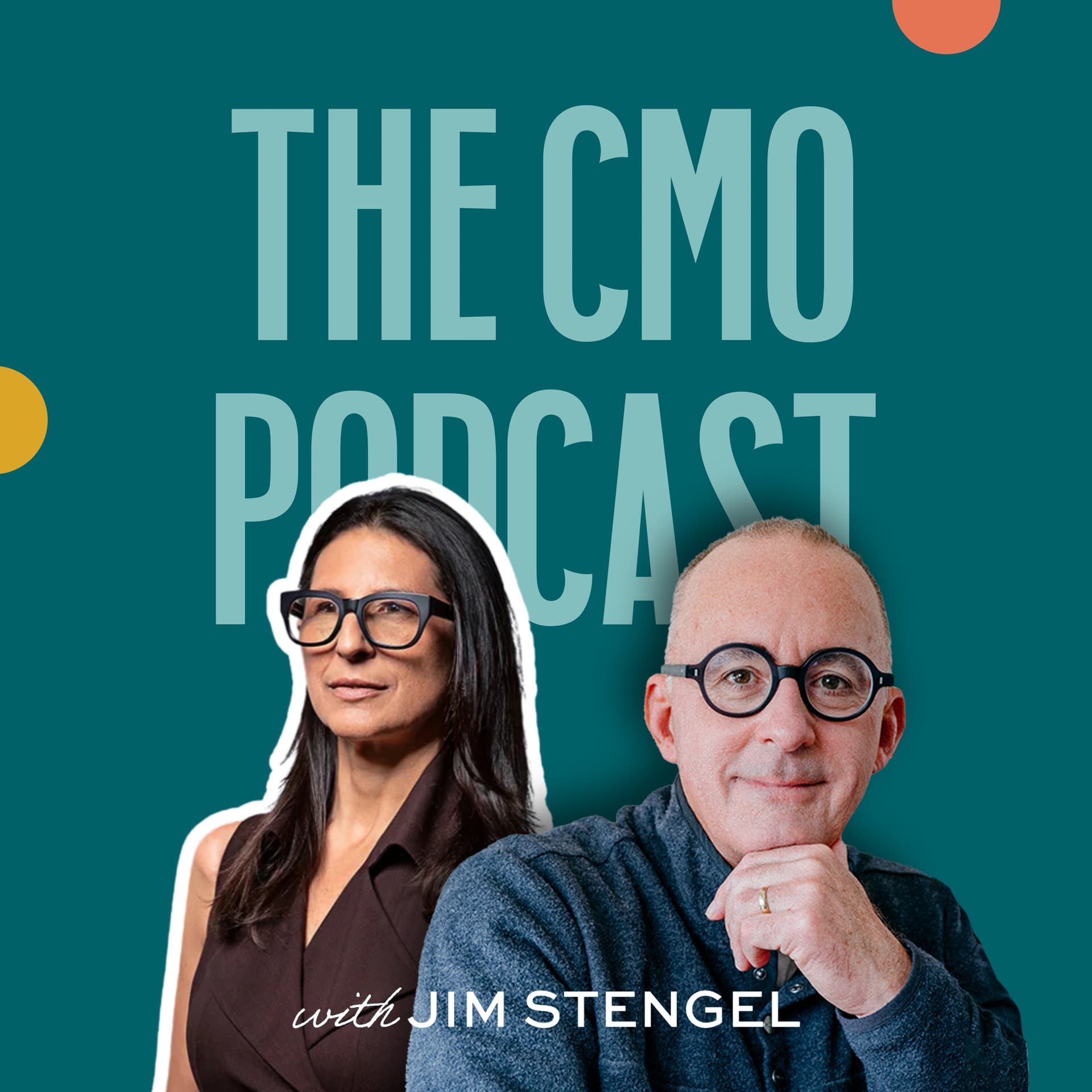
The CMO Podcast - Episode Summary: Emmanuel Orssaud (Duolingo) | April Fool's Day Measured in Smiles
Episode Overview In this episode of The CMO Podcast, host Jim Stengel speaks with Emmanuel Orssaud, the Chief Marketing Officer of Duolingo. The conversation revolves around Duolingo's marketing strategies, the significance of its mascot Duo the Owl, and the unique culture within the company. It also touches upon the themes of brand building, growth marketing, and the interplay between creativity and data-driven decision-making.
---
Key Themes and Discussions
- Duolingo's Growth and Brand Purpose
- Mission Statement: Duolingo aims to provide the best education in the world and make it universally accessible, focusing primarily on language learning.
- Market Position: As the most downloaded education app globally, Duolingo has a market cap of around $14 billion, showcasing its rapid growth and success.
- Role of Marketing: Emmanuel emphasizes that marketing is not just a tool for growth but an accelerant that elevates the brand.
- Marketing as an Internal Culture
- Emmanuel discusses the need for a brand-forward culture where creativity and risk-taking are encouraged.
- Humor and Fun: He highlights the importance of fun in marketing, which helps to foster engagement and retention among users.
- Experimentation Framework: The "grind and expand" strategy allocates about 70% of resources to proven methods and 30% to experimental ideas with clear hypotheses.
- The Duo the Owl Phenomenon
- The mascot was created as a playful element to support users in their learning journey. Over time, it has become a cultural icon associated with Duolingo.
- The owl's character is humorously portrayed in marketing campaigns and social media interactions, often engaging users in a lighthearted manner.
- Community Engagement: Duolingo actively listens to its users and uses community-generated content to build narratives around the brand, fostering a sense of belonging.
- Balancing Brand and Performance Marketing
- Emmanuel shares insights on the balance between brand awareness and performance metrics, emphasizing the importance of daily engagement with the brand.
- The strategy focuses on ensuring that users interact with the Duolingo brand regularly, which supports retention and conversion.
---
Key Takeaways
- Embrace Risk: Duolingo's leadership encourages a culture that values risk-taking and creativity, aligning closely with its brand values.
- Humor as a KPI: The company’s marketing success is partially measured by the smiles it generates, underscoring the emotional connection it seeks to establish with its users.
- Data-Driven Creativity: The integration of data in the creative process allows the marketing team to engage authentically with their audience, using insights from user behavior to guide content creation.
---
Quotes from Emmanuel Orssaud
- “Marketing was never seen as the end game for growth. It was here more as an accelerant for growth.”
- “The best way to do marketing is to make it fun so people come back to the product on a daily basis.”
- “We have to create content ourselves, and we use our mascot and language as a creative territory.”
---
Conclusion This episode of The CMO Podcast highlights the innovative approaches Duolingo takes in its marketing strategy, driven by a strong sense of purpose and engagement with its community. Emmanuel Orssaud’s insights on blending creativity with data provide valuable lessons for marketers aiming to build strong, lasting brands in today's competitive landscape.
Written by AI. May contain mistakes. Listen to the episode to check what was said.
Transcript
Automatic transcript. May contain errors.0:00What if the smartest marketing play is not to move forward, but to zoom out? Deloitte believes the most powerful move a CMO can make is to look beyond the next step and see the broader perspective. That's what the Deloitte CMO program is for, a place to gain fresh perspective and connect with leaders who've stood where you stand. Together, Deloitte will help you see the bigger picture so your next move isn't just fast, but right. Learn more about the CMO program at cmo.deloitte.com. Hi, everyone. It's Jim. I'm here with Matt Spiegel, EVP of True Audience Growth Strategy at TransUnion. Matt, you've spent your career helping marketers understand people through data, and that's harder and more important now than ever.
0:39It really is, Jim. There's really just so much information out there, and unfortunately, it's often disconnected. Marketers typically see fragments, maybe a purchase here or a click there, but what they really need is clarity, true full picture of who their customers are, and ultimately how to reach them. Well, tell me how your solution strategy comes in and helps CMOs and their teams bring clarity need to chaos. Well, Jim, we ultimately do that with a 360 view of the customer. And so it's about ultimately combining data, truly trusted data, identity resolution, which is a deep analytical problem and measurement that actually helps understand performance.
1:14So ultimately we work hard to help marketers move faster, to deepen their insights and to ultimately make every dollar work harder. We believe strongly that when you truly understand your audience, you can build a real brand and real relationships with customers that last. Where were you when I was a CMO? I don't know how to answer that. Learn more at transunion.com slash clarity. That's transunion.com slash clarity. Hi, everyone. It's Jim. I have Matt Spiegel of TransUnion with me. Matt, I want to start with, what do you love about your job? Yeah, it's a great question, Jim. You know what? I love the fact that I get to be out at events and conferences and working with clients to really think about how marketers solve problems that matter at scale.
1:52The job of a marketer is as challenging as ever, and we get to do some interesting things to make their job easier. When you work with a client, where do you get the most satisfaction? You know what? I think seeing ideas come to reality. We ultimately are an enable of great marketing. So we don't do creative. We don't do media planning. We provide the data, the identity insights, the measurement tools that make great marketing possible. So when we get to see the end product, sometimes later, it's really cool to see. Well, super to have you here. Super to be a partner. Thanks for joining us today.
2:19Thank you, Jim. So if you want to turn data into understanding and understanding into growth, visit transunion.com slash clarity. What's the first brand you remember making an impact on you as a young boy? So I'm originally from France, a big culture of food. And the brand that really sticks to my mind as I was growing up is actually Le Creuset, the homeware brand. And it's a brand that I've seen in my household as a kid without realizing it's actually a brand. But I've seen my family getting together every Sunday around a big pot of Le Creuset with those bright colors that are so iconic. I just remember one thing visually when I was a kid is that bright orange, the bright orange pots sitting in the middle of the table.
2:59You know, that visual connection has really been part of my life. Hi, I'm Jim Stengel, and I help major brands find their purpose and activate it, and the profits follow. For seven years, I was the global marketing officer for Procter & Gamble, where I oversaw the marketing of hundreds of brands. You may not know it, but the CMOs, the chief marketing officers of all of your favorite brands, are trying to connect you with your favorite products and services through purpose. And on this show, I delve into how they do it. It is the season of April Fool's Day, and to celebrate the spirit of April Fool's, we are today welcoming to the show one of Duo of the Owls' best friends, Emmanuel Orso, the chief marketing officer of Duolingo, one of the hottest growth brands in the world with one of the quirkiest mascots in the world.
3:48Duolingo is, of course, the most downloaded education app in the history of the App Store and in 2019 became the top grossing education app worldwide. Duolingo's purpose is to develop the best education in the world and make it universally available. Its core service today is in language learning. Duolingo is only a 14-year-old brand founded in Pittsburgh by Louis von Ahn and Severin Hacker who met a Carnegie Mellon. It is publicly traded today with a market cap of about$14 billion. My guest Emanuel, or Manu, has been at Duolingo nearly five years CMO since August 2023. Prior to Duolingo, Manu worked about five years at Spotify and nine years at PlayStation.
4:29This is my conversation about growth marketing and a lot more with a bilingual CMO, French and English, who is learning Japanese. Here's Manu. Well, Manu, welcome to the CMO Podcast. We thought about having Duo the Owl on the show instead of you, but it's a little complicated. He's got a big voice, but he doesn't talk much. No, exactly. Thanks for being here. My pleasure. It's also very difficult to bring the Owl because it's so big. It requires a lot of production around it. So what is the Owl up to this week? We're recording this a little bit before April Fool's. So what's the Owl up to this week?
5:04So the owl has decided to start its own cruise. And it's a five-year cruise in partnership with Carnival that will take people all around the world, across all the countries that exist on Earth. And the idea is that they have to maintain a perfect streak while they're on the cruise ship through the entire five years. And if they don't, obviously something happens to them. Oh, my. Well, you don't want to get on the wrong side of the owl. No, clearly not. I just wanted to know, I've heard that this holiday, April 1st, April Fool's Day, is Duo of the Owl's favorite holiday. Can you confirm that? It is.
5:46You know, like a lot of our marketing, nothing really started with a big strategy in mind to say April Fool will be the moment where our brand will shine. it really happened very much organically because at the heart you know we try to nurture the fun part of our brand which is really what makes you duolingo unique right it's the fact that we want people to come back to the product on a daily basis and the best way to do that is to make it fun so that really sets us apart and we really lean into fun as a key differentiator and that's what we've really elevated in our marketing and you know when you look at the calendar april Force is the day when you can truly have fun and have the freedom of coming up with crazy ideas that you don't have to necessarily implement.
6:29That said, a few of our April Force campaign, we've had a lot of people in our community asking for them to actually happen. But this one obviously requires a lot more of work to make it happen. But yeah, April Force is a big moment for us. And what's interesting is also that over the years, we've built anticipation about what Duolingo will do for April Fool's. So we have to raise a game every year and that's hard. Yeah. That's the beauty of it, right? So fun. Great for the organization to keep stretching. Yeah, exactly. Now, listen, I want to talk about marketing as a growth driver. I was reading your CEO's recent shareholder letter for fiscal 2024, and it is such a strong testimonial to the importance of marketing to your growth story.
7:11And I just want to read two quotes because I think they're pretty provocative. The first one is, I'm quoting your CEO, powered by product improvements and creative marketing, our user growth has been remarkable over the past since 2021. And the second quote, we believe that our unhinged and viral marketing campaigns like our five-second Super Bowl ad, Duolingo on Ice, and Owl Game partnership with Netflix contributed to our user growth and the growth of our iconic brand. Now, this kind of language is not common on the first page of most shareholder letters. So I want to start this great conversation we're going to have with a fundamental question.
7:49How did marketing become so respected, such a powerful growth driver for this remarkable young 14-year-old brand? Yeah, it's a great question. And there's obviously the work, but there's also the context that I think has led for marketing to really earn a seat at the table. I mean, the first thing is, as our CEO, Luis, says in the letter, a lot of the growth comes from first the product. And when Duolingo started, marketing was not there. Over the years, it really has been this flywheel of growth that comes primarily from the product in that the idea was to get the product in a place that is very, very strong, where you don't really need marketing for the product to grow, for user base to grow.
8:36And that, in my view, is a really important aspect to understand how we've been able to be successful with marketing because marketing was never seen as the end game for growth. It was here more as an accelerant for growth, which kind of removes the pressure of thinking about marketing as a short-term game where you just rely on marketing in order to grow. I think this creates the type of pressure that doesn't give you necessarily the same level of freedom you have to really think about marketing as a way to elevate the brand. And Our CEO is very clear about wanting Duolingo to be a company that lasts 100 years.
9:14And taking the long view is something that is core to the way we approach our business at Duolingo, where we make the decisions that are here to help us to make this company sustainable for the long term. And we believe that one of the key parts for sustainable growth and for a company to stay for years to come is to have a strong brand. And that is not something necessarily you can really assess immediately. as a short-term return. So that's the first part of the story. The second part is, you know, we've seen through the years as we develop the marketing, direct impact that this was generating for growth at Duolingo.
9:49And I think, you know, one of my jobs was to be able to go to our senior leadership team and be able to demonstrate that investing on content on social media is the right strategy and is able to drive growth. And, you know, when you have that proof point, suddenly you have a voice at the table because you have something meaningful to contribute to for the business. So yeah, those two things have really played in parallel and has helped to establish the marketing function that we have now. We'll talk about some of that in a bit more detail. But first, you've been a public company since 2021. And obviously, when you're a private company, it's a little bit easier to balance the long and short term because you only have usually a few investors.
10:25But now you have lots of investors. You're a publicly traded company and doing very well. Any learning from how you've managed that since being a public company? You've managed to continue to invest in the brand as well as some short-term efforts. But you're one of the best examples, I think, of a brand that manages the short and long-term game exceptionally well. So any counsel, any learnings for our listeners? Looking at how we behaved before the IPO and where we are now, nothing new. We've managed to retain that. I think what's really unique about our approach and why it has worked for us is because we almost behave like a challenger brand, if you look at our marketing.
11:01But we are the leader. Yeah, yeah. I think this approach has really helped us to find a unique tone and how to do that. And I think quite rare and that's quite unique. And I really believe that's part of the success of what we've had is because although we are the leader in our category, we've still retained that authenticity at the heart, even after becoming a public company and be able to have that continuity has really helped us. And we haven't, we really haven't changed from that perspective. When I look at the way we work on a daily basis, pre versus post IPO, none of that has changed. And obviously, the context of the companies is in a place where growth has continued after IPO and even accelerated.
11:42So maybe things would have been different if that was not the case. But for us, yeah, it hasn't, actually. It's been very much the same trajectory. In a previous interview I was listening to with you, you talked about your marketing formula. and you said it could be described as, quote, grind and expand. Oh, yeah. So could you talk a bit about what that is, grind and expand, and why you use such strong language? When you say formula, I mean, that's pretty strong language, not just a principle, it's a formula. What's really interesting at Duolingo, the vast majority of our employee base are engineers and product managers, right?
12:18We are a tech company at heart. and we run hundreds of A-B experiments on a daily basis in our products from brand new features to the change of a color of a button right all of this goes through hundreds of A-B tests and you know I looked at the approach that engineer has and the language that we use in the organization and this aspect around continuous experimentation is something that is very very prominent in our organization. And in some ways, thinking about, you know, how do you apply that to marketing? How can we speak the language of the organization through a marketing lens so that people in technical rules, engineering can understand how marketing works and approach it because they are connection with the way they work on a daily basis, but also for us in marketing to be able to embrace that model as a way to figure out our path.
13:13That's really where that grant and expand framework came in we believe that we we come with i would say this this humility at heart going saying we don't know what the world of marketing will be tomorrow like the best thing we can do is stay aware of of where people are how they're engaging with content what's what's happening out there and test and experiment all the time and then when something works that's that goes into the grind category which is okay there's something that works here and we've turned that into a meaningful machine, both for building a brand or potentially for growth. And the idea is to continue to iterate and experiment with this in order to drive as much value and extract as much as we can through optimization.
13:53That's really the grind category. One other example is taking our social tone that we found with TikTok and finding a way to apply that to new markets, right? Different contexts, different culture. How do we make that work in those So that's really part of the grind. And then the expand is trying to remove ourselves from the need to drive results and have the freedom to truly experiment in a very, very safe environment. What that means is that when we build our goals, when we build our plan, when we build our OKRs, the results of that and how we achieve that, that's very much from the grind, right?
14:30Because the grind window works. The experiment, so the expand side, is the stuff that we just don't want to be able to be accountable for. The only accountability we'll have on this is figuring out if there is something interesting to continue there or not. I really believe in that approach and it has worked very well because giving the team the sense of freedom for experimentation without the pressure of having to provide tangible, meaningful business results that come from it is the biggest, I think, opportunity for them to be free, be free of constraints, to truly experiment with the pure focus of curiosity and learning.
15:10I really, really think that's our strategy. That's how we build our brand. That's where we're going. And it's through this approach of experimentation in this expand category, as we call it. In the expand category, Manu, are there any guidelines or framework, or is it like, we all know what the brand is and we know we need to probably continue to stretch it. So just go at it. But do you have any sort of guardrails? The guardrails are very much based on having a clear hypothesis, right? It's able to come in with, okay, if we do this, then that will happen. And ensuring that anything that we do in the expand category follows that exact model, because we want to be able to say very clearly without any ambiguity, yes or no to any experience.
15:56It's very easy to fall into that trap of experimenting and being in a place where it's ambiguous. You don't really know if there is something or not, and then you get into reps that are a bit too long sometimes. We've made a mistake many times. So that's why we now go in with this very clear hypothesis in mind so that you can clearly answer yes or no at the end. And in any case, the learnings are the most important. So that's why we really focus more on what it goes up front or the hypothesis. And for every experiment, we sit down. That's one thing I'm very, very clear with the team. We have retrospective on everything we do.
16:32And we have a very well-structured method to do this, right? Where we really talk about learnings, we leave our egos at the door, and we are able to talk openly about why something worked, why it didn't work, what are some of the ideas that we can generate, and whether it's worth giving an experiment another try or agreeing that this is not the right path. And that's really part of our rituals. I think I heard you quoted in that previous interview that about 70 % of your money or resources go to grind and about 30 % to expand. Is that about right? Yeah, that's about right. That's about right. That's generally the rule of them that we use.
17:14Everyone seems to be chasing the next big thing, the fastest answer, the quickest win. But great CMOs believe the real power isn't in the speed, it's in stepping back to see the bigger picture. That's why everything Deloitte does in their CMO program, from their industry-leading capabilities to their connected network of CMOs is designed to help you zoom out and gain fresh perspective. Deloitte will help you see the bigger picture together. Learn more about the CMO program at cmo.deloitte.com.
17:48Obviously, when we talk about this brand, the owl has to come up, right? It came up in our first sentence. It is such a part of your brand. It's such core to your marketing, and it's really impossible to imagine this brand without the owl. So I'd like you to tell us the story of the birth of this owl? The beginning, I mean, it's very started way before marketing embraced the owl, right? It was part of the product. And I think our co-founders decided that they wanted a mascot and they had this choice between a robot or maybe an owl. Severin, the co-founder, hated the color green. And as a joke, they decided, okay, well, just to annoy him, let's make the owl green.
18:27That's how the owl happened. And that's why why the owl is in the product. It's because we wanted a mascot and it turned out it's an owl and it's a green owl. You know, what's been very interesting is the owl became first famous because of the product and because it was there. It's very supportive. We call that the wholesome part of the owl. It's, you know, if you use a product, the owl is there to support you, to guide you, to encourage you, to celebrate you, right? It's your best friend. It's your best learning, finding the product. And then when you leave the app, the owl is very persistent and trying to get you back into the app to continue your journey.
19:04And so we started sending a lot of push notifications. We're quite famous or infamous, I guess, depending who you talk to, for sending a lot of notifications to try to get people back into their lesson. And so, you know, the notifications, they start very nice going, hey, we haven't seen you today. Why don't you come back in the app? And then at some point after a few days, there's this message that goes out in a notification that says, oh, these notifications don't seem to be working. I'll stop sending them now. And I don't know the way this is phrased when you read it feels very passive aggressive.
19:36And from there, our community of users started to make jokes online about the owl being a psychopath. Like if you don't do your lesson, the owl is going to come and will go into your house and kidnap your dog. And all of those stories started to bubble up online. And obviously it's a huge, amazing source of creativity and inspiration. And I think, you know, the big unlock for us with the hour was to lean into this part of our brand. It felt very novel at a time because something that can be seen quite negative, most brands would actually fight this and go, okay, this is, this is very negative for my brand.
20:13I'm not going to touch this. People talking about kidnapping dogs and everything else, like this is too far, but we did the opposite. We actually embraced that and we made jokes out of this. And we just acknowledged really what people were talking about, you know, when they were referencing Duolingo. And I think that's really the core of the marketing that we really started is, you know, listening to our community, listening to those memes and stories and embracing that, you know, putting ourselves at the same level as our community, having that authenticity where we can laugh at ourselves. It was fresh.
20:42People loved it. And we've continued to build a brand along those lines. They still love it. It leads to a question about how do you manage the owl? It's in so many personalities and shapes and forms and adapts to cultures. So do you centralize the voice of the hour? You decentralize it or what's your ecosystem, your organizational kind of structure to manage what is such an important part of your brand equity? Obviously, it is core to it. Yeah, it is. I don't think we have a perfect system, I would say, but I think the way that works, there are three ingredients. And one is a lot of our work is done by a small team internally.
21:22I mean, marketing at Duolingo is only 50, 55 people, and that's everyone around the world. And as part of that team, there are about, I would say, you know, 10 people that really work on more the creative aspect there, whether that's content for social media or campaign, copywriting, et cetera. And what we try to do is very much nurture the understanding of the tone and the personality with those core people. And even the sense of humor is very much, you know, created or dictated almost by a group of creative that laugh at the same jokes and have a lot of things in common. And that really helps to build that sort of creative consistency in what we do.
22:01The other part is we've also documented that as much as possible, right? Because obviously we don't create internally all the content that you see, in particular content that is not on our English speaking accounts. that we have agencies around the world that go through a pretty intense onboarding where many of them would actually come to Pittsburgh and spend a week with our internal creative marketing team, whether that's our social team or whether that's our copywriters, et cetera, to for one week just create social content with the team and understand the magic of the tone and understand the magic of execution on how we move fast.
22:40So that onboarding is really key for us. And then, yeah, and then we have, we have some documents that are pretty fascinating for a brand. We have this big 150 page deck, which is called the Duolingo lore. And in this deck, it's all the storylines that our community has created about everything that sits around the world of Duolingo. You know, the idea that the owl is in love with Dua Lipa, the kidnapping things that I mentioned. And all of this is documented as part of all the storylines that have been there around our brand. And it's an incredible source of inspiration. I mean, that's our number one source of inspiration.
23:14Now, these 10 to 12 people that are at the center of the creativity, they must be fun to be with. It would be fun to have dinner with them. They are. They are. Yes, exactly. It's a good mix, you know, and it's also part of our success is trying to bring people in the organization that want to understand our brand, but have something really unique to bring to our brand. And, you know, I focus a lot of that, especially in creative roles in the team. what kind of fandoms are they into? What are their interests? What portion of our audience do they represent by themselves? Because our content feels very authentic and it's because of that.
23:44It's because the people that create that content are very much doing content that first entertain themselves and is their sense of humor. And that's why we're able to relate to so many people with our content is because it's coming from the heart. We're already talking about the culture at Duolingo, but I'd like to go a bit more into that. I've heard you describe it as brand forward, the culture, and you come from Spotify and PlayStation. You also describe them as brand forward, and I agree with that. But I'd love you to talk a little bit more. We've been talking about the ecosystem around the OWL, but talk a little bit more about how you've been there now several years, right?
24:20And since 2021, I believe. So could you talk a bit about how you have set up your organization, both in the culture that you nurture, obviously everyone who's there helps create and build it every day. But talk a bit about that because I think at least from the outside, that is one of your special competitive advantages, the culture you have at this company and brand. And then talk a little bit more about where you started in terms of evolving capabilities and experience as you've been there over four years. So I think there's so much to learn from what you've done at this remarkable brand. So just talk a bit about how you think about building and growing the organization, including the culture.
24:58One thing is my boss as CEO is very, you know, wants us to take risks and really believe in that brand forward vision for Duolingo, where in order to stand out, you have to take risks and you have to push the brand and you don't, you can't be vanilla. vanilla is the the worst thing that can happen for us as a brand and and it's great to have that that mentality and that support you know i'm in a extremely lucky place where sometimes i have to be the one that says no and where my ceo would say yes yeah yeah and you know that's usually not what happened right and so i think that's that's also part you know that's that's a big unlock it's a big enabler for me to be able to build a culture with creativity forward and letting the team take risks.
Read the full transcript
25:46So I'm very, very conscious of this, that context that is so, so important for a CMO to succeed is also how much my boss is willing to let me succeed and take risks. Then I think the culture that we build at Duolingo, I mean, inherently, I was talking about this idea of fun. It's really part of the DNA of how we work as an organization. I truly, in my core, believe that marketing should be fun. You want to create emotions with people. And one of the best emotions you can have is a smile, something that makes you laugh. That's the stuff you remember because it makes your day better. It makes everything better.
26:26And in a world where people are just, there's just not enough time to consume. You just want to be able to produce content that is here to make a mark on people, on their heart, on their mind. And fun is really what we excel at. So when we vet ideas, you know, and me, when I sit in the room and with my team, and then when they come to me for reviews or inputs, I sense a lot of the vibes that come around those ideas. I often can tell you if one of our ideas is going to be successful just by looking and feeling the excitement of the people that are here in the room presenting this. And that's usually how I gauge whether something is worth doing or not.
27:04And it's true because, again, I go back to this idea of authenticity. It's really key to the culture of what we're trying to do. I want, from the hiring, having people that are into fandoms, whether it's K-pop or F1, having that something new to bring in a way that feels authentic, where they're really passionate about it, helps to create content that is memorable and that feels right for the audience that we're reaching. So I really focus on that. And then I mentioned to you this idea of humility, which is very core to the way we build the culture of our team, where I don't want anyone in the team to have to argue for projects that have failed without feeling defensive about them.
27:43Because I think that's the worst that can happen, is to be able to really talk about everything in the open the way it is with objectivity. And this idea of humility is grounded in this, right? So to be able to say, okay, this didn't work, but these are the learnings we have from it. And giving the team that sense of, okay, it's fine. No one is going to get in trouble. As long as we have good learnings, that's the most important thing that matters. And I think that's really, really hard to get right in a team. And I think it took me a while to get there and I'm still working on it. It's not perfect, but letting people be able to express humility in the way that they do.
28:16But also for myself saying to the team that I don't know what marketing will be in two years. We need to figure this out together. I don't have a grand plan. It's just going to be around experimentation and continuing to learn and fail and win sometimes. So that's the way the culture works. Now, Luis, your CEO has this great appetite for risk. He hates being vanilla or the thought of being vanilla. Where did that come from in him? Is there a brand or a business that he's admired? Is there a life experience he has had to give him that mindset? Because it's a bit unusual for a CEO. I don't know the personal story behind this mindset, but he's someone who's a very, very strong product person.
28:54He has a very, very strong vision for the product and very quickly understood that as a way to stand out, you need to have product visually that is different and you're taking risk with this in a way that your product is your brand and you can create more from it. And I think, you know, that vision, the vision is still, is still here and, and, and it's part of the risk-taking, right? Where we really believe in the IPs that we have, that we've created with the product, with all the different characters, with the Duolingo universe we've created, right? And, and taking risk in that we want those, those characters and that brand to, to exist beyond the product.
29:30And I think, you know, he has very bold and clear vision around this, which is really inspiring. And definitely when you think it's just a learning app, right, I think it's pretty phenomenal to think, you know, that it's not like an entertainment product necessarily, right, like a Netflix or a Spotify. But I think the vision around the brand just transcends the product and the direct use of the product, which I think is really inspiring and amazing.
30:00We all want to stay ahead of the digital curve, and IAB, the Interactive Advertising Bureau, invites you to do just that at the 2026 IAB Annual Leadership Meeting in Palm Springs on February 1st through 3rd. If you're a qualified consumer brand or agency leader, you can access free passes and travel vouchers. And for everyone else, you can take$500 off your ticket with code, all caps, ALMCMOPOD26. This is your chance to join a three-day gathering of the industry's brightest minds and boldest voices shaping the year ahead. You'll hear agenda-setting conversations, candid fireside chats, and dynamic breakouts on the topics that matter most, from AI and commerce media to measurement and addressability.
30:44This year's lineup concludes everyone from Kevin Bacon and Bozema St. John to creator Remy Bader, along with leaders from Forbes, Major League Soccer, General Motors, and Meta. Visit iab.com slash ALM to learn more and check out the link in the show notes to register and receive$500 off your ticket.
31:07You've been talking a lot about how you work and the culture. I'd like to talk a bit about you, Manu, and where you focus, where you spend. If we looked at your diary for the last six months, what will we conclude from that? Where's your focus? Where's your energy? Where's your personal time going? I've got two teams, right? I do allingo. I've got the executive team, which is a very different type of work. And I spend about 30 % there, I would say. It's everything from M &A strategy to people strategy to thinking about every day, being a public company as well, right? Thinking about all the rituals that come every quarter from this.
31:46There's a good chunk of my time. And the rest is really with the team. I always try to be that leader that is here and available to them, while at the same time, never wanting to be the one breathing in the neck. So I give the team a lot of trust and freedom. I spend a lot more time thinking about how do we frame their work? How do we frame their responsibility in the team? How do we give them clarity around KPIs, what matters in their work? And to me, it's ensuring that clarity is there. And that's what I spend most of my time. You know, it's really around that. Defining what grid looks like, defining, setting up benchmarks, calls, clarity for the team.
32:27And yeah, and I'm available to them. So I spend a lot of time with them when they have questions. You know, we have this ritual now that has been around for the last six months or so where I have two slots every week in my calendar for an hour. And we call that marketing reviews. Office hours, but focused on work where they come in and they've blocked 15 minutes. And we talk about projects. We share ideas that share either for green lights, for a thumb up or for feedback. And it's been working really, really well. So it's that kind of process that we have that is pretty fluid. But the team now knows what to come to me for and also know where the line is.
33:03And it's funny because I don't approve anything that goes on our social media. But sometimes I would receive a message on Slack going, hey, we think this is crossing the line or it's very close to the line. And can we get a second opinion? And, you know, that's usually how I interact with the team. How often does that happen? You know, less and less. It doesn't happen very often, actually. I would say maybe every once a month maximum. It's something that we managed to figure out very well. You find a line. You know where the line is once you cross it. And we've had to cross the line to know where the line is.
33:38And I think now there's a much better understanding of this. And it's great because when a team comes to me, I understand why they come to me. Hey, I'd like to talk about briefly two kind of hot current issues in marketing. One is brand and performance marketing, the tension between the two. And the second is social media is a growth driver. And you have a pretty clear point of view on each because I've heard you express it. So the first on brand and performance marketing, I mean, I've written about this. I talk about a lot in this show. You call it the short and long game. So could you talk about your strategy in this space because it seems to be working very well.
34:16You're building a brand and you're building new users and you're building loyal users. So how do you think about it? What could others learn from how you think about the two, those two concepts? A couple of things on this. I mean, one is to understand the business of Duolingo. We are in the business of retention. We make a product that is here to teach you how to learn. We make it fun because we know that if it feels like a chore you know when you come back every day but the only way for you to really feel the tangible outcome of our product is to have the discipline of coming back every day and at that point you'll start to learn and you'll start to feel great about yourself and you'll start talking about your lingual to your friends and family and convincing more people to come so for us retention is is very very key and it's the core of our business we figured out that through experimentation, you know, back to that expand.
35:06When we create content on social, when we are there on a daily basis and our audience sees our brand, it acts almost as a reminder to do your lesson. And our brand marketing is here to do exactly that. It's to not even, you know, people talk about top of mind awareness. For us, it's daily top of mind awareness. That's really the KPI. It's very much to ensure that people have an interaction with our brand, at least on a daily basis. And for us, that's the best way to make a marketing work. The other part of this is we've got, you know, I come from a content marketing background with, you know, both Spotify, PlayStation, very, very strong content brands.
35:48And I think, you know, with Duolingo, we don't have the luxury of content coming every day. So we have to create ourselves, right? So the good thing is we have an hour and we have something that is pretty interesting, which is language. And language connects to so many, many different things when it comes to culture, from the shows you watch on Netflix to when you listen on Spotify, to the food that you cook, right? So many aspects that connect to language, which is an extremely interesting and creative territory. So, you know, we try to think about brand building in a sense where we look at a language, we look at culture, and we try to find that intersection that allow us to connect our brand to the fandoms that people may have in a way that feels as authentic as possible.
36:31And that, in turn, helps us to grow our user base. But all of this is grounded in data, actually. If you look at the way we were doing marketing four or five years ago, we have this way to measure our impact, which is, especially on the brand side, every single new user that comes to Duolingo, we ask them, how did you hear about us? It's a very simple but very effective way to get self-reported attribution data. And because we have hundreds of thousands of new users on a daily basis, we have volume that gives us significant visibility on what's working and what's not. So we had this. We were launching some TV campaigns that were very much like very polished, very perfectly designed, using our characters, quite safe, not with an unhinged tone that we have now.
37:16Yeah, I remember. Yeah. And, you know, we didn't see those big spikes in users attributing their registration to TV. And it's only when we started experimenting a lot more with social and creating those narratives around the owl, tapping into new fandoms, that we saw those huge correlations between TikTok that does super well and a strong user intake, attributing their registration to TikTok. And that's how we figured out that building the brand can drive growth. And so we doubled down on that. And that's been our strategy. Content-first marketing distributed through social channels. social channels.
37:50And that is the vast majority of what marketing does on a daily basis and what drives the biggest impact, both for the user, as I explained, but also for that ongoing engagement on a daily basis. I read about your system for thinking about where and when you appear in social. And it's also very data-driven. And I know you leverage AI in doing that, but you do seem to appear in the right places at the right time to get maximum attention, content, affection, smiles. So could you talk briefly about how you've set that up and why that works so well for you? Yeah. One, I guess it's going back to what you were talking about culture.
38:31We're able to move with a lot of agility and speed in the team. Something that I try to nurture a lot. One, I don't want people to spend their time writing decks. I'd rather have them do content and create good ideas. So we tend to not have a lot of documentation or people having to justify ideas. We try to move as fast as we can. We have a pretty flat organization, so that removes the need for layers and layers of approval. Approval only happens in a light way when the team needs it. So there's a lot of empowerment in order to move fast. And then the what I think comes from the hiring strategy and who we have in the team who understands really our audience and understand what's top of mind for them because they share the same fandom, they listen to the same artists, they know what's happening in culture at the right moment, because they live and breathe that same culture that our audience does.
39:20And then there's the more data-led aspect. So we look at, through tools that we've built internally, some of them using a bit of AI, we're able to identify topics of interest that over-index within our audience. We mine the data, we look at the comments, we look at hashtags they've used, et cetera, And we look at what are some of the topics that come on top. And then we are able to compare that to the broader user base on TikTok. And so we can see, for example, things like Roblox index is really high within our community of fans on TikTok. And so we use that as a way to guide ourselves towards the fandoms that really matter to our audience.
40:01I want to talk just about your career path for a moment. You have two really interesting brands in your background, right? Spotify and PlayStation, a big part of my life, my family's life. Could you talk a little bit about how that prepared you for this great run you've had as CMO of Duolingo? Oof, that's a great question. I mean, a few things that come to mind, I would say one, the first one is probably when I was at PlayStation, I had the opportunity to join PlayStation at a perfect time when such a strong content brand like PlayStation was seeing the rise of YouTube, first iPhone, and the digital landscape completely changing, right?
40:38And the way we were distributing content. And that opened up a lot of opportunities and learning for me around, you know, taking risks and really being curious about understanding change in landscape and having to navigate that and understanding that whatever happens tomorrow is definitely not going to be like what happens today. And you need to stay on your toes all the time to figure out what's going to be next. So I think that was one of the big learning from my time at PlayStation was also this idea of you have to try. You have to put yourself out there and be aware of how the landscape is changing all the time.
41:16And I'm very grateful to have been at PlayStation at that time when everything was happening. Spotify, I think, was more around more the creative excellence, I would say. That really is what I've seen and learned a lot at Spotify was just having some really strong creative brains. and also that tone and humor that we had. I mean, we were very famous at the time for out-of-home billboards at Spotify, having some fun copy and data storytelling. I was there when all of this was happening and when we were figuring those campaigns there, as well as Wraps, right? How to work well with products as a marketer and find ways to collaborate well in those cross-functional environments and be able to convince them of opportunities to bring Wrapped, which was an external marketing-led company that had nothing to do with the product, to finally integrate that within the product.
42:08I'm very proud to have been a big part of that decision. And so I've learned how to work in those types of environments. But also I've learned a lot about this sense of content is key. Content is key for marketing. Duolingo was a first for me to not be in a content-led brand as such, but be able to reinvent that in the world of Duolingo was really fascinating. tone, humor, be able to take creative risks. I think all of this has been has been following me through my career all the way to Duolingo.
42:44Hi, everybody. I'm Andrea Sullivan, the CEO of Vive, and we have produced the CMO podcast with Jim Stengel for many years. And I'm sitting in his seat right now. It's so exciting. I wanted to tell you a little bit about one of our programs that's called Vive by Vayner. It's a 12-month program that's designed for C-suiters and founders. And we want to help people to grow their businesses, but also to grow themselves. And so we bring in people from Shark Tank to talk to our founders, but we also focus on wellness. We want to make sure that people are leaning into becoming their best selves, their best and happiest selves.
43:25So if you are someone that wants to learn how to grow your business and grow yourself, check us out at vive.co. That's V-Y-V-E dot co. We'd love to talk to you.
43:42Let's move to the creative brief. My first question is you're learning Japanese. Why did you choose that language? I love Japan. It's just a fascinating culture. It is. I was lucky to go there a lot when I was at PlayStation and then at Spotify as well. But yeah, I always love going back there. And it's a very daunting language because it's so good. But now, you know, what's great is while I'm progressing, at least being able, you know, to go to Japan and be able to read things. It's so gratifying. And that happens quite quickly, actually, when you start learning your language. Once you start recognizing some of the characters and be able to read some things, it feels very gratifying.
44:20Our first international assignment with P &G was Prague. And this is before you were around. I took a tutoring every morning for about 45 minutes before my workday in Czech. And my wife did the same. It was hard. Oh, yeah. Again, it was just a very, very difficult language. But I got to the point where I could have little conversations and I could read things on billboards and read menus and go to the grocery store. It made my life better. That's great. But you were not around. It would have been faster if you were around. So Manu, what's the first brand you remember making an impact on you as a young boy?
44:51When I think about the first brand, it's not necessarily the first brand that I've noticed, but it's the first brand that I've really encountered as a brand that has been following me through my life. So I'm originally from France, a big culture of food around me as I was growing up. And the brand that really sticks to my mind as I was growing up is actually Le Creuset, the homeware brand. And it's a brand that I've seen in my household as a kid without realizing it's actually a brand, but I've seen my family getting together every Sunday around a big pot of Le Crozet with those bright colors that are so iconic.
45:24As I grew up, as I became an adult, as I had my first apartment, being able to, my grandmother gave me one of the pot that she had. And it's a brand that has really followed me through my life, from my childhood to my adulthood. It's a brand that I think has a strong emotional connection to me because I have seen my family. I love those brands that have such heritage and so connected to your personality and your emotions and brands that, you know, have been part of those emotions. And it's funny because look, to me, it's, you know, I just remember one thing visually when I was a kid is that bright orange, the bright orange pots sitting in the middle of the table, you know, that visual connection has really been part of my life since then.
46:05It's fascinating those brands. We got bright blue for our wedding decades ago. We still have it. And they last for it. Yeah, they do, which is beautiful. Yeah. Now, what's the most moving or inspiring story you've heard or experienced with a Duolingo user? We have some stories that our community sent us from sometimes, but I think there's this one where some people actually met on Duolingo and got married because of Duolingo. They started following each other and learning on Duolingo and they got to meet in real life at some point and they decided to get married. So it's fascinating to think that.
46:40You're a dating app too. A language app can actually be a dating app. So I find it's quite amazing. We hear those stories about people getting married, but also people getting better lives out of using Duolingo and learning a language in general. That's why Duolingo exists at heart. The mission is very much about giving people those opportunities in life by learning a language or learning on Duolingo. And so it's great to be able to work for a company that has such a great mission at heart. If the owl were a guest on this show, we talked about that at the beginning of our recording. What question should I be sure to ask the owl?
47:18Who knows how he would respond, but should I ask the owl to begin with? Oh, interesting. You should ask the owl, how was his date with Jua Lipa last night, I guess. Okay, that would be good. That'd be a good way to start. It would be a popular show. I'm sure. The owl would have plenty of things to talk about. Have you ever been in an owl costume, Manu? Do you know, it's interesting. I have not. I haven't been in the owl costume yet. I will, I'm sure at some point be in the owl costume. That's for sure. But yeah, we have plenty, plenty of people wanting to be in the owl costume. It's a great way to get your moment of celebrity without revealing yourself too much.
47:56It's popular. Well, I want to bring my producer Judy in here before we close this episode. She's a big fan of your company, a big fan of the owl. Judy, is there anything you'd like to ask Manu about anything we've talked about? Your team, your social media teams are absolutely incredible. Could you talk a little bit about the death of Duo? Talk a little bit about that and just share like maybe where that came from, how each of your incredible international teams sort of jumped on that bagwagon. All the brands that got into it was incredible. That was really funny to watch. We change our icon look from time to time because what we see is that it's actually a quite strong driver for resurrection, for resurrecting people because they noticed something different on their phone screen.
48:37And, oh, what happened to the Duolingo icon? Where does the face look different? They click on it and they get back into their lesson. So it's a pretty simple but very effective way to get you to do your lesson. We were brainstorming around what the next look should be, and there were a few options. And then this idea of doing the Duolingo face with the dead eyes was one of them. And that was really inspiring for the team. And so with this idea, the entire narrative was created, right? of the duo DL dying and us saying that DL is dead and then resurrecting a few years later. But what's fascinating is that a lot of the storyline was invented along the way because we were not expecting this to be such a big hit.
49:18I mean, it was, we got 1.7 billion organic impressions for this one and it's just incredible. But it was an amazing collaboration between our product team and marketing, which is awesome when that happens. You know, when those two things kind of happen together, I love it. But yeah, it was a huge moment And we were not expecting it. So we had to cancel a lot of our work so that we can capitalize on the moment, even the work that we did locally in our markets, right? The Japan team, for example, said, no, DL is not dying in Japan because this is not seen as a funny thing in Japan. So all the hours died around all of our social accounts except Japan, where Japan stayed alive and I am strong.
49:55So you are so steeped into content, Manu. What are you enjoying these days when you're not on Duolingo studying Japanese? What kind of content? i mean i watched on netflix i mean i saw obviously the uh amazing adolescence show last week yeah so so good i mean that's been on my mind since then just how beautifully done it is uh and so well produced but yeah you know we all bring our fandoms my fandom for the team we were talking about is the other day is um eurovision you know i don't know if you know about oh yeah i'm the one the one having that fandom for the team so helping to inform our creative strategy around this and what we should do and how we can tap into that moment.
50:31So it's fun. You know, it's fun that we all share different things as a team. Okay, Manu, last question we usually ask guests, who's been the most inspiring person in your life? My partner, actually, my other half, just because he's been through a lot in his life and has been able to rebounce and taken a different path in life in his career now. And I think, you know, he requires a lot of bravery and courage. And I always admire people that have a lot of courage. It's never easy, but it's just great to see people around there that embrace courage and don't know what tomorrow will be, but they make the choice that I'll write for them and follow their heart.
51:12So I find that very inspiring. What's his career direction? So he was a CMO as well. He was at Tesco Mobile and then decided to change his career to become a coach, an executive coach. So now he's a coach and he's very much enjoying it. It took him a while to figure this out. He quit his job and spent a year or even two, I would say. Someone said to him, in order to find your path, you need to have 200 coffees with random people. That's good advice. And so he started people on LinkedIn and reaching out and trying to find time to meet and then through that process, he figured out, which is pretty amazing.
51:48When I left P &G many years ago, a counselor actually said to me, who P &G had arranged for me to meet to make sure I was making the right decision, go have coffee, lunch, dinner, whatever, with half a dozen to 10 people whose lifestyle you really admire. First of all, thinking about those people whose lifestyle I admire is a big question. And then after three or four of those, I knew what I wanted to do. That's great. Very powerful advice. 200 is better than six or 10, but I didn't have that time for 200. it. That's probably why it took him two years. Well, Manu, this has been wonderful. I knew it would be.
52:23You know, when I do these interviews, if in my mind during the interview, I'm thinking about the various people I want to send this to, because I know it will be extremely helpful for what they're going through at this time in their life. I had lots of names come up as you were speaking. That's all to me, a KPI for a fabulous discussion. That's fantastic. I'm glad to hear. So thank you so much. I hope to see you in person one of these days. Yeah, I would love that too. Hopefully soon. That was my conversation with Manu Orso. Three takeaways from this one for your business brand and life. First one is be a challenger and a leader.
52:54I love that thought, the duality of that. Here's Duolingo as the leader in their space by far, and still has this mindset that we're a challenger. And that results in a culture that is very special. And I want to go to my second takeaway, because the culture at this place is something to be admired and something to emulate. I mean, Manu talked over and over again about smiles as a KPI, about risk-taking, about support, about new people coming to Pittsburgh to experience the brand, to experience the culture so they could take it back to their market. So there was so much in here about building a culture of brand building and of experimentation and of winning and success.
53:37And the third takeaway, I love this thought of grind and expand. About 70 % of your effort should would be applying what works and do it better and better. And about 30 % of your efforts into thinking about big ideas that are very difficult to measure in the beginning, but always to start with a hypothesis, try the idea and then do the learning afterward. They're not a crazy circus where they're experimenting with all kinds of nutty things. They're doing it with discipline and creativity. That's it for this episode of the CMO Podcast. If you found this helpful and entertaining, I would be so grateful if you could share our show with your friends.
54:17And I would be super happy if you subscribe so you can be updated as we publish new episodes. And if you really want to help, leave us a five-star rating and a positive review on Apple Podcasts or wherever you listen. The CMO Podcast is a Vive original production. Episodes of the CMO Podcast are produced by Vive. The views and opinions expressed by podcast speakers and guests are solely their own and do not reflect the opinions of our sponsors or its personnel, nor do our sponsors advocate or endorse any individuals or entities featured on the episodes.
From the publisher
Happy April Fools! To celebrate the spirit of first day of April, Jim welcomes to the show one of Duo the Owl’s best friends, Emmanuel Orssaud, the Chief Marketing Officer of Duolingo, one of the hottest growth brands in the world with one of the hottest mascots in the world. Duolingo is the most downloaded education app in the history of the App Store and in 2019 became the top-grossing education app worldwide.
Duolingo’s purpose is to develop the best education in the world and make it universally available; its core service today is in language learning. Duolingo is only a 14-year old brand, founded in Pittsburgh by Luis van Ahn and Severine Hacker, who met at Carnegie Mellon. It is publicly traded, with a market cap of about $14 billion.
Emmanuel, or Manu, has been at Duolingo nearly five years, CMO since August 2023. Prior to Duolingo, Manu worked about five years at Spotify and nine years at Playstation. Tune in for a conversation around growth marketing & more with a bi-lingual CMO (French and English) who is learning Japanese on Duolingo!
---
This week's episode is brought to you by StrawberryFrog and Deloitte.
Learn more: https://strawberryfrog.com/jim
See Privacy Policy at https://art19.com/privacy and California Privacy Notice at https://art19.com/privacy#do-not-sell-my-info.