In short
How brands create “desire” by closing the gap between attention and measurable action, and how media strategy, creativity, culture, and (selective) AI support that goal. It also highlights infrastructure for real-time optimization from ad engagement to in-store purchase.
Guests (backgrounds)
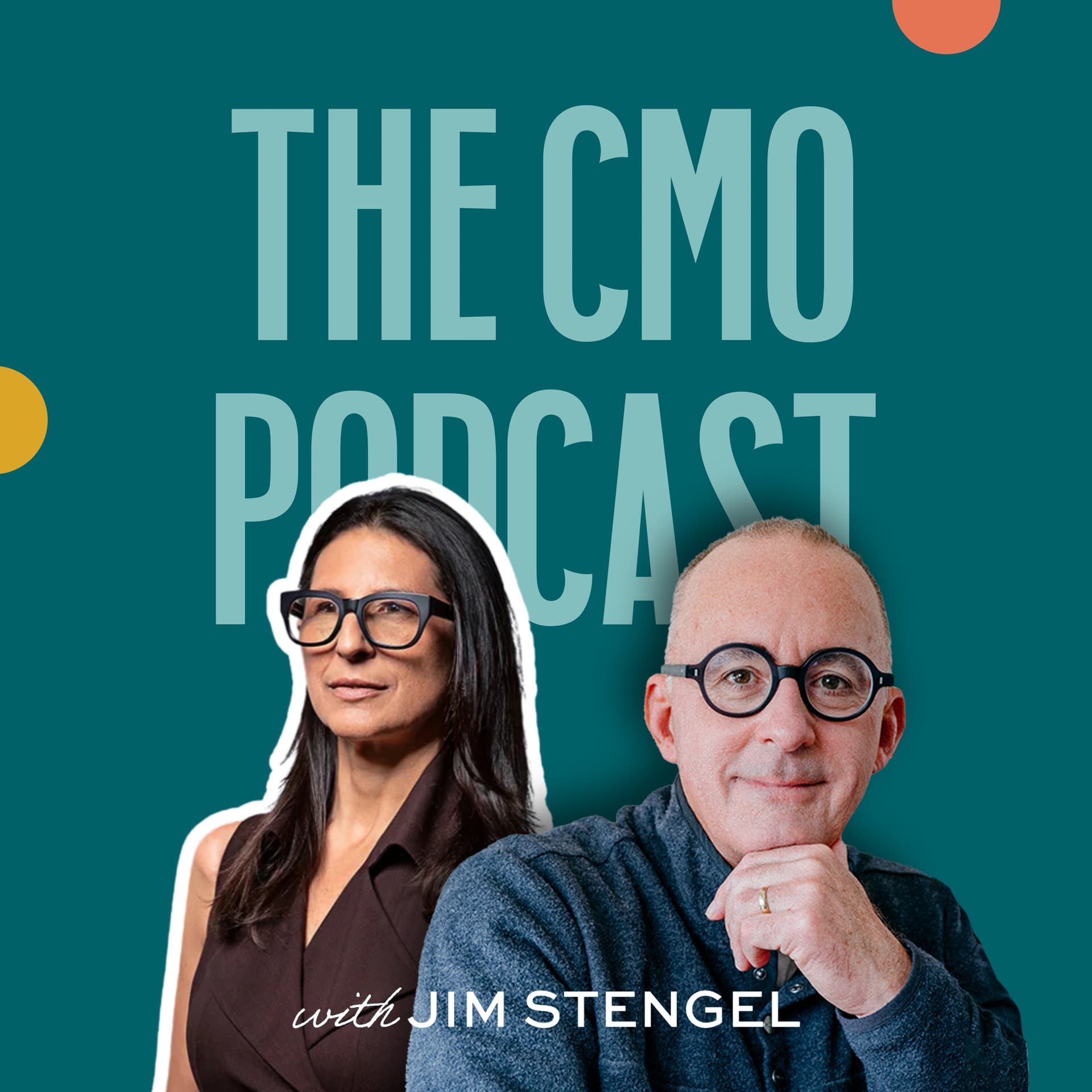
Jim Stengel hosts. Manu Orso, CMO at Duolingo (ex-Spotify; helped build PlayStation brand in Europe). Benoit Vater, Chief Media and Digital Commerce Officer at Liquid Death (founded Mammoth Media; former CEO of Playhaven). Oliver Walker-Jones, marketing/communications/brand at Joby Aviation (from stealth electric air taxis toward commercialization; prior roles at Lilium, Rolls-Royce, Walmart, Blackstone).
Key claims
Desire is earned, not bought; creative needs infrastructure to prevent value leakage. Infillion (Catalina acquisition) enables deterministic purchase intelligence to connect digital attention to in-store proof of action. Build organizations that can evolve quickly.
Notable examples
Duolingo’s owl-driven retention and culture tie-ins (e.g., Bad Bunny/Super Bowl language demand; “Dua Lipa” owl story). Liquid Death: “unexpected and healthy” governance (e.g., “Murder Your Thirst” toned down for retail; Super Bowl exception). Joby: category creation over years with trust-building via safety/testing and demonstrations; partners like Uber and Delta; “don’t hype too early” approach.
Written by AI. May contain mistakes. Listen to the episode to check what was said.
Chapters
Tap a time to open that second in VOThe Challenge of Marketing Effectiveness
0:00 to 0:54
Exploring the gap between consumer engagement and business results in marketing.
“I spent years at Procter & Gamble trying to answer that question.”
Introducing Infillion's Solution
0:54 to 2:26
Infillion's innovative platform addresses the shortcomings in traditional marketing measurement.
“If you were a chief marketing officer in consumer products, I want you to think about something for a moment.”
Purpose and Passion in Marketing
2:26 to 4:06
Discussion on the importance of brand purpose and the personal journeys of CMOs.
“I've helped hundreds of major brands discover and activate their purpose.”
Meet the Guests at Cannes
4:06 to 4:58
Introduction of guest CMOs and their brands, with a focus on their unique challenges and perspectives.
“Benoit also previously served as CEO of the gaming platform Playhaven.”
Brands Creating Desire
4:58 to 6:00
Guests discuss brands that inspire them and evoke desire in consumers.
“Here's my conversation captured live at the Havas Cafe with Manu, Benoit, and Oliver.”
Desirable Company Characteristics
6:00 to 8:10
Exploring what makes each guest's company desirable for employees and customers.
“So it's a big source of inspiration for us at Eurolingo.”
The Role of Fun in Marketing
8:10 to 10:40
The discussion focuses on the importance of fun in branding and product engagement.
“You all work for three different companies, three different business models, three really interesting companies.”
Challenges in Marketing Infrastructure
10:40 to 13:00
Delving into the complexities of maintaining marketing effectiveness within ad infrastructure.
“So we reflect that in our marketing, in our product, but also in how, you know, people work at Duolingo.”
Media Strategy Insights
13:00 to 14:00
Guests share their media strategies and how they attract and retain customer interest.
“I mean, beyond what we just talked about around our lens for creativity, which is unexpected, which is funny, we have different type of content also based on this, if we go into media on the stage of the funnel we're in.”
Navigating Brand Consistency
14:00 to 18:00
Explore strategies for maintaining brand voice and personality across various channels.
“It's not through an app where I can measure every single interaction, every single streak or anything.”
Show all 17 chapters
Creating Demand Through Emotional Connection
18:00 to 21:40
Learn how to build consumer trust and emotional engagement in innovative branding.
“Everybody knows what it was like the first time they took a flight.”
Culture and Its Impact on Marketing Strategies
21:40 to 26:30
Understand how cultural moments can shape marketing approaches and brand reactions.
“see what our community is responding to and build on that When we killed our owl last year, we were not anticipating any, like a major moment like this.”
Challenges and Opportunities in Marketing Leadership
26:42 to 28:01
Discuss the evolving challenges and motivations in marketing leadership roles.
“But all that aside, what keeps you at your company?”
Embracing Risk in Brand Growth
28:01 to 29:52
Learn about the importance of taking risks for brand growth and creative freedom.
“You have to know that some of the stuff you will do is speculative and won't work and that's okay.”
AI's Dual Role in Marketing
29:53 to 31:23
Explore how AI can enhance media efficiency while maintaining creative integrity.
“And I'm sure you're all optimizing, amplifying, testing, leveraging.”
First Brands That Sparked Desire
31:24 to 34:19
Discover the impactful brands that shaped the guests' perceptions and desires.
“People don't believe in our product to begin with because they think it's crazy.”
Takeaways on Brand Desire
34:20 to 36:51
Key insights on how to earn brand desire through value and adaptability.
“First, remember that desire is earned, cannot be bought.”
Transcript
Automatic transcript. May contain errors.0:00Jim Stengel:I spent years at Procter & Gamble trying to answer that question. We had the creative. We had the reach. We had campaigns that genuinely stopped people. And then we watched that value quietly disappear somewhere between the moment of engagement and the proof of a business result. That gap between attention and action is where most media budgets go to die. And most digital media platforms have been content to live inside it just a little upstream from accountability. Infilion is the company that decided to close it. They started as the original attention company built on the idea that a consumer choosing to engage with an ad is worth more than one who ignores it.
0:35Jim Stengel:But they did not stop there. They have built the infrastructure to connect the moment of attention to the proof of action across every screen, every format, every vertical. That is not a feature. That is a fundamentally different idea of what an ad platform should be. And it is the one brands have been waiting for. Learn more in the show notes. If you were a chief marketing officer in consumer products, I want you to think about something for a moment. You have creative that works. You have campaigns that capture attention. But somewhere between that moment and the register, the signal gets lost.
1:06Jim Stengel:You cannot see what actually drove the sale. You are making optimization decisions on inference, not truth. Well, that changed in February. Infillion acquired Catalina. Four decades of deterministic purchase intelligence. 130 million U.S. households, 70 retail banners,$600 billion in verified annual consumer spending. And here is what really matters. Over 90 % of consumable purchases still happen in-store. Infillion and Catalina together can close the loop from digital advertising to in-lane purchase and incentivize the next one. This is not a measurement tool you consult after the campaign. This is a live signal that runs through your media while the campaign is in flight.
1:47Jim Stengel:You can now optimize from attention to action in real time against people whose actual purchase behavior you know. A consumer product's brand needs return on ad spending. It needs foot traffic. Infilion now delivers all of it. Not as separate vendors you reconcile later as one connected platform. That is what closing the gap looks like. And we have a fun culture internally as well. So we reflect that in our marketing, in our product, but also in how people work at Duolingo. So fun is really that common denominator to what we do. We underrate fun, I think. Yeah, I agree. If we're not having fun with our work, who's going to enjoy it in the outside?
2:26Jim Stengel:Hi, I'm Jim Stengel. I've helped hundreds of major brands discover and activate their purpose. Because when a brand's purpose is clear, compelling, and authentic, profit naturally follows. Each week, I welcome the CMOs, the chief marketing officers of your favorite brands, to speak to how their job is so much more than marketing. These leaders share their inspiration and challenges along with how they try to build a full, healthy, and happy life in and out of the office. And it's that energy that reaches everyone they touch. And we're glad you're here to feel that energy and to learn from these remarkable leaders.
3:00Jim Stengel:So here we go. At the Cannes Lion Festival this year, we partnered with our friends at the Havas Group for three special live roundtable conversations, exploring the question of creating desire through three different lenses, through media, through creativity, and through a health and longevity lens. Our first discussion brings together three senior marketing leaders from three very different industries to explore media and desire. In other words, the role media plays in building brands people don't just notice, but genuinely want. I'm joined first by Manu Orso, the Chief Marketing Officer at Duolingo, the language learning app with the famous Al Mascot.
3:39Jim Stengel:Manu is a returning CMO podcast guest. He previously shared the remarkable story behind one of the world's most culturally relevant brands. Before joining Duolingo, Manu led global marketing strategy at Spotify. Before that, he spent nearly a decade helping build the PlayStation brand across Europe. Next is Benoit Vater, chief media officer at Liquid Death, one of the fastest growing beverage brands in the world. Before joining Liquid Death, Benoit founded Mammoth Media, building media strategies for leading consumer brands. Benoit also previously served as CEO of the gaming platform Playhaven.
4:13Jim Stengel:Today, he's helping redefine what modern media looks like for a challenger brand liquid death. And finally, Oliver Walker-Jones, who leads marketing, communications, and brand at Joby Aviation. Oliver has helped guide Joby from a stealth startup into a company on the cusp of commercializing electric air taxis. Before Joby, Oliver held leadership roles at Lilium, Rolls-Royce, Walmart, and Blackstone. He's currently tackling one of marketing's greatest challenges, creating desire for a category that doesn't yet exist. Together with these three gentlemen, we explore how three different companies think about media, creativity, culture, AI, and the role brands play in earning attention, building affection, and creating lasting desire.
4:58Jim Stengel:Here's my conversation captured live at the Havas Cafe with Manu, Benoit, and Oliver. Hey guys, welcome to the special edition of the CMO podcast, all about desire. This is really weird for me. I usually have women on the show. So to have three guys at once, I'm not quite sure where to go with this. So you'll help me out? We will. Because actually the function is largely women. Yeah. You know, which is great. And that's evolved over time. But super to have you here. So what I want to start with is I want you to introduce yourself with a question. And that is about a brand that creates desire with you.
5:33Jim Stengel:Here we are in Cannes with lots of brands trying to create desire. One brand that creates desire for you. Manu, do you want to start? You look very quizzical. I'm thinking at the same time, right? I've got to prep my answer. So I'm Manu, Chief Marketing Officer at Duolingo. And maybe the brand, I was just with them right now, so that's what they're top of mind. But I think, you know, Netflix is an amazing brand that creates desire because they have this, you know, content play all the time with new ideas and new content coming out. So it's a big source of inspiration for us at Eurolingo. Yeah.
6:04Jim Stengel:And you're a previous guest on the CMO podcast. I am, yeah. A great show. I recommend it to so many people because there's so many fundamental marketing lessons in that show. And how you leverage the owl is hilarious. I was at dinner last night with a woman who's on her 800th session with you. That's amazing. 800. It's sweet, yeah. And she's still getting crazy remarks from the owl. Yeah, of course. Every day. Every day, exactly. You have to do your lesson. Yeah. Okay, who's next? I'll pick it up. I'm Oliver, and I work for Joe Beaver, a company developing electric air taxis. I find Rivian to be one of the best desire-inducing brands.
6:39Beautiful brand. They came along to a sector that hadn't really changed all that much in the years, and they created something that felt very different. Kind of took a little bit of the outdoors, a little bit of Patagonia, a bit of IKEA, some design, some external world stuff, and made you want something that felt fresh and new. Yeah, I agree. It's a beautiful game. As soon as you see it, it's very striking. Right, it's striking. and they did something very smart with the headlights. When people saw it first, they thought it wasn't really all that beautiful, but somehow it's very memorable. I drove a Mustang EUV, Mach 3 EUV,
7:08Jim Stengel:also striking to start. I drove a gas one. Oh, yeah. Okay. You do, really? I do. Okay. All right. Kind of ironic. I bought a review as well. Okay. All right. Benoit. Yeah, I'm Benoit. I'm Chief Media and Digital Commerce Officer at Liquid Death, beverage brand. For me, actually, I'm going to go like very old school, Nike Nike it is And I'm inspired by how they are able to sustain that strength of a brand over time And obviously, they have ups and downs But overall, it's such a strong brand How they contribute to so many sports And I think I got a soft spot now I got to get in front of them My son got to Oregon, University of Oregon as a freshman And they are so ingrained in that university and the impact that on the university is pretty amazing and understanding how they've been working through the university.
7:59All of it makes me just love that brand.
8:02Jim Stengel:Yeah, great choice by your son, by the way. Have a great four years. Awesome, I bet you will. So I want to get a little more personal now in the next question, keeping in the desire theme. You all work for three different companies, three different business models, three really interesting companies. So could you talk about one characteristic in your company that makes it desirable for your employees and your customers? I mean, I would start, what we're doing is electric airtices, right? They're electric. And that does something kind of cool because it's, you know, it appeals to you either because it's sustainable and you want to change the way that you travel or because it allows you to travel in a way that you haven't done before.
8:38So we're going to let people move around cities in ways that they've just never even conceived before. So for our employees, they're changing the world and they're also saving the world. And same for our customers. Yeah, beautiful. Now, I haven't not experienced, no, you haven't hardly anymore. just the pilots. You have. I haven't. I haven't been. You have not. I've watched it fly. Oh, God. But we flew from JFK to Manhattan the other day. First big city demonstration. So it's real. It's out there. Yes, I know. I've seen video. First passengers coming soon.
9:04Jim Stengel:Wow. Okay. Super. Well, let us know. Come back on the show if you've had the ride. I will. Benoit, what do you think? For us, it's, I mean, I would say with two things, it's unexpected and it's healthy. That's what really get people to know us and to stick with us. And we try, I mean, on the product side, health has been what is guiding us with every development we made. But the unexpected is really what drives our marketing. And we always have that filter, like, is it liquid death or not? If it feels liquid death, then we should not do it. Right, right. That's a high bar for your marketing group, right?
9:37It's a very high bar. You never repeat anything. And it's very difficult. And to be funny every single time is even more difficult.
9:43Jim Stengel:Yeah, yeah. How long are you going to stay? Exactly. it's hard to be next to him because we have very similar brands in that we have the same DNA right we try to be surprising fun where people don't expect us to be so it's I think there's there are few brands that are as like-minded as Liquideth and Duolingo in the way we approach marketing we still haven't collaborated but at some point it will happen I'm pretty sure we're trying to find the idea it will be too expected to do it now exactly exactly now after this podcast now we kind of Yeah, ruin the surprise. I think, you know, for us, it's the fun.
10:20I think, you know, the fun is the promise that we sell you in the product, is the thing that will keep you coming back every day, where learning is a chore, right? But we made it fun. And we made something that feels so rewarding. Spend, you know, five, ten minutes a day, and you feel great about yourself. And we have a fun culture internally as well. So we reflect that in our marketing, in our product, but also in how, you know, people work at Duolingo. So fun is really that common denominator to what we do.
10:49Jim Stengel:We underrate fun, I think. Yeah, I agree. If we're not having fun with our work, who's going to enjoy it in the outside?
11:01Jim Stengel:One of the things I have learned from years of talking to the best CMOs in the world is this. The question is never just whether your creative is working. The question is whether your infrastructure can keep up with it. Because a brilliant campaign still has to travel through an ad stack, through data, through decisioning, through supply, through measurement. And every hop in that journey is a place where value leaks out. Most platforms solve one piece of that, a data company, a DSP, a measurement vendor. You stitch them together and pay a fragmentation tax in performance, in speed, and in accountability.
11:33Jim Stengel:Infillion built something very different. Demand, supply, data, measurement, and creative connected in a single composable platform. The highest performing opt-in attention formats via Infiliens proprietary tech in the industry, agnostic identity resolution solutions, and now Catalina, 130 million U.S. households of verified purchase truth running as live signal through every campaign they execute. No black boxes, no hops, no fragmented vendor relationships to manage. The only company I know of that can take you from the first moment of attention to the final proof of action for any vertical on any screen without leaving the platform.
12:11Jim Stengel:Open, composable, agentic. That is Infilion.
12:19Jim Stengel:Now, the theme of this is sort of the role of media and creating desire in the podcast we're doing here, the first of three. So you all leverage media in interesting ways, your strategies for earned, paid content. So I'd like you to talk a little bit about, take us behind the scenes. How do you do that as a leader? Create the strategy in media to attract people to your brand and to keep them interested and engaged, to keep you relevant, right? If we're not relevant, we're not salient, we're dead. And you all do that in an interesting way, and I think a successful way. So could you talk about how you approach it, your strategy, the kind of choices you made, what others could learn from you?
13:02Jim Stengel:I can start. I mean, beyond what we just talked about around our lens for creativity, which is unexpected, which is funny, we have different type of content also based on this, if we go into media on the stage of the funnel we're in. And actually, if you go behind the scene, the media strategy is very driven by data. It's as simple as it can and sticking to fundamentals. So for us is obviously you have this crazy marketing that you see at the top of the funnel on social and on TV. But for me, from a media standpoint is, how do I get this awareness and capture this awareness down the funnel? In our case, selling at retailers through retail media, right?
13:43So the behind the scene of the media is actually very boring compared to the creativity of the upper funnel of my creative team. But the strategy is really dialed in to get that audience to move down from, I know the brand to I want to try the brand to I buy the brand to I buy the brand again. And all of that with ways that I cannot really measure well, because it's not through a D2C. It's not through an app where I can measure every single interaction, every single streak or anything. It's through signals that the retailers send me back. So it's not easy. So I have to play with signal rather than very precise data point.
14:17So that's how we do it in the back end. And we measure very closely all the way down to conversion.
14:24Jim Stengel:So how do you keep your brand's personality and voice consistent through all that? Yeah. So obviously for us, the look and feel, the consistency of the visual is critical, but also we play a lot with frequency. We try to go as broad as we can, but we rather go high frequency than too broad. Right. And so to be able to get people to remember us and who we are and what we stand for, especially on the upper funnel, it's all about a very high frequency. Now, what we also want them to remember what I said earlier, we are funny, we are unexpected, but also we are healthy. So as they are now aware of the brand is how do I bring messaging that is still similar visual as the upper funnel, but now talks about why it's healthy.
15:07So that's how we try to do it. We try to obviously not move away from that besides so many different factors. Like if I'm on the NFL, the NFL is going to tell me you cannot do that crazy stuff. Well, I need to, if not, that's not me. So those are very difficult. And then you get on the retail website and it's like, no, you cannot use that word. Murder your thirst. No, there's no way you say that on a website. So it is difficult. It is challenging. But we rather not do it than do it in a different way.
15:32Jim Stengel:You must have some sort of governance to keep that going. Yes. Yeah. Yeah. I mean, the governance is that our taglines are our taglines. We don't change. Our visuals are our visuals. Our campaigns are the campaigns. The only time we really had to tone it down and we were okay to tone it down was the Super Bowl. Because we wanted to be in the Super Bowl. We need to be in it. And the NFL is the NFL. So we pushed them as much as we could. Probably the brand that pushed them the most. But at the end of the day If he hadn't been to the Super Bowl We probably had backed off from it But because it was the Super Bowl We went with it And you were happy with it And we were happy with it People are kind of like When they see our Super Bowl It's like This is not really We don't have a choice And I want to be in front of 200 plus million people That are tuning in To actually watching ads So we will really be ourselves Outside of the Super Bowl But I just need to get in You're pragmatic Exactly Yeah Oliver, how about yourself?
16:28I saw it Yeah, I did too. I face a very different challenge. So we're doing category creation, right? Yeah, you sure are. We're introducing a company, we're introducing a technology, and we have this kind of unique challenge of talking about the company for around about six years before we take our first passenger, right? So what we've tried to do to maintain the interest and maintain the audience growth is we took a very particular journey from the beginning to the end. We knew the audience groups that we wanted to start with, it's investors and it's government affairs people and it's infrastructure partners, and we slowly built that up and we're just getting to turn the corner to bring consumers into our brand and over the course of that we've kept the same tone we've kept the same approach it's all about transparency and trust and we've built a really kind of hardcore of people that want to evangelize for us and now we're just getting to the bit where we get to have a lot of fun right which is where we start talking about the usp and what this is going to be and we're able to kind of turn the emotional dial it's been very very rational for the past few years as we try to put the brand together and get people to believe in something that everyone has a thousand reasons not to believe in, right?
17:27And we've been talking about flying cars for decades and decades. And they're finally here. We need to make sure we have the permission of everybody when we get to that point that we start selling the tickets.
17:38Jim Stengel:When you flip sort of into more emotional media strategy or communication, what's that look like? How do you do that in a way that keeps the trust building? Yeah, well, I think we do it from a foundation of having taught about technology and safety and all of the tens of thousands of hours of testing. like that's all there for people to go back and reference. But then we add on the beauty in the golden age of flight, right? Everybody knows what it was like the first time they took a flight. Everybody gets inspired every now and again. They look out the window. It's not hard to find emotion in travel.
18:08And we can tap into that. We just do it from a base of having explained what it is and why we're there and trying not to get too far on the hype curve.
18:16Jim Stengel:Might have read about you in editorials. I've seen you on podcasts. I mean, your company. Yeah. And it's a disruptor that I think is, you tell me, is well-liked, which is not. that easy to do right but a lot of disruptors are not liked right and we've been very intentional about it and it's taken us a long time to go through that journey and we purposefully started with not getting too exciting because you can jump to the end point yeah like we're going to be whizzing around they're going to be everywhere there'll be 10 000 in the sky and you'll see me we didn't do that right we started with let's not scare people off let's bring people with and we do a lot of demonstrations we bring aircraft to places we let people see and feel and touch it we flew it in the bay area we flew it in new york we're doing all of that before we're asking anybody to get into consideration.
18:56And those that would see you possibly as disrupting their business are partners. They are. We have Uber and Delta as partners, but they say, you know, we're connecting. We're providing something that doesn't exist today. So we're not really disrupting. We're trying to make a way for people to travel that doesn't exist today. That's a good point. Yeah.
19:12Jim Stengel:Manu, your media strategy behind the scenes, pretty crazy. It's pretty crazy. It's pretty crazy. You know, at the highest level, we have two main jobs, right? The first one is being a retention business. It's a battle for us every day to get your attention and get you to come in our products to do your lesson. So when we wake up every day as a team, it's like, how can we get your attention? How can we create content that we want to consume? And eventually we'll bring into the apps so you do your lesson. And so that's really the primary strategy is showing up in people's life across any media, anything that we consume and making sure that they see the owl they see something from Duolingo, they'll be, I haven't done my lesson today.
19:55It's time for me to do it. And then the second part is really trying to connect our brand to people's aspiration around language and be able to see those moments in culture that will happen, that will create, basically, a demand for language learning. And, you know, you've got the obvious ones like travel season and the rest, but you also have the big ones like Bad Bunny, Super Bowl. When that got announced three months before we were there, right? Three months before the Super Bowl. And, you know, if you want to enjoy the halftime show for the first time, not in English, come to Duolingo. And it's trying to get ahead of those moments that will inspire people to learn the language.
20:36And so we always keep an eye on culture. We always keep an eye on what's happening because culture drives so much demand for language, whether that's K-pop, K-drama. And so that's 3DL Sprite as you go. That's cool.
Read the full transcript
20:48Jim Stengel:I was interviewing the Kraft Heinz CMO yesterday and I mean he has very basic brands right? Relish and Mustards and Ketchups. But he talked about being part of culture and his organization is agile enough to jump on something when it pops so they can get attention. So talk about that a bit. I mean you just referenced it but how much of what you do is planned and executed in advance like the Super Bowl and how much do you reserve to jump on something that's happening And how do you, and the last second part of that, how do you set up your organization to do that? It's hard to put an exact figure on that.
21:21I would say the pre-planned moments, we love them because we can organize ourselves around them. So as much as we can do pre-planned, the better. But usually what hits is an idea in the room right now, right here, because something is happening in culture and we want to react to that, right? But also being able to go with the flow, see what our community is responding to and build on that When we killed our owl last year, we were not anticipating any, like a major moment like this. We had Dua Lipa tweeting at us going, you know, because there was this game about Dua is in love with Dua Lipa. And she was mourning Dua.
22:00And, you know, the community, our audience was going crazy about it and was basically creating that story with us. And we managed to drag this for two weeks, inventing the story that Dua didn't die, faked his own death. And, you know, it was a crazy story and we were making it up on a daily basis based on the inspiration we're getting from how people were engaging around that story. So I think it's really important for a team to, you know, build that creativity in the moment and being in the know, feeling the audience, feeling what they're responding to and knowing how to capitalize on that. And so I try to create a space that, you know, encourage the team to keep time for that and really be going with the flow with the, you know, not that everything is planned, but we have that, you know, that flexibility to react.
22:46Jim Stengel:You have a great internal creative team. And we had the show, we talked about that a lot. Thank you. They're tight, they're creative, they communicate well, they love their work. So that's a big part of it. Yeah, I mean, for us, it's a little bit different. We're trying to not react to moments like that because every time we've seen it, or we tried, by the time, even if you react in a matter of hours or days, it's too late already. And when it's too late, it's not relevant anymore. And like, you know, I keep remembering this example of when Taylor Swift came with her orange color and then every single brand became orange.
23:22Like, we can't do that. That's not us. That like, again, that's so expected. So now the story that you mentioned is a different thing. It's a moment that you created for yourself. And the moment kept going.
23:31Jim Stengel:And the moment kept going. And it was a moment that you created for yourself. It was around the brand rather than a culture moment of that time. So for us, we don't really pay attention to this. But what we do is what you said, though, is that we try to act very fast on an idea. So when the idea comes out and the idea is good, we execute really fast and we're trying to be efficient in the way we do that. Like, for example, a campaign that we did last year, we wanted to get in front of moms. And we believe because mom needs to be hydrated, especially pregnant women. And so when that idea came up was the idea of the cakes for pregs, right?
24:08We had this idea of having a pregnant woman drinking off of a keg. It looks like beer, but it's actually water. I tried to buy one. Exactly. Good. Because you are a mom, you need a lot of water, so why not drink out of a keg? And at that point, that idea was like, this is it. But now do we find a pregnant woman that could also carry that story? And in a matter of days We found that Kelly Kelsey Was having her moment too And was super pregnant Like she was Like I think she was Eight months pregnant at that point So we had to reach out We have to find out If she will be okay to shoot She's like well If you come to my house We will do it And he was at that time Flying from LA to Philly Recording the whole thing And making that happen In a matter of basically days From idea to execution And put that out there And he was one of our Most successful campaign Going after that audience yeah great story yeah great story uh we take um i don't know that we have permission as a growing brand to be quite as reactive you know we have to kind of stick to the fundamentals a little bit more um but we also own the blade brand the blade run helicopters in new york and they run the helicopters you see behind us uh here in the riviera but uh when the knicks were going through their recent uh period of joy and excitement and we use that as an opportunity so you know it's a it's a very very reactive last minute kind of rebrand lots of content that goes into it and And for us, it's not just content opportunities or sales opportunities.
25:29A lot of people coming into New York that want to see the game and we can capitalize on that. So we're kind of getting directly to our customers for it as well.
25:42Hey, everybody. This is Andrea Sullivan, the CEO of Vyve. And we produce the CMO podcast and are so excited to have partnered with Jim Stengel for so many years. wanted to tell you a little bit about something that could be right for you. Vive is a program for entrepreneurs and business leaders who want to get more out of their life and become their best and happiest selves, both personally and professionally. We have a 12-month program that allows people to meet up with some of the best business leaders out there and additionally experts in the wellness sector so that you can learn how to nurture yourself.
26:17So we teach things around sleep optimization, meditation, all those good things as well. Please reach out to us at podcasts at vibe.co to get more information. That's P-O-D-C-A-S-T-S at V-Y-V-E dot co. Thanks for listening to the CMO podcast and hope to talk to you more about vibe.
26:41Jim Stengel:Tell me a little bit about what you love about your work. We talk about creating desire in media. I mean, that's fun. That's interesting. It's dynamic. But all that aside, what keeps you at your company? What keeps you energized? What keeps you inspired? What keeps you motivated? We're based in Santa Cruz. Comes with an incredible culture, amazing people. And there are people who are truly committed to change. That's amazing. But the thing that, you know, as a marketing leader, it's all about, for me, is the intellectual challenge. How do you create a new company? How do you create a new way of travel?
27:11introduce a category, a technology, a company, all at the same time, and unpacking that and putting it all back together as a years-long journey, I find it fascinating. Did you feel prepared for this job? No. How do you deal with that? I don't know. I just feel like you can feel your way through it, and it moves slowly enough that you can start to kind of put the pieces together. I worked at a different startup before, so I've done a bit of the journey. I was looking for something like this. I don't think anybody's prepared for it. Like, categorization doesn't come along all that often. I talk to a lot of people who've done bits of it in different ways.
27:41You know, I have lots of friends and lots of businesses who I respect and love and I copy little bits and we talk about it a lot and I think that exchange of ideas, everyone wants to help. That's a really important piece of it.
27:51Jim Stengel:I was in a big company for many years. We did a lot of category creation and we shared that learning. It takes time. It does take time. It takes patience and it takes trial and error. Yeah, and you have to be brave. You have to know that some of the stuff you will do is speculative and won't work and that's okay. You know, you go through doors that you can't, you know, doors you can close and open again. Again, you go through them quickly and doors that you are one way doors you think about carefully. But you have to be willing to take those risks quickly. Your turn, Benoit. For me, it's growth, skill and growth.
28:20I love it. I love to take something from small to massive. And we are in that phase. And obviously, media has a massive impact on growth, especially in the CPG world that you know very well. Digital penetration is a big focus for retailers of all sorts. And I think we can increase and scale digital penetration through media. so I think this is the best time ever to be in CPG and media because you can bring tremendous growth to your brand massive growth to the retailer it's very exciting and that definitely keeps me going on a daily basis yeah I think for me it's this combination that we have where you know we've got a very noble mission at heart and a very wholesome product right we are giving people free education which is fascinating right and because everything is anchored on on something that is so good for the world, we can be much more daring with our marketing.
29:15We can take risks, right? We can do things differently because it always goes back to that really, really great product and that intent that we have with our product. So I would say that that creative freedom, the risks that we take on a daily basis, the way we approach the brand, the inspiration that comes from what's happening in the world because education, language is part of everything from what you eat every day to, you know, the shows that you watch, it's just, there's so much inspiration out there to build a great brand. So I think that's really what keeps me here. Yeah.
29:46Jim Stengel:We haven't talked about AI. First conversation in Canada, we haven't talked about AI. Good. Which is interesting because obviously it has a profound impact on media, right? Yeah. Yeah. And I'm sure you're all optimizing, amplifying, testing, leveraging. Is there any point you want to make about that? Maybe you, Benoit, because you're in the middle of it. I mean, we're in the middle of it. And actually, that's funny. We're deep into AI on the media side from an efficiency standpoint, from making sure we buy fast with less people, shortcutting agencies, you name it, like that part. But on the creative side, we're staying away from it.
30:16And we did, and maybe some people saw it. We actually leveraged AI to make fun of it during the Olympics where we created a commercial that was actually making fun of AI, leveraging AI. So the ad would look like obviously AI and that got people talking like crazy. So maybe like leveraging a moment, that was kind of the thing that we did with our AI.
30:34Jim Stengel:It's on your brand character. But we don't touch it besides that. But on the media side, a ton. Like agent-seek buying is a big focus of mine on the media side. So that's how I wouldn't look at AI. I suspect you're the same. Yeah. For us, you know, we are a very IP-led brand. We've got those characters, those stories. We really care about that craft. So from a creative standpoint, we don't really do much with AI. We try to protect that very human-led narrative and creation. However, from a product standpoint, we actually use AI a lot as long as it helps us to teach better, right? So there are plenty of things we brought in the product.
31:12Like, you know, you can do video calls with Lily, the character, and you can practice. You can't do that without AI. You know, we can create more courses, develop content faster. So we use it as a tool to make our product better. People don't believe in our product to begin with because they think it's crazy. So we have to be very careful about using a tool that they don't believe in. But we use it a lot, you know, from a startup perspective, we use the tools a lot in the background. That's really the benefit for us is, you know, we can hyperscale our content and our ability using the tools because, you know, there are only a few of our students.
31:44Jim Stengel:If you've listened to my show, you always, you know, I always ask guests the first brand that made an impact on you in your life when you were a small boy. So I want to ask that question, but say, which is the first brand you remember creating desire for you? That's super easy for me. It's me too. Virgin Atlantic. Virgin Atlantic just, you know, they took a sector that was old and stale and they did something really amazing with it and it was you know the product is exactly the same as everybody else is they did it with human humanity human touch customer experience a little bit of sex appeal yeah and boy did they nail it yeah it's a good one i can go yeah actually the one that you're wearing oh i was born and raised in france 40 years ago right and lacoste was that sign of a brand that was you know created like some, I would say, peer respect, but also athletic, but also classic.
32:33That was a brand in France that I was like, that's the brand I don't remember. I was playing tennis, watching a lot of tennis, Mimbledon, like all of this. This is where you see the little like green crocodile and all those things. So for me, I would say that's the brand that I had the first, like I won one. Yeah. I'll stay in the French theme here. For me, it was actually Le Creuset, you know, the Coupe. Yes, yes, yes. I think we talked about this in the last show yeah we did talk about oh same answer keep going yeah you know it's just there's this you kind of get you kind of get raised with this brand around those moments when the family comes together and I've seen my grandmother cook incredible dishes with this and you know those dish get passed on from family member to the next one and there's just such a history there's just such a connection those happy moments that are built around that brand and I think for me that's a brand you know, it will always be in my heart.
33:28Jim Stengel:We got that brand for our wedding. I've been married 42 years, 43 years this year. We still have it. My kids have their own and it will live forever. Yeah, exactly. I'm going to move to Germany for mine. I was a Converse guy growing up, right? We had Converse shoes for basketball. I played basketball, I played American football. And when Adidas came out, I saw them on a Philadelphia 76er. He was like the first one to have Kangs. And I thought, oh my God. I need that. I have to have that. They weren't available. I couldn't find them. I grew up in a small town and find the local sporting store finally started stocking them.
34:06Jim Stengel:And the Converse back then were like$9. These were like$33. Wow. So my dad said, you save up your money. I'll take you down to the store. You can buy them. I bought them. I tried the moment i went to play my first game i thought i was a superstar i mean that's desire that is great all right guys last one i don't know when we're going to air this but we're in the middle of the world cup it's so much fun it's tough to be in europe watching it because you're up all night yeah so what are your predictions i mean you know i mean i think we may have to say you say yeah france yeah and the odds are with you yeah exactly i'll say england just to piss you off look it's been 60 years uh football is coming home yeah it's England all the way they did not look good last night they did not look good last night but they look good in the first game yes they did we'll take that we usually have one that we choke yeah it's okay I'll give one comment I listened to a show this morning a podcast actually it was with uh pivot with Scott and Cara and they talked about how beautiful it is to watch people discovering what America's really like nice people welcoming people huge gas stations generosity you know having fun with people welcoming all these cultures to these towns that's who we are not the stuff that's going on in politics that's great so i love that one i love that that's good we'll end on that note thanks guys have a great summer thanks for having us that was my conversation with manu benoit and oliver three takeaways from this lively the conversation for your business, your brand, and your life?
35:41Jim Stengel:First, remember that desire is earned, cannot be bought. It's easy to buy attention. It's much harder to earn affection. Whether you're building a disruptive challenger like Liquid Death, creating an entirely new category like Joby Aviation, or growing a global brand like Duolingo, lasting desire comes from consistently delivering value, building trust, and creating experiences that people genuinely want to be part of. Second, media is only as powerful as the strategy behind it. The technology continues to evolve, but the fundamentals remain the same. The best marketers use data to make smarter decisions, creativity to capture attention, and choose the right cultural touch points to create relevance.
36:22Jim Stengel:Great media strategies and plans are about reaching the right people with something they'll remember. That will always be true. And the third takeaway, build an organization that can evolve as quickly as the world around it. Every one of these leaders talked about staying curious, experimenting, and giving their teams the freedom to adapt. Markets change, culture changes, technology changes, and AI will only accelerate that pace. The brands that create the most desire will be the ones that continue learning, evolving, and staying close to the people they serve.
36:58Jim Stengel:that's it for this week's episode of the CMO podcast as always I would be grateful if you shared our show with your friends along with subscribing and leaving a review on apple podcast spotify or wherever you listen the CMO podcast is a vive original production
37:17another game day but while he's glued to the tv I'm winning my own way with missed play Let's go! Mistplay rewards me just for playing free mobile games. I earn points and swap them for gift cards to Amazon, Uber Eats, and Sephora.
37:33Jim Stengel:Yeah! We won! And I just redeemed a Target gift card. Woo! Download Mistplay today and turn your downtime into rewards.
From the publisher
Great brands do more than meet a need. They transform that need into desire. But in an increasingly crowded and fragmented media landscape, how can brands earn attention, turn that attention into affection, and ultimately inspire people to act?
Recorded live at the Havas Café during the Cannes Lions International Festival of Creativity, this special roundtable is the first in a three-part series exploring the many dimensions of desire.
Jim is joined by three marketing leaders approaching that challenge from very different industries:
- Manu Orssaud, Chief Marketing Officer at Duolingo;
- Benoit Vatere, Chief Media and Digital Commerce Officer at Liquid Death;
- and Oliver Walker-Jones, who leads Marketing, Communications and Brand at Joby Aviation.
Together, they explore how modern brands use media to create lasting desire. Manu shares how Duolingo combines planned cultural moments with the flexibility to build stories alongside its community. The conversation explores why fun is an underrated business advantage, how brands can move quickly without chasing every cultural moment, and where AI can strengthen a company without replacing the human creativity behind great marketing.
—
This week’s episode is brought to you by Havas and Infillion.
See Privacy Policy at https://art19.com/privacy and California Privacy Notice at https://art19.com/privacy#do-not-sell-my-info.