In short
The CMO Podcast Episode Summary
Episode Title
George Felix (Chili's Grill & Bar) | The Playbook for Becoming Brand of the Year
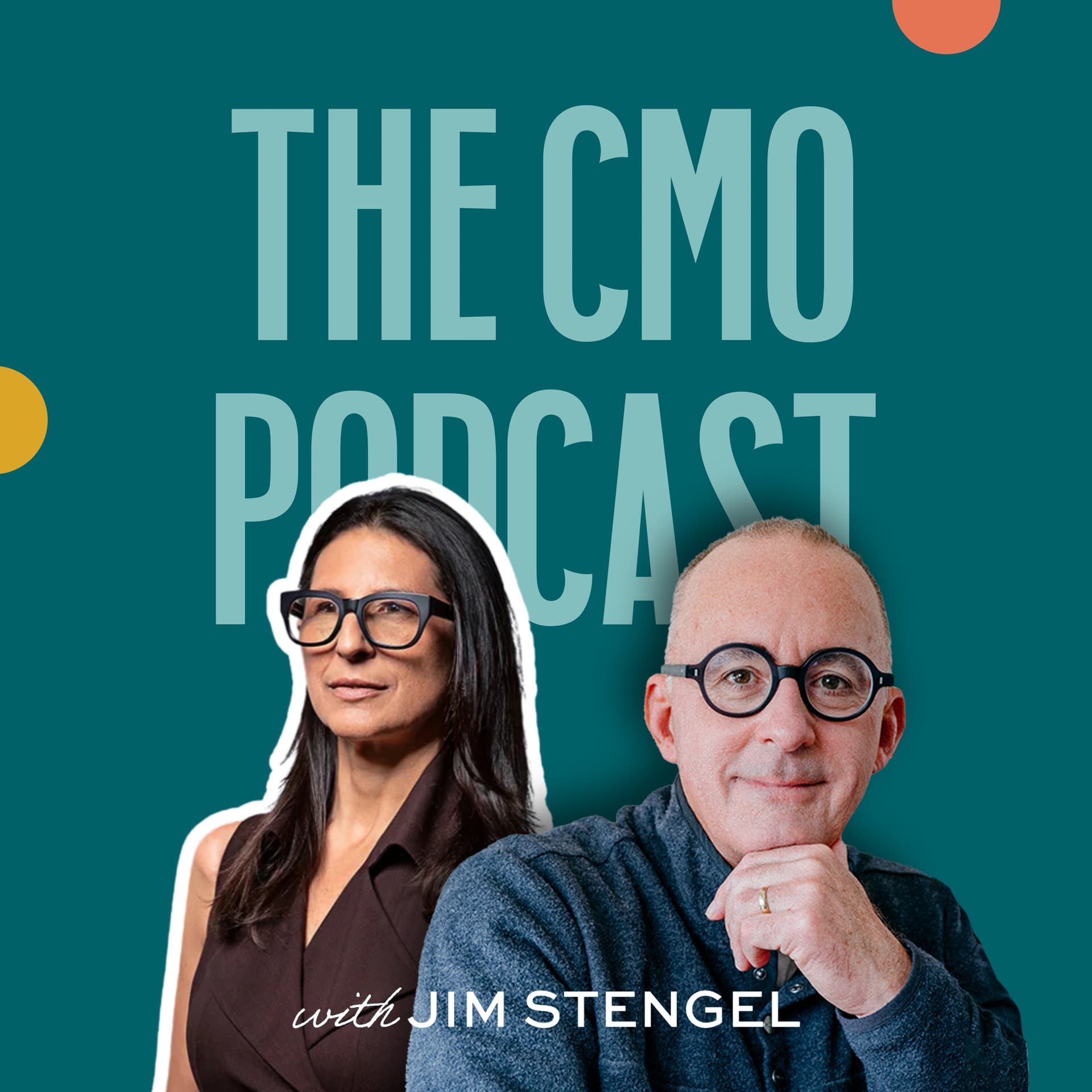
Episode Description In this episode, Jim Stengel interviews George Felix, CMO of Chili’s Grill & Bar, discussing his transformative strategies that brought Chili’s back into cultural relevance. Under Felix's leadership, the brand has achieved significant accolades, including being named Ad Age's Brand of the Year and Felix himself recognized as CMO of the Year. The conversation covers the importance of listening to team members, making heritage brands appealing again, and even delves into pop culture with a reference to Taylor Swift.
---
Key Concepts and Insights
- Brand Turnaround Strategies
- Listening to Frontline Teams: Felix emphasizes the value of frontline employee insights. He believes that those working directly with customers have the best understanding of what changes will be beneficial.
- Maintaining a Consistent Strategy: He highlights the importance of sticking with a simple, clear strategy over time to create lasting success, stating, "We want this to be a dynasty," rather than a short-term case study.
- Cultural Relevance and Consumer Engagement
- Reintroducing Heritage Brands: Felix’s approach to reviving Chili’s involved tapping into nostalgia while making the brand relevant to new generations, particularly the Gen Z audience through social media channels like TikTok.
- Fan Involvement: He discusses how letting fans shape the brand narrative can lead to unexpected successes, such as the viral popularity of the Triple Dipper, which became a significant sales driver for Chili’s.
- Simplicity in Marketing
- Felix advocates for a straightforward approach in marketing messaging and operational strategies, which can resonate more effectively with consumers.
---
Key Takeaways
- Consistency is Key: Emphasizing the same strategy over multiple years allows for deeper execution and organizational buy-in.
- Listen to Your People: Engaging with team members who interact with customers daily can provide invaluable insights that drive brand improvements.
- Let Fans Lead: Encouraging consumer-generated content and allowing fans to guide some aspects of the brand can lead to significant surprises in brand success.
---
Notable Quotes
- "The single biggest thing we've done is listen to our team members."
- "We want this to be a dynasty, not a three-year case study."
- "We have to be okay with our fans finding their own ways to love our brand."
---
Conclusion George Felix's journey and strategies illustrate the critical role of listening, simplicity, and consumer engagement in revitalizing a brand like Chili’s. His emphasis on maintaining a consistent strategy, coupled with a deep understanding of both frontline staff and the consumer landscape, serves as a valuable lesson for brand leaders seeking growth and relevance in their markets.
Episode Link [Listen to the full episode of The CMO Podcast](https://www.thecmopodcast.com)
Written by AI. May contain mistakes. Listen to the episode to check what was said.
Transcript
Automatic transcript. May contain errors.0:00Hi, it's Jim. Joining me is Matt Spiegel, EVP of True Audience Growth Strategy at TransUnion. Matt, we talk a lot on this show about building brands that people love, but that starts with understanding them, right? Jim, absolutely. Every customer ultimately has a story, but most brands are only going to see part of it. At TransUnion, we really focus on helping marketers connect those dots across devices, across channels, across platforms, with the goal of helping marketers see a full person behind the data. That clarity is gold. That is special. So how do you do it? Ultimately, we put together the pieces of information that help you predict behavior, help you personalize messages, prove the impact of every marketing decision at the end of the day.
0:37And our marketing solution suite gives brands the visibility and confidence to invest smarter and ultimately grow faster. So if you want to turn data into understanding and understanding into growth, visit transunion.com slash clarity. Hey, it's Jim. I'm here with Matt Spiegel, EVP of True Audience Growth Strategy at TransUnion. That's quite a job title, Matt. Yes. Welcome. Thank you. So tell me about your company and why it matters for our audience CMOs. Well, listen, Jim, the challenge of the day is that there's so much information about consumers out there and the challenge is most companies don't have all that information.
1:08You have some purchase history, you maybe have some web history, but you don't have a full picture of customers. We're working really hard across on a suite of identity products, of audience products and measurement products to bring a holistic view of customers to marketers. So when CMOs work with you, what light bulbs go off for them? So, Jim, we help brands bring clarity from chaos. We help them understand a picture of their customers with a 360-degree view in order for marketers to make bigger, more strategic bets. Well said, Matt. Learn more at transunion.com slash clarity. That's transunion.com slash clarity.
1:42What if the smartest marketing play is not to move forward, but to zoom out? Deloitte believes the most powerful move a CMO can make is to look beyond the next step and see the broader perspective. That's what the Deloitte CMO program is for, a place to gain fresh perspective and connect with leaders who've stood where you stand. Together, Deloitte will help you see the bigger picture so your next move isn't just fast, but right. Learn more about the CMO program at cmo.deloitte.com. What's the first brand you remember growing up in Toledo, right? Toledo, I know. It made an impact on you. Transformers.
2:16Oh, yeah. Yeah. Yeah, I was crazy about Transformers as a kid, like just the toys themselves and like how you could change. And then the show, I think it was like the first brand that I saw like showing up in like different ways. Right. It was like the toy, the show, then a movie, going to movie theater. So it was like to me, it was like blew my mind and just loved it. Hi, I'm Jim Stengel. I've helped hundreds of major brands discover and activate their purpose. because when a brand's purpose is clear, compelling, and authentic, profit naturally follows. Each week, I welcome the CMOs, the chief marketing officers of your favorite brands, to speak to how their job is so much more than marketing.
2:56These leaders share their inspiration and challenges, along with how they try to build a full, healthy, and happy life in and out of the office. And it's that energy that reaches everyone they touch. And we're glad you're here to feel that energy and to learn from these remarkable leaders So here we go. Who doesn't remember the Chili's jingle? I went my baby back, baby back, baby back. Or maybe you've seen the viral TikToks about Chili's triple dipper. Well, Chili's is back in culture in a big way, and much of that credit goes to their CMO. My guest on this week's episode of the CMO podcast is George Felix, the chief marketing officer of Chili's Grill and Bar.
3:34George is simply one of the most dynamic marketing leaders in our industry today. George began his marketing career with P &G, as I did, and was on the team that did the amazing work on Old Spice, which grew its business and received just about every single industry accolade. George then went on to Yum Brands and worked on KFC and Pizza Hut before joining Chili's about three years ago. George has built a reputation as a turnaround CMO. Just a few years ago, Chili's wasn't even a national advertiser. Today, the brand is not only back in the cultural conversation, but also coming off one of the strongest years any restaurant brand has ever had, earning George CMO of the Year and Chili's Brand of the Year from Ad Age.
4:16In our chat today, George walks us through his playbook for brand turnarounds, the secret power of listening to frontline team members, and how you make a heritage brand cool again. And we even take a detour into Taylor Swift. Here is my in-person conversation with George Felix, recorded at the NextGen CMO Academy at Deloitte University. Here we go. Well, George, welcome to the CMO Podcast here in person. I'm so happy we're doing it in person. We're looking over a lake at Deloitte University in Westlake, Texas. We were just on stage together about 10 minutes ago in front of an audience of 51 next-generation CMOs.
4:53Were there any questions or issues that the group brought up that you found particularly interesting or tough or unexpected? There were great questions, a lot of great ones. I liked the one about how do you present marketing? How do you present your ideas, justify the spend in marketing with your CEO, with your leadership and stakeholders? Because that's something I'm pretty passionate about and how you bring clarity to those conversations where in a lot of cases there isn't. Yeah. So we're here at this three-day training program for NextGen CMOs, the 10th year of this, and everyone's here trying to be a better leader, a better person, develop their skills.
5:27You worked at P &G as I did. You worked at Yum Brands. These are two companies that are famous for their training. They're called academy companies. So could you reflect back on your time either at Yum or P &G when you went through a training experience, whether it's residential like this is or something else that has stayed with you to this day, that has kind of changed the way you think about something and changes the way you lead or something that just helped you be a better manager, better leader? One that jumps out is very early on in my time at P &G as a system brain manager. Everybody went through it.
5:57It was called leadership on paper. And it was the training on how to write the infamous P &G one pager. And at the time, I remember when I was writing, you know, one pagers all the time, I don't know if I appreciate it as much, but as I've gotten older and, you know, farther along in my career, I find myself referencing not only the literal binder, but the principles of that all the time. And I think it's a almost becoming a lost art in terms of how to critically think about a recommendation, but succinctly communicate that and to get buy-in. And I think right now, you know, our company included, a lot of those decisions happen in PowerPoint decks.
6:36And, you know, it's really easy to make a 60 page deck because you don't have to think that hard. You can just keep adding material to it, but it's much harder to to put all that and take the time to think through it and get it down on one page. So I'd say that's one that, that has stuck with me and I try to continue to use in my day-to-day still. Do you use it to train your people? I try to, like we, we have not adopted the one pager at Chili's yet, but I do try to pass the principles along when I'm looking at recommendations from the team and say, Hey, have you thought about this? Or is there a better, you know, maybe a more concise way that we could frame this or phrase it for the audience that we're trying to get bought in.
7:15Well, last year, 2025, you were named the CMO of the Year at the Ad Age Creativity Awards. That's an incredible honor because your competitive set is not people in your category. It's every CMO in the country. So congratulations. Thank you. An incredible achievement. I don't think anyone three years ago would have thought that the Chili's CMO would be getting that kind kind of award. So could you talk about that evening when you got that award, what you may have shared with the audience and maybe more importantly, how did you bring it home and bring it back to the team and use it as a way to kind of acknowledge your progress, but also to, you know, inspire everyone to keep going?
7:53Yeah, it was a great night. They will share it with, I brought my marketing leadership team with me. We had some of our agency partners with us as well. honestly for us being in the room was like a pretty big accomplishment for us and that was that was something that we wanted to celebrate because like you said three years ago Chili's wasn't even a national advertiser and so for us to be in the same room as you know brands like Nike and Apple and Google and like all these amazing brands doing incredible marketing was a huge win for us obviously you know being named CMO of the year and then Chili's being named brand of the year made that an incredible night for us.
8:31You know, what I shared, you know, then was, it was really, you know, the work of the team that, you know, we've assembled at Chili's, which I call, you know, a world-class marketing team. And it's a mix of people that were willing to jump on the pirate ship before they knew that we were going to get this thing turned around. And then people that were at Chili's that really bought in to the new strategy, amazing agency partners that have brought a lot of creativity to the brand. And then our leadership team, you know, really embracing that marketing could be a growth function for our brand. But then most importantly, our 70 ,000, we call ourselves chili heads.
9:04So we have 70 ,000 chili heads. We say all the time, biggest reason our marketing works is that we have great operators. We have great team members that deliver a great experience. And so I had the opportunity two weeks ago, every year we do an annual conference. We bring all 1100 plus general managers together. This was a big one. We did it in Vegas because it was our 50th anniversary. And so we have a marketing presentation in front of all of them. I got to share the news that we were named brand of the year and we put the house lights on them because we said, this is really your award. You guys really won this for us because of the great experience they're delivering.
9:37So both of those awards, CMO of the year and brand of the year, I look at as awards for the brand and everybody across the company that's been doing great work. We're going to talk about your moniker, your reputations, a turnaround CMO in a minute. But I find, at least in my experience, when you're on a business that's buzzing, that people are acknowledging you're getting the results, Wall Street notices, it's almost harder to keep that momentum going. So could you speak to that for a moment? I mean, how you use an event like that, getting that great acknowledgement to say thank you as you did, gratitude to everyone, but yet there's more to do.
10:12Yeah, you're exactly right. I think if you told me that three years ago, I'd be like, oh, that'd be a good problem to have. But you're exactly right. And I think, you know, our CEO, Kevin, does an amazing job of celebrating the wins because it's important to celebrate the wins and the accomplishments that we've had. And we just turned in one of the best years of any restaurant brand in the history of restaurants. And that's not, you know, that's something we want to celebrate. And I tell my team, you know, we're in the good old days. You know, we don't want to look back and feel like we didn't celebrate it.
10:43And so we do want to celebrate that. But I think the way that Kevin's framed it and that we've really embraced is we don't want this to be a three-year case study. We want this to be a dynasty. And so when you look at, you know, we use sports analogies all the time. It's like, look at those teams that have sustained excellence over years. It's because they weren't satisfied. They didn't take their foot off the gas. And so for us, you know, we've been really focused and maniacal about our strategy. Our strategy doesn't change, and it hasn't changed. And I think that's a, you know, that's rare. I think a lot of times every year feels like you're rolling out a new strategy.
11:16We've really stuck to it. And so not getting bored with the fundamentals, getting that message out that if we continue to execute with excellence, we're going to keep this going and we're going to have that dynasty is important. So I think it's just balancing the celebration of the wins, but also saying, you know, how do we stay hungry and not get bored with the fundamentals? What would you say? I mean, there's a lot that goes into the turnaround, a lot goes into the kind of year you just talked about. But if you had to boil it down to a few fundamental things that changed the game for Chili's, changed the conversation, changed the results, changed the morale, what would those be?
11:48I think the single biggest thing we've done is we've listened to our team members. And like I said, we have 70 ,000 Chili heads out there and we know the answers are in the room. And we just need to listen to them because they're in our restaurants every single day. They're the closest ones to the guests. They're talking to our guests. And so that has really fueled a lot of what we've done. We've simplified quite a bit based on their feedback to make their jobs easier and take away tasks that weren't value add. We've cut things off the menu and then we've really invested back into them, not only in terms of like labor, but also just, you know, if you don't have a well-maintained restaurant, like, you know, if you showed up to work at an office that wasn't very well maintained, I don't think you'd be that inspired to go deliver a great, you know, great experience.
12:33So we've taken care of our restaurants. We're taking care of our team members and we're making the food and the drinks better. And so I think they see that and our team members see that. And then that energy transfers to the guest. And so that makes the experience so much better. So that's been the biggest thing. I think from a marketing standpoint, we've been on a mission to be, to make Chili's relevant again. And back in its heyday in the nineties and early two thousands, Chili's was in culture, You know, NSYNC sang the Baby Back Ribs jingle and Fat Bastard was singing it and Lost to Powers and, you know, The Office and all that stuff.
13:09And for a while, Chili's disappeared from culture. And so we've been really focused both in terms of social media, but also showing up in unexpected ways to put Chili's back in that cultural conversation. We were in front of the audience, as I said, about a half hour ago. I asked the audience how many have been in Chili's in the last six months, and a lot of them stood up. I liked that. Then I asked them why. And you were there, you heard it. But there's a lot of kids stuff. Like my kids ask for it. My kids have fun there. There's games for my kids. So talk about that as a driver. It's part of your nostalgia, I guess.
13:43It's part of what's in there. What are you doing to keep that relevant, top of mind? To be sure when the kids want to go out, that's the one they're asking for. Yeah. In a lot of cases, you know this, the kids are the decision makers. Totally. So we want, you know, we want them to have a great time. So I think it's been really interesting. There's been like two groups, I would say in particular that we've been focused on. I think one is people of like my age where we're reintroducing Chili's to them. You know, when I took this job and I said, Oh, I'm going to Chili's, usually a big smile would show up on people's faces and be like, Oh my gosh, I love Chili's.
14:14I used to go there after football games or whatever. But then the next thing out of their mouth was like, I haven't been there in 10 years or 15 years or whatever. So we had to change that. And so reintroducing those people who loved Chili's, giving them a reason to come back. And then by nature, they're taking their kids and giving them the experience they had when they were kids. And so for us, if we can, we say the fundamentals of casual dining are great food and beverage, hospitality, and a fun atmosphere. It's not that it's not that hard, but it's hard to execute. And so if we can deliver that, then, you know, that's where we want to be.
14:46We want to be the easy button, you know, come as you are, have a great meal. And so I think we're starting to win back families and kids and kids are then therefore asking their parents to take them back. The other group that's interesting that we're starting to, I wouldn't even say reintroduce, it's almost introduced for the first time is more of a Gen Z audience. So maybe even a little older than the, like the younger kids, but, and that's really been through, through TikTok and through social media, they've really found things about our brand that we haven't necessarily been the ones to push, but they've, they've really grabbed onto.
15:19So one item in particular, it's the triple dipper. It's been on our menu for a long time. It's an appetizer sampler. It's not a novel concept. You get to pick three things and there's dipping sauces, but you know, we were, this is probably 18 months or two years ago. We were pushing, it's a totally different message. We were pushing a new burger. It was called the big smasher. And you know, we work with influencers and all that. And then our social team noticed, man, there's a a lot of TikToks popping up of people ordering the triple dipper and taking our fried mozzarella and like pulling the cheese to see how far they can do these cheese pulls.
15:51And we were like, that's kind of random. And we thought it would be just a short lived thing, but thankfully our social team's great. And they said, well, what if we try to pour some gas on the fire? And so we worked with more influencers to kind of encourage that. And next thing you know, a hundred million views and TikToks are out there and it's like, it's going crazy. We put out some secret menu items, we push along. And now a couple of years later, it's still going. And I think the thing I learned from that is as much as like the old way it was marketers put the message out and it was one way, we have to be okay with our fans finding their own ways to love our brand and letting go a little bit.
16:25And in this case, if you would have told us two years ago that the triple dipper was going to be a big source of growth, we would have said, you're crazy. Now it's a huge part. It's 14 % of our total sales is that one item. It's crazy. So we've just learned, there's a couple audiences out there that have really helped drive, drive the success we've had. And so we're, you know, we're just trying to tap into that and help fuel the fire.
16:54Everyone seems to be chasing the next big thing, the fastest answer, the quickest win, but great CMOs believe the real power isn't in the speed. It's in stepping back to see the bigger picture. That's why everything Deloitte does in their CMO program, from their industry-leading capabilities to their connected network of CMOs, is designed to help you zoom out and gain fresh perspective. Deloitte will help you see the bigger picture together. Learn more about the CMO program at cmo.deloitte.com.
17:27You're a very consumer-centric organization, and you're also very close to your chili heads, the 70 ,000 of them in the restaurants. A lot of people say they are, you guys really act it. I was in a conversation with you a few months ago with your CEO, and we talked about how your team noticed that people are driving through fast food and holding up their receipts and it's 50 bucks, 45 bucks, 60 bucks, whatever. And you said, hey, we may be able to offer a better experience at the same price. So can you talk about, I mean, the larger principle, how do you keep your organization? So consumer slash customer, centric and acting on it and having the organization come forward with insights like you just talked about with the mozzarella, like, Hey, there's a lot of people spending money in fast food and they're putting it on social.
18:12We may have an answer to that. I think it's just the mindset that you've got to be in it. In our case, that's the restaurant industry. That means you got to be in restaurants and you got to want to be out there and you got to want to be trying new food. And, and so we've got a team chat set up for marketing and like people are always posting about new offers that are out there, new LTOs, new whatever. And it's just whether it has anything to do with what we're going to launch or not. I think just that general curiosity. And like, now I love that my team pays attention to all the earnings calls of other concepts because they're like, there's so much that we can learn about what they're doing and what they're seeing and we can apply it to us.
18:46So I think just that instilling that idea that like when you work in the restaurant industry, like that curiosity is really important. So I think that's been a big part of it and encouraging that and sharing that's important. I think in the case of that specific instance, our social team's amazing and they just have their finger on the pulse of everything going on across platforms. And I think for them, they're always looking to see what's the angle for Chili's. And what I love about that is they don't force it. There's a lot of things they let go because it's like, nobody's looking for Chili's opinion on this topic.
19:21But that was one for sure that they noticed and said, hang on, like we've got, we've got something here. The three for me 1099 is a really good deal, but it's even better deal when you realize that you're paying the same amount when you go through a drive-through or more. And so they had some fun with it on social. They called it the three for me challenge and that got a huge response. So we were basically just like, Hey, post your receipt from a drive-through and we'll get you a three for me gift card. Right. And it was just to kind of start to see if there's something there, huge response. We were trending on X for a couple of days with that.
19:53And so then that led to giving that to our agencies. Our agencies really came up with a really strong strategic angle at it. And we've been really just kind of going at fast food for the last couple of years. And, you know, it's, it's a pretty simple concept. And I think what makes it resonate is that, you know, how sometimes as marketers, we kind of create something that we think is like an insight, but it's not really, this is like a real consumer frustration point. Like fast food has completely broken their promise to customers about being the most affordable and the most convenient. And so all of a sudden, would you rather have a full service experience with better food and a fun atmosphere versus, you know, a drive-through experience in a bag that might not, may or may not deliver on what you're looking for, for about the same price.
20:37And you're seeing people really just understand that, wow, that Chili's deal really stacks up pretty well. So, but I think it's just encouraging the idea that good ideas can come from anywhere and that people can be curious about what's going on and encouraging that has led to us sharing a lot of those insights. Yeah. I'm getting a lot of questions these days about organizational design and how to set up a marketing organization for the future with the impact of AI and social channels. So you're obviously doing it well. So is there any insight you have? I mean, is your social team internally organized?
21:10Is it dispersed? Is it outsourced or insourced? So it's a mix. We have an internal team and then we work with agency partners. And so I'm a big believer in agencies and bringing in that external perspective, not just on social, but on creative and strategy. And so from a social standpoint, up until just very recently, it was literally two people on our team, which is pretty remarkable given the impact they've had. So Luz Bickard and Jack Haley were, you know - Shout out to them. Yeah, they're a powerhouse. And now we're adding two people underneath them to really ramp up our work with influencers and really be able to respond more from a community standpoint.
21:51And then we work with two agencies. One is Benchmob and one is Influencer. And they do great work for us. So I think the combination of having that team in-house and one thing I'll say about Jack on the social team, his dad worked at Chili's. He was an executive that's in the Chili's Hall of Fame. So he's a second-generation Chili head. He worked at Chili's. He was a bartender in college. He knows the restaurant. And so there is something where he really understanding this brand and understanding what it's like to be a team member in Chili's, I think goes a long way to helping us have a great tone of voice there.
22:25So I think that mix helps us to have the external perspective, but also have that deep knowledge of the brand in-house. This is your third CMO role. You've developed a moniker of the turnaround CMO. Someone wrote a story about you with that. I think it's the headline. And it is true. I mean, the last four brands you worked on were not terribly relevant. The business wasn't as healthy as it could be. And you and your team turned that around. You've done it four times. And I know you believe the Chili's one has been the most fun. But I'd just like to ask you, do you look for that, a turnaround assignment?
22:55Or does it sort of come to you? Or is it serendipity? Well, I joke with my wife sometimes, it'd be a lot better to be known as the CMO that comes into a great situation. Not as catchy. Yeah, not as catchy. But I think it started obviously with Old Spice. That was my first assignment really in marketing out of business school. I interned on the brand and then was an assistant brand manager there. And this was at P &G, your first assignment at P &G. Yeah, that's right. And so I learned so much in that. I mean, between the education you get at P &G, the education I got working with an agency like Widen and Kennedy, and that being a true turnaround and getting to see the importance of a brand purpose and a brand strategy and positioning and how creativity can solve business problems.
Read the full transcript
23:39I learned so much in that. And then the next opportunity I had when I left Procter & Gamble was on KFC, which part of the pitch, which Kevin, who I worked with on Old Spice, and then he brought me over to KFC was... This is Kevin Hogman, who's your CEO now. Correct. And so when Kevin was pitching it to me, he's like, let's get the band back together and do what we did on Old Spice, but on a brand 10 times the size. Pretty good pitch and pretty exciting. And so now all of a sudden we've got, we're starting to develop a playbook on how to do these turnarounds. And so then Pizza Hut, which is part of the Yum!
24:14brand's portfolio, was in a similar situation a few years later. Kevin got tapped to also manage that brand in addition to KFC, brought me over. So, you know, it, I wouldn't say we were necessarily seeking them out. It was just, you know, I think after that, it was that jump from Old Spice to KFC where we started to develop the playbook. And then obviously I had a little time where I went to Tinder and he was still at Yum. We're going to talk about the Tinder chapter in a minute. Yeah, good, good. And then, you know, we got back together here at Chili's. It was like, wow, okay, we have a really good sense for a brand like this.
24:46The things we got to go do, we could skip a lot of steps that we, you know, maybe have made mistakes on in the past and really get after it pretty quickly. So there is something fun to it though. I will say like, especially on heritage brands, like the ones we've worked on really, you know, digging into the DNA, understanding the brand and reinvigorating it is, is really pretty rewarding. And now we've got a really good playbook on how to do it. Let's go to that playbook. You know, if you were to write a book with Kevin, maybe you should actually have got four, four stories here, which are fun.
25:15Pretty good idea. Yeah. Happy to help you. Yeah. I was going to say, Jim, we'll have to talk to someone. I wish I knew someone who had written some books. No, but talk about that. If you were to lay out the playbook, what would that be? You know, what would the chapters be in this book about turnarounds? Well, the first one, we call it digging through the attic. So I'd say that's like the first step. And that's our way of saying you got to dig deep into the history of the brand and really understand it. And that takes different forms. On Old Spice, you remember P &G had those archives, which I still think is one of the coolest parts of P &G.
25:47You can pull archives of, you know, historical documents and ads and all these things from packaging from all the brands, but really understanding what is the brand all about? And, you know, back in the day, what, what were they talking about and what's the essence of the brand? Each brand's a little bit different in that sense. You know, there are literal archives of KFC of all the colonel's old stuff. And at Chili's, it was more about literally talking to the guys. They called themselves the hamburger hippies. You know, this guy's founders, the founders of the brand. and really understanding why they started Chili's in the first place.
26:20They didn't dream it to be a chain restaurant. It was just they wanted to make a great place where you could come get great burgers and cold drinks at a good price and then just have a good time. And so just understanding all that's super important because as you build your brand positioning, you want to be drawing on the past, but figuring out what makes that brand relevant today in today's world. And I think once you got that brand, that digging through the attic and the brand positioning, You know, we're obviously Kevin and I are both PNG guys, so we're going to go to the brand positioning and make sure that's really clear.
26:52Then I think it's all about aligning the organization and being, keeping it as simple as possible. Fortunately for us, Kevin's a master at simplicity. He will not tolerate complexity. And, and so our strategy from day one has been the same, which is great for three years. We have not changed strategies. And so, you know, just delivering great food and beverage and awesome hospitality and a fun atmosphere and investing in our team members. It's as simple as that. And it's one of those things where if you get that clarity of the strategy and you can repeat it over and over again in an organization with 70 ,000 people over time, it really starts to sink in and you get that muscle memory.
27:29So, and then from there, you know, from a marketing standpoint, we usually we're off to the races on how are we going to do something that really makes our brand stand out. Right. And so it's a mix of fundamentals of, you know, food advertising, which is craveable food and making sure it's distinctive and unmistakably Chili's and combining that with that kind of reaction of, oh my God, did you see what Chili's just did? And like, or did you see who they partnered with or, you know, all of that stuff that gets people buzzing about the brand. And so once we get that going, Kevin's really great on the operational side.
28:00And I mean, he's great on the brand side too. I kind of handled the brand side. We've got a great team now in place at Chili's that has, whether it's operations, finance, supply chain, IT, and we go. You know, those four things you talk about could be seen as table stakes, but you guys have sort of made it into a point of difference, right? That's right. Because a lot of brands say, you know, if I can own the category benefit in my voice, that leads to a big brand. Can you talk about how you made those four seemingly sort of generic things yours? Well, they are the fundamentals of a great restaurant experience.
28:34And whether you're at a fine dining establishment or whether you're at Chili's, if you think about just your own experience when you go out, like how are you going to judge a good night, right? Was the food great? Did you have good drinks? Was the atmosphere lively and buzzy or was it kind of dead? Was your service good? Was it memorable? Did they take care of you? So it's not that there's any secrets there. It's just, are you willing to like really invest in it? Really like not just pay lip service to it, but really go in. And I think that's the difference. And I think that's why we're not really shy about saying that's what we're focused on because it's not a big secret.
29:08It's just, I don't know that other concepts are as willing to go invest the time and the money to go listen, but then truly invest and back it up with hundreds of millions of dollars investments in these things to make them better and commitments to do it for the longterm. I've heard you say that this one is the most fun. They were all fun, but this one is the most fun. Why is that? Is it because you've been through three? Is it something about your team, the category itself? I mean, I guess you were in a similar category in KFC and Pizza Hut, but this one is a little bit elevated. Yeah. Yeah.
29:39It's a couple of reasons. I think the brand and the culture have been phenomenal. I think the fact that we've taken all the things we've learned from these past experiences and been able to apply them even quicker here has been really rewarding, but also the culture of this company, the chili head culture is so real. And there were so many people that have been here for 20, 25, 30, 35 years. And to hear them say, like, I've got, like, this is what it used to be like. This is like the good old days, or like, I've got pride in the pepper or like, like all these things. Like they just feel so like being able to be a part of restoring that I think has been super rewarding.
30:15And then be honest, it's the people that I'm doing it with. And obviously Kevin, Kevin's a big part of that, but also getting to build the team and bring people like really important people in my career and my life over three people in particular, Jesse Johnson, Steve Kelly, and Mary Ellen Scott. They're people I've worked with in the past and they were all willing to come on board and they believed in the vision that we had. And they've been a huge part of why we've, we've succeeded. And then this whole crew of chili heads that were already there, but they bought into the strategy that, you know, it's hard when new leadership comes in and you're saying a lot of different things.
30:51And there's a group of people that really believed in that. And now getting to come to work every day with people that you genuinely enjoy spending time with, it's the best. So we're having a great time.
31:08We all want to stay ahead of the digital curve and IAB, the Interactive Advertising Bureau invites you to do just that at the 2026 IAB Annual Leadership Meeting in Palm Springs on February 1st through 3rd. If you're a qualified consumer brand or agency leader, you can access free passes and travel vouchers. And for everyone else, you can take$500 off your ticket with code, all caps, ALMCMOPOD26. This is your chance to join a three-day gathering of the industry's brightest minds and boldest voices shaping the year ahead. You'll hear agenda-setting conversations, candid fireside chats, and dynamic breakouts on the topics that matter most, from AI and commerce media to measurement and addressability.
31:52This year's lineup concludes everyone from Kevin Bacon and Bozema St. John to creator Remy Bader, along with leaders from Forbes, Major League Soccer, General Motors, and Meta. Visit iab.com slash ALM to learn more. And check out the link in the show notes to register and receive$500 off your ticket.
32:14You talked about agencies a moment ago and how you believe in them. You're really good at working with them, right? Helping them maximize their potential. They want to work with you. They feel like they do their best work. So could you talk about how you develop those skills? Well, it was a lot of it came early on. So at Procter & Gamble, And I think you're Jim, you're responsible for a lot of the training that happens there in terms of how do you work with creative partners? And the best training I got was, was really working with Widen and Kennedy because they were different than your typical agency that P and G had at the time.
32:46They really challenged you. They were not shy about their opinions, but they were all rooted in really great strategic work and great creative work. And so the people that I worked with at Widen and Kennedy, I credit with giving me almost like a second MBA in terms of like how to harness great creative, but do so in a way that gives room for the creative, but also meets the needs of the brand. And so that experience, it was challenging because I didn't always know how to work with them or I didn't know how to respond to some of the ideas they presented, but I'm getting to know the strategists and the account people and the creative people on those teams really informed for me how to use creativity to solve business problems in the future.
33:29And so I've been fortunate to work with some of the best agencies in the world and some of the best people at those agencies over time, whether it's Widen and Kennedy or Mischief, or now we work with an agency, John Marshall and Daughters, like these creative teams and strategy teams are so good. I look at my job as like, how do I give them the right brief, get out of the way enough to let them have creative freedom and then come back in to shape the idea to get to get to what we need. And so it's been a lot of fun, but I got to credit the team, the groups that I've worked with have been just phenomenal.
34:01Now, Wyden was a very powerful experience for you as a young guy. As you think about how you work with agencies today, how you evaluate creative, if you had to boil it down to one or two lessons they taught you that have stuck, what would they be? The importance of a good brief. Early on, I didn't fully understand the process as well. and you could really start to see that I think great creative agencies almost always have a great strategic arm to them. And it's usually the less sexy part of it and they don't get as much credit. But in those cases, in the case of Widening Kennedy, like the strategy side of that is so important and it really can't work without great briefs.
34:42And they would oftentimes help polish our briefs to get them to a place where then the creative could do their magic. And so that was one of like the importance of a great brief and the importance that if you give them clear guardrails and a clear sandbox, it actually opens up creativity, I think was, was a big lesson. And then the idea of how do you provide feedback on creative, but also work with the creatives to say, even if the, you know, you love the idea, if it's not fully there, how do you nurture the idea so that you enable them to keep that creative spirit through the process versus I think sometimes people take things a little literally early on in the process and you end up losing a lot of great ideas.
35:24Whereas even if an idea is 40 % like there, that could turn into the best idea you have, but you have to be willing to work with them and partner with them along the way to kind of see it across the finish line. What's the riskiest idea that you got behind early and you learn the most from. My guess is it was with Wyden, but it might be something else. Yeah, I was with Wyden. I mean, honestly, I know this will sound maybe cliche looking back on it, but the man your man could smell like, it sounds weird because like in hindsight, you might say, well, what was risky about that? The famous man on the horse, old spice ad from what, 2010?
35:5910, I guess it launched, 2010. Yeah. So that one, we were scrambling because we were trying to defend against Dove for Men's launch. And so we didn't have a ton of time. We were kind of briefing an unplanned creative brief. And the idea, they presented a couple of different ideas and we actually bought the other idea. Oh, wow. And I've never seen an agency do this. They came back the next day and unsold the idea we bought and said, we sold you the wrong idea or put differently, you bought the right, but they took, they, they took ownership to say, we don't think we presented this other idea as well as we could have.
36:40We want to get another crack at it. And so we went with them on it and we trusted them and then we made it. And they were adamant that if you remember that shot, it was done. It was like a, it was a one or it was one, one take, like it had to be done. It wasn't spliced together. It had to be done in one continuous take. So it took like two days. I can't remember how many take takes they took, but it like took like 80 or 90 takes for them to get it right. Cause everything, there was one part of it that's CGI, but most of it was done practically, right? The sweater dropping on him and him and the horse, all that was one take.
37:11And so then we're sitting in, I'll never forget, we're sitting in a conference room in Cincinnati, they're in Portland, Oregon. And so we're on the phone and then they're like, they explain everything for the rough cut. And then we watched the link. And at the time it felt like he was talking a million miles an hour and you weren't going to be able to understand anything he said. And so we're all just looking at each other in the room. It's my, I'm an ABM. So I got my brand manager, my director, you know, all these people in the room, it's probably four of us in the room and we're just silence.
37:39No one says a word. We're looking at each other. No one knows what to do. Thank God we did not Zoom back then. Exactly. Yeah. And so then we hear, you know, the phone, we hear it. Uh, you guys still there? Everything okay? And we're like, uh, hang on, hang on. We watch it again. And we're just like we're legit worried. We're like, oh my God, what have we done? Cause this was, there was no backup plan. This was it. And so we get back on, we tell them all our concerns. We're like, Hey, do you think you could slow his voice down? Do you think you can edit something different in here? They're like, well, no, it is what it is.
38:09And like, this is the one take we got and like, you know, all of this. And so we were terrified. And so my brand manager, James Moorhead and our two, the two other ABMs, Jim Arbitus and Mauricio O 'Connell, we went to, you remember rock bottom brewery in fountain square and we took two laptops and we put our credit card down at the bar two people went to the back of the bar and two people went to the front of the bar one group took women we bought them we said we buy you a beer if you'd come we said we were from a research company um we just want you to watch this commercial and tell us what you think the other group took guys and we just watched people watch the ads separately because the whole point of this ad was we wanted to talk to men and women for the first time and we just watched people watch the ad to get their reactions, see what they thought.
38:53And at the end of the night, we came back, compared notes, and we were like, okay, I think we got something here. Like it was doing what we thought we did. I think we were just so nervous because we hadn't seen anything like that. And it was so different, but sure enough, creatively, they were spot on. And that helped us give us the confidence to say, yeah, I think we got something here, but there's no chance we knew it was going to do what it did. We thought we had something interesting. We thought it was going to be disruptive, but for it to still be something that Old Spice is using 15 years later and has kept that brand on top for so long.
39:26One of the best ads in the history of advertising. Yeah. That we almost probably killed because we were, you know, we didn't know. When you were in that bar, it was a great idea, by the way. It's a good idea for anyone. When you're in that bar showing, what was the first reaction? Thank God it was, it was laughter. Like it was, I mean, on both sides, that's what we were worried about. It was like, is it going to resonate with both men and women? And you could see they were laughing at different parts of it, right? You know, guys thought certain parts of the ad were funnier and women thought other parts were funny, but like it was landing with both, which is the needle we were trying to thread.
40:00And it was quite an experience. How did you premiere it? When did it first air? Well, that was another big decision. So we, Old Spice is a pretty small brand. So the debate was, because we knew Dove for Men, the whole reason we were doing it was Dove for Men was launching in the Superbowl. And so the question was, do we try and launch this thing in the Superbowl? But basically that would eat up most of the budget. So it'd kind of be like run it once and then hope for the best. Or do we run it, you know, just more like put it out around the same time, but run it for, you know, a more typical campaign length.
40:33And we decided for the latter. So we decided not to do in the Superbowl, but the funny thing is this really dates me, but like right before we launched it in the months leading up to that was when we launched the old spice Facebook page. It was the first time when brands was 2010. Yeah. When brands were having Facebook pages, right. And we launched it and it was before you paid for any of this, you know, you didn't, there was no paid posts. It was just you post. And if you followed the page, you would see it in your timeline. So we launched the old spice Facebook page. We launched the old spice YouTube channel.
41:08Right. And so we posted it the Friday before the Superbowl, if I'm not mistaken, Friday or Saturday before the Superbowl on Facebook and YouTube. And it got passed around so much that weekend that by Monday morning, we were included in the Superbowl roundups, which is amazing. It was like the, the best like ROI ever because we got, most people think it is Like we still, we joke on our, we still have an old spice text chat, like text group. We still joke every year when they rank the best Superbowl commercials that is inevitably in the ad age and ad week lists. And it technically didn't run in the Superbowl.
41:46So it's one of those fun things that makes for good stories. I knew that story pretty well, but I heard, I learned some new things today. All right. All right. I'm glad to hear it. The bar session I had, I had known. Well, James Morehead was full of lessons. Yeah. He was, he was a scrappy guy. Yeah. It's full of lessons. So listen, in doing my homework on you, I saw on a lot of social posts about your marketing academy, Chili's Marketing Academy. So it looks like a series you do. And I saw, and it must be resonating because people are posting, you're having fun with it. So can you talk about what that ritual is and how that's part of your training and development program at Chili's?
42:21It's something where I was really fortunate to work at companies like P &G and Yum, which are, like you said, academy type companies. And so I realized as we were bringing more people in, you know, to the marketing team and talking with them for a lot of them, this is their first experience in marketing. And this is the first company they've worked at. And Brinker is a great company, but we don't have the resources of a Yum or a P &G to have that kind of infrastructure for that type of training. And so I just thought, how can I help develop these marketers to give them a little bit, a little flavor of the type of training I got.
42:56And so, you know, we got to brand everything. We're marketers. So we call it the Marketing Academy. And it's really just meant to be a time where we get together as a team, I'd say probably eight times a year, maybe eight to 10. It doesn't have anything to do with the specific like day-to-day business. And it's really just meant to be either internal or external speakers that are meant to just broaden your horizon, teach you about something that might relate directly to work, or it might be something outside of work, but just something interesting. And so it's been a lot of fun from an internal perspective.
43:25We had one of our chefs on our culinary team do a whole thing on tasting and understanding how that works and the science behind it. And we got to, you know, just taste different things. And it was super interesting. I did one on normalizing failure because we have a lot of new, you know, younger team members and more junior in their careers. And just, it's funny how like, you know, when our bios get published in places, it just looks like, man, we just never hit a bump in the road. Right. And it's like, it couldn't be farther from the truth. Like I've learned more from all the mistakes I've made over time.
43:55And so it was just letting them know if early in your career, like embrace that failure is going to happen. It's just how you deal with it and what you learn from it. But then we've been really lucky to have some amazing speakers externally. Marcus Collins, who's one of my favorite people. Michigan, University of Michigan. Yeah. Yeah. His book for the culture is amazing. So he came and spoke to our team early on, just after he'd written that book to talk about what it means to be a brand and culture. And what does that really mean? We had Roxy Young from Reddit come talk about her platform. We had Michael Mulvihill from Fox talk about like really interesting things like, you know, how they think about sports programming and like how they draft games for college football, like, which is amazing.
44:37I think they should televise the draft, like how they pick which games they're going to televise. And then we had Cindy Davis from our board of directors, who's been a board mentor to me. She used to be the president of Nike Golf. she's on the board of deckers which owns hoka and ug and so she was sharing amazing stories you know she used to work for arnold palmer and like she's golfed with tiger woods and michael jordan and like she's shared these amazing lessons from her career so just you know we're we're always just kind of on the lookout for things that can help teach our team new lessons about life or about marketing you know on top of the things that we're doing day to day i've talked to you before about your special relationship with your ceo you talked about a board member you have a great relationship with Cindy.
45:17You know, a lot of CMOs don't have those kinds of relationships with their board or their CEO. How have you built it? I mean, what do you do? Practice do you follow? I mean, what's your mentality? How can you help others? Because that's really important, right? If you don't have a good relationship with your CEO and your board, you're done. I'm fortunate. So obviously Kevin and I have a long history together. And so that helps in this case that, you know, we obviously are on the same page. I'll credit him though. I think his philosophy on, on how our leadership team interacts with our board is he wants us to have a good relationship with the board.
45:50He wants us to be in board meetings and actively presenting to them and interacting with them. And so we get to show up and present the work that all of our functions are doing directly to the board, which, which helps instill confidence in the board and what we're doing. And then, you know, he took it one step further and we get board mentors, you know, that, that we get paired up with. And in my case with Cindy, you know, it makes sense because of her background. She has a strong background in branding and really understanding that. And so for me, that's been great. Whenever the board's in town, Cindy's really generous with her time.
46:23She'll make time for us to have one-on-one conversations. I can pick her brain. She can share experience from the company she works at or the other boards that she's on right now. And so that I think has helped. I can pick her brain, but also our entire board. There's another member of our board, Francis Allen, who has experience in the restaurant industry. And we were trying to improve our fries and she'd worked at concepts that have really craveable fries. And I was like, Francis, I need, I need to understand the Dallin. She went like, took so much time just to go through everything from the operations to, to, you know, to how, how you can get them more consistently seasoned and all that detail.
47:01So just the, the willingness of our board, I think we have a board that's very willing to spend time with us and get to know us. So all the way through the chair of our board, Joe DiPinto, it's been awesome just to get to spend time with them. We got to dinner with them. And so it's not just about work, but we've gotten to know them on a personal level too. I want to flip to your career path for a moment. You have one chapter in your resume that I don't understand. So, I mean, I get it. You know, you go from P &G to Yum! Brands to Chili's, but you took a little detour in 2021 to go to Tinder between Yum!
47:33and Chili's. I did. So what were you thinking? Was it? Well, I'll be honest. When the recruiter call came in, I laughed as my first reaction when I heard the brand. And that is not something I'd recommend for other people to do. But then after that, basically, I was looking at that point, I had a feeling I was looking for like a change. I'd been at Yum for almost six years and I was looking for something outside of the franchise model. And so the call came in. It was interesting. I was interested in tech. I'd never worked at a tech company. And I knew I didn't want to move to either coast. We wanted to make Dallas our home.
48:10And so as we were talking, this was during COVID, they said, why don't you just talk with the CEO, see what happens. And man, we just, we hit it off. His name's Jim Lanzone. And we just clicked. It was one of those conversations where it felt like it was 10 minutes, but it was like, it was an hour, you know, and it just like, it was really easy. His, his pitch to me was Tinder was about to be 10 years old. The product had never evolved. basically it was the same experience it was when it, when it started and he was a product guy and he had a vision for what he could do for that. And then the brand in those 10 years and never really owned its brand narrative, never had a true brand positioning.
48:44And I need someone that can, that can do that. And so that was the pitch. Uh, it was, it was super, it was like just interesting. It was, it was a left turn for me, but one that just felt exciting and just felt like something I needed to try. It could have been partly because of COVID, you know, like Obviously, that was a different time. And so I went for it. And I don't regret going there at all. I learned a ton. Being at a tech company is so different than the type of companies that I'd worked at. Marketing is not the center of the hub there. It's product and engineering, and rightfully so. And I didn't mind that.
49:18I liked the idea of how does marketing best support that. The idea that you can push an update out and instantly the experience changes for everybody. everybody. I think that's super interesting. And then most importantly, you know, when I told them early on, I'm like, I met my wife at a dorm party freshman year of college, like that was before dating apps. So I've never, I've never been on a dating app. So it was a whole new world. And like, I think there's something to marketing a product that you're not, that you don't use because you have to come at it with a completely different lens and really make sure you understand the consumer and the experience.
49:51And so I was on, again, it was during COVID. So I was on zoom focus groups with college students, like a few times a week for the first, you know, couple of months. And it was fascinating just to learn just about their daily lives and how they use Tinder and how they use other apps and what the frustrations were and what was working. And so the people were awesome as well. Like I had a great team. Actually, you've talked with Nicole probably piano. She was on my team. She was great. She was amazing to be now. Yeah. Steph Danzi is still there. Like the team was great. And so I met a ton of great people, the mission, people really believed in the mission.
50:23We defined, you know, the brand. We thought the brand purpose could be, you know, to keep the magic of human connection alive in a time, especially at a time when people were having difficulty connecting. So Jim ended up leaving probably six, six months or so after I got there, he's now the CEO of Yahoo and he's crushing it out there. You know, after a little over a year, it was just kind of clear that the kind of the direction and what they're looking for out of marketing was different than what I stepped into. And so I ended up leaving not really knowing what I was going to do next. And then of course I reached out to Kevin for some advice and then, you know, the rest is history.
50:59And he was at Chili's at the time. He was actually not yet, but he was in the process of kind of making that move. And so, you know, not knowing it, then a few months later ended up rejoining him. So yeah, that, you know, I know it's a, I know it feels like a big left turn, but to me it was a great experience. I learned a ton. It didn't go exactly the way I, you know, the way that I thought it would, but I wouldn't change anything.
51:49and professionally. We have a 12 month program that allows people to meet up with some of the best business leaders out there and additionally experts in the wellness sector so that you can learn how to nurture yourself. So we teach things around sleep optimization, meditation, all those good things as well. Please reach out to us at podcasts at five.co to get more information. That's P-O-D-C-A-S-T-S at V-Y-V-E dot co. Thanks for listening to the CMO podcast and hope to talk to you more about Vibe.
52:26Now, I want to flip to the creative brief. And my first question is, and I have some very, I have some confidential information from a trustworthy source here. And I've learned that you and your daughter have listened together to every song from Taylor Swift in Album Order. So that's a lot of time with your daughter listening to Taylor Swift. So tell me about that. What was that experience like? It's been a lot of fun. So my daughter, Eleanor, she's just about to turn 15 next week. So we bonded over Taylor Swift, took her to, I was lucky enough to get tickets to the Ares tour. So my wife is not a Swifty.
53:01My 12-year-old son is not a Swifty. I was like, I'd say like a half Swifty at the time. And my daughter was big into it. So I took her and two of her friends and we had a blast. It was like the best show. Unbelievable. I couldn't believe it. It was like just everything about it, like the detail, the performance, like the stage, everything about it was amazing. So after that, that became like something that we just really kind of continued to bond over. And so we decided that before the next album came out, we were going to listen to every Taylor Swift song together in order. But the only time we could do that was when it was just the two of us.
53:39Right. Because if Mary or Wilson were around, that was a no go. So we basically used any time we were in the car, which was like taking her to like her water polo practices or like games or anything where it was just the two of us. We would pull out the phone. She had like a running note that we were keeping track of where we left off, which album, which song. And we'd restart, you know, every time. And it took us a few months, but we got it done in time before the last album came out. It was a ton of fun just for like to hear like why she liked certain albums and why she liked certain eras or certain songs and why I liked them.
54:12And it just more than anything for me, Taylor Swift has been a great way to connect with Eleanor on a deeper level. And now like we're so excited about the new album and I listened to the podcast and we were talking about that all week. And it's just been it's just been a lot of fun. So did you agree in the best album or the best song for you? We did not. I'm I'm like a 1989. That's my that's my jam. I like those bops, you know, like they're, I'm excited that the new album is going to, it sounds like going to be kind of similar to 1989, but Eleanor is different. Her faves were a little bit different, but it was fun nonetheless.
54:46So beyond Taylor Swift, what are your other passions outside work? I love to travel. That's something that I was fortunate as a kid that we traveled a lot. My parents are immigrants from India. And so every other summer we would go to India to see all of our relatives and spend four to six weeks there. And then in the off summers, my dad was passionate about seeing the world. Like he, as a kid, he never got to travel, like really see the world. And he really wanted us to, he wanted to see it, but he wanted to show us the world. And so it's very fortunate to do a lot of traveling as a kid. And that kind of put the bug in me.
55:20And so I love to travel and we, we now travel a lot as a family and our kids, like we started traveling with them internationally pretty early on. And so that's just something that I love to do. Let's see what else. I am an avid sports fan, so love sports. Notre Dame football, my number one passion as an alum, but really any sports. And now my son is kind of a sports fanatic with me. And so that's been really fun to share. Let's stay with Notre Dame football for a minute. I hear if they win the national championship this year that you're going to get a dog. Do I have that right? Man, you have done some deep digging, Jim.
55:57Okay, so I am the holdup in my family on getting a dog. I have kindly told my family that I have only so much love to give. And I love the three of them so much that there's no more love to give. It's a good story, George. Good luck with that story. Yeah, I know. I know. It's really, the pressure is mounting. And so, you know, the last, you know, Notre Dame's been close the last, you know, a couple of times in the last five or six years. And so I said, hey, Notre Dame wins it all. That would be like the best thing for me. I absolutely love that. More love will be created. We can get it done. Yeah.
56:28Wilson was already very invested in Notre Dame winning. Mary being an alum also, she went to Notre Dame, also invested. Now Eleanor, she was invested, but now she's very invested in Notre Dame winning. So yes, if Notre Dame wins a national championship, I've now said it publicly to lots, all of your listeners, we will get a dog. I should let our audience know we were having a Zoom call, you and I, to talk about this event you were coming to. You had Bring Your Daughter to Work Day or something like that. Well, it was like just for me because she likes to come to work once a summer. All right. So she was just like, that's cool.
57:00And it was bring my daughter to work. Okay. But she was on the Zoom call with me. She was. She was. I was like. So I had the audacity to ask her to write me an email after we had to say, what question should I ask your dad at the podcast? And she clearly followed up with you. She came back with Taylor Swift and the dog. Okay. Oh, nice. I gave her your email. She's very sweet. Good. I gave her your email, but I was like, it's a good opportunity to see if she's going to follow up. She did. and I told her I was going to include it in the podcast and she thanked me and make sure she listens to it.
57:27Okay. All right. Well, you've added a new listener. So George, you know, this is coming. What's the first brand you remember growing up in Toledo, right? Toledo, Ohio. Made an impact on you. Transformers. Oh yeah. Yeah. I was crazy about Transformers as a kid, like just the toys themselves and like how you could, they would change. And then the show, I think it was like the first brand that I saw like showing up in like different ways, right? It was like the toy, the show, then a movie going to the movie theater. So it was like, to me, it was like blew my mind and just loved it. So when will you be in Chili's next and what will you order?
58:00I'll be in Chili's definitely later this week. Our board of directors is great. We love to make sure they they're experiencing Chili's and they love to eat at Chili's. So we'll be out with them, I guess, Thursday night. And I would typically get a big smasher, but we just redid our baby back ribs, bigger ribs, a new way to cook them. They're smoked in our kitchens and then finished with this amazing crust. So I think I might have to go baby back ribs. So George has been the most inspiring person in your life. I would say my, my dad. So my dad passed away almost 20 years ago, but he, you know, he, he was a, he was a physician and he came over to the U S with really nothing to do as resident after he did medical school in India and really with nothing and did his residency here.
58:50And then my mom and sister came over because my mom had just had my sister and they came over about a year later. And like, they really started from, from nothing in Toledo and really built, you know, an amazing life for us. And he had an incredibly successful career. I would also say my mom, if I can cheat and say both of them, because my mom stayed at home with us and raised us when my dad, you know, was, was working. And I think a lot of people, because of that, think I'm, you know, I take after my dad, which in some ways I do, but my mom, I think actually is the reason I am the type of leader I am.
59:29And I've learned so much from her and the idea of being a servant leader. She is like a servant leader to everyone she knows. And that goes well beyond our family. And, um, so I've been just really lucky to have parents like that, that instilled both a work ethic and, you know, that drive, but also to do it while caring for others and do it with kind of a selfless attitude. What was your dad's specialty? He was a cardiologist. I was pre-med at Notre Dame for about three and a half weeks until I failed miserably my first chemistry exam and called home. And thankfully he was like, you know, if you're not really passionate about doing this, we should probably find something else.
1:00:13And that's how I found my way to the business school. Wow. Is your mom still alive? She is in Toledo. Yeah. Yeah. So doing great. Was just out there for the 4th of July, the summer and doing awesome. George, thank you. Thank you, Jim. Went to all sorts of good places. I got to say, Jim, thank you so much. If you could tell the ABM on Old Spice that he was one day going to be on Jim Stengel's podcast, he'd have been - We both would have been surprised. Blown away. Yeah. Absolutely blown away. So it's a real honor. I'm very proud of you and Kevin. And you just don't remarkable work that so many people are talking about.
1:00:46So the work really has inspired so many outside your category. Well, thanks, Jim. And that's something to be very proud of. That's quite a legacy. I appreciate it. Thank you. That was my conversation with George Felix. Three takeaways from this one for your business brand and life. First one, hey, keep it simple and stick with it. George reminded us that turnarounds don't have to be about big flashy moves. In his words, and I'm quoting, we don't want this to be a three-year case study. We want this to be a dynasty. And that means not changing strategies every year. We've stuck with the same simple strategy for three years.
1:01:19Great food and beverage, awesome hospitality, and a fun atmosphere. This is a great lesson on consistency. Takeaway number two, listen to your frontline team members. That's so fundamental. George made it very clear in the show that the best ideas often come from the people closer to the guests. And I'm quoting George again. The single biggest thing we've done is listen to our team members. They're in our restaurants every day talking to guests and they know the answers. That mindset has driven so many of Chili's improvements. And third takeaway, let your fans shape your brand. I love George's point about letting your fans lead you.
1:01:55He told the story of Chili's triple dipper going viral on TikTok. and he said, we have to be okay with our fans finding their own ways to love our brand and letting go a little bit. If you had told us two years ago, the triple dipper would drive 14 % of our sales, we would have said, you're crazy. This is a powerful reminder, as George told us, that sometimes your audience knows better than the marketer. I would say your audience always knows better than the marketer. So keep it simple, listen to your people, let your fans show you the way, fundamental lessons. That's George Felix's recipe for turning chilies into one of the hottest brands in America.
1:02:31That's it for this week's episode of the CMO Podcast. As always, I would be grateful if you shared our show with your friends, along with subscribing and leaving a review on Apple Podcasts, Spotify, or wherever you listen. The CMO Podcast is a Vive original production. The views and opinions expressed by podcast speakers and guests are solely their own and do not reflect the opinions of our sponsors or its personnel, nor do our sponsors advocate or endorse any individuals or entities featured on the episodes.
From the publisher
Who doesn’t remember the Chili’s jingle—“I want my baby back, baby back, baby back…”? Or maybe you’ve seen the viral TikToks about Chili’s Triple Dipper. Chili’s is back in culture in a big way, and much of that credit goes to their Chief Marketing Officer, George Felix.
George is one of today’s most dynamic marketing leaders. He started his career at P&G—where, like me, he worked on the legendary Old Spice turnaround—before moving on to Yum! Brands with KFC and Pizza Hut. Three years ago, he took on Chili’s, and the results have been remarkable. Under George’s leadership, Chili’s has gone from not even being a national advertiser to becoming Ad Age’s Brand of the Year, with George himself named CMO of the Year.
In this episode, George shares his playbook for turning brands around, the importance of listening to frontline team members, and how to make a heritage brand cool again. And yes—we even take a detour into Taylor Swift.
This conversation was recorded in person at the Next Gen CMO Academy at Deloitte University.
---
This week's episode is brought to you by Deloitte.
See Privacy Policy at https://art19.com/privacy and California Privacy Notice at https://art19.com/privacy#do-not-sell-my-info.