In short
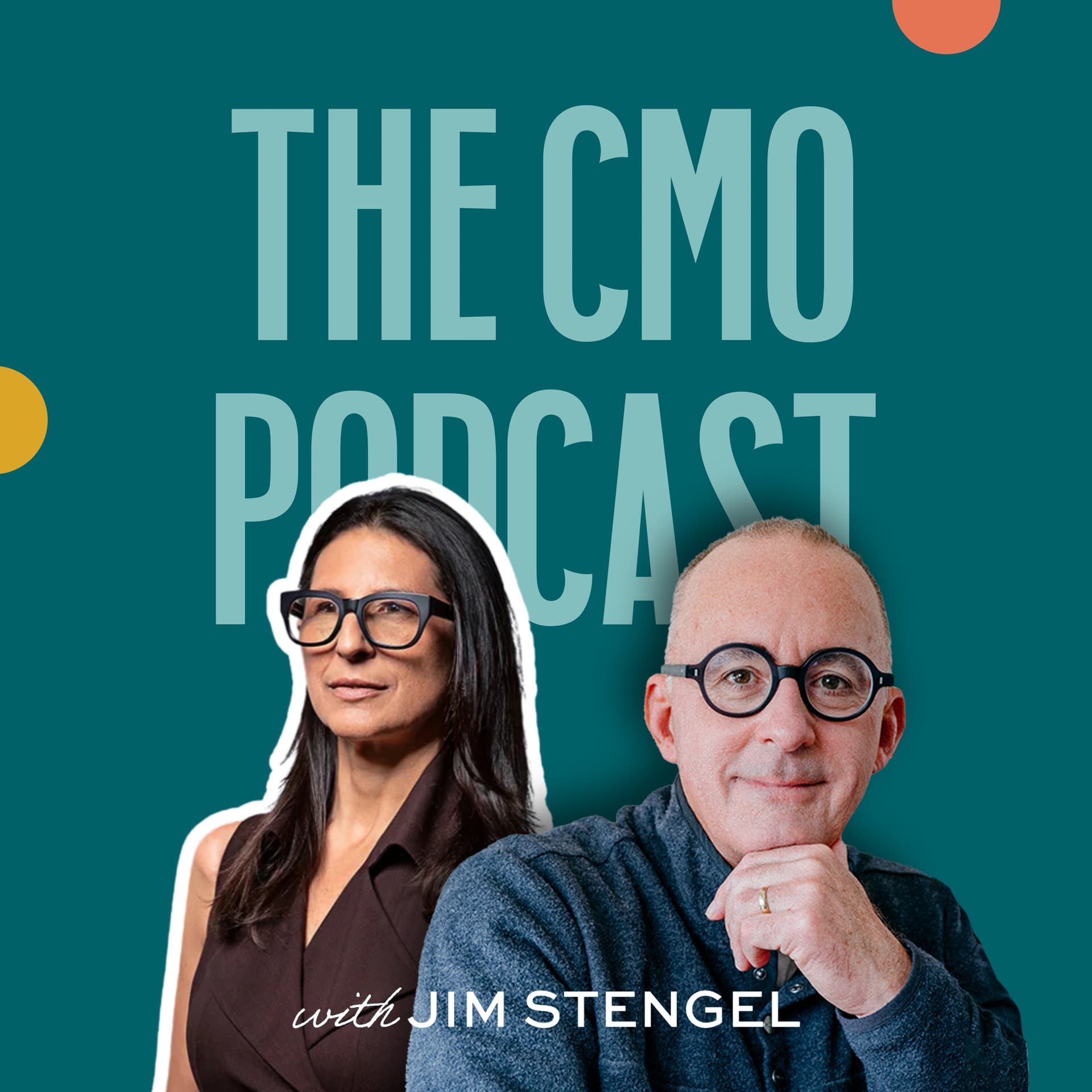
Grace Kao (Snap) discusses how marketers can better reach Gen Z, what Snap is doing at Cannes, why brands should use Snapchat’s chat/group chat more, and how Snap is leveraging AI to give users creative and utility experiences while keeping “realness” alongside AI.
Guests
Grace Kao, Chief Marketing Officer at Snap Inc. (joined Dec 2024 as VP; promoted Apr 2025). Background includes leading global business marketing at Spotify and Instagram. She previously worked on PlayStation at TV/agency side and has 17 years in agency work before client-side roles.
Key claims
Gen Z is pressured to be more creative and expects brands to match their creativity; “native to the platform” and speed/faster iteration matter (Instagram lesson); brands should leverage music for storytelling (Spotify lesson); engagement must be two-way conversation via chat (Snap lesson). Snap’s brand “sharpening” centers on realness, unfiltered self-expression, and utility (camera/chat) rather than entertainment alone. AI should be put into consumers’ hands (e.g., Imagine Lens; AI sponsored snaps in chat) and balanced with human, raw storytelling.
Notable examples
Spike Lee’s “It’s the Shoes” with Michael Jordan as her early ad inspiration; Snap’s Imagine Lens (“put me in Greece”); AI sponsored snaps with restaurant/travel Q&A in group chat; Cannes focus on chat and upcoming Snap glasses launch.
Written by AI. May contain mistakes. Listen to the episode to check what was said.
Chapters
Tap a time to open that second in VOImpactful Brands in Childhood
0:39 to 1:57
Grace shares her childhood memories of impactful brands and their advertising.
“What's the first brand, Grace, you remember making an impact on you as a young girl?”
Understanding Gen Z with Grace Kao
1:57 to 3:16
Introduction of Grace Kao and her insights on marketing to Gen Z.
“Every generation reshapes marketing in its own way, but few have challenged marketers' assumptions as much as Gen Z, the generation that is now in high school, college, and in early career jobs.”
Snap's Presence at Cannes
3:16 to 4:39
Discussion on how Snap is showcasing itself at Cannes Lions Festival.
“Well, Grace, welcome to the CMO Podcast.”
Chat as a Marketing Channel
4:39 to 6:31
Grace discusses the importance and potential of chat in marketing.
“So we've got lots of exciting things happening.”
Balancing Realness and AI
6:31 to 7:46
Exploration of the balance between authentic communication and AI in marketing.
“You made it so that you, I did this with my family.”
Navigating Cannes Festival
7:46 to 10:00
Grace and Jim discuss strategies for making time at Cannes Festival.
“It kind of changes your standards, elevates your standards, makes you think about, oh man, why don't we think about that?”
Building Brands for Gen Z
10:00 to 11:43
Grace shares her approach to building brands that resonate with Gen Z.
“And then I think second is go in thinking about what you're wrestling with and make that explicit and then look for things that will give you inspiration on that.”
Creativity Across Generations
11:43 to 14:00
Discussion on creativity in Gen Z compared to previous generations.
“And I was reading a lot about you before and watching a lot of you before the show.”
Discovering a Passion for Gen Z
14:00 to 15:18
Grace reflects on her journey and growing interest in working with Gen Z.
“parents like probably ourselves encouraging or even schools as well.”
Lessons from Working with Instagram, Spotify, and Snap
16:07 to 19:18
Grace shares key insights from her experiences building brands with Gen Z.
“You worked at, obviously you were in the agency business for 17 years before moving client side, and we're going to talk about that in a bit.”
Show all 25 chapters
The Importance of Cultural Engagement
19:18 to 24:49
A discussion on how to create a culture that resonates with Gen Z through engagement.
“So I'm really interested in really showing the power of that channel.”
Leveraging AI in Marketing
24:49 to 28:00
Exploration of how AI can enhance creativity and utility in marketing strategies.
“and looking at inspiration from other places and, again, other channels, even outside of the platform, like music.”
Embracing AI and Learning Culture
28:00 to 29:16
Discussion on the importance of embracing AI and fostering a learning environment.
“I think learning from others also has been, been helpful, but I very much feel like we're still, at least for my team, we're still in a learning phase.”
Cultural Speed at Snap
29:16 to 31:20
Exploration of Snap's fast-paced culture and its impact on innovation.
“There's a positive side and it's an enhancer of work.”
Balancing AI and Humanity
31:20 to 32:33
The need to balance AI advancements with human experiences and storytelling.
“So, and they ended up doing a story on this, but I just want, you're in the middle of all of this.”
Brand Evolution at Snap
32:33 to 34:07
Grace discusses her journey of understanding and evolving Snap's brand identity.
“And new technologies create new experiences, but it doesn't leave behind the human need for us to have realness as well.”
Utility vs Entertainment in Social Media
34:07 to 35:49
Insights on how Snap positions itself as a utility rather than an entertainment platform.
“And as I dug in and we, you know, we did research, we talked to our users, we talked to our community, we talked to creators.”
Leadership and Influence of Colleen DeCourcy
35:49 to 37:08
Grace reflects on the influence of Colleen DeCourcy and her impact on women leadership.
“It was like, you know, great ideas don't have to come from marketing.”
Disruption Philosophy in Marketing
37:08 to 40:29
A discussion on how the disruption philosophy shapes branding and marketing strategies.
“And for those who don't know, she spent, she's famous for her work at Widening Kennedy.”
Agency Experience and Client Relationship
40:29 to 42:00
Grace shares insights on how her agency background influences her role as a client.
“And it was great to crystallize it into to a book and a philosophy and a method.”
The Impact of Agency Perspectives
42:00 to 44:01
Explore how agency experiences shape insights and client relationships.
“iterate and turn out work faster or have them sit closer to product.”
Lessons from Founders
44:01 to 45:44
Insights gained from working closely with founders at Snap and Spotify.
“Hey, before we jump into the creative brief section to close this out, I think another interesting thing about your career is you've just worked for two amazing founders, right?”
Understanding Gen Z Through Family
45:44 to 47:41
How personal experiences with Gen Z inform marketing strategies.
“And so I think that's what always was good about Spotify's mission, or even Daniel was also just remembering, like, people just want the music, you know, that they want.”
Staying Creative and Youthful
47:41 to 51:02
Tips on maintaining creativity and youthfulness in a marketing career.
“mother of this generation and also working with them.”
Key Takeaways from Grace Kao
51:02 to 53:00
Recap of essential insights for marketers working with Gen Z and founders.
“Yeah, I've been, like I said, this is the show to be on.”
Transcript
Automatic transcript. May contain errors.0:00Before we dive into today's episode, we would very much appreciate a moment from you to make sure you're subscribed to the show on Apple Podcasts, Spotify, or wherever you listen, along with optioning to auto-download the episodes. It really is the best way to never miss an episode, along with supporting the show and the amazing team that helps me bring it to you. And while you're there, leave us a rating or review. It only takes a minute and helps more people find the show and helps us learn. And of course, share this episode with a friend or colleague who might enjoy it. We wouldn't be here six years later and still going so strong without you all, our community.
0:36So thank you for being part of it. Now onto the show. What's the first brand, Grace, you remember making an impact on you as a young girl? You know, I don't know if it's because it's the NBA finals, but I remember when Spike Lee showed up with It's the Shoes. with Michael Jordan. I remember being kid watch. I'm like, it just blew my mind on the creativity, the black and white, the artisticness. It was so provocative and different. Like that was just like, Oh, this advertising thing is amazing, you know, to feel that. And yeah, it was just the two of them, black and white and Mars Blackman, you know, it's incredible.
1:19Hi, I'm Jim Stengel. I've helped hundreds of major brands discover and activate their purpose. Because when a brand's purpose is clear, compelling, and authentic, profit naturally follows. Each week, I welcome the CMOs, the chief marketing officers of your favorite brands, to speak to how their job is so much more than marketing. These leaders share their inspiration and challenges, along with how they try to build a full, healthy, and happy life in and out of the office. And it's that energy that reaches everyone they touch. And we're glad you're here to feel that energy and to learn from these remarkable leaders.
1:55So here we go. Every generation reshapes marketing in its own way, but few have challenged marketers' assumptions as much as Gen Z, the generation that is now in high school, college, and in early career jobs. This week, we're returning to our series exploring how brand leaders are learning which audience is the most important for their future. And for this specific generation, there's no one better to help us understand Gen Z than my guest, Grace Cowell, Chief Marketing Officer at Snap Inc. Founded in 2011 by Evan Spiegel and Bobby Murphy, Snap began with a simple idea, creating a more authentic visual way for people to communicate.
2:31Now in 2026, Snapchat reaches more than 940 million monthly active users around the world and has grown into a nearly$6 billion by revenue business. My guest, Grace, joined Snap in December 2024 as Vice President of Consumer and Business Marketing. Just a few months later, in April 2025, she was promoted to Chief Marketing Officer. Grace leads the company's global marketing efforts and helps brands, creators, and developers build meaningful connections through the Snapchat platform. Before joining Snap, Grace led global business marketing at both Spotify and Instagram, working with businesses and creators.
3:05Now, tune in for a conversation with a leader who is preparing for the Cannes Lions Festival, which opens next week, and who is leading the way on how brands can build authentic connections with the Gen Z audience. Here's Grace. Well, Grace, welcome to the CMO Podcast. We are recording the show about a week before CanLions 2026, and I will be hosting you and a few of the leaders on stage on Monday morning early for, quote, CMOs in the spotlight. So I get you twice in 10 days. I'm a lucky guy. Love it. I'm a lucky girl. Thank you so much, Jim. I'm so excited about today's podcast and even more excited.
3:41I get to see it in Cannes again. So fun. In person in Cannes, which is so good. Now, first question, we were chatting before the show started and a memory popped up on my phone last night of your Ferris wheel. Oh, yeah. The Snapchat Ferris wheel back in, I don't know, 2017 or 18? We're not dating ourselves, Jim. Yes. Yeah, I know. I've been going there many years. So my question for you first is how is Snap showing up this year at Cannes? Oh, yeah. I'm super excited for how we're showing up about Snapchat this year. I think because it's a very big year for Snapchat. You know, we are obviously there's Snapchat itself and there's also amazing things that we're doing, whether it's sponsored snaps or what we're working with AI and also promoted places, which is our map.
4:25And also, you might have heard we are launching some glasses, which is a very, very big moment for our company. So I can't wait to unveil that to the world. So that will be your agenda, Ken, unveiling that to the world. Unveiling that to the world. But at the core, we're also there for Snapchat. So we've got lots of exciting things happening. And, you know, I don't want to give away some surprises. I know, I get it. You know, I would say - You've teased us. We will not disappoint. I always pride ourselves over here at Snapchat that we like to zag when others are zigging. And it'll be the same.
4:56I think we'll have that same strategy this year as well. Well, the Ferris wheel was a zag, by the way, way back. I'm glad you still remember. Oh, yeah. It was big and yellow and fun. Oh, there's more yellow coming. More yellow coming. Okay, good. Speaking of your agenda next week at Cannes, what are the highlights for you? I know our agendas are nutty, all of us. That's what's sort of the magic of Cannes. But what are you really looking forward to next week? You know, I would say part of the reason I love going to Cannes, obviously, it's meeting old friends, meeting new friends. But quite honestly, I really love how everyone shows up.
5:31I'm actually really looking forward to seeing work in general in terms of creative. I love how the beach has also been a display of amazing creativity. So I'm really looking forward to that being inspired and also kind of looking at the competition because I do think it makes all of us better. So I'm actually really, really looking forward to that. And then in terms of for Snapchat was really big for us this year is we are really centering one of our core differentiations of chat. chat in itself as being an amazing channel that I think has been underestimated and underutilized by brands. Like if you look at how consumer behaviors have been evolving, and then you look at like the evolution of AI, what's not going to be a prompt?
6:14What's not going to be a chat UI? So I feel very fortunate that I get to work at a company where at the core we were founded on chat. And so I'll be shouting a lot about how people are not utilizing chat more in their marketing strategies. Well, you made chat more creative. That was your founding. That was the insight, right? You made it visual. You made it creative. You made it fun. You made it so that you, I did this with my family. We could come together and share like really weird stuff that we wouldn't put out in the public discourse because they were so quirky and funny and inside jokes.
6:47But that's what you enable. Yes, we really wanted to. We opened camera, right? We really felt that we should be able to easily express themselves unfiltered, uncurated. And I don't know about you, but I do feel like we're in a point in the world today. I think we're craving maybe a bit of that. Yeah, I agree. There was definitely an era of over curation. I remember I would just slide about, OK, what am I going to put on my post or what my caption copy should be just as a person? And I really love that Snapchat. It's exactly what you said, Jim. I think we really wanted to create a space where people feel like, no, you should just be able to express yourself and you're going to be welcomed in that way.
7:26I also think it's been fascinating to see, obviously, the rise of AI. There is, I feel like, the balance of that, of people really wanting to feel some realness, too. It's the best of both or wanting both. Yeah. Well, we'll talk a lot more about AI in a few minutes. But you said something a minute ago that you enjoy going and seeing the work. at Cannes. It kind of changes your standards, elevates your standards, makes you think about, oh man, why don't we think about that? So talk more about how you create the time for that in Cannes and how you navigate the overwhelmingness of the festival. I know this is hard, but I get up early.
8:03Oh, okay. I almost get up early before the beaches, all the different activations start. And I love, I can walk the streets and not be overly crowded, but I really actually try to get up early and walk and take a look at what's going on and experience things in person. I think that is the beauty. I think that's why the industry still loves CAN is that IRL aspect of it. What about you, Jim? I'm curious for you. How do you make the time? I confess, I don't think I make enough time anymore for the work just because of the show. We record a lot of episodes at CAN. I host a two-day program, a training and development program.
8:43You're working hard. I am working hard. So it's a busy week. I mean, back when I was at P &G, I did schedule time to wander around. In fact, a couple of years at P &G, I brought my teenage daughter with me. Oh, yeah. And I asked her to wander around. I got her a pass. And at the end of the day, before we turned off the light at night, I would say, what did you see today that is interesting? What should I know about that you – and she spent her time just looking at work like all day. So that's a good tip if you have a partner, a daughter, a son to send them out. What struck you and have that – and she had good judgment.
9:23Obviously, she was a target audience for a lot of our brands. Yeah. But she had great judgment. I have a 17-year-old son. I wonder what his reaction will be of whether you want to go to the south of France. I think that's actually a great – I think he might. Yeah. I think he might. So no, but I think going in with, and I counsel people on this, I think my partner, Suzanne Tosilini, who runs the class with me, she goes through the full agenda every year and says, here is what you shouldn't miss. And we share that with a class. And if you miss it for a month with your pass, you can watch it. So we give them probably 20-ish things that they shouldn't miss from the week because we scan everything before the week starts.
10:02So that's one. And then I think second is go in thinking about what you're wrestling with and make that explicit and then look for things that will give you inspiration on that. Oh, for sure. For sure. Also, another tip is I love what's coming out of emerging markets or international markets. I am always floored to see the things that are coming from places outside of the U.S., to be honest. It's incredible that, again, really provocative, new thinking, more risks taking. So I also go out of my way to really look at perhaps maybe what may be smaller but actually has huge big impact. You'll see a lot of things there that are very offbeat from a different culture.
10:47You may not understand it, but that's the point. That's the point, yeah. Why is it winning an award? When I think it's offbeat, why do I think it's offbeat? Why do we think it's working? Is there a principle behind that that I could learn from? I mean, that's why Ken's so great. Yeah. How do they approach it? Like, why did they do it this way as well? Yeah. I think the other best thing about Ken is having conversations, like actually talking to people, actually debating the work or actually commiserating some of the challenges that we're all going through. Yeah, I know. I think it's every single year it's like, really, Ken?
11:22I'm like, I don't know. I always walk away from the week getting a lot out of it, too. Yeah, I think so, too. That's why it is stuck. So listen, this episode that we're recording today is part of our CMO sort of series this year on marketing to different audiences or generations. You, Grace, have got to be, if not the world's expert, one of the world's experts in building a brand with Gen Z people. So I want to begin there. And I was reading a lot about you before and watching a lot of you before the show. And you said at Age recently that you're attracted to creative, youthful companies and your career path definitely affirms that, right?
12:00You're walking the talk. So the first question, why? I think, first of all, perhaps a lot of what we were just talking about before, and now I live with teenagers, and I wonder if you feel this way about kids too. They're an amazing audience segment. That youth segment, you know, again, over the years of the decades that I've been in the business, this youth audience is fascinating. I love that they, no matter what age, right or or decade or generation there's something about youth where they're incredibly creative they're they're incredibly vulnerable there and they're also incredibly willing to try new things and and that moment of discovery like that pure moment of first discovery i find incredibly inspirational as a marketer to take those insights as an audience and try to resonate with them and And so whether it's me, you know, I spent a lot of years working at TVWH on PlayStation, which I think really kind of grounded my roots of like, oh, this is an amazing, amazing audience to even now with Snapchat.
13:00It's still the same. It's like when your audience is so creative itself, we have to be just as creative as the audience. And so I think that's always fueled me and I've always been learning. Do you feel like this generation, this Gen Z generation, which is roughly what, 14 to 29 years old. Do you think it's more creative than any generation, at least in our lifetime? I don't know if more. I think we've always been creative. I think we were creative too when we were that age as well. It's just our tools or how we express ourselves are different. I would say this generation is pressured to be more creative versus maybe, Jim, when you and I were growing up, maybe we were more encouraged to follow the line or follow, oh, that's what greatness looks like, versus I love that this generation or when I look at my kids, being creative is something that they aspire to have more of and to try more things and put themselves out more.
13:56So I think that maybe is a difference is that creativity is actually a valuable skill set that I think whether it's parents like probably ourselves encouraging or even schools as well. I feel very fortunate that both my kids are at schools that definitely enforce creativity. That's so good. Now, when did it dawn on you explicitly that you loved working with this audience? Was it at PlayStation when you were at TWA? Is that the kind of the awakening you had? It was. It was just sitting in so many focus groups of this youth audience, playing games, or even what I saw where I was fortunate enough to be able to work on a Brownlight PlayStation and do great work out of it.
14:40It just felt like, oh, this is, this is a fun audience to work with. They're also brutal because when they don't like what you do, it's pretty immediate and fast. But yes, I think, you know, I worked on PlayStation for seven years. And so, yeah, I think probably even just a whole generation of teens went through. And yes, that was a moment like, oh yeah, I think maybe intentionally or maybe not intentionally, I just continue to work within this segment.
15:18Hi, everybody. I'm Andrea Sullivan, the CEO of Vive, and we have produced the CMO podcast with Jim Stengel for many years. And I'm sitting in his seat right now. It's so exciting. I wanted to tell you a little bit about one of our programs that's called Vive by Vayner. It's a 12-month program that's designed for C-suiters and founders. And we want to help people to grow their businesses, but also to grow themselves. And so we bring in people from Shark Tank to talk to our founders, but we also focus on wellness. We want to make sure that people are leaning into becoming their best selves, their best and happiest selves.
15:59So if you are someone that wants to learn how to grow your business and grow yourself, check us out at vive.co. That's V-Y-V-E.co. We'd love to talk to you.
16:16You worked at, obviously you were in the agency business for 17 years before moving client side, and we're going to talk about that in a bit. But I want you to, through the lens of building a brand with Gen Z, I mean, you worked with three amazing companies, Instagram, Spotify, and now Snap. So I'd like you to reflect a bit with us about a lesson or two from each of those experiences about building a brand with Gen Z. I think for me, Instagram, and it was a bit about what I talked about before, how do you out creative an incredibly amazing platform where people are making amazing creative things every single day.
16:55And so I think my biggest lesson that I learned, and which maybe just doesn't seem that obvious now, is being native to the platform is key. Like you can't make things in a silo and then just broadcast them out. You really need to look at what people are talking about, what they're interested in, and then create things that just feel native to the, to that conversation. And I think that was the biggest thing on Instagram, on my biggest move of, you know, having been in ad agencies for a gazillion years of like, make it and ship it. And I'll just go over where like Instagram was just a really right turn.
17:36I'm like, Oh, that is, that is long gone, you know, and, and the speed at which you need to create things have to be so much faster. So those, that was kind of the biggest lesson was like native, be fast, fail forward faster, quite honestly. For Spotify, and I have such heart for Spotify, and even my other company, Pandora, music is amazing. And for brands to not leverage music as a way to storytell or to move people, you're crazy. Sound on, always. And so I think whether it's a lesson from Spotify or just even just you have such a great tool as brands to use music. Why aren't you using that? And I think that was really a lesson of Spotify that I always remind myself even today is like sound on what's the sound.
18:31And then going for Snapchat, I think my biggest lesson or what I'm really interested in is this form of chat, this idea of and Jim, I think right before we got the call, this concept of the group chat is, is so powerful. Like right now, what I always talk to brands are like, are you in the group chat? Because if you're not in the group chat and being talked about in the group chat, then there's something wrong. Then you're already kind of behind. And so I'm kind of fascinated. And what I'm learning is this concept of conversation, like engagement isn't just clicking, right? Engagement is like truly two-way.
19:06And I'm just fascinated again of how we can build certain things or certain experiences where you can have a direct conversation, literally a direct conversation with your customers. So I'm really interested in really showing the power of that channel. And that's kind of a lesson I've been really delving into, like joined in Snapchat. But those are some lessons I'm learning and still working through, quite honestly. You have a good career path, Grace. Oh, thanks. I've been very lucky. Yeah. But, you know, to reflect on Spotify for a minute, before this conversation, we were talking to Fabi Torres at Gap.
19:44Yeah. Seeing her at Gap, and I'll be seeing her in Cannes. And she was just talking about music a lot. I mean, Gap was kind of founded on music, and they're back to it. They're doing really interesting music. And she talked about creating moments versus reacting to moments. But they get the power of music. and the brand is resurgent. Right. And could you imagine the epic piece of work that they just launched if it didn't have Katzai? Like truly, you know, that was core to the idea. I could only have worked with the brilliance of Katzai. Oh, such a fan, such a fan. Yeah, me too. And the other thing I want to say about Spotify and music, I don't know, you were probably there when you did this.
20:25This was Cannes a couple of years ago and I thought it was one of the best examples of B2B marketing. Jim, it's one of my favorite, most proudest moments was, yes, thank you so much. Tell the audience about that. I think it was unreal. Oh, thank you. Thank you. Thank you for bringing this up. I am so proud of that piece of work. I'm so proud because it was B2B, to be honest. For someone who's been in consumer marketing for a really long time, I love B2B. And the insight on that was, why don't you think media planners are creative? Like we all got in the business of marketing and advertising. And I felt like that was sort of the biggest missed insight was that media planners, that B2B audience only thinks, what's the difference?
21:16Right brain? Yeah. They really should be appealing to their left brain. And talking about channels, like where are they all day? They're in their emails and they're, they are in their spreadsheets. And I don't know, Jim, if you have friends, but I have friends who are spreadsheet magicians. Yeah, I know. It is a skill. Oh yeah. And it was just tapping into that. And then the third insight is we're freaking Spotify. If there's not music and what we're sending, then I don't think we're doing our jobs. But what I was, yeah, so proud of was that it was B2B. It was direct mail. And I know, Jim, if you know this, each person who received it, there was an actual real RFP.
22:01So there was another tab that you can actually activate on. But thank you, Jim, for bringing that up. That was one of my proudest things I've done. No, it was so on brand, so creative, so disruptive. So I thought it was just incredible. Oh, thank you so much, Jim. Thank you. Okay. Now, let's stay on the Gen Z. Talk a bit about, again, your career path is just so rich. Talk about building a culture, an internal culture that thrives on engaging with Gen Z and what you have learned about that. Yeah. I think probably to remember that this audience is a fun audience, right? And so for us as a marketing team, and I know it can be a grind.
22:42I mean, we're all grinding, but we have to have fun. And I know this sounds, again, obvious or simple, but it shows in the work. I really, really believe that. And so it is, I think what I try to encourage a culture is a out of office culture of like get down the world and experience the world and experience things that Gen Z is experiencing, like go to concerts, listen to music, you know, make crazy videos yourself. Like you have to consume what they enjoy and what they're inspired by, not just be inspired by them, I guess, is a bit. So as much as I'm like, get out in the world, live life. And I don't think it has to be the Gen Z audience.
23:29I actually firmly believe being in marketing or being in advertising, I get most of my inspiration outside of the category, to be honest. Is there a Gen Z audience in a country that you feel like is foretelling where everything is going? When I was back at P &G, I went to South Korea to spend time with Gen Zers because they were just doing so many amazing things. And we thought, you know, what's happening here is going to spread. So we should go get to see what's happening here, see what inspires us, see what we should do next on our brands that were primarily marketed to Gen Z. What is the state of Gen Z today?
24:06Are there any countries that you look at say, well, what's happening there is eventually going to happen around the world? There's not one, to be honest, that pops to my mind. They're like, oh, this is going to be foretelling for the rest of the world, because I do think that we see nuances everywhere. But I would say that what has inspired me just in terms of culturally or things that I feel that I want to create from being a global brand, I am looking at one of more of these smaller markets where just seeing more risk taking in terms of whether it's creators in itself in that kind of community or even what we're seeing in the industry as well.
24:47So I think a lot of it is getting out of the U.S. and looking at inspiration from other places and, again, other channels, even outside of the platform, like music. Now, we talked about AI briefly a few minutes ago. We're heading to Cannes. That's going to be everywhere in Cannes in every possible way. And, you know, I think people are talking about it as an accelerator for growth, for innovation, for engagement, and then, you know, of course, efficiency. But I want to talk about your experience at Snap in taking full advantage of AI's potential. You have a very interesting lens on this. But what are you learning as you think about leveraging the full potential?
25:27I think everyone's awakened to, hey, this can be used for idea generation, for synthetic research. Where do you think the biggest leverage is with AI for your brand and culture? What we've been trying to do on the Snapchat front, besides all the things that you talked about, which is use it for whether it's automation efficiency or for ideation, we've been actually trying to put AI in the hands of our consumers more to see if we can provide an opportunity or experience for creativity or an opportunity or experience for utility. So, for example, on Snapchat, we have Imagine Lens. So we have our kind of iconic caption and type in put me in Greece.
26:11And, you know, instantly it creates a snap of me in Greece. So that's like an example of putting AI in the hands and making it a creative experience that you can have with your customer. And then we've also looked at the utility front, which is something we're doing with our business audiences, which is AI sponsored snaps where. So, for example, I'm in my chat, my group chat, Jim, where should we go for for Greece or or what are great restaurants where we had a beta with Experian. But could you imagine if there was a brand that you can then in the chat have immediately a question that you can just ask that branch of, oh, you know, where should I go to Greece?
Read the full transcript
26:49So we're looking at, again, trying to put AI obviously on the back of house, but again, how can we use AI in a way that facilitates an experience, whether creative or utility with our customers? What have you learned about making sure your organization understands this is the new expectation that we all have to learn? We have to learn from each other. So everyone's trying various things. So what's working for you? Well, one, it starts for us at leadership. Definitely from the top is Evan. Your founder. Our founder, Evan Spiegel, is one of the highest users of AI, you know, and has encouraged across whether his direct staff and then, of course, throughout the org that we just have to experiment and test and try new things.
27:38So I think there's just something, one, just in the culture of making sure like everyone is like, don't don't be afraid that you're going to mess up or it's not going to work. Like right now we're all experimenting and I always love Evan has this term of like more shots to goal. Like we need to just try more. And I think the other thing that's been helpful is actually partnering, like partnering with different companies or, you know, whether it be the creative side or production side, or even technology side, enterprise side. I think learning from others also has been, been helpful, but I very much feel like we're still, at least for my team, we're still in a learning phase.
28:14And if I can encourage this, again, making you feel not afraid to learn and fail, I think that's a lot of what I've been focused on. What about you, Jim? You know, I can't imagine like also stomping, right? Yeah. Yeah. But it just starts with, I mean, it's Evan's point, just start using it in everything you do. Yeah. So, you know, And obviously, I do a lot of content creation, research, coaching, presentations. I mean, it's beautiful for all of that. All of that. And it cuts out time. It gives me new ideas. It provokes me. So I just think you just have to start thinking about it in every work process and workflow and kind of work you're doing.
28:58And it just starts there. And then it will go. And to build time into learning. Right. And then what really gets me like, oh, my goodness, we definitely need to embrace and not be afraid is this next generation of youth is going to be AI natives. They won't know a world without AI. So, again, like we what we got to lose. It's happening.
29:31so you also led the transition at spotify right yeah because ai sort of was happening as you were at spotify and so how's the experience at snap in terms of moving the culture to a place where everyone's not afraid, that feels it's helpful for them. There's a positive side and it's an enhancer of work. And we'll talk about the other side of that in a minute. But what was the experience at Spotify that was different from Snap? I think for Snap, what I've always loved since I've been at Snap is its speed, right? It's almost built in, you can see from our UI, whether it's like a stories or snapping.
30:10We're founded on the fact like things should be fast and easy with a keyword of fast. So I would say like the culture at Snap very much is about a speed culture, which is iterate, create, iterate, create. And it really takes out, I think, you know, again, I thank Evan for this, just this removal of fear of a failing, like the failure is actually no movement or no, or not trying, right? And so again, more shots to goal. It's about the volume of ideas and you know you're going to find gems if you create that amount of volume. So I think that culture is something that I was attracted to and what I've really loved being at Snap.
30:53I, again, also because you have an audience, a youth audience, which is also super fast, a little super fast, it keeps us on our toes and again, pushes us to continue to innovate at the speed of our actual audience themselves. I got a call from the Business Insider a couple of weeks ago to do an interview about how AI needs to be rebranded because there's so much negativism and skepticism. Oh, the booing, the booing at graduation. Yeah, all of that, all of that. So, and they ended up doing a story on this, but I just want, you're in the middle of all of this. So what's your view on this? I still think it's about balance, right?
31:31There's always been, whenever there was some invention of new technology, there's always that stage of, oh, this is so exciting. And then there's a stage of like fear. And then I think then it kind of reconciles and balances themselves a bit. And I think I remember in the film industry, right, when there was all these like special effects and, oh, my goodness, we're going to have special effects takeover actors and actresses. And then you look at what wins at the Oscars, right? It's all these like super raw, super real stories and films. But don't get me wrong. I love myself a dragon and robots, but I also love those raw, real stories.
32:14And I guess where I'm getting out is there's going to be amazing, amazing things that come out of AI. But there's also going to be a human need for us to also have raw and filtered real experiences as well. So to me, I think over my years of being in the business, there's always room for both. And new technologies create new experiences, but it doesn't leave behind the human need for us to have realness as well. Well, shouldn't we be talking about that more? Don't you feel there's not enough of that in the public discourse? Yes. So true, Jim. I completely agree with you. Yes, I think there's an overboard of AI without more discussion about how we balance it with more humanness or maybe real storytelling still, right?
33:00Yeah, I agree. I'm with you on that. I think companies are probably going to have to lead that. And I think some of the big AI companies are starting. Yeah. They're doing some very interesting creative work that's getting out there. But I think it's going to need, as you know, it's going to need consistency and it's going to need the actions to follow the words and all of those things. And reconciling values as well. The industry itself and also just companies too. Like, what are we valuing here? Yeah. Yeah. So let's talk a bit more about your role and your focus at Snap. From what I gathered, you've done a lot of soul searching on the brand.
33:38Yeah. Who you are, where you play, what makes you special, how you're distinctive, how you convey that in the marketplace. So those are always interesting journeys. And even starting those journeys sometimes can be controversial. So tell us about that journey you were on, why you undertook it with your team, and what you're learning. You know, of course, when I came on to join the company, I had, again, every aspiration of any person who's new, right? I'm going to change everything. I'm going to, you know, find the new next big thing. And as I dug in and we, you know, we did research, we talked to our users, we talked to our community, we talked to creators.
34:17Yeah, I was like, oh, there's a lot of goodness here. And actually, you know, at the heart of it, we have something that's so special and different, which is, again, a realness, this feeling that people can come and feel unfiltered and be themselves where they find real friends, you know. And what I think the biggest unlock was we perhaps maybe unlike other social media platforms, we're not really an entertainment platform at the core of Snapchat. We're a utility. There's a camera. We're the most used camera. There's chat, obviously. We're the second used map in the world. Isn't that insane? And of course, we have stories and we have video.
34:58But I think that was probably the biggest unlock for me is like, oh, my goodness, we were a utility brand. And so what I felt wasn't wanting to change the brand, but sharpen our brand and really push against the fact that we understand that there are platforms where are more entertainment driven and they have a role in your life. But we also understand the role in your life where you feel like you need to have a safe place where you can be with your friends and feel close to people and you can show yourself in an uncurated way. And so that's kind of the evolution of whether it was real friends to not social media, more Snapchat to Satan and Snap.
35:43And that's, for me, the sharpening journey you have as a brand. Satan and Snap is nice. Oh, thanks, Jim. It's a great brand moniker. Oh, our head of product wrote it. That was also a thing. It was like, you know, great ideas don't have to come from marketing. No, absolutely not. Where are you personally focused now, Grace? You're about 18 months in. Where are you spending your personal time at Snap? Oh, you know, personal time, I would have to say is because we are, we're launching some classes that I'm so excited about. And so that's a, quite honestly, one of the reasons why I came to Snap is to be part of this, this big launch and this big evolution of a technology that, you know, only comes every, you know, like Haley's coming every seven years.
36:22And so I'm super, super excited about that. And then for, on the Snapchat side, I think for me is we have these amazing new, whether it's products like AI sponsored snaps or whether it's the map. And, and I just, again, feel like they haven't had their spotlight or their time of day. And, and I really like, I'm on this chart of like everyone chat is chat is where it's at. How can we not be embracing that more from a marketing standpoint? And so whether it's the B2B side or the creator side or our community consumer side. So I've been just really spending a lot of time on those two areas for me, which if you can't tell from this conversation, I'm very passionate.
37:06Yeah. Yeah. Now you followed Colleen DeCourcy, right? Yes. Left to go on to Sonus. Colleen Legend. Yeah. That's right. She does deserve that title. And for those who don't know, she spent, she's famous for her work at Widening Kennedy. She's an alumni of TBWA, Shia Day, as you are. She's Lion of St. Markham and she's won every possible award. Oh, yeah. I followed Colleen. I can snap so I can work with Colleen. Yeah. So tell us about that experience. You followed and then she went somewhere else. So just what's that experience been like? Yeah. I think for me, Colleen is someone I followed and fangirled my entire career.
37:50And I'm so grateful for Colleen because I wouldn't be in my role now if it wasn't for Colleen. And so when I think about women leadership, creating opportunity, yeah, I guess gratitude is how I feel about Colleen. What do you think is so special about her? Oh, courage, bravery, brilliance. I know it she's I would call her like the LeBron James of that she's just yeah legend I guess all of those but I'm most inspired by Colleen's courage and bravery for sure when she was on stage at Cannes accepting that award that's what she talked about yeah yeah it's this is a tough business you know And so, yeah, I continued to fangirl.
38:43When you were at TBWHI, and I knew a lot of people there still do, and they had this platform of disruption. Oh, yes. I was there for all of that. Yes. And Jean-Marie Drew, who was a leader at the company, wrote a couple books on that. Lee Clow believed in it. So could you talk a bit about how that philosophy has affected how you think about brands and business challenges and culture? Oh, yeah. And also why I ended up at Snap as well, which is also an LA-founded company like Chiat. So I was attracted to coming to Chiat for also legendary epic agency was about being a pirate. I was I completely gobbled all of that up of just, you know, West Coast, L.A.
39:32ad agency. Surfboards, pirate flags, all of that. All of it. Like Lee, like unapologetically creative and pushed against the grain. And so that pirate culture was always foundational to what inspires me. And actually right now fits very well how I think about Snapchat. Snapchat very much is about pirate mentality to the rest of the industry. And then so when Jean-Marie Drew started with disruption, I remember it was just a funny anecdote because at first the word disruption, I don't know if you know, we just didn't think it would translate so well in the U.S. We're like, it sounds kind of negative.
40:06So it's just funny to see how that word has become now very common and standard. But I remember at the time when the book was launching, there was a whole discussion of, oh, is disruption the right word? Because that isn't necessarily positive. And to see that Sean Murray Drew actually changed the meaning of disruption into something positive actually is amazing marketing in itself. But I remember the time disruption and the idea of being a pirate was just very much aligned. And it was great to crystallize it into to a book and a philosophy and a method. I think that was also was amazing about disruption was like it was an actual process of getting to disruption that was super simple and easy for, you know, at the time.
40:50on the agency side to describe it and put clients through the same process to get to that disruption. It's remarkable. There aren't many agencies that have that strong a point of view and that strong a process to take clients through. And so I think it was a very, I think it was a very distinctive point of view. It was an effective process and everyone was trained in it, knew how to do it. So I think it's very, there's a lot of learning and what happened at that agency at that point in time. Oh, yeah. And we packaged it really well, right? There were disruption days. So it wasn't just a book. There was a disruption day and then a specific, there was a disruption consultancy.
41:29Yeah. It was an exciting time. Super fun time. Well, you went client side and you stayed client side. How does that experience, 17 years on the agency, how does it make you a better client? Sometimes some people would argue that it may make you a bad client. clue, right? And what I will say is I will always value agencies. You know, at a certain point, you see a lot of companies and brands build internal capabilities, which is absolutely important. And especially with technology, sometimes you just need to be able to iterate and turn out work faster or have them sit closer to product. But I loved being on the agency side to really give fresh perspective, to tell clients the things that they don't want to hear, but that they should hear to push more of that thinking that I think sometimes when in the internal, you're just more siloed off or you're driven by perhaps other things versus I think the agency side will come in with more appetite to say, oh, you need to look what's happening on the outside world more, that reminder.
42:38I didn't do that much business with TBWA Chaiate at P &G, but the agency still had a very big impact. I got to know Jean-Marie Drew because he was very fond of P &G because he worked on P &G early in his career. I got to know Lori Coutts, your CMO at the time. Oh, Lori Coutts. Yeah. I mean, Lori helped me leave P &G. Oh my gosh. Lori Coutts, another legend. I mean, I keep remembering there have been amazing women leaders coming out of TBD. Yeah. Carissa Bianchi. Oh, Lori Kutz. Oh, I love that. I was inducted into the Hall of Fame last month and I invited her to come. Yeah, congratulations. Why did we not lead with that?
43:19No, no, no. We've talked about that enough, believe me, on this show. But I invited Lori to my table that night and to sit with my family. It was so good to see her. Oh my goodness. Lori, I don't know, just also my career just revolutionized how to work with clients, all the war room boards. I remember when we pitched, she was like, everything has to be handwritten. And I was like, and it helps with the thinking. And it was just those things that are so special. Yeah.
44:02Hey, before we jump into the creative brief section to close this out, I think another interesting thing about your career is you've just worked for two amazing founders, right? Daniel Eck at Spotify, who was CEO, I think, when you were there, and he's now chairman. And of course, Evan at Snap, who's been there since the beginning, what, 15 years now. So that's a pretty incredible life experience for you. Oh, yeah. So tell us a little bit about how that has shaped you, insights, learning, inspiration you've taken from these two founders. Again, feeling very fortunate to be able to work so closely with founders is huge.
44:38And I would say what I feel so inspired by, Evan, and what I also love is you started the company with Bobby Murphy. I love that they're still together. They're still together. Their desks are still within throwing distance of each other. But like I like that attracted me so much to the company that the two founders were still together, still love each other and still so involved in the company. But I think what I get so inspired by Evan and Bobby is Evan and Bobby never forget. It's about the community and the people like the people, the users, people are Snapchatters. And I think that's what you have on that founder mentality is they understand that the company was built off the people, your fan base.
45:27And so whenever we're, whether in reviews or planning, like Evan's always the first one who talks about like, you know, are we putting our Snapchatters in the center of everything we do? And I think you get that because they know they built it on the backbone of the people in the community themselves. I love that. How about Daniel Ek at Spotify? similar philosophy similar philosophy i think what i love of dan and what he brought in and continued to you know also with you know gustav and and alex who were all been there for years which is always to make it brilliantly simple and i think that's actually been the success of spotify was like make it simple and make it magical and and quite honestly i feel like lee said that a lot he did that well apple right it was certainly apple's philosophy which tbwa was very much a part of.
46:15And so I think that's what always was good about Spotify's mission, or even Daniel was also just remembering, like, people just want the music, you know, that they want. Like, we need to get out of the way and get that music to them as easily as possible in the most magical and beautiful way possible too. Okay, let's move into the creative brief. Grace, you have two teenage children. I do. How do they help you be a better marketer? Oh. We talked about my daughter coming to Cannes with me, but how have these two helped you be a better marketer? Yeah, kind of the more like the, I get so much feedback from my kids.
46:53That's good. Can you tell Evan that we need to like, I was just like, okay, I'll maybe rephrase it for him. Like I said, I feel very fortunate. My kids are at the age where I'm actually targeting them or marketing in that segment. And it is to remind like, wow, they, you know, whenever there's these cliches about, oh, they're apathetic or, oh, they have short attention spans. I'm like, no, they don't. They're actually really thoughtful, super creative. They love to discover. They love to research. And I think that that's been helpful of like, I don't believe everything you read, you know, like engage.
47:31and yeah, I actually feel so positive and optimistic about the world because I know I have a lot of faith in this next generation of my kids. That's great to hear from you, by the way, who is a mother of this generation and also working with them. I believe it too, by the way. I believe I'm right where you are. How do you stay youthful at heart? You talked about being attracted to these companies. I know you have teenage children, but what do you do? How intentional are you to stay creative, youthful in your thoughts and how you approach life? A lot of it is, what I've been trying to instill with my team too, is try to live life.
48:09Yeah, live life, try new things. I watch a lot of movies and videos. I listen to a lot of music, a lot, a lot of music, going to lots of concerts. I don't know, just - Be in it. Yeah, be in it or find creativity. I think if you equate youthfulness and creativity together, it kind of goes hand in hand. What do you believe is the most important characteristic for a CMO who would like to build a brand like you have with Gen Z? Oh, I would say to me, it is you have to see what they're making and creating and saying. And that's the bar to try to do it somewhere else, like resonate. No, look at them.
48:53They're all creatives. So that's the standard. And so are you creating and making things to their standard? Yeah. To what they're doing. I love that. What's the first brand, Grace, you remember making an impact on you as a young girl? You know, I don't know if it's because it's the NBA finals, but I remember when Spike Lee showed up with It's the Shoes with Michael Jordan. I remember being kid watch. I'm like, what? I was like, it just blew my mind on the creativity, the black and white, the artisticness. It was so provocative and different. Like, and I just, that was just like, oh, this advertising thing is amazing, you know, to feel that.
49:40And the fact like there was, yeah, it was just the two of them, black and white and Mars Blackman, you know, it's incredible. Yeah. And it just came up just with all the NBA finals. I was just like, Spike Lee. And we're in the middle of a great final. What fun. What fun. Okay, Grace, last question. And who's been the most inspiring person in your life? Oh, in general, I would have to say my mom. I still ask my 89-year-old mom for career advice or for pick-me-up or a pep talk. She knows that honesty that only mothers can give. And yeah, I still love my mom. I still call her every day. Did she have a career or was she?
50:30Yeah. Yeah, she was. She was a she definitely worked. She and my father actually did start their own small business company that she was a leader of. But I think I am more most inspired by her work ethic and her positivity. You know, it's just she would say tomorrow's another day. You didn't crush it today. Well, that's what tomorrow is for. You know, so. Yeah, beautiful. It's kind of what Edwin would say too, right? Yeah. More shots on goal. More shots on goal. Tomorrow's another day. Oh, Grace, this is so good. It went to so many good places. Yeah, Jim, thank you so much. Really enjoyed it. Yeah, I've been, like I said, this is the show to be on.
51:13I was so, so honored to be asked to be on it. Thank you so much for having me. My goodness. Well, thank you. And we had a chance to do it again in Cannes on Monday morning. Yes, well, good to see you. Not one-on-one. We'll be with a few others, but I'm glad we had this time. Definitely. Definitely. Thank you again, Jim. Thank you so much. See you in the South of France. See you soon. That was my conversation with Grace Cal. Three takeaways from this wonderful conversation for your business brand in life. The first one regarding building a brand with Gen Z, she simply said, be in their life. Enjoy being in their life.
51:46Understand them. Be with them. It's a fun audience and they raise the standard for your creativity because they're so creative themselves. But there's no way you can lead an organization to build a brand with Gen Z or frankly any audience without enjoying getting to know them and being in their scene. Second takeaway, the founder lessons. Grace has worked with a couple of remarkable founders and I think the lessons from them are very profound. From Evan Spiegel and Bobby Murphy, respect the community. Your brand is only about the community. That certainly is true for Snap, but I think it's probably true for almost every brand.
52:22And the idea of from Daniel Eck at Spotify to keep everything simple, simplify it, you know, understand that you're offering to people, keep it simple. They want the music, give them the music they want in a simple, fast way. And the importance of speed and experimentation. Just simply, simply great lessons. And the third one, and this one is, you know, we're coming into Cannes Week. I think it's a wonderful lesson for Cannes and maybe for life in general. And that is to get up early. When I asked Grace how she navigates Cannes, sees some work, she said, I just get up really early and walk around and see a lot of things and get inspired by them.
52:55So pretty good lesson for life. Pretty good lesson for Cannes. That's it. Wonderful conversation with Grace Cowell. That's it for this week's episode of the CMO Podcast. As always, I would be grateful if you shared our show with your friends, along with subscribing and leaving a review on Apple Podcasts, Spotify, or wherever you listen. The CMO Podcast is a Vive original production.
From the publisher
This week, Jim welcomes Grace Kao, Chief Marketing Officer of Snap Inc. Founded in 2011 by Evan Spiegel and Bobby Murphy, Snap has grown from a simple idea about visual communication into a global platform reaching more than 940 million monthly active users and generating nearly $6 billion in annual revenue.
Grace joined Snap in late 2024 and was promoted to Chief Marketing Officer just months later. Before Snap, she held senior marketing leadership roles at Spotify and Instagram, helping some of the world's most influential platforms connect with creators, businesses, and consumers.
Tune in as Grace shares what marketers still misunderstand about Gen Z, why creativity remains the defining skill of the next generation, and how brands can earn relevance by becoming part of the group chat rather than interrupting it. Whether you're leading a global brand, building a startup, or simply trying to understand where culture is headed next, this episode offers a thoughtful look at the future of marketing, creativity, and human connection.
---
We'll be at Cannes Lions from June 22nd to the 26th, hopping up along the Croisette all week. Let us know if you'll be attending too!
See Privacy Policy at https://art19.com/privacy and California Privacy Notice at https://art19.com/privacy#do-not-sell-my-info.