
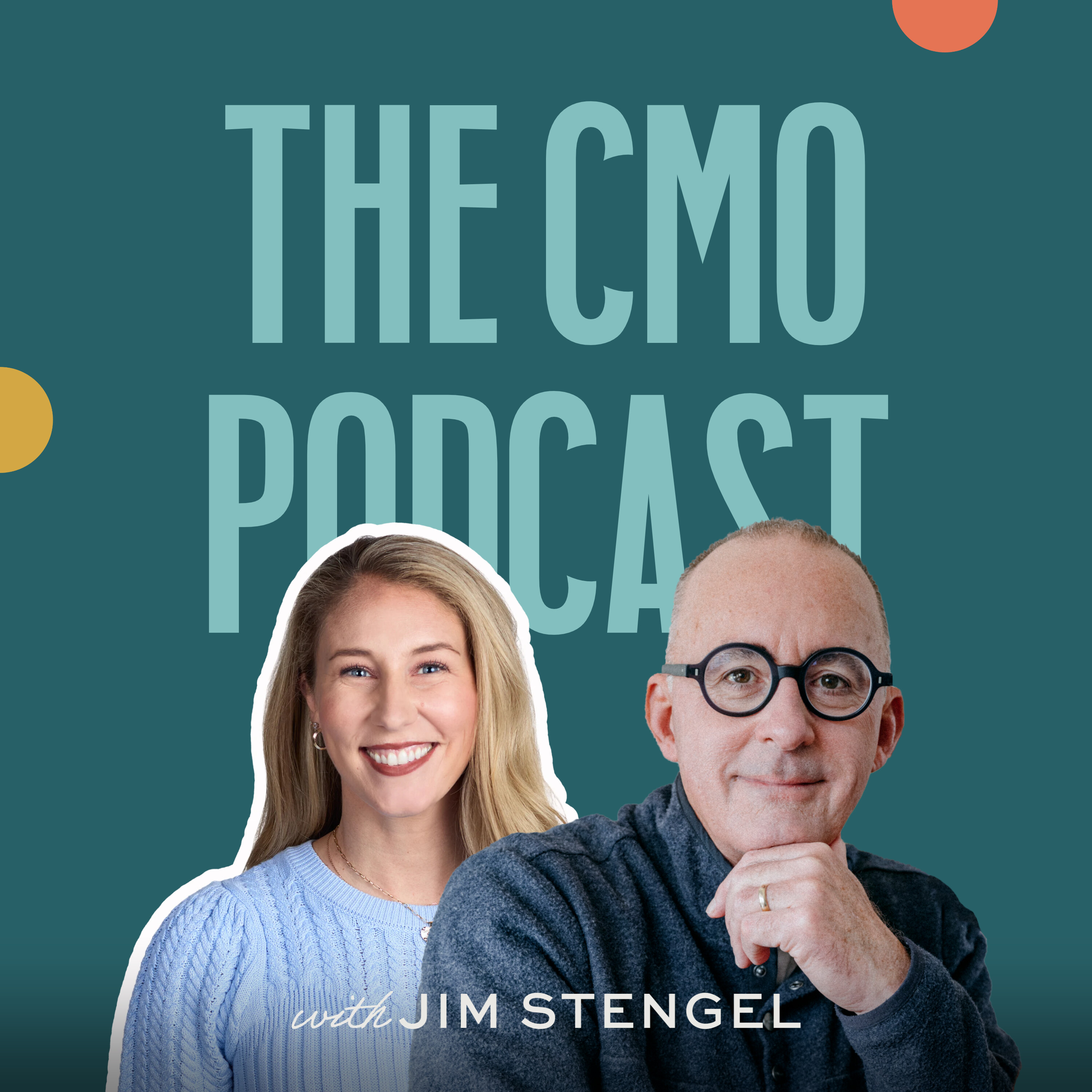
 The CMO Podcast
7 Oct 2026 · 1h 1m

 Add vo to ChatGPT or Claude to ask about everything you hear
vo listened to this episode to put together the overview and transcript, so there may be the odd mistake.
Healthcare marketing and customer experience through the lens of trust, curiosity, and personal relevance. Reagan Greene explains how marketing in health insurance must prioritize meaningful engagement and “human experience” because members often only interact when they are vulnerable. She also discusses her leadership approach to continuous learning, strategic time use, and building growth via new brands and community partnerships.
Reagan Greene, Vice President of Marketing and Experience at Blue Cross of Idaho (started Feb 1, 2024). Nearly 25 years in healthcare marketing; previously 15 years at Blue Cross Blue Shield of North Carolina (VP Marketing and Community Engagement). Studied anthropology and sociology at Centre College; lived/studied in the Amazon rainforest and in Europe; MBA with classmates from P&G. Active advocate for women and youth in sports; longtime sports/community partnership marketer.
Trust is a strategic growth asset in healthcare and is hard to regain once lost. Marketing has evolved from awareness/activation to shaping decisions and strategy. Effective leadership requires intentional pauses to listen and “marinate” before responding.
“Live Fearless” campaign (Blue Cross Blue Shield; power pose confidence data point); Blue Cross of Idaho’s new Medicare Advantage brand “Range Health” launching June 3; fall campaign “Life and Everything in Between” featuring real Idaho life (e.g., wasp nests, camping); sports activations via Boise State football (Blue Zone at Albertson Stadium) and Ironman/“Iron Kids.”
0:00Now, the first brand that you remember making an impact on you as a young girl. I grew up on a farm in North Carolina, very rural, and most everything we ate came out of the garden. And so I would go to my friend's houses for a sleepover and they would have Wonder Bread with the cheese that comes out of the little plastic pack, right? And so I would make a grilled cheese when I would have these sleepovers. And it was, you know, amazing because I was used to eating this, you know, squishy squash out of the garden. So Wonder Bread. Wonder Bread grilled cheese sandwich. You bet. Hi, I'm Jim Stengel.
0:43I've helped hundreds of major brands discover and activate their purpose. Because when a brand's purpose is clear, compelling, and authentic, profit naturally follows. Each week, I welcome the CMOs, the chief marketing officers of your favorite brands, to speak to how their job is so much more than marketing. These leaders share their inspiration and challenges, along with how they try to build a full, healthy, and happy life in and out of the office. And it's that energy that reaches everyone they touch. And we're glad you're here to feel that energy and to learn from these remarkable leaders.
1:16So here we go. Our guest this week gave me some very good advice. When I met her at the Kellogg Marketing Leadership Summit last May, she told me, Jim, you need more healthcare leaders on the podcast. And here we are. Reagan Green has spent nearly 25 years in healthcare and currently serves as Vice President of Marketing and Experience at Blue Cross of Idaho, the state's largest health insurer. And for a little context on the Blue Cross system, Blue Cross of Idaho is an independent, locally operated company and a member of the Blue Cross Blue Shield Association, a national federation of 34 independent blue companies that collectively provide healthcare coverage to more than 114 million Americans, about one in three people in the country.
1:59Reagan stepped into her current role in early 2024, where she leads marketing, communications, and customer experience, while also overseeing statewide community partnerships and engagement. Previously, she spent 15 years at Blue Cross Blue Shield of North Carolina, ultimately serving as Vice President of Marketing and Community Engagement. Reagan studied anthropology and sociology in college at the Center College in Kentucky. And while in college, she spent time living in the Amazon rainforest and studying in Europe and eventually discovered marketing while getting her MBA surrounded by classmates from P &G.
2:32This is my conversation with a leader who is passionate about the role business can play in their communities, including being a longtime advocate for women and youth in sports. Here's a woman who really loves her work. You'll see why. Here's Reagan. Reagan, welcome to the CMO Podcast. Now, we saw each other recently last May at the Kellogg, the Northwestern Kellogg Marketing Summit, which we hold every year for the last 15 years. And you said to me there that we need more health care on this show. So I invite you on the spot. And here we are. So welcome to the show. I'm happy that we're having more health care on it.
3:09I've been very aware of that, and I've had a couple of healthcare-focused panels from CanLions on the show since we talked. So welcome to the show. And my first question is, how's your summer been? Thank you, Jim. And thank you for having me. I'm so excited. I think I shared with you just recently, I start most every one of my days with Jim Stengel and the CMO podcast. So I look forward to that every day. My summer's been great. I actually, I spent four weeks of my summer in the West out in Boise working at Blue Cross of Idaho. The great thing about Blue Cross Idaho is that it is location is you can get to Montana, you can get to Wyoming, you can get to all places, Sun Valley.
3:49So I got in some fly fishing, caught my biggest rainbow trout ever. How big? You know, I've got a picture to show it. Yeah, that's big. I mean, for those listening, that's about a foot and a half, which you just put up there. Yeah. Yeah. So anyway, super excited about that and just time to be in the office with my team. We did a lot of team building. So when my daughter is at summer camp for four weeks, I go to work camp out west and really enjoyed it. And I actually leave for the Dolomites on the 1st of September for a hiking adventure. So I'm on a back roads adventure. And so we hike 10 to 15 miles a day through the Dolomites.
4:27So looking forward to that as my next adventure. 15 miles in the Dolomites is a long, difficult hike. I went there three summers ago and after Cannes Lions and it was really gorgeous and it is challenging. It is challenging hiking. Good, good. I'm ready. But wonderful food at the end of the day. Okay. And wine? And wine. Of course. Of course. Now, listen, I get this question a lot and I always have trouble with it. You start every day with the CMO podcast. What has been your favorite episode? I honestly, Jim, I cannot pinpoint one. I was just listening to the Levi chief marketing officer and being able to hear firsthand in the room at the marketing summit a few months ago, just carrying that through about customer obsession.
5:15And I just also love hearing the personal and professional growth of each of these leaders. It's so different and there's insights. And actually, I take notes on my phone as I'm going through of takeaways that I can bring back to, you know, my personal and professional life to be a better leader. And also, I've thought a lot about, you know, the question that you always ask of what, you know, is the most impactful brand that you remember, you know, growing up. And so I've spent a lot of time thinking about what is that for me? And it's fascinating. And whether it be Nike in the shoe or Levi's, right?
5:52and his first pair to Levi Smith. You know, it's fun to hear that. And you learn a lot about someone to, you know, understand their history and their affiliation to brands. There's always a story. Well, I will ask you that question a bit later in the show. So you have a little more time to think about it. Great. We were chatting at the Kellogg Summit in May. And I was, you know, I've been researching you in preparation for this episode. You are really a strong believer in continuing ed and looking outside for inspiration. So I want to start with that. Why is that a value of yours? And why is that a high priority for you?
6:29So I am very curious. So curiosity is a key in my life and has been since I was a little girl. And that really drove me to my anthropology sociology major was curiosity and people and why people make decisions that they do and learning to observe, listen, process, marinate, one of my favorite words, and then act. And so that's been something for me. And as I've thought about in preparing for our discussion today, Jim, I've thought about how marketing has evolved in my 25 years of being in this profession. And so nothing stays still, especially in today's world, personally and professionally. So as the marketing profession has evolved, as consumers have evolved, has media consumptions, You have a 16-year-old Harper.
7:28Her engagement and communication channels versus mine when I was 16 are remarkably different, of course. And so I've just tried to continue to evolve and grow and learn alongside those changes and evolutions in the world. And so actually, just recently, I went to Brussels and participated in a Stand and Deliver C-suite event. And it was fascinating to be in the room with like-minded people and learning how to show up differently, learning how to be in front of a room, learning how to better understand leader attributes that you either are strong in or need to work on. And so, you know, over the course of my career, whether it's corporate social responsibility, executive education at Duke University, I've done a lot of work at Kenan Flagler at UNC, just around finance and general business and marketing.
8:25My favorite, I have to say, and I don't know if you can see, I've got my Northwestern Kellogg Chief Marketing Office Program 2022 has truly, and I mean this, been my favorite because it was about 20 years into my career. And it was a time where I knew marketing. I had been doing it for a long time, but it really broadened how I thought about marketing and more of an enterprise mindset and how marketing is not about awareness and activation. It's truly about driving growth. And I still have pictures of you presenting some of the slides in that program about how brands have emerged, how marketing has changed, and how the role of the chief marketing officer has really become at the center of shaping strategy and driving decisions versus truly being awareness, activation, messaging.
9:22So it's been an ongoing, I'm already looking for the next opportunity to continue to grow and learn. Well, you get an A for that course, Reagan. What you remember from that course four years ago is exactly what we were trying to convey. Great. So well done. That's probably the first time we met, right? That was four years ago-ish. It is. I'll tell you classmates. I know we had John here and McDonald's and several healthcare and the faculty that you all brought in, you know, obviously you and having that exposure was just a great opportunity. And I got to live in the dorm for a few days, which was cool.
9:59Yeah. Yeah. No TVs, right. It's good. No. So what this, this latest training you did in Brussels, what did you learn about yourself in that one? I learned that I need to take more time to really listen and process before responding. I'm quick to respond. I like to have an answer. And I usually think that I already have it figured out top of mind. But if I step back and listen, and actually, it's just very interesting because it's that curiosity and what's been my passion from the very beginning of learning about people and studying people that I'm learning about myself. So also I've been doing a lot of personality tests with my peers at Blue Cross of Idaho and really learning about, you know, DISC and Clifton.
10:51And, you know, I am a communicator. I've been doing this for a long time, but you can always be better in understanding others and how they communicate. Also, as many times as I've spoken in front of hundreds of people or just a couple, I still, like everyone else in the room in Brussels, still get that little nervousness and try to build that confidence in what I need to do. I did share with a group that in 2017, I believe, we launched a Blue Cross Blue Shield campaign. It was called Live Fearless. And it was one of the most successful campaigns I've ever worked on. 17 blues across the nation.
11:35And out of that, I mean, the whole idea, Jim, was, you know, you can go live your life free of fear. You know that you have the security and stability of Blue Cross behind you. One of the data points that came out of that is if you do a power pose in front of a mirror for two minutes, you know, whatever your power pose is, that it builds your confidence. and that's data driven. That is true. So that's something that I shared and that I do. So it's the executive presence, right? It's the thinking through what you're going to say in advance, but also being able to think on your feet, but listening around you before you speak and really show up in the room.
12:19So it was a fascinating time for me. Yeah, it's a profound lesson. What have you taken away from that as a tactic or habit? You kind of build it into the way you work. I mean, you're action oriented. You want to have an answer. You're ambitious, but you're learning that, listen, ask a few more questions, marinate, maybe think about a decision for a while. So is there anything you're doing in your daily work to build that into how you lead? Yes, I am. And they actually had some really cool just note cards of and it's 101, right? But it's kind of going back to what is the objective? What is the emotion?
12:57It's almost a condensed creative brief of what is it that you want the person on the other side of this presentation or conversation to take away? And I think I know for myself, but I think for all of us, the world's moving so quickly and the number of communication touch points we're getting and meetings and all the things today to slow down and step back and be more thoughtful about each approach. Again, understanding your audience, having enough time to have some curiosity about, okay, how does Jim like to be communicated to and with and what would be the most impactful approach? So it's really taking that pause, that intentional pause before you're engaging and as you're engaging.
13:48So it's been a real great challenge for me in learning. And I feel like my interactions, engagements have been more meaningful and more successful, frankly, on a personal and professional level. Stand to Deliver is definitely professionally focused. And everyone in the room was a C-suite role of some sort in some category, a lot of banking there in Brussels. but it's personal as well. And we spent a lot of time writing, you know, a note to, you know, what, what note would you write today to your daughter, to your boss, to your team? You know, what can you do better as a human in the world? And how can you show up better for your team?
14:43How can you be a better parent? And, you know, what are the things that you would want to change, to make that letter that would be written to you or that retirement dinner to say, Reagan's all of these things and really being honest with yourself and then really being honest to say, I'm not these things today. What action plans am I going to put in place to be that person and to have someone give that retirement speech and it be scripted exactly how you would want it to be? So it's just a really deep, powerful exercise, powerful, powerful few days. So it's great. Yeah. And that's really, I, you know, I was admitted into the hall of fame this year.
15:26And as part of that, you need letters in your support. And I got like 22 letters written on my behalf. And that made me think about, and I analyze those letters and I've done this with some people since that experience where I've asked them, I've shared with them the learning I had for my letters, and I provoke them to think about if they are going to be admitted to the Hall of Fame someday, 10, 20, 30 years from now, what would they want those letters to be? And are you intentional about creating the conditions for those things to come through? Right. And I think that intentional word is so powerful, Jim.
16:02And you at the summit shared the video that your team put together. Yeah, that's right. I just remember watching that thinking, like, I want to be that. I want to be perceived as that and to hear people talking about you and your leadership and your support. But at the end of the day, one of my takeaways, Jim, that I just admire, again, listening to the podcast, seeing you in action at the Kellogg Chief Marketing Officer Program, at the summit and everywhere in between, is you are uniquely and authentically you. and you've not changed. And I think that is something I admire so much and something that I also am trying to live every day and how I show up in my life for my team, for my company, for my friends, family.
16:55It's critically important to me. And I think that you've done that very well. Thank you, Reagan. Sounds like you're interviewing me now on the show, so we're flipping the mic. I'm okay with that.
17:33and become their best and happiest selves, both personally and professionally. We have a 12-month program that allows people to meet up with some of the best business leaders out there and additionally experts in the wellness sector so that you can learn how to nurture yourself. So we teach things around sleep optimization, meditation, all those good things as well. Please reach out to us at podcasts at vibe.co to get more information. that's p-o-d-c-a-s-t-s at v-y-v-e dot co. Thanks for listening to the CMO podcast and hope to talk to you more about Vibe.
18:12Hey, before we leave this area of self-development and curiosity, we have a lot of conferences and continual education in the marketing space, right? We have something almost every week, which is wonderful. We have so much to choose from. How do you as a leader make the choice of what you will do and what you won't do? Time is our biggest asset. Yeah, that's right. So I have become much more strategic and thoughtful about how I'm spending my time in general. Maybe that's a meeting. Maybe that's my exercise routine in the morning and prioritizing that. So I'm working hard to make sure that I am making smart decisions on my time.
18:54And that absolutely includes conferences. I used to go to any conference that I had the opportunity to go to for the networking, for the growth, for the learning. And now it's actually quite opposite. It has continued to evolve to where my number one data point that I'm looking at is who's going to be there, who will be in the room, and honestly, what size is the room going to be? So, for example, the chief marketing officer program, small, right, intimate, able to have conversations that are meaningful. And, you know, I just feel like the action items very tangible because of the level of discussion that was able to happen in the room.
19:38Same thing with the stand and deliver program in Brussels. I would guess there were 35 people there. So these bigger conference, I'm less likely to commit time to because I typically just don't have the takeaways that I want to. And I find myself multitasking in my day-to-day responsibilities more in that setting because the world hasn't stopped for me to be at the conference. So it's really about networking and the intimacy of the conference and obviously the topics. But if it's a large conference with really big rooms and long list of people, I'm likely not going to go. So that's a new approach for me.
20:23And again, I sit on several executive councils. Those are very helpful for me because, again, they're relevant topics and like-minded people in the room. Definitely does not have to be health care category specific. Actually, I like both. I actually like to hear from lots of different leaders in different categories because there's a lot of takeaways from that. So very, very strategic about how I'm using my time and what I am attending. You have an unusual path to marketing, right? You studied sociology and anthropology. You spent time in Europe during your college years. You went into the Amazon rainforest.
21:03You talked about your curiosity. When you were back in college and studying all these things, what did you think you wanted to do with your life? I thought I wanted to go study with Jane Goodall and with the gorillas or I wanted to go to digs. I wanted to do something that was in nature. I wanted to do something that gave me an opportunity to experience what other cultures experienced and learn from it. And I'll never forget my father said, you are not going to be an anthropologist and go live in the rainforest somewhere. And it was the best guidance I received at that point, which I did not quite understand at that point.
21:50But the curiosity piece has always just been at the core of who I am as a human and as an individual. And so living in the Amazon rainforest gave me the opportunity. I was at the Yachana Lodge, which was an eco lodge. And we actually went out and harvested crops with the people. We went to the health care clinics that were, you know, no windows, obviously no air conditioning. There were, you know, pop up soccer games. And to see how other people lived was fascinating to me. I also had the opportunity. I went to Center College in Kentucky and the study abroad program was a core reason why I went.
22:37It was field hockey and study abroad program. I lived in Strasbourg, France, and I would take a baguette and some cheese and I would get on the URL and I would go to a different country every weekend. And I mean that. And I would just sit and I would sit on benches and watch people and observe. and again, trying to understand what creates fear for these people. What is their everyday like? Fascinating for me. Actually, I even did a study in college at some point. I went and sat at the bowling alley in Danville, Kentucky, because I had a paper due. And I studied the people who came in the bowling alley.
23:20And what did they do? What color ball did they pick? Did Did they wear socks? How did they engage with, you know, the people at the desk? And it was so fascinating to me. And so, you know, that curiosity of learning people and understanding was fascinating. You know, I was at a liberal arts school, so I knew what marketing was, but it wasn't something that was in my everyday. And so when I left my when I graduated from center, I went to get my master's and quickly saw marketing was, you know, the, you know, sports, which I've always loved since I was a little girl and understanding people and then trying to change behaviors or get a human to make a particular decision or take a certain action or make them feel a certain way.
24:14I remember being in many classes with Procter & Gamble brand managers and the executive. So you were in Cincinnati at this time, right? You were at Xavier. I was. I did part at Xavier and part at Northern Kentucky University. So we kind of split our time across. I graduated from Northern Kentucky University, but the brand managers were at both universities. And just to listen to these smart, amazing humans talk about their jobs as brand managers at Procter & Gamble, I just remember having this aha moment. And it was pivotal. And it was inspirational for me because that's when I said, marketing is what I want to do.
24:57And so it all came together in such a way. And I am so lucky to be in a profession that I truly love. I get asked a lot. You really seem to enjoy what you do. I love what I do, Jim. It is not easy, but I love what I do. I love, you know, being in healthcare. Healthcare is very personal. That was my first job. So right out of, you know, Cincinnati, I started working at CHA Health in Lexington, Kentucky, which was acquired by Humana. And there began my 25 year marketing career in healthcare. And here I am still loving it. Now, I think now that you went through all of this, I think your career path to marketing is a perfect one, right?
25:43Listening to people, watching people, trying to figure out motivations. Why do people do what they do? Observation. I mean, it's all stuff that we need to do if we're going to be a world-class marketer. I mean, how can you be customer consumer centric if you're not curious and you're not observing, you're not listening and watching. Now, what was that aha moment when you said marketing's the thing for me? It was the moment of many of my passions coming together and knowing that that actually happens to be a profession that I could pursue. And again, I really credit those Procter and Gamble brand managers.
26:25I remember them. I can see them in the classroom. And I was fascinated by them telling their stories of, you know, I had this challenge today. I'm, you know, trying to connect with a consumer who has, you know, you know, here's an insight about that consumer and how we discuss those in class. Now, I wasn't a brand manager at Procter and Gamble. They were full-time MBA, executive MBA and full-time working. And I had this unique opportunity to just sit and absorb the knowledge from their experience and think, how do I now pivot and take this into my action forward? And so, you know, healthcare was just a lucky next step.
27:13And I was moving back to Lexington from Cincinnati. And, you know, this this job, you know, came available. And it was just it was a it was a moment of an aha moment. And again, really, really excited that I found something. So, Jim, I got to call my father and say, I found it, Dad. Like, I was happy. He was happy. He was happy. Now, you've been 25 years in health care. and I want to ask you from what I know of you, you're an intentional person. That's not by accident. So there's something about this space that you find a perfect fit for you. So could you talk a bit about that, why this is such a fit?
27:53And you could have taken a lot of jobs in different areas of healthcare. You chose to be in this part versus the hospital systems or pharma companies. So why is this a good fit for you? So healthcare is personal. Health insurance is personal. And I am a competitive person professionally and personally. Again, I was an All-American field hockey player and I worked hard to get there. And so I see an opportunity and I see a strategic challenge and I want to try to solve it. And so that is what initially pulled me into health insurance and health care. And so to know that there is something that is so critical and essential to all of us in our lives and something that is so personal and that's not solved.
28:48And it is a very QG system, as we all know, and hard to navigate. And I saw an opportunity for me to make a difference, to help a lot of people, and also just a passion of mine. I like to invest in my community. I like to help those around me. I'm big into mentorship because I feel like it's a gift that I can give to others. And so I just saw early on an opportunity to help others others and to help, you know, educate and help people navigate a very, you know, difficult and complex system. And, you know, as you know, with healthcare and in the healthcare category, you know, you have a situation where consumers don't want to engage with you until they have to.
29:41And when they have to, your consumer is in a very vulnerable situation for themselves or a loved one, and you've got to get it right. And if you don't get it right, it has some really big consequences. And it's hard to build that loyalty and trust back. So trust being a strategic growth asset in an industry that is so hard to navigate, and it's continuously getting harder to navigate, I saw an opportunity for me to make a meaningful difference. And that's why I chose health insurance. And again, one of the reasons why I love the Blue Cross brand and see our brand doing a lot of good for a lot of people every day.
30:29You were at Blue Cross, you've been to Blue Cross, Idaho for about a year and a half after 15 years or so at Blue Cross, North Carolina. Was it a difficult choice to leave an organization you were with for 15 years to go to one 2 ,000 miles away? It was. It was. I love Blue Cross of North Carolina. Those 15 years were, you know, the people, the leaders, the members that we served and all that we did in North Carolina and beyond was very impactful for me and a great experience. But I was drawn to a new challenge. I grew up in North Carolina. I was, you know, pretty much spent my career in Kentucky and North Carolina, South Carolina, you know, that area and drawn to the challenge of a new demographic.
31:19You know, Idaho is completely different than North Carolina. And that was very exciting for me. So Idaho shares its borders with six states and one Canadian province. I didn't know that. I'm like, wow, right? So to have a new demographic, to look at, you know, the difference in the density of the healthcare system between North Carolina and Idaho, it's, it is remarkably different. So it brought new challenges, also had an opportunity to help shape the strategy in a completely different side of the country where the healthcare and the consumer and just, you know, the healthcare care landscape in general was completely different.
32:03So it was difficult. I am thrilled where I am. I have accomplished so much. We are growing. We're launching non-blue brands. We just launched a new Medicare Advantage brand June 3rd. So it's called Range Health. And that's something that I've been working on since I started at Blue Cross of Idaho of, you know, this new Medicare brand for the Mountain West. And these are opportunities and learnings and insights that I would not have gotten staying in North Carolina, Blue Cross in North Carolina. I feel fortunate to have the opportunity to stay with the Blues. So now I guess I've been with the Blues for 20 years.
32:49And so I really believe in the brand and, you know, I want to continue to help grow and help to solve some of these healthcare issues with the might for right of the Blue Cross brand. So it's an exciting opportunity, Jim.
33:17Well, tell us more about your first 18 months. You know, where have you been focused? You talked about this new product that you've introduced in June. But as you went in, I'm sure you had your onboarding. What has been your personal focus in these last 18 months? Just a clarification. I started February 1st of 2024. So I've been there. Got it. Okay. Just over two years. And one other thing I just want to tell of my story of the transition of, you know, I had an opportunity that I said, you know, do I stay in healthcare, right? Healthcare, I've been in this industry for a long time. It's challenging.
33:54The category is challenging, right? My father had a stroke and got sick and ended up passing away right when I was trying to make the decision of what I was going to do and if I was going to stay in health care or not. And I've been in this industry, as I mentioned, for a very long time and actually playing the role of educating others on how to navigate the system and navigate your benefits. And Jim, it was difficult for even me with my father's health care journey to figure out the process right in the hospital, in the hospice facility, also all the paperwork and then trying to help my mom navigate this situation.
34:36And I just feel a passion for staying in this industry. It is personal. It is personal for all of us. And that made it truly personal for me and something that made me want to continue again on my health care journey. So, you know, since February 1st of 2024, my role has evolved significantly, which I'm very excited about. And it truly is what we talked about in the chief marketing officer program, where marketing has evolved to shaping the decisions, making the decisions, shaping the strategy versus just figuring out what to message, what to activate and how to build that marketing plan. And so within my first six months of joining Blue Cross of Idaho, I absorbed the customer experience team and then the digital experience team.
35:31And then I've set up a strategic communications office that is new as of April of 2025. So I also joined the executive leadership team just this past January. So I continue to grow not only my scope, but getting to that curiosity and closeness to the customer. I also lead our research and insight. So that consumer insight, right, driving decisions, I think more than ever before. And I think as I've heard you talk about a lot, it's that emerging of the brands and the evolution of marketing that, you know, marketers being the closest to the consumer and having that customer obsession. That's where the driving growth, shaping that strategy and making those decisions all come together.
36:20And I'm having that opportunity every day in my role at Blue Cross of Idaho. hope. And so that's where I've really focused is, you know, evolving our experience, you know, leveraging more digital tools to engage, right, to lower cost, but also what does the consumer need, right? And that need keeps changing. And as it does in all categories, but again, healthcare category, it shows up a little differently. You're very connected to other CMOs. You go to development programs, training programs, you read a lot, you listen to my show. How would you say your role is different to other CMOs? And how is it similar?
37:03So I would say it's similar in this evolution in general. I would say, you know, if you look at Fortune 500 companies and titles and right, marketing keeps moving closer to growth and closer to that driving decision making. So I feel that shift happening. The majority, again, I get together with the blues CMOs quite often, but also again, beyond that, especially in these executive councils that I sit on. So I would say that move to growth and that move to being more impactful and not just the traditional marketer is something that I'm seeing. I would say that I feel like I am moving faster. I'm on an accelerated timeline than many of my peers.
37:52And I think it is because Blue Cross of Idaho is an independent blue. We are mission driven. We are every day looking for ways to diversify and expand our business. We're looking for opportunity that's different in those gaps, right? Those air pockets that we can lean into to drive growth and differentiate. And so I feel like I have a lot of support. One of the reasons why also I joined Blue Cross of Idaho, Paul Zerlo, our president, CEO, is a visionary leader. And I want to follow his vision on how we're unlocking access in the American West and how we're going to do it differently. And so being a part of that executive leadership team and having the visibility, the decision-making authority, and that seat at the table is something that I really appreciate and excites me because I'm part of shaping that vision.
38:55I'm part of shaping the strategy. And we're fail fast, learn, move on. And the majority of my roles in the past, there's been more red tape in that. And I feel like I have more freedom to learn and learn fast, evolve, and move on to the next opportunity. So it's exciting, Jim. It's really exciting. So I feel like I just have more. Paul empowers me to go figure it out. And he trusts me. And I know that he has my back. If we go down a path and say, oh, that didn't work. I mean, launching a new Medicare Advantage brand in Montana and northern Idaho. We've never done that before. We've never launched a non-blue branded out of state, right, consumer brand.
39:47This is brand new and we're learning as we go. And again, it's a it's a really exciting time. And so that's through our our gemstone holdings company. And we're driving a lot of new diversified business through that arm that I so I get to play, you know, Blue Cross of Idaho and leveraging an 80 year old trusted brand. then I also have the opportunity to have an entrepreneurial spirit in mind and try new things and build brand new brands that are, again, going to help address the access challenges that the American West has created through, you know, healthcare was built for density. American West is built for distribution.
40:34And so how do we tackle those access challenges through marketing, through experience to, again, help and use the might for right of the brand for good. When you think about your KPIs, what would be different about your KPIs versus a CMO in a category outside healthcare? My KPIs are a lot around trust, right? And so, you know, I think a lot of the other categories, obviously, you know, it's sales, right? It's down the funnel. It's how are we driving action to buy, to retain? None of that goes away. But because of the nature of the category of healthcare being so personal, having to build that trust, keep that trust and be there and get it right for those vulnerable moments.
41:25I used to think, and I've evolved beyond this, that trust isn't a strategic growth asset, right? We've got trust, right? The blues have the trust. Well, we do, but it can also be leveraged as a strategic growth asset. And if you lose it, right, it is very difficult to get it back. And it takes a very long time. So I feel like the KPIs are different and our engagement is different. The type of engagement is different. And again, you know, our members don't want to engage with us unless they have to. And I think a lot of other brands and other categories have a consistent engagement and they track success based on that.
42:11We can't do that because that's not going to set us up for success. It's when we do have an engagement that it's meaningful, right, that they can trust us and that we're providing that security and stability as they navigate whatever health care challenge it may be. It's also a lot about experience. And again, something in my role at Blue Cross of Idaho, you know, having leadership of customer and digital experience, it's creating that simple human experience that builds trust. And again, you know, so I think that's a notable difference in the health care category on our measurement and just KPIs in general.
42:54So there's a lot of people who feel healthcare marketing lags in creativity versus other categories. And I just wanted to ask, do you agree with that? I don't. I think that it is the same challenge that we all have is how do you connect with your customer? And if you are not creative in your approach, it will not be successful. And so, you know, we are launching a new campaign for Blue Cross of Idaho this fall, and it's going to be called Life and Everything in Between. And it's showing people, you know, for the don't tell mom moments, right? It's the, you know, wasp nest is, you know, they're a major factor in Idaho.
43:42And so, you know, it's showing real life and people living in real life and they're camping and, you know, living their lives. And again, we're here to support them as they're navigating this when things go well and things that don't go well and are not in the plan. And so I think it's cutting through the clutter. I think it's getting creative. And I think no matter what you're doing and what your business objective or marketing objective is, creativity is at the core of success. How do you make sure your team understands that and that you elicit the best creativity from them? We do a lot of team building.
44:22Actually, I started my day before our time together, Jim, with a marketing and experience coffee talk. So everybody brought either their dog or their cat or their plant or their kid. And we sat virtually and just had a morning together. We did a team building. It's called Away with Clay in Boise, Idaho. And you pick out a piece of pottery and paint it. And obviously, you know, we had nacho holders. We had, you know, cows. I did a mug and everybody brought, you know, their piece of pottery or uploaded a picture. And so A, it's doing things together that are just creative, right? to get that, you know, that energy and that vibe with the team.
45:09And B, it's really pushing each other to think bigger. And so we all get in this box of it has to be this. And especially in a regulated industry that's called health insurance, right? It's, you know, we have to stretch beyond that and challenge the status quo to say, okay, what does that look like? I think of another part of that is let's fail fast. Let's learn. That didn't work. Okay. What did we learn from that? Share with the team and then inform the next thing that we're doing. You know, this campaign, as well as our Gemstone, our Range Health Medicare brand, you know, we're showing up differently, right?
45:48You got to be creative because in this category, everything's starting to look the same. It's about health. It's about wellness. Not that that's not the right, not the right message. It's just how can we be different, drive that engagement and that relationship differently.
46:14You have two big passions outside work, sports, which you've talked about, and community engagement, which we also talked a bit about. The background behind you right now, you have lots of memorabilia from sports and probably community events as well. So I'd like you to talk about what right now you're most passionate about in those two areas, where you're spending most of your time right now. So the sports landscape in Idaho is very different. I should say Idaho and Montana now is very different than North Carolina. So in North Carolina, we had 25 different sports marketing partnerships. And that ranged from, you know, team first soccer clinics with Mia Hamm, which engaging females and girls and driving gender equity in sports.
47:03We have several pro sports in North Carolina and, you know, golf, everything in between. Again, back to why I'm so energized about being in a new part of the country in marketing is the sports landscape looks completely different. And so I have immersed myself in attending and truly, again, the curiosity of learning what the sports landscape is in Idaho. And so I also learned in Montana, the Montana, Montana State game is the game. Yes, it is. Okay. I have watched it. Yes. I'm a bit of a sports nerd in some ways. I watched that game. It is quite a game. So anyway, so, you know, we're in, you know, conversations to learn more about that.
47:50The rodeo in Idaho is, you know, again, it is where Idahoans go and they love the rodeo. So getting involved in the rodeo, you know, I remember one of my first days I said, what is the NASCAR, which by the way, here's Jimmy Johnson, who was a endorsement at Blue Cross North Carolina. We had a big NASCAR. There's not NASCAR here. What is NASCAR? And I tell you, Boise State Broncos football is the NASCAR, the everything of the state. And so we are very involved. We actually just negotiated a sponsorship where we're bringing the Blue Cross of Idaho Blue Zone to the football stadium, the Albertson Stadium for this fall.
48:36So we're, we're, we're activating, we're doing broker hospitality and a lot of new, new ideas for how we activate. We've got university of Idaho. Again, I'm just, I'm learning. We also just negotiated with Ironman. So Ironman is big in Idaho. So in Coeur d 'Alene in Boise. And so now we have a, a prominent sponsorship with Ironman and we did iron kids in Boise. And again, another way to show up differently. So I'm really focused on that and, and learning. And again, the observing and listening and processing, right, to then act to see where can we activate our brand most effectively and have the most meaningful impact in sports and communities and across the board.
49:26And the community landscape looks totally different, Jim. And there's a lot to do in Idaho around communities. So that is a focus of who we are. And you look at, we have 80 years of trust. We have 80 years of building relationships in local communities. I think about it this way, national players can buy scale, they can buy distribution channels, they can buy brands, but they can't buy local. They can't buy showing up for a state like we have. And that is a competitive advantage. And so trying to figure out how to show up differently every day. And again, I mentioned the American West is built for distribution, right it's spread out and so how do we get you know care and marketing and activation and community investment into these areas that don't necessarily or organically would be an you know a place to be and show up and that's what we're doing today so and now expanding that you know into Montana with Range Health.
50:42It's a whole new day. And again, exciting new strategic challenge for the brands. Of that wall behind you, Reagan, what is the most significant piece of memorabilia? Most significant piece of memorabilia for me is this picture of my daughter. I will grab it. So this is my daughter, Harper. She's darling. Thank you. She's 16. Can you believe it? Driving herself to school on Monday for the first time, which I don't approve of. And so this was in the UNC basketball program, printed program. And it was one of our campaigns. Let's hear it from the home team, the official sponsor of the UNC Tar Heels Blue Cross Blue Shield of North Carolina.
51:32So it says UNC fan and Blue Cross and Blue Shield of North Carolina member since birth. So this, of course, is the number one. But, you know, there's so much back there. You know, you have the shoe signed by Roy Williams. You know, we did a lot. And I grew up. Yeah. The coach, famous coach. Yeah. This coach. Right. And I grew up in rural North Carolina. And I was told at a very young age, you do not choose. cheer for the Duke University Blue Devils. You do not cheer for the NC State Wolfpack. You are a Tar Heel. So, you know, so that's just kind of how I've grown up. The World Cup, I got to go to the World Cup not too long ago.
52:14Mia Hamm has become a friend and a partner. And, you know, as we talk about gender equity in sports, she's been a key partner for me. And, you know, NASCAR. NASCAR was something that, you know, I got to be involved of from the very beginning or involved with from the very beginning. It used to be the Dollar General race at Charlotte Motor Speedway. And we got negotiations about making it the Blue Cross Blue Shield of North Carolina race. And that's just what we did. So we called it the drive for the cure to celebrate breast cancer survivors and also use it as a platform around prevention and early detection.
52:57And, you know, most people don't know that the demographic for a NASCAR fan base skews female. Yeah. And that's also how we selected Jimmy Johnson as our, you know, we endorsed Jimmy Johnson because he has a lot of female followers as well as a Hispanic audience. So those are some highlights for me. I think sports and community are ways to really build intimate relationships with consumers. And it's been an effective strategy in my 25 years. You were a competitive athlete, which you referred to. What do you do now for your wellness and fitness routine? I love hot yoga, Jim. Oh, that's your thing.
53:45Okay. It is. And so it's the power yoga. So it's the weights with hot yoga. And I just, I really, and some fun music. I really love that. I also am a huge Peloton fan. I got a COVID puppy and a Peloton treadmill and bike during COVID. So I was one of those. And so I have that at my home and I use both of those, you know, equipment, pieces of equipment almost every day in some capacity. So I tell you, I, as I continue to get older, that exercise and that community, whether it's a community or, you know, at the yoga studio for me is, is important. So my daughter and I ran the big Sur 12 K just a few months ago.
54:35And so also like things like that, we're bringing people together for a common cause and trying to finish cross that finish line. That's not an easy 12K. It is not. It is not. Beautiful, but not easy. It is. It's fun. Now, the first brand that you remember making an impact on you as a young girl. I grew up on a farm in North Carolina, very rural. And my parents were very organic. I know organic was not really a thing then, but we had a garden and most everything we ate came out of the garden. And so I would go to my friend's houses for a sleepover and they would have Wonder Bread with the cheese that comes out of the little plastic pack.
55:27Right. And so I would make a grilled cheese when I would have these sleepovers. And it was, you know, amazing because I was used to eating this, you know, squishy squash out of the out of the garden. So Wonder Bread, Wonder Bread, grilled cheese sandwich. You bet. Now, what's the first healthcare brand you remember making an impact on you? Blue Cross. Blue Cross, yeah. So my parents both worked for the state. They had Blue Cross. Oh, wow. They say that Blue Cross Blue Shield is your grandmother's health plan. And there's a lot of strength in that. And that was absolutely it for me. And I've been fortunate on my healthcare journey so far.
56:12But to know that I have that in my pocket and that card to pull out as I need it has been something that has provided, again, peace of mind for many, many years for myself and my family. What did your parents do? My dad was a court of appeals judge. So and my mom was a public school teacher. So very engaged. Very community oriented. Yeah. Very community oriented. And I think that's where I got a lot of my passion for being involved and getting to know your local community and giving back. It's been central to who I am and my family for a really long time. Wow. So who's been the most inspiring person in your life, Reagan?
56:54My dad in many ways. And so, you know, he taught me to be driven. He was very driven. I didn't always understand that of how driven and objective and just he was always very open, maybe too open as a child to give me constructive feedback. But, you know, as you get older, you understand how that came from such a caring place. But Jim, I've had people my whole life. This is one of the things in thinking about our conversation today and preparing. It really gave me the opportunity to zoom out on my life personally and professionally. And I've been fortunate to have so many influential people throughout my entire life.
57:41Obviously, my dad was one. One other note that I made is that I was at a pivotal point in my career right before I went into health care. And Victoria Haynes was her name. And I was going to take a job that honestly wasn't a reach for me. It was safe. And he really encouraged me to think bigger and to take the risk and to lean in and have more confidence in myself. And so she made the recommendation that I turn down a job offer and have the courage to do that, which I did. I wasn't sure, but I did. And then I encouraged by my dad to take her advice. And so I'm like, OK. So I did that. And six months later, the director of brand role opened at Blue Cross of North Carolina, which led to a 15 year amazing career that I again, I'm just so grateful for.
58:47And, you know, it's just different points in your life and the people that help you get there. And mentorship for me and giving that back is is really important to me. And even though we're all time challenged, it's something that I prioritize as much as I can. Reagan, this has been such a great chat. You're in the right field. You're in the right industry. You have the right motivations. You think about marketing, I think, in the right way, no matter what category you're in. So I think this episode was full of authentic, heartfelt lessons for anyone in marketing in any industry. So thank you.
59:30Thank you, Jim. And thank you for the opportunity. I made it on the CMO podcast. We made the date in May and we did it. We did it. And I'm so happy we have. We did it. Me too. Thank you, Jim. That was my conversation with Reagan Green. Three takeaways from this one for your business brand and life. First one, find a job that as much as possible is perfect for you. Reagan is in a job and a category in a company which gives her energy. She brings her full potential to work. She's very deliberate and intentional about being where she is and doing the kind of work she does. This was a great lesson in when you find the perfect fit for a job, you can really thrive.
1:00:10Second takeaway, Reagan is also committed to her continual personal development as a leader. She's curious. She's actively looking for places she can go to further develop her skills and her characteristics to be an effective leader. She talked about a recent program she did in Brussels called Stand and Deliver. She talked about her experience at Kellogg, but she is positively restless about continuing to improve as a person and as a leader. And the third takeaway, understand your essence of your brand and be relentless about driving that further, further, further. Reagan talked about trust. Trust is the essence of Blue Cross.
1:00:47And when we talk about AI and marketing and how she's applying it, her first comment was, it's all about trust. If AI can help me further develop trust, then it's appropriate. If it works against trust, then it's not the right application for them. Trust is at the center of what Blue Cross Blue Shield is about. All of us should understand what that is for our brand and never be complacent about building it further and deeper. That's it for this week's episode of the CMO Podcast. As always, I would be grateful if you shared our show with your friends, along with subscribing and leaving a review on Apple Podcasts, Spotify, or wherever you listen.
1:01:27The CMO Podcast is a Vive Original Production.
This week, Jim welcomes a guest who gave him some very good advice. When Reagan Greene met Jim at the Kellogg Marketing Leadership Summit last May, she told him, “You need more healthcare leaders on the podcast.” So, naturally, he invited her on.
Reagan is Vice President of Marketing and Experience at Blue Cross of Idaho, the state’s largest health insurer and an independent member of the Blue Cross Blue Shield Association. She leads marketing, communications and customer experience, along with statewide community partnerships and engagement.
Reagan has spent nearly 25 years in healthcare, but her path to marketing began somewhere very different. She studied anthropology and sociology, lived in the Amazon rainforest, studied abroad in Europe and became fascinated by observing people and understanding why they make the decisions they do. It was while earning her MBA alongside P&G brand managers that she realized those same instincts could become a career in marketing.
Reagan and Jim explore why curiosity remains one of her most important leadership tools, how the role of marketing is moving closer to business strategy and growth, and why trust can be a powerful strategic asset in healthcare. Reagan also shares how Blue Cross of Idaho is approaching AI without losing the human experience, why local community relationships can create a real competitive advantage, and how her lifelong passion for sports has shaped the way she thinks about brand partnerships and community impact.
This is a conversation about curiosity, trust, community and finding work that brings together the things you care about most.
—
Meet The CMO Podcast On the Road
The CMO Podcast will be on the road throughout early 2027, capturing conversations with the leaders shaping the future of marketing, leadership, and business. If you'll be attending one of these events, we'd love to connect. Let us know!
—
Interested in partnering with The CMO Podcast?!
Looking ahead to the rest of 2026 and into 2027, we're partnering with brands to create executive content platforms that extend far beyond a single event. From pop-up podcast studios and live recordings to executive roundtables, keynote conversations, and bespoke thought leadership programs, we work with partners to build meaningful experiences that connect with senior marketing leaders.
Whether you'd like to partner with us at one of the industry's biggest marketing events or create a custom experience designed specifically for your brand, we'd love to explore what's possible. Reach out to learn how we can build something together.
Email us at podcasts@vyve.co
—
Produced by vYve
The CMO Podcast is proudly produced by vYve Production, a full-service production and content studio specializing in podcasts, executive storytelling, branded content, and live experiences.
vYve is a community of ambitious leaders dedicated to unlocking what's next in business and in life. Through executive coaching, transformative experiences, strategic content, and communities like The CMO Podcast, vYve helps entrepreneurs, corporate leaders, and teams grow their businesses, strengthen their leadership, and build meaningful connections that last.
Learn more about vYve and The CMO Podcast community at www.vyve.co.
See Privacy Policy at https://art19.com/privacy and California Privacy Notice at https://art19.com/privacy#do-not-sell-my-info.
Scan the code with your iPhone camera
Listen in the app.