In short
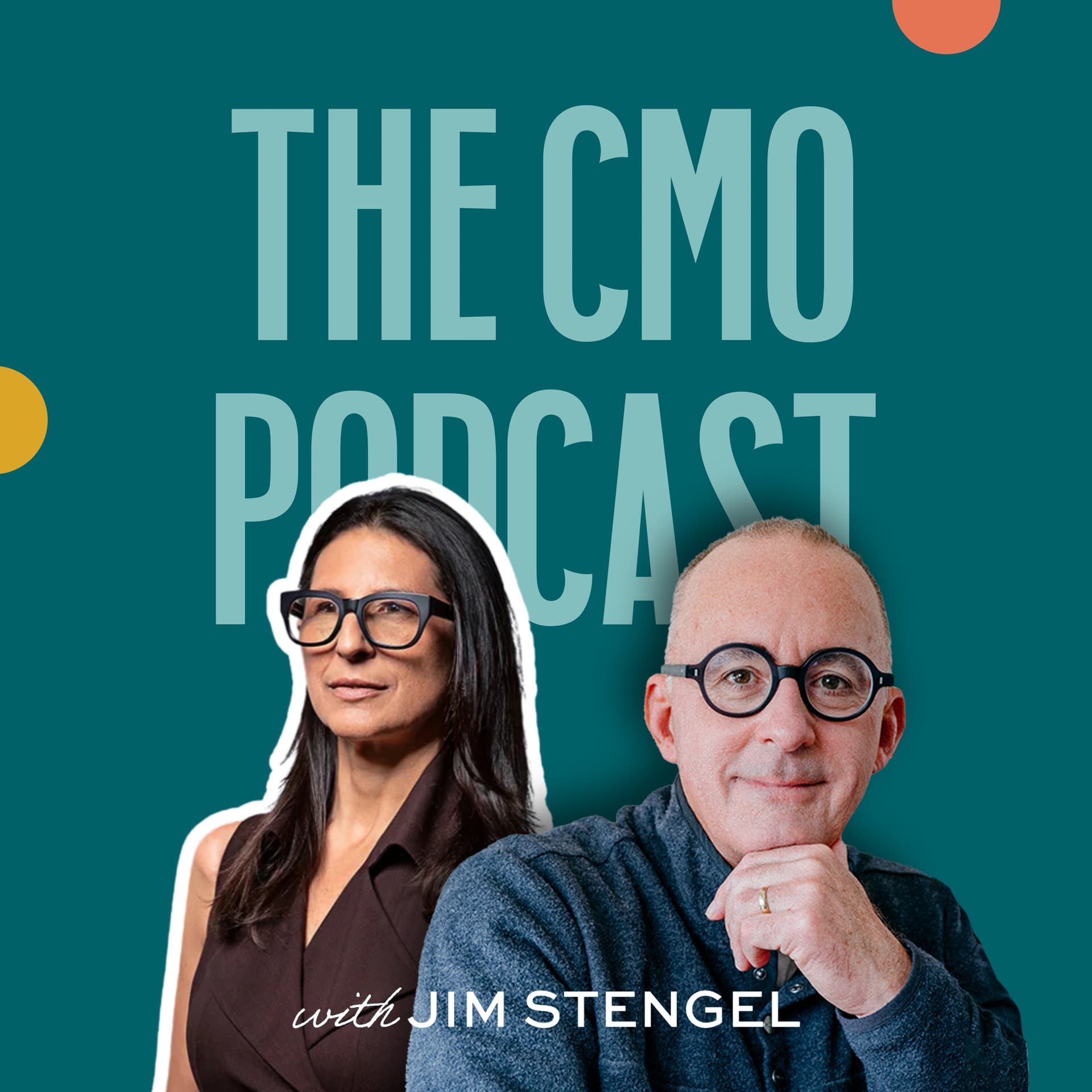
The CMO Podcast: Episode Summary
Episode Title Is Brand Purpose Dead—or More Alive Than Ever?
Episode Description In this episode of The CMO Podcast, Jim Stengel hosts a panel of four thought leaders to discuss the contentious topic of brand purpose. The central question raised is whether brand purpose is a concept that is losing relevance or is more vital than ever in the context of branding and business. The episode features insights from:
- Kory Marchisotto, CMO of e.l.f. Beauty
- Mark Ritson, marketing professor and advisor
- Lisa Materazzo, CMO of Ford Motor Company
- Sara Carter, Global Planning Partner at adam&eveDDB
Key Themes The Definition of Brand Purpose
- Purpose as Belief System: Participants define brand purpose as a set of beliefs that guide the company. It’s what motivates employees and drives company performance.
- Authenticity is Crucial: Purpose must be authentic and embedded within a company's ethos to be effective and resonate with both employees and consumers.
Perspectives on Brand Purpose
- Kory Marchisotto (e.l.f. Beauty):
- Emphasizes the need for purpose to be deeply integrated into the company’s operations and aligns with community values.
- Highlights e.l.f.'s initiative to increase representation on boards, linking purpose directly to business growth and community impact.
- Mark Ritson:
- Argues that purpose can be seen as pointless, especially when divorced from basic marketing principles.
- Critiques the trend of brands trying to establish purpose for the sake of profit, stating that good marketing involves focusing on product effectiveness rather than abstract ideals.
- Lisa Materazzo (Ford):
- Shares insight into Ford’s historic commitment to innovation and community, framing purpose as a long-standing commitment rather than a new marketing tactic.
- Discusses the importance of consistency in values across time and leadership changes.
- Sara Carter:
- Identifies confusion surrounding the term 'purpose' and supports a more nuanced understanding of its role in branding.
- Advocates for a balance between purpose and product effectiveness, suggesting that purpose should support, not replace, foundational marketing strategies.
The Current State of Brand Purpose
- Confusion and Abstraction: There is a consensus that the concept of brand purpose has become confused, often leaning towards abstract notions that fail to connect with the consumer.
- Performative Actions: The panel expresses concern over companies adopting purpose for performative reasons rather than genuine commitment, which can lead to distrust among consumers.
Marketing Philosophy and Brand Strategies
- Emotional Connection: Emotional connections are vital for brand loyalty, although they should be based on genuine actions rather than hollow marketing.
- Cultural Relevance: Brands need to evolve and stay relevant to their communities by understanding and addressing their needs.
- Integration of Purpose into Strategy: The discussion supports that a strong brand strategy integrates purpose at its core, ensuring it aligns with product offerings and customer values.
Key Takeaways
- Authenticity Matters: Brands must ensure their purpose is genuine and reflects their core values.
- Purpose and Profit: There’s debate over whether purpose should be tied to profit; while some argue it drives loyalty and sales, others caution against viewing purpose merely as a means to an end.
- Cultural Responsiveness: Brands that listen to their communities and adapt their purpose accordingly will likely find greater success.
Conclusion The episode presents a rich dialogue on the relevance of brand purpose in today’s marketing landscape. It invites marketers to reflect on how they define and implement purpose within their companies, emphasizing that authenticity and alignment with community values are essential for sustainable success.
---
For more insights and discussions on brand strategy and purpose, you can access the full episode on [The CMO Podcast](https://thecmopodcast.com).
Written by AI. May contain mistakes. Listen to the episode to check what was said.
Transcript
Automatic transcript. May contain errors.0:00Hi, everyone. It's Jim. I'm here with Matt Spiegel, EVP of True Audience Growth Strategy at TransUnion. Matt, you've spent your career helping marketers understand people through data, and that's harder and more important now than ever. It really is, Jim. There's really just so much information out there, and unfortunately, it's often disconnected. Marketers typically see fragments, maybe a purchase here or a click there. But what they really need is clarity, true full picture of who their customers are, and ultimately how to reach them. Well, tell me how your solution strategy comes in and helps CMOs and their teams bring clarity to chaos.
0:33Well, Jim, we ultimately do that with a 360 view of the customer. And so it's about ultimately combining data, truly trusted data, identity resolution, which is a deep analytical problem and measurement that actually helps understand performance. So ultimately we work hard to help marketers move faster, to deepen their insights and to ultimately make every dollar work harder. We believe strongly that when you truly understand your audience, you can build a real brand and real relationships with customers that last. Where were you when I was a CMO? I don't know how to answer that. Learn more at transunion.com slash clarity.
1:06That's transunion.com slash clarity. What if the smartest marketing play is not to move forward, but to zoom out? Deloitte believes the most powerful move a CMO can make is to look beyond the next step and see the broader perspective. That's what the Deloitte CMO program is for, a place to gain fresh perspective and connect with leaders who've stood where you stand. Together, Deloitte will help you see the bigger picture so your next move isn't just fast, but right. Learn more about the CMO program at cmo.deloitte.com. Hi, everyone. It's Jim. I have Matt Spiegel of TransUnion with me. Matt, I want to start with, what do you love about your job?
1:42Yeah, it's a great question, Jim. You know what? I love the fact that I get to be out at events and conferences and working with clients to really think about how marketers solve problems that matter at scale. The job of a marketer is as challenging as ever, and we get to do some interesting things to make their job easier. When you work with a client, where do you get the most satisfaction? You know what? I think seeing ideas come to reality. We ultimately are an enable of great marketing. So we don't do creative. We don't do media planning. We provide the data, the identity insights, the measurement tools that make great marketing possible.
2:11So when we get to see the end product, sometimes later, it's really cool to see. Well, super to have you here. Super to be a partner. Thanks for joining us today. Thank you, Jim. So if you want to turn data into understanding and understanding into growth, visit transunion.com slash clarity. I think purpose is a set of beliefs. And when you think about a company's performance and you unpack that, I would start with it's the ethos that powers the purpose. The purpose is what powers the people. Nobody's getting out of bed every morning and saying, I'm so motivated to sell another product. It's the purpose that powers the people.
2:48The people then power the performance and the performance then powers the possibilities. So the starting point has to be the codification of your ethos. Hi, I'm Jim Stengel. I've helped hundreds of major brands discover and activate their purpose. Because when a brand's purpose is clear, compelling, and authentic, profit naturally follows. Each week, I welcome the CMOs, the chief marketing officers of your favorite brands, to speak to how their job is so much more than marketing. These leaders share their inspiration and challenges, along with how they try to build a full, healthy, and happy life in and out of the office.
3:26And it's that energy that reaches everyone they touch. And we're glad you're here to feel that energy and to learn from these remarkable leaders. So here we go. Do you think that brand purpose is a tired idea that never had any relevance in the world of branded business? Or do you think that having a brand purpose and activating that purpose in all you do is the most successful way to run a business? Well, I have heard arguments on both sides of this issue. So today on the CMO Podcast, we are bringing together four thought leaders to discuss and debate. Is brand purpose dead or is it more alive than ever?
4:02Here's our lineup today. First, we have Mark Ritson, who is one of the world's most respected and outspoken marketing and branding strategists. Mark is a former professor of marketing, a Marketing Week columnist, and the creator of the Mini MBA in Marketing course. He's also an advisor with a bunch of global brands. Second up, we have Lisa Matarazzo, the chief marketing officer of the Ford Motor Company since 2023. Before that, Lisa had a 20-year career in marketing at Toyota. Trivia, Lisa's first car was a Mustang. Next up, we have Sarah Carter, the global planning partner of Adam and Eve DDB.
4:36Sarah has a new book. She is co-author of How Not to Plan, 66 Ways to Screw It Up with Les Bonet. Sarah has also co-created the Mythbusters column for AdMap, debunking flawed marketing practices through real-world experience. And last, joining us, we have Corey Marchisoto, the Chief Marketing Officer of Elf Beauty and President Key Soul Care. Corey has worked at LVMH and Shiseido before joining Elf in 2019. More trivia, Elf is the number one mass cosmetics brand by units in the United States. Here is our foursome for a great discussion on brand purpose and a lot more. Here we go. Well, welcome, the four of you, to the special edition of the CMO Podcast.
5:18And thank you, all of you. I know you don't know each other, all of you, so we're going to get to that in a minute. But I know each one of you, and I deeply respect and like all of you. And I'm looking forward to a robust, energetic conversation where I know we won't agree on everything, and that's the good thing about it. So listen, I want to start this because you don't know each other with a fun question. You know, I do normally in this show, I ask guests what's the first brand they remember making an impact on them. And I've asked that of Corey. So in this one, I sort of want to go around the table and ask you each, when did you first sort of become aware of this concept of brand purpose?
5:55So what was your first touch point on that? What was your first experience? What was your first immersion? So let's go way back and I'll let you know when mine is, but I'll save that for the end. So you're all sort of looking thoughtful. You have the biggest smile on your face, Lisa. So let's start with you. Lisa from Ford. It's a great question. I kind of think of it in two ways when I think about purpose. I think about it personally. And when I was introduced to kind of the idea of giving back with my family, who believes in that tremendously as a family, it was something that we did. I mean, we had certain activities we did as a family to give back to our community.
6:33And then I think fast forwarding to my career, probably my first real immersion into a brand with a purpose would have been my first job at Toyota, being such a strong kind of purpose-driven DNA. And then more recently with Ford, which I think is even at the next level of that, why they exist in the purpose for the brand. Great. Super. I think there's a lot of confusion with this concept, which we'll get to the next topic. But Sarah, I want to turn to you. When was your first experience or the first time you remember running into the concept? It is a great question. I'm looking back in the mists of times.
7:11I've been in the communication business a long time. And the first decade, I don't think I ever heard that word mentioned. But I guess the first time I came across the idea of a brand having a kind of sense of a social mission in the communication world, when it emerged with kind of real scale and salience, would be Unilever and Dove, Campaign for Real Beauty and probably Purcell, Omo, Dirt is Good, a couple of years after that. And then because I've spent a lot of time over the last decade working with Unilever and Purpose brands generally, I've kind of seen the full arc of Purpose and Unilever, if you like, from it just being part of a couple of the biggest brands to it, then becoming a mandate that it was on all brands.
7:52And then of course that changed a couple of years ago with Heim Schumacher. And there there's more of a separation between sustainability at a kind of corporate level and just a few brands now having Purpose. So, yeah, there's been a lot of purpose over my career over the past decade. Corey, we're going to go to you. You've worked at some interesting brands in your career, right? Shiseido, LVMH, now L for six years or so. How about yourself? I'll go back to, since you asked me at the beginning, I'm going through my file cabinet of the things that help shape us as we go through our journey. And I'll go to two that might be surprising to you, Jim.
8:27The first one would be church. and I think you learn early on that this idea of connecting communities around a shared belief system is absolutely essential to what purpose actually is and can become for brands and just like anything a religion is a brand and then the second one for me and I do love ice cream is Ben and Jerry's and at a very early shapeable moment in my journey recognizing the passion of the founders and actually using their brand as a force for social good. So those two, and then of course you could layer on Patagonia, which was somebody who was passionate about all things outdoors and turned his passion into a brand that became a beacon of inspiration for other brands on how to live purpose.
9:16So I think we're surrounded by it in more ways than we think. And inspiration can come from a lot of different places and spaces. So Mark, wrap it up. And I also like you, you're the most prolific writer on this podcast. So I'd like you to answer the question, but also talk about when you first wrote about this idea of brand purpose. Oh, I think, yeah, around the same time, I did a big debate with Professor Byron Sharp from Ehrenberg Bass in 2016 at the Festival of Marketing in London, promoting mass marketing. I was promoting Target segments, and we had a debate in front of about 3 ,000 people.
9:57But in the questions afterwards, a chap from Unilever got up and asked us about purpose. And both of us then and now think purpose is largely, as you'll see later, I'm sure, from my discussion, pointless. And he really tried to argue with both of us at the same time. And I can remember thinking, God, you're a brave soul. You know, he took us both at the same time. But you got a taste of that Unilever madness that was going on from about 2017, right through the Alan Joe period, I guess, to about two years ago. And it was just starting to fizzle around that period. Unilever were going on that bonkers journey of theirs, you know.
10:31So I remember that was the moment where it really started to get very prominent. I think for myself, I go back. My first brand at P &G actually was Jeff Peanutbutter. We weren't even talking about the word back then. But I remember we were in a stalemate on Cher for like years with Skippy, Peter Pan, Private Label, and Jif. So I remember pulling my team aside and saying, hey, gang, we're not here to be in a Cher stalemate. So let's get in and understand moms, dads with young kids and what the hell they value. And can we make a difference through our brand with what they care about? And so that led to lots of programs which linked us with PTAs, parent-teacher associations, with schools, with young, with daycare centers.
11:19And we all linked it to our brand, linked it to what we're trying to communicate. And the share stalemate ended and we surged ahead. So we weren't calling it purpose, but we were calling it how can we make a bigger difference with the consumers who are important to the future of the brand. And I think that concept is still relevant. The reason we thought about doing this show is purpose dead is that I think we have a massive communication issue with purpose and a definitional issue. So I think purpose, in your words, Mark, has a positioning problem. And I think it's damaging. I think it leads to a lot of confusion in organizations, a lot of waste of time.
11:59And I think at the worst case, it probably damages some careers and brands. So I'd like to sort of explore that. And the first place I'd like to go, and I'm not even sure we're in the same place in that, is to talk fundamentally, what is it? What is the definition of this concept? I mean, I've heard Phil Thomas from the stage at Cannes Lions talk about it as social good. And in my opinion, it's not social good. So I want to go back to the book I wrote 13 years ago called Grow. And I had a definition to lead that book off about purpose. So I want to share that today and just have you react to it.
12:31Is that how you think about it? Is that how you talk about it? So the way I wrote about it, I was too long-winded 13 years ago, but the way I talked about it 13 years ago is as follows. Purpose is not social responsibility. It's a program for profit and growth based on improving people's lives. It's the only sustainable way to recruit, unite, and motivate all the people a business touches from employees to customers. And finally, it's a business's essential reason for being the higher order, brand-relevant benefit it brings to the world. And I recently had a colleague say to me, hey, it's as simple as this.
13:04It's something that inspires employees, impacts customers. So Corey and Lisa, why don't we start with you? How do you react to that concept? How do you think about it? How do you talk about it in your company? I would start by agreeing that that is way too wordy and not sticky. So when I think about what Mark said, purpose is pointless, that's sticky. Three words, easy to brand, easy to talk about, easy to get up front and react to. I'm not really sure in all the things you just said, what is the fundamental essence of it? I think purpose is a set of beliefs. And when you think about a company's performance and you unpack that, I would start with it's the ethos that powers the purpose.
13:51The purpose is what powers the people. Nobody's getting out of bed every morning and saying, I'm so motivated to sell another product. It's the purpose that powers the people. The people then power the performance, and the performance then powers the possibilities. So the starting point has to be the codification of your ethos. If you don't know what your ethos is, if you don't know your raison d 'etre, if you don't have that codified into a common language and shared belief system, you shouldn't even be talking about. Purpose is an expression of what the company values most and then how that's going to come to life through a series of behaviors, programs, principles, actions, and it needs to be bulletproof.
14:37And I think part of where purpose goes wrong is when it's performative. Oh, there is a niche market over here that is buying more product around a specific thing that I'm selling. So therefore, let me go do this performative action and it's hollow. And if I use an example of ELF and our Change the Board Game initiative. Corey, you're talking about ELF's Change the Board Game initiative, where you're working to double the rate at which women and people of color are added to public company boards by 2027. The reason that we're driving this idea of changing the board game is because our board of directors is rare and remarkable in that it's 67 % female and 44 % diverse, largely mirroring the communities that we serve.
15:25And we've seen in our 24 consecutive quarters of growth and market share gains that women and diversity are powering that. The fact that we are the community we serve is powering that. So we've taken the initiative to advance the number of women and diverse voices on boards of directors because that's how you impact change for future generations. So it's a bulletproof approach. No matter which hole you poke, you will get a solid block. And a lot of companies, when you see this idea of purpose, you start poking holes, you get what I call Swiss cheese. So how do you talk about it in turn? If you had to put it, as Mark said, purpose is pointless.
16:07So how do you talk about purpose in the company so that people remember it? Regarding Elf, how do you talk about it? We talk about purpose as a force for good, and it comes across in a variety of ways. We wrote a purpose statement, which is Elf stands with every eye, lip and face. That comes to life across three pillars. The first one is encouraging self-expression in all its unique and beautiful forms, encouraging people to live their own bold truths. The second one is empowering others, whether that's creating pathways into boardrooms, sports, gaming, all of the initiatives we have for empowerment, and embodying our ethics.
16:46So in that particular camp, what commitment do we make in the environment to people, the planet, and our furry friends, as we like to say? So if you think about that pillar in particular, we're the first beauty brand to ever be Fairtrade certified. Why is that important? Because we want to make sure that we're ethically operating in the communities that we serve. So each one of those allows us to have clarity of purpose in how we go after those three E's. So, Lisa, how do you think about purpose? How do you talk about purpose? How do you define purpose in the Ford Motor Company? Yeah, I think the way I think about purpose is probably more aligned with the definition that you read, kind of this higher order of existence.
17:30The way we think about it at Ford is really our values or our core equities, which we have defined as part of our brand strategy. You know, trust, community, capability, passion. Those are, they're so true and authentic to the brand, what we have been, what we will continue to be for the next 120 plus years. I think that's really the only way it works. If you approach it from a perspective where this is our purpose, we're going to define our purpose and we're going to, you know, assume and tie it to business results. I think that can ring hollow. I think it becomes a marketing initiative and it's not enduring because the next person who sits in my chair, they will have a different perspective on this.
18:18And it needs to be embedded in a way that it stands the test of time. So really, it goes back to that authenticity. When you do that, when you get it right, and it's not a marketing campaign, it's really embedded deeper within the organization. It impacts the employees. It should be equally resonant with the employees as it is with your consumers. It will take on a life of its own. And, you know, I have an example within Ford. So recently from our human-centered design group, the group of individuals tasked with innovation and defining the consumer experience, they on their own anchored in these core equities, detected a need for a seatbelt accessory that was designed to help women who had mastectomies.
19:11And therefore, they needed to wear their seatbelt during recovery, but it was very painful for them to do so. This small group of innovators and entrepreneurs designed this seatbelt accessory. They had it certified and tested so it would be safe for you to wear, and not impede with the technical operation of the seatbelt, then figured out how to patent it, offer that patent free to anybody who wanted it, and bring the product to market and make it free of charge for those who needed it. That's a purpose. That's something that just organically happened because the people within our company believe so deeply in why we exist and they understand our core values to an extent that it just happens.
20:08We all want to stay ahead of the digital curve. And IAB, the Interactive Advertising Bureau, invites you to do just that at the 2026 IAB Annual Leadership Meeting in Palm Springs on February 1st through 3rd. If you're a qualified consumer brand or agency leader, you can access free passes and travel vouchers. And for everyone else, you can take$500 off your ticket with code ALMCMOPOD26. This is your chance to join a three-day gathering of the industry's brightest minds and boldest voices shaping the year ahead. You'll hear agenda-setting conversations, candid fireside chats, and dynamic breakouts on the topics that matter most, from AI and commerce media to measurement and addressability.
20:52This year's lineup concludes everyone from Kevin Bacon and Bozema St. John to creator Remy Bader, along with leaders from Forbes, Major League Soccer, General Motors, and Meta. Visit IAB.com slash ALM to learn more and check out the link in the show notes to register and receive$500 off your ticket.
21:14i want to get you talking in a moment about how this comes to life in your products and services because i think your language is beautiful and i think you're creating organizations both of you that are attracting talent but i do want to hear how it comes to life in what you sell because i think that's also a missing link sometimes we have in this confusion around purpose but sarah and mark i'd like to open open it up to you to react to what we just heard i mean i just think discussion sort of illustrates an awful lot of the problems that the world has had with purpose, doesn't it? And there can't be many words in marketing where we could, we'd all be talking like this for so long without any kind of aligned definition of it.
21:51And I think there's just a number of things all kind of swirl around in the mix, aren't there? There's purpose with a small p, as I call it, which is a kind of reason for a brand and a company to exist. And of course, all brands and companies need that. Then there's purpose, which is a kind of internal aligner for or kind of staff and colleagues, the reason why they sort of get out of bed in the morning. But the thing that I think has become more problematic is the bit of the definition, which is more the kind of Peterfield definition, which is like purpose being a commitment to goals other than improved profit.
22:20And that's by and large sort of social and environmental kind of impacts. And then there's a kind of further stage of it, which is not just that companies can kind of do well and therefore do good if they choose to, but it's that companies do well by doing good. And it's that kind of final crank of the purpose thing, which was at the heart of the Unilever. Every brand should have a purpose and brands with purpose grow. So I think there's just such a lot of complexity packed into this word now and different people are taking different things from it. It means different things to different businesses and different businesses are choosing it for different reasons.
22:57Hence this discussion, I guess. Mark, what's your reaction to what we just heard from Lisa, Corey, Sarah's perspective? Yeah, it's great. Right. I mean, my take on it, and I have been consistent for a decade, is a couple of things. I think one of the things we've realized over the last decade that has transformed marketing is that B2B and B2C, customers aren't that concerned about brands as we are in marketing, and we forget that all the time. Miss Carter down there is very famous in the UK, at least, for her post-it note quote from 20 years ago, where she once said, every advertising planner should have a post-it note next to their desk saying the consumer doesn't give a shit absolutely correct and if we could get that one message into every marketer's head especially american markets not these two they're too good but most american marketers overthink it spend eight hours a day five days a week thinking about one brand and the consumer spends maybe two seconds in a brain cell every three weeks.
24:01So my first problem with purpose is nobody gives a shit, man, apart from the people in the company. Now, that's fine because, as I think our other speakers have mentioned, it is very good for employees and the empirical data supports that. It's when we get to consumers that I think there's a problem. I think consumers don't care. And I can give you empirical evidence of the finest order. I think the people listening to this podcast can contest themselves. I'd like them not to be marketers for 30 seconds, press pause on the podcast and go to their refrigerator and open the door and gaze upon all the products that they've purchased over the last six or seven days and ask a very difficult question.
24:44How many of these products and brands that they have purchased, do they have even the remotest idea about the values and beliefs and sociocultural goals of these companies? And the answer is they don't, because it largely doesn't matter. Now, that doesn't mean that companies shouldn't be doing the right thing. And I think we should be doing things that are appropriate for the people that have various challenges for the planet, for animals, for everything. But that's just because we should just do the right thing. Where I get really, really cynical is this undergraduate desire to link brand purpose to making more money and getting more customers.
25:27I think that's, it's a juvenile discussion. Surely the whole point of brand purpose is it will cost us money because purpose is meant to cost you things, right? I'm a big supporter of rescue dogs. I have many of them running around in Australia. I don't do that because I think it's going to make me rich. I do it because I find it to be the right thing to do, right? And so I don't want to sound like the Grinch here. I think companies do the right thing on every level. It makes me very happy inside. I just don't think it's of any commercial expedience with a few very notable exceptions that we've already covered.
26:04You know, we've already done the Ben and Jerry's example, which is absolutely true, right? We've done Patagonia. Both those customers have lost hundreds of millions of dollars because they chose to do something right and it has cost them in the case of Patagonia it's cost them everything they gave the business away and I think that's spectacular but we need to stop making this undergraduate connection between purpose will make us more money and my final point would be the reason we have to stop that is if I can demonstrate to you that purpose doesn't make us more money and treating people in minority groups badly or destroying the planet if I can show you that that would make you more money, then logically, this whole argument would suggest that we should do that then, right?
Read the full transcript
26:51We don't need a financial prerogative to do the right thing. We should just do the right thing when we can. So yeah, I've been very annoyed by it for 10 years. I'm sick of it. And for me, it gets in the way of doing good marketing and good positioning. And we only have a couple of brain cells. We don't have room for all this high pollutant stuff. And I'm sorry that's the truth. Yeah, hear, hear. So why is it particularly bad in America, Mark? I have to get you on that. Why is it worse in America than other countries? There's a couple of reasons. Americans, first of all, are generally nicer people than English, Australian, Germans, etc., who are more cynical.
27:29That's just the way that it goes. And second, I have to tell you, there is a remarkable decline in the quality of American marketing that's taken place over the last 15 years. Again, I'm not talking about a wonderful guest tonight, of course. But when I went to study at Wharton in the 90s, it was to discover a marketing universe that was 20 years ahead of anywhere else on the planet. Now I despair at the state of American marketing. There's no knowledge of salience. There's no knowledge of excess share of voice. Most American marketers are behind places like the Netherlands and Australia, which are hardly the hotbeds of marketing excellence.
28:06And if you ask Sarah Carter, who hates being put on the spot, she'll confirm it to you. The quality of American marketing, and again, Ford's a great exception. Don't get me wrong. P &G's a great exception. But generally speaking, it's gone from being the leader in marketing to often a place where we have to pause and explain it because the effectiveness literature moved on. And for some reason, I can't quite explain, Americans stopped leading it. And they became obsessed with things like purpose, which are a distraction from the real challenge of getting this right. You know what I mean? It's a side alley.
28:42It's a lovely story, and it's full of fruity and beautiful anecdotes. But, you know, I did Brand Week last year with John Legend. You know, he's a brilliant singer. He's a lovely man. He knows bugger all about marketing. So what he was doing at Brand Week, I don't know. You know, this is the emotion approach to marketing now. Let's get, you know, Chrissy Teigen and John Legend. He sells tickets, Mark. He sells tickets, but it's kind of like get Jenny Romanyuk there. Do you know what I mean? It's sad for me because I love America so much and I learned my trade in America. But I think, yeah, purpose has filled a big, soft, fluffy hole and other things should have been in that hole instead, frankly.
29:21And about five years ago, I joined a big kind of marketing training program for Unilever marketers. So the room was full of young Gen Z Unilever marketers and the person training them said, I want you all to think now, you know, someone standing in front of your brand in the supermarket, what are all the reasons that they wouldn't choose your brand? And, you know, around the room, everyone's hands get up. They don't share my values. You know, the brand doesn't live its values properly. It doesn't have the right purpose, all that kind of stuff. And it went on and on. And the person trading said, wrong, wrong, wrong, wrong, wrong, wrong.
29:55The reasons they're not going to buy it, they can't find it on the shelf. It's not available in the right pack site. They don't like that flavor. The brand next to it is half the price. And they were genuinely flabbergasted. They just hadn't thought that any of those reasons would be the main reason. So it's just like complete distortion of marketing. Normal marketing rules still apply with purpose. It's still all about products, price, all that kind of stuff. But that sense was lost and it all kind of floated off into the kind of ether, totally disconnected from four Ps and marketing rules. So, I mean, I think that is changing now, the climbing back down that benefit ladder.
30:34But I think it's just a really interesting anecdote of just how distorting that whole kind of mantra of thinking was and distracting people from how marketing works. We saw it at Cannes, right? We've seen it over the last sort of four or five years. There's been this sort of orgy of purpose at Cannes. And suddenly now it's in quite dramatic decline in terms of the number of submissions and winners. So I think we are, I mean, again, we expect some brands genuinely to play their purpose and as they should, but it will be a small minority compared to this, you know, this bandwagon that traveled through marketing for the last 10 years, and I do hope we get back to more basic things.
31:14I see purpose at the other end of the extreme from salience. You know what I mean? What have we learned in the last 10 years from marketing science? We've learned that salience uber alice, that if you come to mind first in buying situations, as Ehrenberg Bass would have taught us, you're probably going to win 70, 80 % of the time. B2B, B2C, low involvement, high involvement. I'd like to bring Corey and Lisa into that. And thanks, Mark, for that. I actually do think that purpose can be a way to drive salience. I'll go back to my first impression was back when I was a brand manager. Question we started with was how do we impact the lives of the people who buy us more deeply?
31:50We will be remembered more. We will be more salient and they will develop an affinity for the brand. And that's at the core, at least of my thinking on purpose. And I think if it gets divorced from the business outcomes, Mark, I think we lose it all. So purpose for me is a how that you build a brand that has salience, relevance, attraction for a lot of people, maybe not all of them. That's where I think you and I are at the other end of the sausage, Jim. I think the purpose is purpose. That's the point of it, right? Why does a company follow its purpose? because it believes in it. And the minute you put a commercial outcome for it, surely you undermine that purpose and render it relatively pointless at the best of times.
32:40I think, you know, the examples we've heard in this podcast of purpose-driven activities are spectacular and fantastic. I just don't think they need to be, you know, compromised with very specious claims of commercial return, which, you know, not always, but for the most part aren't there. Let's just do good shit because it's good. because it's the right thing to do. I think that's wonderful. I just think the minute we then link it to make more money and get more customers through your brand purpose, I think we're drinking the Kool-Aid. It's funny, Mark, because that part of what you just said, the whole first part, I love and appreciate your conviction for the subject, and I was disagreeing with you the entire time.
33:20This last bit of what you just said, I'm like 100 % with you. So I think the more I listen to you, The more I'm actually aligned with what you're saying, which is, if I'm understanding you correctly, do purpose because it's the right thing to do. Serve your community. Do the right thing for the planet. Do all that. Just don't put a target on it and say that you're doing this because you're trying to drive a commercial outcome, which is a cause and effect type of scenario. Well, and one step further, Corey, it's going to cost you guys quite a lot of money to do purpose properly and be ready for that.
33:58You know what I mean? Be ready to have higher costs and be ready to lose some consumers because of what you believe. That's also cool. Now, whether your shareholders think it's called a different story, but purpose by definition is going to cost you at some point. And that's also OK, because we choose to do these things and the purpose of purpose is purpose, right? Not money. I think, again, that's Patagonia. That's Ben and Jerry's. You know, these are stories of losing enormous amounts of money and maybe making some back later. But ultimately, yeah, it's cost that defines purpose, not profit.
34:34That's a lovely quote from Bill Burrack, that a principle isn't a principle unless it costs you money, which is true. And the sort of whole purpose thing seems to have been flipped the other way, that a principle isn't a principle unless it makes you money. And that's kind of the reverse of what we've been saying, isn't it? This, to me, goes back to the definition of purpose. And I think there are two ways to level set on this. I get nervous when I hear that purpose is doing the right thing. I don't know what the right thing is. And in a world that's become increasingly fragmented and polarized, do the right thing for who?
35:11I define do the right thing as do the right thing for the company and the values the company was founded on. That's how I think about doing the right thing for Ford. It does at times cost us, but I think when we are staying true to those values, there is an ROI there in the form of loyalty, just as an example. And I will say it is loyalty beyond reason. It is loyalty that pays for itself. I have two unbelievable examples. When I introduce myself and I tell people I'm from Ford, they will still to this day say, I love that brand, I respect that brand because you didn't take the government bailout back in the recession.
35:54I met, and Jim, you'll appreciate this, I'm a huge Formula One fan. I was in Australia for the season opener Grand Prix and I met this lovely gentleman and we hit it off and started talking about cars. And as soon as he heard I was from Ford, he said, just a minute. and he reached down and started to untie his shoe. And I got very nervous. Luckily, my husband was standing there. And I'm like, what is happening now? He had a Ford tattoo on his foot. You have to love a brand at a whole other level. There are a lot of brands that I love. I do not have tattoos of those brands. So I would just poke at a little bit of the conversation to point those two things out.
36:37Well, the second thing would be that your purpose, if you are a marketer and think you're going to fabricate this purpose that will eclipse and address inadequacies that you have in what I'll call basic marketing, it's not going to happen. It's not going to compensate for deficiencies you have in marketing excellence in world-class marketing. So those are just the two things I wanted to point out.
37:09Everyone seems to be chasing the next big thing, the fastest answer, the quickest win. But great CMOs believe the real power isn't in the speed, it's in stepping back to see the bigger picture. That's why everything Deloitte does in their CMO program, from their industry-leading capabilities to their connected network of CMOs, is designed to help you zoom out and gain fresh perspective. Deloitte will help you see the bigger picture together. Learn more about the CMO program at cmo.deloitte.com.
37:42We were talking about Scott Galloway earlier. I often pick up what he puts down, and I really appreciated this line, which I think is germane to this topic. He said a brand is unearned margin because of soft power. Soft power is feeling good about the brand, empathy, goodwill. So to Lisa's point, that doesn't just come from product. And what I would argue is the world does not need another brand. There are thousands and in some cases, tens of thousands of options for every single category that there is. I would argue that the purpose of the brand, this soft power, if you will, is what is actually going to get you to be the choice because product performance is the price of entry.
38:31So if there's a thousand brands and they all perform at more or less the same level, then why would I choose Ford over insert brand here? Why would I choose Elf over insert brand here? And what I've found specifically at Elf is the more we wear our heart on our sleeve, the more we stand up for people, the more we fight for women's empowerment in the boardroom, on the playing fields, the more that we focus on the business that we're in, which is democratization of access, the more we get brand love scores off the charts, the more people trade other brands for us. And I do think there is something irrational, Mark, that perhaps you're not capturing in trying to make everything about empirical evidence only.
39:17There is an incredible valuable value to the emotional side of making choices. Most people make decisions based on emotion. So the reality of emotion is what's going to make an emotional connection with a human being. The emotional connection is going to come from making decisions that are both the head and the heart. The head is, does this thing perform? Because I don't want to waste my money on something that doesn't actually perform, right? The heart comes from, why would I choose you at the expense of every other offer on the market. And purpose, I would argue, has a lot to do with that. I don't think Mark's going to take issue with that if I know him from his writing.
39:58No, no, no. I think it's a great point. The only thing I would, again, pull us back to is when a brand comes to mind, when we have a salient initial awareness, the consumer is lazy. The brain is lazy. And what happens is they go, that's the one I'm going to feel more about. That's the one I'm going to have preference for. That's the one that I'm going to purchase. 70, 80 in the hbr last week 90 of the time if it comes to mind first i'm going to buy it because i don't want to think about these things too much now that in some cases in in cosmetics for example and automotive it does come down a little a little bit but nonetheless you know we have a an economy of ideas and money and everything else that limits what we can do right in terms of how we position our brands and how we communicate our brands and what features we focus on i think the opportunity cost of pushing more abstract purpose to the satisfaction of many marketers comes at the cost of doing the basics.
40:55I'll tell you now, I see most of the brand positioning work I see from relatively big brands. Many of them are still, you know, trundling along with positioning. I mean, first of all, brand positioning is a shit show, as most of us would acknowledge, right? There's too much, right? If you have more than a page, you've got too much, right? And second, most of it is completely bereft of distinctive brand assets, which are far more important than anything else on the planet. If you're not distinctive, if you don't have brand codes, you're not going to be noticed, right? So I despair of brands that spend their time crafting a purpose, but aren't worried about the distinctiveness of which they would come to mind.
41:31So there is an opportunity cost there. If we had unlimited money and unlimited brain cells and unlimited touch points, hey, the more the better. But we're not throwing shit against a wall here. And so I think that prioritization has to be also set in stone. What can we afford to do and where are we getting distracted? And I think if the brand doesn't come to mind, pretty much all the bets are off, right? Mark, I totally agree. If we're doing purpose and we're not getting the price right and the distribution right and the colors right and the packaging right, we're off. And you know that. I come from P &G.
42:04We do the fundamentals right. I think what at least I feel like we're not talking about is purpose as a concept with an organization helps them strive farther, reach to deeper things. When I talk about Jeff Peanutbutter changing the conversation, we grew our market share. So I do think it's a motivating concept to think beyond the current confines and constructs of the business as a chance for competitive differentiation. organization. And I know a lot of the people that call me and ask for help, their organizations are not productive, energized, and motivated. And purpose is a great way to do that if it's simple, if it's relevant to the brand, if it's relevant to the history, if it's relevant for the consumer.
42:47Jim, I don't disagree, but you raise a great point there too, right? I think the biggest single reason why marketers have become obsessed with purpose is it's kind of become a dirty word just to offer a good product that does a good job, right? Yeah, which is bad. I mean, look at Amazon. Amazon's the most loved brand. And what do they do? They always exceed your expectations with a great product and service. They keep it simple, right? And I think a lot of marketers are just not happy anymore simply selling a well-made soda that's good value and refreshing. It changed somewhere 25 years ago. It's not good enough for a lot of people to say, I work for Starbucks.
43:22You know, I mean, Starbucks is our ultimate case study, right? That's the most nonsensical positioning in the history of marketing. And my goodness, we've seen some nonsense, yeah? You look at those iterations of, you know, of what Starbucks is claiming and the problems they've got. with it as a result. Now Starbucks is more than a coffee, clearly, but it's not, you know, nourishing the neighborhoods, one neighborhood at a time, whatever the heck it is now, right? We've got to get brands back to the grounded market-oriented reality, and there's no dishonor. You know, I think you're right. I think marketers are bored just selling soft drinks and candy, but then they're in the wrong game.
43:59You know, when did it become not exciting to make a great product and sell it at a good price to lots of people. I think we've lost something. Yeah, that has to be the table stakes. I mean, you have to get that right. And then your purpose, however you define it, can be your differentiator. I will say that the consumer research is good, but consumers are, they can't, my experience has been, they cannot express emotion. They cannot express values. So I agree that there are drivers, like the product has to be there, the price has to be there. They need to be able to find it on the shelf, but you have to prod and get inside their psyche to extract that emotional attraction that they feel from the brand that is really driving their purchase, even if they can't express it.
44:48So I think that's critical as well. There is something or I think to your observations about generations, but I believe it's more nuanced than that, because when we look at it, we also look at it at a life stage because people who are young will tell you they want everything. They don't want compromises between purpose and the product and they're not going to make the trade-offs. That changes. That can change, I should say. So I worry about sweeping generalizations about generations and especially with Gen Alpha because they're so young, they're not fully into that consumer part of their life yet.
45:27And it will be, they have very different and very unique point of view. It will be interesting to see how that evolves over time, just as all the previous generations have evolved over time. Sarah, you've been quiet taking all this in. You're one of the world's great researchers. Well, I mean, Mark makes a very good point about there has been a lot of quite kind of dodgy research in this area hasn't it you're right if you ask anybody you're more likely to buy this brand if it does x to help the world or women or whatever you know you're going to get very high scores i think byron sharp once said one of the things that can corrupt science is good intention so yeah you've got to be very careful with your research i think what we could probably all agree on is that word you were using abstraction mark because i think that has been one of the issues with purpose when it becomes divorced from an attachment to products.
46:17It needs to be tethered, doesn't it? And I think, Corey, I loved your podcast you did with John Evans on Uncensored and your products are fantastic. And your purpose about democratizing your kind of products for everybody at a fraction of the price, it's just, that's fantastic. But it's very anchored in your product, isn't it? The issues we've had, particularly with me in the communication world is when these purposes have gone kind of up into the stratosphere, really. Starbucks is an example. And at that level, everything becomes the same. And because there aren't that many purposes to go around, everybody ends up bringing everybody together.
46:56There's no distinction. So I think we're seeing a lot of climbing down the ladder. I think, Jim, you did an interview recently with the marketer who's worked on Axe, didn't you, where they've come back down to fragrance smelling nice attraction you'll do that in a in a in a kind of purposeful way but you're not up doing toxic masculinity and bullying or whatever because from a computer communication point of view i can't talk bullying and toxicity of maleness and sell aftershave at the same time you can't do it in the same ad you can't sell opening up possibilities for girls and then leave it to a shampoo you just it's driving a generation fan is nuts trying to reconcile these things.
47:36It needs to be rooted in a product. You can go up a bit, but not too far. And I think that's been an issue. Isn't that the point, Sarah, that a lot of the purpose work, the majority of it is also about the company and what the company does and what the company thinks. And it breaks the first rule of positioning. It's not about what you think. Nobody cares. What are you doing for the consumer and the consumer's need? You're right. It's very generic. For me, the big challenges, is it's all most of it has been about and this is what we believe and this is what we do and it's like yeah but positioning is really about the consumer not about how you you take a stance on things and again you know we find ourselves in the same contradictory place which you know i do think is get coming back down to sarah's point to a more realistic level hey everybody this is Andrea Sullivan, the CEO of Vive, and we produce the CMO podcast and are so excited to have partnered with Jim Stengel for so many years.
48:37Wanted to tell you a little bit about something that could be right for you. Vive is a program for entrepreneurs and business leaders who want to get more out of their life and become their best and happiest selves, both personally and professionally. We have a 12-month program that allows people to meet up with some of the best business leaders out there, and additionally experts in the wellness sector so that you can learn how to nurture yourself. So we teach things around sleep optimization, meditation, all those good things as well. Please reach out to us at podcasts at vibe.co to get more information.
49:12That's P O D C A S T S at V Y V E.co. Thanks for listening to the CMO podcast and hope to talk to you more about vibe.
49:26I want to come back to the point Mark brought up about purpose. The purpose of purpose is purpose. And I wanted to bring especially Corey and Lisa into that. I've just always felt if you don't have a purpose that is grounded in your company's beliefs and values and is somehow trying to result in better products and services, which result in better business for the company, it's a flawed concept. And so it drives me crazy when I hear someone talk about purpose being, Here's my purpose initiative, and I'm going to help this disadvantaged community. That might be fine to do, but you're getting too far away from the products and services that you're creating and selling to the people who you want to bring into your franchise.
50:07So I kind of feel like it has to have a connection to the business, or it's going to be disingenuous. Because these are companies that are largely public and need to make money and provide a return to the people that invest in them. And for me, purpose is a way to do that and to rise above and to make better products and services. So Lisa and Corey, where are you on that issue? And let's just open that issue up a little bit more. I agree with you, Jim. I think it goes to authenticity and it goes to, it speaks to whether or not your purpose can be enduring. And when I look at it from a Ford perspective, 120 plus year old family business, It was founded on a commitment to creating a better world through innovation and affordability.
50:51When you look at the proof points throughout 122 years, Ford has literally changed the world. When you think about Model T, putting the world on wheels, what that opened up, the businesses, the industries that were created by that and created by travel, affordable travel for a large portion of the population. When you think about the establishment of a living wage dating back to 1914, I mean, those are things that are so embedded in the founding values and principles of Ford. It has stood the test of time. Fast forward to today, you can still see that in everything we do. You can see it when you look at our dealer body.
51:39We have, I think this year, we will have 53 of our dealers that have been in existence for more than 100 years. The impact they have on their local communities, the way they bring the brand to life is really in line with those founding principles. So it has to be enduring, has to be authentic. And has to be connected to the business, right? The products and services you sell. Let's be clear. And I say this often, we are not a not-for-profit institution. That doesn't mean we don't have enormous power to change the world. And I completely agree with you, Lisa. Ford has done that in deeply meaningful ways for over a century.
52:18When you start with results looking at a company like Elf, we have 24 consecutive quarters of net sales growth and market share gains. There's only less than 600 consumer goods companies who have 24 consecutive quarters of net sales growth averaging above 20%, only six, and there's zero outside of Elf that have 24 consecutive quarters of market share gain. When you unpack that and say, okay, well, that is rare and remarkable performance. You're in rarefied territory. Unpack the why. Product is one for sure table stakes. It is not only product. It is our system and set of beliefs and our ability to create movements that are going to have a positive impact on the world.
53:03We're making the world a better place for every eye, lip, and face. And I actually don't believe in the idea that what you establish today should be the same 100 years from now. If you're listening to your community, if you're shaping culture, connecting communities, and moving along the journey with them, you're going to evolve. And brands that don't evolve will die. As Richard Dawkins, the evolutionary biologist, says, natural selection favors differentiation. What is going to make you different in a sea of sameness? And it can't just be a good product. There are plenty of people who are doing good product, strip it down to its essence, good product, good price, who have disappeared and gone extinct.
53:45So does the work that you do and the monetary investments you make have to pay off when you're a publicly traded company? Absolutely. Is your job to read the signals and lean in where the light says green absolutely and what i find specifically at elp i wouldn't tell every company to do what we do i would tell every company to codify your ethos start there if you don't have a codified ethos do not pass go then allow that to tell you what your purpose is that is then going to motivate and energize your people to go out and perform to a community of people who care about the things that you care about so i think the key part here is for each company to think about who are you?
54:26Why are you here? How does that manifest itself? And really ask the hardest question, which is what business are you actually in? If we said we're only in the business of selling color cosmetics, we would not be a$1.3 billion company today. We would not be Gen Z's number one preferred brand. What we figured out by understanding deeply the hearts and minds of our community is we're in the business of democratizing access. We opened a world to people that they were otherwise shut out of. And the emotional connection came from this idea that we took down the velvet ropes and said, no, this is not only exclusive to the happy few, we're going to make it accessible to the happy many.
55:11And when you think about your brand in broader terms like that, then you say, okay, well, where else can we democratize access and open a world that hasn't been open? And the next place we did that was for our employees. Every single employee in our company has equity. We are a team of owners and shareholders. We democratize access to something in all these other companies as in an ivory tower, only for the big dogs at the top, right? It's a ladder. And purpose is not a part of a thing over here that is linear and one vertical. It's part of all of it. It's how our beliefs come to life through our product, through our campaigns, through our actions, through our words, through our donations, through everything that we do.
55:52Corey, I absolutely agree with you. And I would argue that the brands that are doing purpose right are probably the brands that have done the best job with their brand strategy, their overarching brand strategy, and their purpose is actually embedded in part of that brand strategy. And it speaks to, I think, how a strong brand can drive financial performance. Stock price, total shareholder return, multiple studies have been done on that. The power of the brand in driving financial performance quantitatively. Yeah, I just wonder out loud if you were to look at brands that we think are getting purpose right as a differentiator, not as the solution.
56:38if you would find that they have a very thorough and well-executed brand strategy. I absolutely agree with that. I think, you know, fantastic brands like you talk about authenticity, ear to the ground, you're so close to your customers. You're not going to go wrong on that. I think the brands which have had the problem and have given purpose of Brad Wrap are the big FFG brands that have been around for decades that have kind of reverse engineered back into a purpose. Someone said like a sort of ugly sister trying to cram their foot into a kind of Cinderella glass slipper. Those are the ones that have got it wrong because it's not authentic.
57:15It's not what people want. You know, they're up there in the sphere, lost any connection with their products. And, yeah, it's given the whole game a bad rap, unfortunately. But the companies that were born to purpose, like Chocolonely or, you know, your great companies with a real driving force at the heart of it that you grow on the back of, they're the ones who are smashing it at the moment. And yeah, it's the other ones that have caused the problems, I think. But it is a key point that, and we could use Unilever as the example, it is a choice. It's a strategic choice like any other, and it can work for some brands, as Corey illustrates.
57:51My big despair with Unilever during that crazy period was, yeah, of course Ben & Jerry's is a purpose-driven brand. Of course Dove is. But when you start trying to find the brand purpose for, you know, Pot Noodle and Hellman's mayonnaise, you've lost the plot. I've never told you this before, but you know you wrote that article about, please tell me there's not a brand manager somewhere on Pot Noodle writing a presentation on the purpose. My plan on Pot Noodle was on a train down to Pot Noodle to have exactly that conversation when you wrote that. And that's where we were, Sarah, right? And we had those horrendous purveyors of brand purpose expertise that were telling us, you must have a brand purpose or you will fail.
58:32And it was like, what are you talking about? Since when one rule ever fit all brands, you know what I mean? Like, yes, it can work, but in many cases, it isn't going to work for exactly your points. And I think that, again, that seems to be, we've got to, again, a more realistic place now where we're recognizing there are some brands that are doing it and it's a source of their strength. There are many more brands where it's not a relevant play, you know? And I think that's also very cool. I totally agree with you, Mark. And actually, the more you talk, the more I realize we're way closer together than I thought we were in the beginning.
59:04There is a lot of stuff that I see out in the universe that makes me cringe. And what I boil that down to is what I said earlier is the word performative. When purpose is performative, purpose is pointless. And when you say performative, you mean it's a stunt. It's a tactic. Exactly. It's a tactic that you're just doing for opportunistic reasons versus doing it because it comes from a set of beliefs that your company has a legitimate earned right to play in. You should mention also the companies that do things quietly and have never talked about it. In the UK, we have Pret-a-Manger that has been carefully tidying up all of their sandwiches, and it's a very big cafe chain in the UK, and giving them to the homeless every night.
59:49It costs them a lot of money to do that, but they've never talked about it. They don't use it in their advertising. They don't mention it in their packaging. They've been doing it for 25 years. And that's the other part of our purpose is we just do it because we think it's a bloody good thing to do. And I think that's the side that, by definition, we don't know about. You know, I left P &G 15 years ago, and we've gotten a lot of calls over the years of people who want to go on the brand purpose path. My first question is always, why? Usually, when you keep asking why, it usually gets to two things.
1:00:17One is, my leadership team is dysfunctional and not aligned on a common goal. Second is, my employees are checking in and not bringing their energy to work. And those are two problems that you need to solve. and actually in many cases, having a galvanizing idea on the business you are in and a way to bring that to life is very helpful. So to me, maybe the word purpose just needs to be thrown out. I think it's endless. I don't care what you're selling, Mark, even if it's a very mundane, getting your people around a table and saying, are we doing everything we can to improve the lives of the people who are buying this brand?
1:00:49And maybe it's, no, it's hard to find. Okay, let's address that. So I think that to me is the key question. We can always elevate the impact we're making on the people that we are trying to serve. And that's endless material for creativity and innovation. And I think a lot of marketers, Mark, to your point, don't ask that question enough and don't talk about things enough and aren't close enough to the customers to be able to answer that. Yeah. And I think there's one thing we haven't brought in here. And again, when a conversation is linear in a world that is interconnected and layered and complex, we miss a lot of things, is the world of social, right?
1:01:25If you're a socially savvy brand, you're communicating every day, multiple times a day across many different channels. And the only way to be relevant is to have something to talk about. And, you know, if I go back to what you said before, Mark, if I talked about product all day, every day across all those channels, I would lose. I would lose. It can't just be about product. And let me give you, for example, because I torture our CEO, our CFO, and many of our C-suite by creating zero distance between us and our community. And by zero distance, I mean, we talk to them directly. We go on TikTok live, we go on our Twitch live streams.
1:02:06And my CFO and I, in particular, went on a Twitch live stream to talk about our Change the Board Game initiative, to explain to people, what is a board of directors? Why does that matter? All of the questions that came in for the hour and a half that we spent with the community. And just to put a number around this, 18 ,000 people showed up. You know what they wanted to talk to us about? Career advice. Wow, you're two women who have made it to a powerful position on a brand that we love. What advice do you have for us? The brand isn't just represented by me selling you a lip balm. And I think if we didn't understand that, we would actually miss a major opportunity to have an incredible impact to the communities we serve.
1:02:51And the more we do that, when I bring our CEO on, sure, they want to tell us, hey, we want this product and we want it now because they know we're listening and we know we're going to do it. But they also want to ask him questions about his background as an immigrant who came to America and what did that mean for him and his family and how did he rise up? There's a human element behind the fact that we're not just these ivory tower executives that are here to profit off your purchases. All right, we got to wrap it up, gang. But I want, you know, like they do in the US presidential debate, you have 30 seconds at the end for a closing comment.
1:03:23I mean, we opened this conversation by saying this is a very confused concept, a very confused construct. And our discussion perhaps magnified that. But I would like you to each share for our audience, and we have substantial one, of one thing you would like them to think about coming out of this wonderful dialogue we've had over the last hour. So Sarah, would you like to begin? You have a big grin on your face. Well, I mean, I've been around a long time and I've seen a lot like a lot of you. I've seen a lot of kind of marketing pendulum. They kind of swing backwards and forwards. And I'm going to end on an optimistic note that I think it's great now that we've had like we've had today a kind of nuanced, considered discussion on purpose.
1:03:59And we've got away from that kind of reductive and kind of binary. Purpose is good. Purpose is bad. Purpose is dead. all that kind of stuff. The answer is, as always, it depends. It can be in certain cases, it isn't in others. And that's fine. That's kind of where I am. And I think we're in a much better place than we were for five years ago on it. Lisa? I love this conversation. I think what I've come to conclude is that purpose needs a rebranding. There's just so much confusion around it. But as we've talked about it today in a more nuanced way, I still believe it really does work if it is authentic, if it is integrated into the brand in a much, much deeper level than thinking about it as a tactic that's going to solve a problem or drive business results.
1:04:51If that's how you're approaching it, I guarantee you it will fail. Corey. Purpose is layered and complex. The starting point has to be the codification of your ethos. Why do you exist? Why are you here? Is that relevant? And then you tune into your community and you take the signals. And when it says green light, you go. And the brands that are more closely connected to their unique needs, wants, and desires of their community are the ones that are going to win. Mark, last word, of course. I think there's a growing schism between American and non-American marketing. And I think it's getting clearer by the year.
1:05:32And I'm not saying right or wrong. If you look at Kevin Keller, David Arca's amazing contribution from the American side, it was very much about you get brand awareness. What's the brand image? And I think what we're seeing now some 20, 30 years later is an American school of branding that really focuses on image, on purpose, on differentiation. I think what you're seeing in Europe, in Australia, in other parts of the world now is a different, newer school that focuses on salience, on that being 70, 80, 90 % of the job, distinctiveness over differentiation, where purpose doesn't really have much of a role to play for many brands.
1:06:14And I think I'm not saying one school or the other school is dominant, but it's very interesting to me how these universes are separating very quickly and living in different worlds. It's a fascinating time to be in marketing. That's a good next show, right? Let's get two or three marketers from Europe, two or three from the US and have that discussion. And get the guys that have crossed over. Yeah, yeah. Because I think there's two or three great senior American marketers that have now been in Europe for sort of 10, 15 years and a bunch of Brits and French that have been out in the States. I think that's a great conversation to have because I think they'll tell you some interesting stories.
1:06:50And I think the schism is getting wider, much wider quickly. All right, gang. Listen, I've kept you late in the UK. Thank you for this discussion. I knew it would be wonderful and it exceeded my expectations. Thank you for your generosity. I think this is going to be very helpful. This is nuanced, and I think you've all shared fabulous thinking, and I appreciate it. Thank you to the four of you. Thank you. Thank you. That was my conversation with Lisa, Corey, Sarah, and Mark. They gave you their takeaways, and I thought they did a great job. One thing that has me thinking from this recording was Mark's point at the end.
1:07:27Is there a schism in the world between American marketers and marketing and the rest of the world? So very thoughtful question, one that I want to consider further and maybe do a show based on that topic. So thank you, Mark, for the thought. And thanks to the four of these great leaders for a fabulous discussion today. That's it for this week's episode of the CMO Podcast. As always, I would be grateful if you shared our show with your friends, along with subscribing and leaving a review on Apple Podcasts, Spotify, or wherever you listen. The CMO Podcast is a Vive original production. The views and opinions expressed by podcast speakers and guests are solely their own and do not reflect the opinions of our sponsors or its personnel, nor do our sponsors advocate or endorse any individuals or entities featured on the episodes.
From the publisher
Do you think brand purpose is a tired idea that never truly had relevance in the world of branding and business? Or do you believe that having a brand purpose—and activating it in everything you do—is the most effective way to run a successful company?
On this show, we've heard compelling arguments on both sides of the debate. So today, we're bringing together four thought leaders to discuss and explore one big question: Is brand purpose dead, or more alive than ever?
Jim is joined by:
- Kory Marchisotto, Chief Marketing Officer of e.l.f. Beauty and President of Keys Soulcare. Kory previously held roles at LVMH, Puig, and Shiseido before joining e.l.f. in 2019.
- Mark Ritson, former marketing professor, Marketing Week columnist, creator of the Mini MBA in Marketing, and advisor to a range of global brands.
- Lisa Materazzo, Global Chief Marketing Officer at Ford Motor Company since 2023, following a 20-year marketing career at Toyota.
- Sara Carter, Global Planning Partner at adam&eveDDB and co-author (with Les Binet) of How Not to Plan: 66 Ways to Screw It Up.
Let us know where you stand in the Purpose debate—right here or on social media!
See Privacy Policy at https://art19.com/privacy and California Privacy Notice at https://art19.com/privacy#do-not-sell-my-info.