In short
The CMO Podcast Episode Summary
Episode Title
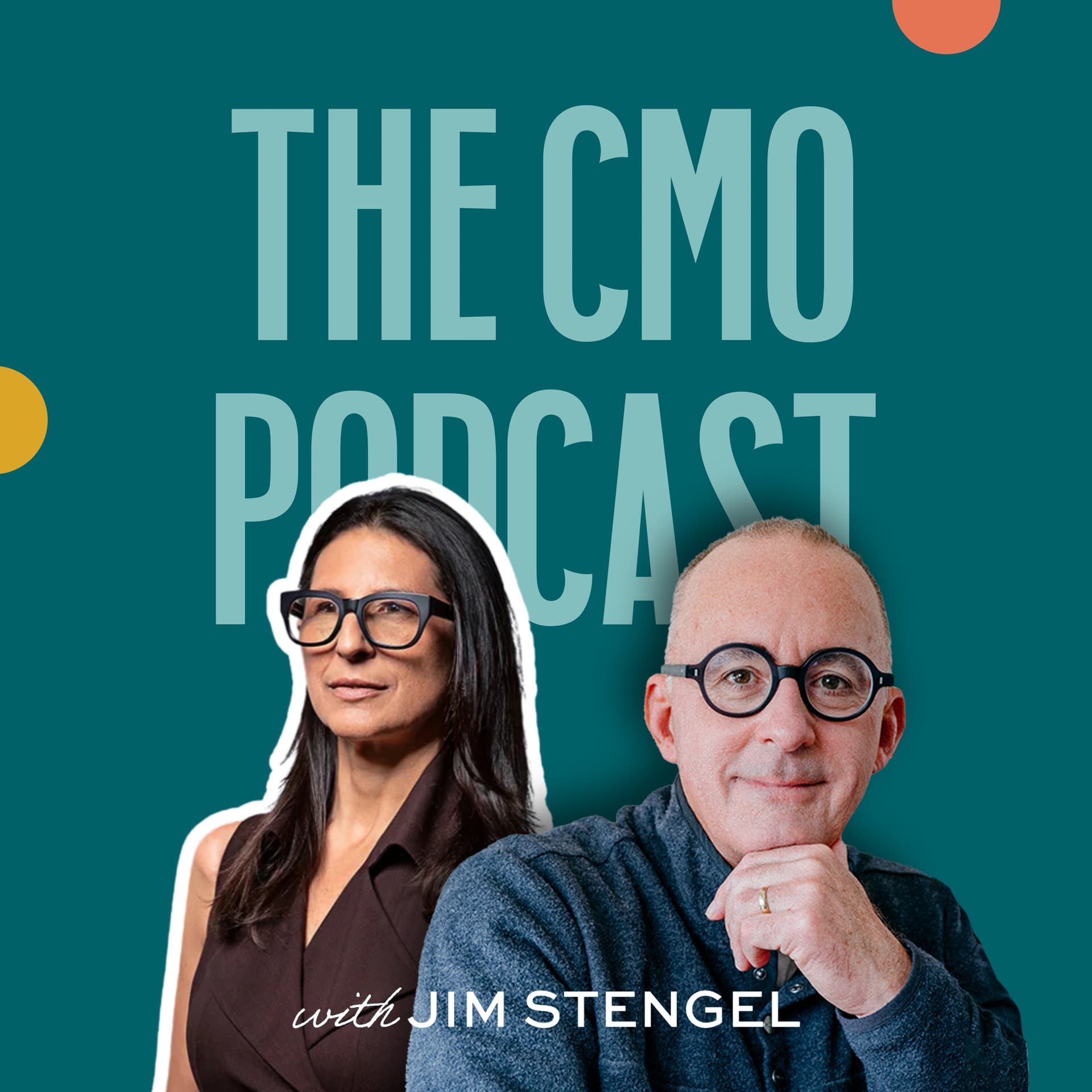
Jessica Padula (Nespresso USA) | Brewing Growth & Sustainability
Podcast Hosts
- Jim Stengel: Former CMO of Procter & Gamble, entrepreneur, and host of The CMO Podcast.
Guest
- Jessica Padula: Vice President of Marketing and Sustainability for Nespresso USA.
Key Highlights
- Overview of Nespresso:
- Founded in the 1980s with the vision of enabling quality coffee at home.
- Now an $8 billion global brand with over 13,000 employees across 81 countries.
- Significant presence in the direct-to-consumer market.
- Jessica Padula's Career Journey:
- Joined Nespresso nearly a decade ago, with experience from the agency side, notably with Procter & Gamble.
- Promoted to VP of Marketing two and a half years ago, and took on sustainability responsibilities about a year ago.
Major Themes Discussed
- Innovation and Brand Growth:
- Organic Growth: Nespresso's evolution from being an insignificant player in the U.S. to a major coffee brand.
- Innovation Strategy: Emphasis on creating a category rather than competing within existing ones, highlighting Nespresso's pioneering e-commerce model.
- Balancing Growth with Sustainability:
- Sustainability Goals: Commitment to sustainable coffee sourcing and becoming B Corp certified.
- Marketing and Sustainability Interconnection: Importance of communicating sustainability efforts effectively to drive consumer engagement.
- Consumer Trends and Market Adaptation:
- Iced Coffee Market: Transitioning Nespresso's branding to include iced coffee offerings.
- Understanding Consumer Preferences: Adapting to changing coffee consumption habits and leveraging data to inform product development.
Key Takeaways
- Ambition and Imagination: The creation of a luxury coffee brand from a commodity demonstrates the importance of innovative thinking and consumer insights.
- Continuous Learning: Jessica emphasizes the significance of ongoing learning and adaptation in her role; she has taken on sustainability and also engages with social media to stay connected with consumers.
- Creator Economy and Authenticity: Jessica's active social media presence serves as a model for transparency and relatability, especially for working mothers balancing career and personal life.
Noteworthy Quotes
- "The biggest factor in iced coffee's growth is changing consumer preferences, influenced significantly by coffee shops."
- "The pride in our sustainability efforts and product superiority is fundamental to Nespresso's culture."
Conclusion
The episode highlights the dynamic roles and responsibilities of CMOs like Jessica Padula, illustrating how innovative thinking, balancing sustainability with growth, and understanding consumer trends can drive brand success. The discussion serves as a reminder of the evolving landscape of marketing and the importance of authentic engagement.
Additional Information
- The episode is sponsored by Deloitte.
- For more insights, visit [Deloitte CMO Program](https://cmo.deloitte.com).
---
This summary captures the essence of the podcast episode, emphasizing the critical insights and themes discussed between Jim Stengel and Jessica Padula. The structured format provides clarity and accessibility for readers.
Written by AI. May contain mistakes. Listen to the episode to check what was said.
Transcript
Automatic transcript. May contain errors.0:00What if the smartest marketing play is not to move forward, but to zoom out? Deloitte believes the most powerful move a CMO can make is to look beyond the next step and see the broader perspective. That's what the Deloitte CMO program is for, a place to gain fresh perspective and connect with leaders who've stood where you stand. Together, Deloitte will help you see the bigger picture so your next move isn't just fast, but right. Learn more about the CMO program at cmo.deloitte.com. What's the first brand that made an impact on you as a young girl? I will say the brand Girl Scouts, which is kind of a funny one.
0:34I was a Girl Scout through most of my childhood. My mom was a stay-at-home mom, and so that was also the thing that she did with us. It was a brand, let's say, that was very impactful in my life. And it kind of taught you the entrepreneurial skills, right? You're going out, you're selling cookies. But what's fascinating to me, they're still around. They're still iconic. And they still mean something to young girls who are developing in the world. And I think that's still an impactful, important brand in my life growing up. Hi, I'm Jim Stengel. I've helped hundreds of major brands discover and activate their purpose.
1:06because when a brand's purpose is clear, compelling, and authentic, profit naturally follows. Each week, I welcome the CMOs, the chief marketing officers of your favorite brands, to speak to how their job is so much more than marketing. These leaders share their inspiration and challenges, along with how they try to build a full, healthy, and happy life in and out of the office. And it's that energy that reaches everyone they touch. And we're glad you're here to feel that energy and to learn from these remarkable leaders So here we go. My guest today in the CMO podcast is Jessica Padula, the VP of Marketing and Sustainability for Nespresso USA, which I often cite as one of my favorite brands.
1:47Nespresso is, of course, the brand of Swiss-based Nestle, the world's largest food and beverage company. Nespresso actually dates back to the 1980s, and it began with a simple thought. Everyone should be able to make the perfect cup of coffee at home, benchmarked against the top coffee houses in the world. Today, Nespresso is an$8 billion brand with 13 ,000 employees working in 81 countries, more than 800 boutiques in 500 plus cities, and a large and growing direct-to-consumer business, which is its bread and butter. My guest Jessica has been at Nespresso for about nine years. She was promoted to VP of Marketing about two and a half years ago and took on Head of Sustainability about a year ago.
2:26Jessica is a graduate of Boston University and started her career on the agency side of the table, working on several P &G brands, which we will touch upon. This is a conversation I've been waiting for. Here's my Nespresso coffee talk with Jessica Padula. Jessica, welcome to the CMO podcast. Now, full disclosure, I am a huge Nespresso fan. I don't know if you're aware of that. I'd love to hear that. I discovered it in Europe many, many years ago when you came into the US. I was an early adopter. I have virtual, I have the original. I use both. Oh, you're an expert. Oh, yeah. Yeah. And I probably spend with you$300 a month.
3:03I'm going to look you up. You're probably in our VIPs. Yeah. Big, big fan. I think it's an amazing product and I can't wait to talk to you. So thank you for joining us. Thank you for having me. This is one of those that's a real treat for me, for sure. What are your favorite rituals with Nespresso? Oh, it's such a good question. I have been with the company nine years now. So I have gotten into my very routinized. I have a Melozio on the Virtuo system every morning. Oh, my wife loves that. That's her favorite. It's a great go-to. It's a great starting point for those who are considering Nespresso.
3:34One of our biggest hurdles is getting people to their favorite coffee very quickly because we have a very big portfolio. And so I start with Melozio. That's my at-home coffee. When I'm going into the office most days, I will then have a second, usually a flavored coffee when I'm in the office. we just have lots of limited editions different things coming out i'm trying things and then in the afternoon we actually have our professional line of machines in the office and our you know sort of like highest end uh professional machine that's meant to sit at a restaurant as a show piece you press a button and you get the most beautiful cappuccino and that's my afternoon go-to so i have my full suite of beverages i think i'm one of those professional machines I'll build a new building for it.
4:17You just need a water hookup. We can get you set up. Now, what's George Clooney's favorite Nespresso ritual? Oh, man, he loves our brand. He loves our coffee. We're really, really lucky that he's one of those true brand ambassadors. First and foremost, he knows probably more about how we source our coffee, where we source our coffee, all the details of our product and our coffee in particular that, I mean, he probably drinks them all. I do know he recycles. I have spoken to him about his recycling efforts, which is fantastic. Love to hear that piece. I do, too. You make it easy. Yes, that's the goal.
4:52How about the weekend? He's kind of a newer ambassador. Yes, this has been such a fun project to really lead, I think, the ideation of a campaign out of the North American market, really bringing a global what will become a global campaign. Right. He's touring in the US. We just launched a coffee with him, which is really exciting because he's Canadian by birth, but he's Ethiopian by background. And so he grew up with his mother doing the very traditional Ethiopian coffee ritual. And for those who don't know, the birthplace of coffee is Ethiopia. That's where it was sort of discovered that you could brew this amazing beverage out of these coffee cherries and the beans.
5:28And so he's wanted to create his own coffee actually for quite a while. And it's named Samra Origins, which is named after his mother. So it's this beautiful story of coffee and artistry and music coming together. And then we were able to, which you know as a marketer is so hard to do perfectly time the launch with his US Canadian tour. And so to be able to be there live while he is having his moment, his resurgence, he's had a movie, he has this tour. He's the king of merch, I say. So our ability to go from coffee, we also have some merch surrounding the launch. It's just been one of those like peak marketing moments that you live for.
6:07So I can buy his coffee blend now. Yeah, yeah, it's available for sale now. Yeah, good. It's a good one. It's a really good base if you like a latte in the afternoon, especially. That would be my recommendation. So now we're having fun, but I want to get into something, you know, I think a little bit more serious and that's innovation. I want to start our conversation on the innovation piece. You know, I spent many years at P &G and you worked on P &G too, which we'll talk about in a bit. But there aren't many companies I can think of who over the past few decades have created an$8 billion brand, which you have done and the people who have preceded you have done.
6:42So I'd like to start with that. That's amazing. If you take tech aside, you take acquisitions aside, think how organically to build an$8 billion brand is heavy lifting. That would be, I think, the number two brand of P &G, by the way, after Pampers. So I'd like you to reflect on that a bit. I mean, you've been there nine years. The brand has been around since the 80s, I think, commercially anyway. So what has been the playbook, the learning from organically developing, nurturing and growing this amazing brand within the world's largest food and beverage company? Right. Which presents its own opportunities and challenges, as you can imagine.
7:19Yeah. So here's what I'll tell you. The brand is going to be celebrating 40 years. So you're right. The 80s next year. in the U.S. it's really only been about 12 or 13 years and about 10 if you really consider Virtuo which is the system which you know very well which is a full cup of coffee really created for the U.S. coffee drinker. I think there's a couple of pillars let's say of the Nespresso business and the brand and our leaders have held on to that over the decades and in really crafting the the or charting the course, let's say in the US. The first, I mean, you led with it, Jim, is innovation.
7:57First and foremost, we were creating a category where there was none. The beautiful story of Nespresso's creation lives on today, which is that it was a Nestle engineer traveling in Italy with his wife and having that amazing Italian espresso every day. And they came home and she said, I want that at home, figuring out a way for me to have that at home. So it's truly a brand born out of love, which is a beautiful way to start in terms of, you know, a brand ethos and an emotion that you hold on to, but innovating in a way where you're creating a category. And then even if you think about our boutiques, applying that same thinking to how we went to market, I had an interesting workshop a couple of years ago with Google, where they told us that we Nespresso had a website before Google was incorporated.
8:39Oh, wow. And that just blows your mind when you think about the timeline of that, which means we were doing things differently from day one, from that you never thought you could have this type of coffee at home. to how you go to market and sell it in an e-commerce fashion before that even was a thing. I say we are the OG D2C brand in many ways. We were D2C before it was even cool, before you knew what it was. And actually, we're now trying to catch up, I think, to some of the other D2C brands out there in many ways. But staying true to that innovation, that differentiation, that breaking the mold.
9:10And then at the end of the day, I know you're a very purpose-driven marketer. I remember that from my days when I was working on P &G. And I do really believe that the way we go to market, the way we source our coffee and think about our value chain, we became B Corp certified about three years ago. And that is a reflection, not of something we worked towards, but rather a reflection of the work we had done up until that point. And I think it's maybe those kind of three pillars, that innovation, sort of differentiation, breaking the category, and then staying true to how we go to market the right way, taking care of people along the way.
9:45That's led us to that growth in a lot of ways. I was interviewing the head of marketing at Apple in Cannes earlier this summer. He came into our class and he talked about how that company is patient. They're not first to market. Sometimes they're not second to market. They come out when they know they have something superior, distinctive, differentiated on brand. And as I read the history of Nespresso and prepping for this, there is a lot of patience in doing things the right way and staying true to your brand and not even launching to the US until what the brand was 30 years old or so. Exactly.
10:22Exactly. So can you talk a bit about that? What is it about your culture? I mean, you're a large publicly traded enterprise. Yeah. And you kind of had the patience to develop this brand and keep it special as it scaled, which is not easy. I think part of it is that, and you referenced it before, right? We're part of Nestle, but we are a standalone business unit. And the way we're structured is we really do. I mean, we have Nestle targets, like you said, we're part of the publicly traded organization, but we are really able to own the brand very, let's say independently. And it's not a knock on Nestle, but rather an ability to have retain that entrepreneurial spirit that we started with of an engineer creating something out of nothing that we've been able to keep through, even in the brand building.
11:08At the end of the day, we may be part of the world's largest food business. And yet we're still in our infancy in a way in terms of being the world's leading coffee brand, which we aspire to do. And on top of that, we have elements of CPG in our blood and how we go to market, but we're a luxury brand and we think of ourselves as such. And so I think that's where Apple is fascinated that you made that connection because what marketer doesn't want to be compared to Apple, right? For sure. But I think there's something to always holding yourself to that higher standard because you know that you need to justify your price premium, have that emotional connection to a consumer to drive that price premium and do it right for you to retain that leadership, right?
11:49Maybe there's this special spot and that's where you and I both have a hard time finding a parallel for Nespresso, which is how are you a luxury brand in a commodity category, Right. We sell a commodity and yet we put this premium on it. And that demands a different approach that we've been able to consistently do. Otherwise, we know we will just become one of a sea of many commodity coffee brands. Right.
12:40Deloitte will help you see the bigger picture together. Learn more about the CMO program at cmo.deloitte.com.
12:50Well, let's fast forward to today. We talked about your origin, but you've managed to pivot the brand to sort of capture your share of the iced coffee market. And I think you're sort of at the beginning of that and you're doing all sorts of interesting things. So I'd love to hear you tell that story because not a simple thing you did. and to bring management along in Switzerland to back this, because I'm sure there were conversations about, is this on brand? Is this a space we want to be in? And all of that. So could you tell a bit of that story? Because I love it because you're taking a brand that was built on a premium, premium coffee experience.
13:25The iced coffee market is different, but you're managing to do it in an espresso way and on brand. So I'd love to hear you talk about, take us back to that decision. How tough was it? How tough was it to bring management along? How do you feel about it? Does it help the brand or has it been neutral? Yeah, it's been many years. Someone also asked me, oh, was there a moment where you decided to focus on iced coffee? Was it one decision, one meeting that you worked up to? Absolutely not. It's sort of a constant dialogue. I like to joke and maybe the indicator of this is really that about five years ago, we rolled out new global brand standards.
14:04You know, hundreds of pages of documents, beautiful brand guidelines. I love the team that did it. There's not one page that has a cold coffee beverage in it. It wasn't even really the focus. We are absolutely what you described known as a short black cup of coffee. And I think part of the growth and innovation mindset and spirit that we were talking about before has had to lean into and almost accept the changing consumer preferences in coffee and the category changing. And the way you do that depends on the audience. So as any influencing. In some cases, you need the data. You need the hard, fast data.
14:39You can look at the data that Starbucks issues about how much of their cafe beverages are sold over ice nowadays. You can bring that in. We did that. You can appeal to logic and reason. You can appeal to emotion and have people attend focus groups and have consumers tell you why they love their Nespresso machine. There's all kinds of ways, and we've done them all over at least five years. I think the data is definitely compelling today in a way where we've had to hammer it a bit, but it's really compelling. I also think when you have an organization like Nestle or P &G, when you sit down in those four or five year moments of far out business planning, and you say, let's project where the coffee category is going to be, those are really the moments that we've been able to capture.
15:25It may feel small today. It may not be something that you're seeing in Europe today, but look at what it is doing in the US. And so let's project out where we need to be from a product offering standpoint, those are really the moments that we've been able to capture the cultural change inside the company. It hasn't been easy though, right? The people who craft our coffees are amazing experts at how to get the right notes and the right sourcing and all of this perfect. And yet you and I, well, maybe not you, you've said you don't like lattes, but I'll probably dump some creamer in it and some sugar and syrups and it won't taste like the thing that they perfected.
15:59And that's hard to accept. But at the end of the day, if you want to have a growing business, you have to kind of pivot and know that there will be a mix of consumers in the long run. I think, like you said, we're at the very early stages of really being known as a cold coffee brand. And it has taken, like I said, multiple years, lots of campaigns, lots of different trying things. And I think what's fascinating for us is it had to work within our machines, how you talk about our machines and how they can deliver you a better at home quality iced coffee than you might expect, which is true to our ethos from the very beginning.
16:30You didn't think you could have espresso at home, great tasting espresso. Now you didn't think you could have iced coffee at home. And the reason for that is really because people just think it's hard. When we talk to consumers, they think it's really hard to make an iced coffee at home, or when they do, that it just will be watered down. And so we had to innovate on the machine in a way where, I don't know if your machine does this, but if you click twice on your button, the button on the brew head will actually turn a turquoise blue color. Effectively, what it's doing is condensing your brew into a more concentrated brew.
17:01We say click twice for ice and you're brewing it over ice or mixing it with milk and you get your concentrated best possible flavor, but now knowing you're going to kind of add all these ingredients to it. So we've added our innovation and our coffee expertise to the machine. Then you have coffees that are specifically crafted in a way where, okay, I know this end consumer wants a flavored or an iced drink in the end. And so then you grind the beans a little bit differently or things like that. And then all the way to accessories, we have this amazing Tumblr that's clear and has a domed lid and it's gone viral on TikTok a few times completely organically because it just looks different.
17:37It's fun. It's cute. It's in our sort of brand ethos. And it's gone viral because I joke Gen Z wants to take pictures of their drinks, right? And so you got to be able to see the coffee versus maybe whatever other beverage you might be doing at home. And so we had to kind of chip away at innovation in all of our lines of business. And then I think where we're still working is how do you lead with that? How do you always communicate that story first and foremost without alienating the people who've been with you for 30 or 40 years? It's tricky. Just want their arpeggio. And they don't want to think, oh, Nespresso is now this like latte, you know, flavored coffee beverage.
18:15And so that balance of the two, I think is what's ultimately worked from a global brand strategy standpoint while we've innovated along the way. What's the consumer insight on why this has grown the way it has iced coffee? Well, the biggest factor is your coffee shops, right? Your first taste of coffee. Well, my first taste of coffee growing up was that Maxwell house at home. My parents were making drip coffee in a pot at home. The next generation, their first taste of coffee is fully out of home. And what out of home is known for cafes are known for the cold, the flavor, the lattes, the syrup, all of that stuff.
18:49And so your intro into coffee is almost the soft landing, so to speak, and then become kind of your reference point for coffee. That's one. And I joke about the photo piece of it, but I do think hot coffee was not very photogenic. It wasn't something that you were bragging about outside of maybe your Starbucks cup. And now with these, you know, plastic cups, they make a great photo op. That's a little bit more of my own hypothesis, but certainly the changing entry into the category combined with, I think, the social nature and the shareable nature of iced coffee is definitely driving change. Do you think it's been a net positive for your brand?
19:30I mean, we're in the early days, I know that, but do you think it's helped strengthen the brand among emerging consumers? Undoubtedly. We did some internal research and we're seeing that about 50 % of our virtual consumers are making cold coffee at home. So if we weren't trying to own that space, or offering them solutions in that space, we just fundamentally would lose them. There's a really interesting category insight that we have, which is that most American consumers have anywhere from three to five or more coffee solutions on their countertop at home. So we have two battles to win whenever we're thinking about acquiring a new customer.
20:06We have to get you to want to place our machine on your countertop when you probably already have several solutions. But on top of that, you have to choose Nespresso, the capsule that's going to cost you probably more than many of your other, if not all of your other solutions. And so if we're not offering you the right beverage or multiple options, right, that versatility and what you're going to drink as you described throughout the day, then we're going to lose you to all these other formats. And in a coffee business like ours, we're a coffee business. That's where we make our money. We need you to be consuming.
20:36And so there's an impact on brand, which I think leaning into cold has opened us up to new spaces and places and communities, absolutely. But from a purely business standpoint, I think we would not be seeing the growth that we are today without having really intentionally leaned into that space over five years. Now, you've been at Nespresso nine years, which you said about two and a half years as VP of marketing and head of sustainability. Your first role though was way back in 2016 as social media manager. So could you talk about how you've seen that shift over the nine years you've been there and how much time you currently spend on espresso social presence?
21:13Yes, I think this is such a fascinating part of my journey and my story because I started out on the advertising agency side and the way I got my foot in the door without going and getting an MBA because I wasn't sure what I was going to do. And I just hit the right time was to specialize in social media at a time when brand managers didn't know what it was, didn't care about it, didn't see the potential in it. And I just hit that sweet spot of I was young enough. I was interested in it. I was able to just be sort of unabashedly curious about it. And so when I joined Nespresso, yeah, I was running social and digital.
21:47I hired a digital AOR and social sat at this center point of gravity for all of our campaigns at the end of the day. So everybody wanted social all of a sudden to be a part of what they were working on. And so I was very quickly able to connect a lot of dots. And I think by nature, one of my skill sets is to see that 20 ,000 foot view. So even though I could go really deep into social, connecting it and how it was part of a bigger story was always kind of the sweet spot. And I think has contributed to my ability to then move through the ranks as we grew the business into a brand lead role and then the VP.
22:21Today, I have had to eat my humble pie like probably many people as your career grows. I still am personally as a consumer and a marketer very fascinated with the role of social in how brands are telling stories, how you can build brands. But do I spend as much time as I could or maybe should on our social? Definitely not. I had a moment, probably when I became the director of brand a few years ago, where I said, I need to hire now the experts, right? The people who know who's influencing who. The stuff I knew when I was first starting in that space. But I also think I can engage in a different level of conversation.
22:58And I'm very clear with my team that you bring me an idea that's going to be a good one that's grounded in social. and you're probably going to have a faster path to approval because I at least have a, I retain my appreciation for the role that it plays in a broader 360. I might challenge them a little bit more too, because I'm, I know more, but it's a fascinating space still to this day, 10 years later. What do you think is the biggest non-obvious shift in social since you started? Yeah. I mean, the obvious one is the creator economy, right? I think that's, and I wasn't at Cannes this year, but that's the number one thing.
23:30That's big, right? It's AI and creators. I do think that that's it's an obvious shift, but it's a really important one to think about. And we can talk more about that. I think the non-obvious one is probably people's almost rejection of social that it still plays such a big role in their lives. And yet there's this tension now where there wasn't before on. I shouldn't be using it as much. I should be bricking my phone and not not limiting all my usage. And so how do you thoughtfully and meaningfully participate in a space where people have guilt around spending space there. That's, I think, an interesting dialogue, which then requires the brand to have almost empathy for not just shoving things at people, but actually trying to make their time there more meaningful, more valuable.
Read the full transcript
24:15And that leads me to a space of community, which is really important for a coffee brand and a coffee brand like Nespresso is how do you galvanize community and let them talk to each other and not just be the push in social. I think that's the biggest thing maybe I took away from social is you're participating in something. You are not an advertiser pushing things if you're going to be successful there. So I think that's an interesting, more cultural dialogue that's happening around social media that I don't know that a lot of brands are truly yet thoughtful about then what does it mean for me and how this dovetails with my business, not even the advertising side apart, even just the organic piece.
24:47Why are we there? Why are we taking up people's time if they're struggling with their own usage of it and the positivity side of it? Yeah, no, for sure. And I think it actually crosses generations and very few things do. Yes. But that tension I think does for different reasons, but I think it does cross generations. Yeah. Yeah. My dad is a very active Facebook user, but for different reasons than I am on Instagram or TikTok. That's for sure. Yeah, for sure. I think one of the more interesting parts about your role is obviously you lead marketing, but you also lead sustainability. So, and I've heard you talk about that in other venues and you're really deep in it.
25:20You're really committed. It's a huge part of your job. But my question for you is, do you think that's unique to your business model or should more heads of marketing have sustainability under the remit? It's a question I grapple with because, yeah, anytime I speak in a sustainability landscape, I almost feel the need to caveat that I'm a marketer by trade. Partially because I've learned everything I know about sustainability on the job at Nespresso, which is a testament to how much you can learn in a business. but also because it still has that air of griminess that if you're truly a sustainability expert, how can you be, are you using that to your benefit?
25:58It's the greenwashing question, right? I believe that why it works so well for me and how I'm able to balance the two is because of our business model. I mentioned before we've been thoughtful about our value chain from day one, continue to be, and that is so paramount to who we are as a business and it will not go anywhere. I've seen leaders change. We've had global CEOs change. It doesn't go anywhere. It just is part of Nespresso's business model, which is fantastic. Even something as simple as our investment in the recycling program, which we touched on before, that's tens of millions of dollars.
26:28And yet, we don't get real any business benefit from it. But it's not going, and my CFO doesn't challenge me to reduce that budget. I mean, he doesn't want it to grow, but it's a part of it. So in some ways, I think being able to juggling the two is a factor of how our business works so well. And it doesn't feel like I'm forcing sustainability into marketing or the other way around. I also think I have the number one thing I've learned in that part of my role is I had a bit of imposter syndrome coming in with really smart sustainability experts who can talk your ear off about operations and logistics and CO2 emissions and things I know nothing about, let alone the coffee sourcing, which is mostly led our global sustainability team.
27:09What I have learned is that those sustainability practitioners, their biggest gap, as we think about education right now in that space, is communication. And you will not get anywhere, I really don't think, in changing the world and doing the right thing if you can't communicate the why and the how and make it easy for people, consumers and businesses alike. And so that's where your push on like, should more marketers oversee sustainability? I think it can be a slippery slope for sure. But I do think there's actually more value that marketers can bring to sustainability practitioners, never needing to go as deep as someone like that, but helping them again, look up, get, see the forest for the trees and simplify the story because that landscape is super complex.
27:51And unless you've got a PhD in environmental sciences, it's, it's hard to understand or feel like you can, I mean, right. The world is on fire, as we all say. And so it feels insurmountable at times, unless you understand all the detail. What I found is you don't have to understand all the detail. There's people who can do that. And I can help make the change by simplifying what they're trying to say and connect it into something that's emotionally compelling for a broader group of people to make more sustainable decisions in their lives. And that's where I do think there's opportunities. As long as a business is already committed to it, I think a marketer who was trying to get a business to commit to it from the beginning, it may be harder because you may be pushing something just to communicate.
28:31I'm actually saying we're already doing so much and we're not communicating this successfully. And if that's the case for your business, there is a really happy marriage between marketing and sustainability, I think.
29:01For a qualified consumer brand or agency leader, you can access free passes and travel vouchers. And for everyone else, you can take$500 off your ticket with code, all caps, ALMCMOPOD26. This is your chance to join a three-day gathering of the industry's brightest minds and boldest voices shaping the year ahead. You'll hear agenda-setting conversations, candid fireside chats, and dynamic breakouts on the topics that matter most. from AI and commerce media to measurement and addressability. This year's lineup concludes everyone from Kevin Bacon and Bozema St. John to creator Remy Bader, along with leaders from Forbes, Major League Soccer, General Motors, and Meta.
29:41Visit iab.com slash ALM to learn more and check out the link in the show notes to register and receive$500 off your ticket.
29:53You think it's made you a more effective head of marketing? Because obviously you had to go into a different space, you understand the brand from a different angle. So could you speak to that a bit? I think anytime you're learning a new skill or function and staying curious, you're going to be a more effective leader. I've also had to learn different types of people leadership because fundamentally a marketer shows up differently in the office and then in how they work than a sustainability practitioner, let's say, or an environmental science person. And I do, I think it has challenged me to think differently about marketing.
30:25And what do I mean by that. We have long said, oh, we're just not telling our sustainability stories. And we're too humble. We're too Swiss. We just don't tell our stories. What I realized was we needed to challenge our own misperceptions and the data at large, right? The data at large will swing every few years and tell you that young consumers are making decisions based on sustainability and their purchase decisions are driven by that. And so, oh, let's, let's put some claims into the marketing to Gen Z. And now most recently, it's sort of saying, actually, they're really kind of sick of it.
30:55And they're very hesitant of greenwashing and they don't make purchase decisions based on green. So you could end up swinging back and forth. And as a marketer, I've had to say, wait, let's talk about the Nespresso consumer, not this generalized data at large. Let's go talk to them. And let's think about how you might tell the story differently, which then I think as a marketer, anytime you're challenging yourself to use insight to tell a story differently, you're, you're getting to be a better marketer. And we looked at a campaign we did a few years ago around our recycling efforts, trying to compel people to join us in our recycling efforts.
31:25And we tweaked it slightly to tell a slightly different story that was a little more upper funnel. And we just kind of threw it into the mix of a consumer test we were doing, not thinking it was going to do well because, oh, we've tried this before. And surprisingly, it tested really well above many of our big global campaigns. And so we're progressing an idea that we might not otherwise have done if you didn't have this constant challenge of what can we do, we'd be doing better in that marketing and sustainability intersection. How has your role shifted the most in the last two and a half years?
31:57I mean, this role of head of sustainability came about a year into my remand as VP of marketing. So that's been significant. I would say there's also a comfort level, maybe as a marketer or a leader, when you get that first year under your belt where you say, okay, I didn't make all the mistakes I'm going to make, but I at least I focused on maybe the wrong things or I was leaning on my strengths, let's say the I came up in brand and I knew how to do that. And I said, Okay, well, I can help onboard my backfill. And I can really nail that and the other people they've got it under control. And they're the experts and I don't need to.
32:32And I would say over the second year, year and a half, I've sort of inverted that. And maybe that's just a lesson that you learn in leadership in general. But I've actually now said, almost stay curious and stay focused on the things you don't know as well, both to grow and develop them, but to offer that cross-pollination, maybe I'm a brand builder, but now I need to be really deeply invested in CRM, or I've never specialized in B2B professional marketing, but that's an area where we need growth. And so that's more of a me part of the journey than it is a change in my role necessarily, but that's been a really interesting reflection on how I've evolved and how marketing may also be evolving too.
33:06I think there's some element of that where big brand campaigns still have a role to play. But this finer point on product innovation, insight driven, and the D to C type communication is where I've then had to lean both because it was not my strength, but because that's kind of where the industry is moving. What issue have you had to struggle the most with over the last two, two and a half years? Oh, prioritization is always one. I think a company that's growing the way Nespresso is growing is the opportunities for us as a brand are endless. And I say that as humbly as possible. But you name a sport, we did one sponsorship of a sports thing, and you name the type of sport and the team, and they've probably reached out to us.
33:47I don't want to be a sports brand. I'm probably not going to sponsor a sports team. But saying no to good opportunities, we dabble in entertainment, obviously, with George Clooney and Hollywood space, the amount of movies that I get pitched to me that we want to be a part of like, yes, I want our brand to be culturally relevant. But the idea of prioritizing against a singular brand strategy. I always joke that marketers get bored of stories and the things we're saying before anybody even knows we said them. We're bored of them because we've been working on it for 18 months, right? The weekend campaign I mentioned, we've been working on that for 18 months, but holding firm, not just a prioritization at large, but to what are the singular viewer messages that are really going to move the needle and keep hitting them instead of reacting to all the stuff that's coming at you as opportunities that feel like shiny objects and they are exciting, but aren't focused on, or you can't make them focus on where you need to.
34:35That's been a really big continuous struggle, I think for everybody on the team, myself included. It's a struggle for everyone, I think. And we hear it a lot on this show, but especially when you have a brand like yours, which is you say it's growing, it has a spotlight on it. It can go to so many places. It's a very large category, lots of lots of headroom, you know? So yeah, it's tough. Yeah. You really just, you have to have that guiding brand document. And that's, That's maybe why I love that I started as a brand builder, first and foremost, because if everything can point to that same direction.
35:05And for us right now, it's something as simple as like owning mornings, right? Like it can be that kind of simple where, yes, of course, we're a coffee brand. We stand for mornings and we stand for other things. It's not to the detriment of that afternoon latte or your cappuccino, but we haven't truly owned morning. And so how do we kind of filter out all of the noise and say, OK, if we want to play in a sports arena, because it does it's culturally relevant. And it's where our consumers are spending their time from an immediate standpoint. How do you only show up in a way with sports where it's really focused on morning?
35:33So this year we said, okay, we're going to focus on running and we're going to focus on golf. Those are two sports that are natural to our target. They happen to primarily happen in the morning. They're really connected to that strategy. So you use a cultural moment in a way that's meaningful to your brand strategy. And it sounds simple now that I say it, right? When you play it back, but it took us a little while to get there of saying, we're going to be a morning coffee brand? And what does that actually look like? Yeah, sure. Now, one thing I'm super impressed with in, as I hear you speak, you know, before the show, when I listened to you and your company, frankly, since the beginning of this brand is you have this incredible focus on superiority, taste of superiority, product and experience superiority, kind of very PNG in a way.
36:15And I guess sort of Nestle, but you're relentless on it. You deliver it. You're not complacent. So I'd like you to talk a bit about the culture and how you've developed that over time. to just never get bored with that. Well, thank you. I think there's a pride that's a really big part of our culture. I always say that the people who are successful at Nespresso and stay a very long time are the people who are just on the cusp of being frustrated by the potential of this business, but still motivated by what potential there is. And that then requires you to hold firm on certain principles, which is this pride in our sustainability efforts and it's pride in our superiority.
36:55And it's an amazing thing to work for a business because I work for many P &G brands, which you can say they were superior and we can do the studies and do the taste challenge like Pepsi type of thing. But there is no doubt you just brew us versus any competitor, like you said, whether it's drip coffee or another single serve brand. I won't name names, but it looks different. It tastes different. You know it was sourced differently. and there's a pride I think that comes with that when you have experienced it yourself as much as you say you know we're drinking the kool-aid we truly are and I think that that is what makes people successful at Nespresso is when they really embrace the things about our brand and our business that are truly differentiators and you feel this pride in them that makes you want to uphold them no matter what right like we could go to market with a faster innovation but it won't be at the Nespresso standard.
37:48And there's just, there's really no compromise in that because I do think it comes from this pride, this you buy into Nespresso. It plays itself out in our tenure, right? I've been there nine years. My boss has been at Nestle his entire career, but at Nespresso for a very significant chunk of that. And people don't tend to want to leave because it's hard to find another equivalent where you would just have so much pride in the product and, and how we do business. We're not perfect. Don't get me wrong. Like there are certain things about a lot of things in our company, but it's really a beautiful thing to work for.
38:23Yes, a challenger brand, but one that we know is, is sort of fundamentally a different experience. I won't even say better, but a different way of drinking coffee. Pride's a strong word. So let's stay with that. You're two and a half years into the role. What are you most proud of in your time so far as head of marketing and sustainability? You know, as trite as it might be, this campaign that we've talked about with The Weeknd is significant. There's a lot of things. There's team leadership, my evolution as a leader, we've talked a little bit about. There's a lot of personal pride. But when I think about a tangible thing that we brought to market, and the reason is not as obvious as people might think.
38:59They might think it's, oh, you have a new celebrity campaign. You have this showy, you know, world tour sponsorship. It's really not that. It's that I have worked at this company at a time when the US market was fairly insignificant. Of that multi-billion dollar brand, we were for 500 million when I started. We were a part of it, but we weren't. We were not driving innovation and product and campaigns. And this campaign started with an idea that was tossed over the fence to me and my CEO. And we sort of looked at each other and said, this is a really good idea. And it could have fallen apart many, many times as every campaign could.
39:38Contracts, global priorities, all kinds of things, right? People not believing it because it's so different for Nespresso. And I really do feel that it is almost a pinnacle moment of a lot of baby steps that I'm proud of. It's the representation of the US market and North America more broadly, pushing forward a brand that could have easily stayed stuck where it was, taking us to a new space, trying something new. Quite honestly, it's a big risk, right? And as a marketer, if you're not taking risks, like what are you doing? But you have so much care for this brand. I have so much care and pride for this brand that then this feels like putting my touch and a little bit of legacy, right?
40:19On what Nespresso might be in the next 30 or 40 years, good or bad. Yeah. I love that story. I mean, that's a very thoughtful and meaningful thing you just said. It's symbolic of what you're doing with the brand. That's exactly it. It's a lot of little cuts towards this bigger thing, but that is, it's this moment where now it's a global campaign and it's the full organization is behind it. We just came off of in June, our international sort of meeting that we have every year. And it was a big focus and it's a big moment for the business. Yes, for obvious reasons. But I think there's this underlying subtext for me as a marketer that I'm like, we're helping drive forward, taking meaningful action in a brand that is such a precious jewel.
41:00Let's talk about your career for a minute before going to the creative brief. You started on the agency side and we had Melody Lee on this show this summer at Mercedes-Benz and she started on the agency side and was so bullish about how she developed. It's a great way to start a career, highly recommended for others. So I just want to ask you, do you feel that way as well? I definitely do. I definitely see, especially if you want to be more in the brand and communication space, I'll tell you a very quick anecdote. I had a mentor at my, in my days at gray. And he said to me, he was, I think he was on the creative side.
41:32And he said to me, don't ever become a client. The worst clients are people who were on the agency side because they know what they can get out of you. They've done it before. Right. And I was sort of taken aback because I kind of always knew I wanted to go brand side and thank goodness I didn't listen to him too heavily. He was a great mentor. Don't get me wrong. But I actually have learned that I very much disagree. I have a very strong point of view on how we work with agencies, not treating them as vendors, really treating them as partners, not being too precious about we're the client and you're the agency.
42:04I really think of it much more strongly as a partnership. That's the only way you get good work done. I am not just because I have client in my title doesn't mean like I can write a perfect brief and you're going to understand it. It's really that two way street. In addition to the fact that you learn all the brass tacks, you learn how to work with different people, how to be. I was an account person. So I had to learn how to work with creatives, how to give creative feedback, all the stuff that you'll need to know how to do as a marketer. And it's almost exacerbated because you're on the client side.
42:31I agree. It's a great, great training ground. And anyone in any industry could benefit from working in client services because you're operating on someone else's timeline. It's hard work. It is grueling. I spent five years. That was plenty. I don't know that I would do more than that, but I feel the same way about it that I'm not saying I make a better client because I worked on the agency side. But I do think you get that foundation. You get it very fast because it's so intense. It's fast. And it at least gives you the perspective of who you're eventually going to work with when you become a brand marketer.
43:05What's your lasting lesson from working with P &G? You did that for most of your time at Gray. You know what it was? I loved that there were these frameworks through which you created billion dollar brands at P &G. That there was a method to the madness. I'm a very, very type A, very process oriented person. Nespresso was not that when I joined. And so the fact that I've now had kind of these different experiences, we have more frameworks and whatnot now, but we were very entrepreneurial. But I think what really stuck with me was in addition to client services, because we were very all about client service.
43:38And I was that account executive that was racing to FedEx before they closed at 9pm to ship boards to present to clients back in the day. I learned the value of hard work as a person. But in terms of marketing, I think it's fascinating that you can create structures and frameworks that can guide all types of brands to input into them and output lots of different sort of campaigns and activations. I found that part of it very, very fascinating. That it wasn't a one-size-fits-all approach, but it was these sort of templates. Freedom in a framework, right? We say it a lot, but it's true. Yes. And coming out of college and into that environment, I think it worked, too, because you feel like, oh, I'm actually putting this stuff into practice.
44:18this. And I, I still reference some of those purpose building days that, that, uh, we used to have. What's your most meaningful or favorite campaign you worked on at gray with PNG? Oh, that's a good one. You know what? I was there when cover girl was really reinventing itself with a lot of the new cover girls. Queen Latifah had already been brought in. So I think we were, we were already tipping into that sort of newer space, but then we brought in Ellen DeGeneres And we were really, I think at the time, CoverGirl was very much pushing the needle and trying new things and trying to stand for something.
44:53I worked on the business for long enough where it still felt like, okay, just every six months you're launching a suite of products and just churning it and putting the masthead. But at least there was this underlying desire, which I think has continued since of let's stand for a generation. Let's be participating in who our user actually is, which was very consumer first. And then tactically, how I got into social media is I did P &G's first ever, this is my claim to fame on my resume, first ever Twitter contest with Downey. Oh, wow. P &G had never done a Twitter contest. We did it live during the Super Bowl.
45:30And it was hashtag touch Downey at the time. Very clever. And that maybe was like my entree into social media and got me where I am. So thank you for that. Well done. Back in the day. Well, you helped P &G too, right? Yeah. Oh, I tried something new. It's a threshold, right? It's a milestone. Yeah. Yeah, that was fun.
45:56Hi, everybody. I'm Andrea Sullivan, the CEO of Vive. And we have produced the CMO podcast with Jim Stengel for many years. And I'm sitting in his seat right now. It's so exciting. I wanted to tell you a little bit about one of our programs. It's called Vive by Vayner. It's a 12-month program that's designed for C-suiters and founders. And we want to help people to grow their businesses, but also to grow themselves. And so we bring in people from Shark Tank to talk to our founders, but we also focus on wellness. We want to make sure that people are leaning into becoming their best selves, their best and happiest selves.
46:36So if you are someone that wants to learn how to grow your business and grow yourself, check us out at Vive.co. That's V-Y-V-E dot co. We'd love to talk to you.
46:54Let's segue into the creative brief. And the first question has to be, you've had a significant side hustle for eight years. You had, I think, a party and invitation design business and you had a store on Etsy. And you just quit that a couple of years ago. So question is, there is a side of you that that's showing through. Why did you do it? What is it about you that made that a passion? And why just stop? I think I am a repressed creative at the end of the day as a marketer, right? I joke having been in the advertising agency space, you kind of get told you are not a creative because you don't have that title.
47:29But I thought about going to photography school when I was very young. And I've always had that very creative side, but and maybe a little too controlling and type A to not have a very formulaic career and all of that. So, well, really practically why I started it was I was designing my own DIYing my own wedding. And so I was teaching myself Photoshop on the side and then said, this is not only fun, but I think I'm kind of good at it and I can make some money off it. So it was creatively fulfilling, but it was also an expression, I think, of learning a new skill set that I wasn't learning on the job or maybe I didn't have to learn on the job.
48:02And the only reason I sunsetted it was because I turned it more into what I do on social media, which is more storytelling about me and my career and my my work. And maybe because it wasn't new and fresh. Right. I haven't fully reflected on this piece, but Jim, you're bringing up a good point, which is it was exciting to me when it was the new skill set I was learning. And now that I have that skillset, now I've learned Canva and I've learned, I just kind of keep that hunger of being a student and it then expresses itself in a lot of different ways, whether it was an Etsy shop or an Instagram account or whatever it is, that's been consistent for me.
48:38What are you doing now to scratch that itch or to develop something on the creative side to keep you learning and interested? I, well, I did just learn Canva. I set my goal last year to learn Canva. So to pivot from Photoshop into Canva, which I think is just easier. Anyways, it's been fun to just learn a new thing. And I use it as a way to help stay fresh in social media. So I am by no means an influencer, but I have a community, a small community on Instagram where I create reels about behind the scenes in my life, what I'm doing, what it's like to be a working mom. And it's not about Nespresso.
49:12though. It's about sort of the thing I'm doing in my life that I didn't think or see was possible when I was coming up as a 20 something year old in marketing. I didn't know I wanted to be a CMO. I didn't think I wanted to because I'd never really seen someone kind of do what I'm doing today. So again, I do not have it all figured out. But creating reels, learning Canva, using social media in a way where I stay relevant, but I'm not the expert anymore, as we said on social, that's really been, I think, what keeps me going. You got to have something for yourself, right? Outside of your day job.
49:43Yeah. What's been the response to that? Oh, the only reason I do it is because of the response, because I get messages from women primarily who say, I'm less lonely being a corporate working mom, corporate executive and working mom. I didn't know it was possible. Your career is my dream career. I didn't know you could do that. And sure, there's a bit of that feels good, but it's this idea that I'm kind of being the mentor that I never had. And you can do it at scale with social media, right? I don't have to do it one-on-one. That's very time consuming. I would love to, but I've not set up for that in my daily life.
50:16The only reason I keep at it and keep creating content is because of that reception. It's really shocking and without getting into too much of the societal expectations, right? That moms are still struggling with and they're working and dads get it too on a different way. They're expected to participate as much at home as moms, et cetera, and they're struggling. But for me, just speaking authentically about what I'm going through and how I deal with it and little life hacks that I've learned along the way. It's incredible how much people are hungry for that positive. We were saying before about empathy on social media and making people's time valuable spent there.
50:50That's my filter. And if I get feedback that it's valuable, I'll keep going. Who or what's inspiring you these days? All the moms that I connect with on social media, to be totally honest with you. I have through doing what I was just describing, I have connected with the CCO of Bugaboo US, and she is an amazing working mom and all these things. These people who are charting a different path to fractional CMOs who are coming up with new ways of doing things, new structures where you kind of can have more control. I love my corporate job, but I'm fascinated by entrepreneurs in general. So that space of just a community that's positive and building and trying to help one another figure out what this new world is keeps me really, really inspired as a human.
51:38What's the first brand that made an impact on you as a young girl? I will say the brand Girl Scouts, which is kind of a funny one. I was a Girl Scout through most of my childhood. My mom was a stay-at-home mom. And so that was also the thing that she did with us and in many ways was her job. It was a brand, let's say, that was very impactful in my life. And it kind of taught you the entrepreneurial skills, right? You're going out, you're selling cookies. But what's fascinating to me, in addition to the fact that I did an internship with Girl Scouts in PR and events, which is kind of funny now, full circle.
52:07Yeah. But I think what's fascinating to me is how Girl Scouts, I'm not saying they're the most culturally relevant brand by any means, but they're still around. They're still iconic. Everyone knows them. There's a time of year where they are the conversation and they still mean something to young girls who are developing in the world. And I think that it meant something to me. It was a badge that I wore literally and figuratively as a kid. Could still be. I don't have girls. I have boys. So we'll see if I ever get into Boy Scouts. But it's kind of a fascinating study in like iconicity of a brand over time without cultural relevance.
52:38Still an impactful, important brand in my life growing up. What's the best part of working for a Swiss company? Trips to Switzerland. I maybe say that because I'm leaving tomorrow for a trip. So it's very top of mind. No, you know what it is? And maybe this would be true of most international businesses, but I have learned a lot about other cultures. Sits at this intersection of so many cultures physically and sort of theoretically. And I have learned to work with a lot of different accents, a lot of different cultures, a lot of different mindsets. I think because of that international global Swiss in particular nature, which makes me just better.
53:14You understand humans more, you're a better marketer. I've been to your office in Vevey when I was at P &G in Geneva. Oh, it's beautiful. It is beautiful. I mean, you're right on the lake. You have the mountains. It's hard to beat. The view is pretty inspiring. I don't mind going there once or twice a year. That's true. That's for sure. Who has been the most influential mentor in your career? And what is it about them that you admire, that person? I would say there were three women when I worked at Gray who were sort of my boss, my boss's boss and the head of the team. And I am very lucky that I started my career in a way where I saw female leaders.
53:46Very, very lucky. And they were all different. and they've all gone on to do a variety of different things. And they were impactful, I think, because they pushed me out of my comfort zone. One of my favorite stories is my direct boss, who's one of the three of them. I used to put myself on mute when I was on calls with our clients in Cincinnati. If I had an idea or I wanted to interject something, and I felt very junior, it was not my place. And I so distinctly remember them saying, take yourself off mute and tell them, tell the client, speak up, have a voice. And I think that's a very finite example of how they showed up.
54:23They also supported each other, right? I was this very junior, fresh out of college kid, basically. But the three of them, I could see the camaraderie and the support, the marketing support, the strategic support. And they never made me feel excluded from that. They shared their learnings. They were open about how they worked together. So it was team. It was female empowerment. And I actually went back a year ago after I had been in the role in this role for about a year. And I took them out to dinner and I thanked them. And I just said, we haven't stayed in touch my entire career, but you all did something really powerful, which I don't even think I realized at the time or took for granted.
55:01And now I look back and it's, it's, it was so transformational and, you know, they may not be mentoring me actively day in, day out or year over year, but they left an indelible impression. Early bosses are critical. We probably don't talk about that enough in this show. They are critical. In fact, we did a study at P &G years ago. One of the biggest drivers of people who succeeded at P &G was the quality of their first boss. Really? Wow. Says everything. That's amazing. It took me until 20 years into my career to really go back and say they were the ones. And it was this combination of how they worked together, how they demonstrated leadership and coached me and developed me.
55:38That was so special. I hope to be that, right? That's maybe the biggest pay it forward, right? Is then - Why you're doing what you're doing. Exactly. Who's been the most inspiring person in your life? I'll say my dad, and this is an interesting one. My dad worked at NASA for almost 40 years. My dad got offered many times to go not be a scientist anymore, be sort of in corporate NASA, let's say, right? Like in Washington, DC and be in kind of headquarters. And I remember the conversations around the kitchen table at night where the takeaway was always, I want to be a scientist. I want to be in the lab doing the work that I love.
56:15And that continues to resonate with me, especially as I get to CMO level and start thinking, well, in a PNG like company, you're, do you want to go be a GM? Do you want to, you know, where do you want to go? And I constantly go back to what is the thing that lights you up? Don't you don't have to follow that career ladder because up until now, I've followed the ladder and I go back a lot, especially in this stage of my life and think about what my dad went through. And he retired happily from NASA after however many years, probably not tapped out in terms of his, let's say, potential, if you put it that way.
56:52But he he still does. He knew himself and he still loves to do the work, even though he's retired. He still consults doing that work. And I, you aspire to that, right. To be able to retire happily, to have worked a long time doing something you love and to still want to do it and not just feel like you took the path. Everybody kind of was pushing you down, which, which I lived that life for a while. So. Well, congratulations on everything, Jessica. And thanks for sharing that. And thank you for this gift of this show. Oh, it's a gift to me too. Yeah. As I said, up front, I was so looking forward to it and I loved every minute of it.
57:25So thank you. It's fun to talk about a brand we both love and share. And hey, a full circle moment for me because you were the CMO when I was very junior in my career. So it's fascinating and very gratifying to be here with you. Thank you. That was my conversation with Jessica Padula. Three takeaways from this one for your business brand and life. The first one is this was a great lesson in the power of ambition and imagination. I mean, here's a company, Nestle, who years ago started to create a luxury brand out of a commodity category, and they did it with a simple consumer insight. What if you can make the best cup of coffee in the world at home?
57:59And they had the ambition and the creativity and the patience and the imagination to carry it off. It's a beautiful lesson in the power of marketing and the power of ambition and imagination. Second takeaway, Jessica is a continuous learner, and she talked about the power of that and helping her be an effective leader and an effective boss. She took on sustainability a year ago, and she's learned all sorts of new things about different types of people, different ways to lead. And she is now learning about Canva because she wants to always have something that's developing her, expanding her mind, and helping her be a more creative and effective leader and person.
58:37And the third takeaway, we talked about the creator economy on this episode and how important it is and how it's been the biggest shift in social over the last 10 years. Jessica doesn't just talk about it. She is part of it. She's a role model for many women. And she has a social presence where she's talking about her life, her choices, her decisions, her tensions. It's about her job, yes, but it's more about her as a working mom in a high-powered company, in a high-powered job, and some insights and humanity behind that story. So hats off to Jessica for doing that. We all should do a bit more of that ourselves.
59:15That's it for this week's episode of the CMO Podcast. As always, I would be grateful if you shared our show with your friends, along with subscribing and leaving a review on Apple Podcasts, Spotify, or wherever you listen. The CMO Podcast is a Vive original production. The views and opinions expressed by podcast speakers and guests are solely their own and do not reflect the opinions of our sponsors or its personnel, nor do our sponsors advocate or endorse any individuals or entities featured on the episodes.
From the publisher
This week, The CMO Podcast is serving up a rich and flavorful conversation as Jim sits down with Jessica Padula, Vice President of Marketing and Sustainability for Nespresso USA. Nespresso, part of Swiss-based Nestlé, started in the 1980s with one bold idea: that anyone should be able to brew a café-quality coffee at home. Fast forward to today, and that idea has become an $8 billion global brand, with more than 13,000 employees across 81 countries, over 800 boutiques in 500+ cities, and a booming direct-to-consumer business.
Jessica has been brewing her own journey at Nespresso for nearly a decade. For the past two and a half years, she’s been leading both marketing and sustainability—two roles that blend perfectly like coffee and crema. A Boston University grad, Jessica first cut her teeth on the agency side, working with powerhouse Procter & Gamble brands, before bringing her passion for brand building and purpose to Nespresso.
In this lively conversation, Jim and Jessica dive into her career journey, the art of balancing growth with sustainability, and how Nespresso continues to innovate without losing sight of its values. Grab your favorite cup and tune in—it’s a coffee talk you won’t want to miss.
---
This week's episode is brought to you by Deloitte.
See Privacy Policy at https://art19.com/privacy and California Privacy Notice at https://art19.com/privacy#do-not-sell-my-info.