In short
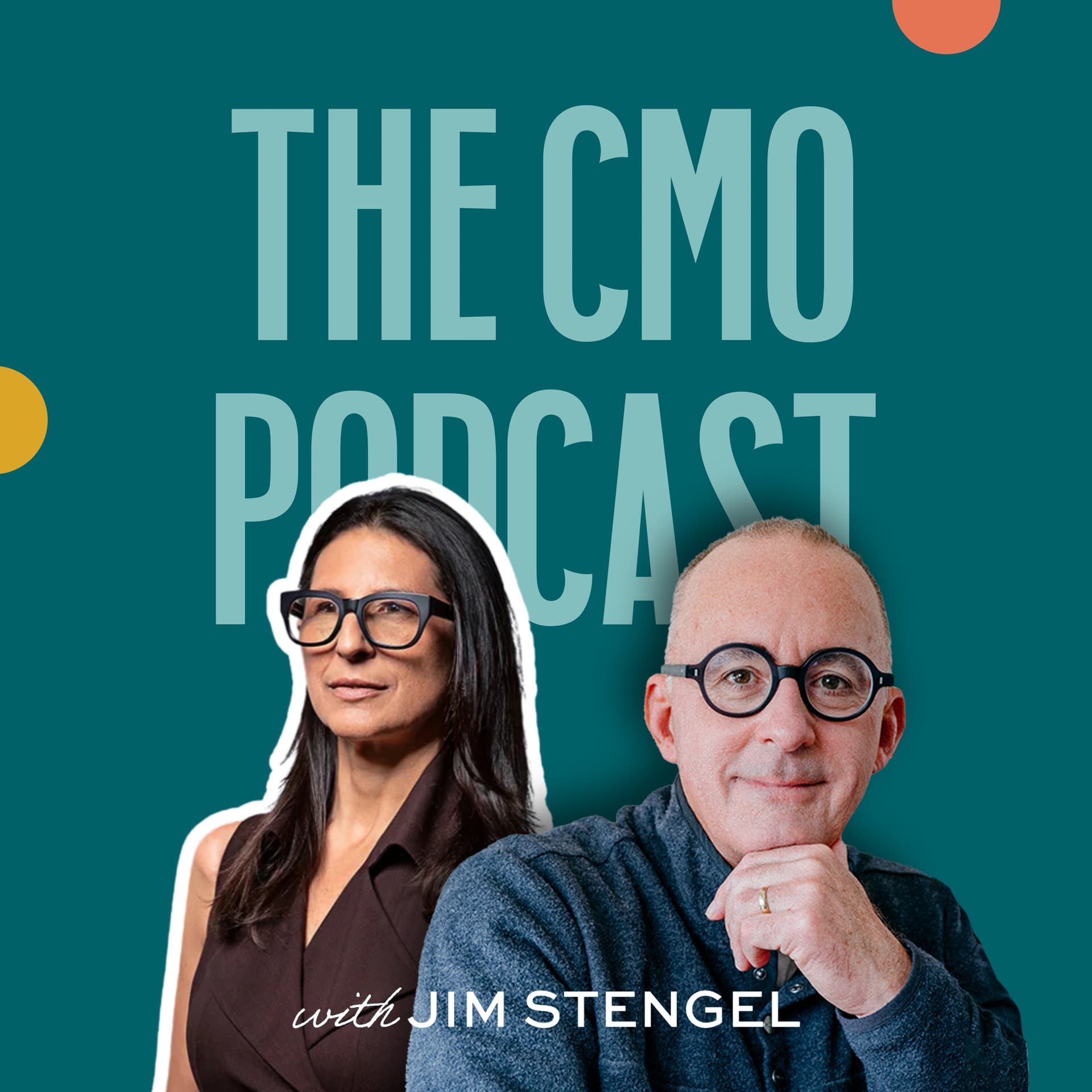
The CMO Podcast - Episode Summary: Jonnie Cahill (PepsiCo) | How to Onboard with Intention
Podcast Overview
- Host: Jim Stengel
- Guest: Jonnie Cahill, SVP and Chief Marketing Officer of International Foods at PepsiCo
- Date of Episode: (Exact date not mentioned in the transcript, but Jonnie was appointed in April 2025)
- Setting: Interview conducted at Cannes Lions Festival of Creativity
Episode Description In this episode, Jonnie Cahill, a seasoned marketing professional with over 12 years of experience at Heineken and previous roles at Telefónica and Diageo, shares insights on his transition to PepsiCo. He discusses the importance of intentional onboarding, leadership lessons, and the challenges of building global brands.
Key Themes and Insights
The Importance of Onboarding
- Conscious Onboarding: Jonnie emphasizes the need for a systematic approach to onboarding in large organizations, suggesting that it should be a deliberate process rather than a hurried one.
- Listening Tour: He underscores the importance of listening to team members and understanding the existing culture before implementing changes.
Leadership and Brand Building
- Reflection and Learning: Jonnie believes in the value of reflection during his transition. He advises new leaders to listen more than they speak and to understand the legacy of their predecessors.
- Consumer-Centric Approach: He highlights the need for brands to connect deeply with consumers and leverages insights to drive creativity and innovation.
Insights from Cannes and Industry Trends
- Creativity as a Driver: Jonnie discusses the balance between creativity and systematic processes in brand management, suggesting that creativity is key to unlocking growth.
- Common Sense in Marketing: He talks about the importance of using common sense to simplify and enhance marketing strategies.
Personal Philosophy
- Keeping Promises: Jonnie reflects on a personal commitment to his daughter regarding stability during his career transitions, illustrating the significance of personal values in professional decisions.
- Cultural Experiences: He shares how his experiences in diverse markets like Russia and Dublin have shaped his approach to marketing and brand building.
Key Takeaways
- Be a Conscious Onboarder:
- Engage with the team and understand the existing culture before making changes.
- Use important industry events as opportunities to learn and connect.
- Leverage Common Sense:
- Avoid overcomplicating ideas and strategies by relying on common sense and established truths.
- Focus on the foundational elements that resonate with consumers.
- Maintain Personal Values:
- Uphold personal commitments and values in professional settings.
- Recognize the balance between work and personal life, ensuring that one does not overshadow the other.
Conclusion Jonnie Cahill's insights provide a roadmap for new leaders navigating the complexities of global brand management. His emphasis on intentional onboarding, consumer connection, and the value of common sense will resonate with CMOs aiming to make a significant impact in their organizations.
---
For more insights and to listen to the episode, visit [The CMO Podcast](https://strawberryfrog.com/jim).
Written by AI. May contain mistakes. Listen to the episode to check what was said.
Transcript
Automatic transcript. May contain errors.0:00What if the smartest marketing play is not to move forward, but to zoom out? Deloitte believes the most powerful move a CMO can make is to look beyond the next step and see the broader perspective. That's what the Deloitte CMO program is for, a place to gain fresh perspective and connect with leaders who've stood where you stand. Together, Deloitte will help you see the bigger picture so your next move isn't just fast, but right. Learn more about the CMO program at cmo.deloitte.com. Hi, it's Jim. Joining me is Matt Spiegel, EVP of True Audience Growth Strategy at TransUnion. Matt, we talk a lot on this show about building brands that people love, but that starts with understanding them, right?
0:39Jim, absolutely. Every customer ultimately has a story, but most brands are only going to see part of it. At TransUnion, we really focus on helping marketers connect those dots across devices, across channels, across platforms, with the goal of helping marketers see a full person behind the data. That clarity is gold. That is special. So how do you do it? Ultimately, we put together the pieces of information that help you predict behavior, help you personalize messages, prove the impact of every marketing decision at the end of the day. And our marketing solution suite gives brands the visibility and confidence to invest smarter and ultimately grow faster.
1:12So if you want to turn data into understanding and understanding into growth, visit transunion.com slash clarity. Hey, it's Jim. I'm here with Matt Spiegel, EVP of True Audience Growth Strategy at TransUnion. That's quite a job title, Matt. Yes. Welcome. Thank you. So tell me about your company and why it matters for our audience CMOs. Well, listen, Jim, the challenge of the day is that there's so much information about consumers out there and the challenge is most companies don't have all that information. You have some purchase history, you maybe have some web history, but you don't have a full picture of customers.
1:42We're working really hard across on a suite of identity products, of audience products, and measurement products to bring a holistic view of customers to marketers. So when CMOs work with you, what light bulbs go off for them? So Jim, we help brands bring clarity from chaos. We help them understand a picture of their customers with a 360 degree view in order for marketers to make bigger, more strategic bets. Well said, Matt. Learn more at transunion.com slash clarity. That's transunion.com slash clarity.
2:33And while you're there, leave us a rating or review. It only takes a minute and helps more people find the show and helps us learn. And of course, share this episode with a friend or colleague who might enjoy it. We wouldn't be here six years later and still going so strong without you all, our community. So thank you for being part of it and stay tuned for some exciting updates we have coming later this year. Now onto the show. First brand you remember creatively impacting you as a young boy. The Smash Martians. So Smash is a brand of dried potatoes. If you want the epitome of a 70s product, this is it.
3:11But such an amazing piece of work where they had Martians. And the Martians had an insight that only humans would be dumb enough to peel potatoes. I grew up in Ireland, so I have a special relationship with the potatoes. That's why I think I ended up on Lay's, right? Because it was always going to happen. I didn't know it was an insight, but I remember thinking, And that's kind of clever because what did my mom and dad do? They spent quite a bit of time peeling potatoes. And this product proposition was, we'll save you time. Hi, I'm Jim Stengel. I've helped hundreds of major brands discover and activate their purpose.
3:43Because when a brand's purpose is clear, compelling, and authentic, profit naturally follows. Each week, I welcome the CMOs, the chief marketing officers of your favorite brands, to speak to how their job is so much more than marketing. These leaders share their inspiration and challenges along with how they try to build a full, healthy, and happy life in and out of the office. And it's that energy that reaches everyone they touch. And we're glad you're here to feel that energy and to learn from these remarkable leaders. So here we go. My guest today on the CMO Podcast is Johnny Cahill. He hails from Dublin, Ireland and is brand new in his role as SVP and Chief Marketing Officer of International Foods at PepsiCo.
4:24Johnny was appointed just in April 2025 after spending 12 plus years at Heineken with his last role as Chief Marketing Officer for the U.S. PepsiCo is, of course, a food and beverage giant with sales in the range of$95 billion and a host of billion-dollar brands, Pepsi, Gatorade, Quaker, Lay's, Cheetos, Mountain Dew, Tostitos, and on and on. Johnny is in his third CMO role. Before Heineken, in his current role, he was the CMO of Telefonica based in Dublin. Johnny also spent six years at Diageo and had the privilege to work on the quintessential Irish brand, Guinness. Johnny and I sat down not to have a Guinness in person, but we shared a coffee at the Cannes Lions Festival of Creativity.
5:08Here's my chat with Johnny Cahill. Johnny, welcome to the Sumo Podcast. We're here at Cannes Lions at the LVMH Villa. You feeling relaxed enough? Yeah, I mean, it's pretty chill out there. It's a beautiful view down the hill. It's nice to come up here and I suppose take a five minute break from the mayhem, the fabulous mayhem that's Cannes. But we were talking on the way up with the team and I think it's easy as an exec to sort of say, oh, we have all these things to do and we're super busy. But every assistant brand manager in the world, and we were all one once, wanted to be here. So I try to remember that while I'm busy.
5:41I cherish it. I cherish it as well. How many times have you been at Cannes? Probably eight or nine, I think, over the years. So I've been very fortunate. I started with Diageo, obviously Heineken over the last number of years, who've been very focused on creativity as a driver. They sure have. And very fortunate to have just joined Pepsi and come back with them. So I think eight times it gets easier. And I think what's beautiful is the people you meet that you've met over the years, you see them somehow every time. Like we're all here. Somehow you bump into them. You bump into everybody. And it shouldn't work, but it does.
6:10It's a real joy to be back. Well, we're midweek. We're recording this on Wednesday around lunchtime. So what about Cannes this year for you? I mean, it's bigger, it's warmer. But anyone that you've met, any presentation you've seen, any dinner you've gone to, any new friend you've made, any brand you've admired so far this week that's notable? Yeah, lots of stuff. I mean, I was struck by what Sir John Hegarty said the other day in amongst, as usual, very eloquent and beautifully presented piece. but he said, go back to what made you famous and go back to what made you great. And then yesterday we were talking with Christina at Diageo, the CMO there, and she talked about cherishing ideas that will endure.
6:50And I thought about those two things. And it really is like a fundamental truth of brand building, which is we hear so many new things every year at Cannes. And yet I feel so happy to hear so many old things, old in a good way, because the thought of going back to what made you famous, I thought was very provoking and what made you great. And if you look at what's being awarded, if you look at the brands in those unique periods, when you have your mojo and we've all run brands and you have hot streaks and you have cold streaks and you're never as good as they say you are and you're never as bad.
7:24But those fundamental truths are, I find them very encouraging. The other thought I heard yesterday at a dinner was that common sense is, and leaning into common sense and things that are understood by everybody is in fact an unlocker of world-class creativity. Because when we immediately recognize it and know it, you can cut through to the idea and the creativity quite quickly. And I wonder, I was reflecting on that and thinking as a brand leader, do we sometimes over-engineer the preface, the once upon a time? If that's quick and clear, then you can get to the creativity and the joy quite quickly.
8:01So I love that idea of leaning into things everybody already knows, but like a different perspective of that. Yeah. Now, this is your first time as a PepsiCo employee in Cannes, right? You're only a few months in the role and you're looking over a big portfolio of food. So those insights you just talked about, Sir John's, of course, which I love and they're all great insights. Is anything bouncing around in your head about your portfolio as you think about those words of wisdom? Yeah. I mean, I think if I look at a brand like Lay's, which is just a global super brand and present in so many countries with some different manifestations, Walkers in the UK, for example, which is a beloved brand.
8:38I think it is about making sure there's a clear red thread that joins the whole brand together. The brand sits in the territory of joy, which is an undeniably fabulous thing. And I think that, you know, retrenching into joy and really owning it and using that platform everywhere, whether it's in football for the World Cup next year, whether it's in quality with what we do with farmers and how we source potatoes. Making sure that all those disparate elements of what makes up a brand ladder up to something, I think, is reflection number one. On the common sense point, we have a beautiful piece of work, which I can claim no credit for, around heat deniers for flaming hot on Doritos, for example, around an insight that nobody admits when something's too hot.
9:20Sweat and grin. Sweat and you're like, it's fine. You know that business dinner where you've had a bit of chili and you're trying to pretend you haven't. And leaning into things that everybody knows. That for me just stood out as an insight that I think we can play more with on that platform. So six weeks in, very encouraged, very humble to move into a portfolio of this. I think, you know, when you are fortunate enough to move roles at this stage in your career, when you've been somewhere for a long time, the first thing you have to do is reflect on what's been done before. They say two ears and one mouth.
9:53I've been trying to listen to understand not what we will do differently, but where are we and how can we build on the work that's been done? So it's very exciting. It's very daunting, as you can imagine, but really, really exciting to take it forward. How are you doing that? Because you're a few months in, you said you're two ears and one mouth and it's a beautiful principle for anyone going through a transition. We had Emily Silver from Dick's Sporting Goods on the show a little while back. Her CEO said to her, don't change anything. Yes. Leave it. Leave it. Just go in and listen. And then when you have your ideas and you build relationships and you understand the brand, you understand the organization, then let's talk about some ideas.
10:30But don't expect me to quiz you on what you're doing or changing. Go learn. So it's a beautiful thought. You know, how are you doing it? Are you doing it in person? Are you doing it video? Are you traveling around? All of the above. I mean, I've been very fortunate. So I'm sure you know Jane Wakeley, Chief Commercial Officer. And Jane was very intentional about onboarding. And she actually, when I was introduced to the team, she said, like, just let's create some time. It's a big organization. It has its own culture, as every organization does. So let's create time to actually onboard. So what I've experienced is what you might call conscious onboarding.
11:05It's not just get your phone, go to the meeting, find out what we want, what we need to do. So Jane has created that space for me to listen, to meet the right people. Now, I've been super fortunate that this time of year provides a lot of opportunities for connectivity. So we're a big partner for football. We had two Champions League finals with all of our senior leadership attending, both in fact. We have Cannes. So between those tent poles and meeting my colleagues and peers and team, time back in the office with the team who actually do the work, with the people who take care of things on Wednesdays, because that's how brands are built on Wednesdays at two o 'clock and finding time to go to some of our commercial accelerator programs.
11:47We have a program called Growth Navigator, which helps our operating businesses understand how to unlock penetration and sustainable brand growth. I've gone to two or three of those to understand it from the perspective of our businesses. You'll recognize this with all the roles you've had. I've just come from an operating business, Heineken USA, to global. When I was in my local business, I had those challenges with the global team. They don't understand. They don't know. They're not proximate enough to us. Immediately come to global and say, the markets don't understand. They won't do what I say, et cetera, et cetera.
12:18So I've really just had the opportunity to connect with the team, with other senior leaders, but also to see our systemic methodology for brand building in action in a couple of markets. So I did it in the UK. I did it in Saudi Arabia, for example, to try and pick different markets to understand what it feels like for our CMOs in the businesses. Because your job as a global leader is to help them, to give them tools, not tasks. And if it feels like they're getting downstream tasks from their global colleagues, that's very disenfranchising. It doesn't help. They need to feel like the work we're doing is going to enable them to have disproportionate growth.
12:55They will do it. And so those connections have been important. But conscious onboarding and trying to hold back. And it's hard. Yeah, it is hard. Because as a CMO, you want to go and you want to sort of push things. And I'm trying to be disciplined. Yeah. Not my strong suit. Yeah. It's also important, I think, when you come into an organization, I think this is a flaw of a lot of P &G people who leave and go to another company. They go in with a bit of a fixed mindset, the P &G way of building brands, a P &G framework, a P &G way of doing global brands. There's a lot of merit to that. Tuck it away as reference, but don't lead with that.
13:30The first challenge I had is I kept saying we, and by we, I meant Heineken. 12 years, four markets, and now say they, so I've cracked that. And we, of course, share, PepsiCo and Heineken, many platforms, many sponsorships. So I'm actually bumping into them as well as trying to transition. So, you know, step one, go to the blue tent, not the green tent. The title for the episode. Yeah. I've moved forward to the sense of understanding what we're doing and that transition. And yes, there are fundamental principles of brand building. Procter, Unilever. I started my career at Diageo. Yesterday, we had them in our cabana.
14:09It's an academy company. It's an academy. It's where you learn to do marketing. And Christina yesterday was in our cabana and she said, you know, we're still using Dweeb, the Diageo way of brand building. We have Growth Navigator, a PepsiCo. There are shared principles. Now, there are, of course, nuances by category. and there are particular corporate perspectives. But the things you learned in P &G and the things I learned at Diageo that somehow helped us to have these careers are fundamental. So I try not to kind of pile in and just accept. It's also a new category for me. And so there you need, it's exciting and you need some help to understand.
14:47Yeah. Thank you. will help you see the bigger picture together. Learn more about the CMO program at cmo.deloitte.com.
15:27Now, tell her, I want to go back to the honey. You spent a large percentage of your career there, right? That's a big slug. I want to talk about the dynamics of leaving a company. Yeah. How tough was that? I know a lot of friends have gone through it. I've gone through it. There's a little bit of, I don't know, grief, nostalgia, all those things. All of the above. I think, well, maybe let me share a personal story because it will go to the why. And if we deal with the why truthfully, then we can talk about the what. So I'd moved all over the world. I'd been in Russia with Heineken. I left Dublin 13 years ago.
15:57You can probably, my now wavering Irish accent. It's a bit there. It's coming back. So I left 13 years ago to go to Moscow and then lived in Amsterdam and then laterally to New York to BC. Not bad cities, by the way. A really nice triangle there to tick those boxes. And when we moved to New York, my daughter at the time was 12. Tricky age. Tricky age. And she was not best pleased with the move from the Netherlands to the US. But it was the right move for our family. And I made Alex a promise. I said, no more schools. And the thing I've realized, Jim, is that promises are easy to make, but they're hard to keep.
16:29And she's an 11th grader now in the US, wants to be a nurse, wants to go to Pittsburgh. University of Pittsburgh? Is that where she wants to go? Yeah, wants to go there. I probably went to medical school there. Well, I very crucially timed my career to move to the US just in time for college fees, which was a win. But I made that promise and I was determined to keep it. So when other opportunities came up at Heineken, which were around the world, it just made sense from a family perspective to stay. So we had a very grown up conversation. And that's how then you transition to new roles. It's of course, you miss colleagues, you miss the familiarity.
17:00I think probably the reflection is, you know, the ease with which you see around corners when you're in a familiar environment. What's a thing? What's bubbling? What's real? What's noise? You lose that a little bit. So there is a transition. To reset, yeah. At the same time, to get to transition from an organization like Heineken to an organization like PepsiCo with its scale, the thing that really feels so exciting is the scale and the muscle that the organization has. So I feel excited to try to help unleash great ideas and creativity on that PepsiCo excellence. So it's exciting, but for sure stressful at this stage of your career.
17:42It's not, you know, you don't just make these jumps in two seconds. Yeah. And then let's keep with this. Let's tell you about the process of joining PepsiCo, your decision. You know, you decided you were going to stay in place, not switch schools. So why this company? Why at this point in time? You had other choices, of course, But what was so compelling about this opportunity at this time in your life? Well, I think it goes to probably a Venn diagram of a couple of factors. If you look, first of all, the people. You actually have to connect. There is no such thing as the company as such. It's an entity.
18:14So if you read Sapiens, I mean, this is this idea they have that there's no such thing as a company. It's an entity. It exists because we agree it exists. Same with the country. Same with the country. Same with the currency. Same with anything. But you feel the people immediately. And I met a whole swathe of the leadership on the way in. And there was a consistency and a truthfulness to them, to the people you spoke to who said, like, this is what we're trying to do. We are amazing and impressive and we have scale, but we're not perfect. There is a genuine willingness to drive transformation. And who doesn't want that?
18:47But it feels very real. And there's consumer centricity. And that's extremely important because there are types of companies and there are types of CMOs. And you need to actually have the right combination there and the consumer centricity and the desire to step that up and be really, really resonant and really, really magnetic with your brands. Very powerful brands, but with opportunity to even be better. That feels very, very exciting. You look, of course, it's a moment to stop and reflect in your career and what kind of thing do you want to do? But when I met Jane, particularly when I met the team, and then you see what the agenda is, and you realize as well the work that's already been done before you even get to touch it.
19:30I mean, I'm so conscious. In early career, I worked on Guinness, you know, my hometown brand. And Arthur Guinness's portrait was in the office. And you want to write the brief when he's actually looking at you. It makes you realize that you touch these brands for a second in their existence. but you hope that you can make it a great second and you can leave it better for the next person who comes along. And I think the work that's been done on the brands and the optimism about what we can do with them and how we can transform them, it's that kind of combination that makes it work. But I love the authenticity and the truthfulness of the conversation.
20:05Let's stay with that. I mean, as I look at your career, I mean, if we add up the Can Lions, the companies that you've worked for have earned, it's in the hundreds, maybe the thousands. If you throw Pepsi in there, we probably are in the thousands. Yeah, nothing to do with any of those. Yeah, but I mean, you, but these are, obviously it's one reason you're attracted to the culture, the culture of creativity and brand building. So could you, we're at a time of reflection, you're in a new role where it can, also a time of reflection, even though it's chaotic, it's time to think about your work and your mission.
20:37Talk about what you've learned about building a culture of creativity, a culture where creativity was valued. And so, I mean, you worked at Diageo, you worked at Heineken, you worked at Telefonica. And now Pepsi. So what's the playbook, the leadership playbook? Everyone wants a culture of courage. Of course. But it's about activating it. It's about living it. It's about role modeling it. Yeah. I think the first step, I mean, there's no, if we knew the answer to that, we'd have written that book and we'd be talking about that. And it's situationally, it's important on the situational context, like where are you and what is the prevailing organizational culture?
21:15So before you say, how do we embed a creative culture? Step one is what's the culture? Because culture is what happens when nobody's watching. It's what happens on a Wednesday. But I do think there's a couple of common things I've seen in those organizations. The first is actually understanding scientifically from a data perspective, but also emotionally that creativity is the unlocker of disproportionate growth. And all of those companies believed that. You couldn't always prove it. I mean, let's be honest about what measurement looked like 15 years ago. We didn't always know. Your job was to stop things as much as to select things.
21:54But I think they all shared incredible commitment to acceptance that creativity is the one thing that can unlock disproportionate growth. And that's almost a religious concept. I mean, it's a philosophical buy-in. Once you kind of accept that there's a few things you need to do. I would say the company shared an understanding that it's ideas, not executions. And ideas are incredibly fragile. So how do you protect things? You mentioned O2. When you go from a brand like Guinness or to a brand like Heineken, but you've been in telco, a category where best case, your consumer never hears from you.
22:31They don't like you. They don't want to talk to you. They want no relationship with you. And yet You could unlock disproportionate loyalty, disproportionate revenue, lower churn, higher customer satisfaction, all through creativity and brand led work. You start to realize that it can do magical things. So get the buy in first, protect big ideas, even if they don't manifest in the right way early. It wasn't always perfect. Keep walking. It wasn't always perfect on just do it. But there was enough in that core idea. So I think philosophical buy-in, understanding ideas, not executions, making sure the right voices are heard.
23:12A simple thing I learned in Moscow was because of that more hierarchical culture, go last as the CMO. Because if I say it or the CEO says it, well, that's the prevailing thought around how we interrogate the idea. And actually, you need many voices in the room. You need diversions of thought. So bringing the right number of people in, protecting the idea, not freaking out if the execution sometimes doesn't land. And as the leader, you have to take the hit for that and protect the idea. I think those were principles that were shared across all those organizations and actually going for it when you got something.
23:50That, I think, is somewhere in that magic mix of all of those things and not changing too frequently. Is there anything that surprised you? You're only a few months in, but anything that surprised you about the Pepsi culture? Because I love your thought about going and see what the culture is. And it is a culture of achievement and creativity, of course. That's one reason you joined. But anything you've learned in your onboarding, your listening? Yeah, I'm going to try and peek with a bit of authenticity and honesty here. I think the reputation of the organization outside is that it has a incredible push machine, that there's a huge systemic strength that underpins the business and that it's probably more oriented that way.
Read the full transcript
24:28And I don't feel that at all. I haven't seen that at all. It's truly consumer centric. The obsession is around how do we unlock killer insights? How do we unlock amazing creativity? And I had that question in the back of my head. At Heineken or at Diageo, you don't have the same muscle. There are probably three or four companies in the world who have the muscle like a PepsiCo. You've worked in one of them. And I wondered, would there be that imbalance or at least that leaning on the familiar muscle? And it's been such a great surprise because it couldn't be further from the truth. The obsession is consumer centricity, unlocking powerful ideas to then feed what is a very powerful machine.
25:11So I'm really pleased that that's there. It feels like a very exciting combination because if we can do those things and elevate the creativity and you have the machine, most CMOs are actually in a compensatory mode of like, I don't have this, so I need that. I mean, what if we had both? It's just going to be amazing. Again, we're here in Cannes. Can you reflect on, just talked about cultures, and you've been part of some incredible cultures. Has there been a role model? I know you've had several, all my guests do, but is there one or two in your background who have been especially influential to you in building strong organizations and organizations that stretches, that is creative, wins awards, grows brands?
25:52Yeah, I think I probably go back to arriving at Heineken. You know, I'm so recently into PepsiCo that I hope the answer to that in three years is some of the people I'm working with now. I joined Heineken with Alexis Nassar and Alexis made me understand the value of two things, ideas and craft. And he was a CMO at the time. He was a CMO. XP &G. So I'm sure you probably knew him over the years. Very intelligent, very thoughtful, very consumer centric, but his relentlessness on ideas and craft. And I think of all the things I've tried to take with me is I've had that moment of, if I walked in to see him with this, how would that meeting go?
26:32And they could go badly. And I think that sort of sense of really be committed to the core insightful thought, but then do it magnificently. Because a lot of what we hear in the conversations on the beach is amazing idea, amazing execution, but the really brilliant work is the stuff that does both. So that's a, and we work together for a short time. And often your mentors are people you work together with for years. I worked with an advertising lead at O2, Emer McCarthy. She was the best advertising practitioner I ever worked with for craft, for just squeezing the idea to points of perfection.
27:11And Emer reported to me at the time. And I think that's the other misnomer is your mentors are not. They're all over the place, right? Your mentors can be anyone who's teaching you to be a bit better.
27:27We all want to stay ahead of the digital curve and IAB, the Interactive Advertising Bureau, invites you to do just that at the 2026 IAB Annual Leadership Meeting in Palm Springs on February 1st through 3rd. If you're a qualified consumer brand or agency leader, you can access free passes and travel vouchers. And for everyone else, you can take$500 off your ticket with code, all caps, ALMCMOPOD26. This is your chance to join a three-day gathering of the industry's brightest minds and boldest voices shaping the year ahead. You'll hear agenda-setting conversations, candid fireside chats, and dynamic breakouts on the topics that matter most, from AI and commerce media to measurement and addressability.
28:11This year's lineup concludes everyone from Kevin Bacon and Bozema St. John to creator Remy Bader, along with leaders from Forbes, Major League Soccer, General Motors, and Meta. Visit IAB.com slash ALM to learn more and check out the link in the show notes to register and receive$500 off your ticket.
28:34So now you're in a global role. You're in a regional role before. And you talked a little bit about that. I mean, I did the same. I was in a line job and it wasn't on my career plan to be CMO and in corporate staff and to be a functional leader. And a call center. And a call center, yeah. So that was a shift for me. And I had to sort of be talked into it and to also imagine what could be possible in the role. And once I did that process, I got super excited by it. And I would say once I get into the role, I realized my leverage on the success of the company was far stronger than in a line role.
29:12The horizontal impact on a company of P &G scale was what had tremendous potential. So I want you to talk a little bit about that. It's going to be a different skill set for you. You're going to develop new muscles, new ways of working. So we've already touched on that a few minutes ago, but I'd like you to go there a little bit more. What excites you about it? Do you have any trepidation? You think there's new skills you're going to have to sort of develop and learn from. I did a little bit of a road trip when I got into the job to talk to other people who were in roles like that. It was massively helpful.
29:42Yeah, I've been fortunate to be on both sides in the operating businesses. I was in the low and no alcohol function and led that at Heineken, which was a new vertical at the time, which, again, from head office and had spent some time on the global brand team at Guinness. having been in the most local brand team of all in Dublin. But I would say the majority of my career was in, let's call it the line roles, a CMO at O2 or at Heineken in individual markets. I agree with you totally that understanding the opportunity you can have across multiple geographies. And that's what excites me at the moment about this role and leaving things that are enduring in multiple geographies, in multiple contexts, not the matching luggage of does everything look the same not the matching suitcase craziness of you know the global obsession with copy paste but that there's a fundamental red thread between how the brands show up around the world because consumers can feel it and they can see it now in a very different way so we don't have to look the same but we have to feel the same and I think that that's a hard thing to do if you're on the quarter if you're on the monthly sales if you're in the line role.
30:54So for me, what's exciting about it is the opportunity to help, which is an undervalued thing. It's like there are other CMOs in the markets doing the really tough stuff, the conversation with Walmart, the conversation with Tesco, the conversation with your distributors. We are fortunate enough in these roles to get to come up a level and to think what's needed for the enduring success of the brand. And actually the trap door or the danger having been in line roles is you default back into that work. I wouldn't describe it as up or down. It's just different work. And that's your comfort blanket.
31:31Because at moments in the last few weeks, I've thought, well, I really want to do something because if I was at Heineken as the CMO, I'd have done this by Friday. So it's also learning to understand how you grow and grow the business through others and accepting that that is the role, that when you're in the line role, you have your fingerprints on everything. Whereas in these global roles or regional roles, it's through others. So I think if you operate with empathy, maybe if you don't have a high degree of selfishness, like if you need to have your back padded, they're nightmare roles because people only call you when something's wrong, right?
32:06And when they need something. But if you really like working through others and you think, you know what, what makes me happy is I've helped you deliver X and we've grown the business together, then they're super rewarding. But ambiguity in these roles comes as standard. And I've been asked so many times, like, would you recommend global roles? Wholeheartedly because they give you access to a variety of cultures, a whole worldview to do things you'd never do in a line, but they are ambiguous. They're sometimes weird. They're hyper collaborative. and you have moments when you have to remind yourself how you're adding the value and not default back.
32:44So trying to connect to the teams is really the number one thing because it's all done through other people. So I know, yeah, this is probably an unfair question where you are in your onboarding, you're still listening, but any emerging trends in terms of where you think you'll spend your personal time, your personal priorities in this role once you're, you know, you've kind of done your listening tour and so on and so forth? Yeah. I mean, I think there's a few things that pop straight away. We have huge opportunities across the portfolio. The platforms and sponsorships and partnership platforms that we are lucky enough to have strike me as just being a massive opportunity.
33:17If you think about all the conversations we've seen, so many of the conversations we've seen through the week, the power of sports, of live, of connection, especially given, remember what business we're in. It's foods, it's beverages at a macro level. we naturally show up in that world we organically show up in the world of sports and partnerships and and so that to me seems like a really massive jumping off point if i take what's going on like we have world cup next year we've just launched a big report to this week with nielsen around the power of women's sports and the you know 38 growth in women's soccer 800 million fans coming and we're a partner with fifa and with uefa for champions league for women's world cup in 27 and so on.
34:04It's just a massive opportunity. And I really feel, and I'd seen this also in BevAlk, because the products we sell naturally live in that environment, it's so much easier. It's hard to hardwire MasterCard into that, harder to hardwire, you know, Citibank or MasterCard. Both brands who've done incredible work in sports, but they are having a beverage. They might be eating a pack of Lay's. And I think there's a simplicity in that that says, okay, what can we do with those platforms? We just signed Formula One and Doritos and Sting and Gatorade are partners of that. Again, a world I've been used to working in.
34:44Our experience at Heineken was that that platform was a massive unlocker of equity, of engagement with the brand, disproportionate equity. So really excited to get after that. So I think from a tactical and platform perspective, our partnerships and our sponsorships look like an incredible opportunity to connect. And so back to the common sense and things that are understood, these platforms give you such an opportunity to do creative work because the shortcuts are understood and you're not creating that. So that's a hot place to go. I think our portfolio in foods with brands like Doritos, which actually when you look at the penetration, it's less than you would expect it to be.
35:25Really? Not in developed markets like the US and Mexico, for example. But globally. But globally, 31 % penetration in Saudi. I mean, what if? What if? What if? And the question at the end, what if what? What if 35? What if 50? What if 60? In a fast-growing economy with a young population who are really open to our brands where we have system strength. So, you know, developing the portfolio, activating the partnerships for joy, for just unbridled joy, that feels like a lot of fun. And then, you know, making sure the science is embedded as well, because it's also important to understand because of our structural strength as a business, there are scientific levers we can push and pull, no pun intended, and that will grow the business.
36:14So also embedding that sort of commitment to the science of growth. Johnny, you were a good hire. I hope so. Let's see in a year if I'm back, Jim. We have to see if I'm still here. The point you're making, I want our listeners to take away. This is work that you're looking at that really only you and your team could do. Because it has scale and leverage potential that all markets can benefit from. So that's where your real value is. Working on the kinds of things you're talking about. So for anyone listening in a global role, there are a lot of lessons of what you just said. Yeah, I think at the end, when you think about your peers, and they're your peers in the markets.
36:48Like, what would I like them to say in a year's time? I'd like them to say, he's helping. Yeah. He's working on the right stuff and he's helping. And that's enough. If that's what they think, boom. And then the business will do what the business will do. I have one more area I want to pro before I go to the creative brief, and that is you worked in the non-ALC section in Heineken. It's obviously getting a lot of press. I see more shelf space. I've tried a lot of the brands myself, and I've been very pleasantly surprised how great they are. There's really no compromise and they're everywhere. So what did you learn about that category that was nascent?
37:24Yeah. What did you learn about its explosion? I know it's still small, but it's growing fast. But why now? And what's the consumer insight behind this? Yeah. So there's a, and it was an amazing privilege to be there as it happened. As the first thing I, you know, to go back a step at the time for the beverage alcohol companies, it looks like an existential threat. So the mega consumer trend around moderation, consciousness, wellness, on the surface of it, if you interpret the data superficially, this is a problem. Actually, no, this is an opportunity because you're going to have a whole new cohort of people who are going to come into the brand who would never join your brand.
38:06And they are coming in occasions that they would never come to your brand in. What could non-alc do for Monday nights? What can non-alc do for Saturday afternoons after yard work? Became the sort of the driver of the commitment. Now, there's two things going on at the time and continues to have momentum. You have a mega consumer shift towards moderation and consciousness around alcohol. That is a good thing for the world. I want my 20-year-old son at Clemson to drink a little bit less than I did in school and probably a little bit less than his grandfather did. That is a good thing. The technology also enabled the products to become truly brilliant, whether it's Tanqueray Zero available at the beach, whether it's Guinness Zero, whether it's Heineken Zero, you had products that were great, not a compromise.
38:55And then what happened because you have a mega trend and you have a product that delivers, you're able to talk with confidence about the category. And if you think about the last 40 years of non-alk, they are shadow brands because the The consumer wants to engage with brands like Guinness or Heineken or Tanqueray. They don't want Jim and Johnny's non-alek. The product, therefore, has to be good enough to be a brand experience. But once we unlock that, you could talk positively about the category. Now you can, was the Heineken launch tagline, Heineken Zero. And that was the first time we had transitioned the category from a distress category.
39:33I'll have a non-alek beer. What's wrong with you? Was always the next question. Two, I'm choosing this because it's a positive choice. So you had a mega trend, companies who looked at it like an opportunity, not a threat, a technological unlock to get the product up to scratch. But most of all, creativity that flipped it from this is weird to this is fabulous. And what the brands have seen, great for penetration, great for occasion, great for margin. Let's not forget, there's no excise on non-alk. So you have a happy CFO, you have a happy CMO, business model, and you have a happy consumer. So it was a brilliant experience.
40:16But the big thing was, it's not a threat. It's an opportunity. I love that. I love that.
40:30We're in the crib. Hey, everybody. This is Andrea Sullivan, the CEO of Vive, and we produce the CMO podcast and are so excited to have partnered with Jim Stengel for so many years. Wanted to tell you a little bit about something that could be right for you. Vive is a program for entrepreneurs and business leaders who want to get more out of their life and become their best and happiest selves, both personally and professionally. We have a 12-month program that allows people to meet up with some of the best business leaders out there. and additionally experts in the wellness sector so that you can learn how to nurture yourself.
41:05So we teach things around sleep optimization, meditation, all those good things as well. Please reach out to us at podcasts at vibe.co to get more information. That's P-O-D-C-A-S-T-S at V-Y-V-E dot co. Thanks for listening to the CMO podcast and hope to talk to you more about vibe. Create a brief now. We're going to make it extra creative because we're in Cannes. First brand you remember creatively impacting you as a young boy. I don't know if everyone will know this, but they can Google it. There's the Smash Martians. So Smash is a brand of dried potatoes. If you want the epitome of a 70s product, this is it.
41:46It was actually on my Cadbury at the time. But such an amazing piece of work where they had Martians. And the Martians had an insight that only humans would be dumb enough to peel potatoes. And now I've come full circle. I work for a company who's built on the quality of our potatoes. But the smash Martians insight was there's a place called Earth. They seem like nice people, but they're dumb because they spend all their time peeling potatoes. Remember, I grew up in Ireland. You're destined for this role. I grew up in Ireland, so I have a special relationship with the potatoes. That's why I think I ended up on Lay's, right?
42:20Because it was always going to happen. But those, I didn't know it was an insight, but I remember thinking that's kind of clever because what did my mom and dad do? They spent quite a bit of time peeling potatoes. And this product proposition was, we'll save you time. At the time, sort of space age, a little bit geeky. They were made of pots and pans. And I remember just thinking, that's cool. And actually through my childhood, loved advertising. and ended up going to study marketing. And almost everyone you meet in marketing is an engineer or a nuclear physicist or a finance person. Advertising made me want to study marketing.
42:55But if anyone wants to see some old school 70s weird stuff, the smash Martians are worth a look. That's good. I think of Pringles when I think about the 70s, right? Yeah. That's kind of my P &G background, I guess. So what creative person in your career has been the most influential? We talked about role models and mentors, but what creative person? That's a great question. You know, I think if I go back to some of the poetry you read over the years, like coming out of the category, you know, I try to be very reflective. Things like Yeats, you know, where it forces you to reflect on the impact.
43:28His work forces you consistently to reflect on the impact you're having. tread lightly. It was a great Yates quote. And I think that keeping perspective and understanding that your creativity and your outputs have outcomes. You were in the business of making people feel things, making people think things they maybe didn't think or didn't want to think in some cases or didn't want to accept. So that concept of treading lightly, I think is probably something that sticks in my brain. Or maybe I'm just defaulting to an Irish poet because it's an easy answer. We're here in the south of France. It's a good default.
44:07You lived in so many interesting cities in your life. Which of the cities did you feel most energized and creative? Look, your hometown is always a beautiful place to live. And to work on Guinness in Dublin was a lot of fun. But I would say the challenge was it was easy to become lazy. Homogenous culture, same people, your tribe. I know how to talk to my tribe. So while that was really rewarding, I don't think it was the most energizing. I'd say the answer was Moscow, mostly because A, you're afraid for a year, just because of the sheer change in culture. Brilliant talent. I mean, the talent was, and you had colleagues who were there and visited many times.
44:46I think everyone accepted that the marketing talent on tap was just phenomenal. But I found it the most energizing because I was the most alive out of your comfort zone, really thinking about the fundamentals of how to run the business, really thinking about what does this mean culturally, linguistically, creatively, when you know nothing. Yeah, your brain's sort of on fire. Your brain's on fire. I always think it's like the rev counter on a car when you're at the traffic lights. It's normally at a one. It was at a three all the time. But it was so energizing because you realized, I don't understand this.
45:26And therefore, I'm going to try to. And I guess as a marketeer, isn't that the thing that we're all got into this business for? It's like it's to be empathetic. Like, I don't want to know what people do. I want to know why they do it. And when I got to Russia, I didn't know why they did things. I didn't understand the nuance maybe that we have in Western culture where there's more homogeneity. So that was super energizing, a lot of fun, hard, and probably the point in your career where you really didn't know if you're going to make it. It was a tough place to go, but I was also there at a very beautiful time, 2012, 13 through 16, when the country was super open.
46:06And you had, I mean, the other thing is you had so many peers from around global CPG that there was a support system, which was great. But yeah, I felt them super alive there, although they were hard yards. I was in Prague in the mid-90s, also kind of creatively on fire, but probably one of my biggest business mistakes in my career, I made in Prague because I made an assumption that I should not have made. We can talk about that later, but it's a funny now to look at it. I think I understood that my cultural understanding of the world didn't mean that this is how it was. And that's a very affronting moment when the world says to you, just because, Jim, this is what you think doesn't mean it's true, is very challenging.
46:50And you can go with that two ways. You can rail against that and actually sort of retrench into your belief system. And you see people who do that. Or you can say, holy cow, I know nothing. This is scary. Let's go find out. I mean, I used to hang out in the grocery store and watch the grandmothers and think, this is awesome. But it was a really energizing period. Yeah, it was a lot of fun. And people are often surprised that that's the answer. What do you think your headline will be on Cannes when you return to your team? Don't forget the big idea. Be consistent. Stop thinking like marketeers and changing everything all the time.
47:26Like all the great work, there's red threads. You look at the brands that are doing the best work. There's a lineage back to a core idea. And we have them. So I think it's like, let's not chop and change. Let's be truthful and respectful of the ideas that have built the business. I also think one of the things we're seeing down there is more joy. I saw a piece of work for OnCloud. And I just love it. It's Elmo and Roger Federer. And it's called Soft Wins. And the inside is great because everyone in running is like, run hard. What do you mean you only did six miles? It's like, I did a mile because that's all I can do.
48:06And Elmo's saying, you know what? As long as you run a little bit. Very on brand, very warm, very endearing. So I think there's plenty of joy, which maybe is a reaction to, you know, a complicated world. There's a lot of fear in the air. It's great to see playfulness. It's great to see brands. And yes, there's purpose work. That's super important. AXA, you know, three more words. And domestic violence. super important, beautiful work. But when I look at Elmo and Roger Federer, it's just gorgeous, right? We look at Caramello and Pedigree. There's a lot of warmth down there, which I really like.
48:43I think the world probably needs it. So let's stay light and let's have some fun as well. Last question. Who's been the most inspiring person in your life? My granddad. Grandfather was a printer and instilled a bit of work ethic, I think. No nonsense. Very, very kind man. Didn't say much. We always say, you might not tell you you were loved, but you knew. And as somebody who rolled up his sleeves and made his life for his family better than it was, it's a bit like the brand concept. Like, can you leave it better than when you got it? He had a family of four with two handicapped daughters, twins in the fifties in Dublin they were hard yards and so what he did I can sort of trace the red thread back to like I'm sitting with Jim in the Louis Vuitton mansion in Cannes because he did something he did something he probably didn't have to do and and so I think it reminds me to be grateful so I would say yeah that combination of his situational environment the time the traditionality of the culture and the job he had to do makes me feel yeah that you're standing as we do in brands but also in families you're standing on the shoulders of giants how much time did you spend with him?
50:10I was very lucky he was at my wedding oh so I got time I also got lessons One Christmas he said, let's have a beer. I was probably 18 at the time. And I said, I couldn't wait, you know, because it was my grandfather. So I arrived with a bottle of Corona and he had, of course, a glass of Guinness. It's Dublin. It's, you know, whatever. It's Christmas. It's somewhere in the nineties. He took one look, patted me on the knee, stood up and walked away. He was going to have a beer with me, but it wasn't going to be a Corona. So he was true to his values. That's good. Yeah. I got some time and I got a few lessons.
50:45That's a good place to end it. That's the mark of a great brand. Yes, absolutely. And I couldn't wait to drink it. You shot your grandchild. I couldn't wait. I thought I was so cool and he thought I was so crap. That was my conversation with Johnny Cahill. Three takeaways from this one for your business brand in life. The first one, learn to be a conscious onboarder. We're always onboarding to new roles. I did it lots and lots in my career. I am sure you are too. Johnny is a wonderful role model in how to think about onboarding with intention. He talked about speaking with many, many of the right people, taking the opportunity for good connectivity, and how he's used to pivotal events like Cannes Lions Festival as ten-pole moments to learn more about the role, his team, and their roles.
51:30Second takeaway, never lose your common sense. This guy is full of common sense. He thinks about it as an unlocker of creativity. And as brand leaders, we do often overthink the ideas. He loves the thought of leaning on things people already know and leveraging that, but thinking of them in a bit of a different way. And third takeaway, keep your promises. Johnny talked about not choosing a role because of a promise he made to his daughter to not move her to another school. So we often talk about family life, business life, and how they're integrated, intertwined. Johnny was very intentional about keeping his promise to his daughter, and he's very happy about that in retrospect.
52:32opinions of our sponsors or its personnel, nor do our sponsors advocate or endorse any individuals or entities featured on the episodes.
From the publisher
Jim’s guest this week on The CMO Podcast is Jonnie Cahill, the newly appointed SVP and Chief Marketing Officer of International Foods at PepsiCo. Originally from Dublin, Ireland, Jonnie stepped into this role in April 2025 after more than 12 years at Heineken, where he most recently served as Chief Marketing Officer for the U.S.
PepsiCo is a global food and beverage powerhouse with nearly $95 billion in sales and an iconic portfolio of brands — including Pepsi, Gatorade, Quaker, Lay’s, Cheetos, Mountain Dew, and Tostitos, to name just a few.
This marks Jonnie’s third CMO role. Prior to PepsiCo and Heineken, he served as CMO of Telefónica in Dublin, and earlier spent six years at Diageo, where he had the opportunity to work on one of Ireland’s most beloved brands: Guinness.
Jonnie and Jim sat down over coffee at the Cannes Lions Festival of Creativity to talk about his journey, leadership lessons, and the challenges of building global brands.
---
This week's episode is brought to you by Deloitte and StrawberryFrog.
Learn more: https://strawberryfrog.com/jim
See Privacy Policy at https://art19.com/privacy and California Privacy Notice at https://art19.com/privacy#do-not-sell-my-info.