In short
The CMO Podcast - Episode Summary: Kelley Puckett (goodr) | Sunglasses with the Permission to Be Unabashedly Yourself
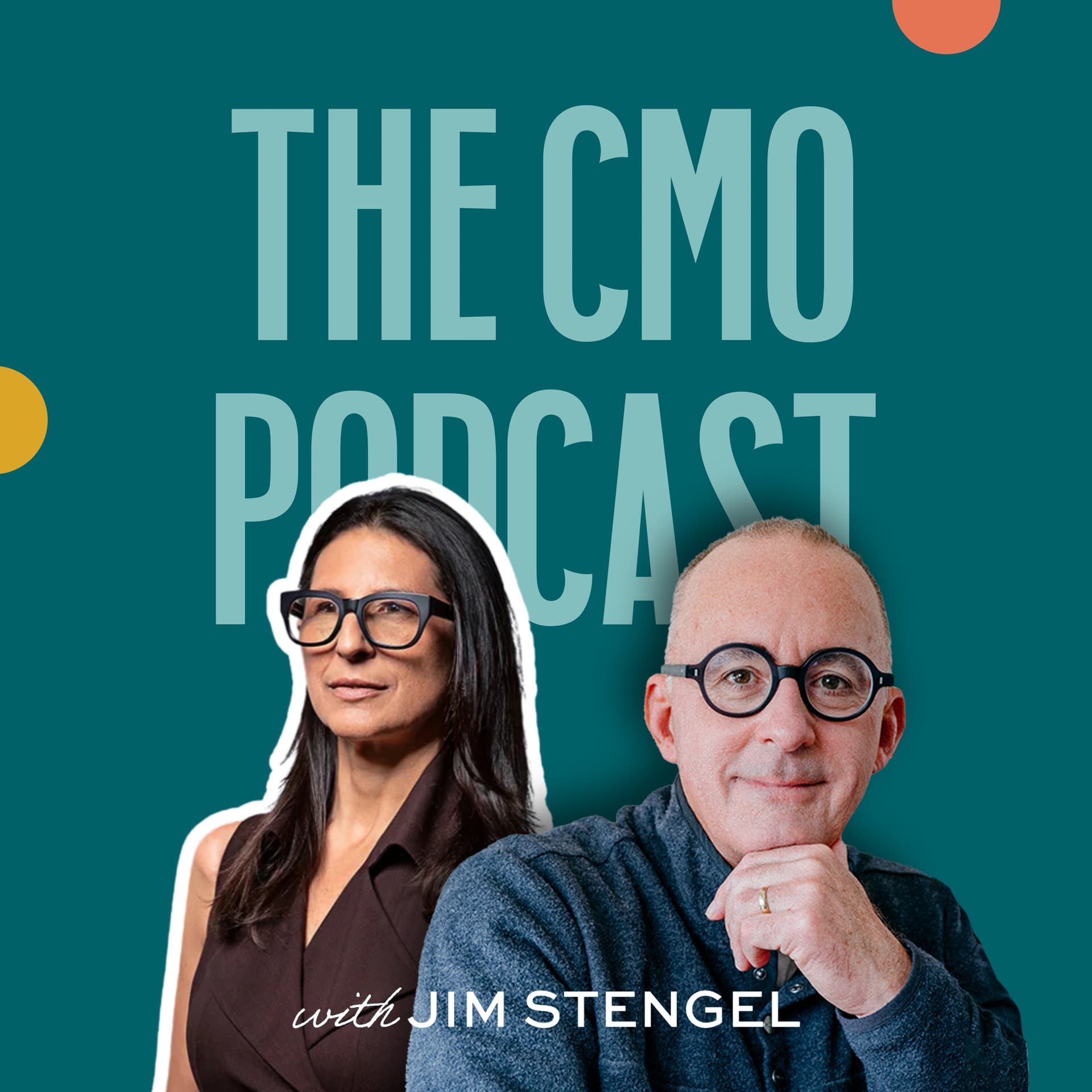
Podcast Overview Host: Jim Stengel Guest: Kelley Puckett, Chief Marketing Officer of goodr Episode Description: This episode dives into the vibrant world of goodr, a sunglasses brand that champions fun and affordability while catering primarily to runners and outdoor enthusiasts. Kelley shares her insights on branding, leadership, and how her passion for running influences her professional life.
---
Key Themes and Discussions
Introduction to Kelley Puckett
- Background:
- CMO of goodr, a Southern California-based sunglasses company.
- Formerly at Sony Pictures and Paramount Pictures.
- Passionate ultramarathon runner, completed the Badwater 135.
The Essence of goodr
- Foundation:
- Founded by runners who noticed running sunglasses were overpriced and overly engineered.
- Positioned sunglasses at an accessible price of $25, with a focus on style and functionality.
- Product Range:
- Offers sunglasses for various sports and outdoor activities.
- Stays true to its original mission of affordability and fun.
Kelley's Journey to CMO
- Education:
- Graduated from UCLA with a degree in History and Political Science.
- Career Path:
- Transitioned from the entertainment industry to marketing, driven by the desire for creativity and impact.
- Early career experiences at TBWA Chiat Day and various roles in media at Zenith and Paramount Pictures.
- Leadership Philosophy:
- Focuses on community, creativity, and celebrating failures as learning opportunities.
Leadership Insights
- Leadership Style:
- Emphasizes the importance of preparation and clear communication in guiding her teams.
- Encourages a culture of fun and inclusivity within goodr.
- Mentorship and Influence:
- Draws inspiration from her family, particularly her sister who has Down syndrome, which shapes her perspective on inclusivity and perseverance.
Running and Leadership
- Comparative Insights:
- Reflects on how her experiences in ultramarathons teach valuable lessons in resilience, project management, and mental endurance.
- Emphasizes the idea of managing the moment, whether in a race or in a challenging work environment.
Company Culture and Practices
- Cultural Values:
- Values fun and creativity, with initiatives like "Pitchapalooza" to democratize idea generation and celebrate employee contributions.
- Celebrates both successes and failures through events like the "Flamingo Gala."
- Team Dynamics:
- Encourages open communication channels, including sharing failures and learning experiences within the team.
Marketing Strategies
- Innovation in Approach:
- Highlights the unique challenges of maintaining fresh and engaging content as the brand scales.
- Uses playful concepts like the "absurd-o-meter" to gauge the appropriate level of humor in marketing communications.
Community and Inclusivity
- Building Community:
- Stresses the importance of community in both her personal and professional life.
- Advocates for inclusivity in marketing, particularly in championing female athletes.
Closing Thoughts
- Final Reflections:
- Discusses the ongoing evolution of goodr as a brand and her personal growth as a leader.
- Encourages listeners to find their communities and embrace the challenges that come with growth and change.
---
Key Takeaways
- Growth Outside Comfort Zones: Personal and professional growth requires stepping outside comfort zones.
- Preparation is Key: Being prepared enhances creativity and performance.
- Manage the Moment: Focus on what can be done in the present to move forward, whether in a race or challenging work circumstances.
- Community Importance: Building and relying on a supportive community is vital for personal and professional success.
---
Sponsors
- Episode is sponsored by Deloitte and StrawberryFrog.
Additional Resources
- [Deloitte CMO Program](https://cmo.deloitte.com)
- [StrawberryFrog](https://strawberryfrog.com/jim)
---
This episode of The CMO Podcast offers an insightful look into the intersection of leadership, marketing, and personal passion, highlighting how Kelley Puckett's experiences shape her approach to her role at goodr.
Written by AI. May contain mistakes. Listen to the episode to check what was said.
Transcript
Automatic transcript. May contain errors.0:00Hi, everyone. It's Jim. I have Matt Spiegel of TransUnion with me. Matt, I want to start with what do you love about your job? Yeah, it's a great question, Jim. You know what? I love the fact that I get to be out at events and conferences and working with clients to really think about how marketers solve problems that matter at scale. The job of a marketer is as challenging as ever, and we get to do some interesting things to make their job easier. When you work with a client, where do you get the most satisfaction? You know what? I think seeing ideas come to reality. We ultimately are an enable of great marketing.
0:28So we don't do creative. We don't do media planning. We provide the data, the identity insights, the measurement tools that make great marketing possible. So when we get to see the end product, sometimes later, it's really cool to see. Well, super to have you here. Super to be a partner. Thanks for joining us today. Thank you, Jim. So if you want to turn data into understanding and understanding into growth, visit transunion.com slash clarity. What if the smartest marketing play is not to move forward, but to zoom out. Deloitte believes the most powerful move a CMO can make is to look beyond the next step and see the broader perspective.
1:00That's what the Deloitte CMO program is for, a place to gain fresh perspective and connect with leaders who've stood where you stand. Together, Deloitte will help you see the bigger picture so your next move isn't just fast, but right. Learn more about the CMO program at cmo.deloitte.com. Hi, everyone. It's Jim. I'm here with Matt Spiegel, EVP of True Audience Growth Strategy at TransUnion. Matt, you've spent your career helping marketers understand people through data, and that's harder and more important now than ever. It really is, Jim. There's really just so much information out there, and unfortunately, it's often disconnected.
1:35Marketers typically see fragments, maybe a purchase here or a click there, but what they really need is clarity, true full picture of who their customers are, and ultimately how to reach them. Well, tell me how your solution strategy comes in and helps CMOs and their teams bring clarity to chaos. Well, Jim, we ultimately do that with a 360 view of the customer. And so it's about ultimately combining data, truly trusted data, identity resolution, which is a deep analytical problem, and measurement that actually helps understand performance. So ultimately, we work hard to help marketers move faster, to deepen their insights, and to ultimately make every dollar work harder.
2:11We believe strongly that when you truly understand your audience, you can build a real brand and real relationships with customers that last. Where were you when I was a CMO? I don't know how to answer that. Learn more at transunion.com slash clarity. That's transunion.com slash clarity. So what was the first brand you remember as a young girl being cognizant that it was something different? When I was looking back, I think Gatorade for me. I remember this commercial. Grew up playing soccer. So I remember the Mia Hamm Michael Jordan commercial, which was, I think, anything you can do, I can do better.
2:43I loved that they were willing to put Michael Jordan alongside the best athlete in the world. And so it was great to see a brand validating that. Hi, I'm Jim Stengel. I've helped hundreds of major brands discover and activate their purpose. Because when a brand's purpose is clear, compelling, and authentic, profit naturally follows. Each week, I welcome the CMOs, the chief marketing officers of your favorite brands, to speak to how their job is so much more than marketing. These leaders share their inspiration and challenges, along with how they try to build a full, healthy, and happy life in and out of the office.
3:19And it's that energy that reaches everyone they touch. And we're glad you're here to feel that energy and to learn from these remarkable leaders. So here we go. Well, we are now through the Memorial Day holiday in the U.S., which means it is officially summertime. And my guest today and her company embody the spirit of summer. Kelly Puckett is the chief marketing officer of the high growth brand Goodr. That's G-O-O-D-R. It's a nine-year-old sunglasses company founded in Southern California. Goodr started like a lot of new companies by recognizing a problem and then solving it. The founders were runners and running sunglasses were expensive and highly engineered.
3:55So they developed sunglasses for running that were fun, well-designed and$25. Today, Gooder has sunglasses for lots of sports and outdoor activity, and they have stayed true to the original value proposition. Gooder is privately held, has about 150 employees, and sells its products online and in about 5 ,000 physical locations. My guest Kelly seems tailor-made for Gooder. She graduated from sunny UCLA and spent time at TBWA Chiat Day, Sony Pictures, and Paramount Pictures. Kelly is also a runner, but not any runner. She is an ultramarathoner and has finished the Badwater 135, billed as the toughest ultramarathon in the world.
4:36Here's my wide-ranging discussion with this CMO, who is also the grand-niece of coach John Wooden, perhaps the most famous coach in basketball history. Here's Kelly. Well, hi, Kelly. Welcome to the CMO Podcast. You know, we have a UCLA connection. My wife went there. My daughter went there, got a double degree. and I taught at UCLA Anderson for four years after I left Procter & Gamble. So let's start there. What did you study at UCLA? So I studied history and political science. I thought I might pursue law like my father, but I thought better of it, luckily. There's also a long history of UCLA in my family.
5:16I think you'll find this interesting. So my great uncle was Coach Wooden. Oh, you're kidding. I was raised on UCLA basketball. My parents were born and raised in Indiana. you know, huge basketball fans. My dad traveled to go to law school, mostly because he wanted to follow coach Wooden and be in Los Angeles. So I never thought I would stay on the West side and go to college, but it was a pretty, pretty remarkable place. Well, my wife was there. I mean, we're a good bit older than you. My wife was there during the heyday of the Wooden years and just remembers seeing him at the drugstore counter, having a soda with Bill Walton, waving and saying hello to her, crossing campus, also very approachable.
5:57Well, that's crazy. I mean, tell us a little bit more about that. How much did you see him growing up? There's a million stories about Coach Wooden, of course. Do you have anything that you can tell that would be kind of meaningful? Yeah. I mean, a couple of great stories. So I grew up playing soccer and I think one of my favorite is my senior year of high school. We were in the CIF finals, which was a really big deal. First women's team in the Valley to go to the finals. And so my dad set up a date for us to go over to Coach Wynn's apartment in Encino so that he could give us, you know, a talk before the game.
6:30And so, you know, we were 15 through 18 years old. Most of the girls didn't even know who he was, but obviously their parents had told him he was a pretty big deal. So everyone was really nervous and we're crowded in this small little apartment. And, you know, we're just waiting, like, what is he going to say? and so finally someone raises their hand and says well what did you do about nerves and you know he can read the room and he understands that everybody's really nervous so he wants to break that tension and he says well i would go to the bathroom and then you know everybody's everybody's laughing and then raising their hand after that and asking questions but we had this really special couple hours we got to spend with coach in that incredible apartment in encino that's so good.
7:14Actually, he passed away the year my daughter graduated. And the graduation ceremony was a big tribute to Coach Wooden, which was just a very special thing to be a part of. And I'm so happy I was there in person. That's awesome. So you were an athlete, right? And you were a soccer player and you're a big runner now. So when did you develop the passion for running? Was it pre-UCLA? Well, sort of. So I would say, you know, growing up, my mom used to joke I needed about four hours of activity a day to be tolerable. So she was putting me in every sport imaginable. But soccer is what really stuck with me.
7:53And I think that's because of the amount of running involved in the sport. And so when I decided not to play in college, I needed to find an outlet. So obviously, you're familiar with UCLA. I would start running the perimeter every single day. And Westwood is this really hilly sort of five-mile route, which was a great just entry point into running. And then when I graduated college and I had my first job at TWA Chayette Day, I had a really long commute. And so I would wake up at 4 a.m., I would drive to the gym close by the office, and I would run every morning on the treadmill. And because I'm an extremist, it started at, you know, five miles every morning.
8:33And then I was running, you know, 12 to 15 miles every morning on the treadmill. And still in my mind, I didn't think I was capable of ever running a marathon. It just felt like this crazy idea. But finally, when I was about 26, I was going through a breakup. And the first thing I did was sign up for team and training and just met this incredible community, trained for my first marathon, which was the San Diego Marathon. Oh, wow. That's hilly. Very hilly as well. And, you know, I think there's two kinds of people that run a marathon. I think the first person finishes the marathon and says, I will absolutely never do that again.
9:08And the second person runs to their phone is immediately signing up for the next race. And that was me. So continued to run marathon after marathon until I found this little sub community called ultra running, which I'd never had known anything about and just fell in love with the distance. What was your first ultra marathon? My first ultra marathon was a 50 mile race up north and it was a hybrid race of road and trail. And I had never trained on a trail before. And so I remember being really frustrated during the section on the trails because it would slow you down. It was not something I was used to.
9:45I was used to running on road, not having to hike. So it was, you know, a unique experience, but it had me intrigued and I continued to sign up for different distances after that and then just really fell in love with the trails. And there's so many beautiful trails in Los Angeles. So it truly just been one of my favorite passions the last decade plus. What are you training for now? What's the next race? So now I usually try to find a race every two years or so that I'm just really intrigued by, whether it's a different location or a new distance. And so I've sort of crossed off every distance minus the 200 mile distance.
10:25So I'm signed up for Moab 240 in October, and that will be my longest race to date. Wow. That's wow. So you're heavily into the training now, right? That's not that far away. A couple of months. So now it's all about getting into the mountains and altitude training and yeah, just getting as much time on my feet as possible until then. So I'm excited to, I'll be really in the thick of it this summer, which will be fun. Do you have any secret or practice that would be helpful for people on how you do such incredible training and still hold down a CMO role at a high growth company? I mean, are you super disciplined?
11:05Do you follow a schedule? Do you have the same routine weekly? What's your hack for that? It varies. I think when I was first starting the sport, I was all about mileage. And so I would do 100 plus mile weeks. My body just really can't take that sort of mileage anymore. And so it's more about balancing different activities, doing strength, incorporating strength training. I think finding a really great community of people to run with is incredibly important who are also going to hold you accountable. But now I would say it's about cramming in a few runs during the week, a few quality runs during the week.
11:40And really on the weekend is when I'll get my long, long runs in when I can. So a little bit different now. I think I do a little bit more of what I can do versus, you know, what I think I should do. And I think that's probably a better approach because it's also going to keep me healthier when I get to the start line. And I've certainly experienced multiple injuries over the many years I've been doing this. So now you've finished the Badwater 135, which is billed as the toughest ultra marathon in the world. So could you talk a bit about that experience and what has stayed with you from and how long ago did you do that?
12:19I think it was three or four years ago now. It was not a race I ever thought I wanted to do. I remember hearing about it for the first time and thinking it was absolutely insane. But I had a friend of mine who ran the race and he asked me to crew him. Getting into the race typically requires that you've crewed someone before so that you have experienced what it's like. So when he asked me, I wanted to experience what it was like. So I said, yes. And what I found was really different than what I had expected. Just the camaraderie and the teamwork that goes into getting your runner to the finish line is really magical.
12:56And I really loved being a part of that. And so, you know, I've learned to never say never, because of course, after I had that experience, I realized I definitely wanted to do it at some point. So it took me a couple of years of applying. There's a pretty intense application process for this race. They obviously take it very seriously because it is it is pretty dangerous. So, you know, you have to write an essay. You have to get a letter of recommendation. You have to approve the race. So a couple of years ago, my name was finally called and had an amazing team that went out with me. My husband, one of my co-workers was my crew chief.
13:32Two of my dear friends flew out to run alongside me. And so really just this group effort, it's you really need everybody. You can't be out there alone because they need to be stopping every few miles to make sure you're hydrated. So just loved that aspect of it, just being out there with a team. And it was incredibly challenging, but also just a really rewarding experience that I'm so glad I was able to partake in. Tell our listeners, if they're not familiar with it, what makes that race so special? I mean, it's 135 miles. It's in Death Valley in July. So, you know, you spend your weeks leading up to the race, just looking at the temperatures every single day to understand whether it's going to be 120 degree a year or 135 degree a year.
14:19The range of heat really varies. And, you know, you start at night, which is unique. So you are starting when you're already tired and you run through two nights unless you're incredibly fast. There are some athletes who finish before the second night, but you run through two nights. So just not having sleep, being in the heat, it's just a very extreme, unique race. And then of course you're on road the entire time. So you are essentially on a highway, just trying to stay on the side of the road and follow this white line. It's very different than anything else, but it is a really fun is a weird way to phrase it, But it was a really fun experience, and I'm glad I got to understand what it takes to do that race.
15:05So what about these kind of experiences? This one is obviously a very extreme one. How does it help you be a better leader, a better CMO? I mean, obviously, mental endurance and strategy and obviously perseverance, resilience, all that comes into it. But I'd like to hear it in your words. How does it help you be a better person in your professional life? I think a couple of things. I think understanding that growth just doesn't happen inside your comfort zone, right? And being willing to sort of take the road less traveled, take some really calculated risks. I think that really applies to what we do in marketing.
15:40I think another piece of it is really learning to break up a distance, just like you break up a project into really tangible pieces so that you're not overwhelmed by how huge the task can be. We call it a crawl, walk, run when we're building projects within Goodr. And then I think managing the moment, doing what you have to do in that very moment is the best that you can do. So if you're in a race and you're experiencing dehydration or you're having some sort of ache or pain, instead of feeling like, oh, I'm not going to be able to finish this, what can I do to make this moment better? is something I've really taken away from all my experiences.
16:23And then I'd say lastly, when something's not going your way, you mentally, you want to give up, but things tend to always turn around. If you manage the moment, if you keep going, I've always found you do turn around and you can get through it. And you might be just hiking along, but you can get through it if you just put your head down and keep moving forward. So whatever you're doing, you just got to move forward. and you will get to your destination at some point. That's such a good lesson. I got to know Roger Federer when I was at P &G because he was a spokesperson for Gillette, and he spoke about that.
16:58He just said, you know, don't look back. You know, you can have a horrible match. You can run into a player who's playing the match of their life and just play point by point, step at a time. Don't think far out. Just be in touch with who you are. Don't look back. Don't dwell on anything that just happened. Be in the moment and think about the next point and the next shot. It's great advice for anything.
17:25We all want to stay ahead of the digital curve. And IAB, the Interactive Advertising Bureau, invites you to do just that at the 2026 IAB Annual Leadership Meeting in Palm Springs on February 1st through 3rd. If you're a qualified consumer brand or agency leader, you can access free passes and travel vouchers. And for everyone else, you can take$500 off your ticket with code ALMCMOPOD26. This is your chance to join a three-day gathering of the industry's brightest minds and boldest voices shaping the year ahead. You'll hear agenda-setting conversations, candid fireside chats, and dynamic breakouts on the topics that matter most, from AI and commerce media to measurement and addressability.
18:10This year's lineup concludes everyone from Kevin Bacon and Bozema St. John to creator Remy Bader, along with leaders from Forbes, Major League Soccer, General Motors, and Meta. Visit IAB.com slash ALM to learn more and check out the link in the show notes to register and receive$500 off your ticket.
18:32Now, I want to go back to your career path a little bit before getting into your role at Gooder. You came out of UCLA with a history and politics major. You thought you wanted to be maybe a lawyer because your dad's a lawyer. What changed your mind about that? I think him being a lawyer changed my mind. He definitely wasn't. He was great at it, but he wasn't in love with the work. And he was pretty happy when he retired. But I saw how he felt about things. And I think I realized I wanted to pursue something a little bit more creative. what felt like a little bit more creative. And I had an opportunity for an internship at that Chayette Day office.
19:12And so I took it over the course of that summer and that ultimately turned into a job and really just started to enjoy what I was doing. And from there continued to navigate different agencies and brands and had a lot of incredible experiences. Those were very good years at TBWA Chayette Day. I know the agency very well. In fact, I took my UCLA Anderson class over there once a year to have class at the amazing office. What was your first client? Is it a memorable one? So Apple, Nissan were some of the first clients. I mean, I was so lucky to work on brands like that at a time when they were just growing tremendously.
19:50So those were great experiences. We had a couple of different entertainment brands as well. I think it was ABC, but Nissan and Apple were the two major brands. Then you went client side, right? You left the agency world and went client side. I stayed in the agency world for a little while, but I started to work in entertainment. So I worked at Zenith and then I worked at Universal McCann on Sony. So I'd been on Fox at Zenith, Sony, and then I transitioned over to the brand side at Paramount Pictures. And you were there like nine years, right? So it was a formidable experience. I was watching some videos of you online and you talked about those nine years being pretty profound for you in terms of developing your leadership skills and your habits and practices.
20:36So could you talk a little bit about why that happened there? What was it about that experience? I know it was a time in your life, obviously, we're always developing, but especially those years. But what was it about that company and that time for you that was so influential in developing the leader you are today? I think one, it really gave me a more holistic look at marketing. So really more interactions with the publicity team. I was working in media with the content team. So really working with all teams to really understand that what it took to really hit a box office goal. And so working with all those teams, understanding what they were doing and how all those pieces work together, I think was a really important part of that experience because I had been really just working on media plans at the agencies.
21:19So it gave me all this exposure to different kinds of marketing. I think also just the pace of working on film. You know, you might have, I think at the time when I first started, we might have 25 films during the course of a year that we were marketing. So it was very quick, very fast paced. Every film was so different and unique, whether it was Jackass, which was actually one of my favorite films to work on because it really gave us this kind of permission to be absolutely absurd or Mission Impossible. I think I worked on three or four Mission Impossible films. So there was this wide range of films we were able to work on.
21:56And each was so unique and very different strategies behind each film. And then I think also just presenting to a tough room, to a big room and getting used to going into a room and presenting my ideas and building my presentations and understanding what that took were all really integral in my in kind of learning about marketing. What's your counsel on handling a tough room? Oh, gosh, I think it really depends. I think you do learn to read the room. I think that's another part of it and understanding the person and their expectations. And I think that's such a great skill. And if the room's a little bit hot, you need to navigate that differently.
22:36Maybe you need to come in with a sense of humor and some levity and really lighten the mood. So I really think it depends on the person and understanding what that person expects before you go in there really helps. Now, when you were at Paramount, I think you also were a marathon coach. So talk a bit about that and how you managed both those big responsibilities and showed up for both of them, you know, with everything you have. How did you, what was your strategy for that? Well, one, I think it's just great to have that balance, something that takes you away from the work during the week on the weekend.
23:10So you can refocus. I really always enjoy just the community that running brings. So it never feels like adding work. It feels like just being a part of something really exciting. I coached in a couple of different capacities. I coached with team and training for a little while after my experience there, which was incredible. In that space, you really see a lot of first-time runners, which I love. I love being a part of their first time completing a marathon, especially when they don't believe they can finish a marathon. It's really special. And then towards the tail end of Paramount, Nutribullet had sponsored a marathon team.
23:45And I was asked to be a part of that team, which was really amazing. And that's where I met my now CEO, Stephen Lease. Oh, wow. So that's what ultimately led me to Goodr. Oh, my gosh. So running took you to a different career direction. It did. That was about how many years ago? I started at Goodr about six and a half years ago. And I think that team was about 10 years ago because we just turned 10 as a brand. And that's when the inception for Gooder actually took place. He was really inspired by that team to create the brand we now see today. So yeah, I'd say about 10 years ago is when I was coaching.
24:22Was that a hard decision? I mean, you were leaving a big company. It sounds like you were enjoying it. Then you met this guy and you decided to go to a very different environment, right? You were employee number 30 or so? Yeah, I think even maybe like 15. 15, okay. It was very small, very small at the time. But I remember when he started the company on this team, he was handing out sunglasses at some of the practices. And I really thought it was just this fun hobby he had, like this fun side hobby. I really didn't think much about it. But I continued to watch what he was doing. And it was just really smart.
Read the full transcript
24:58It was really smart how he's building this company. But it wasn't until a couple years later, I was running a race up in Napa. And before that, I'd only seen my friends wearing Gooder. And I go up north, I'm running this race, and everybody is wearing the brand. And then I go to a running store nearby, and I see the display on the counter. And I asked the woman about it. And she's like, we can't even keep these glasses on the stand. They are moving so fast. So I realized this brand was something special. And I think at the time as well, I was starting to feel like I wanted something different.
25:33I think the film industry was really starting to change. It didn't feel the same as it had nine years before. You know, you can only work on so many Mission Impossible films and you start to burn out a little bit. So not long after that race, he called me and he asked me if I wanted to come and work for Goodr. And it was an immediate yes. I was terrified, but it was an immediate yes. I think just the opportunity to be a part of a growing brand and scale it. I really believed in him. I believed in what he was doing. And then just this unique opportunity to combine my passions in life with my career was something that was really interesting to me.
26:10So for the first time, I would be talking about running inside my job, which I thought was just amazing. So I took the leap and haven't looked back. That's six and a half years, you're CMO, but you also have two other titles, right? Your brand director and the energy lead. We've had many, many different names of our teams internally. So it's, it's changed quite a bit. The position I started at was really focused on marketing to runners. And then I was focused on leading our partnerships team, which is now our sports marketing and partnerships team. And then I was working on what we now call, we previously called energy, but we call it now consumer marketing.
26:50So it was all of our D to C marketing efforts. And now I oversee essentially two marketing teams, which is our retail marketing team and our consumer marketing team. So it's just one big marketing department with two larger teams that sit within that. But we've had so many different shifts. Our brand grows very quickly and the organization changes as well, but that's where we are today. Now, you seem to be a leader who's very intentional with how you spend your time. I've heard you talk about your weekly kind of rhythm. You do weekly reviews on Monday, you connect with people on Tuesday and Thursday, Wednesday and Friday for bigger projects, which need a little bit more breathing room, time, thought, you know, pensiveness, deeper thinking.
27:37So could you talk about that rhythm and why that works for you? And I think maybe the bigger challenge is how do you stay true to it, you know, in all the things that come up every week, every day? Certainly. It definitely, I'm not always able to stay true to that. I think if I can accomplish one thing going into the week, it's having a lot of little things done. And usually I'll spend some of Saturday and Sunday completing that so that I can go into the week without stress. so that if my week completely blows up, I can still be in the moment of whatever that requires from me versus feeling like I'm behind.
28:14So I always try to go into the week feeling like I'm ahead. Like I've checked off a lot of things from my list I need to because inevitably things are going to change. If anything, I love to preserve that Monday morning to really set myself up for success. And then if I can, you know, find a couple hours on Friday for that deep thinking, for creative thinking, whatever space I can find for that, then I feel really good about that. And then there's always, you know, sometimes it carries over into Saturday and Sunday and you're not receiving any slacks. It's really quiet and I can really focus on something that I'm also just really excited to work on.
28:50So that's sort of how I approach my week, knowing that typically things are going to change. You know, I love the thought of the rhythm. I had a kind of a similar rhythm myself, and I still try to keep a kind of rhythm. When you take that time for a deeper thinking project, how do you approach that? Do you do it with people? Do you do it yourself? Do you do some external benchmarking? Do you do some reading? So just talk about that because I think a lot of CMOs don't reserve time for those bigger issues because they're gnarlier, right? They're tougher. And we have lots of things in our inbox and we can let our inbox control our lives without thinking about the other part, which is sort of our outbox.
29:30So I'd just be very curious. And what are the characteristics of some of those projects you work on and how you really approach it? For me, if I have a project, I know, you know, a couple months down the line and it's a larger project. For me, it's always about starting, starting early and giving myself the space to change my mind many, many times throughout the process, which really removes some of that pressure and allows me to be a little bit more creative. So I want to start it. And then I want to continue to think about it and change it and modify it and see what it turns into. So for me, it's about giving things space.
30:05And then I like to, within that space, get the opinions of others. So whether that's sitting down with my boss or some of my teammates and getting their opinion, I find that that's really helpful in continuing to build out whatever it is that I have. But it's all about having that space. If you don't have that space, you don't have the time to change your mind. You don't have the time to adapt it. So that's what it really looks like for me. It's so important. Even when I do a podcast like this, I don't want to be rushed. I mean, I prepared for you maybe 10 days ago. And then I put my notes aside and then I come back to them and think, oh, I think I want to talk about this some more.
30:45And you want to also go in with an open mind that you told me about Coach Wood and I didn't know that was coming. I hadn't found that. So you want to be present, but you also want to have the time to think about preparation in a calm way, because I think we're more creative that way. Absolutely. I mean, preparation is probably one of the most important things to me. We call it having a sharp axe. And so if I feel like I have a sharp axe going into something, that is going to give me the confidence to feel like I can execute whatever needs to be executed. So that is my life hack is just as much as I can prepare, then that gives me the space to do what is needed.
31:25Everyone seems to be chasing the next big thing, the fastest answer, the quickest win. But great CMOs believe the real power isn't in the speed, it's in stepping back to see the bigger picture. That's why everything Deloitte does in their CMO program, from their industry-leading capabilities to their connected network of CMOs, is designed to help you zoom out and gain fresh perspective. Deloitte will help you see the bigger picture together. Learn more about the CMO program at cmo.deloitte.com.
31:58You also seem to be a leader who injects a lot of fun and development-oriented rituals into your workplace and with your team. You do lunchtime talks, you do squawk talks, focus on outside speakers, things like that. So could you talk about how that resonates with your team, how they respond to that, what sorts of topics or people really resonate? I think in general, our brand really lends itself to fun, which we are just so lucky to be a part of something that allows us to lean into absurdity, to really enjoy what we're doing. There's a lot of practices we have just company wide. We have something called Pitchapalooza, which is really about democratizing creativity and allowing anyone to come in.
32:39And whether they're pitching a launch of a pair of sunglasses or a marketing idea, that's just a great way to bring in the entire company and allow them to share their ideas and have fun. I like to do that within our marketing meetings as well and just making sure we have some space for brainstorming and just, you know, not necessarily focused on a specific project, but what are just fun ideas and how is that going to lead us to doing something really incredible with the brand? And then the Squawk Talks really comes from a place of, you know, I thought it can feel a little insular as a brand. I think most brands, right, you start to just you're only hearing yourselves.
33:18And so I wanted to start a speaker series so we could bring in outside voices. Also, inclusivity is really important to me. I have a sister with Down syndrome. So I really, you know, it's important to me to bring in different perspectives. It bleeds into what we do as a brand because at our core, accessibility is really important as well. So as much as we can bring outside opinions in, I think that also is just going to build more creativity within the walls of Goodr. Has there been an outside speaker or company that you brought in in the last few months or year or so that's had special resonance?
33:51Oh, I mean, my favorite was a gentleman by the name of Chris Nickich. He was the first person with Down syndrome to complete an Ironman. And so he was someone I had just been following forever, obviously, because of my sister. it was just incredibly meaningful for me. I was able to bring in my family and my sister and he was just hilarious. He was so much fun. He'd had this scripted presentation but he would go off script every once in a while and you just never knew what direction he was gonna go in. But I think what was really special about him was the relationship between him and his father and his father was there.
34:25And it was clear that his father was really the impetus behind all these things that Chris had done in his life, this belief that his son was not restricted by his disability, but could do anything. And I just loved seeing the two of them. So that was a really, really special talk for me. Let's talk a little bit more about your brand, right? Gooder. Great brands are distinctive. And I love how you're so clear on where you want to be distinctive. You say in your products, in your content, and in your culture. So could you talk a bit about those three? I mean, it's important to state it, right? So everyone's clear on what you're striving for, but it's another thing to really live it and bring it to life day in and day out across your growing organization.
35:08So could you talk about how you talk about that inside, how you keep that in front of everyone, how you get ideas on those three areas? Because I think it's crystal clear, but a lot of companies talk and don't act and it falls apart. You seem to be doing both. You know, starting with as a brand, I think I've never been a part of a brand that from our inception was so clear on who we are and our value propositions. And really, that's about accessibility. And, you know, we really started by focusing on the 5K runner. And when you do that, you're really talking to everybody, you know, and that's really the goal.
35:42Anyone who's active, we really want to be there and be there for whatever joyful looks like for you within your day-to-day life of being active. So I think we've just always been incredibly clear about who we are, what our products, you know, the no slip, no bounce, all polarized, all fun. We lean into the four Fs, fun, functionality, affordability, fashion. So that really gives us this clear, these clear North stars on how to build this brand and how we continue to grow this brand. So that, that in itself is just really incredible. And then in terms of our culture, I think our culture is, even as we've scaled, has really stayed true to who we are at our core.
36:26And, you know, it evolves as we grow, but it's about celebrating the work over the results. I think first and foremost, that's something I always say to people when they ask me what I love about working for Goodr. It really is about celebrating the work. And if you do that, you really will find the results. So I think at our core, that's what always sticks to me about our culture. You know, we talk about having a sharp ax within our walls. It's really important that you show up on time. People are really respectful of that. All very unique things that I just really love about our brand. And I think just genuinely, we just have amazingly creative, hardworking people who love doing great work.
37:07And that's really, it really is a privilege to be a part of that. When you say celebrate the work, you're talking about everything, product design, communication, content, everything. All everything, even to the point where at the end of every year, we have this big celebration. We call it the Flamingo Gala. And we have a Sharpest Axe Award. And we all vote on the team who, you know, whatever they executed and why they had the sharpest axe. We also celebrate what we call the biggest flock up. So we celebrate our failures. You know, it is important to try and fail. And I've been a part of both.
37:44I've received the sharpest axe and I've received the biggest flock up. And I was genuinely happy to receive both. You know, it's part of the process. You have to celebrate all the wins, all the learnings. And that's what's going to keep you excited to continue every day. How do you nurture that culture of having flock ups to be okay? Because you celebrate a big one at the end of the year, but you're probably having flock ups every week. How do you make it okay to have those? I think by admitting your own failures, first and foremost, including, you know, our CEO will get up and say, Hey, I messed this up.
38:20I think when you do that, you allow everyone else to do the same. We also have a Slack channel that's just dedicated to people sharing their failures. And, you know, I think we just try to show that in many ways that it's okay when you're trying to do something good. and inevitably, you know, it's not always going to work out. But as long as the intention is there, as long as you're striving to do something, you know, great, it's, it's okay. It's going to happen. It's part of the process. And you call your, your associates the flock, right? Isn't that your word for the team? Our teams themselves are flocks and the individuals are referred to as flamingos.
39:02Okay, good. How do you keep your content so fresh? Do you have a small group that works out or does everyone do it or what's your strategy? It's becoming more challenging. I think as we scale also, as you start to talk to a wider audience, I think the way you talk to them at different phases has to change a little bit. You know, you have to, we call it internally the absurd-o-meter. And so maybe you're going a hundred percent absurd with someone who's made 20 purchases. But for the first time you connect with someone, you might be 25 % absurd. But really, all the credit goes to our creative team, who's really incredible.
39:39Our copy team, our design team, our content team, they are all storytellers at their core. Initially, when we started the brand, a lot of them were filmmakers and writers, copyright, you know, playwrights. And so you really see a lot of that, I think, bleed into our brand as well. But yeah, it's not easy. And of course, where you're marketing, you know, and social media, for instance, is so different than what we're sending in an email. And so keeping up with all the trends and keeping up with the way that all these channels are evolving is incredibly difficult. But like I said, we do have our North Stars.
40:17And I think that always gives us a place to work from. So that is really helpful. Just curious, are you back in the office? Are you hybrid? How are you managing that? Yes, we've been back in the office since, oh gosh, I think three years ago, we got back in the office. So pretty quickly after COVID, I think it's incredibly important. It's a huge part of our culture is connection. So that Tuesday and Thursday, everybody's in the office. We have our all hands on meeting every Tuesday. We call it Tuesdays with Carl. And so that is a point where we're all able to really connect, share our wins, share our failures, just celebrate together.
40:54So we've been back in the office for a while.
41:04Hi, everybody. I'm Andrea Sullivan, the CEO of Vive. And we have produced the CMO podcast with Jim Stengel for many years. And I'm sitting in his seat right now. It's so exciting. I wanted to tell you a little bit about one of our programs that's called Vive by Vayner. It's a 12-month program that's designed for C-suiters and founders. And we want to help people to grow their businesses, but also to grow themselves. And so we bring in people from Shark Tank to talk to our founders, but we also focus on wellness. We want to make sure that people are leaning into becoming their best selves, their best and happiest selves.
41:44So if you are someone that wants to learn how to grow your business and grow yourself, check us out at Vive.co. That's V-Y-V-E dot co. We'd love to talk to you.
42:01Let's move to the creative brief. And I've heard you talk in another venue about how challenging it is. You have found that in the past to give direct feedback. And sometimes it doesn't land for a variety of reasons. A lot of people have that challenge. So I'd like you to talk about your evolution and what you've learned about helping ensure that direct feedback does land the right way with every person who you deliver it to. Well, one, I'm a firm believer that, and we say this internally, clear is kind. And so being transparent as quickly as you can and having direct conversation, I think is incredibly important.
42:37I think that's how we set people up for success. And I really do care about people. And so I want to make sure they understand whatever it is that whatever feedback is that needs to be given, that they're clear on that. Approaching feedback sometimes looks different based on the person. And, you know, we work very closely together. So you start to understand your coworkers, whether that's in person, whether they want to, you know, a quick slack. So everybody looks a little bit different. We also talk about the Enneagram. I don't know if you're familiar with the Enneagram. Say more. It's a personality test.
43:10And we all take it, get pretty familiar with everybody's personality, the way they receive feedback, the way they want to receive feedback. And you try to leverage that a little bit as well. But at the core of it, I think for me, it's just being as transparent as possible, as quickly as possible, and giving that feedback. And also creating the space to receive feedback is really important as well. That's how you build trust. I've heard you talk about already in this interview, the importance of preparation, but I've heard you also talk about the importance of professionalism, those two concepts.
43:43So could you talk about any rituals or practices you have that help you stay sharp in those two areas? I think for me, it just goes back to practice. I think that's with running, that's with work, as many reps as I can get in on something so that by the time I show up, I feel ready and confident. the feeling of not being prepared is just the worst for me. So it's really about getting as many reps as possible, practicing everything, practicing my craft, practicing, you know, running, whatever it is, I am a practice person. And so that's what really helps me feel like I can do my best. And I hold myself to a high standard.
44:25I hold my team to a high standard. So I expect everyone to show up prepared. What model sunglasses will you be sporting this summer? Probably a couple of pairs. Cause I'll have five. Well, for the race itself, I'll have five days. So I'll probably have a change of glasses every day, but when I'm on the trails, I like a low lens. So something that's going to let me see kind of in the shadows as well. Yeah. So SkyMall shoppers is my favorite. It's an aviator style lens, but it varies. It's, you know, if I, if I need a lot of coverage because there's a ton of sun, like at that water, then I might wear more of a wrap, but I tend to go for a low lens on the trails.
45:04So you exercise and run to keep you in balance and to help you be a better leader. Is there anything else you do besides the exercise to keep you creative and fresh and sharp? Are you a big reader, podcast listener, moviegoer? Tell us about your other things you do to stay sharp. I mean, I love film. I still love film and I don't go to the theater as much, but it's still a passion of mine. Watching at home now is typically when it happens. I love to write. It's something I actually need to make more space for. I think I haven't done as great a job of that recently, but that's something I really aspire to get back to because I really enjoy writing.
45:45And then I think something that's just always inspiring for me is spending time with my family. I find that to really be grounding for me. So as often as I can see my parents and my sister and my other siblings, I find that to be incredibly grounding. And that, you know, that calming force really helps me be creative as well. What are you watching now in terms of film or series? Right now I'm watching you on Netflix. I just started that show. We tend to rotate films, but my show right now I'm watching is you and I just finished White Lotus. So I've loved that show throughout its duration. Oh yeah.
46:19You should watch Friends and Neighbors now with Jon Hamm. It's kind of a white Lotus type, but a little bit heavier. I saw the preview for that and I really like him. So I'll have to check that out. So what was the first brand you remember as a young girl being cognizant that it was something different? When I was looking back, I think Gatorade for me, I remember this commercial, you know, I grew up playing soccer. So I remember the Mia Hamm Michael Jordan commercial, which was, I think, anything you can do, I can do better. And so I love that. I loved that they were willing to put Michael Jordan alongside the best athlete in the world.
46:53But, you know, I'd grown up. My dad had put me on boys teams when I was a kid. So I never thought that you couldn't compete. And so it was great to see a brand validating that. I think Nike, too, was always highlighting, you know, women athletes, the women's national team. I think, ironically, you know, you've seen a lot of female athletes push back against the brand because, you know, what they were doing outwardly that didn't necessarily match how they were treating their athletes internally. But I do remember just those two, two brands leaving an impression because they were really celebrating female athletes.
47:28And now I get to be a small part of that, a very small part of that leading a sports marketing and partnership team, because we, we do partner with a lot of female athletes, female teams like ACFC, which is the women's soccer team out in LA. So it's really exciting to continue to champion female athletes. What brands are you admiring now? I mean, when you get together with your team, what kind of brands do you say, ah, you know, love what they're doing. We should learn more about that. Are there any that come to mind? Yeah, we talk about Crocs quite a bit. I think just the turnaround they've had as a brand has been really exciting.
48:04I think it's a brand we'd love to really collaborate with. They've had a lot of fun with what they're doing. And so we've really love their brand. I think brand I bring up a lot, which because we have these limited additions within our offices is crumble cookies. I just, I just like that they've created this urgency around their product because you have these sort of limited. And what's fascinating to me is people actually love to talk about how much they don't like the cookies. And that just creates so much noise for that brand. And I think it's so fascinating. So I bring them up quite a bit.
48:38They've done some fun packaging recently, which I enjoy, but I think they've been an interesting brand as well. My UCLA daughter brings them home a lot. So we cut them into fours, which helps a little bit. Now there's a topic trending now on the influence of siblings on us. And you've talked about your sister already, and there's a new book out about the sibling influence and how in many respects, it's more powerful than the influence of the parents. So I read a big synopsis of the book last weekend and it made me really think I'm one of six. So and my wife's one of 11. Oh, wow. So yeah. So siblings were a big part of both of our lives.
49:17So you've talked about your sister a couple times in the show about her influence on you. What do you think that has been that has been lasting and also vice versa? And if there's other siblings that you have that you think, you know, have had a remarkable influence, I think it's a nice note to end on. Yeah. So I'm the oldest of four. I have my sister, Jessica, who has Down syndrome is two years younger than me. And then I have another sister who's six years younger and then a brother who's eight years younger. So incredibly influential on my life. I think one, when you're the oldest child, you know, where you land in your family obviously has a lot of influence on the way you do things.
49:52So I was always the one standing behind all the kids, counting heads, making sure everybody was still there. Parents like to joke about the fact that I probably didn't trust them, that I was in the back, making sure everybody was in a straight line. So, you know, I carried a lot of that stress and also was just always making decisions, you know, where what we were doing, where we were going. So I tended to be the person that was sort of influencing what direction we were going in, just being the oldest. But with Jess specifically, she's had a massive influence on my life. I think the single biggest influence on my life.
50:29And I think, you know, when I really drill down on like what that is specifically, I think it's just that, you know, I can't give anything less than my best. You know, when you're, when you're with somebody who, you know, wasn't given every ability to do what we're able to do on a daily basis, then there is no excuse for me not to just give my best. So I think that's probably the biggest influence she's had. And then, of course, just inclusivity and really caring about people and understanding that we all come from different places and that every voice is important. So, you know, I do my best to model that, but I am certainly not as as great as she is.
51:10Who's been the most inspiring person in your life? Is it your sister or someone else? Oh, definitely my sister. 100%. Well, Kelly, this has been a wonderful chat to kind of kick off the summer. Thank you for taking the time. Brand's amazing. I think your team's amazing. You're amazing. So thanks for sharing this hour with us. Deeply appreciate it. That was my conversation with Kelly. This was all about sports and being a CMO. So we're going to make our takeaways to be training tips and takeaways from this marvelous conversation with Kelly. And the first takeaway or tip is growth doesn't come in your comfort zone.
51:43Kelly talked about that, how that principle applies in her running and how it also applies in the marketing and being CMO at this high growth brand gooder. Second takeaway, it's all about preparation. We must have talked about preparation five or six times in this short conversation I have with Kelly. When you're prepared, you perform better. When you're prepared, you relax. When you are prepared, you are more creative. And when you are really prepared, your axe is sharp and you're ready to go. Kelly talked about how she likes to go in Monday, all ready to go. Her axe, the metaphor for being sharp, her axe is sharp and she's ready for the week, whatever it brings.
52:18Third takeaway, don't get overwhelmed. Don't give up. Manage the moment, whatever you're in, whether it's a long business week, it's an ultra marathon, it's a 10 mile run, manage the moment. Don't get overwhelmed. You'll get through it. It's a principle that she lives and it helps to get through very tough situations. And bonus takeaway, there's a lot about community in this conversation. Find your community. It helps enhance your life. It helps enhance your performance. Kelly finds her community in running. She finds a great community at her work. And this is a really, really strong principle.
52:50one reason this woman is such a great CMO. That's it for this week's episode of the CMO podcast. As always, I would be grateful if you shared our show with your friends, along with subscribing and leaving a review on Apple Podcasts, Spotify, or wherever you listen. The CMO podcast is a Vive original production. The views and opinions expressed by podcast speakers and guests are solely their own and do not reflect the opinions of our sponsors or its personnel, nor do our sponsors advocate or endorse any individuals or entities featured on the episodes.
From the publisher
It’s officially summertime here in the U.S., and Jim welcomes a guest whose company truly embodies the spirit of the season. Kelley Puckett is the Chief Marketing Officer of goodr, a high-growth sunglasses brand founded nine years ago in Southern California.
Like many great startups, goodr began by identifying a problem and solving it. The founders—runners themselves—noticed that running sunglasses were expensive and overly engineered. So they created fun, stylish, and functional sunglasses specifically for runners, all priced at just $25. Today, goodr offers sunglasses for a wide range of sports and outdoor activities.
Kelley seems tailor-made for goodr. A UCLA graduate, she went on to work at both Sony Pictures and Paramount Pictures. She’s also a runner—though not just any runner. Kelley is an ultramarathoner who has completed the Badwater 135, often called the toughest ultramarathon in the world.
Tune in to this episode to hear from a CMO who brings unmatched energy to her brand and community!
---
This week's episode is brought to you by Deloitte and StrawberryFrog.
Learn more: https://strawberryfrog.com/jim
See Privacy Policy at https://art19.com/privacy and California Privacy Notice at https://art19.com/privacy#do-not-sell-my-info.