In short
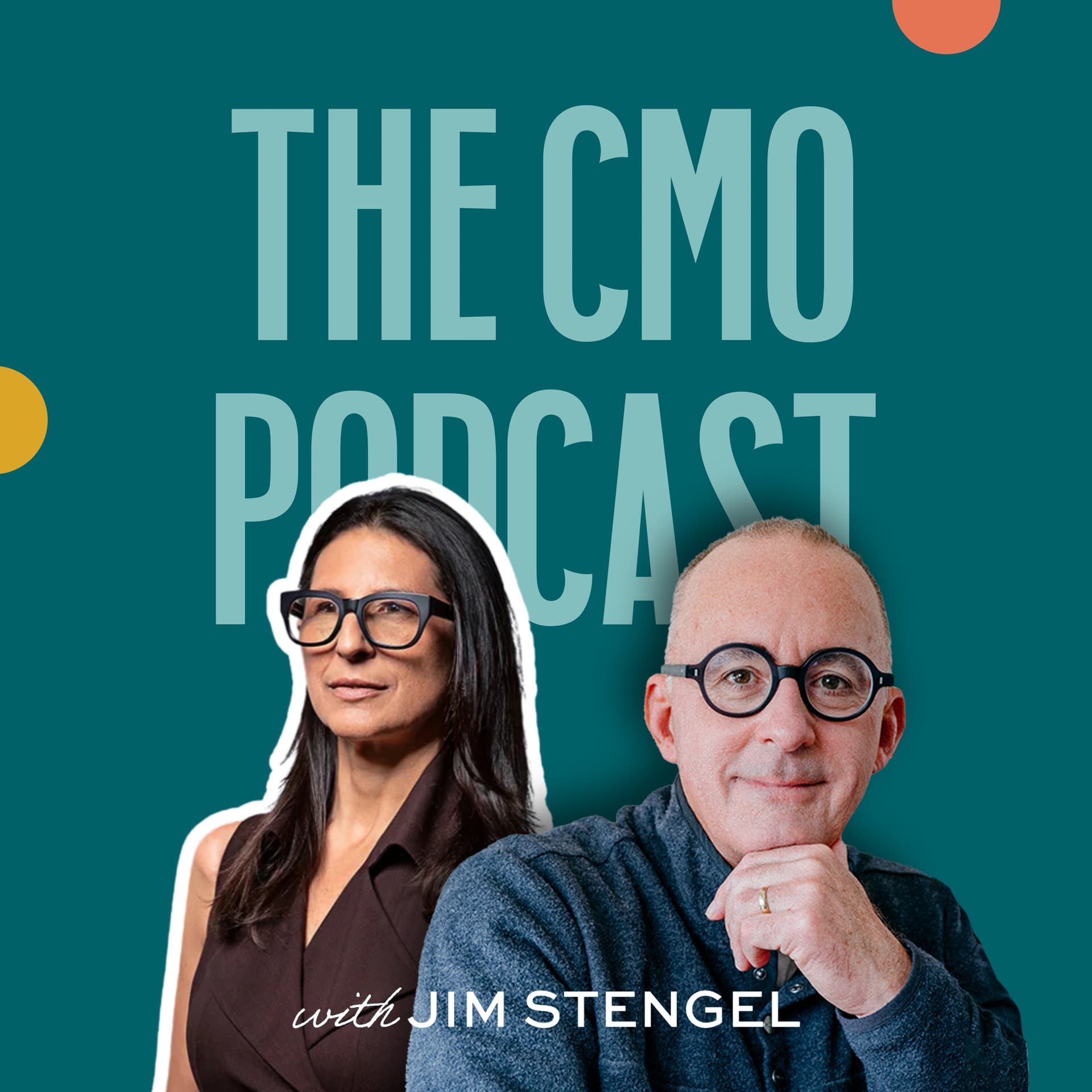
The CMO Podcast: Episode Summary
Episode Title
Kellyn Smith Kenny (AT&T) | Reinventing and Redefining Trust in Telecom
Episode Overview
In this episode, Jim Stengel interviews Kellyn Smith Kenny, the Chief Marketing & Growth Officer of AT&T. She discusses AT&T's transformation under her leadership, focusing on the theme of trust within the telecom industry, which has historically struggled with consumer confidence.
Key Points and Discussions
Introduction
- The episode opens with a call to subscribe and support the podcast, highlighting the importance of community engagement.
- Introduction of the guest, Kellyn Smith Kenny, who has played a pivotal role in AT&T’s evolution since 2020.
The Accountability Era
- Kellyn describes the current phase at AT&T as the "Accountability Era."
- Investment: Over $145 billion has been invested in reliability, transparency, and customer trust.
- Goal: To transform AT&T into a brand synonymous with trust, moving beyond just technology.
Kellyn's Leadership Journey
- Background:
- Kellyn shares her transition from being a Division I athlete to a C-suite executive.
- Insights into her career path, including significant roles at major companies like Hilton and Microsoft.
Key Strategies for Transformation
- Three Pillars of Accountability:
- Purpose: Connecting people to greater possibility.
- Value Proposition: Clear business unit offerings and differentiation in a saturated market.
- Bold Moves: Innovative strategies that are informed by customer insights.
Marketing Innovations
- Product and Customer Experience Improvements:
- Launch of the AT&T Guarantee, ensuring service reliability and fairness for long-term customers.
- Integration of AI to enhance customer experience, leading to significant reductions in service response times and improved customer satisfaction metrics.
Emotional Connection with Customers
- Kellyn emphasizes the importance of emotional relevance in branding.
- She aims to create a deep connection with customers, moving beyond transactional relationships.
Team and Organizational Dynamics
- Kellyn discusses her leadership style, which balances analytical decision-making with emotional intelligence.
- Importance of collaboration and collective decision-making within her team.
- The role of change management in integrating new technologies and processes.
Reflections on Personal Development
- Kellyn shares a pivotal learning moment from her early career about the importance of teamwork over individual achievements.
- She highlights the significance of being coachable and having a growth mindset.
Final Thoughts and Generosity
- The episode concludes with Kellyn’s reflections on gratitude and the importance of giving back during the holiday season.
- Encourages listeners to reflect on their contributions to community and personal growth.
Key Takeaways
- Be Coachable: Always be open to feedback and improvement.
- Lead with Head and Heart: Balance analytical thinking with empathy in leadership.
- Differentiate Your Brand: Focus on core customer needs and build a brand that resonates emotionally.
- Embrace Accountability: Ensure that all aspects of the business align with customer expectations and brand promises.
Conclusion The conversation with Kellyn Smith Kenny highlights the ongoing transformation at AT&T under her leadership, emphasizing the importance of trust, accountability, and emotional connection in the telecom industry. The episode offers valuable insights into effective leadership and brand management in a competitive landscape.
Sponsors
- The episode is sponsored by Deloitte, TransUnion, and the IAB, which provide insights and support to CMOs in navigating their challenges.
---
For further details, you can visit the CMO Podcast website and explore additional episodes to gain more insights into marketing leadership and strategies.
Written by AI. May contain mistakes. Listen to the episode to check what was said.
Transcript
Automatic transcript. May contain errors.0:00Before we dive into today's episode, we would very much appreciate a moment from you to make sure you're subscribed to the show on Apple Podcasts, Spotify, Spotify, Spotify, or wherever you listen. along with optioning to auto-download the episodes. It really is the best way to never miss an episode along with supporting the show and the amazing team that helps me bring it to you. And while you're there, leave us a rating or review. It only takes a minute and helps more people find the show and helps us learn. And of course, share this episode with a friend or colleague who might enjoy it. We wouldn't be here six years later and still going so strong without you all, our community.
0:36So thank you for being part of it Now, on to the show. What if the smartest marketing play is not to move forward, but to zoom out? Deloitte believes the most powerful move a CMO can make is to look beyond the next step and see the broader perspective. That's what the Deloitte CMO program is for, a place to gain fresh perspective and connect with leaders who've stood where you stand. Together, Deloitte will help you see the bigger picture so your next move isn't just fast, but right. Learn more about the CMO program at cmo.deloitte.com. Hey, it's Jim. I'm here with Matt Spiegel, EVP of True Audience Growth Strategy at TransUnion.
1:13That's quite a job title, Matt. Yes. Welcome. Thank you. So tell me about your company and why it matters for our audience CMOs. Well, listen, Jim, the challenge of the day is that there's so much information about consumers out there and the challenge is most companies don't have all that information. You have some purchase history, you maybe have some web history, but you don't have a full picture of customers. We're working really hard across on a suite of identity products, of audience products, and measurement products to bring a holistic view of customers to marketers. So when CMOs work with you, what light bulbs go off for them?
1:44So, Jim, we help brands bring clarity from chaos. We help them understand a picture of their customers with a 360-degree view in order for marketers to make bigger, more strategic bets. Well said, Matt. Learn more at transunion.com slash clarity. That's transunion.com slash clarity. Hi, it's Jim. Joining me is Matt Spiegel, EVP of True Audience Growth Strategy at TransUnion. Matt, we talk a lot on this show about building brands that people love, but that starts with understanding them, right? Jim, absolutely. Every customer ultimately has a story, but most brands are only going to see part of it.
2:17At TransUnion, we really focus on helping marketers connect those dots across devices, across channels, across platforms with the goal of helping marketers see a full person behind the data. That clarity is gold. That is special. So how do you do it? Ultimately, we put together the pieces of information that help you predict behavior, help you personalize messages, prove the impact of every marketing decision at the end of the day. And our marketing solution suite gives brands the visibility and confidence to invest smarter and ultimately grow faster. So if you want to turn data into understanding and understanding into growth, visit transunion.com slash clarity.
2:52What's the first brand you remember as a child, as a young girl making an impact on you? So as a little kid, my family was super into the holidays. And when I was young, probably six or eight years old, AT &T had this commercial where the grandparent was on one end of the phone and the grandchild was on the other end of the phone in the lap of their parent. And the grandfather is reading, "'Twas the night before Christmas." And at the very end, of course, it's the AT &T jingle, reach out and touch someone. But I genuinely think if it wasn't for that commercial, I would not be in this job. Hi, I'm Jim Stengel.
3:28I've helped hundreds of major brands discover and activate their purpose. Because when a brand's purpose is clear, compelling, and authentic, profit naturally follows. Each week, I welcome the CMOs, the chief marketing officers of your favorite brands, to speak to how their job is so much more than marketing. These leaders share their inspiration and challenges, along with how they try to build a full, healthy, and happy life in and out of the office. And it's that energy that reaches everyone they touch. And we're glad you're here to feel that energy and to learn from these remarkable leaders.
4:02So here we go. Few brands define connection quite like AT &T, not just through technology, but through trust. And that is not a word historically associated with the telecom companies. At the center of AT &T's transformation into a trusted brand is my guest, Kellen Smith-Kenney, the company's first ever chief marketing and growth officer. Since stepping into the seat in 2020, Kellen has been a key player in what she calls AT &T's accountability era. A big part of this new era has been an ambitious multi-year reinvention with more than$145 billion invested in reliability, transparency, and customer trust.
4:39AT &T is a household name and for good reason. Revenues exceed$120 billion with a customer base of 100 million consumers and 2.5 million businesses. Under Kellan's leadership, AT &T has become known for both its marketing prowess and its humanity. From launching the AT &T Guarantee, to pioneering a pragmatic approach to AI, which we'll talk about, to building powerful partnerships with the likes of Formula One and Hello Sunshine. Kellan's career spans some of the world's most respected brands with early years at Accenture, to time in Hilton, Uber, Capital One, and Microsoft. And she brings a unique blend of economic rigor, analytical horsepower, and a creative heart to every role.
5:19So here's my conversation with a marketing leader whose journey from Division I athlete to C-suite leader has always been about challenging the status quo and about the head and the heart. Kellen, welcome finally to the CMO Podcast. We've been dying to get you on, so here we are. Thanks for joining us. I am so happy to be here. It's been a long time in the making. Thanks for having me, Jim. Well, listen, it's early winter, and I think you're a big skier. Yes. Right? Sort of a lifelong skier. So will you get out on the slopes this season, or have you been out yet? Oh, gosh, no. So my first trip is scheduled for winter break.
5:55I'm heading out to Beaver Creek on December 27th. And I'll spend a whole week there with my family, including my cousin and her husband and their kids. Plus, we've got friends from D.C. who are going to be there. It's going to be epic. Wow. I love Beaver Creek. I've been many times with my family. It's fantastic. Touche. You were a competitive skier. We're going to talk about that in a bit. But how do you ski now? Are you still super aggressive? Do you do races or do you just like have fun? My racing days are over, but it was absolutely one of the highlights of my college career and high school career, being able to ski competitively.
6:30in fact my youngest daughter actually when she was five we had her competing and at five this was during covid she ended up being first in the nation in slalom in her age and then she came in second in giant slalom and she and the little girl who beat her ended up beating all of the boys so but she's also ended her ski racing career because now we live in dallas but when we go out there. We just go out and try to have fun recreationally. I'm probably more aggressive than I should be. I blew out my knee a few years ago, but I'm back on the slopes with a big old brace and having fun. Now, what was your initial catalyst to get you into skiing?
7:11Was it a friend, a parent, a coach? It was definitely my parents. They had met in Boston and they both had ski houses in New Hampshire and they just loved it from a social perspective and just being outside, right? It's so invigorating. Now, I think I was the one that actually chose ski racing. They just wanted me to be a competent skier so I could go out and have fun with family. Yeah, right. Well, let's move from a winter sport to a spring, summer, early fall sport, baseball. So I think you have a story about baseball in your family. Your dad, I think, was kind of a significant player at one point.
7:47Wow, you nailed it. Yes. We do our research. We've got our research. I'm blown away. We're going to stay with athletics. We'll get to the marketing stuff later. These are some of my favorite topics. So yes, my father was a major league baseball pitcher for the Boston Red Sox, which was a pretty special lifelong dream that he had because he grew up in Natick, Massachusetts. So being able to play for the hometown team, getting to throw out a pitch at Fenway Park definitely leaves indelible mark on him and our entire family. How did he get involved in baseball? I mean, that's playing at the highest level.
8:22What was his catalyst? So he had an older brother, my uncle Terry, who was a catcher. And my father always looked up to his older brother. He always wanted to be hanging around him and his friends. And that really pushed him athletically. My uncle was also a very gifted athlete, played multiple sports in college, as did my father. He actually ran cross country, played basketball and played baseball at a Division I level, which now they don't really have you do anymore. But it was his brother that really inspired him. to get in the game. And he was very talented from an early age, but he always said, no one will ever outwork me.
9:01I am going to practice and practice and practice so that I can be the very best and do the very best possible with the gifts that were given to me. And one of the things about my father that always inspired me is the extent to which he is coachable. So at a young age, he was just coming out of Little League. He was 14 years old and a professional baseball scout came to watch him play. And my dad had this wicked, or he's from Boston, wicked curve ball. And the scout said, wow, son, you really do have an incredible gift. Let me give you a tip. You're tipping off your curve ball every time you pitch it.
9:40And it's not going to be as effective if everybody knows it's coming. So that was a really important moment for him where he got this great piece of advice and he completely transformed how he delivered that pitch. Then when he was about 18, he had another tryout with a professional scout. And the guy told him, yeah, you've got a lot of heat on your fastball, but you're not pitching off the mound in a way that maximizes velocity. And again, he took that tip and he changed the way he pushed off the mound. And he added, you know, five to seven, maybe even 10 miles per hour behind his fastball. And then when he was in college, when he sort of had his final tryout before getting drafted, the scout told him, hey, look, I want you to hold your fastball differently.
10:24And I want you to throw this four-seam fastball. You're going to get more movement on the pitch. And once again, my dad being very coachable, he totally adapted how he threw that pitch. And if it hadn't been for those pro tips from literally some of the best people out there and his willingness to adapt, he never would have made it to the big leagues. So were you a coachable athlete? I like to think I was a coachable athlete. Now, my dad was my coach most of the time. He would probably tell you I was a very obstinate kid. But no, that's actually one of the things I pride myself on most. I have such a growth mindset and I try to be extraordinarily humble and curious and ask people, what can I be doing better?
11:03And really observing both from others, but also in myself where I need to be pushed. Okay. We should probably move on, right? And talk a bit about AT &T and about your role there. So Kellen, you've just had your five-year anniversary, I think, at AT &T. That's right. It went by in a flash. And it's a consequential five years. And I've heard you describe it as the accountability era at AT &T, the last five years. So is that a good summation of the last five years? And what do you mean by that? I think it's an excellent summation of the last five years. When I think about what we have been on a mission to do ever since I got here is we wanted to reinvigorate this brand.
11:47And when I arrived, it truly felt like a privilege. I felt like I was having the opportunity to work with one of the most iconic brands in the nation. Our founder story is truly incredible. Alexander Graham Bell, the most celebrated inventor of all time, made the very first phone call nearly 150 years ago. And everybody here at AT &T feels an obligation to really live up to that legacy and care for what's going to happen over the course of the next 150 years. But in the spirit of accountability, we have to make sure that we are delivering for our customers and for our employees. When I first got here, I did these deep dive immersion sessions with some of our super fans.
12:29They had been customers of AT &T for decades, right? There's somebody who's been our customer for 60 years. When I met with employees. Some of the members of my team described themselves as fourth generation AT &Ters. Their parents, their grandparents, and their great grandparents worked at this company. I've never been inside an organization where that was the case before. And so when I arrived, I found that we were in this enviable position in some regards where we had this sky high awareness of our brand, very high customer brand trust. But we also had room, a lot of room for improvement and really creating emotional relevance in the hearts of customers.
13:10And that's one of the things we're holding ourselves accountable to. Are we both delivering the connectivity experience our customers want and need, but are we striking an emotional chord and really living up to an aspirational brand that is deserving of these super fans and these multi-generational families that have worked at this company? And I'm sure we'll get into it later, But when we think about accountability, it's accountability for everything. It's accountability for how people perceive our brand. It's for customer satisfaction. It's for NPS. It's for brand love. It's for the stock price.
13:44And it really has been a reset over the past five years and a journey I am incredibly, incredibly grateful for. Now, could you talk a bit more about, as you reflect in these five years, you talked about building more an emotional cord with a brand and leveraging the super users. What would you say the pillars of this accountability era have been? You know, what were your strategies? What did you do? How is the company different now than it was five, six years ago? So when I arrived, we all agreed, hey, this is a mature, highly saturated and fiercely competitive industry. Sure is. And the best way to win and deliver durable economic growth for the company is with sustainable differentiation.
14:28And that's tricky when the company and the sector is so mature. So it's no secret that if we can truly differentiate, we'd be in a better position. Number one, to generate demand more efficiently. Number two, to retain customers more effectively. And then, of course, we'd be enjoying better core economics. So when I arrived, I looked at the lay of the land and I noted that we had an opportunity to clarify some really important components of how we went to market. The first was the company's purpose. We needed to build an appealing brand. And when I got here, I'll be honest, as a company, we were a little confused.
15:03We still owned WarnerMedia at the time. We still owned DirecTV. Were we a connectivity company? Were we an entertainment company? So we had work to do over the course of the first two years I was here to really make sure that we had that purpose clarified for every single one of our employees and our customers. The second thing that I observed was that the business unit value propositions were also a little murky. And we needed to make sure that we were creating compelling products and services that all laddered up, again, to a very clear Valprop. And then finally, I knew that to break out in this industry, we needed to have some bold moves.
15:39And they all needed to be grounded in our customer opportunity map. So all three of those things, purpose, value proposition, bold moves associated with customer opportunity maps, all of those needed quite a bit of refinement and clarifying. And we started with purpose, as you would expect. We really made that our center. And we said, we're here to connect people to greater possibility. And how are we going to do it? We're going to do it with expertise because everybody knows AT &T engineers are the foremost experts in the category. We're going to do it by trying to simplify all of the complexity and confusion that exists within the category.
16:16And we're going to try and do it in a way that's truly inspiring. So those three pillars, I think you call them, were how we thought about communicating both to our employees and our customers. Simplicity, inspiring, and expertise. Those are powerful points of difference, if you will. So how did you go about building that in to how you communicate, how you behave, how your leadership team works? So how did you bring it to life inside and outside the company? So from the beginning, I had my 90 day plan and I was 45 days in and I met with John Stanky, our CEO, and he said, you know, how's it going?
16:59And at 45 days in, I said, okay, so this is going to take a lot longer than I thought. And he just, he burst out laughing. He's like, I was wondering how long it was going to take you to figure that out. So when I was in about month four, I met with our board of directors, who is an incredibly impressive group of individuals and really a very impressive team and how they work together. But we acknowledged from the beginning, this is going to be a multi-year journey. And we had lots of heads nodding. We set our expectations that there was no sugar high coming. There was real work, substantive innovation, and customer care improvements that we needed to make if we were going to be famous for simplicity, if we were going to be famous for our expertise, and if we could deliver all of those things in an inspiring way.
17:43And so the board nodded and they said, we want to do this right. We don't want to just put a bandaid on an issue where we could really create something remarkable if we invested the time. So kudos to them. And then I took that feedback and that guidance to heart. Over the course of nearly two years, we did 28 different studies. We surveyed over 200 ,000 customers, prospects. We had employees that were part of our wind up to how we were going to solve this problem. We interviewed external experts, futurists, technologists. We hosted listening sessions and co-creation sessions and agile sprint teams using our high potential team members from all corners of this company so that they could feel that they were a part of it.
18:30And then we had to make sure that we were honoring AT &T's origin story, right? We've got this incredible visionary founder. we needed to make sure that it resonated both with the roots of the company, but also reflected who are we on our best day and, and is it future proof? The other thing I did, Jim, and I may have gotten this tip from you was I studied companies who had successfully attempted to reposition their brands as well as the companies who were unsuccessful in their attempts. It was very clear to me that if you didn't have the buy-in of the employees first, if we weren't living it before we launched it, that would be a failure.
19:07If we were proposing to do something that was so aspirational and so far off in the future that it felt disconnected than where we were today, I also knew that wasn't going to work. So we ultimately concluded we are going to get our employees incredibly inspired first and foremost. So we launched it with them in the back part of 2022, and we launched it with our customers about three to six months later. And that ended up being a major catalyst in how the company embraced it and rallied around it.
19:48We all want to stay ahead of the digital curve. And IAB, the Interactive Advertising Bureau, invites you to do just that at the 2026 IAB annual leadership meeting in Palm Springs on February 1st through 3rd. If you're a qualified consumer brand or agency leader, you can access free passes and travel vouchers. And for everyone else, you can take$500 off your ticket with code, all caps, ALMCMOPOD26. This is your chance to join a three-day gathering of the industry's brightest minds and boldest voices shaping the year ahead. You'll hear agenda-setting conversations, candid fireside chats, and dynamic breakouts on the topics that matter most, from AI and commerce media to measurement and addressability.
20:33This year's lineup concludes everyone from Kevin Bacon and Bozema St. John to creator Remy Bader, along with leaders from Forbes, Major League Soccer, General Motors, and Meta. Visit iab.com slash ALM to learn more, and check out the link in the show notes to register and receive$500 off your ticket.
20:55You know, Kellen, if I didn't know you were a CMO, I'm not sure I would have deduced that from our discussion so far. I think that's a positive thing. Everything you're saying is about the company. It's a perspective about what's good for the company. How do we respect our organization, our history? So very CEO, leadership team, board-like. So could you talk about that for a minute? So when I think about what I've been hired to do, it's to make an impact on the company. And if the right way to do that in some CMO roles is by product innovation, then that's where you lean in. If the right way to do that in some CMO roles is to update the advertising, then that's where you lean in.
21:39But if we really want to reinvigorate the AT &T brand and we want to restore it to that iconic nature that it, that it had been, then the only way to do that is to rally the entire organization. And so I very quickly upon arrival realized that if I didn't make this about everyone and I didn't enlist the masses, we wouldn't be successful because I also knew that people before me had tried that before. And I'll give an example of where I think the company had a breakthrough. And then it just reinforced my commitment that this is a team sport and we need everyone to be a part of this. I was about six months into the job and we gathered 40 of the senior most executives in the company for a workshop just to gain buy-in.
22:30Even if I thought, oh, marketing will have to carry the water. Let's get everybody committed and interested. And we did something before the workshop that was probably the most important thing that we could have done. We asked everybody to spend five minutes telling us about a brand they loved and why. And we heard amazing, literally would give you chills stories about how product innovation from their favorite brand had changed their life or how a brand had demonstrated such incredible customer service that they believe deeply in their heart. This company cares about me. or they talked about how there were companies that anticipated their needs and proactively updated the technology so that they were on the cutting edge.
23:18Or they even talked about how they'd read some of the policies, some of the terms and conditions, and how it was clear that the lawyers at this organization cared about them as a person or cared about customers. And so what was amazing as we had this collection of stories is it was obvious. There were technologists behind some of these innovations. There were digital leaders, there were legal team members, there was customer support, there was operations. And ironically, or maybe Jim, not so ironically, not a single person said, the reason I love this company is because of an ad. And the reason that was so important is it helps people understand, oh, Kellen and her team aren't going to reinvigorate the brand with a piece of marketing communication or a single customer insight.
24:06It takes every single one of us. And when we were closing out that first day of the workshop and the chief technology officer for AT &T said, my big aha coming out of today is that every single thing that every single one of us does that's customer facing is either going to polish or tarnish this brand. That was when I knew it was working. And I would underscore, you made this very personal. You went around with 40 people about what brand has impacted their life and put it in their words. And then you hold the mirror up and say, are we doing this ourselves? Right? That is exactly right. What do we need to do to be the favorite brand of, of a lot of people?
24:46And so it's very powerful what you just said and what, and what you did. And when you hold that mirror up, people were honest. They said, we have room to be better. Are we living up to the standard of the brand they love the most? And that created a restlessness and a hunger and a commitment across the board of we're in, we're with you. We want to build a famous brand that people love and connect with emotionally the way I connect with whatever brand that they had supplied in that pre-survey. When was your aha that your role should be and needs to be that big and that broad and that wide? Was it a previous experience years ago?
25:26Was it a boss that role modeled that? So when was your, you know, aha, that being a CMO, a successful leader, by the way, in any organization, it really demands that point of view, that attitude, that outlook. Because I think if you don't have it, you're not going to succeed. Correct. You're not going to succeed if you don't have a truly enterprise mindset and you don't understand the core economics of the business and how you help the company grow and be successful. You know, there were probably a lot of moments along the way where I had this wake up call. I would say a recent one was when I was at Hilton, I was talking to our CEO, Chris Nassetta, and he made a comment about me.
Read the full transcript
26:09I don't want you to refer to yourself as a marketer. You're a business person. And I thought, well, that's interesting. And I know he meant it as a compliment. So I took it as such, but I thought, why is there a stigma in certain industries that a marketing person isn't a business person. And so I reflected quite a bit on that. And certainly from industry to industry, it changes, but you have to know whatever company you go into. And I've, I've been inside a handful of companies and I've worked inside different industries. There always is an artisan class. And what he was signaling to me is you can fit in with the artisan class, even though people historically inside this company might actually be thinking of marketing as more of the pretty picture group or as the communications group than not actually fully appreciating how fulsome you need to be as a marketer.
27:03And so it was probably before then, but that really was sort of a wake up call of people don't always associate marketers with having a mindset of caring for the total business, the total customer base. And I knew that how I approached the role could impact how I was perceived and that it would be very important in terms of the ultimate success of the company and the individuals that worked for me, for me to position myself in that way. You work with a lot of partners, right? Every CMO does. How did you get all of them on board that this is the way that we're going to work together? Because if your media agencies, your design agencies, your ad agencies, on and on and on, they have to be with you on this, right?
27:44That's right. How did you do that? How did you role model that? Great question. One of the things that we've done that has been very effective is we've brought people in as far upstream as possible and painted the vision. When people see the vision and the ambition of what we're trying to accomplish, it is extremely motivating. And we've seen that they are delivering idea after idea after idea. And it's almost as if it's become contagious. instead of it being this thing that is sitting in pockets or cul-de-sacs, it's actually been extraordinarily motivating across the board as we're leveling up, as we're really aspiring to greatness and excellence.
28:27People want to be a part of that. So bringing them in early, keeping them updated along the way, and then sharing the wins. One of the things that I probably need to get better at as a leader is celebrating the small wins because we have had so many moments throughout the past five years, especially in this last year, where we have done extraordinary things that people maybe didn't think were possible 10 years ago or five years ago or even three years ago. And so actually leaning into those moments and having people feel as though this wouldn't have happened without me, we've seen that that really sustains the motivation.
29:02Now, a frequently asked question I get is how to think about the organization of the future with all the things that are changing in our work, especially AI. You've been in the job now five years. I bet your approach to work and organization is different now than it was when you walked in the door. So could you talk about some of your learning, your insights, maybe successes and failures as you've thought about evolving your organization to win going forward with the right capabilities as well as all the right attitudes, which you've been talking about? Since you mentioned AI, I'll start there.
29:35This was actually something I discovered after I had joined AT &T. but AT &T was really at the forefront of artificial intelligence back in 1955. One of AT &T's R &D researchers from Bell Labs, a very famous inventor by the name of Claude Shannon, was one of the four individuals that actually coined the phrase. So we take AI very seriously inside this company. At the time, he was already famous for creating information theory, which still today is the mathematical foundation for modern digital communication, computing, and ultimately AI. But we've taken this to heart and we are applying AI across the customer experiences and definitely marketing strategy and execution.
30:18We have really been encouraging all of the marketers, all of the growth managers inside the company to embrace it with enthusiasm, to improve the customer experience and ensure that they always have the best connectivity available. Because if a customer has an exceptional experience with us, they are going to advocate for the brand. They're going to be more satisfied and they're going to stay longer. And so today we're using AI and synthetic models to predict storm impacts. We can literally dynamically reroute traffic across the network. We can adjust antennas on the top of cell phone towers and manage power to protect the performance that our customers have.
30:58So much of how a customer views your brand and your company is based on the experience they have with your products and services. So that has been hugely impactful. And then we relate that to how we communicate with customers and notify them, hey, a store may be coming in in your area. Here's what we are doing to ensure you always stay connected. We've also integrated AI into our advanced data and analytics to improve customer experience in terms of diagnosing network repairs. So making sure that we send the right experts to the right jobs, making sure that we're using AI in the field to help guide how our technicians promptly and accurately resolve issues.
31:36We've been able to cut down on the amount of time it takes to get repairs complete thanks to the use of AI. And then, of course, we use it with customer support, whether it's digital self-service and they're engaging with an agent, or if they're interacting with us when they make a call in. What we've seen is a 50 % reduction in the number of people that a customer needs to talk to, to get their issue resolved, which as you can imagine, makes customer satisfaction increase significantly and a 33 % reduction in the time to actually resolve their issues. None of that would have been possible without AI.
32:14And so we as marketers are very inspired by those improvements to the customer service experience. And then from, of course, a marketing and strategy and execution perspective, it's changed how we spend our time, how we manage our meetings, how we manage our inboxes, how we actually prioritize the initiatives that we're going to deploy and invest our resources in. We use AI to analyze and synthesize our data and research to diagnose market opportunities. Hey, is there a pocket of customers over here where we're under penetrated? And by shifting our message to this population of customers and reaching them when they give us a signal that they're in the market, could that actually improve acquisition effectiveness?
32:53And then of course, how we communicate with them. We did an experiment earlier this year, where we were using AI to personalize and optimize the content that went in front of every single perspective. And we saw a massive improvement in effectiveness of those ads. How did you get your organization to really become super users? I mean, I loved how you said you started with the customer experience, we can make it better. And let's use that as our rallying cry or focus. Obviously, there's lots of applications for AI. But when you can make the customer more delighted, you know, that's wonderful and it leads to great brands and great companies.
33:28So how did you really get your company, the organization to lean into the platforms you were experimenting with and the use cases that you were piloting? This is a great question and one that I'm still frankly spending quite a bit of my time on because as you would expect with most technology adoption cycles, we had our early adopters who race toward this. They saw that it was part of the future and they were energized about how they could use this tool to make themselves more efficient, more effective. Then you had the fast followers on the heels of the early adopters. And what we're seeing from employees and team members is this really is saving me time.
34:07This is making me better at what I do. It's helping me collaborate more effectively. I understand the customers better, but honestly, Jim, I've still got a population within the organization that we're trying to bring along. And so we have an individual on our team who is incredible at change management, and he is tasked with making sure that the AT &T Marketing and Growth Organization is adopting all of the tools and making use of it. And that's from trainings to he runs contests, he has opportunities for them to get involved and win prizes, and we're starting to see things take off. But as with anything, and we're marketers, so we know this, you almost need to have a campaign because it's not everybody's natural instinct to jump in.
34:47Even when they see some of their colleagues experiencing impressive results, they're still reticent. They're still nervous. Maybe they're even a little bit in fear. And so we actually needed to have an absolute pro at change management. And he's, he's been in the role for a couple of months. He is so fired up and we're starting to see the traction.
35:15Everyone seems to be chasing the next big thing, the fastest answer, the quickest win. But great CMOs believe the real power isn't in the speed, it's in stepping back to see the bigger picture. That's why everything Deloitte does in their CMO program, from their industry-leading capabilities to their connected network of CMOs, is designed to help you zoom out and gain fresh perspective. Deloitte will help you see the bigger picture together. Learn more about the CMO program at cmo.deloitte.com.
35:48You talked about differentiation, and I really wanted to talk about that because I love the era of accountability. That's a great summation. It's a great mantra. But as I was doing my home, and I knew your brand pretty well, but I did a lot of homework getting ready for this. I would say another summation of the last five years has been breaking through and differentiating. So I'm glad you took us there, but I want to go there a bit more deeply because if I look at your background, you worked for Hilton, Capital One, Accenture early in your career. Those are tough brands to set apart. For sure.
36:22And then you also worked for Microsoft and Uber, which have set themselves apart very well over a long period of time. That's right. So I'd like you to talk about this. I mean, if you can't differentiate yourself, if you can't be distinctive, if you can't be relevant, you don't have a brand. And you've had a lot of experiences. in trying to do that. So if you had to boil it down to how you approach a challenge like this, which you've done at AT &T over the last five years, how do you approach building a differentiated, distinctive, meaningful brand? What have you learned about that with all the experiences that you have had?
36:55Well, first of all, thank you for the incredible compliment because for Jim Stengel to say that we've done a great job differentiating, that really lands on my heart. In a tough category, by the way. That is the ultimate compliment. Thank you. Honestly, Kellyn, it's about the toughest category I can imagine. It is tough. It is really tough. But you hit on it. What we started by doing was stripping away all of the device promotions, stripping away all of the flash, all of the competitive advertising. And we tried to get really to the core, the simplest component parts of what customers want and need from a communications provider.
37:36And it really isn't a big mystery. They've said it for years. What I want is a network connectivity I can depend on. I want prompt and friendly service if there's ever an issue. And I want the deals to be fair. And by that, in our category, our category was plagued with existing customers feeling resentful, almost a level of righteous indignation of why does the new customer get the free phone? Why doesn't the customer who's been loyal to you for decades, why don't I get a free phone? And we really changed the game. And we brought that all to life at the beginning of this year with the AT &T guarantee.
38:16And we remain not just the first, but now the only connectivity provider that says we will guarantee the network, the deals and the service. And if we ever let you down, we're going to make it right. And we're going to make it right proactively. And that proactivity piece is so important because customers don't want to have to harass you and call you to get you to make it right for them. And when we, again, you asked, how did we actually get to the analysis, the diagnosis of what was needed? That part was easy. Figuring out what we were going to do about it was hard. And over the course of the past five years, no one has invested more in connectivity infrastructure in the United States than AT &T.
39:01And I'm about to share a staggering number, $145 billion in the past five years. That is staggering. That is staggering, right? Yeah, that is staggering. And that still wasn't enough because that was only one of the three pillars. The second thing we did was we had to make sure that the customer care experience, the service experience was bulletproof. So we invested nearly a billion dollars in the past few years improving that. And then we said, we're going to acknowledge that customers feel this righteous indignation around the deals. And we're going to say, everybody gets our best deals, whether you're a new or an existing customer.
39:40So you never need to feel as an existing customer, an obligation to shop around. We're going to take care of you. And again, the insight around those three pillars was not new. My competitors know that. We just decided as AT &T, we're going to step up and meet customers where they are. And the reason it's so important that I point out these things happened over years is because the AT &T guarantee was something we had planned and worked to deliver literally years in the making. And when we launched it, we wanted to be in that rarefied air. We wanted people to think about the AT &T guarantee the way they think about Nordstrom's return policy or the way Patagonia handles any bag, any jacket, any piece of equipment that you've had where they will repair or replace it.
40:30And we thought the one thing we can do that Nordstrom and Patagonia can't do is we can know if you've had a network challenge. We can know if you had to wait more than five minutes to talk to somebody from customer service. We can know if it took us longer than 24 hours to fix and repair your issue. And based on that, we will proactively credit people. And our policy became, even Jim, if you experience a 20 minute interruption, we know that that could impact your whole day. And so we're going to credit you for a full day of service. That I even get chills as I'm telling you that that was hugely differentiating and our customers have loved it.
41:07It's such a good story. And congratulations to you and your team. I mean, that's heavy lifting and you've done it and you've done it with conviction and you've done it with working on the things that matter to the customer. You know what the story reminds me of? We had George Felix from Chili's on our show recently. I listened to that podcast. He blew me away. I actually was nervous to come on after I listened to George. No, it's the same story. And Chili's is crushing it. Their last quarter, like 20 % growth on top line. And that's also a pretty competitive category. But it was getting down to what do customers really care about in a fast, casual restaurant.
41:45It's like four things. He outlined them. We're going to do them super well. We're going to get the entire organization excited by that. We're going to communicate just that and look at what's happening to the business and the organization. It was so invigorating to hear him speak because I also noticed the similarities. And when we look at AT &T's performance over the past five years, and even over the past year, since we've launched the guarantee, Customer MPS scores are up. Customer satisfaction scores are up. We have lower churn. We actually see our customers recommending to friends and family and adding line at a faster clip than they've done before.
42:21They're more confident in our product services and customer experience, which is an interesting point. And they have higher LTV. People were worried. If you tell them proactively, hey, we noticed that you experienced an interruption in service. But what if they wouldn't have noticed that the service was interrupted? it. And now we told them, are they going to feel less confident? It turns out they're more confident. They think AT &T is on top of it. And, you know, we'd like to say that the stock price, not maybe day to day, but over a period of years is a pretty good scorecard. And if you look at how our stock has done in the past five years, we're up 71%.
42:56And even in the first eight months of launching the guarantee, it was up 32%. It's working. Yeah, it's working. Your leadership style. I've heard you talk about it as equal parts head and heart. And I love that. And I think this whole discussion has been full of that. I would like you to talk a bit about what happens when it gets out of tilt. What happens when you get too much head or too much heart? And I think about this in my own experience because it sometimes does. And sometimes others have to sort of say to me, think about the emotions a bit more in what we're doing here or analyze this a little bit more deeply.
43:31So how do you keep that equal in how you manage day to day? That is such a great question. And it's one I try to challenge myself to consider. One of the things that I'm so fortunate to have is I am surrounded by a very diverse set of leaders within the marketing and growth organization. They are deep subject matter experts, but their skills allow them to also balance me out. So we've got a head of marketing planning who also is very analytical, but also very heart driven and, and, and focuses on customer emotion. We've got a head of advertising and retail experiences. We've got a head of media and sponsorships who's very analytical, but also wanting to make sure that we leverage the media and the sponsorships in a way that pull on the heartstrings.
44:17We've got a head of brand strategy, again, both very analytical, but wanting to produce brand elements that really move you and speak to the heart and strike an emotional chord. Then we've got our head of marketing technology. We've got our head of digital. And because each one of them has such unique strengths and differences, that right there is almost an automatic, instant way to just rebalance. And then as a team, as a leadership team, not even just with my direct reports, but how we talk to our directors and our associate vice presidents in the company or in the organization, we talk about, are you a thermometer or are you a thermostat?
44:56That famous line from Martin Luther King's letter from a Birmingham jail. Are you going to walk into a room and just be the same temperature as the people who are being all analytical? Or when people are going really deep on the math camp, can you bring them out of that and share a customer insight that really evokes critical thinking, strategic problem solving? Can you be the thermostat that regulates? Same thing if you're in a room filled with creative masterminds. Can you introduce a salient piece of data that helps people reorient around the thing that we need to do that's going to be most effective for the business?
45:32So I constantly try to think about, am I a thermostat in the room for others? Am I bringing balance? And then when I find myself off-center, I will actually try to go and have a conversation. You know, maybe it's my head of research, analytics and insight, and he's giving me more information to just ground me when I get too excited about an idea that's creative. You've done something a lot of CMOs would like to do, and that's join a public board. And you've done that in the last year. So I was on two public boards when I was CMO, one when I was at P &G and one after I left. They were both incredible experiences.
46:07But I get this question a lot. How do I join a board? And what process should I go through? How should I start? How should I think about it? Would I like it? So talk a bit about your journey to being appointed on the board of a public company. Is it something that was very intentional? Did it happen serendipitously? Talk about that. It was something that I had spent a lot of time thinking about. I wanted to make sure that if I joined a board, that I could truly be additive, that I could contribute in a way and bring a unique perspective that they would value, but also that I would be in a position to learn a tremendous amount.
46:44And so I had been approached to join boards many times over the past, I don't know, five to seven years. And what made Invitation Homes the right fit for me was it really is a company that deeply cares about their residents. They have 110 ,000 homes around the U.S. where they have residents, and they wanted to improve the customer experience, I thought I definitely know a thing or two about that. They wanted to make sure that they had a very healthy brand that could be reinvigorated. I thought I knew a thing or two about that. But above all, the CEO is actually a friend of mine. He's somebody that I'm a fellow with as part of our Henry Crown Fellowship in part of the Aspen Institute.
47:28And so I knew he was an individual who had tremendous integrity and that he would run his company in a manner that number one would be well run. Number two, involve the highest values and standards. And number three, that he was hungry to have somebody who could be a real partner to him. So it's still fairly early days for me on this board. It's not even been a full year yet, but I have been so blown away by the caliber of the other board members. I'm learning from them and the quality of his management team is really top-notch. The other thing that's nice when you're at a big 135 ,000-employee, 150-year-old company is it's nice to be with a company that's a little bit scrappier, that doesn't have$145 billion to deploy in their network.
48:16And because of that, I'm also really enjoying the pace and the entrepreneurial nature of that company.
48:29Hey everybody, this is Andrea Sullivan, the CEO of Vive, and we produce the CMO podcast and are so excited to have partnered with Jim Stengel for so many years. Wanted to tell you a little bit about something that could be right for you. Vive is a program for entrepreneurs and business leaders who want to get more out of their life and become their best and happiest selves, both personally and professionally. We have a 12-month program that allows people to meet up with some of the best business leaders out there and additionally experts in the wellness sector so that you can learn how to nurture yourself.
49:04So we teach things around sleep optimization, meditation, all those good things as well. Please reach out to us at podcasts at five.co to get more information. That's P O D C A S T S at V Y V E.co. Thanks for listening to the CMO podcast and hope to talk to you more about five.
49:28Kellen, let's flip into the creative brief. Now, the first question is, I look at your education, I look at your career, and it's clear, and also from this interview, you're motivated, you're creative, you're inspiring, you're successful. Have you had any major missteps? And if you did, how did you handle those? Oh, definitely. I've had some missteps, definitely along the way. So I started my career as a technology consultant, literally hands on a keyboard coding. And what I loved about it was how intellectually rigorous it was, how challenging it was. But Jim, I'm, I'm not embarrassed to admit this now, but despite being a team athlete, I had, I had played softball for even in college.
50:11In addition to skiing, I did not approach that job as being part of a team. I thought I was this hired gun to go out there and code. And I wanted to have the best code. I wanted to have the most bug-free code, but I was approaching everything like an individual contributor. I didn't fully recognize that I could be part of something grander. And I remember I was working on a project for a bank and I had been asked to help convert these emerging market debt instruments in their new system. And I, I called a professor at NYU who happened to be the one person I could find that knew anything about these dead instruments.
50:52I got in his coaching, I built the code and I rolled it out and I thought, everyone's going to love it. Everyone's going to be so blown away by me. And it was, again, it was early in my career. It was such an important lesson. People were not blown away. They were underwhelmed to say the least, like congratulations. You just, you know, accomplish the freckle on the backside of a gnat. You know that this is part of an entire initiative, right? And I really had missed the point. I thought that looking good meant that I had to do it by myself. And that has been one of the most galvanizing learning lessons throughout my whole career.
51:32Now my entire MO is how do we harness the collective expertise of everyone we have the good fortune of working with? How do we make sure that as a team, we have full end-to-end visibility into what people are doing so that we're contributing to something truly masterful? We're painting a Picasso, not just a bunch of random shapes on various different pages. And so, I mean, I could give you failure after failure, but that's probably the most seminal one for me where I realized, man, you just didn't get it. You missed it. And I did miss it. Luckily, I picked up the clue phone and figured it out.
52:10But thank you. I guess it was Accenture you're working at. Accenture. That's right. Thank you, Accenture. Right. Thank you, Accenture. Those are pivotal lessons. Absolutely. I then went to business school. And while I was in business school, again, I had the incredible good fortune. I was assigned to a case team. We had an entrepreneur, investment banker. I was the software consultant. We had somebody who worked at Disney. We had somebody who'd been a brand manager. and I remember thinking, okay, we have to crack this case and we had all these questions we need to answer. And so I came to the first meeting and I had all of my answers sketched out on, on the page.
52:45And I thought I had it all figured out. And within the first, I had written paragraphs and paragraphs within the first five minutes, I folded up my paper and I pushed it off to the side because the perspectives that I had the opportunity to listen and learn from in that environment helped me realize I can get maybe 50 % of the way there on my own. My job is to be an incredible facilitator and to, and to make sure that the very best that everyone has to offer in this case study team is being brought to the fore. Is your spirit animal really a bluebird? Gosh, I love the bluebird. Part of it is AT &T is blue.
53:22Hilton was blue. I had, I've had a lot of blue in my career, but I love the notion of you have done your homework. I love the notion of spreading your wings and flying and getting higher and higher. And I try to aspirationally be that for myself and also encourage my daughters, my 10 and 13-year-old daughters to spread their wings and reach new heights every year. I went to a session with my wife, it was with another company, and they did a whole analysis of what's our spirit animal is. So they did like a personality test and then it popped out what's spirit animal. And mine's a hummingbird. Yours is a bluebird.
53:58So, and there's, we can go on and on. And then my wife's is an owl. Oh, she's wise. She's a sage. We have the owl and the hummingbird. So it's a good match. So the hummingbird, right? Isn't that the one bird that can fly backwards? Yes. And it, and it just, it moves around a lot. It tries a lot of different things. That's such a great compliment. Yeah. It's good. And I think it's accurate. It's accurate. And it can go deep, right? It exports the nature, which is a, which is a big part of what you're doing on this podcast. Oh, I love it. I love it. Thanks, Kelly. I'm the hummingbird. And you're the bluebird.
54:32Okay. What's the first brand you remember as a child, as a young girl making an impact on you? Okay. I knew you were going to ask me this, and I'm like, he's going to say BS, but I swear, hand over my heart, this is true. AT &T. It was AT &T. And you've done so much research, you probably know what I'm about to say. Do you know what I'm about to say? I just predicted it. So as a little kid, my family was super into the holidays. And one of my favorite stories at Christmas time was the night before Christmas. And when I was young, probably six or eight years old, AT &T had this commercial where the grandparent was on one end of the phone and the grandchild was on the other end of the phone in the lap of their parent.
55:12And the grandfather is reading twas the night before Christmas. And at the very end, of course, it's the AT &T jingle, reach out and touch someone. And you're going to think I'm crazy for saying this. I am the daughter of a mathematician, so this is not going to compute. But I genuinely think if it wasn't for that commercial, I would not be in this job. I genuinely believe it. I don't think I would have moved from the Northeast to Dallas. There was something about that that left this truly indelible mark on me. And when I got the phone call about this, this role in this opportunity, I didn't hesitate.
55:47And if any other brand, and there's amazing brands in Dallas, if any other brand had reached out and said, we've got this opportunity in Dallas, I really think I would have said, thanks for considering me, but no thanks. So I think that commercial is literally why I'm here today. I remember that commercial. Yes. It beautiful. So beautiful. Beautiful. So think about bringing that back somehow. I know the spirit of it. Every, every Thanksgiving, I'm like, do we have a spot? was the night before Christmas. Maybe my team will listen to this and do something about it. Very sweet. Very, very, very powerful insight under it.
56:20If Jim Stengel recommends it, it seems like something we should do. Who has been the most inspiring person in your life? So we talked about my dad. I'm now going to talk about my mom. She is a force. Her passion for excellence in everything she does, even as a retiree, she pursues excellence. But she was a registered nurse. She then moved on up at the hospital that she worked at and became a hospital administrator. And she ran the second largest outpatient services division for the entire state of New York. She was in Southern Westchester County. She served the Bronx and Harlem and Westchester.
57:03And she had a massive staff. There was at least a thousand people that worked for her. And she think is actually one of the main driving forces why I get so focused and obsessed with the customers, her focus on patient outcomes. When you think about really the difference between life and death, that was what she worked on. And she tried to extend people's life. She tried to make sure that when they were exiting the hospital, they had good days, weeks, months, years ahead. And her passion for her people, her work ethic was just second to none. I used to call her when I was growing up that she was a workaholic.
57:40And the other day, the word workaholic was in a book that my 10 year old was reading. And I said, do you know what that word is? And she goes, yeah, you are one. And I thought, but you know, if you can inherit workaholism, I have inherited that from my mom. She also sounds like she was head and heart. Oh, absolutely. The level of empathy and compassion that she has for people is second to none. She also is truly an expert. Even though she's been retired for many, many years, she is still the first phone call that not just me, my husband, my kids, my in-laws make, all of her friends. Today, she's still the first phone call because she is so calm in the eye of chaos as well.
58:25So my mom, for sure, composure up the wazoo. Yeah. I have a daughter who's an ICU nurse at UCSD, cardio ICU. You must be so proud. Yeah, she's amazing. And as are her colleagues. I mean, it's the best group of people. They're just incredible. Well, thank her from me. I will. And she'll know she'll love this story, by the way. Okay, let's get back to Christmas. We're deep in the holiday season, you know, as this is released. So do you have a Christmas wish you want to share with our audience? So I would say I know we've just had Thanksgiving. My favorite, favorite holiday of the year is Thanksgiving.
59:01I love taking time to give gratitude, to really extend deep thanks and appreciation to everybody in your life that has made an impact. I try to do that here at AT &T. I try to do that in my personal life with my friends and family. But one of the things, I guess, if I sort of blend my Christmas wish and my reflection around the Thanksgiving holiday is really reject apathy, reject complacency, find a charitable organization that you want to donate your time to or donate your money to. When my 13 year old, like she's currently 13, when she was 10 years old, she said she didn't want any holiday gifts.
59:43She wanted everything to go to donations. That really touched my heart. And I thought, man, the generosity of a 10 year old girl, I wish all of us had that, had that mindset. And so I guess for the holiday, I just hope that everybody reflects on what they're grateful for and gives back. I love that. That's a beautiful place to end, Kellen. This was so good. By the way, you're a great CMO. You don't need to hear that from me, but you are a great CMO. This is full of lessons. Your spirit's wonderful. No mystery why the company and brand is doing so well. So it's been a great conversation. Congratulations and the best to your team and the best for you for Christmas and the new year.
1:00:19Thank you so much. Thanks to you. I'm so honored to have been included on your podcast. How many hundreds of these do you have now? We're coming up on 400. So yeah. Yeah. And they're all different and they're all wonderful. Oh my gosh. That's why I love doing it. Talking to people like yourself, it's just endlessly fun and interesting. Thank you. You have done such a service for the entire sector. As marketers, as brand leaders, we are incredibly lucky to have an icon. Speaking of icons, to have an icon like Jim Stengel ushering in the next great wave of growth and marketing insight. So thank you so much.
1:00:56It was a pleasure to be here. I'm blushing. We better end it. Thank you, Kellen. Thank you. That was my conversation with Kellen. Three takeaways from this one for your business, brand, and life. The first one is be coachable. We started and we kind of ended on that. She says one of her strengths and one of her dad's strengths was to be coachable. And that means being flexible, being agile, and being open to others' points of view. The second takeaway, lead with your head and your heart. Kellen obviously does that. It was evident in the interview, but I loved her stories about when she gets a bit off track, how she builds her team to be sure that the entire team approaches their work, their customer, their organization with head and heart.
1:01:37And the third takeaway, this was a beautiful case of how to build a differentiated, distinctive brand. She has done that with her team at AT &T. It's tough to do in a category like this, but she talked about thinking about, in a simple way, the things that set you apart that are meaningful to your customers. Double down on that and bring that to life. It's actually that simple. And I think the last bonus lesson is I loved her thoughts about generosity and gratitude in the holiday season. I echo that. Let's all be a bit more grateful, a bit more generous, and let's all have a wonderful holiday season.
1:02:15that's it for this week's episode of the CMO podcast as always I would be grateful if you shared our show with your friends along with subscribing and leaving a review on apple podcast spotify or wherever you listen the CMO podcast is a vive original production the views and opinions expressed by podcast speakers and guests are solely their own and do not reflect the opinions of our sponsors or its personnel nor do our sponsors advocate or endorse any individuals or entities featured on the episodes.
From the publisher
Few brands define connection quite like AT&T—not just through technology, but through trust. And trust is not a word historically associated with telecom companies.
Jim’s guest this week is at the center of AT&T’s transformation: Kellyn Smith Kenny, the company’s first-ever Chief Marketing & Growth Officer. Since 2020, Kellyn has helped usher in what she calls the “Accountability Era,” part of an ambitious, multi-year reinvention backed by more than $145 billion invested in reliability, transparency, and customer trust.
With revenues topping $120 billion and a customer base of more than 100 million consumers, AT&T is a brand that touches nearly every American life. Under Kellyn’s leadership, the company has become known for both its marketing excellence and its humanity—from launching the AT&T Guarantee, to pioneering a pragmatic approach to AI, to building meaningful partnerships with the likes of Formula 1 and Hello Sunshine.
Tune in as Jim explores Kellyn’s unique leadership journey—from Division I athlete to C-suite change agent—and how she’s redefining what it means to lead a modern brand.
---
Learn more, request a free pass, and register at https://www.iab.com/events/annual-leadership-meeting-2026/?utm_source=ad&utm_medium=The+CMO+Podcast)
Promo Code for $500 off ticket prices: ALMCMOPOD26
---
This week's episode is brought to you by Deloitte, TransUnion and the IAB.
See Privacy Policy at https://art19.com/privacy and California Privacy Notice at https://art19.com/privacy#do-not-sell-my-info.