In short
Kenny Mitchell, Levi’s CMO, discusses how Levi’s keeps the brand “at the center of culture,” the thinking behind Levi’s return to the Super Bowl with “Backstory/behind every original,” and how he drives growth using a “CASE” framework (creative, authentic, strategic, emotional) plus a “standard is the standard” mindset. He also reflects on building internal confidence for dramatic growth and shares career influences from McDonald’s, Gatorade, Snap, and Elf.
Guest backgrounds
Kenny Mitchell is Senior VP and Chief Marketing Officer at Levi Strauss & Co. He joined Levi’s in 2023 after serving as CMO at Snap Inc. He previously held senior marketing roles at McDonald’s US, Gatorade, and NASCAR. He played Division I basketball at Dartmouth (led NCAA in assists his senior year). He’s a former breakdance crew member with his brother, wearing Levi’s 501s as part of the uniform.
Key claims
Levi’s brand has “headroom” to reach $10B revenue; strategy alignment and audacious goals drive growth; Super Bowl planning started immediately after the prior Super Bowl; Levi’s relevance rose ~15 points YoY (2024–2025), helped by Beyonce and Shibuzi.
Notable examples
Levi’s Super Bowl 2026 campaign “Backstory” featuring movement/progress; collaborations with Beyonce, Shibuzi, Pharrell, and Blackpink’s Rosie; internal “evangelism” example around the Beyonce partnership; CASE used to challenge work that feels “expected” or not strategically aligned.
Written by AI. May contain mistakes. Listen to the episode to check what was said.
Chapters
Tap a time to open that second in VOKenny Mitchell Introduction
1:07 to 2:55
Meet Kenny Mitchell, CMO of Levi's, and learn about his background and role.
“That's TravelBelize.org, your closest faraway paradise.”
Kenny's Early Influences and Levi's Connection
2:55 to 5:26
Explore Kenny's childhood experiences with brands, especially Levi's.
“Kenny spearheads global marketing strategy with the mission to keep the brand at the center of culture.”
Staying Active and Brand Choices
5:26 to 6:34
Kenny shares his fitness routine and favorite workout brands.
“So, yes, I was a Division One point guard.”
Return to Super Bowl Advertising
6:34 to 7:54
Kenny discusses the decision to return to Super Bowl advertising after decades.
“Now, when you're working out doing HIIT or playing pickleball or on Peloton, what brand do you wear when you're working out?”
Strategic Branding at the Super Bowl
7:54 to 10:37
Learn about Kenny's strategic approach to integrating Levi's branding in Super Bowl ads.
“I have the privilege and benefit of working with some really fantastic leaders.”
Levi's Identity and Storytelling
10:37 to 14:00
Discover how Levi's positions itself as the outfitter of the world's originals.
“And our thinking was, it probably goes back a bit to the few years that I've been on the Levi's business.”
Levi's Storytelling Foundation
14:00 to 17:29
Learn about Levi's unique approach to storytelling that connects with their brand heritage.
“And so that that became a bit of a foundation of how we embark on our storytelling.”
Assessing Campaign Impact
18:26 to 21:19
Kenny discusses the early impact of their campaign on Levi's internal culture and brand relevance.
“Now, a month later, how are you feeling about the impact on the business, on your internal culture, on the brand itself?”
The CASE Framework for Success
21:20 to 24:45
Explore the CASE framework that guides Levi's marketing strategy and creative processes.
“about a framework you call CASE as sort of a standard setting for Levi's work and the acronyms for creative, authentic, strategic, and emotional.”
Achieving Dramatic Growth
24:46 to 28:00
Kenny shares insights on the conditions necessary for dramatic growth based on his past experiences.
“So that framework I've kind of developed over time.”
Show all 21 chapters
Growth Insights from Snap and Elf
28:00 to 29:00
Explore the conditions necessary for dramatic brand growth from Kenny's experiences.
“And you've been on the board of Elf Cosmetics since 2020, six years ago, and the brand has grown fourfold in revenue during that time.”
The Importance of Bold Goals
29:00 to 30:30
Understand how bold and audacious goals can inspire teams and drive success.
“So that to me says that we have a ton of headroom, just a ton of headroom and a ton of opportunity.”
Creating a Denim Lifestyle Brand
30:30 to 33:00
Learn about Levi's strategy to evolve into a lifestyle brand beyond denim.
“What's funny is we recently had one of our global leadership summits.”
Building Confidence Across the Company
33:00 to 35:00
Discover how to foster confidence and belief in a company's mission among employees.
“and the things that go with and accompany denim, like, you know, almost building Levi's as a lifestyle brand that gives you permission to have non-denim items, to have tops, to have apparel, accessories.”
Celebrating Success and Proof Points
35:00 to 37:50
Understand the role of celebration and proof points in driving team morale and confidence.
“And then when you actually have some green shoots and you have some things to celebrate, you start to create that virtuous cycle of like it.”
The Gatorade Experience and Its Impact
37:50 to 41:00
Kenny shares how his time at Gatorade shaped his marketing approach and career.
“That set us up incredibly well for our campaign with Shibuzi, our partnership with Nike, what we just rolled out with the Super Bowl, and our collaboration with Brand Jordan.”
Joining BECCA and Its Significance
41:00 to 42:00
Explore the significance of joining BECCA and the value of community in leadership.
“And a lot of that came from that foundation on the Gatorade business.”
The Meaning of BECCA Membership
42:00 to 44:50
Kenny discusses the significance of being a member of the Black Executive CMO Alliance (BECCA) and its impact on leadership and mentorship.
“Both the leaders and individuals themselves, and I'd say just kind of like the DNA of marketers that come from PepsiCo, it sets you up well for success out in the marketplace, and I'm really grateful for it.”
Kenny's Love for Philadelphia
44:50 to 46:50
Kenny shares his deep connection to Philadelphia, highlighting its culture, community, and personal ties.
“She's been on this show and it was a wonderful episode.”
Impact of Levi's on Family Style
46:50 to 49:46
Kenny reflects on how his role at Levi's has influenced his family's sense of style, particularly his daughter and wife.
“My mom grew up in Philadelphia and she and my dad met in Philly, got married in Philly.”
Inspiration from Grandmother
49:46 to 52:38
Kenny shares inspiring stories about his late grandmother, her impact on his life, and the mantra of being in service of others.
“She was just a brilliant, brilliant woman.”
Transcript
Automatic transcript. May contain errors.0:00Jim Stengel:Before we dive into today's episode, we would very much appreciate a moment from you to make sure you're subscribed to the show on Apple Podcasts, Spotify, or wherever you listen, along with optioning to auto-download the episodes. It really is the best way to never miss an episode, along with supporting the show and the amazing team that helps me bring it to you. And while you're there, leave us a rating or review. It only takes a minute and helps more people find the show and helps us learn. And of course, share this episode with a friend or colleague who might enjoy it. We wouldn't be here six years later and still going so strong without you all, our community.
0:36Jim Stengel:So thank you for being part of it. Now onto the show. Atlanta, imagine trading traffic for turquoise waters and turning your next long weekend into an unforgettable adventure. In Belize, you can soar through lush rainforest, explore ancient Maya temples, or just unwind on a Caribbean beach that feels like your own secret escape. and getting there is easier than ever. Delta offers nonstop flights from Atlanta straight to Belize City with a quick journey of just about three hours. Start planning your getaway now at TravelBelize.org. That's TravelBelize.org, your closest faraway paradise. What's the first brand you remember making an impact on you as a young boy in Philadelphia?
1:16Oh, that's an easy one. That's an easy one. So my dad, during my childhood, worked for McDonald's. So he was a manager that opened up the first McDonald's in North Philly. It was on Broad and Allegheny. And he worked at that one and then he worked at another one. But as a kid, like my first probably three birthday parties were all at McDonald's, you know, had happy meals, probably more than most kids should at that age because it was a benefit of his job. So McDonald's to me was a brand that was his employer. It felt like a part of the community. So I have positive, you know, feelings and nostalgia connected to McDonald's.
1:59Jim Stengel:Hi, I'm Jim Stengel. I've helped hundreds of major brands discover and activate their purpose. Because when a brand's purpose is clear, compelling and authentic, profit naturally follows. Each week, I welcome the CMOs, the chief marketing officers of your favorite brands to speak to how their job is so much more than marketing. These leaders share their inspiration and challenges, along with how they try to build a full, healthy, and happy life in and out of the office. And it's that energy that reaches everyone they touch. And we're glad you're here to feel that energy and to learn from these remarkable leaders.
2:35Jim Stengel:So here we go. Long before my guest this week became CMO of Levi's, he was rocking the brand as a kid, breakdancing with his brother in shell-toe, Adidas, and Levi's denim. Fast forward a few decades, and he's now leading one of the most admired brands in the world. My guest is Kenny Mitchell, the Senior Vice President and Chief Marketing Officer of the Levi's brand at Levi's Strauss & Company. Kenny spearheads global marketing strategy with the mission to keep the brand at the center of culture. We'll talk about that. But Levi's was not always a cultural icon. It was founded in 1853 by Bavarian immigrant Levi Strauss during the California Gold Rush.
3:11Jim Stengel:Originally designed as durable workwear for laborers, Levi's now, 173 years later, is the market leader in denim apparel, generating more than$6.5 billion in annual revenue. My guest Kenny joined Levi's in 2023 as CMO after leading Snap Inc. as their chief marketing officer. At Levi's, Kenny has been focused on putting the brand squarely at the center of culture, including bringing the brand back to the Super Bowl with their behind every original spot. Previously, he has held senior marketing roles at McDonald's US, Gatorade, and NASCAR. Here's my conversation with a former Division I basketball captain turned marketer.
3:48Jim Stengel:Here's Kenny. Hey, Kenny. Welcome to the CMO Podcast. Hey, in honor of you and the great brand you represent, I'm repping your brand today. So you okay with the look? I think you look fantastic, my friend. I think you're looking really good. And I appreciate you having me. I almost feel a little shameful. I have on a Levi's shirt, but it doesn't have some clear branding on it. You're repping the brand a little harder than I am this time, but I'll take it. And for those that are listening, I have a great classic vintage Levi's denim jacket on and a Volkswagen trucker hat. So I'm ready to go. You are representing some iconic brands.
4:28Jim Stengel:So listen, you were, from what I understand, quite a breakdancer as a kid, and you probably played some other sports. You went on to be a Division I basketball athlete at Dartmouth. Led the nation in assists one year, which I think is incredible. So my question for you now is you look great. So what do you do now, Kenny, to stay fit and active? Well, opening with breakdancing, I wouldn't consider myself necessarily like a hardcore breakdancer. I was in a breakdance crew with my brother and some of my friends. It's a part of actually like my Levi story. Yeah. Our former CEO, Chip, always would say everyone has a Levi story.
5:07And my Levi story is that the first pair that I remember was a part of my uniform for my breakdance crew. So we had these crispy blue Levi 501s, almost the same color as your jacket. And it was it was a part of our uniform and set up. It may have been the first pair of like name brand pants that I actually own, which makes me super nostalgic and super proud to actually, you know, work for the brand so many years later. And then, you know, my athletic career. So, yes, I was a Division One point guard. I'm at Dartmouth. My senior year, as you mentioned, I led the NCAA in assists. I love to tell people that, you know, that same year, Tim Duncan led the NCAA in scoring and he went on to play 19 years in the NBA.
5:55make$200 million when - You made other choices, Kenny. You just made other choices. And I made other choices. I became a marketer. I think it's worked out for me too. So we'll be happy with that. But yeah, I try to stay active as much as I can. So I just had a big milestone birthday. So I've taken up several months to get myself in decent shape. And I do that through a combination of like HIIT training. I do a little bit of bike riding on the Peloton. I play a bit of tennis, play a bit of pickleball. I occasionally pick up a basketball and play, but my knees and ankles and hamstrings have been through a whole lot of stress over the years.
6:35I do that a little less regularly now.
6:37Jim Stengel:Now, when you're working out doing HIIT or playing pickleball or on Peloton, what brand do you wear when you're working out? You know what I have been wearing much more of in the last several years is Beyond Yoga. Yeah. So they have really, really nice fabrics for both tops and for shorts. Wasn't as aware of them before I joined the Levi's family, but once I did, they commanded most of my dollars, particularly on the tops and the short side, which I've liked a lot. And that's a sub-brand of yours, right? So you can get it in the company store. Levi's family, I can get it with a little bit of a discount.
7:16And, you know, it's one of my favorites is being able to get some high quality stuff at a good price.
7:23Jim Stengel:Now, we are recording this show about a month after the Super Bowl. And you returned to the Super Bowl in advertising in 2026 after a 23-year-old hiatus. Amazing. Was that a difficult decision? I know the Super Bowl was in Levi's Stadium in Santa Clara, San Francisco. But you haven't been there in over two decades. Was that a tough call to say, we're going back? We're going to spend the money, invest the money. We think it has a good return. It's right for the brand, right for the business. The short answer is no. It was not a terribly difficult decision. I have the privilege and benefit of working with some really fantastic leaders.
8:00So Michelle Goss, who's my boss, CEO, as well as Harmeet, our CFO. We started our planning for the Super Bowl literally the day after the Super Bowl the previous year. I'm originally from Philadelphia. I'm a huge Eagles fan. The Eagles won the Super Bowl in New Orleans. I have a great time, as you can imagine, enjoying that victory. My first call the Monday after that Super Bowl was our kickoff for planning for for 2026. And in that initial discussion, we talked about a lot of things like how do we plan to activate in San Francisco? It's our, you know, in the Bay Area. It's our home turf, as we call it.
8:45We talked about, you know, how are we thinking about hospitality with some of our important partners at the stadium for the game over the weekend? And we talked about making a bit of a statement because it connects to our ambitions as a brand of being connected in culture. showing up at the center of culture. And the center of culture in 2026, a lot of it has to do with sports, right? So we have the Super Bowl, we have the World Cup. And so we aligned pretty quickly. And I was very happy for the support from my CFO. I was very happy with the support from Michelle that we could use this as a really meaningful opportunity.
9:24Jim Stengel:Your creative idea was certainly Super Bowl worthy. I mean, a fantastic execution, by the way. But what I want to ask you about is you really put something out there that was fun, entertaining, energetic, on brand, and really part of your current campaign, but you really stretched it, right? So it was still sort of behind every original basic campaign idea. So could you speak a bit about that? Because I think some people go in the Super Bowl and do something totally different, right? Just because it's a different environment, the standards are different. you kind of stayed with your campaign, but did something different.
10:02Jim Stengel:So how did you manage that? How did you think about that? What kind of discussions were you having a year ago to be sure that you did something forward at the brand as well as the business? First of all, that was a very astute observation from you that we wanted to embody what the brand was about and use this as a platform actually to kick off a global campaign for 2026. So many brands will actually create a Super Bowl ad to be a Super Bowl ad. We created a campaign that was being kicked off at the Super Bowl, which is a bit of a different framing, a bit of a different approach. And our thinking was, it probably goes back a bit to the few years that I've been on the Levi's business.
10:52When I first got started here, actually, even before I came on board. My first conversation with Chip, who was our then CEO, he was in the middle of doing succession planning. So he had already identified Michelle Goss, my boss, our current CEO, who was going to succeed him. And what was important there is that she is a world-class operator, world-class retail leader, started her career actually in P &G. So she has very marketing marketing chops as well. I know that. But his vision was like, hey, as the business and brand needs to be much more and much stronger of an omni-channel world-class retailer, Michelle is the right person to lead that chapter.
11:38At the same time, Chip is a self-proclaimed brand guy. If you were to ask him, that's exactly what he'd tell you. He grew up in P &G himself, And he was looking for a marketer who classically trained P &G, PepsiCo, Coca-Cola, like someone that is that classically trained background, but also really understood culture, also really understood storytelling, also really understood what modern marketing was about. And someone to essentially be that the shepherd of the brand. One of the core objectives is to keep the brand at the center of culture. So that that was the brief for me. Right. So as I've come on board, one of the principles has been, how do we make sure that we kind of secure the floor so that we have the ability to raise the roof?
12:26That's been one of the guiding. And part of securing the floor was like, hey, let's really work on sharpening the brand's point of view. When I first came on board, you know, when you're doing your onboarding and you're getting the different artifacts and materials and all that on the brand, there wasn't, in my view, a really, really sharp and clear articulation of the brand's point of view. There were things around originality. There were things around self-expression, which are very true. But what I thought we were missing was like this distinctive and ownable point of view. We went on that journey to help identify that.
13:03And we landed on this notion that's a bit of a truism about the brand. It's this idea that if you look across history and across time, whether it's the brand's founding, basically being this workwear apparel for folks that are in the gold mines or working in fields or working on ships, to being adopted by all of these people that were moving the world forward in culture, in society, across history. There's just like the receipts are almost unlimited, you know, whether it's Steve Jobs on the stage announcing the first I've added his 501. There it is Basquiat and Andy Warhol, who famously wore Levi's, whether it's like modern day moments.
13:49Literally the year that I started, I went to Fashion Week and Pharrell, who was a creative director for Louis Vuitton, was wearing Levi's. So it's like you have all of these points of reference that helps uncover this point of view that Levi's is the outfitter of the world's originals and people that are helping to drive progress. Right. And so that that became a bit of a foundation of how we embark on our storytelling. Right. So that's when we talk about securing the floor to help to raise the roof. So a long-winded answer to your question is that was the brief. How do we tell the story of Levi's being this outfitter of the world's originals?
14:31And some of those are, you know, everyday people. Some of those are people that are moving the world forward within their sphere, within their category of influence and where they've embarked their career. And so we wanted to tell that story that is uniquely a Levi story because it is both longitudinal. We have the receipts and the proof. And, you know, there's very few things more iconic and memorable than that, you know, that red tab and the arcs, the arcuate, as we call it, as you see on the behind. So we literally, the film that we create is called Backstory. And we made kind of the bold choice to instead of using this launch moment with the Super Bowl and showing all of the big names and the big faces, it's like we're putting everyone on the same field.
15:21We're going to show the back size of these people that are driving progress. We're going to do it across time. So you see us start with a cowboy walking into a ranch, and then that moves into Woody and his jeans. And we show all of these different moments and all of these different backstories and embedded that story with movement, right? Because when we talk about people that are driving progress, it's this idea of movement in the pursuit of better, right? So they are moving the world forward in big and small ways. So we have all of this movement, all of these backstories and these behinds. And then it's kind of punctuated by a soundtrack that is like a call to action.
16:06So get up off of that thing by another amazing original, right? Talk about movement, right? Exactly, exactly. So it was answering kind of like the point of view or the brief almost for the brand. Highly, highly democratic, about progress and movement, global in the way that it shows up, bringing energy. And so there's so much that we were intending to pack in to that story. And then the campaign, as we've now rolled it out, we've begun telling the back story, the literal back stories of these amazing people that we featured in our campaign, right? So Rosie from Blackpink and how she, you know, approaches her creative process.
16:49Dochi and how she has like really moved against the grain and had a remarkable career so far. Questlove, who is like, you know, Oscar award winning, Grammy award winning, like an arbiter of culture and how he thinks about movement. So we're really excited about the campaign. And to your main question, we were essentially trying to dimensionalize the brand's point of view around being this brand that outfits the world's originals.
17:27Jim Stengel:Hi, everybody. I'm Andrea Sullivan, the CEO of Vive, and we have produced the CMO podcast with Jim Stengel for many years, and I'm sitting in his seat right now. It's so exciting. I wanted to tell you a little bit about one of our programs. It's called Vive by Vayner. It's a 12-month program that's designed for C-suiters and founders. And we want to help people to grow their businesses, but also to grow themselves. And so we bring in people from Shark Tank to talk to our founders, but we also focus on wellness. We want to make sure that people are leaning into becoming their best selves, their best and happiest selves.
18:07Jim Stengel:So if you are someone that wants to learn how to grow your business and grow yourself, check us out at Vive.co. That's V-Y-V-E dot co. We'd love to talk to you.
18:25Jim Stengel:Well, it's a fantastic, fantastic speech you just gave there about branding, by the way, Kenny, and a fantastic execution. Now, a month later, how are you feeling about the impact on the business, on your internal culture, on the brand itself? So what can you tell us about that a month later? We are feeling really good about the impact. And it goes across a few different dimensions. So one of the great things, and you know this, as a marketer, when you're doing impactful work, it puts a battery pack on your team and on the company. So the energy that it has brought to the company, to our organization, to our teammates is really palpable.
19:10The pride that comes along with it is something that's really palpable. So we're feeling the tailwinds connected to that internally. And it's early. We're a month out from its launch, but we're seeing some of the green shoots that we would hope to see in terms of the relevance and connection for the brand. And it's furthering, Jim, work that we've been doing over these last couple of years, where we've done some work to really help give the brand a shot in the arm, drive some of that momentum, drive some of that for me relevance right now. Because that to me has been one of the most interesting aspects of working on the Levi's business is that you talk to someone about Levi's, 10 times out of 10 people will either have like positive association or they'll be neutral.
20:04You're not going to run into a bunch of negative associations with the brand. However, most associations are from the past. So, hey, if I ask a question that Chip says, like, tell me your Levi's stories. Oh, well, my dad wore them or I wore them when I was a kid or the stories are less recent. And my job and our team's job is to create some modern day moments connected to the brand, to have these top of mind relevance, that for me relevance that everyone aspires to have, but have it in the here and now. Everything that we can do to connect the brand to culture in this moment is what we're focused on.
20:46And we're seeing that play out as well. So we saw, just as an example, in the US for 170 year old brand, we saw nearly a 15 point jump in relevance year over year, 2024 to 2025. And a lot of that had to do with our campaign with Beyonce and with Shibuzi and some of our collaborations. But we're bringing all of these moments together to help drive that unaided awareness, that for me relevance connected to our brand. And we're starting to see some really good progress.
21:18Jim Stengel:I've heard you talk in another venue about a framework you call CASE as sort of a standard setting for Levi's work and the acronyms for creative, authentic, strategic, and emotional. Could you talk a bit about the origin story? Did that predate you? Is it something you did when you got there? And how do you use that internally and with your partners as a way of looking at work? The way this kind of plays out, there wasn't a origin story moment necessarily. It's been a bit of, I'd say, accumulation of my experiences and the work and storytelling that either I've seen and observed that have really broken through or that I've had the privilege of work on that's really broken through.
22:03And to me, it's not necessarily a checklist, but it is something that gives you a really good chance to succeed if you're hitting on a lot of those facets. So one, start with creative. It probably feels like a little like, duh, right? Like creative, but you wanna approach challenges and opportunities in a novel way. Like, so are you reframing the problem? Are you thinking of the insight in a way that helps to facilitate an interesting story connected to it? But are you taking a different approach? Are you taking a novel approach? Are you doing something that is presumably unexpected and highly relevant?
22:40That is the quadrant that you want to be in. If you were to draw four boxes, you can be relevant or irrelevant. You can be expected or unexpected. You don't want to be irrelevant and unexpected or irrelevant or expected. Right. So you want to be in the quadrant that is unexpected and highly relevant. So that to me is like how you think about creative. Authentic is you want the storytelling that you're doing to be authentic to your fans and to your consumers, but also true and authentic to your brand. Right. So how are you kind of threading that needle of something that is like, oh, yeah, that's a story that only Levi's can tell that is really believable, really connected to who they are and also highly relevant to me and is an authentic story that connects to me.
23:28Strategic is really like, I'm not an artist. I am in marketing. I am in advertising. I am doing whatever effort that we're making is intended to drive an action. So, you know, creativity without strategy is art. And I'm not an artist. I am here to drive an action and to answer a brief, right? So if our goal is around driving awareness of a new item, like I'm making sure that we are actually tackling that and we're addressing the strategy that we're addressing to brief. So that's the strategic component. And then the E for emotion is like, does it make you feel something? Does it make you happy?
24:11Does it give you joy? Does it make you think? Does it spark nostalgia? Does it make you laugh? And so if you think about those components, right, so you're tackling a problem in a novel way, interesting way. You're doing something, hopefully, that is unexpected and highly relevant. It is true to your brand and also true and relevant to your fan and your consumer. It's actually addressing the brief and trying to help accomplish whatever your strategic intent is. And it makes you feel something. That gives you a good chance, Jim, of being successful. It's not a guarantee, but it gives you a very good chance.
24:46So that framework I've kind of developed over time. I got to find a way to trademark it because I think it's actually like, you know, we'll continue to be relevant. And it's one of the ways that I look at our work. And it can be, you know, the big work and the small work. Like, is it, you know, are we thinking about things through that lens? And so often we'll challenge our teams like, ah, that feels like really, really expected or that doesn't feel like that is like a true story that only that we could tell. This is amazing work, but it actually isn't delivering on the strategy. You know, so like that use that as a bit of a lens by which we try to deliver world class storytelling.
25:26Jim Stengel:Well, it gives you a language, too, right? Because you're dealing with conceptual stuff and an idea is being born. You know, when in the early days of that Super Bowl execution, I'm sure you implicitly or explicitly use the case framework. Absolutely. It sets your standards, right? Yeah, that's right. That's right. That actually connects to when you say standard, one of my other kind of core beliefs. It's this idea that like it comes from Mike Tomlin, who's the former head coach now, the Pittsburgh Steelers. He had this quote, the standard is the standard, period. And it came the first time I heard it, at least, was the year that they had won the Super Bowl.
Read the full transcript
26:05I think it was 2010, 2011. And the team was having a lot of good success, but players were getting injured, like right and left. Like Troy Palamalu got hurt, and Jerome Bettis got hurt, and their tight end got hurt. It's like all these guys were getting nicked up, but the team kept on winning and kept succeeding. And he was interviewed. It's like a Monday night football game. I was like, how are you keeping this momentum going? He's like, well, listen, for this team, we have a standard, standard around how we prepare, standard around how we collaborate, standard around how we perform and have accountability.
26:41And regardless of the individual, it's kind of like this next man up mentality. And your goal is to maintain that standard. And so I've had a privilege to work on a lot of amazing and iconic brands that have a really high standard in terms of the way that they've gone to market, the way that they've story told. I try to think of myself as a shepherd or a person who's intended to lead the team aligned with that standard. Very few brands have a standard as high as Levi's in terms of the way that they've gone to market over the decades. So we try to live up to that standard and hopefully continue to raise the bar for the next generation.
27:22Right. So that that common language that you talk about with case and that common way of thinking about things helps us to keep that standard alive.
27:31Jim Stengel:And here we have an Eagles fan giving a compliment to the Steelers. I know. Maybe for the first time, actually, maybe the first time on this show. Listen, I was doing my homework in your company. I knew it pretty well before I was doing my homework for the show. but you sit at about$6.5 billion in sales right now as a company, and your stated ambition is to get to$10 billion, right? So that's quite a jump. And I think what's interesting about you, Kenny, is you worked previously at Snap, and during your tenure at Snap, I think the brand tripled in size. And you've been on the board of Elf Cosmetics since 2020, six years ago, and the brand has grown fourfold in revenue during that time.
28:12Jim Stengel:So you've had two experiences of brands that were in hyper growth. So I'd like you to wax a little bit on that. What have those two experiences at Snap and on Elf, how does that kind of feed your spirit, maybe give you some ideas, give you some reflection about the conditions you have to create for dramatic growth? And going from six and a half to 10 in your category, I would say qualifies as dramatic growth. Oh, man, that's a wonderful question. And you've done some good homework as well. One of the things to me that had me most excited about coming to Levi's is that the brand is actually bigger than the business.
29:00Yeah, significantly. Significantly, right? So if you were to look at whether it be revenue or market cap, and you would compare us to any of the peers that one would think that we would sit alongside of, our brand is actually much smaller in both revenue and market cap than I'd say the peers I most commonly think of and compare our brand to. So that to me says that we have a ton of headroom, just a ton of headroom and a ton of opportunity. and starting from a place, as I mentioned before, where people either love your brand or indifferent. Like you're not fighting some headwinds of like you got to turn around fully a perception of a brand, right?
29:42One of the things that I've seen common between both Snap during my time there and my experiences on the Elfboard is really an alignment around like a very clear strategy. You certainly need the market conditions to help support. They have to be right for you to be able to work against it. But alignment around a very clear strategy, I'd say the right leaders and mindset to go and tackle some of those opportunities. and I'd say a bit of a audacious mentality, a bit of a belief in how high it actually is, and how much opportunity is in front of you and that you have a right to go out and claim it.
30:34What's funny is we recently had one of our global leadership summits. And one of the themes from my my presentation to the company, it's like 250 of our most senior global leaders, was this idea of like, we make no small plans. As a brand and a business, we have to have this mindset around bold and audacious goals and big opportunities, right? And when you make these bold and audacious goals, those are the type of things that really stir your team and really get people fired up about kind of charging the hill. There's a quote that I've really appreciated from this guy. His name is Daniel Burnham.
31:20Daniel Burnham is a world-renowned architect, and he, from the 1800s and early 1900s, so I spent 15 years in Chicago, so I learned a lot about architecture and history during my time in Chicago. And Daniel Burnham, he was a part of the crew that was trying to get Chicago to host the World's Fair in the late 1800s. And he helped to basically put the city on the map as a place for architecture and a place for design. Chicago's Museum of Science and Industry was one of the buildings that he created. And it's this marvel, this wonder. And he had this quote, make no little plans. They don't have the power to stir a mental.
32:05And this mentality and this mindset about kind of going big and having these audacious goals and creating the conditions for your team to actually kind of reflect that mentality, that mindset, that attitude. that's one of kind of the common threads. Like Evan, as a leader at Snap, bold and audacious thinker, incredibly creative. Tarang, the CEO at Elf and Corey and Mandy and the other executives there, they're big thinkers. They set bold goals and they set the conditions for those things to be true. And so I'd say if we look at Levi's now, Michelle has crafted a amazing strategy that our team is actioning against.
32:52And the core tenet of it is around denim lifestyle. So it's this idea that, you know, us being a global leader in denim and the things that go with and accompany denim, like, you know, almost building Levi's as a lifestyle brand that gives you permission to have non-denim items, to have tops, to have apparel, accessories. Like that's how we move from this six and change to 10 is by starting with this vision and ambition, starting with this strategy, doing the things to ensure that our brand is rocking and rolling as we would like it to be, put that battery pack on our team's back, and then going out and charging the field.
33:35As you mentioned earlier, I'm a team sport athlete. I love competition. I love hard challenges, and I love doing it together with with my teammates and my colleagues. I think that we have a lot of the conditions to give us confidence that we can get to that 10 billion in revenue, the 15 % EBIT margin. I think we're really well set up and I feel some similarities from other places that I've been.
34:14Jim Stengel:What have you learned about, you used the word confidence a minute ago, what have you learned at Elf, Snap, and now at Levi's about building the confidence broadly in the company that you can do it? You know, the leadership helps craft the strategy. They come together. You have a plan, you know, and that's one thing. But then getting how many people work at Levi's a lot? Several thousand, yes. Yes. And to get all of them to be optimistic, confident, believing, because if you don't believe you can do something, you're not going to do it. So what have you learned from those three experiences to build the confidence broadly in the company?
34:50I think in many ways, you need to be an evangelist, right? So you need to set out a clear strategy, a clear mission, and you almost need to be dogmatic about being an evangelist about that strategy and that mission, setting those conditions for success. And then when you actually have some green shoots and you have some things to celebrate, you start to create that virtuous cycle of like it. But that that evangelism is really, really important. Right. To get people fired up, to get people confidence via proof points, via things that we've done. Right. So a great example of that is when we first launched our campaign with with Beyonce at Levi's.
35:37It was a coup in many regards, partnering with an amazing icon who's been a brand fan. But, you know, she's just it's Beyonce. You know what I mean? It's Beyonce. And so it was really important, not just for us to, you know, have this this moment to drive relevance and to drive heat externally. one of the first things we did was a big internal meeting. We rallied the troops and are like, hey, we are doing something big and we're doing something special together, right? And highlighting everything from the young lady who works in fulfillment that helped make sure that we can get product to Beyonce's halftime performance for the Christmas game that was broadcast on Netflix to our in-store and retail team that put in displays in record times under deep confidentiality to make sure we didn't run into any issues, to the marketing team, obviously, to the comms team, to the commercial team, to the product team, because we were working on a collaboration at that time.
36:43So what we were able to prove, Jim, is like, there are things that I don't even think the company had confidence that we can do. And we were doing it all at the same time, and we were doing it together. I was on a mission to evangelize that. Michelle has been on a mission to evangelize that. And it starts to show like the proof is in the pudding. Like we're capable of not making small plans, of making big plans as a team and as an organization. And it begins to create this virtuous cycle of like, oh man, yeah, we did that. And that was amazing. And that made me incredibly proud. I asked during one of our town hall meetings by a show of hands, who here has had someone in their family or life reach out to them about this campaign?
37:32And it was 100%. Everyone in the room was like, yes, that's that battery pack that I talk about, right? And then so evangelizing, reinforcing, celebrating, and then proving out that we have the ability to continue to drive that type of energy and that type of performance. That set us up incredibly well for our campaign with Shibuzi, our partnership with Nike, what we just rolled out with the Super Bowl, and our collaboration with Brand Jordan. We've kind of created a bit of that virtuous cycle internally. And a lot of it came from being this evangelist, showing those proof points, and putting more points on the board.
38:15Jim Stengel:Your career path is interesting, right? Yeah, Gatorade is a big thing on your career path. You worked there twice, once for eight years, and you left and came back and worked there for three years. So obviously, this brand is formative for you and how you think about brand building and people and organization and purpose and everything. My question for you is, what compelled you to come back to the brand the second time? So Gatorade is where I consider where I cut my teeth. It is a place that I'm forever grateful for, a brand I have deep affinity for. And I had the unique experience and opportunity to, as a marketer, kind of fill up my tool belt at Gatorade.
38:56So I started doing new product innovation and packaging innovation. I did, you know, base business management. I did sports marketing. I did communications. I did activations. I've had so many experiences that I credit Gatorade for that's made me a multi-tool marketer. I've worked very closely with retail partners. I've worked very closely with talent. I've worked very closely with our R &D and packaging and producting, all of those experiences that one would need to set a foundation as a marketer. I'm super grateful to my experiences at Gatorade. So what brought me back to answer your question was an opportunity to work for an amazing leader and to continue to add to my tool belt, so to speak, with the actual role that I came back to be a part of.
39:57So Morgan Flatley, who is currently the global CMO at McDonald's, is a very dear friend. And Brett O 'Brien, who at the time was, I think, the GM or president of Gatorade, are two leaders that I deeply admire. They called and said, hey, we actually have a really amazing and important role that we would love for you to consider. And it was like a family reunion. I came back and was able to join the crew. And And that role, I was overseeing all of kind of consumer engagements, all of the marketing, the storytelling, the content, the social activations, et cetera, was probably one of my singularly most fun and enjoyable roles at that stage in my career.
40:43And I got to do it with some people that I really, really loved and enjoyed working with. So yeah, that's my deep and abiding love for the Gatorade brand. And I'll tell you that some of the experiences I had on that brand, like I can just like point to directly like, oh, man, that work there really informed how I showed up at Snap or really informed how I approach these things at Levi's right now. And a lot of that came from that foundation on the Gatorade business.
41:13Jim Stengel:No, there was so much in your said there. I mean, having an important experience like you had early in your career, which is so formative, it kind of in many ways develops your way you lead, what you value, what you realize is important and leaders you work for. You were open to a call from people who had been important to you in your life and you came back to work with them again. And I hear that a lot in this show, right? people follow leaders and they almost never make a mistake when they follow a leader that they have a lot of admiration, respect, and even love for. So there is a lot in that answer.
41:48I often joke with friends, Gatorade was like a university. The alumni of both the Gatorade business and then I'd say broader PepsiCo are twinkled all over the world doing amazing things. Both the leaders and individuals themselves, and I'd say just kind of like the DNA of marketers that come from PepsiCo, it sets you up well for success out in the marketplace, and I'm really grateful for it.
42:16Jim Stengel:You were an early member of BECCA, the Black Executive CMO Alliance, started by the most amazing Jerry DeVard, who we could talk about forever, but we won't. But it's been around since 2021. You joined, I think, in 2022. Its purpose is to provide leaders a place to learn, share, elevate, and pay it forward. Many Becca members have been on the show. So I'd like you to speak a bit about how has this been meaningful to you, joining Becca and helping fulfill that purpose? First of all, I would have joined Becca just to be in Jerry's orbit. Yeah, I know. She's absolutely phenomenal. But yeah, Becca, to me, there's two core things that I really value in connection to Becca.
42:58One is most rooms that most Becca members walk into that is not Becca, you're one of few or maybe the only, right? So being a Black marketing leader or Black business leader, having this fellowship and this connection and this camaraderie and this empathy that can only come from people that are walking in your shoes is really special. And that part I'm extremely grateful for. What's amazing is all of the BECCA members are incredibly successful in their own right. And then we have these moments and opportunities to really kind of, you know, relax and get real and be vulnerable and really connect and support each other.
43:41And I'm grateful for Jerry for starting this organization that we can be a part of and add that to what we get to experience part of our careers. The second piece is this notion. One of the principles around Becca is around paying it forward. So there is an emphasis on mentorship. I have several mentors that I have had the pleasure to get to know and to learn from. These folks are incredible and are really smart and doing amazing things. And I did not in my career necessarily have that person I could look up to during my journey. I mean, I believe wholeheartedly in this idea of you lift as you climb.
44:21You know, so how do you, you know, bring people along? How do you support? How do you provide guidance, counsel, insights, coaching? And Becca is a platform for us to do that. And so it's been incredibly meaningful to me. Some of my dearer friends, I'd say within the industry, many of them are Becker members. And I really get a lot of value and fulfillment through some of the mentorship aspect of it as well.
44:50Jim Stengel:Jerry is a force. We could do a whole show about that. She's been on this show and it was a wonderful episode. We have to have her back on it. I'm going to see her in a couple of weeks in New York. I'm looking forward to it. A force indeed. Yes.
45:11Jim Stengel:let's flip into the creative brief kenny to wrap this up and my first question for you is what's the best part of about living in philadelphia which you have done for a good part of your life yeah yeah philly is amazing i don't know where to start i don't know where to start so philadelphia is where my father's side of the family is. That's where I was born. And it is a city with so much heart and soul. So it's a blue collar city. It's a city where there's just like so much culture. It's like deep from a music perspective, passionate sports fans, great food. It's actually a beautiful city from like an architectural perspective.
45:57I love Philly deeply. It also has a great benefit from a proximity perspective. So my mom's from New York and it's like a hour and a half train ride there. My best friends lived in D.C. It's like hour and a half train ride there. So you get to experience vastly different cultures as a person in Philly that has really close proximity to other big and world class cities. I'm also a huge Eagles fan, as you heard. We've had the Eagles CMO on the show, by the way. Did you?
46:28Jim Stengel:Oh, yeah. You should look that episode up. It's a good one. I'll have to look that one up. Amazing franchise and the passion behind sports, the passion behind music. There's a huge music scene. We had Questlove, who was in our spot, who was one of the iconic Philadelphia musicians. So I haven't lived there in quite a while, basically since graduate school, but it's a huge, huge place in my heart. My mom grew up in Philadelphia and she and my dad met in Philly, got married in Philly. I have a lot of family from Philly and still relatives living there. So I'm with you. It's a great spot. Okay. Now, how would your daughter and wife say your sense of style has changed since joining Levi's?
47:12So my closet has certainly got a lot more singular. You know, what's interesting with my personal sense of style is that I've, over the years, have probably gotten more comfortable with whether it is in a boardroom or at home, dressing in the style that I feel very good at. And that is a little bit more of a relaxed style, probably a little bit more of an emphasis on, I'd say, like street style, street wear. And so I was doing that before. So it was very common in my time at Gatorade to Snap to Levi's. I'm wearing my jeans. I'm wearing Jordans. I'm wearing hoodies. Like that's kind of like my uniform.
48:00Occasionally a button up. That part hasn't changed. But what my daughter and wife would say is that their style has changed a good bit because I've been educating them on some of the amazing product that we have. And what's funny is my daughter already was a big Levi's fan. So when I first interviewed with Chip, I went to her closet and there was like half of her jeans were Levi's. I was like, oh, that's a good sign because she was 16 at the time. But now I've gotten my wife on train as well. So we're a happy, happy Levi's family.
48:29Jim Stengel:What's the first brand you remember making an impact on you as a young boy in Philadelphia? Oh, that's an easy one. That's an easy one. So my dad, during my childhood, worked for McDonald's. Oh. So he was a manager that opened up the first McDonald's in North Philly. It was on Broad and Allegheny. And he worked at that one, and then he worked at another one. But as a kid, my first probably three birthday parties were all at McDonald's. Lucky kid. Grimace and the Hamburglar. When he would come home from work, he smelled like burgers and fries, had Happy Meals, probably more than most kids should at that age because it was a benefit of his job.
49:13So McDonald's to me was a brand that was his employer. It felt like a part of the community. It felt like it was for kids, it felt at the time, because you got Happy Meals, You got the little characters and all of that. So I have like, you know, huge nostalgia, positive, you know, feelings and nostalgia connected to McDonald's.
49:38Jim Stengel:Kenny, who's been the most inspiring person in your life? The most inspiring person in my life is my grandmother, my late grandmother, Fannie Clark. She is from Wilkes-Barre, Pennsylvania, you know, moved to New York, went to nursing school, was kind of the only black woman in the nursing school program that she was in, became a longtime nurse and eventually worked her way up to being chief nursing officer and ultimately became like a, she taught nursing before she retired. She was just a brilliant, brilliant woman. Like she had books everywhere all the time, was kind of force feeding it to And me and my brother were like, hey, you need to learn about this.
50:24You need to learn about that. She was very Afrocentric. You know, she's almost like a acolyte of like Marcus Garvey. She was she just very, very proud. And, you know, one of one of the first books that she gave me and made it required reading was Miseducation of a Negro by Carter G. Woodson. My daughter's first name is Carter from kind of the profound effect that that that had on me. And so my grandmother, she was just incredibly smart, like really bucked the odds. She traveled the world and she was incredibly, incredibly generous. She was tough. Like some people have like sweet old grandmothers and I might not mind.
51:08My grandmother was tough, but loving and caring and generous. I remember one time in my, I guess, early 30s, we were celebrating her. I believe it was her 90th birthday. We're at her house in New York, and she has a group of us in the living room. And she asked us, you know, why are we here? What is this? What is life about, basically? You know, what's our purpose here? And she asked everyone around the room to kind of give their answers. It's like my uncle gave an answer. Cousin gave an answer. Me and my wife, we gave an answer. None of us were clearly articulating things. And she said, it's actually very simple.
51:48We are here to be in service of others. Who that might be could be your friends, could be your family, could be your colleagues. It could be the kind of broader community. But we are here to be of service of others. And that was like, it became a little bit of a personal mantra to me. It's like, oh, my God, that actually is true. Like we are here to be in service, to be helpful, to support others in our life. So much so, Jim, that I actually have it tattooed on my wrist in kind of commemoration of her in that in that message. She's definitely been the most inspiring to me. And I get reminded of her and her wise words, you know, every day.
52:31So, yeah, that's it. It'd be my Nana, Fanny Clark.
52:33Jim Stengel:Wow. What does the tattoo exactly say? Those words? Yeah, it says in service of others. In service of others. Wow, Kenny. That's where we need to end this. So it's a beautiful, beautiful story. And thanks for sharing that. And Kenny, this whole conversation has been lovely and wonderful and edifying. But the last story was that's the that's the story. So thank you for sharing. Well, thank you, Jim. And I think I was telling a friend of mine, I feel like I've arrived when I've had the opportunity to be on this CMO podcast. So thank you so much for having me. That was my conversation with Kenny Mitchell.
53:11Jim Stengel:Three takeaways from this one for your business brand and life. The first one is the whole idea of a battery pack for your organization. I loved how Kenny talked about doing remarkable things and what happens, it creates a virtuous circle and it gives energy to your organization and your partners. This idea of doing things that gives you a battery pack on your back. I love the metaphor. Second takeaway, we talked a lot about the conditions for dramatic growth. Kenny's experience at Snap, at Elf, and now at Levi's gives him a remarkable perspective on that. He talked about the importance of a clear and aligned strategy.
53:48Jim Stengel:He talked about having an audacious mentality. He talked about the role of leaders to come together and build confidence in the plan, to celebrate the green shoots, to talk about that with your people So everyone has the same passion for growth. And the last takeaway, and I love the story at the end about Kenny's grandmother, this idea that we're all here to be in service of others. It's a clarifying thought. It's a powerful thought. It applies to every, every possible career. And I just love the lessons Kenny took away from his grandmother. It's a great lesson for all of us. And I love the fact that Kenny has it on his arm that he can look at every day to be reminded of the inspiration.
54:29Jim Stengel:of his grandmother.
From the publisher
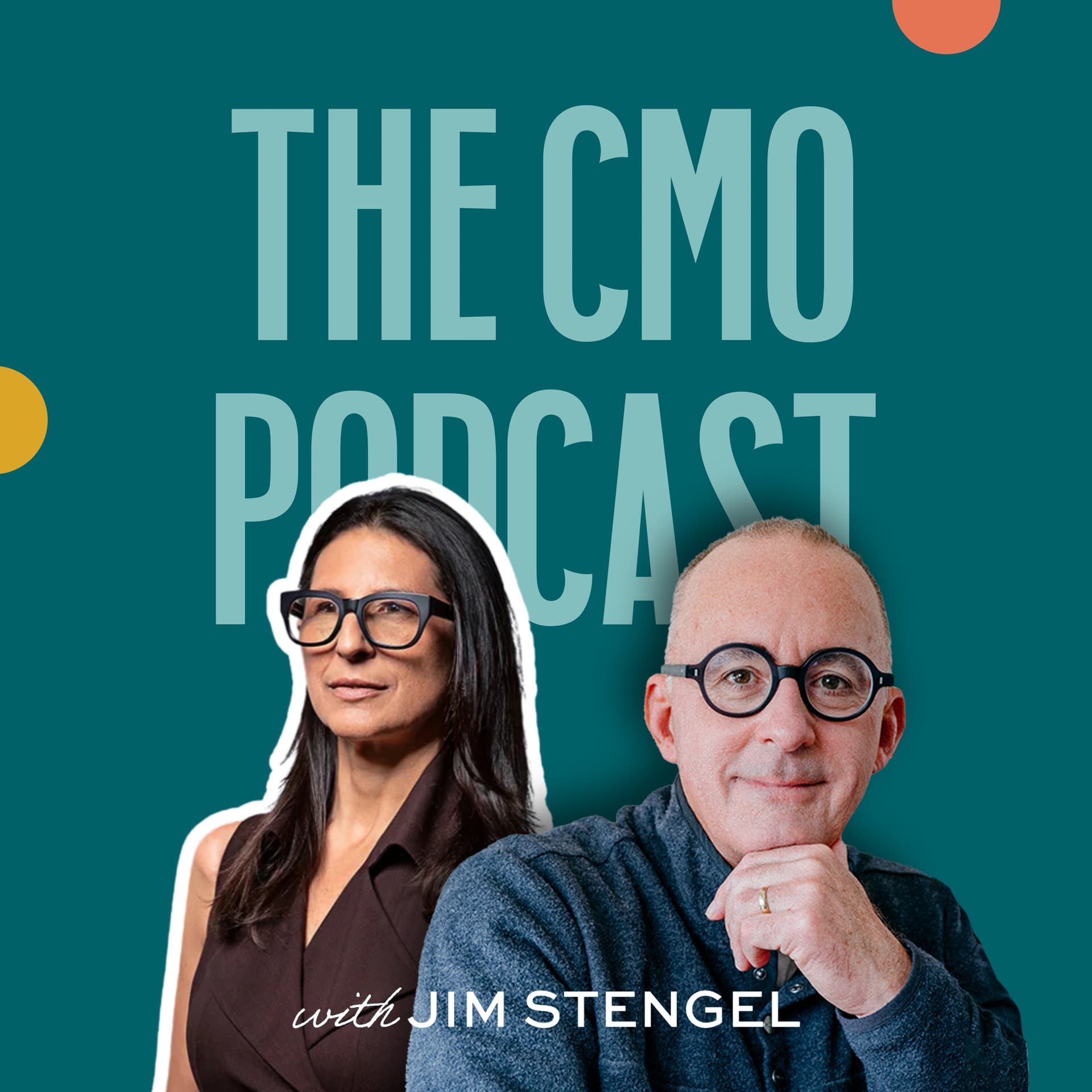
Long before our guest this week became the CMO of Levi’s, he was rocking the brand as a kid, breakdancing with his brother in shell-toe Adidas and Levi’s denim. Fast forward a few decades, and he’s now leading one of the most admired brands in the world.
This week Jim welcomes Kenny Mitchell, SVP and Chief Marketing Officer of the Levi’s brand at Levi Strauss & Co. The legacy brand was founded in 1853 by Bavarian immigrant Levi Strauss during the California Gold Rush. Originally designed as durable workwear for laborers, now 173 years later, it is the market leader in denim apparel, generating more than $6 billion in annual revenue.
Kenny joined Levi’s in 2023 after serving as CMO of Snap Inc., bringing with him a track record of driving growth and cultural relevance. Since joining, he’s been focused on creating “modern-day moments” for the brand, connecting Levi’s legacy to today’s culture, from high-impact partnerships to the brand’s return to the Super Bowl with its “Behind Every Original” campaign. Previously, he has held senior marketing roles at McDonald’s U.S., Gatorade, and NASCAR.
Tune in for a conversation about growth, culture, and leadership, and what it really takes to move a brand, and an organization, forward.
See Privacy Policy at https://art19.com/privacy and California Privacy Notice at https://art19.com/privacy#do-not-sell-my-info.