In short
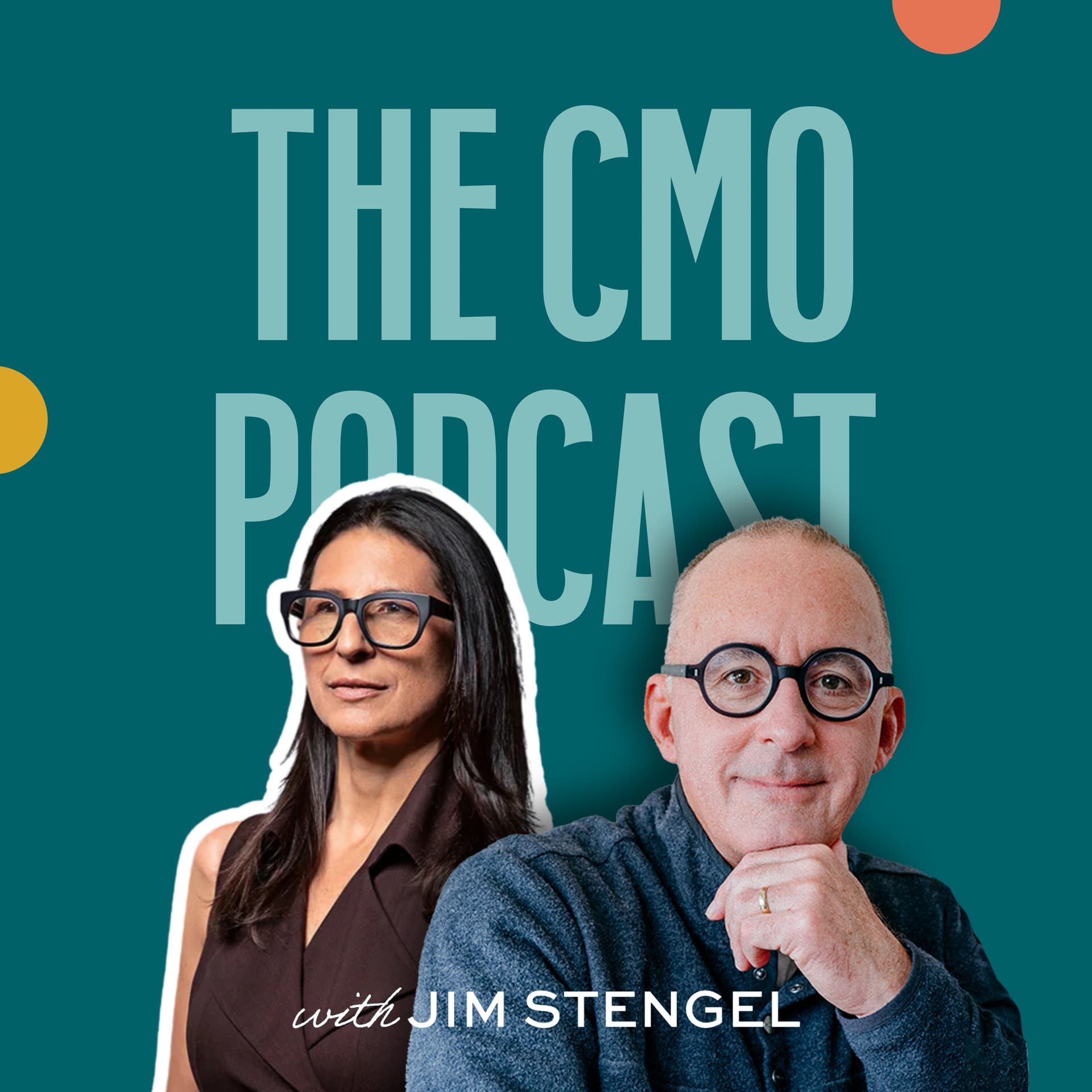
The CMO Podcast - Episode Summary
Episode Title
Kofi Amoo-Gottfried (DoorDash) | The DoorDash Super Bowl Bet That Changed Everything
Episode Overview In this episode, host Jim Stengel sits down with Kofi Amoo-Gottfried, the Chief Marketing Officer (CMO) of DoorDash. They discuss Kofi's journey from a restaurant delivery application to a multi-category commerce platform, touching on his impactful marketing strategies, risk-taking mentality, and the lessons learned from his experiences, including a groundbreaking Super Bowl campaign.
Key Guests
- Kofi Amoo-Gottfried: CMO of DoorDash
- Jim Stengel: Host of The CMO Podcast and former CMO of Procter & Gamble
---
Key Discussion Points
Kofi's Background
- Origins: Born in Ghana and moved to the U.S. for college.
- Career Path: Started in advertising at Leo Burnett, followed by roles at Wieden+Kennedy and Publicis before transitioning to the brand side with Bacardi and Facebook.
- Role at DoorDash: Joined in 2019 as VP of Marketing; became the first CMO in 2022.
DoorDash's Growth and Strategy
- Transformed from a food delivery app to a $14 billion revenue multi-category commerce platform.
- Aims to become a "24/7 life assistant" for customers, addressing a wide range of needs beyond food delivery.
- Expanded offerings to include convenience and grocery items, as well as partnerships with various merchants.
The Importance of Risk-Taking
- Kofi reflects on his biggest professional risk—leaving Wieden+Kennedy to establish an agency in Ghana.
- Emphasizes a culture of calculated risk within DoorDash, illustrated by the memorable "DoorDash delivers all the ads" Super Bowl campaign.
The Super Bowl Campaign
- Aimed to showcase DoorDash's broad offerings by delivering all products featured in Super Bowl ads.
- Highlighted the collaborative effort between DoorDash, Wieden+Kennedy, and various brands.
- Achievements included 8 million entries and significant media engagement, reinforcing DoorDash's brand recognition.
Leadership and Team Culture
- Kofi discusses the vital role of leadership and team dynamics for success:
- Emphasizes the need for autonomy and accountability in achieving marketing goals.
- The value of hiring adaptable, ambitious talent to navigate the fast-paced environment.
Personal Insights
- Kofi shares lessons learned from his uncle, Kofi Annan, highlighting the importance of empathy, connection, and the willingness to have conversations with diverse individuals.
- Encourages maintaining close friendships that provide grounding and perspective, regardless of professional success.
---
Key Takeaways
- Build a Culture of Autonomy: Foster an environment where teams have the freedom to achieve set goals without micromanagement.
- Lean into Risk: Embrace bold strategies that differentiate the brand while aligning with overarching objectives.
- Career Choices Matter: Seek challenging roles that stretch your thinking and capabilities.
- Stay Authentic: Be true to yourself and maintain connections that keep you grounded.
Closing Remarks
- The episode concludes with encouragement for listeners to reflect on their careers, embrace risks, and foster meaningful relationships both personally and professionally.
---
This episode encapsulates the dynamic nature of marketing leadership today, showcasing Kofi Amoo-Gottfried's journey and the innovative strategies that have driven DoorDash's success in a competitive landscape.
Written by AI. May contain mistakes. Listen to the episode to check what was said.
Chapters
Tap a time to open that second in VOKofi Amoo-Gottfried's Background
1:10 to 2:26
Explore Kofi's journey and his role at DoorDash.
“Kofi, what's the first brand you remember having an impact on you as a young boy?”
Influence of Uncle Kofi Annan
2:26 to 3:40
Learn about Kofi's relationship with his famous uncle and its impact.
“My guest this week is a rock star in our industry.”
Lessons from Kofi Annan
3:40 to 8:08
Discover the valuable lessons Kofi learned from his uncle.
“In his LinkedIn post, he noted that seven has always been his lucky number.”
Career Risks and Growth
8:08 to 12:42
Hear about Kofi's biggest career risk and the impact on his development.
“He would have been, he would have been an all time CMO.”
Navigating Challenges in Advertising
12:42 to 14:03
Insights into overcoming challenges in the advertising industry.
“and most meaningful from a growing me as a leader and as a marketer and as an operator.”
First Principles Thinking in Business
14:03 to 14:59
Explore how improvisation and first principles thinking apply in challenging markets.
“So everything was different every day, which is how I put my headline.”
Personal Insights from Kofi Amoo-Gottfried
16:48 to 19:31
Discover Kofi's personal favorites from DoorDash and insights into company culture.
“And I first want to get this personal with you and ask you a couple questions about you and DoorDash.”
The Unique Role of CMO at DoorDash
19:31 to 21:06
Understand the multifaceted responsibilities and challenges of Kofi as CMO.
“So it's this exercise of constantly just trying to figure out what the next iteration of this thing is.”
Building a Dynamic Leadership Team
21:06 to 23:26
Learn about strategies for hiring and managing a leadership team in a fast-paced environment.
“Like one of our core values is this notion of like operating at the lowest level of detail.”
DoorDash's Growth Strategy and Execution
23:26 to 28:03
Examine the strategic principles and daily execution that have driven DoorDash's success.
“Because if you're in a place like this and you get upset or frazzled by things changing, it's going to be painful because things will change all the time.”
Show all 25 chapters
The Importance of Accountability and Autonomy
28:03 to 32:16
Learn how clear accountability and marketing autonomy drive success at DoorDash.
“The mentality is that like, we can always keep doing better for our customers on every side of the marketplace.”
The Unique Culture of DoorDash
33:16 to 35:26
Explore the low ego and high ambition culture that keeps employees engaged at DoorDash.
“You've been there seven years, which is a lot longer than other places, right?”
Becoming a 24/7 Life Assistant
35:26 to 38:24
Understand DoorDash's vision of being a 24/7 life assistant and its broader implications.
“I've heard the metaphor used for your company.”
Risk and Creativity in Marketing
38:24 to 42:04
Learn about the risk-taking culture at DoorDash that enables groundbreaking marketing initiatives.
“Kofi, what are the signals that you're making progress on that, fulfilling that mission?”
The Challenge of Super Bowl Marketing
42:04 to 43:18
Learn about the unique pressures and strategies for standing out during the Super Bowl.
“All of those things were calculated risks that paid off.”
Creating an Engaging Super Bowl Campaign
43:18 to 45:07
Discover how DoorDash crafted a compelling campaign to engage users during the Super Bowl.
“So then it was like, OK, is it a sweepstakes?”
Measuring Success in Marketing
45:07 to 46:54
Understand the metrics and outcomes DoorDash achieved from their Super Bowl strategy.
“But the most critical ingredient is probably risk tolerance and daily problem solving, both of which are present here.”
The Importance of Personal Connections
46:54 to 47:24
Explore how personal relationships influence professional success and grounding.
“I mean, and it's, and the key part of it, fantastic idea, but it was your strategy.”
Building Lifelong Friendships and Support
47:24 to 48:34
Learn how enduring friendships provide support and grounding in life.
“Okay, let's get on to the creative brief.”
Balancing Multiple Roles in Life
48:34 to 50:28
Discover strategies for managing family, career, and personal commitments effectively.
“Big John, the other John lives in Ghana.”
Influential Marketing Experiences
50:28 to 53:01
Hear about key clients that shaped Kofi's views on marketing and branding.
“It was fantastic being able to like be with my guys, but also like, you know, getting stuff done.”
Key Lessons from Advertising Careers
53:01 to 56:01
Understand valuable lessons learned from various advertising roles and clients.
“I started at Leo Burnett and all of our business was on Kellogg's.”
Campaign Insights: Heroing Women in West Africa
56:01 to 56:55
Discover how a campaign shifted focus from product to the role of women in society.
“Like if you think my life sounds complicated, like you spend one day with these people, you realize that this is actually insane.”
Brands that Shaped Kofi's Youth
56:56 to 58:06
Explore the impact of Coca-Cola and unique local brands on Kofi's upbringing.
“Kofi, what's the first brand you remember having an impact on you as a young boy?”
Inspiration from Kofi Annan
58:07 to 59:28
Hear Kofi's reflections on the lasting influence of his uncle, Kofi Annan.
“Like the high degree of certainly like emotional resonance, but like also utilitarian.”
Transcript
Automatic transcript. May contain errors.0:00Jim Stengel:Before we dive into today's episode, we would very much appreciate a moment from you to make sure you're subscribed to the show on Apple Podcasts, Spotify, or wherever you listen, along with optioning to auto-download the episodes. It really is the best way to never miss an episode, along with supporting the show and the amazing team that helps me bring it to you. And while you're there, leave us a rating or review. It only takes a minute and helps more people find the show and helps us learn. And of course, share this episode with a friend or colleague who might enjoy it. We wouldn't be here six years later and still going so strong without you all, our community.
0:36Jim Stengel:So thank you for being part of it. Now onto the show. Hey, it's Howie Mandel and I am inviting you to witness history as me and my Howie Do It gaming team take on Gilly DeKing and Wallow 267's Million Dollars Gaming in an epic Global Gaming League video game showdown. Four rounds, multiple games, one winner, plus a halftime performance by multi-platinum artist Travi McCoy. Watch all the action and see who wins and advances to the championship match against Nioh right now at GlobalGamingLeague.com. That's GlobalGamingLeague.com. Everybody games. Kofi, what's the first brand you remember having an impact on you as a young boy?
1:15So I'd say the first ad I was ever captivated by was for like a nail, actual like hammering a nail, like a nail company. But they had done this thing that had never been done before, which was like, it was a guy rapping, actually in Fante, about how good these nails were. And it was like the first time I had heard before like Afrobeat was a thing. This was before Hippolyte was a thing. This was like, we're talking 1992 maybe. And this dude is like rapping about nails. And all of us knew it, you know, because it was so cool. And so like that always sticks out.
1:49Jim Stengel:Hi, I'm Jim Stengel. I've helped hundreds of major brands discover and activate their purpose. Because when a brand's purpose is clear, compelling, and authentic, profit naturally follows. Each week, I welcome the CMOs, the chief marketing officers of your favorite brands, to speak to how their job is so much more than marketing. These leaders share their inspiration and challenges, along with how they try to build a full, healthy, and happy life in and out of the office. And it's that energy that reaches everyone they touch. And we're glad you're here to feel that energy and to learn from these remarkable leaders.
2:24Jim Stengel:So here we go. My guest this week is a rock star in our industry. Kofi Amu Gottfried is the chief marketing officer at DoorDash. It is the largest food delivery platform in the U.S. with about$14 billion in revenue, over$3.2 billion orders in 2025, and a retail media business that surpassed$1 billion in revenue last year. DoorDash has publicly traded with an astounding market cap for a 13-year-old company of$78 billion. And by the way, they're way bigger than a food delivery platform. Their goal really is to be a 24-7 life assistance for all its stakeholders and customers. My guest Kofi joined DoorDash in 2019 as VP of Marketing before being promoted as DoorDash's first chief marketing officer in 2022.
3:07Jim Stengel:Kofi oversees marketing across consumers, merchants, and dashers, and has helped transform the company from a restaurant delivery app into a multi-category commerce platform. Born in Ghana, Kofi came to the U.S. for college in Minnesota, where, as he says, he stumbled into marketing. He first worked at ad agency Leo Burnett, then widened Kennedy and Publicis before stepping to the brand side with Bacardi and Facebook. After our recording, Kofi announced that he'll be stepping down from his role at DoorDash in May. This marks the end of a chapter where Kofi helped shape one of the most recognizable brands in tech and commerce.
3:40Jim Stengel:In his LinkedIn post, he noted that seven has always been his lucky number. He was born the seventh, DoorDash is the seventh company he's worked at, and May will mark seven years with the company, the longest stint of his career. Teaser, Kofi has a very famous uncle, which we will talk about right off the bat. This is my conversation with a CMO who swings big, who is also a proud husband, father, and friend. Here's Kofi. Kofi, welcome to the CMO Podcast. Now, were you actually born on a Friday? I was born on a Friday. Thank you for having me, Jim. And for those who don't know, in Ashanti, Akan culture in Ghana, where I'm from, male born on a Friday is named Kofi.
4:22And so, yes, I was indeed born on a Friday. But it is possible to be named after someone and not to be born on a Friday.
4:29Jim Stengel:Okay. All right. Well, listen, I was astounded by several things in my research on you. And maybe the biggest is that your mother was a twin sister of Kofi Annan, the Secretary General of the United Nations for so many years, and someone who I admired from afar. I was living in Europe at the time he was Secretary General. So my first question, did you see a lot of Uncle Kofi growing up? Yeah, I did. And this is always such an odd thing for me because for a long time, he was just Uncle Kofi. You know what I mean? He had obviously worked at the UN his whole career, but we would see him probably every summer when he came to Ghana.
5:03Obviously, him and my mom were very close. And I lost my mom when I was young, probably nine or 10. And in the Shanti culture, the family takes responsibility if something like that happens to you. So he became sort of another surrogate parent. When I eventually came to the States for college in 97, I actually wasn't 18 yet. So he was my legal guardian. So the first place I lived in the United States, which is crazy, was for 10 days. I stayed at the official residence of the UN Secretary General before I went on to college in St. Paul, Minnesota. But yeah, he's obviously been a massive influence and a massive part of my life.
5:40So obviously then he became this sort of like global icon, but we knew him for a long time before that happened.
5:49Jim Stengel:Nobel Prize winner too, by the way. Absolutely. Absolutely. So what did you learn from him? I mean, now that you'll have perspective on it, right? You were kind of a kid back then. As you look back on it, what do you take forward to this day? Well, there's probably two things that stood out. One was that he was willing to have the conversation with anyone. so there was no one that he thought of as beyond the pale in his role as sort of the world's foremost peacemaker he had to be able to sit across the table from people that he might find personally objectionable but he was always willing to have the conversation and he always believed that you could learn something from having that conversation and i think like that's something that we've lost you know we're sort of in this like highly polarized environment where people have lost family members and friends and you know neighbors and all sorts of things because of differing political views.
6:38And I think like, that's one thing that I learned from him is that you have to be able to have, if you can't have the conversation, there's nothing to be done. So he was always open to having the conversation. The second thing is I'd say like he, regardless of his position in society, like it was incredible being out with him when he was secretary general and later, because, you know, he would have to come into places with, you know, enormous amount of security and secret service and sort of all of these things. but then once you got to that place i remember him coming to visit in london when our when our son was born and once he was in the room sort of all of that faded away and he would deal with everyone in their full humanity he was not like i'm the un head of the un or the former head of the un and it's like he would be having a conversation with the waiter and asking them about their background and if he got in a cab he would be getting into it with a cab there was a time when I was actually hospitalized in the UK and he came to see me in the hospital.
7:35And it was nuts having him in the hospital because everyone who works in the healthcare system in the United Kingdom is an immigrant, which means they all know exactly who he is and the hubbub that he created. And he was just sort of swapping stories with the nurses and just seemed fully at ease in that environment. So I think the other big thing I learned from him was that like the thing that matters most is sort of like the connections and relationships and being with people, sort of shrinking power distance. And I thought he was like incredible at that. I'd like really seeing people for who they were and like creating space for them to be.
8:07He would have been a great CMO. He would have been, he would have been an all time CMO. Thankfully, thankfully he did something better, Jim. Yes.
8:16Jim Stengel:Yeah. Yeah. Okay. So, but what did he think of your career choice? I'm sure you talked about that with him. Yeah, we did. I mean, look, he was, he was incredibly, I don't think the choice of career mattered as much to him as like, you know, I think when you grow up in sort of traditional Ghanaian African immigrant cultures, you know, I would be considered a failure by many. Like I'm not, I'm not a doctor. I'm not a lawyer. I'm not an engineer. I didn't do one of like the three jobs that everyone's supposed to do. But no, I think he was just very proud that like I had found something that I was interested in that lit me up, that I was good at, and I was able to sort of build a life myself doing this thing that I enjoyed.
8:55And then, you know, one of the things that was incredible much later in life is when he was turning 80 at the time I was at Meta. And we actually worked inside the company and with a bunch of partners with the Kofi Annan Foundation, with folks like David Jones at One Young World to build a campaign to raise money for the Kofi Annan Foundation so that he could continue to do the work that he was doing around election integrity and sort of the causes that mattered to him later in life. So it was great to be able to take the things that I'd learned how to do over that time and then help drive an initiative that he cared about for his foundation, given just how wildly influential and important he was in my life.
9:31Wow. Full circle moment.
9:33Jim Stengel:For sure. For sure. Hey, another thing I learned about you was that you feel the biggest risk you have taken in your career to date was to leave Wyden Kennedy way back in 2008, nine, where you were working on Nike, right? The prime account to return to Ghana to set up an agency under the publicist umbrella. That's right. As you look at that, why do you feel that was your riskiest move? Well, I mean, I think everyone thought I was crazy, Jim. No one, like legitimately, no one thought this was a good idea. Someone did. They talked you into it. Someone talked you into it. Carter Murray. Carter Murray and Richard Pinder.
10:08They thought it was a good idea because, you know. Oh, wow. Okay. It was going to be helpful to them as the people at publicist. But I think generally most of the people were like, oh, this is. And I think people could get their head around it, but not as a career decision. People could get their head around it as like, oh, this is something you want to do because you're from Ghana and this allows you to go back home and sort of spend time with, you know, your dad and all of these things, which was certainly part of it. But I think most people sort of went, I have no idea what the advertising industry in sub-Saharan Africa looks like.
10:39I've never heard of it. If anything I know about maybe South Africa, maybe I know about MENA, never heard about West Africa. And you're the head of strategy on Nike or Wyden and Kennedy. Like one of these things is not like the other. You know, one of my jokes is that when I told this actually happened, but I thought his response was so funny. Spence Kramer was the global account director on Nike at the time. And he threw a chair when I told him. He was like so frustrated that I was leaving. And then he said, this is like me moving back to Ohio to manage a Bob Evans. I was like, I don't even know what a Bob Evans is, but I'm pretty sure it's not like, I now know what a Bob Evans is.
11:15It's pretty good. Not a bad purpose in life. It's pretty great. I've since been to a Bob Evans, but I thought that was like a good reflection of like how I think most people thought about it.
11:25Jim Stengel:So why did you do it? And how do you feel about it now as you look back on it? Well, I mean, I did it definitely for the reasons of like being back home. I think there was like a personal, I don't know if I would have done it if it was in another like part of the world. Going back home mattered a lot to me. Feeling like I could contribute in some sort of small way to, you know, Ghana's development story mattered to me. But then the other thing that I didn't know for a fact but felt pretty confident of was that I would learn more doing that than pretty much anything else I could. And those three years, like, changed me.
12:01Like, it made me a different animal, which I've since now come to think of as like, that's the bar for what a job should do. Like, can a job change how your mind works in some material way? You know, and I had to do every job. I had to, you know, hire everyone. I had to find the building. I had to find the clients. I had to deal with, you know, when we weren't, you know, hitting our revenue. Like, I had to deal with all of it. Working across 23 countries, dealing with everything from, you know, daily frequent power outages to coup d 'etat. us that meant that all of a sudden, you know, one of our clients couldn't operate in the market and we had to adjust in real time.
12:37So I would say like, I wouldn't trade that experience for anything. It's by far the hardest thing I've ever done, but it's also like the most meaningful personally and most meaningful from a growing me as a leader and as a marketer and as an operator. It made everything that came after that feel easier. Cause I'm like, listen, if you've had to be in Lagos dealing with the Procter and Gamble clients who are incredible, we had that RLB and dealing with just the complexity of that operating environment and finding a way to make it work, everything after that is doable.
13:10Jim Stengel:It's a great criteria. You just said that go to a job that changes how your mind works. I mean, we all get presented with opportunities in our career. As I reflect on mine, which I've done frequently, there were two assignments that and it wasn't the CMO at P &G. It were two assignments that really stretched me, changed until I thought one was going to an acquisition where we were not wanted. So you had to bridge, you had to listen, you had to exercise empathy, but at the same time, bring them in to the new company. They're not the old company anymore. They're part of the new company. So that was a tough one.
13:45Jim Stengel:And then following that, I was the second general manager that P &G sent to Czech and Slovak Republics when they were still wildly developing. We had no chains. We had no supermarket chains. It was all kiosks. And just to think about everything, as you say, cash flow. Yeah, theft, cash flow. The money has to go to shoebox. There's no cash system. Yeah, I've been there. Everything. So everything was different every day, which is how I put my headline. So I think those assignments are so good because once you do them, you're right. You go into almost anything with a bounce in your step and a level of confidence.
14:22Yeah. And I think it forces you, I don't know if you felt this, but it forces you to be like truly a first principles thinker because there's no frameworks you can apply to some of these places. You can't sort of be like, oh, here's the thing that I learned about these things. I'm just going to plug them in here because none of that stuff exists. You know, one of my clients at Nestle who just had this brilliant observation where we're chatting about things like market share and we didn't have good enough data because it's all informal economy. To your point, like, yes, there's a handful of supermarkets, but everything else is kiosks and open markets and it's cash.
14:58So no one is like tracking share data with the fidelity that you would want. And we're talking about how you do that. And they sold a powdered milk. And he said, you know, I go into the markets and I look at all the women who are selling like grated cassava and rice and all these things. And they use the powdered milk cans as a measuring can to sell the thing that they're actually selling, the sugar and the rice and the cassava. So I literally count of the cans that I see in the marketplace, how many are mine. And that's my market share. And these are the sorts of things that you would have to do.
15:28You have to improvise. Yeah.
15:36Jim Stengel:We all want to stay ahead of where digital video and media are headed. And that's exactly what you'll get at the 2026 IAB New Fronts happening March 23rd through 26th in New York City. Right now, brands and agencies can gain free access with a promo code CMOPodNew26. Hosted by the Interactive Advertising Bureau, New Fronts is where the biggest platforms, streamers, and creators unveil new content, ad innovations, and partnership opportunities for the year ahead. If you work in marketing, media, or advertising, this is your front row seat to what's next. Expect bold stage reveals, first-look announcements, and likely surprise celebrity appearances that make headlines.
16:16Jim Stengel:It's four days of future-facing insights across streaming, creator media, commerce, AI, and measurement, all designed to help you plan smarter for 2026. Experience the evolution of digital video here. Head to iab.com slash newfronts, link in the show notes, and register with promo code CMOPodnew26 for free access. We'll see you at the 2026 IAB New Fronts.
16:48Jim Stengel:Okay, let's move into DoorDash. And I first want to get this personal with you and ask you a couple questions about you and DoorDash. Then we'll get into your role as CMO. The first one is the most ordered item or the most visited restaurant or store for you? There's probably two. So there's a brilliant sort of sandwich place, the Milburn Deli, a regular order from the Milburn Deli. So that one stays up there. I'd say the other one is there's a Ghanaian restaurant not far away from my house called Nima African restaurant. The jollof rice, you know, comes to my house probably too many times every month.
17:22That's okay. We make it work. I'd say those two are probably for me personally, the top things. The other thing is we have our own line of dark stores on Nordash called Dash Marts that are convenience stores. And one of them is close to my house. And those are incredible because the quality is super high because it's all controlled end to end. And it's like a quick delivery. So whenever I'm doing snacks, which, you know, I have two kids, 10 and 12, a lot of snacks come from my house. I'd say Dash Mart is the go-to for like ice cream and snacks and those types of things.
17:53Jim Stengel:What's your favorite late night order? I am a late night person. I'd say late night order, it's actually probably ice cream. It's probably a little Ben and Jerry's. Ben and Jerry's tends to make its way to a house around about 9, 9 p.m. every now and then. So that's probably the one. What's one word to describe the DoorDash culture? Ambitious. How about one word to describe being CMO at DoorDash? Oh, one word to describe being CMO at DoorDash, nonstop. As you are, right? 100%. It does. As you are. We operate a multi-sided marketplace. So, you know, I think most people, when they think of DoorDash, think of it through the lens of sort of being a consumer.
18:32But we also have an entire sort of B2B side of this, which is like getting, you know, merchant partners on the platform, making sure they're successful, whether that's a large enterprise like Procter & Gamble or McDonald's or a small business like Nima African Restaurant. But then we also have the driver side of the house. So, you know, my team is also responsible for acquiring, engaging, onboarding dashers, helping them be successful on the platform. And then in the last couple of years, we've also added advertisers. So there's always something that's breaking. There's always something to go figure out.
19:08There's always something to go build. And then as we've also had global aspirations over the past couple of years, that's also created. We started when I was here seven years ago, this was pretty much a US company operating in one vertical, which was restaurant delivery. And now we're in 40 markets. And you can get everything from some of the things we've talked about to a bridal dress on DoorDash. There's very little that you can't get on there. So it's this exercise of constantly just trying to figure out what the next iteration of this thing is.
19:37Jim Stengel:Your scope, as I was doing my research and you just went there with us, is big, right? It's a lot bigger than other CMOs that we talked to in this show. So could you talk a bit about that? You went there, your responsibility for bringing Dashers in, for B2B, B2C, for ads on your platform. It's a lot. So how do you manage it? How do you focus? And I suspect the scope is different from four years ago when you became CMO at the company. Yeah, I'd say the scope is materially different because the business is different, right? So the scope four years ago would have been maybe a little bit of restaurants plus, maybe convenience, but we weren't huge in grocery.
20:17We weren't huge in retail. We were in Canada and Australia and New Zealand, but not at the scale that we are today. So I think the scope and the complexity has definitely grown as we think about new businesses. You know, we didn't have reservations as a thing that we were doing on the platform. But I would say like the way you get it done, first and foremost, is by having an incredible team. Right. Like the scope is super broad. And so the way that you can actually operate across all of it is hiring amazing people. And I have an incredible leadership team that sort of sits across whether they're managing an audience or a function or market.
20:51and then enabling, empowering, and trusting those people to do their best work while then being able to like still operate. You know, I think one of the challenging things about leading a DoorDash is like, none of us just get to be a leader. Like we're all fully expected to be in the weeds. Like one of our core values is this notion of like operating at the lowest level of detail. So it's that balance of like having the right people, but still being able to go deep on all the surface areas as, as intended. And then where I ended up spending my time into being like, okay, where, where are we particularly challenged in a particular moment?
Read the full transcript
21:23Or is there a, you know, I think about this time of year, for instance, like with snow storms and huge demand and disruption, like the supply side of the house on the DASHA side is always challenging in the first quarter. So I may end up spending more of my time there. You know, we did the deal to acquire Deliveroo the back end of last year. So I'm spending a lot of my time on with the Deliveroo team on like, how do we integrate the function across both companies and make sure that we're learning from each other. So I'm spending a bunch of time there. So that's sort of how it flexes, which is the like from quarter to quarter, I may have like slightly different areas of focus, depending what's happening in the business, but I'm accountable for all of it, which is, you know, at any given moment, if someone wants to know how we're doing on, you know, driver acquisition this week, or how many merchants we signed up, like I need to understand what we're doing and be able to react to that.
22:17Jim Stengel:It's tough to build a leadership team in such a dynamic company. 100%. Right? So your leadership team now, I suspect, looks a lot different from what it did three or four years ago. Any tips or advice or counsel for those listening who are also trying to build the capabilities and the people for preparing you for the future? So how do you think about that? Because you're obviously doing it, you've done it, you continue to do it. Yeah, I think one of the things that we talk a lot about is this notion of slope and hiring for slope. Because we think like most to the point of this place is entirely different than it was four years ago, certainly than it was seven years ago.
22:55Everyone's job is going to change probably every 18 months. So if you sort of start with that as like the premise, all of our roles are going to be more complex in some way every year. Then the thing you have to solve for is like, can I hire people who can adjust to that complexity? Can I have people who have the slope? Can I have people who are excited to build, who can deal with change, who can deal with ambiguity, who can deal with like all of those things? So a lot of what we try to do is try to identify talent that we think has that sort of like that hunger, that builder mindset, that entrepreneurial bent.
23:27Because if you're in a place like this and you get upset or frazzled by things changing, it's going to be painful because things will change all the time. You know, when I started in 2019, I was talking to one of our GMs and he said, look, everything was breaking and, you know, the site was going down every week and sort of all of these things. We're just dealing with hyper growth. And so I was complaining to him about it. And he was like, hey, man, if you wanted to work somewhere that grew 2 % year over year and was like super stable, you should go do that. But for what this is, this is the reality.
24:05Jim Stengel:Pressure is a privilege. Some athletes said that, right? The pressure is a privilege. Exactly right. Now, you're only a 13-year-old company, right? And you have a dominant market share. And I've seen it ranges from, I don't know, 60 to 70, depending on what you're looking at and so on. But that's big. That's big by P &G standards, right? That's kind of tied in Pampers level. So we like those kinds of brands back then. One day, one day, one day we'll be tied in practice. I don't think we're quite there yet. But you're the number one player by far. It's not a category you created. You were not the first mover.
24:37Jim Stengel:So how did you do it? You and your team and the colleagues that came before you, I mean, 13 years, market leader, big category, growing category. What was the playbook or what were the principles that gave to this amazing rise? Well, I think there's a couple of things. I think there's some strategic things, but a lot of it is, and I'll talk about those, but a lot of it is also just daily execution. I think DoorDash's superpower is that day in, day out, we are in the weeds. We're in the numbers. We are operating at a very, very high level. I think that's the sort of thing that's hard to explain outside and easy to underestimate if you don't understand it.
25:16But this is a company that runs, you know, a massive daily business in a daily way where we're focused on all sorts of like input metrics where every week we're meeting together as a leadership team and taking action. And so I think that sort of executional discipline and rigor matters a great deal. But I think strategically, there's probably a couple of principles that early on mattered. So we talk a lot about being customer obsessed, not competitive focused as one of our values. And the way that that shows up early on is, you know, we launched in Palo Alto. So this was a company that was built by students at Stanford called Palo Alto Delivery.
25:50And so the first place that we operated was Palo Alto. And once it became clear that this could be like a going concern, the next question then became, do you go to San Francisco or do you go to San Jose? And two things were in our favor. One was like, there was a constraint, which is that like delivery up until that point was an urban phenomenon. And so you had like, every big city had delivery companies. So we looked at San Francisco and sort of went, we don't have the money to compete in San Francisco. So the constraint was super helpful. But it's like, we should try San Jose. The prevailing industry wisdom at the time was that you could not make delivery work in the suburbs.
26:23It was this idea that you needed dense urban environments, that the economics would never work. And so no one had actually gone and explored that and sort of gone and listened to the customers in that area. But we knew from operating in Palo Alto that that was just false. There were businesses that had unmet demand, that there were consumers that would be looking for this service. There were dashes, people that would want to work, gig work. And so that I think that pivot of sort of going into San Jose first sort of became what was then known as the suburban strategy, which is while everyone started in the cities, we started in the suburbs and built up Bracens from there before we moved into the city centers, which were like highly contested.
27:00So like, you know, even that 67 market share and food delivery, if you go into the suburbs, it'll be even higher. And if you go into like some very urban markets, it'll be a lot lower, right, depending on sort of how we built our business. And so I'd say that is one piece of it. I'd say the second piece of it is like a lot of what the industry was at the time. If you look at folks like Grubhub was lead gen. They were not doing the logistics side of the business because the logistics side is hard and it's expensive. And so like what you could do as Grubhub is you go, I will build a marketplace that highlights all the restaurants.
27:29I will then take a commission for driving your traffic, but I'm going to leave the delivery up to you. So that worked for restaurants that would do their own delivery. but over time you just realize that that TAM is much smaller than being able to enable delivery for everyone. And so I think both of those things, which all start with like really understanding sort of the customer and not taking the prevailing industry wisdom as gospel in a lot of ways mattered. And then you tie that with sort of like a relentless daily execution machine and you just keep going at it. And, you know, we have this notion of being 1 % better every day.
28:02And if you do that enough, it just compounds over time and you end up being sort of where we are today. But you know, we don't think we've won. You know what I mean? That is just not the mentality. The mentality is that like, we can always keep doing better for our customers on every side of the marketplace. And we have a lot of room to grow on everything from the core restaurants, to grocery, to convenience, to alcohol, to retail and beyond.
28:26Jim Stengel:Now you have a CEO who has got to be a CMO's dream, right? He's highly customer and employee centric. A hundred percent. He reads emails, comments for customers, employees, acts on them, gets inspired by them, keeps them in touch. So what's it like working with Tony, who's a founder as well? I mean, he is, I think Tony will go down as like a generational founder. I think he is, he has a few things that I think you want in a founder. And I think the leadership team at DoorDash, inclusive of, you know, the president and CEO, Premier, Adaka, who I report to all share this trait, which is the like, they're wildly ambitious.
29:03So the thing that they will do is push really hard on like, how hard are your goals? Like, are these goals truly ambitious? Are they actually a stretch? Are we actually solving a problem for the customer? Like what gets better in a customer's life as a result of us doing this? And like, really try to ground all of us in the work, in like the value that we're creating for people and that we're being ambitious is enough. And then they do an incredible job of like giving you a high degree of autonomy. So like once the goals are set and you're accountable for those goals, so, you know, across marketing, we have a wide variety of goals, you know, that we've talked about, like new customer acquisition or getting people onto a subscription product dash pass or getting Dasher to turn out this week.
29:45But once those goals are set, like I'm now on the hook for those goals. And then what ends up happening is that, but then you have the autonomy to operate in terms of what we think makes sense to go hit those goals. So long as we're respecting the budgets and the constraints and the payback periods and all of those things. And I find that like working certainly in a company that operates that way and being able to work for a founder, for me has been just like enormous because I can take full responsibility. I think we find that like most, not just in CMO roles, but I think in most jobs, you end up with this mismatch between like what you're accountable for and like the freedom with which you can go after the thing that you're supposed to hit.
30:21And like, one of the things that's kept me at DoorDash this long is that, you know, in the almost seven years I've been here, there's nothing that someone else has approved. Like ultimately it lives or dies by the calls that we make as a marketing organization. And we have full accountability and full autonomy and full responsibility. And if we get it wrong, which by the way, we have many times, we will go fix it. If we're behind plan, it's up to us to figure out how to get back on plan. If we do something that doesn't land in the way that we expected. It's incumbent on us to understand why that happened and get better the next time out.
30:53But that sort of recursive loop of clear goals, clear accountability, clear autonomy, the room to test, learn, experiment, fail, get better is super rare.
31:04Jim Stengel:Yeah. I mean, it's a great lesson. I mean, the companies that I talk to, work with, have worked with who get into trouble, there's just not clear accountability. It often comes down to that. 100%. And when there's not clear accountability, when P &G got into trouble at times during its, it's because accountability wasn't clear. It's a powerful principle. And, and, you know, by the way, not super easy to execute. Not easy to execute, no. And you have to be willing to sort of build a culture that like fosters that, that allows it to work in a way that's like we are competitive vis-a-vis the external environment and we're obsessed with like delivering for our customers.
31:44but that's at the end of the day if you're doing that well everything else kind of sorts itself out and you have enough instrumentation to get really clear on like who owns what goal um but enough collaboration for that like when it gets blurry to just go work through it because there's times when it will get blurry and so i think all of that has been like really helpful to making it work but yeah you're right it's not it's not easy to set up it's not easy to run a company like this
32:16Jim Stengel:Hey, everybody. This is Andrea Sullivan, the CEO of Vive, and we produce the CMO podcast and are so excited to have partnered with Jim Stengel for so many years. Wanted to tell you a little bit about something that could be right for you. Vive is a program for entrepreneurs and business leaders who want to get more out of their life and become their best and happiest selves, both personally and professionally. We have a 12-month program that allows people to meet up with some of the best business leaders out there and additionally experts in the wellness sector so that you can learn how to nurture yourself.
32:51Jim Stengel:So we teach things around sleep optimization, meditation, all those good things as well. Please reach out to us at podcasts at vibe.co to get more information. That's P-O-D-C-A-S-T-S at V-Y-V-E dot co. Thanks for listening to the CMO Podcast and hope to talk to you more about Vibe.
33:15Jim Stengel:You said you love working with this company. You've been there seven years, which is a lot longer than other places, right? This job has been in this role. This company has been very sticky for you. And you've said why. Is there anything else you'd like to add to that? Why you've stayed so long and have had such a great time? Yeah, I think it's the things that we've talked about, but it's also the people, right? It's the people, it's the team that we've built, not just in marketing, but across the business. I think this place is also unique in the sense that this is a low ego company. It's a no bullshit company.
33:46Everyone's focused on getting the work done. There's very little politics. We grind, but everyone's bought into doing the work. And even though our ambitions and aspirations and goals are really high and we drive towards those with a lot of intensity, it never gets into the place where it's toxic. And so like when you find a place where all of those things are true and then as, you know, making a meaningful impact in the world in a real way, you know, we, we do this thing where we have a marketing offsite every year. And like, we try to do this more than that, but I try to pull out a bunch of user stories to just remind people like what we're actually doing here.
34:24But like behind the dashboards that we look at, there's like actual people's lives that are impacted. And we found this video last year, which was a woman who was like going dashing with her daughter in her car. And she was saying, hey, I'm just trying to make enough money every night because we're in a motel right now. And so my job is every night I go out and I make enough and that covers our motel rate. And I'm just like, this is what like a product is doing out in the world. And obviously we then went on and leaned in and did more than that to like help. And we've built this thing that we call the feel good engine, but we find these stories online and we just like lean in with them.
34:58You know, so we did this thing last year for back to school where everyone knows that like teachers never have enough resources. We said, hey, just tell us the 500 teachers on Twitter that you absolutely adore. And like, we're just going to take over and like hook them up for like that classroom going into the school year. And so like you just find that like our products play such a meaningful role in people's lives. And you can see, feel, hear that meaning. It's very real. It's very tangible. So I'd say that's the other thing that keeps me here.
35:25Jim Stengel:Let's stay on that. I've heard the metaphor used for your company. Your aspirations to be a 24-7 life assistant. That's right. Talk about ambitious, right? So could you tell us a bit about the power of that internally? And how did you arrive at that metaphor? I'm sure it just didn't fall out of the sky. It was a lot of discussion and customer work. But what does that mean to you and your team? Yeah. So I think this was, this is how we have described certainly like sort of what is the brand promise of DoorDash at its best. Right. And, and it came from this notion of like, you know, we started with, Hey, we deliver food.
36:01And again, as we talked about, most people think of DoorDash through the lens of the end consumer experience. But like, actually what we do is much broader than that in the first instance, without even getting into the categories, which is, you know, if you're a small business, that's looking to sort of balance the playing field. that's looking to figure out how do you survive and thrive in a world where foot traffic is no longer coming through your door, that's moving online. Like DoorDash can be a partner to help you figure that out. You know, if you're someone who's looking for a few more additional hours, additional ways to earn, like DoorDash can be the way that you do that.
36:34And certainly if you're someone who's looking to get a fix of canke and fried fish, which is like a much smaller problem in the scheme of all of this, like DoorDash can help you with that. So this was like first saying, let's actually broaden out like the role that we play. It's not just about the end delivery. It's about actually like meaningfully impacting these people's lives in some way. And then if you then go from that to also now, we're no longer just doing that for food. We're doing that for, in all sorts of ways. And again, you think about that through the lens of the end customer, but also through the lens of like, now all of a sudden, if you're a small bodega, you can also benefit from coming online.
37:10If you're a Kroger, a large grocery chain, we can help you figure out How do you reach customers who are no longer coming into your store? So we just found that this notion of like, how do we show up and meaningfully like help people do the thing that is that they're trying to do juxtaposed against like this insight where we said like modern life is a minefield. Like it's really, really hard to be like a human today. Like there's a lot of things competing for your time, for your attention. The state of the world is in flux. It seems all the time, particularly this week. And so modern life is a minefield.
37:42What role can our brand play? And it's to be there, to be that 24-7 life assistant. Like, how do we help you with all the jobs that you need to do? Whether you're a consumer, whether you're a Dasher, whether you're a business or whether you're an advertiser. And over time, there's probably more audiences beyond that. And there's more services that we can offer. You know, one of the things we do on the Dasher side, for example, is that audience, because of their financial position and like what they're looking for, they tend to be underbanked. So like we actually have a card product, financial services product that says, hey, how do we help you actually start to solve that problem?
38:15So a lot of what we think about is just through the lens of like, as we serve all these audiences across all of these needs, how do we become the 24 life assistant, 24 seven life assistant?
38:24Jim Stengel:Kofi, what are the signals that you're making progress on that, fulfilling that mission? Yeah, it's a really good question. I don't know that we have sort of a dashboard for that specific mission, but the way we think about it is generally like, is our service getting better? Right. So the way we would think about it is over time, we want a bunch of things to be true. We want to be able to like deliver everything in your city to you. Right. So can I get you the entirety of the selection that is around you? And so we measure that. Like, are we making progress on getting you all the selection that you could possibly want?
38:57not just in terms of the stores, but in terms of everything that's in every store. Because just because you have a store doesn't mean you have the full capital. So can both of those things be true? Then we think about it through the lens of like, and over time, are our prices coming down? So are we able to get you all the selection, get it to you in a way that's more affordable? If you think about probably the number one barrier for a category like this is the fact that like using a service like this is more expensive than doing it yourself, right? So like over time, we want that to get more and more affordable.
39:24And we've done a lot on that and we've seen progress, you know, so that selection, that's pricing and then quality. Like, are we getting faster? Are we getting it to you as quickly as you want it? And on top of that, are we getting it to you as few errors as possible? So we measure all of those things from the consumer standpoint. But then from the DASHA standpoint, we want actually DASHA pay to go up. Like we want to be able to get you more orders in the same time frame so that you're earning more over an hour so that your utilization is higher. on the B2B side, we go merchant profitability. So are we not just growing the merchants, but are they getting more profitable over time?
39:58So a lot of the metrics that we look at through the lens of like, are we becoming that 24 life assistant, seven life assistant, but are we making progress on what we consider like the most important inputs for our business on each side? And can we look year over year and say, yeah, that is getting better. And like, it's one of the things that like, I'm really proudest of is that we can look at our business over the past 13 years and go, yeah, it's gotten more affordable with more selection. Dashes have gotten paid more. Businesses are doing better. And you're going like the flywheel is actually working.
40:28Jim Stengel:I think you have your dashboard. Yeah. No, it's great. A really beautiful story. Kofi, we can't not talk about this one topic in this interview, and that is what happened at the Cannes Lions Festival in the summer of 2024, fours about two years ago, you won the highest acknowledgement possible in Cannes. You won a Grand Prix titanium. And for those people who are not in the inside of this industry, it's like the Uber Academy Award for, it's beyond best picture. It's just something that has never been done before. It's a crazy achievement. And it was for that Super Bowl idea, DoorDash delivers all the ads where you essentially deliver to some consumer the products from every ad in the game, which is crazy.
41:10Jim Stengel:It is the most challenging and daring Super Bowl initiative in the 60 years of the Super Bowl. There's no doubt. And that's why you got that award. So of course, we could talk about that specific idea, which was so wild, but I'd love you to talk about the culture that allows that to happen. It's something that was outrageous, unprecedented, impossible to do, and you did it. So tell us about that. I love the question because I think way more interesting than the idea itself is like, what are the sets of conditions that would need to be true? I would say that for us, again, I think some of this comes from Tony.
41:45Some of this is in the DNA of the company, but like, we are very risk forward company. Like we believe in that, like you have, if you have the chance, you should swing. If you think about some of the stories we've even talked about on the show, a lot of it has been like, Hey, you know, Palo Alto or San Francisco, or do you do the deliveries or do you not? All of those things were calculated risks that paid off. So it's very, core to us to sort of say like the job is to take a risk. And then the second thing is from marketing perspective, I think most people are trying to ignore your work. Like that is their job.
42:19So like the big risk is actually like no one's going to care. So you actually actively have to like overcorrect against that. And I think in the context of the Superbowl, it's so noisy and there's so much attention being paid that like really standing out on that night is an impossibility. Like I think most marketers and ad people think you want a Superbowl brief, But like the level of pressure involved in the Super Bowl is unlike like your day to day work in every single way, because like, you know, everyone's going to be paying attention. So I think for us, when you sort of pull all those elements together, the thesis was like, we know what we want to say, which is the like DoorDash delivers everything.
42:57But what is the most compelling, most interesting way to do that? And so we had like a bunch of other ideas that we looked at that were like fine. And then this idea came up from Widen and our internal team. And all of us went, this is the right idea. Now, we don't understand anything about what the mechanics would even be. Like, we just know that it's a great idea, which is we're going to deliver everything from the Super Bowl to one ad. No clue how we would actually do it. So then it was like, OK, is it a sweepstakes? Is it not? Is it a game of chances? And now I had to get the lawyers in early.
43:26Can we get every brand around the game to like participate with us? having like a legal team that was like down the clown. Like our legal team's brief from Tony is that like, it's very easy as a lawyer to say no. And so his explicit brief to the legal team is figure out how to get the teams to yes. And ultimately the teams own the decision, whether it's the marketing team or the BD team or the product team or insert whatever team here. But like having that partner that like really leaned in with us, having Widen and Kennedy really leaned in with us, having our internal teams, creative teams, really leaned in and then like working with all of these brands because i think once we had the mechanics then selling other brands in and getting them like getting all the legal paperwork done because you know with two weeks to go we got a cease and desist from the nfl saying that we couldn't do this and we sort of went why not they said you're trying to hijack we said we're not we we literally have 60 signed legal documents from every brand advertising saying that like they're absolutely happy to participate.
44:28But I think it got infectious. Like as we started talking to people, people were like, oh, this feels big. This feels like something we want to be part of. So, you know, we would go to like Hellman's and said, you know, we want to give away a tub of mayonnaise. And they go, how about a 60 pound? How about a 60 pound pound? Good for them. That's ridiculous, but sure. You know, and we had, you know, everyone would like lean in and make the thing bigger than even what we had dreamt it could be. So it ended up being like really fun, but like insanely hard. But I think it was sort of like this risk tolerance and this being in a risk-forward culture and being in a problem-solving culture because it also created like a bunch of like things we had to go figure out which is we knew we're going to drive a lot of traffic but we didn't want to bring that traffic to the site because we could bring the site down so we had to work with engineering to sort of stand up like a virtual velvet rope and then we built like a microsite to buffer the site like we had to solve all of these problems wow but it was like being in a company where everyone like got excited about what it was that we were trying to do and leaned in and all the brands around us got excited by it.
45:30But the most critical ingredient is probably risk tolerance and daily problem solving, both of which are present here. So did it work? It absolutely worked. So the numbers were crazy.
45:41Jim Stengel:Yeah. The level of engagement that that thing got, it was designed for like earned and PR, like all the news anchors, like no one would stop talking about it. It's like talking about all these things you could win. We built online cart so that whenever everyone dropped their teaser, we would just add them to the cart and go, BMW is now in the cart. And you could, like everyone's announcement became a piece of news for our campaign. So we just built all these hooks. We had like influences in all the different categories. Cause you find out Jim, that there are people that are like snacks influences, you know?
46:13So like we went and got all those people, like talk about snacks. And then it was the car people and like the fashion people, like whatever everything dropped would create a little mini conversation around it, drive all this attention around the fact that you could win all of this. And you know, the engagement, we had like 8 million entries. It was just astonishing of people sort of like entering this code. We saw this crazy thing, like people were like complaining that they missed the end of the game because they were like obsessed with like trying to figure out how to like win this DoorDash thing.
46:41And you know, coming out of that quarter, we reached all time highs for a percent of monthly actives transacting a new vertical. So like we saw all the things happen. It's like we drove awareness. We drove adoption. We drove a massive like sort of cultural moment. It was a fun one.
46:55Jim Stengel:Well, good for you. I mean, and it's, and the key part of it, fantastic idea, but it was your strategy. You wanted to let people know that you're playing in all these different categories and spaces. There's not a better way to do that. No. Yeah. No. And that's, and that's widening Kennedy at its best too. They take a strategy and think of something outrageous to bring it to life.
47:24Jim Stengel:Okay, let's get on to the creative brief. This is so fun. I love this first one question I have for you. I'm going into the Hall of Fame this year, the Advertising Hall of Fame in April. Well earned. I have to make a video of my life, right? So last weekend, we had a film crew come to my house and I invited a bunch of my childhood friends for the weekend. So I'm really close to the kids I've known since I was four or five and we stayed lifelong friends. I think you're the same way, right? I've heard you stay grounded because of these friends from home who could care less what you do. Don't care.
47:55Jim Stengel:Same with me. So talk about that a bit, Kofi. How have you done it? How have you kept connected? What kinds of stuff do you talk about? How has it helped your life? Well, I think for me, like I met, you know, my close friends, there's probably five or six of us that are, you know, tied at the hip. And we all went to, you know, boarding school together. And, you know, the Ghanaian tradition at the time was that everyone went away to boarding school. And these were like pretty harrowing sort of environments. It was not like a fancy English boarding school type situation. These are hard places. But as a result, you build these relationships that just stand the test of time because you were in it together.
48:30And so, you know, my buddy John lives in San Diego. Kwamena lives in Pasadena. Big John, the other John lives in Ghana. Augustine, who we call Bombay, he actually lives like an hour away from me. Yeah, but like we get together all the time. We get together at least once a year. But even more than that, we're in each other's lives for like everything that happens. Like if someone loses a parent or someone's going through a hard time or someone, like we will show up for each other, you know, weddings, like whatever it is. You always know that there's going to be a crew there that will have you and will be there for And so like, for me, that's been such an important force.
49:10And also like when you lose your way, there are people that are going to tell you like, hey, I don't I don't think you should be I don't think you should be walking down that path. Like, come back over here, you know, and like when you get too big for your britches, like you're going to find out like they don't they just don't care. None of this stuff matters to them because we've known each other for so long. And so that, I think of them as another set of siblings, frankly, because that's what the relationship is.
49:36Jim Stengel:It's so important and so rare. And I think you have to want to do it. You have to be intentional about it. We have formed, we sort of make the Super Bowl weekend a reunion weekend, and that gives us something. We don't do it every year, but we see each other at least once a year. But as you say, we're in each other's lives. But we kind of use this one thing. We don't go to the Super Bowl. We just find some place to come together. Yeah. Yeah. At someone's house or whatever it might be. But it gives us sort of a Thursday to Monday time to just sit around and reconnect and do fun things and exercise together and watch the game.
50:10And, you know, but it's a ritual.
50:13Jim Stengel:I think you have to set up your own rituals. I fully agree with that. And I try to also build that around like work and where the opportunities make sense. Like I was just in LA for All Star where, you know, we were activating as a partner of the NBA. So I brought both John and Kwamina who are local to that area and we got to hang out all weekend while I was working. It was fantastic being able to like be with my guys, but also like, you know, getting stuff done. Staying kind of close to this topic, you have a big job, but you're also really active outside the company, right? You're on the board of Stitch Fix, Vital Farms, your undergraduate alma mater, McAllister, and you have two sons and a marriage and so on.
50:50Jim Stengel:And so you're really successful. You're really engaged. You're a wonderful guy. I mean, how do you make it work? How do you be sure in this life where you have so many roles that you're successful in all of them? I know it goes, it ebbs and flows, but how do you do it? I don't know, man. I don't think anyone has a good answer to this one. I think part of it is working out the objective and then the things that feed that objective. So for me, the objective is always going to be the family. This is all in service of that. So trying to be clear about that and trying to figure out how to structure things around it.
51:28But it's not easy. My job at DoorDash is demanding. And then some of these other things that I do also have their own demands. I think the helpful thing about boards is it's on a predictable cadence as to when that is going to spike up. It's not every day. So you know leading up into the quarterly meetings, there's going to be a few days of your time that's required. But yeah, a lot of it is just trying to be as thoughtful about it as possible and to build some structure around it. Like I used to, for a long time, you know, as someone who grew up in a world where things were largely unplanned, which meant that like your superpower was like how you were going to react versus how you were going to plan.
52:07I had to learn that like actually planning and structuring things can also save you a lot of pain, right? So a lot of what I think about is like even with my family, like I try to be there every evening for bedtime, right? So that doesn't work obviously when I'm on the road, but when I'm at home, there's probably a window where I'm like tools down on the work front, you know, it's seven o 'clock on the East Coast, four o 'clock on the West Coast and go do bedtime and bad time and books and all of that stuff. And then if I need to like hop back on and sort of check a few things, I can do that afterwards.
52:38But I think it's just try to be as deliberate as you can possibly be in sort of slotting all the things and making sure that all the priorities are being looked after. But I definitely don't get it right all the time.
52:49Jim Stengel:None of us do. Hey, you spent 12 years of your career at ad agencies. Could you talk about what client in those 12 years most influenced your views on marketing and branding? That's a terrific question. I'd say there's probably a few different folks, all at sort of different stages. I started at Leo Burnett and all of our business was on Kellogg's. Essentially, that's the business that I worked on. And I'd say that like the CMO at the time was this guy named Mark Baines. And I think the thing that was great about growing up on Kellogg's, which, you know, you might agree with this, Jim from Procto, is that like, you just got schooled on the fundamentals, right?
53:28They were just like really good at like the basics of marketing. I mean, really thinking about the entire sort of experience, thinking about distribution, thinking about price. So I felt like I got to do things that frankly, other people at other ad agencies didn't get to do because our job, at least as it was described to us by Clive Serkin and John Sheehy, who ran the Kellogg's account, Aliyah Burnett was like, if your client gets hit by a bus, you should be able to do their job. So we had to get like deep into the weeds of like how that business actually worked. And so like I would say from Baines and from Kellogg's, I got like just a deep understanding of like the fundamentals, consumer understanding, positioning, pricing, go to market, like all of these things.
54:09and then i would say you know like at wyden when i worked on nike it was like adam roth and you know jabari hern and julian duncan and all those people and nike could not have been more different than kellogg's because where like kellogg's and brunette was all about the fundamentals nike and was like throw all of that shit out like this is about what's going to like really capture the imagination and it's okay if it's actually divorced from like functional emotional sort of all of these things, but like, how do we show up in a way that captures attention and makes a splash and makes Nike the center of conversation?
54:44So that was just an entirely different way of thinking about sort of the same problem. And then I would say like, when I went to Ghana to build the agency for publicist, there was two clients, Martin Garretts, who run the food business for them. He ran Maggie. He was the first one that believed in us. So like I owe Martin Garretts, like I learned from him that like sometimes you just have to trust blindly. Like he had no reason to trust. He just decided that he was going to buy the proposition and that he would help us. And then John Thompson, who came in later and ran all of communications for Nestle, was then our lead client and the key interface for the agency.
55:21And from him, it was really about like, and I knew this before, but in that part of the world, it's so important, just getting under the skin of everything. Right? So like with JT, we would do things like Like when we were building the brand proposition for Maggie, historically, it had all been grounded in like functional taste and all of these things. But when we actually went and spent three days with our client in the market, with the market woman, like so going home with them, setting up, waking up with them, coming to the market at four in the morning, setting everything up, being there all day, seeing them go back home at 10 p.m.
55:57and do it all over again and get their kids ready for school. And like, and you just sort of like, it's actually not possible. Like if you think my life sounds complicated, like you spend one day with these people, you realize that this is actually insane. And we came up with this proposition of like, actually, it's not about the product. The woman is the star because the woman is whom the entire world of like West Africa revolves around them. And like without them, like nothing actually works. So that led to like an entire campaign about heroing the woman, not the product, which ended up like doing incredibly well.
56:30And so like from John, it was more about like, let's like all of us. He was very big, even as an outsider, as a foreigner, he's Canadian, being like, hey, even though all of you guys are Ghanaian, like you're not close enough. Like you are middle to upper class Ghanaians working in an agency with air conditioning and a generator. Like you're not you're not in the shit. And so like, you know, really encouraging to like get to that next level deeper. I'd say those are probably the key lessons.
56:58Jim Stengel:Kofi, what's the first brand you remember having an impact on you as a young boy? There's probably two answers to that. So I'd say Coca-Cola and it's like ubiquity. It was just like everywhere. Everywhere in Ghana. And this was the thing I'd say Maggie, which is the Martin Garretts product I was talking about now, which was like this bouillon cube that is literally every West African dish. it finds its way in there somewhere. It's just like at the heart of all the cooking and cooking is so central to like life. And then as far as like local brands, like this is like a really odd one, but like the first ad I was ever captivated by was for like a nail, actual like hammering a nail, like a nail company.
57:36But they had done this thing that had never been done before, which was like, it was a guy rapping actually in Fante about how good these nails were. And it was like the first time I had heard before like Afrobeat was a thing. This was before Hippolyte was a thing. This was like, we're talking, you know, 1992 maybe. And this dude is like rapping about nails and all of us knew it, you know, cause it was so cool. And so like that always sticks out as another one, but I'd say like all of what all of those brands had in common was like, they felt very tactile and very woven into the fabric. Like the high degree of certainly like emotional resonance, but like also utilitarian.
58:17Like Coca-Cola was the cold chain. You know, it's like wherever in West Africa you would go, you could get a cold Coke, which is insane, given that you could not get electricity in a lot of these places. It's like, how are they doing this? Right. So that's good. Yeah. You know, but I think like those are probably the ones that stick out.
58:36Jim Stengel:Who's been the most inspiring person in your life? My uncle. Yeah. Kofi Annan, without question. As you think about your relationship with him now that he's passed, what, about eight years? Yeah, that's right. How do you think of him? I mean, just as this, just one of the best humans I've had the privilege of being, because for me, it wasn't about like the UN of it all. It was just like seeing him in sort of the quiet moments and, you know, trying to figure out how to be like a good person in the world. You know, he didn't always get it right. I don't always get it right, but I think it's like an aspiration.
59:13It's like seeing someone who's as close to that as you can get and trying to learn from how that person shows up and sort of how they make their way through life and how they create space, you know, as we talked about for other people, for different perspectives, for people that may be in sort of a different stage of life than they are.
59:30Jim Stengel:And my impression sort of reinforced by this last hour is that he was the same person no matter who he was with or where he was or where he went in his life. And I think about the leaders that I admire and have an impact on me. They show up the same way. They knew who they are and the skin they're in and what's important to them. It doesn't matter if they're in a taxi cab chatting or sitting in front of the General Assembly. That's right. That's exactly right. Kofi, thank you for this. This was amazing. Fantastic chat. Yeah. In every way. A great way to start my week. Thank you. Thank you. It's a great gift and our audience is going to love it.
1:00:08Thank you for having me and congratulations again on the Hall of Fame induction. It's incredible and so well earned.
1:00:14Jim Stengel:That was my conversation with Kofi. Three lessons from this one for your business brand and life. The first one, build a culture of clear autonomy, accountability, and freedom. I love that thought. And Kofi went deep on this. He loves his job because he goal sets with his leadership team and his boss. And then once they goal set, his team is given the freedom and the accountability to deliver. Second takeaway, what a story about leaning into risk. The whole discussion about the Super Bowl, DoorDash delivers all the ads. What an amazing idea. What risk involved. They leaned into it. It paid off.
1:00:49Jim Stengel:And the important thing was it was a clear strategy and the strategy was one where they wanted to differentiate themselves on. So lean into risk, but make sure it's on strategy. Third takeaway, career choices. Kofi and I talked about lessons from our career where we went into a job which may kind of change the way our mind work, change the way we think about our role because they were assignments that were challenging, they were stretching, they were different. So as you think about your career and the choices you make throughout your life, think about that as a criteria. And the last bonus takeaway, I love the discussion we had about his uncle and his friends.
1:01:28Jim Stengel:And the lesson really is know who you are and be who you are, no matter where you are, with what audience and what stage you're on. Know yourself and be yourself. That's it for this week's episode of the CMO Podcast. As always, I would be grateful if you shared our show with your friends, along with subscribing and leaving a review on Apple Podcasts, Spotify, or wherever you listen. The CMO Podcast is a Vive original production.
From the publisher
What does it take to build a brand that cuts through the noise in a world where most people are trying to ignore you?
Jim’s guest this week is Kofi Amoo-Gottfried, Chief Marketing Officer at DoorDash, who has spent the last seven years helping transform the company from a restaurant delivery app into a multi-category commerce platform with over $14 billion in revenue and more than 3.2 billion orders in 2025. Today, DoorDash is one of the most recognizable brands in tech, with ambitions to become a “24/7 life assistant” for its customers.
Kofi joined DoorDash in 2019 as VP of Marketing before being promoted to the company’s first Chief Marketing Officer in 2022. In this role, he oversees marketing across consumers, merchants, and Dashers. Born in Ghana, Kofi came to the U.S. for college in Minnesota, where, as he says, he stumbled into marketing. He began his career at Leo Burnett, then worked at Wieden+Kennedy and Publicis, before moving to the brand side with Bacardi and Facebook.
After the recording, Kofi announced that he will be stepping down from his role at DoorDash in May, marking the end of an impactful chapter helping shape one of the most recognizable brands in tech and commerce.
Tune in for a conversation on risk, leadership, and building work that actually gets noticed.
—
Learn more, request a free pass, and register at iab.com/newfronts
Promo Code for free access: CMOPODNEW26
*Note: promo code is exclusive for brand and agency, brand marketers and media buyers. IAB reserves the right to cancel any registrations that don’t meet this criterion.
—
This week's episode is brought to you by IAB.
See Privacy Policy at https://art19.com/privacy and California Privacy Notice at https://art19.com/privacy#do-not-sell-my-info.