In short
The CMO Podcast - Episode Summary
Episode Title
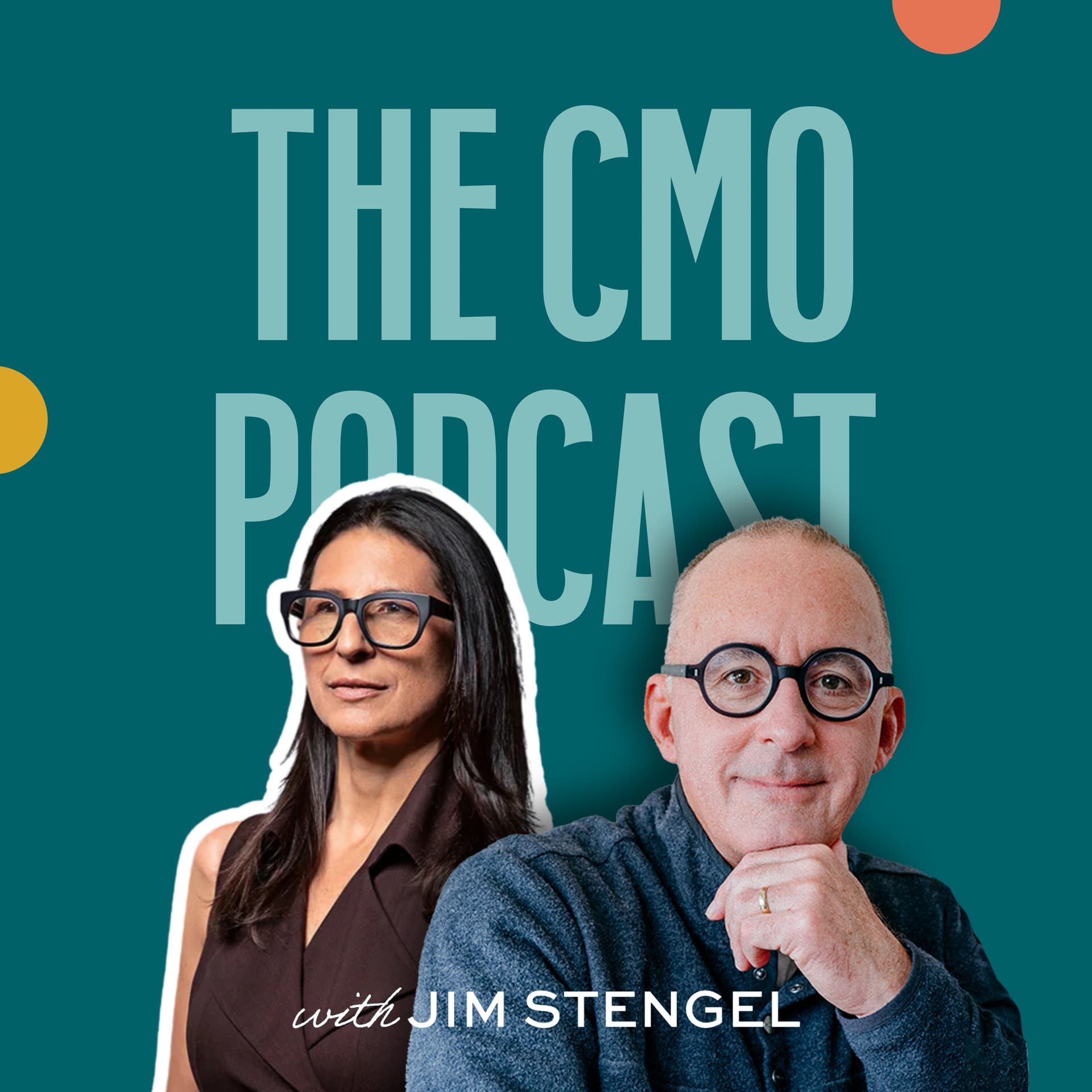
Lara Balazs (Adobe) | The Golden Age of Creativity
Episode Description In this episode, Jim Stengel interviews Lara Balazs, Chief Marketing Officer at Adobe, as they discuss creativity, transformation, and the impact of technology on marketing. Lara, who previously led marketing at Intuit, shares her insights on Adobe's mission and the ongoing AI-enabled marketing transformation within the company.
---
Key Themes and Discussions
Introduction
- Host and Guest: Jim Stengel welcomes Lara Balazs, CMO of Adobe.
- Adobe Overview: Founded in 1982, Adobe focuses on creativity and innovation with a commitment to changing the world through digital experiences.
- Lara's Background: Formerly the CMO at Intuit, she has a history with companies like Visa, Nike, and Amazon.
The Golden Age of Creativity
- Creativity in Focus: Lara believes that we are entering a golden age of creativity, driven by advancements in AI and technology.
- Adobe's Mission: Reframed under Lara's leadership to "empower everyone to create," focusing on democratizing creativity through their products.
Partnerships and Collaborations
- Girl Scouts: Adobe's partnership with the Girl Scouts for their cookie program showcases their support for community engagement.
- NFL Collaboration: Discussion on Adobe's partnership with the NFL to enhance fan experiences and create tailored content using their tools.
Marketing Transformation at Adobe
- Customer-Centric Approach: Lara emphasizes the importance of understanding customer needs and creating personalized experiences.
- AI Integration: Adobe is undertaking an ambitious AI transformation to streamline marketing processes and innovate product offerings.
Challenges and Opportunities
- Navigating Change: Lara discusses the challenges of leading through rapid technological change and keeping teams motivated.
- Cultural Connection: The importance of a company culture that embraces creativity, humor, and customer engagement.
Lara's Personal Journey
- Career Path Insights: Lara shares personal anecdotes about her career transition from a pre-law student to a marketing leader.
- Influential Figures: Reflects on her aunt, a former congresswoman, as a significant mentor who embodied fearless leadership.
---
Key Takeaways
- Customer Zero Principle:
- Employees at Adobe use and test products before they are released to customers, ensuring they understand the user experience.
- Disrupting Yourself:
- Lara emphasizes the need for both companies and individuals to continuously reinvent themselves to stay relevant.
- Aspirational Marketing Goals:
- Lara's ambition for Adobe’s marketing is to become the most creative and effective organization, fully leveraging AI capabilities.
---
Conclusion In this episode, Lara Balazs articulates a vision for creativity and innovation at Adobe, highlighting the interplay between technology and marketing. Her insights on leadership, disruption, and customer engagement offer valuable lessons for marketers and business leaders alike.
Call to Action Listeners are encouraged to subscribe to The CMO Podcast, leave ratings, and share episodes with colleagues to enhance the community and support the show's growth.
---
Additional Notes
- Sponsorship: The episode is sponsored by Deloitte and IAB, with mentions of upcoming events in the marketing industry.
- Privacy Information: Links to the privacy policy and California privacy notice are provided.
For more insights, subscribe to The CMO Podcast on your favorite platform.
Written by AI. May contain mistakes. Listen to the episode to check what was said.
Chapters
Tap a time to open that second in VOGirl Scouts Partnership
3:13 to 4:10
Explore Adobe's role as a national sponsor of the Girl Scout cookie program.
“Hey, we are deep into the Girl Scout cookie selling season, and my local grocery store in Coronado is a center for it.”
Collaboration with the NFL
4:11 to 6:06
Discuss Adobe's partnership with the NFL and its impact on fan experience.
“It is a great way for us to tap into the culture, passion points that people have, our customers have.”
Creativity at Adobe
6:08 to 8:00
Lara reflects on how working at Adobe enhances her creativity and the company's culture.
“I always say I love all my NFL football teams being a NFL partner writ large.”
Lessons from Intuit
8:01 to 10:26
Lara shares her experience growing the Intuit brand and the importance of customer focus.
“Well, I'm going to talk about in a minute why you came here, but every time I've been there, I feel happy.”
Transitioning to Adobe
12:56 to 14:00
Lara discusses her motivations for joining Adobe and the brand's potential for growth.
“Now, what was it about, you had this great run into it, great company, customer-centric, great products, great strategy, but you left and you went to Adobe.”
Revitalizing Brand Mission at Adobe
14:00 to 15:00
Learn how Lara Balazs redefined Adobe's mission to energize the team.
“And there's something I love personally about going in and taking a brand that's existed and really valuing its history, its DNA, its past, but then taking it forward.”
The Importance of a Strong Mission
15:00 to 16:00
Discover why a clear mission is crucial for organizational growth.
“And so in that case, what I did was worked on a whole plan to get people internally to work on it with me and with my team and the corporate strategy team.”
Engaging Employees in Mission Alignment
16:00 to 18:00
Understand how to involve employees in redefining a company's mission.
“And it is at the core who Adobe is and why they're here and what makes them different.”
Pride in Mission and Its Challenges
18:00 to 19:10
Exploring the pride and challenges faced in implementing a new mission.
“Hard to do that in the first year, but really important because it allows for the foundation when you're building those brands and go-to-market strategies going forward.”
Innovation and Customer-Centric Culture
19:10 to 21:40
Learn about Adobe's approach to innovation and customer feedback integration.
“You know, it also gives you credibility as you're moving through the organization and having a point of view, but also respecting what the company's about.”
Show all 22 chapters
Leveraging AI in Marketing Strategies
21:40 to 24:30
Discover how Adobe integrates AI into its marketing and product strategies.
“This idea of trying things out first internally before you go to external clients, customer zero, it's such a good one.”
Navigating Change Management in Marketing
24:30 to 28:00
Insights into the change management process and its significance in marketing.
“The one also thing I would say is as we go through this LLM journey and conversational interfaces really take over, agentic AI takes over, there's nothing that tech is going to do without the change management.”
Organizational Structure and Branding Standards
28:00 to 30:50
Explore how Adobe structures its marketing teams to align with brand standards.
“groups mapped back to customer sets so that somebody is, that's all they think about.”
The Golden Age of Creativity
31:58 to 33:52
Discuss the optimism surrounding AI's role in creativity and branding.
“And that's a very optimistic view of the world that we're in right now.”
Challenges of AI Integration in Leadership
33:57 to 35:56
Understand the impact of AI on leadership and the importance of staying focused.
“You've talked about a lot of things that you're proud of that are going well, that you're learning about.”
Reinvention in Marketing Careers
35:56 to 38:44
Learn how to stay relevant through reinvention in marketing careers.
“As a CMO, as a person, how has AI helped you be a more effective or more creative or a smarter leader?”
From Law to Marketing: A Personal Journey
38:44 to 42:00
Discover the personal story of transitioning from law aspirations to a marketing career.
“I was there when we went into women like we hadn't done before.”
The Path from Law to Marketing
42:00 to 43:50
Discover how a passion for courtroom drama inspired a shift from law to marketing.
“I'm from a family of lawyers, but I made that decision.”
Passion for Sports and Community
43:51 to 45:52
Explore the connection between sports, community, and marketing through personal experiences.
“and let me push through a recession, which is something I'm good at is graduating and recessions.”
The Magic of Adobe in the Sports World
45:53 to 47:28
Learn how Adobe connects brands with fans through creativity and innovation.
“Biggest movie producers in the world calling us to create films.”
Influential Mentorship and Leadership
47:29 to 50:25
Hear about the impactful leadership of a congresswoman who shaped a career philosophy.
“The other thing I would just say is when we think about ingesting media, live sports has got to be, you know, that and live, you know, it's harder to get those live moments where people still come together.”
Personal Reflections and Future Aspirations
50:26 to 53:01
Discuss travel, family, and professional goals that fuel personal and career growth.
“You know, we did a podcast a long time ago and I said tab, okay, which I still love tab.”
Transcript
Automatic transcript. May contain errors.0:00Jim Stengel:Before we dive into today's episode, we would very much appreciate a moment from you to make sure you're subscribed to the show on Apple Podcasts, Spotify, or wherever you listen, along with optioning to auto-download the episodes. It really is the best way to never miss an episode, along with supporting the show and the amazing team that helps me bring it to you. And while you're there, leave us a rating or review. It only takes a minute and helps more people find the show and helps us learn. And of course, share this episode with a friend or colleague who might enjoy it. We wouldn't be here six years later and still going so strong without you all, our community.
0:36Jim Stengel:So thank you for being part of it. Now onto the show. Laura, what's the first brand you remember making an impact on you as a young girl?
0:44Lara Balazs:I will say one brand that I thought of, which is not a brand, but to me, it's a brand. And having grown up in the Pacific Northwest in the 90s, Nirvana and Pearl Jam, those are brands for me. Right. So I do think of those almost as brands because they represent something timeless. They represent a unique carve out of value prop, you know, the way that that a marketer thinks about it, maybe not necessarily what the classic sort of brand would be.
1:16Jim Stengel:Hi, I'm Jim Stengel. I've helped hundreds of major brands discover and activate their purpose. Because when a brand's purpose is clear, compelling, and authentic, profit naturally follows. Each week, I welcome the CMOs, the chief marketing officers of your favorite brands, to speak to how their job is so much more than marketing. These leaders share their inspiration and challenges, along with how they try to build a full, healthy, and happy life in and out of the office. And it's that energy that reaches everyone they touch. And we're glad you're here to feel that energy and to learn from these remarkable leaders.
1:51Jim Stengel:So here we go. It's the first week of Women's History Month, and we have quite the guest to kick off the month on the CMO podcast. Joining me today is Lara Balazs, the Chief Marketing Officer and EVP, Global Marketing at Adobe. Lara joined Adobe just a little more than a year ago. Adobe is, of course, a company that is famous for its creativity, innovation, and strong employee and customer-centric culture. The global technology leader's mission is beautiful, to empower everyone to create a commitment to unleashing creativity, productivity, and customer experiences through innovative tools and platforms.
2:26Jim Stengel:Adobe was founded way back in 1982 and today does about$25 billion in revenue and is growing. Last year, Adobe grew their ARR, or recurring revenue, more than 10%. Innovations that Adobe has pioneered include Photoshop, Acrobat, the PDF, and Firefly. My guest Laura is an experienced CMO. Before Adobe, Laura was a CMO at Intuit for six years. We'll talk about that. She oversaw a strong run, revenue tripled during her tenure. Over the course of her career, Laura has worked at Visa, Nike, Amazon, and Gap. A graduate of the University of Washington and the Kellogg School of Management, where I bump into her at the annual Kellogg Marketing Leadership Conference.
3:04Jim Stengel:Here's Laura for a conversation about Girl Scouts, the NFL, creativity, and yes, AI. Let's get started. Laura, welcome to the CMO Podcast. Hey, we are deep into the Girl Scout cookie selling season, and my local grocery store in Coronado is a center for it. There's always Girl Scouts with their tables and their displays and their friendly faces, and I always buy way too many. But I've noticed that you're a national sponsor of the 2026 Girl Scout cookie program. We are. Which, by the way, as I was researching this, does over a billion dollars a year. So it's a big brand.
3:41Lara Balazs:It's pretty incredible. Yeah, the commerce they're running is incredible. And we're just thrilled to support them as they learn how to market using our products.
3:50Jim Stengel:Now, I noticed that also you do a lot of partnerships, of course, as a company of a wide range of clients. But one that I know you're really proud of is the work you're doing with the NFL. So let's stick with the kind of partnerships. So could you talk a bit about that work? What is special about it? Why you're really jazzed by it? And what it's like to work with the NFL? It must be incredible.
4:11Lara Balazs:Yeah. So we do have many partnerships. It is a great way for us to tap into the culture, passion points that people have, our customers have. And we do have such a broad range of customers. We serve individuals to students, students, to creative professionals, to next generation creative professionals, all the way to enterprises. And with NFL, we're not only going to fans who are enthusiastic about the NFL, but we're also going and supporting the NFL and enterprise. And there are very few Fortune 500 companies that don't have our software or use our applications. With the NFL, they have the desire of going and being uber connected to their fan base.
4:57Lara Balazs:So we're able to help power connecting in a personalized fashion, connecting through their personalized fan experiences through our software. And then we can, within through that, connect with our customers and engage them. We have Express, which is our product that allows you to do very unique designs, however you want them, post to social. And in the case of working with the NFL, they've given us proprietary NFL designs that you can use to create a specialized fan experience. And with Firefly, which is our proprietary model that allows you to customize what you want in your mind's eye and bring it to life.
5:40Lara Balazs:It's commercially viable in terms of it's absolutely not trained on other people's data. It's only credentialed in that respect. You know, that's another thing that you can use Firefly to create and work with NFL to, you know, create great designs. And we had a fun helmet design effort that we did just recently with the NFL being in our backyard in San Francisco here. You know, we had the Super Bowl here just recently. And so that was pretty, pretty terrific.
6:09Jim Stengel:So are you a fan of the 49ers?
6:12Lara Balazs:I always say I love all my NFL football teams being a NFL partner writ large. But I do have a special liking for the 49ers. I've lived in San Francisco long enough to like them. I am from Seattle, so I do have some love for the Seahawks. I do have a little 12th man in me.
6:33Jim Stengel:So you're happy this year.
6:35Lara Balazs:It was really fun. It was great to see them win and see that happen, you know, and what I think of as my home stadium now, Levi's. Yeah.
6:43Jim Stengel:You've been in Adobe now a little bit over a year. I remember when you made that transition. I think I ran into you at the summit around the time you were coming on board.
6:53Lara Balazs:Yes.
6:54Jim Stengel:And I was interviewing Emily Silver at Dick's at the time. So you've been there about a year. Do you feel like, Laura, you're a more creative person now after this year?
7:03Lara Balazs:Look, that is such a great question. And creativity is so, I think, important to the human race. And we all are creative. Do I think I'm more creative? Hopefully, I feel like I've had some amount of creativity in my entire life. But I will say that when you hang out in an environment with everybody who's so customer obsessed, making sure that we deliver for that broad range of customers that, you know, is from individuals all the way to enterprises, you do. you do get excited. And, you know, I'm very lucky. I have a studio team that's best in class. They're using our software. We call it Adobe on Adobe.
7:43Lara Balazs:You know, it allows us to give feedback to the engineers that are creating the software. And I don't know if I'm more creative, but I certainly love being around incredible creative folks all day long and the creativity that they, they output. Yeah.
7:58Jim Stengel:I've, I've been in and out of your company many times, actually, since I left P &G and you can feel it. You can feel it in the culture. You can feel it in your people. You can feel it when you're with them. Well, I'm going to talk about in a minute why you came here, but every time I've been there, I feel happy.
8:14Lara Balazs:Yeah, it is. I've described it. There's still, the brand is a vessel that we can put more meaning into, but the foundation of it is so optimistic and, you know, it's saturated, bold colors. It's everything that, you know, makes you want to go outside and smile. And that's what I love about it.
8:37Jim Stengel:Well, let's look back for a minute before we talk more about Adobe and what you're up to there. When I ran into you about a year ago, you were just coming out of Intuit after six years as CMO, where your revenue tripled, by the way, in your tenure there, your stock price also tripled. Now, I know there was an acquisition or two in there, but I'd like you to talk a bit about that run. This is not a new brand. I mean, you grew that brand at sort of startup rates, and it's a very established brand. Yeah. With its sub-brands, of course, which it's gathered over the years. But talk a bit about that experience and what you learned about growing a venerable tech brand at these remarkable rates.
9:18Lara Balazs:Yeah. And what a wonderful experience. What a great company. I was there for six years. And when I started, there was essentially QuickBooks and TurboTax and Mint, which was a personal finance application. And we did buy Credit Karma and we did buy MailChimp during that time. And for me, it was, you know, the beautiful task, ambition of really codifying and punching above our weight and bringing to life this brand that had existed for almost, you know, over 40 years. during the time I was there, we went over 40 years, but Intuit had not been, meaning had not been put into Intuit per se. And that connection of a branded house and the power of Uber brand, the parent brand with sub brands had not been brought to life.
10:05Lara Balazs:And so that was such a great experience for me because you're working horizontally across an organization to bring people along and understand the power that building equity into a master brand can have. and the sub brands and you know that i feel really good about having accomplished that during my time you know updating the entire brand equity meeting and then going to market with a true branded house and even doing an intuit dome deal in order to really codify the stature of a brand that could be in the tapestry of culture and additionally tap into what that is very tech forward stadium so giving a nod to the tech innovation that is the backbone of the company.
10:52Lara Balazs:You know, one thing I'll say during my time there, what I think I got the savviest I've ever been on and, you know, have had this in my history, my long history doing marketing and general management, but is the idea that it really is all about the customer. It's all about the customer. And if we're serving the customer needs and deeply understand them and working backward from the customer, we'll be fine. It doesn't mean you can't stand up anything that they don't know that they want and desire and need, you know, that's still our jobs. But you can do that in a way that taps into what they deeply are wired to care about or that they should care about and they don't today.
11:38Jim Stengel:Commerce media has moved beyond experimentation. Today, marketers are expected to prove incremental impact and scale what works. That's why on April 14th, IAB is bringing the industry together for the 2026 Connected Commerce Summit in New York City. Qualified brand and agency leaders can request a free pass, while all other media professionals can save$150 on tickets with a code CMOPODCCS26. Join marketers, retail partners, and platform leaders for practical conversations about what is actually driving commerce growth right now. And this year focuses on execution, how to integrate in-store media into full funnel strategy, how to align marketing, merchandising, and analytics teams, and how to build measurement models that reflect total business impact.
12:28Jim Stengel:You'll hear real case studies, actionable insights, and operating approaches you can bring back to your organization immediately. If you're ready to move from testing to scalable performance, this is where it happens. Visit iab.com slash ccs to learn more and request your free pass or enter the code CMOpodccs26 for$150 off ticket prices. We'll see you there.
12:56Jim Stengel:Now, what was it about, you had this great run into it, great company, customer-centric, great products, great strategy, but you left and you went to Adobe. So what was it that compelled you to join this amazing company?
13:09Lara Balazs:I think with Adobe, if you've been in marketing, if you've been at a Fortune 500 company, you've been exposed to Adobe and you are often surprised depending on how you first interacted with the brand. In my case, it was on the enterprise side. You realize, gosh, that's the Photoshop brand. Wow. Acrobat, PDFs that I've known forever. This is all Adobe. And the brand that I came into contact with by driving my business efficiently, again, on the enterprise side, there's this massive opportunity to shape this brand even more going forward. And I've loved it as a customer. Now I get the chance to actually go in the four walls and shape it for the next tranche of growth.
14:02Lara Balazs:And there's something I love personally about going in and taking a brand that's existed and really valuing its history, its DNA, its past, but then taking it forward. And in the case of Adobe, when I walked in as just an example, we had a mission that was changing the world through personalized digital experiences, which made sense. But I knew that in this next tranche of growth, we'd have to truly say, what is going to get our people out of bed and energized as they go into the next day, as they go into the next year, the next decade? and what do we stand for? What gives us the legs to grow?
14:47Lara Balazs:And that was really for me going in and saying to my boss, the CEO of the company, Chanteneau, saying, can we really look at this mission? He's like, we haven't changed it for 15 years. We've thought about it, but it's a hard task. And so in that case, what I did was worked on a whole plan to get people internally to work on it with me and with my team and the corporate strategy team. And we did move to a new mission of empowering everyone to create. And, you know, that for me, that's a long way of saying that's what brought me to Adobe is I knew I could set it up for the next chapter while, you know, understanding our past, but moving forward.
15:29Lara Balazs:And, you know, what I would say, too, is the mission of empowering everyone to create. It has such legs because it's extensible, but it's simple. It can be creating a company, creating a campaign, or creating an image, or creating a PDF, or doing an analysis. So the breadth of what it can stand for, but still energizing to people, knowing that I could do that, come in and help the company just as the first step is part of what energized me to come here.
15:59Jim Stengel:It's super simple. And it is at the core who Adobe is and why they're here and what makes them different. Could you talk a bit about that, Laura? Because it's, you know, refreshing a mission on any organization of any size is never a cavalier project, right?
16:15Lara Balazs:It is not.
16:15Jim Stengel:And you were year one in your role coming in from the outside. And it sounds like something you're very proud of. It sounds like it's catching. Sounds like you involved a lot of people. Could you talk a bit more about how you approach that? Because I think there's rich learning in it.
16:30Lara Balazs:So first of all, it is not for the faint of heart. If you're coming in from the outside, you have to be really thoughtful if you're going to go in and change a mission. When I started at Intuit, the mission was powering prosperity. And that was great. Same idea, very significant in terms of what it could stand for, heritage, going back to the founder. In this case, since the years before going into a whole new space in the marketplace of going for students and everyday people who can just want to create. And we have our product express and, you know, understanding that these brands Acrobat are attached to Adobe, you know, the idea that our mission statement didn't necessarily give us the breadth and room to run within that breadth, that this was really going to be required for me to energize a studio team, energize the best marketers on the planet.
17:34Lara Balazs:It became a bit of a mission for me in order to have then all of the work that goes underneath that, the taxonomy of the corporate strategy, what that anchors up to the idea that, you know, you could actually then be really clear about the value prop of each of those sub brands that then ladders to ultimately a mission statement. For me, it was so important. So, you know, got some traction with my boss to do that and then started to pull in the rest of the executive team and then employees across key parts of the company as well as very senior leaders and went on that journey knowing, you know, I had a kind of a semblance of the zip code of what it could be, but then getting that support as I went around.
18:18Lara Balazs:Hard to do that in the first year, but really important because it allows for the foundation when you're building those brands and go-to-market strategies going forward. And so that's a down payment for the future. Of course, parallel pathing, all of the things we need to do. You have to go to market. You have to be driving the business, both in the short, mid and long term, but doing that with now having sort of something out ahead to launch toward.
Read the full transcript
18:46Jim Stengel:One year into the job, you're proud of the work you've done in the mission. It sounds like it's caught. Anything else you're particularly proud of in this year as you look back on it? And the second part of that is, has anything been more challenging or difficult than you perhaps expected?
19:01Lara Balazs:Great questions. So very proud of that mission. Unveiled it at our company kickoff in December. And, you know, great response. People are loving it. You know, it's getting traction when people who you don't know are slacking you, emailing you saying how proud they are to be part of the company, that this is why they joined originally, whether that was 17 years ago or two years ago. So that's one piece of it. You know, it also gives you credibility as you're moving through the organization and having a point of view, but also respecting what the company's about. You know, I'm also proud of, this is a really interesting time for the world and for software.
19:42Lara Balazs:We have been able to maintain a steadfastness, a care about the customers and a conviction to do what's right while understanding, you know, with Gen AI and LLMs, the world is changing and we have to innovate. So we have been innovating at a rapid pace. And as I mentioned, my team, the whole marketing organization is Adobe on Adobe. We call it, we call it customer zero, which I guess is patient zero. for those of you who are watching Pitt these days, but it's very, you know, we are trying our software. We're co-creating the software. We are giving feedback to product, to the engineers in real time.
20:28Lara Balazs:I have engineers on my team. We have creative technologists and we're out inventing the future, innovating with LLM. So, you know, we've got a myriad of products from our brand concierge, which is agentic AI, where you can conversationally talk to a website effectively to find out which product is best for you. That's on adobe.com today. You know, we have our LLM optimizer, which is in a world of LLMs, you know, search is not just search. It's SEO and GEO. And you can wake up tomorrow and your search volume has dropped off and where did it go? And now we have LLM optimizer to help you understand where your customers are finding out about you.
21:13Lara Balazs:And increasingly, that isn't on necessarily your typical search. So our teams are co-creating that and giving feedback in real time. And that's just a gift. I've called it eating your own dog food in the past. Chanteneau likes to call it drinking your own champagne. I like that as well. So there's a lot to love about keeping a team energized while you're innovating in such a disruptive seismic shift time.
21:41Jim Stengel:This idea of trying things out first internally before you go to external clients, customer zero, it's such a good one.
21:49Lara Balazs:Yeah.
21:50Jim Stengel:And it kind of makes me wonder why I don't hear that more from other companies I talk to and other CMOs. So could you go a little bit deeper into what is it about your culture that makes that work? And you've already told a few stories about what you're doing there, but is there one that really stands out as especially powerful one that you've discovered?
22:11Lara Balazs:Yeah, there's definitely something in the Adobe culture of try the product, use it every surface we have, whether it's, you know, our digital screens throughout the offices or our intranet, it's always give me product feedback. There's it's everywhere. So it's in the DNA. And I think it speaks a lot for the company. The fact of the matter is, you know, our founders and our executive team, Shantanu Narayan, the CEO included, they're product enthusiastic folks at their heart. And they deeply care about the technology that powers it and the products that are offered. And, you know, when we started, it was all about power and precision.
22:54Lara Balazs:And that still is in the DNA. That just flows to the customer base. And it only makes us better. When I go and talk to customers in our customer experience center, as an example, I can tell them firsthand what it's like to use our products. And one great example, and one that I'm greatly proud about is we have our Gen Studio, which is effectively how we think about in a more automated fashion and using AI and now Gen AI from ideation to creating assets to the management of assets, to pushing them out in real time, optimizing in real time, and then feeding that back in to optimize, especially at the bottom of the funnel in the performance measure.
23:38Lara Balazs:We have Gen Studio for performance marketing with Meta, Snap, and so many others. We, using that against my customer audiences, I can give feedback right away on what part of that, what we call the content supply chain is working and not. So that is in the DNA. It is deeply embedded in everything we do. What I would say is that is a point of difference for us when we're talking to customers. So I can't stand up and talk about selling a product. If I have it, it's better if I've tried it. So that when you're very customer back, when you care about your customer problems, you fall in love with those problems, offer up solutions for me to say, I'm using this.
24:26Lara Balazs:And here's what works incredibly well. And here's what's, hey, we're kind of tweaking. In fact, we'd love your feedback. You can co-create it with us. That is extremely, extremely powerful. The one also thing I would say is as we go through this LLM journey and conversational interfaces really take over, agentic AI takes over, there's nothing that tech is going to do without the change management. And that takes humans. So the number one question I get, we get in these customer experience sessions is how do I get my teams to pick this up? That getting the teams to pick it up and the change management that is involved, like I can talk to that.
25:09Lara Balazs:I have creatives that have been here so long because I love the company. And it's, I have the same opportunities and it's all about, you know, that's a whole nother discussion, but it's like getting the people who are psyched about the change, willing to try and using them as the catalysts and having them go on the journey and take others with them.
25:28Jim Stengel:Let's stay with that for a minute, Laura, because I think it's very powerful. Everybody having the show is talking about how to improve their organizations through, you know, smart use of AI. And we hear the range of people on the spectrum. Obviously, you're at the heart of that with your company.
25:45Lara Balazs:Yeah.
25:46Jim Stengel:And you're talking to other CMOs as your customers and clients. So you have a really interesting perspective on that. So could you talk a bit about from your personal experience and from your work with customers and clients? It is a change management process, but what have you learned from your experience? What have you learned from the best CMOs you talk to? I had Don on from Qualcomm a few months ago. So he talked beautifully about that change process at Qualcomm. And it was very easy to follow, very intuitive, very effective. So I'd just like to let you have the microphone for a minute to talk about what you learned about this change experience to really be agile, curious, and make this work to your advantage.
26:28Lara Balazs:I feel a personal commitment to be the consummate, most effective, world-class, modern marketing, agile organization in the world. That is paramount to us as Adobe to win and to showcase to our customers, especially on the enterprise side, that we can do this. So I take it very personally. Do I think we're perfect at it? No. Is it a journey? Yes. And are you always reinventing because things are changing so rapidly? Yes. It's interesting, though. I would argue we've been on this change for a long time because when we started talking about 360 marketing and not thinking about one channel on its own, we actually started to go this route and we thought about teams of teams.
27:24Lara Balazs:We thought about not being verticalized. You know, I could argue the CPG model from yesteryear that you remember, Jim, and lived is you had the brand manager was the hub of the wheel and they worked with all the spokes of the wheel to say, hey, I got to think about collectively how I show up in a customer's life and a consumer's life. All we're doing now is saying we still have to work in those teams of teams. And you have to have someone who's absolutely obsessed with the customer at the center. And if you're doing it well, like I have redesigned the group to have actually customer groups mapped back to customer sets so that somebody is, that's all they think about.
28:10Lara Balazs:And then we apply the product and the features that best meet their needs. And they work with experts, centers of excellence, including whether that's growth, whether that's media that's more above the line, upper funnel, whether that's comms, PR, partnerships, working in that fashion. I'm organized that way now while taking advantage sort of horizontally across of the technology that can speed everything up and have you be agile and moving in real time. And then again, And using our tools is almost the, if you look at the schematic of the tech stack, it's almost as if our org maps up to it, where you've got this Gen Studio engine that's creating assets all the time and pushing them out and optimizing.
29:03Lara Balazs:So that, you know, it's a simple way, but that reorganization and then using almost the tech stack to kind of model our org. The other thing I'll say in all of this is we have an in-house studio team, best in class. They're exceptional, as you might imagine. Most of them came to us after using our tools and trying other tools and still knowing what our points of difference are. But we have now creative technologists in those teams that then their whole job is to say, let me take the latest, plug it in, and then also ensure that through all of it, we always have the way to put brand standards in.
29:47Lara Balazs:So if you zoom out from all of this, if you've been in marketing for a while, the big thing, usually you have some, you have a heart for brand and value props and points of difference and all the things you learn when you're writing that perfect positioning statement. It's usually how we got into the craft. We love that carve out of that brand that stands for something. That still matters, even in an agentic world. we have built tools that you put the brand standards and guidelines in so that you do not lose that. Okay. And that is the thing that gives, you know, no matter where you sit in the organization, the, especially the marketing organization, our teams can rest easier because they know no matter what technology is involved, we've got those standards plugged in.
30:30Lara Balazs:Right. And that is, that's ultimately what is your long-term growth driver is who you stand for as a brand. And we've talked a lot about the pieces of the funnel and how you can't just live at the bottom of the funnel, even in this agentic world, that ultimately all of it is important and brand is important. And so that piece really matters.
30:58Lara Balazs:Hey, everybody. This is Andrea Sullivan, the CEO of Vive. And we produce the CMO podcast and are so excited to have partnered with Jim Stengel for so many years. Wanted to tell you a little bit about something that could be right for you. Vive is a program for entrepreneurs and business leaders who want to get more out of their life and become their best and happiest selves, both personally and professionally. We have a 12-month program that allows people to meet up with some of the best business leaders out there and additionally experts in the wellness sector so that you can learn how to nurture yourself.
31:33Lara Balazs:So we teach things around sleep optimization, meditation, all those good things as well. Please reach out to us at podcasts at five.co to get more information. That's P-O-D-C-A-S-T-S at V-Y-V-E dot co. Thanks for listening to the CMO podcast and hope to talk to you more about Vibe.
31:57Jim Stengel:I've heard you say that you believe we're entering the golden age of creativity. I do. And that's a very optimistic view of the world that we're in right now. And I like that. Tell us more about why you feel that way.
32:11Lara Balazs:There's going to be more and more AI that develops things, right? You know, we're seeing what we call AI slop out there. I actually think in that environment, what has craft and intention and taking what's in your mind's eye and bringing it to life, even if you've used Gen AI to help that accelerate that process or play with it. So Firefly, we have this ideation feature called boards and you can play with it. it still is what I want. It still is what was in my mind's eye and I'm just seeing it come to life. That human ingenuity and that human creativity paired with, if you want to use AI, great.
32:56Lara Balazs:If you don't, that's fine too. You're going to know what is authentic and unique and not AI slop. I believe that. I believe authenticity is going to be your brand and trust is going to be your brand, you know, that is going to fuel a whole democratization to have creativity. People who felt like they couldn't be creative now can be, you know, using our products or believing that we can do anything. So I do believe we're entering a golden age of creativity. And you look at countries like India, who have always have rich cultural histories, and they have this entire creative class coming. And, you know, we see our products doing extremely well there because they're just excited to be part of this economy and the economy just to keep pulling on the thread.
33:47Lara Balazs:It's like creators are running the economy. We know what we're seeing on YouTube and these channels. So I do believe we're entering the golden age of creativity.
33:57Jim Stengel:Now let's go back to your year one. You've talked about a lot of things that you're proud of that are going well, that you're learning about. What's been tougher than you had imagined?
34:06Lara Balazs:Oh, well, having LLMs, you know, sort of come in and this belief that, you know, software is going to be eaten by AI, you know, which I don't believe. And I believe that AI is an absolute tailwind for software. And, you know, these times exist in our marketplace. You know, I do think that question of everything surrounding LLMs, the energy capacity being taken, the what is of the future of websites, you know, what is, how do we show up in that? That is hard, right? Because what you are doing as a leader during that is, you know, you have a great strategy. I mean, we have a wonderful, now we have a new mission.
34:53Lara Balazs:We have a corporate strategy with must wins that we're banking against. You know that, but your teams, you know, they look out to their friends who are also running around with, you know, this frenzy. And we call it on the enterprise side, we say going from AI frenzy to impact to driving outcomes. that I wouldn't have realized what a fever pitch that would hit this year. And keeping the teams, and less about that, but keeping the teams focused and energized as we get through it, as which we will. For those of us who've lived the pinkslip.com era, that was hard. We got through it. We were better for it.
35:33Lara Balazs:You do have to disrupt yourself. I truly believe in that. Not just the company you're in, but yourself to get to the next side. And there are people who will like love to do that and people who may not. And it's okay if you don't want to, you know, we're here to help our customers. And so we are going to disrupt ourselves and disrupt, you know, everything that is good to support our customers.
35:56Jim Stengel:As a CMO, as a person, how has AI helped you be a more effective or more creative or a smarter leader? What counsel do you have from your personal habits?
36:08Lara Balazs:This is a really hard question for me to answer because I'm using our tools. And, you know, I would say one of the things that I love is with Firefly, it's a one-stop application. It has all of the models with the best value you can ideate, create, and then, you know, I can do an Instagram post with my friends that is really unique and creative because I've applied some of the features and effects that Firefly allows me to do. But the idea that I can do that in rapid time and time is money today for people. The amount of information that people are getting is mind blowing. You know, it's every day your feed is filled and you can be overwhelmed.
36:51Lara Balazs:And so for me, it's all about productivity. And, you know, I mentioned the creativity that goes without saying, but the productivity is how I've used it. And again, this is I would be using this if I was here or not. but just PDFs. There's 3 trillion PDFs in circulation today. Okay. Acrobat, Adobe Acrobat, great product. Now we have AI assistant and I use that all the time. Summarize. I'll get a PDF from anybody in the company and I'll summarize it and it saves me so much time and it's really good. And I can have it do it in a professor voice or understanding it in a fifth grader voice. That's how I'm using it.
37:33Lara Balazs:And in doing so, I'm also dogfooding our material, which is great. But it's all about productivity for me based on the time starvation that we have today as people.
37:44Jim Stengel:You talked about your career path earlier in the show and the companies brands you work with are incredible, right? Nike, Visa, Amazon, Intuit, now Adobe. All of those companies have their leaders, their market leading companies, and they've stayed relevant over time. That's hard. It's really, really hard to stay relevant over decades and decades and decades. So having experienced all of those companies, some have bumps, but they're here. Yeah. So what's the key to that?
38:18Lara Balazs:Just reinvention. Every single one of those brands hit periods where they needed to reinvent. Stay true to the DNA of the company, because if you do a knee-jerk pivot, then it's not true, and you'll lose people like that. Reinvention, you have to disrupt yourself. And every single one of those brands has done it, whether it's Amazon saying we got to do Prime because we have to penetrate more households and actually offer more value to Nike saying, look, we're going to go into more categories. I was there when we went into women like we hadn't done before. And it was originally called Nike Goddess.
39:00Lara Balazs:Then we changed it to Nike Women. And so there's, you reinvent based on the signals you're getting from customers, but also while staying true to your DNA. That is across all of these brands.
39:13Jim Stengel:You said early in your career, and you referenced this in our discussion today, be disrupted or be the one who disrupts. Correct. So you said you had learned that lesson early in your career. Can you talk about that lesson? What was that early in your career that was the wake up call for you?
39:28Lara Balazs:You know, I think it's a theme for my life. You know, I graduated from undergrad in Seattle. There were no jobs. And I, you know, was magna cum lata, Phi Beta Kappa, couldn't find a job. So I volunteered to get marketing experience, which I thought I wanted to do because I was a pre-law major. and there weren't, you know, I had no background in marketing, but everything I knew about my pre-law classes was that human psyche and what makes people do, you know, end up in jail versus not was so interesting and what affected them to think, do, and feel differently, which is what marketing is about.
40:11Lara Balazs:And so I wanted to do marketing. I had no experience. So I volunteered time, my time for free at Pike Place Market, which is a tourist attraction just to get experience and bring during the recession local families in. And so I came up with an idea to draw in a local audience. I did that while working a night shift at a hospital to pay my rent. But I say this because that's disrupting yourself. Like here I am, pre-law major, don't want to go to law school, but hey, I'm going to get this experience. What are you going to do? You're going to disrupt yourself. Start to get career experience. It starts feeling like I'm not getting anywhere.
40:55Lara Balazs:What do you do? Disrupt yourself. Go to business school. So you just, you got to, disrupting yourself is part of my DNA. It's wrapped up in tenacity and grit, which I always say, anybody who comes into a meeting with me, you may be the smartest person in the room, But if you're not tenacious and have grit and have resilience, it doesn't matter. You're not going to necessarily go to the heights you want to achieve because it's not easy all the time. It's just not. It's not a linear career path by any stretch of the means. Life isn't linear.
41:27Jim Stengel:Tell us about that moment where you said, I don't want to be a lawyer. By the way, I kind of thought I was going to be a lawyer and then I didn't. And so what was it that you said, I'm going to go into marketing instead? What happened to your life? I mean, did you meet someone? Did you read something? Did you all of a sudden say, I don't want to be... When I really thought about what a lawyer does, I said, I want more action. I want to be moving with culture. And that, to me, I think would be kind of boring for me. Not that it's not important. I'm from a family of lawyers, but I made that decision.
42:03Jim Stengel:You know, I'm going a different way. So tell me about yours.
42:07Lara Balazs:I'd love to tell you it was a really conscious, thoughtful process. I'll zoom out and say the reason I thought I wanted to be a lawyer was because growing up, there was a show on television called LA Law.
42:21Jim Stengel:Yeah, sure.
42:22Lara Balazs:And there was a woman in it, Susan Day. And it was very rare at that time to see females in a television show. Mind you, there were, you know, three major networks. This was not in a streaming area today where you could, you know, see a myriad of law shows, which I love them all. But, you know, but this was one where you had a woman in a courtroom. She was in the room where it was happening. Harkin Hamilton, you know, want to be in the room where it happens. And so I just thought, OK, well, then that's got to be it. You know, I want to do that. I want to be in the room. I want to be in the conversations.
43:03Lara Balazs:And so from there, I thought, okay, then I have to go to law school. And while I loved the law classes, the pre-law classes that I took, they were the ones that fired me up were the ones about why people commit crimes, which is, you know, might sound a little twisted, but it's, you know, there's a psychology of that. what environment, what learnings, what affected them. And then you start to get into human behavior. And that's when you start to think about marketing. So it wasn't that I, it was more, I didn't know what I wanted to do. I wanted to be in the room where it happened. I saw a show, therefore pre-law, but from there it was, okay, I think it's marketing.
43:50Lara Balazs:Let me go get experience and let me push through a recession, which is something I'm good at is graduating and recessions. I did the same thing in business school and just go for it. Right.
44:12Jim Stengel:Let's flip into the creative brief. I want to talk about sports a bit. I know it's a, we talked about the NFL to open the show, but I know this is a real passion point for yours. What's the story there? We talked about just a second ago, your transition from law into marketing. Why are you passionate about sports? What is it? What was the catalyst? What was the experience?
44:29Lara Balazs:Well, for me personally, I'm a fan of sports. I've always been a runner and I've always been a skier and a hiker. So my entire sort of growth throughout life has been outdoors and getting outdoors, skiing, running, hiking has been part of it, mountain biking. And so I have a respect for the commitment that it takes to be really good at a sport, no matter what that sport is. So you put that personally and you realize also just the passion verticals, as we would say, you know, that exist within that. And then, you know, you then for me, you work at companies like a Nike and you see the community that sports builds and the fan base and and that you can coalesce around something that is exciting, is community building.
45:28Lara Balazs:that that that's the spirit of sports. And what I love about sports too, is now it's, you know, women's sports, every kind of sport, the Olympics are happening right now. You just, the vast array of sports that existed, there's something for everybody. For us then, you know, at Adobe, and I've seen this in my career is you tap into that and find your space in it. You know, With Adobe, it's an incredible brand. We can play in any space. Biggest movie producers in the world calling us to create films. I mean, we were just at Sundance. We had an incredible activation where we have filmmakers who, you know, lines around the corner to get to see our products and offerings.
46:11Lara Balazs:to, you know, whether it's fashion week, you've got fashion designers who are using our software to create ideas, create their next line, then all the way to, for example, you were saying NFL. And with us, we've got knowing that passion of sports and knowing we can not only help the companies who are, you know, whether it's Real Madrid or Premier League or NFL who have to connect with their fans and need the software to do that. Or it's a fan who just wants to connect with their friends who are fans or even fans of the other team by showing their own colors and using the team colors. There's something magical in that.
46:51Lara Balazs:And we've always said marketing and creativity equals Adobe magic. Now we're saying, hey, it's marketing, creativity, and AI is Adobe magic. And it is true. Like there's, we're only bringing these fan experiences and how to customize through express or use Firefly or even, you know, listen to a Kelsey podcast and then get excited to see their, their, what we call a PDF space and all the things that they're looking at as part of Acrobat, you know, that's the power of sports and the connection personally that people have to it. So I think that's really what it is in a nutshell. The other thing I would just say is when we think about ingesting media, live sports has got to be, you know, that and live, you know, it's harder to get those live moments where people still come together.
47:43Lara Balazs:And that's the beauty of sports as well.
47:45Jim Stengel:What are you still active in, in sports? Are you still mountain biking, skiing?
47:49Lara Balazs:I am. I'm going a little slower than I used to, but I'm still doing it and enjoying it. I don't do it as much as I'd like. As I age, I'm doing more weights because bone density and we have to think about those things. Yeah.
48:05Jim Stengel:I did Pilates this morning, so I'm with you.
48:07Lara Balazs:Good. A little core strength. That's great.
48:10Jim Stengel:Yeah. Yeah. It's great. And I enjoy it. It's very relaxing too. Who has been the most influential business mentor in your life since you started this great career?
48:19Lara Balazs:Not a business mentor, but my aunt was in Congress for 24 years and she was a very, she was a first mover. She helped pass the Family Medical Leave Act. And she did things that were really rare for a female to do in Congress during the time she was there. So she's always been an archetype for me of a, you know, she's, she's a relative and she also showed fearless leadership while keeping a sense of humor. So she's, without a doubt, someone I've always thought of as a mentor.
48:52Jim Stengel:She was in what state?
48:54Lara Balazs:Colorado. And she's since passed, but she did phenomenal things. So she's always been someone I've wanted to consider as I think about those times where you really have to have a voice and speak on behalf of, in her case, it was her constituents. In my case, it's my consumers and my customers.
49:16Jim Stengel:What was it about your aunt that made her so special?
49:19Lara Balazs:You know, she was fearless, but she also kept a sense of humor. She never didn't laugh at the end of the day. You got to have fun. These jobs are not, you know, easy. At the same time, we're not doing brain surgery, back to patient zero. So we should have fun. Our teams want to have fun. We need to remember that. She did that in spades. She had a quick wit.
49:43Jim Stengel:Yeah, if we're not having fun creating something for our customers, how are they expected to have fun with it or make use of it when it reaches them? So I think we undervalue that.
49:52Lara Balazs:I really think we undervalue it often in technology too. I think we can get really serious about our own seriousness and we can't do that. We need to remember that our customers want to have fun. They're looking for light. They're looking for joy. How do we bring that to them? And optimism, that's, again, talking about the Adobe brand and coming here. And an element I never want to lose is the optimism. And there's a human side of that that is so critical to the DNA.
50:25Jim Stengel:Laura, what's the first brand you remember making an impact on you as a young girl?
50:28Lara Balazs:You know, we did a podcast a long time ago and I said tab, okay, which I still love tab.
50:36Jim Stengel:You're staying with that answer?
50:37Lara Balazs:No. You know what? Because I said that, I thought, you know, he may ask me that. And actually, I was thinking about this because it's also winter and it's ski season is K2 is a ski brand. And growing up skiing and being a big skier, K2 is a brand, you know, it's Bainbridge, Washington. I'm from Washington state. It was sort of part of that whole getting into that sport for me. There was also a ski called pre skis. So those two, I will say one brand that I thought of, which is not a brand, but to me, it's a brand and having grown up in the Pacific Northwest in the nineties, Nirvana and Pearl Jam.
51:18Lara Balazs:Those are brands for me, right? So I do think of those almost as brands because they represent something timeless. They represent a unique carve out, a value prop, you know, the way that a marketer thinks about it, maybe not necessarily what the classic sort of brand, like the tab would be, but that's another thing to think about.
51:45Jim Stengel:They've stood the test of time.
51:46Lara Balazs:They have, both of them.
51:48Jim Stengel:Clear what they stood for.
51:49Lara Balazs:100 % great definition of a brand.
51:52Jim Stengel:So Laura, what are you looking forward to the balance of the year, either personally, professionally, and we'll end on that note?
51:57Lara Balazs:Yeah, I think personally, I'm looking forward to continuing to make this brand stand for what it's always stood for, but be more relevant than ever and not lose the human connection. So I think professionally, having my teams continue to embrace where Gen AI is taking us to take some of the things that we don't love and removing them, automating what is right to automate while staying on brand, using our tools like Firefly. Like that is exciting stuff. I can get energized getting out of bed every day doing that. I think, you know, personally, travel for me is the spark that keeps me alive and gives me energy and fuels my work.
52:42Lara Balazs:Because when you're experiencing different cultures, you think about how to solve complex problems in different ways. So for me, I think this next year, I have a lot of travel planned that will help me be better at my job while still getting fuel personally. So whether it's work travel, I'll be visiting some offices that we have in Japan and Tokyo and Sydney, India. Those are the trips that really energize me and bring me back with new energy fueled to keep growing.
53:16Jim Stengel:When you're not doing business trips, and I always love that too, do you like vacations that are active or more quiet?
53:22Lara Balazs:I like a mix, Jim. I like a mix. I'd like a little of beach time and a little of a little get out there. I lately I've, you know, I'm really into going somewhere and learning about the history, if I can reading a historically relevant fiction. So yeah, always have a bucket list that I'm trying to knock off for a vacation, whether it's, we did Namibia a couple of years ago where we've done Canadian Rockies, Banff, you know, we always have something that we're looking to do. It's also as a family, you know, I have two boys in college now. So it's how you get everybody back in the same zone and get out.
54:07Lara Balazs:It works when they know they're getting a trip on mom and dad.
54:10Jim Stengel:Well, enjoy it now because we did that with our kids a lot. They now have kids and it gets a little more complicated. So enjoy it now.
54:17Lara Balazs:Yeah, I appreciate that. And I will definitely keep that in mind.
54:22Jim Stengel:Well, Laura, thank you for this conversation. I so appreciate it. I think you and your company are, are just remarkable. I've loved following both of you over the years. Thank you for coming back on the show. But what a great call. I think you went from Intuit to Adobe, disrupting yourself sort of again, but having, you're in your zone is what I'm feeling from this conversation. And when I met you personally when you're, after you've made the decision, I think you're in the place that you want to be and need to be.
54:50Lara Balazs:Yeah. Thank you for that. I appreciate it. It means a lot coming from you, Jim, and thanks for taking the time.
54:56Jim Stengel:That was my conversation with Laura. Three takeaways from this one for your business brand and life. First, this concept of customer zero. I love the principle, the longstanding principle of Adobe where employees need to use the products, enjoy using the products, test the products before they take them to customers. It's a concept we all ought to think about applying more in our own organizations. Second takeaway, I love this thought about disrupting yourself. And Laura has done that in her career several times. She did it coming out of college. She keeps it top of mind. If you don't disrupt yourself as a company, you will be obsolete.
55:32Jim Stengel:If you don't disrupt yourself as an individual, your skills will also be obsolete. And third takeaway, Laura talked about her ambition at Adobe Marketing, and I love this. She just, it rolled off her tongue. They want to be the best marketing organization in the world, the most creative, and the one that leverages AI to its full potential. Simple, ambitious, aspirational, and something that who wouldn't want to be a part of that? That's it for this week's episode of the CMO Podcast. As always, I would be grateful if you shared our show with your friends, along with subscribing and leaving a review on Apple Podcasts, Spotify, or wherever you listen.
56:13Jim Stengel:The CMO Podcast is a Vive Original Production.
From the publisher
To kick off Women’s History Month, Jim welcomes Lara Balazs, the Chief Marketing Officer and EVP of Global Marketing at Adobe. A company at the center of creativity, transformation and technology. Founded in 1982, Adobe is a software company that is famous for its creativity, innovation, and strong employee and customer-centric culture. Their purpose is to change the world through personalized digital experiences, and their offerings include the Creative Cloud, Document Cloud, Experience Cloud, and Adobe Express.
Lara is an experienced CMO. Before Adobe, Lara was the CMO at Intuit for six years, and oversaw a strong run, tripling revenue during her tenure. Over the course of her career, Lara has worked at Visa, Nike, Amazon, and Gap. At Adobe, Lara is leading the charge to help shape the iconic company into its next era of growth. Just one year into the role, she’s already refreshed the company’s mission to “empower everyone to create” and is leading one of the most ambitious AI-enabled marketing transformations in the industry.
Tune in for a conversation with a leader who believes we are entering the golden age of creativity…
—
Learn more, request a free pass, and register at iab.com/ccs
Promo Code for $150 off ticket prices: CMOPODCCS26
—
This week's episode is brought to you by IAB.
See Privacy Policy at https://art19.com/privacy and California Privacy Notice at https://art19.com/privacy#do-not-sell-my-info.