In short
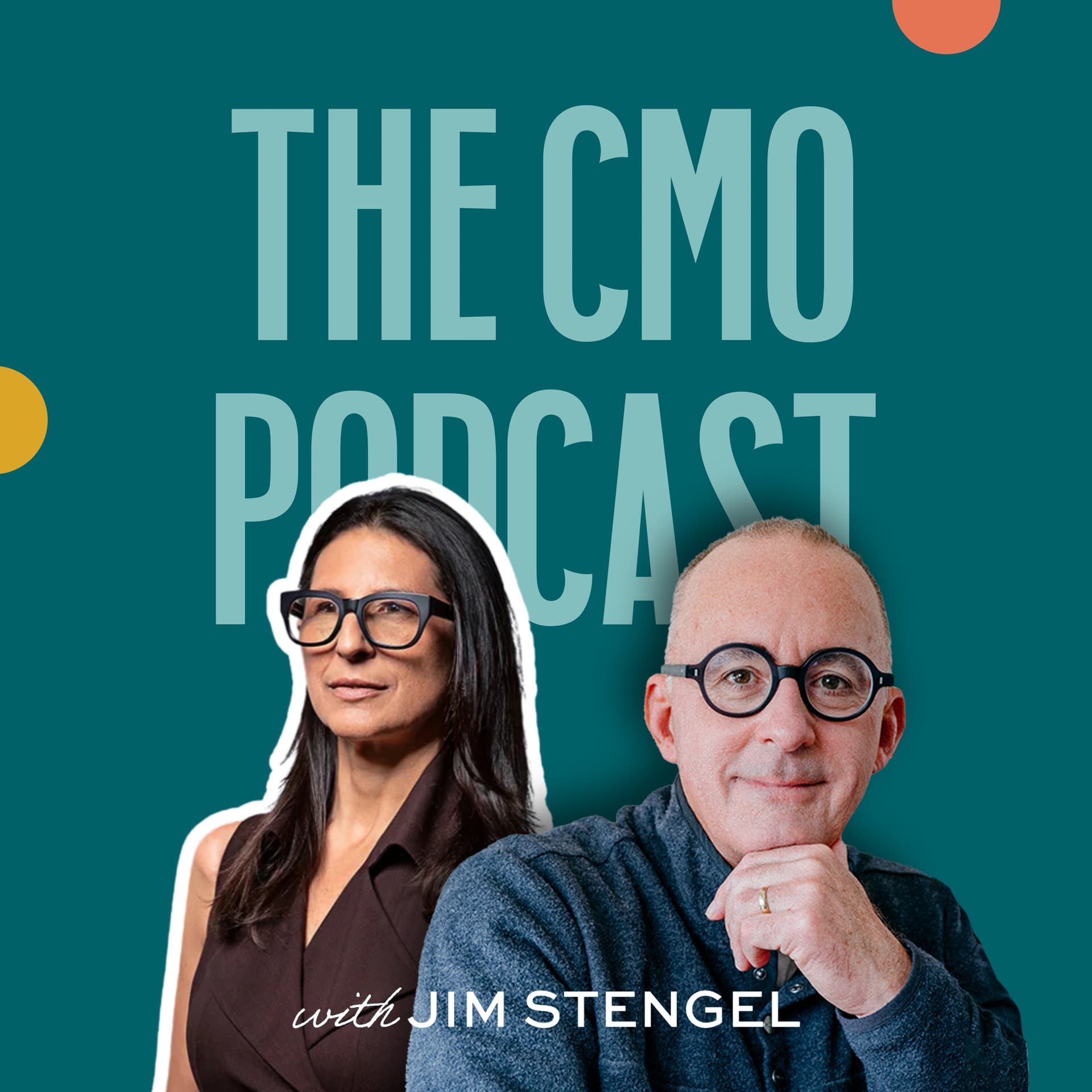
The CMO Podcast: Leadership Lessons from Penn State’s Alumni Conference
Episode Overview In this episode of *The CMO Podcast*, hosted by Jim Stengel, three notable Penn State alumni share their insights on leadership and decision-making during the Alumni Leadership Conference. The guests include:
- Whit Friese - VP of Creative Marketing at The Home Depot
- Camille Chang Gilmore - Senior VP & Chief Human Resources Officer at Avanos Medical
- Jim Erickson - Founder and former CEO of Blue Mountain Quality Resources
The discussion focuses on the art and science of decision-making, personal experiences that shaped their careers, and the lessons learned from pivotal moments.
---
Key Themes
- Leadership and Decision-Making
- Art vs. Science: The episode emphasizes that decision-making is both an art and a science. Leaders must navigate emotionally driven decisions while also considering factual data.
- Vulnerability in Leadership: The guests reflect on vulnerable moments that influenced their leadership styles and decisions.
- The Role of Emotions
- Impact of Emotions: Each panelist discusses how emotions influenced their decisions, particularly at critical junctures in their careers.
- Understanding Emotions: Camille stresses that emotions are not facts; understanding them is essential for effective decision-making.
- The Importance of Relationships
- Building Trust: Relationships in personal and professional settings are crucial. Trust and communication were highlighted as key components of successful relationships, both at home and in the workplace.
---
Notable Quotes
- Camille Chang Gilmore: "Decisions are made in moments and they tell you who you are and what you're made of."
- Jim Erickson: "When maybe one door closes, another one will open."
- Whit Friese: "If you can't put it onto one page in a couple sentences, I'm not sure what we're all doing."
---
Key Takeaways
- Values as a Compass
- Values are fundamental in building successful companies and careers. They are not just guidelines; they are the reason people want to be part of an organization.
- Decisions Define Leadership
- Leaders’ decisions reveal their character and values. They influence not only immediate outcomes but can also carry lasting impact on organizations and individuals.
- Authentic Leadership
- Authenticity is essential in leadership. Being true to oneself fosters trust and encourages openness, fostering a healthier organizational culture.
- Mentorship
- Mentorship plays a critical role in personal and professional development. Engaging with mentors can provide invaluable guidance and support.
- Work-Life Integration
- The discussion encourages the idea of work-life integration rather than balance. Leaders are advised to prioritize personal well-being to effectively support others.
---
Conclusion This episode of *The CMO Podcast* offers invaluable insights into leadership through the lens of personal experiences. The conversations with Whit, Camille, and Jim highlight the importance of authenticity, values, and relationships in effective leadership and decision-making. As Jim Stengel wraps up, listeners are encouraged to reflect on these lessons and consider how they can apply them in their own professional journeys.
For further episodes, subscribe to *The CMO Podcast* on your preferred platforms and join the discussion on leadership and branding.
Written by AI. May contain mistakes. Listen to the episode to check what was said.
Transcript
Automatic transcript. May contain errors.0:00What if the smartest marketing play is not to move forward, but to zoom out? Deloitte believes the most powerful move a CMO can make is to look beyond the next step and see the broader perspective. That's what the Deloitte CMO program is for, a place to gain fresh perspective and connect with leaders who've stood where you stand. Together, Deloitte will help you see the bigger picture so your next move isn't just fast, but right. Learn more about the CMO program at cmo.deloitte.com. Hey, it's Jim. I'm here with Matt Spiegel, EVP of True Audience Growth Strategy at TransUnion. That's quite a job title, Matt.
0:34Yes. Welcome. Thank you. So tell me about your company and why it matters for our audience CMOs. Well, listen, Jim, the challenge of the day is that there's so much information about consumers out there and the challenge is most companies don't have all that information. You have some purchase history, you maybe have some web history, but you don't have a full picture of customers. We're working really hard across on a suite of identity products, of audience products, and measurement products to bring a holistic view of customers to marketers. So when CMOs work with you, what light bulbs go off for them?
1:03So, Jim, we help brands bring clarity from chaos. We help them understand a picture of their customers with a 360-degree view in order for marketers to make bigger, more strategic bets. Well said, Matt. Learn more at transunion.com slash clarity. That's transunion.com slash clarity. Hi, it's Jim. Joining me is Matt Spiegel, EVP of True Audience Growth Strategy at TransUnion. Matt, we talk a lot on this show about building brands that people love, but that starts with understanding them, right? Jim, absolutely. Every customer ultimately has a story, but most brands are only going to see part of it.
1:36At TransUnion, we really focus on helping marketers connect those dots across devices, across channels, across platforms, with the goal of helping marketers see a full person behind the data. That clarity is gold. That is special. So how do you do it? Ultimately, we put together the pieces of information that help you predict behavior, help you personalize messages, prove the impact of every marketing decision at the end of the day. And our marketing solution suite gives brands the visibility and confidence to invest smarter and ultimately grow faster. So if you want to turn data into understanding and understanding into growth, visit transunion.com slash clarity.
2:10What's the first brand you remember making an impact on you in your life as a child? I think it was the NFL. I mean, I used to sit around and just draw all the logos of all the teams. And that's just, I just loved it. I love the icons. I loved it. Oh, by far it was automotive manufacturers. I'm a car guy and it was a Chevrolet. I mean, as a kid, Corvette. To me, it was FedEx. It was my first job out of Penn State. And people used to tease me. They'd say, do you sell packages? And I say, no, I sell service, which is an intangible. And so for me, it was FedEx. Hi, I'm Jim Stengel. I've helped hundreds of major brands discover and activate their purpose.
2:53Because when a brand's purpose is clear, compelling, and authentic, Profit Naturally Follows. Each week, I welcome the CMOs, the chief marketing officers of your favorite brands, to speak to how their job is so much more than marketing. These leaders share their inspiration and challenges, along with how they try to build a full, healthy, and happy life in and out of the office. And it's that energy that reaches everyone they touch. And we're glad you're here to feel that energy and to learn from these remarkable leaders. So here we go. School is back in session and we are back in person at Penn State for its annual Alumni Leadership Conference.
3:30As has been our tradition for the past three years, we welcome three notable Penn State alumni on stage in front of an audience of Nittany Lion alumni and students. Our focus for this session is leadership, but more specifically, we will focus on the art and science of decision making. We will go to vulnerable spaces with our panel, decisions that were life-shaping and decisions that did not work out as hoped. My guests this year represent three very different decisions on career direction. First, we have Whit Freeze, who chose a career of creativity and storytelling. Whit studied advertising at Penn State and began his career at Leo Burnett, a famous ad agency whose top clients were McDonald's and Procter & Gamble.
4:11Yes, it's a small world indeed. Witt next worked in entertainment in Hollywood before joining CNN in Atlanta as a VP Creative Director, where he and his team won multiple Emmy Awards. Currently, Witt is the VP of Creative Marketing at The Home Depot. Next, we have Camille Chang-Gilmore, the newly appointed Senior VP and Chief Human Resources Officer at Avanos Medical, a leading medical technology company based in Atlanta. Before Avanos, Camille worked about 20 years at Boston Scientific with her last role as VP of Human Resources and Chief Diversity Officer. Camille met her husband, a Penn State football player, while standing in line at a McDonald's in State College.
4:50Sounds like a classic Leo Burnett McDonald's ad. And last we have Jim Erickson, the founder and former CEO of software company Blue Mountain Quality Resources, Inc. Jim served as CEO for 32 years and today is an advisor to the company. Blue Mountain serves life sciences enterprises, and clients include Thermo Fisher Scientific, Fujifilm, and Boston Scientific. Jim came to Penn State for his graduate degree, earning his master's in bioengineering in the mid-1980s. Here we go with a lively chat about critical decisions in the lives of Witt, Camille, and Jim.
5:26Thank you, Ryan. Well, welcome, guests. So at lunch today, we were talking about the changing world of entertainment. and content, and news. So to start off the show, I'd like you all to talk about what do you do now in terms of content? Are you a podcast person, a series person, you like thrillers, comedies, or you're a news person? So Jim, you're smiling. We'll start with you. I'm a podcast guy. I drive a lot and in the car. So I listen wide ranging, whether it's running businesses or private equity or personal growth, I'm listening to it. Camille, how about yourself? So I love the news. And my husband, Derek Gilmore, who's a Penn State graduate from class of 90, he always teases me because I love David Muir.
6:15And so I listen to that. Sometimes we'll watch Fox just to change things up. I'm, you know, big on YouTube as well. Love YouTube. Oftentimes try and listen to Audible in the car. Well, before getting to it, I have to tell a funny little story. Derek and Camille met in a McDonald's line, and they were both ordering Coke without ice. Maybe at that same time, I'm not sure, Witt was doing the advertising for McDonald's, and he missed the big one, right? That should have been a McDonald's ad. Right, Derek? So, Witt, there you go, right? It would have been a good spot, right? I miss it. I missed a lot of things.
6:51Well, I'm holding on. There's a thing called DirecTV. It's a satellite thing that... I still got that dish on my roof. I mean, I'm a little at everything. Live sports is huge for me. I spent a long time at CNN, so live news is still big. But I love to stream. I mean, The Bear, anyone watching The Bear? Right, Chef? Right, Chef? Great show. Well, our theme today, obviously, it's the Alumni Leadership Conference. Our theme is going to be leadership for this show. And as I thought about what interesting part of leadership should we talk about today, relationships are important, and we'll get to that.
7:26But decision making, right? It's an art and a science. Some decisions are two-way doors, some are not. They're one-way doors. So these three have made a lot of decisions in their career, and we're going to sort of probe that and get into that and see what they can share about what they've learned about tough decisions. All of you are making them, right? These are all interesting decisions. So I spent 25 years at Procter & Gamble, which if you don't know, is the largest advertiser in the world and does a lot of market research. And I learned there that emotion drives every decision in every category, B2B and B2C.
8:01So I want to ask our panel, Camille, let's start with you. What emotion drove you to come to Penn State originally as a student? Well, you know, I actually saw the football game on TV and I said, I want to go to Penn State. It was that simple. But one of the things I've learned over time is that your emotions aren't facts, right? You should really make sure you take the time to understand the facts and understand what the organization can offer. And I did find that out, which is amazing. I had amazing four years here. But it was watching the energy, the excitement, just the collegial atmosphere.
8:46It was the hype. And it was, hey, they looked really cool. And you were in Queens at the time, right? I was in Queens. Laurelton, Queens. Yeah. All right. So the excitement, the energy, you wanted to belong to that. Okay, super. Whit, how about yourself? The motion was complete bliss. So I had the facts first. There was very few schools that I was one of those weird kids who knew what they wanted to do in high school. I knew I wouldn't be in advertising. And I knew that Penn State had the School of Communications at the time. And they were thinking about advertising. So I had the facts. But then my father and my best friend and his father, we came down College Avenue.
9:23And I just went, oh, my God. This is where I want to be. It was Happy Valley to me at that moment. And emotion just overtook me. And there was no other place I was going. If they let me in. So Jim, I came here for graduate school, not undergrad. You did the same. That's right. So I came, I'd already had an undergraduate degree in mechanical engineering, and I applied to many colleges for a master's in bioengineering. And my decision was pretty easy because Penn State was the only one that offered me a position. What's that emotion? Happiness. Relief. Yeah. Super. I want to, you said something in the green room before we came out.
10:05You said you're in HR, high level in HR, 20 years of Boston Scientific before Avanos. And you said the Penn State experience grounds you in values to help you make very hard decisions. Could you say a bit more about that? Oh, wow. Yes. You know, one of the things I'll tell you is that decisions are made in moments. And I believe that when you make decisions, they actually tell you who you are and what you're made of. And one of the things about being at Penn State, we're authentic people. We're true people. That's one thing I will always tell you. You know a Penn Stater because they'll always tell you the truth.
10:39And one of the things I found as the head of HR, there were moments throughout the years, whether it's Roe versus Wade, the daylight death of George Floyd, the Israel-Hamas conflict. Those are moments that define you and you have to grab on to experiences that help you make the right call. Because the call you make will impact so many for a long time. So you have to make sure you understand the ramifications of that and recognize that your decision not only lasts for that moment, but it can last almost a lifetime. Now, everyone know who Warren Buffett is? Okay, probably the most famous investor ever.
11:22I had a chance to meet him one-on-one several years back. And we were going to a reception at Microsoft. I went to a buffet, started at six o 'clock. I went at six. I'm on time. Warren Buffett's on time. We're the only two guys there. So I said, hey, Mr. Buffett, I'll never get this chance again. So could I ask you what you've learned about leadership, decision-making in your career? And he said to me, young man, if you choose to spend your life with someone, it is the most important decision in your life who that is, bar none. There isn't a close second place. So I want to ask my panel, do you agree with that?
12:03Do you agree? I do. I do. Jim, I do. I think that's the most important decision you'll make in your life. You know, my husband played Penn State football. He's competitive. He was on the 86th national championship team.
12:22And, you know, when we graduated from Penn State, we then went on and got our MBAs in the University of Illinois. And one of the things that we've always done is try to make sure that we push each other to be better and do better. Whether it's him sacrificing an opportunity so that I could gain an opportunity or me and vice versa, we've always done that. And we've always pushed each other. We've always told each other, hey, I'll give you this story. One time when I was recently promoted, I thought I was doing well. And my husband went to a conference and saw a person who was a motivational speaker and she helped women get to the next level.
13:04And he came back home and he said, honey, I found someone who could help you. I said, help me do what? And he said, get to the next level. He's like, there's a different movement. There's a different network. There's a different way to speak. And I believe she could, and she did. And one of the things I had to learn in that moment is we all have to be coachable, right? You never arrive and you always have to remember you can always learn something new. And that's what I walked away with. Jim, how about you? Most important decision? Yeah, it's a very important decision. Probably the most. I'm very fortunate.
13:43My wife and I have been married 26 years and obviously part of who I am. Coming back to who I am and how that's portrayed to the world is certainly they're totally interconnected. And I think to Camille's point where a good partner will actually drive you to be better as well. Yeah, I mean, absolutely the most important decision you can make. And my wife and I are very different in how we approach our day, but we have the same goals in life. And so that has been a really wonderful yin and yang and then balance together. She's a New Yorker. I'm a Chicago kid. And we were very different in the beginning.
14:21And it's just been great. She's pushed me. She doesn't dress me like Jim's wife does, but I wish she did because Jim's doing great over there. So there's a side story here. Derek asked me when we were at the hotel, hey, I like your style. Is this your wife or what? I said, yes, it is. And a bit of my son. Okay. So a theme this week at our conference has been relationships, right? And Penn State is in the middle of that. But I'd like you to talk about, we just talked about your relationship with your partner, your spouse. What characteristics of a relationship with your spouse do you think are the most important ones to carry over into your business relationships?
15:02You know, is it communication? Is it trust? Is it something else? So let's go there for a moment. Jim. Yeah, certainly. I think the trust and honesty, obviously you have to be able to communicate, but even the nonverbal communication of how you live your life with your spouse or your partner is super important. And I think that's based on this innate trust that you would have in each other. I mean, my wife is my creative director. So, I mean, I trust everything. So, if I have that great idea that I think I have, and I come into the kitchen and say, I've got an idea for X, and I should present it to her.
15:39I mean, I know in seconds, I'm like, I'm going back to the drawing board. It's just like, not a good idea. And she's just honest. And that's what I want her to be. And there's complete honesty between us. And what we've always said is, when I have a bad day, she's the first person I want to tell. When I have a good day, she's the first person I want to tell. And I think that's what's really made it. Because you're going to have both. So you want that relationship. That's sweet. You should have been a writer, not an art director. I can't spell it. That was nicely done. Camille, what do you think?
16:11You know, Derek and I have been married for 32 years. We celebrated this July. Congratulations. Thank you. Thank you. I'll sum it up in three words. we've learned to listen, learn, and then act. So listen to each other because I think that's the most important thing. There are verbal and non-verbal cues that you have to pay attention to. And then I think it really is learning and being a consummate learner. We've been together 32 years, but we continue to learn something about each other all the time. And then figuring out how How do you move? How do you act together to continue to even date each other?
16:49You know, you think you dated each other when you met, but you really need to be dating each other through all that time together. And I think if you do that, you just learn something new about that person all the time. Can I just jump in on that? It's so wonderful that you said that when my wife and I will just go to dinner, she goes, oh, good, we're having a date. I mean, it's like that specialness of you still feel like you're on that first date. That's a wonderful thing.
17:43ticket with code, all caps, ALMCMOPOD26. This is your chance to join a three-day gathering of the industry's brightest minds and boldest voices shaping the year ahead. You'll hear agenda-setting conversations, candid fireside chats, and dynamic breakouts on the topics that matter most, from AI and commerce media to measurement and addressability. This year's lineup concludes everyone from Kevin Bacon and Bosom of St. John to creator Remy Bader, along with leaders from Forbes, Major League Soccer, General Motors, and Meta. Visit iab.com slash ALM to learn more and check out the link in the show notes to register and receive$500 off your ticket.
18:29Okay, I was in Berlin earlier this summer and I was at a conference and someone talked about decision making and this concept of a two-way door and a one-way door. And most of our decisions are two-way doors. You make it, you can reverse it. Some are one-way doors. They're hard or maybe impossible to reverse. So your process of thinking about those decisions should be kind of different. An example of a one-way door might be selling your company. Jim did, which we may talk about. A two-way door is, I don't know, you may decide that you're going to introduce a new test product into a country. If it doesn't work fine, you move on to the next thing.
19:07So I would like our panel to talk about, tell a story about a decision in your life, either a two-way door or a one-way. What was that decision? Did it work out as you had hoped? And if not, what did you do about it? I'd be happy to start off a two-way decision, a decision that could turn out different ways and I would still survive, was in fact starting my business. I had great confidence that we would be successful, but I didn't know that it was going to be guaranteed. And I also, you know, I believed in myself and the idea that we had. That would be an example of making that decision. I also knew I had an engineering degree from Penn State.
19:48I could fall back on that and I could go out and get another job. What about, is there a one-way one? Is it selling your company? Yeah, that would be an excellent example. I had led my company for 30 years. It was very successful, but it was also how I defined myself. And I worried about how I would be perceived and what I would do afterwards. And once you go down that path, it was going to be terminal, I guess you'd say. It's a one-way door. I think when I made that decision, I also looked at it as that when maybe one door closes, another one will open. And that certainly happened in my life.
20:24And I think it's important to think, while you might think it's a one-way door, and it might be irreversible, but the things that come after it are not necessarily going to be bad. Say for a minute about you committed your life or 30 plus years to this company. It was what defined you that shifted. Any and all of us in here will be changing jobs at some point. Some of us, I was very identified with my company, Procter & Gamble, when I left. How did you handle that? What was your strategy? Well, I put a lot of thought into it. And I also got a lot of feedback coming back to having a really supportive spouse was certainly important because it was a kind of a dual decision.
21:02I mean, we had to both be comfortable with it. So that's one thing. I think the second thing is keeping an open mind about what the future can bring you. I'm eternally optimistic as part of my nature. And I think it's important for me to then, when you let go of something, to know that things will be optimistic and things will work out. I reached out to a lot of friends. I have a big network. And I think that's super important to rely on others to help you process things like that. One of the things, and maybe we'll talk a little bit about this, is that I founded my company with some really deep values and what you would call core values.
21:38And we had a core purpose. And those are also reflective of me personally. So I still carry those with me. So Camille, a one or two-way door? It was early in my career. I worked for a chemical company. I was negotiating union contracts, and I had the opportunity to be third chair. What's that mean, third chair? Third chair is when you're negotiating union contracts, you get to cost out the proposals. So it was with the Teamsters, and I was 24 years old at the time. Okay, I'm still 24 in my mind. um but um you know i go in there and and i go to shake the hand of the teamster union uh and he doesn't shake my hand so background i'm from new york grew up in new york so we get into the um the meeting and if you know anything about negotiations there's a table they sit on that one side the company sits on the other and there's a big binder and book and i said to them i said hey you know he's asking uh for a cost on something but he's not talking to me he continues to talk to the person next to me.
22:42And I said, wait a minute. I said, excuse me, I'm here to cost out the proposals. You can direct the questions to me. He just goes and talks to the other person. I said, wait a minute. And I closed the book and I pushed back and I started to get up and the table started to get up with me, which I smiled. I was like, okay, this is good. And then he goes, oh honey, and this is his quotes, not mine. Oh honey, sit down and stop getting your panties in a bunch. I'll talk to you. I was like, oh, okay. So then I continue to write and we take a break. We go to the bathroom. There's only one other woman there.
23:19And she comes in and she goes, good job. I said, I'm not fired. She goes, oh no, honey. She said, if you didn't say anything, you weren't coming back tomorrow. I was like, what? She goes, yeah, at the table. Don't you ever get punked at the table. And I thought, wow. When in the room, show up in the room, take your seat in the room. And if you have to show out, then do it. I was like, wow. And it taught me so much about posturing and about the unwritten rules that happen at the table. And I found out that most of the negotiations happen in the bathroom. They would say, well, were you really serious about this?
24:01Oh no, I wasn't serious about that. We'll take that off. And so it was just a moment for me and a defining moment early that I received in my career that I believe is a blessing because I think it's allowed me to show up in boardrooms now, allowed me to show up in senior leadership meetings now in a way that says, hey, if I'm in the room, say something, especially if you know it's wrong. That was, someone said in your bathroom, that was the right decision. That was good on that person's part too. A good coach. Yeah. Yeah. But I didn't know that, you know what, as a leader, when you're in the room and you know something, shame on you if you don't say something.
24:40Shame on you. Whit, a critical decision that was two-door or one-way door? The one that comes to mind for a one-way door is I spent a lot of time in the ad agency world and budgets were decent for a lot of the brands we worked on. But Coca-Cola had some larger budgets at one point. And we had an idea that needed to find a group of kids that have never had a Coca-Cola before. And we got this amazing director, his name was John Madden. He did a movie called Shakespeare in Love, won a bunch of Academy Awards, amazing English gentleman. And we hired him to do this. And the idea was to go to Greece to find a village where no one has had a Coke before.
25:24Now this isn't, I'm not that old. This is late nineties. So most of the world has probably tasted a Coke. So we're like, well, it shouldn't be a problem. Well, I was still back in Chicago. The production team, John, went to Greece and could not find a location. My client at Coca-Cola, who's a wonderful human being, loves this idea, is calling me quite often saying, how are we doing? I hear they need another$100 ,000 for another couple of days of shooting. Yeah, yeah, we'll be fine. It's just starting to spiral. Now we're into like three or four weeks. and now the Coca-Cola client has kind of moved this decision making up top.
Read the full transcript
26:05He's like, you know, they're starting to ask me like, how, you know, where does this end? I'm like, I'm not worried. We're going to find it. We're going to find it. And I get a call from the production company saying, we're moving to Morocco to go find a village. I'm like, so this is going on and we're into the millions of dollars now. And that's a lot of money for production in the nineties. and there's multiple times where you know the decision is like do i pull the plug on this you know and what do you do but what i realized is i had been fortunate enough to hire someone who understood what this was going to be and he's like he could have found a couple things in greece he could have made something work but he's he saw this the idea and it was not my idea it was one of the writers on my team the idea was just a simple beautiful idea of the spot starts with the kids saying, my father says it tastes like kissing a girl.
26:55And then the truck rolls up, the truck comes into the village, the kid gets the Coke out of the ice, drinks the bottle and his friends, is it like kissing a girl? And he says, I sure hope so. So it's this beautiful story, this beautiful idea. Right. And John got it. And he's like, we have to find a kid who's never had a Coca-Cola before. Sure enough. So the decision was to keep going. I've got phone calls. I think Emails were just starting back then. I mean, they're like, you need to pull the plug on this. This is crazy. I'm like, just give it time. So I go to Morocco. The team comes back this one day.
27:28They've been out there for four or five days. And John just walks up and says, we found it. I go, promise? He goes, I promise. It was the most beautiful thing I've ever been a part of. It's this beautiful spot. It's now in the Smithsonian. It's in the Coca-Cola archives. It's just this wonderful, wonderful, amazing commercial. And I think what I learned from that is if you're lucky enough and fortunate enough to surround yourself with really good people, the decisions are actually kind of easy. Because you're playing off their passion. You're listening to them. And as you said, Camille, you're listening.
28:01He's like, I'm going to find it, Whit. I'm going to find it. And he wasn't bravado. He was like, it exists. I just need more time. And it just truly was. It was a one that probably would not still have my job at Labor and Efforting come out. But it was a tough decision, but it was the right decision. Hey, I want to go to you now for some questions from the audience. So anyone want to start? Thank you, everybody. Camille, it's Nilda. Good to see you. Question about leadership. There's a difference between being decisive and being contemplative. Have you ever experienced in your leadership where people have criticized you for either or?
28:42I'll take it and I'm going to turn it to you, Camille. I think the higher up you go, the more important it is to be contemplative. I guess that's how you say it. It's more important. It sounds ironic. I rise up in the company. I should be the one making fast decisions. I have the most experience. I have more data. I think it's opposite. Because the decisions, the higher you go, are a bit more one-way door. And I think if you're not sure, if your gut says no, think about it. Take time to think about it. I do that a lot today. I don't feel forced into any decisions. If I feel something going on that isn't quite right, I'll get some other opinions.
29:21I'll sit on it. I'll sleep on it. So I think it's a really important point you're making. And I think the higher you go, the more you need to be contemplative. I'd also add that I believe leaders shouldn't always be the loudest voice in the room. I think leaders should be the last person to speak. And actually, when I'm in a meeting, I'm always the last person to speak. And I use that mode to then make my point and to probably garner even more respect in my point of view. I also believe that leaders are amplifiers of clearing the noise so that people can hear their own potential. I think that's really, really important.
30:06And one of the things that I think I have is a track record of authenticity and the ability to speak truth to power when it's necessary. And so one of the things I believe is that if you're consistent in doing that, people don't question. They just try and figure out, okay, what role can I play to either align? And if I'm not aligned, then they usually come to me and we talk it out. And we try and figure out what's the next step that we can take together. I would certainly agree. Maybe because of my engineering background, I'm certainly more contemplative. But one of the things that I did learn is that you want to get everybody's input before you say your decision.
30:53Because chances are the decision will become obvious. And there's also the benefit of ownership by the group. Next question. John Bradley in from New York, and you're saying you try and get the entire group's input first. How do you create an environment where you're getting everyone's true input and make sure that they're actually giving the input they think is right and are okay if they don't go with that, rather than a group that thinks they're giving the input you want to hear since you're the decision maker? Whit, you're in a very big company, the Home Depot. So I'll let you field this one first.
31:29I think it's a great extension to the last question. As Jim was saying, the answer is probably in the room. Again, if you've been fortunate enough to surround yourself with really good people, and I would say at the Home Depot, it's just filled with amazing, smart people. Take the time. This meeting might take a long time. Let's hear from everybody. Let's make sure everyone gets their moment to talk about how they feel about the idea. And I think it's on the leader to really be a good listener. I mean, we talk about it a lot, but people are just not always good listeners. And then really play that back from what you heard.
32:05Do we all believe that Susie's idea? Do we have any problems with Susie? I think it's a pretty good idea, but let's be honest about it. If there's something that you don't think is working, let's talk about it. But I do think it's the authenticity that you talked about, Camille. It's like, you just can't do it once. You can't say, well, this time I'm going to do that, but next time I'm just going to tell everybody what to do. It has to be every time that way. And then I do think people do trust you and they do believe you that you are listening and you are going to take their ideas forward. You know, one of the things that my new CEO at Alvinos is doing is encouraging transparency and actually trying to reward people for having the courage to come forward to give us the problem.
32:47But then think about what could the solution be. And I've seen that work where you reward people tackling the problem that could have been huge and going after it. No blame game. I'll give you an example. In my prior company, we had a situation where our IT infrastructure was compromised and it easily could have been a blame, blame, blame, blame. Instead, everyone jumped on it and said, OK, here's the issue. Not sure where it came from. let's huddle, let's figure out where it is, shut down what we need to because the manufacturing plants could be at risk. And they did it together without blaming because they could have easily went there.
33:32And by coming together and recognizing the problem and then being honest with leadership, hey, we may have to pay a ransom, not sure what it could be. We may need to do this or that. It actually created an environment where people are like, okay, let's tackle it together. And And then we'll figure out and go back and think about or have a group that explores what went wrong and then we'll fix it. And they got rewarded for that. And I think that's one of the things that you have to do. Figure out what is the reward system that's meaningful to that group or the organization that can encourage more of that.
34:14Everyone seems to be chasing the next big thing. The fastest answer, the quickest win. But great CMOs believe the real power isn't in the speed, it's in stepping back to see the bigger picture. That's why everything Deloitte does in their CMO program, from their industry-leading capabilities to their connected network of CMOs, is designed to help you zoom out and gain fresh perspective. Deloitte will help you see the bigger picture together. Learn more about the CMO program at cmo.deloitte.com.
34:47My name is Roman Bahadur Singh. I'm from Anguilla. And I wanted to ask, how did you find yourself balancing work and life, especially when the stakes are high on either end or even when they're high on both ends at the same time, especially as your responsibilities increase as your rank does in leadership? So first and foremost, let me tell you something. There's no balance. Yeah. Okay, there's none. It's called work-life integration. You integrate your life and work, period. I'm here to tell you. I have two boys. Thank goodness they've grown up. They're 27, 25, and they're successful. But there were quite a few times where they had to figure things out on their own.
35:23But one of the things I recognized real early is you have to create boundaries. And boy, do I wish I did what I'm doing now. The last three years, my husband and I have gotten into such a rhythm, which is, and I'm going to share it with you because I think it's really important that you create these boundaries. Now we wake up at 5 a.m., we pray, we meditate, and then we exercise in that order. It's the craziest thing. I wish I would have done that years ago because it just allows you to give to yourself before you can give to anybody else. And I find that the days I don't do that, I'm annoyed, I'm pissed, because I didn't take care of myself first.
36:06So find whatever it is that you need to do to take care of yourself first before you then can take care of others. And I promise you, promise you, you'll see the benefits. That was wonderful. Thank you, Camille. And insightful. I think obviously it's a very important question, especially when you're young in your careers and you haven't really figured out how to do that. What I also believe is I think there's different seasons and I think there's time periods where you're going to need to focus on one thing or another. And the important thing is to make the conscious decision that you are going to support one or the other, whether it's your work or integrating that with your life and how you're the balance of your workload versus maybe your family life.
36:50There's someone I interviewed on my podcast. His name is Greg Lyons. He was the top person at PepsiCo and is now at Subway. Just changed jobs. His wife passed away and gave him some advice before she passed away. and he gets up every morning and he keeps a gratitude journal. He spends some quiet times on what he's thankful for, what he's looking forward to in the day ahead, what he's grateful for that day, the day before. He said, it takes me between five and seven minutes. And if I don't do that, I do not have a good day. It is a ritual and it starts my day on the right. So whatever your ritual might be, yours sounds beautiful.
37:25It's important. It gets back to reflection, the importance of reflection and contemplation. I can just add one little tiny thing in. Someone told me to think about this when I started in advertising. Because advertising, I mean, all careers can eat you up. But if you start an agency, they expect you to be there till one in the morning. And I was about three or four years in. And I was working every night till one in the morning. And I said, what do you want on your tombstone? He was a great father or he was a great ad man? There's no wrong answer. It's just deciding which one you want. So I took great father.
37:56So once I had a family and kids, I told my bosses, I'm like, I'm going to go coach Little League. If that's a problem, I'll go find another job. One more from the audience, then I'll go right here. Hi, Ebony Riley from Brooklyn, New York. But Jim had mentioned something that I thought that was really impactful, which was the story about Greg Lyons and in general, his wife passing away. And I realized that from the outside looking in, people always assume that being the leader is the optimal position. I know for a fact that sometimes that can be a tough situation to be And so I wanted to ask you, have you ever experienced a time either personally or professionally where you found it very difficult to be the leader?
38:38And if so, were there any tools or practices that you used in order to get past that moment? Imposter syndrome is part of it? Yeah, I'd love to take that one because it really happened to me when I left Chicago to go to Tokyo to lead a creative branch of our creative department. And then I became the actual head of all creative there. It was overwhelming. Just to manage 70 creatives was hard enough, but then truly in a different, not just language, but culture. So make this joke a lot, but I did have a lot of hair back then. And that's when it all started to fall out. And there was just like, the stress level was incredible.
39:17And I did feel like a bit of an imposter. And I didn't know if I needed to change who I was because I thought I was a pretty good leader in Chicago. I had a good team there. We had done great work. I'm like, I need a new challenge. And then I get there. I'm like, I don't know how to do this. I need to change, don't I? Because the culture is different. I don't understand. They do advertising differently. Even how you sit in the room is different. And Leo Renat, the agency at the time was just an amazing company. And they allowed us to go to a leadership academy. And I went there thinking I need to learn how to change, be a different leader.
39:47And they're like, no, no. You need to lean in more to who you are. It doesn't matter about culture or language. This goes back to authenticity. And they said, just dig deeper into who you are. Let them see that. Don't cover it. Don't hide it because you think, well, you're an American, you're a Western culture. Just be you. And it was the best advice because it just was me. And they said after a year, they're like, we know who you are. We like who you are. You're this type of leader. You're not one of us. We get that. Just be you. And that was it. So it was really hard. But I do think, again, back to authenticity, you just have to be you and just be the best you you can be.
40:26You know, in 30 years of leading my company, there was countless times where I was like, why am I doing this? And I managed the company through four recessions, I think, plus COVID, certainly trying times. Coming back to the work-life balance, that became really obvious to me that I had a life outside of that and that that was important to me. So talk about a coping mechanism, the ability to really have other outlets was important. But when you do sign up for it, it's kind of part and parcel with the package. You know, for me, it was when my mother passed away. My mother worked three jobs to put me through school at Penn State.
41:08She didn't know that, you know, I'm Jamaican. And so we didn't know about financial aid. And so I would always show up every fall, spring with cash. I think they thought I was selling drugs or something, but when she passed away, that was a pivotal moment because my dad had passed away when I was a freshman at Penn State. So then she decided we're going to finish and you're going to get through. So when she passed away in November of 2022, it was devastating for me. And I was leading a global team responsible for 50 ,000 employees worldwide. and there were days I just did not want to show up. And my team showed up for me.
41:52That was amazing. It was a true moment for me, a defining moment, that how you treat people will determine how they then treat you. And they stepped up in a way that no one knew there were times when I just could not get to a conference call or I didn't want to show up as Camille because my team stepped up and stepped in and they just swarmed around me to make sure that I was going to be okay. That was a time that I realized that I needed to find a different outlet. So as I mentioned, you know, starting to pray, to meditate, to exercise, and I found Pilates. I don't know if any of you have tried Pilates.
42:34It is the best thing since sliced bread. I'm here to tell you. I'm up to like 450 sessions now. Yeah, it is just such an outlet. And it made me realize what's important and how boundaries were important. And thank goodness that I had an amazing husband that allowed me to bring my mother to my home and take care of her for the last six months of her life and give her her roses. We gave her a rose every Monday. That was amazing to me. And I'm so thankful for that. But that was time that I really didn't want to be Camille Chang, Gilmore, Global, blah, blah, blah, blah, blah. I wanted to just be with my mom and be with her.
43:16But it's taught me so much that really how you treat people, it will all come back to you. So what did this amazing mother teach you about leadership? Ooh, it's like right on cue because this is what she's always saying. My husband knows she said, diplomacy, diplomacy, diplomacy, Camille. She said, we are living in a world where we've lost the ability to talk to each other. Right before she passed away, she said to me, she said, also learn to live in the gray. Everything is not black and white. And I said, what do you mean? Because I'm in HR. That's it. That's how I see things. And she said, Camille, live in the gray a little bit.
43:58It's okay. That's what I would say she left with me, diplomacy and live in the gray a little. Now, you are all senior leaders, you're coaches, you have people that are in your organizations. I want you to talk about how do you help your people make better decisions? Because obviously, if they make more better decisions than bad ones, you're going to have a more successful organization and business. So walk us through what we can learn from you and how you approach coaching decision making as part of leadership. Do you have a mental framework? Do you have a tool you use? How do you pass on what you've learned about decision making to others?
44:40I'd be happy to go first. I think a lot of what that comes down to is your culture of your company or your organization, either written or unwritten. And I think one of those values needs to be the ability to talk freely and that we know that we all make mistakes and that if you won't get penalized, I think coming back to something Camille said, you won't get penalized for a bad mistake. You won't point the finger. We'll move forward and learn from it. And I think that's super important when you're involving a group to make a decision that you want people to be able to have that ability. You know, and my team brings me the problem.
45:16I sit and I listen. And then I say, what's the solution? And they look at me. Well, you're supposed to help us with that. No, you guys are the experts. Help me help you. So tell me what is, what is the problem? And then what do you think is the most viable solution? And you know what? Half the time they'll come back with a solution. And it just recently happened. We had an issue that just recently came up at Avanos and they were expecting me and the CEO to figure it out. And we said, guess what? We're going to have a meeting. You got three weeks. We want to know what we're going to do. And when we had the meeting, it was interesting how they had a solution.
45:55And they were like, and this is then what we've done since then to bring the solution forward. And I think you have to just empower people. Anything from your end? No, that's both those answers are amazing. I'm just good. The other side of it, you know, being in creative, we have tremendous opportunities to create something from scratch, create something new. And it gets very convoluted really quick. It gets very confusing. So what I try to do a lot and coach a lot is just getting back to simplification, getting back to focusing on what the opportunity is. We have a briefing process right now that is, we have one team that writes a strategic brief that can be anywhere from five to 30 pages.
46:36then we have a creative strategy team that rewrites the brief to another 10 or 15 pages and then goes to an agency and they rewrite the brief and then comes back so for me it's like if you can't put it onto one page in a couple sentences i'm not sure what we're all doing so i do my coaching is always like you know keep moving stuff off you know the best design in the world the best logo in the world isn't about adding it's about subtracting right so you're always trying to pull things away pull things away what are we trying to do and i for me that's always been kind of my go-to of coaching is like people will come in with decks, they'll come in with huge presentations, like stop.
47:12What are you trying to do? What's the idea? Just tell me the idea. I don't need a fancy presentation. If you can't tell it to me in two sentences, it's probably not a good, you probably haven't formed the idea yet. It's probably out there somewhere. So that's always been, at least from a creative side, always trying to keep it simple.
47:32hey everybody this is andrea sullivan the ceo of five and we produce the cmo podcast and are so excited to have partnered with jim stengel for so many years wanted to tell you a little bit about something that could be right for you five is a program for entrepreneurs and business leaders who want to get more out of their life and become their best and happiest selves both personally and professionally. We have a 12 month program that allows people to meet up with some of the best business leaders out there and additionally experts in the wellness sector so that you can learn how to nurture yourself.
48:07So we teach things around sleep optimization, meditation, all those good things as well. Please reach out to us at podcasts at five.co to get more information. That's P-O-D-C-A-S-T-S at V-Y-V-E dot co. Thanks for listening to the CMO podcast and hope to talk to you more about Vibe.
48:31Now, this is the CMO podcast, but we have lots of listeners outside marketing. But I always ask guests this question. What's the first brand you remember making an impact on you in your life as a child? I think it was the NFL. Well, I mean, I used to sit around and just draw all the logos of all the teams. And that's just, I just loved it. I love the icons. I loved it. What's your favorite team? The Bears. What's your favorite relevant team?
49:00Sorry, had to do that. Oh, by far, it was automotive manufacturers. I'm a car guy. And it was a Chevrolet. I mean, as a kid, Corvette. What was it about it? just the epitome of cool as a six-year-old probably. Do you have one now? No. Okay. To me, it was FedEx. It was my first job out of Penn State. And people used to tease me. They'd say, do you sell packages? And I'd say, no, I sell service, which is an intangible. And so for me, it was FedEx. Now, looking forward, what do you feel is the biggest, toughest decision you have in your life coming up? But what now, as you all look forward, what's a big, tough one you're contemplating, you're wrestling with, you're thinking about?
49:51Well, probably since I'm the oldest one on the board, I'm 65 on this panel. I retired from being CEO of my company, and it's what's next? That's a big question. And, you know, I look and hopefully we'll live another 25 years. And that's a long time. That's almost as much time as I had growing my business. So I'm optimistic. I'm certainly not going to start another company. I've been through that. But I also believe this is a tremendous time for me to give back. So it's making a call about what you do on that. Yeah, that's right. Good. Super. How about yourself? Moving back to Tokyo? No, but moving.
50:27Actually, I think we love we live in Atlanta. We've been there for 12 years and we love it. and our kids love it. So I think we'll always hopefully have a home there. But where do we want to spend the rest of our life? I think it's just what my wife and I have been trying to decide. And we don't know. I mean, we've talked about coming back here. We talk about she wants to be back in Long Island, somewhere on the water. So we just can't make a decision. That's a nice problem to have, but I know what you mean. I have the same discussion a lot with my wife. And I recently just made a decision, which was I was with Boston Scientific for 20 years and I retired for nine days.
51:00and then nine days not 10 nine days and uh the ceo of avanos uh we'd known each other med device for many many years i was his hr director 20 years ago found that i lived in atlanta and he found out i was retiring and said hey you want to do this and i said absolutely absolutely so uh that's been the biggest decision. So let me go to the audience once more. Anything else on your mind before we wrap it up? I have one closing question for the panel. Anything else on your mind? I was hoping you'd have a question. Let's get the box over here so we can. It's for all four of you, mentorship for these young people.
51:45How important is for them to find a mentor? Why is that important? And then who are your mentors? That's a good question. When I was a young guy at P &G, I don't know, I was 30, 31, was a brand manager of Jif Peanut Butter. And we had a mentorship program that we were focusing on in the company. We felt that everyone should have a mentor and we were serious about it. So I was in dialogue with HR about who I would like my mentor to be. And all my colleagues were picking someone in their group or the next level up or someone in another division that was kind of at their level. And the president of the company at that time was a guy named John Pepper.
52:24I said, I'd like to ask John Pepper. And they said, no one's ever asked that before. So they asked him, and of course he said yes. And to this day, he's 85, 86. He's still a mentor. And one of the most powerful things he ever said to me is, I was sent to Eastern Europe in my career. When Eastern Europe opened up, I was the head of two countries over there. P &G has an annual meeting where they bring everyone in every fall. My business was not good. And I was sort of ashamed and embarrassed. All my colleagues around me had thriving businesses. Mine was going down. So I come back to the meeting with my tail between my legs and I run into him at the reception, the cocktail party.
53:01I said, hi, John. He goes, how are you doing? And I said, well, not so great, to be honest with you. He said, well, tell me more. I said, oh, my business sucks. And I'm not sure I'm up to it. It was my second year in the job. And he said, nonsense. We have confidence in you. You will turn this around. We're all here for you. Don't worry about anything. You'll pull out of this. Just get your head up. Build your confidence back up. I mean, you know, that's what I needed to hear to start that. And so we all go through a bit of a funk out and then. But I think having a mentor that has good chemistry with you wants to be part of it.
53:37So, so critical. Thank you for asking the question. To the panel. Well, I've been blessed to have three that stand out. One, her name is Eileen Cole. She was an administrative assistant at the University of Illinois and rose her way to vice provost. Can you imagine? And one of the things that she could do is she could fire you. You walk to the elevator, go home, and then realize that she fired you. She had the velvet hammer. She could give you bad news and you'd be happy. I hope I carry some of that on with her. The other one is Dr. Paul Magelli, a visionary. He actually told my husband and I, we needed to go to business school.
54:17We're at a dinner. He goes, you need to go to business school. We're like, dude, you don't even know us. And he did. And we ended up getting our MBAs. And he was always, he just always pushed us to do more and to do more for others. He had such a servant heart and such servant leadership, but also was creative and innovative and pushed us to do that. What are you doing for someone else? Always with access. What are you doing for others? And then I would say my last mentor who I've been blessed, he worked for IBM, Ted Childs. He taught me how to think about diversity, equity, inclusion as being embedded and woven into the fabric of a business.
54:57Not an and, but within and how it was a strategic driver to culture. And that to me was masterful. So those are my three. I had three really meaningful mentors, and I'm a mentor to several people myself, and I think it's a two-way street. I think a mentor gets a lot out of being a mentor and can learn from the person that is the mentee, I guess. I had, in various stages of my career, different mentors, and they were great at coaching me through different things that I was facing and also just became good friends. So I think it's a two-way street. Yeah, I could waste a couple hours here telling you about how many people have helped me and mentored me.
55:45I think maybe what would help for everyone in the room is where do you get a mentor, especially when you're young? And you'd be surprised. Just start asking everybody. My first mentor came from my father who said, hey, isn't Colin's dad who went to high school, but I wasn't friends with, doesn't his dad work at J. Walter Thompson? I don't know. Why don't you go find out? Okay, sure enough. He's a huge creative director, J. Walter Thompson in Chicago. I call him up and say, hey, I'm a junior at Penn State. I'd love to get an ad agency world. He goes, well, why don't you just come hang with me next summer?
56:20Just who knew? And then he gets me into Jay Walter. I see all this amazing work. Now I meet 40 other people and they become mentors. So you just got to keep asking. You are one or two people removed for a great mentor. And to your point, Jim, I mean, now I get so much out of mentoring people. People want to do it. You're not bugging them. It reminds them of how fortunate they are to be where they are now. So it's really, yeah. We've had themes of relationship over the last hour. We've had themes of decision-making. We've had lots of leadership discussion stories told. I'd like you on the panel to share one last piece of advice to our wonderful leaders in the room and on the show about becoming a better leader, becoming a better decision maker, becoming a better person in the leadership role you are in.
57:11What's one thing you'd like to share with our audience? Please find what you love. I know it's cliche. I know you've heard it before. but it solves everything. You wake up every day. I don't do yoga and pray in the morning, but I might start, but I wake up every day. I don't feel like I have a job. I really love what I do. I really love, they're not problems. They're opportunities to help and it solves everything else, you know, because if you're going into a job every day that you just doesn't feel like a job, it's not easy. I feel very fortunate, but please try to dig in to your authentic self and say, what do I really want to do?
57:48And if you're in a job that you don't like, get out of it. There's plenty of other things to do. You will find, if you follow your love and your passion, you will find, and don't worry about money. Money will take care of itself if you love what you do. I'd like to add into that. And I think regardless of the stage you're at in your career or in your personal life, take a deep look at your values, what you stand for. I like that idea of matching those values to the type of employment that you have. And from that, obviously, if you want to be a leader or are a leader, it will come naturally through that.
58:26I think it's important to know who you are. There's many ways to do that. Inventories through talking with friends. But that identification and then matching it with what your career or your personal goals are, super important. I would say be an authentic leader. Show up as who you are. don't show up as anyone else. And remember, when in the room, show up in the room. Well, let's give it up for our panel. This has been amazing. Thank you, Camille, Jim, Witt. Beautiful. Beautiful. That was my conversation with Witt, Camille, and Jim. Three lessons from this one for your business brand and life.
59:05The first takeaway is how values are fundamental in building a successful company and career. Jim especially reminded us that values aren't just nice to have, They are the compass for building a successful company. And I quote, You can be successful without compromising who you are. Our culture wasn't an afterthought. It was the reason people wanted to be there. Second takeaway, Camille spoke about how decisions speak so loudly about who you are and what you value as a leader. In her words, decisions are made in moments and they tell you who you are and what you're made of. Your decision not only lasts for that moment, but it can last almost a lifetime.
59:44And our third takeaway is from Witt, who emphasized authenticity as the foundation of leadership. A simple but powerful reminder for all of us. That's it for this week's episode of the CMO Podcast. As always, I would be grateful if you shared our show with your friends, along with subscribing and leaving a review on Apple Podcasts, Spotify, or wherever you listen. The CMO Podcast is a Vive original production. The views and opinions expressed by podcast speakers and guests are solely their own and do not reflect the opinions of our sponsors or its personnel, nor do our sponsors advocate or endorse any individuals or entities featured on the episodes.
From the publisher
School is back in session—and so is the CMO Podcast, live from Penn State’s Alumni Leadership Conference. In our annual tradition, Jim welcomes three remarkable Penn State alumni on stage to explore the art and science of decision-making. Together, they dive into the vulnerable moments that shaped their lives, the career pivots that defined their paths, and the lessons learned when decisions didn’t go as planned.
This year’s guests bring diverse experiences:
Whit Friese, VP of Creative Marketing at The Home Depot, whose career journey spans advertising, Hollywood, and Emmy-winning creative work at CNN.
Camille Chang Gilmore, Senior VP & Chief Human Resources Officer at Avanos Medical, who built her career leading people and driving diversity at Boston Scientific.
Jim Erickson, founder and longtime CEO of Blue Mountain Quality Resources, a leader in life sciences software solutions.
Join us for an honest, inspiring, and lively conversation about the critical choices that shape leaders—and the wisdom they pass on to the next generation of Nittany Lions.
---
This week's episode is brought to you by Deloitte.
See Privacy Policy at https://art19.com/privacy and California Privacy Notice at https://art19.com/privacy#do-not-sell-my-info.