In short
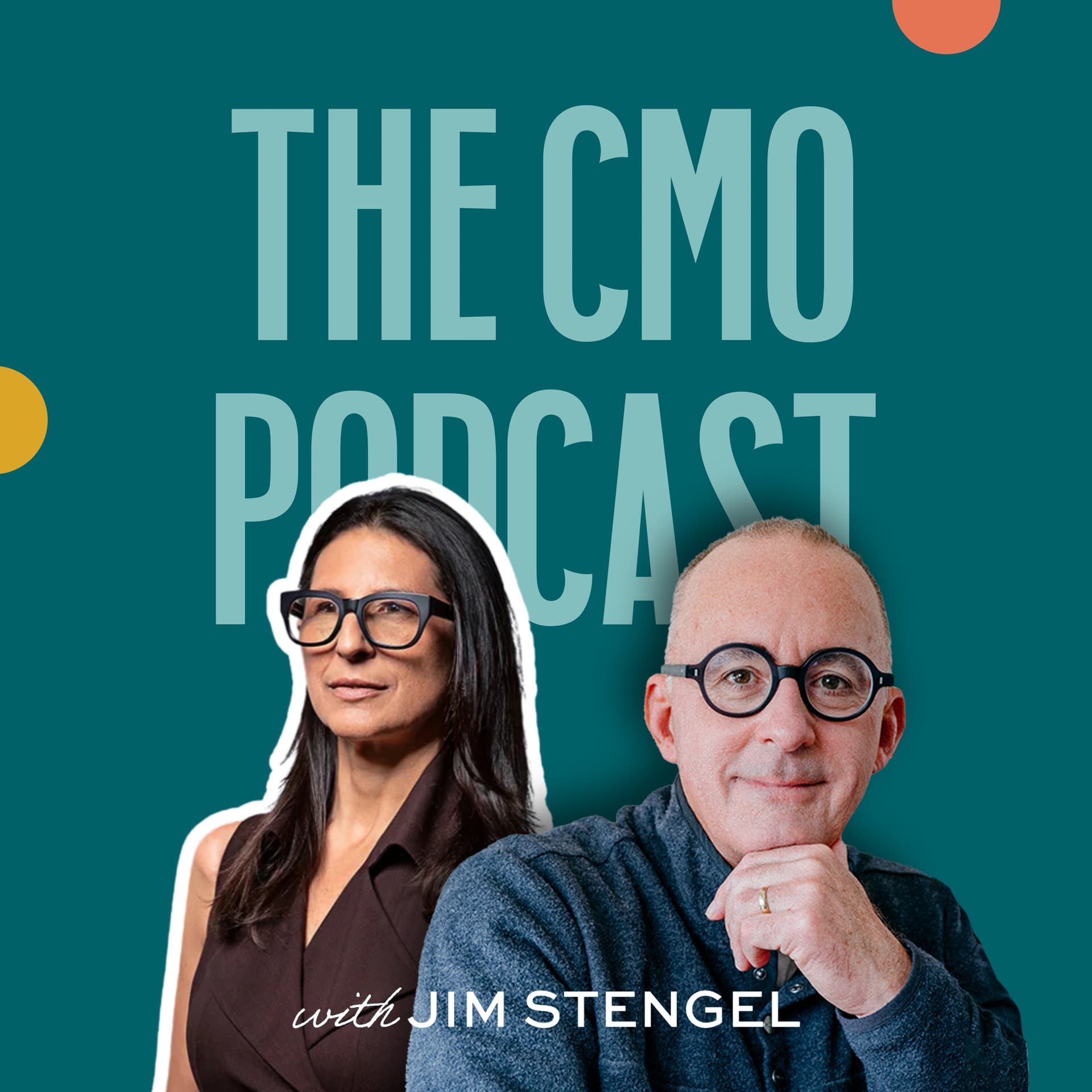
The CMO Podcast - Episode Summary: Linda Boff, David Lubars, and Rishad Tobaccowala | The Advertising Hall of Fame Class of 2025 Inductees
Podcast Overview
- Host: Jim Stengel, former CMO of Procter & Gamble
- Theme: Intimate conversations with dynamic CMOs and discussions about the impact of marketing on consumer experiences.
- Sponsor: Deloitte
Episode Description This episode celebrates the Class of 2025 inductees into the Advertising Hall of Fame. Jim Stengel engages in a roundtable discussion with three honorees:
- David Lubars: Former Chairman and Chief Creative Officer of BBDO with over 600 Cannes Lions awards.
- Linda Boff: Former CMO of General Electric, recognized for guiding the company's notable structural changes.
- Rishad Tobaccowala: A veteran of Publicis Groupe, known for his innovative thinking and influential writings.
Key Highlights of the Episode
- Setting the Scene:
- Recorded live after the American Advertising Federation’s Hall of Fame induction.
- The event honors individuals who have made significant contributions to advertising and philanthropy.
- The Importance of the Hall of Fame:
- Only 296 individuals have been inducted since 1948, highlighting the rigorous and meaningful selection process.
- Personal Reflections from Inductees:
- David Lubars: Emphasizes the value of creativity and its role as an economic multiplier.
- Linda Boff: Reflects on the emotional connections and relationships fostered within the industry.
- Rishad Tobaccowala: Discusses the interconnectedness of the industry and the importance of empathy in marketing.
Key Themes Discussed
- Creativity as a Differentiator:
- All three honorees agree that creativity is essential for success in marketing and advertising.
- Emphasizes the importance of innovative storytelling to engage audiences.
- The Value of Relationships:
- The inductees discuss how nurturing relationships has been key to their success.
- They acknowledge the sense of community and support found within the industry.
- Navigating Change in the Industry:
- There is a recognition of the industry's ongoing evolution, particularly with technological advancements.
- The importance of being adaptable and open to new ideas is emphasized.
- Personal Growth and Legacy:
- Each inductee reflects on their career journey and the lessons learned along the way.
- The significance of mentorship and giving back to future generations is highlighted.
Key Takeaways
- Pause and Reflect: The episode encourages listeners to take moments to celebrate achievements and relationships in their own careers.
- Storytelling is Essential: As the industry evolves, the ability to tell compelling stories will remain paramount.
- Focus on Relationships: Building and maintaining relationships is fundamental for long-term success in any career.
Quotes
- David Lubars: "Creativity matters. It has been for my life, but I think it is for our industry."
- Linda Boff: "I felt proud, but it was the love in the room...those are such rare moments."
- Rishad Tobaccowala: "When you leave a room, make sure you leave people feeling better."
Conclusion The episode serves as a powerful reminder of the importance of creativity, relationships, and personal growth within the marketing and advertising industry. The inductees’ personal stories and reflections provide valuable insights for current and aspiring marketers alike.
Additional Resources
- Learn more about the Advertising Hall of Fame: [AAF Website](https://www.aaf.org/Public/Public/Events/Advertising-Hall-of-Fame/AHOF_Home.aspx)
- Explore videos from past celebrations: [Vimeo Showcase](https://vimeo.com/showcase/7609857)
Acknowledgments
- Special thanks to the inductees for sharing their experiences and insights during this significant milestone in their careers.
- Reminder to listeners to subscribe, share, and leave reviews for the podcast to help foster the community around marketing discussions.
Written by AI. May contain mistakes. Listen to the episode to check what was said.
Transcript
Automatic transcript. May contain errors.0:00Hi, everyone. It's Jim. I'm here with Matt Spiegel, EVP of True Audience Growth Strategy at TransUnion. Matt, you've spent your career helping marketers understand people through data, and that's harder and more important now than ever. It really is, Jim. There's really just so much information out there, and unfortunately, it's often disconnected. Marketers typically see fragments, maybe a purchase here or a click there. But what they really need is clarity, true full picture of who their customers are, and ultimately how to reach them. Well, tell me how your solution strategy comes in and helps CMOs and their teams bring clarity to chaos.
0:32Well, Jim, we ultimately do that with a 360 view of the customer. And so it's about ultimately combining data, truly trusted data, identity resolution, which is a deep analytical problem, and measurement that actually helps understand performance. So ultimately, we work hard to help marketers move faster, to deepen their insights, and to ultimately make every dollar work harder. We believe strongly that when you truly understand your audience, you can build a real brand and real relationships with customers that last. Where were you when I was a CMO? I don't know how to answer that. Learn more at transunion.com slash clarity.
1:06That's transunion.com slash clarity. What if the smartest marketing play is not to move forward, but to zoom out? Deloitte believes the most powerful move a CMO can make is to look beyond the next step and see the broader perspective. That's what the Deloitte CMO program is for, a place to gain fresh perspective and connect with leaders who've stood where you stand. Together, Deloitte will help you see the bigger picture so your next move isn't just fast, but right. Learn more about the CMO program at cmo.deloitte.com. Hi, everyone. It's Jim. I have Matt Spiegel of TransUnion with me. Matt, I want to start with what do you love about your job?
1:42Yeah, it's a great question, Jim. You know what? I love the fact that I get to be out at events and conferences and working with clients to really think about how marketers solve problems that matter at scale. The job of a marketer is as challenging as ever, and we get to do some interesting things to make their job easier. When you work with a client, where do you get the most satisfaction? You know what? I think seeing ideas come to reality. We ultimately are an enable of great marketing. So we don't do creative. We don't do media planning. We provide the data, the identity insights, the measurement tools that make great marketing possible.
2:11So when we get to see the end product sometimes later, it's really cool to see. Well, super to have you here. Super to be a partner. Thanks for joining us today. Thank you, Jim. So if you want to turn data into understanding and understanding into growth, visit transunion.com slash clarity. But if you could boil it down from that 500 words to maybe 20 words. What did you want your audience to think and feel after you shared your thoughts with them? I think mine was somewhat simple. It was that creativity matters and it is the differentiator. It has been for my life, but I think it is for our industry and it's something I'll always celebrate.
2:47I would say that at the heart of this industry, it's imagination and creativity. And to that, my sort of focus was to think like outsiders, to think like underdogs, and to think a little about tomorrow versus yesterday. Yeah, I mean, I always say creativity as economic multiplier. You know, it's not just like a cool thing to have, it does the work. Hi, I'm Jim Stengel, and I help major brands find their purpose and activate it, and the profits followed. For seven years, I was the global marketing officer for Procter & Gamble, where I oversaw the marketing of hundreds of brands. You may not know it, but the CMOs, the chief marketing officers of all of your favorite brands, are trying to connect you with your favorite products and services through purpose.
3:37And on this show, I delve into how they do it. We are recording this episode in New York City on April 26, 2025, on a beautiful spring morning. Last night, I attended what is billed as the biggest night in advertising, the American Advertising Federation's annual Hall of Fame induction and celebration. It is simply my favorite night in our industry. It celebrates the life of a few individuals each year who have made an indelible impact on the advertising and marketing industry and who have exceptional philanthropic contributions. It also honors one company each year. Last night was the Mars Company, and it was a fun, beautiful evening celebrating Mars' contribution to the industry and to the world at large.
4:17Since the Hall of Fame's inception in 1948, only about 300 people have been inducted. And this is no ordinary awards ceremony. The nomination process is thorough and rigorous, with a large jury of peers, about 50, who vote for the few people each year from scores of applications. Well, this week on the CMO Podcast, we have a very special treat. Three of the people just inducted into the 2025 Hall of Fame are with me in person this morning in New York City. My guests today are as follows. David Lubars, the recently retired chairman and chief creative officer of BBDO. David has won an astonishing 700 Cannes Lions and is the only creative head ever to win Network of the Year at Cannes for seven years.
5:01Second, we have Linda Boff, the former longstanding chief marketing officer of GE, who among many other things helped shepherd the company threw its split into three separate public companies. And last, we have Rashad Tabakawala, who served in a variety of roles at the Publicist Group over a 40-year career. Rashad is impossible to put in a box. He is an innovator, a pioneer, a mentor, a teacher, an advisor. His weekly thought letter, The Future Does Not Fit Into the Containers of the Past, is read by 30 ,000 people. Here is my funny, warm, reflective, poignant conversation with three people who have just had one of the most special evenings of their life.
5:38Here we go. So welcome to the morning after the biggest night in advertising special edition of the CMO podcast. Now, we were kind of out late last night. I walked home about midnight. So how did you sleep last night? There was a lot of excitement last night. You were all on stage. So did you go out afterward or just go home and go to bed? David? I think we all got legless drunk. I missed that part. No, actually, I went upstairs to the after party. It was so great to see. It's a great industry with really fantastic people. It was lovely. Yeah, I thought exactly the same thing. I found myself kind of dancing with some M &Ms at one point.
6:18Daughter and son and two colorful M &Ms. I was too excited to sleep. I kept replaying all of it and reliving all the fun and what the evening was about. Rashad, did you go home and write a blog with three things? No, I did not go write a blog. We went actually out for dinner because - You did? Yeah. For a late dinner because the reality was we did not eat at the thing itself, right? Now, I want to talk about this evening. I mean, we have many awards in our industry, but this one, I think, is very special and rises above most because it's a lifetime achievement award, basically, and the process is rigorous, which we'll talk about in a minute.
6:59But I'd like to ask each of you, where does this rank for you in terms of life moments or life experiences? Linda. It was for me one of the, if not the greatest career nights of my life. And I think it was a combination. I mean, you feel I felt really proud, but it was the love in the room. And I felt like I was celebrated and celebrating with sort of my best pals. Some of them were on stage. Two of them are right here. A lot of them were in the room. I tried to just sort of embrace all of that because, you know, these are such rare moments. So I felt like it was one-on-one. Could you find yourself staying in the moment last night?
7:43Because it's also nerve-wracking. You're on stage. You know, I really did. I mean, you know, you always get that little, you know, you want to do well, right? You're on stage, you want to sound pretty good and all the rest of it. But I approached it with joy and the joy just kept going all night, all the way through the M &Ms. Rashad, how about yourself? I would completely concur with Linda. And I would say that from a career viewpoint, it was probably extremely, probably the highest honor. And that's primarily because of being in the same company as people like these two and all the people who've come before.
8:22So, you know, I grew up, for instance, in the Publicis group. And the people who've had this before include people, obviously, like Renetta McCann. But then it's the founder of Publicis, Leo Burnett, the man, and Maurice. So the whole idea, someone's made a mistake and they've put you in the same company, including with this guy. So take it. Well, yeah, I would build on that. I mean, when you look at the list of luminaries and then you're in there, too, it's kind of surreal. And it's certainly a career pinnacle. But again, I say it's a great evening because it recognizes the industry too. I think other industries could learn from our industry, the rigor, the discipline, the work ethic, the service, the creativity.
9:07I don't know if people get how cool it is and other people could learn from us. I remember when we got the news last fall. You got the news you were all going to be honorees. We got the news that we were all being honored. Yeah, thank you. So I sat, you know, really joyous. And then I sat and read every name of everybody who had come before the 300 odd names. And as Rashad said, I was just gobsmacked. You know, how in the world did this happen? And just, yeah, amazing. Yeah, no, it's incredible. I want to ask you that, you know, you all, it was about a, I don't know, two or three hour event, right?
9:42There were lots of videos and speeches and so on and so forth. What did you find last night most moving or most poignant or most thought provoking? I got up this morning. I couldn't sleep last night because I wasn't honored, but I'm energized by this event. And I wrote a short blog and I just said, you know, it always comes down to relationships and people and family. And that was just so much throughout the entire evening. And at the end of the day, that's what this is all about. And that's what great business, great life is all about. And you three, just, you know, the way you think about relationships, the way you develop relationships, the way you nurture relationships, I think is incredible because I know you all.
10:23But what did you find last night to be most poignant, most inspiring? I would say, you know, three big things. One is, to your point, this was about emotion and it was about relationships. And it wasn't what sometimes the industry keeps talking about, which is data and technology. Right. It was about storytelling because we were actually, people were telling their stories, intersecting with other stories. So I think that was a very big one. The second one to Linda's point that this is basically sort of a room where you knew everybody or you were maybe just one degree away from knowing them versus seven degrees or three degrees, et cetera.
11:05And then I would say to David's point, this is something that is very important because it reinforces that this is a unique industry. It's one of those few industries where different parts of humanity come together. We're neither left brain nor right brain. We're not up or down. We're everything. I would add there was something last night about the interconnectivity. So the video that they showed before I walked on stage began and closed with films that David Lubars created. I mean, how great is that, right? Our lives, our careers have been intertwined. Rashad, a month ago, came and spoke to my team.
11:53Lisa has been a friend for 20 years. and it plays off a little bit of what Rashad just said. I mean, there is this level of showing up for each other and support and, you know, passion. Passion for what we do and passion for each other. And I think that's what I, I felt so many things, but if I try to distill it, I think that's what I come back to. When I saw the announcement last fall, I thought, holy shit, I know every one of them. I have to be there. And that speaks to that. And I think that's also special about our industry. David, how about yourself? So I would just add that the thing that moved me most, and I never met Susan, but I really got to know her.
12:40Susan Wozicki. Yeah, yeah. YouTube. And he did a great job of painting the picture of her. For our audience, she passed away, and she was an honoree last night, and her husband spoke. Yeah, extraordinary career, you know, YouTube. So she was a real game changer. but you got a feeling for her soul. And, you know, it was very moving. Yeah, I agree with that. Very thoughtful. I knew her pretty well. We were early adopters at P &G on Google. She just never changed. She stayed true to herself. I remember being at one of the big parties in Cannes a couple years ago, and I think it was the Kassin party with the music.
13:20And, you know, I was tired of it. It was just too much noise, too crowded. I stepped outside. I was just hanging around. And then she came out. We just had a nice chat about kids and sports and culture. And it was just, that's who she was. Yeah, she seemed like a really good soul and egg. Yeah, yeah, for sure.
13:42We all want to stay ahead of the digital curve. And IAB, the Interactive Advertising Bureau, invites you to do just that at the 2026 IAB Annual Leadership Meeting in Palm Springs on February 1st through 3rd. If you're a qualified consumer brand or agency leader, you can access free passes and travel vouchers. And for everyone else, you can take$500 off your ticket with code, all caps, ALMCMOPOD26. This is your chance to join a three-day gathering of the industry's brightest minds and boldest voices shaping the year ahead. You'll hear agenda-setting conversations, candid fireside chats, and dynamic breakouts on the topics that matter most.
14:23from AI and commerce media to measurement and addressability. This year's lineup concludes everyone from Kevin Bacon and Bozema St. John to creator Remy Bader, along with leaders from Forbes, Major League Soccer, General Motors, and Meta. Visit iab.com slash ALM to learn more and check out the link in the show notes to register and receive$500 off your ticket.
14:49Now last night, I mean, the format is you're introduced by someone and then there's a video that is really fun. I love that part. And our listeners can go online and watch those. But then you have to speak. And you have to speak for a few minutes. So I want you to talk about how difficult was that? David, you're a writer. But how difficult was that to get your thoughts, your feelings of decades-long career into a few words on one of the most special evenings of your life? So could you talk about that process? Because I can only imagine you probably started thinking about that as soon as you got the announcement way back last fall.
15:31So maybe, David, we start with you. How difficult was it? How did you go about it? Well, that part, it was not difficult. I think my best gift is I know what I'm good and bad at, you know. And again, I'm not being falsely, I'm not being like falsely modest or, I was an okay writer. I was good. Yeah, sure. A minus writer can win lines because most people are C minus. But that rarefied A plus, and yet I was doing well and a lot of these A plus people weren't. And I thought, oh, because they don't know what, they don't feel it from Linda Boff the way maybe I could feel it. So if I could feel it from her and then work with them, like we could both lift each other.
16:08So that's really what my speech was about. So I always think about that. So it was easy for me to say it because it wasn't a new like, oh, what do I say? That's been my career. Yeah, yeah. Rashad, was it more challenging for you or not? Well, I think there were two things that were not challenging. But one is, you know, Ernest Hemingway has this line supposedly which says, if I had more time, I'd write a shorter letter. and one of the key constraints here were 500 words. Sort of encapsulate a lot of things in 500 words. Which is about two pages of type, right? Right. It is exactly two pages of type, which is one.
16:47And the second for me was I never use a teleprompter. And yeah, because you had to have 500 words and you had to be a teleprompter, it was that. But it was really to make sure that how do you combine a bunch of different things, which is appreciation and thank you, but some additional stuff, like each of us said, that was bigger than that, and do that in 500 words. So that was the more difficult part. So it wasn't necessarily the actual talk that was difficult outside of having to use a teleprompter. It was making sure you got it done in 500 words. You were good on the teleprompter. Nobody could tell you.
17:24Yeah, yeah. So because what happened was I quickly realized that because when I went for the rehearsal with Tarek, I said, oh, my God, I've never used a teleprompter before in my life. It's an awkward feeling. It is awkward. It is awkward. Right. I thought you were very smooth. Thank you. Well, I'll take the opposite of David. Right. I found it hard. And what I found hard was getting to what really mattered. Because there's so many things you can say. You know, this is a career achievement. It's not about a single piece of work or, you know, a single job. Right. It's what you've learned and what do you want to impart.
18:04And what I found, I thought about it a lot. And I came to realize that there were a lot of things I could say, but a few things I wanted to say. And I really dug a little deep, so to speak, in terms of what influenced me for a lifetime, what influenced me in a career, and why it mattered. So I sweated so much more than David and Richard. You should have called David. David has written so many things for me. I do not think I could have asked him to write this one too. But I will say once I finished and I put the pen down, I felt great. I felt like that was what I wanted to say. And I agree on the teleprompter.
18:50But aside from that, it felt good. Yeah, yeah. What did you all want your message to be for our audience who obviously wasn't there, But if you could boil it down from that 500 words to maybe 20 words, what did you want your audience to think and feel after you shared your thoughts with them? I think mine was somewhat simple. It was that creativity matters. And it is the differentiator. It has been for my life, but I think it is for our industry. And it's something I'll always celebrate. I would say that at the heart of this industry, it's imagination and creativity. And to that, my sort of focus was to think like outsiders, to think like underdogs, and to think a little about tomorrow versus yesterday.
19:40Yeah, I mean, I always say creativity as economic multiplier. You know, it's not just like a cool thing to have. It does the work. Now, you went through a crazy nomination process because I've been on that jury before. and it's unlike anything in our industry, right? You have to have 10 to 20 letters. There's a lead letter. There's someone has to present to the jury in person. And then you become a finalist. And so it is rough and the jury is huge. And they wanted to - 50 people. Yeah. So it's an ordeal and it starts now for next year. So it's really pretty crazy. But you all had, and I read all of your letters, by the way, which I'll get to in a minute, but you all had a lead person.
20:24who wrote your lead letter. And it was Andrew Robertson for you, David, Carolyn for you, Rashad, and Larry Culp for you, Linda. So I'd like to pause for a moment. It's a big thing to pick a lead letter. It sets the tone for everyone. So could you talk a bit about that person in your life who you chose to be your lead letter and what they mean to you and how they've inspired you? So Larry Culp is CEO of GE Aerospace. When I worked for him, he was CEO of all of GE, and I worked for him for seven years or so. He was the third GE CEO I worked for. Larry is extraordinary. He's not a marketer. I've worked for a CEO, Jeff Immelt, who loved marketing and sales.
21:12Jim, you knew him well. There's something about working for somebody who doesn't understand your craft, but comes to appreciate it, that is as good as it gets, because it's a process. It doesn't come easy. And I think for me, Larry's ultimate support, as we worked through together, whole leadership team, quite an extraordinary transformation of a company that was not doing terribly well and is, you know, as three separate companies doing, extraordinarily well. We took a journey together. I feel like I earned his respect. I didn't get it automatically. He had come from the outside. But I would say, perhaps most pointedly, what I learned from Larry had nothing to do with marketing.
22:01It was to listen and respect people and be humble. And I think about him all the time. And that was a gift. And it was a gift, I think was pretty precious. So I was so honored that he did it, that he wrote the letter. Yeah. It was a beautiful letter. That was amazing. Just as a side, the process you went through, I mean, that's a very special experience. Obviously, it's stating the obvious to do that, to take this venerable company and put it into three. I was on Motorola's board when we split it. It was so hard. And I think yours was a different level of complexity. Yeah. I think there were two things.
22:39One was to watch a company, be part of a company that had to claw its way back. You never forget that. You never forget what it was like to be low and to have to climb the ladder to success. And the process of separation was extraordinary. A lot of people did a lot of work. So David, let's stay with you, Andrew Robertson. So we were partners for 20 years. There were 7 ,000 whatever days, as he said in his opening. And we did have that lunch. I didn't tell that story again. I hate to do it, but it was so good. We meet at this wine bar, and he comes in late. This is kind of your interview. Yeah.
23:19I mean, I had vaguely known him, but this was our first. In fact, I didn't even know that's what we were discussing. I thought we were just having lunch. And you at the time were at Fallon? I was at Fallon, but I had known him vaguely when I was at BBDO West, and he was at AMV and we both did Apple. So I had been to a couple of meetings. So I thought he moved to New York and we were having lunch. So it turned out it was about more than that. So he was late. And then his phone died, so he used my phone. And then he left his wallet, so I had to pay for the lunch. And then he had to use the men's room.
23:51So I said, well, do you want me to do that for you too? So it started out in a fun way and cool and gave me a lot to think about. And right away I could see, like, he's brilliant. And he's kind of a special mind and a really good soul. So 20 years, and as he said in his speech, we had a lot of ups, some downs, you know. But we always kind of powered through and kept the team up. No finger pointing, no, you know, like, we're in this together. Let's go do it. We're family. So, yeah. And so I inducted him or introduced him two, three years ago. So it was only, you know, kind of right that he would do me.
24:25I was honored. I mean, it's very unusual to be together that long in this industry as the head creative and the CEO. What story or what aspect of that relationship do you think has not been told as much as it could be? I think the biggest thing is we never allowed the cement to harden. That's what we had in common. Like you're stirring it. It's sloppy and messy, but that way it stays liquid. And that way you can flow whichever way the world or the client needs you to, as opposed to this is what we do. And now the world leaves you behind. So I think that made us – and that kind of flowed into the culture of the agency.
25:00It's never going to – every day is about change and new and we're not stuck in anything and onward. So I think that's what really made it work. And I think Linda felt that, right? A hundred percent. I feel like you were not just always growing but always looking around the corner as to what was next and what was right for your clients. You know, the two of you, the duo was legendary. Legendary. Both really paranoid, like always hear the footsteps behind you. So it's kind of a tough skin to live in, but it's fun when you use it in a positive way. I would say as a client, you always were, I mean, you loved the work.
25:39You both loved the work. And you were always about us and our business and our problems. You're always honest and funny. And I mean, I think one thing I took away from last night, you could tell people up on that stage and around you loved what they did. And it's not always easy and shit, all that. But basically the joy in what we do. And I really feel that and felt that with you, too. So, Rashad, Carolyn Everson, give us some. When did you two first meet and start there? So I've known Carolyn for a long, long time. And she's obviously a legend. And she was a legend long before Meta or Facebook.
Read the full transcript
26:17Right. So at a particular stage, we got to know each other because she wanted me to talk to her team when she was at Viacom and other places. And that's how we sort of were connected. So I've known her both from pre-META, META, and now post-META. And what's interesting is in addition to us knowing each other, there were often times when we were at war with each other. and there was a particular time when we had to have mediation between the two of us so Cheryl and Maurice made us get together in a soho house here and that was primarily because there was that was around Cambridge Analytica oh yeah where my whole stuff is what what is this and I was the only person on record criticizing Facebook at that time and so she went crazy because she thought it was personal because I said, this company has lost its soul, right?
27:15Which was kind of interesting. So as I remind people, relationships have these ups and downs, even great relationships. But what was common to us is we kept, we were 100 % honest with each other. And I said, this is not about you, this is about your company, right? And I remember even sitting at Sohouse and I said, my recommendation to you is at some stage you should leave. This company is beneath you. Okay, which is kind of interesting. Literally. This is, I remember, and she looked at me. I said, I'm telling you, you cannot rectify this company. You have to leave, which is kind of interesting.
27:48And then what also happened is that one day, suddenly, I see on Facebook that she's leaving. But there's no Zuckerberg thing. There's nothing. It's just that she's saying, I'm leaving. So I decided to put something on, saying, I'm surprised that Zuckerberg isn't putting out a press release, saying this was the lady who took all the slings and arrows. This was the lady, right? Which she really appreciated. So I went the exact opposite. And so that was part of it, which is I'd also remind people that great relationships tend to also have times of great emotional drama, if that makes sense. But we trusted each other and we liked each other, but we sometimes, I was representing clients who I thought were being taken for a ride.
28:34and she was representing her company. And I always remind people that when you are actually in disagreement with people, try not to make it about the person, try to make it about the thing or at the worst, make it about the firm that they work from. The reason she wrote the letter, in addition to the fact that she's very legendary, is she was the person who would call me all the time and says, I want to nominate you. Why aren't you saying yes? And I kept saying, there are people who need to go ahead of me. There was one. And the other was, I don't think I belong here. And then one particular stage, she said, I don't care.
29:10I'm going to do it unless you say no. And that's how it started.
29:20Everyone seems to be chasing the next big thing, the fastest answer, the quickest win. But great CMOs believe the real power isn't in the speed. It's in stepping back to see the bigger picture. That's why everything Deloitte does in their CMO program, from their industry-leading capabilities to their connected network of CMOs, is designed to help you zoom out and gain fresh perspective. Deloitte will help you see the bigger picture together. Learn more about the CMO program at cmo.deloitte.com.
29:53so this nomination process which takes a long time and very involved you're all pretty experienced people did you learn anything about yourself going through that was there any aha or revelation or surprise because it's a lot of attention on you right that's kind of a weird because we spend our life having attention on others that's kind of a weird feeling i like to think of myself as kind of a shallow superficial glib person i don't do a A lot of self analysis. Just laughing at David. Not the first time. Not the first time. So well said, Jim. I mean, our careers are kind of spent promoting a service or a product, not ourselves.
30:31So it is a somewhat uncomfortable for me, not for David, obviously, process to ask people or to seek recommendations. And, you know, it's, you feel a little bit, or I felt a little bit like, as Rashad said, why me? Why do I deserve this? Yet, when I got the phone call and what happened, I don't know if this happens every year, was not only did I get a phone call the night of the nomination selection, but it was a video call. eight people who I knew really well from the committee giving me the good news. And I was so overwhelmed and so joyful that it stopped being about, oh gosh, it shouldn't be me.
31:16And it started being about a celebration. And I think that has been true for the months since. So what started with a little bit of like wearing a sweater that was too tight, I just decided to embrace it and embrace the people who helped me get there. Great attitude about any recognition, actually. Rashad, how about yourself? I think the big difference or the big thing is when you spend a lot of time as the three of us have, which is decades. So we are not aged or old. We are seasoned. But as you become seasoned. Not old, retro. Retro. Retro. Right. He's a writer. Right. So we're retro. But you oddly forget all the people you've met along your career.
32:01Okay. Not because you forget them because it's people, but you don't realize that you were in a room for 15 minutes and you had an impact on somebody because you didn't even know they were in the room, if that makes sense. And hearing from them was, I think, one of the very interesting perspectives, which is a key thing I leave people saying is like, try to make sure when you leave a room, you leave people feeling better. Even if you tell them stuff they don't want to hear. And that was the big learning that I got from this. Did you read all your letters? Oh, yeah. Humbling. Well, I did as well.
32:36And I want to talk about that a bit. I read all your letters and I tried to distill for myself the special gift each of you have. So I'm going to try that out on you and get your reaction to it and welcome the whole group to chime in on that. So you had to write 500 words. I just asked you to summarize it in 20. I'm going to do it in two or three words. And I'm going to use, Rashad, I'm going to start with you. And it's something your mother said about you having a heart of gold. And I think that everything permeates from that. Yeah. So what I basically believe is since I worked for a French company and I don't know French, the only thing I did was I tried to find one French philosopher.
33:16It was a line I could use. So when I was in a meeting, I could drop it. So it felt very French, if that makes sense. And that line is actually from Blaise Pascal. and he basically said, we choose with our hearts and then we use numbers to justify what we just did in French. And I began to realize that even in the world of marketing and branding, and I'm bringing it into our industry, we all, even today, will talk about all this math, and I'm an advanced math major, right? And data and a whole bunch of stuff. But I ask a very simple question. I said, how many of you here are wearing a watch? And many people do.
33:56So I said, why? Because your phone has a better watch. How many people drive a car in a city? Why? Uber is a better option. Or if you have a car, anything above Toyota, Camry is not worth anything. So if you actually think about it, the entire marketing and brand building business is about provenance, craft, storytelling, and emotion. And we keep thinking it's the other thing, right? And so that has been like a cross where I've begun to realize is you connect with people on a emotional basis, and then you build all the rational around it. So that's the reason. Why did your mother use those words that you have a heart of gold?
34:35I think because primarily I used to be a very good student and I was on the top of every class. Everybody said, look, he's really, really smart. And she would basically say, uh-uh, he's smart, but really it's this. That was the key. So Linda, I think yours is this just uncanny ability to see abundance in possibilities in agencies, in people, in brands. We certainly felt that last night. So wouldn't we all love to have that? So I'd like to talk a bit about how you developed that. Was it intentional? Was it just part of who you are? Is it a role model you had growing up? So I talked about this a little bit last night, which is the gift of saying yes.
35:24Gift of possibility is another way to say it. I have gone through life as a glass more than half full person. I do love possibility. But I think, Jim, more than possibility, I love people. And I think I've had the opportunity gift to meet the most extraordinary people. And when you are fortunate enough to be on the brown side, as you and I both were for many, many years, that affords you the opportunity to sit across the table from just about anybody. And I tried to use that opportunity for good, not for charity, you know, public company, but to meet extraordinary people. Two of them are sitting here, David and Rashad, but a lot of folks who were much earlier in their careers.
36:15And I think I learned so much of that from Beth Comstock, dear friend, mentor, somebody who we all love. previous CMO of GE and many other things. Yeah. Yeah. Who was always open. And I think she encouraged that side of me as well. And I believe together, and then after Beth left, I think of myself as an explorer, but an explorer of people. And it doesn't really get much better than that. And to have the opportunity, the checkbook, the brand to be able to take bets on people. Wow. It's extraordinary. David, I'm going to use a word that was, I don't know who used it in one of your letters, but I love it.
37:00And it's this ability to reveal true magic in brands and people and organizations. And you've done that as you've gotten really senior, which is more nuanced and layered and complex. So I'd like you to talk about, for our listeners who would like to be able to find the magic in a person, a brand, an organization, a business, how do you do it? And don't just tell me it's intuitive. I want to understand sort of like an end to your head and into how you work. How do you do that? So I guess I believe all great brands have magic. There's a magic to them. That's what makes them great. But for whatever reasons, the magic is not always revealed or brought forth.
37:43So I always felt it was our job not to just make creative, but to dig in there and mine for that magic and pull that thing out. It's not just creative. It's strategy people. It's the whole team around. Circle it and get in it. When you extract that magic and reveal it to the world, not only are you driving to success, but you're also putting effervescent, evergreen, fresh air out there into the culture instead of pollution. It's a bigger thing than just... And then people love your brand, and then it helps money circulate, and you're helping economies. So it's a really cool thing to do. And it starts with creativity, and that's the economic multiplier part.
38:23So that's really when it's fun. You don't always succeed at it, and that's why there were reviews. But we had a great new business record and a great client retention record because we did it more than we didn't. David, can I say something about you, if I could? You have an extraordinary ability to simplify things. I feel like so many people want to just keep adding. And you talk about reductionist nugget and et cetera, but you have this ability to see something and then just clear the clear the crap away and find that simple idea. It's extraordinary. Well, it's kind of you to say and at our best.
39:02Yeah, that's we did. I was glad we were at our best with you.
39:11Hi, everybody. I'm Andrea Sullivan, the CEO of Vive, and we have produced the CMO podcast with Jim Stengel for many years and I'm sitting in his seat right now. It's so exciting. I wanted to tell you a little bit about one of our programs that's called Vive by Vayner. It's a 12-month program that's designed for C-suiters and founders. And we want to help people to grow their businesses, but also to grow themselves. And so we bring in people from Shark Tank to talk to our founders, but we also focus on wellness. We want to make sure that people are leaning into becoming their best selves, their best and happiest selves.
39:52So if you are someone that wants to learn how to grow your business and grow yourself, check us out at vive.co. That's V-Y-V-E dot co. We'd love to talk to you.
40:09We have a lot of young listeners on the show. We have obviously CMOs that listen to it, but I think almost half of our listeners are under 40. And there's a lot outside the U.S. as well. So for the youth listening or the people coming up that are on the first half of their career versus us on the second half, to be kind. What sort of things do you want to share with them from what we're talking about today and how you're feeling about this process you just went through? I mean, this is a reductionist kind of thing, right? You have to get your career into a few moments. So anything you'd like to share that we haven't talked enough about in the last 45 minutes or so?
40:44I think BBDO today with my amazing successor, Chris Beresford Hill, is continuing some of the things we've talked about today. So if you're a young creative out there, I would pursue BBDO. I really think this next window is going to be really exciting with that company. Great feeling, isn't it, when you leave it that way? Rashad? You know, I would, the advice I'd give to sort of younger people is think of your career as 50 years and not this quarter or the bad meeting you had. And in a 50-year career, the only thing that will be around at the end will be other people. You know, I think, I find too often people are looking for the shortcut.
41:28Now, maybe this is after many decades, much older than your average listener. I think the shortcut is hard work and loving what you do. You know, every now and then, you know, lady luck shines on you and something happens and the pieces fall into place. But it's the work. It's the people you do the work with. It's giving them credit along the way, not taking credit. And I think you earn it. So hang in there and earn it. And for the very, very young among your listeners, there are a couple of lines that I would always tell our daughters, and then they eventually use them against me, which is the way they tend to.
42:07So one was, do not live in other people's minds, which is pay attention to what other people think, but don't do stuff just to impress other people because you're giving the remote control of your life to somebody else, which you don't want to do, which is number one. And the other one is, do not price yourself out of your dreams. which basically means there may be something you really want to do and you're really good at. Try very quickly to do that versus try to get something, which either pays you a lot of money or makes everybody else think you've got a fantastic job. Because in the end, what you do is really how you live.
42:45Yeah, that's great advice. Is there any question you have for each other that I haven't asked? I know you know each other well. You've been together a lot the last 24 hours. So one of the things I have for both of these folks, both of whom I've admired in different ways, because the good news is you're a leading creative. And the one thing that I could never, ever get to be was a creative. Is there some sort of magic that you do? And for you, for Linda, the question simply is, how has she managed to navigate being a client but not feeling like she's ever a client? I love that question. I can't really answer it.
43:22You know, like when you talk to these great songwriters, they say the really good ones just kind of came out of the air and they don't really know what happened. And the ones that are good because they were professional, like I'm going to give something good. But the inspired ones came. So I don't know how to answer that, but I know it happens. But it's probably because you're connecting dots in new ways, which you don't even know. I suppose so. I love your question. God, I think there are times I showed up as a client. We won't go there today. Let's leave those stories on the cutting room floor.
43:56But I think most of the time, when you're at your best, right, which is, you know, I think where your question is going. I saw us, see us, and all David, all of our agency partners, we worked with so many different people as partners. And I could never have done it on my own. I mean, there is not a world in which I would have been on that stage last night if I were sitting in a room with a whiteboard trying to dream it up. But to sit in a room with people like David Lubars and Laura Carrente and so many others was to not just be successful, but have a blast doing it. And maybe that made me a better client.
44:39It certainly made me enjoy the ride so much. I actually turn this around to you. Since you were there all of yesterday, what were some of your key takeaways? Besides the three of us, you had many other people who you watched. I mean, my Uber one was, we talked about this, the love in the room. Everyone talked about relationships and they kind of integrated their professional and their personal, their family and their colleagues. So I think there was a great sense of valuing and nurturing and trusting relationships and making that a focus in their life. So when you strip it all away, it kind of comes down to that.
45:19So to me, that was, that's why this night is so moving for me. I mean, every time I've been to one of these, I feel that in different ways. So I think that to me was the overwhelming one. I also thought that this idea of, I think we heard it in Susan's husband's remarks. We heard it from you guys as well. Champion the underdogs, the outsiders, you know, the people who don't get to speak as much. And I love that thought. And I think it keeps us fresh. It keeps us curious. So those were two of the things I took away. And you talked about the interconnectedness. It was just nice to be in that room and bounce around and see so many people that I haven't seen.
46:03I was sitting at the P &G table last night with Angela Pascolucci and Debbie Reiner, who I worked with for so many years. And we had so many friends and so many stories. And it was just so much fun. So much fun. And so, yeah, so that was kind of my takeaway. So I love the evening. So let's end with our hope for this industry as we look out. You know, we all talk about the power of it, the magic of it, the potential of it, the abundance. But what do you hope we're talking about a few years from now in this industry? So I hope the industry recognizes that we are actually entering in the renaissance of this industry, that all of this has been preparation.
46:42And I truly believe that every time there's an advance in technology, there's an advance in storytelling and brand building. And I remind people, you know, from the days when the three of us were young and fire was invented, in addition to basically sort of being able to cook our food and stay warm, we had nothing to do in the night, so we told each other stories. And then when the wheel got invented, we got to go to places. All stories actually begin with a stranger comes to town or someone goes on a journey. So every time there's an advance in technology, There's an advance in storytelling, which is at the heart of the business.
47:21Love that thought. I love that thought. I used a phrase last night that I'll use again here, which is this idea of being idea-led and consumer-informed, not the reverse. And I think we have this remarkable abundance of data. And if that is what triggers us, not the idea, I think we get it wrong. So let's use data. but let's be ideal lad i have a simple answer you know 25 years ago you had the beginning of the digital the digital revolution so now another one's about to start like you say a renaissance and uh i don't like listening to futurists because nobody could you predict four years ago what was going to happen now or six years ago but you can see some of these things about to start and uh so i think five years from now it's going to be like oh remember when and uh it's going to i think gets me really exciting and positive.
48:16So post Hall of Fame life, you're all active. So what are you most looking forward to in the next phase of your life? So I foolishly or otherwise decided to jump on the agency side. And 10 months ago or so, I became CEO of a mid-sized agency. I love it. It's hard. Hard makes you kind of get up every morning and say, okay, let's do it. I personally would love to take a note from the two gentlemen sitting here and think about how agency life going forward could have the generosity and collaboration that I think we experienced last night. I think it's there, but I think there's the opportunity to be better.
49:05Rashad? So to a great extent, I've had the privilege of going first versus these two. These folks retired, not retired, but ended career one or two after I did. I did this six years ago. And I think the big thing is I eventually figured out that there has to be another sort of purpose. And so mine came to be helping people see, think, and feel differently about how to grow themselves, their teams, and their business. and that became the central way of doing stuff. And then I try to make it sound like very strategic by saying I do one-to-many, which is like my podcast and my books and my sub stack.
49:44You know, one-to-some, which is a fancy way of saying speaking and one-to-one, which is a fancy way of saying advisory, but it all ladders up to the same thing. And, you know, we did talk about growth, but the whole idea is it's about people. And if you can get people to just see, think and feel differently, which is really at the heart of creativity, but I'm doing it in a different way. You're enjoying it? I love it so far and so far I've convinced people that I'm kind of good at doing it but that's, you know, someone says, how's it going? I often say, so far, so good. But that's what someone said when they jumped off the 100th floor building and someone asked them at floor 50.
50:22So I... You have a big award this summer coming up in June. I do, yeah. The big award in Cannes. It's funny how you go from young up and coming kid to decomposing corpse taking a victory lap that's what i'm in now but um i i would i retired at the end of last year so i'm already in my post hall of fame life and what i decided to do for this first year is a lot of challenging interesting things all having nothing to do with what i did so i'm i'm doing like intense street defense jujitsu it's really difficult and cool learning Spanish. And I think I'm going to become a volunteer fireman doing all these interesting things that have nothing to do with that.
51:03And then I think after the year's over, maybe I want to reactivate my brain doing something. I'm not sure what. Why those three activities? Seem cool. Seem cool. Okay. And I'll tell you one thing I'm not doing in my post Hall of Fame life. Everything I can to avoid the Midtown Tunnel. No airports before dawn. Yeah. Yeah. Yeah. That's a good principle to live by and good night's sleep as much as we can. Well, thank you all. This has been a real gift. And thank you for coming in early after a late night, an emotional night, a powerful night. So thank you for coming to sharing. I knew this would be good and it went way better.
51:43It exceeded my expectations on many levels. Thank you, Jim. So thank you so much. Thank you for having us. Thanks, Jim. Wonderful conversation. That was my very special conversation with David, Linda and Rashad. Three takeaways from this one for your business brand in life. And the first one is just pause for a moment. These are three wildly successful people who just got this amazing lifetime achievement award. And as you could tell in this conversation, they are wonderful human beings. I just think you could listen to this episode again, and please share it with your teams. There's just so much to think about in what these three people shared in the last hour.
52:22Second takeaway, this idea that we're in a moment of renaissance. We have technology is changing again. It always will. But in this time of deep technological change, obviously, we're talking about AI now. There's the opportunity to tell new stories and storytelling is more important than ever. I love that point that David and Rashad made. And third takeaway, we talked about relationships a lot, the interconnectedness of us all in this industry and beyond. I think a takeaway from this one is relationships are everything. How you treat people is everything. How you value and respect people will make or break your career.
52:59These three people think a lot about relationships and it has got them to this very special place in their career and their life. And last takeaway. Gosh, congratulations to the three of my guests, David, Rashad, Linda. What a special career. What a special evening. and a big thank you for getting up early the morning after a very big night for them and the biggest night in advertising. That's it for this episode of the CMO podcast. If you found this helpful and entertaining, I would be so grateful if you could share our show with your friends and I would be super happy if you subscribe so you can be updated as we publish new episodes.
53:37And if you really want to help, leave us a five-star rating and a positive review on Apple Podcasts or wherever you listen. The CMO Podcast is a Vive original production. Episodes of the CMO Podcast are produced by Vive. The views and opinions expressed by podcast speakers and guests are solely their own and do not reflect the opinions of our sponsors or its personnel, nor do our sponsors advocate or endorse any individuals or entities featured on the episodes.
From the publisher
This week, we are celebrating the Class of 2025 inductees into the Advertising Hall of Fame, as Jim welcomes three of this year's honorees for a roundtable discussion. Recorded live the morning after "The Biggest Night in Advertising"—the American Advertising Federation’s annual Hall of Fame induction and celebration—the conversation highlights a few individuals each year who have made an indelible impact on the advertising and marketing industry, as well as exceptional philanthropic contributions. Since the Hall of Fame’s inception in 1948, only 296 people have been inducted.
Joining Jim are:
- David Lubars, the recently retired Chairman and Chief Creative Officer of BBDO. David has won an astonishing 600 Cannes Lions and is the only creative head ever to win Network of the Year at Cannes for seven consecutive years.
- Linda Boff, the former long-standing Chief Marketing Officer of GE, who, among many other achievements, helped guide the company through its split into three separate public entities.
- Rishad Tobaccowala, who served in a variety of roles at Publicis Groupe over a 40-year career. Rishad is impossible to put in a box—he is an innovator, a pioneer, a mentor, a teacher, and an advisor. His weekly thought letter, The Future Does Not Fit into the Containers of the Past, is read by 30,000 people.
Tune in for a funny, warm, reflective, and poignant conversation with three people who have just experienced one of the most special evenings of their lives.
---
Learn more about the entire class of inductees:
https://www.aaf.org/Public/Public/Events/Advertising-Hall-of-Fame/AHOF_Home.aspx
Plus catch up of videos from the past celebrations: https://vimeo.com/showcase/7609857
---
This week's episode is brought to you by
Deloitte and StrawberryFrog.
Learn more: https://strawberryfrog.com/jim
See Privacy Policy at https://art19.com/privacy and California Privacy Notice at https://art19.com/privacy#do-not-sell-my-info.