In short
The CMO Podcast - Episode Summary
Episode Title
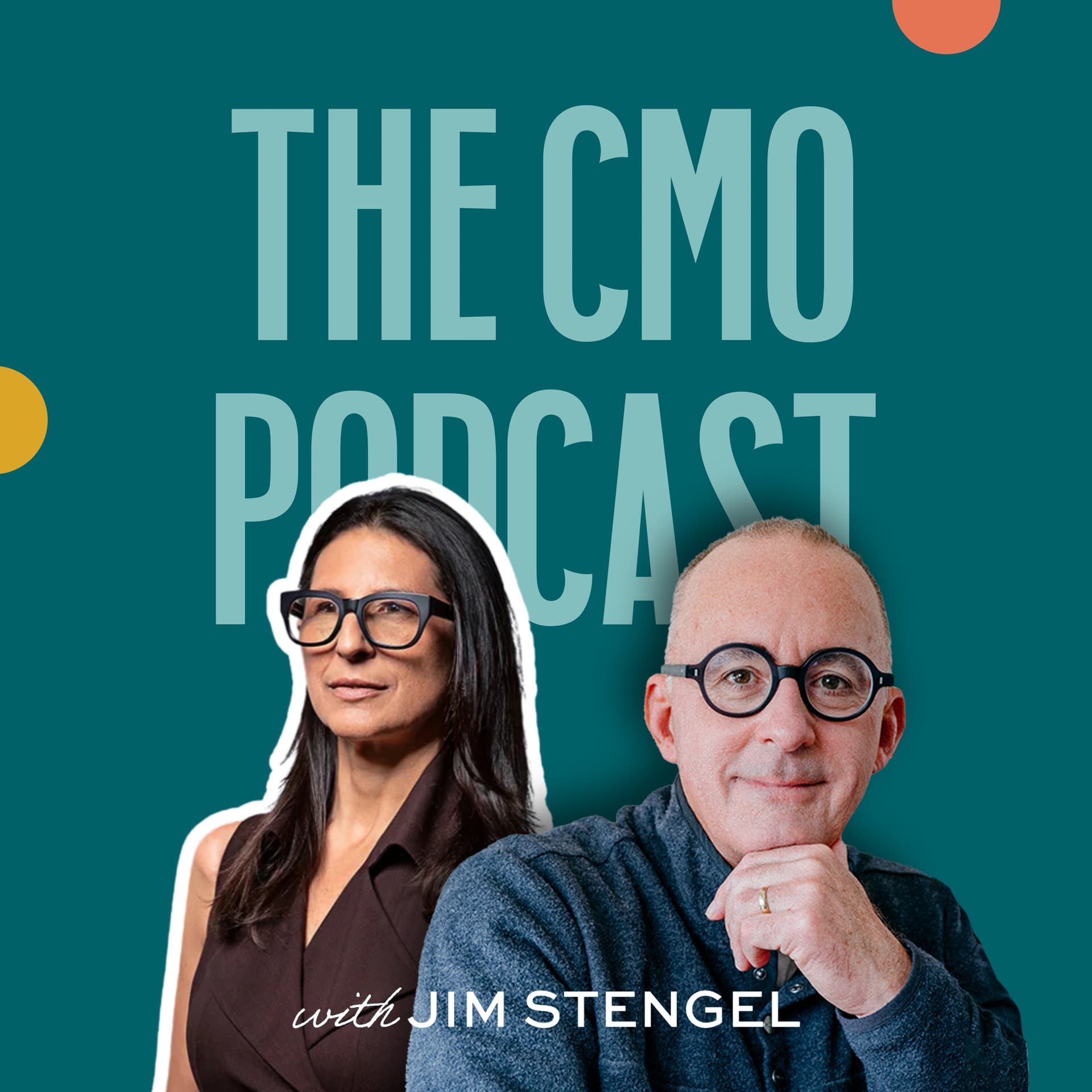
Lisa Materazzo (Ford) | Ready Set Ford: Inside the Bold Global Relaunch Episode Description In this episode, Jim Stengel interviews Lisa Materazzo, Ford's Chief Marketing Officer, about the launch of "Ready Set Ford," the company's first singular global campaign in its 122-year history. Jim and Lisa discuss the pivotal moments leading up to the campaign launch, the strategic thinking behind it, and the significance of revitalizing the Ford brand.
---
Key Themes and Discussions
- Background of Ford's Campaign
- Ford launched the "Ready Set Ford" global campaign, marking a significant milestone in the company's marketing strategy.
- The campaign aims to modernize Ford's image while honoring its rich history.
- Lisa Materazzo joined Ford two years ago, transitioning from a 20-year career at Toyota, with the goal of reinvigorating the brand.
- Strategic Planning and Internal Engagement
- Three-Step Process for Brand Strategy
- Recognize Ford's iconic status and its 122-year history.
- Focus on evolution rather than revolution, aligning the brand with future goals.
- Bring all stakeholders along in the journey to ensure deep organizational alignment.
- Lisa emphasized the importance of engaging all departments, from HR to product development, to create a unified brand vision.
- The process involved extensive interviews, stakeholder meetings, and iterative feedback to solidify the brand strategy.
- Understanding Customer Needs
- Lisa highlighted the necessity of a customer-centric approach, identifying three primary audience groups:
- Build: Targeting builders and creators.
- Thrill: Engaging thrill-seekers and automotive enthusiasts.
- Adventure: Catering to families and those seeking experiences.
- The campaign aims to resonate emotionally, showcasing Ford's commitment to community, capability, and trust.
- The Significance of the New Lab Setting
- The conversation took place at Ford's New Lab near Michigan Central Station, symbolizing Ford's commitment to innovation and community revitalization.
- Challenges During the Relaunch
- Maintaining Momentum: Keeping stakeholders aligned and engaged throughout the lengthy process presented significant challenges.
- Crisis of Confidence: Leading up to the board meeting, Lisa experienced self-doubt regarding the strategy's depth and viability, which was alleviated through transparency and collaboration.
- Campaign Launch and Reception
- The campaign launched with high-profile events, including a segment on the Jimmy Fallon Show, which celebrated Detroit and the Ford brand.
- Feedback from dealers and employees indicated excitement and pride, reinforcing the campaign's positive reception.
---
Key Takeaways
- Customer-Centric Approach: Always start with understanding your customers’ needs and perspectives.
- Internal Alignment: Ensure buy-in from all levels of the organization to foster a cohesive brand strategy.
- Patience and Resilience: Understand that brand relaunches take time; patience is crucial for overcoming challenges and achieving success.
---
Conclusion Lisa Materazzo's leadership in Ford's brand relaunch demonstrates the power of strategic planning and internal collaboration. The "Ready Set Ford" campaign not only aims to modernize the company's image but also reinforces its commitment to community and customer engagement.
For more insights, tune in to The CMO Podcast, where Jim Stengel continues to explore the evolving role of CMOs in today's marketing landscape.
Written by AI. May contain mistakes. Listen to the episode to check what was said.
Transcript
Automatic transcript. May contain errors.0:00Hey, it's Jim. I'm here with Matt Spiegel, EVP of True Audience Growth Strategy at TransUnion. That's quite a job title, Matt. Yes. Welcome. Thank you. So tell me about your company and why it matters for our audience CMOs. Well, listen, Jim, the challenge of the day is that there's so much information about consumers out there and the challenge is most companies don't have all that information. You have some purchase history, you maybe have some web history, but you don't have a full picture of customers. We're working really hard across on a suite of identity products, of audience products and measurement products to bring a holistic view of customers to marketers.
0:31So when CMOs work with you, what light bulbs go off for them? So Jim, we help brands bring clarity from chaos. We help them understand a picture of their customers with a 360-degree view in order for marketers to make bigger, more strategic bets. Well said, Matt. Learn more at transunion.com slash clarity. That's transunion.com slash clarity. Hi, it's Jim. Joining me is Matt Spiegel, EVP of True Audience Growth Strategy at TransUnion. Matt, we talk a lot on this show about building brands that people love, but that starts with understanding them, right? Jim, absolutely. Every customer ultimately has a story, but most brands are only going to see part of it.
1:07At TransUnion, we really focus on helping marketers connect those dots across devices, across channels, across platforms, with the goal of helping marketers see a full person behind the data. That clarity is gold. That is special. So how do you do it? Ultimately, we put together the pieces of information that help you predict behavior, help you personalize messages, prove the impact of every marketing decision at the end of the day. And our marketing solution suite gives brands the visibility and confidence to invest smarter and ultimately grow faster. So if you want to turn data into understanding and understanding into growth, visit transunion.com slash clarity.
1:42What if the smartest marketing play is not to move forward, but to zoom out? Deloitte believes the most powerful move a CMO can make is to look beyond the next step and see the broader perspective. That's what the Deloitte CMO program is for, a place to gain fresh perspective and connect with leaders who've stood where you stand. Together, Deloitte will help you see the bigger picture so your next move isn't just fast, but right. Learn more about the CMO program at cmo.deloitte.com. And there's a difference between a brand strategy that is deeply embedded within the organization in a way that influences everything.
2:21Your products, your services, your experiences, your HR department, your finance department, your dealers, the list goes on and on. Hi, I'm Jim Stengel. I've helped hundreds of major brands discover and activate their purpose. Because when a brand's purpose is clear, compelling and authentic, profit naturally follows. Each week, I welcome the CMOs, the chief marketing officers of your favorite brands, to speak to how their job is so much more than marketing. These leaders share their inspiration and challenges, along with how they try to build a full, healthy, and happy life in and out of the office.
2:57And it's that energy that reaches everyone they touch. And we're glad you're here to feel that energy and to learn from these remarkable leaders. So here we go. Ready, set, Ford. About two weeks ago, the Ford Motor Company launched a singular global campaign for the 122-year-old company. The spirit of the campaign and the company are summed up in its tagline, Ready, Set, Ford. We honor this occasion on the CMO Podcast by traveling to Detroit and spending time with Ford's Chief Marketing Officer, Lisa Matarazzo, in the new lab center adjacent to the iconic Michigan Central Station that Ford recently restored.
3:32I sat down with Lisa during one of the most demanding and rewarding times in her career. Lisa had spent 20 years at Toyota before joining Ford about two years ago with a remit to reinvigorate the Ford brand and help prepare the company to win going forward. Today, we will go behind the scenes in one of the most interesting and challenging brand relaunches of the year and perhaps of the decade. The news is filled with brand restages that are ill-conceived and fail, but the one we will talk about today, Ready, Set, Ford, is out of the blocks with great reviews and excitement. This is my conversation with the woman who has been in the driver's seat of this relaunch.
4:08Ready, set, Lisa. Well, welcome, Lisa, to this special in-person edition of the CMO podcast in this amazing building and neighborhood, which we'll talk about in a minute. But I just want to start with about a year ago, maybe a little bit more, you asked me to come in and sort of be a bit of an advisor to the renewal campaign you were working on. And we were joking around and said, you know, once you land this, and a year ago, it wasn't wasn't obvious. It would land, right? Which we'll talk about. We said, let's get together in person in Detroit and have a discussion about it. So here we are. I am so excited to do this.
4:44And I just have to start with what's your emotional state of being right now, about nine days in to this incredible launch. I am so happy. I have the biggest smile on my face and I've had a smile on my face for about 10 days now. So it's wonderful. And I do remember that conversation a year ago and I didn't know if it would be a year or a year plus, but here we are. And I'm so glad we've reached this moment. Well, we're going to have fun talking about it, but I want to start, you know, we're in this amazing building and called the new lab and we're next to Michigan Central Station. So could you talk about the significance of us talking about this global campaign you just launched in this setting, in the New Lab, next to Michigan Central?
5:32I am so glad that we are here because I think it's only fitting. And even though I didn't really connect the dots until more recently, it's great that we're here. We're on this beautiful campus. We're at the Michigan Central Campus. We are at New Labs, which we can talk about a little bit later, but we are adjacent to Michigan Central Station, which is hugely significant in this area. Michigan Central Station really served as the gateway, the railway to this area from 1913 when it opened until 1988. So many people came to Detroit through that station during a time of industrialization. So the significance to the automotive industry and specifically to Ford, it's huge.
6:20It's huge. So the fact that we are here, the station has been completely renovated, revitalized. This entire campus has. We reopened in 2024, and it really is a commitment to the community. It's brought this area back to life. You mentioned we're here in New Labs. New Labs is a venture platform for startup tech companies. There are over 100 companies now in this building. And I think something on the magnitude of 800 employees. So the fact that we are embedded in the community in such a future forward way is exciting. Well, my son and daughter-in-law and their two babies live in this neighborhood and they frequently picnic on the grounds here in Michigan Central.
7:08And they send us pictures. It's just gorgeous. So it's, it is a part of the community and they're so proud it's come around. And now you're here. I'm here. Right. So we've got lots to talk about today, but I want to go back two plus years ago when you decided to come to Ford, right? You've been in the auto truck business a long time, almost 20 years at Toyota. So take us back before we talk about this amazing renewal campaign. Why did you say yes? Why did you move across the country and come to this incredible company and city? What compelled you to say yes? It's a great question. I get asked that often.
7:47And for me, there were really two factors. So the fact that I've been a career marketer and an automotive enthusiast for as long as I have, as long as I can remember, I've been surrounded by automotive. And dirt bikes. By the way, we were chatting before we started recording and you were a dirt bike rider at like 12 years old? Yes. Very young age. All right. Anyway, so it's been in your veins, been in your blood a long time. Anything that goes fast is kind of my, whether it's a boat, a car, a dirt bike, I can get behind any of that. But when the opportunity came up, I was just so excited to be part of Ford, especially at such a pivotal time in the automotive industry.
8:31An iconic company like Ford with 122 year history, the challenge and the opportunity of joining that company and making an impact was deeply meaningful to me. And then the opportunity from a professional point of view to be responsible for global marketing. And I know you can relate to that given your global role at Procter & Gamble. It is a whole different world to have marketing responsibility for the globe. And it was one that I was equally challenged and excited by. And that's why I took the role. Well, it wasn't long after you started that this campaign was on your agenda. So again, take us back to that time.
9:23It's daunting, even for an experienced CMO at a company for many, many years to take on a challenge like this. you were new to the company and this was on your remit. So tell us why that became front and center for you and the company shortly after you joined. Well, it was definitely top of mind for me, even prior to me joining during the interview process, Jim Farley, the CEO and my boss was very clear of what he expected with not just a brand campaign, a brand strategy, the need to reposition the brand, modernize and evolve it to the future vision of the company, he believed couldn't happen without the brand component.
10:09So day one, even before day one, when I officially started, this was on my mind. I was thinking about it from the very beginning. The thing that was, I think, very interesting is prior to my joining, Ford had already laid out the Ford Plus plan, which was their vision of the business in the future. So that was what we would do and the aspiration of the company looking forward. The way I thought of the brand strategy was how would we show up in the marketplace to support the aspiration of the business strategy. Where did you start? You're coming in. I'm sure you did your listening tour, but what were your first steps?
10:56I wanted to deeply embed myself in the brand and learn about the history. Obviously, as someone who had been in the automotive industry for a while, I knew it, but I needed to know it through a different lens, more deeply. I spoke to everybody I possibly could. And there were people on my team who were working on the brand. It's not like it had been abandoned, Right. So I wanted to understand the work that they had done. I spoke to the agencies, everybody that I could. And I really didn't want to form any opinions until I gathered all my information. And that was really the starting point. Did you have any confidence?
11:39I mean, we all have imposter syndrome at some level, but again, you're an experienced marketing person in the industry, but still, How'd you build the confidence to tackle it? I guess maybe through the interviews you were taking on, your attitude toward this. But did you have any moments of, hmm, this is bigger than I thought? Absolutely. It's a daunting project to undertake. And I think the extra piece of it that I was very focused on is this is an icon. This is a beloved brand with 122 year history. And by the way, people sitting in the building with the last name of Ford. You don't take that lightly.
12:22So being very respectful, being very thoughtful, and being very humble. So I tried to come in basically erasing everything I thought I knew about Ford so I could be sure that I was at the right starting point. Other than these interviews, did you go anywhere else for inspiration? I mean, were there cases you looked at or people you talked to outside the company that were particularly interesting? Absolutely. Looked at companies outside the automotive industry. So that's where I think sometimes going outside the automotive industry can be very helpful and give you a different perspective. And then, of course, speaking to folks like yourself who have a considerable amount of experience in this area.
13:05Branding, rebranding, repositioning is not something that's new to me. I've done it before in previous roles with other auto manufacturers, but I had to make sure I brought that process and that approach in. But obviously, Ford is a unique situation. So I had to treat it with that level of respect of where have we been in our history and where are we going in the future and try to have a certain level of objectivity about that. Now, I'm going to talk a bit about the process. I had the privilege of being a small part of this process. So I have a little bit of an inside window into it. And obviously, I've done a bunch of this myself and I've seen it in other companies.
13:45I'm not sure I have seen a process where people were so deeply engaged across the entire company on this renewal. And you and your leadership team really believe that this would only work if everyone in Ford and your dealer partners from the top down believed in it, felt it represented who you are. To me, it was world class. Yes. And I think you're seeing reactions now in the marketplace, which we'll talk about more that affirm that. So tell us a bit about how you approached it, your mindset, the steps you took, process, what you learned, what others could learn from you. Because it really was something.
14:28I mean, when Procter & Gamble does something like this, they follow a very similar path that you did. But I'm not sure I've seen it done with the full engagement in which you did it. Well, thank you for that. That is high praise coming from you. No, I mean it. I've been joking around with people when they ask this question. It's just a three-step process. I tell them the first step in the process is the recognition that we're dealing with an icon. We're dealing with 122 years of history, and it's important to understand that. I think the second step is understanding that this is an evolution, not a revolution.
15:07We're not changing who we are as a company. We know that. We're very centered on who we are as a company. It's more evolving that to the appropriate expression in today's modern marketplace and in a way that will serve us for 122 years to come. The fact that we had the four plus plan and the vision of what our business will be in the future served as a good North Star and allowed us to do a bit of a gap analysis where we are now and where we need to be. And then the third step is bringing all the stakeholders along to agree on that, where we are, where we need to be, and how we get there. And that's why I say it's a three-step process, but that's step three.
15:49Whoa, watch out for the step three. That's why it's taken two years. Yeah. So what do you think was the, you think step three was the real key to success with this? I know it's early, but it's out of the gates fast. Yes. I think it's the key to success because if you don't have step three and you don't bring stakeholders along with you, you run the risk of having a marketing campaign and launching a marketing campaign. And there's a difference between a brand strategy that is deeply embedded within the organization in a way that influences everything. Your products, your services, your experiences, your HR department, your finance department, your dealers, the list goes on and on.
16:31So yes, campaigns are good. But when you're dealing with brand strategy, you really want that deeply embedded. And that's what takes time. It's a lot of stops and starts. It's one step forward, maybe two steps back. Some cases it was two steps forward and one back, but a very iterative process. But I think it's important. It's absolutely critical to success.
17:02We all want to stay ahead of the digital curve. And IAB, the Interactive Advertising Bureau, invites you to do just that at the 2026 IAB Annual Leadership Meeting in Palm Springs on February 1st through 3rd. If you're a qualified consumer brand or agency leader, you can access free passes and travel vouchers. And for everyone else, you can take$500 off your ticket with code ALMCMOPOD26. This is your chance to join a three-day gathering of the industry's brightest minds and boldest voices shaping the year ahead. You'll hear agenda-setting conversations, candid fireside chats, and dynamic breakouts on the topics that matter most, from AI and commerce media to measurement and addressability.
17:46This year's lineup concludes everyone from Kevin Bacon and Bozema St. John to creator Remy Bader, along with leaders from Forbes, Major League Soccer, General Motors and Meta. Visit IAB.com slash ALM to learn more and check out the link in the show notes to register and receive$500 off your ticket.
18:09What was harder than you imagined going into it? The continuity. And what I mean by that is keeping the momentum going over a long period of time in the right direction. Because when you're bringing in stakeholders that span all departments within the organization and literally as broad, you know, as broad as I mentioned, we had people representing HR and we also had people representing product development. and we would have agreement on some things, leave the room and the next touch base, we didn't have agreement. We didn't have the alignment we thought we had. Now, in some cases, it was due to not going deep enough.
18:51So we had a lot of nodding heads, but we didn't necessarily have meetings of the mind. In other cases, we agreed on things that once we went and pressure tested in those respective areas, they just didn't play out the way that we thought they would. So the regroups were important. And each time, now that I reflect upon it, each time we did that, it made the strategy better, stronger, and more durable. So even though in the midst of it, I'm not going to lie, there was frustration. We had to keep centered on the fact that if over a longer period of time, we're making forward progress, then that's success.
19:34What I remember watching you and your team do is going through all these different groups, functions, regions. How would you activate this? What would be different, you know, from, to, pre, post? And so that really made it real. And when you found that there were not ideas for activation, then something was missing. So could you talk about what you learned in that process? Sure. We were very much focused on any of the elements of the brand strategy had to be tied to how would this influence your daily work? So for example, if you were in product development, how would you take this back to your area, socialize it with your team, and how would it work its way into your decision-making process?
20:25One of the things that was really insightful was not only using it to guide what you would do, but what you would stop doing. Because what we found in the early stages is everything became additive. Oh, well, we would do this. We would, in product development, we would have all these new features that spoke to the brand strategy. We had to ask them, well, what does that really mean in terms of a sharp focus for product development? What are we going to stand for in the marketplace? Does it just make us broad and run the risk of being meaningless? Or do we have a sharp focus and a lens against which to make those decisions?
21:03So that was a very, very fruitful process and test to go through. We talked about what was harder than you imagined. What was easier? What was easier is getting people on board and participating. There was a desire throughout the company. once we explained that we were thinking of this far beyond a marketing campaign and we proved the value of a strong brand strategy, people started nodding their heads and they're like, yeah, I want to be part of this. I see how it helps. I see how it helps deliver against the four plus plan. So that was very motivating as well. We started many of the meetings and you may remember with the case for change, why we need to change, and what that future looked like.
21:55You had mentioned the from to statement. It was very powerful. We relied quite a bit on Interbrand and the work that they do to quantitatively prove that companies with a strong brand strategy deliver greater value. So you came into this obviously experience. You've done it before. What, in this case, what leadership skills in your tool bank were on overdrive for you? And are there any new ones that you kind of picked up? Great question. Patience and resilience. It was, I think that was absolutely central to all of this, not only for myself, but in keeping my team motivated. My team is a combination of folks who have many, many years at Ford and those who are newer to Ford.
22:48The ones who have many years at Ford and specifically many years on the brand team, they've been working at this for a while. So it was particularly important to keep them just as motivated as the new people who were coming in and ready to go. So I had to get everyone kind of in that mindset that we're going to have some setbacks. Seemingly, it looks like a setback, but it's not. Because if it's new information and a new perspective that ultimately makes the work stronger, it's completely worth it. I watched you at moments of frustration, I guess, where your patience was being taxed. But I thought what other leaders could learn from this is I just watched you listen, gauge the temperature in the room and be willing to say, okay, got it.
23:42You know, we're going to take a timeout. We're going to let this simmer for a bit and we're going to come back to it. I appreciate all the passion, all the points of views. I know this is hard, but let's walk away from it and come back. And I think we tend to feel like as leaders, sometimes we have to say, make a decision. We have to give a direction. You were very comfortable saying, let's just walk away. And I think that's very powerful. Can you comment on that? Yeah, you're exactly right. And there's a, I'm very much a type A plus personality. So I'm all about getting things done and marching forward.
24:15But you're absolutely right. There are times when lifting the burden, the extra burden of making a decision in the moment was the right decision. And on many occasions, what I did or members of my team did after listening in those group settings, following up with a one-on-one and actually going to that department lead and asking for more insight. And we call it Gemba, the process of going, going to where the work is being done and being humble enough to realize that I'm not in product development, nor have I ever been in product development. Same with HR, Same with finance. So I can't assume that I know how they're looking at this and how they're applying it to their day to day work and what they need for their teams.
25:09So sometimes just taking the time out and having that one-on-one conversation and asking, like, show me examples. Like, what won't work for you? What are you struggling with? Do you need more information or do we need information from you? And do we need to gain your perspective? Asking them what some of their biggest problems are to solve. And that's actually one of the starting points was in that listening tour, we're going to each stakeholder asking what their biggest problems are to solve. And that was a huge foundational element. So we had to do that. And we had to do that also with our dealer partners.
25:47That's a whole other level of input and complexity. It's absolutely needed, though. They are closest to the market on a daily basis. They're closest to the consumer. If you don't take their perspective into consideration, I absolutely guarantee you, you're not going to succeed. I mean, there's humility in there. There's curiosity. There's wanting to help. There's the, I think, just the realization you don't have all the answers. You have a certain lens that others will make this better. I mean, it's, as I said, it's a world-class example. And I know it's, you know, you're type A plus. So to do that is hard.
26:24but we wouldn't be here if you didn't exhibit that behavior. Was there a moment when you sort of had the, you know, the aha where we're going to land this and it's going to be transformational? I remember exactly where I was with this moment. I was in my office, my phone rang and I answered it. And it was my colleague who leads design. His name is Todd Willing. And he said to me, I'd like to talk to you about the brand strategy. Sure. I'm always up for talking about the brand strategy. You know, should we schedule time? I said, I have a little bit of time now. He's like, well, let me just float this idea and you can think about it and follow up.
27:04I said, okay. I was very intrigued. I thought whatever comes out of his mouth next is going to be very good or perhaps not so good. He said, I'm thinking about reorganizing my design team, and I would like to reorganize them based on the lifestyle audiences that we identified as part of the brand work. I literally almost fell out of my chair. I was so I was just so blown away and so thankful. And that is the moment where I had proof positive that we had something because there was no push. There was no kind of selling in this idea. It came from him because he so believed in the strategy. And after that, there were similar examples that popped up around the company.
Read the full transcript
27:56My HR colleagues launched a program that was basically centered around some of the core equities that we identified. It was great. When you think about org design changes based on the brand strategy from the design group, that says it all. It does. It does. So I thought this is proof that it will go far beyond a marketing campaign. It will be embedded within the organization for years to come. Was there a time when you thought it wouldn't land? Was there a low point in this journey? And if there was, how did you handle that? It was the week leading up to the board meeting. So we presented to the board of directors.
28:41How early in the process was this? This was probably a year ago. We had the framework and we wanted to share that with them. And we thought it was so important that it wasn't the marketing team presenting it to them. It was the entire executive leadership team that was represented in that meeting. And with examples of how we would bring it to life. Also, we needed to be very transparent about the challenges we were solving for. We didn't have to bring them the solutions, but we wanted to show them how the brand strategy would help us make decisions and help us fix some of the error states that we had.
29:28as we were preparing the lead up to that, there was, I think, a natural tendency, although I didn't anticipate it at the time, but upon reflection, to start questioning some of the elements of the strategy. And I think it was just as we were bringing it together for a more formal presentation to the board, we were asking ourselves, did we think about this deeply enough? Does this still work? How should we answer these questions? I think a little bit of it was born out of everyone's desire for it to be very polished. When in actuality, I think the benefit of being very transparent in places we didn't have the answers was good.
30:11And it gave them confidence that we were on the right track because we were thinking about it so deeply. But that feeling where it might be coming apart with a board meeting deadline, it's not a good feeling. Not a good feeling at all. I was very nervous and anxious. So what did you do to bring yourself together on that? To set the presentation up differently with the board? Or did you hammer through all those things before you made the presentation? We brought everybody together and just reflected on the decisions we made and why we made them. And kind of gave everyone the latitude or the comfort, reminded them, we aren't bringing this to the board to show that everything is perfectly figured out.
30:56And I give credit, I give a ton of credit to Jim Farley who said that. He's like, it is okay. In fact, we should say this is an area we're struggling with. We don't have it all figured out yet, but this is how we think the brand strategy is going to help us make better decisions in this area, fill in the blank. So he really wanted us to call out those areas.
31:29Everyone seems to be chasing the next big thing, the fastest answer, the quickest win. But great CMOs believe the real power isn't in the speed, it's in stepping back to see the bigger picture. That's why everything Deloitte does in their CMO program, from their industry-leading capabilities to their connected network of CMOs, is designed to help you zoom out and gain fresh perspective. Deloitte will help you see the bigger picture together. Learn more about the CMO program at cmo.deloitte.com.
32:02So I want to get into the campaign and the brand strategy in a bit more depth because we're talking about your process right now. This is more about what, you know, started to happen about a week ago. So your campaign launched. You went public with it. It was a big media night, Thursday night football, ready, set, forward. You had Jimmy Fallon in Detroit a few days ago for the most amazing show. And I know you were there. Before we get into the elements of the campaign and the brand strategy, just step away from this. Has this been the most amazing week of your career? It's at the top of the list in terms of my career and career accomplishments.
32:39And I will say this is a team sport. I told everybody throughout the process, brand strategy is a team sport. So there are a ton of people who are involved in this and deserve the credit. But it's been a pretty amazing two weeks. And it actually just happens to coincide with my birthday a couple weeks ago. So I couldn't have asked for a better birthday present. I wanted nothing more than for the campaign to go live. But it's been a phenomenal two weeks. It actually started with the launch to our dealer body. Several of them helped us along the way in the process, but we had our dealer meeting a few weeks ago.
33:23In person. In person in Las Vegas. And we were able to show them the final version of the creative that would be running on Thursday Night Football. And the response was absolutely amazing. So that was a nice lead in to the external launch of the campaign. What did the dealers, how did they react? What did they say to you? How did it make them feel? It was great because I had dealers who, you know, newer dealers, dealers who have been with Ford for a very long time and they've seen the evolution of the brand and comments like, it gave me goosebumps. This feels like a different Ford, a familiar Ford, but it did expressed in a different way.
34:05You know, it's, it's going to breathe life and energy into the brand. And I think this will give people who never considered Ford a reason to put Ford on their shopping list. And there's no better compliment than those statements. What were the highlights for you in this last week, Lisa? I mean, the dealer meeting is a big one. But what else? I heard you in front of the press as you released the campaign. They're always interesting, right? Yes. The dialogue and Q &A. And I watched many clips of the Jimmy Fallon show, which we can talk about in a minute. Just incredible. But for you personally, what were some of the highlights of this past 10 days?
34:43I loved getting emails from people. I have emails and text messages, whether it's my team or people who I've worked with in the past and haven't heard from in a very long time. And just reach out to say, oh, my gosh, it was so exciting to see that work on TV. Congratulations. Just those little one, two sentence text messages were very gratifying. But I think those from the team earlier this week, the team got together and did kind of a celebratory dinner and just had some fun, raised a glass and toasted us. I wrote a few notes to your team members and I just felt pride in what came back, which says it all.
35:28Now, the Jimmy Fallon show, I mean, the energy level in that room. Wow. Wow. And so I think that that just says so much about the power of what you're doing. And I know that that was about a lot more. That was about Detroit and about him and his song about Detroit and all that sort of. But what did you kind of what you feel in that in the Detroit Opera House that night? It was electric. The feeling in in that venue, that the vibe was absolutely amazing. And really, it starts with two things came together. First, Jimmy is a huge Ford fan. We're in our fifth year of partnership with him, and it is an absolute joy.
36:09And every time we think we've nailed it and it couldn't get bigger or better, we collectively come together and brainstorm all these great ideas, and we end up with something like this. The other piece of it was the audience members. Oh, my goodness. So, so proud of the city. such a community feel and just so welcoming to him. It was amazing. You also, you know, I think this is something may have shifted about your company. I just feel like there's a sense of humor. There's a sense of fun. There's a sense that we don't take ourselves that we're in a very serious business, but we don't take ourselves that seriously.
36:47That came through, which I think is wonderful. It's great. And Jimmy is such a good storyteller and has such a creative mind. When you couple that with his love for our brand and his curiosity for our brand, And every time we have a meeting with him, he starts by asking, what's new? He wants to learn. He wants to learn about the industry. He wants to learn about our products. So it makes it really, really fun. He brings all of that energy and creativity to the integrations that we develop. Whose idea was to have the show here? Was it his or did it come out of a brainstorming? It was rather impromptu.
37:22We were hoping that he could make an appearance at the unveiling of our world headquarters, our new world headquarters, at a global town hall meeting that we had on Monday. And we were trying to coordinate schedules. As you can imagine, his schedule is very busy. And one of the things that became the sticking point was he has this, you know, the show that he needs to record. And we really couldn't coordinate it. someone, I actually don't know who first mentioned it, said, well, one of the ways we could do it is if he recorded his show in Detroit. Oh my goodness. Well, he's never done that here, but they were willing to give it a try.
38:04We landed the venue, which ended up being absolutely amazing. It's stunning and it's very near and dear to Ford. It was the Detroit Opera House. Ford Philanthropy is a huge supporter of the Detroit Opera House. So it had a lot of meaning to us. And it ended up being the perfect venue for his show. Looked great on TV. Looked fabulous on TV and in person. Now, no campaign comes out of thin air. You know that. So I want you to talk a bit about this campaign, Ready, Set, Forward. Great campaigns are always based on a truth, something that opens up your mind. And some of the comments you said about how the dealers reacted to this says it's working that way.
38:43And they always have resonance, right? With everyone, employees, customers, just everyone in the community. So tell us about the journey to Ready, Set Forward. What was the strategy? What were the pillars? What was the work to get you there? And I know this area, which you've all sort of, the lifestyle audiences was a big part of that. So can you step back and it's a big question, but give us the overview on what are the iceberg below what we see in the campaign? It really starts with the essence, who we are as a brand and what we believe. And through all the work that we've done, we kept coming back to, we drive progress with heart.
39:23Like we are a very purpose-driven company. We're very passionate about what we do. I noticed that as soon as I joined, it was so evident. And we also believe in human capability. And I think that's important, especially in this moment in time, There's a lot of angst. We uncovered that through the global research. People can feel very overwhelmed, whether that's by financial circumstances or health and well-being, political, you know, technology. There are so many changes that are happening in the world. It can be overwhelming. But the human truth that we discovered, the thing that was universal, is people are amazingly resilient and optimistic when they feel capable.
40:09When they feel like they have the tools and the resources to take on those challenges, they can rise to incredible levels. I think it's especially true with our Ford customers. So once we tapped into that insight, the campaign unfolded before us. We know what our equities are as a brand. We know that the brand for 122 years has been rooted in capability, trust, community, and passion. When you put that all together. We wanted this campaign to be the inspiration and aspiration for our consumers. A little bit of a starting point for them to say, let's do this. You made a choice on audiences or communities you would focus on.
40:58Not that you don't want everyone to be a Ford person. Sure. But you do make choices on what you think are the right audiences for the future. So can you talk a bit about that and how that played out? Because I know that is underlying the design person's idea to organize on those communities. We spent a lot of time very thoughtfully identifying our audiences. Not only the audiences we want to serve, but whether or not we could serve them credibly. Understanding their functional needs and their emotional needs. Stepping back and being very honest and saying, can and should we serve this group? When we did that, we landed on three audiences and we call them build, thrill and adventure.
41:43Build probably needs the least amount of explanation, but we're builders. Right. You know, Henry Ford was a builder. Look at his legacy that continued on until today. Then when you look at our product portfolio, F-series, 48 years of leadership. Build is so core to who we are and how we serve the community. that made complete sense. When you look at other vehicles in our lineup, that thrill pillar makes perfect sense to us. We have Mustangs, we go racing on more continents than virtually any OEM, and we race not only on track, but we race off-road in great series like Dakar. And that pushing the boundaries, challenging the status quo, that all seems very credible to what Ford has always been.
42:35And we have product services and experiences to serve that lifestyle audience. So that one made sense to us, as did adventure. And adventure can take many forms. So certainly when you're talking about our hugely capable Bronco that can go anywhere and do anything and have these epic off-road adventures, but similarly on-road adventures, it's really more of a state of mind than it is the terrain, because you can have epic family adventures and road trips, and you could make an epic journey out of taking the kids across town for soccer practice. They're different type of journeys. They're different types of adventures, but they are things that Ford can serve.
43:20We have the products. We have the know-how. We have the deep understanding of what the needs are of that audience. Can you talk about the power of that focus on those three audiences? Because I watched it and most companies start with a core product or service when they're a startup. Sure. And some companies never leave that. And I think this focus on, okay, we know what we're good at. We know what our history is. These are the audiences that we think we can serve well and we can win with them. But I watched the conversations changed in your company with that journey you were on. And could you talk a bit about the power of that and why it stuck?
43:59I think it stuck because at the very beginning, even before we had defined the framework of the strategy, we were so committed to being customer-centric. That was foundational. We had to get everyone on board with being customer-centric. In doing that, it actually helped that we are in such a state of transformation in the industry and in our business because we needed a North Star. And it's been proven time and time again, regardless of company, regardless of industry, you need to stay focused on the customers. Now, saying that and saying you're customer centric is much easier than doing it day in, day out and being radically customer centric.
44:46So having that agreement up front was key. So we wouldn't allow ourselves to move forward with additional work until we had the alignment on the lifestyle audiences. Yeah, that's very powerful. Now, the campaign that you released about a week ago, it's an anthem campaign. Yes. Right? Has all the elements of that. Those are tough. They are. Because they have to transcend your products and services, but not be disconnected from them. Exactly. So that's a really, really hard balance. And I think you've knocked it out of the park with this one. So I want you to go back and think about that conversation or that meeting where you were first exposed to this idea that became the campaign that we all saw last week.
45:34What was your first reaction to it? Was it like seminal, like this is it? or was like, huh, there is something there. But when you first saw it, was it love at first sight or not? It was. It was the idea. We talked a lot about how are we going to set the world on notice that something different is happening. So that was the foundational. This is truly we started with the anthemic. It needs to be anthemic. But as you point out, it can't be so disconnected from our business, our products, our services and experiences, and all the work that is going to follow. Because a campaign is not an anthem.
46:14A campaign is going to have more assets that surround it in subsequent phases. So we had to make sure we weren't creating something that would essentially just be poetry and would serve a moment in time, and then scratched our heads and said, okay, now what is all the other work going to look like? So we had to think of it from that perspective. We had to think of it holistic. Is this the starting point for everything that will follow? So we had to be clear about what everything that follows would include. But we really leaned a lot on that lifestyle audiences because we wanted to make sure that those lifestyles were apparent in that work.
46:55We didn't need to say it. We didn't need to explain it. It needed to be self-evident. people needed to feel it. They needed to feel that something was different and they needed to feel like they could be part of that difference. So that's how we knew we had something with a great deal of potential. And if you, I know you've seen this, Bob, but if you look at it through that lens, you will probably start to see even more of those lifestyle audiences in that work.
47:33Hey, everybody. This is Andrea Sullivan, the CEO of Vive, and we produce the CMO podcast and are so excited to have partnered with Jim Stengel for so many years. I wanted to tell you a little bit about something that could be right for you. Vive is a program for entrepreneurs and business leaders who want to get more out of their life and become their best and happiest selves, both personally and professionally. We have a 12-month program that allows people to meet up with some of the best business leaders out there and additionally experts in the wellness sector so that you can learn how to nurture yourself.
48:08So we teach things around sleep optimization, meditation, all those good things as well. Please reach out to us at podcasts at five.co to get more information. That's P-O-D-C-A-S-T-S at V-Y-V-E dot co. Thanks for listening to the CMO podcast and hope to talk to you more about Vibe.
48:32You just went through, I think, how you evaluated that idea when you first saw it. But could you maybe talk about that some more? Because I think we make a lot of decisions in our life, right? That was a big one you made to green light this. So when you're looking at it, you sort of thought about the audiences, lifestyle audiences. You thought about the business strategy, I'm sure. But as you went through your mental checklist, when your agency and your team were chatting about this, what kind of things went through your mind? Well, we looked at it from the perspective of, does this feel authentically forward?
49:03We went through, as you can imagine, tone of voice. Does it have the gravity it needs as an anthem? Does it have the opportunity to showcase the customer as well as the vehicle and the role that the vehicle plays in that customer's lifestyle? That's a very delicate balance. I think we nailed it, but it needed to look like only Ford could credibly make that ad, that another OEM wouldn't have the right to speak to those audiences in the way that we were speaking to them. That's a good test, by the way, what you just said, for any company, any brand, can only we do this? Yes. It's a hard test. No, it is.
49:48It's a very hard When I wrote my first book, my agent said, as we sold the book to the publisher, you have to write the book only you can write. If it's a book someone else can write, then don't waste your time. And that was, I thought about that with every page. Am I sharing something that only I could write and share? And that's a wonderful evaluation criteria. We also went through a very detailed exercise, very strategic. I mentioned that it was important that all the work that followed was connected. So we looked at our capabilities, our core capabilities, our pillars in terms of community, trust, passion, capability, and the things that we wanted to highlight as reasons to believe, as proof points, because that would be the more detailed work that follows.
50:44and we actually did a mapping exercise. What are those reasons to believe and how can it map to this anthem? Does it map? Does it feel like it's living in the same universe? Does it feel authentic? Because this work cannot be disconnected. And that was a very detailed process. We had a matrix and we literally started filling it out and saying, does this work? We have to pressure test it. Luckily it did. Now it's great anthem campaigns, you know, have a deep resonance inside the company. Yes. And this one certainly has. What do you think it is about this campaign? Why do you think it's connecting?
51:26I think there are a couple of reasons. The first would be that people see it as authentically forward and we're not walking away from who we are. We're doubling down on who we are. So this is taking all of the goodness over 122 years and expressing it in a different way. So it felt new and familiar. And I had someone say that to me, and it's one of the highest compliments that I think I could get. The other thing is there's so much pride for Ford within the organization. Our employees, our dealers, second, third, fourth generations of family members who bleed Ford blue. And this is a tough time in the automotive industry.
52:15There's a lot that's changing and something upbeat and uplifting, optimistic, and showing what I think is Ford and Ford's customers on their best day ever. That's what we've basically highlighted in that anthem. And that's a real point of pride and why I think people get emotional about it. Well, congratulations on all of that. Thank you. It is absolutely marvelous. Now you talk about the three phases of this renewal. This is only phase one. We're so early in phase one. Could you talk a bit more about phase one, phase two, phase three, and what you're looking for in terms of success? So there are phases, and I would say there are phases to the global rollout as well as the work.
52:59So let me first start by saying that The United States was our first external expression. We're rolling out first, but we're rolling out globally in phases. Most of the regions around the world will have this in market by the end of this year. So it's not a long rollout. It's rather quick. Some will be first quarter of 2026 at the latest. The other phase will be the content itself. So for example, in the United States, we will have in October, the second phase, which are those assets that I mentioned, the reasons to believe. So more work coming out that I'm very excited about. And then the measurements.
53:40So the measurement metrics, like how we define success, how we're tracking success globally was really important. So my research team was a huge part of this process. How are we going to measure this? what is the from to state and how do we do it globally? And that is not an easy process. We also wanted to make sure we have leading indicators as well as lagging indicators, because when we're moving things like brand momentum scores or capability or consideration or shopping behavior, I said to them, I don't want to get to the end of the quarter, look at the metrics, see we're falling short, and only be able to influence that going forward.
54:27So that's very rear view mirror. With an initiative this big, I want the leading indicators that constantly are giving us feedback and saying, are we on the right track? So the measurement metrics, monitoring and course correcting, if necessary, that's a whole other piece of this as well that I think needs, I would advise anyone to pay equal attention to that. Now, for all those people who have been listening for the last 50 minutes to an hour and would love to do this in their company, on their brand, there was lots of advice you shared in the last hour. But if you could boil it down to one deep, profound lesson in how to do this as successfully as you have so far, what would that be?
55:10I would encourage them to define their why. So I'm a huge Simon Sinek fan and you know his golden circle. A lot of people, a lot of companies can tell you what they do and how they do it, but not many can tell you why. And I literally did that. I wrote it on an index card because every time I got frustrated and every time I thought this would never reach the finish line, I looked at that card. I said, nope. Okay. Rally. This is why you're doing this. Stay centered, stay focused. We'll get this to the end. But it was great to come back to that. It was my North Star going through the process. Last question, Lisa.
55:56This has been a drill, right? A wonderful drill. And you're in phase one. What are you doing to renew yourself? I mean, you're happy. You start off by saying that's your emotion. You also have to be a little bit tired. I am a little tight. So what do you do to keep your energy level, your freshness, your creativity in times of tremendous positive stress, which this is, but it's still stress. It's definitely stress. So for me, I love staying active, physically fit, working out, running, cycling. And I must admit that's fallen a little bit by the wayside. so I'm personally going to try to get back into a more consistent rhythm and maybe focus a little bit more on myself and my husband and I are planning a vacation so a little bit of time.
56:44Any thoughts on where you're going? Not quite yet so we're still in this. Activation? Peaceful vacation? We are we're kind of incapable of the of the vacations where we go where neither of us are good at. Yeah type A vacation. Yeah yeah so we're going to do things that we're going to fill the schedule, but that's fine because that's actually energizing to me. I don't mind that. So we're still kind of going back and forth on what that will be. But we do have some motorsports events to look forward to and Formula One races. We're both huge race fans. So that will be a nice little break and something to look forward to as well.
57:19Sounds great. Well, Lisa, thank you for this. I mean, congratulations to you, your team, to Ford. It's very, inspiring. I'm a Ford customer, right? I have a Mach 3 EUV. Thank you for that, by the way. Campaign really, I think, works on so many levels and especially emotionally, which I think is a huge brief for anyone to get it right emotionally and represent your company, I think is amazing. So well done. Thank you so much. I really appreciate it. And have a great weekend. We're on a Friday afternoon. It's sunny. It feels like summertime. Let's enjoy Detroit. Get out on the bicycle, maybe. I agree.
57:55Yes. That sounds great. I'm babysitting a three and a one-year-old this weekend. Oh, good luck. So yeah, I'll burn a lot of calories. Yeah. You're in that adventure lifestyle. Good luck with that. Yeah, sort of. Yeah. That was my conversation with Lisa Matarazzo. Three takeaways from this one. When you're thinking about a brand restage, three things to take away. The first one, start with your customers. Lisa talked about how this has been And a big shift to focus on three customer groups and everything Ford does will be about delighting and pleasing those three groups. They don't start with the vehicle.
58:30They start with the customer. The second takeaway to do a great brand relaunch is to work internal alignment. Lisa talked about how this had to be everybody's relaunch. Every single person in Ford had to believe in it, believe it was authentic, and believe that it would impact what they do every day. Not just the executive team. Everybody and every function had to be on board. That takes time, which leads me to the third takeaway, and that is patience. We are typically type A people when we're in marketing, but patience is critical when you're relaunching a brand like Ford. Lisa talked about how it was tough at times, but she leaned on that as a superpower.
59:05And without the patience she had at critical times in this brand relaunch, it never would have happened with the success it's had to date.
59:14That's it for this week's episode of the CMO Podcast. As always, I would be grateful if you shared our show with your friends, along with subscribing and leaving a review on Apple Podcasts, Spotify, or wherever you listen. The CMO Podcast is a Vive original production. The views and opinions expressed by podcast speakers and guests are solely their own and do not reflect the opinions of our sponsors or its personnel, nor do our sponsors advocate or endorse any individuals or entities featured on the episodes.
From the publisher
For the first time in its 122-year history, Ford Motor Company has launched a singular global campaign—Ready Set Ford. To mark the occasion, Jim Stengel and The CMO Podcast traveled to Detroit to sit down with Ford’s Chief Marketing Officer, Lisa Materrazzo, at the company’s cutting-edge NewLab near the iconic Michigan Central station.
With two decades at Toyota behind her, Lisa joined Ford two years ago to reinvigorate the brand and prepare it for the future. So tune in as Jim goes behind the scenes of one of the most ambitious—and promising—brand relaunches of the decade, exploring what it takes to reintroduce an iconic company to the world. Ready Set Lisa!
---
This week's episode is brought to you by Deloitte.
See Privacy Policy at https://art19.com/privacy and California Privacy Notice at https://art19.com/privacy#do-not-sell-my-info.