
 The CMO Podcast
28 Oct 2026 · 52m

 Add vo to ChatGPT or Claude to ask about everything you hear
vo listened to this episode to put together the overview and transcript, so there may be the odd mistake.
How brand experiences (not just products) build emotional connection and drive attendance/commerce, using Cincinnati’s BLINK festival as the backdrop; includes how to design, measure, and evolve “brand experience” across GE Aerospace, P&G, and the Cincinnati Reds.
0:00Jim Stengel: So Karen, you're a Cincinnatian, you grew up a Reds fan, and now for like the last 20 years you've been responsible for everyone else experiencing being a Reds fan. That must be kind of wonderful and strange. I learned my first week when I started, when I first went to sit down in a makeshift desk and I opened a drawer of old files that somebody said, you know, look through these. And the very first envelope was a big fat envelope and I opened it up. inside of it were people in their coffins wearing Red's gear. Families had written letters and this is my loved one. And I'm like, this is not your ordinary brand.
0:37No offense, but nobody is laying there holding their tide in their coffin. So it is a very different brand.
0:46Jim Stengel: Hi, I'm Jim Stengel. I've helped hundreds of major brands discover and activate their purpose. Because when a brand's purpose is clear, compelling, and authentic, profit naturally follows each week i welcome the cmos the chief marketing officers of your favorite brands to speak to how their job is so much more than marketing these leaders share their inspiration and challenges along with how they try to build a full healthy and happy life in and out of the office and it's that energy that reaches everyone they touch and we're glad you're here to feel that energy and to learn from these remarkable leaders so here we go i've always believed that the strongest brands do more than create great products or services.
1:27Jim Stengel: They create experiences that bring people together, build emotional connections, and become part of our lives. And that's exactly what we celebrated during a very special evening in Cincinnati. We were there for Blink, the incredible festival of light, art, and creativity that transforms downtown Cincinnati into a massive shared experience. And what a perfect backdrop for a conversation about the power of brands to bring people together. Our friends at the strategy and design agency HyperQuake helped us create a wonderful evening. We gathered an intimate audience at the beautiful Fidelity Hotel for a conversation with three leaders from three iconic Cincinnati organizations.
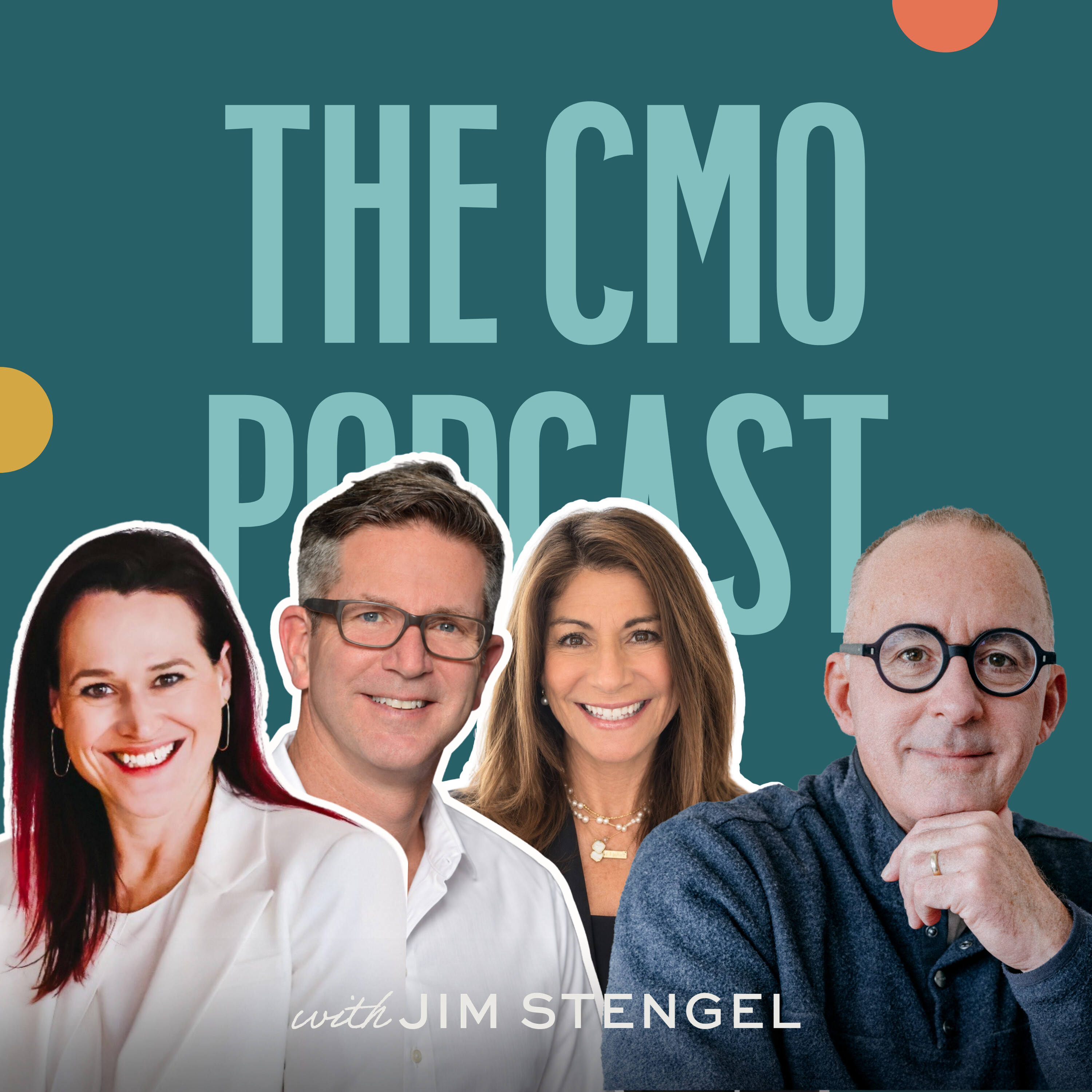
2:06Jim Stengel: Joining me were Melissa Washko, Chief Brand Officer at GE Aerospace, Phil Duncan, Chief Design Officer of Procter & Gamble, and Karen Forgus, the Chief Communications and Community Officer of the Cincinnati Reds. Melissa leads the global brand for GE Aerospace, a$46 billion business headquartered in Cincinnati. With a career spanning Frito-Lay, Amazon, and now Aerospace, Melissa brings a fascinating perspective on building brands across very different industries and the challenge of making a highly technical business feel human. Phil Duncan has served as Chief Design Officer at P &G since 2008, leading design across one of the world's largest consumer goods companies.
2:46Jim Stengel: A Cincinnati native, his career has taken him from P &G to leading global design consultancy Landor and then back again to P &G. Phil and his team shape how billions of consumers experience some of the world's most familiar brands, including Pampers, Tide, Crest, Pantene, Olay, and so many more. Our third guest, Karen, has spent nearly two decades helping lead the Cincinnati Reds, America's first professional baseball franchise with roots dating back to 1869. A lifelong Reds fan herself, she now oversees everything from marketing and communications to the fan experience and community engagement, helping carry one of Cincinnati's most beloved institutions into the next chapter.
3:25Jim Stengel: Three extraordinary leaders representing three very different industries coming together to explore what it takes to build brands that people don't just recognize, but genuinely care about. And what a better place to have that conversation than Cincinnati, a city with a rich history of creativity, innovation, and of course, brand building. A very special thank you to our friends at HyperQuake for partnering with us to create such a memorable evening and for bringing this incredible group of leaders and our marketing community together. Now let's take you to Cincinnati for the CMO Podcast, live and illuminated on the opening night of BLEEP.
4:01Jim Stengel: Well, wow, what a start. Welcome, everyone. We have three remarkable people up here and I can't wait to get to them. And I ask this question always on my podcast. I'm going to ask it here to start it off. What's the first brand you remember as a young child, the first conscious memory of a brand? What's the first brand you remember, Melissa? It'd have to be the Muppets. Oh, yeah. I can sing all the songs. You don't want me to do that here though. Yeah. My dad gave me a Muppet Kermit the Frog that I still have when I was born. We used to watch The Muppet Show. I'm dating myself as a family. I've always just felt an affinity for those characters, their relationships, the humor, the interacting with humans.
4:47When Jason Singel brought back The Muppet Movie, I was like the first in line to go see that. It was amazing. But yeah, that experience just sticks with you. Phil? Well, I'd say that maybe the first one that I really pined for, if you will, was the Schwinn bike. And it really wasn't a bike, but I have to admit, if you really look hard, you'll find pictures of me riding a Schwinn unicycle on Fountain Square in the mid-70s with some really short shorts and some super long socks on. I was on the Maddox Mustang unicycle team here in Cincinnati. It's all in the downhill since then. It's been, right?
5:26Of course, I was the leader of the Maddox Mustang unicycle team. And that whole thing is just an oxymoron, right? unicycle and team, right? But I spent a lot of my summers cutting grass to save money to buy this unicycle. I eventually ended up buying a six foot unicycle and rode it around my neighborhood. Can you imagine driving home now and seeing some kid riding a six foot unicycle in your neighborhood? You would just take them out. You'd be like, this poor kid is going to be traumatized his whole life. Let's just go ahead and end it now. But that was probably the first brand that I really pined for, saved my money for, and was very proud to purchase with my own money.
6:07Could you still ride one now? A few people in the room will keep me honest in my career. I think I could, but we're not going to try that. Especially not tonight. Not tonight. Karen, first brand. My first brand. I was on a very popular show here in Cincinnati. Children's television, The Uncle Al Show. So that was my debut. I got invited from the crowd of loud children to do the Barks commercial for Barks root beer. So I just remember for me, I don't think I even knew what we served in our house, but Barks root beer, because I got to do the commercial. I had to do the slogan. I had to do the whole thing.
6:45Very loyal. You're destined for this industry. I think I am. Yes.
6:49Jim Stengel: So my follow-up question to that, and this is probably, you probably answered it. What's the first Cincinnati brand you remember making an impact on you? I'm going to go back. Honestly, there was a TV show on Sunday, The King of TV Bowling, that was on every week. And it was brought to you by Burger Beer. And I just remember hearing that commercial all the time. And it was Cincinnati-based beer. I remember that. Yeah, for the first timers, there was a time this city had about 40 or 50 beer brands. It's a very German Catholic city in its origin story. Yeah, right. Phil? Maybe in my teens, it would have been Little Kings.
7:23Jim Stengel: You mean 21? Wait, I mean, when I was 21, I've turned 21. Although to show my age, I think it was actually the drinking age was probably 18 at the time. I mean, younger on, I honestly was the Reds was, I mean, that was like such an experience to go down to with your family. And I absolutely love that. So I'll say that too. Melissa, how about yourself? Well, you didn't grow up here. I did not grow up here. I moved here in 2022. Technically was born here, but only lived here for a couple months. is born a good Sam. Yeah. I would have to say Graters. It's so good. My sisters lived here for 20 years and I would visit all the time and we would always go to Graters.
8:04My favorite is mocha chip followed by peanut butter chip. And my kids love the playground. And I'm fascinated that I can now go to a drive-thru ice cream shop right by my house.
8:15Jim Stengel: Now, you moved here in 2022. And I think the first thing you did with your family, one of the first things, if I have this intelligence right, you came to Blink. I did. I did. I just moved here in August and my sister was like, hey, you should go down to this thing. It's really cool. It's blink. I moved here from Seattle. I'm like, yeah, okay, it'll be fine. I was blown away. I had no idea what I was walking into. I knew about the art scene and the beautiful murals, but to take my kids to this experience and see them come to life, the murals and then all the interactive experiences, it was amazing.
8:49And the feel of the community when you walk into the city and you come down here, it's incredible. Melissa said earlier, no one made people come to this. You just want to come. I was looking back earlier today at all the pictures I have and my kids, they were eight and four at the time. And just seeing how excited they were. It was a new place, a new experience. Getting the feel for the community was just, it was incredible. And then I was very disappointed when I found out I couldn't go the following year since it's every other year. Yeah. But it's just it is an experience like no other. I've never seen another city.
9:25Jim Stengel: It's like, I mean, it's a community thing. It's beautiful. I feel that on opening day. You walk around the entire city and it just feels like one big community. Open Day of the Reds. Just incredible. So now, Phil, your dad was in marketing. Yes. Your mom was an artist. Yes. So you went right down the middle and said, I'll take design. Right. Right. I picked the middle lane. Yes. When did you have an awakening that design was what you want to spend your life doing? You know, I honestly think I there's one. It's wonderful to see so many people that I've had the privilege of, you know, growing with, learning with, designing with in the room today.
10:01So you're going to have to keep me honest as well. But I'd say, you know, maybe through grade school and high school, you know, I was the kid who did the like really cared about the poster for the assignment. I was the one if somebody was running for student council, people would they'd come to me and say, help me do a poster that was super cool to hang in the hall in the hall. So I can't say that I knew that there was going to be a career that would come from that. But then I'd say in college, I actually started in the architectural program and found my way over into the design program. And it was that point I think I'd really found home and found like I'd have this interesting balance between, you know, having a vision for something, crafting it a bit, bringing it to life.
10:49And yeah, I think that I really had found the lane in between business development and artistry. Right. So it was great. Do you work with your hands now doing anything? Yeah, sure. Some, I mean, I love to paint. So that kind of is my on the side way to kind of express and have the free for the freedom to create whatever I care to. And I think it's really important for anyone to have that kind of an outlet. So I try to foster that and spend time with it. Yeah. In other words, at PNG, you do have constraints in what you design, right? Did you read that? Did you read into that comment? No. But actually, oftentimes in constraints comes the highest need for creativity, right?
11:27Jim Stengel: So, yeah. So, Karen, you're a Cincinnatian. You grew up a Reds fan, I understand. And now for like the last 20 years, you've been responsible for everyone else experiencing being a Reds fan. That must be kind of wonderful and strange. strange. Tell us about that. It's a very strange business, as you can imagine. I learned my first week when I started in 2006, a local group had bought the team. And so they bought in the beginning of 2006, hired me at the end. And when I first went to sit down in a makeshift desk and I opened a drawer of old files that somebody said, you know, look through these.
12:07And the very first envelope was a big fat envelope and I opened it up inside of it were people in their coffins wearing Red's gear families had written letters and this is my loved one and I'm like this is not your ordinary brand no no offense but nobody is laying their old and their tied in their coffin so it is a very different brand yeah so yes it is it's very very different brand so yeah and And going there, I think probably the thing that qualified me the most is because I had three girls in high school at the time. I could be a generational Reds fan. They didn't care, you know. And I understood when they brought me in that it is this industry, the game itself, you know, it was all the consumer products had already beautifully transitioned.
12:59You know, I was doing the Olympics because of mom. I wasn't doing it because of the athletes. Right. And, you know, I'm still in a beer and cement business, basically. So we really had to kind of blow some of that up. And I think that's probably what brought me the most credibility is the life stage I was in.
13:13Jim Stengel: Yeah. Well, you've done a good job blowing it up. We can talk about more of that later.
13:23Hey, everybody. This is Andrea Sullivan, the CEO of Five. and we produce the CMO podcast and are so excited to have partnered with Jim Stengel for so many years. Wanted to tell you a little bit about something that could be right for you. Vive is a program for entrepreneurs and business leaders who will want to get more out of their life and become their best and happiest selves, both personally and professionally. We have a 12 month program that allows people to meet up with some of the best business leaders out there and additionally experts in the wellness sector so that you can learn how to nurture yourself.
13:58So we teach things around sleep optimization, meditation, all those good things as well. Please reach out to us at podcasts at vibe.co to get more information. That's P O D C A S T S at V Y V E.co. Thanks for listening to the CMO podcast and hope to talk to you more about vibe.
14:22Jim Stengel: okay we're going to flip into blink and then into brand experience now blink is amazing right and so i want and all three of you have experienced it i just want we've already talked about the community aspect of it but i want to focus on what blink sort of teaches us about creativity and innovation you know what can we all learn everyone here most of the people work in organizations where that's a value being creative being innovative what do you think we could learn from blink and baseball we have a saying build it and they will come and i think you know even the trends post covid how there is such an intensity around near-term nostalgia and people are wanting their time to overlap with experiences now more than ever so i think the timing luminosity was the first thing they did right if anybody went to luminosity and saw music hall bow yeah and i was beside myself it was so unbelievable so i think that's part of what it is been the right idea at a time that could absolutely amplify it to where it's gotten today.
15:23And I think it also speaks to how manageable this city is. You know, we learned with Nike when we did our City Connect launch, and they did a big deep dive with the Cincinnati Reds about the brand. And they came back, those brand geniuses out there, and they said, oh, Cincinnati, you guys, you don't want anybody to know about you. But we looked and you are an incredibly progressive and amazing city and you like to keep it under wraps. And so I think for this, it's actually one of those safe spaces because people were not expecting it from here. We tried to stay away from cliches, I think, as a city.
16:00So to me, it was just great timing and it was the right concept that really brought out what's the best parts of the city that don't get looked at a lot.
16:09Jim Stengel: I love that. I mean, I think we're humble as a city. Our brand equity. Maybe to a fault. Yeah. My brand equity from Hyperquake says that Cincinnatians to date, to the stuff I just got back, this city wants humble champions. They want you to be champions, but they don't want you to be the blingy kind. They want you to be humble about your success. What else did Nike learn about us? Well, they also said that we are a kind of city that doesn't want to, we are insular. We don't like to tell everybody else what we're doing, right? Not even out of the city or even our next door neighbor. That's one of the things.
16:43They kind of created for us the black uniform with infrared power underneath. It was the storyline that when it is time, though, to power up or to do your thing. So whether you're P &G, whether you're GE Aerospace, there's so many global brands here that when it is determined to happen, it happens excellently and quickly. So that was the other thing that they said about us. that humility that the humble is so interesting it is humble champions it's part of what we took in a to ge aerospace when the team created the brand is this idea of humility that you know we do have these amazing engines that power flight there's you know 900 000 people in the air right now with ge power under their wings but we don't shout about it right and i think that's part of being part of the Cincinnati community and the ethos of the people who work for us here.
17:39Like there's this idea that we do amazing things, but we don't, we don't need to talk about it a lot. It was interesting about a year ago, this time, many of you, maybe even in the room were engaged in attracting potentially the Sundance Film Festival here. And we intentionally brought them to the Blink experience to highlight the way that this city embraces creativity and possibility, the way that the people who come to experience it almost become part also of the experience because of their generosity and their welcoming spirit, if you will. And they were really, really blown away. I don't know if they would have ultimately ever really crossed over and moved that entire thing here, but they had a very incredible experience when they came and they walked away with some of the same attributes the two of you mentioned.
18:33Wow. Unexpected delight. Incredible. You know, Jim, you talked a little bit about what makes this experience special. And I think it's this combination of bringing mastery with imagination, you know, and the combination of those two things, tapping into the creative community that is here to find that is part of the magic that unfolds. But it was really interesting to hear outsiders talk about us in a way and meet with them and hear their perspective on, you know, wow, what a gem of a city that you do have. So.
19:04Jim Stengel: I remember when I was at P &G and we hired Wyden and Kennedy and Dan Wyden came to Cincinnati, he was the founder of Wyden and Kennedy for the first time. And as I left, he said, what did you think? And he said, it reminds me of Portland. He said, it's quirky. It's kind of humble. It's creative. It's got grit. They love food. They support the restaurants, work ethic. That was good to hear. Yeah. Okay. Now, Blink, we've all been talking. It's an amazing experience, right? And I love that the marketing lingo and the branding lingo over time has moved more into the experience space, the experience mindset, not a product, not a service.
19:41Jim Stengel: You want to create a delightful, meaningful, important experience. So you're in three different industries. So I'd like you to speak a little bit about what that term means in your company, the terms of a customer experience, a brand experience, a consumer experience, whatever language you use. But how do you think about that? How do you act on it? How do you measure it? So just wax on a little bit about what that means within your organization. Do you want to start? Yeah, I'd love to. So a brand experience in the industry that we're in, And the products we make are extremely technical, very complicated, and mostly overlooked by the general public.
20:21You fly on a plane, you're not thinking about the engine. And that's a good thing because we focus on the safety first. So when we talk about brand experience, a lot of ours is with our customers and how we think about airlines and air framers, both. And so we go to these air shows once a year. One year it's in London, another year it's in Paris. And that's where we really can bring to life our products. And we did a couple years where it was very digital. We did beautiful big screens and videos. And this past year, we went and did it more, less digital, more real. We had, we use some technical terms here, AI-enabled boroscope.
21:09It's basically something that helps you inspect the engine. But we had the people in who work on it, present it, and everyone could talk to it and walk up to it and see it. We brought in our beautifully newly designed painted flying test bed. Thank you, Joe Napier, that showed the brand. People could go up in this and talk to the pilots, learn about how we test engines in real terms, and not just the very technical things. So it's really telling the story about what we do, letting the people shine, the work that they do, and making the customers feel part of it. So to me, that's what bringing that brand experience in our very technical industry looks like.
21:48Jim Stengel: When you were spun out or broken into three companies, one of your first campaigns actually was with your people. It was. It was. So tell us about that. Yeah. Emotional launch that we worked on as a team was amazing. So, you know, we, the brand, very technical, we call it the art of engineering. It's beautiful. It's very, could have been very slick, right? We could have gone with that very technical engineering, slick mindset. Instead, what we thought about is, you know, GE aviation has been here for decades and the people are everything, right? Our purpose is we invent the future of flight. We lift people up and we bring them home safely.
22:30And the only way we can do that is with our people. And so instead of talking about the technical aspects, we decided to launch our company with our people. So our first ad featured all GE Aerospace employees. We filmed it up at Peebles, up the road a little bit, where we do all of our testing. And it really just showed the care and the story of how we design, engineer, test, build engines, and then ship them off to the customers. and that takes decades. So we have such a long cycle business. People work on innovation that they'll never see fly. And so it's a powerful story and that's all about the people.
23:12And it was such a privilege to be able to work on that and tell that as a team.
23:16Jim Stengel: That's a beautiful story. And you know, this is a big company. Revenue is what? 46, 48? Billion. 46 billion. It has 57 ,000 employees globally. With a great leadership team. Really an incredible leadership team. Okay, let's flip the reds. I mean, it's an experience, but how do you think about it? Well, first of all, if marketing drives growth, right? So how do you make money? And so most professional teams, unless you have real estate holdings around the building, it's five ways. Three of those five are tied to attendance. So by the very nature of everything we do, we have to earn people's time.
23:54We are in the time business. That is the primary truth about trying to drive business. You know, the way we are here, people, the value proposition with your sports team is pretty simple. They want you to win. That's what they want to know the most. And then our job is to inspire pride around that. So we tried to marry those two things. We created a business model and they didn't have a marketing department in 2006. They had four different ad agencies sourced out to do different things for different departments. It was very bizarre in a way. but we simplified everything around. We're kind of in the time business and we had to get a mindset that connection was going to yield commerce.
24:33There is zero tension between supply and demand on tickets. You know, baseball has 162 games. The next professional sport has 82. I mean, the NFL has 17. Cry me a river. If you can't fill the ballpark half of 17 times, okay? Seriously. So we have no tension. You're constantly creating demand. The only way you can create demand is to understand you're really trying to compete for people's time. And so this connection piece was huge. One of the first things that we did in 07 is we had to get a new mascot because our players are unionized. I can't get them to go to the mall. So I've got to get more mascots.
25:08Right. So we started that. Now that was interesting. We had one mascot who was terrifying. He would come out and the children would run. It was awful. It was terrible. So we called DreamWorks. We called Disney. We asked them where they make their mascots and we decided to really go for it. And so we created, we brought to life for the first time a mascot, Mr. Red Legs with the big mustache and then Rosie Red, who had never been invented before. These people take that very seriously. They wanted to know the backstory. I'm like, excuse me, we made them up. But you had to make up the backs. You know, they're saying to me, is there like Rachel Ross tension here between the two of them?
25:46Or is this more of a Mickey mini thing? You know, what's going on? So we went through that whole process, created these mascots. And now we are kind of created like a Procter and Gamble would kind of a consumer target market plan to try to earn people's time. If we do our job right, you know, 30 ,000 people will come through for 20 ,000 different reasons, but they can fall into some similar buckets. So that's really the big shift we made, but we are ultimately got to win. And if not, make sure I'm not sad I came. So I better have a good, easy experience. Right. And the weather better be decent.
26:21Jim Stengel: Yeah. Like you can control that. Yeah. So when you are in a situation, because I've talked to the Chicago Bulls about this too, when you're in a situation where you're not winning, how do you still get the engagement, get people out, get them to care? It's really interesting because our first of our social media, you know, you got brands trying to get social engagement. We have to modulate ours so that we are not tone deaf to what people are doing. So that's part of how we stay current. Because again, you have to use your weakness as a strength. There's no fear of supply. So you can basically sell the next game.
26:53People will forget about yesterday and keep trying to sell and tell. So we use a lot of tactics around that to try to just get people to come down for different reasons. We stock the pond with the post-game stuff or incentives at the gate. We do those late in the season just in case. You never, though, take your eye off the notion that you've got to get people in the ballpark. That's just ultimately the most important thing. Yes, TV is important. You know, yes, radio is important. So it is. It's one of the trickiest parts of the industry and the business is you have to make sure you stay competitive or relevant to keep attendance going through the end of the season.
27:37Jim Stengel: Phil, brand experience at Procter & Gamble. Yeah, I mean, you know, I'd say you would be shocked by this statement. If you look back, maybe the notion of brand experience probably was evolving, let's go back 10, 12 years or so ago. And we took a very studied approach to how does one create a superior brand experience? And we broke it down into five specific things that must be true in terms of the product must be superior, the package must be superior, the brand communication, the retail and value. And when you add all that up, magically you get a lovely brand experience. I think that worked for us for quite a while and benefited the business.
28:19And we did see a lot of success when we were finally able to really understand, were we offering a better product solution than our competition? Were we delighting the consumer and really being consumer oriented in our solutions? I think the past three or four years, we're beginning to understand that that may be an insufficient, certainly the foundational pieces of how we drive superiority. But it's things like the rise of the creator nation, if you will. And when you think about is the message that a creator sends part of your brand experience? Yeah, absolutely it is, right? And so in that more, I'll call it looser construct of storytelling, then you are not in control of 100%.
29:05How do you create an environment or experience that invites people in, frankly, allows them to tell the story that is very genuine to their audience, yet also carries the attributes that you aspire to have land in the laps of the consumer that you're trying to attract. So, you know, I think there are lots of ways that we're beginning to understand that fill in around those vectors of superiority or pillars of superiority, as we call them, you know, things like is TikTok shop and a brand experience? Well, it sure is. Right. And we drive a lot of business and environments like that. So, you know, I think we've debunked things like, you know, the funnel of understanding.
29:47It's like, no, anytime we're reaching the consumer and if they want to immediately buy it, we want to provide them the opportunity to immediately buy it. There is no funnel anymore. Right. And so when you think about that shopping environment on your phone, is that, are we really creating a super easy click experience that goes from, I saw the message and now I want it. That's part of a brand superior brand experience that we weren't having that conversation about, you know, even three or four or five years ago. So I think it's a, it's an evolving construct, but as a brand builder, a marketer, a designer, it's awesome to be a part of.
30:24So.
30:25Jim Stengel: Now the three answers here, yours was very emotional, right? Yours also very emotional. Yours sounded less emotional. And I know that's not true. So how do you think about emotion and people feeling an affinity to the brand and being proud of the brand and, and, you know, recommending the brand. So my job, I think is actually part of bringing emotion and, and connection to the product, almost to the point of an irrational belief that they, you, you want that to be a part of your life, right? You're so drawn to it, how it smells, how it fits in your hand, how the, you know, how it performs in whatever context you're asking it to perform.
31:05And that's where I think the kind of the unreasonable, like I love this brand or business comes out, right? I can deliver the functional benefits, but when I add on the things that particularly a great marketing team, a great brand building team, a great design team are layering onto the base and foundational product superiority, that's where I think the passion and irrationality and love of brand comes.
31:30Jim Stengel: I'm going to stay with you for a minute, Phil. No, I mean, you guys did that. The Olympic partnership is, you know, I'm outside the company for many years now. People talk about that all the time that, and you tapped into deep emotions, just how you did that. And you did it with great humility, I think, and you entered a cultural moment in the appropriate way. So could you talk a bit about the magic behind the partnership that PNG has had with the Olympics? Yeah, sure. I mean, And I am a desperately privileged person to be a part of this journey. It's almost like I have this amazing side hustle, I call it, which is the Olympics, which is ironic that I can call it a side hustle, right?
32:14But we started our Olympic sponsorship in 2010 for the Vancouver Games. We were approached late in the process and we had maybe like six months to kind of get ready for, you know, the Olympic Games. And two things happened. We, too, had a visit from I think it was Dan Wyden and said, you know, the Olympics is the one of the world's greatest platforms with the world's greatest athletes and the one of the world's greatest marketing platforms. And your work will be judged. And so I think Mark Pritchard, many others, we took that very seriously. But when you have face with that, where do you go? You go to deep insight around the consumer.
32:56Why does P &G deserve a right to be in this storytelling? And what was unique about the Olympic movement, the athletes, and P &G that we could find a connection? And if any of you remember the Thank You Mom campaign that came out, the magic overlap of that was moms. And we're in the business of delighting moms who are often the people that go to the store or go online now and purchase our brands. Right. So we were off and running. Right. That piece of advertising was super effective with our retail partners. It got us, I think, an Emmy. But our brand team stood on the side and went, I'm not so sure that we were part of that story.
33:37Right. It was deeply, deeply emotional, super insightful. And so as we then became a top sponsor the next year for London, we really began to understand how to frankly think about the Olympics in more of a value creation context. Like how could we really use the platform as a means by which our brands could match up to the superior stories of these incredible athletes with a superior story of the performance and the benefits of our brands? How could we also then start to invite the retail partners into that experience with us? Because frankly, they were the ones that were taking our brands and putting it in front of, you know, billions of consumers around the world.
34:22But we began to recognize that this movement, I think it's something like 5 billion people watch the Olympics, you know, during the span of a couple of weeks time every other year. And ironically, we try to serve 5 billion consumers a day with our brand. And we're in the everyday business of fencing them. So the platform took off. And frankly, it's one of our biggest, most important monetary constructs that we have. And we've just sharpened and sharpened the saw on how to make sure that we're optimizing how we do value creation around it. And it's a juggernaut of a construct.
35:05Jim Stengel: Why they admire it. Yeah, but I think that at the core of it, it really, we kept true to the one fabulous insight that we had, particularly that has stayed with us since Vancouver is athletes and families have very little that are catering to them and their needs when they land in the middle of the Olympic Games. So we had this insight of building out a P &G family home where we could uniquely serve the families of athletes with our brands and provide some hospitality, a place for them to convene and reconnect as a family. Because often the many months leading up to a competition like the Olympics, the athlete is not together with their family.
35:48And outside of like a sports bar or a hotel room, they had very little places for them to convene. So what we began to understand and genuinely true to serve the families and the athletes and to bring our brands to life and be privileged to be a part of that story, unlock some of the most emotional moments I've been privileged to witness and be a part of. I mean, I'll finish it. You know, in London, we began to see families reconnect for the very first time together in front of us in the P &G family home in London and the privilege of being, you know, with them and then suddenly recognizing that we could make that into a respectful moment, both for them, really for them, but also because of what we were doing for them.
36:37they were like, of course, we'd love you to share our story and be a part of this. It was, you know, we started doing things like ordering a dozen flower arrangements every day. We didn't know who was going to walk in the door, but we knew this moment was going to occur. And we wanted to be ready and show our generosity for that happening and unfolding right in front of us. It's been, I will sit down with my grandchildren and tell them how delightful, you know, a Gillette razor was that I designed. And I will sit down and tell them how amazing my experiences have been around the Olympics. And I think they'll probably more be interested in me talking about the Olympic stories, but it's been an absolute privilege to be a part of.
37:19Yeah. Thank you for sharing that.
37:21Jim Stengel: Melissa, you worked at Amazon before GE. So that is a company that values and understands customer experience big time. So could you talk a bit about, you told a beautiful story about GE and experience. Talk about the two companies and how they view customer experience. Yeah. And maybe what they can learn from each other. Yeah. So Amazon, the customer always had a seat at the table. Part of the founding of it, how do we make sure that we are always thinking about the customer first in terms of thinking beyond what the customer might need even. So it's a really fascinating place to work. I've worked on products that no one ever asked for.
38:00I worked on launching Echo, now that everybody calls Alexa, before anyone knew what it was, because Jeff Bezos had the idea that people would want this. and worked on things that didn't do so well because we thought customers would want them and maybe they didn't. But both companies really do put the customer at the heart of what they do. So at Amazon, one of my roles there was global brand and marketing for non-Amazon customers, which is actually a bigger market at the time than you would think now. But it was the one group that Amazon didn't have any data on. Amazon has data on everyone who shops there?
38:39What do you do about the people who don't shop? Right? So we had to go and actually talk to them and figure out what they did and didn't like about Amazon and how you encourage them to try. And it's different in different areas. So we talked to people in Mexico and Canada and in Europe, all about what they needed from Amazon, but it was really about going and understanding them. Um, at G aerospace, we know a lot about our customers who buy our engines, who maintain our engines, who work with us. We really are listening to them about what they need and focusing all of our efforts on how we deliver better for them.
39:17But it is really about going and understanding what they need. So we've rethought about how we think of success, that our key performance indicators are now aligned to what our customers need. So we had one way of calculating AOGs, the airlines on ground, airplanes on ground. which happened because someone has to take an engine off for maintenance. And when we talked to our customers, we realized they had a different calculation. We're like, well, that's not right. We need to be doing this the same way they are. And how do we help them get faster? And how do we provide that service that they need in a way that keeps their business going?
39:56So I think both customers do a great job, or both companies do a great job of actually going to the customers and aligning the business needs with what their customers' needs are. And I think they both could probably do a little bit better job telling that story. I think Amazon a lot of the time now is just focused. People are focused on, they're just trying to get me to buy more, to buy more, but it's actually designed to help you do things better, faster, provide new products that'll make your life better. And same with GE Aerospace. Some of the things that we've done, we just acquired a company.
40:32And the idea is that we are going to help with the supply chain for the entire industry. And I think we need to do a better job of being a little less humble sometimes and thinking through how we tell the story about aligning what we do with the customers.
40:48Jim Stengel: Karen, sports and brands. It's booming, right? And I mean, sports has become synonymous with popular culture, right? So you sit in an interesting place there. You're seeing all that happen within your sport outside that. Where do you think this is all going? And what's your counsel to brands who want to get involved in sports in the right way for them? I mean, since the times of the gladiators, people have gathered for live competition. competition so you know you've got that going for us which is really good i think you know one of the things we've done well you mentioned opening day earlier and that is you know a very big deal and again if we can't sell out opening day shame on us right it's a big deal but we to answer your question part of what we needed to recognize is that people want to have more reasons to go to reds games so we created kids opening day for example the very second game of the year that It was completely empty.
41:45You'd be crowded one day and then it's back to we're in school. No one's coming. So we created kids opening day, which is always on a Saturday afternoon. We replicate all the things and it sells out again. But the real reason we did that, and it's kind of an answer to your question, was for the players. First of all, the players, they are our, they're temps. If you talk to them, they in a way feel like temps, you know, they are their own brand. They have agents. They're in a union. and they get assigned to a team for a window of time. And while they're there, they travel a lot. And most of them don't reside in those markets because you have to pay state income tax in Ohio.
42:24And so they are also a little socially awkward. They did not have a normal upbringing. If we get somebody here at age 22 to 25, their life experience has been atypical, right? And so they're kind of thrown in front of these fans and everybody wants something from them. And so it's very difficult. So the real genius behind Kids Opening Day was it was a reason to get these athletes. And a lot of them, you know, if you're gifted athletically at 15 and you've got an agent chirping, hardest thing to do is hit a baseball, get into basketball, do this. You know, they're looking at these other sports.
43:00You know, you give me an arena, talk about a sexy stage for an athlete, right? So this is our chance to put out a red carpet, have these baseball guys get to go walk a red carpet, be celebrities, and we mandate that the only people hanging around are kids, which is a very universal audience they feel safe around. So that breaks the ice. The minute they land in Cincinnati, they are walking a block or so around the city feeling like Bono for a day. It's a very big deal. The other thing we did, because again, another great affinity group are those WAGs. Don't underestimate the WAGs, the women, wives and girlfriends and all that.
43:36So we now created a whole department and a whole layer for the families to make them not feel like gypsies. We've got an incredible babysitting room. Thank you, King Arthur's Gord. I mean, we've got all this great stuff to make sure that the families are very, very settled and happy. So then the rest of the year, when we ask them to come alongside us, we find out what their interests are, but help us give people more reasons to come down here because that's going to be the difference with sports. The truth is, I don't know about you, but I love watching sports on TV. I mean, I just love it. I love the replay.
44:07I love the commentary. I love all of it. So if I still got to get you to come out in person, we have to make sure we're walking that great balance. And sports has got to continue to invest in the experience of being at the live event.
44:31Jim Stengel: I'm getting the time check here from Judy. What I want to do, we have five, 10 minutes left. This has been great. Thank you. Really illuminating. That's our theme, right? and fun it's been really really great i'd like to open to our great audience we have so many good people out here for the last you know a couple questions we have mike's little come around but anything on your mind that this conversation has stimulated or anything else so i know that as a part of brand building and i know phil um you and i did a lot of work around um brand building framework to put the science with the emotion um of you know consistency and persistency with artistry is the thing that, you know, has always really stuck with me.
45:11And I think about as the traditional marketing funnel is dead and we are thinking about the five senses and emotion and how we are really intentional about that inconsistency and persistency. But that relevancy piece, I think, is such a huge part. How a lot of my clients are asking me today, you know, how do you do enough of the from the brand heart, you know, sharing what you want people to replay and giving them enough to, whether it's your employees or consumers or, you know, clients even, you know, what do you think you're seeing now as being maybe best in class or examples of how, of things that are exciting you right now of ways people are really empowering consumers or other people to talk about your brand?
45:59It's a great question. And I think, I think the brand building marketing world is learning a lot in the space, right? And so I I think it's an emerging one. We have previously talked a lot about a mass consumer group that you were trying to appeal to with a big message and buy a lot of media. And we're really shifting to thinking about multiple types of cohorts of people and making sure that we have a relevant way to talk to them that frankly, and particularly in the creator space that we give them the, I'll call it the foundational pieces. and then we say, how would you take this and go talk to your cohort with the kind of authenticity of message to really make it resonant?
46:42So it is finding, I think, Steve, the few pieces that you believe are really important that you need to hang on to. And then frankly, we're encouraging and excited about the construct of inviting in creators who represent all these various cohorts to take the idea and run with it, right? But it's a little freeing and it's a little scary. I mean, we have not done much in the way of creator content yet. In an industry that's all about safety and very regulated, it's a bit scary, to your point. It's something we continue to think about. This summer when we brought the flying test bed to the air show, we had creators come on board and talk to the pilots and do some filming.
47:29And it worked really well. And it works really well for specific groups. So there's a group of people we call the avgeeks, the aviation geeks. They just love planes. They love everything aviation. They love GE Aerospace. And so that's a group that we're starting to think about, how do we tap into them? How do we use the right people in the right way to continue to tell our brand story in a way that's relevant for that audience? But for us, it's a little bit baby steps of getting used to that idea and then figuring out that right match that still has that high safety bar that we would expect for the industry.
48:04Jim Stengel: Another question? Maybe one more? A quick one. Where do you guys go outside of your day-to-day for inspiration? That's a good last question. Blank. Thank you, Roman. All right. Well done. I'm privileged to be able to travel and see the world with my work. And so I really, and I tell our team this, I'm like, I, I try to be even extremely intentional about stepping into the culture where I am and just observing, you know, if I go to New York, I'll, I'll wander through Soho just to see like, who's opened a pop-up that I like, what's, what are some interesting themes that are happening? I really don't have an agenda and I can, but I can point to so many experiences that I've built, you know, thinking about all the places around the world with the Olympics and I can, and even some of our physical buildings.
48:52And I can point to a moment of something that I saw in a location in Rio or wherever that I, that I pull into my work maybe a year later or three years later. Um, but I think that notion of putting yourself into different culture, particularly ones that are so different than your own so that you can, you can become this kind of rich tapestry of ideas and constructs that then when the moment's right, you can pull from that repertoire and apply it. I try to do that where I can. Karen, how about yourself? I do live events. I try to go to as many live events as I can go to. And I try to be consumer specific about what that is and just go see what's going on.
49:37You know, trying to make it, I always call it an easy out. Is it easy to experience? What are people, what's working, what's engaging and what's not? The other thing I'm really looking at, because it's fascinating to me, kind of in an astounding way, the NIL and college. College athletics, hello, it's an entire whole new thing. And so these universities are getting create, they're building their own departments. You know, they are becoming the next mega hotspot of content creation, how they're taking all that to market. It is unbelievable. Like even here at Xavier, you know, a little Xavier University that doesn't even have football.
50:11They've got a 16 or 17 million dollar NIL budget. Right. So everybody's in it. And the colleges read about every single the big ones, smart ones are building their own content departments. Yeah, I'm looking at great. Melissa, I'm very similar to Phil. I mean, I just love traveling. I love going and experiencing new things to something called a bunch of names. Planet Labs Lab Planet in Tokyo. And it was this like. incredible immersive experience my kids went through it like twice they're like can we go back again i'm like yeah let's go but just getting out of your comfort zone experiencing something different and seeing it with fresh eyes it's really yeah where it comes back i don't know but it will at some point yeah i'm very fortunate all right wrap up question favorite flavor of
50:59Jim Stengel: graters ice cream come around chocolate chip with chocolate chip chocolate chocolate chip Chocolate chocolate chip. That's right. Double down. Raspberry chocolate chip. Yeah, me too. A mocha chip and peanut butter chip. Yeah, you already said that. Yeah, I did. It's an easy one for me. You? Yeah, all right. Yeah, what's yours? Boy, I mean cookie dough? No, no. Black raspberry chocolate chip. I think it's just so good. Yeah. I love it. You're making me hungry. No, that was great. You were all wonderful. The questions were great. Thanks for the engagement. That was my conversation with Melissa, Phil, and Karen.
51:32Jim Stengel: Three takeaways from this one for your business brand and life. The first one is to always have the mindset of earning people's time. I loved Karen's perspective on the Cincinnati Reds. She said they're in the business of earning people's time, and I think that's such a powerful way to think about marketing. People have endless choices about where to spend their time and attention. The brands that win are the ones that give people a reason to show up, participate, and come back. It's about creating something meaningful that goes well beyond the product or service itself. And second takeaway, put people at the heart of your brand, no matter what category you're in.
52:08Jim Stengel: Melissa shared how GE Aerospace is bringing humanity to an incredibly complex technical business by putting its own employees at the center of its storytelling. I think there's a wonderful lesson here. Whether you're building jet engines or selling consumer products, people connect with people. Your employees, their pride, and their passion can be one of your most powerful brand assets. Third takeaway, create experiences that last. Phil's stories about P &G's partnership with the Olympics really stayed with me, particularly the way the company brought athletes and their families together. It's a beautiful example of what happens when a brand understands a deep human truth and brings it to life through experience.
52:49Jim Stengel: And in many ways, that's what the Blink Festival in Cincinnati itself represents. The most powerful brand experiences don't just capture our attention. They create memories, strengthen relationships, and become part of our lives.
What makes a brand truly unforgettable? Is it the product, the experience, or the emotional connection it creates?
On the opening night of BLINK, Cincinnati's extraordinary festival of light, art, and creativity, Jim Stengel brought The CMO Podcast home to Cincinnati for a special live conversation about the power of brands to bring people together.
Hosted in partnership with strategy and design agency Hyperquake at the beautiful Fidelity Hotel, the evening featured three leaders from three iconic Cincinnati organizations:
Together, they explore what it takes to create meaningful brand experiences across three very different industries. From the emotional loyalty of generations of Reds fans and the human stories behind GE Aerospace's engineering innovations, to P&G's iconic Olympic campaigns and the evolving role of creators in brand building, the conversation is filled with personal stories, humor, and lessons on creativity, innovation, and connection.
They also reflect on what makes Cincinnati such a special place for creativity and brand building, and what marketers everywhere can learn from the magic of BLINK.
—
A special thank you to our friends at Hyperquake for helping bring this memorable evening and incredible marketing community together.
—
Meet The CMO Podcast On the Road
The CMO Podcast will be on the road in 2027, capturing conversations with the leaders shaping the future of marketing, leadership, and business. If you'll be attending one of these events, we'd love to connect. Let us know!
—
Interested in partnering with The CMO Podcast?!
Looking ahead to the rest of 2026 and into 2027, we're partnering with brands to create executive content platforms that extend far beyond a single event. From pop-up podcast studios and live recordings to executive roundtables, keynote conversations, and bespoke thought leadership programs, we work with partners to build meaningful experiences that connect with senior marketing leaders.
Whether you'd like to partner with us at one of the industry's biggest marketing events or create a custom experience designed specifically for your brand, we'd love to explore what's possible. Reach out to learn how we can build something together.
Email us at podcasts@vyve.co
See Privacy Policy at https://art19.com/privacy and California Privacy Notice at https://art19.com/privacy#do-not-sell-my-info.
Scan the code with your iPhone camera
Listen in the app.