In short
Episode topic: Closing the “attention-to-action” gap in AI-powered marketing, and how agentic/personalized content should be built for humans (not just machines), with live purchase signals and dynamic, multimodal website experiences.
Guests
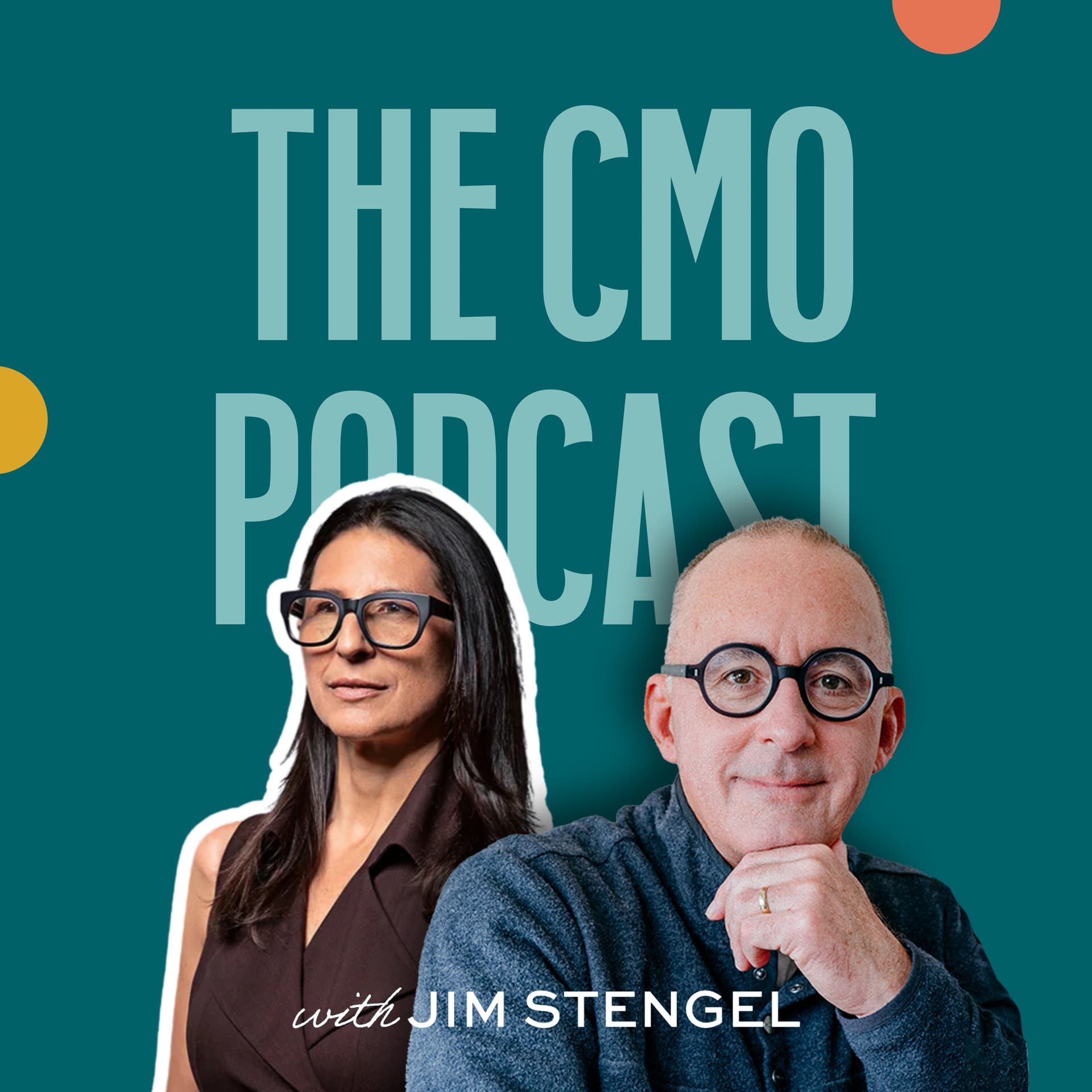
Marie Gulin-Merle, Global VP Ads and Commerce Marketing at Google; previously senior marketing leadership at L’Oréal and Calvin Klein. Anda Ganska, co-founder and CEO of Notch; built an intelligence platform used by Fortune 500; previously raised $40M+ and serves on EFI Worldwide board.
Key claims
Most optimization happens on inference, not verified purchase truth; over 90% of consumable purchases occur in-store. Brands need integrated infrastructure (ads, data, measurement, purchase signals) to optimize in real time. For AI content, “messy middle” is normal; taste/judgment aren’t solved yet—keep humans central.
Notable examples
Infillion + Catalina (130M U.S. households) as live purchase intelligence; Notch ACE with Google Cloud/Vertex AI/Gemini enabling dynamic website reassembly (e.g., Think with Google), multimodal content switching (audio/visual), and reported double-digit engagement gains; examples of ACE use cases like dynamic email/SMS and credit-card personalization without prebuilding many variants.
Written by AI. May contain mistakes. Listen to the episode to check what was said.
Chapters
Tap a time to open that second in VOThe Importance of Purchase Intelligence
0:39 to 2:45
Discussion on the shift in consumer behavior and how Infillion and Catalina close the gap in marketing.
“If you were a chief marketing officer in consumer products, I want you to think about something for a moment.”
Introduction of Guests
2:45 to 3:50
The host introduces Marie Gulin-Merle and Anda Gansca, highlighting their backgrounds and expertise.
“First of all, no one has it figured out.”
Highlights of the Cannes Lions Festival
3:50 to 5:48
Guests share their excitement about the Cannes festival and the opportunities it brings for networking and inspiration.
“This will be a conversation about AI, but also a conversation about partnership and trust.”
Marie’s Evolution as a Leader at Google
5:48 to 7:19
Marie discusses her career trajectory and how her leadership has evolved through different marketing landscapes.
“The best part of Cannes is the serendipity of Cannes.”
Anda’s Journey and the Founding of Notch
7:19 to 10:12
Anda reflects on founding Notch, the problems they aimed to solve, and how the landscape has shifted over the past decade.
“I think the job has not changed in the sense that it's about connecting great brands.”
Content Engagement and Marketing Challenges
10:12 to 12:40
Discussion on the characteristics of engaging content and the challenges marketers face in today's landscape.
“My co-founder and I were here, and our dream, actually, is what I think we've made real, which is to make the internet a more personalized, relevant experience.”
The Importance of Infrastructure in Marketing
12:40 to 14:01
Highlighting the necessity of a cohesive marketing infrastructure that supports creative campaigns effectively.
“Marie, about the time of the company's founding.”
The Challenges of Marketing Infrastructure
14:01 to 15:00
Learn about the leakages in marketing value due to fragmented platforms.
“stuff in our industry and here in particular.”
Authenticity in Marketing
15:31 to 18:08
Explore the evolving concept of authenticity in marketing contexts.
“So in French would be faux authenticity.”
Building Strong Partnerships
18:08 to 20:43
Understand the importance of mutual respect in client-partner relationships.
“And I think that says the world about her.”
Show all 21 chapters
Introducing ACE: The Agentic Content Engine
20:43 to 22:43
Learn about Knotch's new AI infrastructure platform and its significance.
“So what was powering our assumptions in this brainstorm was all of the data and the insights that we were seeing across our data set.”
Personalization and User Experience
22:43 to 25:59
Discover how personalization enhances user engagement in marketing.
“You know, when you're in marketing at Google, you also manage websites, right?”
The Future of Consumer Interaction
26:58 to 28:03
Examine how brands must adapt to the evolving language of consumer inquiries.
“I think it's this idea of you as a user, you want the exact information and modality you want based on your context.”
The Paradigm Shift in Digital Marketing
28:03 to 29:25
Learn how the internet has adapted to human language, affecting brand strategies.
“I think there's this kind of paradigm shift because up until maybe two years ago, humans had to learn the language of the internet.”
Use Cases of ACE in Marketing
29:26 to 30:41
Explore how various brands are implementing dynamic reassembly to enhance personalization.
“So at our launch event last week, we had a few speakers.”
The Future of Marketing Integration
30:42 to 33:09
Understand the need for better integration between marketing, product, and technology.
“And I think it's actually going to lead to lower costs, better, kind of more efficient use of the paid media, lower bounce rates, which is the absolute killer nowadays for websites, and higher conversion, ultimately.”
Navigating AI in Marketing
33:10 to 35:41
Get advice on using AI as a creative amplifier while maintaining a human touch.
“And I'm very bullish for the future of this industry.”
Overcoming Overwhelm in a Changing Industry
35:42 to 37:55
Learn how marketers can cope with the rapid changes in the marketing landscape.
“You started by optimism, but it's going to sound too rah-rah, so I'm not going to go there.”
The Evolving Role of the CMO
37:56 to 41:21
Discover the future responsibilities and expectations for CMOs in a tech-driven world.
“It's important to try things, get curious, understand methodologies, ask really good questions of these partners, and then allow the dust to settle a little bit before you go all in.”
The Importance of Integrated Marketing
42:05 to 43:20
Learn about the need for cohesive marketing strategies that leverage technology.
“if there's one thing we know about LLMs is they will look at every channel and they will look for consistency and they will look for proprietary insights.”
Key Takeaways from the Discussion
43:20 to 44:27
Discover three major insights from the conversation that impact marketing strategies.
“It's a night official because you coined it.”
Transcript
Automatic transcript. May contain errors.0:00Jim Stengel:Before we dive into today's episode, we would very much appreciate a moment from you to make sure you're subscribed to the show on Apple Podcasts, Spotify, or wherever you listen, along with optioning to auto-download the episodes. It really is the best way to never miss an episode, along with supporting the show and the amazing team that helps me bring it to you. And while you're there, leave us a rating or review. It only takes a minute and helps more people find the show and helps us learn. And of course, share this episode with a friend or colleague who might enjoy it. We wouldn't be here six years later and still going so strong without you all, our community.
0:36Jim Stengel:So thank you for being part of it. Now onto the show. If you were a chief marketing officer in consumer products, I want you to think about something for a moment. You have creative that works. You have campaigns that capture attention. But somewhere between that moment and the register, the signal gets lost. You cannot see what actually drove the sale. You are making optimization decisions on inference, not truth. Well, that changed in February. Infillion acquired Catalina, four decades of deterministic purchase intelligence, 130 million U.S. households, 70 retail banners,$600 billion in verified annual consumer spending.
1:13Jim Stengel:And here is what really matters. Over 90 % of consumable purchases still happen in-store. Infillion and Catalina together can close the loop from digital advertising to in-lane purchase and incentivize the next one. This is not a measurement tool you consult after the campaign. This is a live signal that runs through your media while the campaign is in flight. You can now optimize from attention to action in real time against people whose actual purchase behavior you know. A consumer products brand needs return on ad spending. It needs foot traffic. Infilion now delivers all of it. Not as separate vendors you reconcile later as one connected platform.
1:52Jim Stengel:That is what closing the gap looks like. I spent years at Procter & Gamble trying to answer that question. We had the creative. We had the reach. We had campaigns that genuinely stopped people. And then we watched that value quietly disappear somewhere between the moment of engagement and the proof of a business result. That gap between attention and action is where most media budgets go to die. And most digital media platforms have been content to live inside it just a little upstream from accountability. Infillion is the company that decided to close it. They started as the original attention company built on the idea that a consumer choosing to engage with an ad is worth more than one who ignores it.
2:30Jim Stengel:But they did not stop there. They have built the infrastructure to connect the moment of attention to the proof of action across every screen, every format, every vertical. That is not a feature. That is a fundamentally different idea of what an ad platform should be. And it is the one brands have been waiting for. Learn more in the show notes. First of all, no one has it figured out. LinkedIn is a bit of a lie. If people say that they have it figured out, it's just not true. We're all still trying to figure out how to make AI have taste, judgment, expertise. TBD if we can. It's just the truth.
3:04It's a bit of a mess. I think being comfortable with the fact that it's messy is really important. And the final thing is just don't forget about the human.
3:13Jim Stengel:Hi, I'm Jim Stengel. I've helped hundreds of major brands discover and activate their purpose. because when a brand's purpose is clear, compelling, and authentic, profit naturally follows. Each week, I welcome the CMOs, the chief marketing officers of your favorite brands, to speak to how their job is so much more than marketing. These leaders share their inspiration and challenges, along with how they try to build a full, healthy, and happy life in and out of the office. And it's that energy that reaches everyone they touch. And we're glad you're here to feel that energy and to learn from these remarkable leaders So here we go.
3:50Jim Stengel:As we continue our episodes captured during this year's Cannes Lions International Festival of Creativity, today's episode brings together two leaders helping shape the biggest transformation in modern marketing, the shift from static digital media experiences to intelligent AI-powered customer engagement. This will be a conversation about AI, but also a conversation about partnership and trust. My first guest is Marie Gulen-Meyerl, Global Vice President of Ads and Commerce Marketing at Google, where she leads global strategy for one of the world's most influential marketing platforms. And prior to Google, Marie held senior marketing leadership roles at L 'Oreal and Calvin Klein.
4:29Jim Stengel:Joining her is Anda Ganska, co-founder and CEO of Notch. Over the past decade, Anda has built Notch into a leading intelligence platform that helps brands understand how their content performs, how customers engage, and how AI can create more personalized digital experiences. She also serves on the board of EFI Worldwide and has become one of the industry's leading voices on the future of marketing and customer experience. The timing of this conversation couldn't be better. Just before we sat down, Notch announced the launch of ACE, the agentic content engine, developed in partnership with Google Cloud, Vertix AI, and Gemini.
5:08Jim Stengel:But this conversation goes well beyond talking about a product announcement. Whether you're excited by AI, overwhelmed by it, or simply trying to make sense of where marketing goes next, I think you'll find this conversation both practical and refreshingly honest. This episode was captured live from the Infillion Cafe during CanLions 2026. Here's Anda and Marie. Well, welcome, Handa and Marie. A very warm podcast recording at the Affiliate Cafe in Cannes on the Monday of Cannes. So, at the beginning of the week, what are you most looking forward to this week here in Cannes? What's the highlight of the week for you?
5:45Jim Stengel:Is there a meeting, a person, a presentation? The best part of Cannes is the serendipity of Cannes. You know, a lot of great new ideas start in Cannes. So, I'm looking forward to that. I agree. and so send your pity and the kind of the the vibes and the moments and the person you're going to run into and you could have scheduled you could have tried to schedule wouldn't have seen the person and the state of the union because it's the only time in the year maybe there are very few times in the year where everybody gathers and so you can feel the kind of the state of the industry. I had a panel earlier this morning with three CMOs in the Palais, and I asked them how they see their job right now.
6:31Jim Stengel:And they all said, we need to be positive, optimistic, and confident because our people are looking to us. And these are very wild times we're in. So this idea of optimism, positivity came out loud and strong. Great. But at the same time, being pragmatic, right? Now, you had an exciting announcement last week, and we're going to get to that in a minute, but I wanted our audience to get to know each of you a bit before we jump into the announcement. And Marie, first to you, your career has been beauty, fashion, and now tech for the past seven years at Google. You've been at Google about as long as you were at L 'Oreal.
7:04Jim Stengel:So how have you evolved as a leader over those seven years at the most famous tech company in the world, I would say? So I was at L 'Oreal 18 years. So technically - Oh, but seven years as CMO. Almost, yeah. Well, everything has changed and nothing has changed. I think the job has not changed in the sense that it's about connecting great brands. And I'm fortunate, very privileged that I've worked for, you know, iconic brands. So connecting brands and products with people, people, actual people. So that's the same job and passion. But the way you do it and the world around it has changed. You know, in the U.S., not in France, it doesn't translate in France.
7:50But in the U.S., I say it's my third rodeo because I started at L 'Oréal. I was a webmaster.
7:57Jim Stengel:Oh, wow. So I had to explain differences between broadband and analog websites. But I was just building websites. And then when I was CMO at L 'Oréal was the mobile, social, those years, programmatic years. And now it's AI. And, you know, this rodeo or this wave is a bit different. It's faster, a bit more profound. It's multipurpose. It goes way beyond, you know, consumer and marketing. And so, yeah, so everything has changed. Nothing has changed. If I were to magically drop you back to L 'Oreal right now as CEO, let's say, how would you approach the job? I say hi to the current CEO. He was my boss.
8:46Okay. All right. Well, super. This is magic.
8:48Jim Stengel:This is fantasy. But if I would drop you back, how would you approach the job differently based on the seven years you've had at Google? Well, I would partner with Google differently, maybe. Say more about that. Maybe I would go deeper in some conversations. I would also look at data differently. I think, you know, working with now, maybe a third of my team is data scientists, marketing engineers, which is different from the CPG world we all come from. But so I would, my data instincts, I think, have been trained differently. So I would probably look at data and content a bit differently. And I think, you know, I think they do a great job.
9:30And I say hi to Asmita, who's the CMO in seat now and who's a good friend. And, you know, they do a brilliant job.
9:38Jim Stengel:Yeah, super. So, Anda, your story is very different, right? You hail from Romania, not France. And rather than joining established companies, you spent your career building a company. You went to Stanford, launch is 13 years old? Launch is 10 years old. 10 years old. Okay, 10 years old. You've raised more than$40 million, and you've been at the center of how this whole marketing ecosystem is changing. So could you talk a bit about, go back 10 years, when you founded the company, what were you trying to do? What problem were you trying to solve? Fast forward 10 years, has that problem changed? We started Notch actually here in Cannes to some extent.
10:16That was my first Cannes ever, 2016. My co-founder and I were here, and our dream, actually, is what I think we've made real, which is to make the internet a more personalized, relevant experience. Back then, we couldn't understand why there was so much great content and so many great digital experiences, and yet the experience of the internet for a consumer still felt really static and generic. And so back then, we did what we knew how to do. He's a design nerd, I'm a data nerd, and together we built a digital intelligence and optimization platform that now is used by most of the Fortune 500.
10:50And over the last eight years, we've measured some of the biggest websites and digital properties in the US. And I've started to see how customer journeys are unfolding, the type of content that makes people tick, makes people want to do business with the brand versus the content that turns them off and makes them leave and never come back. And it's that knowledge and expertise and data set that inspired us to ultimately build a more automated system that can finally deliver on a promise that I think marketers have heard for the past 10 years, which is personalization, hyper-personalization, because I think the technology actually is finally available to make that a reality with the right data and expertise.
11:32Jim Stengel:What are the characteristics of content that people want to engage with versus stuff that angers them, turns them off, frustrates them? Well, I'll answer it from the lens of today, because Marie made a point that, you know, marketing is about humans, about people, right? It's about connecting people with products that they're going to get value from. I think in today's world, there's a lot of marketers who have fallen in this, I would call it a trap of thinking they can game LLMs by creating a ton of agent-first content. And this idea of marketing to agents has been very catchy. And I think for good reason to some extent.
12:11But what we've seen is that it's exactly that type of content that turns off a human audience. And interestingly, the type of content that humans want, which is immersive, experiential, multimodal, right? Something that's visual and audio and video and so on. That's exactly the type of content that agents cannot consume. So it's an interesting paradox and an interesting moment in time where I think marketers have to think about basically how to do both but not sacrifice either.
12:39Jim Stengel:Tell me how you two met. Marie, about the time of the company's founding. We were at a CMO thing with lots of CMOs you know, and the theme was failure. Yes. It was a salon thing. And we bonded over saying the actual things that are happening in the industry and not the performative side of the industry. we bonded over you know facts and data truth and I complimented your hair right and you want you know yes and she wanted you know hair color yes she introduced me to her hair and I and and I was already interested in content that moves people that also works and sells and so yeah always the beginning yeah there's something about, I think, some people in this industry who connect and we sort of tell each other like what's really going on.
13:38And Marie has this incredibly interesting perspective because of obviously the results she's driven for so many different types of companies in different industries. I get to work with so many different CMOs and brands. And so we're constantly coming together, kind of saying like, is this like a real thing? What do you think? Is this a real thing? And we sort of go back and forth. And it's nice to have that because there's a lot of performative stuff in our industry and here in particular.
14:11Jim Stengel:One of the things I have learned from years of talking to the best CMOs in the world is this. The question is never just whether your creative is working. The question is whether your infrastructure can keep up with it. Because a brilliant campaign still has to travel through an ad stack, through data, through decisioning, through supply, through measurement. And every hop in that journey is a place where value leaks out. Most platforms solve one piece of that, a data company, a DSP, a measurement vendor. You stitch them together and pay a fragmentation tax in performance, in speed, and in accountability.
14:43Jim Stengel:Infillion built something very different. Demand, supply, data, measurement, and creative connected in a single composable platform. The highest performing opt-in attention formats via Infillion's proprietary tech in the industry, agnostic identity resolution solutions, and now Catalina, 130 million U.S. households of verified purchase truth running as live signal through every campaign they execute. No black boxes, no hops, no fragmented vendor relationships to manage. The only company I know of that can take you from the first moment of attention to the final proof of action for any vertical on any screen without leaving the platform.
15:21Jim Stengel:Open, composable, agentic. That is Infilion.
15:29Jim Stengel:I got a question this morning in a panel. Is authenticity now performative? That's so funny. That's a heavy question. Okay. So in French would be faux authenticity. So it's a bit fatigued, the word authenticity, but you know, candor, radical candor, actual shit going on. Like that's how we bonded. And then a year ago, same place, we were talking about data strength. At that time and still to this day, it's still very important to get good AI outcomes. You need good data. You know, it's this garbage in, garbage out idea. So the AI output is only as good as the data input. And so we bonded over, well, wait, there is data strength, but there is also content strength and not content to machines necessarily, content to people.
16:24Sometimes I say this machine thing is not new. Like programmatic is a machine, like feeds machines. The first SEO, I remember my first job at L 'Oréal, I was a webmaster. And so some agencies were asking me to do aliases. You remember the aliases pages? It's a bit like the AI pages today. So this is not new. So we bonded over content strength. And then, you know, we started to partner on websites and what a good websites mean today.
16:58Jim Stengel:What do you admire about each other? Oh, gosh, so much about Marie. She is one of the biggest thinkers that I've met in this industry. You know, wherever she goes, she's managed to, because I've seen her at L 'Oreal, Kevin Klein, and now at Google. Her teams are always just incredible. And I think your team says so much about you. You know, the way they operate, the respect they have for each other, how fast they can move. And I've seen this firsthand at Google in the last year. I mean, we had a brainstorm on the future of content personalization websites at the Google dinner in Cannes last year.
17:33And she said to me, let's figure this out. And I thought to myself, OK, Marie, like it's Google. It's big. It's slow. You know, it's going to take time. Sorry, it's the truth. And within, I don't know, four to six weeks, we were off to the races. Four months ago, we launched the first live experience. So it's really incredible to see a team that operates at that scale, able to execute that quickly and do it also in just the best kind of attitude and having fun. And I think that says the world about her. And then I admire her as a mom. I admire her as I love her partner who I've gotten to meet.
18:16So yeah, everything really. She's a bit of an icon. Pretty nice, Marie. Okay.
18:20Jim Stengel:Yeah, your turn. Who doesn't love is, you know, strong, authentic, vulnerable, smart woman. I like that you're a force. You're a force. I remember during COVID, the early days of COVID and, you know, most startups were trying to figure it out and you know in two days you had a plan and so i remember this i remember so many conversations you know we partner with lots of people in my type of job i as you know it's not a partnership it's like and i don't want to i don't want to you know fatigue the word friendship i think it's we're equals i'm not the clients and you're not the partner where it's a it's an exchange.
19:07There is listening, both sides. She meets best in class. And you don't only want to just work with me, you work with my team too, which is also a good lesson. I think to treat the head of the team and the team the same way. And the team respects you and your team for this too. That's very kind. Thank you.
19:31Jim Stengel:So an emerging theme this week. I was with Fabi Torres at Gap before this, interviewing her down by the sea. And we talked about talent and creators and designers, and they see them as equals. We're together. This is not a client. This is not a partner. It's just we're all in this together. We have a common vision. We respect each other's creativity and point of view, and we're all in it together. I think that's the only way to do great work. I think that's the only way to extract real value from your partners, because if you treat them like vendors in a transactional way, they're going to respond back in the same way.
20:11But the reality is, whether it's us or your agency or whoever, we get to see what's happening in so many companies. And there's something quite important and insightful about that, especially if we can have sort of private conversations about what we really see happening. So yeah, I agree with that.
20:26Jim Stengel:Well, I said up front here, you had a big announcement that we're going to talk about. I'd like to do that right now. Just last week, so this is kind of breaking news, right? Notch announced ACE, the agentic content engine, a new AI experience, infrastructure platform built on Google Cloud, Vertex AI, and Gemini. That's a lot of modern marketing buzzwords all in one. So what does it mean? Yeah. What is this new capability? Why are you excited about it? Yeah. How did it start? And the acronym is ACE, right? ACE, yeah. Yeah. So we started this brainstorm. What's the future of content? What's the future of personalization?
21:01What's the future of websites? So what was powering our assumptions in this brainstorm was all of the data and the insights that we were seeing across our data set. And we saw the emergence of what we call the AI native consumer. The AI native consumer is someone who uses LLMs, search, social, websites, everything to really go from I know nothing about this to I've made a decision. And the example I've kept using is I was looking as it's a real example. I was looking for an electric car that doesn't look like a mom van and I know nothing about cars, right? So I was doing part of my research with Gemini, part of my research with search, and then I would arrive at a car manufacturer's website.
21:43The problem is I go from a highly personalized conversation to now I'm in a website that's static, generic and highly unintelligent. And so I actually went to the website of a car manufacturer. They didn't even have an electric car section. And so I left and I bought a different car. The problem is websites often reflect the organizational chart of a company more so than they reflect the consumer need. And so the question that we were trying to answer is how can we take the content, atomize it, which is essentially break it down into Lego blocks, take the data that we have about what we know about the CN native consumer when they arrive at a website, and power an experience that would allow the consumer to change the website and make it what they need, as opposed to have the website be what the marketing team thinks it should be.
Read the full transcript
22:30And so that's what we started building at Notch. And Google was our first customer. And it really inspired the first few use cases for Ace. And we went live on Think with Google, I think about four months ago, which I'll let you talk about Think with Google and what it is. Well, it's one of our websites. So it's not because we're at Google. You know, when you're in marketing at Google, you also manage websites, right? Right. And so when we met, I had the same starting point as a marketer. I was thinking, first of all, the consumer, the user doesn't want generic content and not for the purpose of just SEO or geo or however you call it.
23:11because the users are now trained for more sophisticated questions. And so they want more sophisticated answers. And so they want to be, users want to be in control of the information they consume. The same way they consume information on platforms, it's the same thing on a brand website. So it started by the consumer standpoint. And then from a marketing standpoint, the thing with content is that you get the insights and the learnings way too late. And it's changing now with technology. The marketing craft, it was about, I plan, I design, I launch, then I learn, and then maybe something. And then meanwhile, the world has changed so much and consumers have changed.
24:00And then maybe I can apply the learnings. So it was kind of a user intelligence being able to assemble information at the right time, right pace, but also getting the insights at the right time, right pace. So it's been a few months that we're testing. We've been using this technology built on Gemini and Google Cloud. And the engagement is just double digit up, which is amazing. And so everybody confirms the assumption. Yes, right. And it's great to have an assumption and then not do a POC because POC, proofs of concept, are usually very small and they stay at the stage of pilots. Sometimes I say, I don't want my work to be a graveyard of pilots.
24:44So it's a thing that we're going to scale and that is here to stay. I will add one thing that the Google team cared deeply about, and they really pushed us on this and challenged us, which is dynamic multimodality. And something that Gemini actually does really well is turn a piece of content. So this atom, let's say it's a sentence. can we turn a collection of atoms into audio dynamically because what if this person is there and wants to consume the content as audio but what if this person's there and wants to consume it as a visual story maybe they just want to get the tldr in a visual story so can we dynamically change that and they challenged us to be able to do this at the point of consumption so not just bring the content to the person based on what they want from a semantic standpoint but also allow them to change the modality and this was not technologically possible 18 months ago because the cost of creating multimodal content as well as the workflow around it was too long and it was too costly.
25:42So it's a really exciting application of Gemini and data and finally unlocking personalization. And yeah, the results basically show that personalization works.
25:58Hey, everybody, this is Andrea Sullivan, the CEO of Five, and we produce the CMO podcast and are so excited to have partnered with Jim Stengel for so many years. Wanted to tell you a little bit about something that could be right for you. Vive is a program for entrepreneurs and business leaders who want to get more out of their life and become their best and happiest selves, both personally and professionally. We have a 12-month program that allows people to meet up with some of the best business leaders out there and additionally experts in the wellness sector so that you can learn how to nurture yourself.
26:33So we teach things around sleep optimization, meditation, all those good things as well. Please reach out to us at podcasts at vibe.co to get more information. That's P-O-D-C-A-S-T-S at V-Y-V-E dot co. Thanks for listening to the CMO podcast and hope to talk to you more about Vibe.
26:57Jim Stengel:So double digit increase in engagement. So why? I think it's this idea of you as a user, you want the exact information and modality you want based on your context. So it's this idea of relevance. And so, you know, I think relevance equals engagement is probably the root cause of it all. It's relevance. At the end of the day, yeah, it's probably the biggest currency today is relevance. If you go back to generic versus specific, what does it mean? You know, look at search. We used to, I used to search for, let's say, blue dress. You're going to search in questions and longer questions and multi-turn questions.
27:43And we see, you know, explosions of prairies. Unlike kind of the intuition a few years ago, it was going to be less. It's actually more. So the more curious and the more acutely trained the consumer is to getting to the right answer, the more brands need to respond the same way. I wanted to add something. I think there's this kind of paradigm shift because up until maybe two years ago, humans had to learn the language of the internet. We had to learn how to search in key terms like blue dress. Now I think the internet's finally learned our language. And so I think it's an imperative for brands to bring that ability to all their digital touch points, whether it's the website or something else, right?
28:29And I think the other part that's really important is having governance and control over the content that actually shows up. So a big part of our work, you know, I know it sounds like tech and AI and et cetera, but a big part of our work was working with the content team and sitting with them and saying, when you reassemble atoms this way, does this feel right? And so we actually started to learn that there's a certain je ne sais quoi about, you know, the quality of human experience and that AI may or may not get quite right. And so how do you start to teach the AI that je ne sais quoi? And it really pulled out of the editorial team a lot of things that I don't even think they codified it and sort of put it in language that we could then train the AI with.
29:13So that was a fascinating work stream. And now you can search for the blue dress when you go to Cannes because it's going to be really hot. And all sorts of details. And je ne sais quoi. Yes.
29:25Jim Stengel:So Andy, you have other clients that are experiencing ACE. What are they learning? What can you talk about? Yeah. So at our launch event last week, we had a few speakers. Bank of America, Zillow, Cox Automotive, Ally Bank. You know, there's multiple use cases. I think there's a use case for thought leadership, like the one with Google, where you're seeing a content-first brand that wants to be able to take that content, break it down from 100 assets to 10 ,000 assets, and allow the reassembly across all touch points. So we're powering other use cases where there's dynamic reassembly for email or dynamic reassembly even for SMS, which is really exciting.
30:05The other use case is, you know, there's a lot of credit cards out there or other products that really thrive on conversion and personalization. And in today's world, to run personalization through Adobe, for example, or any other platform, you have to pre-populate 100 different versions. And then when someone comes, just show them that version. The difference here is you have one paid campaign, one experience, you drive everyone to it, and the page reassembles itself based on that person's information as well as what they tell the page they want. And so it's kind of a paradigm shift.
30:40Jim Stengel:Very customer first, very consumer first. Yeah, it's a paradigm shift. And I think it's actually going to lead to lower costs, better, kind of more efficient use of the paid media, lower bounce rates, which is the absolute killer nowadays for websites, and higher conversion, ultimately. I think you just answered my question, but as you look forward, and let's say we're meeting here in three years, what's your greatest hope for Ace? Well, my greatest hope for the industry and for Ace is that there's going to be more of an integration between marketing, product, technology, and all the other functions.
31:10I will say my one criticism of this wonderful industry that I get to be a part of and I've learned so much from is that oftentimes it's a little bit too navel-gazing. And I think as marketers' job changes, so does the job of products, so does the job of technology. And across a lot of our clients, what I'm seeing a lot is either product takes over marketing or marketing takes over product, or there's some type of closer partnership. We sit at the intersection of a lot of these functions because the website, the digital properties, the channels are often co-owned. That needs to work better. I don't know if it needs to become one thing necessarily, but it just needs to work better.
31:48So that's my hope. it's going to make our life easier at ACE. Because right now, whenever we get to deploy, we have to work with the CMO, the CTO. Often the CEO gets brought in. So there's a lot of different owners.
32:00Jim Stengel:And if it's not integrated, the customers suffer. Well, that's exactly right. I was having this wonderful chat last night with the new CMO of Delta, who is also the CPO of Delta. And it was so interesting because, yes, the customer doesn't actually know the difference between the promise you made and the promise you kept. It's just one continuous experience. So I think that integration makes sense. Your greatest hope. My greatest hope, I think we're getting there. Marketing is probably the least defined function of the C-suite, not a novelty. And it's not data or tech. It's just the scaffolding, the structure that technology is going to allow marketers to have.
32:42Finally, marketing, engineering, like other functions, like HR, like finance. I think it's going to be more codified, more standardized, because the main difference with the craft that I grew up with is this idea of the sequence. You needed to craft and ideate and launch and measure, and then you would land into a spectrum of differences. Today's technology starts with outcomes. So you have to define your outcome. and we sometimes you know at Google we talk about vibe marketing like vibe coding yeah it's a it's a busy I don't want to go it's only day one of a day two of cancer I don't want to go I don't want to throw the buzzwords but it's this idea of outcome based marketing which talks to the CFO and the CEO which is you stop with the returns or profit or brand lift or whatever and then you work backwards like other functions.
33:39And so that's my bull case. And I'm very bullish for the future of this industry.
33:54Jim Stengel:AI is in every conversation this week, right? We're at the biggest creativity festival in the world and it's AI and creativity. You two have a pretty good lens on this. So I'd like you to talk a bit about, I mean, AI is getting a lot of mixed messages right now, right? The brand AI is mixed. There's protests on campus at graduations. So what is your advice to our audience, our marketing audience, what they can do to use AI to be an amplifier of creativity, to make the work better, to make their companies better? So what's your counsel on that? I mean, know, none of us have the perfect answers.
34:34Jim Stengel:We're all learning as we go. But you two are in positions where you're seeing this live. I would say, first of all, no one has it figured out. LinkedIn is a bit of a lie. If people say that they have it figured out, it's just not true. It's just not true. We're all still trying to figure out how to make AI have taste, judgment, expertise, TBD if we can. It's just the truth. It's a bit of a mess. I think being comfortable with the fact that it's messy is really important. I think it's really important to understand that marketing to agents is a practice that we've been engaging in for a long time or marketing to machines, really.
35:12We now call them agents, but really having discipline in how you structure information, having great omni-channel marketing, really just doing good marketing is the unlock to marketing to agents and machines. And the final thing is just don't forget about the human. You know, the human still, for the most part, will make the decision. It might be different for different industries, right? Maybe low consideration products need to consider machines more than a high consideration product. But yeah, I think it's really important to not forget about the human.
35:42Jim Stengel:I like your honesty. I don't want to start by optimism. You started by optimism, but it's going to sound too rah-rah, so I'm not going to go there. Although I'm an optimist. I don't want to be the painter who is refusing photography. In the 19th century, here in France and, you know, in other countries, there were coalitions against photography. And then same way, every time there is a wave of technology. This one is probably a bit faster and it's global at once, amplified by kind of a news cycle. But I don't want to be that generation who's so attached to the previous craft. Then I would add another thing, which is every day you're probably receiving emails that are written by AI.
36:29I know. You can tell, right? And I can tell, right. And you're talking about relevance and attention. You're probably not looking at them. So I think it's raising the bar. I think it's raising the bar for imperfections, for this human touch. Every day you're probably seeing videos and your eye can already tell what's slop and what's high quality. It changed painting. It gave birth to impressionism and new waves of creativity. So that's my other bull case. And as Andes says, well, no, well, we'll soon know. It's the messy middle. Yeah. The dust, I think, is still settling a little bit. People are polluting.
37:12I don't know if you're capturing that. And not to us, but let's see it as a sign. Yes, exactly. A serendipitous sign. that we gave the right answer. Yeah.
37:23Jim Stengel:So, you know, you're being very frank, which is great. What's your advice to people who are overwhelmed by this? You know, a lot of CMOs are, they've had a lot, have had imposter syndrome about a lot of things, but I think it's at a new level now. So for those feeling overwhelmed by this change, what's your counsel? Everyone is overwhelmed. I'm overwhelmed. I am driving so much change in this industry. You know we're breaking things we're you know a disruptor but i'm overwhelmed the pace of change is a lot we just got to get comfortable with being a little bit overwhelmed i would say don't jump in too quickly i know everyone's like you gotta act faster go faster i actually have seen a lot of our clients who jumped in way too quickly with a bunch of different trends which are very important gen ai geo and i've actually ended up hurting the business results the human experience as a result I think you have to let the dust settle a little bit.
38:19It's important to try things, get curious, understand methodologies, ask really good questions of these partners, and then allow the dust to settle a little bit before you go all in. At the same time, I want to acknowledge all of our clients are getting questions from their boards and CEOs. Why aren't we showing up in this answer? What are we doing about our GEO strategy? So I think you have to get armed with an answer that you know will resonate with your C-suite. Whatever that answer is might be different by organization, but lean on your partners and treat them like partners and get to an answer that you think will command credibility and respect.
38:58Well, we've been saying this for years, but leadership is really not about knowledge, especially now that knowledge is going to be commoditized and accessible to so many people. a graduate can, you know, build a website, build an app, build a campaign. And so the craft is now about critical thinking, as we were saying, training your data instincts, training your questions, not your answers. So I think with the team, it has to be about being in the trenches with them. When I hear sometimes like folks saying, oh, I'm AI native. I'm like, come on, It's been like three years. So it's about being hands-on.
39:40What we're doing at Google, we're doing bootcamps where the leaders and the super users and the teams build websites together, apps together. They vibe code. They build campaigns. So this is not a framework-y technology where you're looking at slides. At some point, I said to the team, I don't want to see decks on AI. I just want us to be in the tools, learning together, because the tools, unlike software, unlike traditional software, the tools get better as you use them. So it's really a partnership between people and tools, not an opposition. So all the things like be humble, be hands-on, don't try to pretend, don't use too many buzzwords, get in the work, get your hands dirty.
40:30It's not the higher you are, the least you're touching the work. Kind of this player coach thing applies more than ever. And then embrace it because there is no going back. There is no industrial revolution or tech revolution that went backwards to my knowledge. So I think, you know, build for the greater good. and it's not by opposing creativity and AI or efficiencies and effectiveness. Like any corporation, it's gonna be both and it's gonna be a yes and. So work with the board and your CEO, CFO, and work with your team and probably very differently from the previous mobile and first digital revolutions.
41:21Jim Stengel:Last question. What's your view on the role of the CMO or senior marketer over the next three years? And what would you like to see? How would you like to see the role change in terms of their capabilities, their skills, their attitude, whatever? I think the most important job of the CMO in the next three years is to be a window to the world for the rest of the C-suite. I think consumer and customer insight has always been the job of marketing, but it really has to be that now because it is that that cannot be done by AI. And it is your interpretation of that customer insight in your own brand terms that is ultimately the differentiator.
42:04And then finally, to really think about integrated marketing more than ever, because if there's one thing we know about LLMs is they will look at every channel and they will look for consistency and they will look for proprietary insights. So I really think this kind of small portholes across an organization and silos are going to be the death of marketing unless we figure out how to bring it together and align it to how customers actually journey through all right bull case as well um on paper marketing is growth right it's growing the top line it's the you know i grew up in cpg like you so in the cpg world it's kind of obvious not everywhere else on my bet, not my hope, hope is not a strategy really, Tim.
42:52I think my bet is that we finally can own, we CMOs can finally own growth because of this outcome-based technology as an enabler, not as a replacement of the craft, as a superpower to the craft. So yeah, bull cases all around and with more partners like Ander, embracing the technology. Thank you for having us, Jim. The Rise of I-Marketing. Thank you. Yeah, I love that. You heard it here first. So you coined it. Yes. You coined it. It's a night official because you coined it. Thank you, Jim. You're really good at this, as you know. No, no, wonderful discussion. Thank you.
43:30Jim Stengel:Have a great week. Thank you for having us. My pleasure. That was my conversation with Marie Golan-Meryl and Anna Ganska. Three takeaways from this wonderful conversation for your business brand and your life. Takeaway number one, marketing is still about people. I loved when Marie said, everything has changed and nothing has changed. AI is changing the way we work at an incredible pace, but her job is still the same. Understand people, earn their trust, and create experiences that make their lives a little better. Takeaway number two, relevance wins. One of the big ideas from this conversation is that consumers no longer want one-size-fits-all experiences.
44:10Jim Stengel:They expect brands to understand who they are, what they need, and where they are in the moment. The companies that can deliver this kind of relevance will be the ones that stand out. And takeaway number three, the future belongs to marketers who bring people together inside and outside their companies. AI isn't just changing marketing, it's changing product, technology, data, and customer experience too. The best CMOs will be the ones who connect those teams, stay curious, and never lose sight of the customer. That's it for this week's episode of the CMO Podcast. As always, I would be grateful if you shared our show with your friends, along with subscribing and leaving a review on Apple Podcasts, Spotify, or wherever you listen.
44:54Jim Stengel:The CMO Podcast is a Vive Original Production. The most effective people at work aren't working harder than everyone else. They're working smarter inside better systems. Superhuman Go, from the makers of Grammarly, is the AI chat that works inside every tool you already use, always ready and already aware of what you're working on. It's a teammate whose only job is to help you be better at yours. With Go working with you, you can show off what you do best. See what Superhuman Go can do at superhuman.com. That's superhuman.com.
From the publisher
Artificial intelligence is reshaping marketing at a pace unlike anything we've seen since the birth of digital. But as today's guests remind us, the fundamentals of great marketing haven't changed.
Recorded live at the Infillion Café during Cannes Lions 2026, Jim sits down with Marie Gulin-Merle, Global Vice President of Ads & Commerce Marketing at Google, and Anda Gansca, Co-Founder and CEO of Knotch.
Marie has spent her career leading marketing for some of the world's most iconic brands, including L'Oréal, Calvin Klein, and PVH, before joining Google to help shape the future of advertising, commerce, and AI-powered marketing on a global scale.
Anda founded Knotch more than a decade ago with a vision of making digital experiences more personalized and measurable. Today, Knotch helps many of the world's leading brands optimize content performance and customer experience, and Anda has become one of the industry's leading voices on the intersection of marketing, data, and AI.
Just days before this conversation, Google and Knotch announced the launch of ACE (Agentic Content Engine), a new AI-powered experience platform built with Google Cloud, Vertex AI, and Gemini. Designed for the emerging "AI-native consumer," ACE enables brands to create dynamic, personalized digital experiences that adapt in real time to each customer's needs.
Together, Jim, Marie, and Anda explore what this next era of marketing means for brands, why relevance has become the industry's most valuable currency, how AI can amplify rather than replace creativity, and why the future belongs to marketers who can unite technology, data, and human insight to create better customer experiences.
—
This week’s episode is brought to you by Knotch and Infillion.
See Privacy Policy at https://art19.com/privacy and California Privacy Notice at https://art19.com/privacy#do-not-sell-my-info.