In short
The CMO Podcast: Marketing Across Uncertainty
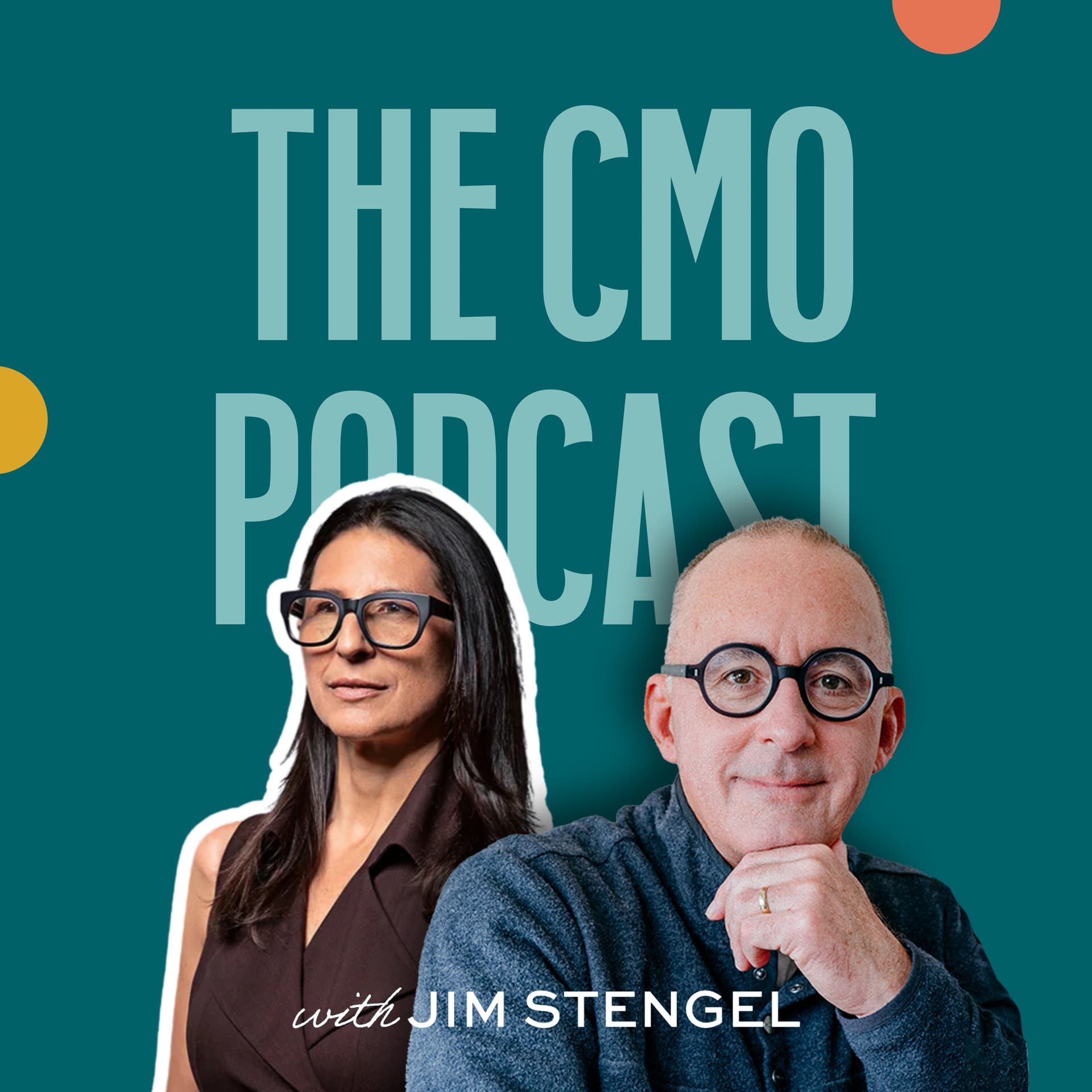
Podcast Overview The CMO Podcast is hosted by Jim Stengel, former CMO of Procter & Gamble and current entrepreneur. Stengel engages with dynamic CMOs to explore the thought processes and motivations behind their roles, especially during periods of change and uncertainty.
Episode Title
Marketing Across Uncertainty This episode features discussions with senior marketing leaders from companies such as Nestlé, Zurich Insurance, Saucony, and Deloitte. Recorded live at the Cannes Lions Festival of Creativity, the episode focuses on how marketing leaders can maintain resilience and creativity in the face of global uncertainty.
Key Guests
- Mélanie Brinbaum: CMO of Nestlé Zone Europe
- Extensive experience with iconic brands like Nespresso and KitKat.
- Focused on balancing tradition with innovation amid consumer changes.
- Daniele Calderoni: Global Head of Brand Marketing at Zurich Insurance
- Aims to reshape the perception of insurance through trust and relevance.
- Background in creating emotional connections from her time at Mars.
- Scott Mager: U.S. Chief Marketing Officer of Deloitte
- Focuses on humanizing a 180-year-old brand through empathy and storytelling.
- Joy Allen-Altimare: Global CMO of Saucony
- Connects the brand with a younger generation of athletes and lifestyle consumers.
- Previously held leadership roles in luxury, tech, and media.
Episode Highlights
- Leadership in Uncertain Times
- Defining Clarity: Leaders cannot provide certainty but can offer clarity by reinforcing a shared mission.
- Melanie Brinbaum emphasized the importance of clarifying the organization's purpose to engage employees, resulting in positive share gains.
- Human Connection: Brands must transcend transactional marketing to establish genuine human connections through storytelling.
- Scott Mager noted that storytelling about real impact is vital for educating clients.
- Embracing Change and Diversity
- Listening Across Differences: In a polarized world, leaders must be open to diverse perspectives to enhance decision-making and innovation.
- Daniele Calderoni highlighted the need for neutrality and open-mindedness in leadership.
- Courage and Purpose
- Trusting Your Gut: CMOs must have the courage to advocate for their beliefs, even when faced with pressure or uncertainty.
- Joy Allen-Altimare shared how her personal background influences her confidence in standing up for what she believes.
- Curiosity as a Leadership Tool
- Fostering Curiosity: Encouraging a culture of curiosity within organizations can lead to innovation and adaptability.
- Mélanie Brinbaum described the importance of trying new things and learning from failure.
Key Takeaways
- Clarity and Purpose: Reinforcing a shared mission can drive engagement and positive results.
- Humanization of Brands: Effective marketing is rooted in storytelling that highlights human impact.
- Listening and Openness: Embracing diverse perspectives enhances decision-making in today's complex landscape.
- Courageous Leadership: Standing firm in one's beliefs is essential for fostering a strong brand culture.
Conclusion The episode serves as a masterclass in navigating the complexities of modern marketing leadership, emphasizing the importance of clarity, human connection, and the courage to uphold a brand's purpose amidst uncertainty.
Additional Notes
- The episode is brought to listeners by Deloitte and StrawberryFrog.
- For more information on the CMO program, visit [Deloitte's CMO Program](https://cmo.deloitte.com).
---
This summary captures the essence of the CMO Podcast episode, highlighting the insights shared by industry leaders as they navigate marketing in uncertain times.
Written by AI. May contain mistakes. Listen to the episode to check what was said.
Transcript
Automatic transcript. May contain errors.0:00What if the smartest marketing play is not to move forward, but to zoom out? Deloitte believes the most powerful move a CMO can make is to look beyond the next step and see the broader perspective. That's what the Deloitte CMO program is for, a place to gain fresh perspective and connect with leaders who've stood where you stand. Together, Deloitte will help you see the bigger picture so your next move isn't just fast, but right. Learn more about the CMO program at cmo.deloitte.com. Hey, it's Jim. I'm here with Matt Spiegel, EVP of True Audience Growth Strategy at TransUnion. That's quite a job title, Matt.
0:34Yes. Welcome. Thank you. So tell me about your company and why it matters for our audience CMOs. Well, listen, Jim, the challenge of the day is that there's so much information about consumers out there and the challenge is most companies don't have all that information. You have some purchase history, you maybe have some web history, but you don't have a full picture of customers. We're working really hard across on a suite of identity products, of audience products, and measurement products to bring a holistic view of customers to marketers. So when CMOs work with you, what light bulbs go off for them?
1:03So, Jim, we help brands bring clarity from chaos. We help them understand a picture of their customers with a 360-degree view in order for marketers to make bigger, more strategic bets. Well said, Matt. Learn more at transunion.com slash clarity. That's transunion.com slash clarity. Hi, it's Jim. Joining me is Matt Spiegel, EVP of True Audience Growth Strategy at TransUnion. Matt, we talk a lot on this show about building brands that people love, but that starts with understanding them, right? Jim, absolutely. Every customer ultimately has a story, but most brands are only going to see part of it.
1:36At TransUnion, we really focus on helping marketers connect those dots across devices, across channels, across platforms, with the goal of helping marketers see a full person behind the data. That clarity is gold. That is special. So how do you do it? Ultimately, we put together the pieces of information that help you predict behavior, help you personalize messages, prove the impact of every marketing decision at the end of the day. And our marketing solution suite gives brands the visibility and confidence to invest smarter and ultimately grow faster. So if you want to turn data into understanding and understanding into growth, visit transunion.com slash clarity.
2:10I think now the leaders, they are confronted to so many tensions and decisions have to be done so fast. And there are so many that it's very quick that you lose sight of the mission. So I think this is what excites me really in the role of a CMO is that you're also the guardian of the temple at what should be done. So this clarity, this coherence, even though everything is so turbulent around us. Hi, I'm Jim Stengel. I've helped hundreds of major brands discover and activate their purpose. Because when a brand's purpose is clear, compelling, and authentic, profit naturally follows. Each week, I welcome the CMOs, the chief marketing officers of your favorite brands, to speak to how their job is so much more than marketing.
2:51These leaders share their inspiration and challenges, along with how they try to build a full, healthy, and happy life in and out of the office. And it's that energy that reaches everyone they touch. And we're glad you're here to feel that energy and to learn from these remarkable leaders. So here we go. This week, we're exploring a theme at the heart of many marketing leaders' conversations right now, global uncertainty. Rather than dwell on the causes, this roundtable focuses on how brand leaders can inspire, focus, and drive their teams forward despite the unknowns. Joining me are four senior marketing leaders.
3:26First up, Melanie Brinbaum, CMO of Nestle Zone Europe. Melanie has led iconic brands from Nespresso to KitKat and held senior roles at Cody, Procter & Gamble, and L 'Oreal. Next, we have Danielle Calderoni, Global Head of Brand Marketing at Zurich Insurance, where she is reshaping perceptions of insurance. Before Zurich, Danielle spent a decade at Mars. Next up, Scott Major, U.S. CMO at Deloitte, who is bringing a human approach to this 180-year-old storied brand. And last, we have Joy Allen Altamere, CMO at Saucony, who is connecting the brand with new generations of runners. Joy held prior leadership roles in luxury, techs, and media.
4:03Recorded with a lively audience at the Deloitte Digital Apartment during the Cannes Lions Festival of Creativity, this episode is a masterclass in leadership across borders and sectors, proving that no matter the challenges, we can learn from each other's approaches to leading with courage and conviction. Welcome, everyone. This is a special edition of the CMO Podcast. So we're recording and we're going to bring the audience into it, I hope. And, you know, if you listen to my show, you know, one question I ask every guest is what's the first brand in their life when they were children that made an impact on them?
4:37So, Melanie, we're going to start with you. Yeah. First brand. It's the same for some women in the room. It's Barbie, you know, Mattel. And I'm telling you why, because it's so interesting. I discovered when I grew up that actually it was a negative connotation about this brand, you know. While for me, it was really the brand that honestly, at the time already, made me believe I could be anything. And I could be the Ferrari, you know, I could be this horse riding champion and so on. And with my sisters, we are a girl family and I have lots of cousins as well. We were playing like crazy and also cutting hairs and so on, things you all make.
5:13So Barbie, definitely. So how many kids do you have? No, I have two. two kids okay very good are they barbie too they like barbie no she hates bob he hates barbie i would have loved to play did you keep your old barbies do you still have them okay you can retire on those perhaps make them children you know who knows perhaps danielle well for me it's actually kinder chocolate and i shouldn't say this because i worked for mars for many years but i confess that when i was a kid there was also the chocolate aspect which lots of kids like but the surprise. So when you open the egg, there is a surprise.
5:47And to me, that feeling, that emotional connection is something that probably I'll never forget. So every time I used to kind of open it, it was a new experience. And that was stuck with my mind for many years. We lived in Europe for five years. My kids loved the Kinder Eggs. We go back to the US, you can't buy them. Legal reasons. You choke on the toy. Come on. Come on. Yeah. Scott, first brand. I think for me, hands down, it's got to be Lego. I mean, as a young kid, putting Legos together, building things, creativity, color patterns. It was awesome. It was like my first foray into creative. Now, I want to hear something about your current role, which would surprise people.
6:32So I don't want to hear your typical job description, but something about what you do that people go, oh, I wouldn't expect that. So Scott, we'll start with you. And you're in a new role, which we're going to talk about later. Yeah. Very different from the balance of your career. So what's a surprise you're unexpected about this new role you're in? Which is? CMO. Yeah, I'm U.S. Chief Marketing Officer for Deloitte. For me, working at one of the most recognized brands, 185-year-old brand, that people have a perception about what we are, you know, you're an audit company or financial company, I'm trying to figure out ways to have the Deloitte brand show up in these completely unexpected cultural moments right now.
7:14And interestingly enough, I've had pretty warm. So the thing that people might not believe or realize is I've actually had a really warm reception to having like the Deloitte brand show up during the series finale of The Walking Dead. Just to show up as human and more human brand in different ways. Yeah, I love that. Daniel. I remember when I was interviewing for Zurich Insurance and my career before was always in consumer goods. So it's quite a stark change versus financial services. And I always thought, OK, so I'm going to get into insurance. So what is it about insurance? And when you think about insurance, honestly, you often think about negative moments in your life.
7:50Like you have an accident, your house burns, or if you have life insurance, you know, someone close to you dies. But it's all negative moments and negative touch points. So a lot of the job that I'm doing now is try to reframe that and to turn, to flip the conversation from always negative into something positive, which is obviously a challenge for us at Zurich, but it's a challenge also for the whole industry. And that's not an easy one to tackle, but definitely something that I'm taking up every day. Melanie? And for me at Nestlé, I think many of you know Nestlé for its chocolates or cereals in the morning, this kind of things, or bars, right?
8:29So moments of indulgence. But few people know that we have probably more nutritionists at Nestlé than there are scientists at the NASA. and actually at the moment i'm trying to get back to the core of what nestle is what henry nestle did when he founded nestle which is to marry nutrition and pleasure in europe at the moment you have more than nine households out of ten who want a balanced diet it's super difficult by the way for them to reach because only one out of ten manages it so this big tension they're super frustrated is not solved at the moment and i believe nestle has the biggest food company in the watchers sold that.
9:04So actually I spend much more time on websites, on healthy habits and holistic wellness and so on than ever before, even though I'm working for a company that sells a lot of chocolates. So Scott, you know, you're very unusual on this panel. Do you know why? Because I'm B2B? I don't know why. That's a good guess. You're the only one up here right now is on XP &G. That is also true. Yeah, that is also true. So you can write a one page memo?
9:33what's your favorite laundry brand my favorite book tide yeah there's a good answer good answer not in the area would be okay in europe yeah yeah okay so our theme today is about clarity of leadership in uncertain times and this was inspired by i went to a reunion the many people in the audience here were at the same reunion of png leaders in berlin earlier this week. And that was the theme. And the previous CEO of P &G, David Taylor, talked about you can't provide people certainty, but you can provide clarity, which is a really powerful thought. So I want to ask each of you, this is really going to be a leadership session, that as you think about the crazy times we're living in, how are you providing clarity to your people?
10:18And how are you leading today that may be different from how you led even 18 months or two years ago. Any new practices, rituals, principles you're following to provide clarity in an economic environment and socio-political environment that seems to change every day. Melanie. For me, it's really getting back to what I was saying, clarifying the why. Why we get up, all of us, out of bed in the morning and we go to this company and what's our collective ambition altogether? together and the guardrails we put around this ambition and especially for our boss you know to make sure that despite all the tensions short term you know the delivery all those things we still keep focused on delivering the mid-term mission and I'm saying that because I think the biggest ha ha I have recently in this world of uncertainty is that before I thought the CMO role was really much more to inspire get the organization with you you know behind a big ambition but I realized also getting into the role when I became chief officer of Nespresso, but that also my boss, I should keep him with us, you know, because I think now the leaders, they're confronted to so many tensions and decisions have to be done so fast.
11:31And there are so many that it's very quick that you lose sight of the mission. So I think this is what excites me really in the role of a CMO is that you're also the guardian of the temple at what should be done. So this clarity, this coherence, even though everything is so turbulent around us. So how do you do that? So what we did, for instance, super recently is that with the Europe teams, we actually with the whole leadership team of Europe, and that's based on employee survey. We saw that in the employee survey, people were super frustrated because we lost sight of what's the purpose of Nestle, even though our purpose is super clear and actually unchanged and very strong.
12:09But it was not live in our community. so we cracked the ambition of zone europe okay how could we together what's what's our collective goal and ambition and this we turned it into the first conference to explain what's the role of nestle and at the moment where everything is so turbulent you've seen the share of nestle it's difficult at the moment right we're all in tough times it's a bold choice to say no no we choose to step back to clarify the why to engage everyone behind that and actually it turned out to be super positive because it's been for the first time that we've been more than six months in a row positive on a share gain.
12:45So it's really driving the engagement of people, but that's a bold choice. And even myself, I was not pretty sure initially that it was investing the time of the team in the best way. But the more and more I was seeing people super engaged and collectively bringing things. So for me, it was a big leadership lesson to go through this process. So Scott, you're a non-PNG here on the panel. Yes. You're new in a new role, four months in or so. You have a lot of people in the U.S. What's your head count? I hate using that word, but people in your organization in the U.S.? Overall, maybe 180 ,000. Okay.
13:17That's double P &G's employees. That's a very large organization. So how are you leading differently today? Well, look, we're really focused, you know, at this moment on making sure that everything that we do is focused on our core values and our purpose, that our people understand what those things are. And when we're putting marketing out, we're not just putting it out for our clients. We're also putting it out for our people to make them proud. We want to put things out that they want to share with their family and say, like, this is the company I work for. This is pretty amazing. We're also, you know, look, we're a big professional services company with the way that we go to market.
13:54It's a very long lead cycle. Things take months and months. You know, we sell these big transformational programs. You know, we certainly focus on our products and the things that we can do. but there's no better way for us to educate our clients on the things that we do than tell stories of impact. And it used to be that we would tell stories and talk about, client had this problem, we did this thing and implemented this technology or changed this process, and we saved them this much money. Now, what we're really trying to do is peel that back a couple layers to how are we impacting the company, the employees in the company, the customers of that company, and how are we making a real human impact to the individual that ultimately received the services as a result of the transformation we did.
14:39And so we're trying to, you know, who did it impact? How do we impact the communities that we live and work in? And those stories people have a much more emotional connection to. We're trying really hard to tell those great stories. Daniel, how about yourself? Yes, I think, well, first of all, definitely there's a growth in uncertainty and contradictions in the world. And I think it comes also from a place where it's driven by a strong polarization of the world in so many areas, like from politics to technology, the ones that love AI, the ones that think it's going to kill all of us, to, I don't know, globalization, loving globalization, hating it.
15:16So there's a lot of polarization in so many different areas that really permeates culture. And I think in that context, it's important to actually have a view that is as neutral and kind of cold-headed as possible. So to me, the first step, or at least what I try to do more than what I used to do in the past, is preparation. I think preparation is as an individual. So opening up your mind and listening to opinions that maybe are quite different from what you think, but really being open to listen to the reasons why somebody is supporting a certain idea or not. And I'm forcing myself to do more of it.
15:51And I'm trying also with the team to obviously encourage that and drive the discussion. And preparation, I think it's at the individual level, but it's also at the company level. What we do in Zurich Insurance, a good part of our business is B2B business. So we obviously protect our customers, but what we try to invest a lot on is actually on prevention. So trying to avoid that we get to a point where they actually need protection from an insurance company. So it's both a way, I think, of preparing ourselves individually and preparing the business in a way. Ultimately, in insurance, we are in risk management, so we have lots of different scenarios on what can happen in the world on so many things.
16:26And I'm not saying that everybody should do that, but ultimately being ready with some scenarios in mind probably would help any organization.
16:40Everyone seems to be chasing the next big thing, the fastest answer, the quickest win. But great CMOs believe the real power isn't in the speed, it's in stepping back to see the bigger picture. That's why everything Deloitte does in their CMO program, from their industry-leading capabilities to their connected network of CMOs is designed to help you zoom out and gain fresh perspective. Deloitte will help you see the bigger picture together. Learn more about the CMO program at cmo.deloitte.com.
17:13We're going to come to the audience in a bit for some dialogue and Q &A, but I have a custom question for each one of you in the leadership area. Melanie, I'm going to start with you. You've spoken about, I think I'm quoting you or paraphrasing you, you see your role as the voice of consumer culture. And you have been a part of many brands linked into culture, Nespresso, of course, which I'm a big fan of. And you've been at Cody, P &G, L 'Oreal. What do you mean as a leader when you try to be the voice of consumer culture? How do you activate that? You're at a pretty senior level, right? So what's that look like in terms of your behavior?
17:45For me, the biggest shift I had to do, and especially coming from P &G to now, is considering people from consumers to their entire rules, you know, and the holistic view of a person rather than just a consumer. And this is when I realized that it's not about then providing just rationals and benefits and so on or entertaining with a piece of advertising to turn the attention so that they would buy us, which was my DNA, towards with more maturity, probably, or so I became a mother and all the life that you know. I realized actually that brands have much bigger power and that in a world which is so uncertain, they can actually be a coherence.
18:23And this coherence for me is a rallying crime to be part of the culture, not just observing it, surfing on it, but shaping it. And some brands do it beautifully. I think still Nespresso created some culture around coffee. Jim, it's so funny because when I joined the role of chief brand officer, I remember so many voices to me. So finally, you will change the celebrity, right? You will change this, you will change that and this and that and this and that because we are so bored about our own things. But actually, it was no because that's part of the culture of people so the question is not that is how do we stay relevant so that we keep on giving meaning joy but also be in the life of people that's the role of brands and i can tell you during covid why our honestly it was a period where our sales bumped like crazy we even had to minimize our assortment to be able to produce enough on our class i noticed that and you will receive letters we receive messages even though our stores were closed to thank us because we were a bubble of stability a bubble of little luxury and treats and for me this is what means being part of the culture is that you're meaningful instead of just being leveraging people for growth you know you're trying to take that thinking across all your brands yeah i assume yeah for instance kitkat yeah so we just actually won uh for the first time wow a lion a gold lion a grand prix for an outdoor campaign and you know the campaign of kitkat have a break have a kitkat and actually similarly so many people tried to change that or to influence that but some strong marketeers at nestle over the past 30 years they kept this campaign and they've refreshed it sometimes sometimes very successfully sometimes not that successfully but i think this culture this cultural part of kitkat is something you will see more we will activate even more because we need more breaks all of us we are overwhelmed so it starts with a smile right but there is a deeper meaning on this have a break and especially having a break together because people split the kitkat to share so actually this beauty behind the culture created by Kit Kat, we're going to celebrate much more.
20:33That's just to give you an example. So it can be much more than just a chocolate bar, but something that makes you hold a beautiful moment with someone you love. Oh, you don't really know because most of the Kit Kats are actually eaten at work. So with colleagues, and that's funny. And all these things in their small way help in these times of uncertainty, right? Yes, and this kind of things keep you who you are and keep you grounded. And I think we should celebrate that. So for me, that's why I love our job, actually. We're so lucky to work in marketing, no? That's for brands. We can bring that to people.
21:04Well said. Daniel, you work in a very different category now, right? You talked about you're there to prepare people for uncertainty, right? So that's your role. You have a campaign, what can go right? So I'd like you to talk about that and the idea behind that campaign, the creative inspiration and the impact that's had internally with your people as well as with clients. But I think we underestimate we don't talk enough about the power of campaigns, effective ones inside the company. Yeah, definitely. And that's something that started from the inside of what I was saying before. So ultimately, when you think about insurance, often it has a negative connotation or it's the negative moment in your life.
21:44What we're going to do is really to flip a little bit of that conversation and turn it into positive. So we started a few years ago on this, what we call sort of brand platform. It's sort of a selling line, if you will, that we use sometimes in advertising, but it's what can go right. But to be honest, it's way beyond that because we are using it a lot internally also to define our values as an organization. So we brought in the idea of optimism and positivism that is really important internally to flip a bit of the mindset and culture of the organization. And obviously we want to portray also with our customers in a positive way.
22:17Now, more concretely though, it's not just about the campaign because it's relatively easy to build a campaign and say something, but then you need to do also something in the way you service our customers. We don't sell physical products, we sell a service, which is ultimately an experience. So we're doing a lot in the area of empathy, for example, to make sure that that sort of optimistic values comes through whenever a customer interacts with us, whether it's a call center, whether it's an email or a letter that you receive at home. And that's really the angle that we want to take internally, again, starting with all of us as colleagues internally, but then also with our customers to stand out in a category where ultimately the level of service, the quality of service, and the connotation that you give to it is the way to be different to competition.
23:01I just interviewed earlier today the CMO of American Express, and she talked about the power of 70 ,000 people being brand ambassadors. And they really believe in that. They nurture it, they cultivate it, and they believe a big part of their brand right now, and the health of the brand is related to their 70 ,000 people living it. So it's a very powerful idea. And to this day, I still do every other month. We do an onboarding of all the new hires. I've been doing it now for five years because I want to make sure that anyone that enters the company, even at the most junior level, knows something about the brand.
23:33It may be top line because obviously lots of people would not work in marketing. We work in different functions, but everyone should become a brand ambassador. So I think it's really important. Joy, welcome to the panel. Thank you. Welcome. I know you got caught up in canned traffic. Yeah. I didn't need to walk, but I'm here. You're probably sweating, your feet hurt, you know, you feel good. Okay, good. Super. Well, we're going to bring you to the conversation in a minute. So, Scott, you are 25 years or so at Deloitte. Yeah, that's right. And most of the time in consulting, correct? But four months ago or so, you become the chief marketing officer.
24:04It's a really different work. Yeah. Right? So can you talk a little bit about that adjustment as a leader and how it's going, how's the transition, and how are you managing that, right? because you're probably developing new skills, new priorities, new partnerships. So tell us about that leadership transition. Yeah, so it's been an interesting journey. So four months ago, I took on the role of U.S. Chief Marketing Officer. But for the three years prior to that, I was the Consulting Chief Marketing Officer. And then for the 25 years before that, I've served CMOs my entire career, doing marketing strategy, more tech, TV commercials, advertising, creative websites, mobile apps, customer data platforms.
24:45So I've always been on the other side of the equation, helping CMOs. And this wasn't necessarily a job I was looking for, but it's been a really interesting experience. I always serve CMOs. And so now I get to take all of that experience I've had serving CMOs and put it to use on this brand, this company, which I've been a partner at and and a brand which I actually live and love. And so it's been a pretty cool experience. And I'm trying to do things that I always wanted, that I always wished the Delight brand could be or would do. Agility is something that our brand desperately needs. The market, you know, we're talking about all the disruption right now.
25:26The market continues to change so quickly with AI, with, you know, the political and geopolitical environments. Our brand has to adapt to that. We are pivoting from being a professional services company only to being known as more of a technology company in all of our businesses, not just consulting, but in our tax and all the business as well. So, so it's certainly, it's certainly been interesting. We've just launched our newest brand campaign called Together Makes Progress, which is a pretty neat campaign because most of our competitors are out there talking about all the things that they do.
Read the full transcript
26:00And we talk about the things that we do also. So I talked about the stories before, but Together Makes Progress allows us to talk about how we do it and why the way that we do it is different. Because we do it together with our clients in partnership. We're this master convener of our services, our technology, our ecosystem partners, the technology alliance partners that we work with, universities, data providers, government organizations. We bring it all together for the better good of this organization, company, client. But we do it together with them and with other people. I think that makes it a bit more special.
26:34And we're just leaning into this thing that is different, and that's the human relationships that we build at Deloitte with our clients. It's very non-transactional. They tend to be longer-term personal relationships. That's just been a really pleasant thing to get a chance to put in place.
26:58We all want to stay ahead of the digital curve. And IAB, the Interactive Advertising Bureau, invites you to do just that at the 2026 IAB Annual Leadership Meeting in Palm Springs on February 1st through 3rd. If you're a qualified consumer brand or agency leader, you can access free passes and travel vouchers. And for everyone else, you can take$500 off your ticket with code ALMCMOPOD26. This is your chance to join a three-day gathering of the industry's brightest minds and boldest voices shaping the year ahead. You'll hear agenda-setting conversations, candid fireside chats, and dynamic breakouts on the topics that matter most, from AI and commerce media to measurement and addressability.
27:43This year's lineup concludes everyone from Kevin Bacon and Bozema St. John to creator Remy Bader, along with leaders from Forbes, Major League Soccer, General Motors, and Meta. Visit IAB.com slash ALM to learn more. And check out the link in the show notes to register and receive$500 off your ticket.
28:05Joy, welcome. Did you work at Procter & Gamble ever in your career? No, I did not. So you're diversifying our family. I'm really cool. Scott was the only one until you arrived. We're in it together. So what's the first brand? We're introducing you now. What's the first brand you remember making an impact on you as a young girl? McDonald's. I'm originally from Tennessee. I grew up in Chattanooga. So it's very interesting. Those are very Southern, very homey roots. And I remember being a little girl. My father's Jamaican. So I think when you're an immigrant, your parents are very much like you're going to be a doctor, lawyer, teacher.
28:41And that was like the first unlock for me when I saw like the emotion of like, do you remember the original McDonald's when it's like the families and the moment like dinnertime? And I grew up in a very like, we cook everything. There's no fast food. So that was like the first time I remember being like to ask my parents, can we do something like defy natural norms? And I was very young, but when I was in college and I remember I was pre-med and I was calling my parents to tell them I was going to switch to advertising. Nice call. Yeah. And I was just like, but do you remember this moment when I was like eight and I like, I go, that's what I want to do for other people.
29:18So it was like that moment really crystallized for me, like my purpose without me even knowing it. And then as I grew up and, you know, you do the things that you're supposed to do. I was really good in biology. So it's got to be a doctor. And I was like, this is not my passion. It's really like changing perception and tapping into consumer insight and telling great stories to help drive consumer behavior. And so, yeah, that was the that was the moment for me. Do you still go to McDonald's now and then? No. No? Okay. I'm a Chick-fil-A girl. Oh, yeah. Despite the politics behind that, I still love, I mean, like, we love Chick-fil-A in our house.
29:53Yeah. That's amazing. That's amazing. So what's something that would surprise us about your role right now? Well, Saucony, I don't know if you know, I'm the global CMO of Saucony. Saucony is a 126-year-old brand. It's been known as, like, the original running shoe. and I think it's surprising to people that while it has this great heritage and running and I used it I was a competitive swimmer I swam in college I used Saucony as a as a for all my conditioning my father had a red specialty store so I remember pulling down Saucony putting it up for holiday getting paid like two dollars an hour which is not something we'll talk about today but um Saucony has this great rich heritage and actually the performance of the shoe but it's actually a great.
30:35The last 50 years, we've been known, particularly in EMEA, as a great lifestyle shoe. It's a beautiful, we have, because of our deep history and our deep catalog, it's been a product that has resonated. Even here, I've seen many, many people wearing our lifestyle shoes because it's built on the chassis of great performance, the innovation and the technology is great. And then you have this amazing colorway. So even though right now we're seeing this embrace of, I call it run lifestyle, so many people have on running shoes with their beautiful clothes. Saucony has been doing it for over 50 years.
31:05And so I think it's shocking to people, number one, that we've been in that business. I think number two, I think sometimes it's shocking to how to pronounce it. People still say Cuccony, but it's Saucony. And I think to what you were saying earlier, I think we just launched our great campaign, Run Us One. And it was built on this insight that we know that Gen Z coming out of COVID, they really were looking for a moment to connect. And that's why you see this emergence of running crews, but they were using as a conduit to connect, not just to be physical, but to connect. And I don't know if you have kids in college or high school, but there's this huge movement of non-alph, like they're very much more healthy.
31:38And so they use running as a conduit to connect with each other. Also, the Surgeon General came out and said, like, there's this epidemic of loneliness that's happening after COVID and it equates to like soaking 15 cigarettes a day. So we took that insight and we said, you know, we can obviously talk about our product and all the innovation, but we really want to be bigger than that as a brand and we want to be a connector for community. And so Run Us One is our campaign that we launched in March, which really is not only connecting our performance and lifestyle side of our business, but really speaking to that consumer who we're trying to talk to, who's a little bit younger than our historical consumer, is more 25, 35, and using running, using movement, using physical activity as a way to first feel good about themselves, but also to connect with people, to create relationships, because they came out of this unprecedented moment of COVID where they lost that opportunity to build relationships in high school and college and post, you know, the first few years of work.
32:31And so we're thinking the brand has a bigger purpose. Sound like you're loving your role. It's been 10 months and I love it. Yeah. I want to just get on the panel quickly with one question that we're going to turn to the audience. And that is we talked about clarity of leadership and uncertain times. What's one leadership skill that's on overdrive for you right now, that you're really exercising that muscle? Is it in strategy? Is it in customer closeness? Is it in working with your peers in the C-suite, you know, on one goals? So what is that skill? For me, in Europe is the power of listening, because, you know, Europe is going through a number of challenges.
33:10Actually, in my scope, I have Ukraine, Israel. So it's sometimes we all have bias. And the more you listen, the more you're conscious of your biases and the more you realize as well. And it sounds perhaps super flat, but I really discovered it over and over again, working with so many different cultures in Europe and especially the power of active listening. This is what I was taught, you know but now i discovered the true power of listening which is it's not calling up for action is really getting the empathy exactly just listening to my colleagues to drive better decisions daniel similar for me i would say back to the polarization that i was talking about before it's really opening up your eyes to for even things that you don't like or you don't want to hear which means in some ways also getting inspiration so this week in can is a great opportunity to just listen and more concretely on the business side it means listening in our is to other industries.
34:07There's nothing to do with insurance. So getting examples from other companies. And I would say it goes even deeper in hiring. I'm a bit advocate of hiring people that have diverse experiences. Lots of industries tend to like people who have done similar jobs before. And I see definitely the value in leveraging different experiences. I see even recently, obviously, the caring CEO that comes from Automotive. That's quite a shift. In an industry, luxury, that usually is quite focused on luxury. I think that's something that definitely we need to leverage more across industries. Joy, how about yourself?
34:41I agree with that. I actually, so I came to Saucony Footwear as my first footwear job. I came from luxury and tech and media. And so I think one of the things I'm leaning into is this idea of like, good ideas can come from anywhere and to encourage, particularly like if we want to have 60 % of our consumers are non-white. So I need to make sure that we're very much in the room, talking, strategizing, creating concepts of people that represent our main cohort. So that's number one. I think the second thing for me is I really value this concept of servant leadership and really making sure that my team feels like that they are a team and that I'm part of the team, not just hovering on top, being in the ivory tower dictating.
35:20And that's hard sometimes when you're going back to your executive team, talking to the board and like, you know, the things we have to get done. So I try really hard to practice the skill of intentionality around servant leadership. because I think it inspires the team. I think Gen Z, Gen Alpha, they all respond better to that. And, you know, at 47, sometimes I'm like, just do it. But I have to like relax and be like, okay, this is not going to get the best result. Also, I could probably learn if I listen to them. So I really try very hard every day to like have that mindset when I go into the office.
35:53Scott, last word. I'm going to pick up on the listening, but I'm going to say two parts. It's both listening and education. And on the listening front, it's so important for us to make sure that we're constantly out listening to our clients, to the audiences of potential clients that we serve and make sure that we understand what they want, what they need, where the market is going for them so that we can respond. But on the flip side of that, educating both our marketers and our leaders inside of Deloitte, what the power of our brand is and how to access marketing, because some of the marketers on our team come in from the outside and they don't understand the complicated sales motions that Deloitte has.
36:31And so how can you market well to the public if you don't actually know the product? So educating them is really important, but also educating our leaders because our leaders will say, we want to put this out and we'll say, well, that's not what the audience really wants or what they're looking for. And so there's this listening education back and forth that I find myself in the middle of constantly.
36:58Hey, everybody. This is Andrea Sullivan, the CEO of Vive, and we produce the CMO podcast and are so excited to have partnered with Jim Stengel for so many years. Wanted to tell you a little bit about something that could be right for you. Vive is a program for entrepreneurs and business leaders who want to get more out of their life and become their best and happiest selves, both personally and professionally. We have a 12 month program that allows people to meet up with some of the best business leaders out there and additionally experts in the wellness sector so that you can learn how to nurture yourself.
37:32So we teach things around sleep optimization, meditation, all those good things as well. Please reach out to us at podcasts at five.co to get more information. that's p-o-d-c-a-s-t-s at v-y-v-e dot co thanks for listening to the cmo podcast and hope to talk to you more about vibe
37:57thank you panel let's go to the audience anything on your mind so as i was preparing for the png alumni speech i came across kind of the concept of vuca the world used to be called vuca but actually the term has changed. In 2020, we're moving to a Bani world, brittle, anxious, non-linear, and unexplainable, because there's a need for more of the psychological aspects. And really, in the old world, strategy and clarity were kind of enough as a leader. But in this new Bani world, it's more of the human skills, which we heard all of you talk about. So I think an interesting point is the role of the CMO as chief culture officer, etc.
38:33I'd love to hear your thoughts a little bit on that one. So the question is, what's the role of this CMO in terms of culture? How do we liaise? Almost be a chief creative culture officer. You know, an HR in some companies is a bit more tactical. So I think in many cases, other people in the C-suite have to step up. And I think sometimes it's a CMO. So who wants to speak about that, their role as chief culture and marketing officer? When I joined Zuri five years ago, one of the key tasks that I was called also by my boss to contribute towards really changing the culture and the mindset into a much more customer-centric organization.
39:10And that's the journey that we've been on so far on really trying to shift colleagues that work and function that have nothing to do with either facing a customer or understanding a customer need into a mindset that is definitely much more open to listening to that. And that, again, in a context of financial services, that is probably not the best example when it comes to customer-centricity and customer service. that that's one aspect but then how to do it it goes back a bit to what i was saying before like when we introduce more programs linked to empathy is not just towards our customers is also internal so trying to figure out what are really the core values and how we even want to work between ourselves that really defines also the culture and the fabric of the of the organization we did a lot on tonal voice as a brand but that's also tonal voice internally so how do we write to ourselves.
39:59Insurance is famous for, you know, having, using a lot of jargon, for example, that you receive a policy letter at home, you don't really understand what you have. We want to change that for customers, but we want to change that also internally. So use less of that jargon. So there's lots of little things that can be done to really make people switch their mindset internally. When COVID happened, I was working in a healthcare company and I think it was very interesting because we couldn't stop working because of the nature of our business, But it also showed us the culture that we had created that was unbeknownst to us.
40:28And I think it was a great time for us to take a step back. And for me personally, to really realize, just because you are an executive team member doesn't mean that you aren't so responsible for the culture. And I think CMOs innately, we're just very communicative. We understand those qualities to pull people in, to engage them. I think many of us, we probably have one-on-ones with people that are not really in our team sometimes because they seek us out because they want to have advice. or it's just like how we're built. And I think you have to embrace that as a CMO. I think the pivot though for me was to understand how to influence my colleagues and not just take it on myself and say like, yes, you are the CTO, you are part of culture.
41:08You create the way in which you lead your team, interact from across disciplines is important because it teaches the other members of our organization how to work. And I think earlier in my career, I probably took it on a lot like, oh yeah, I'm the cool, fun person. somebody they want to hang out with, I have the best off sites. Everybody wants me in marketing because Joy is going to have the best off sites. You're going to have the best thing. For me, it was like, okay, let's use this moment to teach my colleagues because we alone can't do it. We need the culture to be a collective. They need to look to the collective executive team.
41:40And so they can learn how to do it and pull it down. And I think that's so important because particularly while we're trying to get the younger generations back into the office, they don't want to come because there's no culture. And that's really the truth. If you ask all of them, they're like, I can do, I'm much more efficient at home. In their mind, work is about efficiency. And I think back to my earlier years, like that's where I met my husband. That's where I met my friends. If you go and it's a culture and the divide and I'm like, and I understand that they want to do it in other ways too, but there's something about learning and sitting in a room and hearing and observing that you don't get from a Zoom call.
42:16There's something about creating a relationship with your colleague that you don't get from a zoom call working on a project on a whiteboard versus on you know a jackajira board there's just there's it's different and so i always encourage my colleagues to say like can you pull your team in too because i alone can't do it super yes you mentioned about the rapid change we are in can now we you know we are overwhelmed by the change in ai consumer journey creative development all that stuff what i'm interested how you make sure that you fuel your own curiosity, how you stay curious, and how you then take that curiosity and make sure that your organization, your people are curious as well.
42:55So the question is how you stay curious as human beings and how you ensure your organization is exercising that muscle curiosity. I grew up as a marketing person, being the person who is reliable in the sense that I can predict there is no ambiguity. We're going to do that. It will deliver this and this and this. And I think now we need to accept that we test, we pilot, we iterate. And for me, it was a new muscle over the past years. And actually, COVID accelerated it because rightly to what you said, it was new rules. It was a new world. So to stay curious, I don't think it's just about reading being here, even though we have amazing relationships together now, and perhaps we will keep this relationship moving forward.
43:37It's about trying things. and where I see companies thriving into, and we see it, into this environment. It's companies who dare to create things and fail and so on. And that's the big tension in companies like mine, super big multinationals who have been there for 150 years and they are born into this entrepreneurial spirit to try things and fail. But today we're in a different world where everything is visible. So the big tension we have is to stay curious. We need to try because this is what creates conversations. This is when we uncover the unknown. At the same time, it's your name on it. So you need to have the confidence or the humility to be the safety net of your teams and especially young talents because they have hungry, as you said, other expectations.
44:19And we need to leverage this, I would say, bold spirit they have, challenging conventions and so on. And at the moment, this is what I would say what I observed at Nestle. But similarly at Nespresso, because at Nespresso, we were navigating the uncertainty of, you know, the volatility of the coffee prices and so on. And we were working, we still work, with the fair trade to guarantee a minimum living income to farmers. But at some point, we discovered doing more and more pilots for pension funds and so on, that we need a bigger idea. And we said, what about becoming a B Corp? But it started really like this.
44:53Initially, we thought we didn't even know, can we be a B Corp in Switzerland? No, you have to do full B Corp. So we discovered and so on and so forth. And this was triggered even more curiosity. We met so many people. So I would say this may be a big lesson sometimes is you need to jump into the water and you try, even though you work for very rational companies and you accept that it's your name on it and that actually you become the ambassador to your seventh leadership. You know, as CMOs, we should be serving this mindset, I think, even though it's super uncomfortable and especially for rational people like me.
45:25Our last question. I can just say one thing. I love this question because Be Curious, so we just wrote out our new values as a company at Wolverine and Be Curious was like number one. And I think it was like eye-opening for our entire company because we were telling everyone, get out of your comfort zone. Like as marketers, we're always asking questions because that's how we discover consumer behavior. But we were asking our people in sales, our people in tech, our people in product development, our people in accounting. Be curious. What I love is that we put it into action. So for me personally, I give my team a stipend every quarter from the creatives all the way down to the finance team.
46:01You have to leave the country every quarter. for the next year. We're a global team and most of them sit only in the US and they don't go, they're not walking around. And to your point, to come to Canada and be inspired like this is important. So find a conference or find, but you have to leave every quarter because you need to see the product in action. You need to see the competitors in action. You need to see people, regardless of where you sit on the team, because a person in legal or finance, when they understand exactly what we're saying, when we're doing an activation, that's going to help the conversation and go better in the future and it's going to reduce barriers and that's really I feel as my goal is to like reduce the barriers between the teams.
46:37Last question. Thank you. So Melanie you mentioned the word dare a couple of minutes ago and between you all of you have mentioned implicitly or explicitly courage to stand up for what you think is really important. The courage to stand up for why. It's interesting Joy that before you arrived everyone had said why and you brought in the word purpose, but nobody had mentioned the word purpose. And that was a trend. It was a really big trend for like 10 years. And so I'm really curious about the courage that you find or where that comes from to really step up and stand for what you know is the right thing to do.
47:13Even though we're moving towards efficiency, we're moving towards, I think, not going to the office. So how do you find that courage within yourselves to stand up for what you believe is really, really important? For me, it was, so perhaps, you know, Mathilde Lume, she's a mentor for me. She taught me everything I know about marketing, I think. And she's an ex-pengueer. Now she's at LVMH. And I remember when I was a young marketing person at an EBM, at the Pampers, I was not daring to say the same thing. And she said, listen to me because that's an advice for life. Trust your gut. One day you will be up.
47:49Trust your gut. They're going to influence you. They're going to move you in so many directions. and for me this is courage to still trust your gut when all the data against you your boss is against you the social plan is coming and you don't think that's the right thing to do this and that and this is where you know back to what you were saying how do you nourish your gut for me it's like uh you know plant you need to put water and so on and for me this is where it's difficult time but you know where you get your energy from for me it's first from my family and like we're sisters we're gonna have the same week no it's difficult you need to be centered yeah yeah i my father's an immigrant from jamaica who's one of 13 he only had one child that's me he poured everything into me and i think that it starts there for me like i have the confidence of like a football team because every day my dad is like his entire energy is like you can do anything you're you know i we were very poor wasn't supposed to be in can i'm like who do i think i am doing I think it was your joy, Alan Altamari.
48:50So I think it starts from like, and we're very blessed to have it because not many people have that. I think to your point after, I also, I started in advertising and I had the privilege of working with Carole Williams who created the Pillsbury Doughboy. She was the first black woman to ever be like a creative director. And I worked under her for two years and I just saw her go into meetings. So I learned very early, like it takes courage to be the first and it's a lot of responsibility, but you do it because you want others to come behind you. So that in my mind is always like, I have a 10 year old daughter now and I love COVID happened because she saw me work and she saw like daddy works and mommy does too.
49:28And she heard me on calls and she would say things like, are you the boss of all those people? And I was like, why? And she's like, okay, so she's observing. So I think it's like you said, it's not just confidence, it's the courage to go out and be the first. And you're okay with that and know that you're gonna make mistakes, but you're gonna learn from it. The other thing I would watch is company's actions, not their words. So I think people are adjusting their words for legal reasons because the laws, at least in the U S have changed, but look at their behavior. I think they're still living the purpose of the company.
49:57There's still by and large, there are some exceptions, exceptions, of course, they're staying close to their people. They're staying close to the customers. They're sticking true to the principles of DE &I and they're not, everyone's not sort of insourcing. Yeah. Once, you know, so what's the actions? Because I think everyone realizes that we have purpose and principles and values that have been part of our DNA for a long time. We're not going to flop because of one maniac in one country. We're going to stay true to it. Hallelujah. Wonderful panel. Thank you all. Thank you so much. Thank you, Joy, for making this happen.
50:38That was my conversation with Joy, Scott, Danielle, and Melanie. Three takeaways from this one for your business brand and life. The first one, clarity comes from anchoring in purpose and values. That's so incredibly important, especially in these uncertain times. Leaders can't guarantee certainty, but they can reinforce a shared mission and focus. Melanie at Nestle said it well, and I'm quoting, we chose to step back to clarify the way forward, to engage everyone behind that. And it's been for the first time that we've seen more than six months in a row positive share gains. Second takeaway, brands simply must show up as human, more important than ever right now.
51:16The best brands are moving beyond transactional marketing to tell stories of real human impact. This builds pride internally and connection externally. Here's Scott from Deloitte. Again, I'm quoting, there's no better way for us to educate our clients than to tell stories of impact, how we are making a real human impact to the individual that ultimately received the services. And third takeaway, leadership truly does require listening across differences. In a polarized world, openness to diverse perspectives and cross-industry ideas strengthens decision-making and innovation. Danielle from Zurich Insurance said it very well.
51:51It's important to actually have a view that is as neutral as possible. Opening up your mind and listening to opinions that maybe are quite different from what you think is now more important than ever. That's it for this week's episode of the CMO Podcast. As always, I would be grateful if you shared our show with your friends, along with subscribing and leaving a review on Apple Podcasts, Spotify, or wherever you listen. The CMO Podcast is a Vive original production. The views and opinions expressed by podcast speakers and guests are solely their own and do not reflect the opinions of our sponsors or its personnel, nor do our sponsors advocate or endorse any individuals or entities featured on the episodes.
From the publisher
In a world of constant disruption and global uncertainty, how can marketing leaders keep their teams focused, inspired, and moving forward?
In this week’s episode, recorded live at the Deloitte Digital Apartment during the Cannes Lions Festival of Creativity, Jim welcomes four senior marketing leaders who share how they lead with resilience, creativity, and conviction across industries and borders.
- Mélanie Brinbaum, Chief Marketing Officer of Nestlé Zone Europe // With a career spanning some of the world’s most iconic consumer brands, Mélanie has led marketing at Nespresso and KitKat and held senior roles at Coty, Procter & Gamble, and L’Oréal. Today, she is steering Nestlé’s European portfolio through a period of rapid consumer change—balancing tradition with innovation.
- Daniele Calderoni, Global Head of Brand Marketing at Zurich Insurance // At Zurich, Daniele is reshaping perceptions of what insurance means to customers, emphasizing trust, purpose, and relevance. Her decade at Mars equipped her with a deep understanding of how brands create enduring emotional connections—a skill she now brings to an industry not always known for its human touch.
- Scott Mager, U.S. Chief Marketing Officer of Deloitte // As the U.S. marketing leader for one of the world’s largest professional services firms, Scott is infusing humanity into a 180-year-old brand. His approach emphasizes empathy, storytelling, and connection—demonstrating how even legacy institutions can stay fresh and relatable in a crowded marketplace.
- Joy Allen-Altimare, Global Chief Marketing Officer of Saucony // Joy is driving Saucony into the future, connecting the beloved running brand with a new generation of athletes and lifestyle consumers. With past leadership roles in luxury, tech, and media, she brings a cross-industry perspective on building relevance and community in rapidly evolving markets.
This episode is a masterclass in leadership during times of uncertainty—showcasing how bold brand leaders navigate complexity, inspire their people, and turn challenges into opportunities.
---
This week's episode is brought to you by Deloitte and StrawberryFrog.
Learn more: https://strawberryfrog.com/jim
See Privacy Policy at https://art19.com/privacy and California Privacy Notice at https://art19.com/privacy#do-not-sell-my-info.