In short
Melissa Grady-Dias, former Cadillac Global CMO, discusses her transition to CEO of Measured Wellness and how AI + wearable data + “care between appointments” can shift healthcare from reactive illness treatment to preventive, continuous engagement. She also shares leadership lessons from Cadillac (including Mary Barra’s calm decision-making), her post-Cadillac “pause” while adjusting to motherhood, and Measured Wellness’s patient experience, insurance-billed RPM, and growth priorities.
Guests
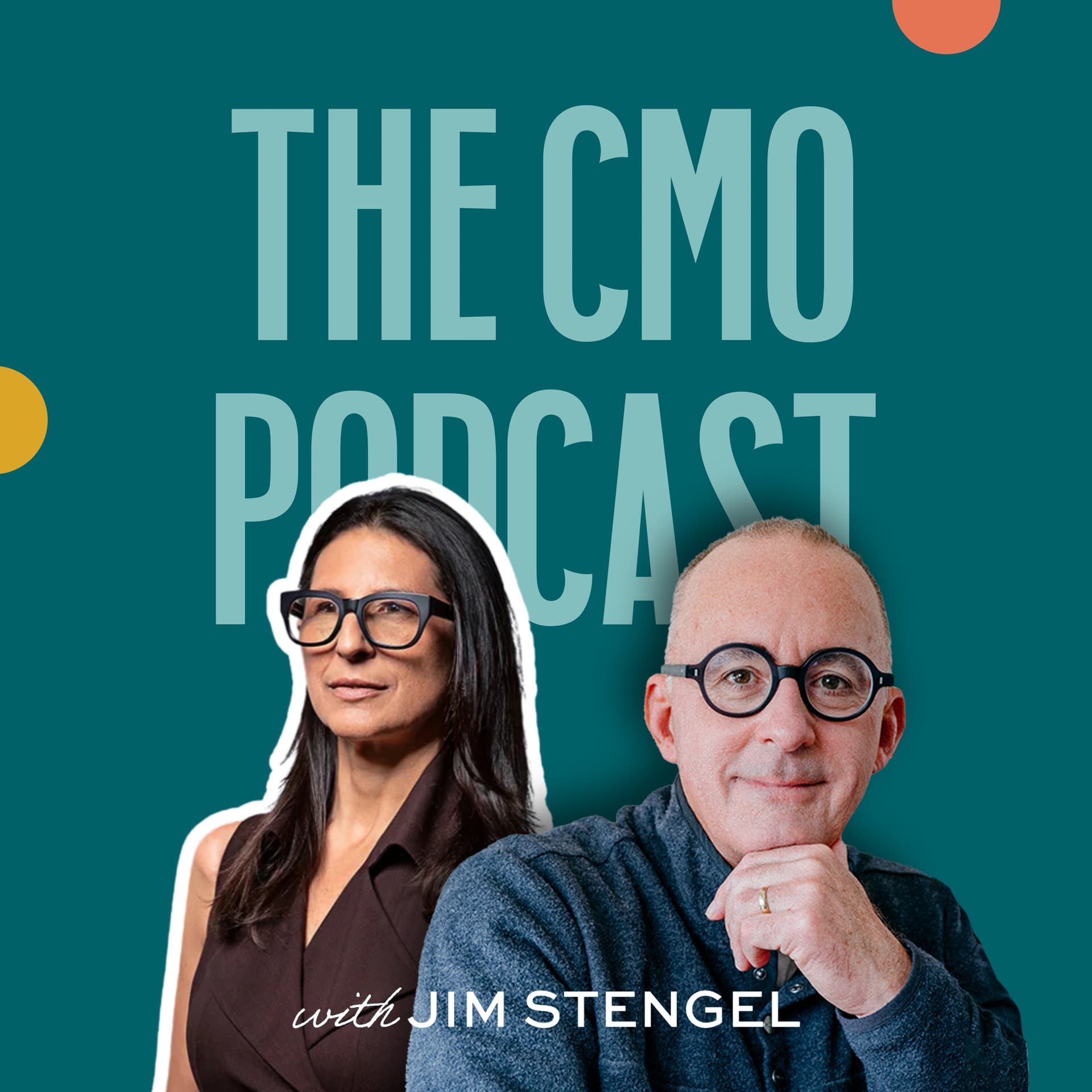
Melissa Grady-Dias (CEO, Measured Wellness; previously Global CMO at Cadillac; automotive brand transformation into EV era). Host: Jim Stengel (CMO Podcast).
Key claims
99% of health happens between doctor visits; Measured Wellness uses AI to identify causes of glucose spikes, sleep disruptions, and blood pressure issues; human connection is the differentiator behind better outcomes; RPM compliance is >95% vs ~30% typical.
Notable examples
Cadillac moved into top-tier luxury and outsold Audi for two years; she cites case outcomes like reducing A1C, coming off blood pressure medication, and Parkinson’s symptom relief; she describes her “power pose”/meditation pause and “clarity is kindness” leadership approach.
Written by AI. May contain mistakes. Listen to the episode to check what was said.
Chapters
Tap a time to open that second in VOTransition from CMO to CEO
1:11 to 4:00
Melissa Grady-Dias discusses her career journey from CMO at Cadillac to CEO.
“And I think that not just that gym, but as I look at fitness and fitness has been important my entire life.”
Highlights of Cadillacs Transformation
4:00 to 6:21
Melissa reflects on her achievements and experiences during her time at Cadillac.
“Melissa, welcome back to the CMO Podcast.”
Lessons Learned at Cadillac
6:21 to 8:12
Melissa shares valuable lessons learned during her long tenure at Cadillac.
“What are the indelible lessons you're taking forward?”
Working with Mary Barra
8:12 to 9:08
Insights into Mary Barra's leadership style and its impact on Melissa.
“The first one was I wanted to be working with a CEO or founder where we were totally aligned on a vision and wanted to do that thing together.”
Adjusting to Career Break
9:08 to 11:52
Melissa discusses her challenges and learning during her career break.
“Talk a bit about, I mean, I love this point about the team, Clear Vision, your team and those around you and above you.”
Finding Clarity and Space
11:52 to 14:01
Exploration of personal growth and the importance of taking time for oneself.
“So, and from what I gather, that's your first career break in a long time, you know, 25 years plus.”
Finding Balance: The Importance of Mindfulness
14:01 to 15:53
Learn about the journey of integrating mindfulness and self-care into a busy life.
“So it was much more difficult to try to stop than to keep going.”
Advice for CMOs: Passion, Curiosity, and Health
16:48 to 19:53
Explore key insights for prospective CMOs on prioritizing health and staying curious.
“You know, I was doing my homework for this episode as I always do and I found an article about five years ago and some journalists ask you what would be your advice for an emerging CMO and you said three things.”
Transitioning to CEO: The Measured Wellness Journey
19:53 to 22:22
Hear the story of how Measured Wellness evolved and the role of data in health.
“It may have been the same article because I, there was someone named Parveen who interviewed me during the pandemic.”
Focusing on Patient Experience and Growth
22:22 to 26:02
Understand how to prioritize patient experience in a healthcare startup.
“You announced it a couple of weeks ago, right?”
Show all 21 chapters
Building a Distinctive Brand in Healthcare
26:02 to 28:00
Learn about the branding strategies for differentiating Measured Wellness.
“I can only imagine why they were excited about you, but why do you think they thought you were the right person for this role?”
Transforming Patient Outcomes with Human Connection
28:00 to 30:00
Learn how the integration of human factors and technology improves health outcomes.
“If someone wants to become a patient, they can go on our website and fill out a form.”
The Unique Vision of Dr. Mike
30:00 to 32:10
Discover Dr. Mike's unique approach to healthcare and prevention.
“The technology is the how it's the it's what allows us to be able to more easily do this.”
Building Brand Awareness and Patient Loyalty
32:10 to 34:55
Explore strategies for increasing brand awareness and ensuring patient loyalty.
“For years, he was pulling Oura Ring data and blood pressure data into CSV files, JSON files, putting them into Excel to understand patterns and help treat people.”
Melissa's Passion for Healthcare Innovation
34:55 to 36:44
Understand Melissa's enthusiasm for leading healthcare innovation and her vision.
“The first one, and it's, you know, we all talk about thought leadership.”
Navigating Challenges in Healthcare Scaling
36:44 to 40:02
Identify the key barriers and challenges in scaling healthcare services.
“Melissa, you're very lit up about this job.”
Personal Growth and Leadership Evolution
40:02 to 42:01
Reflect on personal leadership growth and the impact of mentorship.
“The things that keep me up at night right now as I'm trying to navigate is the different models for scaling.”
Evolving Leadership and Legacy
42:01 to 46:48
Melissa reflects on her growth as a leader and the legacy she aims to leave.
“And now you have a two-year-old, which you did not have when we spoke six years ago.”
Health and Wellness Brand Impact
46:49 to 49:06
Discussion on the impact of wellness brands and community in fitness.
“So I hired a young London design studio, creative studio that's women-owned and young women.”
Inspiration and Future Aspirations
49:07 to 51:15
Melissa shares influences in her life and future goals in branding.
“Not the first brand to ever make an impact on me.”
Takeaways on Vision, Breaks, and Legacy
51:16 to 52:47
Key takeaways from Melissa's journey about vision, career breaks, and legacy.
“That was my heartwarming discussion with Melissa.”
Transcript
Automatic transcript. May contain errors.0:00Jim Stengel:Before we dive into today's episode, we would very much appreciate a moment from you to make sure you're subscribed to the show on Apple Podcasts, Spotify, or wherever you listen, along with optioning to auto-download the episodes. It really is the best way to never miss an episode, along with supporting the show and the amazing team that helps me bring it to you. And while you're there, leave us a rating or review. It only takes a minute and helps more people find the show and helps us learn. And of course, share this episode with a friend or colleague who might enjoy it. We wouldn't be here six years later and still going so strong without you all, our community.
0:36Jim Stengel:So thank you for being part of it. Now onto the show. Say big on your landscaping project. Now at Menards. Whether you're installing a patio or a new retaining wall, Menards has the blocks you need to get the job done right. We carry the largest in-stock selection, ready to take home today. Stop in and get our 12-inch smooth patio block on sale now. Save big on concrete landscape blocks at Menards. Plus, check out our weekly flyer on Menards.com for all the great deals happening now. Save big money at Menards. I have to ask you, what's the first wellness brand that made an impact on you? I started going to the gym very early.
1:18And I think that not just that gym, but as I look at fitness and fitness has been important my entire life. The thing that always sticks out in whatever piece of that is the community that's in whatever gym it was that I've been going to, whatever competitive environment I was in, whoever the people were. It's really, and I guess it's just staying on theme. It's the community and the people that really make an impact in that space.
1:46Jim Stengel:Hi, I'm Jim Stengel. I've helped hundreds of major brands discover and activate their purpose. Because when a brand's purpose is clear, compelling, and authentic, profit naturally follows. Each week, I welcome the CMOs, the chief marketing officers of your favorite brands, to speak to how their job is so much more than marketing. These leaders share their inspiration and challenges, along with how they try to build a full, healthy, and happy life in and out of the office. And it's that energy that reaches everyone they touch. And we're glad you're here to feel that energy and to learn from these remarkable leaders.
2:22Jim Stengel:So here we go. For years on this podcast, we've explored how the role of the CMO has evolved beyond advertising and communications. And lately, we've been seeing something especially interesting, more CMOs stepping into CEO roles. Just in the last several weeks on this show, we have hosted CMO to CEO Diana Hausling of Hello Products, and Corey Marchesotto at Elf, who was recently promoted to president. That shift says something important about where the business is headed. A modern CEO increasingly needs to understand not only operations and finance, but also brand storytelling and how to navigate massive shifts in consumer behavior, culture, and technology.
2:59Jim Stengel:My guest today embodies that evolution perfectly. Melissa Grady-Dias first joined us on this show in 2020 as the Global Chief Marketing Officer of Cadillac, where she helped guide one of America's most iconic brands through its transformation into the electric vehicle era. Now, in 2026, Melissa has entered a new chapter of her career as CEO of Measured Wellness, a small but ambitious company focused on preventive healthcare, wearable technology, AI-powered health insights, and what they call care between appointments. Melissa is a leader who thrives when she is navigating transformation, and she simply likes building things.
3:37Jim Stengel:Those are her words. At Cadillac, that meant helping consumers rethink mobility, luxury, and electrification. At Measured Wellness, it means helping people rethink healthcare itself, moving from reactive care to proactive wellness, from occasional doctor visits to continuous engagement, and from treating illness to creating the conditions for long-term health. So here's my conversation with a CMO turned CEO who is looking to build a new path for all of us to feel better and live longer. Here's Melissa. Melissa, welcome back to the CMO Podcast. You were last on this show way back in 2020 when you were still pretty new in the role at Cadillac.
4:17Jim Stengel:So besides this new job, this new CEO job at Measure Wellness, which we're going to talk a lot about, what had been the highlights of your life since we talked way back in 2020? So many things. I absolutely loved my time at Cadillac. It was one of those times in my career, you know, you can go back and look at those times when you were doing something really special. And when we spoke, we were just launching the 21 Escalade. We hadn't launched all of our EVs. And I had a big job ahead of me. Cadillac was still second to last in the luxury category. And we moved Cadillac up. Cadillac is now top tier luxury.
4:57sorry to them, but has been outselling Audi for about two years now.
5:02Jim Stengel:Amazing. In what I'm probably most proud of, because there's always a little bit of me that wants to change the world for the better. And Cadillac is the leading EV luxury brand. And I'm very proud of that little piece that I hopefully helped the world with there. The biggest thing, and I think what I learned the most in that time is I worked with some of the most incredible people. And the people and the impact that you make on each other's lives. And, you know, we all went through the pandemic together. We went through these vehicle launches. We went through a lot of very difficult, tough times together.
5:40And they were incredible. And as I reflect back, that's what really stands out the most for me.
5:45Jim Stengel:The people. Now, I was looking at your career, Cadillac. I mean, seven years, right, in the CMO job. That's a long time in the absolute. And it's a long time, a really long time in the auto industry because it's, as you know, super dynamic. So I'd like you to stay with that for a bit. And the brand and the business are stronger. I suspect the organization was stronger when you left. So I'd like you to talk about a little bit more the lessons you learned in that amazing seven-year run in leadership, in marketing, in organization. So what has, you know, now that you have some perspective on it, you've been away for more than a year.
6:21Jim Stengel:What are the indelible lessons you're taking forward? The first thing that I have to go back when you said what's happened in the time since we last spoke, and I tend to do this, I also had a baby. Oh, okay. That's significant. I have a two-year-old now, and that has been, I think, as I think about the things that I've learned and the person that I've become had probably the most indelible mark on me and who I am as a human being and how I lead people. I always felt like I was a good, empathetic manager. And after having a baby and going back to work, I actually called some people who had worked for me when they had babies and said, I just want to, you know, I told you you were great, but I didn't realize what a superhero you were.
7:05And so I want to spend a moment on that with you. I think as I think about the lessons that I've learned and the things that have really made an impact on me at Cadillac. The first thing was having the right team and having the right vision and the right team below you, which you have a lot of control of, and the right team around you and above you, which you have less control and need to really learn your influence skills for that. It's really when you get the right team in place and you have a clear vision you can clear the path and you can really almost do anything. And that was, I think, the biggest lesson that I took away from my time there.
7:55And as I thought about what do I want next? And I spent a long time really thinking about what do I want next? And people would ask me, are you going to stay in automotive? What industry do you want? What do you want to do? And it came down to a few things. And these really all came from the lessons that I learned at Cadillac. The first one was I wanted to be working with a CEO or founder where we were totally aligned on a vision and wanted to do that thing together. I wanted to be at a company that needed to transform or was at a growth inflection point. I am someone who I enjoy that challenge.
8:29I want to figure out how are we going to do this? Like, let's all roll up our sleeves and do this. I wanted to be at a company where the employee experience was very important and that we were building culture and we were looking at what was people's experience. That was something at Cadillac that we always held very near and dear. We had councils on it. We had events. We were together as a family and it made a difference as we were doing things. And I wanted to leave the world a little better than I found it. Those were the lessons that I took away and what I knew I wanted in my next role.
9:03Jim Stengel:Well, I think your role checks all those boxes, but we'll talk about that in a minute. Talk a bit about, I mean, I love this point about the team, Clear Vision, your team and those around you and above you. You spoke last time, you know, six years ago about Mary Barra, who is, of course, the CEO of General Motors. And now that you worked with her for multiple years, I mean, I've read a lot about her. I've admired her for a long time. What is it about her that makes her so very special? There's several things that as I look at her and the things that I always really admired. One thing that is so important that I learned from her, and I don't know that this is necessarily what I'd say makes her so special.
9:45She maintains calm and strength. And people need that. We went through the pandemic, the chip crisis, the, you know, sales are up, sales are down. We're navigating all these things. And for as frenzied as things would get, she would stay calm and she has a clarity of vision, which again, you know, we're talking about when I talk about Cadillac, but she's very clear and she's not afraid to make tough decisions or to make the tough call, but she does it in a way where at least with me, my experience was I didn't walk away feeling bad. I've walked away feeling clear, the saying like clarity is kindness.
10:31And I felt like, you know, sometimes just a decision and a yes or a no or why we are not going to do something was very helpful. So there's just, I think there's a lot of things about her. She is just, I think, has had a clear vision for GM and has strongly led GM from that.
10:49Jim Stengel:How do you think she does that? Maintain calm and strength in turbulent times? Because obviously these are turbulent times and any habits, practices, you know, cues that you got from her and how she maintains that. I didn't know her early in her career, but I think a lot of practice and just feeling, and I'm speaking well out of turn because she never told me how she did that. But when I look at her, it just, she just would take a moment. She wouldn't react. And for me would have been taking a breath before just speaking. And so just watching her and watching her steadiness was helpful for me because I do tend to be a person that comes from a place of passion, which can be great, but sometimes I really need to take that breath and be steady.
11:40Jim Stengel:There's your first CEO lesson, right? Yes. I've thought a lot about Mary in this transition. Yeah. I bet you did. Now you left Cadillac about a year ago. I think I have that right. Yes. And if I have this right, you took about six or seven months before you connected with Measured Wellness. So, and from what I gather, that's your first career break in a long time, you know, 25 years plus. So what was that like for you, that six or seven month period? Very hard. It was very hard for me. I got a lot of good advice right after I left to don't jump back in, take a minute, think about what you want.
12:20it will change. It will change in one week, in one month, in six months. Someone very wise told me to take a year and I might've had this not come about the way it did. Someone flippantly said to me at an event we were at after I left, oh yeah, I'm just like getting back into the workforce after my power pause. And when she said that, it really struck me because something that I've talked a lot about with my team and that really struck me when I heard it is the power pose. So first time I heard about the power pose, which is Amy Cuddy's put your arms up, was Brene Brown talking about being in a bathroom and needing to fill herself up and take up her space.
13:03So she just would go in the bathroom and put her arms up before going into something and take up her space. And I realized I had been running for seven years and reacting and in the moment of the business and, you know, just working very hard. I had also just had a baby and I was trying to figure out what does coming back into the workforce with a baby, I'm traveling a lot, I'm working a lot, I'm, you know, where does this all fit together and who am I now? And when this person said that, in that moment, I was like, I need to take up my space. I need to figure out who I am right now. And until I breathe into all those parts that have been just like compressed and going, I'm not going to know when something's right or what I want to do.
13:50So then I really tried and it was very difficult for me because I love working. I love what I do. I always have find a lot of happiness and purpose in it. So it was much more difficult to try to stop than to keep going. What did you learn about yourself in that time in taking up your space? The first thing that I learned that was interesting is that I am very busy. I have had a couple assistants tell me that I am the busiest executive they've worked for. I have the most meetings. I fill up a lot of time. And what I found was I was immediately busy with all the things I hadn't been doing for a long time.
14:34This wasn't new news to me, but it really reminded me that I need to sit. I need to breathe. That's why I like meditation. What was interesting for me, normally when I come to a point in my life where I know that I need to remove myself and clear my head, I will go to Sedona, Arizona. And I hike through the vortexes, vortices. I meditate. I will go get the Ayurvedic massage, all of that. And in this moment, because I had been traveling almost every week for over a year and a half with a son who was only a little older than that, I didn't want to travel. So I had to push myself to do that in my own space, which is so much harder than I thought it would be.
15:26And that was really interesting to me. I, you know, I feel like I've been developing these habits and trying to meditate and doing all these things for so long in my life that I felt like I wouldn't need the place, but I sort of needed the place. So I'd spend some time at the beach and walk around and listen to podcasts.
15:52Jim Stengel:Hey, everybody. This is Andrea Sullivan, the CEO of Vive, and we produce the CMO podcast and are so excited to have partnered with Jim Stengel for so many years. Wanted to tell you a little bit about something that could be right for you. Vive is a program for entrepreneurs and business leaders who want to get more out of their life and become their best and happiest selves, both personally and professionally. We have a 12 month program that allows people to meet up with some of the best business leaders out there and additionally experts in the wellness sector so that you can learn how to nurture yourself.
16:27Jim Stengel:So we teach things around sleep optimization, meditation, all those good things as well. Please reach out to us at podcasts at five.co to get more information. that's p-o-d-c-a-s-t-s at v-y-v-e dot co. Thanks for listening to the CMO podcast and hope to talk to you more about Vibe.
16:51Jim Stengel:You know, I was doing my homework for this episode as I always do and I found an article about five years ago and some journalists ask you what would be your advice for an emerging CMO and you said three things. You said follow your passion because the energy is different in the room when you're working on your passion. The next one is stay curious. Third one, prioritize yourself and your health. And it's almost a premonition of what you're doing now. So why five years ago was that one of your three points about being a great CMO? So I have realized this about myself in a lot of the more uncomfortable moments in my life.
17:32I'm a very woo-woo person now, as they say. Early in my life, I was not. And I remember a moment when I was working at Motorola and I will just push myself. I will keep pushing myself until I get to whatever it is I'm trying to do. And at some point, you're not thinking as clearly, like you're not giving yourself the space to have the clarity that you need to give other people clarity. And I remember a woman that I was working with at the time who's Buddhist said, so have you ever tried meditation? And I was like, no, no, I don't think I can do it. And she's like, just give me a chance. And she booked a conference room at 6pm.
18:17And I laid down on the floor and she started with relax your toes. And I just laughed so hard I couldn't do it. And she stuck with me. and she got me to through a few different sessions. She just, she got me to finally breathe. And I felt the shift. I felt the spin stopping. And I've felt it many times in my life where I fall out of the habit. I'm feeling really good and I fall out of the habit and then it builds and it builds and you don't, it's like the boiling frog analogy, right? Suddenly you're like, whew, it's really hot in here. What happened? And I have felt like, because I've gone through these places and I do have anxiety so it really manifests in a health way for me.
18:59I talk a lot about it to my teams and I tell people about the science behind grateful journals and during the pandemic I handed out to my team grateful journals. I talk about what it's like to have a panic attack and that I understand that sometimes there's more happening in people's lives. I've talked about the fact that, you know, the analogy we all say, if you don't put on your own oxygen mask first, you can't help anyone else. And it's very true. And it's something that I've really talked about because I care a lot about the people that I'm working with and I want them to be okay first, because I think then we all do better work.
19:37So that's been something that's at the core of who I am. And so then coming now into where I am, where we believe this fundamentally, it's very well aligned with who I am as a human.
19:48Jim Stengel:Now tell us a story of how you discovered Measured Wellness and how they discovered you. It may have been the same article because I, there was someone named Parveen who interviewed me during the pandemic. He is a San Francisco tech entrepreneur who was writing for Medium during the pandemic. And we wrote this article and really got along. He started a tech company that is called Ziva. And what he wanted to do with Ziva was to help people understand how our habits, our daily, what we're doing really affects our physiology. It really affects what's happening in our bodies. And he wanted to show people with data.
20:29And he asked me to advise for him. And I actually already knew Dr. Mike, who's the founder of measured wellness, who also has a love for data and has been trying for years to, or really has been showing for years, how wearable data can improve patient outcomes. Because he's very holistic. He started the Center for Integrative Medicine at UCSD. He's been on a lot of stages talking about wearable data and what we call the continuous as care experience, which is 99 % of health happens between doctor's visits. Chronic disease is fought and often lost between doctor visits. We have the tools and the technology right now, and we just need to bring that information to people with a human connection to help them understand what to do with that data and then how they can fix it.
21:25And so I was advising with Parveen, he and Dr. Mike got together and he shifted from having an app that was showing this into really creating an ecosystem. It's dashboards, it ties into health systems. It's really incredible. It shows practitioners with AI data what's causing glucose spikes, what's causing sleep disruptions, what someone needs to do to take the steps that are actually going to improve their A1C, to reduce their blood pressure, to reduce Parkinson's symptoms. So this whole ecosystem has been built out. And I was, just because I'm interested in it, really stepping up the advising during my pause.
22:08and in that, the measured wellness team asked me to come in and be their CEO.
22:12Jim Stengel:Wow. Wow. Now, you're about five months into the job, right? I've been working in the background for, yes, about probably four to five months. Yeah. You announced it a couple of weeks ago, right? Yeah. Just public for a little bit now. So we're going to get back to your company in a bit, but I'm just really curious. I mean, you had a little time before it was announced publicly to get to know the company and get to know the team. So how did you, I guess we call that onboarding, but tell us a bit how you spent your time. It was a lot of education for me, a lot of getting into the basics. So let me understand how billing works in healthcare.
22:52And for me, and I think we may have talked about this before, I love to unpack things, pick them apart, understand how they work. So that's what I've really been spending the time doing, understanding billing, understanding compliance, understanding the healthcare ecosystem, looking at how other telehealth businesses have grown and expanded, getting together a legal and a finance team. So just a lot of the basics. And then the other thing that we're really focusing on right now is we've got a methodology and turning that into products. Here's program one that we run. Here's program two. So we're in the process of creating those products right now as well.
23:33Jim Stengel:Yeah. Yeah. Is there any company or business model you're looking at for inspiration? There's a lot that we're looking at. We haven't found a lot that are doing what we're doing. There are some that are similar. I think, you know, when I look at things like MidiHealth and how MidiHealth has become so pervasive so quickly and expanded, That one is really interesting to me. Dr. Mike has been talking to Aura for a very long time, and we look at some of the shifts and changes that they're making. We have a lot of our patients using Aura rings. So we pull in wearable data from Aura and Apple Watch and all those things, as well as medical devices.
Read the full transcript
24:16So it's a really interesting intersection there as well. But those are a few, I think, that have been more interesting as I'm looking and understanding this space.
24:25Jim Stengel:What have been your first impressions of the company over the last several months? I really love the company. Our founder really just wants to make the world a better place and he wants to help as many people as possible. And that's what's going to drive our growth. So we spend a lot of time trying to focus and not boil the ocean because there's so many people that we can help. And the people, you know, as I sit on calls with the team, everyone has their why. Why they're there. What motivated them to join? Who in their life needed something like this? Looking at what we're doing and the purpose that everyone feels is so clear that for me, I feel very aligned.
25:09Jim Stengel:What are your emerging priorities as you're learning? I know you're still new, but where do you think you'll be focusing your personal time? The big things that we're focusing on right now, we have most of our processes automated. We're making sure that the ones that aren't, where do we need to add automation in? We're pressure testing because as we really start to focus our growth, we want to make sure that nothing's broken. Then the two key things that I'm really working on is what is the patient experience? Patients at the center of everything we do. So how do we make sure everything from onboarding to their care plan to their app usage, et cetera, how do we make sure that that is the best that it can be?
25:51and where are we going to focus for growth and what are going to be our priorities as we roll out both our products and who we're partnering with or how we're going to market.
26:02Jim Stengel:Why was the company excited about you? I can only imagine why they were excited about you, but why do you think they thought you were the right person for this role? You know, this is something that's really interesting. And I think that as a CMO, I didn't think as much about good CMOs look at a business and say, how am I going to grow this? And how am I going to grow this in emotionally connected, customer first, sustainable way? And that's how you grow a business. And, you know, I think working in large organizations, which has been most of my career, you always have to work with finance, with IT, with legal, et cetera.
26:45And so whether you're working with them or figuring out, you know, oh, now I have to make sure we're doing that right. You have the experience and you know how to prioritize. And so I think that in the conversations we were having, it was clear that I'm very aligned with Dr. Mike's vision because that's very important to him, what his legacy is. And I have some very clear ideas about how we can grow the business.
27:10Jim Stengel:I know you can't share everything because you're still figuring it out, but if someone listening to this, and I hope a lot of people do, are really interested in what you're talking about, and I suspect they will be, how do they learn more about it? How do they become possibly a customer slash patient? What's the business model? Is it direct to consumer? Is it through family medicine, integrated medicine? How are you seeing that? Yes. So our website is measure-wellness.com. We are building that out pretty consistently to try to help explain our care model. We're trying to augment what healthcare people are already receiving.
27:53So we are not replacing a primary care doctor. We are not replacing a surgeon. we're working on that 99 % of time when building the habits and making the decisions that are going to fundamentally change their outcomes. If someone wants to become a patient, they can go on our website and fill out a form. We bill through insurance. So we are working on different models that will be self-pay for some of the programs, depending on what may or may not be covered. But it's for most of our patients right now. They get referred into our ecosystem or they hear about it from somewhere and go on, fill out a form, and then they're contacted by the team and then they start working with our practitioners.
28:44Jim Stengel:You're a brand person, right? You grew up as a marketer and CMO. We work a lot on how we're differentiated, what our brand personality is, how we're distinctive, what emotions we want to evoke in people. So talk a bit about that for your founder and your and your team's vision for measured wellness. What kind of brand will it look like? We want to help people feel supported, seen, and empowered while improving their health every day. That's a good mission, by the way. Well said and aspirational and clear. Thank you. We had a slightly different version of that, and then we read it to the providers in our weekly provider meeting, we talked about empowering people to better health every day.
29:25And they talked about the fact that a lot of what makes what we do work, when you look at our clinical outcomes, they are actually better than the general population. And we see people coming off blood pressure medication, lowering their A1C. We see Parkinson's patients who are having relief of symptoms. And we're doing we have some data analysts on staff and we're doing studies so that over time we can show the insurance companies how our methodology will improve outcomes. But it's the human factor that helps us do it. The technology is the how it's the it's what allows us to be able to more easily do this.
30:06But it's the human factor that helps people. And so that's how we adjusted the mission statement, because that is what is really important. And if you look at us versus a lot of other areas in the health tech and wellness space, it is having that human element that we feel really differentiates what we're doing.
30:26Jim Stengel:Well, your founder sure has that. I looked at some videos of him as I was preparing for this. And, oh, just warm. I mean, this is the kind of person we want in healthcare, in medicine. He cares. He's in it for the right reasons. His incentives, it seems, are spot on. So could you talk a bit more about him? Obviously, you have great chemistry and you've already spoken about him, but go a little bit deeper into that. Why is he so passionate about this? And why are you as a team confident you can tackle this challenge? Because it's a big one, right? You talk a lot about we're in a healthcare industry of treating illness versus prevention, and you want to shift that, which I think is amazing.
31:08When I look at Dr. Mike, he is a bit of an anomaly or a unicorn. I was just reminded the first time that I was on your podcast, you asked me, what's your superpower? I'm not the kind of person that can reflect on what I think is great about me. And I didn't have an answer. And you actually said it's that you see things differently than other people. And I've actually used that several times since being on it because I was like, I do. You're right. That's an interesting thing. When I look at Dr. Mike, he sees things differently. And if you saw some of his videos, you may have seen he'll be getting his car worked on and he's talking to the mechanic and he's like, you're a better doctor than I am.
31:48You just ran all these diagnostics and saw these things and now you have the tools to fix it. As he looks at the world, he sees things so differently and the way he sees it solves a lot of the problems that are pervasive in health care today. And he doesn't just say, we have a problem or you're not focusing on, it's episodic, it's reactive. For years, he was pulling Oura Ring data and blood pressure data into CSV files, JSON files, putting them into Excel to understand patterns and help treat people. He sees the world differently. And now where we are with AI and technology and telehealth, it's the perfect intersection where we can really literally bring this methodology to everyone.
32:42So if both of us see the world a little differently and are crazily optimistic and both have this, we want to save the world. And now we've got a way that we can start to apply that to people one by one. I think that that creates an environment where we talked about it before. It's all about the vision. It's all about the team. And there's such clarity and such purpose here that I think that's the confidence we're going with.
33:14Jim Stengel:Now, you know, you're building something here and you like to build things. I remember that from our first episode. That's a quote. I like to build things. You're building something here. And at some point, you're going to have to get awareness and trial and repeat and loyalty and results and that whole continuous cycle that great brands do very well. So how are you thinking about that? Getting awareness, getting people to change a habit, right? To do something differently. Something that's interesting on the loyalty and the repeat side of things, that we have really strongly already. Once people get into our ecosystem, they stay.
33:55A little fact that we have that's interesting, one of the things that we offer is remote patient monitoring, RPM. That's something where you are given devices. The typical ones are blood pressure cuff, pulse oximeter scale, but there's a few others that you can go in and those are billable through insurance because when people are tracking those things and measuring those things and acting upon those things, their outcomes are better. In a typical RPM company, there's a 30 % compliance rate. So of all the people who are supposed to be doing something in a month, only 30 % of people, 30 out of 100 are doing it.
34:30We have over a 95 % compliance rate with our patients, and they keep doing it month after month because they're working with a person. They're seeing the outcomes. We have a bunch of case studies of the outcomes happening. So I think on the loyalty part, I feel really good. We're going to do some optimizing, but that's good. On the awareness side, that's where a lot of the work has to be done. And I think I'm thinking about it in two big buckets. The first one, and it's, you know, we all talk about thought leadership. I think in this case, and the way I'm thinking about thought leadership is very different than I have before.
35:09I want Dr. Mike to really start talking on LinkedIn about what he thinks health is. Because when we think about health and healthcare, we think about being sick, which is so interesting. and when he thinks about health, he thinks about how you build health and what that means. I want to go to more conferences and places where we can help people understand what we're doing and how it can really change lives. We're working on some papers we can publish. So there's that side of things, which is much more meaningful to me now than it's ever been before when we've talked about thought leadership. The other way I think is really once we build out our programs in a more meaningful way, just starting to educate people through probably largely social, but we'll look at what other channels work well.
36:00I'm a test and learn person, so we'll go out and figure it out. But I think that by explaining it to people through conditions we're treating or what we're helping, that will make it very clear. So, you know, your A1C is high, we have a way to help you bring that down covered by insurance, you need to lose weight, you are going to have surgery, a big use case is people who are going to have surgery, the outcomes of the surgery and the recovery are a lot better if you go in really healthy. So we help get people prepared. So by being able to explain it in those very discreet, clear ways, that's how we're going to go out and educate people.
36:44Jim Stengel:Melissa, you're very lit up about this job. I mean, you were very positive and optimistic and enthusiastic last time we chatted, but this is a bit next level. So you seem to be really in your zone. I feel that way. I do. And I've had a few people use that exact term with me. I'm lit up about it. That's how I feel. And it makes it really exciting to sit down every day and figure out what is healthcare compliance law and how do I want to build out this revenue projection. It makes it really fun. Now, did you have a goal to be a CEO someday, you know, if we went back a couple of years into your role at Cadillac or not really?
37:24No. And that has me thinking a lot of things. I may have told you this last time. When I was younger, I used to love Who's the Boss.
37:37Jim Stengel:You did tell me that. And I loved Angela on Who's the Boss. And to me, that was what a successful businesswoman looked like. In my update, I met Judith Light at the Forbes Power Women's Summit in the fall. And I was able to tell her what an impact she had on my life. And I thanked her for taking a role. Her husband was there and talked about how meaningful that role was. But I thanked her for taking a role where a young girl like me who had a mother who told me I could do anything, but was a stay at home mom. I could see what that looked like. Me not having the goal or the aspirations or feeling like I could be who I wanted to be as a CEO has made me think really, I love mentoring people.
38:22I love helping the next generation, but I'm thinking very carefully about how we as women help people understand, help people, the next generation of women, particularly what this can look like. I know you were talking to Diana Hausling a few weeks ago, and she was saying something, her and I have had that conversation about it's not work-life balance. It's not as easy, you know, and we didn't have a lot of role models growing up. And so I'm way off on a tangent here, but -
38:55Jim Stengel:Good tangent. I've been having some conversations with some people on how we really look at how do we help the next generation of girls see what it really means, but help inspire them and help them achieve whatever that is, including CEO. I think Mary Barra, that's a good role model. I mean, maybe her reach doesn't go down to girls, but it surely goes down to women early in their careers. Yeah. She was one of the first people that taught me a lot. I remember when I was interviewing at GM and the HR person told me, Mary will go to a soccer game and then get back on her email. She figures it out and she's a great role model for all of us.
39:40And that really stuck with me as I was joining GM.
39:43Jim Stengel:Now, your energy is great. It sounds like this company has tremendous potential and has the confidence to succeed and help people, what's going to get in the way? What do you think are the barriers? What are the boulders that you're going to have to deal with for this company to realize its purpose, its mission, and to help people and be successful? The things that keep me up at night right now as I'm trying to navigate is the different models for scaling. Because there are state-by-state regulations. There's state-by-state insurance certification. There's state by state licensing. And so we've navigated through some of the states and we're working on what does that look like?
40:25Healthcare and keeping all of that up. Healthcare is a real minefield and there's a few different ways to operate that and they all come with their own complications. So that's going to be one of the ones that we've, you know, had some whiteboarding sessions and we're really figuring out. And then I think the other thing is what's going to be hard for us and that we really need to focus on is focusing on where we're going with this first, next and next. Because honestly, we can help every single human being. There are some human beings who have very good habits and don't need the human intervention and don't need the technology or they're good at hacking themselves.
41:07But for the most part, from people who just want to sleep a little better, feel a little better, etc., which helps prevent disease later, to people who are struggling with a number of conditions. And if we try to do it all, we won't do any of it. And so really focusing on where are we going, number one, number two, number three, is going to be really important for us.
41:40Jim Stengel:Okay, let's move into the creator brief. You told me last time we spoke you were a car geek, and I have to ask, are you still a car geek? Still love cars. I drive a Cadillac Escalade IQ. Oh, nice. Nice. My favorite vehicles I've ever had of all my vehicles. It's my favorite. You also said to me six years ago that your perfect day begins with meditation, which you talked about, and exercise. So is that still your perfect day? And would you add anything to that? And now you have a two-year-old, which you did not have when we spoke six years ago. Yes. So I am still trying to start my day with meditation and exercise.
42:15It is harder with a two-year-old, but he does play into my perfect morning because I love watching him dance when he wakes up and seeing him be excited about life. Or if he's having a rough day, just giving him a hug. It brings a new light to the day.
42:33Jim Stengel:Perfect day is also that two-hour nap, right? The baby's nap, not yours. It depends on the day. Yeah, it depends on the day. Exactly. Now, we've talked a lot about leadership on this show. or six years since we've spoken about leadership. How are you a different leader today than you were when we last spoke? I feel so fundamentally different, which I guess, as I said that, thank God, because can you imagine if I just, oh no, it's just the same. Hopefully I'm learning more every year. Something that was really interesting when I left Cadillac and I created a scrapbook for myself. Earlier last year, when I knew that it was time for me to move on and I was starting to try to figure out what's going to be next, what am I going to do?
43:17I called up one of my executive coaches that I've worked with, Diane, and she was helping me with my resume. And in that process, she had a lot of questions and she was helping me sort through my head. she said to me, what's your legacy? And I remember two things distinctly, not having an answer and then thinking, you know who has such a strong legacy is Linda Boff. That's what went through my head.
43:49Jim Stengel:Previously, I'm OGE for everyone who doesn't know her. Yeah. And then I was like, well, I guess my legacy is that I've transformed the Cadillac brand. And a lot of people didn't think that we could transform it. And here's what I did. And I listed off some of the facts in the same little rabbit hole I was when we started talking maybe. And she said, well, congratulations on your accomplishments. What is your legacy? Yeah. Good question. Yeah. And I didn't have an answer. So when I left Cadillac, so many people reached out to me and said, thank you for taking the time when I didn't expect the CMO to have time for me.
44:32Thank you for talking about mental health all the time in our team meetings because, you know, some days I'm struggling and it really helped me feel like, well, if she struggles, I'm okay. Thank you for the gratitude journals because it started something in my family. And all these things came in. And I actually, I was so touched and I couldn't believe it. And I created a little scrapbook for myself. And that's when I really was thinking, you know, it's the people that matter. It's how you see people. I remember one time I was listening to Oprah Super Soul Sunday on SiriusXM and she said, what's the one thing that every single human needs?
45:17And I was like, oh, love. Everyone needs love. And she said, to be seen. And it struck me and I really, I wasn't expecting that answer and it really made me think. And I think what I've really learned and what really hit me in those moments, and it's something people have always been very important to me, but how you make people feel along the way. whether things are good or bad, how you make them feel and what you are in their life is your legacy. And also is, I truly believe that when people feel seen and appreciated and have very clear goals, by the way, I'm like, I'm touchy feely, but I'm also like, yep, here's the crazy goal.
46:08We got to get this. How are we going to hit it? I think when people have those clear goals and incentives, but feel safe, that you really get the best out of people. And I think that my belief in that hasn't changed over time, but the way that I approach that and the things that have shaped that keep evolving.
46:27Jim Stengel:What did your coach say about that legacy? She was very proud of me three months later. I hope so. I hope so. Able to articulate it. You know, not to get off on a tangent on this, but as part of the Hall of Fame this year, I was inducted. You have to make a video of your life. And, you know, it's hard. The standards are high. It's the Advertising Hall of Fame. So I hired a young London design studio, creative studio that's women-owned and young women. And I met them at a couple of different events. I was very impressed by them. And I didn't want to see the video. I just said, do it. Tell my story.
47:04Jim Stengel:Make people laugh. have them understand who I am. And I mean, the takeaway from that video is exactly what you just talked about. The fact that I was a P &G and we doubled our size and blah, blah, blah, blah, blah. It was about the legacy I left with people who I had somehow touched in their lives, friends, mentees, mentors, colleagues. So I think it should be every leader's desired legacy, honestly. You helped me understand my superpower. Happy we had that show six years ago. Oh my. Okay. On the last episode, you told me the first brand that made an impact on you was Fisher Price. So I'm assuming you're still there.
47:43Jim Stengel:I have to ask you, what's the first wellness brand that made an impact on you? I have always been very into wellness. I'm trying to remember, and this is like what brand made an impact on me, and I can't remember which gym I was going to, but I started going to the gym very early. yeah I think it was gold's gym I really think it was gold's gym and I remember feeling like I was part of a community there there's the people who go all the time and you know you're lifting weights and they see your progress and I think that not just that gym but as I look at fitness and fitness has been important my entire life I've probably been better at fitness than wellness a lot I try so hard on wellness, but the thing that always sticks out in whatever piece of that is the community that's in whatever gym it was that I've been going to, whatever competitive environment I was in, whoever the people were, it's really, and I guess just staying on theme, it's the community and the people that really make an impact in that space.
48:53Jim Stengel:Now, you already were very self-aware of fitness and wellness and health. Have you changed anything since you started at Measured Wellness? Anything in your habits and rituals? I haven't really changed. I'm just, I'm being better about sticking to things and really paying attention to my data. Not the first brand to ever make an impact on me. And before I was working with measured wellness, I was at Lifetime Gym and I saw a Garmin ad and it said, when incremental becomes monumental. Good line. Yes. Good line. Whoever did that campaign, if you're listening, it has stuck with me and sits in my soul.
49:35And it's actually when you look at our case studies that we have and that we publish, it's all about when incremental becomes monumental. And so I think seeing other people change and seeing how all those little micro moments really make a big difference. it's a good reminder for me, for the women in perimenopause, protein macros actually make a big difference. And so it's a good reminder for me. I'm like, don't eat the potato right now. You're going to see the difference. You're going to see it in the metrics.
50:10Jim Stengel:Incremental is monumental. Who has been the most inspiring person in your life, Melissa? My grandma is the most inspiring, I would say. There've been some important people, but my grandma's probably the most inspiring. She passed away a couple of years ago, but would have been a hundred this year. And she lived an incredible life. Somehow, always managed to get everything done and to make everyone feel great along the way. There's that legacy again. I know. I was thinking that too. Okay, Melissa, this was so good. I mean, I was hesitant to talk to you this soon after starting, but my team said, you really have to talk to her.
50:51Jim Stengel:This is the right time to have her on the show. And I'm glad we did it now. And it'd be fun to have you on in a few years to talk about this incredible brand that you're going to build, because I know you will. But thank you. This has been just a lovely episode on so many levels. Thank you so much. I know I was like, I'm going to have to just play this back for myself. I'm going to have to put a six month reminder every six months. Okay, what have you done? Where are you? Don't worry. We won't let you forget us. Oh, thank you so much. That was my heartwarming discussion with Melissa. Three takeaways from this one for your business brand and life.
51:27Jim Stengel:And the first one is the importance of a clear vision and strong team under you, around you, and above you. Melissa talked about the amazing experience you had at Cadillac for seven years, how strong the team was, the role modeling that Mary Barra, the CEO, did, and how inspired she was by her team around her, above her, and below her. So important. And by the way, that's what she looked at when she moved into this role at Measure Wellness. Again, a company with a clear vision and a strong team. Second takeaway, career breaks can be mind-opening. Melissa talked about those six or seven months she took where she slowed down.
52:06Jim Stengel:She started talking to people. She thought about her role models. She thought expansively about her next steps. She had a new baby. But there's no doubt in my mind that if she had jumped from General Motors to something else, she would not be at Measure of Wellness. So career breaks can be really, really good. And third takeaway, think about your legacy. I love this story. Melissa talked about her session with a coach, and they were talking about her legacy. And Melissa talked about her accomplishments, and the coach said, that's not your legacy. and to make her think much more deeply about what her special gift is and what her legacy really is.
52:40Jim Stengel:And it's about how you make people feel and your impact on people. That's it for this week's episode of the CMO Podcast. As always, I would be grateful if you shared our show with your friends, along with subscribing and leaving a review on Apple Podcasts, Spotify, or wherever you listen. The CMO Podcast is a Vive Original Production.
From the publisher
The role of the CMO is evolving. Increasingly, it is becoming a pathway to the CEO's office.
Jim's guest this week, Melissa Grady Dias, first joined the show in 2020 as Global Chief Marketing Officer of Cadillac, where she helped transform one of America's most iconic brands into the leading luxury EV brand while navigating a global pandemic and unprecedented industry disruption.
Now she has entered an entirely new chapter. Melissa recently became CEO of Measured Wellness, a healthcare company focused on preventative care, wearable technology, AI powered health insights, and what she calls "care between appointments." It is a model built around the 99 percent of health that happens outside the doctor's office. The company was founded in San Diego by Dr. Michael Kurisu, who specializes in Family and Integrative Medicine.
Melissa is a leader who thrives when navigating transformation, and she simply likes building things. Those are her words. At Cadillac, that meant helping consumers rethink mobility, luxury, and electrification. At Measured Wellness, it means helping people rethink healthcare itself by moving from reactive care to proactive wellness, from occasional doctor visits to continuous engagement, and from treating illness to creating the conditions for long term health.
Tune in for a conversation about leadership, reinvention, wellness, and the growing influence of marketers in shaping the future of business.
See Privacy Policy at https://art19.com/privacy and California Privacy Notice at https://art19.com/privacy#do-not-sell-my-info.