In short
The CMO Podcast: Episode Summary
Episode Title
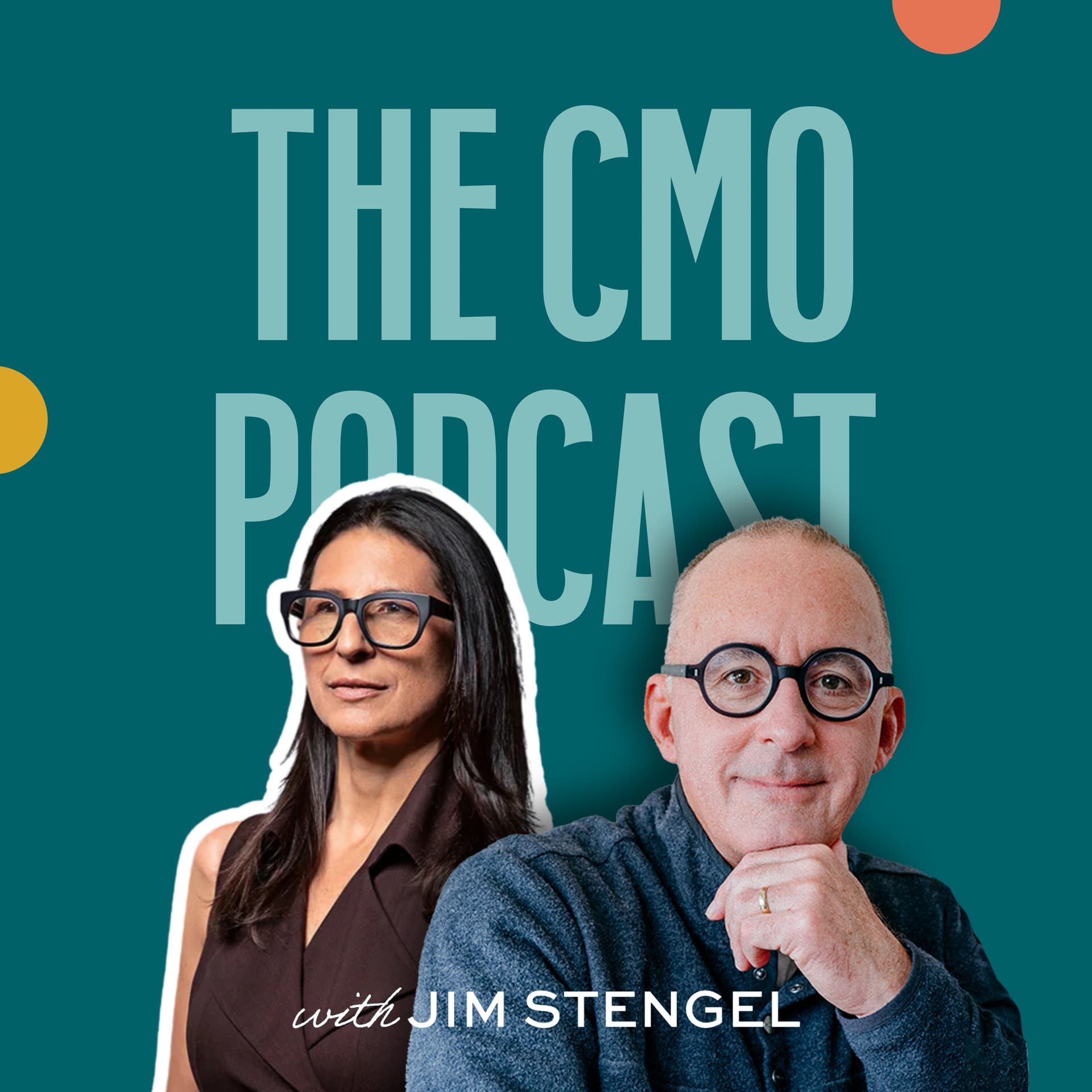
Mike Grahl (Minnesota's Timberwolves and Lynx) | Turning Fans into a Movement
Host
Jim Stengel
Guest
Mike Grahl, Chief Marketing Officer of the Minnesota Timberwolves and Lynx
Episode Overview In this episode of The CMO Podcast, host Jim Stengel engages in a conversation with Mike Grahl, the CMO of the Minnesota Timberwolves and Lynx. Grahl discusses his experience in sports marketing, the dynamics of fan engagement, the importance of community, and the strategies that have led to unprecedented success for both franchises under his leadership.
---
Key Themes and Discussions
- Fan Engagement and Community Building
- Grahl emphasizes the importance of transforming loyal fans into a movement.
- The Timberwolves and Lynx focus on creating a strong connection between players and fans, highlighting personal stories and community involvement.
- Career Background of Mike Grahl
- Previously spent over 20 years with the Milwaukee Bucks, where he rose from account representative to Chief Digital Officer.
- In 2018, Grahl joined the Minnesota Timberwolves and Lynx, overseeing brand strategy, creative, digital innovation, retail, and fan engagement.
- Marketing Strategies
- Grahl describes successful campaigns that have led to record ticket sales, fan engagement, and retail growth.
- Importance of storytelling and using unique athlete personalities to create engaging marketing content.
- Cultural and Community Impact
- The teams embody the spirit of the Twin Cities, promoting messages that resonate with local culture.
- Examples of campaigns that have celebrated community icons, such as Prince, and initiatives that engage the community.
- Creative Collaboration
- Grahl stresses that creativity is a team sport and encourages input from all team members.
- The mantra within his team is that “a good idea can come from anywhere,” fostering an inclusive atmosphere for innovation.
- Navigating Change and Challenges
- Discusses the transition under new ownership with Mark Laurie and Alex Rodriguez, viewing change as an opportunity for growth.
- Acknowledges the challenges of competing for discretionary spending in a vibrant entertainment market.
- Personal Insights
- Grahl shares his personal connection to sports and how his family is intertwined with his professional life.
- Reflects on the importance of work-life integration and the role of mentorship in shaping his career.
---
Key Takeaways
- Creativity is a Team Effort: Fostering an environment where all voices are heard leads to innovative marketing strategies.
- Leadership Through Change: Embracing change as an opportunity allows for growth and adaptation in a rapidly evolving sports landscape.
- Marketing as Community Building: Effective sports marketing goes beyond ticket sales; it strengthens community ties and creates a sense of belonging among fans.
---
Conclusion In summary, Mike Grahl's insights on sports marketing reveal the critical role that community engagement, creative collaboration, and adaptability play in building successful sports brands. His experience and leadership style serve as a valuable lesson for marketers looking to create meaningful connections with their audiences.
---
Additional Resources
- For more insights on marketing leadership, visit [Deloitte's CMO Program](https://cmo.deloitte.com).
- Follow the podcast for more episodes focusing on dynamic CMOs and their unique approaches to marketing.
---
This concludes the summary of the episode featuring Mike Grahl on The CMO Podcast.
Written by AI. May contain mistakes. Listen to the episode to check what was said.
Transcript
Automatic transcript. May contain errors.0:00What if the smartest marketing play is not to move forward, but to zoom out? Deloitte believes the most powerful move a CMO can make is to look beyond the next step and see the broader perspective. That's what the Deloitte CMO program is for, a place to gain fresh perspective and connect with leaders who've stood where you stand. Together, Deloitte will help you see the bigger picture so your next move isn't just fast, but right. Learn more about the CMO program at cmo.deloitte.com. Hi, it's Jim. Joining me is Matt Spiegel, EVP of True Audience Growth Strategy at TransUnion. Matt, we talk a lot on this show about building brands that people love, but that starts with understanding them, right?
0:39Jim, absolutely. Every customer ultimately has a story, but most brands are only going to see part of it. At TransUnion, we really focus on helping marketers connect those dots across devices, across channels, across platforms, with the goal of helping marketers see a full person behind the data. That clarity is gold. That is special. So how do you do it? Ultimately, we put together the pieces of information that help you predict behavior, help you personalize messages, prove the impact of every marketing decision at the end of the day. And our marketing solution suite gives brands the visibility and confidence to invest smarter and ultimately grow faster.
1:12So if you want to turn data into understanding and understanding into growth, visit transunion.com slash clarity. Hey, it's Jim. I'm here with Matt Spiegel, EVP of True Audience Growth Strategy at TransUnion. That's quite a job title, Matt. Yes. Welcome. Thank you. So tell me about your company and why it matters for our audience CMOs. Well, listen, Jim, the challenge of the day is that there's so much information about consumers out there and the challenges most companies don't have all that information. You have some purchase history, you maybe have some web history, but you don't have a full picture of customers.
1:42We're working really hard across on a suite of identity products, of audience products, and measurement products to bring a holistic view of customers to marketers. So when CMOs work with you, what light bulbs go off for them? So Jim, we help brands bring clarity from chaos. We help them understand a picture of their customers with a 360 degree view in order for marketers to make bigger, more strategic bets. Well said, Matt. Learn more at transunion.com slash clarity. That's transunion.com slash clarity. First brand you remember as a young guy growing up in Wisconsin that made an impact on you.
2:14My mind goes to Nike consistently for me. And I think, you know, the era, the generation that I grew up, an athlete endorsement and athlete marketing, obviously it was a Michael Jordan period. It was an Andre Agassi period. It was a Bo Jackson. It was a Ken Griffey Jr. And I think about, obviously those are prolific athletes that they partnered with, but I think about the storytelling. Maybe it was a little bit of a precursor and a seed inside of my mind that shaped something in me, but they were iconic. Hi, I'm Jim Stengel. I've helped hundreds of major brands discover and activate their purpose.
2:43Because when a brand's purpose is clear, compelling, and authentic, profit naturally follows. Each week, I welcome the CMOs, the chief marketing officers of your favorite brands to speak to how their job is so much more than marketing. These leaders share their inspiration and challenges along with how they try to build a full, healthy, and happy life in and out of the office. And it's that energy that reaches everyone they touch. And we're glad you're here to feel that energy and to learn from these remarkable leaders. So here we go. Whether it's the wolves on the court or the links in the playoffs, today's guest knows how to turn fan passion into a marketing powerhouse.
3:21My guest today is Mike Brawl, the Chief Marketing Officer of the Minnesota Timberwolves and the Minnesota Lynx. The Wolves is one of the NBA's most dynamic rising franchises, and the Lynx are a four-time WNBA champion. These two powerhouse teams embody the spirit of the Twin Cities on the court and in the community. Since 2018, Mike has led marketing for both franchises, overseeing brand strategy, creative, digital innovation, retail, and fan engagement. Under his leadership, the Wolves and links have seen record ticket sales, soaring fan engagement, award-winning campaigns, and retail growth that set franchise records.
3:56Before coming to Minnesota, Mike spent more than 20 years with the Milwaukee Bucks, rising from account rep to chief digital officer and helping shape that franchise's digital transformation. This is my conversation with a CMO who really, really loves his work. Here's Mike. Mike, welcome to the CMO Podcast. I'm catching you at the greatest time, right? The Lynx are in the semifinals. We're about a month away from the Timberwolves starting. So I want to begin with, you're toward the end of the season with the Lynx. What about your marketing team are you most proud of this year in the Lynx season?
4:29Oh, we've got so much to be proud of, Jim. It's been an incredible trajectory and our Lynx team has done incredible things on the court. Nafisa Collier has been a leader through and through, not only, you know, as she conducts herself on the court as an athlete, but obviously what she's done in the business community and her own personal brand. So she's been a leader in every respect. And speaking of leaders, Cheryl Reeve is the best who's ever done it, in my opinion, in women's sports. And you could argue beyond that as well. She is a leader that commands the respect of so many people, her players first and foremost, and she does it in an endearing way that's charismatic as well.
5:00And I think about how our team, our marketing team, captures those types of stories and communicates those things out to our fan base. And yes, it is making sure that the highlights are going out and people see the incredible athleticism that our Lynx roster has for sure. But it's the off-court stuff. It's the personalities of these individuals that are so unique. And you talk about the chemistry and the camaraderie of teams that ultimately lead to championship type mentality. And this Lynx team has epitomized it for us. And our team has done an incredible job. And we've got stories of Natisha Heidemann and Courtney Williams who have created this incredible phenomenon in the marketing space on their own personal brand that starts as two former teammates who are friends off the court and incredible teammates on the court that start live streaming and have some fun with each other and lean in and create the stud buds that creates this incredible energy that exists outside of the game of basketball.
5:47And it shows that spirit on the court that translates off. And from a marketing perspective, we lean into those things. We celebrate those teams. Some of them are athlete led and we, we embrace that. And we want that because those are the personalities that we're ultimately looking to make those connections because as a fan of any sports team, you want to have a connection to the athletes. And that's what we try to bring each and every day. You know, most people we have in the show are, you know, marketing a product, a service, you know, platform. I mean, you're marketing a team and people and spirit.
6:16I mean, so the relationship your team must have to have with the players is very special. Could you talk a bit about that? Yeah, it really is, Jim. And I think about it, it starts with people because at the end of the day, you know, athletes have a lot of attention that they have placed on them. They have a lot of demands placed on them, not only just for how they have to perform on their playing fields or playing courts, but how they show up in the community, how they show up in public. So there's a lot of things that are asked of them to do. And what we try to do as a team from a content creation perspective and as an overall brand perspective is to have that relationship and rapport with them so that they see us as a little bit closer than they would maybe a media outlet.
6:52We're embedded with our athletes inside of the practice facility. We're embedded with them on team trips, outside events. So there's a relationship that exists. It's still very much professional, but it has to exist in that there's a familiarity and an understanding. And when you put a mini mic in front of an athlete, you get something back from them that isn't, you know, a little bit polished to the degree that you would see in a media interview. It's something that has a little bit more personal energy to it that, again, creates that human connection. Ultimately, that we always talk about that insulates you from the variable that you can't control, right?
7:21We as marketers, as much as we can create an atmosphere that's conducive to winning for our athletes and for our basketball operations team, ultimately, we don't control the X's and O's in the outcome. But what we can do is we can create that environment and create that insulation that our fans, whether we win or we lose, whether Alana hits that game winning free throw or whether Jaden McDaniels hits that baseline jumper to win a game or not. Ultimately, the fan sees it as, oh, well, I have a personal relationship with that person because I heard this. I felt this from them in this kind of a way.
7:47Regardless of that outcome of that game, I'm connected. I'm still there. Do you have any rituals to involve the players in your marketing planning and creativity, your creative ideas, your explorations? Yeah, we do. And it's fantastic because they're a little bit of our litmus test in a lot of senses. And we want to create that relationship so that we understand what their likes and interests are. Because there's a couple different schools of thought as it relates to team sports marketing. And that is, do you motivate your players that ultimately entertain your fans? Or do you build something that entertains your fans that motivates your players?
8:19And it is a two-way street. And we think about that way a lot. Ultimately, everything that we do, we want our players to feel that energy. So, for example, we had our production session yesterday for the Timberwolves where we're building all of our creative assets for the season, one of which is our show open intro video. And that's something that does give our players energy. The music, the sights, the sounds, everything that they see before every single home game that creates that home court atmosphere, we want them to feel something. And we want that to be the start of something special for them that does impact their performance on the court.
8:49So we do have conversations with them. We do create forums with them, whether it's with them directly sometimes. A lot of it's music related. Some of it's visual related, some of it's cultural related things that we could either put little nods of things in a digital content piece or angles that we'll play that will actually capture their spirit and it's actually true to them because we want them consuming our content as well. It's funny because I think back to my time in Milwaukee where it really started in digital content was kind of at its core. Andrew Bogut was a player that we had on our roster and he was very much used to Australian football.
9:18And he saw what the fans would do and they would wear the scarves and they would bring the Vuvuzelas and they would have these chants. and he came to us and sat in one of our marketing meetings and said, I want that. I want, I want a fan section and squad six was born. And there was a couple other teams that have done it subsequently after we did it way back when, but it was those types of things that players feed off the fans and anything we can do to bring them that type of energy, we want their input and we want to be able to create it. You have a great job, man. It's fun. It's fun. There's a lot of minutes into the interview.
9:47It's a lot of dynamics. Yeah. A lot of dynamics. So can you give us any hint about what the show video is this year? I'd love to be able to. I don't know when this episode's going to drop specifically, but I don't. We love to be able to have it be a surprise for our fans. Yeah, of course. We've got, I will tell you this, Jim, we build a lot around our uniforms and our outfitting. In sports, the uniform is something that's, it's very close to fans' hearts. And to us, it's more than a uniform. And we build a lot of things around it. And in terms of show open, we'll have three uniforms. It's three core uniform and two other additional uniforms inside of it.
10:20So we'll have three different intro videos and show opens that also come with courts as well that create that immersive atmosphere that really fans feel something different. And every night is new in the sports and entertainment industry. Every night is brand new. That's the beauty of the industry. It can also be some of the challenges of the industry. But every night that somebody sets foot inside of Target Center to watch our teams play, there's something new and different and fresh. And we lean into the outfitting to do that. And that thematic will come through in our show open videos this year as well.
10:45What are you looking forward to in the Timberwolves season most from your marketing team? I know you can't wait to see the players and the team and the competition, but from your marketing team itself, what are you really looking forward to this year? Yeah, we've got so much to look forward to. I think we've got continuity on the court, which is one thing. And when we talk about continuity on the court, that means from a marketing perspective, there's continuity, too. In the sports industry, there's transient nature, right? Athletes, they move from market to market to ultimately construct the best teams.
11:08And, you know, what Coach Finch has done to keep this team and to motivate this team in the way that he has has been absolutely incredible. And I think about the opportunity that we have as marketers to have the familiarity with our athletes and to be able to continue to build upon something and have a foundational piece. We've got some things that are brewing specifically inside of our mobile and digital technology spaces. New ownership, Mark, Laurie, and Alex Rodriguez have built an end solution that ultimately is going to be a ticketing platform inside of our mobile app that is going to help us be more intelligent in our marketing efforts and to personalize things more for our fans.
11:40We've got a lot of exciting things on that front that we're looking forward to. As I mentioned, on the outfitting front, we're bringing back a classic edition uniform that fans are is near and dear to fans hearts. And it's city edition uniform that's coming back from Nike as well. So those are probably the primary things. So cool. Now you're a dad of three kids, right? I am. So what do they think about your job? Well, I'll tell you, moving to new markets because I was in Milwaukee for 20 years with the Bucks. Talk about that. Yeah. And it was fantastic in that I kind of grew up professionally there.
12:05I started out as an intern in college and started to learn technology and digital is where I kind of made my way in the industry. And having spent 20 years in a market, that's where we started our family, moving our kids at the time they were in first, fifth and eighth grade, our two girls at the top, eighth and fifth grade. They're our world, right? And so like moving them to a new market was something that was intimidating, quite frankly, professionally. Going from a chief digital officer to a chief marketing officer from Milwaukee to Minnesota made a ton of professional sense. But from a family perspective, it was tough.
12:35But it was a blessing in disguise. And I think about the affinity that our family now has for the state of Minnesota, for the teams that we now are naturally embedded inside of our family, because it is a job that does require a lot of commitment. And that commitment does come from a family side. My wife, especially the amount of time and energy that she puts into what we do, supporting the family from that perspective with the job that I have. But the joke that I always have when our CEO recruited me to come, I said, you got me 100%. I am, I will probably have a piece of Milwaukee Bucks in me forever, but I'm Timberwolves through and through.
13:05I said, the rest of these people that you see with me as my family, you might get 25 to 30%. And the joke is Eli, our son, he would show up to a Timberwolves Nuggets game in his Giannis jersey. And that was who he was. And that's great. And that's kind of what we build as marketers, right? You want to have that connection to a, from a fan in this instance, my son, Eli to his team. And that was built proud to say that he is a Timberwolves fan through and through as are our daughters. Having Lynx basketball also has been an absolute blessing. The WNBA, especially as a father of two daughters, it was incredible, not just because of the athleticism that they could see that was on a stage that was deserved to be on, but the opportunity for them to see it up close and personal and through an eye, the lens that was a little bit different than most, was really special.
13:46We talk a lot on the show about balance in your life and integration in your life because, you know, work-life balance has sort of not happened. You know, it's hard to manage that. It's much more about integration. You're talking about your kids, how much they're into the teams. What else do you do to integrate your work with your family? Because you must be gone a lot. Yeah. Yeah, we are. I'm gone a decent amount, but it's not travel per se with the team itself. A lot of it is knowledge learning conferences and things of that nature that give me the opportunity to help bring back to my teams and help to grow those things.
14:18I think there's a lot of things. I like to talk openly about it. You know, we are still fans at the end of the day. So it's those types of things. obviously they're able to come to games and experience it you know firsthand more often than most um so we try to integrate that as much as we can as well so a lot of it's just open honest dialogue and there's a lot of times honestly where i'll come home jim from from work and we won't talk about that stuff and we'll talk about their school day we'll talk about their sports and talk about things in their lives so that it does still have a little bit of separation although it is intertwined for the most part day to day so how do you bring the nice to work every day maybe give a little context on that yeah yeah so we did a season campaign with the timberwolves last year yeah it was so good we had been raised by wolves we leaned into our namesake a timberwolf on the hunt the hustle the grind you know coming out of the woods like it was and that was kind of what our team was at that time we had a young anthony edwards and an entire embodiment and we don't embody our brand campaign specifically about singular athletes but there's the the whole and the sum of parts that we reached this stage last year that we had an opportunity to be a little bit maybe more effervescent, a little bit more fun, maybe step outside of the box a little bit.
15:22And we did that in partnership with a creative agency, Zambezi, who was great partners in this exploration. And as we started to think about what could that potentially be, we looked at the term of Minnesota nice and it's, it's got multiple connotations to it, but for the most part, it is hospitality. It's that welcoming mentality that exists, but there was a juxtaposition, a little bit of a twist that we saw inside of it. That was ultimately we were inviting our fans, but we were warning our foes. And we basically spun that terminology so that nice not only meant kindness and niceness, but it also was a basketball term.
15:52There's a vernacular in the sports world, specifically in basketball, of athletic prowess and being nice. And that's embodied by our athletes who bring it as hard as they can every single night, but they do it with a fun and a fervor that's special and different. So to bring a campaign to life last year that had that personality and a little bit of vibrancy. It was refreshing and fun. Our team had a lot of fun with it. Fans had a lot of fun with it, fresh and different. Well, good for you and the agency. It's a great thought. And that's your baseline for this year, right? Yeah, and we're actually going to change some things up a little bit.
16:24There's some things that carry forward through that that are going to be extensions and fun, and we're going to lean in.
16:36We all want to stay ahead of the digital curve. And IAB, the Interactive Advertising Bureau, invites you to do just that at the 2026 IAB Annual Leadership Meeting in Palm Springs on February 1st through 3rd. If you're a qualified consumer brand or agency leader, you can access free passes and travel vouchers. And for everyone else, you can take$500 off your ticket with code, all caps, ALMCMOPOD26. This is your chance to join a three-day gathering of the industry's brightest minds and boldest voices shaping the year ahead. You'll hear agenda-setting conversations, candid fireside chats, and dynamic breakouts on the topics that matter most, from AI and commerce media to measurement and addressability.
17:20This year's lineup concludes everyone from Kevin Bacon and Bozema St. John to creator Remy Bader, along with leaders from Forbes, Major League Soccer, General Motors, and Meta. Visit iab.com slash ALM to learn more and check out the link in the show notes to register and receive$500 off your ticket.
17:42We talked about that experience with the Bucks 20 years. So I want to go there a bit more with you. That's a long time, right? And so you kind of grew as a leader there. So could you talk a bit about how you were a different leader from when you joined the Bucks to when you left to come here? How did it evolve you as a leader? Who were your most important mentors? And how do you feel like it prepared you well for this job? It's fun thinking about those times, Jim, when I got my start, because I started as an intern in college. It was a sales and marketing internship that essentially was putting chairback covers on courtside seats and rebounding free throws up an interactive area called Hoops Heaven.
18:16I didn't know if that was marketing or not. Marketing is where I wanted to be. The creative side of marketing always was something that energized me. The analytical side of marketing always energized me as well. Where I got my opportunity subsequent to that internship was a non-guaranteed sales position. I will tell you, Jim, that sales was not something that I aspired to do. And in fact, quite frankly. Non-guaranteed means you're on commission. Correct. And you either sell enough to continue or you don't. Yeah. I never thought of myself as a salesperson, young punk out of college, calling CFOs and CEOs of major corporations and telling them how Bucks Basketball was going to help them entertain their clients and employees.
18:50It was something I was quite terrified of, to be honest with you. I would be too. Looking back on those days, it was probably one of the best things that could happen to me professionally because ultimately I learned that, well, you got to be comfortable with the uncomfortable, number one, but you are selling something. Whether you're selling yourself to a future employer or while you're selling an idea into a company or you're selling a product or service, there is a sales component that exists. So to have that experience was a blessing to me. I would say my parents didn't necessarily love it knowing that I had other job opportunities that I turned down to have a non-guaranteed commission sales position.
19:22But it did cast a very good trajectory for me. And I think about those early days when you talk about leadership. Senator Cole was an incredible leader inside of that company. And John Steinler was the vice president who ultimately ran our business in Milwaukee. And Senator Cole ran his team kind of how he ran his grocery stores. It was small. It was familial. It gave me a ton of autonomy. I self-taught HTML code. I self-taught the Adobe Creative Suite. Those were the things that I had in school. but I had an energy and I had the autonomy to do that. So while I was selling and servicing season ticket memberships and suite clientele, I was on the side building landing pages, turning websites that were mainly press release machines into something that was a little bit more engaging and consuming and then I would build web forms and then I'd build an email program and then I would build marketing automation.
20:06And ultimately that lead generation would feed our sales funnel. And that's really where my marketing career kind of was born from that. And it's great, funny looking back today and how much of what we're doing at its core that's still very much founded in inbound marketing that is creating content, engaging, and driving people ultimately into a funnel. I think about the leadership side of that. I didn't have a big team when I first started out. And as I transitioned into the marketing function, the digital marketing function specifically, slowly building out a team, I will tell you I struggled a lot with delegation.
20:38And when you're a doer early on in your career, it's something that you can very easily, it's easier to do sometimes than it is to power and delegate. But I've learned and I've been so blessed with teams. And I think about it in Milwaukee before I departed there, especially now here in Minnesota, I've been blessed with incredible teams, talented people that I've been able to surround myself with who I have the ability to empower in amazing ways because they deserve it and they earn it each and every day. The energy that they bring, the creativity that they bring, strategic mindset, their ability to ideate, strategize, and then execute.
21:09A lot of times I find myself almost on the sidelines sometimes because of how good they are. And I find myself just needing to step out of the way and let them do their thing because they're so good at what they do. So that's been transformative in my time. And it's really been a blessing because of the team that I've been able to build. Do you have any tips for others who move from doer to leader? It's a difficult transition. It is. It is. It's about trust. And it does, you know, you talk about mentors, too. And I think I've had some very good mentors that over my time that have shown that to me as well.
Read the full transcript
21:37You know, I mentioned, you know, Senator Cole and John Steinmiller and Jim Grayson, Dave Tratton, those guys. they gave me the autonomy and they gave trust to me to empower me. So like it took me a while to to see it and feel it and know what that was. So I think those types of things, being able to step back and see what's how you've been empowered to ultimately reflect that onto others is a good perspective exercise. It does come down to trust. It does come down to a hiring process, right? And you're not always going to get things perfect. But I think if you can really challenge yourself to find people who are better than you are in many different facets of what you do comes more and more natural because you just have to rely on them.
22:13They're bringing you good, big, bright ideas that just fuel that. Take us back to that decision to leave Milwaukee after 20 years and come to this job. I mean, it was a promotion, I guess, in some ways. So that's a factor. But tell us about that. What was that like? What kind of questions did you ask? Why did you know this was the right move for you and your family? I've always loved the build, the challenge of building something new and different and having different perspective. I think as marketers, we often have to view things through new lenses, right? I think as we evolve, we look for outside perspective to have influence and we know that the markets and our audiences grow and change.
22:47And so we do too. And as I, as a professional at that moment in time, I'd done a lot in the digital space and I could have stayed with the Bucks for my entire career and been successful and great. And we had a young athlete by the name of Giannis Anadokounmpo, who was a legend in my eyes, in every respect, in terms of who he was as an athlete and obviously as a human being coming over from Nigeria, from Greece, and how he acclimated. It was, there was a path that was incredible. And I saw what was on the horizon. It was a struggle because I knew that team was a championship team. And I do think a lot of times about, you know, we as business people, especially in the sports space, ultimately you want a ring, you want a title, you want a championship.
23:23But to me, building really great teams that put incredible work out into the world, that's kind of the title that I'm always seeking. And we had that in Milwaukee and they continue to do that and do incredible things. The opportunity for me to do more outside of just the digital space. we had done a lot of incredible things as we were opening the doors to FISA Forum in Milwaukee that I was proud of my digital team for building in conjunction with our marketing function but the opportunity to step outside and do something different in Minnesota in a market that had a lot of similarities to what Milwaukee had and I saw you know a fan base that was really hungry in a Timberwolves fan base the Lynx fan base is already very rabid but a women's sports opportunity where it needs to transcend and go to bigger places I saw a lot of opportunity inside of that challenge as well.
24:04And then I think about the opportunity to build and grow outside of the digital space. So although I'd been around the brand, the creative and the advertising side of things to actually play a larger role in that function, to be able to be exposed and oversee an area of game presentation and live programming events was something new and different and energizing to me too. And just the opportunity to infuse what I felt was a strong digital foundation that I had that's drove a lot of marketing and continues to drive a lot of marketing, but to be able to infuse that with all the other things that are in and around it, it inside of our marketing function was, was really, really exciting.
24:36Well, it looks like a good call you made seven years ago or so. Now you went to university of Wisconsin, Whitewater, you played baseball four years. Did you want to go into baseball and you shipped it to basketball or did you take the job that you could get? What was that like? Obviously your passion was baseball. I mean, yeah, it was, I would say, honestly, Jim, I don't know if I saw sports as, as something that I was going to get involved in, at least initially, I think there was a turning point in college and at Whitewater, incredible business institution that I really, really was thankful that I had, because I think I walked on to the baseball team.
25:09I was not recruited. Some other, smaller schools had recruited me, not a stellar athlete, tried out for the basketball team and got caught on the very last day of tryout. So I guess I made it that far, which is great. We'd won a state Legion baseball tournament the summer before. So fortunately the baseball coach knew that and asked me to come try out. And so that, that did compel and start that. But I think that's the point when I was also doing my studies, I was looking at what is the opportunity inside of the marketing function. There was no sports marketing programs at that time that were prevalent.
25:35I started using any of my professors and I had great professors that I think about Dr. Peltier in particular at Whitewater who set me up with an independent study at Mueller Sports Medicine. I thought, well, there's, there's an opportunity for potentially science path for me that would involve sports. And then I had a law professor that was introducing me to things that were potentially in the sports law space. And I started to open my eyes about, well, maybe, you know, I'm an athlete, I do like sports and maybe I can combine it with business. And as I did an internship at Rec and Joannies in Green Bay and intellectual properties law firm, I got exposed to what the legal space was.
26:06And it was more about those experiences kind of shaping me of, you know, part of it's what you don't want to do versus what you do want to do. And I took a lot from every single one of those experiences, but it kind of shaped my learning. When I had the opportunity with the Bucks, that's really, I was, you know, basketball was a sport that I was passionate about. I would say baseball for me would be too. And if the opportunity existed in a professional baseball organization, I probably would have taken it as well. Get what basketball has done, especially from a marketing perspective. I think the NBA and the WNBA have been incredibly, incredibly good platforms from a marketing perspective for growth.
26:38Yeah. I mean, one of the best, really. I want to talk about your role in a moment, but I want to start with a bigger question. You know, there's a lot of trade buzz about the role of the CMO. You know, is it getting bigger, smaller? Is it shifting to commercial officer, growth officer, brand officer, that sort of thing. So that's out there. But it seems in sports, the role of CMO has gotten more critical, more important, more visible. Talk about that. Do you agree with that? Do you feel like that's the role has become really, really, really important? There seem to be a lot of great people in those roles across the major sports franchises.
27:13And if you agree, why? What's been going on over the last 20 years or so? There's been a tremendous amount of growth in that role. And you're right, it does, it changes in terms of how it's positioned within organizations. I'm even the responsibilities within what is a marketing purview inside of sports teams. Even my counterparts inside the NBA, it's not all the same. Not a uniform role. Not uniform, no. But what is core and why I think it continues to have greater emphasis is that it is a bit of the heartbeat of a franchise. I think about the voice and the personality of a team and what, how fans feel, a lot of it does come from the team itself, right?
27:48The, the athletes that are on the playing surface, there's a lot of it there, but there is, there's a brand component to it that has to have a mixture of the past, but also moving forward to the future. It takes a lot of, a lot of work to understand and to paint the proper pictures and to storytell that creates an affinity that grows an audience that ultimately drives revenue. So we are central services in that degree. And I think about all the departments that, that CMOs inside of sports teams service, Obviously, they're direct revenue driving areas of the business, ticket sales and partnerships, retail.
28:18Those are primary for sure. There's a lot of other areas outside of it as well. And you think about culture and inside of an organization from an HR perspective, the marketing function has a significant role inside of there. The PR function and the stories that we're telling in the air and media spaces, there's a lot of responsibility inside of a CMO to be able to craft those and harness those and work with those as well. And then community impact and social responsibility. There's a huge opportunity that exists and being able to take your brand outside of, again, just the sport that you play in the community and making an impact and bettering the places in which you live, work, and play.
28:50A lot of those responsibilities fall back inside of a marketing function. It sounds actually kind of similar to what a CBG role would be or an automotive role or a financial services role. How do you, I know you work with a lot of CMOs in those, in those verticals. What do you think is the biggest difference in a role in sports versus some of the other categories. Yeah, it's interesting because I think about, and it's, I try to put myself in their seat a lot, especially as we're selling sponsorships or partnerships, because ultimately what our role as a team is, is to build an audience that ultimately we can transfer that affinity to another brand product or service.
29:21So trying to understand their objectives and what lenses they're viewing things through. So how that they motivate the consumer behavior that they're looking to drive and how can we as a sports team, I think that one of the biggest differences is the natural affinity or avidity that our consumers have maybe more so than a brand. That's why I think of some of the best brand builders in the world and their ability to do it without, you know, a sports product behind them is remarkable. It's incredible because there's a lot of work that has to go in to be able to build those types of things. I would say the live sports team space is challenging at the same time because you can't control your product.
29:55Ultimately, you don't know whether you're going to have a productive product one year to the next. So you have to basically build something that is entertaining and memorable each and every day, not just in venue, but across every single digital touchpoint and brand touchpoint that you can to be able to not have the winning and losing be the main figure. So as I think about other products and brands and services, as they're looking to do similar things, maybe they will have more control over their product, brand, or service to some degree, and they can control and have more lead times than what we have in the sports team space.
30:26We have to be very reactionary. There's moments we have, we have our pillars that we build off of each and every season, But there's a lot of what we're doing that's real-time marketing and messaging in the moment that we have to be very reactionary, which I think brings a little bit of a challenge, but also an opportunity and a benefit for us. So you've had quite a run over seven years. I mean, if I look at the data, ticket sales are terrific, merchandise, retail revenue, fan satisfaction, industry awards, on and on. So step back from that. I mean, congratulations first. I mean, it's pretty remarkable.
30:57What's been your playbook for that? I mean, what could others learn? You've nailed it on many measures, many KPIs, in a way that others would love to do. So what can others learn from how you've approached the job, the organization, the category, the team that led to this growth? I haven't nailed anything, Jim. I will tell you that. There has been a lot of success that has been team success and organizational success. And that's where I give all of the credit. I give even more of the credit to the marketing function that exists inside of our Timberwolves and Links organization. And I'm one of the most passionate and dedicated group of individuals that I've ever worked with.
31:31And I think about the leadership that exists to create those types of atmospheres, to be able to create an environment that fosters continued growth and learning and accepting challenges and being able to be thoughtful in planning, diligent execution and collaborative. I think those types of environments is really what fuels those types of things. And I look at our new ownership with Mark Laurie and Alex Rodriguez, and I look at the new horizons. And we are really just at the starting point, quite frankly. I think those two gentlemen as visionaries in their own respective ways across business are going to transform our organization in an incredible way.
32:06And I think about my time in Milwaukee when I went through an ownership change and what that really did was it reinvigorated and created an atmosphere. You know, you always want to create environments that you don't do what you did before just because you did it that way. And again, I think the marketing function, probably marketing functions that I've created, we're always wanting to be reflective and look internally that way. I think what this moment does now for this organization with new ownership gives us a real opportunity to examine the business and look at it with fresh new eyes. Ultimately, the eyes that we're going to cater to the most are our fans and our consumers' eyes.
32:39And I think what this is going to do is ultimately create a greater trajectory for us that I'm incredibly excited about.
32:51Everyone seems to be chasing the next big thing, the fastest answer, the quickest win. But great CMOs believe the real power isn't in the speed. It's in stepping back to see the bigger picture. That's why everything Deloitte does in their CMO program, from their industry-leading capabilities to their connected network of CMOs, is designed to help you zoom out and gain fresh perspective. Deloitte will help you see the bigger picture together. Learn more about the CMO program at cmo.deloitte.com.
33:24Now, in the seven years, what has gone way better than you would ever have imagined? And on the other side of that, what has been tougher? I would say way better is probably the culture that has been built inside of our team sports walls. And I think the community that exists, I guess when I entered the NBA, even when I was with the Bucks, I knew that the NBA had something a little bit different than other leagues in that they have a division inside of the NBA that fosters best practices and idea sharing and learning at NBA Team Bow. And I think what has over my career been incredibly helpful is that community of leaders across the discipline that I run in my organization across every other market in the NBA.
34:02And that community that exists is incredibly helpful in many respects. And I think that's fueled so much opportunity for us collectively to grow as a league inside of our teams in our respective markets. And very, very grateful for that community. And that has really been a very pleasant part of my growth is being able to work alongside those people. Let's stop on that for a minute, but that's easier said than done, right? So you have how many franchises? 30 NBA. Yeah. And then you have the central group. So what do you do to foster that culture, that environment of sharing, best practices? So what can others learn from that?
34:38Because obviously, even global brands in different categories, they have the same dynamic, the central group, regional teams. Getting that to work really well is challenging. It doesn't often happen that well. Yeah. I think unique to sports in the marketing function, because we're not competing for dollars per se. I think there's some areas, the partnership sponsorship space where that may exist, but each market is different. Each audience is different. Each brand is different, even though we're collectively inside of the same league, WNBA and NBA. So I think about the opportunity to share those things that are working.
35:10Again, they're unique to our market and unique to how we activate and how we think. But there's things that we all can learn from each other. And again, the sense of community in any aspect, whether you're in business or not, community is really what lifts. So having that mindset and a little bit of not fear, right? Obviously you have to step out and share, be willing to do that. And what the MBA has done a really good job is creating that. And they'll bring us together. I mean, we meet regularly. A lot of it is virtual, but they've conducted forums where they bring us together physically as well.
35:39And the opportunity, there's structure to a lot of them, but there's sometimes there's not no structure. And I think sometimes the no structure times that we get together are the best because there's, there's idea sharing, there's success sharing, there's best practice building, but there's also, you know, we're sharing challenges. We're commiserating a little bit on some things that we're, we're struggling with. So those types of things ultimately fuel the business in a really, really big way. What's been tougher than you would have imagined over the last seven years? You know, there's a lot of things that fans, consumers can do with a discretionary dollar.
36:09And I think, you know, some of it's market specific and Minneapolis in particular has an incredible, vibrant community of arts and entertainment and sports and culture. And there's, it's not always easy to fill a building every single night of the year. And that's our task. That's our goal. That's what we aspire to do. It's something I've been doing for a very long time. In Milwaukee, it took a long time to get to points where we had on court success that met our preparation and planning from a ticket sales marketing perspective. Similarly, in Minnesota, on the Timberwolves side specifically, on the Lynx side, again, we've got the opportunity to grow as a league to bigger places.
36:40That continues to be our challenge day in and day out is the discretionary dollars that fans, our consumers have to be able to choose us and to spend their time with us. And again, we're in the business of memory making. So we try to do as much as we can that regardless of the outcome on the court, they have a memorable experience inside of our venue. They have memorable experiences digitally and virtually with us that ultimately drive them into our venues and the retail spaces, et cetera. Yeah, I think it's amazing. I think, you know, obviously the TV experience at home, whether it's streaming or traditional, it's great.
37:11Right. But I think that has helped lift the fan experience when you go see a game live. So I think every time I go, I think this is really fun. You know, so I think the whole game experience versus when I was growing up, totally different. And I think because it has to be or you're not going to fill that building. Yep, exactly. And I think the couch experience is a great experience. And to some extent, you're competing with that. you know broadcast is part of what we do but there's also you want to to grow that level of affinity and a natural growth pattern is getting jim from his couch in the target center and watching a game so you want to take them to the next level so how do you provide an entertainment experience that is better than your living room not always easy i think the nba has definitely leaned into a space that is more about entertainment in the surround and it's not solely about the on-court um incredible athletes that you're watching perform at the highest level you're also seeing and feeling a lot of other things surrounding it.
38:03So whether you're, you know, a casual fan who was brought by with a friend that's experiencing it, or you're, you maybe have never even consumed it on broadcast before you're getting, whether it's your in-game timeout moments or your halftime moments, post-game moments, those types of things. I think those are where we're able to, as an NBA brand, having a smaller playing surface in our arenas to have a little bit of a differentiator that helps you from a broadcast into an arena experience. So if you think about your seven years, think about a moment, Timberwolves and Lynx, with the team where you think back and say, wow, it's just one of those experiences that, you know, 10, 20 years from now, you will remember.
38:38Oh, there's so many of them. The first one that popped into my mind was Sylvia Fowles. We've had incredible athletes inside of both our teams. The Lynx, we have Hall of Famers. Their rafters are full of deserving athletes who have done incredible things. And there was a moment early in my career where I brought my daughter Libby to a game that was Sylvia Fowles Jersey Retirement. And the moment watching her face and watching her listen to Sylvia give her acceptance speech when her jersey was retired truly made a mark on me. I think about my third week on the job, maybe, we celebrated the greatest rocker who ever lived in Minnesota, Prince.
39:14NBA changed the game inside of uniforming in 2016, I believe, is when they took over the on-court branding rights. And what was a home white and a road dark uniform became an icon, an association. And then they introduced something called City Edition. And City Edition was about court culture and community, something that was a uniform that was specific to a market and a place. And we celebrated Prince with a uniform in 2018-19. I remember that. And it was incredible to me because on that third or fourth week of the job, Nike, they wanted to do a special behind the scenes, the making of City Edition jersey with Prince.
39:49shut down first and seventh avenue on a sunday afternoon the uniform was not public city edition only had one year prior so it didn't have a lot of attention or knowledge but when you have a crew of hundreds of actors and cameras on the streets of minneapolis in front of first avenue people have they're curious what that's all about had an incredible shoot that day and went on to build an incredible campaign and i will tell you jim that celebrating the greatest rocker who ever lived It was intimidating. You know, from Wisconsin, obviously New Prince, I was fortunate enough to watch him play at the auditorium in Milwaukee, a 5 ,000-seat venue.
40:22And to watch him do what he did, I think it was close to a four-hour performance where he played every single instrument on stage, made a mark on me. And when I came to Minnesota and we had the opportunity to celebrate him in this fashion with this season, I felt an incredible weight on me with that because it was, you know, you want to do that justice. You want to do that right, especially for somebody as creative as that individual was. You know, he was an icon in every respect. And I'll never forget my creative team. I've never had a moment where I've had creatives who were more intrinsically motivated to do what they needed to do to do it right.
40:56And all the day-to-day still had to happen. We still had to build ticket campaigns. We still had to put together partnership material and go out and pitch and generate revenue for the business. The nights and the weekends that time, effort, energy were poured into that city edition platform to celebrate the greatest rocker who ever lived was pretty memorable, pretty remarkable. We transformed six nights inside of Target Center, completely dedicated to Prince. We had his old bandmates from Morris State as she lead, a new power generation, every single Prince track inside of Target Center, which I knew he had a library, but I did not know it was that deep.
41:26It was incredible. St. Paul Peterson made fan prompts, got a visit from his electric guitar and the spirit of Prince. Every single touch point was Prince inspired. And it was truly moving to be able to have that opportunity and to build something that impacted so many people, music lovers and sports fans alike. And you were relatively new. Who'd you lean on for that? Everybody. Again, I leaned on our team. I leaned on our executives. Prince Estate was great to work with. There were so many players and so many people who played a role in that particular campaign. There's many others that we've done subsequent to.
41:56That one probably for the obvious reasons of how big it was in the magnitude was probably most memorable to me. And also because it was job number one. Now you exude creativity, right? You enjoy it. You value it. Talk a bit more about that and how you show up for your team. Because I think leaders who make it clear that this is important. Creativity solves problems. Creativity brings innovation. Creativity brings a great culture. So how do you do that? How do you talk about it? How do you be sure that everyone knows that's who you are? It's an awesome thought, Jim, because I think about the marketing role.
42:30Ultimately, we have creative people throughout our entire organization that come up with ideas. And our mantra is, a good idea can come from anywhere. And we build an environment that we want that. I think similarly about my marketing team and my creative team. And I think about what a lot of times when I stepped into the Timberwolves and Links walls, we had an incredible marketing team, blessed with that. What they were really good at was taking a job, taking a creative brief, and executing and putting it out in the world. We had an opportunity to do more than that and to not just be the production house that puts great work out in the world, but to be creative problem solvers.
43:01Changing that brief from a directive into more objective driven, like what is the problem at hand that needs to be solved? And letting the creative minds that are inside of our walls help to solve problems and not just to deliver creative execution that paints a picture and energizes a marketplace. We live that every day. And I think a lot about project management and project management inside of our organization has been great. And we've got an incredible project manager who's, who's guides us in a lot of ways. And what I consistently challenge our team is innovation and creativity is, is inside of project management.
43:35You need to look at every single job that comes in and view it as such. And don't be afraid to raise your hand. And if it feels like more of a creative directive of sorts, if you have an idea that shapes or position something differently, bring it up, speak it, because that's really where change happens and where you can be thoughtful. And I think, again, it can come from anywhere. We've had our developers come up with great visual concepts. We've had our designers come up with great digital development ideas. We've had accountants and lawyers who have had campaign ideas. So fostering that kind of environment, I think is core to creativity in our walls.
44:16And we try to bring that out every single day. How do you think about your organization when you set it up to be sure that everyone's working to the full potential, everyone's working to their maximum creativity, any insights as you think about, because I'm sure it's changed a lot in the seven years that you've been there, but what insights do you have in creating the organization of the future that's going to help you win into the future? Yeah, it's interesting because I think about a lot of roles with inside businesses are more metrics driven, right? A lot of things that you can, you can see the output, you can see the input based on the output performance metrics.
44:45There's some things inside of our marketing space that are a little bit more challenging to understand whether you are being highly productive or not. We lean a lot into qualitative and qualitative analysis inside of our market space to understand if the things that we're doing are working. Then we work backwards and we look at where is the work coming from and where are we being most productive and most efficient. A lot of it too is inside of our performance evaluation. We make sure that we are communicating to our teams what's most important. What are critical things? Where should you be spending the majority of your time?
45:12It starts with a strategic plan that comes from the very top. That strategic plan has your core business objectives that you need to make sure that you're moving the business forward during that period of time. That then goes into departmental spaces of what role does each department play inside of driving to those business objectives. It translates down into the individual performer, the individual employee, and their individual performance goals of how are you as an individual contributor. You are going to see that this is where we need to be as an organization. This is the role that you play inside of bringing us from a department goal perspective and an organization goal perspective.
45:46And make sure you're measuring and quantifying it as much as you possibly can. And making sure that's a lot of conversation and transparency. A firm believer in that at every level of our company, making sure that people know and understand that they're valued, that they have a forum for discussion whenever they need it, if there's challenges or walls that they're experiencing, to make sure that they're bringing those forward so that we're all moving forward together. You look out over two brands. So how do you think about that? How do you decide where you spend your time? It's a great question, Jim, in that we ask ourselves that every day because we have the blessing of having the power of a marketing function that is central to both our Timberwolves and our Lynx teams that ultimately can build great things with great efficiency.
46:29I mean, most of what we do is internal. We rely on outside agencies periodically here and there, but ultimately what drives an opportunity for a Lynx brand forward and the opportunity exists inside of the WNBA and women's sports platform that again, is that an incredible crescendo. I think about the teams of the past that the Lynx have had and the trajectory that, that they've given this current team with the magnitude that the entire WNBA platform is on. There's so much opportunity inside of it. It quite honestly is one of the challenges that we have where we're working with two teams and we feel like we're not necessarily, you want to do more for all of them all the time.
47:03So making sure that we're diligent in our planning, making sure that we have our objectives written down and shared appropriately so that our team members know where they're focused and where their energy needs to be. There's a seasonality to our business that exists, but the reality is we're always in season. Time of this taping, we're going to be playing game two of the second round of the WNBA final, semi-finals tonight. And we had a production session for Timberwolves yesterday. And the day before that we had round two game one. So we are, we are in season all the time. So making sure that you have your planning moments.
47:34I think that's the biggest challenge and opportunity that we have as a marketing function is making sure that you have the time to plan and strategize so that you can execute cleanly across both of our teams. In your personal time, I suspect it fluctuates a lot, right? Given week, you may be all links, given week, you may be all Timberwolves. Yes. Try to be as focused as we, as, as I personally can be. But again, the reality is, is in live entertainment and sports. And there's off season things that happen too, that you think you have a Wolves day in front of you and you've, you've got a Lynx transaction, or you think you've got a Lynx moment in front of you and there's something in the Wolves space that happens.
48:09So there's, we try to be as planned as we possibly can, but the reactionary world that we live in is real as well. You seem to love your work. I talked about that in the beginning of this. You can just say, are you as happy as you've ever been at this time with this team, with these teams? Yeah, it's been incredible. The journey that we've been on, it's not often where, you know, you have business preparedness that meets on-court success. And I think there's moment, the moment that we're living inside of both the Timberwolves and Lynx that we're feeling it. And, you know, you do try to, you try to, to build that sail so that the moment the wind catches, it takes you to incredible places.
48:41And I, I feel that we're in that moment right now where we've, we've built it and we are, have that alignment that is, have fans experiencing something that is going to be special inside of Minnesota.
48:59Hi, everybody. I'm Andrea Sullivan, the CEO of Vive, and we have produced the CMO podcast with Jim Stengel for many years, and I'm sitting in his seat right now. It's so exciting. I wanted to tell you a little bit about one of our programs that's called Vive by Vayner. It's a 12-month program that's designed for C-suiters and founders. And we want to help people to grow their businesses, but also to grow themselves. And so we bring in people from Shark Tank to talk to our founders, but we also focus on wellness. We want to make sure that people are leaning into becoming their best selves, their best and happiest selves.
49:39So if you are someone that wants to learn how to grow your business and grow yourself, check us out at vive.co. That's V-Y-V-E dot co. We'd love to talk to you.
49:57Well, I want to flip into the creative brief. And I want to start with we're here. CMO podcast is on the road. We're here in Minneapolis for two days to talk about what's the best part of living and working in the Twin Cities. We had a bunch of people in here yesterday and they talked about the generous spirit, the sense of community, the sense of grit. because there's something going on in this. It's the number one city in the country in Fortune 500 concentration. And even beyond the Fortune 500, there's just a lot of interesting companies here. It's vibrancy to me. It is vibrancy and beauty.
50:28I will actually start with the actual geography of Minneapolis, the Twin Cities in Minnesota. It's beautiful. This region is incredibly beautiful. And a lot of times people hear Minnesota and they think about burr, cold, and winter. I will tell you that I'm from Wisconsin, so I've experienced plenty of winters in my day. Minnesotans are different. They thrive. They don't survive winter. I think back to one of the first winter, my very first winter, driving along West River Parkway, the Mississippi River. It was a sub-zero day, probably time below zero. And I saw not one, not two, but three fat tire bikers biking the streets of West River Parkway.
51:02And that exudes the spirit of Minnesota in my mind, embracing the beauty of our geography, embracing the cold and thriving, not surviving. I think that is kind of the spirit of the people inside of the state and these cities. I think Minneapolis and St. Paul itself having two incredible cities as close geographically as they are that are unique in their own respects, vibrant in their own respects, successful from a business standpoint, and have that type of opportunity inside of the sports space to have all that around you is incredible. It's unique. We talked about the Prince initiative campaign.
51:36Is there another one in your career that is especially meaningful to you that you've been part of? Another recent one, or it's not recent, but recent as a, in terms of my start, we partnered with HBO Game of Thrones season 10 in 2019, where we transformed the Minnesota Timberwolves into the Minnesota Direwolves. And it was one of those unique things that, you know, you have a moment, it was a season that wasn't necessarily great on the court for us. And it was towards the end of the season. And we had a conversation with HBO and they were looking for things creative and outside the box to, to promote that season 10.
52:06And obviously Game of Thrones is, an iconic program. And to be able to have, to fuse and transform, and I never, like, rebrands are part of our world. Never did I think that we were going to rebrand the Minnesota Timberwolves into the Direwolves, but we created a moment centered around a game against Toronto, where it was Battle of the North. So we took a theme, a thematic, that not only energized the fans, but energized our players as well with a retail collab. It was incredibly fun as well, and only paled in comparison to the Prince City Edition collection that we had from retail sales component at that particular time.
52:36Now, you're an athlete, right? And you clearly look like you're in shape and you take care of yourself. What are your routines? It's probably more past tense than present tense, Jim, but I do exercise for the mental side of it is probably more so what I focus on than the physical side of it. Although the physical is great as well. I think athletics has always been a part of my life and I do love coaching our kids as well. I can't coach my daughter's volleyball. She would be embarrassed if I did and the team would be miserable, but I do coach baseball and basketball for our son. So that is a great place of passion and energy for me.
53:11And a lot of what I love to do is backyard sports with our kids and driveway sports, not exercise in the truest sense, but it does still keep me active and it does motivate me to want more exercise in my life. But it's probably the more mental side of it that's freeing for me than the physical. Are you a gym guy? Do you go to the gym? I do. And we've got great facilities. We've got a great partnership with Lifetime that affords us that opportunity inside a Target Center. So the demands of a work day do have that release. And I think there's a regimen and regularity that is good, again, for both mind and body.
53:41First brand you remember as a young guy growing up in Wisconsin that made an impact on you. Listen to your show a lot. And I've heard a lot of different answers. And there's so many of them that I kind of resonate with too. But my mind goes to Nike consistently for me. And I think, you know, the era, the generation that I grew up, an athlete endorsement and athlete marketing, obviously it was a Michael Jordan period. It was an Andre Agassi period. It was a Bo Jackson. It was Ken Griffey Jr. And I think about, obviously those are prolific athletes that they partnered with, but I think about the storytelling.
54:07Maybe it was a little bit of a precursor and a seed inside of my mind that shaped something in me, but they were iconic. When I think about Michael Jordan, I actually think about Spike Lee and Mars Blackman almost as much as I think of Michael because money, it's gotta be the shoes is, is a memory that exists inside of me and the colorful way that they painted an Andre Agassi in a sport of tennis that was, I wasn't even really a tennis player at that time, but the way they marketed Andre Agassi and their tennis product motivated me in a way that struck a deep chord. And it continues to this day.
54:38And it's funny how I think about what was Nike then. I think about what Adidas is doing for Anthony Edwards right now. And I think about what Bran Jordan is doing for Nafisa Collier. It's amazing how those, those things continue to have a seat from a team perspective and watch and see and be able to collaborate with those types of brands on those types of campaigns that ultimately drive athlete brand forward. They ultimately drive team brand forward as well. And it's incredibly fun. I saw Jordan's last game in Philadelphia with Allen Iverson on the court. It was amazing. It's incredible. He just amazing.
55:07There is a period of NBA basketball and it still continues to get better and better, but that moment of, of Michael and the Kobe, those are incredible periods of NBA basketball. I met the Red Wings CMO. We did a show yesterday with him and he has a question, his favorite question. I want to ask this of you and I'm trying to do this all the guests is what's the greatest risk you'd take if you knew you couldn't fail? Well, I'd like to know what his answer is because that's, that is a tough one and a big one. I guess I think about areas if I couldn't fail inside of the sports team space. I think about areas.
55:39I don't have necessarily what I would specifically do, but I think about the fan experience. I think about the van experience, maybe from, from two, two lenses. I think about the inner arena experience. I think, you know, the NBA has built some consistency in terms of how the show is programmed. And when I stepped into Minnesota, that, that role was new to me and I feel like I've, I've learned it. I feel like there's a consistency, which is good because fans kind of know what to expect. I wonder what pushing the boundaries of that would be. I don't know what that is. And I probably will leave here thinking about it in a crazy way.
56:10But I think about that. What could, I'm a purist at heart when it comes to sports. So there is part of me, like my bait, maybe it's my baseball background where it is more about the game, but what I've learned through my marketing time in the, in, inside of sports, is there something special about bringing entertainment that brings more people in and creates an awareness and an energy? And what if failure was not a, not a thing, what type of limits or boundaries could we push that? Maybe the other one I think about is the brand campaigns, like how, how we could push those and stretch those to new and different heights and do it in a bigger, more colorful way, potentially as well.
56:49We are thinking about that every day, but if there was no risk of failure, I think a lot of times we come back to, there's a lot of stakeholders inside of that space in our world, our basketball operations group or business operations group, you need to strike a chord that has a good balance. And that's paramount. You want, you want to make sure that you're representative of all parties in a good way. But what if, what if failure wasn't a thing? And what if you leaned all the way into the fan a hundred percent and maybe weren't afraid of, of something? What could that look like? Those are two great questions and issues to talk with your new owners.
57:20Yeah. And they're already asking those types of questions. They absolutely are. So I think I just repeated some other things. Yeah, no, that's wonderful. What's the leadership strength that you fall back on that has been, comes sort of your hallmark and what's something you're working on? Those are good questions too. Active listening, I think is something I always fall back on whenever I feel like I have to do something again, because I grew up as a doer. So when I feel those moments of I need to do something, I fall back on listening, active listening and asking questions. And again, I lean on my team an incredible amount.
57:52And I think that's what I probably fall back on the most and what I need to work on. Boy, there's a lot of those are areas, Jim, which one in particular, again, I've, I've delegated a lot. I think letting go still there's, there's a lot of letting go. So I probably contradicting myself when I say that active listening and asking questions, but, but letting go is probably one that I need to consistently work on moments where, you know, we, we strive for perfection and that's ultimately what we want to create in everything that we do, but to do so in a, in a way that doesn't necessarily, you know, create the pressure where it actually hurts performance.
58:27Cause that, that's a real thing, I think, too. Who has been the most inspiring person in your life and who's been the most inspiring sports figure in your life? Maybe the same answer may not be. My parents, for sure, on the personal side of it. My mom and dad have been supportive all the way through, even when I took my non-guaranteed sales position out of college. On the sports side, that's an interesting one. I think about, you know, like from an athlete perspective, Giannis was very inspiring to me, like watching him transform as a young man from Greece at the tender age of 18, you know, in Milwaukee, his parents weren't even here when he first came and his story is, is incredible.
59:03And that was inspiring to me. I think that, that, that made a mark on me in a big way, you know, on the business side, again, the people who gave me my first opportunities in sports, Senator Cole, John Steinmiller, Jim Grayson, Dave Trattner, those guys opened the door for me. And even before that, I think back to, you know, the people in college that I was in those, those marketing groups with that helped to create questions and open, give me the confidence to ask for an internship that wasn't even open at the time. Those types of people along the way, terribly grateful for it. Yeah. Takes a village, as I say, right?
59:32It does. Your parents, what were their careers? My dad was a foreman for a gas pipeline. So more electrician by trade. He served in the military early on. What branch? He was in the army. Yeah. And my mom was a stay-at-home mom for the most part. She had worked at a bank and she worked at a health clinic as well for a while, but she was, she was a rock at home with us all the time. I've got two older, an older sister and a younger sister. She was the rock of our family and there for us. And my dad was incredibly supportive of all the activities that we did, coached all my baseball games. Didn't really coach my basketball stuff, but was there at every single game, supporting my sisters and their creative efforts as well.
1:00:09So. Are your sisters athletes? Yes. Yeah. They were. My, my older sister was more of an artist. In fact, she still is. She's incredible. She's worked for the Seattle Art Institute for a long time. She went to the AmeriCorps. I went to school at Winona State, also in Minnesota, went to the AmeriCorps and got a job at the Art Institute in Seattle. Her and her husband and her daughter moved to Bozeman and she's doing academic work at a small school in Bozeman. And my younger sister was e-commerce retail. She was land's end for a long time, but now she changed. She flipped the script and she went back and got her degree in dental hygiene.
1:00:39And now she's a travel dentist and was in Hawaii for the past four months or so. So she's living the good life as well. Your family sounds fun. They are. They're very fun. They're very fun people. Well, Mike, thank you for this and good luck with everything. By the time this episode drops, I hope you'll have a championship for the Lynx and have a wonderful season with the Timberwolves. I can't wait. Thank you, Jim. I appreciate it. You're a real inspiration. Well, you are too. You've inspired me many times for this podcast. So thank you for bringing it to all of us. That was my conversation with Mike Rall.
1:01:08Three takeaways from this one for your business brand and life. The first one, creativity is a team sport. Mike told me that at the Wolves and Lynx, creativity is truly all about the team. As Mike put it, you have to create an environment where creativity thrives and make sure everyone knows their ideas matter. From Jersey reveals that break into pop culture to campaigns that celebrate players and fans, Mike's philosophy is that creativity isn't about one superstar, it's about a team working together to make something unforgettable. Second takeaway, leadership through change. Recently, the Wolves and Lynx have entered a new era under owners Alex Rodriguez and Mark Lohr.
1:01:47Mike told me change can be uncomfortable, but it's also where the greatest opportunities come from. Our job is to embrace it and bring our fans along with us. From navigating ownership transitions to adapting to the fast-moving digital landscape, Mike has shown us how resilience and being adaptable are just as vital to marketing leadership as creativity and strategy. And third takeaway, marketing is a bridge to community. Sports marketing is much more than selling tickets. It's about strengthening community ties. Under Mike's leadership, the teams have used campaigns and events to bring people together and celebrate what these teams mean to Minnesota.
1:02:23As Mike told me, at the end of the day, we're not just marketing basketball. We're building community and pride around our teams. It's a philosophy that turns fandom into belonging and marketing into something that lasts far beyond game night. that's it for this week's episode of the CMO podcast as always I would be grateful if you shared our show with your friends along with subscribing and leaving a review on Apple Podcasts Spotify or wherever you listen the CMO podcast is a Vive original production the views and opinions expressed by podcast speakers and guests are solely their own and do not reflect the opinions of our sponsors or its personnel nor do our sponsors advocate or endorse any individuals or entities featured on the episodes.
From the publisher
Whether it’s the Wolves lighting up the court or the Lynx dominating the playoffs, few understand the power of fan passion quite like Jim’s guest this week on The CMO Podcast—Mike Grahl, Chief Marketing Officer of the Minnesota Timberwolves and Minnesota Lynx. The Wolves are one of the NBA’s most dynamic rising franchises, and the Lynx—a four-time WNBA champion—are a powerhouse team that embodies the spirit of the Twin Cities both on the court and in the community.
Since 2018, Mike has led marketing for both franchises, overseeing brand strategy, creative, digital innovation, retail, and fan engagement. Under his leadership, the Wolves and Lynx have achieved record ticket sales, soaring fan engagement, award-winning campaigns, and retail growth that has set franchise records. Before coming to Minnesota, Mike spent more than 20 years with the Milwaukee Bucks, rising from account representative to Chief Digital Officer and helping drive that franchise’s digital transformation.
Tune in as Mike shares how he’s built two thriving sports brands that go beyond the game, the lessons he carried from two decades with the Bucks, and his playbook for turning loyal fans into a movement.
---
This week's episode is brought to you by Deloitte and Best Buy Ads.
See Privacy Policy at https://art19.com/privacy and California Privacy Notice at https://art19.com/privacy#do-not-sell-my-info.