In short
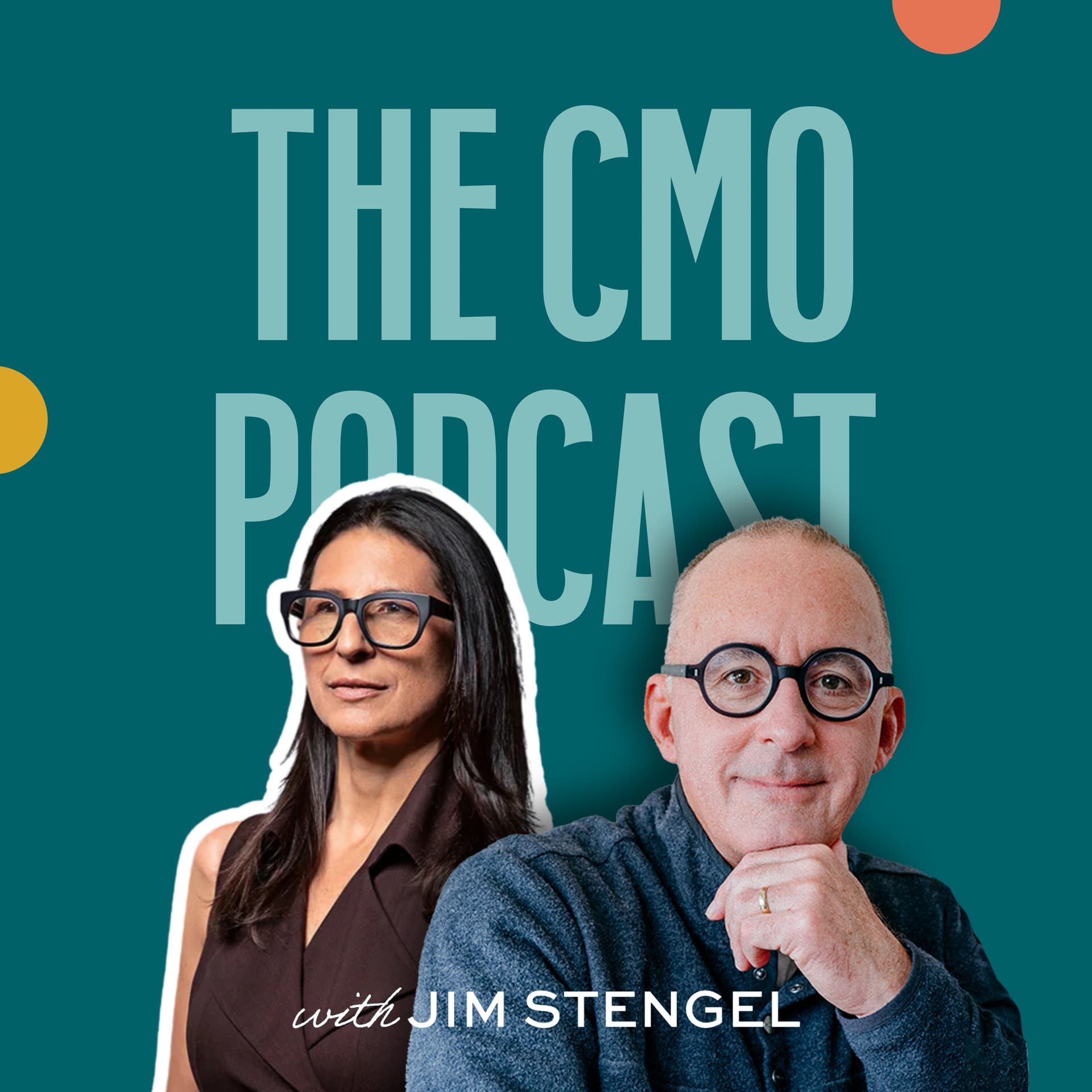
The CMO Podcast - Episode Summary: Natalia Ball (Mars) | A Better World for Pets
Overview In this episode of The CMO Podcast hosted by Jim Stengel, Natalia Ball, the Global Chief Growth Officer of Pet Nutrition at Mars, discusses her journey in the pet care industry, the importance of creativity in marketing, and her initiatives to foster a better world for pets. As we celebrate National Pet Day, Natalia shares insights into Mars Petcare, a significant part of Mars Inc., representing approximately 60% of its estimated $50 billion in sales.
Key Participants
- Jim Stengel: Host and former CMO of Procter & Gamble
- Natalia Ball: Global Chief Growth Officer, Pet Nutrition at Mars
Key Topics Discussed
Introduction to Mars Petcare
- Company Background: Established as a candy company in 1911 by Frank C. Mars, Mars remains family-owned with a strong focus on pet care, including brands like Pedigree, Whiskas, Royal Canin, and Iams.
- Significance of Pet Nutrition: Represents about 60% of Mars' revenue, showcasing the importance of pets in consumer lives.
Natalia’s Background
- Experience: Natalia has over ten years at Mars and previously spent 15 years at P&G, where she developed her marketing expertise.
- Inspiration: Recounts an impactful experience at P&G that shaped her aspiration to become a CMO.
Insights on Brand Building and Creativity
- Importance of Brand: Natalia emphasizes the need for brands to drive long-term growth and innovation while maintaining authenticity.
- Agility in Marketing: Discusses the need for agility in marketing processes, sharing experiences of launching the new feminine care brand, Naturella, within a tight timeframe.
Growth Strategies at Mars
- Development of Growth Model: Natalia highlights her focus on building a comprehensive growth model that aligns the organization towards common goals.
- Data-Driven Marketing: The importance of employing data to understand customer needs and drive innovation in product offerings.
Cultural Impact of Pets
- Pet Ownership Trends: The growing trend of treating pets as family members and the related growth in the pet care sector.
- Educational Campaigns: Discusses initiatives to educate pet parents, especially in emerging markets like India, about the benefits of nutrition and proper care for pets.
Challenges Faced
- Resource Allocation: The difficulty in making trade-offs in a large organization about where to focus resources amid many opportunities.
- Innovation Hurdles: Identifies challenges in accelerating product innovation and navigating a complex corporate structure.
Personal Reflections and Career Lessons
- Authenticity in Leadership: Natalia stresses the importance of being one’s true self in the workplace, sharing her journey to embrace her authentic leadership style.
- Impactful Mistakes: Reflects on important lessons learned throughout her career, including the necessity of building relationships and being open about mistakes.
Key Takeaways
- Understand Your Growth Model: Establishing a clear and actionable growth model is essential for aligning organizational efforts and driving success.
- Be in the Right Role: Finding a position that resonates with one's personality and strengths can enhance job satisfaction and effectiveness.
- Embrace Authenticity: Remaining true to oneself fosters a better working environment and encourages creativity and innovation.
Conclusion The conversation not only sheds light on Natalia's professional journey and her vision for Mars Petcare but also emphasizes the growing importance of pets in consumer culture and the role of effective marketing in driving positive change. As we celebrate National Pet Day, listeners are encouraged to reflect on the importance of pets in their lives and the impact of brands in promoting pet care and welfare.
---
Sponsors
- Deloitte: Supporting CMOs through insights and growth strategies.
- StrawberryFrog: Partnership in delivering impactful marketing solutions.
For more insights and to listen to the episode, visit [The CMO Podcast](https://strawberryfrog.com/jim).
Written by AI. May contain mistakes. Listen to the episode to check what was said.
Transcript
Automatic transcript. May contain errors.0:00Hi, everyone. It's Jim. I'm here with Matt Spiegel, EVP of True Audience Growth Strategy at TransUnion. Matt, you've spent your career helping marketers understand people through data, and that's harder and more important now than ever. It really is, Jim. There's really just so much information out there, and unfortunately, it's often disconnected. Marketers typically see fragments, maybe a purchase here or a click there. But what they really need is clarity, true full picture of who their customers are, and ultimately how to reach them. Well, tell me how your solution strategy comes in and helps CMOs and their teams bring clarity to chaos.
0:33Well, Jim, we ultimately do that with a 360 view of the customer. And so it's about ultimately combining data, truly trusted data, identity resolution, which is a deep analytical problem and measurement that actually helps understand performance. So ultimately we work hard to help marketers move faster, to deepen their insights and to ultimately make every dollar work harder. We believe strongly that when you truly understand your audience, you can build a real brand and real relationships with customers that last. Where were you when I was a CMO? I don't know how to answer that. Learn more at transunion.com slash clarity.
1:06That's transunion.com slash clarity. Hi everyone. It's Jim. I have Matt Spiegel of TransUnion with me. Matt, I want to start with what do you love about your job? Yeah, it's a great question, Jim. You know what? I love the fact that I get to be out at events and conferences and working with clients to really think about how marketers solve problems that matter at scale. The job of a marketer is as challenging as ever, and we get to do some interesting things to make their job easier. When you work with a client, where do you get the most satisfaction? You know what? I think seeing ideas come to reality.
1:34We ultimately are an enable of great marketing. So we don't do creative. We don't do media planning. We provide the data, the identity insights, the measurement tools that make great marketing possible. So when we get to see the end product, sometimes later, it's really cool to see. Well, super to have you here. Super to be a partner. Thanks for joining us today. Thank you, Jim. So if you want to turn data into understanding and understanding into growth, visit transunion.com slash clarity. What if the smartest marketing play is not to move forward, but to zoom out? Deloitte believes the most powerful move a CMO can make is to look beyond the next step and see the broader perspective.
2:09That's what the Deloitte CMO program is for, a place to gain fresh perspective and connect with leaders who've stood where you stand. Together, Deloitte will help you see the bigger picture so your next move isn't just fast, but right. Learn more about the CMO program at cmo.deloitte.com. Now, what's the first brand you remember making an impact on you as a young girl? I really struggled to think about which one I would answer to you. And I decided to go for Reebok because in the 80s, Reebok was big and it was fashionable. And I remember there were these shoes that were like these high top boots that were very trendy in the 80s.
2:45And I wanted them so bad in electric blue. I felt that I've arrived. I really felt like, oh, this is it. Now I'm the cool kid. And that's really a way in which I understood the power of a brand. The feeling I got just by wearing those shoes was amazing. So that a brand can do that really is impressive. Hi, I'm Jim Stengel, and I help major brands find their purpose and activate it. And the profits follow. For seven years, I was the global marketing officer for Procter & Gamble, where I oversaw the marketing of hundreds of brands. You may not know it, but the CMOs, the chief marketing officers of all of your favorite brands, are trying to connect you with your favorite products and services through purpose.
3:28And on this show, I delve into how they do it. Hello, everyone. National Pet Day is April 11th, so my guest today in the CMO podcast is Natalia Ball, the global chief growth officer of pet nutrition at Mars. This is a big business for Mars. Petcare is about 60 % of its estimated$50 billion in sales. Mars was founded as a candy company by Frank C. Mars in 1911 in Tacoma, Washington. It remains to this day a family-owned business. Mars Petcare brands include Pedigree, Whiskus, Royal Canin, and Nimes, and many, many more. My guest Natalia has been at Mars Petcare about 10 years and was promoted to Global Chief Growth Officer in April 2024.
4:10Before Mars, Natalia spent about 15 years at P &G, starting as a brand manager in Venezuela. Her last role at P &G was senior portfolio director in global laundry. Natalia joined P &G in my early days as P &G's global marketing officer. We'll talk about that and when and where we met. This is my conversation with a dog-loving, London-living mom of a seven - year old and an amazing chief growth officer. Here's Natalia. Well, Natalia, welcome to the CMO podcast. I think the first thing we have to talk about is National Pet Day, right? So this episode. We're recording in late March. We're releasing on April 9th.
4:46Pet Day is April 11th. So is that a big deal at Mars, National Pet Day, or just sort of every day is Pet Day at Mars? For us, it's more of every day is Pet Day. We celebrate pets every day. We bring dogs to our offices as our offices are pet friendly everywhere in the world. And we celebrate pets as well with adoption drives. Last year, we had our first global adoption drive, which was a weekend in which we really encourage people to adopt pets. And we executed this across 12 cities. And it was extremely successful. So we're planning to replicate that this year. So every day is pet day for sure.
5:24And you have how many pets at home? I have one dog. It's a golden doodle. She's two years old. Her name is Bella. And she's super fluffy and gorgeous. And you take her to work sometimes? I have taken her to work. Actually, if you look at my LinkedIn, there are a couple of photos the first time she came because everybody went crazy of her. So yes. Tough to get work done when you have something so cute at your feet, right? Yeah. Everyone wants to go by and chat. That's the reason I don't bring her so often, actually, because everybody wants to come. Yeah. We had a rescue dog as well, Dewey, passed away.
5:57My wife's still recovering from that. So you know how that goes. You need to get a new one. I know, I know. I'm not sure she's ready. I'm not sure she'll ever be ready. I know. So listen, we have a shared history, so we should get that out up front. You started a P &G. When I was in my early days as global marketing officer, just kind of learning the ropes, I traveled to Latin America a lot and I always enjoyed it. In fact, we do a lot of holidays in Latin America, even up to this day. And you stayed at P &G 15 years or so. I stayed 25. You worked most of your time in feminine care on brands like Always, Tampax, Naturella, and you worked for some great bosses.
6:33I did, yes. That was sort of a little bit of a leadership factory within P &G, the feminine care business. So we're now seven years out from your time at P &G, and I'm further out. I'm almost 15 years out. What are your reflections, Natalia, looking back on that time? Now we're out seven years. How it shaped you as the leader you are today? Well, before I tell you about that, I just want to talk to you about the elephant in the room, which is you came to Venezuela, to Caracas, which was where the P &G headquarters were for Latin America back in that time. And I am from Venezuela, so that's where I started my career at P &G.
7:09And when you came, we had a big brand building event with awards, and you actually gave me an award for marketer of the year or something like that. I don't remember exactly what it was, But what I do remember when you came was I said, he's who I want to be when I grow up. And that was the first time I decided I wanted to be CMO. And here I am 25 years later talking to you. So this is a big moment for me, Jim. I'm really excited about talking to you today because I remember very clearly that week when you came down to Caracas and talked to us. Oh, I love that story. Thank you, Natalia. That's very, it's very moving.
7:45I didn't expect this. It didn't come up in my prep for you. What about that moment made you think, wow, I want to be in that role someday? What was it? Well, I mean, I felt you were so in touch with consumers. You were talking about Latin American consumers as if you were in their dining rooms and their living rooms. And also the love that you showed for our brands. It was something that was really inspiring to me. And in general, you were very positive about the role that we as marketeers were playing in driving growth for the company and building capabilities for the future. And so I was very inspired by that.
8:21And that's when I said, I want to be CMO. I want to build brands. I want to drive growth. Well, you're doing all that, which we're going to talk about. Well, Natalia, you know, beyond that lovely moment you just shared, what else about that experience? As I said, you worked with a lot of great bosses. You were in a core category for P &G. So you had a lot of attention, a lot of resources. So talk a bit more about how it shaped you into the wonderful leader you are today. Well, I mean, obviously, as you know, B &G is such an immense school for leaders and for marketeers. But I think I was extra lucky with my experience at B &G because very early in my career, got a brief to create a new brand.
9:00And basically, we were given a brief and we were told in one year, we want to be launching this brand in Mexico City. And we went from brief to launch in 11 months. The brand we created is called Naturella. It's a brand that is really inspired by the Mexican consumer. We designed it especially for Mexico City. And it was meant to be the anti-always. And through that process, I got the opportunity to leave the entire process end to end from idea generation to equity building, to campaign, to product development, to marketing plans, to launch and then expansion because that brand actually launched first in Mexico City, was tremendously successful.
9:40We then expanded across Latin America. And later on, after a couple of other jobs that I did in the middle, I got the opportunity to move to Geneva and expand that brand in Central and Eastern Europe, Middle East, and Africa. So that brand in a matter of 10 years went from zero to 350 million and from zero countries to 28 countries. And so I felt that really built me as a brand leader because I was able to get that unique end-to-end experience that very few people actually get. So that was one. And then I would say another one is just the way P &G puts so much emphasis in building people. Like you said, I had really amazing bosses throughout my career.
10:21From the very first one, Mariana McQuatti, she put so much emphasis and focus on developing me, giving me feedback at the time that I needed it, giving me the right exposure, also pushing me to go for things that I thought I was not capable of and putting me in tremendous experiences. So throughout my career at TNG, that was like the way I saw developing talent as one of our key responsibilities. And I learned from the best. And now I apply that in the way that I do business at Mars. And by the way, I've been at Mars already for 10 years. It feels like it was yesterday, but I've been here already for a long time.
10:56Wow. Wow. Let's go back to a few of those things you said. I mean, it's a very unusual experience, I know this, to conceive and launch a new brand at P &G, right? That just doesn't happen. P &G has great brands, but they often flanker them, line extension, and most of the resources go to building the big brands. And that's one of the strengths of P &G. They never get complacent that big brands can't grow more. But you developed a new brand in 11 months, which is fast for any company, but especially for P &G, that experience of conceiving, designing, aligning, executing. How do you think you as a leader evolved during that time?
11:33Because I know the culture just isn't easy to move that fast. I mean, it was a great experience because we were a very small team. We were a team of four people, cross-functional team with supply, R &D, marketing, being CMI. And actually, the five of us became best friends throughout that experience. But this very small team was empowered because this brand didn't exist. So we got a lot of freedom. Then later, operated in fabric and home care, which was our largest category. And it was a very different environment where you didn't have that much freedom. Everybody had a point of view. In this case, we actually had a lot of freedom.
12:09We had a lot of support. It was something we were trying in just one city. we decided we wanted to do things differently. We wanted to innovate in everything we were doing in order to go faster, but also to really be consumer centric. And so we were the first ones, for example, in feminine care to add visual signals on the pad to signal in that case that there was chamomile on the pad. And after we did it and always did it, all the other brands did it to signal protection and other things. We really worked very closely to consumers. I actually lived with Mexican consumers for a week in their house to understand their needs, their aspirations, how their life looked like.
12:51And this really allowed us to move fast. We would do sprints of one week for concept development, sprints of one week for campaign development. And that really told me that you can be agile when you have empowerment, you have a clear mandate and you have freedom. There's some debate out there. I mean, agile has become a way of working for a lot of companies, right? And there's been a lot of study on that. there's some people out there that think it's not the best system to elicit creative ideas for campaigns, for initiatives, even for new products. How do you feel about that having lived it? Because you obviously launched a creative product and a creative launch plan.
13:27Well, when we were working like this, we had no idea that this was called Agile. I had never heard about Agile in my life. It was just the way we saw about making sure that we were as fast as we could be. And we were running these sprints, like I said, because we were working from Caracas, but we were working with Mexican consumers and we needed to be with them. So we needed to make the most out of the time that we were in Mexico. And that's the reason why these sprints were really helpful. But also working cross-functionally on solving problems was another way in which we were able to go faster because we were all thinking, okay, how can we do this?
14:02How can we leverage that? And not just saying, okay, that's a problem for supply. That's a problem for R &D. We were such a small team that we were working together on all of these challenges. Did you bring the agency in at any point? Oh, yes. We were working at the time with Leo Burnett and Amazon, which was a very small agency out of San Francisco. And they were extremely creative. So absolutely, they were part of these from the very beginning. Now, the other thing I want to reflect on is your experience in Femcare with so many great leaders, many who have left P &G and gone on to great things, as many people do at P &G, like yourself.
14:34So what do you think it was about Femcare that generated this great talent that built a business wonderfully for P &G, but also left and did amazing things externally as you were doing? Listen, in Femcare, I remember many leaders that really created an impression on me. I would say Patricia Perez Ayala, Melanie Healy, Gerardo Rios. And I think what they have in common is they were so human. They were like human first. They were very senior compared to where I was when they were leaders in the category. But actually, I felt they knew me. I felt they care about me. They care about my development.
15:14They look for opportunities to expose me. And for me, that was extremely inspiring. Also, seeing female leaders do well in that time was a signal for me that it was possible to do it. So I think I really credit them with a lot of my success in my career. And I feel extremely lucky that I had the chance to spend time with them. I know all three and they are three amazing people. I see Melanie relatively frequently because she decided to stay in Cincinnati and I live part time there. And she's having a good life, by the way. And she's earned it.
15:51everyone seems to be chasing the next big thing the fastest answer the quickest win but great cmos believe the real power isn't in the speed it's in stepping back to see the bigger picture that's why everything deloitte does in their cmo program from their industry-leading capabilities to their connected network of cmos is designed to help you zoom out and gain fresh perspective Deloitte will help you see the bigger picture together. Learn more about the CMO program at cmo.deloitte.com.
16:25Now, I want to fast forward to today. You're in an amazing category, right? One estimate I saw, it's$260 billion in sales and is projected to grow to$430 billion in 10 years, which to me seems almost unbelievable. But that's one estimate I saw. You may have different numbers. But it's growing like crazy. It's very healthy. And we talk about category growth now and then on the show. What could you share about what you've learned in this category that has made it so vital? Because I know, obviously, there's population growth, there's growth in pets. That's a big part of it. But usually the major players have a lot to do with a healthy category.
17:03And at P &G, we were incented to be sure the category was healthy. So what could we learn about what's happened in pet care that is such a vibrant, large, growing category? Yeah, it is a wonderful category to work for. From the data we have, 70 % of pet parents actually do treat their pets as family. They really see pets as family and they play a very important role in their health and well-being, in reducing anxiety, in reducing solitude in general. So more and more people are advocating for the benefits of having pets, which is one key driver of category growth. At the same time, Mars has actually built this category by investing very early on across many different countries.
17:48So we were the first ones to build a pouch, to build wet, to build care and treats. And we have done so by creating a playbook and investing ahead of the curve. And so we are doing that now, for example, in rapid growth markets, like Mexico, like India, I was actually in India last week, where the category is not yet fully developed. People are in many cases feeding home prepared food because that's what they do and that's their habits. So, we are learning how to change behavior, how to change habits and how to teach people that the best thing to do for their pets is actually go with manufactured food and build this category.
18:26And so, we continue to invest in this. The job is not done. Even in developed markets, we still have a job to do to drive emerging subcategories. And we are very, very much focused on making sure that that growth is there. But also we do a lot of work together with Waltham, which is a partner within Mars Pet Gear that focuses on scientific research to, like I said, put out there the benefits of having pets and make sure that more people can access those benefits across the world, as well as driving adoption in general. You were in India last week. what did you learn about pet care, pet love, pet nutrition with Indian consumers?
19:05Yes. I mean, India is a world of opportunity. There is a Spain within India. There is a Mexico within India. There is an Indonesia within India. It's such a large country full of opportunities. And so pet parents in India, same as everywhere in the world, they treat their pets as family. 50 % of pet parents in India are first-time pet parents. So they really want education. They really want access to knowledge, to know what's best for their pets. But it's a world food of opportunities for us. Now, you have been in this role as chief growth officer for about a year. And it's a big remit with a big portfolio of brands.
19:44And your ambition is to build the most pet parent-centric and digitally enabled organization in the world. So that's a big ambition. So where did you start flashing back a year from now? You know, you've been at Mars a while, you've been in line roles, but this is a big one, right? And any big CMO job with a multi-preend portfolio is complicated. So tell us about your startup in this new role going back a year. I started this role by really starting by focusing on the fundamentals. Before I joined, actually, there was a gap where we didn't have a CMO for a couple of years. And so there was a void that needed to be filled very quickly.
20:25And one of the first jobs to be done was to make sure that we were building fundamentals, for example, creating a growth model, making sure that everybody understood what drives growth, how do we diagnose against that model, and then put action plans in place to deliver growth against that model. It is really not rocket science, but when you start giving a lot of freedom and everybody looks at the category and growth in their own ways, it's really hard to get to the bottom of the truth. in a diagnosis. So we really put a lot of rigor and emphasis on growth model. The second step I took was really focusing on evaluating capabilities.
21:01Where are we really strong and then we need to accelerate? And where do we need to build or buy capabilities? And so we put a capability building plan in place, including advancing in the area of data technology-driven marketing, making sure that we were building those capabilities, Connected commerce, which is a huge driver of growth in this category. We also invested quite a lot on that. Making sure that we were building strong innovations is something that we're also working on. So really identifying where we wanted to build, where we wanted to accelerate. Last but not least, I would say brand building is an area in which Mars and Mars Pet Nutrition in particular has traditionally been extremely strong.
21:44And I wanted to elevate that, make sure that that got visibility, that they got resources to really take that to the next level, to build fantastic brand experiences that pet parents love, and to elevate the power of creativity that can really help connect with consumers. So that is another area that I wanted to supercharge after I joined. This idea of kind of aligning on a growth model, you know, for your category, that's, you know, P &G works on the same areas, as you know, it's not an easy thing to do, right? Because the world is diverse, but you do sort of need a framework, a playbook to guide everyone, a common way to look at success.
22:23So without giving anything away proprietary, which I know you wouldn't do, but could you talk a little bit about that journey to come to a growth model at Mars. How did you do it? How did you bring people with you? You know, just tell us sort of what we could learn from how you approach that and how you feel about the state of that right now. So we work in partnership with the Petcare Capability Team in order to take a data-driven approach because there were a lot of hypotheses of what drives growth. And I have a point of view and you come from another company, you have a different point of view.
22:54Do we need product superiority? Do we need parity performance? Everybody has a different point of view. And so what we did was to take a data-driven approach and really put science and facts behind drivers of growth. So we analyzed, I mean, I don't have the exact numbers, but I think it was thousands of thousands of data points in the category. This was the first time that it was done with focus on pet food, because before we had done it at Mars level, but we said maybe pet food is different, so let's do it at pet food level. And we really extracted the drivers of category growth to the point that all of the different point of views, we were able to get to one view because we had the data, the science behind.
23:37We worked as well with other organizations, obviously, Arian Bear Bass, agencies, et cetera, who had data. And we were able to leverage that data to put together a growth model. And at the end, we had the conversations. We agreed on the KPIs. There are some that are still not perfect today, we know. is the best we have at the moment, but we know it's not perfect. But at least we have alignment that that's the way all of the organization is looking at it. And the progress we've made actually has been faster than I thought it was going to be, because last year we were able to cover 86 % of our revenue with diagnostics against that growth model.
24:14And we have action plans on 86 % of our revenue. So actually, I think the marketing community, not only the marketing community, because we want this to be an enterprise planning tool. So all the teams are using now this growth model, we call it flywheel. But actually, we want this to become the tool that they use. And they really welcome it, actually. And I think that's why it has been so successful so far. They needed something to hang on to. And now we have all one common language. And I do believe this is going to make a big difference. When we talk growth, we're all usually talking about revenue, right?
Read the full transcript
24:49How do you think about role of brand in that? Well, basically, our brands are our biggest assets, right? I don't believe in short-term growth without long-term brand building. And we always need to look at both and how we drive through promo short-term, but through proper brand building the long-term. My legacy that I want to leave behind here, and I know that my team believes in this, brands need to be much stronger when I leave than when I started. The capabilities of my team need to be touched more notch when I leave and the culture of the team needs to be about curiosity, needs to be about innovation, needs to be about not knowing everything, but actually wanting to learn everything.
25:34And so with those three things in mind, with brands being the first area of focus, the good thing is that because this was a strength for Mars, for me has been easier to like supercharge as I was saying, but I do believe in the company, people believe in the power of brands. So it's easier to make the case. How do you feel about your first year in the role? you sound like you've been busy and you're very clear in what's important and where you're focused. What do you think has gone exceptionally well? You've talked about a few things that have gone better than you thought. And is there anything that has been more difficult than maybe you had imagined?
26:05Yes. It's been an amazing first year. Honestly, this is my dream job. I'm so happy to have this job right now. I think it's the right moment as well for me to be in this job. And I feel very privileged. It was crazy. As I said, we didn't have a CMO before, so there was a lot of work to be done. I feel more established now. But in this time, I'm extremely proud of some of the capabilities that we're building because we have been able to make tremendous progress, like, for example, on growth model, on data-driven marketing, incredible progress. We were very good already in developed markets, but we have made tremendous progress in emerging markets in this area.
26:44But the one that I am probably most proud of is our brand experiences, how we're building brand experiences that are truly delighting pet parents how we have really accelerated our creative excellence agenda and how everyone right now in pet nutrition feels pride to work here and for the brands so those are things that have worked extremely well now what hasn't worked so well i would say getting to a long-term enterprise portfolio strategy has proven more challenge that I originally anticipated. And then being able to innovate from a product standpoint in an agile way has also proven to be more challenging than I anticipated.
27:24So we are really still working through how do we innovate faster? How do we put products out there? We have tremendous ideas that we love, but then we struggle in the implementation of those ideas. So that's a code that I still haven't cracked. So any suggestions are welcome. It's on my list of things I wanted to talk about with you and you brought it up already. In this journey you're on, you raise this question of enterprise portfolio strategy has been a tough one. It's a tough one for many companies, but you're obviously thinking about it. You're working it every day. What have you learned about charting a path and charting a strategy within this company to make sure your portfolio is maximizing your growth potential in this great growing category?
28:05I mean, the reason why it is hard, it is not hard to know what needs to be done in order to capitalize on trends to delight the consumer and to drive pros. But what is hard is resource allocation, right? We don't have all the money in the world to go pursue all the trends or to go pursue all the opportunities that we have. And then what has been hard is to get to those tradeoffs. What are we going to say yes to and we're going to fully resource and commit to? And what are we going to say no to, even though it hurts? Those choices take time. You have to manage stakeholders. People have different points of view.
28:43And that's why it's proven more challenging than I anticipated. Obviously, when you say no to something, you are basically saying no to someone who that's the only thing they want to drive. And so you want to make sure that you're painting a vision that they can be a part of and that they feel included, even though you're saying no to what is most important to them. And again, unfortunately, that takes time in such a large organization where you have different stakeholders. And so for me, that has been the learning. I'm still in the journey, as you said. I believe we have been able to make very tough decisions already or things that we're not going to pursue.
29:18And we know that in five years from now, four years from now, maybe new people will be here and they will say, why they didn't go for that? It was so obvious. So we know they may be questioning some of these decisions, but you have to decide what are going to be your big bets, where you will put your resources. And that's what we're in the process of doing now.
29:43We all want to stay ahead of the digital curve and IAB, the Interactive Advertising Bureau invites you to do just that at the 2026 IAB Annual Leadership Meeting in Palm Springs on February 1st through 3rd. If you're a qualified consumer brand or agency leader, you can access free passes and travel vouchers. And for everyone else, you can take$500 off your ticket with code, all caps, ALMCMOPOD26. This is your chance to join a three-day gathering of the industry's brightest minds and boldest voices shaping the year ahead. You'll hear agenda-setting conversations, candid fireside chats, and dynamic breakouts on the topics that matter most, from AI and commerce media to measurement and addressability.
30:27This year's lineup concludes everyone from Kevin Bacon and Bozema St. John to creator Remy Bader, along with leaders from Forbes, Major League Soccer, General Motors, and Meta. Visit IAB.com slash ALM to learn more and check out the link in the show notes to register and receive$500 off your ticket.
30:50You mentioned a couple minutes ago the culture of brand building and creativity at Mars. and I get around, I go to award shows, I follow the industry. And Mars is a pretty regular at demonstrating creativity and creativity and growing businesses, doing things for the first time, getting great awards for it. And you're working to build on that strength in your current role. So could you talk about this culture of creativity that has been built at Mars over many, many, many years and you want to make it even stronger? You know, what have you learned about building a culture of creativity over time, which is very special?
31:28It is. Mars really believes in the powers of creativity. And that's why, yes, we have been out there in many of these award shows and our brands really try new things and take risks in general. Right. But now wait and see, because you will see it significantly more. Hopefully we will have a big year at Cannes this year. It's not the only one that matters, but it's the one that most people connect to in the industry. And the reason for that is because we have put a real program end-to-end on how do we power our creativity. And it starts with, again, capability building. I'm going to talk a lot about that because that's really the foundation for everything else.
32:11Give the tools to our people so that they can be their best. And so we have invested a lot in training, how to write great briefs. We partner with CANDS to do a masterclass with all of our marketeers on what great creativity looks like. We put in place a creative council with chief creative officers from all of our agencies around the world where they can bring their best ideas. So we're really focusing there, but also focusing on teaching people how to evaluate great creative, how to follow their gut, as well as how to fight the system. The system will always want to kill a big, bold idea because it's uncomfortable, because it's risky.
32:51So we're really teaching people to be bold, to not take no for an answer, to escalate, and to not accept dilution of great ideas. And there are many examples that I have seen since the Creative Council we had back in November, which was a fantastic success. Actually, our agencies really stepped up as well and presented wonderful ideas, pet parent centric ideas, which is what we want. And I decided to pursue many of these ideas and found a way to fund them as well, which is great. But then I have noticed some of these ideas diluting in the process because you get feedback from legal feedback from stakeholders.
33:27And that's what we're trying to avoid. We're trying to train people to stay strong and to find a way to have the right conversation, involve partners that are critical in this process earlier on so that those ideas can be as big as they can. And then last but not least in this journey, we have really brought along, for example, my CFO is new, enrolled. He's wonderful. The first thing I did with them was to share our ambition for creative excellence, to share all of the data that we had about how creative excellence drives profitability, how creative excellence builds stronger business, et cetera.
34:01And now he's fully behind this journey. So that's really helpful because you know, he's a partner. He's not questioning it. He's looking for ways to help drive this because he believes it's going to make us stronger. And so really has been a full journey of different elements, the talent as well, you know, make sure that we put the right talent in the right place. There are people that have passion for this. So we want to give them the opportunity to contribute and develop more in this area. So I'm really excited and you will see all the things that we're bringing. You sure are. Yeah. Well, how did you really conquer the fear of failure, right?
34:34We hear this a lot. And it's probably the whole system of what you just talked about because you're very, very upfront. The creativity is important and you need to do things. You need to have a culture that creates things that haven't been done before. But how have you dealt with that? For me, I talked earlier about curiosity and that is a very critical value for me and one that I try to instill in my organization. Curiosity is about feeling comfortable with not having the answer, feeling comfortable with not knowing it all, but actually wanting to go and find out more about it. And when you apply this to everything that you do, particularly in marketing, first of all, you will stay up to date with everything that's happening because you will always have questions.
35:14There is this new tool. There is this new agency. There is this new way of doing things. Let's find out more. But also, if you approach these challenges with a mindset of curiosity, what you're doing is let's learn what happens. we may fail but if we fail it's a learning i'm curious about what will happen if we do this i'm curious about what will work what won't work and so you don't take it as a big bet that if it doesn't pay is the end you take it as a way of learning something as a way of finding out something and obviously through this process we are keeping track very closely of kpis critical kpis that allows to build a stronger case for creativity moving forward.
35:56And this first year we're investing, but we are investing within a test and learn plan. But then once we prove that this actually works and improves in business results, then we can invest more. And that's the way we're approaching it here. It's funny. I just interviewed the Duolingo CMO yesterday and obviously a very, very growth oriented brand. And he talked about there, he called it grind and expand marketing formula. And it was about 70 % of the resources were on doing what we know works and doing it really well and continually improving it. And 30 % on ideas that they're not sure will work and that we have different expectations for them.
36:37And I said, well, how do you really do that? And he said something very similar to what you just said. He said, we go in with a hypothesis. We're curious about something. So there's always a hypothesis and then we try it and then we do a debrief. And if it didn't work, fine. We had a hypothesis. But it's not like some sort of wild free for all. It's very, very much about, you know, they understand the brand, which is a quirky brand. But here's a hypothesis that may or may not work. Let's try it if it doesn't work. Catalog the learning and move on. So very similar to your approach. And I am a big fan of the work that they're doing.
37:12They're really knocking it out of the park. Yeah, they are. they are. Natalia, we've had other Mars executives on our show from different parts of your business. We haven't had someone on from Pet Care and they've been fabulous interviews. I'm just curious, how much do you work across the company on things and how much do you not? Are there certain areas you work on together and certain ones you don't? Yeah, it's exactly like you described. We are as similar as possible and as different as needed. That's the approach that we take. So in certain areas, it makes a lot of sense to collaborate across Mars Snacking, Mars Food, Mars Pet Care.
37:46So we do. In other areas, there are very specific category cues, category learns that we have that we need to then cater to. So then we allow for those differentiations. And so, yes, we have certain capabilities we want to consistently build at Mars Inc. level. And then many of the capabilities I'm talking to you about may be more specific at Mars Pet Care level. And you said a few minutes ago that you're in your perfect job. What about this job is so perfect for you? You know, we all know when we're in a perfect job, right? I felt the same way when I was at P &G's CMO. But what is it about, describe the experience and why this is perfect for you?
38:23I would say it's two things. Number one, the blend of challenges that I deal with every day are completely different. So on the one hand, obviously, we're talking about brand experiences, brand building, creativity. I love that. The fact that I get to still work on those things. I'm really good at it and I love it. Innovation is another one. But at the same time, we are working on, for example, strategic revenue management, connected commerce, building sales capabilities how do we approach inside generations portfolio strategy so the breadth of challenges that i get to work on on any given day is super energizing for me the combination of different challenges working with the business on creating long-term growth plans where do we put our resources and working with that with the leadership team in general but then the second thing i would say is that I think I'm learning so much in this job.
39:17I love when I am in a job where I can add a lot of value to the business. So I know that I add value and I bring a lot, but I also get value from the business. And I feel here, I'm striking that perfect balance because every day I learn something new. And actually I capture some of those things in a special diary that I have. What did I learn today. And I am surprised of how much every day I'm able to capture there, either because I work with external partners on questions that I have, and I'm lucky to partner with consultancies, with agencies, with peers, and I get a lot of external inspiration that I really appreciate, or just working on the challenges that we have and we don't know how to crack is really energizing because you learn a new approach.
40:01So I think the combination of those two breaths of experiences as well as learning is what makes this my dream job. Okay. I want to flip to your career path. We began this interview talking about your career path and your P &G history. But as I was looking, I found something you wrote a few years ago about five mistakes that you learned from in your career. And I love these. They're just so human and so direct. And I want to read them and then I want to chat a bit about them with you. The first one is thinking that your work would speak for itself. Second, not investing time in building relationships with senior leaders, not raising my hand to be considered for a job, avoiding salary negotiations.
40:40The last one, losing yourself, which is an interesting one. So it's an amazing list. And I would like you to talk maybe a bit about which of those lessons did you find most profound and meaningful for you? I would say the last one is probably the biggest one of all, because again, this job is great, but also the reason why I'm able to do this job well is because I'm able to be myself. If I was not welcome, encouraged to be who I am fully authentically with the good things, the bad things and everything in between, I wouldn't be able to bring my best self to work every day. And there was a time where I was not able to do that.
41:22There was a time where I was in a job and I got feedback from my line manager on my style. You're too passionate. You make too many hand gestures. You need to be more poised. I always try to be super receptive to feedback. I don't take it personal. I really try to act on the feedback. And what happened was I started like really questioning every little movement that I was making, really trying to speak in a different voice, almost dressed differently to come across as more poised. And what I realized is that I was losing my module. Actually, my passion, my being loud, that's part of who I am. That's part of what makes me special.
42:02I really love the work. I bring all of me to the work. And if that's something that is not going to work with someone, then that's not the right line manager for me, or that's not the right business for me. So it took me a while to learn. So I tried it, actually. I tried it, and eventually I realized I was not going to perform like that. So I had the conversation with that line manager. And kudos to that person because that person then realized that that feedback was not helpful and that person apologized and said, oh, sorry, I shouldn't have given feedback about style. But it had been six months by the time that I had this conversation.
42:35So I lost six months of performance. And then since then, I've been a very strong advocate of being your authentic self and working particularly with female leaders who I think struggle a lot with these to find the right balance of being themselves and like excelling in senior positions, really working with them on helping them feel comfortable being themselves. The example you shared was very clear. And for our listeners who may feel they are in that same sort of situation, what are the early signals that you're losing yourself? I mean, you ended up having a discussion with someone and you were very articulate about it, But what are the early signs?
43:13I believe if you go to work and at the end of the day, you are extremely tired, but it's because you were trying to act in a way that doesn't feel natural to you, it means you start to lose yourself. The energy that it requires to act in a way that is not natural is actually tremendous. And so you will be exhausted at the end of the day. And that's a signal that you're trying to hard. You're trying to be who you're not. When you can be yourself, you gain energy from those interactions. So I think that for me is a little bit that signal. It's just the energy that it requires for you to act differently to what would be natural to you.
43:54Since you put this list out there, the five mistakes you've learned from, what's been the reaction from people? Oh, my God. I was really surprised by the strong reaction that Liz had. A lot of people that I have never met have reached out to me to talk about that list. one of the things they really appreciated was vulnerability. The fact that I, as a senior leader, am able to talk about mistakes and not only successes is really appealing to people because a lot of people struggle with these things. A lot of people have imposter syndrome. You know, they don't know how to approach a situation, but then they see me and they see, oh, how confident.
44:32She's great. I will never be her. But then when you share that you have struggled through these things and you are vulnerable with others, they feel more likely to open up. They feel heard. They feel not so lonely. So a lot of people have reached out to me to talk about how much this meant and also to have conversations. And also one of the ones that has been the biggest impact for people here is this idea of reaching out to senior leaders. A lot of people start the emails when they reach out to me to ask for a connection, people that I don't know saying, I read your five mistakes and you said the worst that can happen is that they say no.
45:05So I'm taking that invitation, reaching out to you. So I really try to always make time for those people. Which of these do you think you've built into a strength since acknowledging them as mistakes? I mean, all of them, or is there one that you would say has been an exceptional strength for you? I think the authenticity is my biggest strength. I would say this idea of being uniquely me, authentically me, the good and the bad is a strength. I think everybody who knows me will tell you she's super authentic. She's who she is. Everybody knows me. I'm super transparent. What you see is what you get.
45:37No hidden agendas. I put it all out there. And I think people appreciate it. So I would say that I was able to turn into a strength.
45:50Hi, everybody. I'm Andrea Sullivan, the CEO of Vive. And we have produced the CMO podcast with Jim Stengel for many years. And I'm sitting in his seat right now. It's so exciting. I wanted to tell you a little bit about one of our programs that's called Vive by Vayner. It's a 12-month program that's designed for C-suiters and founders. And we want to help people to grow their businesses, but also to grow themselves. And so we bring in people from Shark Tank to talk to our founders, but we also focus on wellness. We want to make sure that people are leaning into becoming their best selves, their best and happiest selves.
46:30So if you are someone that wants to learn how to grow your business and grow yourself, check us out at Vive.co. That's V-Y-V-E dot co. We'd love to talk to you.
46:48Let's move into the creative brief. And the first question is, you were quite a student back at university, number one in your class at university in Caracas. No wonder PNG snapped you up. So what was your dream back then as you were leaving school? with this great academic achievement? You know what? Things before I started university, my dream was to work for P &G. And I wanted to, I didn't know what I was going to do at P &G, but I wanted to work for P &G. And the reason for that was back in that time, P &G was the biggest company that we had in Caracas. But also they had this promo. When you were in school, if you collected all of the packages of P &G products, products.
47:30The school could win something. I don't remember exactly what it was. So in my house, we used to buy a lot of P &G products, and then I would bring all the packages to school. And so I was very connected to the company since I was in secondary school. And so I wanted to work for that company. I wanted to grow in that company. And I wanted to grow. I wanted to become a senior leader, but I didn't know in what. So back in that day, I had no clue that I was going to work in marketing. I actually studied systems engineering, which by the way, I never worked in that area. And by the first year studying system engineering, I knew that I was never going to work in that area, but I still finished the five-year degree just because I needed to get it done.
48:11But I knew it was going to be at P &G. Wow. That's a great story. Good for P &G, you know, being in the community as they were and they do, they still do, but there's just tremendous power in that. It's a great lesson for all companies. Now you've lived in many cities, which is your favorite? My favorite still is Caracas, which is my home city. I'm super connected to it and I feel that's the place I belong. And one day I would love to return. It's not happening in the short term because there are not a lot of opportunities for me, but maybe when I retire. And then my second favorite city would be London, which is where I'm living now because in London, everybody belongs.
48:48Everybody can feel at home no matter where they come from. Duolingo CMO lives in London too. So we'll have to get you two together. That would be great. Now, what's the first brand you remember making an impact on you as a young girl? I knew you were going to ask that, but I really struggled to think about which one I would answer to you. And I decided to go for Reebok because in the 80s, Reebok was big and it was fashionable. And I remember there were these shoes that were like these high top boots that were very, very trendy in the 80s and I wanted them so bad in electric blue. And I took a couple of months to convince my mom to buy them for me.
49:26And after she said yes, we actually couldn't find them anywhere. Turns out they didn't sell them in Venezuela. So then I have to go find out someone who was traveling to the US to actually buy them for me in the US. And when they finally come back after, I don't know, six months, I felt that I've arrived. I really felt like, oh, this is it. Now I'm the cool kid. And that's really a way in which I understood the power of a brand. The feeling I got just by wearing those shoes was amazing. So that a brand can do that really is impressive. That's quite a story about brand commitment. I remember I got the, remember the air pump Reeboks in the nineties?
50:04I mean, I was growing up, I was working at PNG at the time, but I love those. I got those for, you know, backyard basketball and all the kinds of stuff we do. You know, Reebok being a big brand for you. Is there any brand today having a big impact on you besides your own? Well, actually, Duolingo would be one, but just because I'm envious of some of the things that they're doing, for example, when they killed their mascot, I was like, oh my God, that's so bold. That's so daring. I hate them because I love them. So yes. Yeah. Yeah. No, they are. The way they use that mascot and the way they are tapped into culture and social media is sort of best in class.
50:41So I think connecting with him, I think you two would have a lot to share with each other. I'm sure. Now, what's the one campaign or initiative that you've done in your career that has been the most meaningful to you personally? Wow, that's a big question, Jim. So many campaigns. But you know what? Right now I have one that is so fresh in my mind and I am so proud of it that that's what I'm going to talk about. This is a campaign we have just launched on Pedigree in Brazil. And in Brazil, there is this type of dog that is a mutt and it's caramel in color. And you see them all around the streets in Brazil and it's called the Caramello.
51:21This dog is 90 % less likely to get adopted in shelters than breed dogs. So you see them all over Brazil. It's almost like a cultural icon of the country. And so with Pedigree, we realized this fact and we want every dog to have a loving home. That's something that Pedigree has stood for for many years. And so we came up with the social first campaign to make sure that Caramellos get the same love as breed dogs. So we started with a key influencer and she posted online that she tried to register her Caramello to a dog show and she was not allowed to because it was not a breed. And so Pedigree answered to this cry and said, don't worry, we got you.
52:05We are going to make sure that Caramellos are considered a breed. So we're going to create a kennel club. We're going to do DNA testing, actually the largest DNA testing ever done in Caramellos. and we are going to make sure that Caramelos get the place they deserve in Brazil. And so it has been tremendously successful. It's created national conversations. People are reaching out to us to actually make this happen and partner with us on this. And I am so proud because when we first saw this idea, we knew it was going to be big, but actually the team has put so much emphasis in really taking the idea to its full extent.
52:41And they have planned not only one lunch, but several lunches to maximize what this can mean for Caramelos, for Pedigree and for people of Brazil. So super excited about that. So on brand for Pedigree and another can winner, by the way, is my prediction. I'm sure that I'm betting on a big one on this one. Those stories like that are so moving. We were in Cuba recently and there were dogs that had like little medals on. And I asked someone what's going on. They said, these are dogs that no one owns. but the community knows that. So we put a metal on them so everyone knows to feed them. Oh, that's beautiful.
53:17I love that. Yeah. It was in Havana. It was just a beautiful and a lot of dogs around Havana. Okay. Who has been the most inspirational person in your life? Oh my God. So many people. It's really hard, but I would say, I would name two people. My mother, she was someone who was so full of life, so happy, so generous. She was surrounded by friends. She attracted people to her. And growing up with someone like that actually made me believe that everything is possible, made me believe that the world is a nice place and people are nice. And it was just beautiful to watch her. She's no longer with us now, but I couldn't have been luckier to have the mom that I did.
54:01And then I would say the second person would be my husband, just because he's such a believer in me. Whenever I have doubted myself, he's always said, no, you can do that and you can do so much more. He has actually pushed me to go farther than I thought I was going to go as well. And so, I mean, he sees me with eyes that I don't even see myself. And I really appreciate that. Did you meet him at P &G? No, not at all. I met him back home in Venezuela, but he's from Israel. And then we got together and moved to Geneva. Actually, our anniversary, 18 years, is this Friday. Oh, congratulations. What are you doing to celebrate?
54:35We are going to go out for dinner on Thursday because we don't have our daughter with us, but on Friday we do. So we're going to celebrate on Thursday. Beautiful. What did your mother think of your career going to P &G, et cetera? She was so proud of me. She would talk to everyone about what I was achieving and the things that I was doing. And she told me consistently these. My dad as well, by the way, and he always exaggerate what I do even more, which is embarrassing, but yes. That's what dads do. What was your mom's favorite P &G brand? I mean, that's a hard one, but I think she would say Pantene.
55:09She loved that brand. Yeah. Talia, thank you for this marvelous conversation. Happy National Pet Day. And thanks for all your wonderful stories. Glad we're reconnected from giving you an award many years ago. So it would be great to catch up with you in person one of these days. So let's try to do that. Yes, I would love that. I mean, I'll be at Cannes, so I surely will have a chance to see you there. Let's do it. Let's book a coffee or rosé or something like that. That would be awesome. That was my conversation with Natalia Ball. Three takeaways from this one for your business brand and life.
55:42The first one and a very powerful one. If you're a CMO or frankly, any senior leader, understand your growth model. Natalia talked about going through the data, putting a team against this. One of her first things she did as growth officer was what does it take to grow our business and grow our brands? And they now have a growth model that everyone was involved with and it's working to make the strong company even stronger. Second takeaway, the power of being in the perfect job for yourself. Natalia talked about meeting me many years ago as P &G's CMO and saying, I want that job. And she's never lost sight of that.
56:15And she talks about how happy she is in this current role because it is perfect for her personality, her strengths, and her curiosity. And third takeaway, don't lose yourself. It's kind of related to the second point I just made. But this idea of being yourself at work to being in a place where you can leverage your strengths, be yourself, bring everything to work. We talk about that concept a lot on the show. But this was an example of a woman who has made that learning explicit and ensures that she is always in a company and in a role where she is working to her full potential. And hey, bonus takeaway.
56:51It's National Pet Day. If you're a pet parent, and I know a lot of you are, give your dog some extra love. Give your dog an extra treat, and I hope it comes from the Mars Company. That's it for this episode of the CMO Podcast. If you found this helpful and entertaining, I would be so grateful if you could share our show with your friends. And I would be super happy if you subscribe so you can be updated as we publish new episodes. And if you really want to help, leave us a five-star rating and a positive review on Apple Podcasts or wherever you listen. The CMO Podcast is a Vive original production.
57:28Episodes of the CMO Podcast are produced by Vive. The views and opinions expressed by podcast speakers and guests are solely their own and do not reflect the opinions of our sponsors or its personnel, nor do our sponsors advocate or endorse any individuals or entities featured on the episodes.
From the publisher
As we celebrate National Pet Day, Jim's guest this week on The CMO Podcast is Natalia Ball, the Global Chief Growth Officer of Pet Nutrition at Mars. This is a big business for Mars, Petcare is about 60% of its estimated $50 billion in sales. Mars was founded as a candy company by Frank C. Mars in 1911 in Tacoma Washington; it remains to this day a family-owned business. Mars Petcare brands include Pedigree, Whiskas, Royal Canin and Iams.
Natalia has been at Mars Petcare about seven years, and was promoted to Global Chief Growth Officer in April 2024. Before Mars, Natalia spent about 15 years at P&G, starting as a brand manager in Venezuela; her last role at P&G was senior portfolio director in global Laundry. Tune in for a conversation with a dog-loving, London-living mom of a seven year old, and a chief growth officer!
---
This week's episode is brought to you by StrawberryFrog and Deloitte.
Learn more: https://strawberryfrog.com/jim
See Privacy Policy at https://art19.com/privacy and California Privacy Notice at https://art19.com/privacy#do-not-sell-my-info.