In short
The CMO Podcast - Episode Summary: Nicole Parlapiano (Tubi) | Swing Big on Brand Building
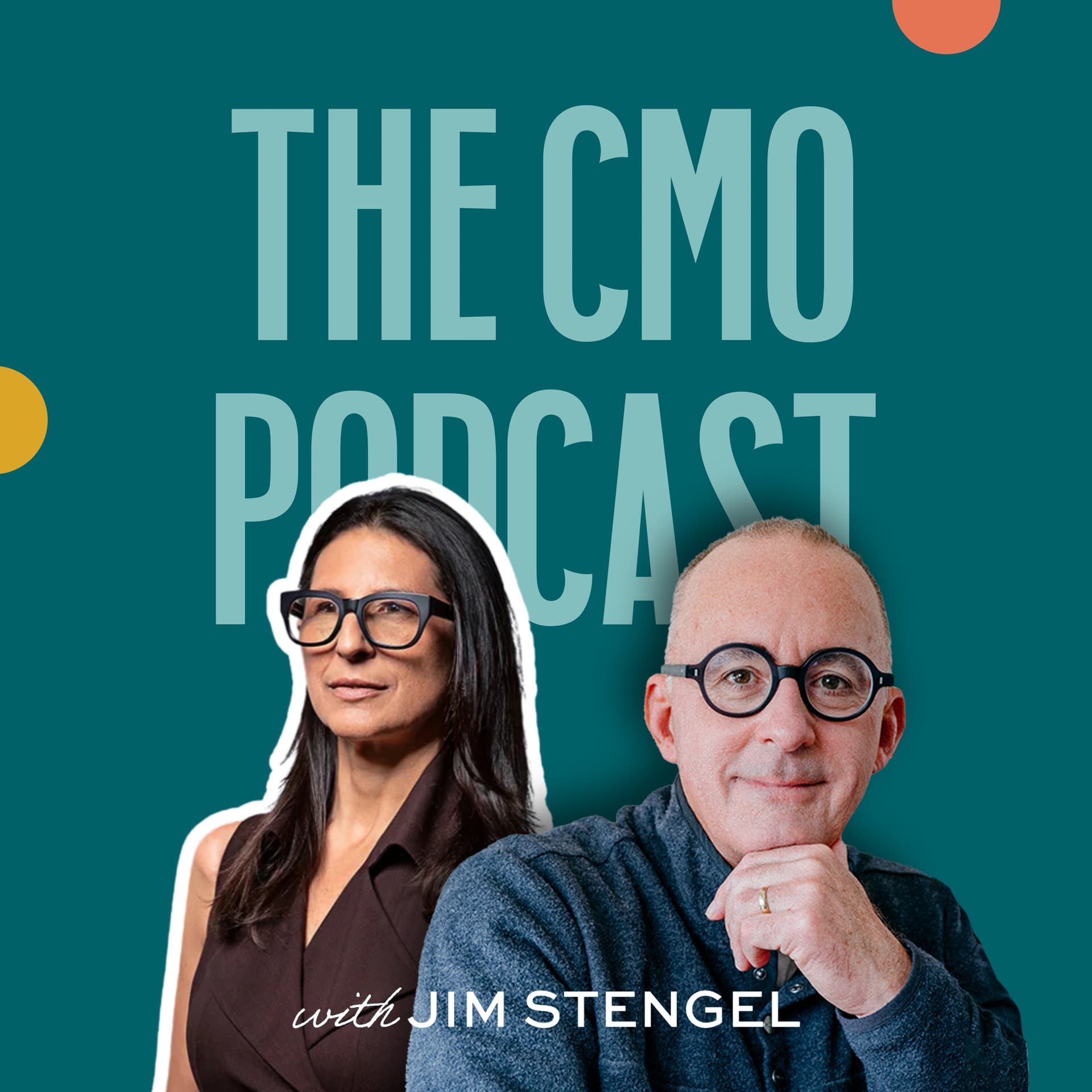
Podcast Overview Host: Jim Stengel Guest: Nicole Parlapiano, CMO of Tubi Episode Release Date: [Insert Date Here] Sponsor: Deloitte
Podcast Description: The CMO Podcast features in-depth conversations with Chief Marketing Officers (CMOs) to explore their motivations, challenges, and the art of brand building. Jim Stengel, a former CMO of Procter & Gamble, leads these dialogues to uncover insights that impact consumer experience.
---
Episode Highlights
Introduction
- Tubi's Rise: Tubi is now recognized as the most watched free TV and streaming service in the U.S., boasting 100 million monthly users.
- Nicole's Background: Before joining Tubi, Nicole Parlapiano had a diverse career, including roles at Tinder, WeWork, and eHarmony.
Key Insights from Nicole Parlapiano
- Influence of Early Brands
- Wizard of Oz: Nicole shares her childhood fascination with "The Wizard of Oz" and how it shaped her understanding of storytelling and brand influence.
- Building the Tubi Brand
- Initial Challenges: Tubi struggled to articulate its unique narrative and establish a competitive presence in the streaming market.
- Recognition: After two years of innovative marketing strategies, Tubi gained media attention, proving the viability of its free streaming model.
- Marketing Strategy and Super Bowl Ads
- Previous Successes: Nicole references Tubi's viral Super Bowl ad from 2023, which leveraged a unique interruption strategy to engage viewers.
- Measuring Success: Post-Super Bowl analysis showed that Tubi not only met its streaming goals but also strengthened brand partnerships.
Career Journey of Nicole Parlapiano
- Career Path: Nicole experienced a rocky career trajectory, characterized by resilience and strategic shifts, notably moving to VaynerMedia which offered a creative marketing environment.
- Risk Appetite: Emphasizes the advantage of working in a challenger brand where taking risks is more accepted compared to established companies.
Brand Building at Tubi
- Brand Values: Tubi's core values include "Swing Big," "Stay Nimble," and "Deliver Delight."
- Consumer-Centric Approach: Nicole's strategy focuses on understanding the diverse interests of viewers and catering to niche subcultures within Tubi's content library.
Reflections on Marketing
- Creative Briefing: Nicole emphasizes the importance of strategic setup before diving into creative execution.
- Cultural Relevance: Understanding the evolving media landscape and how viewers engage with content is crucial for Tubi's growth.
Concluding Thoughts
- Mentorship and Leadership: Nicole aims to mentor the next generation of marketers, emphasizing the importance of providing opportunities to those without traditional backgrounds.
- Final Insight: The essence of marketing lies in problem-solving; understanding what challenges the brand faces and addressing them through innovative strategies.
---
Key Takeaways
- Career Resilience: Nicole's journey showcases the importance of grit and adaptability in navigating career challenges.
- Strategic Risk-Taking: Successful CMOs take calculated risks that align with brand objectives and market opportunities.
- Consumer Connection: Building a brand involves understanding the audience's needs and preferences, particularly in a fragmented media landscape.
---
Final Remarks Nicole Parlapiano's insights reflect a modern approach to marketing, highlighting the need for creativity, strategic risk-taking, and a deep understanding of consumer behavior. The conversation serves as a guide for marketers aiming to make a meaningful impact in today's competitive environment.
---
This episode emphasizes the critical role of the CMO in navigating brand challenges and leveraging innovative strategies to drive growth, making it a valuable listen for marketing professionals and business leaders alike.
Written by AI. May contain mistakes. Listen to the episode to check what was said.
Transcript
Automatic transcript. May contain errors.0:00What if the smartest marketing play is not to move forward, but to zoom out? Deloitte believes the most powerful move a CMO can make is to look beyond the next step and see the broader perspective. That's what the Deloitte CMO program is for, a place to gain fresh perspective and connect with leaders who've stood where you stand. Together, Deloitte will help you see the bigger picture so your next move isn't just fast, but right. Learn more about the CMO program at cmo.deloitte.com. First brand you remember making an impact on you as a young girl. So I thought a lot about this. I was marketed to and very susceptible to all the dolls, My Little Pony, Barbie, Cabbage Patch Kids.
0:39But when I think of brand, we were talking about Wizard of Oz. That was the brand that influenced me the most. And probably most young kids would say the same of like, what show? What was the first thing you were a fan of? And what was the first story you fell in love with? For me, it's the Wizard of Oz. Hi, I'm Jim Stengel, and I help major brands find their purpose and activate it. And the profits follow. For seven years, I was the global marketing officer for Procter & Gamble, where I oversaw the marketing of hundreds of brands. You may not know it, but the CMOs, the chief marketing officers of all of your favorite brands are trying to connect you with your favorite products and services through purpose.
1:19And on this show, I delve into how they do it. When we began the show nearly six years ago, no one had heard of Tubi. Well, now this 11-year-old brand seems to be everywhere. Streaming the 2025 Super Bowl, standing out among Super Bowl advertisers the past few years, cue the rabbit hole on the cowboy head ads, and popping up all over social media. Tubi, which is the most watched free TV and streaming service in the U.S., has an active fan base of about 100 million monthly users. It outranks Peacock, Max, Paramount +, and Apple TV in total viewing time, and rivals Disney+. Tubi is owned by the Fox Corporation.
1:55My guest today is Nicole Parlapiano, the chief marketing officer of Tubi and the woman behind so much of the strategy and innovation that sets Tubi apart from its competitive set. Nicole has been at Tubi for almost three years, and despite the steep growth numbers, seems to be just getting started. Before Tubi, Nicole has had an eclectic career journey with time at Tinder, WeWork, Vayner, and eHarmony. Raised in a blue-collar family outside New York City, Nicole went on to Fordham for her undergraduate degree and later earned her MBA at night at USC. This is my conversation with a pop culture obsessed, nature loving CMO with a toddler at home and who has a self-described endless appetite for risk.
2:37Here's Nicole. Nicole, welcome to the CMO podcast. I was watching another podcast of you in my research and behind you were two really interesting things on the wall. One was a picture of Judy Garland in Wizard of Oz, and the other was the New York Times headline, The Little Streamer That Could. So let's open the show with why these two images are so meaningful to you as they were right behind you as you were recording the show. My childhood favorite movie, the movie that I watched every day as a kid that I was obsessed with was Wizard of Oz. And so my whole family kind of knows that was my movie.
3:16I had like the ruby red slippers that my mom made me that I wore every day to school until my dad, they got so ratty, my dad threw them out and I cried for days. And I would have on the weekends when I'd be with my grandparents, they would play different characters in Wizard of Oz. My grandfather would say like, pay no attention to the man behind the doily. He'd hold up like a doily to his face behind the curtain. That was always my movie. And funny enough, when I was on agency side, we were doing Art Basel for Stella Artois. Part of that, they had partnered with an art house that had made all these custom prints that we had like an art scavenger hunt all over Miami.
3:56And that Dorothy print is a Marilyn Minter print. And she's kind of like in a shallow pool of water. But I think she's like low key, one of the biggest, I think, early heroines of just a woman on an adventure that was strong. There was like no romance plot, had a cast of friends. There were scenes of dealing with like excitement and opulence, but then also trouble along the way. And so I think that she's just kind of my heroine in life. And so I like to have her there. You'll have to come visit me in Coronado. You know, Frank Baum wrote Wizard of Oz parts of it in Coronado. Oh, really? I did not know that.
4:34And the house that he wrote it in is just a few blocks from our house. So it gives it a good vibe. Yeah, very iconic. So the headline. When I came to Tubi, I was with the founding team. The company was about eight years old. And great product, great stickiness with viewers. But we had a really hard time articulating our narrative and why Tubi is different and how the viewing experience is different. And at that time, we could not get New York Times to cover us, to save our life. No one was interested in the space that we were in. No one was interested in the brand. Great moment of pride after two years of building on that narrative and having it break through, having reporters finally be like, okay, there's something here and we want to cover it.
5:20And so, you know, just a story of how this to be a smaller streamer initially in the space that does not have a legacy, you know, the backing of like a big legacy brand like a Paramount or a Max or a Disney, but is also not a Netflix or a Hulu to be where we are and to have that belief that we were on the right track and not to change our strategy to be the strategy of everyone else in streaming. It was such a full circle moment to just see that recognition finally come through and appreciation for the business model. What do you think turned for them to cover you to make such a great story? I think the growth in the business is like you can't deny the way that we have risen on the Nielsen charts, the way our viewership has grown.
6:08And the fact that we see entertainment as a different thing than probably we're all used to streaming entertainment being packaged for us. So Netflix created the game they started. And so for, for all of us in the industry, it's like, how, how do you be different than Netflix and create a different experience or everyone, you know, a lot of people got caught kind of trying to chase the Netflix thing by doing a lot of different originals to try to stand out, to drive subscribers. And we really believe that entertainment is a personal experience. We all like to watch different things. And the reality is that many of the new shows that come out are not really what is grabbing share of viewership and engagement of viewership.
6:55It is some of the more, you know, niche kind of films or genres that people really love to watch. It is older content, nostalgic content that either brings you back to a time when you were younger or for even younger generations, they've never seen these TV shows before. It's new to them. So I think just educating a little bit around the streaming experience and how it's different when you're a free streamer and how we just honor, we're not trying to push anyone to watch anything that isn't for them. We really just want them to kind of find those unique rabbit holes on Tubi and really find the things that they love, that they feel seen in that make them feel good and entertain them.
7:38We're going to talk a lot more about that in a few minutes, but I want to come back to a conversation we were having a few weeks ago in the show after the Super Bowl. We had a round table. We had eight CMOs on. You were one of them. You actually kicked it off. And I said at that time that the Philadelphia Eagles had a great night, but so did you. Yes. And you streamed it live. You did custom ads in your platform. You had another great epic ad, the Leather Cowboy Head. You launched your Z-Suite series and everything I've seen, it really took off like crazy. So you had so much going on that night.
8:07You said at the time when this show, you're not sure how to measure it. You had so much going on. So now four to five weeks later, how do you feel about all that effort? Do you feel like it had a good payout, a good ROI? I think so. I mean, we're, now that we're out this far and we're looking back at the numbers, not only did we hit our goals, you know, for the streaming experience, but that the brain campaign had some staying power and whether it haunted people, you know, weeks after they couldn't get it out of their mind. And then, you know, ZSuite continued because it released episodically every week.
8:42So we're tremendously proud of how we programmed around this to really maximize those opportunities. And, you know, even the work we did with brands has opened up, you know, more doors to work with other brands because they see that we're good partners and good creative partners and understand the brand and understand our demo better. So they are coming and there's a lot more inbound to collaborate and work together, which is awesome. You're becoming a mainstay in the Super Bowl. So do you think you'll be back next year? I don't know yet. There's also the Super Bowl next year. There's also World Cup next year.
9:17So they're trying to still figure out what the plan is there. But this was a real tempo moment. And I think I'll be honest. I had a lot of anxiety going into this Superbowl because we, the 2023 Superbowl was also so massive for us with that viral interruption ad. I mean, it, it went crazy. It kind of flag planted our brand in the mind of consumers and advertisers. And you know, you don't want to have second album syndrome, but you also can't replicate a moment like that. So to be able to have the game this year for real. I think like you were saying, there was a lot going on that night, how we prioritize, not that anything was a lower priority, but making sure that we took advantage of the fact that we had the game live and really brought people that in that would not have watched the game.
10:11So, you know, when we're all looking at the numbers for this year's Superbowl, I see it from a different lens because I see the streaming data and, you know, 40 % of the people that watched on Tubi had not watched any NFL games all season. That's crazy. And the bulk of the viewers were 18 to 34. So it was the youngest audience to watch the Superbowl overall and skewing female. And that was our strategy. So I do think that everything was important, but making sure we nailed that stream. And there's obviously things that could happen that are outside of, say, marketing's control. And just thinking the chain reaction if things don't go well on everything else.
10:53So for example, if something was to go wrong in the stream before the ads started rolling, what is our strategy about how we approach those ads? And it's kind of a decision tree along the way. Because so many things were going on, how does it impact all these other things that we are planning to activate on. So, and thank goodness we had a flawless stream. And so we were able to, you know, lean in and engage and not get distracted or have to go quiet in certain moments. So I'm just extremely grateful for that. And that the fact that people are having such a good experience streaming it and wanting to talk about it was great to lean into.
11:33I want to start the show really on your career path. And I've seen you talk about it in a few other venues, and you talk about it a lot more vulnerably than most people talk about their career path. So I'd like you to talk about a time when it was not looking so good for you. You know, it was, I don't know, 10, 11 years ago, you were in a dark period in your own words, you were in LA, you moved to New York, you went to VaynerMedia, and that seemed to be sort of a turning point. So what was it about that move, that time, that role at Vayner that seemed to give you a boost and get you sort of get your momentum going again?
12:14You know, I had moved out to California to get my MBA in 2008. Couldn't have picked a worse time to make a change like that. And I got my MBA part-time. So I was going to school at night and I was working during the day. And at that point, I worked in private equity. So the time that I'm in LA and the decisions I made were based on it being a weak economy and having to duck and weave and take different types of jobs. And that's the way I ultimately ended up in marketing. But I could not find like a happy career home in LA, but I desperately wanted to stay here. I loved living here. I loved the lifestyle on a personal level.
12:54I really fell in love with it. But after I had lost my job, I was working at a agency holding company that was in the last year of its earn out with WPP. So it was an independent agency that WPP bought. I ended up there the last year of the earn out, which is rough. That's a rough time to be there. I've got a bad taste in my mouth of agency culture and just not really, I didn't think doing right by the clients. And it felt like I was just a glorified salesperson. So after I had lost my job there, I had to have a real come to Jesus myself of like, this has been rough. And I was applying for jobs in LA, but I was also applying for jobs in New York because my family lives in New Jersey, right outside of the city.
13:40And I was like, maybe I just need to open up my app aperture and I need to change. And I had two offers on the table and one was in LA working for a, we were competitor, a startup. Um, and I had spent a lot of time with the team and visiting all the locations and they were all really lovely. And it was like a build it from the ground up, figure out how we're going to market. And that's when I became familiar with WeWork. Cause I was like, wow, WeWork is so big and powerful that this is going to be a hard competitor to go up against, especially when we're only in certain local markets. And then I flew out to New York to take some interviews and I didn't know Gary.
14:16I was not familiar with him. And this is early days of Vayner, not early, early, but still on the younger side of the agency as 2015. And I went there and I interviewed and I liked everyone, but what I liked more about it is that was deeply in social, deeply rooted in social and And everything that I had seen working agency side, working in performance marketing, that was a whole new channel to tap into for consumers and brands. And I was just very interested in staying in that space. So it had the social component, also was working on a big account, Anheuser-Busch. And I really wanted to work on that business because AB InBev was super bullish about how they marketed.
15:02They always wanted to be first to market. They tapped into lots of big cultural temple events, whether it be in sports and in music. And then the third thing was, so I was pretty sure that I liked Vayner, but I wanted to see what Gary's perspective was on agency. So my final meeting was with him and he basically said, I want you to do innovative things with clients. I want us to push the boundaries in social. I want them to take this channel seriously, but you are not going to be held to some strict P &L where you have to drive revenue. I ultimately want us to be in a place where we're an agency that's learning and learning with our clients and doing what's best for the clients.
15:46And so that really struck me. And I ultimately decided that I was going to move and take the job there. My experience working on in both cities is there's just an energy in New York and a tenacity in New York that is infectious when you're working in a business. And I think at Vayner it was felt like a startup agency. And we were like these weird when we go to these big IATs or IMCs with big clients and they'd have widen and they'd have media com and then they'd have their PR team. And we were like the weird social kids at the social at the kids table eating. You know, like it just felt like we were this kind of social gremlin agency trying to get these clients to do different things and trying to figure out how their big, big campaigns extend really endemically into social channels.
16:35That's how it started. And then by time I left Vayner, you know, we were creative AOR for a lot of our clients. We were doing big shoots and big campaigns. we had taken on media, paid media, which is one of the things that the first things that I did, because I had a media background when we were there, when social became a lot more pay to play. So it had grown so much and we have built so much capability that it was just a really exciting time, worked with smart clients, smart teams, smart people. And I just kind of hit my stride. And I don't know if it's like a New York thing versus LA thing or what it was, but I learned a lot.
17:12I worked with a lot of great people. And it's still a place that throughout my career, when I am recruiting, I find myself tapping into the Vayner alumni base quite a bit.
17:29Everyone seems to be chasing the next big thing, the fastest answer, the quickest win. But great CMOs believe the real power isn't in the speed, it's in stepping back to see the bigger picture. That's why everything Deloitte does in their CMO program, from their industry-leading capabilities to their connected network of CMOs, is designed to help you zoom out and gain fresh perspective. Deloitte will help you see the bigger picture together. Learn more about the CMO program at cmo.deloitte.com.
18:02Another interesting aspect of your career is your depth of knowledge about dating and relationships. You worked at eHarmony way back. You're an advisor to the dating platform three-day rule. And before Tubi, you were the VP of marketing in North America for Tinder. So was this intentional? Do you just like the category or was it like the right job at the right time with the right boss? I think for the eHarmony one, it just felt like it was so interesting. And that was in 2009, 2010, where these digital businesses were kind of popping up and I thought like how fascinating is it to be in the dating business it's it's you're marrying tech with just like psychology and then the culture around dating so eHarmony was just like I was curious about the business and I liked that it was a digital business and I think in being there and being at the cusp of such a pivotal time for dating meaning you know this is when I started it was just match group and eHarmony really there really wasn't anything else and it was desktop dating.
19:06It was, there was no iPhone. And the moment that the iPhone came out and I remember it acutely there, we were trying to really figure out how do we port the eHarmony user experience to a mobile app. And it was really hard because there was this very intricate matching personality quiz that just took forever to do on mobile. And so I think that moment was a moment of, okay, it's now going to be done on the phone. And how are you going to adapt the product? And the phone actually allowed accessibility to a much younger demographic. So when I was working at eHarmony, I was single for most of the time, but like, I never felt like any of those apps were for me.
19:56And I think that is what made me interested in three-day rule was like, how can we build something for younger people that feel like there's a stigma if you're on like a match.com or eHarmony. And at that point, three-day rule was a blog. And it was a blog that would tell you of like what your guy type in LA was. And we had all of the men in LA, kind of 40 different types of men, whether it was like the Hollywood agent or the surf bro. And what it was, was a nightlife guide. So if you like that type of guy, we would tell you what bar on what night you have the highest likelihood of meeting a man like that.
20:37So it was a guide for single women to take more control over their dating life and plan their weekends or weeks a little bit more strategically. So that is where I met the two founding women and we bootstrapped the product, made it into an actual app experience, and it did get acquired by Match Group at a point and it did not make its earn out. So they had held us for three years and then decided they didn't want to purchase the rest. That was a big lesson in at that point when we were raising money and pitching VCs in LA, it was really all men giving us their opinions on what the app should be.
21:17And I don't think we had enough backbone in the confidence of where we wanted to take it. Every time we got out of an investor meeting, we would spiral and try to like incorporate their feedback. Therefore, I think it got watered down. And then the Tinder happened. And I'll never forget laying in my bed. And at that point I had a boyfriend and hearing about this app and downloading it. And the minute I opened it, I was like, Oh my God, this is amazing. And every person that I knew, and I was in my twenties was on this app and just ripping on it, loving it, like couldn't believe it. It was so engaging.
21:55And so then later to get, you know, to have the opportunity to work at the place that I respected the most that I thought just changed the game in dating in such a transformational way felt like just an amazing opportunity. I've heard you say that you learned a lot about taking risks at Tinder. I did. What was it about that time and that culture? I think Tinder was at a time where they had to take some risks, but I, because the business had kind of matured to a point where we had lost the footing with the next generation of dating. You know, it was a millennial dating app built for millennials.
22:30Yeah. And so when I came in, you know, I think the team was really geared towards a millennial audience, meaning we had a whole content team that was doing a blog with like dating advice. We didn't have a dedicated social team, which felt like a crazy thing. So many people are talking about Tinder and social and sharing their stories and we weren't even responding or weren't even there when they were talking about us. And, you know, some people weren't having good experiences and you have to be able to kind of lean into the good and the bad. So I think the big things we're pushing to have a more social and video forward approach and also not making content that is the authority on dating.
23:09I didn't feel like we had that credibility and kind of handing the keys over to the next generation. So we we stopped doing a lot of our ads in house with a big agency. We leaned into more influencer content and building long term influencer relationships. We leaned into those voices and that was a different style of marketing than they had been used to. But I would say in terms of risk of all the jobs that I've had, you know, WeWork and Tinder were big brands that defined a category and defined a space and had massive first mover advantage in that way. And I think there's always an element of fear of taking risks when you have this crown jewel that has gotten to this point.
23:58And so the unique thing about Tubi, which really spoke to me, was there was an extreme appetite for risk because we were a challenger brand. And that is just a different muscle and a different tenacity that you don't quite find when you're working for more established brands. unless your back is really against the wall and leadership really wants to do it. But I think that because Tubi didn't have a brand and because we were in such a fiercely competitive space, the appetite for risk was extremely high. And that is the first time I've really had like ultimate kind of freedom to craft how we're going to move forward, how we're going to behave, how this brand is going to look versus there was just legacy components at Tinder and WeWork and that there was a lot of restrictions on what could be done and the risk we would take.
24:48So you've been at Tubi almost three years. Was it that that compelled you to join, to leave Tinder and come here to create sort of a brand that wasn't there? So initially when they reached out, I said, no. I said, I just based on the log line for the job and it was in streaming. And this is 2022. to Netflix just had their first bad earnings. All of a sudden, you know, the streaming bubble was about to pop. People were getting let go all over LA. And so when they reached out to me and I held a media budget for years, I was like, I've never heard of Tubi. So do I want to be working for a brand that I've never heard of and entering the streaming wars?
25:30Like, is that a, is that something I can win? The recruiter convinced me to meet the founder, who was at that time the CEO. And I just really liked him. I, you know, did a lot of research on the product experience and also did a lot of my own social due diligence. And I saw that there was viewers that really loved Tubi and rode hard for Tubi. And so I felt like there was enough there, but I think Farhad having known that he was missing this component and he had taken a big risk in his business model. I mean, he was told since the beginning, he started that no one free streaming was never going to be a thing.
26:08The business model would never work. And he kind of just stayed committed. I think he had a little bit of a renegade in him that, that spoke to me. And I thought that it would be a good challenge for me as a marketer to flex this muscle that I quite frankly, hadn't, I've worked for mostly big brands, you know, whether at Vayner, I worked for big brands. And then, you know, we work in Tinder. So I thought this would be, you know, an interesting challenge for me. And yes, the opportunity to build a brand from the ground up and I oversee communications, which wasn't like a typical thing that I did.
26:38So to control the narrative and how we go to market and how we work with advertisers and how we market to advertisers, it felt like there was just a lot of meat on the bone and that it would be a point that I could really prove myself as a brand marketer because most of my experience prior was heavy on social, digital, and performance. And we as marketers love to be kind of exclusive about like, if you're that type of marketer, then you're not this type of marketer. Then I think good marketers can, you know, be very functionally deep and conversant in many different facets of marketing, but I hadn't had my proving ground.
Read the full transcript
27:17And the idea that I could do a Super Bowl campaign was extremely compelling to me. Well, you're certainly proving it. You've had quite a run the last three years. And what I love about your story is that it's such a proof point on the power of marketing. You came in as CMO, you discovered how great the product is. I've heard you talk about that. And then you said, my job is to help explain that to people, build awareness of the value proposition and show people how and why you're different and relevant. And you've already talked about that on the show. And the business has really taken off. The numbers are amazing.
27:53So I'd like you to step back because I think it's such a beautiful story. And tell us how you did that. You know, what I just rattled off sounds so simple and maybe common sense. First of all, you respected the work that came before you. You said, we have a product that really is good. My job is to get it out there and get people talking about it more and make them aware of it. Do some things that break through, which is hard. So could you tell us in some detail how you went about that? Because I think there's such learning in that. Right. So I looked at three things and I didn't have time. So I started in August and I had to put up a Super Bowl campaign by February.
28:34And I was coming in to all I had in terms of brand was free streaming, largest library, and didn't have time to do a ton of consumer research. So what I did was a ton of social listening for what people loved about Tubi, the current viewers and what they love about their experience. And then also looked at the competitive landscape. And then I also looked at like what was going on with the cultural undercurrents. When I say this, it's like, you know, you look at the competitive space, you can get hung up on what you don't have. Right. I don't have a Stranger Things. I don't have a ton of my own ownable IP.
29:13I have the largest content library, but what does that mean to somebody? How does it make them feel? What's the outcome, right? And so I think it was really finding the truth of the consumers that are using the product, finding what our competitors were doing and like how we were going to be different. And then the third component is the cultural context of how can this work and why can this work and why is it important? And what we know what was happening in culture even two years ago was just the fragmentation of the media landscape. And it was mainly being driven by social media platforms that were super good at helping you find, you know, what you love, what you're interested in.
29:51It was no longer, the popularity was really no longer around a social graph like it would be on Meta's products. The popularity was in TikTok and who's on BookTok and who's on HorrorCore and all those core trends. And then on Reddit, and you find these really engaged Reddit threads for groups of people that like have a specific taste for something called comfort horror. And they are, you know, going into the Tubi catalog and kind of ranking and rating all of these things for their community. And so what I saw is like, wow, that's what's happening in social. And that's how younger generations are now identifying.
30:27They are not like millennials who just wanted to do what the most popular influencer on Instagram was doing and the perfect aesthetic. The younger generation is finding, you know, their fans and their communities based on interest and connecting over those things. And they actually take pride in being weird and different versus my generation just wanted to be like, what was cool and we'll follow it. We didn't really take pride. So it's kind of different than when you think of like Gen X counterculture. It's not counterculture. It's just the subcultures and super fandoms are what is now core. And so leaning into the fact that like we have a lot of content on the platform, it's not all for everyone, but it is for someone.
31:14And so how do we create a master brand that is welcoming to that and put Tubi as the brand hero? And then all these little communities and subgroups are how we kind of make sure that our content is discoverable to those groups and that we continue to feed that viewership. So it was very like targeted strategy underneath an overall brand promise, which wasn't really being done in streaming. Everyone was just leading with shows. And I think the most telling piece of information I got in this phase was that in a survey of people that had watched Ted Lasso, I think it was like over 60 % thought it was a Netflix show.
31:53And so we had lost kind of the essence of like what brands mean in entertainment. And so we kind of set out on a mission to be brand first at Tubi. And it was off that brief of these like niche groups that are fans of things that birthed the idea for rabbit holes for that first Super Bowl. It's because we had to get that out the door. And it was honoring the experience that our viewers loved about Tubi feeling so personal and giving them content that they couldn't find anywhere else. And that feels so validating when you think you're the only person that likes this one thing. And it turns out we have a lot of that one thing.
32:30And then after we got rabbit holes out, we did more... Which was your Super Bowl spot in 2023, correct? Your first Super Bowl spot. Yes. And so then we had to go through the exercise of them building the master brand. How does the brand... That's just a commercial execution. we had to refine and figure out who the brand was. And we did more in-depth research the fall before Super Bowl to kind of start to nail that down and just get our, you know, our brand pillars straight. The reasons to believe super clear on how does the brand behave that work fed into, we redesigned the brand entirely. Color, sound, everything, right?
33:10Color, sound, mnemonic, everything. so that took a year to then okay now we know who the brand is how does the brand now look and feel across the whole product experience and all the touch points so i would say it took like a year and a half to fully solidify that and put it into the market because after that 2023 super bowl it was like the product was not there wasn't really any brand voice or really recognizable touch points in the product, they were kind of incongruent with the way that we were marketing. So making those trains on the same track and working with the product team and kind of establishing that was just a huge work stream.
33:56We all want to stay ahead of the digital curve. And IAB, the Interactive Advertising Bureau, invites you to do just that at the 2026 IAB Annual Leadership Meeting in Palm Springs on February 1st through 3rd. If you're a qualified consumer brand or agency leader, you can access free passes and travel vouchers. And for everyone else, you can take$500 off your ticket with code, all caps, ALMCMOPOD26. This is your chance to join a three-day gathering of the industry's brightest minds and boldest voices shaping the year ahead. You'll hear agenda-setting conversations, candid fireside chats, and dynamic breakouts on the topics that matter most, from AI and commerce media to measurement and addressability.
34:41This year's lineup concludes everyone from Kevin Bacon and Bozema St. John to creator Remy Bader, along with leaders from Forbes, Major League Soccer, General Motors, and Meta. Visit iab.com slash ALM to learn more and check out the link in the show notes to register and receive$500 dollars off your ticket.
35:03But I'm curious that, you know, you said you hadn't proven your chops as a brand marketer, but what you just went through was a very disciplined process to get to a brand platform with the right pillars and how it shows up and what its character is and so on. So how did you get through that? What did you follow? Who was your inspiration? Did you have a partner that was helpful for you or did you just sort of learn as you went? No, I mean, I brought in Mischief right away and they sort of helped me strategically point in the right direction. And what spoke to you about Mischief? Why was that the right choice for you?
35:38We had worked a little bit together at Tinder right before I left. And I did feel like they had such a great strategic outlook on the brands and businesses. And they really looked at briefings as bigger than just what is the creative execution. And I thought the work that they put forth on Tinder was extremely dangerous, fun, and disruptive. We at that time just did not have the balls to do it, for lack of a better word. And I was sad. And I thought, wow, they really want to do dangerous breakthrough work. I wish I was somewhere where I could get work like that over the line. And then I was put in this position where I could get work like that over the line.
36:20So I wanted to see that come to life. Also, they were a younger agency at that point. I think they had been a couple years in. So it felt like the right fit and that we could be a priority with them where there's concerns when you go to bigger agencies. Are we going to be a priority where, you know, I don't have endless budgets and you just become concerned if you're just on a client roster and, you know, they're working with other streamers and stuff. So I knew that we would be a priority and that there was probably something that both I was looking to prove and they were looking to prove in that moment.
36:55So we both had equal skin in the game. Yeah. Now, how did you go about, Mischief's great, so I can see how they were a terrific partner for you and still are. How did you go about aligning everybody within Tubi on the direction? Because obviously this is a company thing. It's not a marketing thing. and everyone has to be bought in and everyone has to believe in it. Everyone has to think it's their brand, not yours. So how did you go about that? When I first started, it was really making sure I was close to the CEO and making sure that we, you know, I don't just show creative ideas. I actually take the CEOs through the strategic setup of like, what is the problem we're looking to solve?
37:38What is the role that Tubi can play? I think sometimes that gets skipped over and we just go to the creative work and then it becomes very personal of like, do I like this work or do I not? And so I always try to do a really good job of the business framing and the strategic setup before we get into the work. And he and I just kind of kept it close to our chests. And if we were good, it was ultimately good. But because of the visibility of that first campaign and it being a Super Bowl campaign, we did have to sit down with all of the Fox executives. and I think two months in, I had to give my first presentation on what we're going to do for Super Bowl with Lachlan.
38:14And, you know, Fox is an entertainment business. They do mostly a lot of the creative work is around the shows, right? So I walk in, I had rabbit holes and I was like, oh my God, like I'm going to be presenting a giant human-sized rabbit abducted people and throwing them down a metaphorical content rabbit hole. The script was at that point reading a little bit more harrowing and a little bit more like probably violent. And I feel like when I read through it, I'm also not a creative. So my script reading isn't great. I'm explaining the strategy and the concept. I don't know if they like really like it, but nobody said no to me in the room.
38:54I think the only note I got was like, don't make it so scary. But I really appreciate that there was an understanding of the strategy. And I think there was someone who commented, people don't like rabbit holes, they're unproductive. And I said, maybe for a certain demographic, but like there's a lot of people that like to fall into rabbit holes and like this isn't for you, this is for, this is representative and is the truth of our viewers experience. And then the interruption spot, I wasn't gonna present. And here's why. I didn't know the interruption spot at that point. Which was the next year at the Superbowl.
39:28They were both a part of the 2023 Super Bowl. Oh, they were. Okay. They both were. Yeah. And I had that idea and it was so cheap to do that I was like, I can just make it. And once I have it, I'll just show them and see if they'll let me do this. So you should explain what it is for people who aren't familiar. It was a hack, right? It was a hack. So basically I'll explain to you the first concept. So when we brief mischief in, it's like, okay, we want a brand spot that explains the experience, but like, I also want some interruptive type of ad. And we were looking at, you know, what Reddit did years ago, we were looking at Coinbase, you know, just the hacky stuff that tech companies have surprised us with at the Super Bowl.
40:07And so Mischief came back with an idea. And the idea was that everybody is watching Super Bowl ads so intently. Why don't we create, like take stock footage of an automotive ad, beautiful car kind of weaving through, you know, the PCH. And all of a sudden, the smart bar on your TV pulls up and it navigates to 2B and it starts doing this thing. And I loved it. Farhad loved it. But I was like, I don't can't go into my first box meeting and say like, we're going to just hack the screen during the game. But I want to go forward with it and let's make it and let's see maybe if we can get it over the line.
40:47But in the meeting, after I presented rabbit holes, I could see that, you know, they were looking for something more and they wanted maybe to show the product. And so I kind of just soft pitched them, Hey, this is the idea for interruption. Lachlan said, well, why don't you just interrupt the game? And I was like, you're going to let me interrupt the game. And they were like, yeah, work with Fox sports. They'll, you know, they'll figure it out. So that's how we got then the idea that like we'd fake going back to the game with the announcers. And then the smart bar would, would pull up and it would nab to Tubi and, and, you know, someone would think they sat on the remote or something happened.
41:22The magic of that was, you know, and I don't know where my spots fall usually until like a week or 10 days before. And we were hoping to have it in the first half of the game. And cause everybody always wants to be in the first half of the game. It's usually the most important real estate and it wasn't going to be possible. And we got pushed the fourth quarter. And I know that like, at first everyone was really disappointed about that and making a big stink about it. And I was like, you know what, it just is what it is. It's in the fourth quarter. Like at least we are getting it in the game. Let's just move forward.
41:52And it just turns out that that game was super close. It was tied. It was tied when this happened. So like the Superbowl gods just like kind of blessed us with this. Like, cause I don't think we would have gotten as heightened of a response if it was earlier in the game or if it was a game like we had in 2025. So it was really awesome. Yeah, fantastic. There's a beautiful lesson, I think, and lots of lessons, what you just said, but I think this idea of your brand platform, you took what the brand is and to a lot of people, it had deficiencies, right? We don't market shows and we don't have new stuff and we're kind of niche and we're free.
42:27And you just said, let's flip that on its head and lean into our strengths. And there are audiences that love who we are and love to go down rabbit holes. And so I just loved how you didn't come in and get bummed that you're not what these other competitors could be. You appreciated who you were. You romanced that. You amplified it. You had fun with it. And now you have a brand that has a lot of meaning with a lot of people. So I just want to pause on that because a lot of people out there who don't think their product or their brand is strong enough, that is swamped by the competition, there is a way.
43:03There is a way. As marketers, it's our job to find the edges and the truth. I think what's really hard is if you're in an organization that's not going to honor the truth, right? Or gets too caught up in like what competitors are doing and how do we do that? How do we do what they're doing? I think you have to be true to what your experience is and what your viewers love in it, even if that's not popular. It's our job to articulate that and find more people that will be attracted to it and open up the aperture. and it's all in how you message it. It's all how you deliver it that can make it exciting.
43:41And so, so many times I see, you know, people get bogged down and well, it's not that good. So why are we going to make it sound better than it is? You just can't think like that. You have to, that is creativity, right? Is trying to find creative ways to bring it to life and give it, you know, meaning to more people. And it's our job to make distinct and differentiated brands and find it. So I think that like at the core of all marketing, when people ask me, what is the job? We're here to solve problems. If there's not a problem, then I don't really know why you need me. And I think it's a big thing when we think about briefing, you can't give a brief that like, Hey, the business is great.
44:21We want to do more of the greatness. You have to confront, okay, there's a new challenge. Now my challenge years ago is, is not the same as it is now. And I think that would be boring. You have to just kind of, as the business evolves, figure out what's the next challenge and what's the role that marketing and communication plays in helping the business overcome that challenge. Part of your brand platform is these five very simple core values at Tubi. Swing big, trusted partner, own it, stay nimble, deliver delight. I'd like to ask you, Nicole, which one of those is easiest for you to live and which one is the most challenging?
44:59I would say swing big and stay nimble are the easiest ones for me. Easiest? I like to swing big. I think go big or go home. I think, especially as a challenger brand, we've got to think bigger. We've got to make every moment we have and every dollar we have count. So we don't do things unless we feel like we have a really strong kind of position and we have something that's truly memorable. And staying nimble is, as much as it hurts, it's the name of the game. I mean, we had a huge campaign planned for promoting the Super Bowl on Tubi. It got rejected. We found out probably three weeks before that none of the creative was going to get approved.
45:41And we had to just come up with completely different ways to market this and see what we had. What could we put in market that would get over the line? And so you can have a beautiful go-to-market plan and the best campaign. And sometimes, you know, external factors are going to come in and say, that's not possible. And you can't get hung up on it. You got to just keep moving and you still got to get the job done. Right. I would say delivering delight is there's so many ways that we can do that. And I think the biggest thing that I think about going into next year is like, how do we do that at scale?
46:14You know, you think of this thing as like right now, like on social, we, we DM everybody that is talking about us. We like to send people things. you think about as we're trying to scale to other markets, how do we do that without it being such a labor intensive thing for the team? And I've sat in so many meetings where all these new AI products are like, you get a DM and then it'll automatically reply. But it almost loses the magic of that human connection we have with our viewers that they love that they hear from us and that they're hearing from a real person. So I don't know. I think just like scaling that relationship with our viewers and consumers is like, and delivering unique delight to each fan who likes us for a different reason is the hardest one to do and do well.
47:01And I haven't seen any products that I think like are really going to help us right now yet. Well, there's a call for help, right? If anyone has ideas, Nicole's open.
47:16hey everybody this is andrea sullivan the ceo of five and we produce the cmo podcast and are so excited to have partnered with jim stengel for so many years wanted to tell you a little bit about something that could be right for you five is a program for entrepreneurs and business leaders who want to get more out of their life and become their best and happiest selves both personally and professionally. We have a 12 month program that allows people to meet up with some of the best business leaders out there and additionally experts in the wellness sector so that you can learn how to nurture yourself.
47:51So we teach things around sleep optimization, meditation, all those good things as well. Please reach out to us at podcasts at five.co to get more information. That's P-O-D-C-A-S-T-S at V-Y-V-E dot co. Thanks for listening to the CMO podcast and hope to talk to you more about Vibe.
48:15I want to flip the creative brief. And my first question for you is I've heard you say that we're all driven to make our parents proud. And I certainly agree with that. So you're about 20 years into your professional career. And I just want to ask you, is that feeling as strong as ever or has it shifted or morphed into something else? So just speak about that a bit. Yeah. I mean, I still look for their affirmation and, you know, them being proud of me and their love. And, you know, when they see anything that either I'm quoted in or someone sent them a podcast, they're so proud. They're so excited.
48:53I guess like, I think as it's morphed, I think there is probably a higher calling to like really mentor the next generation of marketers and leaders put meaning into their careers. I think it's more now about making sure that everyone who works with me or works for me, that I played some type of role in their career path and the decisions that they make. You know, so many of us went through our careers without that or with that. And I think the way that it's manifested for me is I really try when I'm recruiting and thinking about talent to remember to give people shots like I got. Taking someone who's never worked in the industry, taking someone who isn't a marketer, taking a chance on them, taking a chance on someone who doesn't have a college degree.
49:39I was given I'm here because people took a chance on me and it paid off for them. And I think often we get too bogged down internally about like, oh, can this person do this exact thing? And, you know, you're taking a risk, right? When you're hiring people that haven't done that exact. But I want to make sure that I pay it forward and give people that don't have traditional experience and up at bat like I was given. We've talked a lot about your appetite for risk on the show and you like to swing big and so on. A lot of people say they want risk and they don't. And so I'd like you to talk a bit more about how do you manage your appetite for risk?
50:20How do you channel it? How do you communicate it so that people go along with you on the big swings and the risks that you want to take? Yeah, I think it depends on the organization, right? And the DNA. And I think I've been lucky at Tubi to have two CEOs that have also very high appetites for risk in ways that they've won. I am very good at, I think, getting people excited around the idea. And also, I guess, defending every time somebody brings up something that could go wrong or that could happen. I think of all the objections, especially like, you know, the brand refresh was like so many people had so much to say.
51:02And you have to do it in a way that doesn't sound offensive. but you have to think about all the possible objections and how you're going to ease everyone else's anxiety about making those changes. And you also have to bring in all of the inputs that you have that say we have the right to take this risk or there's a business need to take this risk. And if we just do it halfway, then like the results are going to be halfway. way. So I think it's, it's partially that it has to be a company that that's welcome. And they know that it's part of the business, which like, it's one of our company principles, not just a marketing principle to swing big.
51:40And that's very much built on, you know, Anjali's DNA and the way that she leads. Your current CEO. My current CEO. Yes. So I think there is an appetite for more of it, but obviously you're going to have to deal, you know, you're going to have to answer to all of the other things that could go wrong or could impact it. And you can't ignore them. Again, you have to confront them and you have to have a way to bring the anxiety levels down. And I think it's ultimately about trust, right? Like how do you get people to trust you? So I think for me as an individual leader, it's being accountable. If things go wrong, what are we going to do if it's not received well?
52:18What's that accountability going to look like? Being very clear about what you're putting your neck on the line for. And I think I don't do that lightly. It's the trust and it's the integrity that I've tried to project as a leader so that I'm not just, and I'm never thinking about big swings in a reckless way. It's always is tied to like, how do we build a moat around this business and a highly differentiated brand? And, you know, it gets easier because the risks we've taken have paid off. You know what? Sometimes I think it's also communicating that like part of taking risks that sometimes it's not going to work.
52:51And we learn a lot from that too. At least we tried. And I think playing it safe and being ignored is like probably the worst outcome. Right. And so I think it's just that you have to internally have a collective agreement that that's what we're signing up for. And you do have to think about all the possible outcomes. And you do have to think about what your accountability is going to be in those outcomes and really own it. Yeah, sure. Like my job, you know, all of our jobs are on the line when we do stuff like this. And I think that, as you know, it's a fact, CMOs have the lowest tenor of anyone in the C-suite.
53:26And I think just as many of us get fired for not doing anything, not doing big swings, as the ones that take big swings. So in my mind, it's like either path, you're probably disposable. You might as well try to put your neck on the line because these are our careers. You know, be courageous. You're a very consumer-centric CMO. And by that, I mean, you follow, study pop culture, you read a lot of posts, you put content out there that people can play with. So I just want you to reflect on that for a moment with all the stuff you have going on in your job, endless meetings, requests for just the stuff that a CMO has on their plate.
54:04You create time to stay close to consumers, your fans, young people. What's your secret? How do you do it? I mean, first of all, it gives me my most joy. like seeing things out there and seeing people react to them and seeing the comments. I think I'm just an, you know, I'm an impatient person. And I think that's why I love social so much because you can see right away if it's hitting, if it's not what's happening, how do I carve out time? I mean, I'm just on, I'm chronically online. So in the moments where I have time between meetings, I'm making sure I'm catching up on things. And I also have a young team.
54:40And so we have something every two weeks called Gremlin hour where people are bringing to the table trends that they're learning online or something that's happening, or we're trying food or a new like ritual. And I think my team keeps me young and we're all kind of in different corners of the FYP. So there's no way that one person has a, has the temperature on culture. So my team is diverse. We're all in different parts of the internet and I make sure that it's encouraged that we share, all of the things that we're seeing and consuming and how we feel about them and how we're thinking, you know, consumers, how it's landing with consumers, you know, you kind of sign up to be young forever in this job.
55:19So I try to just spend as much time as I can with younger generations in person and online. So I can kind of have a gut on how things are going to land and where things are going and just the temperature, right, of culture right now. And And in every brand, it's important, but especially in entertainment, very important. Yep. Favorite last show you've watched on Tubi? Probably Z-Suite because it's the newest. I'm very excited for Border Season 2. That is one of my favorite Tubi shows. And that comes out in April. So that's the one I'm looking forward to the most. First brand you remember making an impact on you as a young girl.
55:56So I thought a lot about this. and I was marketed to and very susceptible to all the dolls, My Little Pony, Barbie, Cabbage Patch Kids. But when I think of brand, we were talking about Wizard of Oz, that was the brand that influenced me the most. And probably most young kids would say the same of like, what show, what was the first thing you were a fan of? And what was the first story you fell in love with? And for me, it's the Wizard of Oz. And then I think the cultural impact for me as a young teen of MTV just could not be ignored or denied. I remember everything I watched and everything that happened and getting it from MTV news.
56:39And that's, I think as a culture junkie, the first time or the first place that really made me fall in love with culture and youth culture and make me feel like I was a part of something. Who has been the most inspiring person in your life? My grandmother, she's a little old Italian woman, but she was the manager of Woolworths, the only female manager in the state of New Jersey. She didn't go to college. She barely got through high school. And growing up, I would go to her Woolworths store, which she had, it wasn't just like a regular five and dime. She had a soda fountain. She had a pet center.
57:15She had a nursery and I would go there and I just seen her be a boss and seen her manage people. And she, of course she was the boss of this big fun place I got to play. I just, she was the first example of like, I want to be like her someday. I want to be the person that uses this calculator and tells people what to do. What was her management style? Oh, she was tough. I mean, I think, I think it's an Italian woman thing. We're like very tough, but very warm. Kind of like the, you know, the velvet hammer of just being very direct and running a good business, but also caring deeply about your employees.
57:52And she cared deeply about the store experience and everything being perfect. She was kind of meticulous about that. So that attention to detail and that leadership, and she had employees that worked for her for 25, 30 years. So like, how do you manage in a way that gets people to want to work hard for you versus doing it in a kind of autocratic way. So she just had a lot of respect and she didn't mess around and she was a really strong woman. And I just, that was made a lasting imprint on me. You bring back memories. We, I grew up in Lancaster, Pennsylvania. We had one of the original war stores downtown and my, my great aunt Khaki would take me down there and we'd look at the pets.
58:37She'd buy me a donut. We'd buy, we'd go to the candy counter. I could fill my bag with candy and then we'd jump on the bus and go home. I mean, it was, it's a very sweet memory. Yeah, it is. And there was toys. So I get to, I would get to freak something out. Everything. Sit at the soda fountain. It was like, it was like going to Disneyland for me. And I went there every week, but I just, there's not really spaces like that anymore. It was a variety store. Definitely. A little bit of everything. And they usually were in cities, right? Which is kind of cool. Yeah, definitely. They were, and there were some like cool, iconic buildings.
59:10I think there's still, there's still like a presence in South Africa. I know that for sure, but it's not in the U.S. anymore. Well, Nicole, thank you for this. It was, I knew it'd be a great chat and it was that and more. So congratulations to you and your team on everything. It's, it's superb marketing. It's a, this is a beautiful case study on how to think about your role, your impact, how to build a brand. So thank you for this gift. Thank you for having me. It was a pleasure. That was my conversation with Nicole Parlapiano. It was a great one. Three lessons from this one for your business brand and life?
59:41The first takeaway is on career path. Nicole did not have a smooth career path, and these days, who does? But she really had grit and resilience. She kept her confidence up. She tried many different things, and she eventually got a boost when she went to New York and joined Vayner. She realized she was in the city she loved, and she was at a company that appreciated her, and she developed well, and from there went on to other good things and ended up being the CMO of Tubi, and she's doing a fantastic job. Second takeaway, being a CMO is being a problem solver. I loved how Nicole said that. She said, if I'm not here to solve problems, why is there a job?
1:00:18So she's very clear in her role, even up to this day when there's momentum on the brand, what problem are we trying to solve? And how can I use my tools, my team, my agency, my energy to solve that problem, to grow the business and build the brand? And the last lesson from this one, this CMO, Nicole, is a risk taker. She swings big. She talked a lot about this on the show, but she takes risks by grounding the risk in strategy. What problem are they trying to solve? What's the choice? It's never a mindless risk or a silly risk or a stupid risk. It's always one that is grounded in an idea to grow the business and grow the brand.
1:00:58That's it for this episode of the CMO Podcast. If you found this helpful and entertaining, I would be so grateful if you could share our show with your friends. and I would be super happy if you subscribe so you can be updated as we publish new episodes. And if you really want to help, leave us a five-star rating and a positive review on Apple Podcasts or wherever you listen. The CMO Podcast is a Vive original production. Episodes of the CMO Podcast are produced by Vive. The views and opinions expressed by podcast speakers and guests are solely their own and do not reflect the opinions of our sponsors or its personnel, nor do our sponsors advocate or endorse any individuals or entities featured on the episodes.
From the publisher
Jim's guest this week is Nicole Parlapiano, the Chief Marketing Officer of Tubi, and the woman behind so much of the strategy and innovation that sets Tubi apart from its competitors.
When we launched this podcast in 2019, no one had heard of Tubi. Now this eleven-year-old brand seems to be everywhere: streaming the 2025 Super Bowl, standing out among Super Bowl advertisers the past few years, and popping up all over social media. Tubi–which is the most watched free TV and streaming service in the US–has an active fan base of about 100 million monthly users.
Nicole has been at Tubi almost three years, and despite the steep growth numbers, seems to be just getting started. Before Tubi, Nicole has had an eclectic career journey, with time at Tinder, WeWork, Vayner, and eharmony. Raised in a blue-colar family outside New York City, Nicole went on to Fordham for her undergraduate degree and later earned her MBA at night at USC. Tune in for Jim's conversation with a CMO who has a self-described endless appetite for risk.
---
This week's episode is brought to you by Strawberry Frog, Deloitte and Adobe.
See Privacy Policy at https://art19.com/privacy and California Privacy Notice at https://art19.com/privacy#do-not-sell-my-info.