In short
The CMO Podcast: Episode Notes
Episode Details
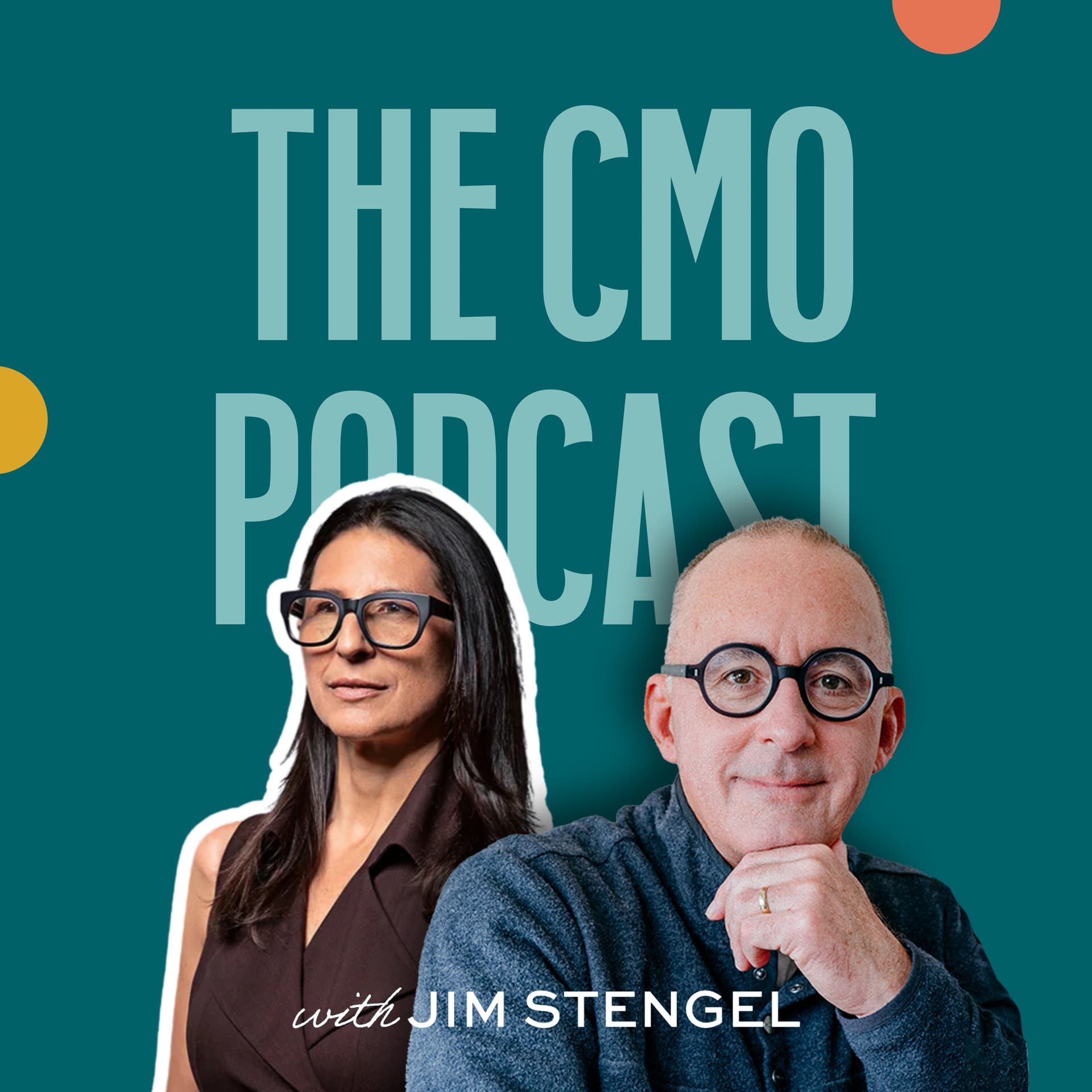
- Title: Norm de Greve (General Motors) | Driving into the Next Century
- Host: Jim Stengel
- Guest: Norm de Greve, Chief Growth Officer of General Motors
- Recorded Live At: ANA Masters of Marketing
- Sponsors: Deloitte, TransUnion, IAB
Episode Overview In this episode, Jim Stengel interviews Norm de Greve, the Chief Growth Officer of General Motors (GM). Norm discusses the evolving auto industry, GM's transition towards a more innovative, electric, and connected future, and the importance of marketing in driving business growth.
Key Concepts & Themes
- The Changing Auto Industry
- The automotive sector is undergoing rapid transformation with a focus on electric and autonomous vehicles.
- Despite changes, cars continue to symbolize personal freedom and connection.
- Norm de Greve's Background
- Joined GM in 2023 after serving as CMO at CVS Health.
- Brings a blend of creativity, purpose, and business discipline to GM.
- GM's Transformation
- GM has evolved significantly over the last 50 years, now competing effectively in the market with strong products.
- The company's recent positive earnings showcase momentum in a challenging environment.
- Marketing's Role in Business Growth
- Marketing must be integrated closely with sales, engineering, and manufacturing to foster a successful product strategy.
- Norm emphasizes the importance of owning marketing activities rather than outsourcing them, allowing for greater agility and capability development.
- High Expectations and Kindness in Leadership
- Norm believes in leading with high expectations and kindness, fostering an environment that promotes innovation and collaboration.
- Customer-Centric Approach
- Staying close to the customer is vital for effective marketing and product development.
- Norm advocates for understanding customer insights through direct interactions and leveraging dealer relationships.
- AI in Marketing
- While AI is a powerful tool, Norm cautions against relying solely on it for creative processes, highlighting the need for human creativity and oversight.
- The current state of AI necessitates thorough experimentation to find the right balance between technology and human input.
Key Takeaways
- Balance Strategy with Hands-On Involvement
- Successful marketers should maintain a high-level strategy while being actively involved in day-to-day operations.
- Pragmatism Regarding AI
- AI has transformative potential but should be approached carefully, with an understanding of its current limitations in capturing brand nuance.
- Elevate Marketing Within the Organization
- Marketers must assert their value beyond traditional campaigns by collaborating effectively with other business functions to drive measurable growth.
Conclusion Norm de Greve's insights provide a comprehensive look at how General Motors is navigating the complexities of the modern automotive landscape while redefining its marketing strategy. By emphasizing the importance of creativity, customer understanding, and strategic collaboration, he illustrates how marketing can play a pivotal role in driving business success.
---
These notes encapsulate the essence of the podcast episode while providing an organized structure that highlights key discussions and takeaways for marketers and business leaders alike.
Written by AI. May contain mistakes. Listen to the episode to check what was said.
Chapters
Tap a time to open that second in VOBuilding a 360-Degree Customer View
2:00 to 3:14
Matt Spiegel discusses how TransUnion helps marketers understand customers better.
“I'm here with Matt Spiegel, EVP of True Audience Growth Strategy at TransUnion.”
Hands-On Marketing Strategy
3:14 to 4:05
Jim emphasizes the importance of staying involved in marketing during changes.
“Because when a brand's purpose is clear, compelling, and authentic, profit naturally follows.”
GM's Positive Momentum and Innovations
5:04 to 6:05
Norm discusses GM's recent successes and positive earnings release.
“Norm, welcome back to the CMO podcast, which we'll get to in a minute.”
Collaborating with Paul
6:05 to 7:14
Norm talks about his relationship with GM's CFO and collaboration in marketing.
“But the GM of today, you probably haven't seen for 50 years.”
Building Confidence in Marketing Decisions
7:14 to 8:59
Norm describes how to build confidence in marketing strategies with financial insight.
“Whereas I think, because when there's not a feeling of a disciplined approach, what's in the CSO's mind?”
Transforming GM's Marketing Approach
8:59 to 11:41
Norm shares insights on GM's marketing transformation and ownership.
“I was looking through my files before this interview, and we had a talk about five years ago.”
Creative Strategy and Agency Collaboration
11:41 to 13:53
Discussing the balance of in-house creative teams and agency collaborations.
“is we had outsourced most of our marketing to our agencies.”
Building Internal Marketing Capabilities
15:38 to 19:18
Explore how GM's marketing team evolved by building internal capabilities and processes.
“So I want to go a little deeper into that.”
Accountability in Marketing Outcomes
19:18 to 21:34
Learn about the importance of accountability in measuring marketing success.
“And you've made the discipline of marketing at General Motors better.”
AI's Impact on Marketing
21:34 to 23:54
Discover the challenges and opportunities AI brings to the marketing industry.
“What do you think about the meeting this year?”
Show all 24 chapters
Elevating the Marketing Profession
23:54 to 26:33
Understand the importance of elevating the marketing profession within organizations.
“I think 27, you're going to start to see, maybe we figure some things out.”
Purpose-Driven Marketing at GM
27:30 to 28:00
Explore how GM's approach to purpose is evolving alongside its marketing strategy.
“Last time you were on the show, you were CVS.”
The Emotional Connection in Healthcare and Automotive
28:00 to 28:55
Explore how healthcare and automotive industries evoke deep emotional connections with consumers.
“And there are things in healthcare that can touch your heart like nothing else.”
Changing GM's Narrative
28:55 to 30:19
Learn about the efforts to reshape GM's brand narrative and connect with consumers.
“about GM within the company and outside of the company to simply be, we make products people love.”
Comparing Marketing Roles: GM vs. CVS
30:19 to 31:14
Understand the differences in marketing at General Motors compared to CVS.
“We have like 30 something products, right?”
Leadership Philosophy of High Expectations
31:14 to 32:35
Discuss the importance of high expectations and kindness in effective leadership.
“My question for our team is why can't we be the best marketers in the world?”
Staying Close to the Customer
32:35 to 34:09
Discover strategies for staying close to customers and understanding their needs.
“You have a strong principle, and I've heard you quote on this, to stay very close to the customer.”
Balancing Customer Experience and Short-Term Goals
34:09 to 35:14
Explore the challenges of prioritizing customer experience over immediate financial returns.
“At a big company, the center of gravity is mostly inside and you can get pulled away.”
Insights on Mary Barra's Leadership Style
35:14 to 37:08
Gain insights into Mary Barra's unique approach to leadership at GM.
“people who want to, you know, nip at the edges for creativity.”
The Creative Brief: Driving Demand with Distinctiveness
37:08 to 39:29
Learn about the creative goals that drive marketing success at GM.
“What's very important to Mary, too, is not just her legacy, although that's, of course, important to everybody, but she doesn't talk about it very much.”
Audience Q&A: Building a Winning Team at GM
39:29 to 41:30
Engage with audience questions about team-building and attracting talent at GM.
“It puts our job into very simple language.”
Reflections on Personal Growth and Influences
42:07 to 44:31
Norm shares insights about his upbringing, inspirations, and the importance of opportunity.
“My first job, I was a lifeguard at a hotel pool.”
Key Advice for Marketers
44:31 to 45:15
Norm emphasizes the need for marketers to balance strategy with hands-on involvement.
“And that's, I'll twist it a little bit, but he asked people what they're going to do when they go back.”
Takeaways for Business and Marketing
45:15 to 46:37
The host summarizes key takeaways from Norm's insights on marketing and business growth.
“Did we talk about everything you wanted to talk about?”
Transcript
Automatic transcript. May contain errors.0:00Before we dive into today's episode, we would very much appreciate a moment from you to make sure you're subscribed to the show on Apple Podcast, Spotify, Spotify, Spotify, or wherever you listen to watch the show. enjoy it. We wouldn't be here six years later and still going so strong without you all, our community. So thank you for being part of it. Now onto the show. What if the smartest marketing play is not to move forward, but to zoom out? Deloitte believes the most powerful move a CMO can make is to look beyond the next step and see the broader perspective. That's what the Deloitte CMO program is for, a place to gain fresh perspective and connect with leaders who've stood where you stand.
0:59Together, Deloitte will help you see the bigger picture so your next move isn't just fast, but right. Learn more about the CMO program at cmo.deloitte.com. Hi, it's Jim. Joining me is Matt Spiegel, EVP of True Audience Growth Strategy at TransUnion. Matt, we talk a lot on this show about building brands that people love, but that starts with understanding them, right? Jim, absolutely. Every customer ultimately has a story, but most brands are only going to see part of it. At TransUnion, we really focus on helping marketers connect those dots across devices, across channels, across platforms, with the goal of helping marketers see a full person behind the data.
1:35That clarity is gold. That is special. So how do you do it? Ultimately, we put together the pieces of information that help you predict behavior, help you personalize messages, prove the impact of every marketing decision at the end of the day. And our marketing solution suite gives brands the visibility and confidence to invest smarter and ultimately grow faster. So if you want to turn data into understanding and understanding into growth, visit transunion.com slash clarity. Hey, it's Jim. I'm here with Matt Spiegel, EVP of True Audience Growth Strategy at TransUnion. That's quite a job title, Matt.
2:05Yes. Welcome. Thank you. So tell me about your company and why it matters for our audience CMOs. Well, listen, Jim, the challenge of the day is that there's so much information about consumers out there and the challenge is most companies don't have all that information. You have some purchase history, you maybe have some web history, but you don't have a full picture of customers, we're working really hard across on a suite of identity products, of audience products, and measurement products to bring a holistic view of customers to marketers. So when CMOs work with you, what light bulbs go off for them?
2:35So Jim, we help brands bring clarity from chaos. We help them understand a picture of their customers with a 360 degree view in order for marketers to make bigger, more strategic bets. Well said, Matt. Learn more at transunion.com slash clarity. That's transunion.com slash clarity. To be a successful marketer, you do need your head and strategy. But you can never forget that your hands need to be in the kitchen sink. And if you don't do that, when periods of rapid change and transformation show up, you'll be too far removed from it. So keep your hands in the sink. Hi, I'm Jim Stengel. I've helped hundreds of major brands discover and activate their purpose.
3:17Because when a brand's purpose is clear, compelling, and authentic, profit naturally follows. Each week, I welcome the CMOs, the chief marketing officers of your favorite brands, to speak to how their job is so much more than marketing. These leaders share their inspiration and challenges, along with how they try to build a full, healthy, and happy life in and out of the office. And it's that energy that reaches everyone they touch. And we're glad you're here to feel that energy and to learn from these remarkable leaders. So here we go. The auto industry is changing faster than ever, but through all that change, cars have remained something deeply personal, representing freedom, connection, and possibility.
3:57And few companies have fueled that feeling quite like General Motors, a company that's been driving innovation and culture for more than 100 years. My guest today is Norm DeGrev of General Motors. Since this conversation was recorded, Norm has transitioned into the role of Chief Growth Officer at GM. Congratulations, Norm. GM is, of course, home to iconic brands like Chevrolet, Buick, GMC, and Cadillac. My guest Norm joined GM in 2023, bringing a unique mix of creativity, purpose, and business discipline to one of the world's great companies. Before GM, Norm spent nearly a decade as CMO of CBS Health, where he helped transform the company into a purpose-driven healthcare leader.
4:37Norm was on our show during his tenure at CVS. And previous to that, Norm spent a decade on the agency side at Digitas, where he worked closely with GM early in his career. So in many ways, this role brings his journey full circle. We recorded this conversation live at the A &A Masters of Marketing in Orlando. So let's buckle up and tune in with a CMO who aims to lead with high expectations and kindness. Here's Norm. Norm, welcome back to the CMO podcast, which we'll get to in a minute. But I've got to start with, I was here at the A &A meeting yesterday and I was on West Coast time. So I was kind of sleepy getting up.
5:13I turned on my television, CNBC. Your CFO was on. Lovely guy, by the way. He seems super cool, super chill. And fabulous earnings release. So congratulations. And what the heck is going on that's so positive? I mean, it's the day that everybody hopes for, right? You'll release earnings, stock goes up 14%. Holy cow. I mean, I thought it was cool because it really communicated the momentum that is in GM. Despite all of the things happening around the world, we have this momentum. And as people know, why does that happen? It happens because you beat your earnings, but also because you raise expectations, which we did.
5:54And at the core of that is an amazing set of products. Yes, it's marketing and sales and engineering and manufacturing and everybody working together. Of course it is. But the GM of today, you probably haven't seen for 50 years. Wow. Big statement. Yeah. I mean, think about like when we grew up, GM's products, you know, from the 70s, they were less competitive in the marketplace. That's the 70s. It's 2025, right? And now the products are winning in the marketplace, which is partially why we had to go through all the transformation we did. But you can't get there without, at the end of the day, having something your customers love.
6:40And that's what's there now. Well, talk about Paul for a bit. I mean, my impression watching it was, I'd like to hang out with this guy. Yeah, yeah. Paul and I have a very good relationship, which in many CMO roles is not usually the call. I think that Paul is very smart. He was also the CFO of Delta. So he's had these big jobs and he's super smart. When he thinks about marketing, he doesn't need to understand it all, but he needs to feel like there's a disciplined approach. And that's what I've worked with him on. And it's built a really strong relationship. Whereas I think, because when there's not a feeling of a disciplined approach, what's in the CSO's mind?
7:19Could I just cut some more of that? I don't really understand you. So let me see what happens if I just do this. So Paul's been a great partner from the day I started. I mean, I knew that was important to him, so I spent time with him, of course, but really, really great. How did you do that? How did you build the confidence and the conviction in what you're doing? Well, from the very beginning, I put him, well, really his number two, because he does have a big job, but on the steering committee to develop the plan to grow the sales from marketing. and that person participated the whole way through.
7:58And so when we got to the plan, they knew it all. And because they felt confident, he felt confident. Right. Where do you think that person added the most value? Because I did the same thing at P &G when I came in as a new CMO. I asked the CFO if I could have a senior director to be on my team to help us figure this out, how to get better. They help you figure out, well, remember what's most important to that side. Remember that voice. And remember that at the end of the day, we do a lot in marketing, but the way that it matters to a business is generally through more sales and enough more sales that cover the cost of the advertising.
8:41And when there are things that are nice to do's, when you're clear and transparent about them, people will come along. But when you try and make them sound like must-dos, you lose credibility. And so this woman who we had was just a great partner at working through all those issues. I was looking through my files before this interview, and we had a talk about five years ago. Coincidentally, right around the ANA meeting. And that one was virtual because it was 2020. But you had just made a speech at the ANA when you were at CVS about purpose and business growth. Yeah. And I said to my team, after I watched that virtually, that's one of the best talks I've ever seen about purpose and growth.
9:24And I may even have sent you an email of that effect. You did actually. I remember. I guess that was a big moment. Yeah, absolutely. It's a big stage. Well, you're on the big stage again this morning here at the ANA. And I think the title was rebirth. So it's an intimidating stage for any of us. You want to show well for your team and your company. There's what, 2000 people in the audience and it's a lot of thought leaders. So tell us a bit first, were you nervous and how did you handle that? And then what did you share today that you would like to talk about with our audience? So yeah, how could you not be nervous?
9:59Like you said, you want to show up well for your team, for your company, amongst your peers. I was a little bit less nervous than last time. Maybe it's the second time at the rodeo and you feel a little bit more comfortable, but yeah, you know, know, you get the butterflies. And I just try to remember when I get those butterflies, that's energy. So just translate it into positive energy. If they're not there, that's a problem. The story that I told today was a story about the history of marketing and product at GM that gets into what we did over the last couple of years in marketing, but at its core, it's about staying close to the customer.
10:35And you can see in the history of GM when the product was very close to the customer and the sales accelerated. And you can see when it diverged and marketing was asked to cover that up and it doesn't really work. In that era, we lost share and it just marketing didn't have the substance to work on. And so you got to trim your expenses. And marketing was one of those expenses that was trimmed. And so we had lower budgets. And at the same time, we had to launch more new vehicles in one time than probably at any point in the company's history, which are all expensive to launch because you've got to create awareness of these things and desire for these things and demand for these things.
11:14And you got to keep the core business going too at the same time. So that just fundamentally required a different approach. You just can't, you can't say, well, I think we'll just do what we did last year. It's just not, it's not a feasible or reasonable plan. And so that drove a tremendous amount of transformation in essentially every aspect of marketing. But at the core, at the core of it was GM owning more of its marketing activities. What had happened over time through nobody's fault is we had outsourced most of our marketing to our agencies. And that, again, it was nobody's fault. Agencies identified opportunities to grow and then followed up on the work and did it, which was great.
11:54But the problem with that is that it led to an underdevelopment of marketing capabilities within GM. And it made us slower and harder to move in a rapidly transforming world. And so we kind of had this slower to move, kind of more expensive model with less capabilities within GM. And that's what we had to change. And that was like, when you change that, that generates all the other changes because now you own it and you're accountable for it. And that's like a big deal, by the way, as well. I think when your agencies are doing a lot of work, it's easier to say, well, they did it. When you do more of the work, now it's you, but it's also empowering, right?
12:35It's also exciting. It's also like embracing, but it's a change and it's a feeling of risk taking that people had to get comfortable with. And I think everybody is comfortable with it now, but it was a big transformation. I mean, it changed everything. In fact, that took us to, you just stop me if you want, but it took us to the agency model and we had good agencies. There weren't like, there's nothing wrong with these agencies and you know, I know all these leaders and, but the problem was we wanted a new model and to get from the model we had to the model we wanted at speed, the fastest thing to do was the RFP process and to reduce the scopes to hire the people in-house.
13:12Because as you know, no more money shows up when you're doing this, right? And so as we went through that process, one of the things that we identified, which could be true in a holding company too, absolutely. But you really need creative teams that are solely focused on creative, the agency's teams that are solely focused on creative. And, you know, I spent 14 years on the agency side too, right? So I've seen this from both sides and I do see what happens when an agency gets more involved in your operations, it changes their culture. And then it changes the amount of voices in the creative process.
13:45And it's harder. It's the whole thing just becomes a little harder and it's much easier to find an answer that doesn't annoy anyone, right? Which isn't always that distinctive or compelling.
14:02Everyone seems to be chasing the next big thing, the fastest answer, the quickest win. But great CMOs believe the real power isn't in the speed, it's in stepping back to see the bigger picture. That's why everything Deloitte does in their CMO program, from their industry-leading capabilities to their connected network of CMOs, is designed to help you zoom out and gain fresh perspective. Deloitte will help you see the bigger picture together. Learn more about the CMO program at cmo.deloitte.com.
14:57POD 26. This is your chance to join a three-day gathering of the industry's brightest minds and boldest voices shaping the year ahead. You'll hear agenda-setting conversations, candid fireside chats, and dynamic breakouts on the topics that matter most, from AI and commerce media to measurement and addressability. This year's lineup concludes everyone from Kevin Bacon and Bozema St. John to creator Remy Bader, along with leaders from Forbes, Major League Soccer, General Motors, and Meta. Visit iab.com slash ALM to learn more and check out the link in the show notes to register and receive$500 off your ticket.
15:38So I want to go a little deeper into that. So when you say you made changes internally, so you would own it, you built internal capabilities, how'd you attack that? I mean, where'd you start? How did you decide what you wanted to build inside versus outside. And I'll give you a little comment. I've been an analyst in car companies since I've left P &G and I'm often struck that, you know, at P &G, marketing is a career. In some auto companies, it's not. It's more of a job to be done and people are moved in and out from other functions and there is some benefit to that. But in making no mistake, it's definitely a career at P &G with certain skills and capabilities and so on and so forth.
16:16So I'd just like you to go there a little bit. I think there's lots of learning in it. Yeah, it's a discipline that has gotten nothing but much more complex. And in fact, I feel like there's not very much appreciation for how much a top marketer has to leverage both sides of their brain. It is a very hard job. Most jobs are kind of one or the other. But like, you know, you go from technology discussions to creative discussions and you have to be able to be fast in both of them. There were some things that were very clear. Analytics, it was fragmented across the agencies and fragmented across internal groups and mostly used to produce a scorecard that someone could pick a number out and say, well, didn't I do a good job?
16:55And we weren't going to do that. So like that was clear, build out analytics. We're going to change the model there. I really do believe that for a lot of companies, having analytics close to the work is really important. That was clear. That sets the foundation for media and components of media. And so we were like, okay, so we want to do that. It took us a little bit longer to figure out the model on that because I still wanted external agencies because they see more than an internal company does. So, but we have a model on that, that when it got to creative, what I knew we wanted was more capabilities in house.
17:28That's actually where I started. It wasn't, I didn't know how to get there. And then as I thought about what we wanted in our agency partners, I also knew that the reality is that there's like, I don't know, call it 60 % of the work, which is like crank out the donuts, right? Like different versions of this, different sizes of that stuff that's like, just has to get done. And it can bury your creative agency. And I didn't want them buried by that. And also wanted a lower cost way to do a lot of that sort of stuff and faster way. So then we start going down this process. So we had this idea that we would have what we would call a foundational agency kind of down below that would do the 60 % and that we would have creative shops top on a different one on four of our brands, but who they were or how it was going to work out.
18:14I didn't know. What I knew is I had to go through the process to hire the people within GM. And so that, so the first question on that, that I think some people have is okay. So that was your vision, but like, there's the same, there's a lot of people at GM that probably have a voice in that and that have an opinion on that. I'd say that GM was pretty darn open. It was pretty darn open. Or maybe the people who were against it didn't say it to me, but they were pretty darn open. I think in a way it was a gift because you just couldn't do things the way you had, you had to do something. And so it kind of brought everyone along a little bit.
18:45And then you have all the right people participating in the process. We discovered as we got through the process towards the end, that, that it just happened to be that what we had selected were smaller agencies for the creative for each of our brands. And then as we were doing this, that's when the AI thing started taking off. And so we moved from this idea of what would have essentially just been a lower cost production shop to actually should be AI at the core. And that changed what we were looking for on that one. We're still building that out. Yeah, that's pretty profound. And you've made the discipline of marketing at General Motors better.
19:25Oh my God. You know, that's a legacy. This is what I'm proud of. Yeah. And obviously one person doesn't do this on their own. but they set a vision and they set some drive and they tell, they communicate implicitly at least what priorities are. But here was like the thing that I've been most focused on. What outcomes is marketing accountable for? Because usually what happens is sales go up. Marketing must've been awesome. Sales went down. No, it's the marketing that sucked. And it may be true or it may not be true. But the problem that does for marketers is it makes success in their job be, does the person who cares about sales care about their work?
20:08And that is not a good system. You need a much more disciplined system on that. And so our system, it's like not a genius idea. We looked at the consumer journey. We decided, oh, hey, people don't really think about cars until they go into market and they start with four brands in mind and two thirds of the time they buy one of those four brands. So be in that initial consideration set and then win the shopping journey. Okay, pretty straightforward. But once you know that and then you track, how often are you in the initial consideration set? How much should you be in the initial, with whom, by the way, not every truck buyer, premium truck buyers or whatever, right?
20:40And then track the shopping journey. That system, it's another thing about accountability. I think when you get to outcomes, there's also nervousness because in some ways there's a lot of camaraderie within the whole teams of like, oh, we do it together and sales are there. And because we're tight, it'll be good. And when you say, no, no, I want to know what you're accountable for. how you're delivering it, that's a little bit more nervous, nerve wracking. But on the other hand, my experience has been, it breeds, it helps people rise up, it helps them exhale, it helps them have autonomy and direction, and it enables a better creative process.
21:12Because now you're, now you have a learning system that's figuring out what can be great. And you're working on that. And your success isn't based on, does the highest paid person, you know, send you an email saying they like the ad. It's based on, are you getting to the outcomes that you're accountable for? And if not, that actually might still be okay, but what actions are you taking to get there? So you've been here a couple of days, right? What do you think about the meeting this year? I mean, what's the zeitgeist you feel? I know AI is everywhere, but anything else you're feeling here? I think anxiety is connected to AI.
21:48Change, what's out there. I think if you're on the agency side, you're worried about it. I think if you're on the client side, you're worried about it, maybe different reasons. So everybody's talking about it. One of the things we've learned is it's really hard for AI to understand your brand and it's really hard for AI to understand taste. So you really need a creative director involved. And sometimes it's actually faster just to shoot it than it is to figure out the magic prompts to get the thing to do what you want it to do. Cause you're like, I just need to move the table over there. So here's an interesting thing we learned, which maybe some know, but when you ask it to, like we have a car, say in a driveway with a tree and you say, move the tree.
22:27It doesn't just move the tree. It actually has to re-render the entire picture, which means it can now make mistake in the car. And then you're fixing the mistake in the car, but the driveway changed different color. And you're just like, Jesus, this is just like a waste of time, frankly. So it is going to get there. And we do have examples of when it's working really well, but I think we are a little bit in that stage of the excitement might be over the reality. And now, but look, it may be in four months that changes. It could change that rapidly. It's just that there's a lot in this. And on the brand side, the problem is, you know, it's looking for the most likely next answer.
23:02So that's going to take you to the average of your category. And even if you put your stuff in there and you say, no, no, look at my stuff, it can do that. But you're like a pebble compared to the, all the other information it has. And so now you got to weight it right. But then how much do you weight it? And what's the right, It's like, what's the right amount of each ingredient in the recipe? So there's just a lot to figure out, which will be figured out. So I think AI is there. I think it's just, it's a little, we still got more to figure out. In fact, I would say like every company, every company is thinking right now, do I need all these open recs?
23:34What I think, what I see from my seat is right now it's creating more work because you're not confident enough that it's going to give you the answer that you need creatively. So you have to keep the old system moving and you have to do this new thing that you're trying to figure out. So I think 26 will be the more work year. I think 27, you're going to start to see, maybe we figure some things out. Now you are someone who is pretty active in industry work, right? MMA, ANA, Ad Council. Why is that important to you? How do you think it helps you in your role at General Motors and your role as a leader?
24:09Well, I feel like for a long time, I was in my career trying to be better, learn more, do more. I think what's happened in the last, say, 10 years is a desire to elevate the perception of the profession of marketing and to also do better marketing, right? And these two things go together. So that's where I've spent a lot of my time because I think we can all appreciate that in many companies, marketing is not as much at the SLT table as operations are. And most CEOs come from operations or they come from finance. So it's the stuff they feel more comfortable with. And those things are very important.
24:48It's not that they're not. But I do feel like there's, I think both marketers have an obligation to speak a language and to act in a way that's different than marketing when they're at the SLT table. And I think the CEOs and the CFOs have an obligation to better understand and care about this thing that's costing, they're spending a lot of money on. Now you've been at GM 27, 28 months as CMO. Yeah. But you worked for GMM at Digitas. Yes, I did. Years ago. Did that have any role? Yeah, it had a lot of role. Okay. Tell us, say more about it. So I saw it from, well, there's two things. One is that was, let's say call it 15 years ago now.
Read the full transcript
25:29Okay. I saw GM at that stage. It was a very different company than it is today. Not just products, culture, culture. The culture of GM at that point was very proud. the products were not as competitive as they need to be. Now, Mary has created a culture that's actually much more humble and the products are great. So it's kind of the inverse of that. And I think there's something about those two things that go together. The second thing I saw was, I think I began to see it even at that stage, this problem of outsourcing your marketing, I would see stuff that was great that we were bringing to clients.
26:04And I would see stuff that It was like, what? But clients bought it. And I just thought this could be a little tighter. And to get tighter, clients had to be more skilled in the discipline of marketing to understand this stuff. And so I saw the potential when I was on that side. I think when I came into GM this time, the combination of the experience at CVS and having served them from the agency side gave me a kind of a pretty good bit of knowledge to know where to go.
26:40Hi, everybody. I'm Andrea Sullivan, the CEO of Vive, and we have produced the CMO podcast with Jim Stengel for many years, and I'm sitting in his seat right now. It's so exciting. I wanted to tell you a little bit about one of our programs. It's called Vive by Vayner. It's a 12-month program that's designed for C-suiters and founders, and we want to help people to grow their businesses, but also to grow themselves. And so we bring in people from Shark Tank to talk to our founders, but we also focus on wellness. We want to make sure that people are leaning into becoming their best selves, their best and happiest selves.
27:21So if you are someone that wants to learn how to grow your business and grow yourself, check us out at vive.co. That's V-Y-V-E dot co. We'd love to talk to you.
27:38Talk a bit more about your CVS role. Last time you were on the show, you were CVS. We talked about that already. But, you know, it was a kind of company when it comes to purpose and symbolic acts and activating purpose. And I think GM is on a similar journey, right? So how did that help prepare you? Well, first, you're right about the purpose. And this weekend I looked at that old speech because I was like, I'm getting ready for this speech. And there are things in healthcare that can touch your heart like nothing else. Because at the end of the day, health is everything. So that was the purpose.
28:13You could feel it deeply there because it is connected to like something lower on Maslow's hierarchy that we all care about. In some ways, GM is actually more about passion. And that was more about health. I think that GM is on this journey. And if you look at GM, a lot of the news will say manufacturers, something like that. And in some ways, it's kind of defined the company as very narrowly in like a factory company that employs workers. And what I've worked really hard over the last couple of years, and in fact, the video we had at the end of the speech is really all about this, which is to change the narrative about GM within the company and outside of the company to simply be, we make products people love.
29:01People, you know, I did this thing, I went to chat GPT when I was working on this and I was like, describe Apple, describe, I don't know, pick other cool companies, you know, they're changing the world with, uh, with green technology or renowned for their innovation. And GM has, you know, an automotive manufacturer based in Detroit, right? Exactly. And so you can see, and yet we're making products. And today, half the products, technology, there is like, there's more code in some of our cars than there is in a fighter jet. So that's kind of where the purpose is coming, coming back. And in fact, we, you know, then you take product, you turn it into an ad, a purpose, you turn it into an ad.
29:39So today the line that I love is more Americans fall in love and stay in love with products from vehicles from GM than from any other auto manufacturer, which is true. And that's our job, make products people love. Beautiful. So your role here, compare and contrast it to your role at CVS. How is this job different? Look, the scale of the marketing is larger at GM for sure. The scale of complexity was much higher at CVS. Maybe you've got, you know, people say, oh, well, what about the dealers or something like that? The dealers I've found to be fantastic. Like honestly, these dealers, the top ones who are really the people I generally interact with, they're super smart.
30:16They're close to the customer. They know what works. They're digitally savvy. They're all over social. Like they're great. That's great. So we have a lot less products. We have like 30 something products, right? So it's, so we don't have 50 ,000. So that was CVS. And the thing about CVS, because in a retail, you know, it's like the Marine Corps for marketing. Like it's like, where's the money every day. Right. And so it builds your skills and resilience and ideas and opportunity and entrepreneurialism that way. Automotive brand matters more. And so that's been great and a lot of fun, but at the same time, it has to manifest in something and it has to manifest towards the sales.
31:00And we, what's really interesting about GM, And I think you're kind of right when you talked about car companies like versus a P &G in terms of marketing being a career at P &G. And certainly they did have people rotating through marketing at GM. But think about this. My question for our team is why can't we be the best marketers in the world? And look, we have medallion products. What do you drive? People judge you by that. It's called brand, right? And so part of the journey that I've been on is like building out the approach we take to marketing so that people can be seen as world-class marketers and it can be a profession there because all the raw elements are there.
31:39And we talked last five years ago, you talked about, we talked about your leadership style and you said you'd like to lead with high expectations and kindness. So talk about that now, five years later, and still a core belief, my guess is yes. But how are you operationalizing it at GM? I'd say it's core belief. Maybe there's also like a relentless pursuit of ideas to drive the business to in terms of things I value and in terms of the way I operate. It's high expectations. Yeah, it's high expectations. I think with high expectations, you create a esprit de corps. And Esprit de corps is important because it makes everyone rise up.
32:22And they feel proud and then it creates more innovation and more ideas. And so it keeps going that way. That does not have to be the exclusion of kindness. And it's the way I operate. It's the way I'm going to operate. And it may or may not always be the winning formula, but it is the world in which I want to live. You have a strong principle, and I've heard you quote on this, to stay very close to the customer. and you feel this is important for everyone, I do too, but especially for the CMO, the head of strategy and the head of research and insights, how do you bring that to life? That idea of staying close to the customer?
32:55I know you can role model it, but you said these three roles are especially important. So how do you make sure you do it? It's part of daily work. People see it, people feel it. So there's all the obvious things we talk about, you know, read the research, listen to a call, all AI, all this sort of stuff. One thing that is very helpful, I saw it at CVS. It's like, you do go to the store and you work in the store, you listen to the customers. I also wanted my office to be actually at CVS, I wanted it to be like a one-way mirror over a store. At GM, it's not directly to the customer, but indirectly is the dealers who interact with customers all day long.
33:36And I really like that because what's happening with a dealer is they're running, you know, a hundred experiments a day on which lines are working best for, and that's insight, right? And that's insight that we can use almost better in some cases than a consumer insight, because they're like, that's the line that I see the sparkle in their eye. And you're like, we could do something with that. It is really, really important. And I think what happens at these big companies, we kind of just think of the center of gravity. When you're small, it sits entirely with the customer because you can't pay your mortgage.
34:08So you're like, whatever you want, I'll make that. At a big company, the center of gravity is mostly inside and you can get pulled away. And therefore what can happen is it makes decisions that have a negative impact on your customers, you know, subtly, but over time adds up, feel okay. You know, the other thing I'd say about that is that there's, when you get to customer centricity, it can be really hard for it to win out sometimes in companies. Why? Because a better customer experience doesn't pay off tomorrow. Sure, we can think of examples where it does, but you get my general point. And so if you become too focused on eking out the next EBIT quarter, you can get away with, it feels like you can get away with a bad experience quarter after quarter after quarter until you can't.
35:02And so what I've seen at GM, which is really interesting because it's customer, but it's also creativity because it's a company that designs products, right? It's a creativity in that. Partially the way it works is that the senior most leaders just give space from all the people who want to, you know, nip at the edges for creativity. And that makes a huge difference. Like if I, if I, like if I was to be CEO of a big company, I mean, that's like, remember that it is very easy and almost gravitationally will pull you towards make the decision that, that puts a better number on the page today. And as a CEO, your job is to say no.
35:48And I know it's easier said than done, but. Yeah. You work for one of the great CEOs of the world, Mary Barra. She's well written about, you know, top woman executive, top executive in the world. I've read millions of stories about her. It's a bit of an exaggeration, but I read and I admire her greatly. So talk about that a bit. You've been working with her for almost two and a half years. What is not talked about enough or written enough about Mary? Something Mary does incredibly well is she works to make herself not the center of attention in a meeting or in a room. And by that, it brings out more voices.
36:30There's more discussion. And that is, it's really remarkable. Like it's really unusual. She has also created a leadership team that is the same way or similar, which is also remarkable. And so I don't think that that comes out as much. She's also quite likable, by the way. She's pretty easy to talk to. I mean, I think I had her with my team, and everybody's like, that was just so much more normal than we expected. I think that's a huge skill for a CEO. What is she most passionate about in marketing? The brands, strong brands. She needs the brands to be strong from a marketing standpoint, from a design standpoint, from a product standpoint.
37:14What's very important to Mary, too, is not just her legacy, although that's, of course, important to everybody, but she doesn't talk about it very much. It's that she leaves the company in a better spot. And it's deeply felt. Like, I think when you have a company that's the size of General Motors in the state of Michigan, it's not just a theoretical thing about a company. It's like, how are you helping this state? And how are you helping all these people? And how are you setting it up for the long term? And so like that, I think we get to that. Like, yeah, that's must have been really hard. Yeah.
37:46Yeah. No, there's a lot of pride in Michigan. My son lives there. Yeah. My daughter-in-law. So I feel like they live in the city. Producer Judy's from Michigan. Yeah. She's nodding her head.
38:04So listen, I want to flip to the creative brief and then we have a little audience here. I want to bring them in for any questions. They're all smiling out there. So we'll bring you in soon. So the first one I have for you is your goal for your creative work. I love this. It's three D's to be distinctive, desirable, and to drive demand. So all the great work you're doing, which work do you think does that the best? Oh, are you asking me to pick which child I love the most? I love doing that. Let me say that on every brand, there's work that I think does that great. I think when I look at the work that came out on GMC, the depth of how it brought out the desired image of the buyer was something I was like, I'm like, well, that they just nailed it.
38:52They nailed it. Now there's, again, work on every brand. I think that Chevy's got some incredible work and some great plans as well. And, you know, Buick and Cadillac as well. But like, I think the GMC work just really nailed it. And I, you know, I drove a GMC before I showed up to GM. So it's always been kind of like part of my DNA. And I, I am, by the way, that brand, it transacts it. Prices that are like, you're talking Mercedes territory. And it's now just killing it in volume. So I love the 3ds. Yeah. Yeah. Has that been around for a while? Did you come to that? It came to me on the spur of the moment in one talk.
39:33Yeah. But I was like, that's pretty good. For any company. Yeah. I mean, that is kind of our job, right? Yeah. Yeah, right. It puts our job into very simple language. Distinctiveness is important. Yeah. Last time when you were in the show, I always asked guests this, what's the first brand you remember making an impact on you as a young boy? You said at that time, breakfast cereals. So do you stand by that or is there something else that had an impact on you as a young boy? I kind of stand by that. Not because I love breakfast cereals, but because when I was a kid, there were essentially three channels of TV and you watch it on Saturday morning and you, I can still to this day, remember what those slogans are, right?
40:10Remember a silly rabbit trickster for kids? Yeah. Right. Absolutely. Cocoa for Cocoa Puffs. Yeah. Yeah. Yeah. Let's go to the audience and out there, what has been inspiring about this? Say your name and, or just, you know, ask a question, whatever. Sure. So Joe Pagano from TransUnion. What's been inspiring, I think, is the transformation that you've led at General Motors, right? Taking a brand that you summarized it really well with Chachi Pt, right? An automotive manufacturer based in Michigan. And you've acknowledged, yes, you've led that transformation, but you've acknowledged the role that team and people play in driving that.
40:49How did you go about building out that team? And I can say from personal experience, I've worked with many of them and they're top notch. They're amazing. They're passionate. They're talented. How did you attract that caliber of individual to a company like General Motors that maybe didn't have the cachet as some of the other folks who were competing for that same talent? It's a good question, and I know exactly how he did it. Great people want to create and build something. And when they feel like they're going to come to a place and be able to create and build something versus manage something, they get inspired.
41:30Now, GM's also great, can be a great brand on your resume and other things like that. But that alone wouldn't have been enough. The leaders we have are the leaders who came because they could build out what they were doing. And that's motivating. Anyone else? Andrea? Hi, Andrea Sullivan, CEO of Vive. I really love this conversation and love the passion that you have. I'm curious about what your first job was and what would seven-year-old you say about you now? My first job, I was a lifeguard at a hotel pool. Yeah, sometimes I feel like I'm still saving people once in a while, but yeah, that was fun.
42:16I love the second part of your question. And I think it's so important because we get lost in many things. And it's a reminder of maybe what you've accomplished. my seven-year-old self would never think I would be where I am today. It just wasn't even on the radar. It wasn't even like, oh, but no. It was just like, no, it wasn't in the consideration set. I'm not sure exactly what I thought I'd be, but it was smaller. It was smaller. And it's a good reminder for all of us when we feel the stresses and the pressures and all that sort of stuff. He's doing all right. You're doing all right. Okay, who's been the most inspiring person in your life?
43:06There are different answers to that question. The people who see in me more than I see in myself and push me to go there. And there are different answers depending on what that thing is. But those are the people that I'm forever grateful to. So when you were young, was that your parents or a sibling? It was my brother and I fought for 18 years. So I am the child of immigrants. And so to that extent, let me, immigrants, let's be clear, they're from the Netherlands. But my point to that is America was full of opportunity. My parents built a company here that paid for our stuff. They had the American dream.
43:52I saw it. And so what I took from that from them is you want to do something, you just go do it. And that has never stopped driving me. It's also maybe a little bit of pressure because you can, you should. What line of business was it that they built? It was a company called Nambe that's luxury tableware. It's sold in sacks and all kinds of places. It's actually made with an alloy that came out of the Los Alamos National Laboratories. Wow. So I want to end this conversation with the question Bob Leudis asks after he probably asked it of you today after your speech was over. And that's, I'll twist it a little bit, but he asked people what they're going to do when they go back.
44:36You know, what did you learn from this? So my question to you is for our audience, you know, what's one thing you'd like to leave them with, you know, that may be inspired by what we just talked about or what you've experienced at this meeting this week? I think that the message I would leave them with is to be a successful marketer, you do need your head and strategy, but you can never forget that your hands need to be in the kitchen sink. And if you don't do that, when periods of rapid change and transformation show up, you'll be too far removed from it. So keep your hands in the sink. Your parents probably did that with their business, right?
45:15They did. Norm, thank you. Did we talk about everything you wanted to talk about? Jim, we did. It's just always a pleasure. I could interview you, and I think it might actually be even more interesting. No, it won't be, but we can do that someday. Thank you. This is wonderful, and congratulations on everything. Thanks so much. That was my conversation with Norm DeGreve. I have three takeaways from this one for your business brand and life. First takeaway, lead with strategy, but stay in the work. Norm's closing advice to marketers is to balance big-picture vision with hands-on involvement. Great leaders keep their head in strategy, but their hands in the kitchen sink, staying close enough to the day-to-day to understand what's really happening.
45:53In times of rapid change, that proximity keeps you grounded, agile, and ready to adapt. Second takeaway, and I love this one, be pragmatic about AI. AI is transforming marketing and business, but Norm warns against blind optimism. The technology still struggles with brand nuance and taste, and often adds work before it saves it. The key is experimentation grounded in human creativity and a clear understanding of what AI can and can't yet do. And third takeaway, elevate marketing's role across the business. Marketers have an obligation to act differently at the table and show how marketing drives the business forward.
46:30For him, that means proving marketing's value beyond campaigns and creative by partnering closely with finance, operations, and product. He's redefining marketing as a strategic force, one that earns its seat at the table by driving measurable growth across the business. That's it for this week's episode of the CMO Podcast. As always, I would be grateful if you shared our show with your friends, along with subscribing and leaving a review on Apple Podcasts, Spotify, or wherever you listen. The CMO Podcast is a Vive Original Production. The views and opinions expressed by podcast speakers and guests are solely their own and do not reflect the opinions of our sponsors or its personnel, nor do our sponsors advocate or endorse any individuals or entities featured on the episodes.
From the publisher
The auto industry is changing faster than ever, yet cars remain deeply personal, symbols of freedom, connection, and possibility. Few companies embody that spirit like General Motors, a brand that has shaped culture for more than a century and is now leading the charge toward an electric and connected future.
Jim’s guest this week is Norm de Greve, Chief Growth Officer of General Motors. GM is, of course, home to iconic brands like Chevrolet, Buick, GMC, and Cadillac. It is a $77 billion revenue powerhouse driving innovation across combustion, electric, and autonomous vehicles.
Norm brings a rare combination of creativity, purpose, and business discipline to one of the world’s most iconic companies. Before joining GM in 2023, he spent nearly a decade as CMO of CVS Health, helping transform the company into a purpose-driven healthcare leader.
So buckle up and tune in for a conversation with a marketing leader who believes in leading with high expectations and kindness.
Captured live at the ANA Masters of Marketing, in partnership with TransUnion.
---
Learn more, request a free pass, and register at iab.com/alm
Promo Code for $500 of ticket prices: ALMCMOPOD26
---
This week's episode is brought to you by Deloitte, TransUnion and the IAB.
See Privacy Policy at https://art19.com/privacy and California Privacy Notice at https://art19.com/privacy#do-not-sell-my-info.