In short
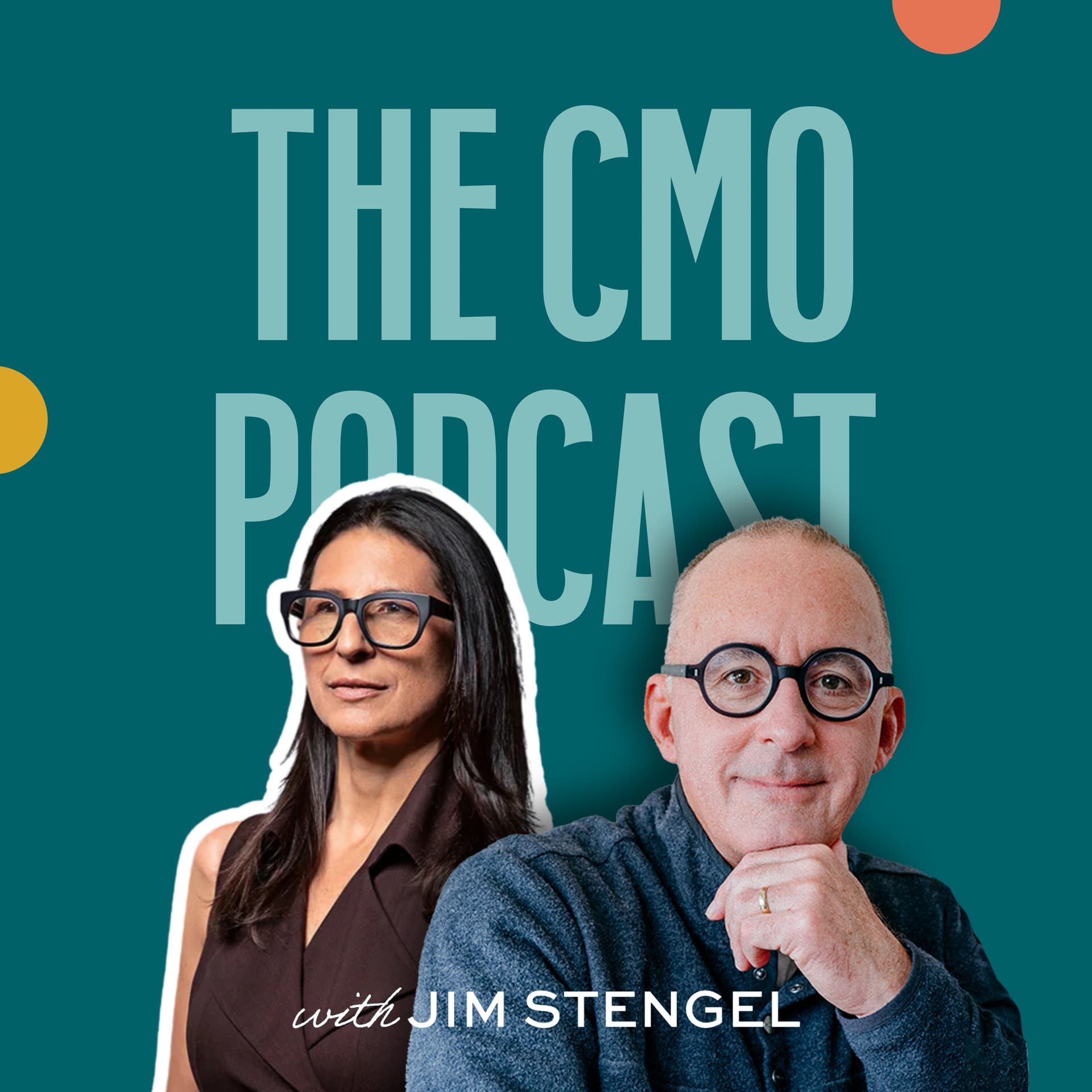
Omer Waysman, VP B2C Marketing for North America at Michelin, discusses building trust and long-term loyalty in a low-frequency purchase category (tires), Michelin’s people-centered culture, and how brand icons and experiences (Michelin Man, Michelin Guide) stay relevant. He also covers sustainability in motorsport tires and his family life shift from Paris to Greenville, South Carolina.
Guests
Omer Waysman (Michelin) is French-born; educated at Sorbonne and HEC Paris (master’s in management). He previously held senior roles at Danone and Microsoft (global e-commerce/digital growth). Jim Stengel hosts (CMO Podcast).
Key claims
Michelin’s “iCare” leadership model sustains culture; marketers must balance legacy with modern visibility and practice patience; Michelin Man relevance comes from consistent, family-friendly evolution; Michelin Guide and tires both aim to deliver “experience” (safety, quiet, pleasure of driving).
Notable examples
Pilot Endurance motorsport tire launched at Daytona 24—50% recyclable/renewable materials, targeting 100% by 2050; Cross Climate 2 and Defender average 25% longer wear vs competitors; Michelin Guide for the South launched with a star restaurant in Greenville; Le Mans visit where the Michelin Man required a security guard due to fan passion.
Written by AI. May contain mistakes. Listen to the episode to check what was said.
Chapters
Tap a time to open that second in VOOmer Weizmann's Background and Move to Michelin
1:12 to 3:33
Explore Omer's journey from Paris to Michelin and his insights on brand loyalty.
“What's the first brand you remember as a young boy making an impact on you?”
Life in Greenville vs. Paris
3:33 to 6:04
Omer shares the differences in lifestyle and family time between Greenville and Paris.
“We'll talk a lot about that and a lot more, including how old the Michelin man is.”
New Experiences in America
6:04 to 11:40
Omer discusses exploring American culture and his family's adventures in the U.S.
“obviously to have a motorsport tire line that is 50 % made from recyclable and renewable material.”
Joining Michelin: A Love Story
11:40 to 14:01
Hear how Omer's unexpected connection with Michelin led to his current role.
“Now you were working for Danone before moving to Michelin.”
Introduction to the Guest
14:01 to 14:37
Learn about Omer Waysman's journey and his role at Michelin.
“embrace all of that in order to move forward faster for the long term.”
Understanding Michelin's Culture
15:24 to 19:24
Explore the unique culture at Michelin and its impact on employee longevity.
“What do people do you feel not understand about this brand and this company?”
The Iconic Michelin Man
19:24 to 24:48
Delve into the history and relevance of the Michelin Man as a brand mascot.
“and everything you describe, that's hard over years and years and years.”
The Michelin Guide and Brand Experience
24:48 to 28:00
Learn how the Michelin Guide reflects the brand's commitment to experiences.
“What's your counsel for others who have a character or an icon associated with their brand?”
Creating Unique Experiences with Michelin
28:00 to 29:28
Explore how Michelin aims to create memorable experiences through its products and services.
“When you started talking about the Guide, I saw a start of a smile on your face.”
Marketing Strategy for Tires
29:28 to 30:56
Learn about the unique marketing strategies Michelin employs in the tire category.
“And today, definitely we are in a different world.”
Show all 23 chapters
Expectations of North American Consumers
30:56 to 33:56
Understand the high expectations North American consumers have for tire performance.
“So how do you think about marketing strategy in a category like that?”
Innovation in Tire Technology
33:56 to 35:50
Discover the innovations behind Michelin's tire lines designed for various conditions.
“The second one is the importance, obviously, of the long-lasting performance.”
Focus Areas for Leadership and Product Development
35:50 to 37:55
Gain insights into the personal focuses of Michelin's VP of Marketing regarding team development and product launches.
“Yeah, no, it's crazy how the innovation of being able to do that is pretty remarkable.”
Challenges in Adapting to American Culture
37:55 to 41:18
Learn about the challenges faced in adapting to the American corporate culture and market.
“So that's, I would say, my top of mind, my people, my product, and my consumers.”
Building Partnerships in the Tire Industry
41:18 to 42:00
Explore the importance of partnerships in Michelin's business model and where focus is placed.
“When I was in my global role before, I was able to have it high level.”
The Importance of Partnerships in Business
42:00 to 43:36
Discover how partnerships play a critical role in business strategy.
“And to bring knowledge, you need to work on what's inspiring, what's the latest, and how you would help their business grow.”
Lessons from Microsoft: Innovation and Branding
43:36 to 45:58
Learn how experiences at Microsoft shaped Omer's approach to innovation.
“I love to see my teams as well on races.”
Growing Passion for Motorsport
45:58 to 48:31
Hear how a professional role transformed Omer's view on motorsports.
“And so I think the innovation is kind of almost a common thread across my career.”
The Role of Patience in Marketing Leadership
48:31 to 52:26
Understand why patience is key for senior marketing leaders today.
“And also I saw the benefit, the benefit that we as a company are also taking for the motorsport activity.”
Influences from Family and Early Brands
52:26 to 54:47
Explore the personal influences that shaped Omer's career and branding views.
“But you need to inspire and you need to be inspirational, specifically on marketing.”
Culinary Preferences and Junk Food Love
56:00 to 57:11
Explore Omer's food preferences and his fondness for junk food.
“And I have to ask your friend, so my last question has been, how has your diet changed since moving to the U.S.?”
Congratulatory Remarks
57:12 to 58:08
Omer congratulates Jim on his Hall of Fame award, reflecting on its significance.
“It's hard because I don't know if you can say it's a junk food brand, but I would say favorite donuts, it's Krispy Kreme.”
Key Takeaways from Omer's Insights
58:09 to 59:43
Discussing the key takeaways from Omer's conversation and his marketing approach.
“So again, I congrats and I was honored and very happy to be able to share an hour of discussion with you today.”
Transcript
Automatic transcript. May contain errors.0:00Jim Stengel:Before we dive into today's episode, we would very much appreciate a moment from you to make sure you're subscribed to the show on Apple Podcasts, Spotify, or wherever you listen, along with optioning to auto-download the episodes. It really is the best way to never miss an episode, along with supporting the show and the amazing team that helps me bring it to you. And while you're there, leave us a rating or review. It only takes a minute and helps more people find the show and helps us learn. And of course, share this episode with a friend or colleague who might enjoy it. We wouldn't be here six years later and still going so strong without you all, our community.
0:36Jim Stengel:So thank you for being part of it. Now onto the show. Saving money on everything for your next project when you shop at Menards. Get your project started right with our huge selection of concrete and mortar mixes. Our concrete products are great for a variety of applications. from installing a walkway to setting a post. View our entire selection of concrete mixes and supplies in-store and on Menards.com. Plus, check out the weekly flyer for more great deals happening now. Save big money at Menards. What's the first brand you remember as a young boy making an impact on you? As a young boy, it was Nintendo.
1:18I was a gamer, definitely. And I think that they managed to have exactly this balance between the historical mascot heritage from Nintendo and to bring innovation with their device, with the services, etc. And I see a lot of similarities in terms of connection to the Michelin brand and how connected you can be from day one to your later stage in your life to the Michelin brand because great experiences. And that's what Nintendo created for me.
1:48Jim Stengel:Hi, I'm Jim Stengel. I've helped hundreds of major brands discover and activate their purpose. Because when a brand's purpose is clear, compelling, and authentic, profit naturally follows. Each week, I welcome the CMOs, the chief marketing officers of your favorite brands, to speak to how their job is so much more than marketing. These leaders share their inspiration and challenges, along with how they try to build a full, healthy, and happy life in and out of the office. And it's that energy that reaches everyone they touch. And we're glad you're here to feel that energy and to learn from these remarkable leaders.
2:23Jim Stengel:So here we go. This week, we're hitting the road literally as I welcome Omer Weizmann, Vice President of B2C Marketing for North America at Michelin. Founded way back in 1889 in France, Michelin has grown into a$30 billion by revenue global company. While the brand Michelin is the company's largest business, it sports a diverse portfolio, including BFGoodrich, Uniroyal, and of course, the Michelin Guide. Beyond that, Michelin leverages its material sciences capability in fields such as aeronautics, healthcare, and construction. My guest Omer was born and educated in France. He's been with Michelin for nearly four years, where he leads marketing, brand strategy, and go-to-market execution.
3:03Jim Stengel:Previously, Omer had senior leadership roles at Danone and Microsoft, where he led global e-commerce and digital growth initiatives across markets and channels. Omer is a graduate of the Sorbonne and HEC Paris, earning a master's in management. One of the many things that drew me to O'Mara's story is this experience leading marketing in a category where consumers may only make a purchase every three to five years. That's a fascinating challenge for any marketer. How do you stay relevant, build trust, and create long-term loyalty in a low-frequency category? We'll talk a lot about that and a lot more, including how old the Michelin man is.
3:38Jim Stengel:Here's my conversation with a Frenchman who feels perfectly at home in Greenville, South Carolina, which is the North America headquarters of Michelin. Here's Omer. Omer, welcome to the CMO Podcast. Finally, you've been at Michelin about four years, living and working in Greenville, South Carolina, and you moved there from Paris, correct? Correct, Jim, correct. Okay. And you're in Paris for this interview, correct? I am. I am. So first of all, thanks for having me, Jim. It was not easy. We had to postpone it a couple of times, but I'm glad that I'm able actually to have some time with you. And I am in rainy Paris at the moment.
4:16Nothing surprising, to be honest.
4:18Jim Stengel:Well, you're there at the beginning of the World Cup, before the Le Mans race, before the Cannes Festival. So you're in a good place, I have to say. No, that's fair. That's fair. And also after Paris Saint-Germain won the Champions League for the second time in a row. So that's very true. It's a good place to start, I would say, the summer. And France is pretty much favored for the World Cup, wouldn't you say? The odds are pretty good. You know, Jim, I don't like being favored. I know the feeling. But I think that we have a pretty good team. I would say with Spain and Argentina, probably those three might go to the end and we'll see if I was right in a few months when people, we might listen to the podcast.
4:59Are you going to the race this weekend, Le Mans? Unfortunately, I will not be able to go. I've been here, but I'm coming back once a year. And so that's a very precious time that I have to spend some time with my family and friends. And so I will not be in Le Mans. I was actually in Daytona this year for the IMSA race. And that's kind of the kickoff of the season, both, you know, the international one and obviously the North American one. And I don't know if you had the opportunity to go to one of those races, Jim, but the Daytona 24 in Palm Beach, that's a very engaging race. And for the first time, that was where we launched a new tire line.
5:42the Pilot Endurance range, a Sport Endurance range. And that's for the first time we have a tire line that is specific dedicated for motorsport, but it's 50 % made from recyclable and renewable material, 50%. Now Michelin was the first brand to provide that commitment. And we managed with this new tire line to be the first, obviously to have a motorsport tire line that is 50 % made from recyclable and renewable material. but it's still just a step because we want to have 100 % of our tire line by 2050 that will be made by a recyclable and renewable material. So it's a long race, but I think that we are definitely very, very proud of this new tire line that we launched.
6:24Jim Stengel:Well, we'll talk more about that in a moment, but I want to get back to your move from Paris to Greenville, South Carolina. I've heard you in another interview call this change in lifestyle, quote, outstanding. You were married with two children. So talk more about, I mean, Paris is not a bad city to live in. So talk about why this change is so outstanding for you and your family. That's an interesting question, Jim. It's always easier for me to talk about Michelin and to talk about myself, but I'll try to do my best. We'll get to Michelin, don't worry. Okay, no, I'll try to do my best here. Look, I've been living for Paris most of my life.
6:59And Paris is obviously a very crowded city and you have plenty to do. plenty of restaurants, you have plenty of culture, museum, etc. And it's a very stressful life. Okay, traffic is a mess. It's a stressful, I would say city, like New York City at the end of the day. When you move to Greenville, South Carolina, you start to enjoy, I would say, some very specific moment of your life where you can spend more qualitative time with your kids. I'll give you a quick example, Jim. In France, I was coming back home around 6.30, 7.00 PM, 7.30 PM. And so I was seeing my kids probably for like 10, 15 minutes.
7:41Now coming back home between five and six, I have the pleasure to have dinner with my kids and my wife. So even if obviously you are a bit tired after the day, but still you have this opportunity to exchange. How was your day? By the way, I I stopped asking, how was your day? Because we never get an answer. So now I have a different trick. I don't know if it's working or not, but a little bit better. I'm asking both of my kids, what was the best moment of your day? And so they try to reflect on that. And so I got a few. Sometimes I don't get any, but sometimes I do get actually what was the best moment of their day.
8:17And I find it very engaging. And so I think that that's a shift. The second one is I love the South. People are so welcoming, so nice. And I would not say that Parisians are not, but a little bit. It's different. A different night. I agree. It's a different night, but people are so nice in the South that you feel welcome from the first day. And, you know, it's different as well because in France, you can argue with someone, you know, very loudly, etc. And the next day, you can be best friend. And so it's a different type of culture that you need to adjust because there are some topics that you can bring directly.
8:59Some of them you need to wait to get, I would say, the right level of intimacy and proximity with the person. And I think that the moment that there's two moments for me that really struck me in the past 24 months. The first time was when we got invited by, I would say, American people to their house. That was kind of a win. We say, okay, that's the first step. We got into the house and it shows that there's some proximity that you can develop a relationship. And the second one is a few months ago, and I shared it with my team as well. We were having dinner at the dinner table and my son say, bro.
9:38And I looked at him and I say, I'm sorry. And he say, bro. I say, okay, I think you're bilingual now. That's fine. We're good.
9:47Jim Stengel:Have you developed any new habits or rituals or hobbies since being in the U.S. for four years? I mean, did you pick up anything hiking or bicycling or? So we've been exploring the U.S. in the past 24 months pretty heavily, the family, because the American culture is so rich. And so having the possibility to, you know, go to North Carolina and then the next day to Yellowstone and then the next day to be able to go to Vegas and or to New Orleans and then to go to the Everglades has been outstanding, outstanding. And my kids are still young, so they will, I hope they will, they will, they will remember that in a few years.
10:24And for me, having this pleasure of discovering different culture, even by state, you know, the US is so big. Texas is bigger than I think France and a couple of other European countries and driving a long time. No, we've been not used to that. So we've been driving eight, nine, ten hours in the US, while in France, we would probably not do that.
10:49Jim Stengel:Yeah, yeah. And so that was one. And a second one that I pretty enjoy is that finally I can watch NBA because of the time difference. Oh, yeah. Oh, yeah. So I don't need to wait, you know, for the summer in the morning when I wake up. So that's that's pretty enjoyable. And and I obviously I've been I've been watching the finals as well now between the Knicks and the Spurs. So that's discovering that. And last but not least, I think that the parks we've been to Yellowstone a few weeks ago. Amazing. Outstanding. The beauty of the country is speechless. Speechless. Yeah, you have to get Yosemite too in California.
11:31Jim Stengel:Also mind-boggling. That's on the bucket list for next year because I need my little son to be slightly older because otherwise it will be more struggling than anything else. Yeah. Now you were working for Danone before moving to Michelin. Tell us the story of how you connected with Michelin because I think it seems to be going exceptionally well. I heard you say that Michelin was basically love at first sight. So tell us about the connection and what was it about them that was so magnetic for you? So first of all, I was not looking to leave Danone. Danone is a fantastic company. I enjoyed my time there and I was very happy there.
12:08And then, you know, out of curiosity, you just accept the first call. And then the first call went well. You have a connection that is different. You have a human connection. You don't feel that it's an interview. You feel it's almost a discussion like the one that we are having now, Jim. It's not about what can I achieve, what I've been achieving, but more who I am, what are my values, where I'm coming from, where do I want to go, can I culturally fit or not? But it was more on that. And then you have the second one, the third. And every time you don't understand how come that everyone is kind of having those similarities in terms of behaviors, being humble, being open, and kind of cultivating the eye care model that we have at Michelin, which is really centric around people.
12:57And the more I was talking to those different people, the more I was, I want to work with them. You know, it's like, we can talk about Michelin. It's an iconic brand and everything that we all know about, but it's nothing without the people. And the people that I met until today, by the way, when I meet some of them, they're still in the company. Some are left, but some are still in the company. I tell them that that's thanks to those interviews that I continue the process because I was really not looking for something else. And then during the process, if you ask yourself many questions, we are all human at the end of the day.
13:32Am I good enough? Am I not performing in the interview? you ask yourself those questions. And at the end, you do understand that they want to put you in the best spot, not only for them, but also for you. And that's the difference because you can actually be put in a spot, Jim, and just execute greatly your job, but you will maybe not be happy on the long term. But when you are actually starting on the right place, you have the time to discover this culture. You have this time to discover the history of the group that helps you actually embrace all of that in order to move forward faster for the long term.
14:10And that was why 18 months, less than 18 months after I joined my first job, they already asked me to join the North American team. And I was very happy and very grateful of the opportunity to be able to lead such an amazing marketing department. And the rest is history, as we used to say.
14:35Jim Stengel:Hi, everybody. I'm Andrea Sullivan, the CEO of Vive, and we have produced the CMO podcast with Jim Stengel for many years, and I'm sitting in his seat right now. It's so exciting. I wanted to tell you a little bit about one of our programs. It's called Vive by Vayner. It's a 12-month program that's designed for C-suiters and founders. And we want to help people to grow their businesses, but also to grow themselves. And so we bring in people from Shark Tank to talk to our founders, but we also focus on wellness. We want to make sure that people are leaning into becoming their best selves, their best and happiest selves.
15:16Jim Stengel:So if you are someone that wants to learn how to grow your business and grow yourself, check us out at vive.co. That's V-Y-V-E dot co. We'd love to talk to you.
15:33Jim Stengel:It's a large and diversified company. What do people do you feel not understand about this brand and this company? So there's several things to your question. The first one I would say, when you're not inside, you don't understand why people are staying so long at the company. I remember eight months after I joined the North American team, we were having our marketing and sales conference, yearly conference. And I was with my good friend, Steven, who is leading the sales department. And we were having fun, et cetera, you know, obviously end of the year, celebrating some successes. And the emcee of the evening was sharing with me backstage, You know that there's 2 ,500 years of experience in this room.
16:192 ,500. You take a step back and I was like, that's a huge responsibility. It's a huge privilege to be able to support people in their development while they gave already so much to the company. So I was obviously a little bit shocked by the number and then very grateful. And then when you talk to people, you know that they are at the company for 25, 30, 35 years. And one thing that really caught my attention was last year, we had a retirement party for a couple of people that were retiring. And one of them, and, you know, ICAM, it was part of our consumer care team. Okay. The one that is obviously in direct relationship and connection with our consumers.
17:04And I asked the question, I say, Clay, give me your best memory of Mishla. You're one, just one. And he had 30 years of experience. And he said, Omer, just the fact that I was able to wake up every morning and come to a job that I like with people that I like was actually what made me stay and what made me actually answer this type of answer to you. And I was shocked because, you know, as a professional, if you ask, if you would have asked me, Jim, kind of to share one or two achievements in my career, I'm not sure that I would have been able to share the exact same sentence. I would have probably, you know, stay on a business achievement.
17:46The fact that it was a people achievement made me think, how can we balance that? How can we balance the people engagement with your business achievement? And more and more, the more that I spend time with people at Michelin, I see why this culture is so strong. And it's not easy, by the way, when you join the group. You need also to make some effort on yourself to adjust to the culture. but at the end of the day if we've been here for 135 years we've been innovating and leading on the tire manufacturing business for the past 135 years we are and we have been actually elected the nine most powerful brand by brand index in the world the nine most powerful brand i don't think that you're able to build such amazing innovation such amazing brand without this strong connection from the people that are working there.
18:38And so maybe someone that will listen to the podcast might say it's a bit cheesy, et cetera. But if you hear the interview that you mentioned earlier, that's exactly what I feel. And I keep saying every time that I meet people outside of Michelin, inside Michelin. And that's why I think that the melting pot and this merge between, I would say, historic experience from the Michelin employee and the new one that are coming to kind of bring the external perspective to stay leader and to continue and push the boundaries further is an outstanding melting pot. And that's why I'm very proud of, I would say, the company that I'm working for and the people I'm working with every day.
19:17Jim Stengel:What could others learn about how this culture has been not just built, but maintained? You know, it's one thing to build a culture that has its moment, but it's keeping it special. and everything you describe, that's hard over years and years and years. What do you think it has been about the leadership of this company that has built and maintained this culture? I think we developed a very strong leadership model, which is the iCare model that we try to embrace and cultivate and share with all of the employees. Obviously, we have a very specific ramp up and period when people are joining the company.
19:56And I think it's kind of a legacy that the more you move, you know, I've been three and a half years, less than four years. And I'm able to talk to you as if I were maybe 10 or 15 years in the company. And I think that this magic connection between the values and the purpose of what we are doing at Michelin is clicking directly. And when you're part of this story, you just want more people to be part of this story. So when I'm hiring someone, for instance, Jim, and I will share a small anecdote here. I'm not hiring someone for a position. I'm hiring someone for a career. Because I do believe that the more you continue to embrace the culture, plus I would say the outstanding innovation of our product, the more you're able to develop outstanding leaders.
20:45And that's what makes me happy is when I'm able to develop people in my organization that are moving faster into different roles and different countries. Because at the end of the day, as a leader, you think obviously about the company, but you think about the people that you are working with every day. So I hope that I pay enough attention to it. My boss might tell you if yes or no, but I think that you have 135 years of history that you need to respect. And this respect comes with the respect for people. And we have in our company, respect for people, respect for facts, respect for our customers.
21:23And those three are very important to remain and stay all the time when we are working and trying to move forward the company. And I hope that that's why we are so successful as a company worldwide.
21:36Jim Stengel:The Michelin Man. I had no idea before the show that you've been using this character since 1898. Correct. I don't know if I can think of any brand off the spot that's had a consistent character for 128 years. So why has he stayed relevant? Maybe also a funny anecdote on this one, Jim. The Michelin Man spoke just once, just one time. Once he was launched the first time on the motor show, and that's it. And I think that the Michelin Man has been evolving into a more, I would say, family-friendly mascot. and if you find some old portray or some old painting of the Michelin Man, you would see, I would say, also the difference in terms of how he has been evolving across the years.
22:25But it's crazy because my kids, again, four and seven, they saw it a couple of times, but you couldn't say that they saw it, you know, since 15 years. And now every time that they see a tire or that they see, they immediately actually recognize the Michelin Man and the Michelin brand. So I think that this iconic Michelin Man is really iconic. And the fact that it has been so much into the culture and we really sustained, I would say, that connection with consumers. You know, Jim, something that I was amazed, I was in Le Mans, actually. It was a few months after I joined the company. Great way also to start a company and to go to Le Mans.
23:06And I saw that the passion that people have for the Michelin Man, he was unable to walk five meters unable so he had to have a security guard and actually there's a no it's not a joke jeep there's a security guard actually always working with the michelin man because it's such an idol and cross generation okay from seven to 77 years you will see people actually being just happy to take a peek with the michelin man and he's today in in you know social media environments can see and by the way every time that we have any you know a post about with the michelin man on our social network that's the post that is working the best and try me we've been trying to do different things as well the michelin man is always the one that works the best you know why changing when something is so related to your roots so related to your history and so recognizable, you know, who, you know, as a marketer, having a recognizable item is what you just, you just wish, you know, at the end of the day.
24:18And so I love other mascots like Mario and Luigi for me from Nintendo are definitely one of my favorite ones, but they were very linked to a specific moment of my life, which is not the case for the Michelin Man. I think the Michelin Man is independently from the moment of your life, you are getting actually the connection directly. And I'm very proud of the fact that, as you said, it's over almost 130 years of Michelin Man being an iconic mascot for the group.
Read the full transcript
24:48Jim Stengel:What's your counsel for others who have a character or an icon associated with their brand? I mean, we had them at P &G. What's your counsel for them? Because you have to be one of the world's greatest experts, your company, on leveraging an asset. So what's your counsel for others who have something? It's very hard to not jump on buzz opportunities. When you have an opportunity of a buzz, you want to jump instantly because you believe that it will provide something different for your brand, different from your consumers. So trying to balance and the respect for the history of your icon and your mascot and maintaining it no matter what's going on, And you have so many opportunities and it's okay to turn down opportunities.
25:37For me, it's the respect for your legacy, the respect for the tradition and the respect for what this icon has brought in the past 130 years. Who am I that will change an icon that has been by the best marketers steady in the past 130 years? My job is to sustain that. My job is not to change it. My job is to, I would say, take the best of what we could do in our modern world, you know, across a different touch point, but making sure at the same time that we are not changing the nature of why we had this Michelin man from day one. And so I think it's being patient and not being eager to jump on getting some, you know, extra visibility for a short period of time.
26:23And I think that that's also why the Michelin Group has been innovating for the past 135 years. You know, recently, for the past four years, we've been awarded Best Tire Brands in the United States by Consumer Reports. And I'm very proud of it, obviously, because that's something that's very important. You know, it's not only nice to be a marketer and have a mascot. As a marketer, you want good product. You want the best product. You want to be able actually to deliver above expectation for consumers. And so the fact that you are able to have a great icon, a great brand linked to great product that are underlined as best in the market by independent reviews is what makes my life easier, I would say.
27:09Jim Stengel:When I think about your company, I obviously think about the Michelin man, but I also think about the Michelin guide. And so this is another really interesting part of your brand. And I'm just really curious why that is still important for your company and your marketing. I mean, when I Google Michelin to look at your latest earnings or whatever, what comes up is the Michelin guide. And I have to get much more focused in my search. So I have to imagine there have been discussions about, is this the right thing for us now? Is it part of our business model? I'm just curious. I mean, it's massively popular.
27:49Jim Stengel:It's a brand of itself. And it's a brand that's well-respected. So talk a bit about how you think about the Michelin Guide vis-a-vis the Michelin Group and the Michelin brand. You know what's interesting, Jim? When you started talking about the Guide, I saw a start of a smile on your face. And I think that that summarized what we're trying to achieve within the Michelin Group. We want to create experiences across all of our products and services. And I don't know if you've been to a Michelin Guide restaurant recently. Okay. And you remember, you remember it's not something usual, but it's an experience.
28:25And you remember why you went there. When I was my first Michelin Guide restaurant, I remember very well, it was my first salary and I invited my parents. I would remember that all my life. But that's actually what we're trying to create with the brand and with the product and services that we have. This notion of experience is important on the guide, but it's also important on the tires. We want, when you are riding, we want you to have the best possible experience. We want it to be safe. We want it to be enjoyable. We want it to be quiet. And we want you actually to not feel anything else than the pleasure of driving.
29:03And that's exactly what we want to achieve as well with the experience that we create, a unique experience with the Michelin guide. And funny enough, the Michelin Guide was born based on an idea of creating an experience for riders and travelers to help them find places to stay, but also to repair their bicycles. And this connection, again, I'm coming back to the legacy and history of the reason why it was created that way. And today, definitely we are in a different world. And definitely the Michelin Guide has been very, very popular. And we just launched a few months ago the Michelin Guide for the South.
29:39We have a star restaurant actually in Greenville for the first time. So I think that there's a lot of excitement, obviously, about the guide. We've been launching in several states in the U.S. and we'll continue, obviously, to develop a new region and new states in the United States. But it's important as well to understand that for us, it's maintaining this strong connection of best and premium experience for our consumers through the guide, through our tire lines. And that's why we continue actually to work on that. And I think you mentioned your question. Obviously, there's always a question about how do you position it?
30:18How do you link it to your historical business? But at the end of the day, if you have a brand and a product and a service that is matching the group DNA and values, why wouldn't you actually continue and develop it?
30:42Jim Stengel:Now, we've said you've been at Michelin about four years, promoted, I think, about two years ago to VP of Marketing B2C in North America. I mean, your category is super interesting, right? I grew up in categories which were purchased every week. Yours is purchased every few years, probably. So how do you think about marketing strategy in a category like that? So it's interesting because I've been, as you said at the beginning, working for different categories. Microsoft, on the consumer side, where you can actually purchase monthly when you have a subscription to Office or whatever. You can also have several years between a device if it's a surface device.
31:25Then on, to your point, you know, FMCG product that you purchase every week. And then a tire category where, as you said, you're not purchasing every day. So there's three elements here that are important, Jim. The first one is how you maintain the connection with your consumers across all their usage of the tire. And so this is where you need to develop tools that you know better than I in terms of the connection in order to continue and fuel your consumer with tips, with information that might suit to their driving habits. And by the way, the North American consumer, the North American market have such a high expectation of their tire performance, way higher than all in all markets in the world.
32:16And so you have to fuel, I would say, that expectation with your consumers. The second element is the need to prepare well in advance all your product launches because you're not launching product every 12 months like you can do in FMCG. The timeline is way more important because the innovation as well that you put into a new product must be very deep. And so you're having way more strategic thinking about how am I going to be positioned in a few years versus in a few months? And so you need to have a blend of, I would say, strategic horizon and tactical horizon when you plan your go-to-market plan because you're going to extend your product entire line.
32:55And the third element that is way different is connection that you have with your consumers. You need to find different touch points to continue and talk to them. And so you need to develop those touch points through partnership, through obviously social media, to all the partnership that you can have in motorsport with the car manufacturer, et cetera, et cetera. So my job and my team job is to be able to develop as much touchpoint as we can, own touchpoint, earn touchpoint, partner touchpoint, and to be able to have a consistent approach of content across all of our touchpoint in order to fuel my first point, which was how do you fuel, I would say, the expectation from our consumers about the tires.
33:34So those three element are kind of, I would say, top of mind when I look about the mid to long-term horizon in terms of positioning the brand.
33:42Jim Stengel:Why are North American consumer expectations so much higher? Is it the poor quality of the roads or the distances they travel or the kind of cars and trucks they travel in? I think that there's an emotion connection to cars that is probably higher than in the rest of the world. I think that's historical. I think that that's the first element. The second one is the importance, obviously, of the long-lasting performance. As I said at the beginning, you're not driving 10, 15 hours in France like that. And the fact that it's important makes us develop some very specific tire line for the North American market.
34:19And for instance, our two major tire lines, Cross Climate 2 and Defender, last on average 25 % more than our major competitors. I don't know if you can imagine what's 25 % more, Jim. It's a lot. It's huge. When you talk about 10 ,000 of miles that you are actually spending on the road, it's a huge benefit. And our promise is a long lasting performance, meaning that from the first mile to the last mile, you have the same quality of performance on your tires. And that's why we've been awarded, you know, four times in a row, the best tire brand in the US, because I think that we continue to commit and deliver to the expectation of our consumers.
34:59And the wear element is so important for them that we are trying as much as we can to continue and develop the right tire line for the highest expectation in the market. And by the way, you also need a tire line that can hit the best possible performance, no matter the condition. If it's on snow, on wet, on dry, and if you're driving 15 hours from east to west or from north to south, you know better than I that you can actually be in front of those conditions. So that's why the Cross Climate 2, for instance, that's my favorite child, if I may say. Half of my team will not be very happy. Part of it will be.
35:36But the Cross Climate 2 is my preferred one because you have a very important range of long-lasting performance in terms of mileage. And at the same time, you have a world weather product that can work perfectly across all conditions. So that's, for me, I would say my preferred challenge. Don't share it outside of here.
35:52Jim Stengel:Yeah, no, it's crazy how the innovation of being able to do that is pretty remarkable. So where are you focused these days? In terms of your personal, if I looked at your diary, what would I surmise from that in terms of the two or three things that you're personally spending your precious time on? So the first one would definitely be my people. The first one is how do I continue to develop my people? How do I make sure that we develop the right competencies, the marketing skills within my team? How do we continue to increase the collaboration that we have with the sales organization? You know, marketing and sales are always best friends, best enemies.
36:34But for us, it's, you know, my day-to-day life, talking to my VP sales every day. That's how you build the connection and the culture. So for me, the first one is continue to extend this culture that we built in the past years on collaboration and developing my people in the marketing medium. The second one is continue and try to bring the best product to the market. we've been launching in january the excise snow plus which is a new tire for winter condition that i'm very very proud of consumers will start seeing it coming during just after september we'll start seeing them probably in the north when we'll see some snow consumer will start experiencing what is is what's the best possible tire line in winter so continue to do that in the few next months and years we'll continue to have good news as well with some other interesting product launches.
37:27So we'll definitely continue to have this obsession of continue and bring the best possible product to each segment and category to the market. And the third one is how we can continue and be connected with our consumers. Today, I'm not selling directly to consumers. Some of my competitors are doing it, but we are not selling directly. We're selling through our retailer partners, but we want to continue and be able to help them understand the Michelin DNA, the values why behind a product and Jim I would extend an invitation for you if you want I'll be happy to host you in our next IMSA race in what we call Petit Le Mans in Atlanta there's it's a Petit Le Mans so we call it because it's also there's a connection with the with the Grand Le Mans the Big Le Mans if I may and if you accept I'll be happy to host you for a day there you'll see the passion that people can have for their tires and the connection to the tires because obviously we need to work with all the car manufacturer to optimize because it's an, it's a combination between the best possible tire with the car and how you adjust it to the car to have the best possible performance on the track.
38:37And so I'd be more than happy to show you first, the passion of the people around the brand, but to also how we work with a different engineer of a different car manufacturer to try and optimize the performance on the track, because it's, you know, small seconds that are making the difference, even on a 12-hour race. So that's, I would say, my top of mind, my people, my product, and my consumers.
39:01Jim Stengel:No, it sounds great. It sounds super. You've had a great couple of years there. What's been more challenging that you would have imagined? Because it all sounds like it's been a really nice wedding with you and the company. What's been tougher than you would have imagined? Jim, it's interesting. When you are on social media, you see Instagram versus reality. And to answer your question, the gap between Instagram or what I'm saying in reality is not that far away. There, obviously, I was facing some difficulties at the beginning. You know, I had to adapt to the American culture. It's not easy. Even if I've been working for American company or international environment, you are here and you need to make sure that you understand the different sensitivity that people might have, the different topics that you might or might not be able to talk about.
39:50You need to understand how you can take care of people with a different culture. And it's not that easy, Jim. It's not that easy because the codes are something that we are born with. And we, you know, we've been, we've been to school and to, um, um, institution that are helping us to better understand that, but, but still nothing like real life. So I think the first one is definitely took me a few months to be able to adapt to the American culture. When you try to develop a culture of collaboration, yourself needs to be number one, collaborate the person collaborating with, I would say, your partners.
40:23And so I had to work on myself as well. The second one is I'm not a huge fan of small talk gym. Okay. I don't think that I'm outstandingly good at that, but I had to actually obviously step up my game, as my teammates would say, because that's part of the culture and that's taking me outside of my comfort zone. But at the end of the day, that's something that I had to do so people could feel that I'm close to them. And I'm not just here to lead the marketing department, but I'm here to lead marketer to a better place. I think that's a slight difference and nuance in terms of how you state it, but in reality, it's very important.
41:06The second one is obviously understanding the American market from a business standpoint. It takes time to learn, to understand what are the trends, the history, what are the reasons to believe from an American consumer versus the European one versus the Asian one. When I was in my global role before, I was able to have it high level. But then when you need really to address that in a very specific point, you need to get way more intimate with the knowledge of the American market. And last but not least, my partner and retailers. Because at the end of the day, we work with them every day. We need to develop a relationship with them.
41:44And we need to develop a new kind of joint business plan, as we say, to make sure that it's not just a one-way relationship, but it's a both ways relationship. And in order to do that, you need to create connection, but also you need to bring value. And to bring value, you need to bring knowledge. And to bring knowledge, you need to work on what's inspiring, what's the latest, and how you would help their business grow. And not necessarily only your business, because that's an easy call. If you go and you say, I'll help you help my business. That's too easy. So you need to come with a different approach, different mindset.
42:17So I'd say probably those three things. If you ask me from a professional standpoint, I would say those three things.
42:23Jim Stengel:Yeah, that's very helpful. Your company is full of partnerships, right? And they're very, very critical to your business model. And all companies, partnerships are important. But I think especially in yours, I mean, you have retailers, as you talked about, truck and auto manufacturers, motorsports, agencies, entertainment companies, on and on. So where do you personally focus in terms of partnerships? Is there one category of those partnerships or group of them where you spend the disproportionate amount of your time? That's a tough question, Jim. But if I would have to pick, motorsport is definitely an important laboratory for me.
43:02It's a laboratory because we bring the latest innovation to the truck that we want to bring to the street afterwards for our consumers. So I would say from an innovation standpoint and from a collaboration with our OEMs, with our car manufacturer partner, I would say the motorsport environment. That's why also we just renewed our long-term partnership with IMSA, which is the endurance race in North America, to 10 more years. So that's definitely an important one. It's a laboratory of test as well for our interaction, messaging content with our consumers. as I shared we have fans on we have uh CRM programs we have opportunities to interact with consumers and and people passion that are passionate about tires and cars so here we can better understand the trends you know where we what we are doing well what we are not doing well you know getting a better sense of that you can do focus group I mean you know it better than I gym you can do focus but there's nothing like reality check so the laboratory test for that And the last one is people engagement.
44:03I love to see my teams as well on races. And you'll see we have some people that are volunteering to come to those races to help and support the team. And I think that I like to see the passion about that for Michelin employee to be completely honest. So I hate to choose, but if you ask me to choose, I would say that the motorsport partnership is an important one for us.
44:25Jim Stengel:You worked in consulting, tech, and consumer products before Michelin, and we talked a bit about that. But I've heard you say that your eight years at Microsoft were profound for you. What was it about that experience that was so foundational for you? So Microsoft was my first big company. I've been in consulting before, as you said. But again, you're not linked to the brand because you're working on so many different projects, so many different companies. But there's no strong connection with the brand. So Microsoft was my first, I would say, big experience. I said almost a decade. And I still have Microsoft blood, I have to say.
45:02You know, I think that it's interesting because we have, I was leading the Windows Phone product marketing team as well when I was at Microsoft. I was very in love with the product, Windows Phone. Unfortunately, Windows Phone is not anymore with us, but it was really, you know, something I was passionate about. So I think that it sticked to me. And today I don't have an Apple phone, for instance. And so I'm the green bubble. Okay. So they call me the green bubble at work. And so I try to convince my VP sales. I say, I will switch only if you bite. He's a sales guy. So he still didn't bite. But that's actually pretty interesting.
45:45It's something that stayed with me. And so I would say the connection as well. And I love the pace at Microsoft. I love the innovation. And there's some similarities with the value that I see about the importance of innovation at Michelin. And so I think the innovation is kind of almost a common thread across my career. I've been to many innovative companies. That's something super important for me because I think that there's innovation, but also the right pace of innovation. And I think that's also kind of what those three companies are kind of having in their DNA. it's not like launching 10 ,000 of product every year, but launching the right one and the focused one with the right audience, the right segment.
46:26And so that's probably why I enjoy about the experience at Microsoft.
46:40Jim Stengel:Let's move into the creative brief. You were, I don't think you were a motorsports enthusiast before this role, but you are now. So what tipped? I mean, I know it's your job in a way, but you clearly enjoy it. Definitely. Yes. I think that I cannot consider myself yet as a motorsport enthusiast. I think that I unfortunately will not be able to answer all the questions that the motorsport enthusiast is able to answer. Honestly, I've been like three and a half years into that. So please have so much respect for all the knowledge that they have. I'm a fan now, Definitely a fan. I think that my first experience in Le Mans was mind-blowing.
47:18I was able to have a nice experience, go into the garage, go into the fan zone, feel the temperature. And then the one that's really, that I remember the most was when I spoke to the Michelin engineer. And you would probably ask yourself, that's the most, I would say, the one thing that you remember from the race? I do because you understand the passion behind the tire and why you need to have those engineers in contact in permanently with the car manufacturer engineering to optimize the performance and the amount of data that they were able to collect, to analyze, to optimize, to try to really have the best possible combination for the team on the track.
48:04And then afterwards, to be able to take all those data points and better understand what do we need to improve? How can we continue and be the best? This passion around it, I would say it was speechless for me. And so since then, I obviously had opportunity to attend several races in North America. And I saw the same. And I saw the same passion. And I saw the same commitment and the same strong engagement from the team. And also I saw the benefit, the benefit that we as a company are also taking for the motorsport activity. Because as I said, it's a laboratory test, not only for the innovation and performance, but also for our consumers' feedback.
48:46And at the end of the day, you know, that's also the way I can connect with our consumers to have them reacting to our latest content, latest brand campaign. And so that's probably what I would say triggered my interest, even though I have to be honest, I used to watch, I would say, some racing on TV when I was younger. But when you're there with people that know and explain you the why, change completely. It's when you're knowledgeable about something and you transfer this passion. We can talk for hours, Jim, about that. Unfortunately, I will not be able to communicate as much passion as those people might be able because they know so well, actually, their business.
49:31So I'm very humble when I talk about motorsports.
49:33Jim Stengel:What do you believe is the single most important characteristic of a senior marketing leader today? Patience. You know, we've been seeing in the past six months so many comments about other brands from other sectors about their CMO, about the vision, about the brand campaign, the choices that they did on partnership, the players that they selected, the brand that they protected or not protected. I think that time is what's today important for a marketer. Understanding that there's a balance between your historical legacy and the willingness to go fast and hit the buzz as fast as you can. And I think that having this balance is crucial for some company.
50:21For other companies, going very fast will be actually the most important. When you are a startup, you don't have time to wait, obviously. But if you are in a corporate marketing position with a large corporation that is a global player or even a regional player, that there's a lot of history. You need to respect that history, maintain, adjust and create different stories and different experiences for your consumers. And so having these patients while creating differentiated experiences, I think those two things are definitely top of mind for me.
50:54Jim Stengel:You've talked about how you've changed since coming to the U.S. You've gotten better at small talk and you're traveling and you're understanding the nuanced culture in the U.S., almost city by city. How do you think you've shifted as a leader since moving to the U.S.? You would need to ask my team because it's a very good question, Jim, but it's more a question that my team will be able to answer or my boss eventually, but probably more my team because they see me daily. They can sense, you know, based on my face. I'm bad at poker face, by the way. So you probably see when it's a good or it's a bad day and I'm trying to improve.
51:36But as you know, we are all human at the end of the day. So things can impact us. And I don't like to hide too much. I think that definitely you need to absorb the pressure as a leader. That's 100%. But you cannot not express your emotion. You are not just a superwoman or a superman achieving things because you are a leader at a certain stage of your career. So I hope that I became more patient. I hope that I was able to continuously support my team in their development without bias. And I hope that as a marketer, I was able to continue and bring inspiration to my team. Because that's something that I think drives me every day to find what is trendy, but long term, what can actually help us, but not impact us negatively.
52:25So it's really all this balance that I think that marketer could and should have today. But you need to inspire and you need to be inspirational, specifically on marketing. because if you don't inspire your team, it will be hard to inspire your consumers. And so I hope that what they might think about me, I will not ask them, but you do. Maybe I'll have the chance to do it on my field trip. Maybe when you will come to Atlanta. I'll do a focus group. That would be great. But yeah, that's what I hope that my team can think about me.
53:03Jim Stengel:I know you love sports and luxury categories. I've heard you talk about that. What's the first brand you remember as a young boy making an impact on you? So it will not be in that category because as a young boy, it was Nintendo. I think that I shared earlier about the Mario and Luigi story. I was a gamer, definitely. I stopped since, you know, for many years, unfortunately, even though my son. And it's interesting how they manage as well to have this generational gap. you know no generation gap basically you know my son and myself my son is seven years old jim and he has in mind that i that i will give him my nintendo switch so every day now he's telling me you know what i'll be better in writing i'll be better in math you'll give me the switch and i say no way too young and he say but look let's try to see if it's you know nice and if we can play together.
53:59So he knows that I like to play with him, etc. But I was a Nintendo fan. And I think that they managed to have exactly this balance between the historical mascot heritage from Nintendo, and to bring innovation with their device, with the services, etc. And that's what I like about Nintendo, even though I was working for Xbox with Microsoft. But I still believe that the The Nintendo generation is still very strong. And we see that with the results, obviously, of the company. Nintendo is a great brand. And I see a lot of similarities in terms of connection to the Michelin brand and how connected you can be from day one to your later stage in your life to the Michelin brand because you create experiences.
54:44And that's what Nintendo created for me.
54:47Jim Stengel:Who has been the most inspiring person in your life, Omer? My father, definitely. I have to say that still today, I call him probably every day or every two days. He knows perfectly all my strengths and weaknesses. He can definitely tell me everything, even if I might not be happy with that. But also from a business standpoint, he was able to as well be in marketing and be at a high level when he had his career back in time in the tech industry. And so I think that having his blessing is also important for me and making sure that I make him proud. I feel like it's a therapy now, but it's definitely, you know, inspiring to see what he was able to achieve and how he's able to not only achieve himself, but also communicate and help, I would say, others too.
55:47So I would say that.
55:48Jim Stengel:Well, that's a good place to stop, Omer. We could keep going, but I've kept you long enough. It's been a wonderful interview. We're at the beginning of the summer, as we talked about. We have football ahead of us and races. And I have to ask your friend, so my last question has been, how has your diet changed since moving to the U.S.? Do you cook different things? Have you developed a fondness for different kinds of foods? No. I'm terrible because I love junk food. Well, you're in a good place. I am. I am. You know, what's funny enough is that I've been having bets with the sales team, obviously marketing sales, and the bets are always on donuts.
56:27And so they love that there is a specific brand that I prefer in terms of donuts. And so there's sometimes donuts on the floor in Greenville. Outside of that, you know, my wife is an amazing cooker. So thanks to that, I don't have to change too much because she's outstanding. and but i do like actually some junk food sometimes so uh i'm again i'm happy to be back in paris sometimes because there's a big diversity of of restaurants that i'm able to go to but i also um i do enjoy very much my life in in the u.s so i think that i can keep the gastronomy sometimes when i'm traveling more i would say maybe or just leaning into my wife cooking skills but i will continue to to eat some donuts and junk food i still like it okay last
57:17Jim Stengel:question. Favorite junk food brand? It's hard because I don't know if you can say it's a junk food brand, but I would say favorite donuts, it's Krispy Kreme. Oh yeah. Yeah. So also from the South, apparently, if I understood well. And so, you know, I continue into that, but definitely that's one that I enjoy the most from a product standpoint. From a branding standpoint, that's maybe different, but from a product standpoint, definitely the one that I prefer. This clip will probably make the social clips. Krispy Kreme will love it. Okay. Okay. Hey, thank you. By the way, Jim, before we finish, I would like to congratulate you for the recent Hall of Fame award.
57:54So congratulations to you, really. It's a great achievement.
57:58Jim Stengel:It was one of the best days of my career, if not the best, because of who was there and the people that I got to thank. I can imagine, Jim. I think that you've been doing a lot for the industry and you had the right recognition. So again, I congrats and I was honored and very happy to be able to share an hour of discussion with you today. Thank you, Omer. I appreciate that very much. Now have a great summer. Sounds good. Thank you. You too. Here's the Michelin guide to takeaways from Omer's conversation, which was a wonderful one. The first takeaway is priorities. This guy has the right priorities.
58:32Jim Stengel:I loved how simply he stated them, developing as people, bringing the best possible product to the market, and ensuring the customer experience is wonderful and that the brand has happy customers. That's where he's focused. That's where he spends his personal time. I can't imagine a clearer and stronger set of priorities. The second takeaway, patience as the most important characteristic of a senior marketing leader today. That was unexpected maybe to hear that from him as the most important characteristic, but he is right about that, especially when you're the steward of a brand like Michelin, which so many people have gone before you and has such strengths and assets and have to be respected.
59:09Jim Stengel:And the third takeaway, I thought this story was a best practice, a benchmarking study in how to adjust to and thrive in a new culture. I think the way Omer came to Michelin and came to the U.S. and took the time to understand the company, the culture, the people, the nuances. He spends his time with family traveling to understand the country in which he is living. I think if you're ever transferred to a new company, especially in a new country, this is a case study for how to do it right. That's it for this week's episode of the CMO Podcast. As always, I would be grateful if you shared our show with your friends, along with subscribing and leaving a review on Apple Podcasts, Spotify, or wherever you listen.
59:55Jim Stengel:The CMO Podcast is a Vive original production.
From the publisher
For 24 straight hours every June, the world's greatest endurance race pushes drivers, machines, and engineers to their limits at Le Mans. For Michelin, it's more than a race, it's a proving ground for innovation, performance, and one of the most enduring brands in the world.
This week, Jim welcomes Omer Waysman, Vice President of B2C Marketing for North America at Michelin. Founded in France in 1889, Michelin has grown into a global company with nearly $30 billion in annual revenue. While best known for its tires, Michelin's business extends far beyond the road, spanning brands including BFGoodrich and Uniroyal, the world-famous Michelin Guide, and innovations in fields ranging from aeronautics and healthcare to advanced materials and construction.
Omer's career has taken him from France to South Carolina, where he now leads marketing, brand strategy, and go-to-market execution for Michelin in North America. Before Michelin, he held senior leadership roles at Danone and Microsoft, helping drive digital growth, e-commerce, and transformation initiatives around the world.
Tune in for a conversation exploring one of marketing's most interesting challenges: how do you build trust, relevance, and long-term loyalty in a category where consumers only make a purchase every three to five years?
See Privacy Policy at https://art19.com/privacy and California Privacy Notice at https://art19.com/privacy#do-not-sell-my-info.