In short
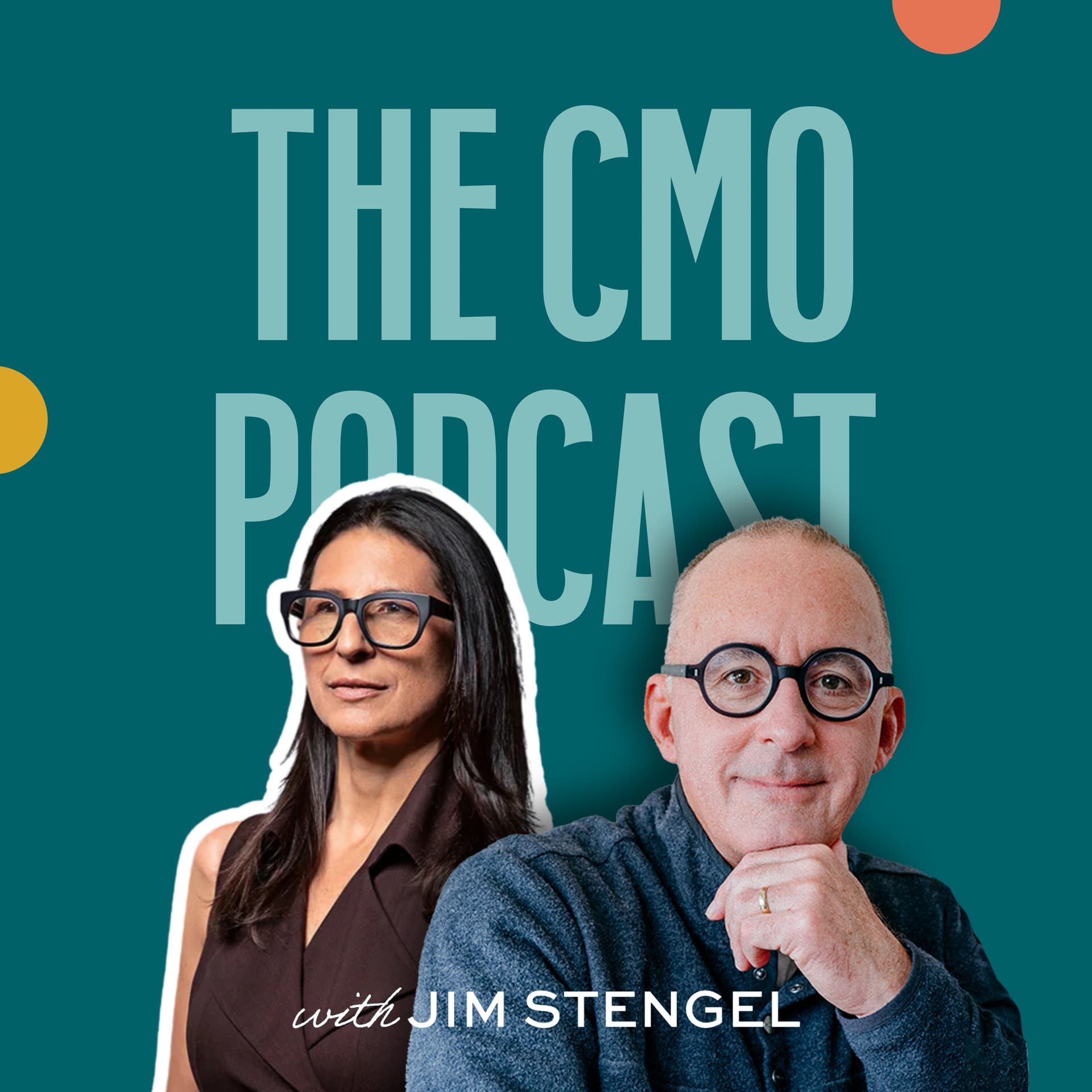
Mark Kirkham, PepsiCo Beverages US CMO, discusses how to build enduring brands by connecting creative attention to measurable business outcomes, improving discoverability (including for AI/LLMs), and leading through transparency, trust, and tenacity.
Guests
Mark Kirkham (Chief Marketing Officer, PepsiCo Beverages US). Background: grew up in Lancaster County, PA; early career in research/analytics at Forrester and Nielsen; brand management at Procter & Gamble; 15+ years at PepsiCo, leading global marketing and campaigns like the Pepsi Taste Challenge and UEFA Champions League partnership; teaches at universities including Boston College, Georgetown, Wisconsin, Trinity College, and Dublin.
Key claims
value leaks across fragmented ad stacks; PepsiCo needs “discoverability” for both humans and agents/LLMs; marketing fundamentals (“what”) stay constant while channels (“how”) change; leaders should “leave things better” and use direct, transparent feedback.
Notable examples
Pepsi prebiotic cola Walmart Connect/Black Friday online launch; Pepsi Taste Challenge (50th anniversary in the US); “Love Has No Labels” Ad Council campaign; “Innovation or Die” and PepsiCo’s Blender organic content model.
Written by AI. May contain mistakes. Listen to the episode to check what was said.
Chapters
Tap a time to open that second in VOThe Importance of Infrastructure in Marketing
0:45 to 1:15
Understanding how marketing infrastructure impacts campaign effectiveness.
“households of verified purchase truth running as live signal through every campaign they execute.”
Introduction to Infilion
1:15 to 1:46
A discussion about Infilion's innovative marketing platform.
“Nobody bakes a cake as tasty as a tasty cake.”
Nostalgic Brand Memories
1:46 to 2:51
Exploring personal brand memories and their impact.
“Because when a brand's purpose is clear, compelling, and authentic, profit naturally follows.”
Shared History and Upbringing
2:51 to 3:38
Mark Kirkham shares insights about his upbringing and its influence.
“Ready to Drink Beverages, Lipton, and Poppy.”
Influence of Lancaster Roots
3:38 to 4:27
How Lancaster upbringing shapes professional identity and values.
“And it's a place far, far away from Canton.”
Mentorship and Leadership Lessons
4:27 to 6:27
Mark discusses mentorship and lessons learned from Greg Lyons.
“Yeah, it's a small town about 50 miles west of Philadelphia.”
Experiences at Cannes Lions
6:27 to 7:54
Mark shares insights and experiences from the Cannes Lions Festival.
“but the alley boys, like just salt of the earth, good, genuine, lots of good jokes about you.”
Meeting Oprah and Reflections on Intent
7:54 to 13:40
Mark reflects on his inspirational encounter with Oprah Winfrey.
“Credible marketer, brilliant, actually was a great tennis player.”
Mark's Journey at PepsiCo
13:49 to 14:00
Mark discusses his career at PepsiCo and its fit for him.
“Okay, now Pepsi, you've been there 16 years, North American CMO for 15 months or so.”
Transitioning from P&G to PepsiCo
14:00 to 16:52
Learn about the dynamic differences in brand building between P&G and PepsiCo.
“It's also given me the opportunity to work global, work local.”
Show all 26 chapters
Building Networks in New Roles
16:52 to 19:36
Discover the importance of networking and direct communication in new job roles.
“And it was the same when I came back to the U.S.”
Evolving Brand-Building Models
19:36 to 22:10
Explore how the brand-building model at PepsiCo has transformed over time.
“I mean, earned media, opening up our, we created wall gardens all over the place with our websites, protecting our data.”
Learning by Doing in Marketing
22:10 to 25:14
Understand the shift from training to learning by doing in marketing practices.
“When you talk about bringing your bottlers in and telling stories and showing cases, you are leveraging the scale of the company because you are full of stories.”
The Gap Between Attention and Action
25:14 to 26:16
Discuss the challenges in translating consumer attention to actionable results.
“I spent years at Procter & Gamble trying to answer that question.”
The Role of a CMO
26:28 to 28:00
Gain insights into the responsibilities and focus areas of a CMO at PepsiCo.
“You know, you always, because it's the craft, it's the creative, but at the same time, and more importantly, you've got to manage portfolio.”
Building a Legacy in Marketing
28:00 to 29:59
Mark discusses his principles of trust, transparency, and tenacity in his role as CMO.
“Actually, my wife read it the other day about the average tenure of a CMO is like two and a half years.”
The Power of Communication
30:00 to 31:51
Exploration of the impact of Mark's Thursday Thoughts on team communication and culture.
“And so if I can leave that legacy, I will be super happy.”
AI's Role in Creativity
31:52 to 33:53
Mark shares insights on how AI can enhance creativity in marketing.
“Your company's famous for its creativity, right?”
Evolving Agency Relationships
33:54 to 35:35
Discussion on the shifting dynamics between PepsiCo and their agency partners.
“How is that shifting for you at the company?”
Career Path Insights for CMOs
35:36 to 37:15
Mark reflects on his career journey and shares advice for aspiring marketers.
“You, I mean, you seem to have a tailor-made career path for a CMO in 2026.”
The Joy of Teaching Marketing
38:52 to 41:35
Mark discusses his teaching experiences and the importance of sharing knowledge.
“I can already tell from this conversation you're a good teacher.”
Significant Campaigns in Mark's Career
41:36 to 42:01
Mark shares impactful campaigns from his career, including the Taste Challenge.
Innovative Campaigns and the Taste Challenge
42:01 to 43:30
Learn about the impactful advertising campaigns and the significance of the Taste Challenge for PepsiCo.
“It created a great conversation and it also introduced me the first to the Ad Council early in my career.”
The Importance of Innovation in Marketing
43:31 to 45:31
Discover how innovation shapes marketing strategies and the culture of creativity at PepsiCo.
“I mean, what's interesting is we turned the Taste Challenge essentially into the choice, which we ran this year's Super Bowl, which has been a pretty interesting campaign in itself.”
Personal Connections to Brands
45:32 to 48:39
Explore Mark's personal experiences with brands that shaped his life and career.
“Nobody bakes a cake as tasty as a tasty cake.”
Inspiration and Leadership
48:40 to 51:11
Understand the role of family and leadership perspectives in driving personal and professional growth.
“And my wife, you know, putting up with me and giving me the chance to do what I love, but also reminding me what I need to do to be the better person, the better father.”
Transcript
Automatic transcript. May contain errors.0:00Jim Stengel:One of the things I have learned from years of talking to the best CMOs in the world is this. The question is never just whether your creative is working. The question is whether your infrastructure can keep up with it. Because a brilliant campaign still has to travel through an ad stack, through data, through decisioning, through supply, through measurement. And every hop in that journey is a place where value leaks out. Most platforms solve one piece of that, a data company, a DSP, a measurement vendor. You stitch them together and pay a fragmentation tax in performance, in speed, and in accountability.
0:32Jim Stengel:Infilion built something very different. Demand, supply, data, measurement, and creative connected in a single composable platform. The highest performing opt-in attention formats via Infilion's proprietary tech in the industry. Agnostic identity resolution solutions. And now Catalina, 130 million U.S. households of verified purchase truth running as live signal through every campaign they execute. No black boxes, no hops, no fragmented vendor relationships to manage. The only company I know of that can take you from the first moment of attention to the final proof of action for any vertical on any screen without leaving the platform.
1:10Jim Stengel:Open, composable, agentic. That is Infilion. What's the first brand you remember making an impact on you growing up many years ago, maybe in Lancaster? Tasty Cakes. Oh, God. Tasty. Nobody bakes a cake as tasty as a tasty cake. Oh, my God. That's actually a good one. I hadn't even thought about that, but yet the jingle. I prompted you a bit on that. The jingle is stuck in my head. Remember we saw Barry Manil at the, he was playing all those little jingles. You know what? All right. I am going to go Lancaster on this. Turkey Hill Orange Tea Cooler. And they don't even make it anymore. And I'm so upset about it.
1:44Jim Stengel:Hi, I'm Jim Stengel. I've helped hundreds of major brands discover and activate their purpose. Because when a brand's purpose is clear, compelling, and authentic, profit naturally follows. Each week, I welcome the CMOs, the chief marketing officers of your favorite brands, to speak to how their job is so much more than marketing. These leaders share their inspiration and challenges, along with how they try to build a full, healthy, and happy life in and out of the office. And it's that energy that reaches everyone they touch. And we're glad you're here to feel that energy and to learn from these remarkable leaders.
2:19Jim Stengel:So here we go. One of the great joys of this podcast is reconnecting with people whose careers I've admired for years. Mark Kirkham and I actually share more history than most guests. We both grew up in Lancaster County, Pennsylvania, started our careers at Procter & Gamble, and have spent our lives building brands. So it was especially meaningful to sit down with him during the Cannes Lions Festival. My guest Mark is the Chief Marketing Officer of PepsiCo Beverages US, where he leads brand and marketing strategy across a$28 billion portfolio that includes Pepsi, of course, Mountain Dew, Gatorade, Starbucks, Ready to Drink Beverages, Lipton, and Poppy.
2:54Jim Stengel:Over the past 15 years at PepsiCo, Mark's held marketing leadership roles across the globe, helping shape campaigns like the Pepsi Taste Challenge and the brand's UEFA Champions League partnership. Before PepsiCo, Mark built his foundation of research and analytics at Forrester and Nielsen before moving into brand management at Procter & Gamble. Our conversation explores what it takes to build brands in one of the world's most competitive categories. But what stayed with me most was Mark's perspective on leadership, whether he's teaching at universities, writing a weekly letter to his marketing organization, or leading one of the industry's most diverse portfolios, he believes the best leaders leave things better than they found them.
3:33Jim Stengel:So let's welcome my fellow Lancastrian. Here's Mark. Mark, welcome to the CMO Podcast. Now we got to get right to it. All right. Okay. We have a bit of a shared history. Yes, we do. Okay. And it's a place far, far away from Canton. Very. Okay. So tell us a little bit about what you learned about our shared history. Well, first off, at one point I worked for you, a couple of rings down, but more importantly, we both lived in Lancaster, Pennsylvania. And I guess if you call going to high school and middle school and everything growing up than we both grew up in Pennsylvania. And my dad knew your brother.
4:03And yeah, it's just, it's amazing to see how two kids who grew up in Amish country could actually turn around and run some pretty amazing brands, you know? So it's awesome. And it's a beautiful part of the world. They always have a special place in my heart, but it's amazing to kind of meet people who have kind of grown up with those same kind of values and seen the character that is central Pennsylvania.
4:24Jim Stengel:And for listeners who don't know the town, it's about 60 ,000 people. Yeah, it's small. Yeah, it's a small town about 50 miles west of Philadelphia. Now, wasn't your dad like a mayor or something? Yeah, so my dad was the mayor of Millersville, Pennsylvania, or I forget what they called it. A suburb of Lancaster. Which is basically part of Lancaster. There's a university there. And it's just like, I got to tell you, when you're growing up in high school, you think it's like the smallest place in the world. There's nothing to do. And then as you get older and you go back, you realize it's a really special place.
4:51And my parents lived there for a long time. And they're both gone now. But it was so nice that they loved it so much. Like they never went to Florida. They never did that. Like home was home and it was a real special place for them.
5:03Jim Stengel:So what's the influence of your Lancaster upbringing on how you approach your job? I think one of the things about growing up there was, you know, you kind of had to always prove yourself and push yourself and and kind of get out and kind of break the routine, break the norms. I mean, you did it when you moved out to Cincinnati. I did it when I went to Boston for school and then continued my career. You know, I do think there's some real foundational roots that you can get based on where you're from. And I believe in a very simple principle about, you know, simplicity. And if you want simplicity, like there's nothing like Lancaster County to really kind of root you in kind of the basics, particularly in, you know, the Amish and Mennonite communities.
5:42but I think it's that wholesome, that kind of, you know, kind of foundation, but it also is a foundation to say, Hey, where can I go from here? You know, what can I do more? And, and unfortunately a lot of us have to leave to do that, but, but it also gives you a place to go back to. So I think, I think it does kind of give you a bit of character, but it also gave me my love for music. I worked at the chameleon club for ever since I was 13 years old, um, which has been reopened by my good friend, Rich. And I, you know, I fell in love with that, but I knew like, if I wanted to be successful in that, which by the way, I'm not doing, I'd have to move away.
6:12So it's one of those foundational things.
6:14Jim Stengel:You met my family at the Hall of Fame in April in New York. Congratulations again. That was amazing. Thank you. It was a great event. But you were there. You spent a lot of time. We went to the after party together. So what was your impression of my family? Just, I mean, I will say not just your family, and I forget the nickname for your group of friends, but the alley boys, like just salt of the earth, good, genuine, lots of good jokes about you. about what you did growing up, a lot of like pride in where they're from and who they are. And I think that's something that frankly, sometimes we forget, you know, we got to look back on that.
6:49And I think it's, it's something that reminds me, I've moved my family around a lot in different parts of the world. And, you know, sometimes you just need to anchor. And when you see that, I mean, I watched your video, and I got to meet everyone afterwards. And it just, it just made me smile, man.
7:02Jim Stengel:It just really did. Now, let's stay on this overall theme of foundations and mentorship. Greg Lyons has been on this show twice. Of course he has. And he's become a friend. He was first on the show at a very interesting time in his life after his wife had passed away. So he was now going on to Subway. He was Pepsi 23, 24 years, something like that. So could you talk a bit about him and what you learned from him? I mean, Greg is one of my closest kind of professional friends. And the odd thing, I only ever really worked with him slash for him for a couple months. But, you know, we met when he was living in the UK and then he was in Canada and then he was in the US.
7:42Obviously, I became friend with his family. Our kids were friends. And Greg is one of these guys who doesn't say a lot. But that, I think, is what makes him so good at what he does and who he is as a person. Credible marketer, brilliant, actually was a great tennis player. A lot of people don't know this. He could have probably played pro if he really pushed it. unfortunately he's a Yankees fan and I'm a massive Red Sox fan. So that was the one thing we definitely didn't get around. But I think you learn a lot about people, about culture, and also about PepsiCo. I mean, I learned a lot through him.
8:13And for years I was running internationally, he was running the US. We had to partner a lot in how we could drive scale on programs. And that's true partnership. We didn't agree on everything, which is actually a good thing. We created some healthy tension, which is always good. But just a quality human being, a brilliant marketer and a great friend.
8:29Jim Stengel:Now we're here in Cannes Lions recording this in Cannes on day three. You arrived on Sunday. Yes. So how many cans have you been to? Take out COVID, I think 12 or 13. Okay. Wow. Okay. So this year, kind of know what to look for, you know where to go. But what about this year? Has there been any meeting you had or friend you reconnected with or presentation you saw that kind of struck you? Is there anything that has stood out for you so far? What's great is that the energy's back. You know, I mean, there was the COVID lull and then it was kind of like a little weird. And then it just feels normal.
9:04Then we've gone through different phases of, you know, who's taken over the beach? What's the big themes of the day? For me personally, having just moved back from Europe over the last 18 months, I get to see a lot of my old European friends. So I ran into some old friends I hadn't seen in a while. Theme-wise, I love to see that humor is back and it's much more coming through in the work. I think we got a little too serious as an industry for a while. Obviously, you have to say, I don't, it's getting over talked about. I feel like it's NFTs from a couple of years ago. But I do think there's like some real grounded, humor, fun loving.
9:39And while technology is always going to be part of the discussion, it's not the only discussion. And I think that's one of the things that I think we've kind of at times got too caught up in the tech and not enough in the creativity that leverages the tech. But, you know, so far so good. I mean, it's Wednesday morning. It feels like it should be Friday. But that's usually the case when you're in day three at Cannes.
9:59Jim Stengel:So you have a packed agenda, I know, this week. Is there any meeting that you're super looking forward to that you've had or you're going to have in the next few days? You know, I was at Google this morning, and I was actually really impressed by some of the applications that they brought to life. Obviously, I sit on the board of Sport Beach, so I get involved a lot while they're doing. And, I mean, it's just a great platform. And actually, the fact that Stagwell spun it off as a separate entity was actually really smart. Beth is killing it. And there's a lot more discussions around athletes as owners, athletes as brands, and spending a lot of time learning about how we can continue to involve that side of the industry, because many of us spend a lot of money in sponsorship and talent.
10:37I got to go listen and meet Oprah, which honestly, that is... Yeah. A, not only... It's not even a bucket list, because you don't even think you can have it on one. But if you think someone's inspirational based on what you've seen or read, wait till you meet them. There's an aura, there's a confidence, there's an inspirational thought leadership that comes out of every word she says. And I've never seen a room of senior marketers hang on to the words of someone. It was like 30 or 40 of us than her. And I've met a lot of great people this week. And it's just, I think it just feels like the networking part is back.
11:14You know, So there's always the selling side of this place, but the networking feels real and the energy feels, you know, it's back to normal.
11:22Jim Stengel:I was with someone at dinner last night who had spent time with Oprah as well. And as he was talking about the experience, he had sort of a one-on-one with her or a two-on-one. And he said, she was so locked in on me. And, I mean, I kind of felt like he was talking about Mr. Rogers or Miss Rachel or some of these people who, when Mr. Rogers was in the room and you were a child and he was talking to you. There was just no distraction. That's how he described Oprah. So first of all, she talks a lot about intent and doing things with intent. And when she says it, she looks at you and she talks about intent and makes you almost feel guilty of things you haven't done with intent.
12:02And it made you, there's so much self-reflection that she just does naturally. But when you start to break down, she talked a lot about legacy. She talked about doing things with intent. Of course, she talked about some of the things that she's doing in her career. But it really makes you step back. And it was like, after I was talking to her and I had to leave a little bit early, we took a picture together. And as I brought up my phone, she saw my dog. Now, my dog's name is Fenway. And she's like, who is that? What's his name? And I said, oh, it's Fenway. She goes, Fenway, you named your dog after the Red Sox.
12:34And it's just when you start to see the human side of someone you grew up with, it's pretty special.
12:47Jim Stengel:At the Cannes Lions Festival this year, I had the chance to meet the team behind Beanstalk, an amazing summit for leaders, which is happening in September in New York City. We struck up a conversation during the Cannes Lions Festival, and they shared what they are building. I found myself thinking this is exactly the kind of community event our industry needs. Beanstalk is one of the country's premier executive-only conferences, built exclusively for consumer brand leaders. More than 1 ,200 CMOs, CEOs, founders, and growth executives come together to share ideas, build relationships, and learn from one another.
13:20Jim Stengel:Leaders from companies like P &G, PepsiCo, Unilever, Clorox, Dyson, Church & Dwight, and Elf Beauty all attend. That's a blue-chip lineup. What impressed me most wasn't just who shows up, it's the quality of the conversations and how accessible everyone seems to be. Beanstalk takes place September 14th to the 16th in Brooklyn, New York. To learn more or request an invitation, visit BeanstalkEvents.com.
13:49Jim Stengel:Okay, now Pepsi, you've been there 16 years, North American CMO for 15 months or so. we talked at the hall of fame this company seems to be a great fit for you you seem yeah it is really really really no it's it's um i you know i don't know if it's one thing for me you know i worked at png for five years it came out of the gillette side um and it wasn't your typical png experience but it was all the foundational stuff that you built and many others after you and before you and that was an amazing foundation and when i went to pepsico part of it was more personal kind of want to stay in the east coast had a you know young family the other part was the dynamics of our company we are not the most foundational png unilever type of brand building company but we have amazing brands we're not the most process-oriented property but we have some process and i think i always kind of put things on a spectrum and pepsico is kind of somewhere in the middle we're going to go back and forth and i think that's what I loved about it and I still love about it.
14:53It's also given me the opportunity to work global, work local. I moved abroad for almost nine years in the UK, lived in Ireland. I've only worked on beverages, which I think at one point in my career, a lot of people have said, oh, you can't be successful at PepsiCo. You got to check the box. And, you know, a lot of companies have that, do the snacks job, but actually I've been able to do it. And I think my experience has allowed me to bring so many different experiences from international, from franchise operating models, to company-owned marketing models to, I mean, we've had to live through wars.
15:22We've had to live through obviously COVID. You've learned so much and you can apply so much. And I think that's why every day is a new challenge. You know, the categories are still healthy. The brands are still healthy. There's so much opportunity still ahead. You know, it's not easy, but that's what I love about it. You know, every challenge is an opportunity and vice versa, every opportunity a challenge.
15:41Jim Stengel:You had nine roles before becoming CMO. Wow. Yeah, I counted them up. And so that's a lot. So which one, as you look back, was most stretching for you and why? Oh, God, that's a really good one. I think when I first moved to Europe and I was running Western Europe marketing innovation, because you're moving into a new country, you kind of know the categories and the brands, you're bringing your family, you're changing a lot. I really had to rebuild a network. And it's really interesting because for me, networks are so important. It's been critical to, I would argue, my success, but definitely for my love of the craft and the job.
16:16And so when I moved there, I had to meet all the GMs, I had new teams, different cultures. And so Carla Hassan gave me a piece of advice when I worked for her years before. She said, get out there, meet with the teams. You know, this was when I was working in the global Pepsi role for her before. And I'm like, okay, so that was exactly what I did. And I would just encourage everyone, when you ever get to a new job in a new location, get out there, meet people, listen more than you talk and take away as much as you can. Because very quickly you then can actually build that foundation so that you no longer have to rebuild.
16:52And it was the same when I came back to the U.S. 15 months ago. I was like, oh God, I got to do this again. The good news is I've been going back and forth. So I kept enough.
17:00Jim Stengel:So when you do that, when you go out and meet the people in the market, because I did the same thing when I was at P &G, every role change. I went out and met a lot of people. What kinds of questions that you ask them? I mean, I think you have to go straight to the point. What's working, what's not? I think too often we tiptoe around the edges. We don't talk about the issues opening. We have to adapt to and embrace healthy tension. And particularly in international where we're 85 % franchise, I'm talking to bottlers. I'm talking to Carlsberg. I'm talking to Suntory. I'm talking to even small mom and pops and smaller companies.
17:32And for me, if you're not going to have of those transparent, direct conversations. And there's a cultural component of that. Some cultures, incredibly direct. Other cultures kind of work around the sides. And I just came in and went deep. And I think you have to do that. You have to know what's working, what's not. We used to do workshops. And actually, the first time I ever did one was actually a P &G, when you just do two whiteboards, what working, what not, parking lot.
17:56Jim Stengel:Just doing that really opens up the dialogue. Now, you talked about why you like the company. It is a leadership academy. I mean, it has been talked about by many, many publications. P &G is one as well. It sends a lot of leaders out. It has sort of a way of thinking about leadership and building brands. That's all shifting a bit, and certainly that's a topic in Cannes. So if you have to think about the brand-building model today at Pepsi, how would you describe it? And how is it different from maybe five years ago? I think the brand-building model is in a state of transformation. I think everywhere it is.
18:33I think the nice thing about CPG is you always have an inherent brand and product role. Like it's not just a brand and not just a service. And you always have something foundational at its core, whether it's a can of Pepsi, a bottle of Gatorade. So you're going to always have an anchor point. The question is, how are consumers engaging with that product or that brand in new and different ways? And it's fundamentally different. You know, in the last 10 years, we've probably seen more fundamental changes in marketing than ever in the history. And yes, some of it's technology enabled. A lot of it is channel dynamics.
19:10But at the core, the brands are still the brands. And I think we just really need to think differently about how our brands show up. You know, and this does get into AI and it gets into agentic marketing. Like discoverability is probably the number one most important thing for all of us to focus on. It is not sexy. but either was meta-tagging webpages. If we're not making our content discoverable, if we're not getting our message out, I mean, earned media, opening up our, we created wall gardens all over the place with our websites, protecting our data. Now the world needs to see it and you need to be okay with the good, the bad, the ugly, but most importantly, it just needs to be out there.
Read the full transcript
19:49So discoverability, thinking about how we market to audiences and agents at the same time, like we've done tons of work to understand the behaviors of people. Now we need to understand the behaviors of large language models. And that is not the sexy side of AI, but that's actually the most powerful. So for me, that disruption, the disruption in the media landscape, the shift from upfront to organic, it's all happening really quick. And for us as leaders, we also got to admit we don't know everything. We have got to be out front and learning again. You know, I literally do like bi-week AI with a friend of mine's alpha company, like just learn a lot about what's happening in the industry.
20:31Why? Because it's important. Because I can't ask people to go do something I don't understand. So, yeah, it's probably the most dynamic, I mean, in my last 30 years, but I think it's the most dynamic probably in the last hundred.
20:42Jim Stengel:Yeah, yeah. So how do you think about, again, you're a university company, you hire people, you train them. How is that shifting? The kind of people you bring in and how you think about training and capability building now? I'm a big believer in learning by doing. PepsiCo is not a training company like a P &G. We're getting better at capability building versus training. And I think a lot of it's learning by doing. I think a lot of times senior leaders, and I would even say middle management leaders, need to spend more time showing the work, giving the case studies. Actually, next week I have a bunch of bottlers in the U.S.
21:22coming in, and we're going to share case studies, both of us. Stories, case studies. I mean, I've got a bottle in Ohio, G &J. They're killing it. I'm like, I want to show the rest of the world the work you're doing. So there's so much of that kind of learning that needs to happen. But I think there's also a lot more online learning, less structured learning. But, and you know this because, you know, Mark Ritson's done all his studies, there are some basic gaps in fundamentals. And I'm a big believer in fundamentals. I strongly believe that the what of marketing has not changed. You know, and you could go four Ps, four Cs, insert framework here, but it's the how.
21:56The how is super complex, but we got to make sure people understand the what. And if we can continue to do that, that will make doing the how a little bit easier.
22:06Jim Stengel:What do you think? I love your point. And actually, we should put a pin in that. When you talk about bringing your bottlers in and telling stories and showing cases, you are leveraging the scale of the company because you are full of stories. And in some part of the company, there's excellence happening in everything. And finding that and sharing it and learning from it, I mean, that's low-hanging fruit, but we don't often do that. We don't. And we have this - It takes time, some planning, and some open-mindedness. Well, I think culture sometimes gets in the way. The not-invented-here syndrome.
22:36You know, going back to Greg, it's funny. He created Do Us a Flavor in the UK. And it's still to this day, and there's a few others, including ones I've worked on, one of the few case studies of where the US took an idea from another market. And that's got to change. We actually just did. We took something from the UK. And of course, a lot of international markets take work we do. But I think this idea of non-invented here syndrome, it's just got to go away. And when I say non-invented here, it could be a bottling partner, agency partner. It could be anyone. So that open-mindedness has to, especially in today's world.
23:07Jim Stengel:Now, speaking about cases, I was reading about the Pepsi prebiotic cola through Walmart Connect that you did late last year. That seems to be an interesting new thoughts about brand building and testing and learning. So talk about that and what you learned. You know, it's really interesting. We were working on this project for a while. Obviously, we brought Poppy in the midst of it as well. And, you know, only 8 % of Poppy's mix is cola. So it wasn't really an issue, but we wanted to make sure we did it different. And I'm not kidding. We were literally at our sales meeting last August in Orlando.
23:38Everyone loved it so much. We decided we're going to launch this in three months. We were going to wait till February. Like, no, we're launching. So we announced it literally three days later. We worked over the weekend, created some assets, got it out the door, did a online only launch on Black Friday across Amazon Kroger and Walmart and actually used it a way to test and learn. You know, I was talking to Kyle who runs Walmart Connect. You know, we put in different messages. because when you go out there with a functional benefit that also has natural sweeteners and that also has only five grams of sugar and all of these things, you got a lot to educate, you know, because consumers know what Pepsi is, but what is Pepsi prebiotic?
24:15And so we would use it as a learning platform. So we sold out in most cases, like, and I think one was 12 hours, the other one was like 26 hours. We, we brought a lot of buzz. We did a lot of social and influential creator, which we've got a lot of learning from. But I think the really most important thing is we got learning about messaging so that when we went to retail in February, we could actually adapt. What I can tell you so far is that we've learned that 50 % of the buyers at Kroger and at Walmart, it's like 48 and 52, are actually new to the Pepsi family. And that doesn't happen very often.
24:45Now, there's also learning about how big you scale, especially in a new... So there's so much learning you can take, but it took literally a lot of excitement at a sales meeting, a conversation with my CEO, Ram, and then ultimately Ramon, and then turning it around in three days. Now, supply chain, had to bring them along, our concentrate teams, all of these guys, this is not normal, but it's good to stretch your muscles. It's good to push the system, and we learned a lot doing it.
25:12Jim Stengel:Yeah, yeah.
25:20Jim Stengel:I spent years at Procter & Gamble trying to answer that question. We had the creative, We had the reach. We had campaigns that genuinely stopped people. And then we watched that value quietly disappear somewhere between the moment of engagement and the proof of a business result. That gap between attention and action is where most media budgets go to die. And most digital media platforms have been content to live inside it just a little upstream from accountability. Infilion is the company that decided to close it. They started as the original attention company built on the idea that a consumer choosing to engage with an ad is worth more than one who ignores it.
25:55Jim Stengel:But they did not stop there. They have built the infrastructure to connect the moment of attention to the proof of action across every screen, every format, every vertical. That is not a feature. That is a fundamentally different idea of what an ad platform should be. And it is the one brands have been waiting for. Learn more in the show notes.
26:17Jim Stengel:I'll talk a bit more about your role. You've been in it 15 months. What do you focus on? I mean, how do you spend your time? You know, I think the hardest part of being a CMO or frankly, just being a senior marketer is you always want to be a doer. You know, you always, because it's the craft, it's the creative, but at the same time, and more importantly, you've got to manage portfolio. You got to manage diverse teams, which for me across the different sub functions is hundreds of people. And you've got to basically build a community. And so I spend most of my time ensuring that I've got great leaders, building great communities, building great brands, and building capabilities.
26:57And when we do that, I think everything else comes together really easily. The other thing is cross-functional. You know, with my operating teams, my XCOMs, there's a lot more that we have to do to connect with finance, connect with supply chain, connect with them. So I do spend probably more time on the operational side than maybe with consumers. But lastly, I think every CMO needs to just spend time getting the market, getting the field, getting the customer, getting the consumer. I mean, I actually took one of my daughters to a concert in Lexington, Kentucky called Railbird to meet real Mountain Dew consumers in a real Mountain Dew moment.
27:34And that really just takes me back and reminds me about why I love what I do.
27:38Jim Stengel:I couldn't agree with you more getting out of the market. You know, there's just nothing like it. I don't care how far technology takes us. You have to get out there and feel, be with people. Now, what do you hope, I know you're only 50 months into this, but what do you hope people will remember you for in this tenure of leading North American marketing for PepsiCo? You know, I, well, first off, I hope it's, you know, I hate reading these stories. Actually, my wife read it the other day about the average tenure of a CMO is like two and a half years. And Greg had it for like six or eight. Like I, I want to do this as long as it makes sense for me and the company.
28:13And I love what I do. So I think the first thing, my legacy should be based on what I leave behind. There's actually a great book called Legacy, which is one of my favorite books. And really, it kind of pulls off of the All Blacks and this whole concept of leave the shirt in a better place than where you found it. The rugby team in New Zealand, right? Exactly. The All Blacks in New Zealand. And it's funny because I'm taking the shirt from a very good friend. And I think there's a couple of things. One, I believe in three things that are principles, which is trust, transparency, and tenacity. I want people to know that I'm super transparent.
28:47Sometimes wear stuff on my sleeve, sometimes transparent to a point that make people feel a little uncomfortable. But I think transparency is so important these days so that people know who you are, why we're doing things, and more importantly, why it matters. Trust is kind of interrelated in the sense of I love to communicate. I write an email every Thursday called Thursday Thoughts to all the marketing department that I talk about the people. I talk about programs. And then I also give a perspectives piece, which could be about anything. It could be about a cause that I'm into. It could be about fandom and sports.
29:19But I think there's this trust that you build by getting to know someone and believing in their word. And that's really important. And then tenacity is just like, don't give up. Like, you know, there are days where things are tough. You just got to push yourself hard. And if I can leave that as a legacy, that would be really, really meaningful to me, that people would remember that I was that kind of person and maybe they become better marketers and ideally better leaders because of it. And then the last thing I'll say is I also believe in this principle of making simple special. And simplicity is the most underrated idea in the world.
29:58The greatest campaigns are the simplest. the greatest benefits are the simplest greatest products are the simplest yeah ivory so dove you can go through all these examples in the world and just say wow really simple ideas made special through creativity through marketing leadership through technology in some cases that is the point and we really need to simplify how we do things and that concludes prioritization but i don't want people to over complicate you know marketers by our nature we over complicate we Get bored of our ideas. And so if I can leave that legacy, I will be super happy.
30:34Jim Stengel:Now, of the Thursday letters that you've written and sent out, what has resonated with your people? You know, it's funny. I ask people sometimes to give feedback on them. There's a few people who always respond and just write stuff. I'm very transparent about business performance in them. I'm always celebrating people. So anyone who's been promoted is in there. Even if we have a separate thing, I just acknowledge them. I always ask the team to send me good examples of work. and I acknowledge the teams and showcase it. And it's like, my comms team doesn't write it. I write it. A few of my team kind of helped me pull it together, but it's from me.
31:07And I think the perspectives piece, which is very personal, sometimes I talked about moving my daughter into college and put a picture of Kylie in there. And I think being a bit vulnerable and sharing your personal side connects you a lot more with your teams. So I think that's probably one of the big things that people just appreciate. The other thing is, I sometimes don't get them out on every Thursday. so I send them the Friday edition. The Friday edition. Thursdays thought sounds catchy, but there's been probably 20 % not on Thursdays, but it's important. And I'll continue to do it as long as people are interested in receiving it.
31:40I've done almost 60 now. And I think it's... I actually enjoy doing it because it forces me to reflect on the week in the past and the week ahead as well.
31:52Jim Stengel:Your company's famous for its creativity, right? That's part of your equity as a company. How do you think AI is going to help you further that? I mean, you're learning, we're all learning, but are there early signs of how this will help you enhance your creativity? Yeah, I think the first thing is insights and the way AI is making gathering and identifying and just mining insights quicker and easier is probably one of the most underrated, most powerful tools right now. And we've used various different tools that help us do that. And so that's like the quick hit stuff that then evolves into concept development.
32:28And I don't mean simply prompting a concept, which you can all do. But I think it's that process of developing ideas from insights using AI to actually streamline and make it a bit more efficient. You may see something that you wouldn't see anytime because it does it more quickly. Where I think is kind of the debatable one is generative and how much AI is kind of involved in the creative process. Like any tool before it, AI is a partner along the journey. Last year, I was here with Seal and we were talking about our SuperLad last year. And he talked about how he uses AI like he used to use a buddy that he'd be like riffing a new song with.
33:06And so instead of like asking his buddy, what do you think of that riff? What do you think about that chord progression? he now uses tools that kind of give him feedback. So it's not writing the song for him. It's not the creative inspiration, but it's just a tool to bounce ideas off of. And I think all creatives have used lots of different things. You know, I mean, they're using Google. All you're doing now is using something that's a little bit more powerful, maybe a little bit more insightful. So I do think AI will continue to be, you know, a partner in crime along the journey, but I do not believe in any way, shape or form that AI will completely take over the creative process.
33:43And I believe that because there's been many an innovation in the past that have helped us, but we still, the power of human creativity will always be at the center.
33:53Jim Stengel:You, like P &G, are a company that has worked closely and deeply with agencies, partners in creativity. How is that shifting for you at the company? I think it's shifting. No, it's shifting. And I think we have to be honest that it's shifting. I think the days of the traditional AOR are pretty much gone. And I don't mean that like we don't have agencies with long-term relationships, but I think we look at those relationships through a bit more project-based, you know, and it's hard because agency models need to adapt to that. But the reality is we've built internal capabilities with our content studios that we can do certain things ourselves.
34:31They have evolved in technologies and in creative platforms and things like that that we can continue to use. but for different things. So the typical AOR relationship, I don't think is going to be here the way it used to be in the years to come, but the relationship will continue. And so what we've got to find a way is having those discussions about how your relationship evolves. How does the chains in the agency landscape affect the kind of work you do? How does your own capabilities affect the kind of work you do? You know, we've actually taken production out of some of our and we're doing ourselves.
35:07Now, the creative teams are on board, but we're not actually duplicating these efforts anymore. So for me, I think the AOR relationships evolve. I think some of the media relationships evolve, whether it's through technology or change in buying behaviors, but everyone's just got to be open to it and openly talk about it because kind of pretending it's not happening, it doesn't work. Having those open discussions, I think will create more opportunities for agents, agencies, and clients to work together even deeper.
35:34Jim Stengel:I want to talk about your career path for a minute. Cool. You, I mean, you seem to have a tailor-made career path for a CMO in 2026. You worked in research at Forrester, data and analytics at Nielsen, brand management at P &G, then loads of roles, nine of them, as we said before, at Pepsi. Is there anything else you would have done looking back on to better prepare you for this role? You know, it's interesting. I probably should have worked at a creative agency. You know, like I actually, my first job was a PR agency. So the communication side, the writing side, that was, I was a comms guy and a psychology guy in college, but I never worked at a creative agency.
36:10And I've always felt myself a bit of a hybrid. You know, some people you know are just like super creative. Some people you know are just super business. And I'm definitely more of a hybrid, but I, and I love the creative process. And some of my best friends are creative. So I think if I would have cut my teeth at an agency or two, maybe I would have learned something more. You kind of do as a client. So maybe I didn't have to. It's kind of like that. I never lived in New York City, but I spent a lot of time there. So, you know, did I have to live there? But that would probably be the one type of experience that would have been different.
36:41But I'm a big believer in getting lots of different experiences. If you can do that, and that's why P &G was always kind of the MBA academy, you know, like you would always get those experiences versus a lot of places you have to get them outside and then bring it in. And I take my insights, my analysis, my consulting skills, all those experiences were additive. And I use them to actually be the foundation of who I am as a marketer, who I am a leader. If I hadn't done them, I would have gaps. And I'm still learning. I got a ton of learn and I'm going to continue to learn. And how I learn might be different and where I learn might be different.
37:19But I would just challenge people, just keep trying to get those experiences. is when someone tells you to take a lateral move for a new experience, do it. That will make you stronger in the long run.
37:38Jim Stengel:If you were a chief marketing officer in consumer products, I want you to think about something for a moment. You have creative that works. You have campaigns that capture attention, but somewhere between that moment and the register, the signal gets lost. You cannot see what actually drove the sale. You are making optimization decisions on inference, not truth. Well, that changed in February. Infilion acquired Catalina, four decades of deterministic purchase intelligence, 130 million U.S. households, 70 retail banners, $600 billion in verified annual consumer spending. And here is what really matters.
38:13Jim Stengel:Over 90 % of consumable purchases still happen in-store. Infillion and Catalina together can close the loop from digital advertising to in-lane purchase and incentivize the next one. This is not a measurement tool you consult after the campaign. This is a live signal that runs through your media while the campaign is in flight. You can now optimize from attention to action in real time against people whose actual purchase behavior you know. A consumer products brand needs return on ad spending. It needs foot traffic. Infillion now delivers all of it. Not as separate vendors you reconcile later as one connected platform.
38:50Jim Stengel:That is what closing the gap looks like.
38:56Jim Stengel:I want to flip into the creative brief. You are very active in teaching. Yes, I love teaching. I can already tell from this conversation you're a good teacher. But you teach at Boston College, Georgetown, Wisconsin, Trinity College, Dublin, when you lived in Europe, I assume. How do you approach that? What do you teach? What do you love doing with the students? You know what's funny? It started back 15, 16 years ago. it was a recruiting trip and we went to Georgetown to do some recruiting. I didn't go to Georgetown, but I was like, yeah, sure, I'll go. And the professor, Professor Pashant, who's now one of their deans, was like, hey, could you stick around tomorrow and just give a lecture?
39:28And I was like, yeah. And that was the start of it and literally been doing with them and actually stayed close with them. So I tied it a little bit in recruiting. But what I'll talk about is it really depends. I've probably got like five or six kind of canned presentations, but it's not really canned. It's discussion. I talk about global marketing. I use CAN case studies and tell stories. I use some of our own internal work. I like to probe the students. Like I learned so much by teaching, like Marcus Collins is a very good friend of mine. And he's someone, yes, yeah. Dr. Marcus Collins. And he is one of those guys who just, you take a lot and he, you know, he's a practitioner, you know, he worked at agencies, he worked in the client side.
40:10And when I actually went out and did Michigan with him. And it was so funny because he was in the class. He's like, I get to be a student and I got to also sit and watch him teach prior to that. And it's just so much you can learn. And so I go in there maybe with some ideas. I do like to talk about this concept, you know, make simple specialist summary and really focus on how the fundamentals of marketing are true every day. I talk a lot about because when I was an undergrad, I took a lot of evening classes. Why? So I could have practitioners like Jack Fallow, writer for Sports Illustrated, Lynn Ketelson, the former publicist for Ted Kennedy.
40:44I learned from these guys. And that like, it's kind of a pay it forward thing. So for me to go back and spend time with young aspiring marketers, and let them know that, hey, that Kotler book is real. And you're going to actually apply that in your day to day as a marketer. I think that's, that's a bit of an obligation. And then but bring it to life in fun ways. Like I love to bring in like case studies. One of my favorite questions is I ask students things like, hey, how many of you people listen to radio? You get like five people raise a hand. And I say, how many listen to podcasts? They all raise a hand.
41:16And then I remind them they all listen to radio because that's the case. Things may evolve, but they're not thinking that way. And so when you start to break it down to these very simple things, I think even students get inspired. And I get a lot out of it. So I think someday when I figure out what I wanna do when I grow up, I'll probably teach. Super.
41:36Jim Stengel:what's the most significant and meaningful initiative or campaign you've worked on in your career for you personally oh so there's there's two answers the first one is actually not a pepsico campaign and it was an ad council campaign that i got to work on called love has no labels and honestly and i tell lisa sherman who runs the ad council it's still to this day at the time brad jakeman uh asked me to work on it and i was like what is this thing man I mean the moment that first piece of work that was shot in Santa Monica which if you can go look at it was you know they basically put people behind x-ray machines and they're all skeletons but they happen to be from different face and different genders and and different races and it really established this really great conversation about bias and it done it it did in a way and brands did it so us and coke we swapped labels you know we took away our branding for a couple of days.
42:33It created a great conversation and it also introduced me the first to the Ad Council early in my career. On the Pepsi side, I would actually say bringing back the Taste Challenge has been both a joy and a passion project. To be honest, it is one of the greatest campaigns in the history of marketing. You can read all about what Roger Enrico did and everything else. At its core, it's a sampling activation. But what's even better about it, it gives the brand the right to be what it stands for, a challenger. And so I did it for almost a decade overseas. We did it in Eastern Europe, Western Europe.
43:12We took it to other countries around the world, including Asia. And then last year for the 50th anniversary, we did it in the US. Two-thirds of consumers chose us over our competition. And that, you know, is a really simple way to tell a compelling story and drive awareness and trial. So the Taste Challenge is one of those that I'm truly passionate about. It's not one film. I mean, what's interesting is we turned the Taste Challenge essentially into the choice, which we ran this year's Super Bowl, which has been a pretty interesting campaign in itself.
43:42Jim Stengel:I thought you'd say this. Good. You did it in a cheeky way. Yeah, I did. It was fun. You had this rallying cry, innovation or die. What's the origin of that belief? Look, I mean, I think it doesn't matter what category you're in. If you're not innovating, you're not going to be around very long. And innovating doesn't have to be a new product, a new liquid, a new physical structure of packaging. It just has to be an idea, a process, a change in behavior. I think too often we focus on the shiny object and not how you got to it. So innovation is a culture. We have an amazing team. We've actually taken innovation out of the brand teams and created a center of excellence, which is under Christina Eisenberg and Lauren Prescott on my team.
44:27And they just make great stuff. I mean, we literally had a billion dollars in innovation that actually was put into our AOP this year. And, you know, whether it all comes through or not, some will work harder than others. But the fact that we're producing as many ideas, we've innovated in our content model. You know, we did a JV with Vayner and Gary and I, we call it a JV. It's not. But we created this thing called the Blender. And it's half of his team, half of my team structurally working together and just creating organic content constantly. And we've seen a five times throughput. We're seeing we had a billion impressions and brand impressions in the past year.
45:04Just out of this group of 40, 50 people working together, Vayner employees are employees, constantly putting out organic social, boosting where it works, taking advantage of all the expertise that Vayner has, but also the understanding my team has. It's been a great success. And then also just thinking differently in how we work. Breaking down silos, breaking down barriers. That's innovation. And if you continue to challenge yourself, I think you'll actually become a better innovator.
45:31Jim Stengel:What's the first brand you remember making an impact on you growing up many years ago, maybe in Lancaster? Tasty Cakes. Oh, God. Tasty. Nobody bakes a cake as tasty as a tasty cake. Oh, my God. That's actually a good one. I hadn't even thought about that, but yet the jingle. I prompted you a bit on that. The jingle is stuck in my head. Remember we saw Barry Manilow at the, he was playing all those little jingles. You know what? All right. I am going to go Lancaster on this. Turkey Hill Orange Tea Cooler. And they don't even make it anymore. And I'm so upset about it. But there are certain brands that resonate with you when you're younger.
46:03And actually, it was a beverage brand. But Lipton's much better now, just to be clear. But yeah, there are certain brands you have, whether it's a Tasty Cake. I think as I've grown older, Apple's probably a brand that is just ubiquitous to me. I think at any given time, I probably have four or five Apple devices on me. I'm not a car guy, so I haven't had those things. But I think brands that have deep stories, sports brands are ones that I have a great affinity for. Obviously, Pepsi. I mean, I lived in New Bern, North Carolina, the home of Pepsi. Of the 330 ,000 of us that work for the company, I'm pretty sure I'm the only one that actually lived there.
46:42And the fact that I actually spent a couple of years there as a kid and now get to actually kind of guide that brand, it's pretty damn cool. So yeah, I've kind of had lots of brands throughout my time. But I think the ones that you grow up with are the ones that stick. I mean, I was drinking Mountain Dew as a young kid, you know, doing a country cool in the 1980s in New Bern. And it was funny because a couple of nights ago, I saw Sean White, who was one of our athletes, so the snowboarder. And we started talking about a piece of content he made like 18 years ago that's still flying off the shelves.
47:13And, you know, and whether, you know, you continue to partner some, there's always that legacy. You know, we had Channing Tatum in an ad. We had actually Brad Pitt was water skiing behind a horse in a Mountain Dew ad in the 1980s. So when you start to connect the dots on that stuff, that kind of resonates.
47:30Jim Stengel:Turkey Hill, wow. I did asphalt paving as a summer job in Lancaster when I was a teenager, and I drank a half a gallon of Turkey Hill iced tea every day. And then I discovered how much caffeine was in that. That's what kept you going. That's what kept you going. Yeah, I guess so. So, all right. We'll end on a more poignant question. Who's been the most inspiring person in your life? My family, my wife and kids. Mostly because they challenge me to be a better person every single day. And sometimes you don't do the best every time, but they're always there to remind you of who you're supposed to be.
48:06They're always there to encourage you to keep doing stuff. They also are always there to support me. Moving your family around to different countries is not easy. In fact, we even, at one point, my family moved back to the States and I was going back and forth for a year and a half. And that's not easy, but always being there to support, to encourage, to challenge, which is a good thing. But also to watch them grow. I mean, my one daughter is going to be a doctor. I'm not sure where she got it from, but I'm super impressed. My other daughter, incredible athlete, but also super loves marketing and communication and sports.
48:39So anything I can do to help her kind of really, you know, kind of hone her craft and reach her aspirations. And my wife, you know, putting up with me and giving me the chance to do what I love, but also reminding me what I need to do to be the better person, the better father. Those are the people I look up to.
48:58Jim Stengel:That's a good note to end on. This has been great. This has been absolutely wonderful. I knew it would be. You're a great teacher. Thank you. And you should. I learned from some of the best. Come on. When you have your next class at Georgetown or wherever you might be, have them listen to this show before you appear before them. That is a brilliant idea. They'll love it. They'll get to know you. They'll know what questions to ask. So use it as a teaching aid. There you go. So glad we did this. Me too. All right. Thanks, man. That was my conversation with Mark Kirkham. Three takeaways from this one for your business brand and life.
49:31Jim Stengel:And the first one is that great marketing will forever be built on great fundamentals. One thing I really appreciated about this conversation is that Mark never suggests marketing needs to be reinvented. In fact, he argues the opposite. While AI, new channels, and changing consumer behaviors are transforming how we reach people, the fundamentals of great brand building haven't changed. As he puts it, the what of marketing remains remarkably consistent. It's the how that's evolving faster than ever. For marketers, that's an important reminder. Embrace the new tools, but never lose sight of the timeless principles that build enduring brands.
50:06Jim Stengel:Second takeaway, innovation is a mindset. Mark has a phrase that he likes to use with his team, innovate or die. But what's interesting is he doesn't define innovation as simply launching new products. For him, innovation can be a better process, a new partnership, a different way of working, or a smarter way to learn. Whether it's Pepsi's prebioticola launch, rethinking agency relationships, or building an entirely new content model with creators, innovation is about creating a culture that's willing to experiment, adapt, and keep moving forward. And the third takeaway, the best leaders build people who then build the brands.
50:42Jim Stengel:The conversation ultimately became less about Pepsi and more about leadership. Mark talks about teaching at universities, writing a weekly note to his marketing team, and the importance of trust, transparency, and tenacity. He measures success not only by the brands he helps grow, but by the people he develops along the way. I especially loved his belief that leaders should leave the ship in a better place than they found it. That's a philosophy every leader in marketing or otherwise can aspire to. That's it for this week's episode of the CMO Podcast. As always, I would be grateful if you shared our show with your friends, along with subscribing and leaving a review on Apple Podcasts, Spotify, or wherever you listen.
51:24Jim Stengel:The CMO Podcast is a Vive Original Production. Hi, everybody. I'm Andrea Sullivan, the CEO of Vive, and we have produced the CMO podcast with Jim Stengel for many years. And I'm sitting in his seat right now. It's so exciting. I wanted to tell you a little bit about one of our programs. It's called Vive by Vayner. It's a 12-month program that's designed for C-suiters and founders. And we want to help people to grow their businesses, but also to grow themselves. And so we bring in people from Shark Tank to talk to our founders, but we also focus on wellness. We want to make sure that people are leaning into becoming their best selves, their best and happiest selves.
52:08Jim Stengel:So if you are someone that wants to learn how to grow your business and grow yourself, check us out at vive.co. That's V-Y-V-E dot co. We'd love to talk to you.
From the publisher
What does it take to market some of the world's most iconic brands?
Recorded live during the Cannes Lions International Festival of Creativity, Jim sits down with Mark Kirkham, Chief Marketing Officer of PepsiCo Beverages U.S., to explore how one of the world's largest marketers continues to reinvent brands like Pepsi, Mountain Dew, Gatorade, Starbucks Ready-to-Drink, Lipton, and poppi in an era defined by AI, changing consumer behavior, and relentless innovation.
Mark oversees brand and marketing strategy across PepsiCo's $28 billion U.S. beverage portfolio. During more than 15 years with the company, he's held marketing leadership roles across North America, Europe, Asia Pacific, and Latin America, helping shape global campaigns, expand iconic brands, and lead innovation around the world. Before PepsiCo, he built his foundation in research and analytics at Forrester and Nielsen before moving into brand management at Procter & Gamble.
The conversation also becomes a masterclass in leadership. From developing future CMOs to writing a weekly letter to his marketing team, Mark shares why trust, transparency, curiosity, and continuous learning are the foundations of building both great brands and great leaders.
—
Meet The CMO Podcast On the Road
The CMO Podcast will be on the road throughout Q4 2026, capturing conversations with the leaders shaping the future of marketing, leadership, and business. If you'll be attending one of these events, we'd love to connect. Let us know!
- Advertising Week New York | October 5–7
- BLINK Cincinnati | October 8
- ANA Masters of Marketing | October 20–22
—
Interested in partnering with The CMO Podcast?!
Looking ahead to the rest of 2026 and into 2027, we're partnering with brands to create executive content platforms that extend far beyond a single event. From pop-up podcast studios and live recordings to executive roundtables, keynote conversations, and bespoke thought leadership programs, we work with partners to build meaningful experiences that connect with senior marketing leaders.
Whether you'd like to partner with us at one of the industry's biggest marketing events or create a custom experience designed specifically for your brand, we'd love to explore what's possible. Reach out to learn how we can build something together.
Email us at podcasts@vyve.co
—
Produced by vYve
The CMO Podcast is proudly produced by vYve Production, a full-service production and content studio specializing in podcasts, executive storytelling, branded content, and live experiences.
vYve is a community of ambitious leaders dedicated to unlocking what's next in business and in life. Through executive coaching, transformative experiences, strategic content, and communities like The CMO Podcast, vYve helps entrepreneurs, corporate leaders, and teams grow their businesses, strengthen their leadership, and build meaningful connections that last.
Learn more about vYve and The CMO Podcast community at www.vyve.co.
See Privacy Policy at https://art19.com/privacy and California Privacy Notice at https://art19.com/privacy#do-not-sell-my-info.