In short
The CMO Podcast Episode Summary
Episode Title
Rachel Thornton (Adobe) | Exploring Curiosity Through Digital Experiences
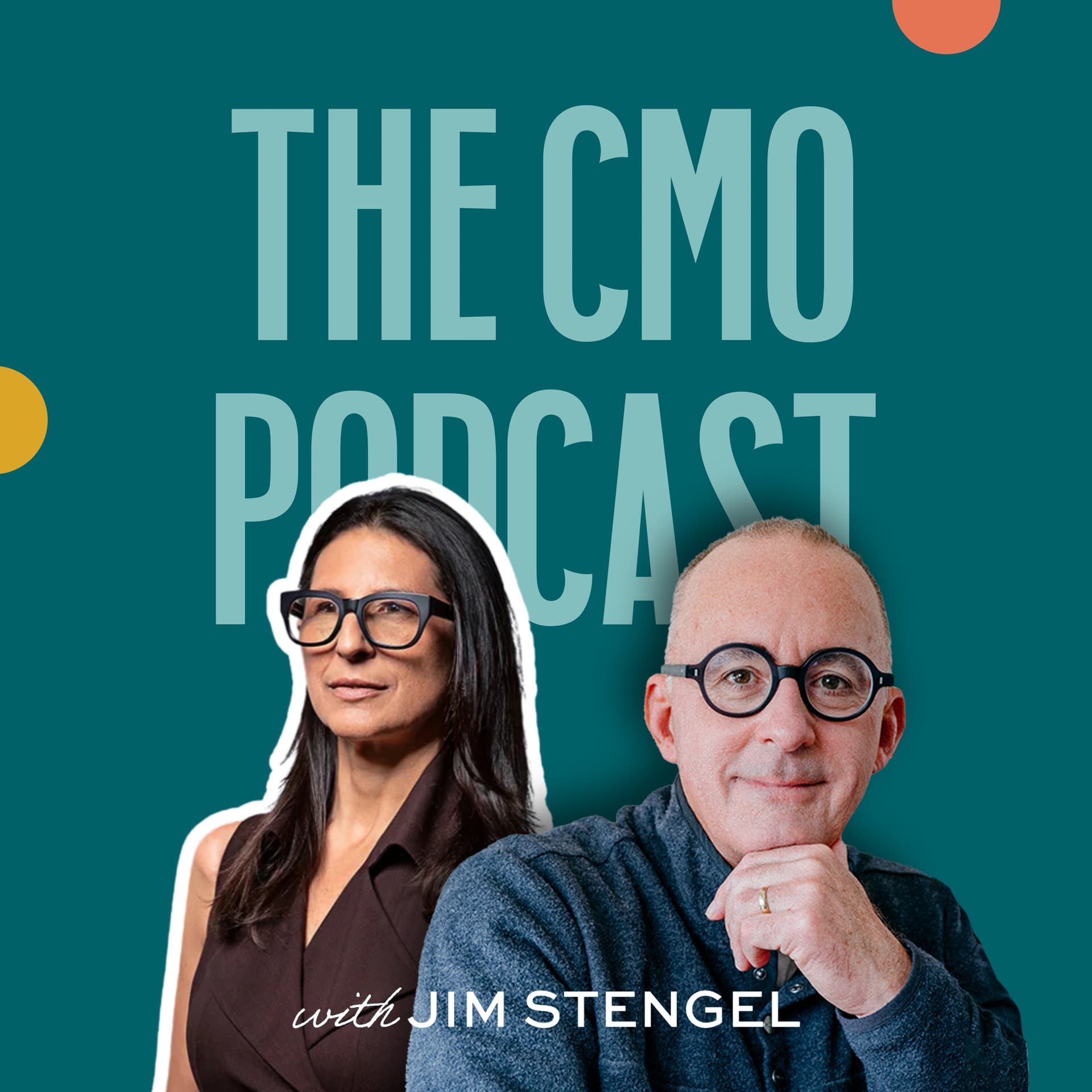
Episode Overview In this episode of The CMO Podcast, host Jim Stengel converses with Rachel Thornton, the Chief Marketing Officer of Adobe Enterprise. The discussion unfolds against the backdrop of the Adobe Summit Digital Experience Conference in Las Vegas, where various insights about digital experiences and marketing strategies are explored.
Key Participants
- Jim Stengel: Former CMO of Procter & Gamble, host of The CMO Podcast.
- Rachel Thornton: CMO of Adobe Enterprise, previously held marketing roles at Microsoft, Cisco, Salesforce, and Amazon Web Services.
Adobe Overview
- Adobe, founded in 1982, generates approximately $22 billion in revenue, recognized for its creativity and innovation.
- Major products include Creative Cloud, Document Cloud, Experience Cloud, and Adobe Express.
Key Themes and Discussions
Importance of Curiosity in Marketing
- Rachel emphasizes the value of curiosity in marketing, stating that engaging with customers leads to continuous learning.
- The summit provided her with insights into customer needs and preferences, enhancing her understanding of the market landscape.
AI and Marketing Technology
- Rachel highlights the integration of purpose-built AI in Adobe's platforms as a game changer for CMOs, enhancing productivity and innovation.
- She mentions the need for businesses to adapt to advancements in AI technology and to think critically about how it can be applied.
Brand Concierge Concept
- The discussion introduces the Brand Concierge concept, describing a customer-facing agent that embodies a brand’s ethos and delivers personalized experiences.
- This approach enhances customer engagement by anticipating their needs and preferences.
Effective Communication
- Rachel underscores the significance of storytelling in marketing, as a means to connect with audiences.
- She shares insights on the importance of having a supportive communications partner to refine messaging and enhance delivery during presentations.
Leadership and Collaboration
- Rachel discusses her leadership style, focusing on collaboration and the importance of asking questions to foster a culture of learning and innovation.
- She reflects on her experiences in various companies, emphasizing the role of strong leadership and collaborative teams in driving marketing success.
Key Takeaways
- Practice Makes Perfect:
- Continual practice in presentation skills is crucial for confidence and effectiveness in public speaking.
- Ask More Questions:
- Curiosity is essential for understanding customers and markets; asking questions fosters deeper insights.
- CMOs as Business People:
- Successful CMOs must balance creativity with business acumen, focusing on problem-solving and future opportunities.
Additional Insights
- Rachel shares her personal journey, including her move from Amsterdam back to the U.S. and her onboarding experiences at Adobe.
- She reflects on her family background in the arts and its influence on her appreciation for creativity in marketing.
- The discussion touches on broader themes in technology, customer engagement, and the evolving role of CMOs in the digital landscape.
Conclusion The conversation with Rachel Thornton offers valuable insights into the world of marketing, particularly in the context of digital experiences and the integration of technology. Her emphasis on curiosity, communication, and collaboration serves as a guiding framework for CMOs aiming to thrive in a rapidly changing environment.
---
This markdown file serves as a comprehensive summary of the podcast episode, highlighting the key themes and takeaways from the discussion with Rachel Thornton.
Written by AI. May contain mistakes. Listen to the episode to check what was said.
Transcript
Automatic transcript. May contain errors.0:00Hi, everyone. It's Jim. I'm here with Matt Spiegel, EVP of True Audience Growth Strategy at TransUnion. Matt, you've spent your career helping marketers understand people through data, and that's harder and more important now than ever. It really is, Jim. There's really just so much information out there, and unfortunately, it's often disconnected. Marketers typically see fragments, maybe a purchase here or a click there. But what they really need is clarity, true full picture of who their customers are, and ultimately how to reach them. Well, tell me how your solution strategy comes in and helps CMOs and their teams bring clarity to chaos.
0:33Well, Jim, we ultimately do that with a 360 view of the customer. And so it's about ultimately combining data, truly trusted data, identity resolution, which is a deep analytical problem and measurement that actually helps understand performance. So ultimately we work hard to help marketers move faster, to deepen their insights and to ultimately make every dollar work harder. We believe strongly that when you truly understand your audience, you can build a real brand and real relationships with customers that last. Where were you when I was a CMO? I don't know how to answer that. Learn more at transunion.com slash clarity.
1:06That's transunion.com slash clarity. What if the smartest marketing play is not to move forward, but to zoom out? Deloitte believes the most powerful move a CMO can make is to look beyond the next step and see the broader perspective. That's what the Deloitte CMO program is for, a place to gain fresh perspective and connect with leaders who've stood where you stand. Together, Deloitte will help you see the bigger picture so your next move isn't just fast, but right. Learn more about the CMO program at cmo.deloitte.com. Hi, everyone. It's Jim. I have Matt Spiegel of TransUnion with me. Matt, I want to start with, what do you love about your job?
1:42Yeah, it's a great question, Jim. You know what? I love the fact that I get to be out at events and conferences and working with clients to really think about how marketers solve problems that matter at scale. The job of a marketer is as challenging as ever, and we get to do some interesting things to make their job easier. When you work with a client, where do you get the most satisfaction? You know what? I think seeing ideas come to reality. We ultimately are an enable of great marketing. So we don't do creative. We don't do media planning. We provide the data, the identity insights, the measurement tools that make great marketing possible.
2:11So when we get to see the end product, sometimes later, it's really cool to see. Well, super to have you here. Super to be a partner. Thanks for joining us today. Thank you, Jim. So if you want to turn data into understanding and understanding into growth, visit transunion.com slash clarity. What's the first brand as a little girl growing up made an impact on you that you can remember? Okay, so I was sort of thinking about this. When I was a kid, there was this interesting shift from sort of generic clothes you'd buy to designer clothes. And one of the first things I remember was Guess. Do you remember Guess?
2:44Yes, I do. I do. I can remember like that shift. And my mom was a graphic designer and she'd always sort of been in the industry. And so it was really fascinating to see that, you know, that shift from like you go to a department store and you buy clothes to now you're really looking for a specific brand. Hi, I'm Jim Stengel, and I help major brands find their purpose and activate it. And the profits follow. For seven years, I was the global marketing officer for Procter & Gamble, where I oversaw the marketing of hundreds of brands. You may not know it, but the CMOs, the chief marketing officers of all of your favorite brands, are trying to connect you with your favorite products and services through purpose.
3:27And on this show, I delve into how they do it. This week, the CMO Podcast is on a field trip. We are at the Adobe Summit Digital Experience Conference in Las Vegas. It's a three-day confab with some 200 sessions, hands-on labs, sneak previews of new products, and lots of fun networking. So it's fitting that my guest today is at the heart of the Adobe Summit, Rachel Thornton, the Chief Marketing Officer of Adobe Enterprise. Adobe is, of course, a company who is famous for their creativity, innovation, and strong employee and customer-centric culture. Their purpose is to change the world through personalized digital experiences, and their offerings include the Creative Cloud, Document Cloud, Experience Cloud, and Adobe Express.
4:11Adobe was founded way back in 1982 and today does about$22 billion in revenue. Innovations that Adobe has pioneered include Photoshop, Acrobat, the PDF, Flash, and Firefly. My guest Rachel was a speaker at this year's summit, as I was as well. Rachel is a newcomer to Adobe, joining in December 2024, but she is not a newcomer to B2B tech marketing. She began her tech career with Microsoft and from there went on to Cisco, Salesforce, Amazon Web Services, a few startups before joining Adobe. This is my in-person chat with Rachel Thornton from the Adobe Summit. Here we go. Well, Rachel, welcome to the CMO Podcast.
4:53It's so nice to be looking at you eye to eye and to be doing this in person here in Las Vegas. I know, this is great. So we're here for the Adobe Summit, and I've been to Adobe Max. It was nice to do Adobe Summit. Two remarkable meetings. This is your first one as a team member here. So I'd like to do a little bit of a lightning round with you to get started about the Summit because it's so fresh in both of our minds. And the first one is something new you learned over the last three days here at the Summit. Oh, what I learned, actually, and it's not sort of one thing. I would say every time I talk with customers, every time I talk with our partners, I learn something new.
5:30And that I love. I think so much of when you get a chance to meet with people in person is just the chance to hear from them. What do they love about what you're doing? What do they not love? So I'd say it wasn't just one thing new. It was just hearing from, I must have talked to, gosh, over the course of the last four days, 100 plus people. and I feel like every time I chat with somebody, it's something slightly different. I'm like, what are they using to do before? What they love, what they don't love. So I think that has been really wonderful. Especially in your first three months on the job.
6:01Yes, exactly. So 100 conversations with people. So we're here on Thursday recording. You must be tired. Yes, I came in. When did I come in? Sunday. Oh, wow. So what are you going to do to relax after all this? These meetings are tough. I remember them well when I was at P &G and I always had to find some way to sort of, so what are you going to do this weekend? So I'll go home. I live in Seattle. So I go home. My husband and son are there. My son is learning to drive. So it's not actually going to be in the car with him. My husband does that, which is great, but it'll be fun to like hang out on Saturday, go get breakfast.
6:36I also love to read. I'm also a podcast person. I like your podcast. I'm also a history buff. So I'm a big fan of the rest is history. So I'll listen to a couple of history. Oh yeah, I love that too. I love those two dudes. Yeah, they're so good. What they're talking about. No, I love them. Exactly. But I love that. So that'll be a lot of that. So what's your favorite go-to coffee in Seattle? Oh, good question. I like Caffe Yardro. I like that a lot. I mean, there's so much good coffee. Starbucks also good. Like, funny, I'm a traditional, like, just black coffee type person. Yeah, me too. So. And very strong.
7:06Yes, that's me. Okay, you talked to 100 people. And this is a hard question, maybe unfair. What's the most interesting conversation you've had this week with anyone, customer or not? I think talking to a couple of customers, actually more than a couple of customers, but I think it's interesting to hear, you know, hey, for people who've been with Adobe for a while, what do they need from us now? How do they need to think about the evolution of their marketing, especially with AI? And then for new customers, I think what's, you know, interesting for some of the customers I've talked about who are just sort of starting their journey is how do they tackle the problem?
7:41What do they need to do first? For a lot of them, it's this sprawl they have with marketing. you know, like maybe a bunch of tools. So how do they tackle that? But I think the interesting conversations that are coming up a lot around the intersection of operating models for marketing and IT, right? And I think what's driving that is a lot of the interest across so many teams for AI and for Gentic. And so I think now suddenly a lot of different teams come into play, but I heard that and it's been an interesting, so thought provoker around, okay, if that is what customers are asking or interested in, how do we help them navigate that?
8:18Oh, you have some chops for that at this company, right? Exactly. So is there a company that you met this week, either a startup or an established company that kind of intrigued you? I think for customers, it's always interesting to meet with both the B2C brands. So I had good conversations with General Mills, but also meeting with B2B, where you'll have more technical conversations. ServiceNow is on stage. It's fun because I know Colin Fleming five years ago. We were at Salesforce. So that's always fun. I actually, I think what Bill McDermott's done there has been really great. He's really taken that, really done a lot with ServiceNow.
8:53So it was interesting to talk about Colin, how they see the revolution. What's the coolest experience you've had here? I went to the Formula One, you know, racetrack last night. That was up there. How about yourself? I would say what was really fun to do, I think interesting and fun, was when we were, you You know, on the lead up to the show itself, we went to the sphere and we said, OK, you know, we want to do for the big Vegas sphere. Yeah. Yeah. A buyout so that we can have. And it was really one of the most wonderful and amazing and beautiful things about working for Adobe is the wonderful and amazing and beautiful creative and the teams that bring it to life.
9:29I feel absolutely blessed. So it was so great and fun to work with the creative teams around what do we want to put on the sphere? And it's just, it's beautiful to see it come to life, but it's also fascinating on the back end because of the way that is set up and it is unique and the way it needs to be programmed is unique. So going through all of that was just so cool. Oh, that is cool. Yeah, it was just amazing. And your graphics were darling. Yeah, I know. I mean, just so good. Just brilliant and darling and cute and sentimental and everything. So let's think about CMOs for a minute. in this meeting, we've been here three days, what's the most important innovation you think you'd like to highlight for CMOs listening that you either showcased here or you talked about here?
10:13So I think that the purpose-built AI, the agentic AI that we're embedding in AEP, Adobe Experience Platform, I think is, as a CMO, when I think every day about the work streams that my team needs to accomplish, I think that is huge and a game changer, right? I think about hey, what's my web manager doing? What's my content person? What's my audience person doing? Even my analyst and my, and for some teams that have data science, it's like, what are the experiments they're building? And all of those really looking across what are the work streams that marketers deal with every day? And how can you unlock velocity with them and unlock productivity and also innovation?
10:50I just think what we did there with purpose-built was just game changer. I love that that, you know, instead of sort of rolling your own, so to speak. Yeah, yeah. But just having purpose-built agents I love because I can immediately see how, oh, this is so exciting. I can absolutely see how this can be applied and applied immediately to the teams. But I also think that when we talk about brand concierge... Could you talk about that concept for our listeners, brand concierge? Yes. So Adobe brand concierge is how do you have a customer-facing agent who embodies your brand? And I think that the difference between you have sort of a generic out-of-box experience when people come and engage with you, you know, on your website, virtually, digitally.
11:31The choice of concierge was purposeful, right? So it's the difference between I had, you know, an agent helping me versus I had someone who understood me, who knew my likes, my dislikes, can anticipate in the way in which when you engage with brands that you love, like when you travel and you feel like, hey, they know who I am. They know what I want to do. When I get there, they can give me something that is, you know, tailor-made, tailor-designed for me. I think that is powerful. Hashtag Delta. Yeah, exactly. Marriott. Yeah. I definitely think that across whether it's, you know, business to consumer, business to business, everyone would want to think about when a customer is engaging with the brand, what is the experience I want them to have that is the right combination of the data about the customer, but also the ethos of the brand, the aesthetics of the brand, and really bringing that to life.
12:18Now, you were on the big stage this week. Tell me about that. I have this amazing comms person who has been an absolute total partner from the beginning, like helping me work on what are the things I want to say? How should I say that? I go through this process of like, what are the things I want to I want to nail the points? They're almost like bullet points. But as I'm thinking about it, I'm actually also thinking, what is the way I want to have that conversation? Like, I actually think about it as a conversation. And I think you mentioned, like, when I speak, I am having I feel like I'm having a conversation with the people in the audience.
12:50And so when I go to present, I try to put the information that I've taken in about the points I want to land and I try to do it that way. Because for me, I feel like it's easier if I just feel like, okay, we're having a conversation on stage. Somebody asked me, do you present a lot or did you take classes on it? And I will say the place – I was at Salesforce. That's how I don't call in for a lot of years. And you do a lot of presenting there. And so you just – It is a skill. You can't get better at it. It becomes a muscle. You exercise. And like, I feel like once you get it, you're like, okay, now I kind of.
13:20Yeah. How have you exercised that muscle and become as good as you are today? I know it's practice, of course. It's practice. It really is. You do things like this or present. And whether it's a bigger stage or a smaller stage, I just think the more you get into it and the more you practice, the more you're like, okay, I kind of know. I'll know what this is. How do you keep yourself knowledgeable and aware of all the things happening in this world of marketing and technology? I mean, it was a challenge for me years ago. And I talked to a lot of people, obviously, in the show. And everyone has their strategies.
13:54A lot talk about their teams and how important that is. But you've been involved in technology a long time. You came out of an English major at Berkeley, which we'll talk about later. But how do you keep yourself fresh, aware, knowledgeable? wise. I do try to read a lot, but I also like to talk to tech team. When I joined, I really have loved partnering with Amit Hujia, the SVP for PMM, also Anjul. I love to do that kind of work, and I think it really helps. I also found what was very interesting. A couple of years ago, my husband and I loved Amsterdam, so we thought, hey, what if we relocated, lived in Amsterdam?
14:35But I ended up working for a startup. And I think that is fascinating. So when you're in that world, in that ecosystem, it is very cutting edge. These are people who every day are thinking about what is the next new thing. And they were part of Andreessen Horowitz. They're a Andreessen Horowitz startup. And so that's another interesting area where when you're those folks, they're investing in really best and brightest of cutting edge. So it's fascinating just to be a part of that because then you can hear what is everyone doing? What are they thinking about? So that was very cool. I think that's a real way to learn about what is up and what's coming, what's going to be the game changer or the paradigm shift in a lot of the technologies that we'll be using over the next five, ten years.
15:42Thank you. will help you see the bigger picture together. Learn more about the CMO program at cmo.deloitte.com.
15:56We're going to talk about Amsterdam in just a moment, but I want to go back to something you said about your comms person. And I want to underscore that for our listeners, because when I was at P &G and I had the big CMO role, my executive assistant was really important to me. She was great, still is, and my comms person. And I was with my comms person every day. Just help me be a much better CMO. And I find that so many people in your role don't think about that deeply enough. I was just reading HBR on the plane. There's a story about generally leaders communicate like 10x less than they need to.
16:34It was a quant study. 10x. You obviously don't. You value it. You have an important partner. So could you talk about that relationship with your comms person and how that helps you be a more effective leader? I think communication is critical. I think storytelling is critical, no matter what industry. I think humans love stories. It's culture, history, it's species. We love stories. And I think when you can land a story, you can tell a story, when you can bring someone along, that is hugely powerful. It all comes down to, I think, no matter, again, whatever you're doing. if you can engage people with a story, people love to hear them.
17:12You know, you have a friend for life, you have someone on your side. And so I do think a lot about what's the story we're trying to tell? What's the message we're trying to land? And at any given moment, how well or how poorly did we do that? And so whether it's, you know, working with Russell, who's my comms partner, or working across the teams and at the Adobe level on what's the story we're trying to tell, it really is what is the story? What do we want to land? How do we want to make sure we're landing it. And then how do we go back and say, hey, did we do it? Do we think that that really worked?
17:41Now, Amsterdam, you're new at Adobe about four months, three or four months. Before that, Amsterdam for two years? Two and a half years. So 2025, late 2024, 2025 has been eventful for you, right? You moved from Amsterdam to Seattle. I did. Started a new role, left a startup. So could you talk a bit about, you've had a busy time and we talk about life changes, you know? So could you talk a little bit about that, how you've gone through it and how you've kept your sanity, how you've kept yourself fresh and engaged, how you made the decision that you wanted to come back to the U.S. to work for this amazing company?
18:13I like change. When I feel like I've been, you know, doing sort of the same things or I'm just kind of hanging out, I like think, huh. Get restless. I do. I do too. I do. I like things to change. I like to do different things. I like to see different things. And by the way, I absolutely loved Amsterdam. We weren't thinking of leaving. Anil Chakravarti. So how I know him when I was CMO at AWS. And you mean Anil Chakravarti, the president of digital experience business at Adobe. Yes. He came to me. He's like, guess what? Opportunity. You guys have Adobe. Let's talk about even more Adobe. And we were a big Adobe shop.
18:49And I was like, okay. So I worked with him on kind of the next phase of how we, you know, sort of the next sort of adoption we did around Adobe. I got to know him. I got to know Steve Frieder. I got to know Amit Ahuja. So, and I really liked Anil. I enjoyed working with him. In fact, when I presented at Adobe Summit, the virtual one, I think he and I did a fireside chat. And he gave me a call in, I want to say, August, September. September. And he was like, this job, would you be interested? It's opened up. And I thought, I really liked him. I really liked it. I thought it would be a great chance to work with him.
19:22And Adobe is an iconic brand. So you knew them from being a partner with him And I thought really, I would be able to market to marketers, which would be amazing. And of course, it was like very, very interesting, but it was US based. So I'm like, okay, so we'd have to sort of decide, would this be the reason why? And, you know, we talked about it as a family and we thought, yeah, let's do it. And we had a house in Seattle. So it was a little bit, when we came back, we moved back to Seattle and I have a son and a daughter, but my son is still in high school. And so he was able to go back to the high school he was in before he moved.
19:57So that was good. So how do you think your family, talk about your two years in Amsterdam, how do you think that impacted your family? I definitely think we came together. I think we all enjoyed it. So we like to travel as a family. I think we talk as a family about a lot of things going like we, I, we try to talk about what's going on in the world outside the U.S. I had lived in Germany many years ago and I knew the thing I would say to my kids is, You know, the U.S. is an amazing country, an amazing place. It's also very big, you know, because you're in it. You think, oh, so much of the world is like this.
20:31But I said, it's very it's great to live outside the U.S. because then you get a feel for other cultures, like how do people, you know, address education, culture, politics. It's just very interesting to do it. And so we and we liked Amsterdam. So we moved there. And my kids really they liked it. I think they liked they went to an international school and it was fun to get to know people. it was fun to sit in a classroom and you're and it is a lot of you know it's expats some kids you know diplomat kids but it's very interesting because you get to know all sorts of different kids all sorts of different people and they really they enjoyed that you know they ended it's like you have friends like my daughter had a couple of friends she um she actually graduated from the high school in amsterdam but she had like an italian friend so like to be like oh i'm going we're going to their their house in milan i'm like right on can we go yeah for sure how about we go with you.
21:19But I think that, yeah, they really did enjoy it. And my daughter now goes to the University of Chicago and it's really a great thing because she's met a lot of the folks that came from international that are coming from outside the U.S. and she feels a little bit like she has something. Sure. Yeah, absolutely. University of Chicago. Nice. Yes. Right. Yes. Great school. Great city to visit. Yes. She loves it. She really does. Now let's talk about your onboarding. You've been here a few months coming out of Amsterdam, moving back to the U.S. So tell Tell me about how you approached your first couple of months in the role, your first hundred days or so.
21:51Tell us about that experience. It was all about the questions constantly, constantly, constantly. I'm a huge believer in ask questions early, often, all the time. When I was at Amazon, I got the chance to work with Andy Jasty for many years and he's amazing. But he was always a big one for ask the question. Don't worry that you think it's dumb, but just ask it because chances are good someone else has been wondering that as well. So when I started, it was just really asking, like, how can we how do why do we think about it this way? Or why do we think about this way? Or how does really learning?
22:20I think of it as the most important thing you can do when you're onboarding is learn. Tell me about this. Why are we doing it like this? What do you guys think? But I'm always that's how I think about it is help me learn about things, help me assimilate information, ask a bunch of questions. Because when you do that, then you can sort of it's almost like grounding yourself in like, OK, where are we? what's the culture like? What are the people like? What are the teams like? But also, what are the customers like? What are the challenges and problems we're trying to solve on behalf of customers?
22:50And then internally, what have we been doing? What do we think we'd like to change up? But yeah, so I think it's a lot, and especially not only with the internal teams, but talking with customers as well and partners. Such an important point you make. I often get asked this question, What skills should I build on? And how can I become a better leader? And I think about, I reflect at P &G, they really, two big things come out of that experience. One, just be consumer centric and never stop, which is all about asking questions and curiosity. But also in meetings, ask great questions and great questions lead to great discussions.
23:26Right. So you're really trained to not ask about tactics, to get at the core of and just keep asking why till you can't ask it anymore. So I think it is such a strong and maybe under discussed leadership strengths. You talked about Andy, just ask questions, you know, coming in curious. Yes. And also it creates a dynamic in the room where, you know, it's okay to not know things. Yeah, I think it is okay to not know things. It is okay to ask because if you don't ask, then you might think, oh, one thing when actually the reality is very different. We talked about this before we started, but I was listening to the conversation with Connie and Cheever and she mentioned the - Yeah.
Read the full transcript
24:08Previous episode. The dive deep. And that's so Amazon, but it's so, it's just, I think it's critical because when you do that, you can really get a feel for, okay, what's really going on? What's really happening? I work with sales. I've always worked with sales. I love working with sales. I have huge respect for that profession because it's hard to do every day. But I was talking with our CRO and I said, hey, let's look at maybe some of the root causes of this, but let's more than that ask, hey, how is it performing? Because depending on the answers we get, it's going to help us understand what maybe the issues are we need to fix.
24:45But if you don't quite get to what are the issues, you can find yourself going down a path of, I have a solution for this, but it isn't actually the problem. You have a different problem. But if you don't identify what the problem is, you cannot apply the right solution. So that's why I think it's so critical to ask questions and dive deep on what's really happening. When did you learn how important it is to work with sales? So my first job was in field marketing. So I worked for Microsoft, field marketing manager. Yay. That is a job in which you work with sales. Like you think every day, you know, how do you help them, you know, get opportunities, generate, just get at bats, right?
25:25Just when you think about companies that are sales led. So I'll put aside companies where it's more of a self-service motion. But when it is sales teams, it's like understanding what are they trying to achieve, how they're trying to connect with customers. And that's just critically important. And I think if you come at it with a how do we work together, it unlocks a lot of stuff. There was a ritual at P &G years ago. When you joined in marketing, you put on a brand. And after about a year to 15 months, you were sent out to work in sales for three months. not an observer. You had a bag, you had customers.
26:01I think that's powerful. Back then you were calling on stores. It's different now. So you really got a feeling for, and I still have friends from those days. And that was decades ago. No, I think it's powerful. Yes. Yeah. They also sent, when you hit about three years, they sent you to an ad agency for a week or a month. So you got a little apartment in New York or Chicago and you were on a team and not on the account team, you had to think about creative ideas and realize how hard that is and how lonely it is. It was good. So anyway, those are strong signals for the culture, right? Of what's important.
26:36What's most exciting for you right now? After like all these questions you're asking, you're meeting with teams, you're talking to the product people, talking to clients, what do you sort of, is there something you're really energized about? The technology, actually, the reason why I joined Adobe, and I think it's just what I've seen over the last four months, I think that there is this amazing need for how do you bring together customer data? How do you build the right experiences for customers? What are you going to do between the data you have? Things like AI, how do you basically integrate AI into not only the experiences you're building, but your processes?
27:12And when I look at what Adobe has with the marketing investments they made, the MarTech stack, their marketing solutions. I honestly think there's no one else out there that does it. And that was exciting to me. I am fascinated by what does it mean as marketing evolves into experiential marketing, into integrating AI into it? What does it mean to have that kind of, when people talk about AI, what do they really mean? What are they trying to do with it? I just think those are all really very, just totally fascinating. I also think There is this, you know, when we talk about experiences, they can be digital, they can be in person.
27:50I think there's also the blending of those worlds. Early on, I started doing events. So I've had some big events that I've done. But I still do think people love to be in person, right? And I think that post-COVID, more and more people like to get out. They'd like to be at events. They'd like to have these types of experiences. And so I still think that's an important component of, you know, if you think about your marketing portfolio, what are you building? I still think that is a really important and viable component for like, how do you really connect with customers? Yeah, absolutely. You know, I've known about Adobe for a long time.
28:24And when I think about that company, I now have had several experiences with you in person and obviously with your products. I mean, the word that comes to mind is just creativity. Yeah, absolutely. And, you know, you have innovation at it. It's the core of the company. It's however you say that is a value. So I would like you to reflect on that. You've had experience at lots of different companies that are really amazing, but you've been here now about four months. What have you learned about building a culture over a long period of time has created these amazing products, experiences? I went to your Adobe Max a few years ago.
28:58It's like, wow. I mean, it's clear you really value creative thinking and process. Yes, yes. And technology, of course, to enable all that. So what is it that others could learn from this? I know you haven't been here forever, but you know the company well. you were on the other side, was a partner with them. But what have you learned about building a culture that really sticks and that is innovation at the center? I think it is curiosity, being open, being courageous, thinking about new, you know, being willing to take chances on new ideas, being open to new ideas. I think that that is what builds a durable culture of creativity, of innovation.
29:34Just the letting people just think and ask questions and, you know, and it's funny and Amazon Harlan to think big, but I think that's very true. That's the heart of creativity. Like what are the amazing things you can imagine? And not to be afraid of any of it. I have this great creative team, you know, at Adobe that I work with and the run up to Summit and some of the changes we were making, especially on the business website. We have a business focused Adobe site. And I was talking to her and I said, like, let's be creative. Like we should lean into this heritage because no matter what industry you're in, creativity matters and creativity resonates.
30:13So let's lean in on this. But I do think that building that type of culture is absolutely about how do you be open to ideas? How do you look around at all of the things you take in to build new ideas? A lot of it is just that openness, that willing to look around, to look outside of like, maybe even the things that you're traditionally, you know, are dealing with every day. It's just taken so many sources. Like, I think the more you can take in and the more you can just look across all the different things out there, that's what makes you creative.
30:51We all want to stay ahead of the digital curve. And IAB, the Interactive Advertising Bureau, invites you to do just that at the 2026 IAB Annual Leadership Meeting in Palm Springs on February 1st through 3rd. If you're a qualified consumer brand or agency leader, you can access free passes and travel vouchers. And for everyone else, you can take$500 off your ticket with code, all caps, ALMCMOPOD26. This is your chance to join a three-day gathering of the industry's brightest minds and boldest voices shaping the year ahead. You'll hear agenda-setting conversations, candid fireside chats, and dynamic breakouts on the topics that matter most.
31:32from AI and commerce media to measurement and addressability. This year's lineup concludes everyone from Kevin Bacon and Bozema St. John to creator Remy Bader, along with leaders from Forbes, Major League Soccer, General Motors, and Meta. Visit iab.com slash ALM to learn more and check out the link in the show notes to register and receive$500 off your ticket.
31:57Now you have an An amazing career path, which we're going to talk about in a minute, but you work with a lot of senior marketers and CMOs, right? You've worked for them and you work with them as partners. So you have a really interesting view of the role and the people. So could you kind of reflect on of all the experiences you've had with CMOs, what do you think are the key characteristics of a really successful, winning, fulfilled, happy senior marketer? I think people who are creative themselves, innovative. I think people who are natural born storytellers, but I think also balancing that with understanding the underlying data that drives the business.
32:36I think the best CMOs are business people. They're problem solvers. I think they're creative. I think they think about the impact of like, how are we effective and how are we impactful? When I've worked with CMOs, worked for CMOs, I'm always thinking about that. I think how are we innovative, how are we creative, how are we impacting, but also how are we being effective and efficient? And I think when you look at, you know, people who are very good at this, like I said, you know, they always tend to, in my experience, you know, tend to have this ability to sort of come up and look across and think what is sort of the next big thing we should be thinking about?
33:14How do we look around corners and think about things? But then also, how can you like a little bit go down and say, okay, but what do we also need to do to make sure this is going to be an effective machine every day? Yeah, it's a bit of a complicated skill base, right? Because, you know, again, when I was at Proctor, my CEO said to me in the early days, there are very few people in this company thinking beyond five years. And you have to be one of them because the nature of your role, right? And it's important, but you have to be doing the short-term stuff too. Yeah, exactly. building the brands and the business and sales and figuring out what's next.
33:49You do. I think there is the, how do you sort of context switch? You look around corners, but then you're also like, okay, but how did this perform? And do we really like this? So maybe this, you know, if this isn't working, let's park it. Let's not do it anymore. But if this isn't working, how do we double down? So you really do have to be able to go up and down like that very regularly. What would you like to see more of in CMOs? What would you like to see them lean into more than they are now? I do think that there is every so often there will be a there will be a shift in technology and innovation and it tends to really take over the conversation, take over the landscape.
34:22And I think AI is a lot of that. We're there. Lots and lots of people talking about it, really all the people. And I I think that what will be important is you don't have to be an expert on it, but you have to think about what it means for your business. Right. And use it. Yeah. Right. And, you know, what is your POV and what it means for your business? Where can you see it be applied? And I think just, you know, get familiar with it, get comfortable with it. Again, no one has to be an expert, but I think just, again, having knowledge of it and a POV around it I think is important. Now let's talk about career path.
34:53You've had one interesting career path. You started years ago in Berkeley, at Berkeley. Go Bears. My wife's a UCLA grad, by the way. The baby Bears. Go Bruins. And my daughter is a double Bruin. Oh, nice. Yeah. So, so anyway. My husband, a bear as well. Okay. A bear. It's a double house, double cow house. I love that. But you're an English major. I am. I also studied, you know, archaeology, ancient history. I was torn between like archaeology and English. So it's like a major English. And then I did a lot of Egyptian archaeology. So like. Cool. Well, when or how did you decide marketing and tech?
35:32So. Was the path you would follow after? I would love to be able to say it was a very conscious decision. They never are. No, no, it was nothing like that. And my folks, you know, when I graduated, they're like, so what is it you're going to do? I'm like, I don't know. It's going to be great, though. You know, I didn't know. And actually, right when I graduated, I didn't really know what I really wanted to do. But I had a friend who had gone to work in this field office at Microsoft. And I was like, it'd be great if I had a job and some money. so yeah it's like it'd be so good if I got that and uh they had an opening actually for at the time as a field marketing assistant and I said all right I'll try it and I I started there and literally it sounds so cliche but it's so true the rest is history like I started there and I worked there for three four years and then I got to know someone who went over to Cisco Systems and so I started at Cisco Systems and it was so what was fascinating about Cisco which was you know, every company I have loved because it's been so fascinating to work with.
36:33But when I joined Cisco in 2000, cast your mind back to what happened. Yeah. So it was really, I literally had been there a few months and then they went through that correction and it was like, and, uh, they had to lay off a lot of people. I will say what was, this was very interesting because I, I feel like they went through early on this concept of remote because they had to have so many people that the people that kept, they had to be infinitely flexible on, oh, I don't really want to live in San Jose anymore. I'm moving. And so they really, and again, they had the technology to do it. They were like, okay, fine.
37:12I guess we're going to, we'll do the remote thing. But it was really interesting. And then of course, you know, they came back and it was fine. But that was, that was great. And when I was here, John Chambers was CEO and he is an amazing, he was, he's an amazing person to see in action. Just really amazing. My daughter-in-law works for Cisco now. Oh, that's a great company. She's been there probably six years. She's doing very well. And she loves it. She loves the company and the culture. And they are remote and they manage it really well. He was very fascinating. He traveled extensively most of the year because he would say he always felt like the highest and best use of his time was to be out in the field talking to customers.
37:52And it really struck with me that he really thought about, look, what is the best use of my time? And then if this is it, then I travel and this is what I do. And think of that. CEO of a big public company has lots of stuff coming in his inbox. Exactly. And he's in the field with customers. Yeah, that's great. Strong signal. So as you reflect on that career path, which is so blue chip kind of tech, is there an assignment or a time that was like extremely developmental for you? Were you really stretched into something? You weren't sure you could do it, but as you look back on it, it was like, that was a little bit of a crucible for me.
38:27When I started at Salesforce, I started actually in their field marketing. They had brought me over from Cisco and that was great. I think there were two things that I really loved. So the first one was they acquired a company called Instranet. They acquired the company. The founder was a guy named Alexander Dayon and he had worked at Cast Your Mind Back Business Objects. They acquired the company and that is what they built Service Cloud on. So I remember working with Alex to really build the Service Cloud, what it was, what the offering was. It was really fascinating. He was amazing. He was an amazing business leader to work with, just a leader in general.
39:02Mark, also an amazing leader to work with. But that was fascinating to really understand, like, how are we going to move into an adjacent market? Moving from, you know, being well known for sales and now moving into service and just all the things you have to put in place to make that a reality. The messaging, the positioning, the audience. Who do you talk to? What's your differentiator? How do you break into a market that you're not known for? So that was an amazing thing. But after that, I had worked for a woman. She was an amazing boss, and I learned so much from her. But she asked me to take over Dreamforce, which is her.
39:40And that was something. I will say that was doing that because it's such a central part of Salesforce. And it is something that everybody gets involved in, markets involved in. It's amazing. And people are so passionate about it. The community around me is so passionate about it. So bringing it to life and executing it was just, it was amazing to do. You brought up a number of bosses since we've been talking. So you're obviously curious about how people lead, what you can learn from them. Is there one boss or two bosses in your experience that have had a real lasting impact on you? Absolutely.
40:18And I think it's, you know, like I loved working with Andy. He's amazing. You know, just the way he thinks about things. At Amazon. Yeah, Andy Jassy. The way he thinks about things, the way he looks at information, just thinking about how you understand a marketer, an audience, a technology, he's amazing like that. Mark, obviously, just so good at marketing and PR. I worked for a woman there at Salesforce and I hadn't been at Salesforce very long. And we were, there's a group of us and we were actually at an event and she asked somebody on the team, okay, so how many, how many people are in that room?
40:57The person sort of looked at me and said, oh, she says, don't count, just know. And I thought, wow, that's really, that's life right there. Like don't count, just know, you know, business life that has stuck with me for my entire career, like know your thing, right? If you are responsible for something, know what it is, anticipate what you think you're going to be asked and be ready. It's, it's a little bit like what you were sharing earlier, you know? Okay. So tell me about the, Oh, I didn't look at that. So it's like, it really taught me when you're in a situation and you know that you're responsible for a thing, make sure you understand all the other thing.
41:33I have a friend that she was, she was there with me at that time. And we'll still refer to that. We'll go someplace and we'll ask a person a question and they'll be like, and both of us will be, yeah, don't count, just no. Yeah. No, again, reflecting on the P &G experience, we were told early on, it doesn't matter here what level you are. It matters how much you know about your business. So if you want to get ahead, know your business better than anyone. And that means everything. Yes. Customer, innovation, what's around the corner, competition. And that's very empowering. At that moment, I was like, shift.
42:04Okay, that's what I have to do. Like, if people are expecting this to be, then I got to know it. And I got, and so I will ask myself, like, what should I know about? What do I think people might be asking me? And I felt like then anticipating the questions that could come my way would make me better at, okay, now what do I need to lay out? Whether it's a project or an event or strategy, like as I asked myself those questions that I think people would ask me, I think it even unlocks deeper information that I can bring to bear.
42:38Hey, everybody. This is Andrea Sullivan, the CEO of Vive, and we produce the CMO podcast and are so excited to have partnered with Jim Stengel for so many years. I wanted to tell you a little bit about something that could be right for you. Vive is a program for entrepreneurs and business leaders who want to get more out of their life and become their best and happiest selves, both personally and professionally. We have a 12-month program that allows people to meet up with some of the best business leaders out there and additionally experts in the wellness sector so that you can learn how to nurture yourself.
43:12So we teach things around sleep optimization, meditation, all those good things as well. Please reach out to us at podcasts at vibe.co to get more information. That's P-O-D-C-A-S-T-S at V-Y-V-E dot co. Thanks for listening to the CMO Podcast and hope to talk to you more about Vibe.
43:37We're going to shift to the creative brief. And I always ask this question. What's the first brand as a little girl growing up made an impact on you that you can remember? Okay. So I was sort of thinking about this. When I was a kid, there was this interesting shift from sort of generic clothes you'd buy to designer clothes. And one of the first things I remember was Guest. Do you remember Guest jeans? Yes, I do. I do. can remember like that shift. And my mom was a graphic designer and she'd always sort of been in the industry. And so it was really fascinating to see that, you know, that shift from like, you go to a department store and you buy clothes to now you're really looking for a specific brand.
44:17Yeah. And you bought a pair and we're very proud of them. Yeah. Well, they were very expensive. Your parents were probably amazed at how much money they were. Yeah. Right. No, it was like, oh my gosh. You know. So your mom is a graphic designer. Your dad's career was? He was an architect. Architect and graphic designer. Interesting background. Yeah, yeah. They were very, it's funny. They loved art. We did a lot of, you know, we did a lot of museums. They had a lot of art books. I would actually say the one of the earliest, earliest, this isn't particularly a brand memory, but memory around that kind of thing was they had this book on Matisse.
44:50And I remember seeing his cutouts and like that's like stuck in my head for years and years. I actually, in Nice, they have a museum devoted to him and they have some of those beautiful cutouts. Well, it's kind of a brand, I guess. Exactly. That's what I mean. So maybe that's it. So maybe that's why. So what's a current brand making an impact on you? It's interesting. I've always liked fashion. I've always been interested in fashion. In fact, I had this fun conversation with a customer and we actually started talking first about fashion. He was talking about, he'd listened to a show about MS and how they think about, you know, how they have kept their heritage for years and years.
45:23Then we talked about the business of fashion. I always find that very interesting. It's interesting to see how it changes over time. I would say it's interesting to me to see where it goes because this just recently happened and this will be a very fashion thing, so bear with me. So Donatelli Versace ran the house of Versace for 35 years. She just retired. She took it over from her brother, which I had actually forgotten that. But it'll be interesting to see what happens because so much of that is her personality. So then where does that brand go? Like, is it still her personality? Is it someone else?
45:58Actually, I find that type of thing interesting. When the brand is so infused with an individual, what happens is you make that transition, right? Yeah. Sometimes brands navigate it, but I think that is sometimes hard when a person and your brand, when there's that much alignment, it's like, where do you go from there? You should have them on the show a year from now. Yeah, exactly. Because those are great stories. Yeah. So leadership strengths, which one are you, which is a real pillar of yours that you kind of fall back on, rely on? I would say, you know, being data driven and diving deep. I think those are the things that I feel like I, you know, it helps ground me in where we need to go.
46:40And then just bringing people along. I try to bring people along on the journey through storytelling. Like, here's where I think we could go. Let's imagine what this could look like. What are you working on in terms of leadership? I will say that sometimes I'll be like, okay, I see this, let's go here. And I'm working on how do I do a good job of bringing people along step by step by step rather than, okay, let's go here. I know we're here. And then let's keep going rather than say, okay, let's break it down and say, how do we get here and here? And less about the planning part of it, but more about the here's why, the here's why.
47:14You grew up in this household of creativity. Do you have any pastimes, habits, passions in the creative field that you nurture now? I would love to say, yes, I paint. I, you know, I don't, it's funny. I think both my parents are pretty creative. I don't necessarily, I don't necessarily perceive myself as like super creative. I'm fascinated by it. Like I'm fascinated by the process. I'm fascinated by people. Like I love painting. I love, you know, fashion on the creative side, but it's, you know, that's, less a practitioner, more an admirer, I would say. Reading, what I really, I'm a huge fan of history.
47:49I'm a huge history buff. So I love reading about history. I love listening about history. So that I think is the thing that I love to do. I love the, sometimes the ability, you know, especially some, you know, in your own moment, you can get a little caught up in your current zeitgeist and what's going on. Sometimes it's nice to take a step back and say, oh, wait, you know, some of this, we've seen before and it's, it's been okay. Right. So sometimes that gives me a little bit of comfort to pack and think over the span of history for, you know, uh, whether you're talking about a current climate, a current nation, current anything, you just, you think, oh, okay.
48:29So this isn't, you know, other things have come before. So I like that. So you'd like the rest of this history podcast. I love those guys. How about reading? What are you reading now? Are you reading a nonfiction or a history book at the moment? Uh, actually it's interesting. I just finished Circe by Madeline Miller, which is really good. I really enjoyed that. And then so the movie Conclave that was up, it was actually written by a guy named Robert Harris. He's written a lot of books. A book of his I just read was called Acts of Oblivion. And it's about the persecution of the people who are responsible for beheading Charles I and then signing sort of the king's death warrant.
49:08It's very interesting. It was like basically the Acts of Oblivion, meaning find those people, get rid of them. So it was very, he does, I think he does a good job. He's, I like his writing style. Good recommendation. Yeah, a little bit esoteric, but very good. I know. Okay. Well, you wanted to know, so. Okay. Who's been the most inspiring person in your life? My grandmother. That was quick. She was born in rural Kentucky and what is still an incredibly small town in Kentucky. She was born on a tobacco farm. Do you remember the town? Yeah, it's called Seabree, Kentucky. It's in the Eastern part of the state.
49:36She graduated from high school. She's very proud of that in a time when, you know, maybe didn't make that. And she worked every day of her life, every day. And she didn't quit. She didn't have that mentality. And she didn't ever feel sorry for herself. She was like, no, you just get up and you do it every day. And that was huge. Yeah, yeah. Is she still with us? No. No, yeah. I've lived in Cincinnati. We're very across the river from Kentucky. So we've done a lot of travel in Kentucky. And my wife's mother, this is interesting, during World War II, who Kentucky needed medical people, especially in the country.
50:15So she was a nurse on horseback. Oh, wow. She went down and lived in a cabin and rode horses to go help moms deliver babies. And very pivotal experience in her life. Yeah, my grandma is one of seven kids. You know, but it's just amazing. That's a good place to end this discussion. Thank you, Rachel. Thank you. It's been a real gift. This was really great. Thank you. Thank you. And nice to do it in person. Look you in the eye. Be here in person. And it's really reminds me how important these interviews are to do in person as much as we can. So thank you. Thank you. That was my conversation with Rachel.
50:48Three takeaways from this one for your business brand and life. First one, practice makes perfect. We talked a lot about speaking and presenting on stage. All of us have to do that in a career like ours. And I loved the advice that Rachel shared about it's a muscle. You have to practice, practice, practice. And if you do that, you will be confident and you will be effective. Second takeaway, ask more questions. We talk a lot about curiosity as a key driver of CMOs on this show. I loved how Rachel spoke about her huge belief in asking questions. And when she started this job at Adobe, she just was so curious with so many people.
51:24Again, why she's off to a fast start. Third takeaway, we hear this one a lot, but the best CMOs are business people. And I loved how Rachel framed it. She said two things are important for her, solving problems and looking around the corner for future opportunities and future problems to solve. That's a great way to frame your job. And if you do that, you will always be relevant and you will always be working on things that help the organization and help the business. That's it for this episode of the CMO Podcast. If you found this helpful and entertaining, I would be so grateful if you could share our show with your friends.
51:57And I would be super happy if you subscribe so you can be updated as we publish new episodes. And if you really want to help, leave us a five-star rating and a positive review on Apple Podcasts or wherever you listen. The CMO Podcast is a Vive original production. Episodes of the CMO Podcast are produced by Vive. The views and opinions expressed by podcast speakers and guests are solely their own and do not reflect the opinions of our sponsors or its personnel, nor do our sponsors advocate or endorse any individuals or entities featured on the episodes.
From the publisher
This week, The CMO Podcast is on a field trip, as Jim recently attended the Adobe Summit Digital Experience Conference in Las Vegas. The three-day event featured over 200 sessions, hands-on labs, sneak previews of new products, and plenty of opportunities for fun networking. So, it’s fitting that his guest is someone at the heart of the Adobe Summit: Rachel Thornton, Chief Marketing Officer of Adobe Enterprise.
Adobe is, of course, a company renowned for its creativity, innovation, and strong employee- and customer-centric culture. Its purpose is to change the world through personalized digital experiences, with offerings that include Creative Cloud, Document Cloud, Experience Cloud, and Adobe Express. Founded in 1982, Adobe now generates about $22 billion in annual revenue, thanks to groundbreaking innovations such as Photoshop, Acrobat, PDF, Flash, and Firefly.
Rachel was a speaker at this year’s Summit and is a newcomer to Adobe, having joined in December 2024. However, she’s no stranger to B2B tech marketing. She began her tech career at Microsoft and went on to hold key roles at Cisco, Salesforce, Amazon Web Services, and startups before landing at Adobe.
Tune in this week for a lively chat with a curious, history-loving Chief Marketing Officer!
---
This week's episode is brought to you by Adobe, StrawberryFrog and Deloitte.
Learn more: https://strawberryfrog.com/jim
See Privacy Policy at https://art19.com/privacy and California Privacy Notice at https://art19.com/privacy#do-not-sell-my-info.