In short
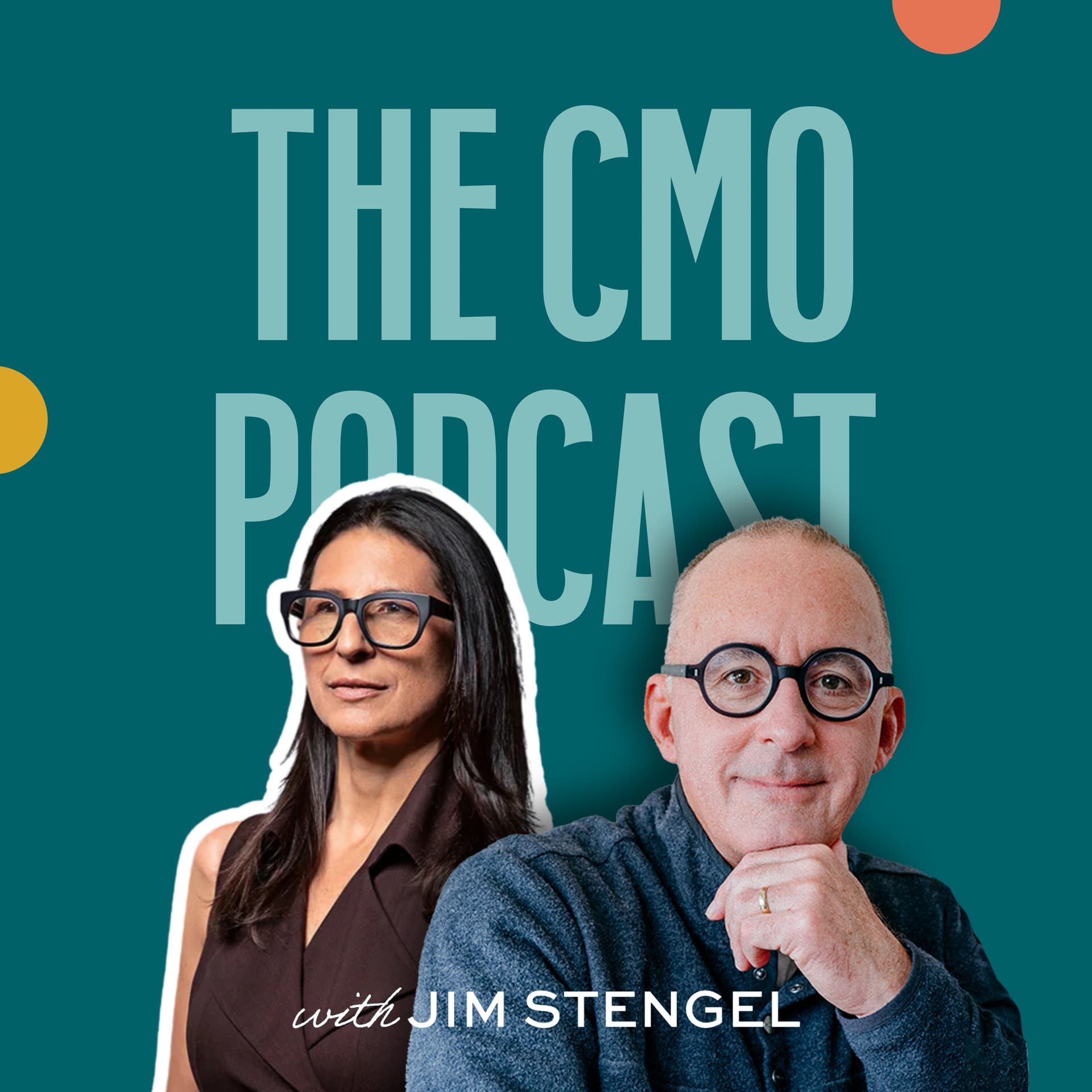
The CMO Podcast - Episode Summary
Episode Title
Rah Mahtani (Alibaba.com) | Making It Easy to Do Business Anywhere
Host
Jim Stengel
Guest
Rah Mahtani, Head of Commercial Strategy US, Alibaba.com
---
Episode Overview In this episode of The CMO Podcast, Jim Stengel engages in a compelling conversation with Rah Mahtani, the newly appointed Head of Commercial Strategy for Alibaba.com. They delve into Rah's background, his career trajectory, and the evolving landscape of global trade, especially in the context of small businesses. The discussion highlights the significance of understanding customer needs in B2B marketing and the importance of iterative processes in business strategy.
---
Key Themes & Takeaways
Background of Rah Mahtani
- Experience: Rah has over two years of experience at Alibaba, previously serving as the Head of North America Marketing.
- Career Path: His journey includes roles in social media and digital communications with notable brands like Volvo, Jack in the Box, and BMW's Mini brand.
- Education: Graduated from Syracuse University with a degree in Industrial Design.
Transition to Commercial Strategy
- Role Expansion: Transitioned from marketing to overseeing commercial strategy to better service small business owners.
- Focus on Buyer Research: Emphasis on understanding buyer needs and connecting product development with market demands.
Insights on Alibaba.com
- Company Overview: Alibaba.com is the world's largest B2B platform, facilitating global commerce with over $130 billion in annual revenue.
- Mission: "Making it easy to do business anywhere," aiming to level the playing field for small business owners.
Creative Philosophy
- Emotionally Resonant Marketing: Rah emphasizes the importance of emotional intelligence in leadership and marketing, asking his team to consider why their work matters to consumers.
- Cultural Insights: He leverages insights from stand-up comedy to make marketing relatable and engaging.
Challenges and Opportunities
- Economic Climate: Discussion on navigating the volatile global economic landscape and understanding the emotional triggers of business owners.
- Iteration and Reflection: Emphasizes a culture of experimentation at Alibaba, where failure is seen as an opportunity for learning.
---
Notable Quotes
- "Action speaks louder than words."
- "Why should people give a shit about the work that we're producing?"
Advice for Business Owners
- Value Creation: Focus on providing real value rather than chasing passion projects or quick success schemes.
- Community Building: Build a business around community engagement and understanding customer relationships.
---
Conclusion The episode offers a rich exploration of the role of a CMO in today’s dynamic market, particularly in B2B environments. Rah Mahtani’s insights into the importance of emotional intelligence, community engagement, and iterative learning highlight effective strategies for marketers and business leaders. As businesses navigate uncertainty, understanding consumer needs and fostering strong relationships remain paramount for success.
---
Recommendations
- Engage with Customers: Regular interaction with your audience to understand their pain points and needs.
- Iterate and Reflect: Adopt a culture that encourages experimentation and learning from failures.
Listen to the Episode For a deeper dive into Rah Mahtani's insights and more strategies for navigating the marketing landscape, listen to the full episode on [The CMO Podcast](#).
---
Produced by Vive: The CMO Podcast is produced by Vive, dedicated to helping business leaders enhance their personal and professional lives.
Written by AI. May contain mistakes. Listen to the episode to check what was said.
Transcript
Automatic transcript. May contain errors.0:00Hi, everyone. It's Jim. I have Matt Spiegel of TransUnion with me. Matt, I want to start with what do you love about your job? Yeah, it's a great question, Jim. You know what? I love the fact that I get to be out at events and conferences and working with clients to really think about how marketers solve problems that matter at scale. The job of a marketer is as challenging as ever, and we get to do some interesting things to make their job easier. When you work with a client, where do you get the most satisfaction? You know what? I think seeing ideas come to reality. We ultimately are an enable of great marketing.
0:28So we don't do creative. We don't do media planning. We provide the data, the identity insights, the measurement tools that make great marketing possible. So when we get to see the end product, sometimes later, it's really cool to see. Well, super to have you here. Super to be a partner. Thanks for joining us today. Thank you, Jim. So if you want to turn data into understanding and understanding into growth, visit transunion.com slash clarity. Hi, everyone. It's Jim. I'm here with Matt Spiegel, EVP of True Audience Growth Strategy at TransUnion. Matt, you've spent your career helping marketers understand people through data, and that's harder and more important now than ever.
1:01It really is, Jim. There's really just so much information out there, and unfortunately, it's often disconnected. Marketers typically see fragments, maybe a purchase here or a click there. But what they really need is clarity, true full picture of who their customers are, and ultimately how to reach them. Well, tell me how your solution strategy comes in and helps CMOs and their teams bring clarity to chaos. Well, Jim, we ultimately do that with a 360 view of the customer. And so it's about ultimately combining data, truly trusted data, identity resolution, which is a deep analytical problem, and measurement that actually helps understand performance.
1:36So ultimately, we work hard to help marketers move faster, to deepen their insights, and to ultimately make every dollar work harder. We believe strongly that when you truly understand your audience, you can build a real brand and real relationships with customers that last. Where were you when I was a CMO? I don't know how to answer that. Learn more at transunion.com slash clarity. That's transunion.com slash clarity. What if the smartest marketing play is not to move forward, but to zoom out? Deloitte believes the most powerful move a CMO can make is to look beyond the next step and see the broader perspective.
2:09That's what the Deloitte CMO program is for, a place to gain fresh perspective and connect with leaders who've stood where you stand. Together, Deloitte will help you see the bigger picture so your next move isn't just fast, but right. Learn more about the CMO program at cmo.deloitte.com. So who has been the most inspiring person in your life? You know, I watched my wife be a business owner, and she's a business owner. She's a mom. She's consulting on the side. as important or maybe self-important as I think I've gotten in my career. I can always look over there and immediately get humbled by how much she can do every single day and keep a smile on her face and keep our house project managed better than I could ever hope to.
2:55That's pretty inspiring, to be honest. Hi, I'm Jim Stengel. I've helped hundreds of major brands discover and activate their purpose. Because when a brand's purpose is clear, compelling, and authentic, profit naturally follows. Each week, I welcome the CMOs, the chief marketing officers of your favorite brands, to speak to how their job is so much more than marketing. These leaders share their inspiration and challenges, along with how they try to build a full, healthy, and happy life in and out of the office. And it's that energy that reaches everyone they touch. And we're glad you're here to feel that energy and to learn from these remarkable leaders.
3:34So here we go. My guest today in the CMO podcast is Ra Matani, the head of Commercial Strategy US for Alibaba.com, the Chinese multinational technology company founded in 1999 by Jack Ma and 18 colleagues. Alibaba Group operates as a holding company for a wide array of businesses, including online retail, wholesale through Alibaba.com, logistics, cloud computing, and financial services. Alibaba.com is the world's largest B2B business-to-business platform. Global revenue is about$130 billion US dollars and its market cap is about$330 billion. The stock is up about 45 % year-to-date. My guest Ra has been at Alibaba for about two and a half years.
4:16He joined as head of North America marketing for Alibaba.com and was promoted to head of commercial strategy about two months ago. Before Alibaba, Ra had a career deeply grounded in social media and digital communications with time at Volvo, Jack in the Box, and BMW's mini brand. A graduate of Syracuse University where he studied industrial design, Ra is a self-described lover of dogs, kids, and candy. You got to love them and you will. Here's my conversation with a marketer in the middle of the changing global trade landscape. Here's Ra. Ra, welcome to the CMO Podcast. It's a very super interesting time to be talking with you and we'll get to that in a few moments.
4:56But first things first, we need to start our talk about dogs, kids, and candy, three passions of yours from what I've gathered. So I kind of get kids and dogs, but you can talk about that if you'd like. But this love of candy, what's the origin story there? When I was a kid, my mom has always had a sweet tooth. And I got introduced to things like Twizzlers and Kit Kats and things that I probably shouldn't have been introduced to as a kid, but man, it sticks with me. I love me some candy. I'm a candy connoisseur, if you will. What are your favorite brands? So I love UK chocolates, like flake bars are phenomenal.
5:35And when you go to the UK, you order some ice cream and they usually stick a flake bar right in the ice cream. A funny anecdote. We had a dog when I was a child and his dad's name was Snowball. so I being a huge lover of flake bars decide to name him flake or for snowflake well I'm okay my dad had a sweet tooth so I've inherited that and I grew up near Hershey like about 20 miles away so it was kind of a ritual to go tour the factory as a kid and go to the park and all that kind of stuff we always had Hershey kisses around we always had Hershey bars in fact I went to Hershey to speak after I left P &G years ago.
6:15And it was such a beautiful moment because I was reflecting on my childhood and it was such chemistry with the group. And they gave me like a 10 pound Hershey bar as a gift. That's amazing. Which I carried on the plane very proudly. I love that. Yeah. How long did it take you to eat it? Or do you still have it? I actually shared it. You shared it. See, I would have eaten the whole thing by myself. Probably could have. Anyway, I've graduated the M &M's. I'm now, I have lots of them. In fact, I have a big jar in my study here. My wife just came in before we started talking to grab a few. Yeah, I love that.
6:47If you have a jar of any candy, whatever, Tic Tacs, Mentos, M &Ms, whatever, you got to grab a handful. Now, listen, you have a new job as of about two months ago, going from head of marketing in the US to head of commercial strategy. So tell us about that. What was that all about? Why that new role? And how's the transition going? Yeah. We're looking at the shifting dynamics within the US market. And we've positioned ourselves, I guess, in our opinion, we positioned ourselves quite well to service small business owners. We think about the products that we need to bring to market, the understanding of our buyers and things like that.
7:25We wanted to put some pieces together inside our walls. So we created a new role, head of commercial strategy, which my team looks after now. So what's your scope now versus when you were head of marketing? How much bigger is it? Just a bit. We're looking at specifically a lot more buyer research than I had done in the marketing space where it was all external facing comms. I still have all the marketing things that I love and I'm passionate about, but just being able to connect the dots between the buyer research and the product we're putting into marketplace, that's what we built in the new role.
7:56Now we're going to return to Alibaba in a few minutes and get into that in a lot more detail, but I first want to look back on your career path, which is super interesting. You have a degree in industrial design from Syracuse. You started a clothing company, then went on to roles in social media and digital communication with Volvo, with Jack in the Box, and the mini brand with MBMW, and then Alibaba about two and a half years ago. So we're going to talk about all that, but I'd like to start with a clothing company, right? You had a startup. It lasted about four years. So tell us that story. What was the catalyst for it?
8:32And what did you learn in the development of that brand, which may or may not be out there, but you'll tell us. Yeah, it is one of those things where I kind of fell on my face at the end of that journey, which is excellent because I learned a whole lot in it. And it allows me to relate to business owners very differently in my current role. But what the catalyst was for that was one of my industrial design professors and I felt that there was a gap in the marketplace, like research driven, design oriented clothing, really street wear, graphic design t-shirts, which were starting to become really trendy at that point, like 2009 ish.
9:11And we decided, put our research hats on that we had from the design world. We built a full line of products. And the mistake that we made was we went directly to wholesale. We never spent time at that kind of building a groundswell, building a community around the brand, people that loved it and felt it. We needed to be in JCPenney and Foot Locker and all these different stores. And we did all right in terms of wholesaling products, but we didn't have that love, that community aspect of the brand. And they kind of fell apart after a few years. What was the name of it? Hold Tight Clothing Company.
9:49Is there any of it still out there? I've seen a few shirts with folks, you know, walking around in New York City and stuff like that, but I don't know where they got them. Maybe Goodwill. Yeah. So if you had to do it all over again, how would you approach it? You know, I think it's building a direct to consumer e-commerce, whether it's through, you know, a Wix or a Shopify or something like that to begin building at that individual level. We wanted to have community that loved the brand. We wanted design inspired by community. I would have started in a complete opposite way. Well, tell us about your first job after the startup.
10:23Was it with Volvo? No, I worked in the agency world for about a year. An agency that no longer exists called Big Fuel Communications. And we worked on all the Chevrolet brands. So all their product lines and running their social media. So I was writing copy. I was in the social media war rooms for the Super Bowl and things like that. Wow. And that's how you got into the automotive space and went on to work for Volvo? It is. Yeah. Yeah. I think to be honest with you, Jim, I've been fortunate in my career from that point on that someone somewhere has found me or like the work I've done somewhere and pulled me along to the next step.
11:02So someone at the agency I work for pulled me to Volvo and then the story went on from there. You have about as strong a background in social media as I've seen in senior marketers with experiences at Volvo, Mini, Jack in the Box. So could you reflect on that a little bit? You're already talking about it in a way, but how that influences your whole approach to branding, marketing strategy today. Yeah. I mean, honestly, Jim, it's like, it basically social inspires every bit of work that I do, whether it's above the line or it's day-to-day stuff. If I look all the way back to like 2005, this is when I first went into university and, you know, like four square had just become a thing.
11:47Twitter and Facebook were like budding enterprises. And I remember as I got my first few jobs, I was just fighting for a seat at the table. Like how can social influence the campaigns that we were seeing on TV or the radio campaigns we were producing all this traditional work. And, you know, the, the more that I learned about social media, I was able to say, here, we can pull like cultural nuances. We can use social listening. We can use all these learnings that we have from our fan base to apply them to other campaigns. So that was the way I kind of worked myself into digital communications, running websites to building above the line work and, and taking over marketing teams.
12:31You've gotten more seniors since those days. How do you stay in touch with social now? I love to, I don't know if my team likes this. I have some folks that are, you know, Gen Z or really young millennials that are running social today, but I like to poke my head into the tools that they're using to run the platforms. And I'm looking at the daily comments. I'm always trying to figure out what the latest trends are. So I don't know if my team loves it, but I'm always there and social every day. Now, what do you think as you look at other brands, not just your own with your background and experience, what do you think brands are getting right these days in social and what do you think they're getting wrong?
13:07So there's so many brands, Jim, that are bringing what I'd call like overproduced campaigns to social media. You know, it's like, let me use the most advanced camera equipment. Let me put in lighting. Let me stage and script all the shots. And it's just like nobody in social media cares about that level of production. It's the natural, the organic conversations, the real moments, and like underproduced content that's really flying. So I think all these brands that are thinking really traditional and then cutting it for social are missing the mark real bad right now. Who do you admire these days?
13:46I mean, when you look at brands, you think are getting it right, that you're like, oh, I wish I did that. I wish I thought of that. Who comes to mind? It's funny. There's actually one campaign that I swear, ever since it came out a couple of weeks ago, I've been thinking about it pretty much every day in the copywriting. There's a dog food brand called the Honest Kitchen. They released a brand campaign where they basically said, like, feed them the best, whether they deserve it or not, based on the insight that, like, you know, you love your dog. They're probably a good girl or a good boy, but they're not always a good girl or good boy.
14:20And I just love it. Like, I literally think about that copyright in every day. Yeah, so good.
14:31Everyone seems to be chasing the next big thing, the fastest answer, the quickest win. But great CMOs believe the real power isn't in the speed, it's in stepping back to see the bigger picture. That's why everything Deloitte does in their CMO program, from their industry-leading capabilities to their connected network of CMOs, is designed to help you zoom out and gain fresh perspective. Deloitte will help you see the bigger picture together. Learn more about the CMO program at cmo.deloitte.com.
15:27of resonance. So I'd like you to talk about that. What could others learn by how you come into a job, come into a team and bring creative thought, creative spark, a sense of fun, a sense of levity? Tell us a little bit about how you engender that, you know, in yourself and also with the people you work with. It all for me begins with that social upbringing, but also, you know, the way I think about and approach brands is always, pardon my language, but I ask my team this every single day. Why should people give a shit about the work that we're producing? That's a question that I ask myself all the time.
16:03You're scrolling through a feed or you're watching something on Hulu or Netflix. The thing that you're chasing is that moment of euphoria, the feeling of happiness, the laughter, or the sadness. So we need to make sure that every campaign we produce, every bit of creative is really pushing that. So I genuinely ask my team that all the time. Why should people give a shit about what we're making? So how do you ensure that people are making stuff that people give a shit about? Because I've heard comments a bit like that from some of the other guests. And it's about standards, right? And putting stuff out there that we enjoy, that we think will give someone a laugh, a smile, influence maybe how they think about something differently.
16:45So how do you take that thought and ensure that the standards raise? Philosophically, I kind of look at everything as not customer first, but everything is people first. So if we're developing insights for a campaign, it's kind of easy to identify pain points that people have around products. What's not easy is identifying or digging into the relationship that they have with that problem. So I spend a ton of time talking to customers. If I was at mini, I'm sitting down talking to the mini acts, the biggest fans of the brand and understanding, why do you care about this brand? Is it the bright colors or is it the fun design?
17:30And when we dug in and asked those questions, we started to understand so much about the brand, what made them tick. I carry that philosophy everywhere. And, you know, I also listen to a lot of standup comedy. And I think there's so much magic in standup comedy when a comedian can pick up on something that feels so, so relatable. You can carry those things into marketing campaigns to make them better, to make them more emotionally resonant. You do comedy yourself? Oh, God, no. Nobody wants to listen to these. Okay, just checking. So who do you like? Who inspires you in comedy? There's so many.
18:06I love, there's a comedian Mo right now. He has a show on Netflix. He infuses these like really deep, deep cultural topics with incredible humor. Like, I can't believe this just happened in your life, but wow. It's like a really resonant moment that he brings up. I think Mo is fantastic. Now though, you've done a lot of crazy stuff in your career, right? Trying to get people to give a shit about what you're doing. So what's the craziest thing you've done so far in your career, an initiative, a campaign, a stunt that actually really helped the business? Oh gosh. Yeah. I had this bet when marijuana was legalized in California, January, 2015, 16, something like that.
18:55The people that were going to Jack in the Box late at night were almost certainly the same people that cared about this new legal position. And I figured, Hey, let's contact someone that's a huge fan of the brand, but also somebody that resonates with the community. And that person was quite obvious. It was Snoop Dogg. He loved Jack in the Box. He was also kind of the face of the stoner community. So we reached out to his team and we partnered on creating a special box meal. We called it the Mary Munchie meal after Mary Jane, and we priced it at$4.20. And honestly, I got fired over that because there were some franchisees that believed that that was something we should not be doing, something we shouldn't be catering to.
19:41And I really pushed it because I believed in it. I knew social media believed in it, and I knew it could drive buzz for the brand. So after some back and forth, we agreed that only Long Beach and Los Angeles area franchisees would take it on. They did. We launched same store sales went up over 70 % for that specific product. They're making more product, even though we priced the box at a lower cost because they were selling more units. And then it became the biggest PR story in Jack in the Box history at that point. I don't know if that's still true, but at that point it was the biggest story.
20:14But that was like a moment, Jim, where I found amazing success, but I almost lost my job over So it's like a win and a loss at the same time. So listen, I want to get back to talking about Alibaba and your role there. You know, the world, since you joined the company, you know, back in what, early 2023, obviously the world economic, political, geopolitical situations, way different. How's this, if in any way, changed your work and your team's work? Basically, my entire career was consumer focused work. And what we're doing today is talking to business owners. Now, I think any good marketer is going to tell you that the emotional triggers in B2B and B2C are very similar.
20:59People are people. They're still going to care and resonate with the work. But the need to get a lot more serious in the talking points, the things that matter to business owners, like cash flows, margins, where in the world are they sourcing products from? They're not sexy things, but we have to find a way to make them sexy. So my approach in that first required me to drink from the fire hose. I need to understand what's happening in a business owner's mind, but then I need to understand what are those real triggers? What are the things that are bothering them every day? And then how are they either positively or negatively impacted by the things that are happening at that geopolitical level or in macroeconomics?
21:45So I think my approach in seriousness, where you referenced fun work in the past, has definitely changed. How do you go about that, Raul? For me, it's really sitting down and talking to those business owners a lot, a lot. More than any role I've ever had, I'm talking to business owners every day. The question I asked myself when I started was, how do I tap into these closed room communities, the places where the seven, eight, nine figure Amazon sellers are hanging out? And it's not just an Instagram feed or a TikTok feed. These are places where you have to earn the trust of that community. So it's going in and speaking at their closed events, bringing value, not a sales pitch.
22:29They don't want that. They want the value. So going in and doing a lot of that and then building those relationships over time where now we're WhatsApp messaging each other all the time or I'm giving them a tip on what can they do to best optimize their sourcing strategy. But that earned trust is what really builds my ability to do my job every day. What are you hearing? I'm sure you're hearing the stuff we see in the news all the time, but are there any non-obvious things or interesting things that you're hearing as you're getting close to these small business owners, which is where most of the economy is after all?
23:04It's so true. They're the driving force of the economy. So I definitely hear a lot of interesting things and nuance that we can leverage in creative work. But even more than that, it's like, I am seeing live the thought process of these business owners. So as an announcement that say the stock market might be overly positive about, you get a sense of like cautious optimism from business owners in, I understand that we have call it a 90 day runway right now around current situation. What does that mean for me in 90 days? And if I have 90 days right now, my immediate thought is how can I stock up on goods to keep my prices as low as possible for the next 90 days?
23:50So, you know, I'm seeing all of this happen in real time. And it's just understanding with my team, how do we adjust and adapt to that? How do we give them the information they need on the outside? And then on the inside, how are we providing them the resources they need to move those elements forward as fast as possible? So, Rob, you seem to be a person who enjoys getting close to customers, asking questions, being curious, figuring out how you can help them build a better business and bring value to them using your words. How do you be sure that your whole team mirrors that and that's a value that you have in your department and in your company at large?
24:28Because it's all about that, right? When you have cultures that have that characteristic of curiosity, customer centricity, act on it, those are the ones that win. So how do you build that broadly at scale? I think there's several factors, Jim, that play into that. One is I'm very particular in hiring. I'm hiring for a deep curiosity. I'm hiring for someone that I know is proactive in things. I need people around me that are seeing opportunities through their curiosity and then proactively trying to tackle them. Whether the answer is right or not, we're still needing to make decisions on an hourly basis.
25:09So that's one component of it. I think the other part is the corporate culture has to be keyed in as well. It's not just one leader or a couple leaders driving the way, it's the corporate culture. If I just take Alibaba as an example, Jack Ma's teachings, he was a teacher, but his teachings within the company still hold true today. He'll ask questions like, If you put in a phenomenal effort today, is that the baseline for your effort tomorrow? It's a rhetorical question, but the answer is, yeah, that is my new baseline. So driving that culture from top, top level is also really, really important.
Read the full transcript
25:45So you have a mission that is so simple to make it easy to do business anywhere. And these are crazy times. I mean, do you find yourself talking about that mission more with your team, talking about that mission more with your customers? because obviously it's a big one. If you activate it and it makes a difference in people's business, obviously your business is going to be very healthy. So in these times of uncertainty and trial and tension, do you find yourself coming back to the mission? We do internally. One thing that I like to do to frame this is, you know, if you think about us as human creatures, right, we all have our own love languages and things like that.
26:25For me, it all comes back to action, speak louder than the words. It's so easy for us to tell our customers one thing, but if we're not there on the front lines with them helping them do it, if we don't create a solution that enables their cash flow when they're screaming, we need cash flow, then we miss the boat. So for me, action, speak louder than the words, it always comes back to that.
26:55We all want to stay ahead of the digital curve, and IAB, the Interactive Advertising Bureau, invites you to do just that at the 2026 IAB Annual Leadership Meeting in Palm Springs on February 1st through 3rd. If you're a qualified consumer brand or agency leader, you can access free passes and travel vouchers. And for everyone else, you can take$500 off your ticket with code, all caps, ALMCMOPOD26. This is your chance to join a three-day gathering of the industry's brightest minds and boldest voices shaping the year ahead. You'll hear agenda-setting conversations, candid fireside chats, and dynamic breakouts on the topics that matter most, from AI and commerce media to measurement and addressability.
27:39This year's lineup concludes everyone from Kevin Bacon and Bozema St. John to creator Remy Bader, along with leaders from Forbes, Major League Soccer, General Motors, and Meta. Visit iab.com slash ALM to learn more and check out the link in the show notes to register and receive$500 off your ticket.
28:02I'm asking a lot of my guests this question these days, you know, as things are very volatile, you know, how do you ensure that you're showing up right and that everyone's staying focused and energized and optimistic and positive and confident at work and at home? So talk a little bit about how you're leading during these times. It's always, always a challenge because I think with us hearing and seeing new things on a daily basis, right, whether it's daily or hourly or whatever we're seeing. And then with social media, we're seeing things so, so immediately. It's really easy for people to get burnt out.
28:41what I always, always try and do is make sure that there's a few things. They have clarity around what they're doing. Why is my team doing what they're doing? And is that clear? Are we taking decisions? It's easy to waffle around. I don't know what to do here. I'm really uncomfortable. The most important thing is that a decision was made, whether we fail or not, a decision was made. And then the last piece is trust. It's like, we're not looking over each other's shoulders. I'm not asking, where were you between 1 and 2 PM? It's like, you got your things done. You did it well. Fantastic. I think those things are really, really important to me as I run the team.
29:23How do you feel you're a different leader now than when you joined Alibaba in January, 2023? I've definitely learned a whole lot about more global cultures than I had exposure to in the past. So we look at the way, say, a Western culture operates versus an Eastern culture, especially in Chinese culture. In Western culture, and in most of my career, I was pushed to highlight my achievements. Even when you get interviewed, Jim, it's like you're always asked, what did you do to move this project forward? And in Chinese culture, it's always collective power of the group. So the achievement is not Ra's achievement.
30:08It's the marketing team's achievement, as it should be, because I didn't get anything done by myself. I probably rely on my team in an outsized way. For me, it's like rewrapping that mindset. I try and talk a lot more in we's and us and I and me. Was that hard for you? No, I don't think so. I always hate talking about myself. Well, I'm making you do it today. I don't like to be the center of attention, But if I can impart knowledge somehow, by all means, I'm very happy to do that. Now, if you left Alibaba sometime or if you leave Alibaba sometime and come back to a prominent Western company that's based in the US or Europe, how do you think you would bring that kind of lesson that you've learned into that culture?
30:51I think it's really pushing the team to understand what they can do as a unit. So it's very hard to unlearn that, I will say. So it makes it a lot easier because I sit in an organization where that is a daily practice. However, I think there are some relatively quick wins you can have sitting in a team. You know, you go into an office and you make sure that everybody's on the same page from top to bottom. So if there's, call it like an admin or a coordinator or an intern, they're sitting in similar meetings to the manager, the senior manager, the director, the VP, so that they have a chance to hear why things are happening.
31:34I've always felt that, you know, wherever I am, it's really important that people know what's going on. full transparency. I trust you to take this information and use it the right way, not gossip, but it empowers you to understand why things are happening. Do you have any rituals that help you do that, Ron? Because we hear that a lot these days that if you talk to young people in organizations, which I do a lot of, they want to hear more from their leaders, even the ones that feel like they're out there, they're communicating, they're in touch. Often, relatively new employees want to see and hear more.
32:05How do you make that happen within your team and your group? What I try and do is carve out at least three days a week where I'm sitting down and having lunch with my team, not just my direct reports, but their direct reports and things like that. Why I think that's important is because that's like the singular opportunity where we don't have a laptop or a phone in front of us. And we just eat a sandwich and talk about the weekend, you know, what's going on, what are they interested in? And hey, that gives me a chance to learn about like new music or new memes or things that I'm not thinking about on a daily basis.
32:43So I carve out that time for lunch at least three days a week. That's fantastic. Now, you were head of marketing until about two months ago. So as you look back on that time, what are you most proud of in your tenure? I mean, for yourself and your team. We've done a couple of things that I'm really proud of. But I would say our annual conference, which is called CoCreate. There's a shameless plug. We knew that Alibaba.com, the leadership team was a bit underexposed to our direct community within the US. And if we wanted to make any headway, we needed direct exposure and direct communication. So we created a conference where we have several thousand business owners come in.
33:22They have direct access to us, but they're hearing about the latest product launches. They're seeing the skills and tactics they need to leverage, whether it's like really detailed topics like warehousing and last mile delivery to really top level topics like how is AI influencing e-commerce, but putting that in place, it's a fixed every year, you know, you're getting that opportunity and we're going to keep building on it too. So it's really a shift in mentality, right? It's a, you're about helping them with solutions. You're in some ways consulting, you're an advisor for their business. You're, their success is your success.
33:58That's right. Yeah. Without their success, we are not going to succeed. So they are the most important customer. So what are you looking forward to in this new, you know, slightly expanded role? You know, for me, I mentioned the connection between product and marketing. There are a whole lot of opportunities as I talk to business owners on a daily basis. And I can, I'll give a pretty specific example. One thing that I consistently heard was large, like enterprise level buyers. Those are people on the Alibaba.com platform that are purchasing products directly from international factories, access to capital was the hardest thing that they were faced with.
34:38Now, we knew inflation was a thing. There's very little that we can do to control that. But access to capital is certainly something we can control. So after hearing all their pain points, they needed speed. It's not I'm sitting at a bank waiting for a couple weeks to get that line of credit going. It's I need near instant approval. And then I need pretty flexible repayment terms. So we actually built a product that we stood up within only a couple of months that we were able to turn around and put in front of our enterprise clients. Now we're going to test and learn with that and take it to smaller business owners to enable them even better.
35:15But those are the things that I'm excited about in the new role. Listen, I want to flip into the creative brief and do a bit of an expanded one today. And the first question is, we've talked about Alibaba and the focus on teams. They have six very simple values, right? And I know you know these, but it's customers first, employees second, shareholders third. Trust makes everything simple. Change is the only constant. Today's best performance is tomorrow's baseline, which you've already talked about. If not now, when? If not me, who? And live seriously, work happily, which I kind of love. You've already talked about some of these in very specific terms, but I'd like you to talk about Which one of those for you right now in this new expanded role resonates the most with you?
36:00So one amazing thing is that I actually ask myself every day the question, like, who is responsible for this and how can I become the person responsible for this? Now, to me, I'm not territorial. I'm not trying to take anyone's job. But I'm very intrigued by the prospect of being able to improve things. What I despise in every organization is when you ask someone a question about why something is done a specific way and you get the answer that, oh, it's always been done that way. Well, I really don't like that. Now, I'm not the person that's going to come in and say, I started yesterday and tomorrow everything is changing.
36:43I will take the time and listen and learn. But if I hear someone say that something has always been done that way, my fingers will be all over that. and I'm going to figure out why and how it can be done better. So that really resonates with me. So if not now, when, if not me, who? What's one thing about Alibaba that has surprised you since being there? And what is one thing that you think the broader public doesn't understand about the company? That is a phenomenal question. So one thing that surprised me was a relentless pursuit. And you probably think the next word will be of innovation, but it's a relentless pursuit of iteration.
37:23To me, that has been the most surprising thing. So we may create 100 service-based products per year and launch them on our platform, but only 15 of them might be successful. And we are really adept at saying, hey, this didn't work. We know exactly why. We'll have a postmortem about it. So this will be the second thing I come to, relentless pursuit of iteration. The second piece is having a postmortem or the superpower of reflection, the ability to sit down and take a project that we put out into the world and have an overview about here's how we did it, Here's who used it. Here's what went right.
38:09And here's what went wrong. We do that for every single product or every single project that we put out in the world. Those two things between iteration and reflection are incredible superpowers of Alibaba that I like to take into my daily life as well. You put a hundred things out there. 85 don't work, 15 do, and they work really well. How do you handle that within the culture? I mean, so you don't get this fear of a bomb, fear of failure. And so because you're talking about a 15 % hit rate, which is not unusual, but still that 75 % of stuff that didn't quite meet your standard, they didn't stick with.
38:49So how do you handle that within the culture? What's Alibaba's superpower in handling that dynamic? What is amazing? I think we always hear that leaders enable failure. and oftentimes that is just lip service. You know, there's sometimes retribution or, yeah, you're not trying again next time. For us, it's always, you know, I come back to that reflection. We'll have the reflection. But at the end of that reflection meeting, it's like, okay, what is next? What are you doing next? What's your next idea? What's your next iteration? The simple action of enabling that at the end of a conversation allows failure to be totally okay.
39:32And I come back to what I said earlier, at least a decision was taken because we're not stagnant and taking an entire year to bring a single product to market. We are trying and trying and trying every day until we find something that's right.
39:53Hey, everybody. This is Andrea Sullivan, the CEO of Vive, and we produce the CMO podcast and are so excited to have partnered with Jim Stengel for so many years. Wanted to tell you a little bit about something that could be right for you. Vive is a program for entrepreneurs and business leaders who want to get more out of their life and become their best and happiest selves, both personally and professionally. We have a 12-month program that allows people to meet up with some of the best business leaders out there and additionally experts in the wellness sector so that you can learn how to nurture yourself.
40:27So we teach things around sleep optimization, meditation, all those good things as well. Please reach out to us at podcasts at five.co to get more information. That's P-O-D-C-A-S-T-S at V-Y-V-E dot co. Thanks for listening to the CMO podcast and hope to talk to you more about Vibe.
40:52What do you find most personally rewarding at Alibaba? Is it working with small businesses and understanding them and seeing them blossom? Or is it something else? Yeah, it's the business owners. I mean this with my whole heart when I say it, but seeing business owners win, I even have a previous boss from Jack in the Box who quit her day job. She leveraged Alibaba.com and created a very successful e-commerce business by sourcing from Alibaba. But hearing stories like that, how people from all over the world can tap into a resource that Jack Ma decided 24 odd years ago should be available or accessible to everybody.
41:39Seeing that happen on a daily basis is genuinely gratifying. How do you keep the differentiation, which was in Jack's vision so many years ago? How do you keep that alive? What he said really holds true today. When he said, our mission is to make it easy to do business anywhere, actually, the original vision that Jack Ma had for the company was to level the playing field. He saw all these giant enterprises have access to different factories in China and the world. They could source at scale. They could leverage their buying power. He just took that and turned it into kind of a yellow pages or a white pages for business owners to say, hey, now you all have access to this.
42:22Then China might feel really far away, but you can tap into these resources. And what we've done every year since then is just iterate on that vision, right? It's how can we make communication better, translation better? How can we make reaching multiple suppliers at once better? How can we educate you better about production processes and shipping and things like that? So the vision holds true. Rob, what do you think your special gift is as a leader? I like to think it's emotional intelligence. I've got a three-year-old at home. And man, if you have kids, you know that they know how to push buttons and really test you.
43:00And I think what I try and do is with my son, make sure that I am both emotionally available, I show up, but also I understand every moment of every situation that he's going through. So if he's upset, he's not just upset and you tell him to be quiet, but you're saying, what's going on in his day? How can I be a better parent in this moment? Understand that and tell him it's okay. And I try to take that emotional intelligence to my team as well and understand like you're not having a good day every day. These things, these relentless iterations can be really difficult when you have something you love and it doesn't work out.
43:44So I try to be there for them like that, but then take that to creative work as well. You know, how can we make people give a shit about the work we're making? Well, it's got to be emotionally resonant. What are you working on as a leader? To me, it starts and ends with communication, Jim. So one thing that I've noticed over the years is that as a leader, every single word you say has an impact. But to frame that up better, let me just give you a simple example. if I give my team eye contact and a multi-word response to every question they answer. And then one day they ask me a question and I'm really busy and I'm looking down and I just say, okay, to them, they don't know that I'm overwhelmed and busy.
44:36To them, it's just, oh, he's not happy with something I did. And I try really hard to be conscious of the fact that every single word, even if it's an okay, can be construed in very different ways than I intend them to be. So I have to try to make sure that I am consistent in my delivery. Full engagement too, right? Being in the moment and present and concentrating. It's hard. Now you talked about, you know, you enjoy meeting with your team three times a week for lunch. That helps you stay inspired, learn about new things. You're still very big in social and looking at what's going on on your brand elsewhere in culture.
45:12So these are habits you have to help keep you fresh, inspired, creative. Do you have other things you do to be sure that you're expanding yourself, you're bringing everything to work, you're keeping yourself creative and rested and fresh? Any tips, any rituals, any practices that we could learn from? Yeah, I love to kind of look to children's literature. So what always stays in my mind is Shel Silverstein's work, for example. He had this way of using very few words, but striking a really strong emotional chord and making you laugh at the exact same time. I think there's incredible magic in that.
45:55And I hope one day I can figure out the way to kind of transcribe that brilliance into content. That's a good side hustle for you. Forget the clothing company, start something on that. I know. I really, really should. So who has been the most inspiring person in your life? You know, I watched my wife be a business owner and she's a business owner. She's a mom. She's consulting on the side, as important or maybe self-important as I think I've gotten in my career, I can always look over there and immediately get humbled by how much she can do every single day and keep a smile on her face and keep our house project managed better than I could ever hope to.
46:38That's pretty inspiring, to be honest. But I'll also say, Jim, there was somebody that I worked with in my Volvo days. And he told me something really, really interesting. So at Volvo, the cars were all about safety. And when I first started working there, what I really wanted to do was talk about how people drive unsafely on the road. And that's why they need blind spot indicators and all these things. But he was like, if you're driving to work and something happens on the road, whatever that is, that really upsets you. What happens when you get to the office or wherever you're going? Well, the answer is that the first thing you do is you're like, that MF-er got in my way.
47:24The message he was delivering to me was that safety is not about what you do on the road. Safety is about protecting you from what others do on the road. So it was just a simple reframe of that human insight and how we sell safety that changed the way I think about pretty much everything I do in my work today. Last question. You know, you're talking to business owners all the time. Your company's there to help them succeed. If you had to leave us, leave our listeners who may be running a small business or have aspirations to run a business and maybe leverage your platform and your expertise, what are one or two pieces of advice for them to be sure that they start a business that will make them happy, be successful, find clients and customers that will also be happy?
48:16What have you learned about what really drives the best businesses with the people that you work with every day? There's a couple of things. First is there's a lot of fluff online in get rich quick schemes or just do that and you'll make your first million. And that's just patently false. What's most important in starting a business is not building a business around your passion. It's building a business around what you think you can provide value in every single day. I think that's the most important thing. So if you love basketball, it doesn't mean you have to start a basketball business, but there might be an idea you have around basketball that you can leverage to start your business.
49:05So that could be training people on how to shoot the best jump shot. That could be your business. It doesn't have to be. Just don't fall for the get rich quick schemes or the just take these two steps and you'll be a millionaire because it's not true. Small business owners work harder than almost anybody, and they put their everything, every waking hour, every moment of intention and attention they are putting into their business. So make sure you're ready for that. Rah, thank you for this wonderful conversation. It began with candy, ending with sweet advice for business owners. Thoroughly enjoyed it.
49:44Good luck to you and your team as we go through these interesting times. I think it's great that we have you on to share your perspective, your great perspective at this time and what's going on in the society and economy these days. Thank you so much, Jim. I really appreciate it. I'm going to go eat some Swedish fish now. Sounds good. I'll go for the M &Ms. Sounds good. That was my conversation with Rob Matani. Three takeaways from this one for your business brand and life. The first one, this idea of iteration and reflection. Rob talked a lot about that. Alibaba puts a lot out there on its platform.
50:16Most of it fails, some of it doesn't, and they scale that and expand it. They're perfectly okay with that. And they have this process where they reward iteration and they reward the reflection as long as we learn from it and reapply it. And within that, they handle fear of failure as well as I've seen. Second takeaway, Rob talked about his strength as a leader is his emotional intelligence. And he talked about how he is with his three-year-old and how he's always asking what's behind, you know, the actions, what are the emotions, what kind of day is my child having? And he really takes those skills into how he works as a leader.
50:52He's always looking for what's kind of the backstory, what is going on with people that may be causing great performance or maybe sometimes not so great performance. So emotional intelligence as a strength is something we can all work on. And the last takeaway, this guy is really in touch with his team and his customers. He talked about that a lot. He talked about having lunch three days a week with his team to learn from them. And he talked about his relentless curiosity to learn about customers, be with customers, talk with customers. He created a whole conference to bring customers together.
51:23So tremendous role model for being highly in touch with team and customers. And bonus takeaway, I love this one about asking yourself the question every day, hey, would anyone give a shit about what we're doing? I mean, that's a great way to set a standard of great work from a marketing group. That's it for this week's episode of the CMO Podcast. As always, I would be grateful if you shared our show with your friends, along with subscribing and leaving a review on Apple Podcasts, Spotify, or wherever you listen. The CMO Podcast is a Vive Original Production. The views and opinions expressed by podcast speakers and guests are solely their own, and do not reflect the opinions of our sponsors or its personnel, nor do our sponsors advocate or endorse any individuals or entities featured on the episodes.
From the publisher
This week Jim welcomes Rah Mahtani, the Head of Commercial Strategy US for Alibaba.com, the Chinese multinational technology company founded in 1999 by Jack Ma and 18 colleagues. Alibaba Group operates as a holding company for a wide array of businesses, including online retail, wholesale through Alibaba.com, logistics (Cainiao), cloud computing (Alibaba Cloud), and financial services (Ant Group). Alibaba.com is the world’s largest B2B (business-to-business) platform.
Rah has been at Alibaba for about 2.5 years, and was promoted to head of commercial strategy about two months ago. Before Alibaba, Rah had a career deeply grounded in social media and digital communications, with time at Volvo, Jack in the Box, and BMW’s Mini brand. A graduate of Syracuse University, where he studied Industrial Design, Rah is a self-described lover of dogs, kids and candy. Tune in for a conversation with a marketer in the middle of the changing global trade landscape!
---
This week's episode is brought to you by
Deloitte and StrawberryFrog.
Learn more: https://strawberryfrog.com/jim
See Privacy Policy at https://art19.com/privacy and California Privacy Notice at https://art19.com/privacy#do-not-sell-my-info.