In short
The CMO Podcast: Episode Summary
Episode Title
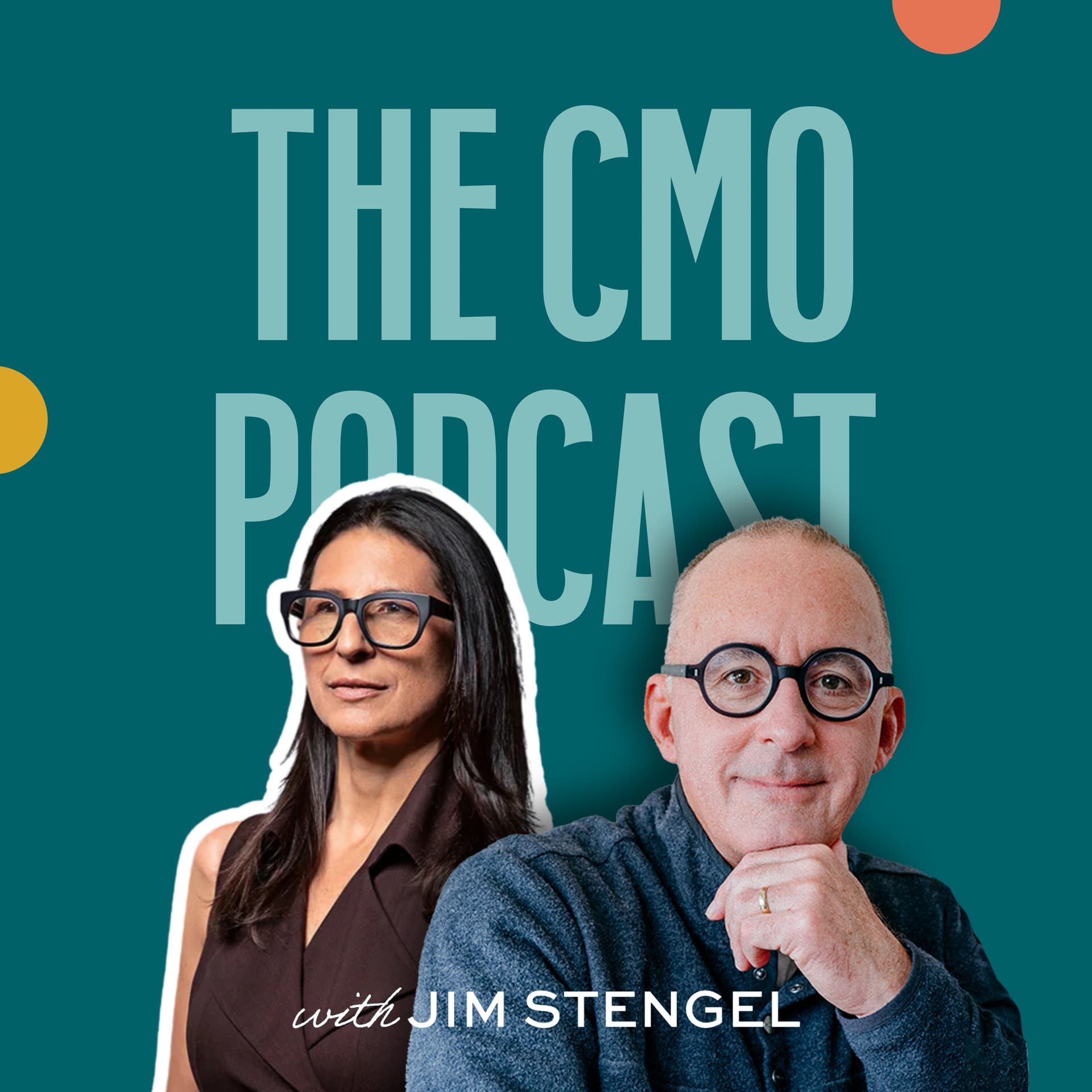
Sofia Colucci (Molson Coors) | Uniting People Through Delicious Beverages
Overview In this episode of The CMO Podcast, host Jim Stengel interviews Sofia Colucci, Chief Marketing Officer of Molson Coors North America. With a company history dating back to 1786, Molson Coors has evolved into a major player in the beverage industry, boasting brands like Miller, Coors, and Peroni, among others. Sofia shares her journey, insights on the marketing landscape, and the significance of creativity in brand building.
---
Key Participants
- Jim Stengel: Host of The CMO Podcast and former CMO of Procter & Gamble.
- Sofia Colucci: CMO of Molson Coors North America, with previous experience at PepsiCo and Maple Leaf Foods.
---
Episode Highlights
- Sofia Colucci’s Background
- Joined Molson Coors in 2017, became CMO in early 2023.
- Previous positions included roles at Maple Leaf Foods and PepsiCo.
- Emphasizes the importance of relationships and mentorship in her career growth.
- Transition to CMO Role
- Discusses her surprise promotion and the supportive gesture from her predecessor, Michelle St. Jacques.
- Emphasizes the importance of maintaining existing brand strategies while introducing her own vision.
- Highlights the significance of building a strong team dynamic and fostering creativity.
- Organizational Focus and Creative Effectiveness
- Muscle Framework: Sofia and her team developed an acronym, MUSCLE, to guide creative effectiveness:
- Magnetic: Evokes emotion.
- Unexpected: Captivates with originality.
- Simple: Easy to understand.
- Long-term: Aligns with brand strategy.
- Essence: Reflects the brand identity.
- This framework is crucial for aligning internal teams and agency partners on creative outputs.
- Navigating Challenges
- Addressed the impact of macroeconomic conditions on Molson Coors’ recent earnings.
- Stressed the importance of transparency and resilience when leading teams through challenging times.
- Discussed strategies for maintaining motivation and creativity within her team.
- Innovations and Evolving Brand Portfolio
- The transition to include non-beer products reflects market demand and consumer preferences.
- Notable partnerships include collaborations with Coca-Cola for flavored alcoholic beverages and the introduction of non-alcoholic options.
- Insights on Marketing and Leadership
- Three R’s: Relationships, Results, and Resilience are vital to her leadership philosophy.
- Continuous learning is emphasized as a key to staying inspired and relevant in the marketing industry.
- Shared experiences from engaging directly with sales teams to understand market dynamics and improve creative strategies.
---
Key Takeaways
- Continuous Learning: Sofia exemplifies the need for CMOs to remain curious and seek inspiration from various sources.
- Creative Framework: Establishing a structured approach to evaluate creative work enhances collaboration and effectiveness.
- Resilience in Leadership: Building strong relationships and maintaining transparency can motivate teams during challenging situations.
---
Conclusion The episode offers a deep dive into the mind of a successful CMO, highlighting Sofia Colucci's journey, her strategic vision for Molson Coors, and her insights on the evolving landscape of marketing. As the conversation wraps up, listeners are encouraged to consider the warmth of summer evenings with a refreshing beverage, bridging the themes of creativity and connection discussed throughout the episode.
---
Listening Information The CMO Podcast is produced by Vive, and this episode features insights relevant to marketers and leaders looking to understand the complexities of brand management and consumer engagement.
---
*For further insights and updates, subscribe to The CMO Podcast on your favorite platform.*
Written by AI. May contain mistakes. Listen to the episode to check what was said.
Transcript
Automatic transcript. May contain errors.0:00What if the smartest marketing play is not to move forward, but to zoom out? Deloitte believes the most powerful move a CMO can make is to look beyond the next step and see the broader perspective. That's what the Deloitte CMO program is for, a place to gain fresh perspective and connect with leaders who've stood where you stand. Together, Deloitte will help you see the bigger picture so your next move isn't just fast, but right. Learn more about the CMO program at cmo.deloitte.com. Hi, everyone. It's Jim. I have Matt Spiegel of TransUnion with me. Matt, I want to start with, What do you love about your job?
0:34Yeah, it's a great question, Jim. You know what? I love the fact that I get to be out at events and conferences and working with clients to really think about how marketers solve problems that matter at scale. The job of a marketer is as challenging as ever, and we get to do some interesting things to make their job easier. When you work with a client, where do you get the most satisfaction? You know what? I think seeing ideas come to reality. We ultimately are an enable of great marketing, so we don't do creative. We don't do media planning. We provide the data, the identity insights, the measurement tools that make great marketing possible.
1:03So when we get to see the end product, sometimes later, it's really cool to see. Well, super to have you here. Super to be a partner. Thanks for joining us today. Thank you, Jim. So if you want to turn data into understanding and understanding into growth, visit transunion.com slash clarity. Hi, everyone. It's Jim. I'm here with Matt Spiegel, EVP of True Audience Growth Strategy at TransUnion. Matt, you've spent your career helping marketers understand people through data, and that's harder. and more important now than ever. It really is, Jim. There's really just so much information out there.
1:32And unfortunately, it's often disconnected. Marketers typically see fragments, maybe a purchase here or a click there. But what they really need is clarity, true full picture of who their customers are and ultimately how to reach them. Well, tell me how your solution strategy comes in and helps CMOs and their teams bring clarity to chaos. Well, Jim, we ultimately do that with a 360 view of the customer. And so it's about ultimately combining data, truly trusted data, identity resolution, which is a deep analytical problem, and measurement that actually helps understand performance. So ultimately, we work hard to help marketers move faster, to deepen their insights, and to ultimately make every dollar work harder.
2:11We believe strongly that when you truly understand your audience, you can build a real brand and real relationships with customers that last. Where were you when I was a CMO? I don't know how to answer Learn more at transunion.com slash clarity. That's transunion.com slash clarity. What's the first brand you remember making an impact on you as a young girl? I was born in Canada when my dad was doing his PhD. We went back to Uruguay when I was four. And at that point, I think we were really, you know, getting into watching television. My earliest commercial I remember was for an insect repellent called Mafu.
2:44And it's a jingle in Spanish. And I kid you not, Jim, I can actually sing it. Hi, I'm Jim Stengel, and I help major brands find their purpose and activate it, and the profits follow. For seven years, I was the global marketing officer for Procter & Gamble, where I oversaw the marketing of hundreds of brands. You may not know it, but the CMOs, the chief marketing officers of all of your favorite brands, are trying to connect you with your favorite products and services through purpose. And on this show, I delve into how they do it. It's mid-May, we're on the verge of summer, and you are probably dreaming of that ice-cold beer at the beach or at the ballpark or on your back porch.
3:24Well, today, we'll get you in the mood for the summer. My guest is Sophia Colucci, the Chief Marketing Officer, North America, for Molson Coors, the fourth largest brewer in the world, with about$12 billion in revenue. This company traces its roots way back to 1786, when John Molson founded Canada's oldest brewery on the banks of the St. Lawrence River in Montreal. all. Today's brands include Molson, of course, but also the Miller & Coors family of brands and a host of other beverage brands, including Peroni, Madri, Pilsner or Quail, Zoa Energy, and Arnold Palmer Spiked. Molson Coors released their quarterly earnings in early May, which missed expectations, citing macroeconomic conditions as a key factor.
4:04We will talk about that. My guest Sophia has been at Molson Coors for eight years. She has been CMO for about two and a half years. Before Molson Coors, Sophia worked six years at Maple Leaf Foods in Canada, where she met her husband, and nearly eight years at PepsiCo in both Canada and the US. Sophia was born in Canada, but spent part of her childhood in Uruguay with her three siblings. We'll talk about all this and why the word muscle is so important in Sophia's marketing strategy. Hey, it's Miller time. Here's Sophia. Sophia, welcome to the CMO Podcast. Finally, we've not had Molson Coors on this show for almost five years.
4:40Your predecessor, Michelle, was on the show in August 2019. I want to start the show with your story about how Michelle shared the news with you that the company was promoting you to CMO back in February 2023. Yeah, absolutely. So the week prior, we were supposed to have a one-on-one. Then she said to me, hey, you know, I feel like we should go out for dinner. Let's go somewhere good. And I thought to myself, okay, this is a little odd. Sure. And for us, Like we obviously like we always want to find restaurants that serve our beer. Like that's very important. And we went to a great restaurant.
5:14I remember she seems very awkward and nervous, which is unlike Michelle. Like she is not like that at all. As we're having dinner out of nowhere, she pulls out this gift and she says, open it. And I opened it up and it was a necklace with this Morse code of you've got this. And she was letting me know that they had created a new structure at Molson Coors. And essentially, they were offering me the role of CMO. And at that point, MSJ was going to a newly created role of chief commercial officer overseeing sales and our digital world and like essentially all of all of the Americas. And so it was giving me the opportunity to become CMO of our North America portfolio.
5:58I was totally surprised. I was not expecting it. And it was really thoughtful how she, you know, not only just took me out for dinner, but actually had a gift for me. And it was a really supportive and wonderful gesture. Now you followed her. She was in the job quite some time. I interviewed her like five years ago and, you know, great reputation elevated the company to different levels of creative effectiveness. And it's not easy to follow someone like that, right? And she was a friend and you're following, you're staying in the company, she's staying in the company. So could you go back to that transition, you know, two and a half years ago or so?
6:31And kind of was it difficult? Was it weird? Was it awkward? How did you think it through? How did you spend your first couple of months in the job? So walk us through that. You know, I was thinking about this a little bit. And I think what's important is also some of the context around how MSJ and I have worked together since she's joined Molson Coors. For our listeners, it's Michelle St. Jacques, MSJ. Yeah. Yeah. And by the way, I often call her Michelle because I really like that name and most people call her MSJ. So I'll go back and forth. Look, I joined Molson Coors in 2017. So October 2017.
7:05So almost eight years ago. And it was actually so I joined from PepsiCo. We can talk more about that. And I joined I came in on innovation. And so I was already at Molson Coors for about a year and a half when MSJ came in. And it was fantastic when she came because she brought this volt of creative energy to our team. What worked really nicely at the time was that, you know, her biggest focus and priorities were really turning around some of our core brands and focusing more on our brand building capabilities across North America. And so at the time I was more on innovation. So it was nice because while I definitely received mentorship and support from MSJ, she was really focused more on the brand building side of things.
7:48So it was like a really nice relationship that we had. So I looked at her for advice and support. She also provided me with a lot of great opportunities even then. So she was the one that instigated us all going to Cannes for the first time. We had never gone to Cannes. And so 2019, six years ago, she brought a team of us to can and I was one of those people. And I wasn't even on the brand building side at that point. I was our VP of innovation and she signed me up for your CMO accelerator course. And so that was 2019. It was funny because honestly, like at that point, I didn't even have it in my horizon to be thinking about being like, you know, the VP on brand.
8:26I was still, you know, on innovation, let alone CMO. So it's really funny how those things all turn out in life. But MSJ was always really supportive. And then I would say, you know, in 2020, I had the opportunity to go back to brand. And so then I was on the Miller portfolio and economy. And even then it was another good working relationship because MSJ and I've always understood each other. And a lot of the ways we worked, it just worked. And so there was probably less focus on the brands I was leading versus maybe some of the other ones. So then I would say, yeah, when I became CMO, it was just over two years ago.
9:01So March of 2023, it was a shift because all of a sudden I was now responsible for all of our portfolio across North America. And there's a lot of brands there. So not just. Yeah, there sure are. Yeah. Miller, Coors, Molson, all of our flavor brands. And it was, I would say for the first six months or so, it was an adjustment, you know, and that's normal. And I think that's natural. And to not expect that, I think would have been naive, not even for MSJ and myself, but for our teams. because I think our teams, like they were used to Michelle being really involved in all of their work. So how do they think about, you know, working with someone who used to be their peer, now their leader, and also making sure that people felt confident that I was bringing Michelle along, but that they, you know, could also have the autonomy that they needed.
9:52And so I think like over time, we've gotten to a really fantastic place. It's not like I came in and I dramatically turned around and did everything very different than what we had been doing before. Our vision, building more brands that people want to hang out with, didn't change. The way we were thinking about our marketing philosophies didn't change. Now, what we did do was add a rigor and kind of a new level around creative effectiveness. And we can talk more about that. But I think, if anything, that just sharpened the things that we were working on. And it was a good way for me to be able to put more of my fingerprints and our marketing leadership team's fingerprints on the work that we were doing, but building off of the work that MSJ had started, not changing it.
10:37And I think that that was helpful. I think one of the most important things is the relationship you can have with your boss. And it gives me a lot of happiness to know that we have such a good relationship and there's mutual trust and respect. And I know we've got each other's backs. And that when I wake up in the morning and I think about going to work, That is frankly going to make me a lot happier than other things. And it sounds a little cheesy, but it's really true. It's not cheesy at all. In fact, we were talking before we started recording. I was in Chicago last week at the Kellogg Marketing Leadership Summit.
11:09I taught at the CMO program that Kellogg runs for in executive ed. And I was at the AAF Hall of Fame in New York about two weeks ago. Relationships just was the theme. You know, building strong trust in relationships is what distinguishes, I think, successful, happy careers from ones that are not. Because you can't be creative if you're not, if you don't have trust in great relationships. You can't help people develop. You can't come together as a team with common goals. So it's really, you know, it's not cheesy. I think if we walk right past that and we don't invest in it, we're not going to have the kind of career that, you know, that we could have.
11:48which is, I think, full of achievement, fulfillment, satisfaction, friendships. You certainly have that with Michelle, which I think is so important to get anything done and to have a good life. Yeah. And I think, and what's really nice is our teams, we've gotten to such a great groove in the sense that we have a very good understanding of, you know, what we believe great creative is, what we need to be doing for our brands, our priorities. And I think even just actually on Friday, it was a great example. our Molson team have been working on an evolved campaign that we're going to be launching soon.
12:20And it's off of a platform that we've had now for a number of years, everyone in, and it's just, it's beautiful. And it's brilliant for Molson and it's work that we do with Rethink and Rethink is killing it right now. And look, like our VP of marketing in Canada is this woman, Leslie Malcolm, and she's very smart. She's a fantastic leader and she's really driving so much of this. And so even this is an example where I was along for the journey on the evolved campaign. And, you know, I went through like the scripts and saw a little bit of the pre-pro and gave them some advice, but they went on the shoot, they built things, you know, they really took it on Leslie and her team.
12:58And then when they got it to a round that they felt really great about, they showed me on Friday, like they sent me a message and I watched it just, it was so awesome. I showed it to my husband. I showed it to my kids, by the way, who they are the first ones. They love seeing our commercials. And they're in third and fourth grade. So you're starting them very young. My son, Alejo, the third grader, when I was like, when I judge case competitions, like he, that's his favorite thing is to watch case studies for all brands. But it was so good. And that's a good example of, I sent it to MSJ more, hey, here's an FYI.
13:33You're going to love this. And she loved it. And there's no doubt in my mind that there will be pushes, that there will be changes because you get to a certain understanding of like what great work looks like as a team. And then also, you know that when you're there, like you're not going to get those challenges. And that's a really that's a great spot to be.
13:59We all want to stay ahead of the digital curve. And IAB, the Interactive Advertising Bureau, invites you to do just that at the 2026 IAB Annual Leadership Meeting in Palm Springs on February 1st through 3rd. If you're a qualified consumer brand or agency leader, you can access free passes and travel vouchers. And for everyone else, you can take$500 off your ticket with code ALMCMOPOD26. This is your chance to join a three-day gathering of the industry's brightest minds and boldest voices shaping the year ahead. You'll hear agenda-setting conversations, candid fireside chats, and dynamic breakouts on the topics that matter most, from AI and commerce media to measurement and addressability.
14:43This year's lineup concludes everyone from Kevin Bacon and Bozema St. John to creator Remy Bader, along with leaders from Forbes, Major League Soccer, General Motors, and Meta. Visit IAB.com slash ALM to learn more and check out the link in the show notes to register and receive$500 off your ticket.
15:06How do you think about your organization to be able to do both, Sophia? You know, you do the brand work, but you also want to be, you want to respond to things that are happening in culture. You want to be agile. You want to, you know, that takes time, people, sometimes budgets. So is there anything different about your organization since when you joined to be able to do that kind of work, which I do think is, you know, how you need to think about building brands today? Look, like we've been doing this kind of work now, frankly, since MSJ joined more reactive in culture work, like, you know, moving beyond ads to acts.
15:41And we've done that now for over six years. I think where we've continued to evolve is to make sure that there's the right level and of discipline and also ensuring that what we do feels right for the brands that are participating in it. And so there is no point in doing that kind of work if it's not building your brand and it doesn't have like the essence of your brand. And, you know, I myself, like when I think about before I was in this role, like I was leading our Miller Lite team. It was in the middle of the pandemic and we had to actually like move away from our campaign because it didn't work anymore.
16:16At that time, it was like, it was the campaign was the original social media, which was essentially put down your phone, get out to the real world and socialize with people, which like, no, it wasn't really something people could do during the pandemic. And so I think this was back in 2020 and we were working really closely. So our agency of record was CDB. And I remember I would be sitting in this room in the pandemic and we just basically had to create all new work. And so it was actually this really cool opportunity to be in culture and be reactive. And at the time, you know, we worked really closely with Ari Weiss.
16:50And so he became a really dear friend of mine. And I learned so much from Ari. I think our brand, like for those two years during the pandemic, it was just this like constant rhythm of all of these in culture, you know, brand acts that we were doing. And some of them were right for the brand. Some of them probably weren't, but there were things that we did. Like, you know, we had a shoesy, which was a partnership with new balance where we created like the original dad beer and the original shoe dad shoe came together. You know, we had drinkable beer and immense like Miller light ornaments that you could drink from just these things that were just like right for the brand.
17:27There were also things that didn't make so much sense. And so I think it was by trial and error that I started to realize the importance of making sure that everything you're doing needs to be building up towards something bigger. And it needs to be building up more to what your long-term platform is. And so for us, whether it's like Miller time and also making sure that it feels right for the essence of your brand, the tone, the look, the feel, and that it's building towards something bigger. And so, you know, over the last number of years, as we've been doing these things that in culture, what we're really trying to push on across all of our brands.
17:59And I brought up Molson as an example, or Coors Light, how do we make sure that they feel right for the brand? So like Coors Light, like actually the team recently under Marcelo Pascoa, who was our VP of marketing for Coors Light, they've been doing an excellent job. The Coors Light is all about mountain cold refreshment. And this idea of refreshing your spirit, we exist to do that. And like, they've been bringing out like really just fun and in culture brand acts that really reinforce that, whether it's like had announcers like get into a freezing cold tub and talk about like the mountain cold credentials, like things like that, that just feel right for the brand, but they're also building towards the essence of the brand.
18:40Because I think that's where marketers can get tricked up and then it's not really doing anything. You're just getting buzzed, but you're not building your brand. So I want to continue to talk a bit about the organization because you came in in 2017 to work in innovation. You did that for about three years and you went to be the global VP of the Miller brands. And during that time, your company kind of publicly came out and said that, you know, we're evolving our business model to think and act beyond beer. I think those are the words you use. And you want to do that, of course, while still building your legacy beer brands.
19:12So you've seen that whole transition in your time there. Could you talk a bit about your learning as a leader going through that and your company's learning as you pivot, open up your aperture, think about the category in a more broad sense? So what's been your learning? What's worked? What has been more challenging than you and your team might have imagined? Number one, without a doubt, it's the right thing for us to be doing is to evolve our portfolio to meet consumers where they're naturally going. We started in beer. We're not going to move away from that. And people still drink. There's a ton of occasions where people are drinking beer.
19:52But the reality is there's more and more occasions where people are choosing other things, whether they're alcohol or non-alcohol products. And it's important that we start meeting them there. So I think number one, it is the right thing for us to be doing. As we've been looking to evolve a portfolio, I was part of it even when I was on innovation, like how do we get to move beyond beer and start going more towards just like flavored alcohol beverages. And I would say like it's innovation, especially launching new brands into these categories. It's tough. Like you've, you've done it. You've seen it.
20:27And there's those stats out there. That's like nine out of 10 innovations fail in the first two years. Like we know this. And look, like I would say, especially for companies like Molson Coors, Like so much of our strength comes in our scale, our economies of scale, you know, the relationships we have with our distributor partners and that we can get these things out there. And so where I think where it's been trickier, which is probably no surprise, is when we're trying to do things that are smaller and what we're trying to carve out into new spaces. where it's worked well for us is where we've been able to have these partnerships.
20:58Like we've had some really great partnership with Coca-Cola where we've had our Simply Spiked launches, Dopo Chico spiked. And that's been nice because it's these brands that already have that awareness where we can come in and we can use the strength that we have as Molson Coors. We have that scale, we have that marketing capability and we can get that kind of injection right away. And for companies like ours and where you have expectations from our retailers and distributors, that really helps. Where it's trickier, it is with new brands. And it doesn't mean that we shouldn't be launching them or going into new spaces.
21:35We just have to manage expectations and also think about what are different go-to-market models. So I think that's even in alcohol, as we've expanded just beyond the beer aisle, where obviously we've had to be even more thoughtful is also too when we're going into non-alc spaces. And so we like to think about it, there's pure play, which is like completely outside of the alcohol aisle. And that's where things like energy drinks or, you know, sports drinks are at. And so where we started, you know, we have a partnership with ZOA. So that's Dwayne Johnson's energy drink. And that, you know, like we believe in that proposition.
22:08It's a great product, but again, like that is new muscle that we're building. And, you know, the, the nice thing is our distributors, like they want to be part of that. And so it is something that they are supportive of, but it's a new capability for us. I think where it starts to become closer in for us. So for instance, more alcohol adjacencies. So we just announced a partnership with Fevertree, which I don't know if you've ever, they're mixers. It's a fantastic product. Yeah, I have a bunch of it in my cabinet. They're great. But that is closer in. And that makes sense. So even for distributors, A lot of them were already distributing this product.
22:45For some of them, it's new, but it just, it's an easier get because it's a lot closer to alcohol. And then where I'd say it's the closest is like when we're actually talking about non-alc products and that, you know, that's another place that has been seeing a lot of growth. So we have a Blue Moon non-alc product. We have Peroni 00. We just acquired a company, Naked Life, which is actually Australia's number one zero proof cocktail. So that's five calories. They're amazing. The margarita is awesome. So those are also just like good examples of they sit right beside Blue Moon. So it's like a lot easier for us to be selling it.
23:22Now, something like Naked Life, though, that's like we're starting small. You know, it's more direct to consumer right now. Amazon is our largest channel. And so that requires our teams to be thinking more from an e-com perspective. So look, like it has been a transformation within our organization, not just in terms of strategically where we want to go, but making sure that we have the right sales teams, the right marketing teams all set up to support it. But it's something that we felt was really important for us to do. And I think it was the right vision that Gavin set up years ago. And now we're seeing that strategy play out.
Read the full transcript
23:55Now, your company released earnings in early May, and we're recording this podcast about a week later, and they were not up to your expectations. And your CEO cited macro economic trends. I mean, we're living in a really crazy world right now. That was one factor. But my question to you is, this is a legacy company going back hundreds of years, very full of pride, great brands, great organization. So I just want you to talk a bit about how you keep your team focused, positive, energized in times like this, right? And I've been through ups and downs in my career. And I think when you're going through some uncertainty and good Lord, we are everywhere right now in marketing and in business at large.
24:39What are some of your tips, some of your hacks to just be sure that you're showing up well, right? And your team is sort of having fun, staying focused on the business and bringing it all to work. Feels like you were part of the meetings I've been in recently, Jim. I guess that these are a lot of the conversations that we're having. And it's, look, it's so important to just constantly be thinking about how you show up as a leader and how you're, you know, motivating your teams, but also being real. So I would say, you know, I'm 44 years old, I've worked at three companies now. So Molson Coors, PepsiCo for eight years, and a Canadian food company called Maple Leaf Foods.
25:16And through it all, like similar to you, I've seen many ups and downs. And I like to think about three R's, relationships, results, and resilience. And my goodness, there's a lot of resilience that I've had to learn over time. As you get more senior, you learn this, but you always have to put yourself in the shoes of maybe someone who hasn't been through it all and how you can explain that to folks and make sure that they understand. So there's a few things. I think the first one is like, it's always really important to be as transparent as possible. There's no point in hiding things from people.
25:47I think people appreciate being real authenticity and letting them know what's happening. The second thing too, is as a leader, and I try to say this too, it's like, I'm gonna push, but I'm always on your side. You know, I'm in it with our teams and our VPs and our, you know, our marketing leadership team, they're in it. And it's like setting that example, like, we're all in it together. You know, like, that is that goes without saying, I think the next one is like, as a leader, it is very important to get really clear on priorities. And again, being transparent with the teams. And the reality is, like someone's brand might take a bigger priority than another brand's team.
26:23And that's okay. And then I think the last thing is like helping people give, like giving them perspective, not in a weird way, like lecturing, but more just saying, like giving them visibility to the great work that they're doing and that their teammates are doing and just an appreciation for it. I am very grateful for the work that our teams get to do. And I've seen in other companies, unfortunately, like sometimes that work goes away, you know, that creative work goes away. And like literally today, you know, I was with our marketing leadership team and I said, I know times are tough right now, but I also saw three or four different rounds of creative from your teams last week that were fantastic.
27:01That makes me really happy. And like what's important is that we're still putting great work out there that we believe in, that we're building the, you know, the health of our brands and that we're working on it together and we're all a team.
27:20Everyone seems to be chasing the next big thing, the fastest answer, the quickest win. But great CMOs believe the real power isn't in the speed, it's in stepping back to see the bigger picture. That's why everything Deloitte does in their CMO program, from their industry-leading capabilities to their connected network of CMOs, is designed to help you zoom out and gain fresh perspective. Deloitte will help you see the bigger picture together. Learn more about the CMO program at cmo.deloitte.com.
27:53So you've been CMO for a little over two years and you have a great vision, very ambitious, to be the most creatively effective marketer, beverage marketer in the world. It's very aspirational. Obviously it will drive the business, you know, the further you get to that. So I'd like you to talk a bit about how do you feel about your progress to date against that big ambitious vision? Yeah. And I'll tell you, I'll give you a little bit of background as to how that ambition came to life. So two years ago, we were at Cannes and we actually met with the Lions Advisory Board. And, you know, I thought to myself, like, this is great.
28:27Like, and I know that they set up programs with other, other companies. They've certainly done so with our competitors. And I thought we can learn something from them, you know? And I thought, if anything, like they can actually help to build together a bit of a process for us to learn and also bring in our marketing leaders, our agency partners. And it was interesting because, you know, we started this work with them, yeah, about two years ago. And, you know, we started getting into like kind of a situation assessment to understand where we could be better and how we could be doing things differently.
28:58And then one of the things that we wanted to do was to build an ambition. And I think naturally the suggested ambition, which I think that maybe some other marketing teams were taking or are taking as, Hey, you know, we want to be can line marketer of the year. Look, like, I think that's great if that's what people want to do. And it's certainly an amazing thing to aspire to. And, you know, and the work is fantastic there. The way we thought about it was a little bit differently because like, I worried that if we had that ambition, it might create more of this behavior of our teams thinking they needed to do the work to win the awards versus focusing on what's the quality of the work to get to really effective work.
29:42You know, like what do we need to do to hit our goals? Also too, knowing that, you know, I wanted to take Gavin, our CEO through this ambition. And, you know, he's always been, our board has always been so supportive of the creativity that our marketers are doing, but it's creativity when it sells beer or when it sells our beverages. So how do we make sure that we're really connecting it to driving sales, to driving share? And if the awards come, you know, as an aftermath, that's great. And I actually, I think that's really nice recognition for our teams, for our agency partners, but our number one goal is to drive the health of our brands so that we can drive sales.
30:21And so I think that's the background behind it. And, and again, And this is, we've learned so much by partnering with the CanLion Advisory Board. I've recommended them to so many people. Like it's been a really great experience and our creative effectiveness framework, our muscle framework, this was all built together with them. And so I'm, I'm so happy we went through this journey, but I'm also, I have a lot of conviction with the ambition that we came up with because I actually think it's what's right for Molson Coors. So going back to your question in terms of how it's been like, look, like we have some clear KPIs around it.
30:54Again, we need to make sure that we're really deliberate. So one of them is around, hey, measuring the long-term health of our brands. So are we improving? And we actually, this isn't a thing that every quarter we're going to be looking at. And we look at it, but we need to judge it over time. And our brands like Coors Light and Miller Light, we actually just saw we're growing consideration with younger drinkers. Those are the kind of things and the kind of KPIs that we want to be pushing towards. You know, we want to make sure that our share is good or NSR is good. And like, it's going to vary a little bit to your point, given the macroeconomic conditions, but the health of our core brands is really strong.
31:32The other thing that we are looking at is like, are people, do they feel that they're doing the most creatively effective work in their career? So we actually, you know, monitor this three times a year and we ask them those questions and we make sure that people feel that they're happy and that they're doing work that they're really proud of. And the final thing is we actually survey our agencies and we want to make sure with our agency partners that they feel that we're improving in terms of how we deliver briefs, how we deliver feedback, whether we're clients that they want to work with. And so you can only have like a strong ambition if you are measuring it and you have clear KPIs around it.
32:09And I would say too, look, like last year, we were the FEs marketer of the year. And Effie's and not just for beer or beverages, like in totality in the US. And that's one where going back to awards, like for anyone that has ever submitted an Effie's case study, it is Effie's only rewards work that is driving results. And so that was one where we were proud of because of the results. And so I think where I'm really happy with the ambition we built is because I think it's actually driving us to better work. And in the long term, it's going to help our brand. So I'm really happy with it. What do you feel is the biggest improvement or change your organization has made by going through this process, the muscle model, which I want you to talk about in a moment.
32:55But is it better consumer understanding? Is it better briefing? Is it a stronger level of trust with your agencies? If you had to pick one thing that you think your organization has developed that is stronger than it was two, two and a half years ago? I think there is stronger and more consistent creative work, hands down. And I think it's coming with that there's more trust with our agency partners. And I think that there's more trust within their marketers themselves in terms of how they think about creative work. And to be clear, like the work that we were doing before was fantastic, too. So, I mean, I can't say enough, like what MSJ built here in terms of her vision around, you know, building brands that more people want to hang out with and just the way she brought creativity to life at Molson Coors, like that hasn't changed if anything we're building from that.
33:46But I think, you know, the reason I think that this has worked and I think, you know, the background of the reason we actually developed this framework was going back to when we partnered with their agencies and we actually said, Hey, like, what can we be doing better? Cause I, I really, I believe in that like so much constantly, like our teams, like it's can't just be what our agency is not doing well. It's like, well, what can we be doing better? And, you know, and I think they were very positive, like about a lot of things, but one of the things that consistently came up was that even though we have this creative culture, we've also built a ton of great rigor from a science perspective, whether it's like neuroscience testing first, or whether it's like, you know, brand effects posts or multi touch attribution models where we connect our sales to ads that people have seen.
34:32They're all fantastic tools. But what started to happen was that we were almost over-reliant on the science piece. And so rather than leveraging our insights partners the way we should in terms of building really strong brand foundations that, you know, and focusing on like sweating the insight, instead we were leveraging our wonderful insight partners to come to a briefing and essentially explain how to do well in a neuro test. Like we should be doing neuro, but it's like, how do you actually think about building the art and the science and leveraging the different pieces at the right times throughout the creative process?
35:11So it was a little bit in that messy middle where people were just resorting to, okay, well, how can I get all greens and neuro? Or how can I think about the, you know, rules of MTA and make sure that we are black and white sticking to those things. So I think, you know, what's happening is especially across all of our marketing teams, like we needed to find a way to build more of that marketing gut. And we called it that muscle. So we thought to ourselves, like, there's got to be a better way for us to codify how we think about creative excellence. And so that's when we started to say, like, we need some kind of an acronym around it.
35:47And I said, like, I want an acronym because I need to remember this. This has got to be easy and sticky. And so it didn't happen overnight, as you can imagine, like there was a lot of dictionary playing and word playing. But what was nice about the creation of muscle was that this was truly something that our marketing leadership team came together to do. This is not Sophia's thing. This is our marketing leadership team, along with our agency partners, and everyone's fingerprints are there. And so I just love it because every single piece has really been a combination of all of our marketers' different minds, which I love.
36:21Can you walk us through each letter of muscle? Yeah. M is magnetic. Does it make you feel something? And that's actually purposefully the most important piece, because I think that sometimes people forget that. In today's world, it doesn't have to make you cry. It can make you laugh. It can make you smile, but you got to feel something. The U is the unexpected. And we really believe in this. Is it so cool or interesting that people beyond the advertising world, your friends, your neighbors, your mom and dad texting you? And it's obvious, but it's like, no, truly, this one's so important. Is it so simple that you can explain it to your Uber driver?
36:57Like this isn't rocket science. And so the L is an important one. It's connected to the long-term platform of your brand, but also giving people a reason to reach for you. Have you told them something about your brand? whether it's Coors Light and, you know, Rocky Mountain Cold, or whether it's Miller Light, the original light beer, like things that people actually are going to stop and think, oh, there's a reason why I would reach for this brand. And then the E is the essence of the brand. And that's important because it has to look, feel like your brand. It's, you know, and that's something critical.
37:30There's a lot of sweating of all the different letters, as you can imagine. But yeah, like we unveiled this, you know, January of last year, February, and it's been a journey with the teams because like, you know, it's not just a checklist. Like that's the other thing. We can't just like people say, yes, it's muscle because of this, this, and this. It's actually like going through examples with our teams. Like we, every week with our marketing teams, all of our leaders talk about work and we evaluate things under muscle. It's, you know, talking in town halls monthly and actually like having our teams talk about work and actually saying, this is where it worked really strong.
38:05This is where it wasn't as strong. And instead of feeling bad about it, actually applauding people for being aware that maybe something could have been better. And that's the other thing we're trying to, you know, create an environment where it's like people take risks and they're, you know, not afraid to say when something didn't work out, it actually has improved the quality of our marketing. And, and what's really important is the science part hasn't gone away. In fact, the most important thing is when we're actually seeing something that we believe is strong muscle, when the results, the science is actually saying the same thing.
38:39Like that's when you know that you're what you're holding sense. Well, it's given you, which is, you know, really, really critical is giving you a common standard and language for creative effectiveness and judging it. So if you don't have that, I don't know how you can come together and agree to move forward in something. And I think some companies do it intuitively, but that's hard to scale.
39:07Hey, everybody, this is Andrea Sullivan, the CEO of Vive, and we produce the CMO podcast and are so excited to have partnered with Jim Stengel for so many years. Wanted to tell you a little bit about something that could be right for you. Vive is a program for entrepreneurs and business leaders who want to get more out of their life and become their best and happiest selves, both personally and professionally. We have a 12 month program that allows people to meet up with some of the best business leaders out there and additionally experts in the wellness sector so that you can learn how to nurture yourself.
39:41So we teach things around sleep optimization, meditation, all those good things as well. Please reach out to us at podcasts at vibe.co to get more information. That's P-O-D-C-A-S-T-S at V-Y-V-E dot co. Thanks for listening to the CMO podcast and hope to talk to you more about Vibe.
40:06Okay, let's roll into the creative brief. Now, you met your husband when you were working at Maple Leaf Foods in Canada. It's a meat company for our listeners. and you were working on bacon and he was on hot dogs. Now you can't make this up. So there's got to be a good story or two about this. You can't make it up. You really can't. And I think, you know, what's funny is that before I started dating Jonathan, I was on bacon and I would go out to bars and I'd meet guys and I'd say, Hey, I'm on bacon. And it was a ticket to a free drink. Like I'm not kidding. Yeah, absolutely. And then suddenly I started, we're friends and we started dating and he's Jewish.
40:43And And part of the way he, you know, kind of reminds himself of being Jewish is he doesn't eat pork or shellfish. So that was the irony. He couldn't even eat bacon. So that's when I told you there's a story. Yeah, that's when I knew he loved me. It wasn't just he looked beyond the bacon. Yeah, he went beyond the bacon. And I that company, like, again, going back to learnings that you get, I actually like if you think about like it was probably more customer driven than consumer driven and not in a bad way. that was at the time. And that's where I really learned about partnering with sales and learn more of that GM mindset and just like how every single thing like marketing is important, but every single touch point is really important.
41:23And I'm really thankful for that. Now, your parents have been especially influential in your life. I've heard you speak about them. What lasting lesson or principle has each one of those passed on to you as the kind of person and leader you are? I know it sounds like obvious, but I think the most important thing is just being a good person. When I was growing up, so they immigrated from Uruguay. My dad was a professor at a university in Guelph where I grew up in Canada. And then my mom worked in international development. But I always remember growing up, like my dad, he probably prioritized more on helping international students than navigating the political bureaucracies of being a professor.
42:04So I think that was like something that I really just always like maybe didn't realize it at the time from my dad, but now understand it. And then with my mom, like, look, like she had four kids. She brilliant, both IQ and EQ, worked in international development for Deloitte, traveled the world. So I had that her as a role model in terms of someone that to me, it's like you could have a job, a career, and you could also, you know, focus on being a great parent. And it certainly wasn't easy for her. And I think she had to make choices. But I think having her as a female role model was really like it was lucky for me.
42:40Did you ever think about going into academics or consulting your parents path? You know, what's really funny is that my siblings and I, all four of us did undergrads in business. Again, being children of immigrants, I think there was a lot of pragmatism in the way my parents thought about their education. And it was always do something that you like and that you find interesting. but make sure you can make a career out of it, you know? And that's actually something I talk a lot about, this idea and, you know, Scott Galloway talks about this too and I follow him. It's this idea of how do you think about not just like following your passions, but just finding something that you like, that you find interesting and then work really hard at it.
43:24And that was always like something my parents really encouraged with us. And that's worked out for me, you know? And I'm not saying that everyone has to follow that path, but I think sometimes it can be maybe naive to just tell young kids, follow your passions, but not necessarily give them some guidance around, make sure you can make a career out of it. And I do find I liked marketing and I thought it was really interesting. I started out, my first assignment at Maple Leaf Foods was on meat snacks, kind of like hot rods and pepperettes. So similar to Slim Jim, like not something that's like as exciting as maybe working on a Super Bowl commercial, but I liked it and I was good at it and I worked really, really hard at it.
44:11And I think the thinking is, as you cultivate more and more of those experiences, more and more opportunities are going to come your way. You know, and I think that that's always something that I thought of in my career and that I've continued to encourage other people to think about, too. I was reading the New York Times this past weekend, and there's a big, big story in the magazine about siblings as influencers for all of us. I grew up in a family of six, so it made me think an awful lot about that topic. It's a fabulous study. It's a fabulous article. If you haven't read it yet, you should.
44:42Is there one of your siblings that you think had an undue influence on you? What's funny is with my siblings, we're all quite similar in our personalities. It must be a fun family party, Sophia, I have to tell you. It is. And all of us have married really smart, but maybe more toned down people, like more just lower key. So when we go. It's probably good. Yeah. We were at Canada for Easter and actually all the adults with the partners, like we all went out for dinner and it's just like all of us. And then it's like I think they formed a little like club of the spouses of the Colucci siblings. and so look like i i don't think one in particular has had more of an influence on me i think like i'm actually really lucky my siblings so pedro my is my older brother ines and then my younger brother pablo so that's like the other joke like when people ask me like about my siblings i'm like i've got a brother pedro and pablo and no one would think that we're south american looking at us but once you get to know south america and you realize uruguay has a lot of europeans it all starts to make sense.
45:46But no, like I still like to this day, like I go to them for different advice. Like my brother works in banking. My sister actually like she works in pharmaceutical sales. She's got four kids. Like she's like kind of a super parent. My younger brother, Pablo, he, he started like, he built a scrap metal company in Jersey. He's just like a cool guy and just kind of followed his own path and has been really successful. He's the person that I'll often go to, to like gut check, like a campaign I'm working with or like a celebrity we're looking at. So I'm really lucky that I have such great siblings.
46:21We've got really great relationships. It's kind of crazy that we all studied business, but we all kind of went different paths. And I think what's nice too is our parents now, I think even last couple weeks ago when we were all together, I think they look at life now and they think it was worth it to make the move from Uruguay to Canada. And by the way, like I was in Uruguay over Christmas with my husband and our two kids. I have a giant family there. My dad's one of 13 and then my mom's one of five and most of them are still there. So I have 50, like five zero first cousins, like in Uruguay and then all the other ones.
46:58So it was amazing. And, you know, our family there, they're wonderful. And it was like one asado after another every single night. It was really fun. You can back five pounds heavier and happier. Well, and you know what? And I had the week after I had to do my annual health checkup and I was like, man, my cholesterol levels are through the roof. But it was okay. Now, listen, you came to my class in 2019 at Cannes. What do you do these days? And that was obviously to seek inspiration, meet other people, network, but really lift your standards. What do you do these days to keep inspired, to keep yourself fresh, to keep yourself renewed, to keep yourself creative?
47:38Yeah, I mean, I think it's a combination of things. Actually, like last week, Adweek had Vanguard. They brought together CMOs from different companies and it was in Chicago. So it was really easy to get there. That's a great example of something that, you know, it's a full day. And at the time you think, like, am I going to actually take a full day? But then you're there and you're, you know, sitting around and learning from like some amazing inspirational people. And you think like, it's really worth it. So I think that's a great example of something that we try to carve the time out to do. We're through the Lions Advisory Board, like we're looking at new opportunities to learn.
48:16So whether it's like classes like you do, you know, we have connections with Fernando Machado just being not only a mentor of MSJs, but then also Marcelo on my team reported to him. So we actually signed up some people for his course. So we try to find like different ways for our teams to get inspiration. The other thing too, it's like, it's also just staying fresh on the job. Like on Wednesday, I'm actually, I'm going to be going out with, you know, some of our sales team and a distributor here in Chicago, and we're going to spend the day out in the market. And look like that to me, like that's probably one of the best things that I can continue to do.
48:51So this isn't just like the creative part. This is like the pragmatic where people are making decisions on, you know, what beers or beverages are going to buy. And it's also learning from our distributor partners. Like we make a point to get out to the market as much as we possibly can. In fact, this visit came from probably some constructive feedback on some of our creative where maybe we didn't have the same points of view. And, you know, rather than get frustrated or maybe disappointed, the way I tried to look at it with our team, it's like, let's go out there and learn. Let's listen to our distributor partners.
49:25Because like, that's always the best way to do it. Because number one, like you build that trust and that relationship and you can also learn like these, some of the best creative ideas and some of the most practical solutions have come from being out in the market with our distributors. Like I can't stress that enough, you know, and I, to be in this business, especially in a role like mine, like for anyone, you know, listening to this podcast, like this is like in beer, it's similar, you know, when you work in Pepsi or Coke, like working with bottlers and beer, like you're working, it's a three-tier system.
49:58Like you sell through your distributor partners and they have years and years of experience and they also see things that you're not seeing. And so that's another way I like to stay inspired and I actually really enjoy it. And that's the thing because it's not an easy industry and you're not always gonna have the same perspectives. So if you can actually, if you enjoy the relationship part of it, it's a huge benefit. What's the first brand you remember making an impact on you as a young girl? I was born in Canada when my dad was doing his PhD. We went back to Uruguay when I was four And at that point, I think we were really, you know, getting into watching television.
50:34And man, there were a lot of jingles that to this day, I still remember. And we watched a lot of TV because that's what you did. My earliest commercial I remember was for an insect repellent called Mafu. And it's a jingle in Spanish. And I kid you not, Jim, I can actually sing it. I think I will spare you from that. But I can sing the jingle for Mafu. I can sing the jingle for a cigarette brand out of South America, which probably I'm not going to do. I mean, that's just something that to me, even to this day for one of our brands, a new launch that we have. The team at Droga came up with an idea to do a jingle, but more like a TikTok type of jingle.
51:16And I love it because like those things stick in your memory if done right. And so like that's just like that's a jingle from when I was seven years old, which is crazy. We undervalue that, really. Those are the kind of things that touch us and stay with us. And it's part of how we build affinity, right? It's true. And I mean, look, and then like over the years, like because I had part-time jobs, I worked at a drugstore in Canada called Shoppers Drug Mart. And I worked in the cosmetics area, which was very fun. And I remember I would stock the shelves and that's when I would, I think that's when I really started to just notice, like it became obvious, like how noticing and loving it and And starting to kind of look at, I remember looking at like hair dyes and thinking, why is this brand like, like what is their branding and why do their pictures like look so much more premium, but just like really starting to think critically and forming my own opinions.
52:07And this was like, I was in high school and, you know, so I love that too, that I got to have that experience because this is beyond just a jingle or commercial. This is actually products in the real world and then seeing how consumers actually interacted with them. So then by the time I went to university and I did business undergrad and there was a marketing course, I thought to myself, like, this is incredible that I actually, again, I get to do something that I like. That's when I decided I wanted to be a marketing. Sophia, I've kept you a long time. It's been wonderful. Thank you for this gift.
52:37It's been hugely inspiring, and I knew it would be. So I hope to see you. Are you in Cannes this year? I'm in Cannes. I have to leave a little early because we have our distributor, a trip that's always the same week as Cannes. Well, I'll find you early in the week. What should we toast together? What brand should we toast with together? Well, I mean, one of our big brands in Europe is Peroni, which we are going very big with here in the US. So I think we should do Peroni. All right. Sounds good. I'll meet you there. And by the way, I love your jacket. For our listeners, it's kind of a varsity jacket.
53:07It's really cool. Yeah, it's like one of our bomber jackets. Like we're merch monsters at Molson Coors in the best way possible because we've actually, we've seen it. It helps build our brands. And if anything, like Coors Banquet, which is one of the fastest growing brands in the beer category, our merch sales like have been up 150%. So, but that's half my wardrobe. It's a good indicator of brand strength. Yeah, for sure. Thanks, Sophia. Thanks so much. That was my conversation with Sophia Colucci. Three takeaways from this one for your business brand and life. The first one is Sophia is really a role model in continuous learning.
53:48She has remained, even at her senior level, a very curious person. She talked about going to the Vanguard meeting in Chicago to learn from others. She talked about going to Cannes for inspiration. She talked about visiting one of her distributors next week to learn from them. She talked about how she learns from her team at the agency as well as internal. So this woman has her eyes and ears open. She's never complacent. She's always seeking to learn. She's highly curious, which is a fundamental for a great CMO. Second takeaway, the importance of a framework to align your organization on creative excellence and creative effectiveness.
54:25Sophia talked at length about the process to get to MUSCLE, which is their acronym for their framework. The details on it are not important, but the principle is to come together on something for you and your teams, internal and external, to align your discussions when you're looking at a piece of creativity? Does it meet your standards? Does it move you forward to being a creative, effective organization? The last takeaway, Sophia talked about resilience, results, and relationships as three key things in her life and in how she leads. She's very, very clear about what's valuable to her. It was clear in this discussion, but this idea of building relationships, being focused on results, and leading with resilience could not be more important than the times you're living in now.
55:08And last bonus takeaway, as you enjoy these increasingly warm late spring, early summer evenings, think about cracking open an ice cold Peroni as you think about the lessons from Sophia. That's it for this episode of the CMO podcast. If you found this helpful and entertaining, I would be so grateful if you could share our show with your friends. And I would be super happy if you subscribe so you can be updated as we publish new episodes. And if you really want to help, leave us a five-star rating and a positive review on Apple Podcasts or wherever you listen. The CMO Podcast is a Vive original production.
55:46Episodes of the CMO Podcast are produced by Vive. The views and opinions expressed by podcast speakers and guests are solely their own and do not reflect the opinions of our sponsors or its personnel, nor do our sponsors advocate or endorse any individuals or entities featured on the episodes.
From the publisher
We’re on the verge of summer, so you’re probably dreaming of that ice-cold beer—whether at the beach, the ballpark, or on your back porch. This week, Jim welcomes Sofia Colucci to the podcast. She’s the Chief Marketing Officer for North America at Molson Coors, the fourth-largest brewer in the world, with about $12 billion in revenue.
Molson Coors traces its roots back to 1786, when John Molson founded Canada’s oldest brewery on the banks of the St. Lawrence River in Montreal. Today, the company’s portfolio includes Molson, of course, along with the Miller and Coors families of brands, and a wide range of other beverages, including Peroni, Madri, Pilsner Urquell, ZOA Energy, and Arnold Palmer Spiked.
Sofia has been with Molson Coors for eight years and has served as CMO for about two and a half years. Prior to that, she spent six years at Maple Leaf Foods in Canada—where she met her husband—and nearly eight years at PepsiCo, working in both Canada and the U.S.
Tune in for a conversation with a CMO who brings serious muscle to her marketing strategy!
---
This week's episode is brought to you by
Deloitte and StrawberryFrog.
Learn more: https://strawberryfrog.com/jim
See Privacy Policy at https://art19.com/privacy and California Privacy Notice at https://art19.com/privacy#do-not-sell-my-info.