
In short
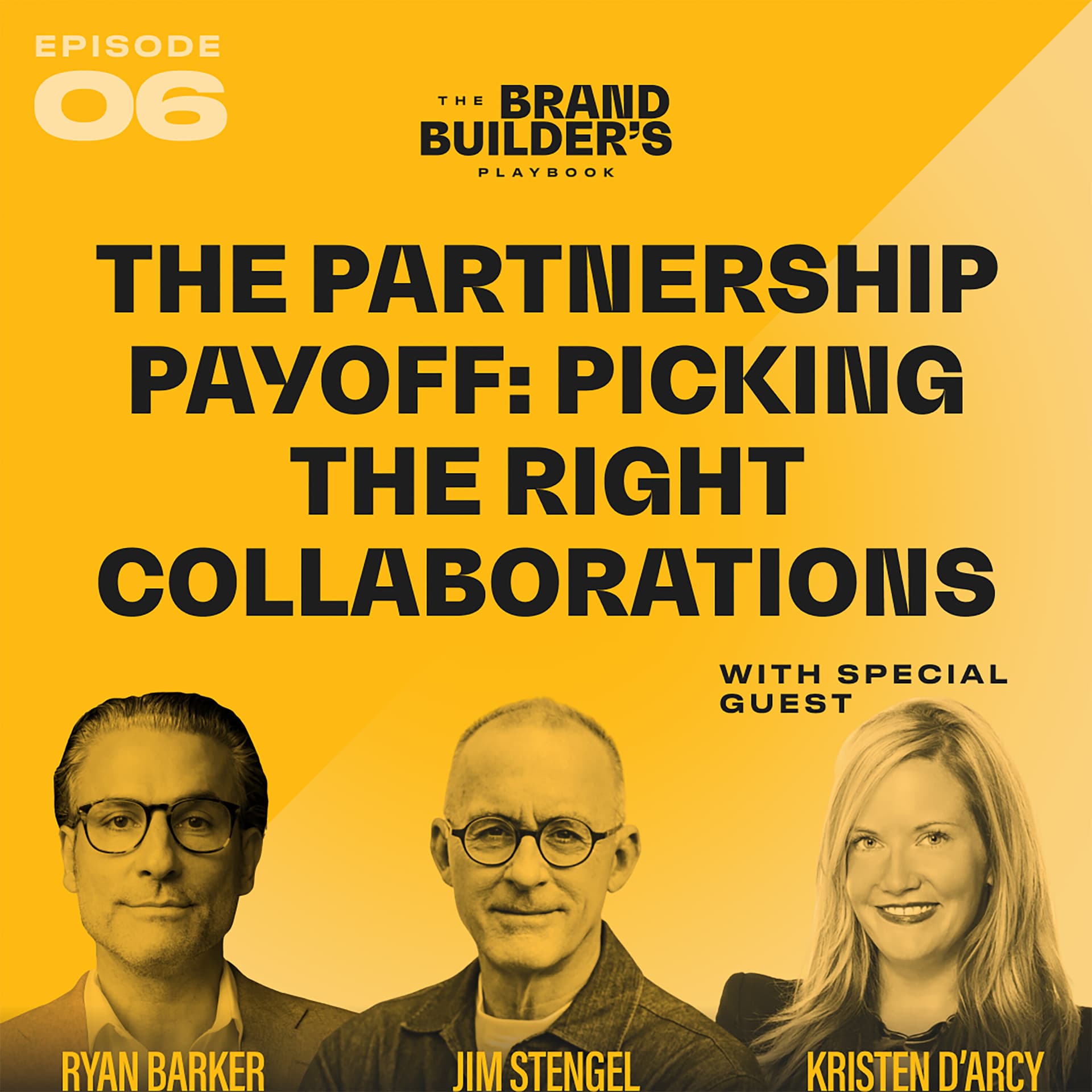
The CMO Podcast - Episode 6: The Brand Builder's Playbook
Overview In the sixth episode of *The Brand Builder's Playbook*, Jim Stengel and Ryan Barker, alongside guest co-host Lindsey Wehking, welcome Kristen D’Arcy, CMO of True Religion. The discussion centers on the power of brand collaborations and partnerships in enhancing brand equity, cultural relevance, and driving growth.
---
Key Concepts
Importance of Partnerships
- Effective partnerships can amplify brand presence and strengthen consumer connection.
- The episode highlights various successful collaborations (e.g., True Religion with Megan Thee Stallion and Ford Mustang) as examples.
Math and Magic in Marketing
- The concept of integrating data (math) with creativity (magic) is emphasized.
- Kristen D’Arcy discusses the significance of both quantitative metrics (followers, engagement) and qualitative alignment with brand values.
Building a Culture of Collaboration
- D'Arcy explains how True Religion fosters a collaborative environment among diverse team members.
- Weekly team meetings (referred to as "tea time") focus on cultural insights and trends, promoting open dialogue and idea generation.
---
Discussion Highlights
Introduction to Partnerships
- The episode opens with a reflection on the significance of partnerships in marketing, illustrating with examples from brands like LEGO and their extensive collaborations.
True Religion's Approach
- D’Arcy explains that True Religion's resurgence is due to a blend of consumer understanding, product revamp, and cultural engagement.
- The brand is tapping into subcultures (e.g., sports and music) to remain relevant.
Types of Collaborations
- Celebrity Partnerships: Example includes Megan Thee Stallion for their holiday campaign.
- Influencer Collaborations: The establishment of "Team True" consisting of diverse influencers and athletes.
- Brand-to-Brand Collaborations: Recent partnerships with Ford and Cookies.
Criteria for Successful Partnerships
- D’Arcy emphasizes a dual focus on data (follower metrics, engagement) and cultural fit (does the partnership resonate with True Religion’s audience).
Impact of Collaborations
- D’Arcy shares insights on measuring the success of partnerships, including customer lifetime value (LTV) and sales growth.
- The episode details how collaborations drive immediate sales while also contributing to long-term brand equity.
---
Key Takeaways
- Know Your Customer: Understanding the target audience is crucial for successful partnerships and effective marketing strategies.
- Integration of Insights: Utilize cultural insights to shape products and partnerships, ensuring they resonate with the audience.
- Collaboration Culture: Foster an environment where diverse perspectives are valued and encouraged.
- Authenticity is Key: Partnerships must feel genuine to avoid backlash from consumers; consumers are savvy and can detect inauthentic collaborations.
---
Actionable Strategies
- Conduct a Brand Audit: Assess current brand strengths, weaknesses, and opportunities for improvement.
- Engage with Culture: Regularly immerse in the target culture to inform marketing strategies and collaborations.
- Iterate on Partnerships: Continuously evaluate and adapt strategies based on performance metrics and cultural relevance.
---
Final Thoughts Kristen D’Arcy's insights offer a robust framework for modern marketers looking to build impactful partnerships that resonate with their audience. The blend of data-driven strategies with cultural insights showcases a pathway for brands to thrive in competitive markets.
---
Additional Resources
- Download Episode Worksheet: [Download Worksheet](https://bit.ly/47oVdBa)
- Upcoming Episode Topics: [Explore Topics](https://bera.ai/podcast/)
- Privacy Policy: [View Privacy Policy](https://art19.com/privacy)
---
This episode serves as a valuable resource for CMOs and marketers seeking to navigate the complex landscape of brand partnerships, emphasizing the need for authenticity and cultural relevance in a rapidly evolving market.
Written by AI. May contain mistakes. Listen to the episode to check what was said.
Transcript
Automatic transcript. May contain errors.0:01Models, influencers, celebrities, there's the what component, and then there's the how.
0:10Welcome to the Brand Builders Playbook, the show for modern marketers who are done with guesswork and ready to implement what actually works. Well, hello, everyone. Welcome to Episode 6 of the Brand Builders Playbook. We're having a lot of fun with this series. This is Jim Stengel. I'm Ryan Barker. And I'm Lindsay Winking. Okay. So last week, we had an intense discussion about brand and performance marketing, right? This is an evergreen topic. I hope someday it goes away because they should be one in the same as Ryan is a firm advocate in. But this week's topic, I think, is a perfect follow-up to brand and performance marketing because we're going to talk to a guest who believes in both, and they can happen at the same time.
0:49We're going to talk a lot about collaborations and partnerships with this guest. But before we do that, I'd like to return to the little tradition we have on this show, where we talk about the brand's playbook this week that is interesting for us, that we're paying a lot of attention to, that's relevant to the topic of the show. So I'm going to go first on this one, and then I'll turn it over to Lindsay and Ryan. But this is really topical for me because earlier this summer, I went to Portland with my family and just went to the most extraordinary experience. And that was the Lego Jurassic World Rebirth Brickman Partnership.
1:25It just blew my mind. It was so fantastic, so interactive. You could participate, you can build things, you could do videos, you can make videos. And it's like the fourth Jurassic Park movie they've been a part of. I don't know if there's a brand in the world right now who collaborates as well as Lego. Think about Star Wars, Harry Potter, Jurassic World Rebirth. And it's, you know, it's not just one thing. It's like video games, it's museum exhibits, it's campaigns, it's special collections. So I think there is so much to learn by how Lego thinks about partnerships and collaborations. We're about to talk about true religion, which is also doing a great job.
2:02But the scale of what Lego does, I think is mind boggling. And the fact that it's so integrated into their business model. So I think it's endless learning. Maybe we should get them on the show later, you two, and talk about that. Yeah. I mean, Lego is incredible. I just saw their botanical series for the first time. And like all of my adult friends are just going nuts for it. So you're so right there. I feel like they're the masters. You know, later we're going to talk about true religion and Megan Thee Stallion. But but I'm always very interested in like how to do really deep cultural partnerships.
2:39I think a lot of the risk you run with partnerships often is like just like slapping an influencer on it or slapping a celebrity. And then those things, you know, maybe get you awareness, but it doesn't feel deeply integrated into the into the culture of the audience. And we were doing some work for Frito-Lay a few years ago, and they hired us to study the subcultures that are obsessed with Flamin' Hot Cheetos. So not just the customer, but what are like the cultures and the subcultures that in their own right have their own culture that are just really love, really love the product. And that led us deep into the world of like, I kind of call it like Southern hip hop and trap, like female Southern hip hop and trap.
3:18So it's like Megan Thee Stallion, City Girls, that whole world of obviously like baddie subculture, which we're going to talk about a lot more with True Religion, because I feel like they're doing a brilliant job of tapping into bad bitch culture. But yeah, we ended up going very deep on, you know, what is kind of the worldview underlying that subculture? And then what are all of the aesthetics and the signals? And from that work, they ended up partnering with Megan Thee Stallion to create a new song called Flame and Hotties that like paid homage to the obsession that this subculture had with Flame and Hot.
3:52And I thought it was perfect because obviously Megan's dying in a big name and maybe you would have come up with her regardless just because of her popularity. But I think to like do a song called Flame and Hotties, it just so perfectly captured the culture and the language and the aesthetic. I thought that was brilliant. You and I have talked about this before. Didn't they even integrate the subculture insights into product development? Yeah, yeah. So they are doing that subculture work as part of their innovation process. So how can you pull collaborations with subcultures so deep into the innovation process that the marketing kind of writes itself as you develop the product?
4:28So are you a flaming person? Yeah. I love my mouth to burn. My son-in-law is too. He has, I don't know, 40 or 50 hot sauces in the refrigerator. Mind-boggling. It is mind-boggling. Okay, Ryan, what about you? What are you looking at this week? Before I get to, I have to comment on the Legos. we're a big Lego family. I love Legos. I wish they would have a Dr. Scholl collaboration so that when parents have to clean them up at night, that your feet wouldn't feel so bad. Other than that, I am deeply in love with Legos. They may do that, Ryan. They're very customer centric. Probably listening to this, you may see that in the next year.
5:03I would love it. So blockbuster movies, I saw Formula One and then it got me thinking again, we went into the Barra database. And when Formula One and Netflix got together in 2019, they launched their series. Until today, the brand has more than doubled its fan base, especially in the US, let alone globally. And then as we look at the equity, this was a brand that was very niche, more for the affluent. Youth wasn't watching it. It wasn't a cool brand. And then we look at the data and the brand has grown overall equity by 30 points from cultural shift. That's not 30 points growing in sports. That's 30 points growth across all brands, which is just absolutely amazing.
5:46And then not stopping there and now doing the Brad Pitt Formula 1 movie, which was good, by the way, it just keeps growing. It keeps growing. So they're continuing to nurture that relationship using entertainment. And now all of these drivers, they're celebrities, they're rock stars now. Ryan, let's get into the process of collaboration and partnerships a little bit more deeply. I know you're looking at this with your database and you help brands and companies figure out which partnerships will make sense to grow both brands' equity and hopefully their sales as well. So can you tell us a little bit about what you've learned?
6:17So I think it starts with brands need to understand what is their challenge? Are they looking for differentiation? Do they need to become more culturally relevant? Is it an awareness issue and you're looking to piggyback? From there, then it's all about positioning. If you know what is in the core of your essence, you help find brands that address perceptual weaknesses while reinforcing strengths. You want to make sure that those brands you partner with will bring the differentiation that you need, but it has to be authentic and therefore not difference for the difference state. It still has to have the core of your essence.
6:50Data can help you with that. Lindsay, your reaction to that? Yeah. I mean, I think Ryan hit it. And I think that I want to put an exclamation point on the point you talked about, relevance. I think a lot of times we get really blind when we chase partnerships and really not thinking about what is relevant and what helps us experience the essence of the brand in like a new way or through a new culture or through a new aesthetic or to a new audience. And I think that's where you see partnerships that really, really feel like magic. So we're about to bring true religion into the show in a segment, but what's one thing you want our audience to be super tuned to and pay attention to in this discussion we're about to have?
7:29I think for me, like, I mean, just as an observer, like true religion is killing it in the culture game. And I think tuning into how do they do that internally? How do they operationalize this thing that can feel magic and ephemeral and hard to operationalize, which is cultural relevance? I feel like that's what I'm most looking forward to. Well, this week, please welcome to our virtual studio, Kristen Darcy, the CMO of True Religion. And this brand, Kristen, is having a moment. So congratulations on everything you're doing at your company. And thank you for joining us. Absolutely. Thanks, Jim.
8:05Happy to be here. Now, I want to start with a big mega question. What do you feel is the biggest, biggest driver behind this momentum on True Religion? It's a good question. And I don't think it's any one thing. It feels like lightning in a bottle, that's for sure. You know, first and foremost, we have an incredible CEO who came back to the brand in 2019. and he was laser focused on making sure we understood our consumer. That was years before I joined. He really revamped the product. So when he came back, the logos and everything that we were really known for, the big horseshoe, the Buddha had been removed from the product.
8:51He made sure that that was put back on. The product is incredibly recognizable. It's fashion forward, word. There's some heritage pieces, of course, but the product is so fabulous. And I think then you enter this marketing and, you know, my team is also laser focused on leaning into culture, in particular sports and music, which we know our customer loves and sort of looks to celebrities in both of those arenas for, you know, fashion and styling advice and tips and so forth. And so I think it's a conglomeration of all of those things that's really helped drive a lot of the growth that we've seen over the last couple of years.
9:35So, of course, our topic today is collaborations and partnerships. So what's another big question before we start clicking down? What's been the role of partnerships and collaborations in your growth model, your playbook? Yeah, we look at them in a couple of different ways. So partnerships might be with a celebrity. I could use Megan Thee Stallion as an example of that. she was the face of our holiday campaign last year. She was so happy with the outcome of the campaign, as were we from a sales perspective, that that partnership with the talent continued into this year. We dressed her head to toe on a Coachella stage, True Religion, you know, I just talked about the product, but True Religion and the logos front and center, which was incredible.
10:21And then we will continue that partnership. I'm going to keep it vague as we go into 2026. So, you know, talent partnerships would be one. Influencer partnerships would be another way that we look at that. And that would be Team True. So Team True right now is made up of just over 100 men, women, NIL athletes, professional athletes, stylists, musicians, etc. I would say those faces range from 50 ,000 followers to 5 million. and they act as an always on army of, you know, fashion influencers. So that's another way we look at partnerships. And then the third would be collabs. So this year we launched a collab with Ford, followed by Cookies in June.
11:08We launched Belladonna for women. And so, you know, the brand to brand collabs would be another way that we look at partnerships. So those are the three different tiers. That's a huge diversity of collaborators and partners. What's your top criteria when you're thinking about going forward with a partner? It's really a little bit of math and magic. So top criteria on the math side is number of followers, engaged audiences, where are their audiences coming from? And does that map back to where our sales come from or the biggest opportunities across the country where we want to drive more sales.
11:49It's what is in the queue. Are they, if they're a musician, are they going on tour? Are they dropping a new album? What was so interesting about Megan is, you know, we really picked her at the right time. When we looked at the math of it, you know, across all the metrics I just mentioned, solid, solid, solid. She did a Bud Light commercial right before our campaign launched with her. And And that was to kick off the NFL season last year. She was a host of VMAs. She had a Netflix documentary coming out. She was performing at Coachella. So check, check, check. But then on the other side, there definitely is magic.
12:28Does this person or this brand, does that feel like something our customer would expect, would want? What is the objective of the partnership? Is it scale? That would be the example of Ford. or is it to try to attract a new audience? That was the objective of the collab that we did with Belladonna earlier this week. So math and magic, and I think also then making sure on our side that we're very, very clear what does success look like from the jump. Math is a four-letter word and Ryan is a four-letter word. So Ryan. So I love the math and magic. I woke up this morning, took a look in the Barrett data.
13:07The data is doing the talking for the True Religion brand among Gen Z Just in the last two and a half years, the amount of cultural relevance that grew was 23%. The perceived differentiation in the marketplace among that group, 31%. So the data is definitely doing the talking. And so it's interesting to see whether it's a long-term executive perspective or short-term. How do you attribute and realize I need to do more of this one and less of that one? What's that process, Kristen? You know, some of it, I mean, the headline actually goes back to what I mentioned earlier about how we pick the math and the magic.
13:42The math is we look at last year's calendar from a merch planning and marketing perspective, and there are certain moments we know we need to anniversary. Then there are other moments that we've created. When I joined the brand over two years ago, it was, I think it was June or July, and there was no big holiday campaign planned. And, you know, I've been in retail a long time. Anyone who's in retail knows you need that incredible holiday campaign in order to get enough wind through your sales to drive growth for the rest of the year. And so that was an example of it was net new. We inserted that in because it's a playbook that I've learned and I've executed before.
14:30And then as we moved into that holiday season, we saw traffic up to the website over 50%, traffic up to our own stores across the US up 20%. Sales were up 20%, 30 % throughout that season. So that's an example of something, again, net new. But what we try to look at is where do we need to comp some of these moments? And then what is the broader business objective? When I joined, the women's penetration of the business was probably sub 40%. We know that there's a huge opportunity to grow and we have been growing the women's side of the business. So there are two, objective, grow women's, net new, how do we insert the right women's support, whether it be Megan Thee Stallion and Anita, the global Brazilian pop superstar.
15:21We partnered with her in February of this year to launch the Own Your True campaign or a brand new, again, net new women's collab with Belladonna. So it's having a very keen understanding of what we're trying to do with the business and then using marketing to actually help pull all the levers to drive growth. Very interesting. Now, for future viewers and brand builders out there, have you had experiences and partnerships that have gone bad? Anything you could share with listeners on what you've learned from that and how do you course correct? You know, I think there are some that perhaps didn't perform as well as we thought.
16:00But then from the macro perspective, this brand has been growing double digits. It's interesting. You talked about the data and obviously we're relevant to our customer. I also look at the sales. And so I don't think there's been a huge mishap per se, but there's definitely some where we thought we would have seen more brand heat. On the flip side, there's some that just take off in a way that we could have never imagined. We partnered with an influencer two years ago, Jada Cheeves, for our female baddie collection. And within the first 24 hours, we had sold through 30 % of the inventory. She dropped a hidden link to her audience that was incredibly engaged.
16:47we put our marketing muscle behind it. And all of a sudden, you know, we're looking at the numbers and you can't even plan for that. Of course, we did order more, but we've seen it go both ways, where sometimes things don't quite take off. And then other times it's just this wow moment because it just hits at the right time at the right place. Makes a lot of sense. Kristen, you have a culture that obviously is good at collaboration and good at partnerships. So could you speak a bit about how do you build the culture to do this well? How do you design for it in terms of organizational design? How do you hire for it?
17:23So could you give us a little bit of a look behind the curtain on what capability you've built to do this so well? I mean, I can't share all of our secrets, but it's a great question. I think our team, the marketing team is incredibly diverse. You know, there are people that have never worked in sort of a formal corporate marketing organization before. We have someone who joined us from the music industry and is so incredibly tapped into what is, you know, just coming up. she's always bringing new and incredible ideas. And then there's other people on the team that have been here, let's say for years and years, but know the brand so well.
18:13And it's just this, they have the touch. They know by, you know, looking at another brand or looking at different celebrity opportunities that goes back to the magic part, you know, there's, they, they just know. And so I think it's a combination of these incredible historians and then bringing in people as I mentioned, who just have such sort of diverse backgrounds. But then on the other hand, the common thread is they are all very, very well connected to culture. They love music. They love sports. We start every weekly marketing meeting with tea. And the tea is about what they're seeing in the industry.
18:54So what partnerships are happening? Who's fronting different brands? what's a campaign that they like, you know, and the team now is over 50 people. And what I love about that meeting is nobody is, you know, they're all tapped in, but nobody is watching the same thing. Nobody's reading the same thing. And what I, and I think they learn in that meeting serves as the framework for incredible brainstorming then go forward. And that's the other piece is, we have a really incredible brand right now and a great business. And so from a recruiting perspective, that kind of opens the door to so many different types of talent.
19:36But then when they're in here, that brainstorming cross-functionally and among the marketing team is critical because good ideas can't just come from one place or one person. And so we've been focused on our collab calendar for next year over the last couple of weeks. And I decided to bring together a team of about 10 different people in order to just brainstorm. And so we came up with a list of 50 different brands, 50 different people we wanted to work with. The 10 of us all went through one by one by one, went to their website, went to their Instagram, went to their TikToks, and really tried to decide, you know, where do we want to lean in based on our business objectives for next year.
20:18So it took this small, but very diverse and mighty team. We came up with it. I presented it yesterday to our CEO. And there's some great ideas in there that are both niche, like we talked about earlier, and mass. And I think not only will drive new customer acquisition, which we've been seeing almost 100 % new customers coming into the brand over the last year, but I think it will also continue to reignite that core customer that's been with us over the last couple of years. Well, with all these tea times, we've seen a lot of partnerships where folks just think putting two brands together through osmosis, the magic gets released.
20:57Then you have an extreme where there's a co-collaboration on actual functional or experiential integration, more expensive, more difficult. How do you think about the balance between those? And are any trends shaping that you're seeing in part of your tea time? The one that we talked about recently that we loved was Skims and Roberto Cavalli, which I've heard some of those key pieces have sold out. And it felt like such a perfect blend of two, you know, sort of similar brands. There's also a bit of a throwback there, which is a big trend, right? Y2K, of course, is everywhere, not only in fashion, but in music and so forth.
21:40And so we loved that one. The experiential piece, I think, came to life through an incredible influencer play within that collab. And I think, you know, for us, when we're looking at the right collab partners, similarly, it needs to be, does this brand and their target audience feel like us? Then you start to do the, you know, how big are they from a business perspective? Are they additive sort of to us? Do they have broader reach? Do they have a totally different customer? And then how do we create a product? And that's really the most important thing that feels like both brands can come together in the most authentic way.
22:25And so when our incredible product design team does these designs and they work in tandem with another brand or with a celeb, it's really about how do you take kind of the very best, the things that each brand or person are so well known for and bring them together. We have an incredible collab. Unfortunately, I can't reveal yet who it's with, but that collab is coming out in November. And the brand cues from us and from this collab partner are just so apparent. The melding together is awesome. We will be in conversations with them about experiential, how do we bring this to life even beyond the product in real life?
23:09And I think that's where a lot of the magic comes. So yes, tea time, we're watching this. We're always talking about what we're seeing out there that's interesting. And then, you know, we try to create that here on our own as well with our partners. Engineering is best for both brands. I have to ask a measurement question. It's obviously you can measure the short-term impact of all of this, right? You can look at your sales, if it's a special collection, whatever it might be, you can sort of see what happens in the stores. When you think about the long-term impact on your brand equity, and obviously it has grown as Ryan talked about a few minutes ago, how do you think about that?
23:43Is it, are you measuring it? Is it a way to measure it? Do you have a point of view on that part of it? I go back to the objective that we talked about, right? And really making sure that upfront, it's understanding what is the purpose of this collab. And to be honest, all of them are to do both of those things, to drive a sale, to help continue to grow this brand from a sales perspective in that moment. But every single one of them also is to build that long-term equity. And when we look at measurement around that, we look at LTV. So our CAC to LTV ratio is incredibly healthy. We look at, as I mentioned, all the new customers coming into the brand.
24:31We look at how much they're spending in year one with us. We look at what they're spending beyond the purchase, let's say, of a collab product. We personalize the experience through marketing for them. So if they come in with a slightly higher priced collab, they're not immediately thrown into a promo email cadence, for example. We're trying to expose the broader world of the brand to them. So there's a lot of personalization that goes into that. But it's really around the behavior of the customer. That's how we're measuring the success. And again, I'm excited because I do see it. I see it doing both of those things.
25:12I see it driving the immediate sale. You know, we launched Belladonna, that collab on, we pre-launched it to our loyalty members on Monday for exclusive early 24-hour access. Then we launched it more broadly on Tuesday. You know, the top five products for, you know, for women's that have been sold online this week have all been Belladonna. That's incredible. So check it did what it was supposed to do and hopefully will continue to. From a sales perspective, it's selling out on Belladonna's site already, which is amazing. but the equity play and the long-term customer impact will continue to measure, but that's really the goal.
25:55They have much more of a Hispanic consumer. We know that's a big area of opportunity for us. It's why we leaned into Anita earlier in the year. And so now to follow that customer who's come in as a result of this Belladonna collab, and again, look at their LTV, see how many times are they coming back? How can we get them to engage with the brand in other ways? Sign up for email, SMS, the loyalty program, et cetera. That's really the objective of all of these. Really interesting. You know, since you brought up some financial terms, if we were to talk about return on marketing investment and not revealing any numbers, do you believe or have you experienced that the right partner could be as effective as mainstream media or TV channel or social media?
Read the full transcript
26:39It's interesting. They go hand in hand. You can't have, in my experience here, You can't have one without the other. The what is the campaign. The what is, you know, whether it's I'm looking at our campaign imagery in my office here, whether it's models, influencers, celebrities, there's the what component. And then there's the how. And the how is the media so that people see this incredible campaign person, whatever it might be. And as part of that, when you partner with these celebrities, you also get distribution through their channels. Right. So I think Megan Thee Stallion, who knows now, but at the time we were looking at her, I think she had 30 million followers on Instagram.
27:26When you looked at Anita across all of her different platforms, she had over 100 million plus. Again, this is across all channels. So then they obviously become a distribution channel as well. So I really I think they go hand in hand. A lot of these partners I would expect. Ford is not one I would expect. So and that's an interesting one, right? Right. So tell us a little bit of the origin story of that one before we wrap up. Yeah. You know, we did something similar last year where we plotted out what are the different B2B collab partners. There's always very, very intensive conversations internally around rationale goes back to the objective.
28:07What do we want to do? And when we looked at the calendar for this year, we had some smaller niche collabs. So that's cookies on the men's side in June, Belladonna on the female side, you know, in July. And we thought, what about something slightly more mass? You know, we've partnered with Playboy in the past. That feels more mass. And then as we narrowed it down, why Ford? Well, we're both American-based brands. We knew it was the Mustang's anniversary this year. We thought that could be really interesting from a cultural relevancy perspective. The Ford team seemed like they would be great partners.
28:49They absolutely are, by the way. Shout out to them. And what was so interesting is we launched the collab right around Coachella this spring. We had some of the collab product pieces there with us. We created a year or two of Buddha Fest. So Buddha Fest is True Religion's adjacent takeover, if you will, happening over Coachella Weekend. And we had not only, we had influencers there. YG, the West Coast rapper, was a host. He brought his team through, which was incredible. We had thousands of people come through this activation over the Coachella Weekend one. But what I thought was so phenomenal is we had the collab product there, and then we actually had a branded Mustang.
29:33co-branded, I should say. So you have the True Religion logo, you know, all over it. Obviously, the Ford logo, Mustang logo, it was a bright red car. And we used it there as a photo op or an Instagrammable moment. And when I showed up to this event, there was a line of at least 100 people. It was very hot. It's in the desert, obviously. But there was a line of 100 people to get their photos taken in front of this car. So I thought, wow, that's really interesting. Then you look at the sell-through of the collection for both women and men's, also really solid, exceeding our expectations. So it might've seemed like a not so expected partnership, but from a relevancy perspective, case in point, the hundred plus people standing in a line to take a picture with this branded car and then also the sell through on the product, it was definitely a hit for us.
30:30So we're going to wrap up. We want one piece of advice from you to our listeners and our audience at large. If they'd like to build the kind of system you have on partnerships and collaborations, what's one mega piece of advice from you? That is a great question. I would say, and this is true of almost anything in marketing, let alone this topic, know your customer. It's a fundamental. All organizations spend time on that. I'll put it that way. Yeah, I don't know where you would start if you didn't. You would be shooting in the dark. As I mentioned, I was really lucky that when Michael Buckley, our CEO, came back to the brand in 2019, he did a deep dive consumer research study because he thought, and he was right, the customer for the brand years ago, probably the true religion that we would have remembered, is totally different now.
31:28And he's very supportive of ongoing research, which we do quite often to make sure that we're always dialed in. And it makes everything easier, picking the right celebrity face, picking the right B2B collab partner, the kinds of campaigns and storytelling who we put in this army of Team True that we're trying to grow. It all starts from understanding your customer. So, Kristen, is the partnership for the customer of today or for the acquisition of new customers for tomorrow? It really is both. It really is both. The collab that we have launching in November, I think hopefully people will just go crazy when they see this.
32:12And it's, oh, that makes sense, both for new customers, as well as those that have been with the brand for a while. And it's interesting, right? Because we have core fits that we've had for years and years and years in our denim. Those core fits are for both women and for men. But then when you partner on a collab, for example, with another brand, that's where you can get really fun and you can play with the design and the co-branding comes to life there. So again, if you knew us, you might know that you love a Ricky fit. But now you see the Ricky again with this incredible design brought to life by these two great teams.
32:56If you didn't know that we have a Ricky, we'll explain it to you if you're a brand new customer. but you could be coming into the brand because you just love the other brand that we're collabing with. So it's 100 % both of those things. Love it. So we're about to bring Lindsay back in the conversation. And so I want you, if she, if she's not in the brand right now, Kristen, she's a young, very hip, very fun woman who's very experimental, likes to try new things. What do you think we should outfit her in? That's a great question. We have a campaign coming up that's tied to a new product collection.
33:30This is coming out in October, and it is an evolution of the baddie. Baddie is a cool thing in culture for females. And the collection is bold. It's fun. It's meant for you to stand out, to feel confident. There's a lot of leopard in there. There's a lot of crystals in there. And I think she'd love it. So we'll have to send some her way. We know what our Christmas present is for her. There we go. I'm sure if you want to send some, she would love it. She'd be a great brand ambassador, by the way. Totally. Anyway, Ryan, anything else? No, this is great. Thank you so much, Kristen. Really appreciate it.
34:11Yeah, so good. You're an amazing CMO, by the way. Thank you for sharing your insights. That really means a lot coming from you, who's the GOAT. So thank you very much. I appreciate it. Wow. That was a great conversation with Kristen. And Lindsay, come on back into our discussion here. And let's start with you, Lindsay. You've been listening to this, reflecting on it. What was your take on what we just heard, which I thought was an amazing case study, if you will? Yeah, what a ride. I mean, we were talking about baddie subculture earlier. I feel like they have nailed how to tap into baddie subculture.
34:45And it's such a real, we've done some research on what I call bad bitch subculture. And I think some of the things they're doing so brilliantly is there are different expressions of it. Like you have like Chicano, baddie subculture, which they're really hitting with some of their newer partnerships. And I also just really love, you know, she talked about a couple of things and how they really like build a team around this that I just I thought were so refreshing. Like she talked about like hiring people who don't have any corporate background. Maybe they've never worked in a corporate job, but they just get culture or pulling talent from things like the music industry.
35:20Like I think all these other industries, music, fashion, you know, the arts, often people who work in those industries have just more of a natural plugged in this than people who have been in corporate America for 10 to 15 years. And so it seems like she's really open to kind of unconventional hiring in order to build a team that that feels plugged into culture and then baking that into even like their rituals. Like I love the ritual of starting every meeting with, you know, the tea of what you've seen. And when we asked her for one piece of advice, I mean, this is something that plays to you and your company's reason for being.
35:57She just said, know your customer. Yeah. So could you go there a little bit with us, Lindsay? I mean, we got her to expand on a little bit in the dialogue, but she said, how do you do anything without that? Yeah. So I know you help companies do that. Could you expand a little bit on that advice for our audience about how to do that better? Yeah. I mean, it's one of those things that feel so fundamental. You're almost like, it leaves you wanting more, you know, something more secret or more specific. But, you know, I think one of the things I noticed just in how she talks about how they know their audience is they do keep that cultural dimension so close to the work.
36:32I think a lot of major companies, even companies who do a lot of marketing research or consumer research and start with consumer research. The problem is a lot of times that research doesn't have Belladonna in it. It doesn't have Megan Thee Stallion. It doesn't have the attitude and the tone and the aesthetic. You look at true religion stuff and it looks like the people. I think a lot of the way we do research and a lot of the ways we begin with trying to know the customer often start from such a sanitized corporate place. It misses a lot of the gems that clearly true religion's been able to plug into.
37:10So I think like how you go about knowing your customer matters a lot. Ryan, anything to add to what Lindsay's sharing in the retrospect? So she said, know your customer. I asked about both today and tomorrow. And that's hard to find a unicorn that can address both of those. And she really emphasized the importance of authenticity. I think a lot of partnerships go bad and consumers are smart. They call BS on it. It's not authentic. that coupled with math and magic. So she had a process. She had a process, the army, like Lindsay said in there, they take it quite seriously. They put multiple folks and it's a collaboration component.
37:49You both work with a lot of CMOs. So what's your reaction to her as a leader? The data is doing the talking. She's been wildly successful in a short period of time, and both from the financial success and the equity, the equity, the type of customers they're bringing in rejuvenation. I think true religion had some challenges over the years and they've managed to revitalize. So that's not an easy task. So rockstar on my book. Yeah. I really love how like not precious, precious, not precious she is about like where ideas come from. And she seems to really kind of have a reverence for hiring and arming her people in the way that, that keeps them close to the culture.
38:30And, and every, you know, everything she says is very simple. And I think there's something very powerful about that. The The other thing I think I tapped into is she talked about the math and the magic. And obviously there is so much math that goes into a lot of these decisions, but not letting that magic go by the wayside. You know, I think being able to make a lot of space for a lot of intuitive judgments, especially if you have a team who's really plugged into the culture or you're doing a lot of research that's really plugged into the culture, that intuition is going to be everything. And I've been very obsessed with this idea.
39:03I think Rick Rubin calls it vibe coding, that we are entering this era that is so aesthetically feeling driven that it's like, it's vibes. You know, we make fun of that word, but like, I think most of how we're making decisions, especially in very aesthetically driven worlds like fashion and music is just based on a vibe. Like it can't be boiled down to a formula or math. And you have to have a team with great taste, I think, to make work in a very like vibe forward world. And she feels very tuned into that. Speaking of intuition, I described you very briefly to her and she then proposed some, an outfit for a collection.
39:46How right on was she? I want to see it. I will wear it. I think I aspire to be a baddie. We'll see if I'm, I think this will help. Okay, listen, we always close the show with the one thing that we would recommend our audience considers adding to their playbook from the topic of the week and the show. So, Lindsay, let's start with you. What's the one thing you would recommend our audience consider putting into their playbook? Go inside the culture. She said, know your audience. And I want to take it a step further because I think for a lot of marketers, audience and culture are still very segmented and like, get in there, like go to a Megan Thee Stallion concert.
40:31If that's, you know, if that's the subculture you're tapping into, like where go to the nail parlor, where they get their nails done, like listen to the music they listen to, um, love the things they love. And I think that's where you start to feel a culture at such an intuitive level that you can make, you know, bold and risky choices and partnerships that really pay off. Ryan, how about yourself? I love that, by the way, Lindsay. Ryan, how about yourself? One thing. You start with a brand audit to understand your brand challenges, your weaknesses, your strengths. And among the target you're going after, identify brands that address those weaknesses while reinforcing your strengths, coupled with don't just put the two brands together.
41:11Osmosis doesn't happen. The more you can activate it, whether it's functionally or experientially, the higher the return on marketing investment will be. I love both. Mine is just have a tea time with your team. You know, wow. What fun that sounds like. And it's a ritual. They do it every week. Builds the culture. They all learn something. Make some better marketers. You know, I'd love to learn more about that. I'm serious about it. It'd be fun to be a fly in the water to sit in that meeting just to see what happens. Absolutely. How that culture works together. Yeah, we got to go to tea time. Yeah.
41:42I think we have an invitation. Okay. Listen, this is a great episode, by the way. Thanks. Thanks for everything you two brought to it. And we'll see you all next week for part seven, episode seven, the Brand Builders Playwork. We're going to talk about smart spending and mastering the media mix, which I think is a nice follow up to what we just talked about. Are we all wearing a leopard print next time? I'm game. I have to dig deeply into my David Bowie collection in my closet. It is there. So I think I just have to dig a little deep. All right. All right. See you guys. Take care, folks. Thanks for listening to the Brand Builders Playbook, where we explore the real strategies behind resilient revenue driving brands.
42:23If today's conversation sparked new ideas or helped you see things differently, do us a favor, follow the show on your favorite podcast app, leave a review and give us a like or rating. It really helps others find the show and keeps our conversation going. And if you know a brand leader or marketer who needs to hear this, share this episode with them. And don't forget to check out the worksheets in the show notes. We'll be back next week with more insights, more playmakers, and more of what it takes to build brands that last.
From the publisher
What do LEGO, Megan Thee Stallion, and a Ford Mustang have in common? They’re all proof that the right partnership can supercharge a brand.
In the sixth episode of The Brand Builder’s Playbook, hosts Jim Stengel and Ryan Barker, joined by guest co-host Lindsey Wehking, explore why not all partnerships deliver equal value…some enhance brand equity, while others can dilute it.
This week’s guest is Kristen D’Arcy, Chief Marketing Officer and Head of Digital Growth at True Religion, who unpacks how collaborations and partnerships drive growth, cultural relevance, and long-term brand equity. From bold campaigns with Megan Thee Stallion to unexpected collabs with Ford, True Religion demonstrates how math, magic, and cultural insight come together to keep a brand not just alive, but thriving.
Kristen shares the playbook behind building a culture of collaboration inside the marketing team, tapping into subcultures that matter, and designing partnerships that actually move the needle.
Bottom line: when you know your customer and lean into culture, partnerships don’t just create moments, they create momentum.
—
Download this week’s worksheet: https://bit.ly/47oVdBa
Read about upcoming episode topics and guests here: https://bera.ai/podcast/
See Privacy Policy at https://art19.com/privacy and California Privacy Notice at https://art19.com/privacy#do-not-sell-my-info.