In short
The CMO Podcast: Episode Summary
Podcast Title
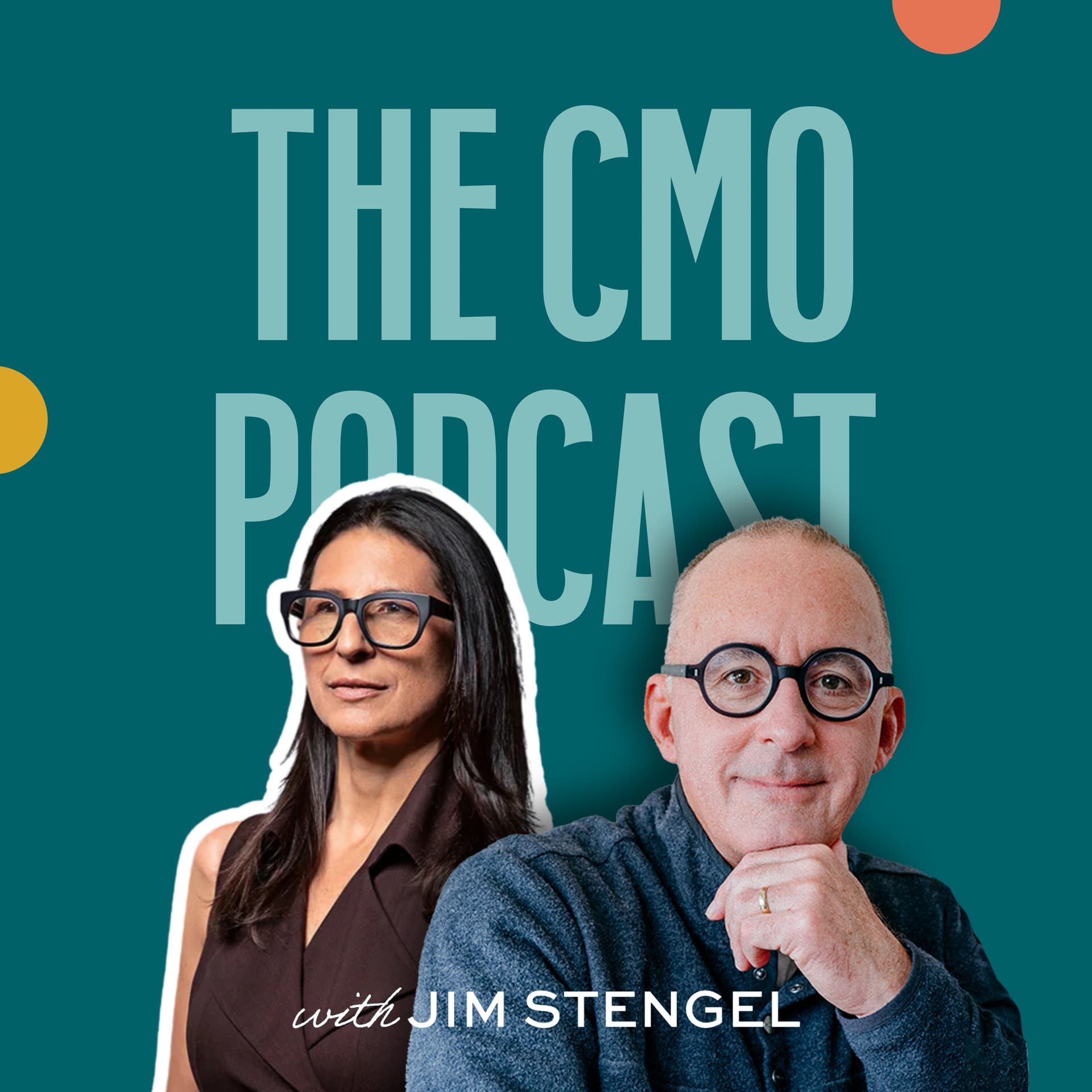
The CMO Podcast
Host
Jim Stengel (former CMO of Procter & Gamble)
Description
Jim Stengel engages in deep conversations with dynamic CMOs from various industries, focusing on the pivotal role of the CMO in shaping consumer experiences.
Episode Title
The Creator Economy Roundtable
Guests
- Brandon B: Creator and Founder of StudioB
- Kim Larson: Global Head of YouTube Creators
- Kenny Gold: Managing Director, Head of Social, Content, and Influencer for Deloitte Digital
Episode Description
This episode covers insights from the Cannes Lions Festival, focusing on the transformative nature of the Creator Economy in marketing, including how brands connect with audiences and leverage content creation.
---
Key Takeaways
- The Creator Economy's Impact on Marketing
- The Creator Economy is reshaping brand-consumer relationships and content consumption.
- Creators are viewed not merely as advertising vehicles, but as integral to business growth and transformation.
- Tipping Point Realization
- There's a consensus among guests that the Creator Economy has reached a tipping point, with both brands and agencies recognizing its importance.
- The integration of creators in brand strategies is becoming crucial, moving from transactional relationships to long-term partnerships.
- Authenticity and Community Connection
- Trust and connection with audiences are paramount; creators thrive on their relationships with their communities.
- Successful brands understand this dynamic and seek to engage more deeply with creators.
- Evolving Brand Collaborations
- Previous collaborations with creators were highly transactional. The future will see more integrated, mutual partnerships.
- Brands must adapt to these changes, moving beyond traditional advertising frameworks.
- Long-term Partnerships Over One-off Deals
- Creators prefer ongoing collaborations with brands, which allow for iterative learning and improvement in campaigns.
- One-off campaigns create exhaustion and do not build the necessary rapport for effective marketing.
---
Discussion Highlights
The Nature of the Creator Economy
- Brandon B defines the Creator Economy in 2025 as "integration," emphasizing long-term relationships between brands and creators.
- Kim Larson stresses the importance of community, noting that trust is vital in the creator-consumer dynamic.
Misconceptions About Creators
- Many believe that becoming a successful creator is easy. In reality, it requires significant effort, teamwork, and strategic planning.
- Creators often face increased saturation in the market, making high production value and quality crucial.
Brand Examples
- Unilever's Statement: Plans to allocate 50% of their spend to creators highlights a significant shift in the industry.
- Crocs Campaign: Successfully blended traditional media with creators, demonstrating how to localize messaging through diverse creator collaborations.
Insights for Brands
- Companies should start by understanding organic conversations around their brands and leveraging existing creator content to build campaigns.
- Emphasizing the relationship aspect of creator collaborations can yield better results than traditional advertising tactics.
---
Final Advice for Brands
- Seek Expertise: Brands should seek experts to navigate the Creator Economy and create meaningful partnerships.
- Prioritize Relationships: Focus on building authentic relationships with creators, understanding their audiences, and aligning goals.
- Rethink YouTube Engagement: Brands should recognize YouTube as a powerful platform for both scripted and unscripted content, rather than limiting it to short-form media.
---
Conclusion This episode of The CMO Podcast emphasizes the critical evolution of marketing in the Creator Economy, calling for a shift towards deeper, more meaningful relationships between brands and creators for sustainable success.
Written by AI. May contain mistakes. Listen to the episode to check what was said.
Transcript
Automatic transcript. May contain errors.0:00Hi, everyone. It's Jim. I'm here with Matt Spiegel, EVP of True Audience Growth Strategy at TransUnion. Matt, you've spent your career helping marketers understand people through data, and that's harder and more important now than ever. It really is, Jim. There's really just so much information out there, and unfortunately, it's often disconnected. Marketers typically see fragments, maybe a purchase here or a click there, but what they really need is clarity, true full picture of who their customers are, and ultimately how to reach them. Well, tell me how your solution strategy comes in and helps CMOs and their teams bring clarity to chaos.
0:33Well, Jim, we ultimately do that with a 360 view of the customer. And so it's about ultimately combining data, truly trusted data, identity resolution, which is a deep analytical problem and measurement that actually helps understand performance. So ultimately we work hard to help marketers move faster, to deepen their insights and to ultimately make every dollar work harder. We believe strongly that when you truly understand your audience, you can build a real brand and real relationships with customers that last. Where were you when I was a CMO? I don't know how to answer that. Learn more at transunion.com slash clarity.
1:06That's transunion.com slash clarity. What if the smartest marketing play is not to move forward, but to zoom out? Deloitte believes the most powerful move a CMO can make is to look beyond the next step and see the broader perspective. That's what the Deloitte CMO program is for, a place to gain fresh perspective and connect with leaders who've stood where you stand. Together, Deloitte will help you see the bigger picture so your next move isn't just fast, but right. Learn more about the CMO program at cmo.deloitte.com. Hi, everyone. It's Jim. I have Matt Spiegel of TransUnion with me. Matt, I want to start with, what do you love about your job?
1:42Yeah, it's a great question, Jim. You know what? I love the fact that I get to be out at events and conferences and working with clients to really think about how marketers solve problems that matter at scale. The job of a marketer is as challenging as ever, and we get to do some interesting things to make their job easier. When you work with a client, where do you get the most satisfaction? You know what? I think seeing ideas come to reality. We ultimately are an enable of great marketing. So we don't do creative. We don't do media planning. We provide the data, the identity insights, the measurement tools that make great marketing possible.
2:11So when we get to see the end product, sometimes later, it's really cool to see. Well, super to have you here. Super to be a partner. Thanks for joining us today. Thank you, Jim. So if you want to turn data into understanding and understanding into growth, visit transunion.com slash clarity. The first brand you remember as a young guy making an impact on you, the first time you realized, oh, that's something that's meaningful to me. Probably would be Lego for me. I'm a bit obsessed since as young as I can remember. I think it was probably one of the first toy sets I was given was a Lego set. We get to make so many videos for Lego and we keep building new structures.
2:46And it's like one of the funnest activities we get. What's your favorite collection now? Probably the Harry Potter set. We're a big Harry Potter nerds at the studio. You've got to meet my older daughter. She'll be obsessed. We've got a train set that goes around the studio and it goes in through the wall for a tunnel and then comes out through the other side. It's fun. It's great. This is what happens when you give a child adult money. Hi, I'm Jim Stengel. I've helped hundreds of major brands discover and activate their purpose. Because when a brand's purpose is clear, compelling and authentic, profit naturally follows.
3:20Each week, I welcome the CMOs, the chief marketing officers of your favorite brands, to speak to how their job is so much more than marketing. These leaders share their inspiration and challenges, along with how they try to build a full, healthy, and happy life in and out of the office. And it's that energy that reaches everyone they touch. And we're glad you're here to feel that energy and to learn from these remarkable leaders. So here we go. We had a whirlwind five days in Cannes last week, and we're bringing you the first of many live in-person episodes recorded as part of the Cannes Lion Festival of Creativity.
3:56And to kick it off, we're diving into a topic that was part of many conversations in the South of France, the creator economy. Creators and the space they've created have become one of the most transformative forces in marketing. It's reshaping how brands connect with people, how content is made and consumed, and how influence is earned. To help me unpack it all, I got three powerhouse guests. First, Kenny Gold, Managing Director, Head of Social at Deloitte Digital, a sharp thinker on how brands and creators can thrive together. Then we've got Kim Larson, Managing Director and Head of the YouTube Creators at Google.
4:28She's leading the charge on one of the most influential platforms in the world. And finally, Brandon B., a wildly talented creator who's pushing the boundaries of storytelling and digital creativity. We're going to talk strategy, authenticity, audience building, and where this entire ecosystem is headed with a little advice sprinkled in. So tune in as we come to you live from the Deloitte apartment at Cannes Lions. Hey, you three. Welcome to the CMO podcast. So we're in Cannes. We're in the second day. We're just chatting about before we start recording. So what's your impression this year? Anything knock you over, move you, inspire you, or is it just too damn overwhelming?
5:05I know we've said this before. The tipping point is here. I actually think this is the year. I think creators are the story. I think they are the top reason to be here. I think the brands see it. I think the agencies see it. Certainly, as someone who's representing a platform, we see it. It's integrated into the Palais programming. There's curriculum. There's a dedicated creator space on the rooftop. So it's everywhere, and brands are taking notice. So, Brandon, your third year in Cannes, do you agree with that? It's a tipping point. I completely agree. First year I came to Cannes, I was one of maybe a couple of creators that came out here.
5:40I saw how many brands were here, I was like, hey, this feels like a real big opportunity. Surely this is going to evolve into something much bigger. And by three, it is insane. I think this is just the perfect, I guess, Venn diagram between creators getting to not only come out here to work with brands, but also work and meet with other creators. And it's just such an incredible opportunity for not only us to meet brands, but also just learn from the CMOs and the marketers about what they want and how we can better provide value. Give us the consultant's perspective. I would say 85 % agree. The tipping point is here.
6:17The topic is at the top of everyone's mind, but I still am not 100 % sure we're framing it and talking about it the right way. And that's the part that stands out to me where we're doing it the advertising way. We're not doing it the business driving way. And the beauty of the creator economy and creators in general, are they're not just an advertising vehicle. They're a business growth vehicle. They're a business transformation vehicle. And it's not just a topic for CMOs. It's a full organizational topic. And I think we're doing an incredible service for creators by having this platform here and having those conversations.
6:58But in a few ways, we're doing a little bit of a disservice by not having it be that broader conversation. Let's talk about that. I mean, the creator economy, right? It's not new. First time it was talked about was the 90s. Were you born? No? No. No, not even close. Just about, 99. Okay. All right. A little smidge. So it's not new, but it is now, I think, tipping. I'd like you all to talk very fundamentally about how do you define it in 2025 versus the 90s? And why is it growing so fast right now? Of course, it's evident here, but that's just a metaphor, what's happening in the marketplace, the way the money is moving, the way people are valuing it.
7:37But we're still, I think, kind of in the early days. So how do you define it? Let's start with you, Brandon. How do you define it? And why do you think it's massively growing? I think if I was to use one word to define the creator economy in 2025, it would be integration. I think previously from this year, when we looked at creator and brands collaboration, it was brands using creators almost as a billboard and that's it. And I think the attitude towards creators has really evolved and brands understanding the value of partnering with creators long-term and actually establishing their brand as a part of the creator's brand and both vice versa.
8:14And I think that's how brands can benefit off of the parasocial relationships that creators and audiences have built up over decades now at this point. And we're seeing some of the most incredible partnerships coming off the back of it. So was it transactional, you think, in the early days? I think it was highly transactional. I think integrated is the right word. I think about it in concentric circles. So you have creators at the center, and there is a degree of polish, professionalism, agility, and I'd say business acumen in this creator group that we're talking about that is very different than where we were 10 years ago.
8:51I think the next concentric circle is the platforms. You know, for someone like YouTube, creators have always been at the center. But I think for other platforms, creators are becoming more and more important. And then you have this very vibrant third-party ecosystem that we don't talk enough about. It is the consultants. It's the agencies, influencer marketing groups. It's the talent managers. There are so many talent agencies and managers here and service providers. Like, so that ecosystem is growing and thriving. And then you have fans and the communities. And so it's like each one of those builds on each other.
9:25And that's how I define it. There's something so interesting. The community was the last thing you brought up, Kim. And we talk about the creator economy all the time, but really... Without the community. Without the community, it's nothing. And I think a lot of... I'm going to use the word consumer, but let's talk more broadly about communities and fans and people. There's this desire, this pining for trust and for connection. and what makes vibrant communities even more vibrant is that interconnectivity. You talk about integration. The integration between what the creator makes and how the community consumes it and how they engage with one another is where the magic lives in the creator economy.
10:04Someone who makes content just to put out into the world, they're artists, but they're not necessarily creators. And I think that trust is what is at the core in our recent research that we've been doing, whether it's our digital media trend survey or our state of social research that we're doing. The creators are thriving because of a trusting relationship between the person and the creator. And I think that's really what's at the heart of this. Culture is born from the middle out, from communities out, not brands down. And I think there's a little bit of a disconnect when you take an advertising vent.
10:38It's not about the brands down. It's about culture from the middle out. So that's what makes the creator economy so special. What do you think is the biggest misconception about the creator economy? In personal experience on the creator side, that becoming and building a creator audience or essentially a creator based business is easy. And it's something that anyone can do. I have a team of 30 of some of the hardest working people I've ever met in my life and some of those creative people I haven't met in my life. And we are here because of that pot of a good chunk of luck, but also just everyone's hardcore dedication, love, passion and just pure grind to the art.
11:11We're now in a world where the most desired job in the world for kids under 16 is to become a creator, not an astronaut, not a singer. And with that comes a lot of saturation. So that means our jobs as creators overnight has come drastically harder. And we suddenly need to really level up our production quality and our abilities to make content that we know our audiences will love. So I think a very easy misconception is because content feels rough around the edges and authentic, I think that's sometimes misplaced as, oh, anyone could go and do that. When actually any creator I've ever met kind of performing at a high level is one of the craziest geniuses I've ever met in my life, not just within the creator sphere, but across the entire business world of anyone I've ever met.
11:58Jim, if you went and visited his studio in London, it would blow you away. It would absolutely blow you away. And I think that there are writers' rooms, there are casts of editors globally, locally. The content calendar, like that planning, this is not a fly-by-night thing. Today I'm going to wake up and figure out what I'm going to talk about. Most sophisticated creators have content calendars three to six months out. And so I think one of the misconceptions is that brands think, yeah, I can work with a creator. I'm going to fit them in here. You know, it's going to be they're really agile and they're really nimble.
12:31Well, he has breaks in his content calendar that he can fit in brands. That's not his primary job. And so the professionalism and you have to adjust your ways of working in order to fit in with his schedule. Yeah, we've got strategists in the team. We work directly with brands. We don't want to just receive a brief and then regurgitate what they've told us to spit out. Our goal is to partner with a brand, understand their wider macro OKRs, KPIs, and establish how we can help them solve some of their sticking points. One of my favorite things in the studio, we've just built a brainstorm room. I did it behind the brainstorm room, nothing corporate in there, no tables, no chairs.
13:09It's fake grass floor, floral walls, big murals on the side of like greenery outside, swings coming down from the ceilings, a waterfall and just whiteboard walls. How do we build a room where we can get our creatives as creative as possible and come up with some of the best ideas ever? So how do you surround the culture of your group? Honestly, fun. I am doing what I do today because I love it and I'm obsessed. And I think you cannot achieve as a creator unless you are absolutely obsessed and adore what you do. I'm really excited about my generation of creators that are about to emerge now and are emerging because we were the first generation of creators that grew up watching YouTube content.
13:48So when I was 10 years old, I would sit there watching YouTube and I'd go, I want to be a YouTube creator when I was older. Whereas first generation of YouTube, they didn't have that aspiration to look up to when they were younger. It was just TV or film. So YouTube was kind of a stepping stone for them a little bit. Whereas for me, the final goal has always been YouTube. And once I've now established this YouTube presence, it's not a stepping stone to get somewhere else. It's now to build this empire with YouTube and on YouTube. What's so cool is how many creators look up to him. The army of creators that look up to Brandon B and see what he's built is, you know, you are now setting sort of the pace, pace setter for what, what's possible.
14:26There's something so interesting about how you described your creative process that stands out to me. You've created a sandbox that you're allowed to play in and that the rules are the rules that system exists. And it's not about like any other advertising medium. It's not about a brand coming in and saying, do this. it is you can come and play by our rules and build this thing that's going to resonate with your audience or you can just light the money on fire and just tell us what to do and we can make it it won't resonate as much i love that you use the sandbox analogy i used it at my christmas party to the team at the end of the year and i said my role within this studio is to build the world's greatest stat sandbox and and what that entails is to bring in as much sand as possible economics Find the best tools possible, the computers, the cameras, and then go out and find the best sandcastle builders in the world.
15:18And just that's the flywheel of my job. And it's to support you guys as artists to create the best stories in the world.
15:31We all want to stay ahead of the digital curve. And IAB, the Interactive Advertising Bureau, invites you to do just that at the 2026 IAB Annual Leadership Meeting in Palm Springs on February 1st through 3rd. If you're a qualified consumer brand or agency leader, you can access free passes and travel vouchers. And for everyone else, you can take$500 off your ticket with code, all caps, ALMCMOPOD26. This is your chance to join a three-day gathering of the industry's brightest minds and boldest voices shaping the year ahead. You'll hear agenda-setting conversations, candid fireside chats, and dynamic breakouts on the topics that matter most, from AI and commerce media to measurement and addressability.
16:15This year's lineup concludes everyone from Kevin Bacon and Bozema St. John to creator Remy Bader, along with leaders from Forbes, Major League Soccer, General Motors, and Meta. Visit iab.com slash ALM to learn more and check out the link in the show notes to register and receive$500 off your ticket.
16:37Now, you all three of you have devoted your professional life, a big segment of yours, Kim, to this space, obviously your entire life, right? And you're the last part of your career, but the whole career you've had scenes of this. So talk about that. It's a big deal what you give your professional life to because it is your life, right? We all have an integrated life. Why have you made that choice? I mean, Jim, I can't think of anything more intellectually stimulating, creatively inspiring, and also economically like up and to the right. The dynamism that exists in this industry, every six months I have to check myself and you have to be completely curious because it's evolving and evolving and evolving.
17:20I feel like I'm part of the future. You know, I feel like I'm on with something that is going to be very, very sticky from a brand, from a marketing standpoint. And to get in on the ground floor and be able to push it through, it's like probably one of the things that I'll look back on in my career and say I was part of that and be really proud. It's humbling because we're just living off of the incredible talent and creativity that exists in this world of the creator economy. I built my first social media strategy in 2008. So think about the amount of platforms that have, I mean, you're 20 years old now, YouTube, but what's emerged since then?
17:57And what I think about and why this is just where I want to be, where I want to spend the rest of whatever this is doing, comes from the fact that technology will come in, where there's a lot of conversation around AI, agentic services. What does that mean to the creative process? The creator economy, what you do, Brandon, is so inherently human that technology will come in and help support it and drive it forward, but it will always remain human. And that's at the heart and soul of the creative process. And I think that there's just something really special. So Jim, if I can see something, maybe a little bit controversial, but go for it.
18:33I think the ads business was getting very, very rational. When you said the ads business, you're defining that as? I mean, like the precision around programmatic, the precision around measurement, to be able to press a button and to know exactly what you're going to get out of this campaign. And I don't mean any shade towards all of the hard work that brand marketers do to bring that to life. But this is an emotionally vibrant and expressive place where we're going to find new levels of creativity. Jumping even further, I don't understand why more people aren't going all in on YouTube right now.
19:10And I'd honestly love for anyone to be able to challenge me. But the way I see what's going on in the world is over the past two decades, YouTube has now established themselves as the number one thing people consume on their TVs. We've beaten the traditional streamers, the Netflix, the Primes, the Apple TVs. And of course, we've now dominated the social space as well. So we very clearly can see that YouTube is the future of media. It's the thing that all kids want to do as they're now growing up. and over the next decade there is the opportunity for brands to now plant their flag on this brand new platform brands and also broadcasters plant their flag and then own that media space the entire job for us as marketers is to captivate and capture attention and now there is an opportunity to not just think like creators but also think like broadcasters and create the shows of the future and that's what i'm really excited to build well you know according to the digital media trend survey, Gen Z is watching on average over six plus hours of online video and video programming a day.
20:15User generated content and social video is at the top of that group. And what we can tell and what we're starting to see is when a traditional medium like TV or movies has a creator in it, Gen Z is more likely to want to engage with that piece of content than if they weren't involved. The creators are the new Hollywood. YouTube is the walk of fame and the studio lots and everything in between. And it's just, it's here and we have to embrace it. I think why it hasn't necessarily gotten all the way to the top is brand marketers are holding on to the last vestiges of the control over the content that goes into market.
20:56It was, this is what we need to get done. Here's the brief. Go make it. It's going to live on TV and everyone will see it. They're holding on for dear life. They don't want to let go of it. YouTube was, is, and will continue to be the future. It's what we're currently doing at Studio B. We're working with brands to actually establish and build their own shows. They're creator-led. They live on the brand's channels. They have the opportunity to build what will then become the next generation of kids' favorite, what we would of called TV shows, but because we're on this fresh new platform where no one's doing it, we can't open field.
21:32And there's so few players actually running in, taking advantage. And we all know the first few to take big swings will be the ones that will win. You're closest to this, Kim. What's going on? Pretty fast moving. Pretty fast moving. So here, there's a little bit of a slight disconnect. As brands are getting into this space, I see a lot of one-off brand deals. And that's not healthy for the ecosystem. No creator wants to do a one and done. It's exhausting. I have to get to know the brand. Transactional. It's transactional. And that feedback loop doesn't come back. What creators want is the long-term partnership and the ability to work with a brand and get feedback on this campaign and get better.
22:14And they get better again. You know, not every campaign is going to hit. And so they need the grace to have that trust, work with a brand and say, okay, what did we learn from it? Let's try this next time. And I think that ability to partner in that kind of real candid dialogue and then be honest, the measurement loop isn't there. The attribution, the measurement loop needs to get a whole lot better in order for brands to feel confident in their spend. We need to stop treating it like it's just another media channel and that it fits into your MMM and it's going to just be that thing. And establish a true ROI benchmark that's going to be able to show that return both in real time and then also predictive.
22:59So that's a huge part of it. The other thing is creators and working with creators, partnering with them. We did our creator economy in 3D survey. And one of my favorite things I got out of it were creators want long-term partnerships and they want to be paid on time. Happens less often than you can get to. Less often than you think. And it's a big problem. But why the long-term partnership? Earlier on, I was saying how this isn't just a marketing channel. Creators can help with R &D. They can help with audience segmentation. They can help with internal comms, external comms. They can help with people insights.
23:30They know their audiences better than you could ever know their audiences. So I think that's where we're falling slightly short, is boxing this in to an advertising tactic. Well, we're already going here, but let's talk a bit about the brands. What brands do you feel or what companies are getting it? And what could we learn from them? For those out there listening who are intrigued by now and would maybe like to start to think about acting on this, what can we learn from the brands that are early adopters that you love working with, that you feel like it's a partnership, it's not a transaction?
24:04So what can you say, Kim? Well, Unilever's statement earlier about 50 % of their spend is going to come from creators and influencers, I think that it blew open the market to have an advertiser as trusted and as smart and respected. I've seen a change in receptivity of brands as I talk to them. I can name a couple of brands that I think are doing it really well, and they have an experimental mindset. They also have a desire to let creators be creators. So Crocs is a good example. And they're a good example because they figured out how to blend what they do sort of from a traditional media lens with creators.
Read the full transcript
24:49So they went out last year with a campaign. It was about wearing Crocs in the rain. And it was a big national TV spot, very, very traditional. And then they went surgically, market by market, and they had creators of different diverse backgrounds, nationalities, geos, and then the creators brought that to life in those various niches. And so they got the mass message, and then they figured out how to localize that message using creators all over the globe. And that's, you know, we talk a lot about, is it a big creator? Is it a small creator? Like it's both. There's opportunity for breadth and there's also opportunity for depth.
25:30And being able to structure a campaign in that way, like it was really, really brilliantly done. I totally agree, Kim, 100%. I think about it more in sectors versus actual tactical brands. And on the sector side, I think restaurants, QSR in particular, do a really good job with this. And I think it comes down to organizational agility. So, they're used to LTOs. They're used to that short lead time to drive change, and the creator economy operates that way. I think CPG has a little bit harder. I think some of us in this group know that, but it takes the long lead time. I think there's a little bit of agility issues.
26:09But on the whole, I think the depth and breadth story is a good one to keep in the back of your head. 83 % of consumers are trusting the creators, but only 48 % of the brands are seeing the return. So the return is the reason that return is not happening is because they're not understanding the best way to drive that tactic. Some of my favorite clients to work with would probably be Royal Caribbean and Lego. The content that we create for my pages is all about adventure and creativity and those two fit in beautifully. Some of the highest performing campaigns from like a strategic standpoint, kind of what we try and push forward as much as possible.
26:44My page is great because it's kind of this like mass viral awareness. We've done 15 and a half billion views across the page. And it's very good for that kind of brand lift and getting the name out there. But it's kind of only one section of the funnel. Where we've found the most success is kind of then working with that brand partner and kind of guiding them further down the funnel and actually working with them on some performance pieces as well. Working on some pre and mid-roll assets on YouTube and really ensuring that we're kind of integrating the assets that we're creating. We're already spending all of this money building huge sets, hiring talents, making these insane visuals.
27:21Why not make that asset work better for us? And it's already optimized for viral content. I know this is no surprise to anyone. If something's going to perform well organically, it also happens to perform really well on a performance piece. So that's where we've seen the most success, actually integrating a client campaign and actually working out how we don't just do the organic piece. And we kind of funnel it around all these other areas as well.
28:11Thank you. you see the bigger picture together. Learn more about the CMO program at cmo.deloitte.com.
28:25So for brands listening who want to be part of this, what are their next steps? You're CMO of a big company now. I place you into that job. Okay. You're going to take a big bet and you want to do it. I want to see that. I want to see you CMO for a day. I think that would be amazing. So let's drop you in to name it, Nestle or something like that. And we make you CMO and we say, You know, how would you approach the job? Tell me what problems you're trying to solve. I have a large portfolio of fast moving brands that are declining. And I think there's something structural on how we go to market. Is there specific demos it's declining in?
29:00Or is this just worldwide? Are we going? I'd say it's declining with people who are becoming independent. Young people who are moving out and starting to make decisions on their own. I like your asking questions. You're a good CMO already. It's a good CMO. So the first thing that I'd be thinking about is with every campaign that we have the opportunity to work on, they are pretty much 90 % of the time always creator centric. So I believe even for performance assets, creators are the best to drive that content forwards. The first thing I'd be looking into is what creators resonate with that audience group, who is already creating content around those themes that you're talking about, about feeling like about moving out and any of those commonalities that kind of move between those different interests.
29:45I would then think about, okay, are we trying to do a big brand lift? Are we just trying to get the name of this brand out there as much as possible? And at that point, I'd be going, great, our objective is to try and go as viral as possible. And especially for a brand like Nestle, we're not going to be looking for sort of like direct conversions. What creators can we work with who are going to do the best job speaking our brand mission that aligns with our audience goals to really get that product and focus out there. For me right now, I think the real opportunity lives in the living room. And I think that's the thing that isn't being spoken about enough.
30:19Shorts and short form content is humongous and it's established and it's incredible. And every brand needs to do it, but you're no longer doing it because it's the brand new opportunity that you have to jump on now because you're kind of first to market. You need to be doing it because if you're not, you're getting left behind. The opportunity today is building your own formatted shows and providing entertainment value to audiences. Make audiences come to you because they want to be entertained and then go, ah, brilliant. It's one of the Nestle brands. And I become obsessed and sort of grow that brand love towards them.
30:53Find a partner quickly. Don't Don't try to do this alone. This is a well-trodden territory. Find an agency, an influencer marketing partner that can help you build this strategy, like first and foremost. The first thing I would do, though, and not enough brands do this, is, and you can use AI. There's plenty of tools to do this. Find all the organic content about your brands that's already out there. It exists. I guarantee you. Creators are talking about you. Other brands are talking about you. Viewers are talking about you. the first thing you can do, you can just boost it. You don't have to build it.
31:28You don't have to commission it. You don't have to write a campaign. It's already there. Start with that and listen and understand how is that community thinking about my brand? Do I want to put some funds behind it? Great. Let's try that. And that will build from there because then you're going to learn about what segments resonate with you. Is this the same as you're thinking about probably your very detailed segmentation? I mean, your question was, where would I start? And that's that's how I would start. Yeah. And by the way, it's great. Yeah. I mean, imagine the insights you get from this and like, what are people talking?
31:59Is it aligned with what you think your brand represents? How, why is it different? I'm just going to yes and and say, call us. Because the first three things that we tell brands to do, and this is at the heart of what we do, is social listening infrastructure, creator governance, understanding how to find them, risk vet them, talk to them, work with them, and then values alignment. Know your brand's values, know the creator's values and see how they work together. Those three things, that's where you start. I love it. We always end the show with a creative brief with CMOs. I get them to talk about other things and inspire them and keep them fresh and keep them, you know, in touch.
32:34So we're going to do that today. I'm going to have you be the lead and then you guys comment on it. And I want you to ask him a question. Amazing. Okay. So the first one I have, I ask this of everyone. What's the first brand you remember as a young guy making an impact on you? The first time you realized, oh, that's something that's meaningful to me. Probably would be Lego for me. I've been obsessed since as young as I can remember. I think it was probably one of the first toy sets I was given was a Lego set. And you're still playing with them? I wish I could say, no, but I am obsessed. I do love them.
33:04We get to make so many videos for Lego and we keep building new structures. And it's like one of the funnest activities we get. What's your favorite collection now? Probably the Harry Potter set. We're a big Harry Potter nerds at the studio. You got to meet my older daughter. She'll jam with you for hours. We've got a train set that goes around the studio and it goes in through the wall for a tunnel and then comes out through the other side. It's fun. It's great. This is what happens when you give a child adult money. What are the conditions through which you and your team thrive? Describe that.
33:36I think we thrive best on working with incredible brand collaborators. I think there is a balance. I don't want a brand to just give us very little and then leave us to actually love and really value the relationships with brands. And our objective is to achieve the greatest and best results with the brands we work with. And that comes with the collaboration of the brands. I love receiving a large data set of what brands have done historically before we start working on a campaign. We always do our own data dive before we start. But I'd love to understand from their research what they've already found so we can build on those best practices.
34:13And the other one as well, Kim touched on it earlier before, is I love giving the opportunities to create MVPs with brands. And I want to know that, hey, we're working on this large campaign together. We get the opportunity to create a very small, light version of it first. And we usually, in those examples, we'll create three small versions of that campaign just to understand what resonates with audiences the best before we sort of really start driving the real budget. And we already know before we've started that, great, this was our best bet going into it. What brand or category would you love to work on?
34:44For us, we're all about world building and creativity. So it's definitely gaming, film and TV, anything where we just get to rewrite the laws of reality. Good to know. Good purpose. So Kenny, you have a question. I do. What creator do you currently watch that inspires you? You know, McCartney and Brian Wilson, notoriously competitive with one another. Who's the creator that's really pushing you? I mean, I'm obsessed. The short answer is every creator, but I'll dive in some names. I'm obsessed with YouTube. I still pinch myself every day the fact that I'm sitting here kind of talking with YouTube and on behalf of everything YouTube's doing but I'm first and foremost a YouTube fanboy.
35:28I'm obsessed with creators like Marcus Brownlee, MKBHD, Cleo Abrams, Michelle Carr, of course MrBeast and I love that my number one resource for watching content is YouTube and will always be YouTube and I'm just forever eternally grateful that I get to be a part of this community and be a part of the platform. Kim, your turn. Okay, Brandon. So what is the most difficult thing you've ever tried to sell and what did you do? When we first started selling shorts integrations, before we could even start selling, there was an education piece that came with it. And we were almost educating the brand of why shorts is impactful.
36:11Today, there's none of that. And we walk into the room and it's not, why is shorts valuable? It's what can we do and how can we outperform what we've done historically? We're currently at the beginning of that flywheel of creating branded entertainment. Branded entertainment has existed within Hollywood forever. And if you think back to - Then P &G and Bennett? Yeah. Well, if you think - Probably. Radio soap opera? Yeah, the soap operas initially. And you think of like some of your favorite classics. You think E.T., Reese's Pieces, Top Gun, Ray-Ban Aviators. So we're very used to brands and entertainment existing, but it hasn't really submerged into creator content yet the way I want it to.
36:51Right now, a lot of creator content is still very much driven by a creator doing a spot or speaking about a brand in a certain way and then doing hard call to actions at the end. That, to me, almost feels like teleshopping. And I feel like that's in its infancy of the creator economy. What I think will happen over the next decade is brands understanding the value of branded entertainment rather than just shoving call to actions down the audience's throat and integrating products into actual stories consumers want to watch. What are you working on right now that super excites you? A bunch of feature films and web series all for YouTube.
37:28I think the biggest opportunity in the world right now is scripted content on YouTube. YouTube is not a niche. It's a platform. It has taken over the living room. And if just looking at consumer habits, we love watching both unscripted and scripted content. YouTube, without a doubt, is the king of unscripted content. However, there is a gaping gap for scripted content on the market. And that's exactly what we at the studio are building and looking to try and dominate in. So who's been the most inspiring person in your life? Most inspiring person in my life. I've got so many incredible mentors that I've had the opportunity to work with.
38:05I think Zach King is an obvious one that I can't not mention. Genuinely, the reason I got into creating the visual effect videos I did was from this YouTuber. It wasn't even called Zach King at the time. He was called Final Cut King. And I used to sit there and watch his YouTube tutorials. And because of that, I then went, hey, I can start making these videos. The really interesting thing for me is I hated school. I couldn't learn anything and really struggled. and I used to watch this, at the time wasn't that spoken about platform called YouTube. I wouldn't really even tell my friends I watch YouTube because at the time, you're almost a bit of a loser if you watched YouTube.
38:39Like it wasn't what YouTube is today. Not a good brand equity, Tim. But today... It's changed. But today... Dig out of that one, Brandon. Today, YouTube is the biggest platform in the world. And it's so insane to see how that tone of voice has completely rewritten itself. And I, as a 12-year-old kid, not wanting to learn in school, used YouTube as my education source to learn everything I know. I found After Effects tutorials and taught myself how to become a VFX artist, a cinematographer, an editor. Or incredibly self-taught. Incredibly. By YouTube. And without that education source, I would never have had the opportunity.
39:18And now that same opportunity is being put into so many more younger kids' hands and is going to completely open up the playing field to billions of potential storytellers. So you two, most inspiring person in your life. Kenny, you're going to end with Kim. I'm going to say Lorne Michaels. Oh, wow. I'm going to go super heavy. And I think why Lorne, always able to spot creative talent, always able to bring together people that don't seem like they should go together to create magic, willing to fight against convention and fight against the norm. as a kid who watched SNL and then became an adult who watched SNL, it captured attention.
39:57And I think in today's, when I think about brand activations, creator activations, you name it, capturing attention and creating community around that is at its core. Talent factory. I mean, it's just, so I always think about before it was cool to think it was Lauren. Well, if you were going to say, personally, I'd say my grandma, but professionally, I won't name names, but it was my time at Nike. I worked at Nike very early on in my career. And there was like going to brand camp, you know, really understanding how fast decision making can happen when you know your brand so well. And it becomes the filter for everything that you do.
40:36And you train your entire company to understand what those filters are. It enables an amazing pace of business. Okay, last last question. Piece of advice for our listeners who have loved the show and want to take the next step. So one pithy piece of advice. I think I know what you're going to say, but I'll start with Kenny. I would say the one piece of advice is to be comfortable ceding control and get comfortable in collaboration. I would say go talk to your kids or your nieces or your nephews, ask them what they're watching, sit down and watch some of it with them. What if this speaks to you?
41:19What do you like about it? Try to understand. Be curious. I think we have just entered a brand new wave. And my very biased opinion is this is the most exciting period within media in the last century. For the first time ever, distribution at scale is free. That is insane. Not only is it free, we've got these incredibly powerful devices in our pockets. And we live in a world where there are more phones than toothbrushes, which is just a crazy fact. That's a terrible statistic. That's a terrible statistic. I love it. But in the world we live in right now, we've suddenly given access to so many people to learn and create content and then distribute that content at scale with an incredible recommendation system that finds the audiences it was desired for.
42:07I think that's one of the most magical things ever because traditionally if I wanted to get my story out to the world I had to pitch it to a room full of commissioners that wouldn't have taken me seriously because at the time I was a 14, 15 year old kid. Because of this incredible platform I get the opportunity to play on the big stage or the biggest stage and I think it is genuinely going to create the craziest redistribution of media in the past century. Spoiler, he's going to be on stage with Neil Mohan tomorrow at our Palais address. So literally the big stage. Oh, wow. So that is the big stage.
42:44Yeah, fantastic. Well done. Well, you have a big stage already, but yeah. Well done, YouTube. Yeah, right. Thank you, three. Thank you. That was wonderful. Good fun. Such a nice way to spend the afternoon here in Cannes. It's been incredible. Thank you. Awesome. Thanks for having us. That was my conversation with Kenny, Kim, and Brandon. Three takeaways from this one for your business brand and life. First one, a real foundational one. Learn about the creator economy and find an expert to help you with that. They couldn't reinforce that enough. The money is moving. This is real. We're at a tipping point, but you need help in learning more about it.
43:20Second, it's all about the relationship versus a transaction. If you're going to work with a creator, they want to know your goals. They want to understand your brand. They want to understand your organization. They want the relationship to be authentic. So you have to start much like we do with our ad agencies and our media agencies. You start with a relationship mindset. And third takeaway, rethink your relationship with YouTube. There was a strong case made that YouTube is still an underdeveloped kind of media platform for brands. We think of it still in many ways as a short form platform, and it's much, much more than that.
43:52It's gigantic. It's free. There's a huge potential for long-term scripted and unscripted content. And I think Brandon made a really strong case that leaders of brands ought to think about this platform very differently. That's it for this week's episode of the CMO Podcast. As always, I would be grateful if you shared our show with your friends, along with subscribing and leaving a review on Apple Podcasts, Spotify, or wherever you listen. The CMO Podcast is a Vive Original Production. The views and opinions expressed by podcast speakers and guests are solely their own and do not reflect the opinions of our sponsors or its personnel, nor do our sponsors advocate or endorse any individuals or entities featured on the episodes.
44:37Hi, everybody. I'm Andrea Sullivan, the CEO of Vive, and we have produced the CMO podcast with Jim Stengel for many years, and I'm sitting in his seat right now. It's so exciting. I wanted to tell you a little bit about one of our programs. It's called Vive by Vayner. It's a 12-month program that's designed for C-suiters and founders. And we want to help people to grow their businesses, but also to grow themselves. And so we bring in people from Shark Tank to talk to our founders, but we also focus on wellness. We want to make sure that people are leaning into becoming their best selves, their best and happiest selves.
45:17So if you are someone that wants to learn how to grow your business and grow yourself, check us out at Vive.co. That's V-Y-V-E dot co. We'd love to talk to you.
From the publisher
We had a whirlwind five days in Cannes last week, bringing you our first of many live, in-person episodes recorded as part of the Cannes Lions Festival. And to kick it off, Jim is diving into a topic that was a part of many conversations in the south of France…the Creator Economy. Creators and the space they’ve forged have become one of most transformative forces in marketing. It’s reshaping how brands connect with people, how content is made and consumed, and how influence is earned.
Joining Jim are three guests who know this world very well:
- Brandon B, Creator and Founder of StudioB
- Kim Larson, the Global Head of YouTube Creators
- Kenny Gold, the Managing Director, Head of Social, Content and Influencer for Deloitte Digital
We’re going to talk strategy, authenticity, audience building, and where this entire ecosystem is headed. With a little advice sprinkled in! So, tune in as we come to you live from the Deloitte Apartment at Cannes Lions!
---
This week's episode is brought to you by Deloitte.
See Privacy Policy at https://art19.com/privacy and California Privacy Notice at https://art19.com/privacy#do-not-sell-my-info.