In short
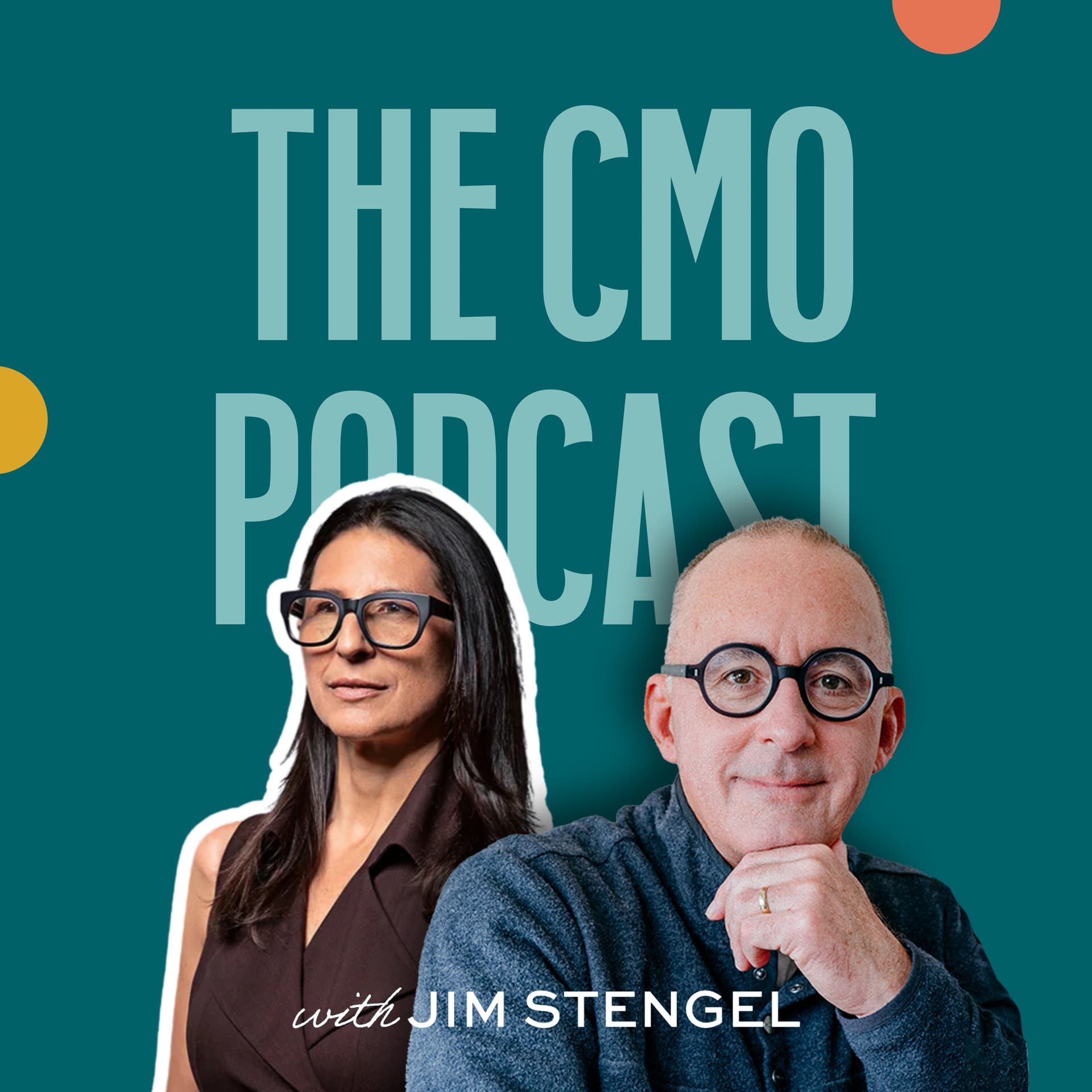
The CMO Podcast - Episode Summary
Episode Title
The Twin Cities CMO Roundtable: Marketing with Heart and Purpose
Host
Jim Stengel, former CMO of Procter & Gamble.
Guests
- Jennie Weber - CMO of Best Buy
- Martin Nance - CMO of Minnesota Vikings
- Jill Renslow - Chief Business Development and Marketing Officer at Mall of America
- Heather Malenshek - SVP and CMO of Land O’Lakes
Episode Description
In this live roundtable discussion, recorded at Best Buy's studios, the panel explores the unique marketing landscape in the Twin Cities (Minneapolis-St. Paul) and what contributes to its thriving business environment. The conversation touches on the importance of community, grit, and innovation within their respective organizations.
---
Key Concepts and Discussions
1. Marketing with Heart and Purpose
- The panelists share insights on how each of their organizations embodies a commitment to community and purpose-driven marketing.
- Heather Malenshek emphasizes the importance of championing farmers and the future of rural America through Land O’Lakes.
2. Transformational Leadership Experiences
- The panelists discuss career transitions and the lessons learned from moving across different roles and industries.
- Martin Nance, a former NFL player, shares his journey from sports to business, highlighting the importance of empathy in leadership.
- Jill Renslow reflects on her long tenure at Mall of America, focusing on innovation and digital transformation.
3. The Shift to Experiential Marketing
- The conversation centers on the transition from product-focused marketing to creating emotional and experiential connections with consumers.
- Best Buy's customer-obsessed transformation is highlighted as a significant shift in their approach to business.
- Mall of America's focus on creating "love moments" for guests emphasizes the experiential marketing strategy.
4. Community Engagement and Generosity
- Panelists discuss the strong sense of community in Minnesota and how it drives business success.
- Collaborations between corporations, nonprofits, and the community are emphasized as key to achieving impactful results.
---
Key Takeaways
1. Emphasis on Community and Purpose
- Each organization is deeply rooted in its community, leveraging local strengths and values to create impactful marketing strategies.
2. Importance of Leadership and Empathy
- Effective leadership requires openness to change, active listening, and the ability to foster strong team dynamics.
3. The Value of Experience Over Products
- Modern marketing is moving towards creating memorable experiences and emotional connections with customers rather than just focusing on product features.
---
Final Thoughts from the Panelists
- Heather Malenshek: Focus on being fluent in people, not just platforms.
- Jill Renslow: Take risks and embrace uncomfortable situations for growth.
- Martin Nance: Build strong relationships as they are key to future success.
- Jennie Weber: Stay engaged and present in each moment of your career journey.
---
Audience Insights
- The audience contributed thoughts emphasizing the importance of experiential marketing, deep listening, and the value of community engagement in brand building.
---
Conclusion The episode wraps up with a reminder of the significance of integrating heart and purpose in marketing strategies, focusing on community involvement and the experiential shift in consumer engagement.
For more insights, listen to the full episode of The CMO Podcast available on major podcast platforms.
Written by AI. May contain mistakes. Listen to the episode to check what was said.
Transcript
Automatic transcript. May contain errors.0:00Hey, it's Jim. I'm here with Matt Spiegel, EVP of True Audience Growth Strategy at TransUnion. That's quite a job title, Matt. Yes. Welcome. Thank you. So tell me about your company and why it matters for our audience CMOs. Well, listen, Jim, the challenge of the day is that there's so much information about consumers out there and the challenge is most companies don't have all that information. You have some purchase history, you maybe have some web history, but you don't have a full picture of customers. We're working really hard across on a suite of identity products, of audience products and measurement products to bring a holistic view of customers to marketers.
0:30So when CMOs work with you, what light bulbs go off for them? So Jim, we help brands bring clarity from chaos. We help them understand a picture of their customers with a 360 degree view in order to for marketers to make bigger, more strategic bets. Well said, Matt. Learn more at transunion.com slash clarity. That's transunion.com slash clarity. Hi, it's Jim. Joining me is Matt Spiegel, EVP of True Audience Growth Strategy at TransUnion. Matt, we talk a lot on this show about building brands that people love, But that starts with understanding them, right? Jim, absolutely. Every customer ultimately has a story, but most brands are only going to see part of it.
1:07At TransUnion, we really focus on helping marketers connect those dots across devices, across channels, across platforms, with the goal of helping marketers see a full person behind the data. That clarity is gold. That is special. So how do you do it? Ultimately, we put together the pieces of information that help you predict behavior, help you personalize messages, prove the impact of every marketing decision at the end of the day. And our marketing solution suite gives brands the visibility and confidence to invest smarter and ultimately grow faster. So if you want to turn data into understanding and understanding into growth, visit transunion.com slash clarity.
1:42What if the smartest marketing play is not to move forward, but to zoom out? Deloitte believes the most powerful move a CMO can make is to look beyond the next step and see the broader perspective. That's what the Deloitte CMO program is for, a place to gain fresh perspective and connect with leaders who've stood where you stand. Together, Deloitte will help you see the bigger picture so your next move isn't just fast, but right. Learn more about the CMO program at cmo.deloitte.com. You can be fluent in platforms, but you have to be fluent in people as a marketer, which I think is really important because a lot of younger people coming up are trying to, like, I want to focus in on this or that.
2:20If you focus on people and you're fluent in people, you'll be successful. Hi, I'm Jim Stengel. I've helped hundreds of major brands discover and activate their purpose. Because when a brand's purpose is clear, compelling, and authentic, profit naturally follows. Each week, I welcome the CMOs, the chief marketing officers of your favorite brands, to speak to how their job is so much more than marketing. These leaders share their inspiration and challenges, along with how they try to build a full, healthy, and happy life in and out of the office. And it's that energy that reaches everyone they touch.
2:56And we're glad you're here to feel that energy and to learn from these remarkable leaders. So here we go. They call it the land of 10 ,000 lakes, but I think it might also be the land of 10 ,000 great brands. Welcome to an extraordinary live roundtable edition of the CMO Podcast. Today, we're in the Twin Cities, Minneapolis, St. Paul, to try to answer a big question. What's in the water here that's helped so many companies thrive for decades? I'm joined by four powerhouse marketers who are shaping some of the region's most iconic brands. First, Jenny Weber, the chief marketing officer of Best Buy.
3:30Jenny is leading a customer-obsessed transformation, bringing digital innovation and human connection together across one of America's top retailers. And second, we have Martin Nance, the chief marketing officer of the Minnesota Vikings. A former NFL wide receiver turned CMO, Martin is shaping world-class fan experiences on and off the field, from building year-round engagement platforms that connect fans to the team, to elevating U.S. Bank Stadium as one of the premier destinations in sports and entertainment. And third, we have Jill Renslow, the Chief Business Development and Marketing Officer at Mall of America, which is the largest retail and entertainment destination in North America, attracting more than 40 million visitors each year.
4:10Jill leads the charge for new entertainment concepts, global brand partnerships, and community-driven experiences that is keeping the mall both a cultural icon and a shopping hub. And fourth, we have Heather Malinchak, SVP and Chief Marketing Officer of Land O 'Lakes. Heather is reimagining marketing for a century-old cooperative while championing farmers, food, and the future of rural America. We recorded this conversation live at Best Buy's state-of-the-art studios, and what you'll hear is a candid, inspiring dialogue about the grit, generosity, and community spirit that make Minnesota business so unique.
4:45From leading with empathy to embracing cultural conversations to finding purpose in community impact, this episode is full of insights on what it takes to thrive as a modern marketing leader. So let's dive in. Well, welcome all of you to this inaugural CMO Roundtable, Twin Cities Roundtable. It's a great idea. This is a pilot. We may do this around the country, so we'll talk about that later. But I have to start by saying that we're recording this on a Monday, and that is the day after the Lynx won last night in the semifinal of the WNBA playoffs. And the Minnesota Vikings absolutely dismantled my Cincinnati Bengals.
5:25Woo! So, Martin, couldn't you have done the mercy rule or taken a knee or run the clock? That was so bad. Yeah, you and I, we should have negotiated that on the front end, but here we are. Now I know. Congratulations. Thank you. It's a great win. So, this idea, as Andrea said, came when we had our show in January, I think it was. So, many, many years. Around CES. Right, right after CES. And so, we just said, wouldn't it be cool? And wouldn't it be fun? And we had this amazing studio and we'd love to host you. So, you know, we often talk about that stuff, but we don't do it. So thank you, Jenny, for making it happen.
6:01Here we are. And it's so fun. I did Dave Snyder before this with Red Wing. Incredible. So, and I have all day tomorrow interviewing one-on-one, but we're kicking off with this amazing panel. So I listened again to the show we did. And at the time we were recording, you had just dropped off or recently dropped off your youngest son to college. So we were talking about that. I just want to ask, how did year one go? And is he going back for year two? My woe is about becoming an empty nester. He did go back for year two. And by the time we got to the end of the summer, I was actually welcoming his departure back to his college life and freedom.
6:45And then the other one that graduated came back. So we're like partial empty nesters. They just come back, which is great. We talked about that tough transition. I reflected on mine when both of our kids went to college. I would like the panel to introduce yourself by talking about a transition in your life or career that you went through. We talked about it was hard. Your identity was a mom and all of a sudden they're out. So I'd love the rest of the panel to talk about a transition that you went through in your career slash life that you learned a lot from that was challenging. And I think it's a great way for everyone to get to know you a bit.
7:23So, Heather, why don't we start with you? A two-time guest on the CMO podcast, by the way. So my name's Heather Malinczak. I am the Senior Vice President, Chief Marketing Officer, Landa Lakes. Catherine's in the audience, so I have my right hand here. I've been at Landa Lakes now for five years, which seems absolutely crazy. I joined in the middle of COVID. My career really, so if I think about a transition where I learned the most is I started my career in the airline industry and thought I was going to be a lifer at British Airways for the longest time and then decided I got too comfortable.
7:54So why not go and try the agency side, which everybody thought it was crazy because nobody goes from client to agency. Usually it's the other way around. And it blew my mind. So I moved to the US about 27 years ago now. Took a shift into the agency side of the business, was working with financial services clients when I really didn't understand how things worked in this country. So learned a ton that way. Really went from a very corporate culture into a super creative culture. Worked mainly for Omnicom agencies. A lot of my former friends here, not former friends, you're still a friend. But met some amazing people actually that are friends today and so learned a lot through that process and then went back client side, formerly Harley Davidson and now with Land O 'Lakes.
8:40So I think it makes me a better client. I think it makes me a better marketer. And I went through beer business and pet food and candy and gum and all sorts of great things. So I've had a great career. I'm really enjoying Land O 'Lakes now and excited to talk with you guys about it. Super. Jill, how about yourself? Well, from a personal perspective, I'm also a newly empty nester. So I have two young ones in college, loving life as an empty nester, getting used to that new lifestyle. But as far as my day job is Malt America. So that small building down the road in Bloomington, Minnesota, 5.6 million square feet.
9:18I started there as an intern 28 years ago, and I've been there ever since. So I have a different story to tell as far as being able to find my passion right out of the gate and really finding a venue that allowed me to ask the question, what if every day and to really encourage the team to think curiously of what's possible and really having an ownership group. We're family owned. So being able to have the agility to try new things and to constantly work with different brands. We have 500 brands in our building. So to be able to be the house of all those brands to live and thrive and to try new things.
9:51And I would say one of the pivotal parts for me was really developing our digital marketing team and really look at innovation from a retail entertainment complex. And we've been experienced since we opened 33 years ago. But to be able to constantly reevaluate and keep the building fresh and making sure that every single visit was fresh and exciting for every guest that came through our doors was my challenge every single day and continues to be a day. So I surround myself with amazing people, not only in our building, but in this community. And it really allows us to thrive each and every day.
10:21What's the single biggest reason that you have stayed so long at Mall of America? The change. The change in the people. I love who I work with. It's my family away from family. We all spend a lot of time at work, and so I love the people that I work with. But it's just always knowing that every day is going to be something new is really important to me. So, Martin, we'll stop talking about the game. Want to talk about the Cincinnati Reds? Martin played football near Cincinnati, right? I did. I did. Miami University is where I kind of planted roots after leaving for college and had a great time there, great experience, met my wife there.
10:56So we are we are Miami mergers for those who know. But yeah, transition has been such a theme of my journey, you know, playing college football and gearing up for what I was anticipating would be a career as an accountant coming out of college turned into actually a career as a professional athlete. I got a chance to continue on and play in the NFL. I played with the Buffalo Bills. Then I had a great stop here in Minnesota with the Vikings really just shortly after the Will family purchased the team. And then I continued on, actually followed Mike Tomlin over to Pittsburgh, where I was a part of a Super Bowl championship team.
11:36So just an outstanding experience and, you know, got a chance to interact with some terrific people along the way and realized, you know, it was time to start real life and start a career after the game. And really, that catapulted me into what would be a really significant transition. You know, I left the NFL and went to business school, spent a couple of years in Ann Arbor, where, again, just really got challenged and pushed in a completely different direction. I plugged in with PepsiCo and then a career in marketing kind of sprung out of that transition where I stepped into a role at Gatorade.
12:14Thought it'd be a couple of years and it turned into nearly a dozen years just working with terrific people there at PepsiCo and some great marketers that I had a chance to work and learn alongside. And that was just so much fun for me, you know, to really grow up as a traditional marketer, but on a lifestyle brand before then getting an opportunity to return to a team where I played. So to come back to an organization where, again, as I said, the Will family has been terrific. You know, they just they understand business. They understand people. They understand how to build brands and businesses.
12:53So to be able to step in as chief marketing officer, I serve as executive vice president and chief marketing officer at the Vikings. And this is now my fifth season. So it's been just a lot of fun, surrounded by terrific people. And we continue to try to build on the great legacy that's there. And each and every day we try to figure out how can we continue to raise the bar and impact this community in a really positive way. So we have terrific partners here in the Twin Cities. That's really what helps to drive much of the work that we do. And we're excited about, you know, the next challenge that's coming down and look forward to taking it on.
13:32How are you a different leader from those years at Pepsi? What did you pull forward from that that's helped you today? You know, transitioning from the CPG world has been such a fun challenge for me, you know, to take the core tenets of putting the consumer first and really being thoughtful about who you're trying to reach and how you want to connect with them, to take those kind of fundamentals and overlay it with the work that we do with fans and with our partners and with the broader community here has been really a lot of fun. So I think for me, it has really helped me to be very empathetic, you know, having been a player, having also, you know, grown up as a fan of the sport, But then also thinking about how you really get into the details from a marketer's point of view has really just been a fun challenge, something that I continue to try to grow in and learn.
14:25But for me, I think coming from a place like PepsiCo has forced me to really be grounded in the details and the fundamentals, lean on data and analytics and think about how we apply that to a completely different landscape. So, Jenny, your reaction to these three transitions? I think they're all amazing. And I'm just so privileged to be on the stage with all of you. Jill, I am now also embracing and enjoying being an empty nester. I just had like a little hurdle to get over in doing so. And I love hearing about your experience at PepsiCo and the foundation that you got. I do really think that packaged goods marketers get such a strong marketing foundation.
15:04I see that in my team when we bring folks in from packaged goods. They just really understand how to bring consumers into it, can really think about it almost as a P &L and understand the growth that they're driving for the brand because they're true brand managers. And so I think that's an excellent foundation. So I love hearing that that's where you came from and how you're pulling that into the role that you have today. It's fantastic. Yeah, thank you. It's a lot of fun, but also you have to be mindful of the unique challenges that are represented in the work we do. So yeah, no day is the same as we all can appreciate, but enjoying it.
15:47We all want to stay ahead of the digital curve. And IAB, the Interactive Advertising Bureau, invites you to do just that at the 2026 IAB Annual Leadership Meeting in Palm Springs on February 1st through 3rd. If you're a qualified consumer brand or agency leader, you can access free passes and travel vouchers. And for everyone else, you can take$500 off your ticket with code ALMCMOPOD26. This is your chance to join a three-day gathering of the industry's brightest minds and boldest voices shaping the year ahead. You'll hear agenda-setting conversations, candid fireside chats, and dynamic breakouts on the topics that matter most, from AI and commerce media to measurement and addressability.
16:31This year's lineup concludes everyone from Kevin Bacon and Bozema St. John to creator Remy Bader, along with leaders from Forbes, Major League Soccer, General Motors, and Meta. Visit IAB.com slash ALM to learn more and check out the link in the show notes to register and receive$500 off your ticket.
16:54So back to the show you and I did earlier this year. You talked about how much you loved the Upper West and Upper Midwest. You spent your life in different cities in the Upper West, Upper Midwest. We talked about how special this area is. So, I mean, one reason we came here, you invited us, and we're delighted to be here. But it's also the number one city in the U.S. for Fortune 500 concentration per capita. So, I want to talk about this area in terms of, you know, building a business and building a brand and building a team. There is something special. We were talking in the green room before we came out about there is something special going on here that I think a lot of other cities and regions could learn from.
17:33So, Heather, you're the oldest company on the stage. Yes, oldest company. Thank you for the clarification. You're not the oldest on the stage. I've got you on that. Possibly. But you have the most heritage of all the organizations in this stage. Your company is 100 plus years old. Why don't you start commenting on what is it about this area that generates this growth and these businesses and these great leaders? Yeah, and I don't know that people recognize that with your point around Fortune 500 companies, right? And I didn't realize that until I started talking to Beth Ford, our CEO. I think there's two, maybe three things I think are really characteristics of this area.
18:11One is grit. I think there's a lot of grit in this. I think there's a combination of wonderful legacy brands like ourselves and then scrappy startups as well. So you've got a lot of innovation happening there. And the grit, like not being funny, but the weather in the winter is tough, right? So what I love about people from Minnesota, though, is they completely embrace the season. Like they really make the most of it. And summers are beautiful. But there is a grit and a resilience to people here. And there's also a tremendous amount of generosity. And I know we talked in the green room a little bit about the heart that's here.
18:41I see and I see this on my team and within our company I mean we're a farmer owned cooperative so we're all about community but I feel that people here are community builders they're they build with a lot of intention behind that there's a lot of heart there and I think they how I would describe marketing here is about storytelling and impact it's not just the storytelling piece of it so I love the people in Minnesota and I our brand was founded here and all of that is in our really in our DNA, which makes it a really special place to work. Well, I couldn't agree more. We did talk about the heart.
19:15I think we all, as leaders within this community, lead with our hearts and doing the right thing. I'm a true believer in companies do well when they do good. And I think that we all take a lot of pride in what we do in Minnesota. We can do it together. So I think the collaboration across corporations, nonprofits, the community really find this unique intersection of success, because when we're focused on that final result and goal together, we're going to conquer the obstacles together and make it possible. You know, at Mall of America, we do a lot for the community with regards to hosting events.
19:46When it is cold outside, a lot of people want to come inside, do walks, raise money, raise awareness. We grant a lot of wishes for Make-A-Wish. We do a lot of philanthropic efforts, especially in our theme park, because we can gift that to organizations to really come together, have great community energy and be able to smile together, which is really important. So there's a lot of different things that we can do. But I think the number one component that we can bring to the table is the asset, the space for people to come together and do well. I would say the Vikings, we're very fortunate that we get to interact and engage and partner with so many terrific organizations around the Twin Cities.
20:24And as was stated, this is a community that truly believes in giving and generosity is really something that serves as, I think, the bedrock of the community here. And we think a lot about how we utilize, again, the platform that we have and how we can do good work through the platform that we have. And so it's great to have big, exciting games and people celebrating football. But thinking about how you translate that into driving meaningful impact is something we take to heart. So it's great that we have outstanding organizations that have tentacles in so many different parts of the community.
21:03And we can stand alongside them and get creative around how we can solve problems or how we can create awareness for different initiatives. And again, keeps us on our toes. It means that there's always a new challenge to jump into and be thoughtful about. But it also, I think, is a reflection of just the attitude and perspective that the community typically brings when we're facing a challenge or we're thinking about how we can build something bigger and better together. Jenny, you're kind of my co-host, so I'll have you react. But do you have a story that kind of is emblematic of everything we're just hearing about the grit and the community and the generosity?
21:42I do. I love that you asked this question. When you're all walking through here, you will notice that there is a very large tornado built out of speakers on the wall. So it's an art installation. And really the story is that back in 81, there was a tornado that ripped through the Twin Cities and destroyed one of the locations of Sound of Music, which is what Best Buy was formerly known as. Interestingly enough, it really is what ended up creating what you know today as Best Buy, because what they basically had to do was sell all this product. So they pulled it all out and let customers come in and just see the product, which was not how consumer electronics were sold back in the day.
22:28And in doing so, created this moment where they called this sale the Best Buy sale, and it ended up really becoming what Best Buy is today. And I think, you know, Dick Schultz was an incredible entrepreneur. He really understood customers. He wanted to know how the company could change. And I think he saw that as a moment and said, this is the future of retailing. And to me, that is the ultimate grit. I mean, he sort of took something that could have been the end of his business and turned it into a massive opportunity and I think is very illustrative of what we've just all been talking about, that grit and ingenuity that comes from those moments.
23:04I was thinking before this interview about what we could talk about that you all would have an interesting point of view on. And I came up with one commonality. I mean, you're in different industries, you're different people, you have different backgrounds. But as I think about all four of your organizations, you have shifted over time from, I would say, a traditional product, service, benefit kind of approach to marketing to a much more experiential form of marketing, much more expansive, much more emotionally resonant. So I think you have all been part of that journey in these organizations, some longer than others.
23:46And that's a very powerful shift. And it's a very difficult shift. So I would like you each to reflect on that. Do you agree that you share that in commonality? And if you do, I would like you to share with our audience a story about that shift that we could learn from. So because, you know, you're all different levels of that. begins with a customer, consumer fans, of course. But tell us a story about you as a leader, your team as a leader, and how you have helped accelerate that move to a much more experiential approach to your marketing. So who wants to start? I'm happy to start. Yeah, you should, Mall of America.
24:32Happy to. We are a destination for experience, but it's important to continually re-event. You can't just sit and let things get stagnant. And I think what's important is our mission and vision is about creating love moments for every guest at every visit. So it's about, you know, whether it's the connection with vendors, if it's the connection with the guests that walks to the door to make sure they get the perfect outfit to walk out the door, or if it's with a family that has kids and those kids finally turn 48 inches tall and they can ride the ride by themselves, like that's a love moment. And we want to make sure that our employees are, you know, armed with the tools and empowered to be able to make those love moments happen.
Read the full transcript
25:08I would say one of the biggest love moments that we have is Black Friday. And there's some people that like cringe as I look through the audience, like, oh, Black Friday, there's so many people. But it's where at Mall of America is where Black Friday refuses to die. Like we have an amazing experience and people come, yes, for the deals, the doorbusters, but it's different today than it was years ago. And we open our doors at 7 a.m. to thousands of people that are waiting in line. The first people that wait in line are there like Thanksgiving afternoon. We don't, We're not open on Thanksgiving, but they will wait because they want to be the first ones in line because that has become a tradition.
25:43And traditions, as nostalgic as traditions are, it's important to keep those moments because it's for generations to enjoy from one generation to the next. But it's about keeping it fresh and exciting and for them to have something to look forward to. And so we open our doors and we have amazing promotions and interactions. And for the first hour, we have 10 ,000 people in our doors with about 250 ,000 people for the day. And so it's something that's really important for us to deliver, not just the transaction, it's about the relationship that we've built with our guests over 33 years and the tradition that we continually will bring to them year after year.
26:20What's the biggest difference in the mindset of your organization from when you joined to now? I would say just having that openness for change and agility to constantly evolve based on what we're learning from consumers. Our guests are our North Star, so we want to make sure that's something that's true with all brands. You always want to listen to your guests. But I think even through social media channels, being able to have those conversations and build those relationships, it's about emotional loyalty and building those relationships that will last and be able to take that input and be able to react to it.
26:50And back to the fact that we're family owned, it allows us to have that constant change and agility to answer and respond to customer requests. I mean, one of the biggest challenges we have is parking because on weekends, people complain about the parking. We love it. That means we're really busy. But we put in a park assist, the technology to have the light indicators in our parking ramp, something simple. But our guests love it. And it was like, you know, we complain. The mall listened. We put in the solution. And it's great. And what's really funny is we put it in during the holiday season years ago.
27:21And people thought we were decorating our ramps because they're red and green lights. Like, yes, we add flair everywhere throughout the mall. But it's been great. You listen to your guests and you can change and evolve as you need to. Heather, why don't you weigh in? And I know we have talked many times about your concern about rural life and being a key player in helping that move forward, helping people be more, I don't know, understanding that part of our culture, that part of our country. So could you talk a bit about the shift at Land O 'Lakes, including that? Yeah, and farmer-owned cooperative, right?
27:55And you'll hear that if you ever sat in one of our executive meetings, you'll hear this phrase over and over and over. Our success starts with our member success. So everything we do is in service of the people who own our company and their families and the communities that they serve because they have a tremendous impact there. What we understand from research we've done and also just knowing because we operate in rural America that rural America is misrepresented, certainly misunderstood. And it's, you know, this country is very divided right now and it just continues to show the divide. So we're launching a partnership next month, which our comms team, I don't think they're here, but they would kill me if I said anything about more than this.
28:31But we actually looked at the visual imagery associated with rural America. And it is stark in terms of the contrast between if you look at a young person in rural America versus a young person in an urban environment. So it just continues to perpetuate the stereotypes. So a lot of the work we've been doing at the enterprise level is to get out there and talk about why you as brand should care about these people who are living in rural America. And not just that, but their values are very similar to people who live in the rest of the country. And so we're not that different. And there are many wonderful things about rural America.
29:04And in fact, I talk about myself being here for 27 years. These are the values that live in rural America are the reason I came to America in the first place. It's all around community. It's around neighbours looking after neighbours and doing things for good. So we're trying to build the awareness around that. And actually, we're just now starting to work with some real culture shapers in film and entertainment and in the music industry to get our message out more broadly as well. So it's a very important part of who we are. And our brands, our portfolio of brands, including our dairy brand, Land O 'Lakes, and our animal nutrition brand in Purina are all linked into how we support that and support that rural lifestyle, which is so important for putting food on your table, which people forget sometimes.
29:47So it's been, I will say, I think the generosity of our CEO, Beth Ford, which affords me the time to go out and actually talk about a lot of these things. And it has an impact on not just our brands, but impact on our member base and then impact on our employee base, which I think are pretty proud of the fact that we're actually out there advocating. So it's really awesome. How do you feel about that impact on your business, on their business? Yeah, so I think many people don't know we're cooperative. So when we tell the stories of our farmer owners and who we're supporting, that has made a big difference.
30:21I mean, we're working in the dairy foods side. We're working in a commodity category. So brand is super important. And there's a lot of noise in the category, too. And the fact that we actually directly benefit farmers based on buying our products, not only are they amazing products, but they're actually representing farmers. We know from that fact that it actually lifts preference for the brand. So it serves overall. Jenny, I won't have you go last this time, but you have had a massive transformation here. I mean, we're sitting in the middle of it. So could you speak about that shift here from products, benefits, services to an experiential mindset?
30:56Well, I mentioned, I talked a little bit about Dick Schultz, and I think he very much had customer focus in his DNA. And so it is part of Best Buy's DNA to be very customer-led. I do think about five or six years ago, we had a very on-purpose moment to become what we called customer-obsessed and really lean in and have customer-driven decisions every single day. In fact, when you walk into our corporate headquarters, the first thing you see on all the staircases is the customer at the heart of everything we do. And even in our conference rooms, there are questions that say, what does the customer need?
31:33And so really pulling that into the tactics that are thought about every day has been a monumental shift. I think the second thing I would call out related to customer and experience is it's led by our executive team. They are constantly obsessing over the customer and asking that question. And when you see that happen at the executive level, you start to see it happen with all the teams. It really has to be driven from that level of leadership. And we see it every day. I would say Corey Berry is without question our number one customer advocate, thinking about how do we make the experience better in our stores?
32:07How do we make the experience better with the products? Our team, our buyers do a lot of work with consumer electronic vendors, talking to them about this is what consumers are asking for. This is what they really need. And so that's also influencing outside of Best Buy, which is really exciting. So, Martin, the NFL, to start with that, I mean, you're part of the NFL. You're a great franchise. I mean, the league wasn't that healthy 10 years ago. You know, the fans' base, the ratings were down. You weren't attracting new, diverse fans. I mean, the turnaround on that in 10 years, and you've been a part of that.
32:41What could we learn from what the NFL and the Vikings have gone through in terms of, I think, turning the table and becoming, I mean, one of the most vibrant brands in the world? You mentioned some challenges, and you kind of hit some bumps in the road. And I think as marketers, we all have been in those moments where you have to decide, OK, do we double down and kind of drill down harder the direction we're going? Or are we willing to make some adjustments and pivot and listen to the fan or the consumer or the customer in different situations? And I think the NFL did an outstanding job stepping back and having a willingness to listen.
33:22Right. And you see them thinking about player health and you think see them investing in ways to make the game safer and making adjustments to the rules. They've been investing in big ways to think about how we invite more people into the game, whether it's through the terrific initiatives they have with girls flag football and growing that game and thinking about how they engage the Olympics and really the world in terms of inviting people into the sport. So that, I think, has been just really, really well done and something that the league continues to look at and have a willingness to make some adjustments, in some cases even on the fly, to make sure that we're responding to fans and, again, welcoming and inviting more fans into the game.
34:08As an organization, I think there have been some really fun examples as we think about how we pull our fan base together and give them a sense of belonging and a sense of connection to the organization and to the team. Something simple or a very tangible example is the Skull Chant. You know, if you've been to a Vikings game, you've seen the Skull Chant. And that's right, Heather has often been one of the leaders when it comes to the Skull Chant on a Sunday. So we appreciate it. It really is so fun. That's right. You know, it's an opportunity for each fan to contribute, to be a part of something bigger than themselves.
34:47And so that's been just, I think, an outstanding way to give everyone an opportunity to plug in something. Another really fun and interesting activation that we've really tried to build off of is something that we reference as the Winter Whiteout. We thought about younger audiences and really tried to do some research around what it was that they were looking for when finding a team or identifying a team. And one of the things that we noticed is, you know, as the younger generations, they obviously digital and social and they've got technology and all these different things pulling at their attention.
35:24but at our core, really for all of us, we want to feel a connection and we want to feel that sense of connectivity to the people around us. And so we thought about how we can really create that feeling and really that visual in the stadium. We first started with a launch of a new uniform, which of course takes several years and a lot of work with the NFL and our partners at Nike, but we brought to life a white jersey that had never been done before. We invited fans to wear white to the stadium. And we thought, well, should we put t-shirts on every seat or should we, how do we make sure that this turns into a success?
36:05But we also were willing to rely on the fans and give them a chance to show up and be a part of it. And boy, did they ever show up. And it's been so much fun to see that build and grow. And over the last three years, that's been just a massive success, something now as a team we look forward to every year. How can we take it up a notch and build on it? And this year will be no exception. So that has been a lot of fun, but I think it truly is grounded in kind of the fundamentals of experiential marketing. As a Penn State fan, I know the power of a whiteout. That's right. That's right. That's right.
36:42Well, you know, And even to that reference, people always talk about just the great elements of college football and just the authenticity that is there. And people talk about the difference between college sports and professional sports. And so we wanted to hear that and acknowledge that and think about how we pull and introduce some of that into our experience. So, again, something we're looking forward to building on.
37:16Everyone seems to be chasing the next big thing, the fastest answer, the quickest win. But great CMOs believe the real power isn't in the speed, it's in stepping back to see the bigger picture. That's why everything Deloitte does in their CMO program, from their industry-leading capabilities to their connected network of CMOs, is designed to help you zoom out and gain fresh perspective. Deloitte will help you see the bigger picture together. Learn more about the CMO program at cmo.deloitte.com.
37:50We're going to go to the audience in a moment for questions, but I have another thing that you all share, and I want you to comment on that. You're all very accomplished leaders, wonderful people, and I want you to share with the audience what you feel is your special strength as a leader. I know it's hard to do that, but I'd like you to do it, and something you're working on. I'll start. Okay, well, I think I'm a very heart-based leader. I care a lot about people. I care about the people I work with every day, partners, teammates. And so I think that shows up. And things I'm continuing to work on, this is a tricky one.
38:27I mean, I feel like there's a lot I'm working on all the time. Just a lot of self-critic in my head about things I can do better or ways I can lean in harder. But I think really trying to think about big, bold ideas and pushing into them without fear, which I think if you're a marketer and you are driving traffic every day or thinking about the revenue, that can be very difficult because you're also somewhat risk averse. And so finding ways to push in and find big ideas and maybe not be afraid of failure, I think is something that I am striving for. Thanks for your honesty. We're gonna ask you this question at the end when we're all done.
39:04Oh, are we now? I'm the co-host today, so we're just gonna turn the table I concede. I concede. Martin, how about yourself? Obviously, tough to answer a question about your own strengths. I think for me, I enjoy listening. I think I'm naturally curious. And so I enjoy listening to people's perspectives and thoughts. And I've had some great leaders along the way example and kind of model that to me, pulling the perspectives and the opinions of people often more junior in the room? How do you make sure that they have space and a voice in a conversation? And so that's something that I think, again, was shown to me very early on.
39:45Morgan Flatley at McDonald's can think of times when she was willing to, you know, find the most junior person in the room and encourage them to share their thoughts before anyone else was to kind of set the course. And so that has been just something that I try to model and something that I think I try to use as a strength. I think for me, in terms of areas where I'm trying to get better and grow, I mean, really trying to make sure that I'm thoughtful about investing my time in the right places. That is so difficult to manage and make sure that you're delivering attention or kind of allocating attention to all the right places.
40:24And so I'm just constantly challenging myself from a time management perspective, placing those moments in the calendar where I'm willing to start from scratch and reset the deck a little bit has been something I've been trying to be more disciplined with. Outstanding. Jill? Building off that for something to work on, I would say same thing, like really finding that time to find space to be able to just think big and be more strategic. I think we get caught up in our day-to-day so much, and I know I do personally, and you just, you're in meetings all day, you're caught in email, and your day is gone, and you haven't really had that time to really think big.
41:00And I love to be in that space. That's where I would love to spend more time. But I'd say one of my strengths, I think I'm a good coach. I love working with young people. And I think that just comes from the heart of starting as an intern and starting from the ground one and knowing where they're at and being able to support them and open doors and really helping them create a path of passion and to lead towards our strengths, but also within our team, just being a coach and really helping those people play towards their strengths. And maybe they're not in the position that's a perfect fit for them today, but how can we get them to that perfect fit tomorrow?
41:31So I love helping people navigate because I've really had a unique path myself. I haven't really climbed the direct ladder. It was more of a jungle gym. And I think that being able to navigate around different areas of opportunity allows people to see that light that's there for them to find their passions. Jungle gym career paths are good. They really are good. You learn a lot, and I think you're a better leader when you become more senior. I love that. Heather? So I have a Beth Ford, and I'm not just saying this because she's probably going to listen to this, but she is probably the best boss I've ever had.
42:03She's a very people-centric leader. So I like to think that that's how I operate as well. And I love what Martin said about connecting because I get a lot from connecting with all levels of my team. And it's really important for me to stay connected to everybody on the team so I can understand a little bit more of what's going on in the whole person and not just the work person. And I think that's really important and can invest. I also think it comes from in my career, I was really fortunate for having some people who called me out in a room to say, I want to know what you think because you're sitting there.
42:32What do you think? And I was like, I'm going to give people that opportunity. So so I think that's really important. And I think similar to what Martin and Jill are saying, too, is when to say no. And I think sometimes and, you know, I can take things on which then fall down to the team and, you know, it overloads the team. So I think just getting really precise and surgical about what we should and shouldn't work on is going to have the most impact. And I think managing some of that. Well, Jenny, shall we go to the audience? Sure. Do you want to answer that? You have to answer the question, Jim.
43:02I would say strength is, and I've learned this over time, I think I have a knack for helping people be the best version of themselves. That's evident. I feel like you bring that out in people. Oh, thank you. Through the podcast, for sure. But I think it's been a red thread in my career. And as people give me feedback and so on, who I've worked with over the years. And I'm conscious of that. And I think it's very powerful. And I don't get complacent about it. But I think that's a strength. what I'm working on, I mean, it's similar to this panel. I think it's part of who we are as CMOs. I am very interested in ideas and I like to keep options open.
43:45I like to look for the next best idea and be, and that the downside of that is focus. And so I think it's a challenge for all of us. Challenge for me. It was a challenge for me when I was P &G CMO, focus, focus, focus, And our people desperately want that. And if you're not focused, imagine what's happening in your organization. So I'm intentional about it. I know it. I work on it. I make lists. I say what I'm not going to do. I look at my calendar to be sure I'm spending my precious time in the right places as you are. So I think that's an ongoing challenge because I think we're wired to be curious.
44:22I'm so glad you shared. Thank you. Yeah, no, for sure. For sure. So let's go to the audience. And anything is fair game. So who are you and where do you work? Yes, my name is Catherine Fox and I work for Land O 'Lakes under Heather's leadership. So you all work on these amazing brands that have all had a long history here in the Twin Cities. And as you think about marketing, marketing's changed dramatically over the last 10, 15 years. What is the most important thing that you think marketers need to think about when they're trying to manage their brands for future relevancy? I'll tell you what we're thinking a lot about.
45:02I think being part of the cultural conversation, which is possible, maybe easier for some brands than others. But especially if you're a long tenured brand and you've been through a lot of transformation, I think figuring out like, what are those right moments where we have a right to play or right to have a voice where it doesn't seem like you're just forcing yourself in? that's really what we're looking for because I think when you're part of that I mean you get so much more reach first of all but then you're just you're in the culture and so I think finding those moments that's really what we're looking to do I mean I'm excited to hear what Martin has to say because I feel like you are in this like we're definitely leveraging sports as a way to be part of that conversation so I'm curious I would love to know how you're thinking about it.
45:47I think a unique challenge for us because sports is such a constant in our culture today. And it means that the great part about it is there's always someone talking about sports. We've got really a full year calendar of events and activations and fan engagement. But it also means you are right in the center of cultural conversation and you need to have a point of view. You need to have a willingness to take a perspective or take a stance or reinforce your values that you believe in. And so fortunately for us, several years ago, Andrew Miller, our leader on the business side of our house, has just done an excellent job helping us to really establish our values and make sure that we're very clear on what our mission is.
46:37And that has been helpful because, as I said, There's constant conversation that pulls you in different directions and will challenge where you stand on a particular issue or about a particular situation or person. And it's not our place to steer everyone the way we believe or in a certain direction. But you've got to have some grounding. You've got to have a North Star when it comes to conversations that, as I mentioned, we constantly find ourselves in the middle of. So that has created, I think, a unique challenge for marketers, for us as an organization. But I understand we're not alone in that.
47:15As leaders of brands and leaders of voices out in the marketplace, you've got to be willing to have a perspective and, again, have some footing in terms of where you stand on these issues oftentimes. I would agree on the alignment with values. And I think it's interesting for brands to evaluate when it is right to be part of the conversation and sometimes when it's right to not be. For Mall of America, we get pulled into conversations that we didn't ask to be part of. So just being part of a Minnesota icon, just for example, when our governor was running for vice president, just because it was Minnesota related, we got pulled into a ton of political conversations that we didn't ask for.
47:58So for that perspective, we don't need to step in and say anything. We organically let it flush its way out. But I think part of it is making sure your team is connected to what's happening in the world around you and understanding when it's the right time to lean in versus sometimes to lean back. But we oftentimes lead with action. We have over 300 events that we host a year, and we love to have cultural celebrations. We have every walk of life that comes through our doors every single day, and we want to celebrate them and their cultures and their backgrounds. And so it's really important for us to have a very diverse cultural calendar of celebrations and events.
48:35So we lead with action a lot of times more than words. And that's just what our choice is as an organization. I think we've had a very live conversation we're having right now in the company because we have these legacy brands and it's like, how do we continue to stay relevant? I think it's a lot of what we've talked about, right? As long as you stay close to your consumer and really understand what's going on. I had this conversation today with one of our business heads and said, like, I don't care if we're 140 years old, we can find a way to be relevant. Legacy brands can be cool as long as you really understand that customer and you find a way to connect that way.
49:07And there's a lot of good in the stability and the grounded nature of a legacy brand that you can be part of the cultural conversation and step in. So as long as you have that true grounding in your customer, I think you can be relevant. I was talking to David Redwing before this conversation. I mean, it is an iconic brand, work brand, but it's a hip brand. And I said, how do you do that? And he said, we don't force it. We listen to our customers. We watch. We observe. If something is trending, we nurture it. We don't overmanage it because they want to be authentic to who they are. But it was a great perspective.
49:41But it is totally possible.
49:50Hi, everybody. I'm Andrea Sullivan, the CEO of Vive, and we have produced the CMO podcast with Jim Stengel for many years. And I'm sitting in his seat right now. It's so exciting. I wanted to tell you a little bit about one of our programs. It's called Vive by Vayner. It's a 12-month program that's designed for C-suiters and founders. And we want to help people to grow their businesses, but also to grow themselves. And so we bring in people from Shark Tank to talk to our founders, but we also focus on wellness. We want to make sure that people are leaning into becoming their best selves, their best and happiest selves.
50:30So if you are someone that wants to learn how to grow your business and grow yourself, check us out at Vive.co. That's V-Y-V-E dot co. We'd love to talk to you.
50:47Hi, I'm Dan Jasper. I work at the Candy Cane Institute at Mall of America with Jill. And mine's kind of a two-part question, if that's all right. You all have some very amazing careers in marketing. I would like to know, looking back on your career, what skill or area of focus do you wish you had spent more time perfecting as a young person? And as you look at the next 10, 15 years of your career, what are you looking forward to developing? I can jump in on that one because one of the things I often think about as I look back on my career and think about the future is recognizing and acknowledging that there are moments in your career that you just will never get back.
51:34And you get a chance to do certain work or get into certain details or interact with certain parts of marketing that as you climb the ladder, as people reference, you get further and further away from. You know, and I can remember back when I led creative work and got a chance to lead commercial shoots and I was in the weeds of the production and truly the kind of details of the creative. I really, really enjoyed that and had so much fun doing that and learned a lot. And fortunately, it went well and you get an opportunity to step into something bigger and better. But it also means you will more than likely not get to do that thing again.
52:15And I think, you know, we oftentimes think about a career as success is always moving up and bigger and, you know, bigger title and more responsibilities. But it can also mean that you are further away from some of the things that you really enjoy. And so I try to encourage people to really cherish where they are. As they say, you know, be where your feet are and really bell the roses. Do not be in a rush. And that's hard to do. I can definitely appreciate that, but being present and really appreciating where you are in that moment is such a powerful way to navigate. I think hopefully we all, myself included, can do more of that.
52:56We get a lot of discussion on our function about closeness to the CFO and the CEO. A lot of CMOs say, I wish I had spent more time understanding financial strategy, financial management. Would you agree with that as something you'd want to build if you had to do it over again, build even stronger? and then we'll get to the second part about what about the future. No, I would agree with that. I think spending more time because I feel like in the marketing space, you're definitely more in that creative realm, the brand of the organization versus from the performance number side of things. I would probably say, I wish I would have spent more time there, but I also look back and I'm like, if I didn't do what I did yesterday, I wouldn't be where I'm at today.
53:34So I think everything happens for a reason and those stepping stones. And I was always very assertive to raise my hand for those opportunities, knowing that I might not look back and be able to step back where I was, but I knew that there was new opportunities for me to try new experiences, new responsibilities. I mean, I would say looking forward, it's just being able to take what I've learned and share that with others through different platforms, whether it's through podcasts, through speaking engagements, speaking to classes in the educational industry. I feel like just sharing those best practices is in my DNA, and I want to be able to share that with others.
54:09But I think everything happens for a reason. And I would agree with that because that's what I was thinking about after your question. I think what I've ended up doing because I feel like I always need to learn more and to be able to speak the language of the CFO. I've done my own like probably in the last few years, really dived in to really understand more in that space. And I wish I'd probably done that a little earlier, but to your point, then maybe I wouldn't have landed where I am. So that's a good thing. 10 or 15 years. Good Lord. I hope I'm not working in 15 years. But if I am, I think, well, and I'm actually doing it right now.
54:43And it's actually pretty exciting is just really diving into the world of AI and technology more than I have in the past to see how I can use that personally and professionally. And I think I'm driving the team mad right now. I'm like, are we using Copilot with this? We should be doing this. But it's really, it's new space for I mean, it's exciting. It's, you know, it's, there's a lot of fear around AI, but it's also going to enable us to do work even better. So I think it's that mix of human intelligence and artificial intelligence, but that's, that's been pretty exciting journey for me. What I hear a lot on the show when I interviewed people every week is, I don't think we spent enough time on, it's back to the point where we get caught up in our calendar on a day to day and so on, on competitive strategy.
55:24You know, do we really have a proposition that is going to lead us to win? and what's around the corner, you know, are we differentiated? And if you're not doing that, I mean, it's not going to end well. And the second one is building a team. And I think the four of these people here, I suspect have built great teams. You don't build a great team. I mean, you will not succeed. I've seen so many CMOs be fired because they did not build their team. And that's a skill, building, nurturing, maintaining, growing, stretching, supporting. So I think that is a critical one. And I don't think enough people spend enough time on that.
56:04I think this panel is likely an exception to that. But if I were to think about a skill AI, of course, but competitive strategy and building a team. Agree. I think interesting on the competitive piece, I think as marketers, if we're not thinking about what differentiates us in the world. We're probably not doing our job well. I think in doing so, you have to understand the competition. I think there's some really fun things to do. We've done war gaming. We do quite a bit of analysis around it. We're in retail, so we're constantly looking at what other retailers are doing. And I think we get some of our best ideas that way.
56:37I think it's a smart thing to be doing. I think it's also good on the competitive side. And from my experience at Harley was, we didn't necessarily look at it as there's a motorcycle company that's in the area, I won't mention. So we didn't actually look at it as them. It was actually boats and RVs and other things that take people's disposable income, particularly things that were more family oriented. So I think it's a really good point though, because we can sometimes get either too blinkered or don't pay enough attention to that. Let's stay on the team piece. I'd like you each to share a hack or a habit that you have to build and develop a fantastic team?
57:14It can be something simple, something mundane, something profound, whatever. But what's a hack that you have? Because I suspect you're all pretty accomplished at building and motivating a team. Something simple is move as a group. I think about my team, you know, the members of my direct team all have significant responsibilities and teams of their own that they're working hard to lead. But the more time we can spend together and navigate questions and challenges and think and talk together, the better off we are. So instead of allowing each one of them to kind of go into their separate corners and do their work, we really try to rally together and talk together.
57:53And if we see something, we're sending a group text to one another and we're batting around different ideas as a group. I think that has been really, really helpful for us, something that is kind of simple on the surface, but it just brings us closer together. It helps us think in ways and exchange ideas and challenge one another on the fly in ways that we wouldn't otherwise be able to do. So that's been kind of a simple hack that I think has been helpful. Yeah, I would agree. I think, you know, you work hard, you play hard, have fun together. I think it's important to always take time to celebrate your accomplishments and your achievements because we always are moving on to the next project so quickly.
58:33But it's take that pause and making sure that we're recognizing folks and celebrating what we're accomplishing. but I think it starts with hiring the right people. We always hire people that fit into our culture. We have four core values. It's doing the right thing, a can-do attitude, being compassionate, and being a brand ambassador. And if you check all four boxes, you definitely fit within our mold. But we also have to find people that want to come in the office. Our offices are attached to our property. And so we want people that are there and we want to have that balance culturally that our operations team, security, maintenance, housekeeping, they don't have the opportunity to work from home.
59:05So we want to make sure the marketing side of the house balances that out. And then it's fair that we're all there together because we're usually problem solving in the moment. And so we want to make sure that we can work together. So finding people that want to work in the office is also a challenge these days. But when we find the right people that check those boxes for us, it's usually a great win for all of them. I was going to say, just building a little bit on Martin, which is we completely redesigned our marketing organization this last year. And it was around the power of the collective.
59:29So rather than having teams working on one thing in an isolation, now everybody are reliant on each other and coming together to actually make that work, which I think is good. And then just what Jill said, so I look for cultural complement rather than fit, because I think sometimes that the alchemy of the team, when you build the right alchemy of the team, it's very easy to find people who knock that off and then they shouldn't be there. But when you get that right chemistry with people bringing different things to the table, I think it can be good as long as their values are granted and your values right.
1:00:00That parallel is kind of so tangible for us as a football organization. You know, we think about building a great football team. You've got to have so many different skills and so many different backgrounds and areas of expertise that each individual player brings. And so we try to challenge ourselves when we think about building business teams as well. You know, how do we find someone who brings something unique and different that is really going to kind of add to what we hope will create an outstanding unit or team together? So it's fun to have that as a backdrop. Also, you know, competition came up and we spoke to that a bit earlier.
1:00:40You know, we're fortunate that we get to lean on really 31 other teams and we exchange ideas. And yes, we compete for three and a half hours on Sunday or Monday night. But during the week, we all work hard together to think about how we can grow it together and share best practices. So that's been really fun and something that I think a lot of people lose sight of. You know, when you look at the NFL, of course, competition is at the core. But fortunately, the teams work really well together. Last word, Jenny. OK, well, I do a couple of things that I think help build team. when I ask a lot of questions and I encourage debate.
1:01:19So I ask the team to participate. I heard that earlier. I think one of you mentioned like asking everyone at the table. And I just think as a leader, you get a much better view of the blind spots of what the benefits are when everyone has a voice at the table. And then I think the last thing I do is I provide a lot of straightforward feedback pretty regularly. And I know I want it because I think it helps me grow as a leader. And I think that it really helps the team as well. We're going to be wrapping up soon, but I want to play a little game. All of you panelists have someone in this audience who works for you.
1:01:52And we're talking about leadership. So I want to go to the audience and ask a courageous volunteer to raise their hand and say one thing that you admire or have learned from your boss on the stage. So, Jenny, you probably had the most people in here. So can someone who works for Jenny raise their hand and share what you have learned or admire about Jenny as CMO? Oh, gosh. Okay. So something that I've learned from Jenny, and I would say this is something that Best Buy talks about a lot, but Jenny embodies this at kind of the heart of her leadership, which is truly like empathy and vulnerability.
1:02:28And I think the power and strength in that as a leader and demonstrating that on the day to day would be. Thank you. Thanks for kicking off. It's wonderful. Yeah. So who works for Martin in the audience? So who are you and where do you work? Mackenzie Russ. I work for the Minnesota Vikings. The amazing Mackenzie, yes. Oh, gosh. I think just in meetings, you are always somebody who you're not afraid to ask the hard questions of the team or jump in with a different perspective. I think that can be challenging in large rooms. And it's something that I always try to do as well. And I've seen you do it really tactfully and allow other follow-up conversations to follow from it, which I think is difficult.
1:03:12So that's one thing. These are great. I'm glad I did this. Who works for Jill? Thank you, Dan Jasper again. Jill talked earlier about the importance of celebrating wins and successes and taking the time to do that, which she does do, which I love and appreciate. The other part of that, she also encourages people to take risks and she supports them through failure. And I think that is the opposite side of that coin that a lot of people forget about, but she's really good at that. Now, Heather. Okay. I hand one up quickly. That's not good news. Yeah, this is great. I get this opportunity. Heather mentioned that we have restructured our marketing team.
1:03:55And one of the things that I've always loved about Heather when she came into our culture is the ability to say, if you don't like it, go and change it. And we need to keep that. And she mentioned this about our consumer and our member, keeping them at the forefront of everything we do. But we have completely changed how we do marketing at Land O 'Lakes because of her leadership and her willingness to say, all right, let's do better. We can do better and empower the team to kind of make those calls and those decisions to help us get to a better spot. Earlier today, I interviewed Dave at Red Wing, and he has a favorite question that he asks everyone.
1:04:35And I asked him, and he struggled a bit with it. So I'm going to ask it of you. And the question is, what's the greatest risk you'd take if you knew you couldn't fail? Keeping in theme of great Twin Cities CMOs, that's his favorite question. I'm glad to hear he struggled with it. That's a tough one. I mean, I think I would go try to tackle just a big, massive world problem, something like world hunger. You know, how do you go and try to take on something that feels just so big and so challenging? But knowing that we're set to have success, you've got to go big and make sure that you're driving impact broadly and in a meaningful way.
1:05:14I think I would build on that and bringing it closer to home, just the political divide and the tension that's between individuals and companies and just across the globe. And being able to, as a brand, be able to stand up for that in a bold way and try to find solutions to bring us all together better. It's a really tough time right now. And I hope for a better end in sight. And if we can make a bold move to make that happen without damaging our brand, I would. Yeah, I mean, I think the work that we're doing on rural America right now to try and bridge that divide, you know, is we're stepping out there and we always talk, we talk policies, not politics.
1:05:56So I think to your point, I think more people need to come together to find solutions and stop. Beth Ford says this all the time, stop admiring the problem and go fix it. And I love that. And I think if we were able to get people around a table to really come up with solutions, that would be the main thing. And it is difficult these days. I mean, we all worry about brand safety. And the minute you step out, it's not about political views. It's just the minute you step out with a point of view and try and solve these things, unfortunately, you attract attention that you don't necessarily want. So hard to top.
1:06:28I think like big risk, I talked about this as one of the areas like I'm pushing into having big, bold ideas. I think I'll put it, I'll just put like a marketer's lens on. I think really pushing in with something big and bold, maybe a bigger partnership with the NFL since Martin's here, a bigger partnership with other celebrities, like taking big action as a marketer that, you know, maybe a conservative brand would be less likely to do is where I would lean in. I like that idea. Right? All right. We're going to make it happen. Okay. If you listen to our show, you know, we always do the three takeaways from the conversation.
1:07:05So I don't want to do that myself. I want the audience's help. So to close this out, I'd like to go to you and share one takeaway you took from this marvelous conversation with these four amazing people. So one takeaway you think about applying to your business brand or life is how I say it on the show. So who wants to take a cut, a takeaway one? Amy Egan, I work with Shutterstock. And I think one of my takeaways was just the cross the board across all four of you, five of you really, but all four of you was this deep commitment and dance with the experiential and the communal along with everything, kind of how does that play into everything you're doing and just a real value in that just came through with a lot of your answers, not just the ones that were directed at that.
1:07:55Love it. Takeaway number one. Takeaway number two. Kevin DiLorenzo from Rise and Shine and Partners. I think you guys are all hard listeners. It felt like through your leadership styles, through the way you bring ideas to life, through finding your blind spots, listening hard seems to be something all four of you came up a lot thematically. Takeaway number three. It's always got to be three. Megan Stevens Best Buy. But the one thing that I was thinking about, and I like thinking about this as I do and listen to people on panels, what can I bring back to my team? And I loved your point on you might never do this role again.
1:08:32But I think another thought to that is just thinking about, did you do it to the best of your ability? And don't rush through it. Really, truly take that role. Be present and stop thinking about what's going to come next. I love that. Okay. One last pithy piece of advice to our listeners. If they would love to be in a role like yours someday, what's one piece of advice you would have for them? I'm going to save you for last, Jenny, because you're the host. Heather? So I had this conversation with somebody last week that I was mentoring. You can be fluent in platforms, but you have to be fluent in people as a marketer, which I think is really important because a lot of younger people coming up are trying to like, I want to focus in on this or that.
1:09:13If you focus on people and you're fluent in people, you'll be successful. Jill? I would say to lean in, to risk, raise your hand. You never know where it's going to lead. And it's just amazing things can happen when you put yourself in an uncomfortable situation because when you're uncomfortable, you're learning. You know, for me, I would say over-invest in relationships. You know, we navigate through business deals and product launches and all these components that you want to execute while you're doing your work, but it's truly the relationships that you will take with you and that you'll, you know, move into retirement and look back on and cherish most.
1:09:49So I say overinvest in the relationships. Okay. I get to close this out. This was all such good advice. Stay engaged. And we're all getting pulled in a million different ways. So put your devices away, stay engaged in the conversation. You'll have something to add because you're hearing all of it. And then the second one is I always tell people to take the weird projects, which I hear is a common theme here too, they end up being really fulfilling. And if you can get them across the line, you get a lot of credit for it. That was good. They were all good. So thank you. Let's give it up for this panel.
1:10:24And Jenny, thank you. And your team is amazing. Oh my gosh. Your team's amazing. We had a tour of the whole Best Buy Studios earlier today. It's remarkable. Everyone is smart, fun, happy. You have a really good thing going here. Yeah, they're amazing. and your team is amazing as well. And it was fun to have all of you. And thank you all for coming. Just appreciate the support. Great to see the Minneapolis community turn out. So appreciate it very much.
1:10:50That's it for this week's episode of the CMO Podcast. As always, I would be grateful if you shared our show with your friends, along with subscribing and leaving a review on Apple Podcasts, Spotify, or wherever you listen. The CMO Podcast is a Vive Original Production. The views and opinions expressed by podcast speakers and guests are solely their own and do not reflect the opinions of our sponsors or its personnel, nor do our sponsors advocate or endorse any individuals or entities featured on the episodes.
From the publisher
They call it the Land of 10,000 Lakes, we believe it may also be the Land of 10,000 Great Brands.
Welcome to a very extraordinary live roundtable edition of The CMO Podcast. This week Jim is coming to you from the Twin Cities, Minneapolis–St. Paul, to try to answer a big question: what’s in the water here that’s helped so many companies thrive for decades?
He is joined by four powerhouse marketers who are shaping some of the region’s most iconic brands:
– Jennie Weber, the Chief Marketing Officer of Best Buy. Jennie is leading a customer-obsessed transformation, bringing digital innovation and human connection together across one of America’s top retailers.
– Martin Nance, the Chief Marketing Officer of the Minnesota Vikings. A former NFL wide receiver turned CMO, Martin is shaping world-class fan experiences on and off the field — from building year-round engagement platforms that connect fans to the team, to elevating U.S. Bank Stadium as one of the premier destinations in sports and entertainment.
– Jill Renslow, the Chief Business Development and Marketing Officer at Mall of America, which is the largest retail and entertainment destination in North America, attracting more than 40 million visitors each year. Jill leads the charge for new entertainment concepts, global brand partnerships, and community-driven experiences that is keeping the mall both a cultural icon and a shopping hub.
– Heather Malenshek, SVP and Chief Marketing Officer of Land O’Lakes. Heather is reimagining marketing for a century-old cooperative while championing farmers, food, and the future of rural America — from amplifying the “All Together Better” platform to spotlighting sustainability and innovation across the agricultural supply chain.
Recorded live at Best Buy’s state-of-the-art studios, tune in for a candid, inspiring dialogue about the grit, generosity, and community spirit that make Minnesota business so unique. These leaders open up about career transitions, the shift from product-driven to experiential marketing, and how legacy brands can stay both relevant and timeless.
---
This week's episode is brought to you by Best Buy Ads.
See Privacy Policy at https://art19.com/privacy and California Privacy Notice at https://art19.com/privacy#do-not-sell-my-info.