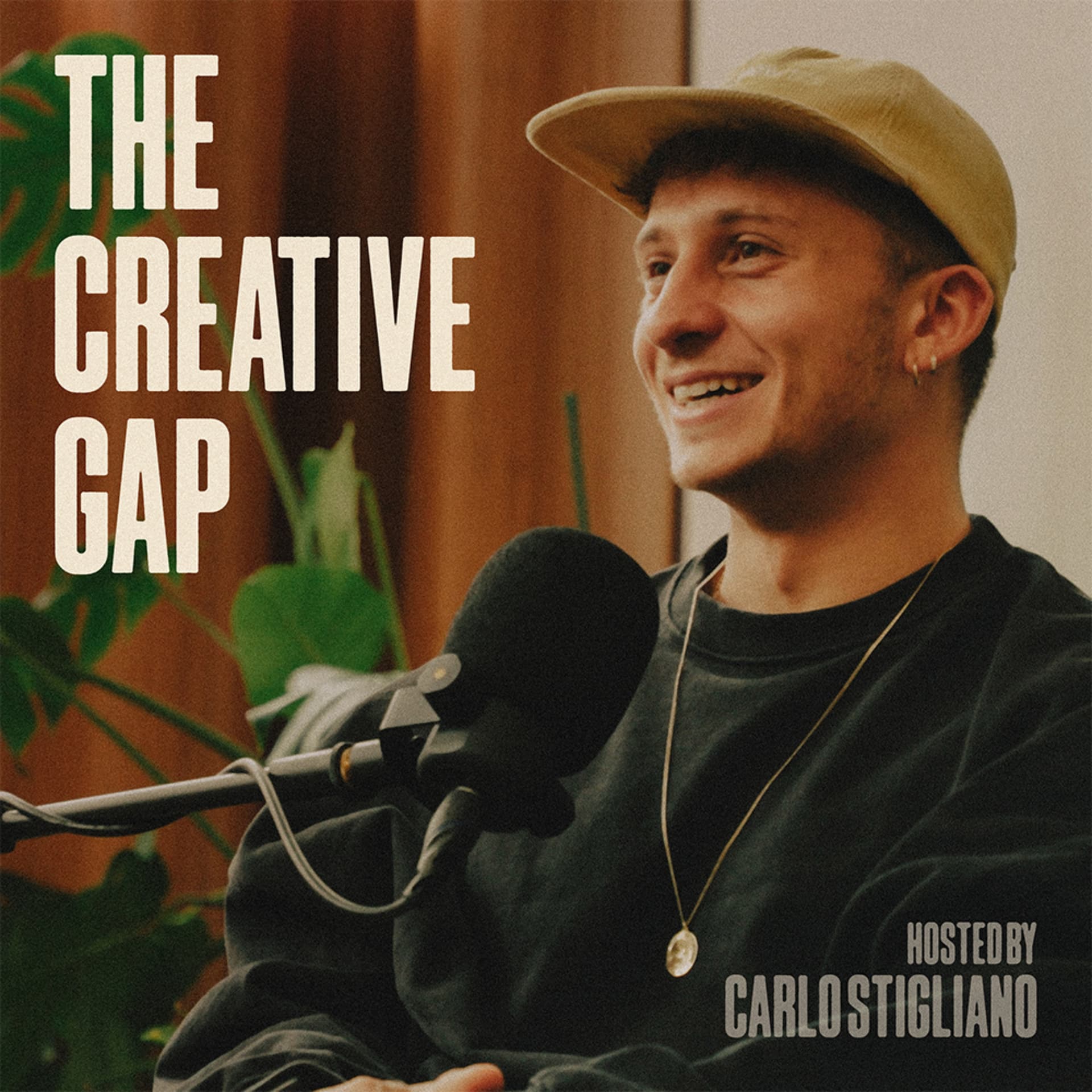
In short
Creative balance for a filmmaker/YouTuber—using boundaries, time blocking, and “good enough” momentum to avoid burnout; balancing being “all in” without letting YouTube consume life; evolving from productivity content to a more introspective, structured Season 2 with a small team; advice for finding your voice on YouTube.
Guest
Kariza (host). Background: creative freelancer turned YouTube creator; studied photography/film in Toronto (accepted to both), quit university; worked on sets in directing/creative direction/art direction roles; started YouTube during the pandemic; cites Matt D’Avella, Nathaniel Drew, and the productivity era as influences; runs a long-form channel with cinematic art direction, wardrobe, and set design.
Key claims
fulfillment comes from balance across family, friends, and creative work; stricter boundaries (no weekend work, set hours) restore balance; “nine-to-seven” structure helps; when creativity stalls, she aims for “good enough” to start filming and regain momentum; downtime is missing in YouTube compared to other creative industries; posting pressure is real and can worsen with long breaks; mentorship and creator friends help during doubt; writing is hardest because filmmaking/visuals come easier.
Notable examples
a first vlog took two months to make; she took 7–8 months off YouTube to return with multiple episodes; she worked as a second shooter for Matt D’Avella after he emailed her; she plans seasons around a “20s bucket list” and prepares for best/worst-case scenarios.
Written by AI. May contain mistakes. Listen to the episode to check what was said.
Chapters
Tap a time to open that second in VOFinding Fulfillment in Balance
0:45 to 2:30
Exploration of how the guest finds fulfillment through balance in life.
“When you're not in that maybe state of optimal fulfillment or when you're feeling good, What are some ways for you to try to find that to get back to that place?”
Establishing Boundaries for Creativity
2:30 to 4:30
Discussion on the importance of setting work boundaries as a creative.
“I started time blocking more seriously this year or maybe late to 2025, completely changed my life.”
The Importance of Structure
4:30 to 6:00
The guest shares their experience with time blocking and its impact on productivity.
“when things are coming naturally, that's the best feeling in the world.”
Navigating Creative Blocks
6:00 to 8:00
Strategies for overcoming moments of low creativity and the importance of momentum.
“One of the best tools I utilize daily on Musicbed is the option to search by mood.”
Balancing Passion and Life
8:25 to 10:40
Discussing the struggle of balancing creative passions with other life areas.
“I mean, like I like to take my time to create things and I'll go like a month or two without uploading a video sometimes.”
The Role of Mentorship
10:40 to 13:00
The guest reflects on the importance of mentorship in their creative journey.
“the message, the thing, it just won't be what I believe it could be.”
Family Support in Creative Pursuits
13:00 to 14:00
The impact of family support on the guest's decision-making in their career.
“And I met him when he was at 30 ,000 subs on YouTube.”
Trust and Support in Creative Pursuits
14:00 to 14:40
Learn about the importance of trust and support systems in creative journeys.
“And so I didn't have mentors in my family in terms of like creative things, but I had the support and I think that's all I needed.”
Choosing the Right Educational Path
14:40 to 15:50
Explore the decisions made in selecting educational paths for creativity.
“and I got accepted to both photography and film.”
Transitioning from School to Freelance
15:50 to 16:40
Understand the transition from formal education to freelance work in creative fields.
“and even working on like smaller projects.”
Show all 34 chapters
The Joy of Working on Sets
16:40 to 18:20
Discuss the joy and camaraderie of working on traditional film sets.
“And I've always had YouTube in the back of my mind.”
The Evolution of YouTube Pursuits
18:20 to 21:20
Discover how the host's approach to YouTube evolved over time.
“and the whole productivity era at that time, I think that was really big on YouTube at that time, that really inspired me because I was starting to see filmmaking in a different way.”
Learning and Growth in Creativity
21:20 to 23:40
Learn about the importance of continuous learning and growth in creative fields.
“I know you said writing isn't a strong suit maybe quite yet.”
The Vulnerability of Sharing Your Journey
23:40 to 25:20
Examine the challenges of being vulnerable and authentic in content creation.
“And for a while it took, it took a lot of, I hate saying the word courage, but like, it took a lot out of me to like, really put myself out there like that.”
A Turning Point in Content Creation
25:20 to 27:00
Identify a pivotal moment that changed the approach to video content creation.
“Was there a moment where it felt like it clicked a little bit?”
The Importance of Organization in Creative Work
28:01 to 29:19
Explore how effective tools like Milanote can enhance creative organization.
“Let me just, what do I want to make for fun?”
Finding Play in Creative Processes
29:20 to 30:01
Learn why incorporating play into creative work can reignite joy in the process.
“And it really starts to feel like a job.”
Balancing Perfectionism and Creativity
30:02 to 32:21
Discuss the struggle between wanting perfection and the reality of sharing work.
“But I do the ways that I can the ways that I still try to strive to incorporate play in it was that especially for this past season, of videos, I'm like, what do I want to do?”
Managing Self-Doubt in Creative Pursuits
32:22 to 34:44
Understand how to navigate self-doubt through collaboration and support.
“But I think that if I know that I really made it good, then that's enough for me sometimes.”
The Journey of Improving Writing Skills
34:45 to 36:59
Discover strategies for enhancing writing skills as part of the creative process.
“I feel like I just know what I want to do.”
Aligning Life with Creative Projects
37:00 to 39:59
Learn how to integrate personal experiences into creative work for authenticity.
“Do you feel like you're more confident in yourself when you're struggling to put, like you're struggling to figure something out, you have more confidence in your ability to get through that?”
Transitioning to Team Collaboration
40:00 to 42:01
Understand the challenges and benefits of collaborating with a creative team.
“I think that when I go into planning something like a season, I'll really take a look at the whole year and be like, what are some things that I know I'll be doing already?”
Building a Supportive Team in Creative Work
42:01 to 44:12
Learn how having a supportive team can enhance accountability and creativity.
“you kind of are held accountable to your actions.”
Navigating Control in Creative Projects
44:12 to 46:23
Discover the balance between maintaining control and collaborating effectively.
“know, and still is obviously, but I love working with people like that.”
The Importance of Flexibility in Creative Processes
46:23 to 48:20
Understand why being adaptable is crucial for creative success.
“Were there any like weaknesses maybe that you saw in yourself that could be strengthened in the next time?”
Key Takeaways from Creative Projects
48:20 to 50:31
Explore what aspects of the production process can impact overall success.
“I always strive to get as close as possible to the original vision.”
Finding Your Unique Voice on YouTube
51:24 to 54:15
Discover how to identify and develop your unique voice on YouTube.
“I have friends that are interested in starting YouTube and, but feel that they, they don't have anything to say.”
The Art of Visual Storytelling
54:15 to 56:00
Learn how thoughtful art direction enhances the viewer's experience.
“hasn't happened just yet, but you're getting close, but you will definitely know for sure.”
Sustaining Passion in Creative Work
56:00 to 56:40
Explore how to maintain passion and creativity while managing fatigue.
“Your passion for it has sustained, but even maybe got stronger?”
Involving Family in Creative Projects
56:40 to 57:40
Hear about the experience of integrating family into creative work.
“What are some other areas you find that you're able to fulfill that creative urge?”
Lessons from Filming with Family
57:40 to 1:02:00
Discuss the unique challenges and joys of filming family moments.
“more episodes to go from when we're recording this, but the barbecue family scene.”
Understanding the Grind of YouTube
1:02:00 to 1:04:10
Gain insight into the dedication and challenges of being a YouTuber.
“It was like everything was supposed to be the way it should be, except for the timing.”
Finding Balance in Life and Work
1:04:10 to 1:06:50
Learn about the pursuit of steadiness and consistency in life.
“like just to improve the craft even more like there's always more you can learn color grading with lighting how to you know do things how to write things better how to how to uh tell better stories.”
Redefining Success in Creative Careers
1:06:50 to 1:08:40
Explore the evolution of success and personal milestones in creativity.
“Do you think the steadiness and consistency will, do you think that provides you with peace?”
Transcript
Automatic transcript. May contain errors.0:00Kariza Santos:Kariza, welcome to the show. Thank you for having me. Where do you find that you are feeling the most fulfilled in your life lately? Right now I feel fulfilled when everything feels like it's in balance, I think. I have time for my family, I have time for my friends, and I have time for my creative work. So those are the moments I feel most fulfilled. However, that doesn't always happen all the time. Do you try to, how often do you feel like you are in that state of like fulfillment versus not? Maybe half the time, which is okay. It's something to strive towards, right? But I feel like now I'm more conscious of it than I used to be when I was first starting out on my creative journey.
0:48Yeah.
0:48Kariza Santos:When you're not in that maybe state of optimal fulfillment or when you're feeling good, What are some ways for you to try to find that to get back to that place? I think it's about just taking breaks, having downtime and having boundaries. I think as creatives, it's so easy to just bleed the lines between, okay, I'll just work on this after dinner or, okay, I'll just work on this on a Saturday or Sunday. but I feel like once I started to implement stricter boundaries on okay no working on the weekends or on Sundays or after a certain time that's when I start to feel like okay I'm back on the right track yeah were you someone that would work all day every day for a while like did you have to sort of do you look at your work sometimes it's like a nine to five in a way like you have to set I work at this time I end at this time and I guess as a creative do you feel like those boundaries help you or sometimes hurt you a little bit?
1:46When I first got into freelancing, I was like, great. I have no boss. I can make my own schedule. I can work whenever I want. And that turned into having such unbalanced schedules all the time. And I realized that, hey, okay, like maybe nine to five is actually onto something. And so now I just work like nine to seven, unfortunately, but I think that I try now to follow a similar schedule to like a nine to five, just because if I don't do that and I keep not doing that, then that's when I really feel like, okay, my life is definitely out of balance.
2:30Kariza Santos:Yeah. Structure is important to you. I think structure is so important. I started time blocking more seriously this year or maybe late to 2025, completely changed my life. I'm not even kidding. And I was like, why did it take me so long to start time blocking? But I think that's really what helped me, especially as creatives. We're kind of like everywhere, you know? Yes. But I think that when you just start showing up at a regular time on regular days, then it'll just come to you. time blocking has been one of my most like valuable things that I do I also share a calendar with my wife as well and she sees things that I have blocked in she also like puts in things like date nights or just like yes she puts in things in the calendar for me to know not to do anything during this time I just started doing that too with my partner and honestly it's how you get things done.
3:30Absolutely. No, I love it. Yeah. Do you think that, do you think that you find yourself being, I don't want to ask this as a creative, when you find that you're, you're in this sort
3:51Kariza Santos:of structure and say you're starting work early, because it's something that I am trying to figure out with this time blocking thing as well. If I know that I have to make a video or write a script at a certain time, but I'm not feeling a sense of creativity, do you find that you have to like force yourself to be creative or do you step back? Do you change your schedule? How do you adapt to moments where you're not feeling creative? Oh my God, story of my life. I'm not to force it, which is not an ideal situation, honestly. Obviously when things are flowing, when things are coming naturally, that's the best feeling in the world.
4:33But there are times where I just don't want to work on this or it's just not clicking right now. And at that point, I always just try to make it good enough. Even if it's writing a script, especially if it's writing a script, I feel like script writing is not my strongest point. But when it comes to writing something, I'll always be like, okay, the writing just has to be good enough for me to start filming. It has to be good enough for me to film one scene tomorrow. And then I feel like once I have that momentum, even just filming one day, then the next steps will become clear to me.
5:11Kariza Santos:It's like the action of doing it then gets your sort of creative juices flowing again somehow. Exactly. Because sometimes you can't figure it out just by the writing on the page. You kind of have to see it come to life a little bit more, and then you can adjust course based off of that. Truthfully, I can't think of another tool that I use for filmmaking and this podcast that I've stuck with for over four years now. Everything that I do, from my passion projects to YouTube videos to Instagram reels all the way to this podcast, requires a certain level of curation, quality, and emotion. When I think about what makes certain works stand out over others, it isn't the flashy cuts, but it's the music behind it.
5:53Kariza Santos:That's why I use Musicbed. Thoughtful music is truly one of the best ways to rise above the noise as a filmmaker today. One of the best tools I utilize daily on Musicbed is the option to search by mood. We create based on feeling and emotion, so why not find music the same way? Musicbed is meant to serve those who care deeply about the stories they are sharing. And if that's you, switch to Musicbed and start your 14-day free trial today with the link below. How important is living your life outside of filmmaking, YouTube, to enable you to have the depth to offer something deeper in your writing, in your storytelling?
6:34Kariza Santos:because I feel like, you know, this is a question I was going to ask later, but I think it's really important now is this, I've been asking everyone this, how, how you balance being all in on something versus being all consumed. And for me, it's trying to find the balance of being obsessed and really passionate about something, whether that's filmmaking or making a YouTube video or the podcast without it consuming my life where I don't have room for the other areas of my life that are really important for me as well. And I know that for you, a lot of the videos that you make, the stories that you share on your channel have a lot to do with your life and the things around it.
7:09So how do you find the time to be all in,
7:12Kariza Santos:but not let it consume you to pursue the other areas of your life you're passionate about? Yeah, I think that is literally the, that's the big question, you know? And that's a question that I've been trying to solve ever since I've started YouTube. because when you do something like when you're in a creative field, it does consume you. It's an obsession. Um, and I feel like I've in the past, I've had to actually take really long breaks in order to just feel like I'm living my life to not feel like I'm constantly thinking, oh, I got to write about this. I need to like have retrospect on certain things in order for me to process them, in order for me to see what did I learn from that?
8:02I know in social media, it's like the fastest moving industry. And yet I always feel like I am in the slowest craft. And it's not a bad thing, but I always feel like they're just butting heads all the time. And I'm constantly trying to, you know, work on one thing, but it doesn't work with the other.
8:24Kariza Santos:In terms of quantity versus quality in a way? I guess so. I mean, like I like to take my time to create things and I'll go like a month or two without uploading a video sometimes. And they're like, wow, I love her, her upload schedule. She never, she doesn't, she doesn't care. Like she'll just upload whenever. But honestly, that's like the fastest I can do something if I really want it to be good. Right. And I'm always like, man, I wish I could figure out how to make things faster, but it always butts heads with the, oh, but I need to like process and live my life and take time to write. And social media is the only creative industry that doesn't have downtime for the artists on the platform.
9:14You know, like if you're an author, you sign your book deal and you get to have like two years to write your book. Same with a music artist. You have, your favorite artist probably doesn't release an album every single year, probably two times, maybe five years or every two years, every five years. But it's not like that with filmmakers or filmmakers on YouTube or creators on YouTube. It's always like, okay, every week or bi-weekly or monthly. So we don't really have the same downtime as a lot of other creative industries, which is a struggle. So for me, I'm like, okay, well, do I make things in seasons instead?
9:55And that's what I tried this past year with taking seven to eight months off of YouTube and then coming back and having eight episodes ready to go. And I still don't think that's perfect yet. So I think it's always just like a process of trying to figure out what the balance is. Yeah. Have you gotten better with the pressure of not posting?
10:19Kariza Santos:Because I know for me, if I don't share something on YouTube, maybe in a month, I feel like, I know it's not true, but it's maybe like, oh, I'm forgotten. Nobody's going to care anymore. But I also know that if I try and force myself to share something every week, it's just the, what I'm hoping to share and the quality of the message, the thing, it just won't be what I believe it could be. But I still feel that constant pressure that it needs to, like, once I post a video, it's like, okay, it's out, what's next? Do you still, do you feel that? Or has that gotten better over time? Because you said eight months, that's a really long time.
10:56I don't know if anything, you know, it's worse, honestly. No, I'm kidding. But I think that it is a muscle a little bit. The first time I did take a break, it was around, I think, two months. That was when my, after my channel took off and I was like, okay, let me just see how I feel about this. And it was fine when I came back. Granted, you have to come back with something pretty good, but that kind of made me feel a little bit more confident. Like, oh, okay, these people are showing up for me and I'm really lucky that my audience is amazing. So they're really just there to support and to, and they're ready whenever I'm ready.
11:37But it does get scary. It does. Especially if you're going half a year. The longest I've been is eight months, I think. And that was pushing it. I was already feeling the pressure of uploading. I, yeah, there were times where I was like, okay, should I just send it now? I'm not ready, but should I just do it? So there are those pressures. I think it comes with everything.
12:03Kariza Santos:Yeah. Do you have any sort of friends or mentors to help you in these moments where you're feeling maybe a little insecure, you're feeling a bit of doubt in what you're doing, or, you know, I want to share this, but I shouldn't. Do you have a circle of people that have helped you or you kind of look to for guidance? I've been really lucky to have amazing creator friends. And I'm always like, I'm always turning to like fellow creator friends when it comes to things like that. Early on in my YouTube journey, I've met a lot of people who I looked up to, which was insane. And now I feel like those are some people that I can call upon if I need advice.
12:42So I feel like having a mentor, no matter what creative field you're in, is so important. And it's not impossible either. You just have to put it out there. And I think you'll just meet those people who are willing to help.
12:54Kariza Santos:Yeah. Mentorship has been really valuable to me. Yeah. My first mentor was Danny Gewurz, who is amazing. And I met him when he was at 30 ,000 subs on YouTube. So like at the time I was looking at that like huge numbers and, you know, looking at where he is now, it's totally different, but he gave me so many opportunities. He taught me so much about YouTube, how to just talk to people, how to build relationships. And I don't think I'd be where I was, where I am without him. And I mean, there's so many other mentors in my life that have just, I think really just shaped me as a human being. And how, in terms of mentors, are there other family members that have like helped you and like helped you grow to be the person that you are today?
13:42Definitely. I feel like my family, I'm really lucky that my family has always been super supportive of my creative endeavors. I knew that I wanted to be in the arts since I was probably in high school. I never really had an interest in anything else. Granted, my parents, they did not fully understand, but they trusted me. I asked them to trust me. They did. And through dropping out of university to getting a nine to five to quitting that nine to five after three months, like through all of that, they've always just had this unshakable trust that I would figure it out myself and I wouldn't let myself down.
14:26And so I didn't have mentors in my family in terms of like creative things, but I had the support and I think that's all I needed.
14:35Kariza Santos:What'd you go to school for? I went to school for photography, which I got accepted to, I applied to a university in Toronto and I got accepted to both photography and film. And I was like, oh, I don't want school to ruin film for me. I love it so much. So I'll go for photography. I ended up quitting that anyway. And, and at the time I was meeting a lot of people who were going on sets, who were trying to freelance. And I was like, you know what? I want to do that too. The more traditional side. Yeah, definitely more traditional. And that's kind of how I started to learn way more. Did you crew, like at all crew positions?
15:15Kariza Santos:Did you do anything? Oh my God. Yes. I quickly found out that I was more on like the directing, creative director, even art direction side of things. Yeah. I think that's where I would fit on set. Do you ever miss, I know that we're going to get into your current season on YouTube because I know that has a little bit more to it in terms of bringing people on a bit of more scale. But do you ever, do you miss the traditional side at all? Honestly, it was really fun. Like I had some of the best years, like just going on set, being, being with my friends and even working on like smaller projects. They're just be so fun, you know?
15:56And there are times where I really miss that because doing YouTube, you're on your own a lot of the time. Maybe you have a small team, but nothing like how, you know, how it is being on a set. So I do miss those aspects. And I've had, yeah, I've had feelings. I have one, I guess we'll get into season two, but I've had those feelings come back whenever I do have bigger sets on my projects. So it's nice to kind of bring that back into what I'm doing now.
16:29Kariza Santos:When you were in college, were you starting YouTube at this time? Or what was the reason for starting? I've always loved YouTube. But I feel like when I got into school, I was like, okay, maybe this is the path I'll go on right now. And I've always had YouTube in the back of my mind. But at the time, life was just taking me into this freelancer route. And so I just followed that. and it wasn't really until the pandemic. I was already like four years out of school at that time. Maybe I don't even know my math anymore, but it was during the pandemic where really like YouTube came back into my life and was like, okay, I'm actually gonna go for this right now.
17:15Kariza Santos:What was your main driving idea of how you wanted to present yourself on YouTube then versus how do you think that's changed now to how you present yourself? I remember back, it was probably like 2018. And I had this idea where I was, you know, I was watching a lot of shows that were inspiring me at the time. And I was like, man, I wonder how, what if I had a YouTube channel and, and it kind of looked like a show, but like it was still YouTube. I had no clue how to do that. I didn't even know how it would get to that point. And my skillset at that time was nowhere near close to even like coming close to that idea.
17:54So I put that away, continued freelancing, learned a bit more. But I always still had that idea. I just, you know, kept it in my back pocket. And then as I started getting more inspired by channels like Matt D 'Avella, literally my idol on YouTube. Everyone says KT Neistat is their idol, but Matt D 'Avella was my YouTube idol. And other channels like Nathaniel Drew. and the whole productivity era at that time, I think that was really big on YouTube at that time, that really inspired me because I was starting to see filmmaking in a different way. I didn't, like people weren't doing tutorials per se, but their videos still were cinematic.
18:39So that kind of gave me this idea. And also a lot of like homemakers, that homemaker niche on YouTube, like so underrated so beautifully shot a lot of these um channels and so I kind of was starting to form the idea and how I could do things on YouTube and then I started to work for other YouTubers in the social media space to get more experience what capacity um so I Actually, it's funny. My biggest gig was to, I took Matt D 'Avella's YouTube course. Okay. And I tweeted at him like, oh, my first video after doing the Matt D 'Avella course. And then the next day he retweeted it and then he emailed me and he was like, do you freelance at all?
19:33And I was like, yes. And then I became like sort of a second shooter for him for a couple of months. And that was such valuable experience. He's such a great person. And it really taught me how to do things faster and how things work on YouTube. And that was a surreal experience. So just things like that, that really contributed to me learning more about what it takes to go into YouTube versus just the film industry experience that I had. Yeah.
20:04Kariza Santos:If you look back on some of your older videos, do you see any similarities or like things that like you, maybe you did back then that you sort of do now or things that you've improved upon? Like, how do you, do you notice any similarities in yourself back then that you are still kind of, you hold onto now? Yes, actually, absolutely. It's funny because I, I cringe so much at watching really old videos of mine, but there are some videos where I'm like, oh my God, this is like such an early idea of what my videos are now. And even earlier this year, there was this really old video that I like came across on my hard drive and I was like, oh my God, I see the vision.
20:47You know, she wasn't quite there yet, but I see what she was trying to do. And again, I had like this early version of what I wanted my videos to be. Didn't know how I was going to do it, nor did I have the skillset, kind of built up the skillset. And then all those things that I kind of wanted to do in the beginning, I'm doing it now. So it's really interesting to see the evolution throughout the years until it kind of clicks in your head and you're like, oh, I can see where I actually clicked in her head and how to do it.
21:14Kariza Santos:Do you think that has to do with just your life experience and you growing, you're maturing as a person and just like your improvement of, you know, the skills and knowledge of how to film, but also just your, I know you said writing isn't a strong suit maybe quite yet. What has sort of improved for you to actually develop those deeper? I think that it's always the pursuit. Like you have to just actually research, actually try to learn. I feel like that's so underrated for some reason. A lot of people, when they want to do something, for example, let's say YouTube. I want to do YouTube. and you kind of watch other YouTubers and you sort of know how to how to do it like you just know by watching which is a great start but do you research what cameras to use do you research how to film do you research how to write do you learn there was like I remember studying YouTube videos I screenshot shots and make storyboards and learn how people put sequences together.
22:18And so I think it's just going the extra mile to actually learn and to improve your craft in that way. And I feel like a lot of people don't take the extra steps to do that, but that's what I did. And I saw the difference as soon as I started doing that.
22:32Kariza Santos:Do you learn the same way that you did maybe five years ago? Is there a new way for you to kind of learn? Because I know on YouTube, you know, you tend to be like people that create are the ones that are teaching sometimes. So how do you find that you learn? Honestly, I feel like I was going harder five years ago than I am now. But I think that I still take those techniques and I do apply them to my life now. And I even try to just keep it going because I feel like that time before my channel took off, I was like so hungry. I was really just wanting to learn. And I think that when you get into your craft or maybe things take off, you get kind of comfortable.
23:19And so for me right now, it's just taking what I started with then and just keep being consistent with that way of learning. and then even if I'm learning in my videos I never position myself or I try not to position myself as an expert I never do I'm always learning with my audience so I feel like I like to be a learner versus an expert absolutely yeah I think that has to do a lot with
23:46Kariza Santos:being comfortable with sharing vulnerabilities and being honest and that's something that I I tend to enjoy a lot about what I do on my channel is I, I try to be as honest and open and share the good, the bad, the ugly, everything. And for a while it took, it took a lot of, I hate saying the word courage, but like, it took a lot out of me to like, really put myself out there like that. It was, I had a lot of fear putting myself out there. You know, you see a of the perfect stories everything and i don't know i just over time i've just i think i found my voice in being more me and did you feel a struggle initially just opening yourself up being honest being vulnerable like was that a struggle for you initially a hundred percent i think that youtube i can't say for other platforms but especially for youtube it requires some sort of vulnerability to put yourself out there, you know, not even just like opening up emotionally or whatever, but just like putting yourself out there first and foremost is such a vulnerable experience.
Read the full transcript
24:56And especially with YouTube, because it's long form, people are, it's like people are hanging out with you when you watch, like, I definitely feel like that when I watch my favorite YouTubers. And I think that when things start to click, when I start to truly be myself, you know, I feel like when you start making videos, you always have this YouTube personality. It's just a classic. Everyone goes through that phase. But once you get past that and you actually just talk to the camera, like how you talk to a friend, that's when it's actually vulnerable because you're only yourself really when you're with your friends or your family or closest ones and doing YouTube is kind of like that.
25:36Kariza Santos:Was there a moment where it felt like it clicked a little bit? Like you, you feel like, okay, this, I need to do something else. I need to change the way I'm doing. Like, was there a moment where you, if you can remember where it kind of clicked? Oh, a hundred percent. I remember the moment actually. Yes, I do. Yes. Well, I was doing, I was, so during the pandemic, I would say was the turning point where I started to make better quality videos, but the, there was still something missing through those videos. And I was, very interested in the productivity space at that time. It was very popular at that time as well.
26:18And two years into making productivity videos, I was one, getting a bit bored of it because the best videos in that niche were already out there.
26:30Kariza Santos:You know, I was never going to - Ali Abdaal. Yeah, exactly. Ali and Nathaniel, Matt D 'Avelle, like they did it and they did it well. I was never going to beat that. And at the same time I was feeling like, okay, I really want to switch it up. Like, I don't really feel inspired by making these myself anymore. And I was like, you know what? I really want to vlog. It's so fun. I was watching a lot of vloggers at that time. Casey Neistat just moved back to New York. And I was like, you know what? Like, I really want to try this but what are my 2 000 subscribers gonna think um but then and and it was that first vlog where i'm like you know what let me just act the way i want to act when i'm with my friends and you know be a little bit more looser and not care so much about you know what i'm saying or how i sound or how i look and it was that point and i remember writing that script and i'm like oh my God, wait, did I just crack the code on something right now?
27:32I go to film it. The video, it took, I think the video is like six minutes long, but it took me two months to make.
27:39Kariza Santos:Wow. Why did it take so long? It was, that was like, I felt like I was just a painter in a studio and just like had a little canvas and kept, kept working on it every day. It was just like a work in progress. Cause I didn't, I never made something like that before. I didn't know how things would go. And I just really wanted to play. That was the first time in a long time where I was like, you know what? Let me just, what do I want to make for fun? And that became the first vlog. I thought it was great, but I uploaded it. And I mean, the rest is history. Organization is very important to me. Google Sheets are great.
28:20Kariza Santos:but for someone who likes to see things visually, I switched over to Milanote. It has become the absolute only way I'm able to organize my podcast and film projects. I needed a platform that was designed with that in mind. With Milanote, you are able to freely design your boards that best aligns with your taste and creative workflow. There are literally no limitations to how you can create your own Milanote board. They even offer really great templates to get you started. I'm currently recording five podcast episodes in two days, and the only way I was able to make that happen was with the right organizational tools and workflow through my Millinote board.
28:54Kariza Santos:By easily dragging and dropping each board, role, link, or images, I was able to clearly organize crew information, questions, forms, and scheduling for my guests, as well as keep track of my expenses and delivery schedule for each podcast. You can even use Millinote on the go from your phone. Just open the app and use it like you would on your computer. Millinote is available for free with no time limit. sign up and create your account using the link in the description you feel like you you strive for play in your work because i know sometimes youtube or you know writing scripts it it can start to feel like a job at a certain point but if you let it only feel like a job i feel like you lose the fun in it the actual joy in creating it and i think what you said like letting it feel like play is really a really valuable part of it for sure no honestly like i think in every job It's you're going to have those moments where you just kind of get into a routine or you get too caught up in it.
29:50And it really starts to feel like a job. And even something as fun as YouTube, it will feel like that. You know, there's going to be days where you just don't want to work on things and you're tired. More times than not for me. Exactly.
30:05But I do the ways that I can the ways that I still try to strive to incorporate play in it was that especially for this past season, of videos, I'm like, what do I want to do? Like, what is relevant in my life right now? What excites me? I always just start with those questions because that's going to be the most genuine videos I can make. And usually that those have the best results in terms of, not in terms of views or anything, but in terms of how proud I am to make a video like that. Because I know that making a video is such a grueling process sometimes, no matter if it's fun or not. But if I'm proud at the end of it, then that's what matters.
30:47Kariza Santos:Do you feel like you're able to get past the idea of it needing to be perfect before you share something? How do you find the point where you're working on it for two months and you're painting, as you said, when do you get to the point where you're like, okay, this is it, this is done? I think I have a pretty good sense of when I know a video is done. most of the time it's because I just wanted I'm just like this is past the point if I if I keep working on it I'm gonna be sick of this video it gets to that point and I know that it's time it's time to put it out there um because I like to enjoy putting something together but I also know when it's time to move on and I think that when it starts to really drag, then I know, okay, like it's done or it needs to be done in two days.
31:38Kariza Santos:I love your thoughts on this. Cause this is something I struggle with a lot when posting videos is, or even just work that I do as a DP, I could shoot the thing and I see it and I'm really proud of it. Like I really put a lot of effort. I love the way it looks. I love the story behind it. It goes out in the world and maybe it doesn't receive the, the, what I, my expectation of maybe what I thought it would. Maybe I thought it would do better, better feedback. And if it doesn't, it almost, I hate to say, it almost changes my view of the video now. Maybe I don't love it as much. And I don't know if that's a common feeling, but if you make a video and you really love it and maybe it doesn't do that well, does that change your perception of the video itself?
32:20Sometimes I do feel like, oh man, I thought this would do really good. But I think that if I know that I really made it good, then that's enough for me sometimes. However, there have been times in the past, especially when my channel first blew up, for example, I had a lot of videos on there already that I was really proud of, that I put a lot of effort into. And it wasn't until my channel blew up that they suddenly jumped 200 ,000 views in a couple of weeks. And I was like, was I good all along? Like truly that's how I feel about it. Like you think that it's a measure of how good something is, how many views you get, but that's not necessarily true.
33:08And so I always just try to think of that whenever something doesn't perform well. But I think that as long as you, as long as you're, you're, you're proud of the final product, you never know when something will hit the right people. So, yeah.
33:25Kariza Santos:This question is kind of going into that direction. Maybe you could find another avenue into it, but where do you find that you're able to like realign with yourself when you feel like you're really maybe doubting yourself?
33:41When I'm really doubting myself, I will call up one of my creator friends who really knows me. I'm really lucky to have worked with my friend Evie Yannikidis and on writing for this past season she was a great like we became fast friends we've been friends for the past three years now and I was really lucky to work with her on season two on my channel and whenever I'm feeling doubt whenever I'm feeling like, oh man, this writing sucks, I'll call her up and we'll talk it out. I think a lot of the doubt comes from like, I'm internal. I'm just so in my head about it. But as soon as I can talk to somebody about it, I feel like that's when I'm like, oh, okay, maybe it's not as bad as I thought.
34:32And it just needed to be workshopped. So then that's kind of how I start to align back and not really hate myself. And I think it's really down to that.
34:43Kariza Santos:Do you put a lot of pressure on yourself? I do. Tons. Like an unhealthy amount. But not for outside validation. I feel like I just know what I want to do. And that's okay if you have high ambitions. I think that's fine. It pushes you. But yeah, I do put a lot of pressure on myself. Do you also find that you're kind to yourself? You give yourself grace as well? I do. I do. I know I didn't used to as much. It's gotten better. It's gotten better for sure. Um, yeah. Yeah. So I'm curious about why you don't think your writing is very good. Cause I think it's fantastic. I think the way that you, the way that you are able to convey a message in a story, in a video is to be honest, it's unlike anyone that I really, I really watch on YouTube.
35:37Kariza Santos:Thank you. What do you, why do you feel that your, your writing maybe isn't your strongest suit? I think filmmaking, I think the visual part of it just comes so easy. So then in comparison, the writing is hard. If I put them, you know, side by side with each other, that's why. The writing, it takes a long time and it's just a grueling process at times of, does it make sense? Have I said this before? Does it loop back to the beginning or does it feel satisfying enough? stuff doesn't make sense am i just talking gibberish you know so i think that's why it makes it the hardest part of it um but i just try to improve and that's a it's a skill that you can improve how are you how do you find that you're improving it i read a lot helps novels or yes i read everything and i think that when i that i i when i'm not reading i can tell through my writing do you have any favorite do you read fiction non-fiction what is your sort of go-to sort of reading i read everything yeah everything yeah i like to read you know fantasy and adventure when i'm just like winding down but i'll also read memoirs i'll read you know the self-help book sometimes more so in my earlier 20s not so much now um but i try to read a variety of things.
37:03Kariza Santos:Yeah. Do you feel like you're more confident in yourself when you're struggling to put, like you're struggling to figure something out, you have more confidence in your ability to get through that? Definitely. Yeah. I feel like it's all about mindset. You know, I was talking about this with my partner the other day and how it's so important to just feel like you're a problem solver or be a problem solver. A lot of people like think that they can't do things, but honestly, it, a lot of it is mindset. If you think, yeah, I could probably figure this out. You will probably figure it out. Honestly.
37:37I think it comes down to that.
37:39Kariza Santos:So season one came out. How long did season one came out last year? September, 2025. Right. Yeah. Why did you decide now's the right time to start your season? Honestly, I was feeling the pressure of uploading. If I could have another year of of waiting before uploading, I would have been really happy with that. Alas, social media doesn't work that way, which is okay too, because sometimes you just have to push yourself and you'll be like, oh, okay, maybe I was okay. Um, but I thought that I wanted to start putting out season two before, um, before I reached the milestone, which is my birthday.
38:20Um, and I felt like it was just the right time. I was like, okay, I've been thinking on this for the past eight months. I think it's time to put something out in the world again and just get the momentum going.
38:32Kariza Santos:What was the biggest differentiator for you between both seasons? I would say season one was so fluid. It was such an experiment. I was really trying different kinds of formats during my vlog season. I experimented with more casual videos, more really like thought out, heavily storytelling type of videos. And that was good to collect data to see what I like to do, what my audience responds to, what I want to do, what I don't want to do going forward. Season two, I wanted it to be a bit more refined. Going back to maybe like my earlier videos where I put in a little bit more effort with the production, not so much running gun, but more intentional.
39:25I really felt like this was my, I felt like I wanted to be more intentional with my filmmaking this time around because it would be so different from the vlog season. Vlogging is like so fluid. Sometimes you're in situations you can't control and you just kind of have to adapt, which is fun, but that wasn't how I was feeling for this time. I felt like I was in a very introspective time of my life, a lot of reflecting, and I felt like I wanted the visuals to reflect that. Yeah.
39:58Kariza Santos:When it comes to the videos that you're making, because a lot of it has to, like I said, sort of your life and the things that are going on in your life, how do you find that you aren't forcing things in your life to fit a video, but you're allowing the video to live within your life? Does that make sense? Yeah, completely. I think that when I go into planning something like a season, I'll really take a look at the whole year and be like, what are some things that I know I'll be doing already? And how have I also felt in the past? What can I try to predict? Best case scenario, worst case scenario, and try to prepare for something like that.
40:44I think that the most, I always try to make sure that a video fits within my life versus the other way around. I think that that's just the easiest way to do things. and so when when I was planning season two it was around this 20s bucket list right everything that was on this list are genuinely things that I wanted to do I wasn't going to put like skydiving on the list how am I going to go skydiving in November you know so I wanted to be genuine and true to the things that were relevant to me in my life at that time because that's just like the most natural way I can make something of that nature.
41:30Kariza Santos:Going into season two, were you nervous stepping out of maybe your comfort zone a little bit of coming off of that vlog style to now a bit more of a structured setting and maybe even introducing more people to your workflow? It was definitely intimidating. When you're a solo creator, you know, anything you say goes and And you kind of, if you mess up on something, as in like you miss a deadline, it's just you, you know, not as much pressure. When you start having a team and support on that end, you kind of are held accountable to your actions. If something is delayed, you got to communicate it.
42:10You got to communicate why. And not that you'll be in trouble, but just like, it's just more accountability, which was a really, a really great process for me to start introducing into, you know, my workflow. I was lucky to find a lot of people who I align with, great personalities to work with, especially with my producer on this season, Jodi-Ann Beckford and Nicole, who I know that you interviewed her and she's amazing. So I was really lucky to find people who I felt like were in my corner who got me and who understood what I was trying to do.
42:52Kariza Santos:What are some good characteristics of a good teammate, a good collaborator? When it comes to a DP, let's say, I really wanted to work with Nicole. One, we knew each other for like, since we were both freelancing. So I saw the evolution of her going into cinematography from being a videographer. And she knew me from when I was doing like videography into social media, which was so funny that we met each other at that, that period of time. And for me, I was looking for someone who understood both the traditional film industry and social media. It was really important for me for someone to know both.
43:31Kariza Santos:Right. Let me, let me go deeper. Why is that important to know both? when it comes to YouTube, sometimes I like to be scrappy. You know, there's, we're not going to have a Netflix budget all the time. And, um, I feel like I wanted someone who understood, okay, there's ways that we can do this a little bit more scrappy. Okay. When do we bring in people and have a bigger set? And I think Nicole, she understood that about me. I didn't want someone to come on and have an ego and, oh, we got to do things the right way. And I just wanted someone who was down, down for the vision, down to make things work.
44:11And she was that girl for me, you know, and still is obviously, but I love working with people like that.
44:19Kariza Santos:Yeah. Did you have to pitch this idea to people for, for you to, to bring people on? Did you have any sort of, you know, message them like, Hey, this is, this is what I'm looking to do. I think I'm just a very enthusiastic person. I'm like, Hey, I got this idea. This is what we're doing. Are you down for it? It's pretty easy pitch. Honestly, I just like to have fun. So yeah. Going from a solo creator to having complete control of everything and ownership of everything to now almost releasing some control over certain areas. What did you learn about yourself that maybe you didn't know that you had in you or things that maybe you struggled with when releasing some control?
45:03Honestly, it was such a nice learning process. So I don't work on a site a lot of the time for my YouTube videos. Most of the time, it's still just me or me and one other person. But the past year and a half, I was more interested in, okay, like, let me see, what if I brought on someone like Nicole to help me film a project. So we did one project together, just a smaller one for a brand. And that went really well. And it was, it was like a test pilot almost of like how it would be for me to work with a very, very small crew. But even something like that is more, is vulnerable as well, because it's not a client project.
45:47It's like your personal project. And so to, for people to share that with your teammates, you're allowing them to see, you know, all the weeds that go into it. I think it's, it's, um, it was an, it was a good process though. I enjoyed it actually, surprisingly. I thought it would be a little bit more intimidating, but I actually enjoyed it so much. It was honestly not as different as it would be if I was working on, like, if I was like a director working on a, like a client project, I think it would be sort of the same process.
46:22Kariza Santos:Were there any things that you looked at yourself during this process, like, okay, maybe this is something I could work on for next time when working with a team. Were there any like weaknesses maybe that you saw in yourself that could be strengthened in the next time? Honestly, it's always down to time. You're always wanting more time to work on things. Yeah. I feel like everybody can relate to that. 100%. 100%. Ideally, I would have enough time to just work on things, to feel super prepared for a shoot, to feel confident going into it.
46:59I've gotten lucky that I have the support of an amazing team so that I did feel confident during those times. But, I mean, you can't argue with more time.
47:09Kariza Santos:Never. Yeah. are you with season two the outcome of it the the videos that are posted the the final product how does that compare with your expectation going into it again I think it comes down to time if I had like an extra year to work on things things might have been actually probably it would have been a little bit more different but I feel like I just try to make it as good as it can be at that time with the things that I have, with the resources that I have. And I always think this is not really, this isn't it, you know, this isn't the last season that I'll ever chew, knock on wood. But I think that you have to sort of be flexible during that time as well.
48:00You can't always be married to an original vision of something. You have to know that things will evolve, things will change and you're going to be so miserable if you can't let go of things. So I think it's better to remain fluid with it.
48:17Kariza Santos:You find that you've always been fluid? Were there moments where you were very rigid about your ideas at a certain point? I'm super type A, so yes. I always strive to get as close as possible to the original vision. However, there are obviously some things where I'll have to change and I'll change them if I know it will benefit everything else. So, but I do still strive to maintain the original vision in some way or another. Yeah. What part of your process is the favorite? Pre-production, writing, conceptualizing, shooting, editing, posting? No, it's definitely shooting. Yeah. Editing would be last.
49:03Really? I don't like editing. I love seeing the final product. There's times where there's magic moments in every part of the process. When I write a really good line, I'm like, oh, they're going to love this one. And in editing too, when you find the perfect song or a scene just comes together, again, magic moment. But for me, the funnest part is shooting.
49:31Kariza Santos:if you had to pick shooting your videos from here on out would it be by yourself with people always both i think i can't pick one or the other yeah i can't pick one or the other especially after the last season it was so fun to do a few bigger shoots uh granted like i didn't want to go too, too big, too fast. Right. I always just try to take the steps forward, but not like in a way where it'll overwhelm me. So for this season, we just chose a couple of key points where I'm like, okay, let me bring in Nicole. Let me bring in my producer and we'll step up the production in some ways. But I didn't want that to be like a complete change.
50:18You know, I still wanted to maintain the things I love about YouTube originally, filming things on my own or, you know, with the help of a friend. Because there's something special about that too. That's like in the DNA of YouTube. So I wouldn't really want to change that either.
50:35Kariza Santos:The Fourth Project Spark is an international initiative created by NanLux and NanLight to help creators transform early concepts into fully realized short films, supporting bold ideas and emerging creative voices. This year, six outstanding teams will be selected and awarded up to$20 ,000 in total production support. Each selected global team will receive a$15 ,000 production budget along with up to$5 ,000 in equipment rental support, fully provided by NANLUX and NANLIGHT, ensuring access to professional-grade lighting solutions while allowing teams to stay focused on storytelling and creative execution.
51:14Kariza Santos:Submissions are open February 28th, 2026 and close on April 18th, 2026. For full details and submission guidelines, visit the Nanlite website. I have friends that are interested in starting YouTube and, but feel that they, they don't have anything to say. Right. They, they feel that the industry in this space is too, there's too many people. There's too many people talking about the same thing. You know, their voices, it doesn't matter. What do you, do you have any advice to those people that feel like there isn't room for them on YouTube? I would say if you want to start YouTube, you have to know what you want to talk about.
52:01You have to know your story and you have to know why. Your why is so important for me. And it can be simple. It doesn't have to be this all-extential concept that you have. When I started my vlog series, the concept was, I want to document my life for one year. So simple. One line. And that's enough to anchor yourself and your audience. You have a clear goal that you want to do. And that's what you talk about. So I think that you really need to know why you want to do it, what you're talking about.
52:38Kariza Santos:That's how YouTube works, I think, is when you start getting clear on what you want to do. They know who to serve it to. They know who you're talking to. And you know who you're talking to most importantly. And that's like where you have to start. Yeah. So start with that. what do you what was your process in trying to find your voice more i know we talked about it a little bit but like when i watch your videos i know what i'm expecting in terms of a sense of calm like i know that i could watch your videos and feel calm like in anything that you're talking about what was the sort of development of finding that curation of this is like when you watch a Life of Risa video?
53:25Kariza Santos:This is what you might expect.
53:30So much trial and error, I think. I made so many bad videos early on.
53:36Kariza Santos:But that's really important too. For sure. No, 100%. I think it's just your initiation into doing YouTube. But I think that it really comes down to, it really comes down to just repetition. And then you will know when something clicks, like you will definitely know, okay, this is, this is what I'm meant to be doing. This is what people like. And all of those things will kind of align. And that's when you know, you kind of found your voice. And if you kind of have to question it, then maybe that click moment just hasn't happened just yet, but you're getting close, but you will definitely know for sure.
54:22Kariza Santos:How important to you is things other than just like lighting a camera? Because when you watch your video, I mean, the walls are green. Your wardrobe is a specific color. Like everything seems very particular. Do you think about all of these things and how they relate to sort of the visual experience? A hundred percent. I mean, I really love art direction. I love art direction. I love wardrobe. And I think that I love learning about those things from movies. I used to, I watched so much behind the scenes. I love just watching interviews and press junkets on how they made something. And set design is really important to me.
55:01I feel like it adds so much character. I love watching, you know, rom-coms or like coming of age movies. You see how they decorate people's bedrooms and how it says so much about them without saying it. I love that stuff. I really do. And so I tried to incorporate that in my videos a lot. And I put a lot of attention behind things as well. Even the lighting, like everything's lit most of the time, even if it looks natural, but. Yeah.
55:31Kariza Santos:I saw on the Maddie doc, the haze is your secret. Oh my God. I was looking back at those. I'm like, oh my God. I can't believe how, um, how different things are two years later as well. I feel like I learned a lot more, a little bit more professional looking, um, compared to that back then. But yeah, just a lot goes into it, but I enjoy it. Like those are things that I genuinely like about making something, the magic behind it. You think your love for YouTube has increased from when you started? Your passion for it has sustained, but even maybe got stronger? Yes, actually. I know a lot of people like, you know, they get tired of doing the same thing.
56:12I know people take like big hiatuses. Yeah, they do. And I get why, you know, it is tiring, vulnerable, all those things, but it's like every job. And I have love, I love YouTube. I still do. I always will. I want to make videos till I'm old and gray. But yeah, I get both sides. I do. I think as long as you're taking the right breaks and fulfilling your creativity in other ways, then you'll be okay on the other side.
56:41Kariza Santos:What are some other areas you find that you're able to fulfill that creative urge? Maybe if you don't want to make a video, what are some other passions and hobbies that you really enjoy doing? I try to have hobbies now, but honestly, it's so hard. I'm so upset. I feel like I always am thinking about making videos, filming and doing that on my free time, doing that while I'm working. But I try now to really have hobbies, especially reading. I think reading is probably the biggest hobby I have when I'm tight on time for everything else. And then on my off season, then I'll just try to do a bunch of different things, go outside, live my life.
57:18Right. Yeah.
57:20Kariza Santos:The video that the last one you put out about feeling like you were behind and you had your family involved. Yes. What was that experience like? Was that your first time really sort of involving your family into a video, especially, you know, at a newer scale too? Yes. Oh my God. I, I think that's my favorite scene of the whole season. There's still two more episodes to go from when we're recording this, but the barbecue family scene. I thought it was amazing. Thank you. That was such a fun day. Honestly, my favorite scene. So I, I, I wanted to film something with my family for so long and there was a perfect place in the script for it.
58:04I was like, okay, this is the time for me to do it. Um, the timing aligned, everyone was free. It was around Thanksgiving, which was perfect. It was funny because I was like, I told my family, I'm like, okay, this will be like our, our Thanksgiving celebration, but I'll do it the weekend after Thanksgiving. So I won't hijack the actual Thanksgiving weekend. And then nobody ended up making plans anyway for the Thanksgiving week, the actual Thanksgiving weekend. And we all just got together on the day of that shoot. I'm like, what? So I could have actually done it on the real Thanksgiving. But anyways, it was really fun to involve my whole, like literally my whole family in that shoot.
58:49I was like, okay, people show up at this time on time. Right. That's huge. Filipino time is so real. And I told them what to wear, a general sense of what to wear. And other than that, I'm just like, just show up. Don't worry about anything else.
59:07Kariza Santos:It felt so real. Yes. And honestly, like it was though, because we didn't have an actual Thanksgiving. That was our actual Thanksgiving celebration technically. And it was the first time where I got even more relatives to come than usual. So it felt like a family reunion and everyone was just laughing the whole day, smiling the whole day. Everyone cooperated. Even the kids when we were doing like the main hero shot, like that push in. um everyone was fantastic honestly it was it was fun to direct them and for that shot particularly so I told Nicole I wanted a push-in and I wanted it to be a match cut and so we set up some lights on the side and I did the whole art direction for the backyard we put up the gazebo and we I hung the lanterns and everything it was like a one day trans or one morning transformation formation.
1:00:06And the whole morning, the day before, including the morning, was rainy. And I was like, oh my God, I'm supposed to have like 20 people at my house in a few hours. Once people started showing up, miraculously, the sun just broke through the clouds as they do. And it was a fantastic day.
1:00:30Kariza Santos:Amazing. Yeah, it was. And it was everything that I wanted to be for that scene particularly as well. I wanted to kind of emulate how it felt during my childhood. Like this was like what I had in my memories, those like golden days of having barbecues with my family in someone's backyard. I wanted to recreate that and actually put it in my video. And so that's what we did and it came out better than I could have ever imagined. So it was really fun to kind of have these life experiences and I can actually translate that into a scene that I'm filming. What was your family's reaction to just seeing you in action?
1:01:09Oh, they were like, they were like, oh my God, you're legit. I just, I don't know if they knew what to expect, but their reactions were so funny and they were just so great. Yeah.
1:01:22Kariza Santos:What do you think you're going to take into your next season or future videos that you learned from this past season? I think the biggest thing is to not rush into things. Not to give in to the pressure of needing to upload. Like deadlines. Yeah, with deadlines and everything. Just work on it. Make it great. Make it what you want it to be. And don't rush into uploading just for the sake of uploading. I think that's the biggest thing. Yeah, because everything else was like, it felt right. It was like everything was supposed to be the way it should be, except for the timing. But again, that's just like everyone's bane of existence, I think.
1:02:13Yeah.
1:02:15Kariza Santos:do you think that there's um sort of a misconception about how easy it is to make youtube videos like what is it for people that maybe don't really understand what it takes like what is what are some misconceptions about really what it takes to make a great video but also just to grow a channel to where you have? I think you need some level of obsession to, to be successful in anything, but for YouTube specifically, it's a grind. Like it is such a grind. And if it feels difficult, you're probably, you're probably on the right path. You know, YouTube is like there's so much that goes into it but it's worth it the grind is worth it but you really have to just be diligent in wanting it you have to know what you want from it first of all you if you want it to be a hobby if you want it to be your career you kind of have to decide what you want from YouTube first and then go for it like just keep the reps in that's all it really is nothing more complicated than that.
1:03:35Kariza Santos:Are there moments where you felt like you were going to give up on YouTube? A hundred percent. Literally every, all the time, all the time. I think that, uh, yeah, I don't know. You'll have like mental breakdowns. Honestly, every video I feel like I'm like, Oh my God. But yeah, you just got to show up the next day. same thing in this season of your life right now what do you feel like you're most excited to learn about in general with the craft yeah in craft and life i am excited to just learn more actually like just to improve the craft even more like there's always more you can learn color grading with lighting how to you know do things how to write things better how to how to uh tell better stories.
1:04:25There's always ways. So I think that it's just more, it's more just being very intentional with my time and with what I consume really important and just keep learning. Yeah. Keep improving.
1:04:42Kariza Santos:Do you feel like you consume a lot? Yes. I, it's so bad though. I have to just like, I just have to lock my phone. I have to brick my phone and not scroll. I love brick. I don't know if you've heard of it. Honestly, if I don't do that, I'm literally scrolling on my phone. It's so bad. I feel like I need to... I'm always trying to just be offline as much as possible now. So does that help sort of just your presence and just being in the moment? I think so. And it goes back to like, you know, when I take downtime, I want to just be living my life and experiencing my life. So I have things to talk about.
1:05:34But if I'm spending most of that time on my phone, it's like the same thing as, you know, not doing anything at all. So I try to just stay offline. Yeah.
1:05:47Kariza Santos:And it's sort of similar to the first question about fulfillment, but in a different way, where do you find the most joy in your life? I think that it's when I am feeling like I'm present and being able to just hang out with my friends and my loved ones and I feel like, okay, I'm steady in this and I'm steady in my career and I'm steady in my craft. And I think that I used to really live my life in blocks of time, especially like even earlier this year, I thought, you know, going into it, I'd be like, okay, X amount of time for downtime. And then this block of time I'm working on the season, but I've come to realize I just want steadiness in my life instead.
1:06:37So maybe that's the next thing I'm working on. Instead of always feeling like there's only a finite amount of time to work on this one thing, I want the consistency and steadiness instead.
1:06:50Kariza Santos:Do you think the steadiness and consistency will, do you think that provides you with peace? Yes, 100%. I think that at the end of the day, you just want like peace, you know? Yeah, that's the key, I think. That is the key. So I think that the more I reflect, it goes back to that steadiness, consistency, not stress and deadlines. And I know in that video about feeling like you were, you know, the idea of falling behind, you talked about the definition of success and what it means and what it maybe had meant. And I'd love to just go a little bit deeper into what you view as success today in this moment and maybe what you viewed it in last year.
1:07:31Kariza Santos:Or even is there a difference in change and success before you even started season two? I mean, on the YouTube front, it's still, you know, the same kind of goals where you have these milestones you want to hit. And career wise, I feel like you just kind of have to keep on making bigger goals. when you reach one goal you have to already have your bigger goal so then you can still feel like you're going somewhere so on that front it's sort of still the same that's what I had the idea for YouTube in my personal life that's that is an interest like that's a whole different thing honestly a lot of my hometown friends then and the friends I grew up with they chose more traditional paths or maybe not just not as like um they're not in the creative industry and so it was really hard for me to not have creator friends when I was first starting out but now um as I started to do more YouTube I met creator friends and I felt like okay so maybe I'm not as behind as I thought so reframing in that sense in my personal life has been really helpful because it's more affirming when I'm pursuing my creative career amazing yeah Carissa thank you so much for being here thank you for having me it was a lovely conversation.
1:08:48Kariza Santos:This is so much fun. I know that you came here from Toronto, but luckily you have a boyfriend that's here as well. Shout out to Colt. Shout out to Colt. Thank you for, you know, opening yourself up, being honest and just sharing this conversation with me. I really, it really means a lot. Of course. I'm happy to be here. Where can people find you? Where can people check out season two? You can see season two now on Life of Reason on YouTube. Amazing. hopefully you enjoyed today's episode everyone have a great day peace out
From the publisher
In this conversation, Kariza Santos reflects on her journey as a filmmaker and YouTube creator, discussing the realities of building a creative career while trying to maintain balance in life. She shares how freelancing, experimentation, and years of learning eventually led her to develop a cinematic storytelling style on YouTube, while also navigating the constant pressure to produce content in a fast-moving digital space. Kariza talks about the importance of structure, boundaries, and time-blocking to avoid burnout, as well as the role of mentorship, collaboration, and community in helping creators grow. Ultimately, she emphasizes that creativity is a long-term pursuit built on persistence, curiosity, and self-awareness—encouraging creators to focus less on algorithms or perfection and more on finding their voice, continuing to learn, and creating work they’re genuinely proud of.
Switch to Musicbed and start your 14-day free trial today: https://fm.pxf.io/tcgp-freetrial
Sign up to Milanote for free with no time-limit: https://milanote.com/carlostigs
Learn more about Nanlite & Nanlux Products: https://nanlite.com/ // https://www.nanlux.com/#/en
🤝 Follow Kariza ► https://www.instagram.com/lifeofriza
🤝 Subscribe ► https://www.youtube.com/lifeofriza
🤝 Follow The Podcast & Carlo!
The Creative Gap: https://www.instagram.com/creativegap/ | https://www.youtube.com/@CreativeGapPodcast
Carlo: https://www.instagram.com/carlostigs/ | https://www.youtube.com/@carlostigs