In short
The Disciplined Investor Podcast: Episode #941 - Decoupling Stability
Episode Overview
- Title: TDI Podcast: Decoupling Stability (#941)
- Release Date: October 2023
- Guest: Dr. Barry Eichengreen, Professor of Economic Studies at UC Berkeley
- Topics Discussed:
- Historical volatility of October in stock markets
- Recent announcements of new tariffs
- Discussion on the potential impact of private equity and cryptocurrencies in 401(k) plans
Key Themes
- Historical Market Volatility in October
- October is known as a historically volatile month, with events such as:
- Black Monday and Black Tuesday
- 25% more volatility compared to other months
- Discussion on whether the month will be different this year, emphasizing uncertainty.
- Economic Changes and New Tariffs
- Discussion about newly announced tariffs on:
- Pharmaceuticals
- Trucks
- Kitchen cabinets
- Speculation about the potential impact of 100% tariffs on certain imports and overall market dynamics.
- 401(k) Plans: Innovation or Exploitation?
- Examination of new rules allowing private equity and cryptocurrency investments within 401(k) plans.
- Concerns raised about:
- The risks associated with high-fee, complex investments being available to average retirement savers.
- Historical fiduciary standards under ERISA (Employee Retirement Income Security Act) designed to protect investors.
Key Points on 401(k) Rules
- ERISA’s intent to safeguard retirement assets and maintain high fiduciary standards.
- Shift towards allowing more speculative investments, potentially increasing risks for uninformed investors.
- Debate over whether this shift represents innovation or exploitation, with skepticism about protecting the average investor.
- Insights from Dr. Barry Eichengreen
- Background:
- Expert on international monetary systems and global finance.
- Discussion Points:
- Importance of incorporating historical perspectives in economic analysis.
- Recent research on central bank independence and the implications of political pressures on financial stability.
- The interconnectedness of global currencies and politics, particularly in the context of U.S.-China relations.
- Discussion on Central Bank Independence
- Analysis of how political pressures could threaten central bank independence.
- Concerns about the recent trend towards undermining established economic institutions.
- Geopolitical and Economic Risks
- The potential for economic decoupling between the U.S. and China.
- Discussion of risks associated with political instability and its effect on the global financial system.
- Emphasis on the importance of maintaining international alliances and the threats posed by isolationism.
- Future of the U.S. Dollar
- Exploration of the gradual erosion of the dollar's dominance as a reserve currency.
- Speculation on the rise of alternative currencies and the implications for global finance.
Key Takeaways
- Volatility Awareness: October is historically volatile, and investors should be cautious.
- Tariff Implications: New tariffs could impact economic dynamics significantly.
- 401(k) Risks: The inclusion of high-risk investments in retirement plans raises ethical concerns about exploitation versus innovation.
- Central Bank Concerns: Erosion of central bank independence poses risks to economic stability.
- Global Interconnectedness: The U.S. and China will remain economically interdependent despite political tensions.
Conclusion The episode encapsulates critical discussions on the evolving landscape of financial markets, regulatory changes, and the broader implications of geopolitics on economic stability. Dr. Eichengreen's insights provide a historical lens to understand current challenges and the future trajectory of global finance.
---
This markdown file serves as a comprehensive summary of the podcast episode, highlighting the main discussions and key insights shared throughout the conversation.
Written by AI. May contain mistakes. Listen to the episode to check what was said.
Transcript
Automatic transcript. May contain errors.0:00This episode of The Disciplined Investor is sponsored by Interactive Brokers. And at Interactive Brokers, you don't have to wait for the markets to open. With around-the-clock trading, you can trade over 10 ,000 U.S.-listed stocks and ETFs, U.S. equity index futures and options. Also, U.S. treasury bonds and even more. IBKR's overnight trading helps you stay ahead by allowing you to react instantly to market moving news and economic events whenever they happen. Capture more market opportunities and trade on your timeline during local market hours or whenever it's convenient for you. Enjoy bond trading with no markups, no built-in spreads, and low transparent commissions, which can help you improve your returns.
0:48Rated at top online broker, Interactive Brokers has won awards from Barron's, Investopedia, and Stockbrokers.com and has been Benzinga's number one overall online broker for bonds four years in a row. The best informed investors choose Interactive Brokers. Open an Interactive Brokers account today and discover more trading opportunities around the clock. Learn more at ibkr.com slash around the clock. Interactive Brokers is a member of SIPC. The Disciplined Investor is all about you, your money, and the markets. Sit back and get ready for this edition of the Disciplined Investor Podcast.
1:31Dr. Barry Eichengreen:This episode of the Disciplined Investor is sponsored by Horowitz and Company. If you're looking for a portfolio manager, look no further. Horowitz and Company, from seed through harvest, cultivating financial success.
1:50October, will history repeat again? New tariffs announced again. Again, again, thinking about 401k plans and our guest today, Dr. Barry Eichengreen, professor of economics studies at UC Berkeley. All this and much more on episode number 941 of the Disciplined Investor Podcast.
2:27Hey, welcome to the Discipline Investor Podcast. It is October and welcome to October or maybe we don't want to be in October because the color of the month, the official color of the month is red. 25 % more volatile than other months and historically has been one of the worst months in all the 12 when it comes to stock markets. We know about that. Black Monday, Black Tuesday, the worst month during the financial crisis. Seasonality does not favor October. But then again, the bulls are buying and maybe it'll be different this time. We'll have to see. We see a lot of things that are going on right now that could push against and create some headwinds, like the new tariffs that were announced at the end of the week on pharmaceuticals, on certain trucks, big trucks, as well as kitchen cabinets.
3:22I guess that was something. And that is going to possibly be very significant because they're talking about 100 % tariffs on some things like pharmaceuticals, unless you have some plants you're already building here. And there's, of course, all these little openings to each of these things and their own little peculiarities. Is that the right word? Anyway, the bottom line here is that there are some things that are pushing and could impact October. But before we get to our guest today, I was thinking about something. You know, we had on last week Pat Camuso, and he was talking about taxation and about cryptocurrencies.
4:02And we really focused in on the idea of stablecoins. And that was something that I think was really interesting that – that was two weeks ago, actually. But why I was thinking about all week was because the new 401k rules that were enacted by executive order back in August. And what happened was the Department of Labor now is seemingly signaling this endorsement of private equity and cryptocurrency investments for investment inside of 401k plans. and for a very long period of time, both the cryptocurrency, as long as they've been around in private equity, has wanted to, I'll say, infiltrate the market, which has like trillions of dollars invested in it in defined contribution plans.
5:00And that was a big prize. Like if we can get in there, the automatic investing, even at three, four, 5 % of the total, which is the number that we're going to talk about, of course, as the number that everybody should have in their portfolio, because that's what they want a little piece. But all long access was restricted. There was this stringent fiduciary standards that was under ERISA, the Employee Retirement Income Security Act. And from my perspective, what I was thinking about this was that ERISA basically was designed to safeguard. And it was designed to protect retirement savers by imposing this very high fiduciary standard on the plan sponsors and the administrators too.
5:48So it was the employers and the sponsors and the administrators of those plans. Everybody across the board had this massive amount of fiduciary responsibility. And part of that was to safeguard the assets. So it required that those managing the defined contribution plans, in this case, the 401ks, act with this total loyalty and care, making decisions solely in the best interest of the participants. Okay, that's fine. And that also included applying a certain level of skill and prudence, due diligence. And that was really important. Okay, now, this whole framework that has been in place for a very long period of time, it served to protect, to create a barrier against inclusion of high-risk, non-transparent or opaque and illiquid investments inside of the 401k plan.
6:54And what are those two things that are now thinking about coming in? Well, they're opaque, high risk, illiquid, private equity, and cryptocurrencies. Cryptocurrencies being a little bit more liquid, of course. But that was basically designed to keep those kinds of things out of the reach of the average retirement investor inside of the 401k plan. They can do whatever they want outside of it. The idea was that while these asset classes Maybe had some great opportunity The elevated fees, the lack of transparency The sophistication you had to have To understand what was going on in these things I gotta tell you something I know a lot of very well seasoned investment advisors That really can't tell what the hell is going on Inside of some of this private equity Or some of these hedge funds So ERISA's intent was not necessarily designed to limit the opportunity, but it was really created and implemented to ensure that that opportunity didn't come at a major risk.
8:08That's what it was, really, that would swamp investors. So back in 2020, there was a little bit of a change.
8:21The Department of Labor issued some guidance that state of the private equity could actually be included in professionally managed investment vehicles within 401k plans. Provided that the decision was made in accordance with ERISA's fiduciary principles. which basically, it was weird because it opened it up, but then it closed it. But the idea that they were saying that could be done was a significant shift. So plan sponsors started saying, well, maybe there's something we could do here. However, the central idea, the tenant of all that was going on with ERISA and the fiduciary standards and the prudent manuals and all this other stuff remained with this fiduciary offer.
9:06Basically, employees that, or participants of 401k plans that had no idea and understanding of any of this, allowed them to have this access to this opaque investment with these huge fees rather than just index funds. Because a lot of them didn't even disclose where their capital was being deployed. So how do you have the mix of the ERISA rules and the fiduciary standards and all that with regard to this? And at the same time say, yeah, that's fine. But yet you have these investments that you have no idea what's going on inside of them. These are things that many professionals and sophisticated investors often say, no, I'm not sure I'm going to do that because very difficult to understand.
9:52So the question then was, why should retirement savers that really don't have that sophistication be the fallback source of capital, which is essentially what they want to do? So fast forward a year, 2021, under the Biden administration, the Department of Labor said, well, you know what? Forget it. They made a big cautionary comment about private equity investments and saying that these more complex plans that many fiduciaries might not possess the expertise, forget it. The warning was met with all this opposition at the same time from private equity firms, of course, and venture capitalists, of course, who saw it as a threat to their ability to raise capital and tap into this very lucrative and very easy pick-ins 401k participant plan.
10:42They'll just make it look good and they'll throw it down there and just check a box. Now, that pushback against the guidance escalated and the Trump administration intervened and urged the agency to reverse course. So the DOL, the Department of Labor, reversed their course, saying it had a chilling effect on innovation, unfairly cast doubt on the competence of plan fiduciaries, and effectively dismantled a key regulatory safeguard, clearing the way for this broader inclusion of alternative assets. And I'm a big fan of alternative assets, but not these inside of 401k plan. I think it's dumb. So this marked a really significant shift in the policy with regard to 401k plans.
11:31And that policy which prioritized expanded investment access. But the story didn't end there. Not only did this change shift and allow for the potential for private equity, venture capital inside of 401k plans, but also now cryptocurrency. Currency, another asset that's known for, as we know, volatility, complexity, and speculation. Right? That's kind of what it is. Now, the prudent standard was kind of being said that, well, if they're allowing that, well, we can allow this. And now it's on the green light of the whole thing. So that raises a lot of concern. We know Bitcoin's about, you know, somewhere between 3 to 10 more volatile than the S &P.
12:17And while individuals can speculate all they want, could this expose 401k savers? Which the 401k is the only retirement plan for most people these days. To find benefit plans, whereas you work for a company for years and all of a sudden they say, you know what? Thank you very much for your service. Here's 66 % of your salary for the next indefinite period of time, plus a cost of living adjustment. And then you're fine. No, now you have to put away your own retirement, augment it with some, obviously, augmenting Social Security, which is a small amount, but the company no longer is providing a major long-term benefit.
12:57So here's the deal. The deal is that this Department of Labor stance
13:09is showing this shift towards expanding investment choices. but it's also loosening of the framework that they have protecting individual investors that has governed retirement savings for a very long period of time. And by allowing these complex and high fee and speculative assets into 401k plans, the government is once again effectively transferring risk from sophisticated investors to everyday workers. You know, talk about, you know, hey, we got all this stuff. We don't understand it. Let's unload it on somebody else. Well, who's it going to be? It's going to be the people in the 401k plans.
13:49And many of those who lack the financial literacy to navigate these options. And that's why we have such simple investment choices in a lot of 401k plans. Many people don't understand what exactly it is to be in an S &P 500 fund. How are they going to understand how to be in the blah, blah, blah, private equity fund that's invested in leverage credit in certain sectors of the real estate industry? Seriously? I mean, that's just dumb.
14:21and there is a new sense of stress and volatility that's showing up in some of the private equity where they can't get access because interest rates are higher than they were and people are not ponying up money as they were before and alternative asset managers are looking for these new sources of capital and that's why they're pushing on this. Retirement plans, the 401k plan, obviously is their next frontier. But here's the question, just the, okay, with all that information, let's think about this. Let's ponder this. And I hope there's some people in areas of Congress or government or in power or maybe even plan administrators, employers that are listening to this.
15:08I really hope so. Because my question is very simple. Is this innovation or exploitation? Now, you know from what I've been talking, how I've been talking about it, what I've been saying, you know my thoughts on this. But what are you thinking? Are you going to allow this opaque, high cost, very sophisticated, very difficult to understand investment inside of your 401k if you have the choice? And by the way, if you do, are you going to take the responsibility as the fiduciary of that plan to allow it inside and then take the responsibility if it craps out with people that really had no idea what it was to begin with?
15:49Are you willing to take that risk? Is it necessary? Is it necessary? If most of the private equity can't actually be invested in anybody that has a net worth of under a million dollars or certain level of sophistication and understanding about investments, or on the other hand, we say, you know what? People could do whatever the hell they want to do. Who cares? I don't see it that way.
16:15Exploitation, innovation at the crossroads.
16:21So let's get moving on to our next section of the show. So let's talk a little bit about Interactive Brokers, because if you want to navigate political uncertainty, well, if you're a disciplined investor, don't panic. Because disciplined investors prepare. At Interactive Brokers, you can help protect your portfolio and hedge market risks with bonds, precious metals, and foreign exchange, all from one powerful platform. With advanced tools, global access, and low costs, IBKR helps you manage volatility and stay ahead, even in uncertain times. The best informed investors choose interactive brokers.
17:00To learn more, visit ibkr.com slash navigate. So let me tell you a little bit about today's guest. His name is Barry Eichengreen. He's George C. Pardee and Helen N. Pardee, Professor of Economics at UC Berkeley. He's Distinguished Professor of not only Eco, but Political Sciences as well. He's a leading expert on the international monetary system and global finance, and he researches all sorts of things. He covers the history of global financial crises, the international monetary system, economic history, and the causes and consequences of populism. He holds fellowships from several institutions, including the National Bureau of Economic Research and the Academy, the American Academy of Arts and Sciences, and has previously served as a senior policy advisor at the International Monetary Fund.
17:54So, Professor or Barry, how are you? It's been a long time. It's been, what, 13 years? 13 years. It's been 13 years. It's our bar mitzvah edition is what we're doing here today, I guess. So I have a lot of things to talk to you about. I want to start with some of the beginnings for people that don't know you. You have both a degree in economics and history. That is correct. I guess what's kind of interesting is I drew some lines together, but I wanted you to draw the lines together on how you combined both these disciplines in shaping your approach to economic analysis today. Well, I think there has long been a strand of economic thinking that recognizes the importance of and insight that can be gleaned from history.
18:45And that includes the history of financial markets, what you do, Andrew. There have been literally for centuries people who've looked back at earlier history to try to understand current financial events. The 20th century then saw the advent of what we call macroeconomics with the Great Depression, John Maynard Keynes and those who came after. And a few of us then began in the 1970s and 1980s to look at macroeconomic history, the history of business cycles, monetary and fiscal policy, and what can be learned from earlier experiences of value for today. And that's what I've been trying to do ever since I've been in the business.
19:34And it's been changing ever since, though. Well, it's always changing, clearly. When I started studying macroeconomic history in the 1970s, who could have anticipated that we would see the great moderation and then the global financial crisis and then the COVID crisis and many others? You've been doing this for a long time. We're going to go with decades. And you've been studying the international monetary systems for a very long period of time, writing some great things on it. What was, do you remember, what was your first major research project that you did and how it kind of shaped your long-term interest in this area?
20:18When I was a graduate student in the late 1970s at Yale, I was looking for a topic that would combine modern international economics, where I could do some theorizing and model building with history. So I ended up looking at the 1931 devaluation of the pound sterling and the tariff that Britain then imposed in 1932. How did the tariff affect the exchange rate? How did the exchange rate affect the tariff? And here we are in 2025 with Donald Trump's tariffs and a weak dollar. So that was the first project, and I seem to always be coming back to something closely related. I guess we talk about the whole history doesn't repeat, but it rhymes concept, right?
21:09Well put. You know? So you recently authored a paper where you looked at poly markets and the betting markets. And you looked at that, and you were looking at central bank independence. and I think you're talking about, you know, central bank independence under pressure. And it was kind of the central bank independence meets blockchain prediction market. Tell me a little bit about that. So that project was a lot of fun to do. I should shout out to my co-authors led by Ganesh Natraj, who's at Warwick Business School in the UK. But there were four of us together on that paper. So polymarket is a betting market that is populated by hunters outside the United States, but they can bet on things like what's the probability that Donald Trump will fire Jay Powell by the end of the year?
22:10What will the Federal Open Market Committee do at its next meeting? What will happen to 10-year U.S. Treasury yields in the next three months? And what's really neat about Polymarket is that the bets, the individual wallets are on the blockchain. So we don't know the identity of the bettors, but we know whether the same person bet that Trump would fire Powell and that the FOMC would cut rates. And that's what we see. The higher the more money you put on Trump firing Powell, the more money you put on the FOMC cutting rates at its next meeting makes good sense. It's Trump's man, new man on the FOMC, Stephen Muran, voted to cut rates even more than his colleagues.
23:07But the other thing we find is that those same bettors bet that the 10-year treasury will go up in the next three months. They're betting on more inflation, in other words, going forward. So people see how these things are linked. And the message I took from the paper is that Trump fiddles with Federal Reserve independence at his peril. And so far as he wants lower interest rates, so he may get a lower setting on the policy rate, but he may not get the lower interest costs that he's really after. This has been done and tried and failed in Turkey, Erdogan, right? I mean, here along came up with this crazy notion that we all laughed at the idea that lower interest rates would mean lower inflation.
23:58And I think anybody with any kind of economic background or interest in this subject would be like, how does that exactly work? It makes no sense. And then I said at the time, all right, well, let's see what happens just for the heck of it, right? Well, obviously, we know it didn't work. So is the idea that we don't care about inflation or there's another power out there trying to push this down so that I guess maybe our debt is at a lower cost? How does this all work in theory and why? I don't think it works in theory, Andrew. You're trying to find a logical model behind Erdogan or Trump's not entirely logical economic instincts.
24:46So they have a world in their minds where lower interest rates will be disinflationary. And that does not correspond to any model of a normally functioning economy with reasonably well-developed financial markets that I know. So it's not only the case of Turkey, but many historical cases down through the ages in Latin America and elsewhere, where leaders advanced the view that lower interest rates would be good for the economy. Maybe lower interest rates would translate into faster economic growth, more supply would make for lower interest rates. That could be their implicit view, but more supply that's more than matched by more demand will make for higher interest rates.
25:38So the theory doesn't make sense when you think about it for more than 10 seconds. It does not prevent leaders confident in their ability to understand and dictate anything. It doesn't deter them from claiming they understand and dictating. But one point is harebrained theories, and the other point is weakening institutions like the central banks such that they come under pressure to implement harebrained theories. And the two together are much more dangerous than one or the other. So going back to your paper that you wrote, I think there was another piece of the paper that was a discussion and thought and a question posed of why aren't markets reacting to more strongly to a threat against central bank independence?
26:29Yeah, I'm not alone in wondering about that recently. So I did write a piece for Project Syndicate, actually laying out the paradox and speculating a little bit about why the market reaction has been so mild, so sanguine. And the best I can come up with is that there is still residual confidence in the strength of the Fed to resist pressure from the White House. That policy is not made by one or two newly appointed governors. It's not going to be made by whomever Trump appoints to succeed Jay Powell as chair in 2026. but it's made by a committee of 12 voting members at any point in time. And they are not poodles.
27:24So they will stand up to the pressure. The markets may believe the markets may have some residual faith in the Congress to stand up to the pressure when Trump tables a nominee who's not entirely qualified. I have my doubts about that guardrail and they may have confidence in, the Supreme Court to prevent Trump from arbitrarily firing Federal Reserve governors without cause. And I have my worries about that guardrail. Yeah, I was going to say ditto. Ditto on the end of that, on the same comment about the guardrails. But what's interesting is one of the things that made me take a moment and do a, just a breath, was when the idea was floated, I think by Steve Bannon, but then picked up by the White House much later in the day was that the idea that Scott Besson, the Treasury Secretary, would serve dual roles with the Treasury Secretary and Fed Chair.
28:25And now Besson may say, no, no, no, no, no. But here's the thing that's really kind of, I think, odd. I really don't understand is while there may be certain factions that can, well, the strength of the others, the strength of the 12, let's say, the strength of the 11, the 10, The fact is that we have almost like two areas that are supposed to be a Chinese wall, right, between the two of the U.S. government and the Federal Reserve. And that has been – Mirren is a – what would we call him? We call him a spy that has two roles? I mean, I understand. He's working both sides. Well, Mirren presumably has to stay in Trump's good graces in order to resume his post at the Council of Economic Advisors, assuming that's how things play out early next year.
29:22There's another scenario where he gets appointed to a full term after that. Who knows? But here again, I think history is informative. Before the Banking Act of 1935, I believe it was, the Treasury Secretary did serve on the board. And it was decided that this was not an ideal arrangement. We moved away from it. And, you know, I think we're seeing now another example of history being forgotten. That Chinese wall has always been permeable. It's never been secure, but I think it's important in the eyes of the markets, certainly in the eyes of all academics who study this matter to respect that wall.
Read the full transcript
30:15I think you're being very polite with saying it's been permeable and not this. The difference is, I think that there was always, you know, listen, you put a wall up, you could always shout over the top of it and the other guy on the other side hears you, right? That's how it works. But you really couldn't get through. I mean, this is, it seems to me like a full on puncture of it right now. No, I think this is the most serious threat to Federal Reserve independence in our lifetimes. Before I was born in 1951, it was Harry Truman summoned the entire FOMC to the White House and berated them about not cutting interest rates or not keeping interest rates low.
30:57That episode turned out poorly, and it led to the Fed-Treasury accord later that year where the Treasury decided it was decided the Treasury should maintain a hands-off stance toward the Fed. So, you know, in my lifetime, I've never seen such a serious threat to central bank independence. And that's symptomatic of the broader erosion of guardrails and institutions and rule of law that international investors are worrying about. That's why the dollar has weakened by 10 percent this year. But U.S. investors infatuated by artificial intelligence may be directing their eyes elsewhere. This all dovetails into the discussion that you've had.
31:54And this is, I think, something you haven't really changed too much of in the number of years because you've warned many times about the dollar's dominance is potentially eroding. And it's eroding faster more recently than expected due to political unpredictability. One of the things we know is when there's a strong country, it's a strong dollar. When there's a strong, not even strong, when there's stability, that's a good word. When there's stability in a country, in politics, people will flock to it. There's a lot of reasons why that happens. Interest rates up, by the way, dollar up, because there's a detraction in there.
32:34But what specific risks do you see today in the current U.S. policy, I guess the landscape, that could accelerate this shift? Something that you are very concerned about. In 2018, with a couple of co-authors at the European Central Bank, we put out a book called How Global Currencies Work. And we said the secret sauce for a global currency is the issuer has to have size, stability, and liquidity. It has to be a big country that trades a lot. Tariffs are not a good thing for the dollar from that point of view. It has to be stable, which means economically stable, financially stable and politically stable.
33:23So there I would say enough said there are, you know, we haven't seen a big financial blow up since Silicon Valley Bank, but there are plenty of crypto and other risks out there. And there's plenty of political risk. People worry about the integrity of elections, past, present and future. Sure. And there have been a couple of episodes where the Treasury security market has kind of seized up and the Fed has had to leap into the market with both feet to maintain its liquidity. Will a future Federal Reserve under Scott Besant be willing to do that? I see all of those as risks. You know, most fundamentally, though, I see threats to rule of law, to checks and balances, political checks and balances to the division of powers in the United States.
34:21Will the courts and the Congress check an autocratic executive? I think international investors look to that. And the other thing that's important is international alliances, military and security alliances. Central banks and governments hold and use the currencies of their alliance partners because they trust their alliance partners. Holding and using their currencies is a show of good faith. So we've had these violent shifts from the White House away from NATO, toward NATO, toward Russia, away from Russia that raise questions in the minds of our European and Asian allies about the strength and prospects of those links.
35:14So that's a long-winded answer to your question, Andrew, but I think there are a lot of risks. And by the way, those things that happen with NATO, against NATO, those are all things that happen before lunch on one given day, it seems. Those kinds of decisions. The idea that the dollar could lose its reserve status, that's something that has come along. It's talked about. you know, we had the brick companies that brick countries that were trying to do it for a long time. And, you know, they talk about the Chinese and the yuan and they talk about, you know, the renminbi and the euro and the name, the currency out there.
35:57One of the things you've talked about is this idea of chaotic, a chaotic period of financial turmoil. And I quote that because that was something you wrote about talking about the dollars reserve status. And so far, it seems that no matter what's happened, and maybe, I hate to say this is going to sound awful, because somebody's going to, you know, this time is different. But maybe, you know, the idea that something is going on that we have not seen for decades and decades, is this going to be that moment? And maybe it's not even those currencies that we're talking about. Maybe it's something else.
36:34So the late great MIT economist Rudy Dornbush had a line about how crises always take longer to erupt than you ever thought they could, and then they turn out to be more violent once they erupt than you ever thought they could. So the dollars, the erosion of dollar dominance has been very, very gradual. If you look at the dollar's share of global reserves, it has been declining since the beginning of the 21st century, about one half of a percentage point per year on average. So very slow erosion of the dollar's reserve currency role. And part of the explanation, as you say, is the absence of viable alternatives, that there aren't a lot of AAA rated Euro-denominated government bonds.
37:27China has capital controls and is starting out way behind. But maybe there are some new alternatives now. We're it's easier to trade non-traditional reserve currencies like the Canadian dollar, the Australian dollar, the Norwegian krona, the South Korean won, maybe with electronic trading platforms and the like new alternatives that we were not really conscious of when we focused on big countries with liquid markets. only are arriving on the scene, maybe central bank digital currencies and dedicated blockchain-based platforms on which they can be traded will open up more alternatives to the dollar and that erosion could accelerate.
38:18Which brings me back to, I guess, the comment you made earlier about Silicon Valley Bank, and there's a few others in there that had their little problems, that little momentary, oh my God, what's happening? And I remember what was the reason why that was solved so quickly was we just papered it over with lots of money and allowed for, you know, what was it? In New York, there was a bank, New York City Bank Corp, which my friend was president of the time or a good acquaintance of mine, who was not anymore because somebody had a role, had had a role on the deal. And there was a couple of different companies, and that was all based on the, again, super leverage of a, we'll call it a currency.
39:03It was a cryptocurrency in the background that they did, and they backed all this. And then we had the bonds that were going up in rates and prices were coming down. And that was another big problem that was papered over. So we've papered over, right? When I say papered, we just threw money at stuff. You know, how many things since long-term capital, right? Is that all we do? Is there, that's part of the debt, but is there an end to that? Because I've always thought that, you know, who's going to bail out the homeowners back in 08? And it was like the banks. Okay, well, who's going to bail out the banks?
39:38Well, that's going to be, it's going to be the governments, right? Well, who's going to bail out the governments? Yeah, so let me give you another example of the same thing. In July, the Congress passed and the president signed the Genius Act, which will allow the regulators to license stablecoin issuers. And people like Besson think that stablecoin circulation capitalization is going to exceed$2 trillion in a couple of years. Sometimes when something goes wrong in a bank, the banks have pre-funded a deposit insurance scheme so that their own money, in effect, is contributing to their own bailout.
40:26In the case of the Genius Act and stablecoins, there is no deposit insurance. The government licensed them. In effect, implied they were safe. then if there's a problem, there's going to be intense pressure on the Congress and the president to bail out these innocent stablecoin holders. And where is that money going to come from? It's going to come from taxpayers who are already paying taxes, but not enough taxes to fund the government's already existing activities. So your question, Andrew, kind of pivoted away from financial problems toward fiscal problems at the end, the application being these bailouts and all the other things we're spending money on are translating into a potentially unsustainable increase in the federal government's debt.
41:21Dr. Barry Eichengreen:And that's right. What is the solution to that? In my view, the only remaining solution is to figure out a way to raise more tax revenues in a manner that is politically acceptable to the American public. Because, you know, we can't really cut health care and defense spending much more and Social Security going forward. And by the way, the Department of Defense is now called the Department of War, right? And how many millions of dollars did it cost to change those signs? Right, right. And do we call it defense spending or do we call it war spending now? Just kind of wondering. And are they defense companies or are they war companies?
42:07So just something to think about. I do want to ask you about something you may or may not have thought of, the Genius Act. Do you know why it was called the Genius Act? I have an opinion on this. No, but I have noticed that if it's not the Genius Act, it's the one big, beautiful bill. Yeah, Oba. So the Genius Act, do you remember when they called Trump a stable genius? Yeah, I see where you're going. And it's all about stablecoin in the Genius Act, stable genius act. That's what I think. That's my opinion for whatever it's worth, which is not a lot. So the other things I want to talk about here is a few things.
42:53Just to go back to some of this, you compared the deregulation of stablecoins. I think you're not totally thrilled with these things. To the wildcat banking era of the 19th century. Right where we have this lax regulation of state banks and the bank does result in financial panics huge losses The one thing it seems to me that stable coins are really good for is they buy a whole heap of treasuries that Maybe nobody else wants to buy To keep the the government afloat. But anyway, tell me about this whole comparison you have here Well, let me let me start with the treasury point which could be correct if stablecoin circulation rises into the trillions of dollars.
43:43But stablecoin issuers are supposed to hold as collateral, highly liquid short-term treasuries. So they provide an incentive for the treasury to shorten the duration of its liabilities, which increases its exposure to spikes in interest rates and other things that go haywire in financial markets. So I worry about relying on that source of demand for treasury securities. I also worry, to come to your other point, about the singleness of money, you know, the idea that every dollar is worth a dollar and you don't care which Federal Reserve Bank printed the dollar that somebody is handing you. I don't think we can be confident that under all circumstances, Walmart coin and Amazon coin and Barry's coin and Andrew's coin will each be worth exactly the same thing.
44:46And if they're not, that will take us back to the period from the mid-1830s to the early 1860s when every state chartered bank in a bunch of states could issue their own banknotes subject to regulations that work well in New York but work poorly in Michigan, as a result of which banknotes issued by banks in Michigan created at a discount relative to banknotes issued by banks in New York. And the corner shopkeeper had to keep a telephone book equivalent under the counter to look up the value of each and every banknote before he accepted it in payment. Is that a financial world, a monetary world we want to go back to?
45:34No, obviously not. It's like in Myanmar, by the way, I don't know if you've been there, But in Myanmar, you go two things. Number one, you cannot hand in a bill that has any creases in it. They will not accept it anywhere. Second thing is you go into the bank and there are these ledger books, these gigantic Harry Potter-esque ledger books that they're writing everything down in. It's the most bizarre thing you've ever seen in your life in this one. But anyway, I want to go over and I want to talk about geopolitics or not geopolitics, geo economics. And economics. And something that I've taught about, we have this new era of fragmented globalization.
46:12I call it selective isolationism. This idea that we're choosing, first of all, there are choices being made by various governments to isolate themselves from others. whether you want to call it nationalism, you want to call it some kind of other anti-globalization, but it's this selective thing where we're saying, hey, you know what? We want to be around with the world. We want to trade the world, but not so much with China. Not so much with this one. And I find it's kind of creating this really strange reaction. And what I want to know from you is the global financial stability potential with all of this going on right now, how do you see it?
46:58We used to call this friend-shoring, which, you know, it makes sense to source dual-use technologies and products, things you need for your national security, mainly from your friends. And we used to call it near shoring in COVID days. It makes sense to ship stuff to economic partners nearby, given the disruptions that can occur from globalized long to globalized long distance shipping. But, you know, those rational motives for favoring some partners over others have spilled over into kind of an unrestrained nationalism, isolationism, what have you, in some cases. So I guess the way I see it, having disagreed with everything that we have said about Scott Bessent earlier, I will now agree with him and say decoupling, complete and total decoupling between the United States and China is unlikely.
48:03We simply depend on one another. We depend on China for rare earths. They depend on us for a variety of technologies. Those interdependencies are too valuable for complete and total decoupling to occur on economic grounds. But there can still be an accident and there can be a blow up between the two countries over Taiwan or something. So in the first scenario, distancing but not total decoupling, I do not necessarily see a threat to the stability of the monetary and financial system. China's trying to build one centered on the renminbi and Shanghai, and we have one centered on the dollar and New York.
48:52But they overlap and they're interconnected, and that system continues to work. If there is a rupture between the two big economies, a complete and total breakdown for geopolitical reasons, then the financial system breaks down too into two unconnected blocks. And I think that adjustment would be chaotic and wrenching. Well, I thank you for your time today. So many things that are going on around the world that, again, nothing's really, well, on the surface, on the out, you know, what we've seen broken besides little bitty breaks in the dam here and there, which don't qualify, I don't think, for bigger fractures right now.
49:33And I think everybody's also aware of the mutually assured destruction concept economically around the world that we want to tread, get as much as we can. but not make it so that we, anybody loses because we all lose if that's the case. But thanks for joining me today, Dr. Is it Dr., Professor? Either, either one or Barry. Dr. Professor Barry. Happy to end on that optimistic note. Thank you for providing that. And let's talk again in 13 years. Thanks so much. All right. I'll see you. Thanks so much. Bye-bye. Another great episode. I learned a lot there. Started out talking about the 401ks. Hopefully that put a little bit of a thought process.
50:11in your head with regard to whether it is appropriate or not to put some of those particular investments inside of the 401k plan. And then, of course, talking about some of these things that I found fascinating with Professor Eichen Green, the whole idea of geopolitics and what's going on with regard to the U.S. dollar and how that goes and the Chinese and whether they're going to, and the BRICS, whether they're going to take over on their currencies and the stablecoin deregulation, how that rockets through the system and really good stuff. I mean, I do this because I learn as well each and every week.
50:55The guests that I have always teach me something, keep me abreast of what's going on and the disciplined investors that you are and you have become, you learn along with me at the same time. So I appreciate that. Go over to the disciplineinvestor.com website. Check out all the things that are available to you right there. And one of the things that is available is the idea that you can see how we help people just like you invest and work towards that level of financial security for your future. Thanks for joining me this week. Thanks for joining me every week. Make sure to tell your friends and I will see you right around the block in a couple of days with another great guest and another great episode.
51:32See you real soon. Bye-bye. This podcast is intended for informational purposes only and does not constitute personalized investment advice. Investing involves risk, including the possible loss of principal and past performance is not indicative of future results. The views and opinions expressed are those of the host and any guests and may not necessarily reflect those of Horowitz & Company, Inc., an investment advisor registered with the U.S. Securities and Exchange Commission. Registration with the SEC does not imply a certain level of training or skill. Advisory services are only offered to a client or prospective clients where Horowitz and Company is properly registered or is excluded from registration requirements.
52:12Any mention of third-party companies, products, or services is provided for informational purposes only and does not constitute an endorsement. Hypothetical scenarios or forward-looking statements are for illustrated purposes and should not be viewed as guarantees. Content is intended for U.S. residents only and may not be applicable in other jurisdictions. Listeners should consult a qualified financial advisor before making any investment decisions. Please visit our website for additional information, disclosures, as well as a copy of our form CRS. Advertisements are not related to the host or affiliates and are not considered recommendations by the host of the show or any affiliates.
53:01We'll be right back.
From the publisher
October – will history repeat?
New tariffs announced – again.
Thinking about 401k plans – innovation or exploitation?
And our guest today – Dr. Barry Eichengreen, Professor of Economic Studies at UC Berkley
NEW! DOWNLOAD THIS EPISODE’S AI GENERATED SHOW NOTES (Guest Segment)
Barry Eichengreen (George C. Pardee and Helen N. Pardee, Professor of Economics) is a distinguished professor of Economics and Political Science at the University of California, Berkeley, where he is the George C. Pardee & Helen N. Pardee Chair.
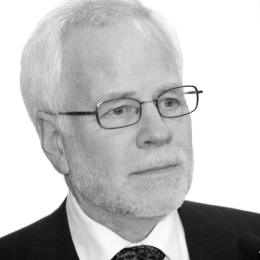
A leading expert on the international monetary system and global finance, his research covers the history of global financial crises, the international monetary system, economic history, and the causes and consequences of populism.
Dr. Eichengreen holds fellowships from several institutions, including the National Bureau of Economic Research and the American Academy of Arts and Sciences, and has previously served as a Senior Policy Advisor at the International Monetary Fund (IMF).
Learn More at http://www.ibkr.com/funds
Looking for style diversification? More information on the TDI Managed Growth Strategy – https://thedisciplinedinvestor.com/blog/tdi-strategy/
eNVESTOLOGY Info – https://envestology.com/
Stocks mentioned in this episode: (BTCUSD), (ORCL), (OKLO), (QQQ)